photosynthetic pigments
 Studied by 0 people
 Call Kai
 Learn
Learn Practice Test
 Spaced Repetition
 Match
Match Flashcards
 Knowt Play
1/9

There's no tags or description
Looks like no tags are added yet.
Name | Mastery | Learn | Test | Matching | Spaced | Call with Kai |
|---|
No analytics yet
Send a link to your students to track their progress
10 Terms
where does the light dependent reaction of photosynthesis occur and how is it adapted to do so?
thylakoid membrane - has photosynthetic pigments and carrier proteins
where does the light independent reaction take place and how is it adapted to do so?
stroma - contains enzymes for the LIR
name the 2 types of chlorophyll in photosynthesis - what light do they reflect/absorb?
reflect green light and absorb red light:
chlorophyll a
chlorophyll b
give the primary pigment in photosynthesis:
chlorophyll a
what are accessory pigments? give their function:
pigments which absorb wavelengths of light that are not easily absorbed by chlorophyll i.e. more wavelengths absorbed
not directly involved in LDR
channel more captured light energy to chlorophyll so more e- can be excited
give 3 examples of accessory pigments:
chlorophyll b
(category of carotenoids - reflect orange/yellow light and absorb blue light):
carotene
xanthophyll
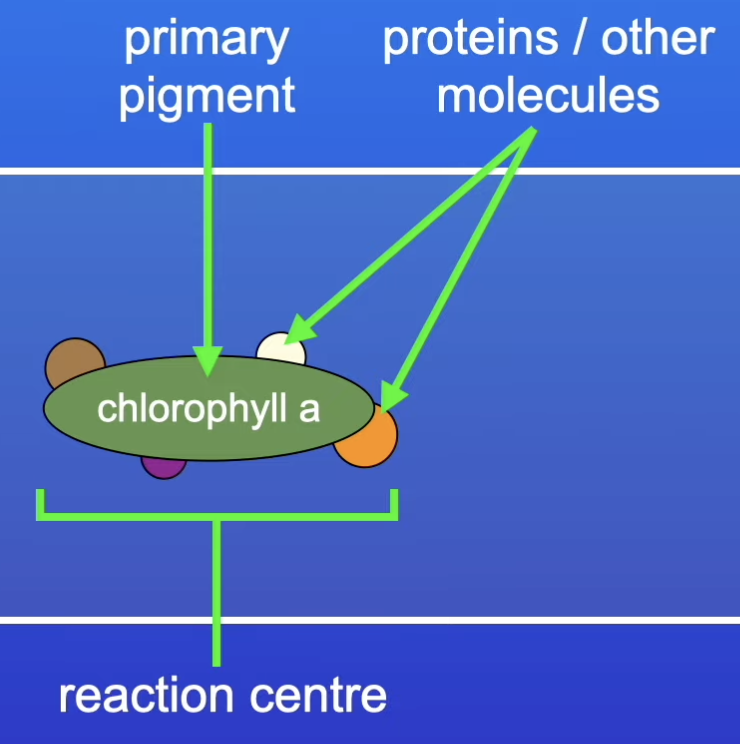
what is the reaction centre?
chlorophyll (primary pigment) surrounded by a range of other proteins
what is the light harvesting system?
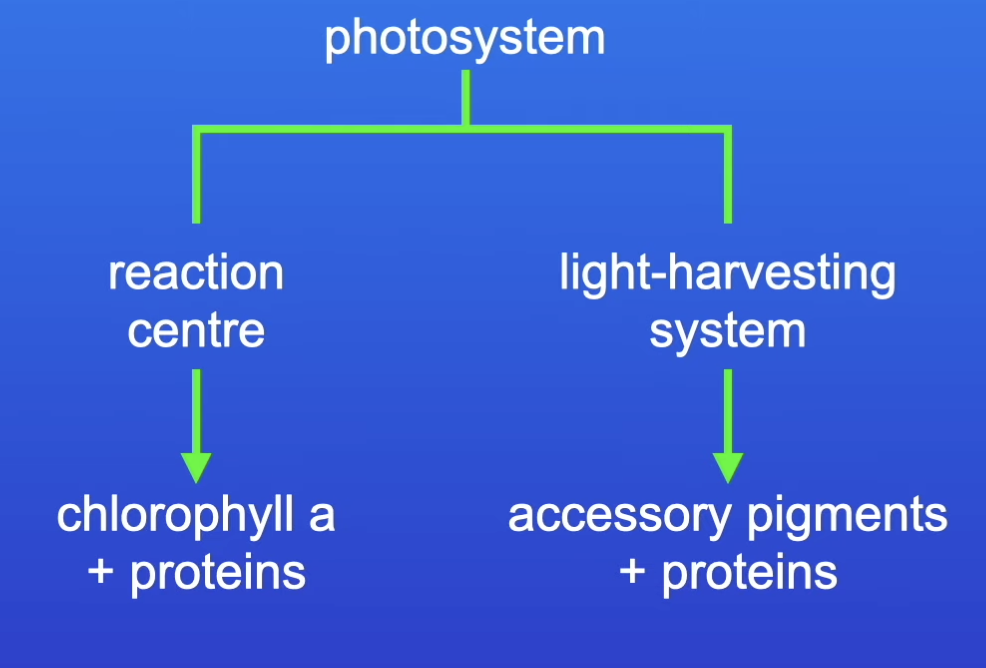
reaction centre is surrounded by accessory pigments and proteins
these accessory pigments and proteins = light harvesting system
what is a photosystem?
the reaction centre and light harvesting system (i.e. chlorophyll a and proteins surrounded by accessory pigments and proteins)
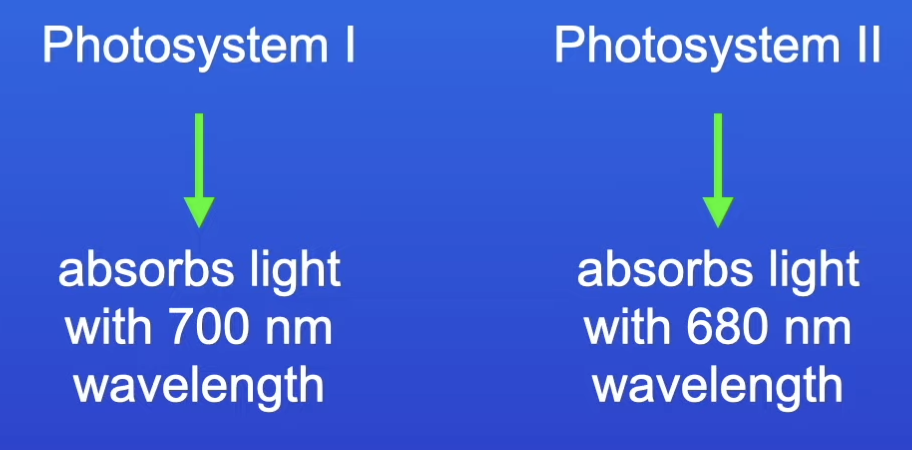
give the 2 photosystems present in photosynthesis and the wavelengths of light they absorb:
photosystem II - 700 nm (chlorophyll p700)
photosystem I - 680 nm (chlorophyll p680)
 Note
Note  Flashcards (81)