Panoramic Errors, Anatomy Review and More

0.0(0)
studied byStudied by 0 people
0.0(0)
call kaiCall Kai
learnLearn
examPractice Test
spaced repetitionSpaced Repetition
heart puzzleMatch
flashcardsFlashcards
GameKnowt Play
Card Sorting

1/43

encourage image

There's no tags or description

Looks like no tags are added yet.

Last updated 12:49 AM on 1/26/26
Name
Mastery
Learn
Test
Matching
Spaced
Call with Kai

No analytics yet

Send a link to your students to track their progress

44 Terms

1
New cards

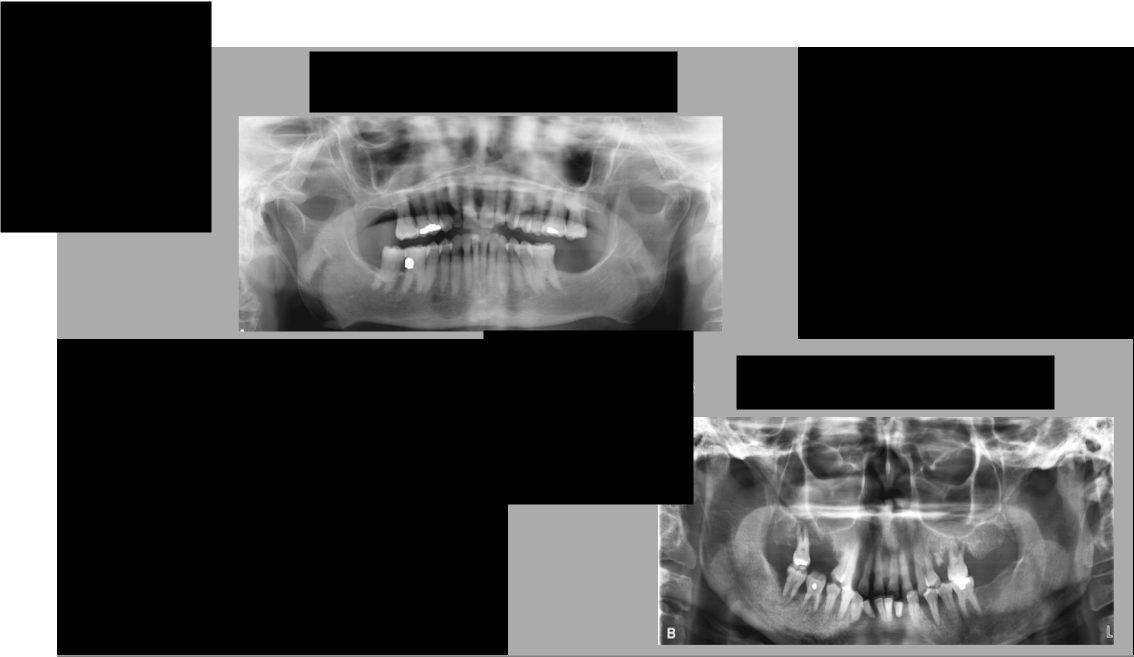
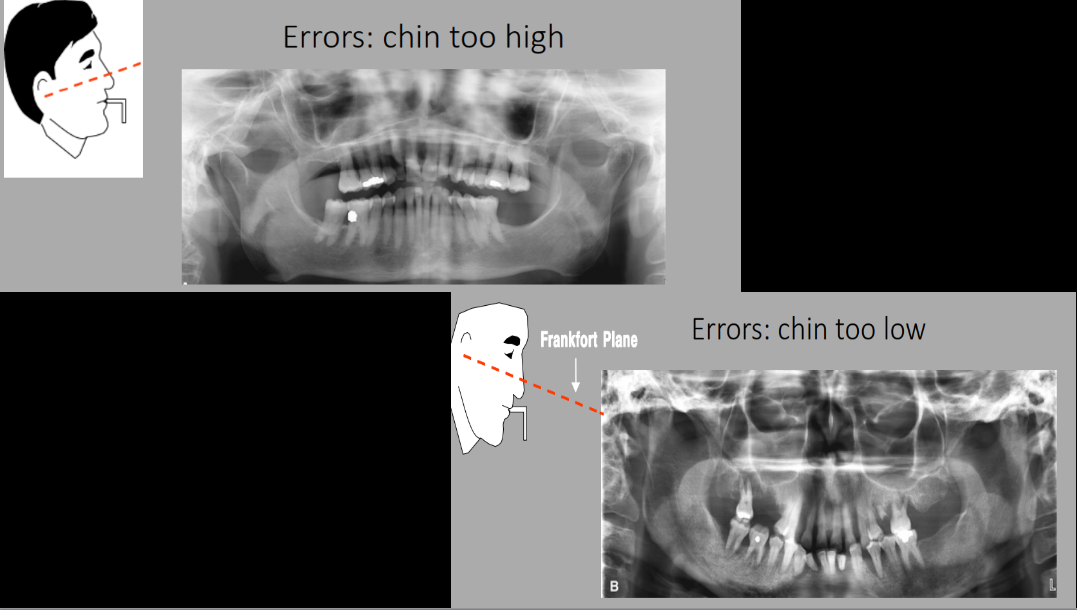
Errors in Panoramic radiology mostly related to the steps in acquiring the image:

  • Have patient remove denture, removable appliance/retainer, jewelry, glasses, coat, hearing aids, etc.

  • Patient bites on bite stick – proper anterior-posterior position.

  • Adjust the chin rest/tilt as needed – __________ plane

  • Position the side guides to keep head secure.

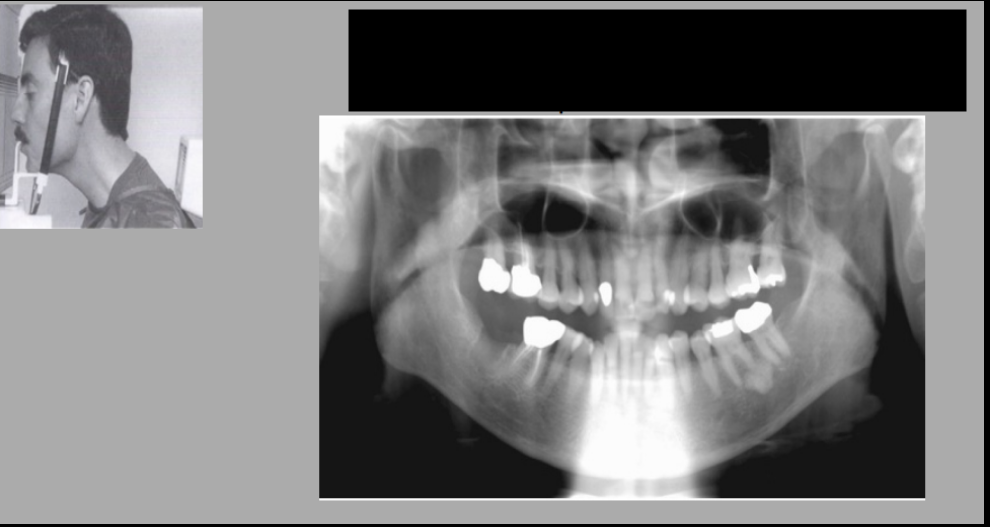
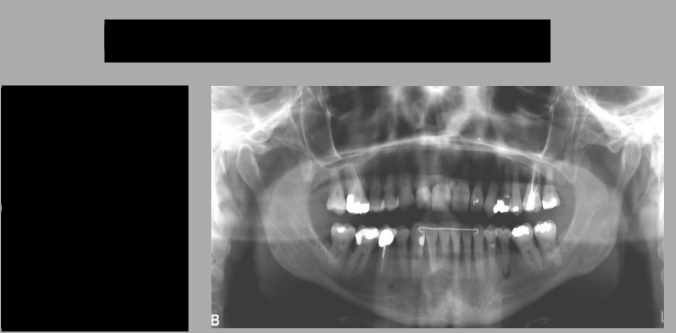
  • Ask the patient to stand up completely _________.

  • Neck extended but not slumped forward.

  • Ask the patient to place tongue in the roof of the mouth and holds still.
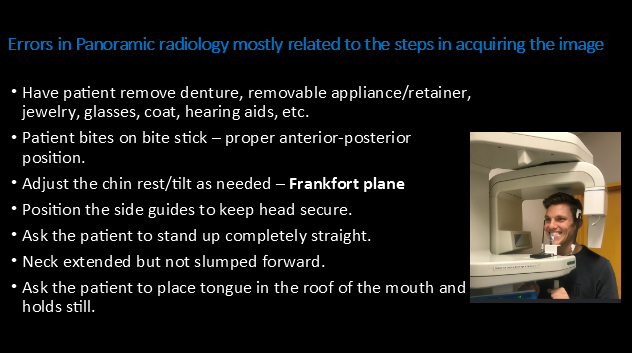
Errors in Panoramic radiology mostly related to the steps in acquiring the image:

  • Have patient remove denture, removable appliance/retainer, jewelry, glasses, coat, hearing aids, etc.

  • Patient bites on bite stick – proper anterior-posterior position.

  • Adjust the chin rest/tilt as needed – Frankfort plane

  • Position the side guides to keep head secure.

  • Ask the patient to stand up completely straight.

  • Neck extended but not slumped forward.

  • Ask the patient to place tongue in the roof of the mouth and holds still.

<p>Errors in Panoramic radiology mostly related to the steps in acquiring the image:</p><p></p><ul><li><p>Have patient <u>remove</u> denture, removable appliance/retainer, jewelry, glasses, coat, hearing aids, etc.</p></li><li><p>Patient bites on bite stick – proper anterior-posterior position.</p></li><li><p><strong><mark data-color="yellow" style="background-color: yellow; color: inherit">Adjust the chin rest/tilt as needed – Frankfort plane</mark></strong></p></li><li><p>Position the side guides to keep head secure.</p></li><li><p><strong><mark data-color="yellow" style="background-color: yellow; color: inherit">Ask the patient to stand up completely straight.</mark></strong></p></li><li><p><u>Neck extended</u> but not slumped forward.</p></li><li><p>Ask the patient to place tongue in the <strong>roof of the mouth</strong> and  holds still.</p></li></ul><p></p>
2
New cards

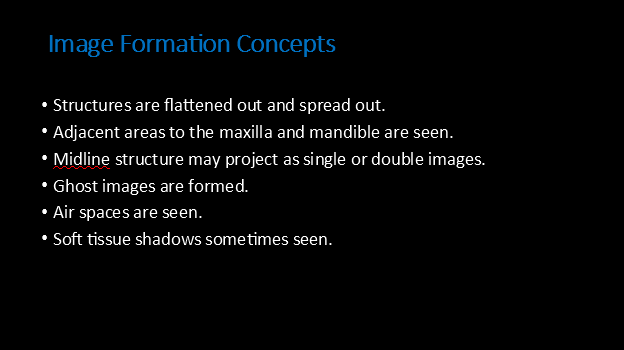
Image Formation Concepts:

  • Structures are flattened out and ________ out.

  • Adjacent areas to the maxilla and mandible are seen.

  • Midline structure may project as single or __________ images.

  • Ghost images are formed.

  • Air spaces are seen.

  • Soft tissue shadows sometimes seen.

Image Formation Concepts:

  • Structures are flattened out and spread out.

  • Adjacent areas to the maxilla and mandible are seen.

  • Midline structure may project as single or double images.

  • Ghost images are formed.

  • Air spaces are seen.

  • Soft tissue shadows sometimes seen.

<p><strong><u> Image Formation Concepts:</u></strong></p><ul><li><p><strong><mark data-color="yellow" style="background-color: yellow; color: inherit">Structures are flattened out and spread out.</mark></strong></p></li><li><p>Adjacent areas to the maxilla and mandible are seen.</p></li><li><p><strong><mark data-color="yellow" style="background-color: yellow; color: inherit">Midline structure may project as single or double images.</mark></strong></p></li><li><p>Ghost images are formed.</p></li><li><p>Air spaces are seen.</p></li><li><p>Soft tissue shadows sometimes seen.</p></li></ul><p></p>
3
New cards
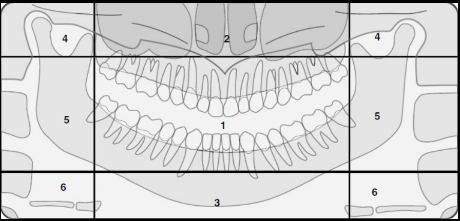
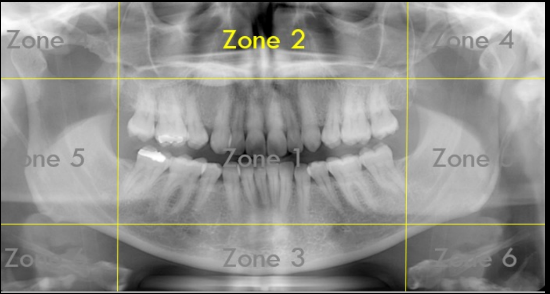
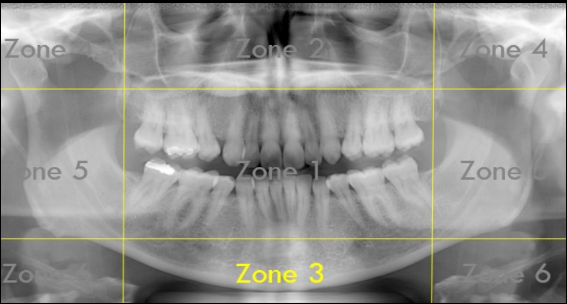
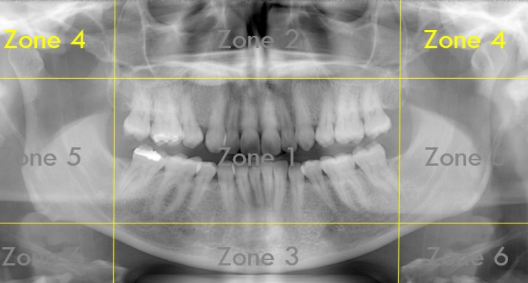
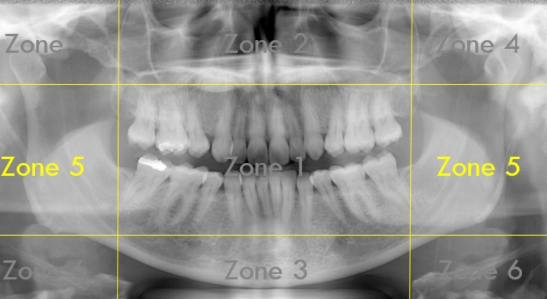
<p>Identify The Zones.</p>

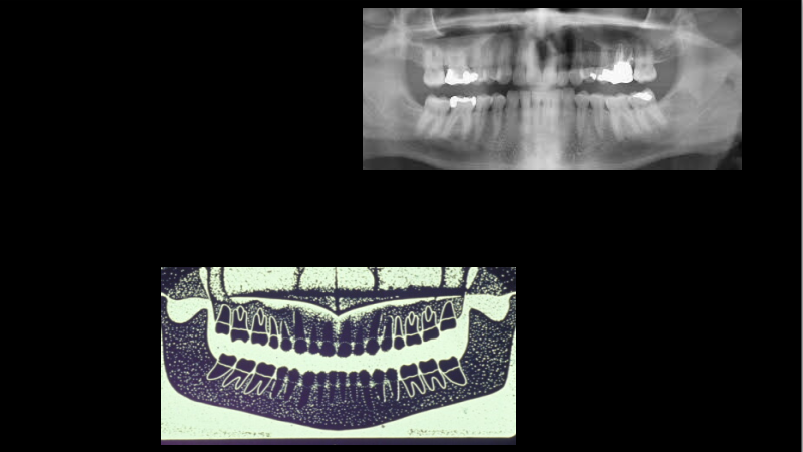
Identify The Zones.

Zone 1: Dentition

Zone 2: Nasal Cavity and Maxillary Sinuses

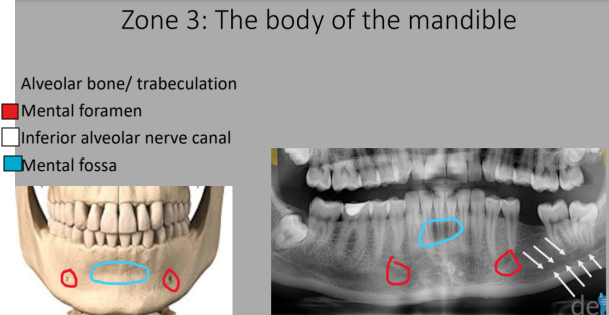
Zone 3: The Mandible

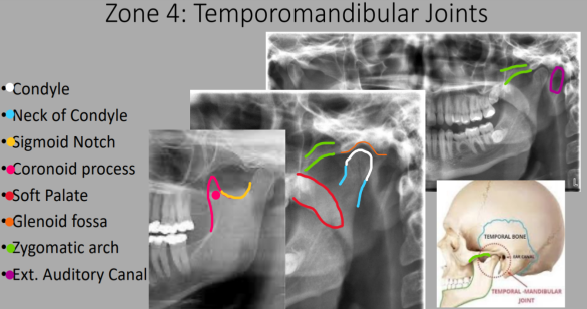
Zone 4: Temporomandibular Joints (TMJs)

Zone 5: Spine and Ramus

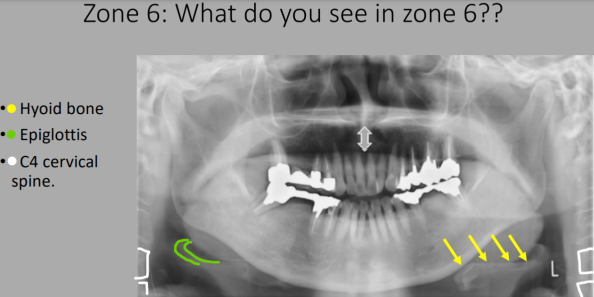
Zone 6: Hyoid Bone
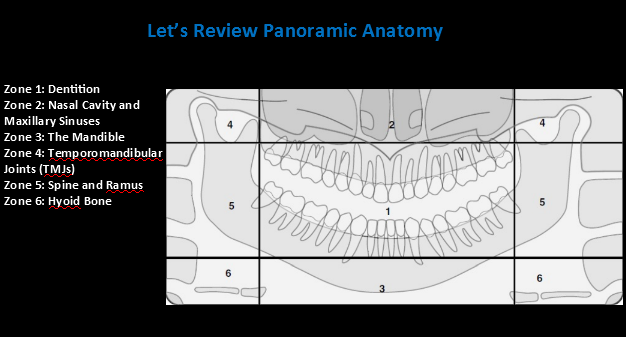
<p>Zone 1: Dentition </p><p>Zone 2: Nasal Cavity and Maxillary Sinuses</p><p>Zone 3: The Mandible </p><p>Zone 4: Temporomandibular Joints (TMJs) </p><p>Zone 5: Spine and Ramus </p><p>Zone 6: Hyoid Bone</p>
4
New cards
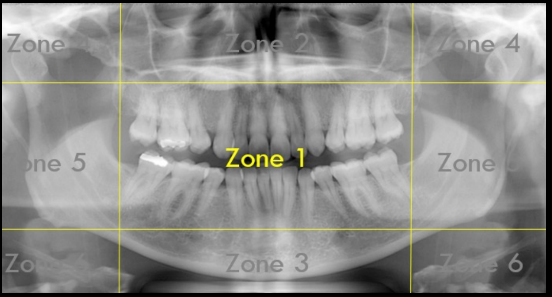
<p>What Zone Is This?</p>

What Zone Is This?

Zone 1: Dentition
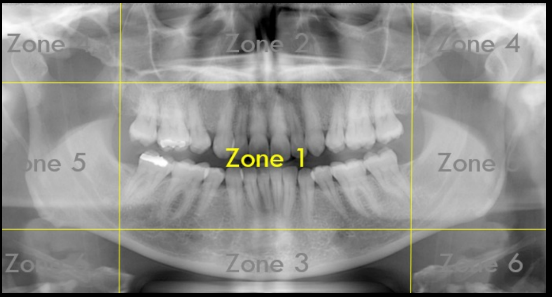
<p>Zone 1: Dentition </p>
5
New cards
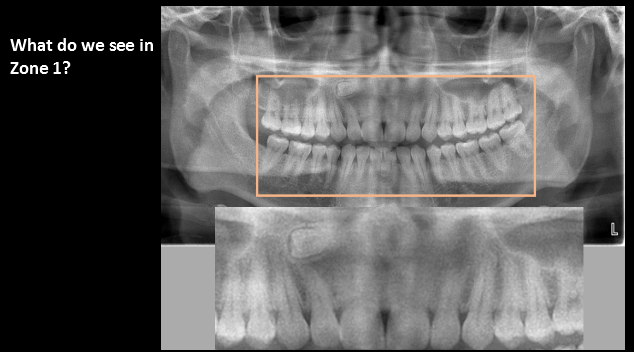
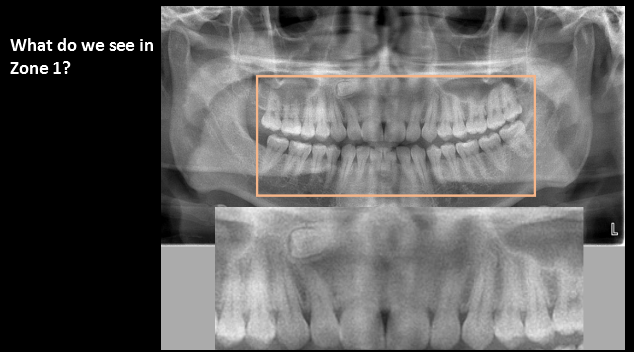
<p>What do we see in Zone 1?</p>

What do we see in Zone 1?

  • supernumerary teeth/impacted tooth

<ul><li><p>supernumerary teeth/impacted tooth</p></li></ul><p></p>
6
New cards
<p>What Zone Is This?</p>

What Zone Is This?

Zone 2: Nasal Cavity and Maxillary Sinuses
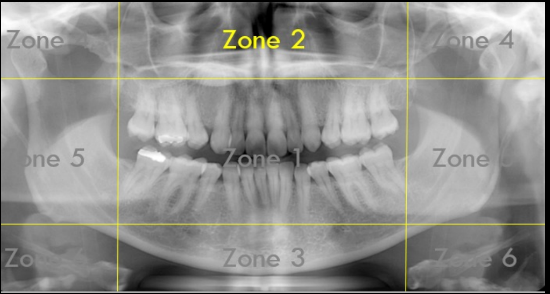
<p>Zone 2: Nasal Cavity and Maxillary Sinuses</p>
7
New cards
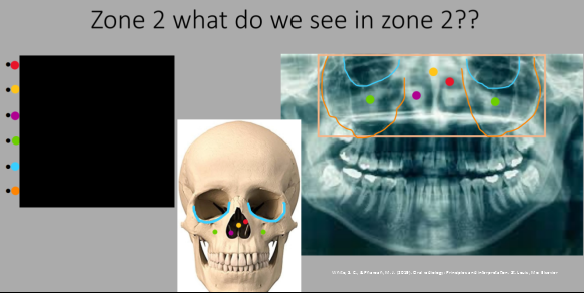
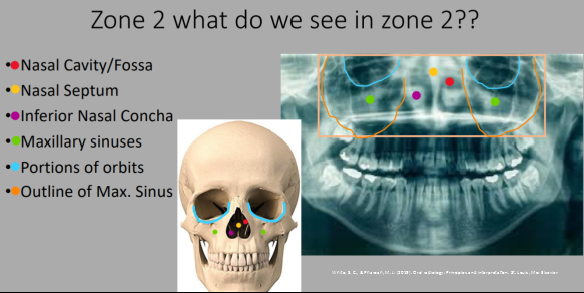
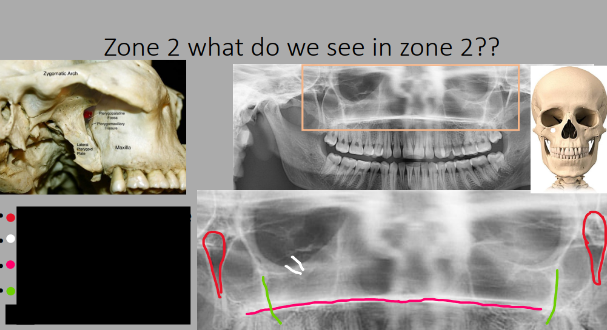
<p>What do we see in Zone 2?</p>

What do we see in Zone 2?

knowt flashcard image
8
New cards
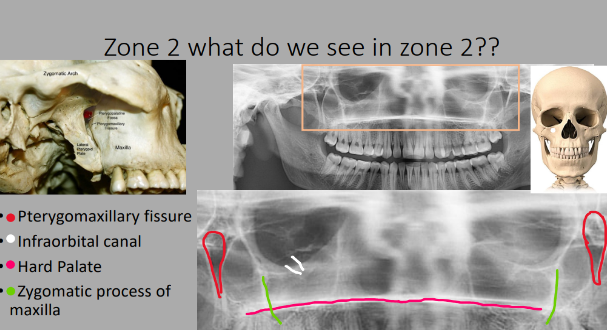
<p>What do we see in Zone 2?</p>

What do we see in Zone 2?

knowt flashcard image
9
New cards
<p>What Zone Is This?</p>

What Zone Is This?

Zone 3: The Mandible
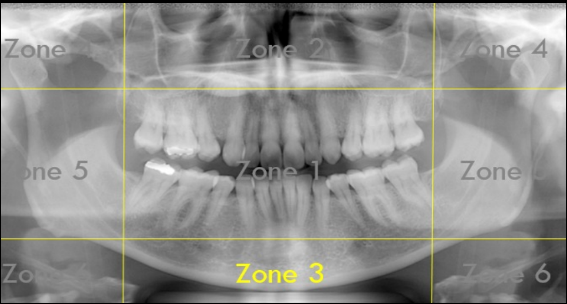
<p>Zone 3: The Mandible</p>
10
New cards
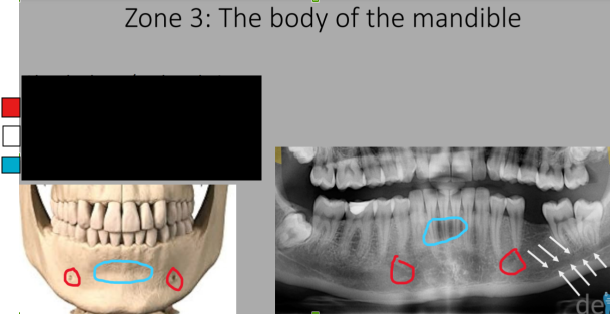
<p>What do we see in Zone 3?</p>

What do we see in Zone 3?

knowt flashcard image
11
New cards
<p>What Zone Is This?</p>

What Zone Is This?

Zone 4: Temporomandibular Joints (TMJs)
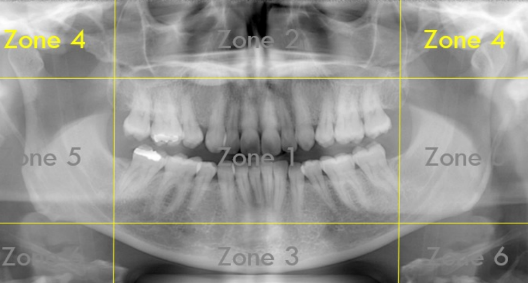
<p>Zone 4: Temporomandibular Joints (TMJs)</p>
12
New cards
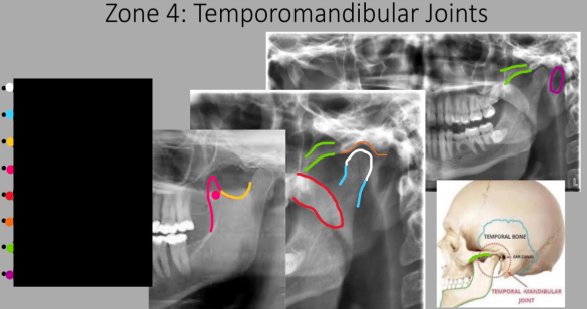
<p>What do we see in Zone 4?</p>

What do we see in Zone 4?

knowt flashcard image
13
New cards
<p>What Zone Is This?</p>

What Zone Is This?

Zone 5: Spine and Ramus
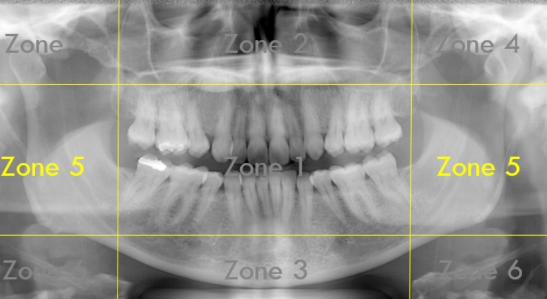
<p>Zone 5: Spine and Ramus</p>
14
New cards
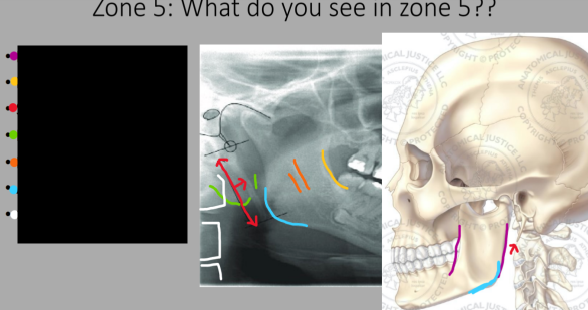
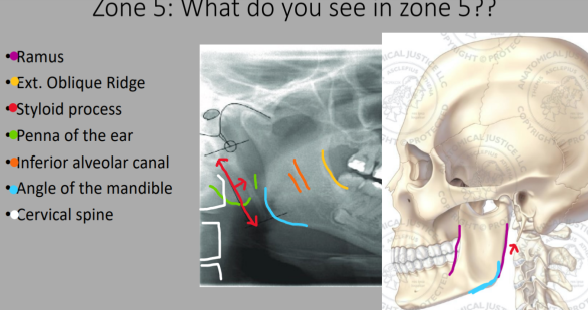
<p>What do we see in Zone 5?</p>

What do we see in Zone 5?

knowt flashcard image
15
New cards
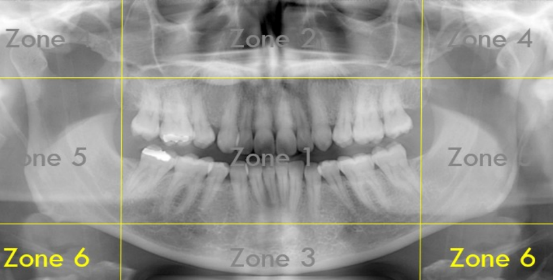
<p>What Zone Is This?</p>

What Zone Is This?

Zone 6: Hyoid Bone
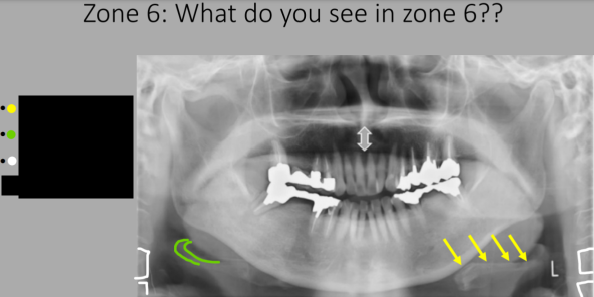
16
New cards
<p>What do we see in Zone 6?</p>

What do we see in Zone 6?

knowt flashcard image
17
New cards
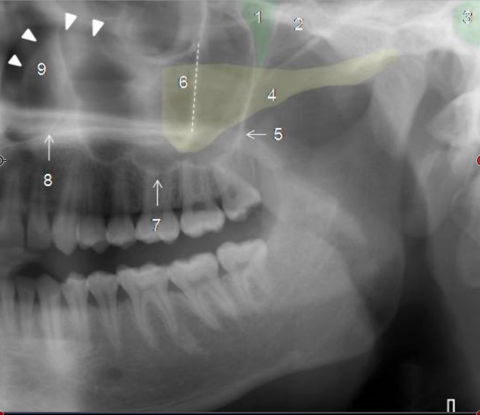
<p>Identify The Structures On The Maxillary, Temporal &amp; Zygomatic Structures.</p>

Identify The Structures On The Maxillary, Temporal & Zygomatic Structures.
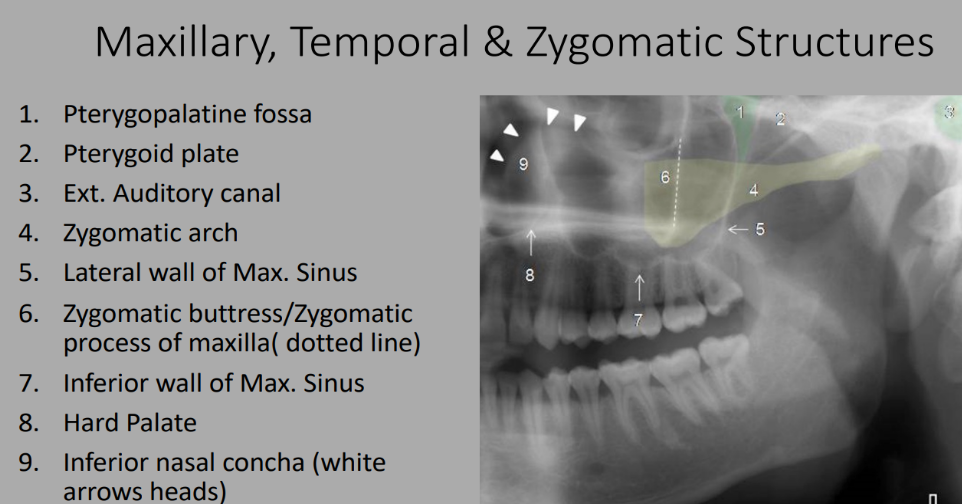
knowt flashcard image
18
New cards
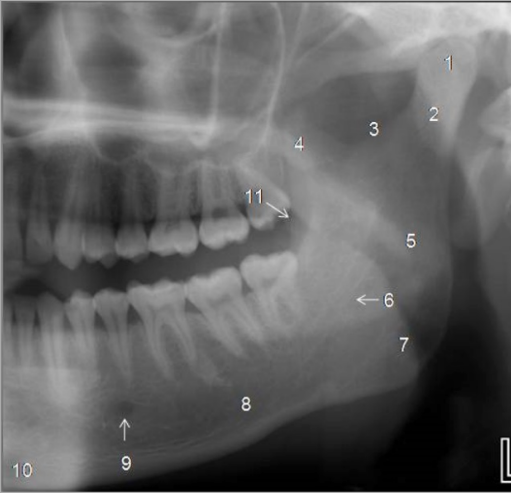
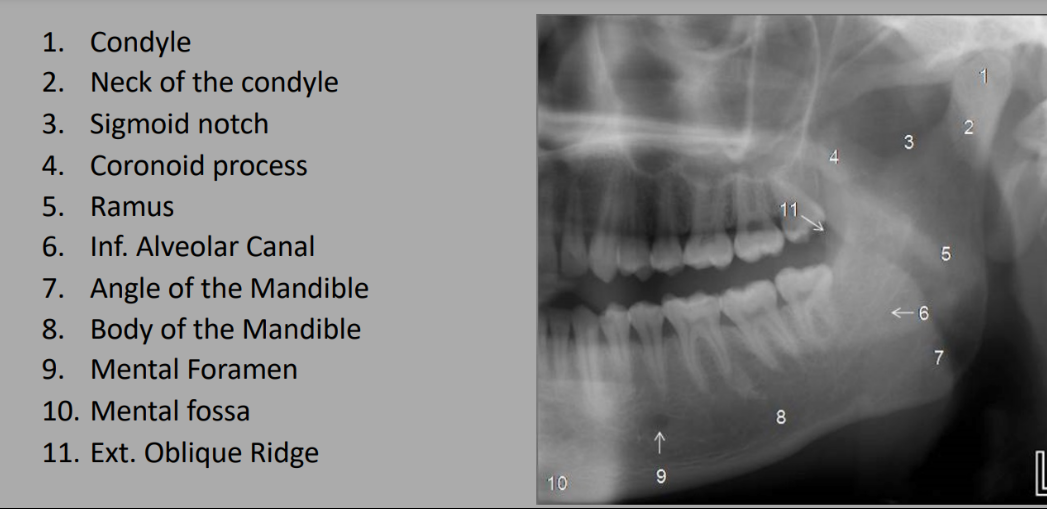
<p>Identify The Structures On The Mandible.</p>

Identify The Structures On The Mandible.
knowt flashcard image
19
New cards
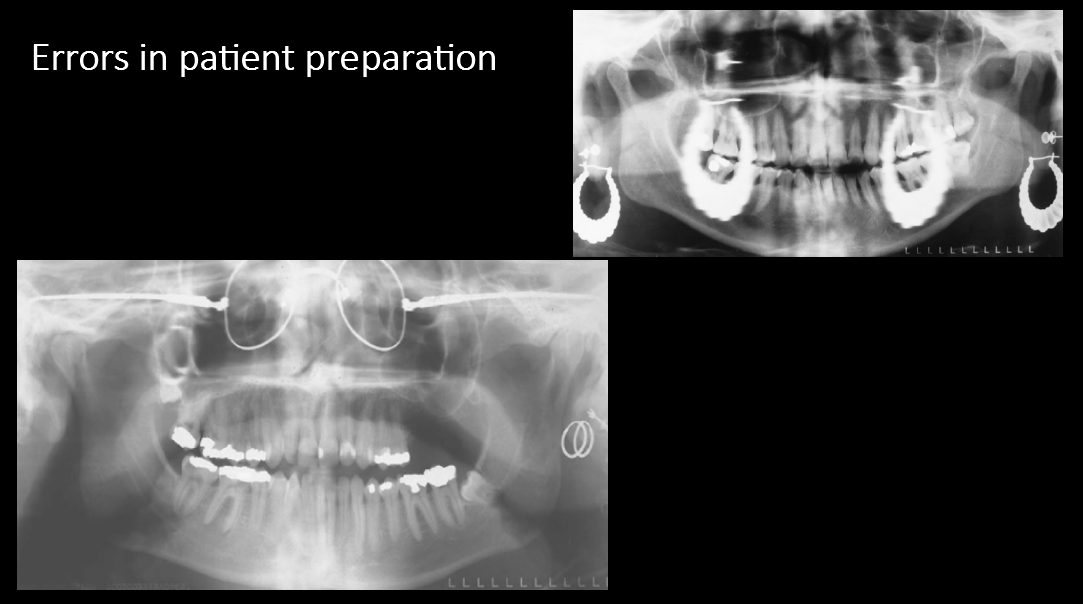
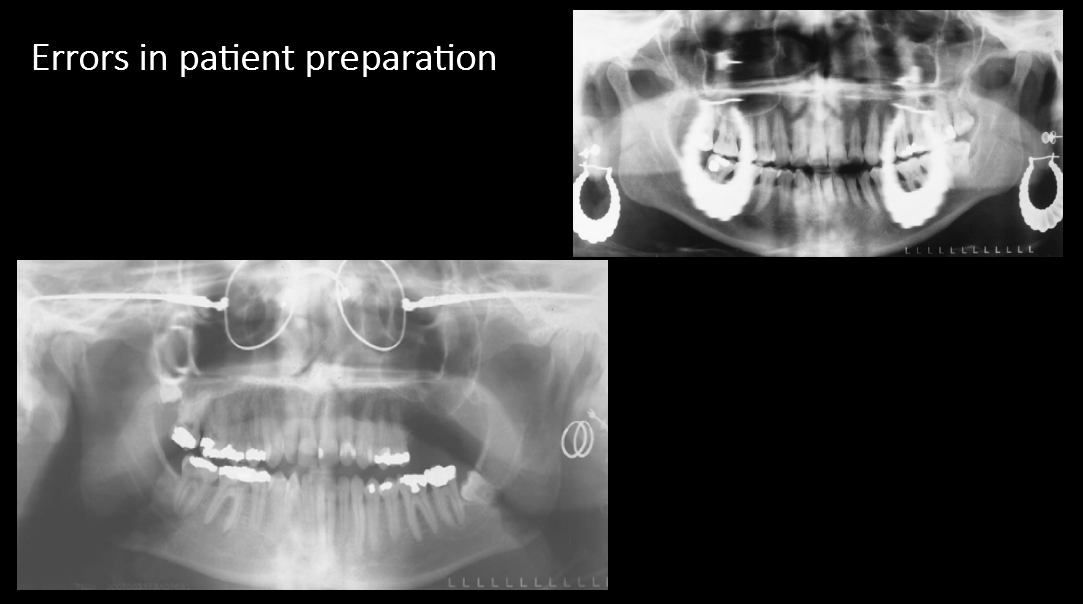
<p>Errors in patient preparation</p>

Errors in patient preparation

Errors in patient preparation
<p>Errors in patient preparation</p>
20
New cards
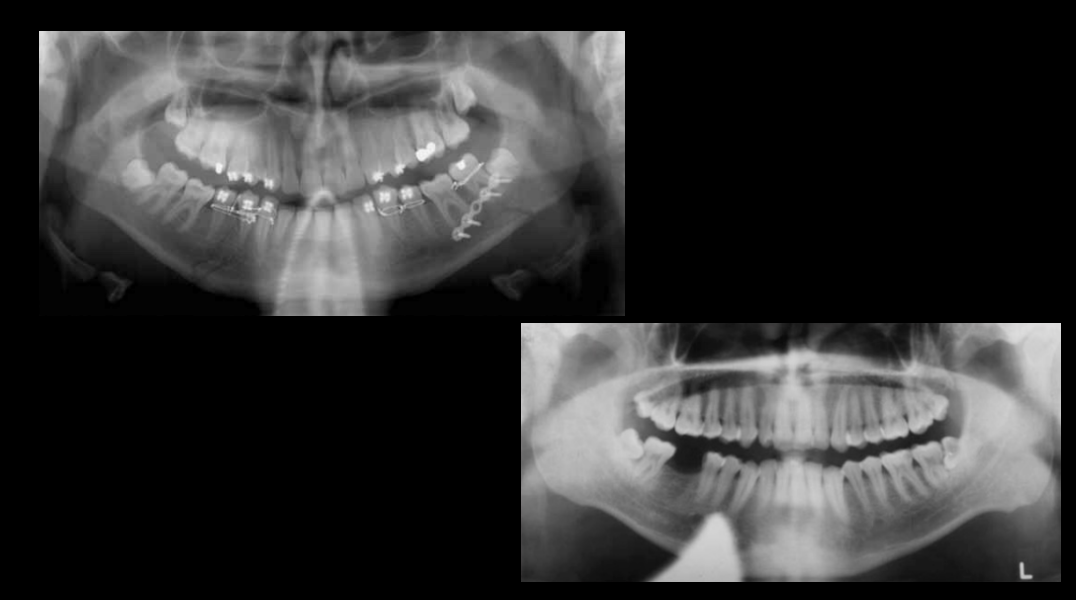
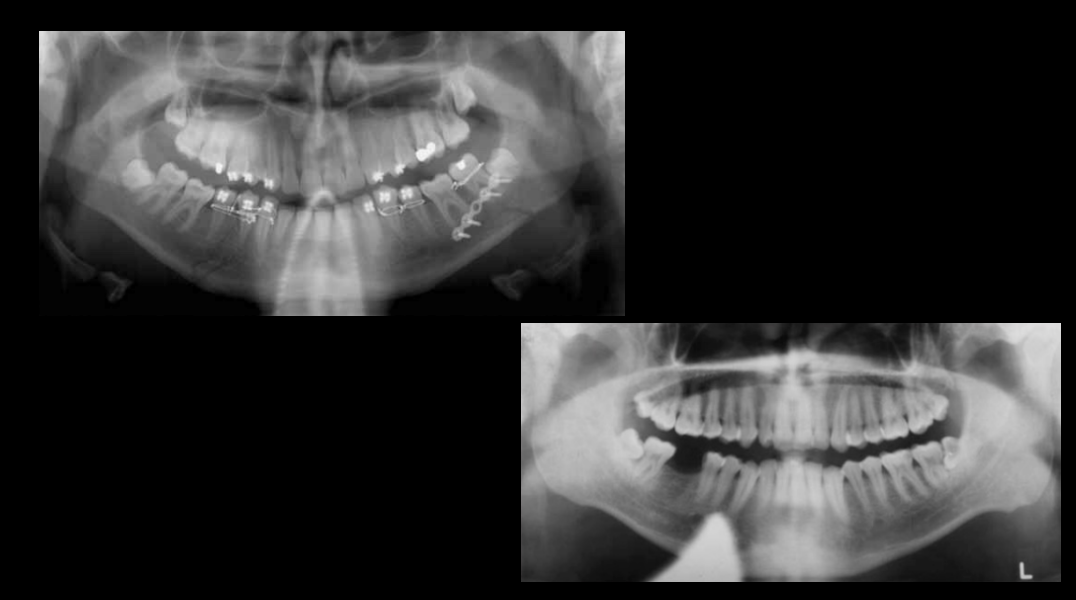
term image
  • Image 1: Ghost image of a necklace/chain. Also jaw surgery.

  • Image 2: Lead apron

<ul><li><p>Image 1: Ghost image of a necklace/chain. Also jaw surgery.</p></li><li><p>Image 2: Lead apron</p></li></ul><p></p>
21
New cards
<p>What error is this?</p>

What error is this?

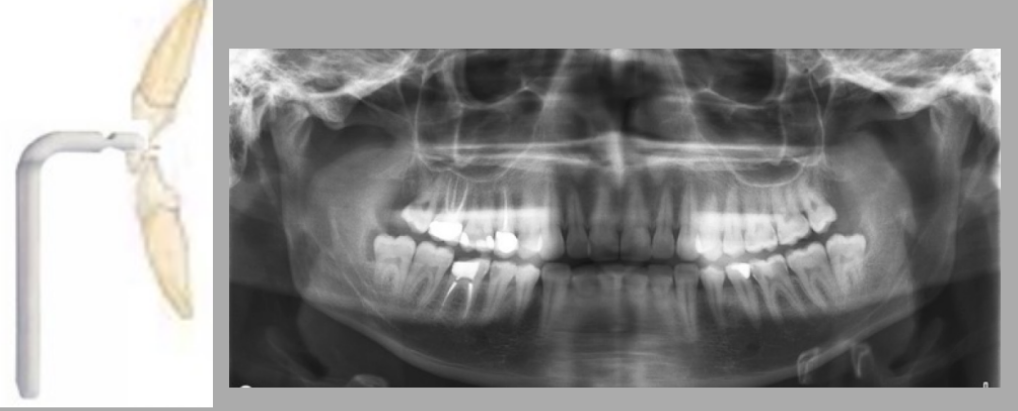
Error: patient too far foward
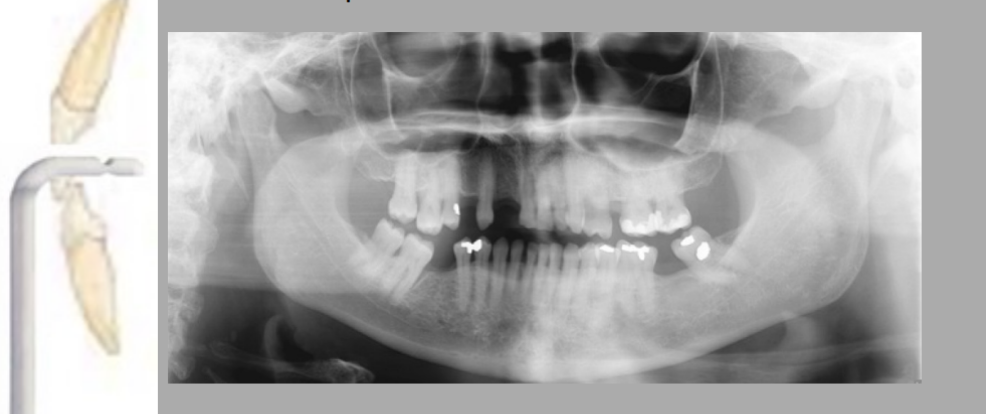
<p>Error: patient too far foward</p>
22
New cards
<p>What error is this?</p>

What error is this?

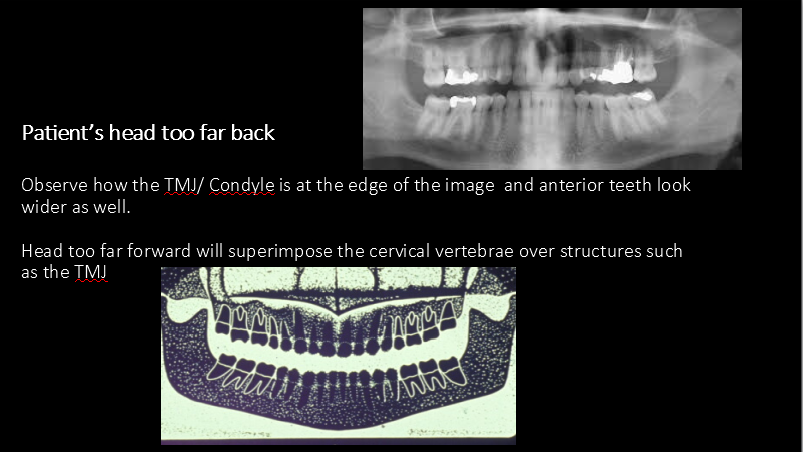
Error: patient too far back
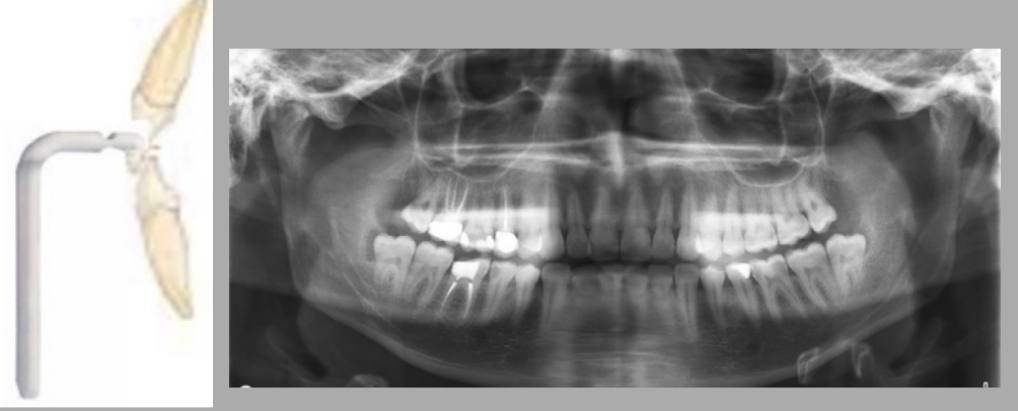
<p>Error: patient too far back</p>
23
New cards
<p>What errors are these?</p>

What errors are these?

knowt flashcard image
24
New cards
<p>What error is this?</p>

What error is this?

Error: slumped position/vertical spine shadow
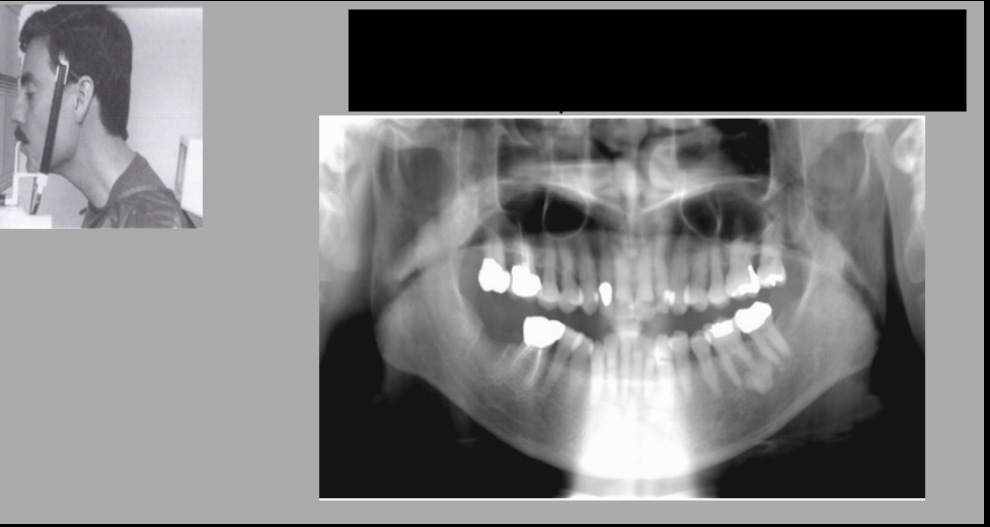
<p>Error: slumped position/vertical spine shadow</p>
25
New cards
<p>What error is this?</p>

What error is this?

Error: improper tongue position

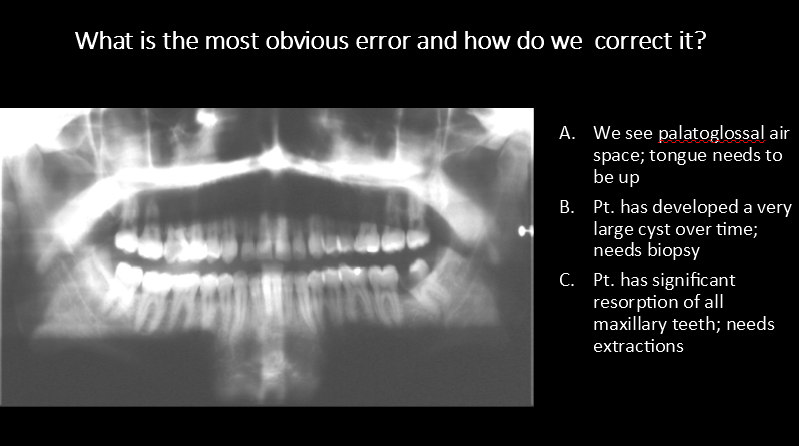
  • radiolucency: palatoglossal air space b/c tongue was not positioned to the roof of the mouth.
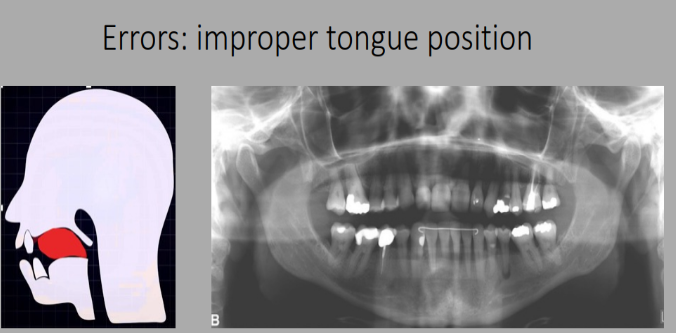
<p>Error: improper tongue position</p><ul><li><p>radiolucency: palatoglossal air space b/c tongue was not positioned to the roof of the mouth.</p></li></ul><p></p>
26
New cards
<p>What error is this?</p>

What error is this?

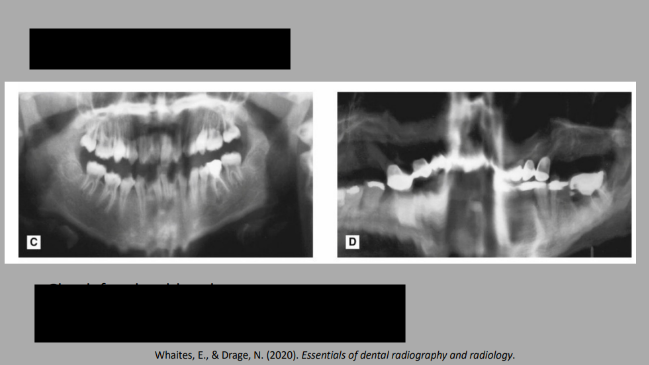
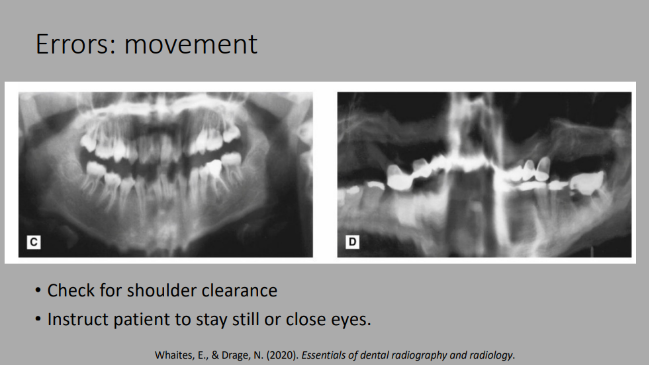
Error: movement
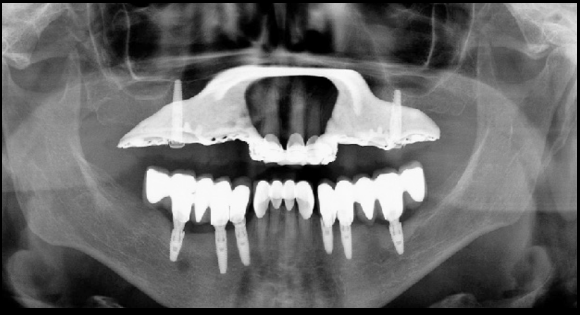
<p>Error: movement</p>
27
New cards
<p>What should you have asked this patient prior to exposing?</p>

What should you have asked this patient prior to exposing?

Ask patient to remove maxillary partial denture before exposure.
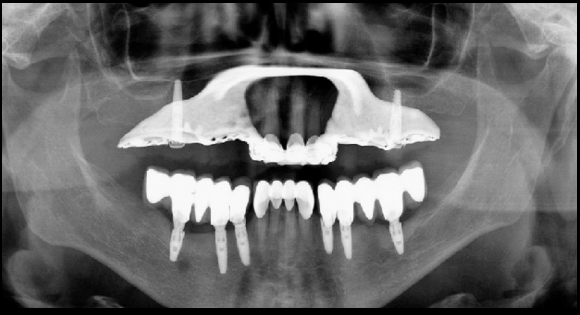
<p>Ask patient to remove maxillary partial denture before exposure.</p>
28
New cards
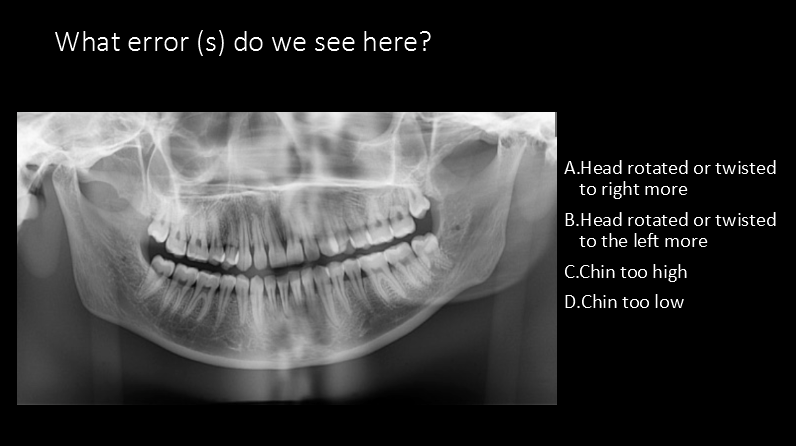
<p>What error (s) do we see here?</p><p>A. Head rotated or twisted to right more</p><p>B. Head rotated or twisted to the left more</p><p>C. Chin too high</p><p>D. Chin too low</p><p></p>

What error (s) do we see here?

A. Head rotated or twisted to right more

B. Head rotated or twisted to the left more

C. Chin too high

D. Chin too low

A. Head rotated or twisted to right more
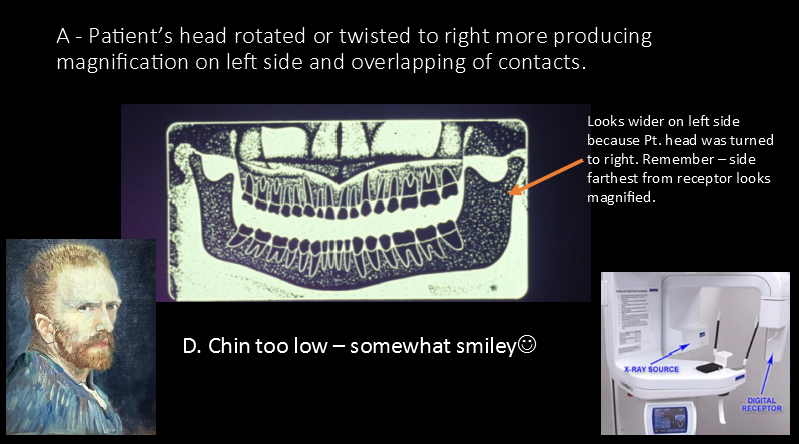
<p>A. Head rotated or twisted to right more</p>
29
New cards
<p>What error is shown in each photo?</p>

What error is shown in each photo?

knowt flashcard image
30
New cards
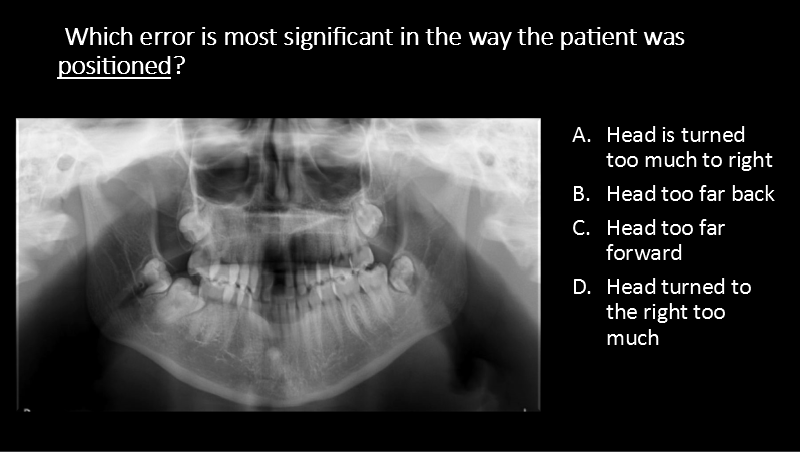
<p> Which error is most significant in the way the patient was positioned?</p><p>A. Head is turned too much to right</p><p>B. Head too far back</p><p>C. Head too far forward</p><p>D. Head turned to the right too much</p>

Which error is most significant in the way the patient was positioned?

A. Head is turned too much to right

B. Head too far back

C. Head too far forward

D. Head turned to the right too much

C. Head too far forward
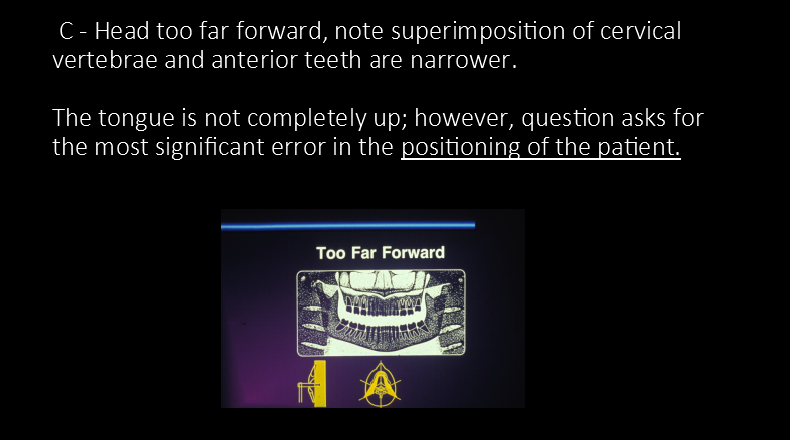
<p>C. Head too far forward</p>
31
New cards
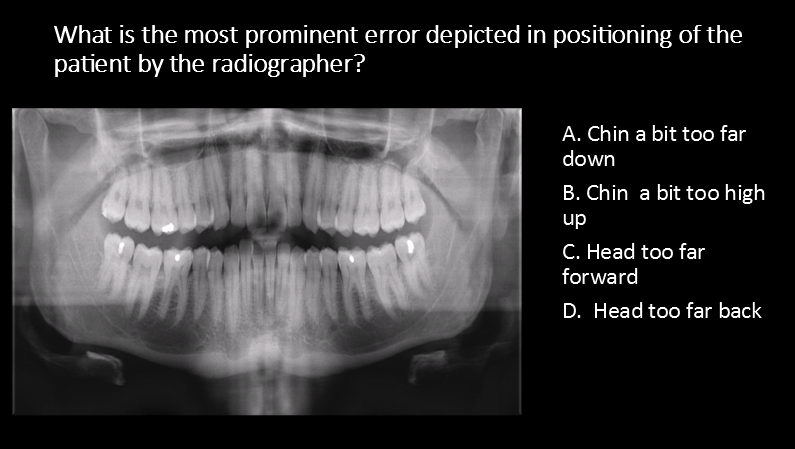
<p>What is the most prominent error depicted in positioning of the patient by the radiographer?</p><p>A. Chin a bit too far down</p><p>B. Chin  a bit too high up</p><p>C. Head too far forward</p><p>D.  Head too far back</p>

What is the most prominent error depicted in positioning of the patient by the radiographer?

A. Chin a bit too far down

B. Chin a bit too high up

C. Head too far forward

D. Head too far back

B. Chin a bit too high up
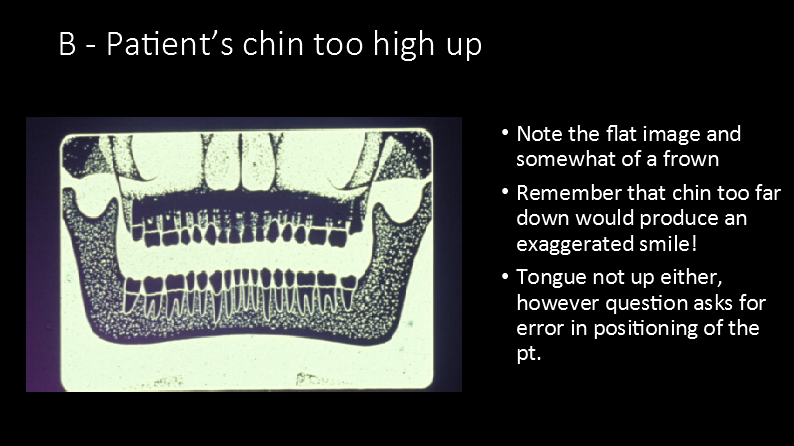
<p>B. Chin  a bit too high up</p>
32
New cards
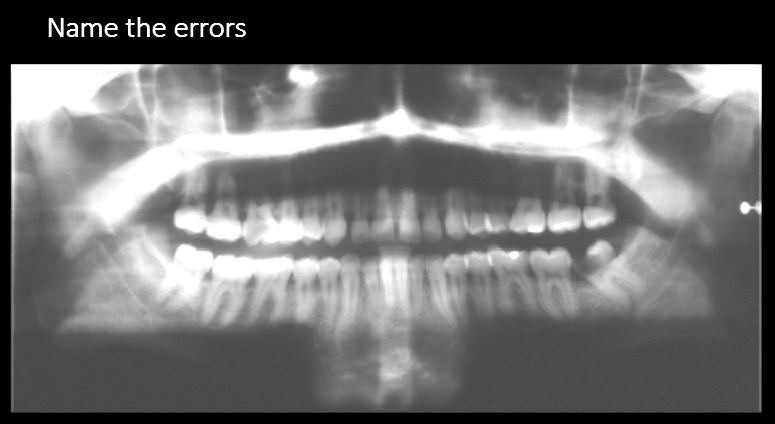
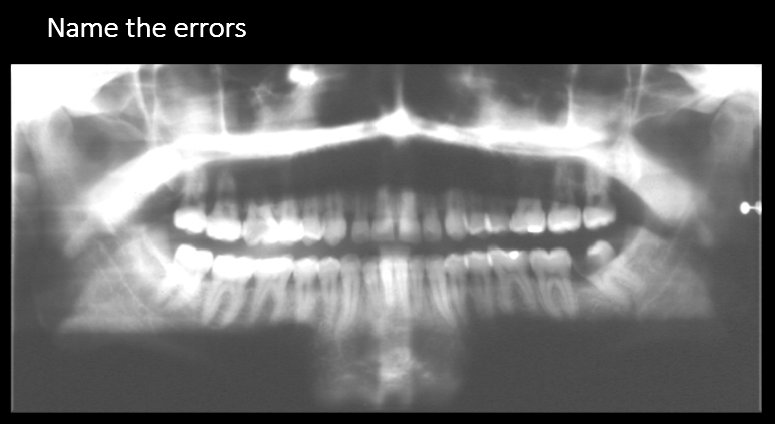
<p>Name the errors</p>

Name the errors

  • Palatoglossal space

  • earring ghost image

<ul><li><p>Palatoglossal space</p></li><li><p>earring ghost image</p></li></ul><p></p>
33
New cards
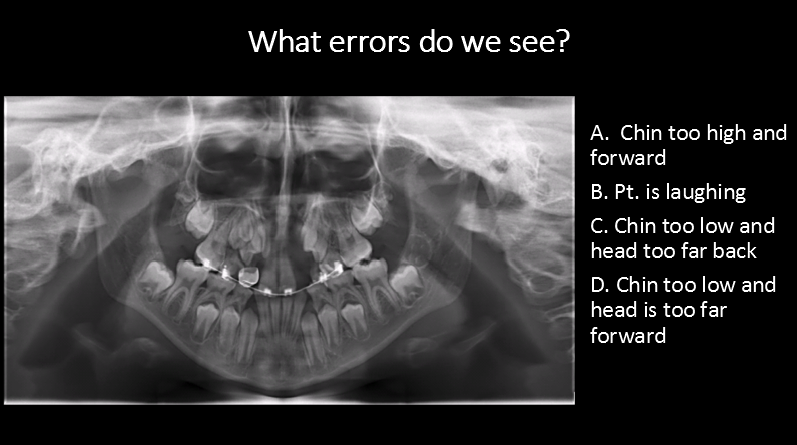
<p>   What errors do we see?</p><p>A.  Chin too high and forward</p><p>B. Pt. is laughing</p><p>C. Chin too low and head too far back</p><p>D. Chin too low and head is too far forward</p>

What errors do we see?

A. Chin too high and forward

B. Pt. is laughing

C. Chin too low and head too far back

D. Chin too low and head is too far forward

D. Chin too low and head is too far forward
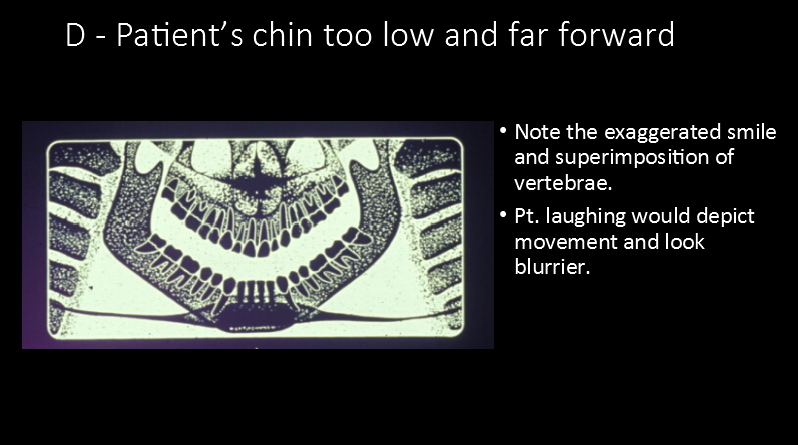
<p>D. Chin too low and head is too far forward</p>
34
New cards
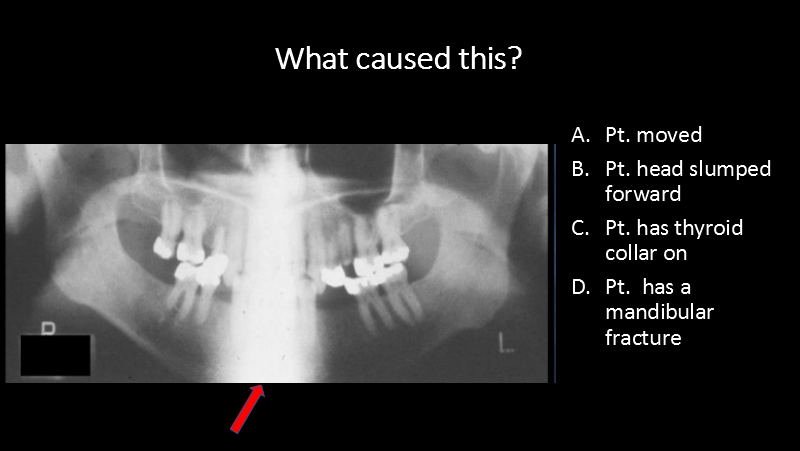
<p>What caused this?</p><p>A. Pt. moved</p><p>B. Pt. head slumped forward</p><p>C. Pt. has thyroid collar on</p><p>D. Pt.  has a mandibular fracture</p>

What caused this?

A. Pt. moved

B. Pt. head slumped forward

C. Pt. has thyroid collar on

D. Pt. has a mandibular fracture

B. Pt. head slumped forward
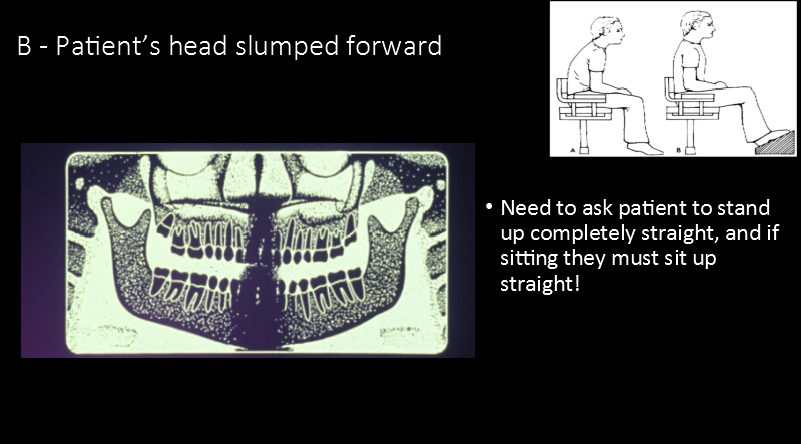
<p>B. Pt. head slumped forward</p>
35
New cards
<p>What is the most obvious error and how do we  correct it?</p><p>A. We see palatoglossal air space; tongue needs to be up</p><p>B. Pt. has developed a very large cyst over time; needs biopsy</p><p>C. Pt. has significant resorption of all maxillary teeth; needs extractions</p>

What is the most obvious error and how do we correct it?

A. We see palatoglossal air space; tongue needs to be up

B. Pt. has developed a very large cyst over time; needs biopsy

C. Pt. has significant resorption of all maxillary teeth; needs extractions

A. We see palatoglossal air space; tongue needs to be up
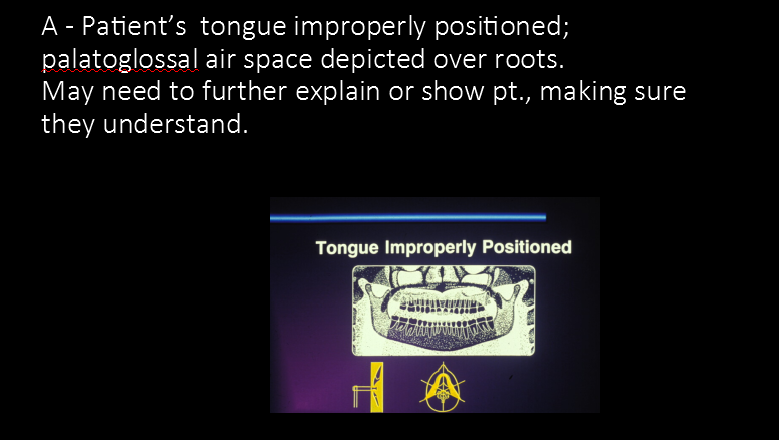
<p>A. We see palatoglossal air space; tongue needs to be up</p>
36
New cards
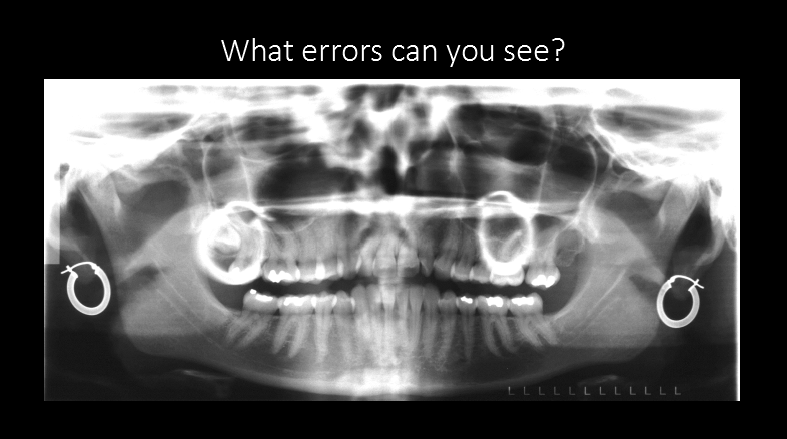
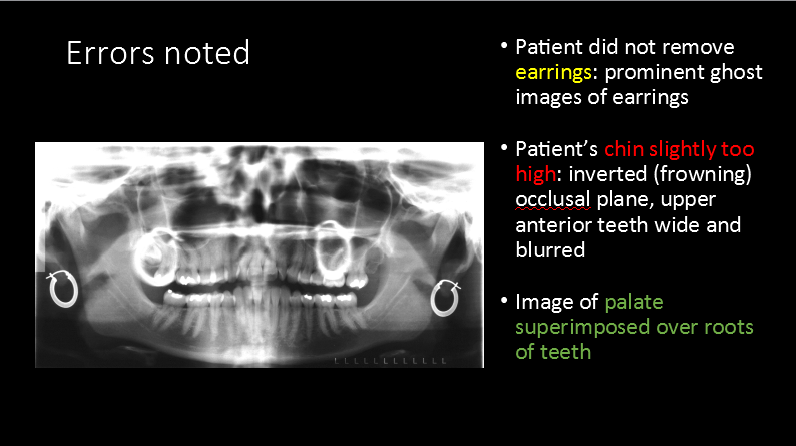
<p>What errors can you see?</p>

What errors can you see?

knowt flashcard image
37
New cards
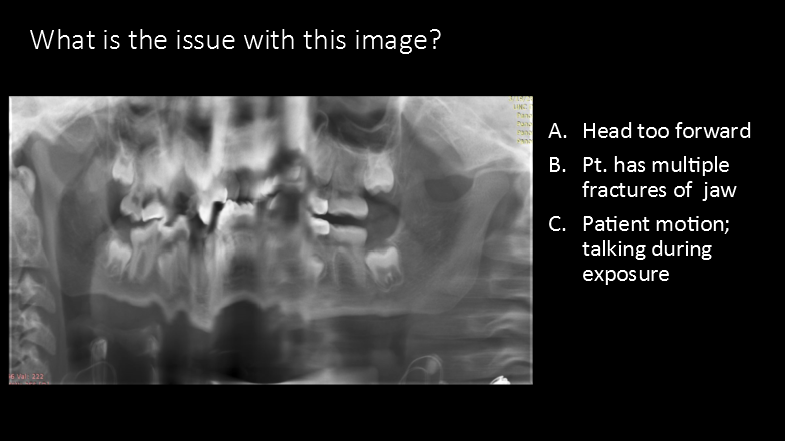
<p>What is the issue with this image?</p><p>A. Head too forward</p><p>B. Pt. has multiple fractures of  jaw</p><p>C. Patient motion; talking during exposure</p><p></p>

What is the issue with this image?

A. Head too forward

B. Pt. has multiple fractures of jaw

C. Patient motion; talking during exposure

C. Patient motion; talking during exposure
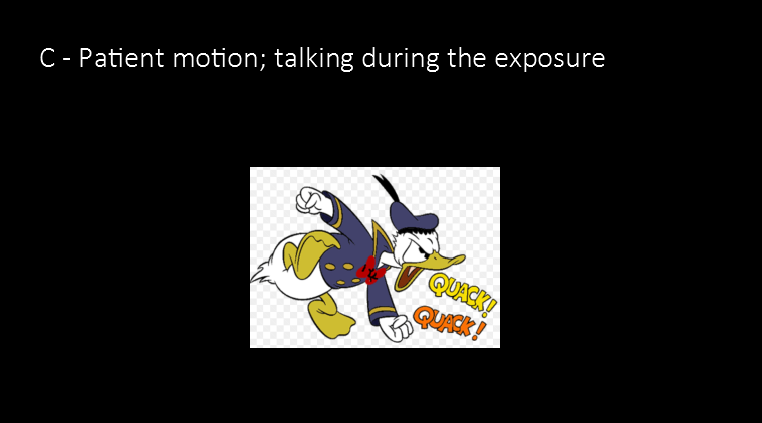
<p>C. Patient motion; talking during exposure</p>
38
New cards
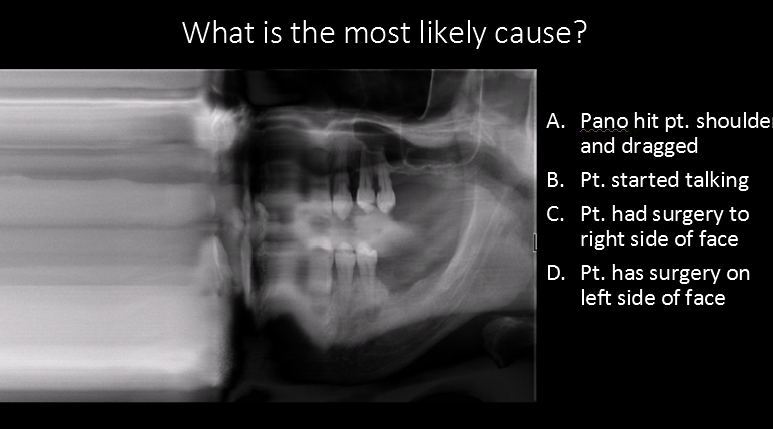
<p>What is the most likely cause?</p><p>A. Pano hit pt. shoulder and dragged</p><p>B. Pt. started talking</p><p>C. Pt. had surgery to right side of face</p><p>D. Pt. has surgery on left side of face</p>

What is the most likely cause?

A. Pano hit pt. shoulder and dragged

B. Pt. started talking

C. Pt. had surgery to right side of face

D. Pt. has surgery on left side of face

A. Pano hit pt. shoulder and dragged
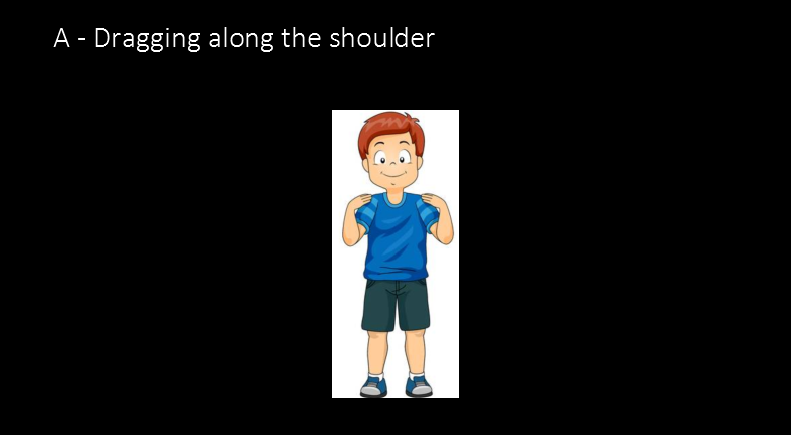
<p>A. Pano hit pt. shoulder and dragged</p>
39
New cards
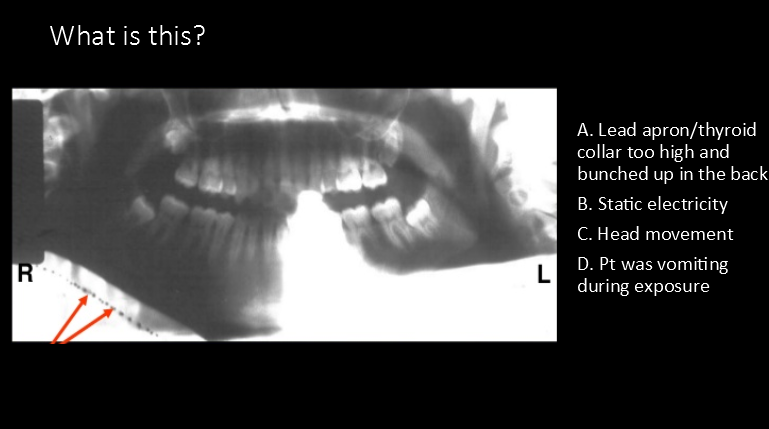
<p> What is this?</p><p>A. Lead apron/thyroid collar too high and bunched up in the back</p><p>B. Static electricity</p><p>C. Head movement</p><p>D. Pt was vomiting during exposure</p>

What is this?

A. Lead apron/thyroid collar too high and bunched up in the back

B. Static electricity

C. Head movement

D. Pt was vomiting during exposure

A. Lead apron/thyroid collar too high and bunched up in the back
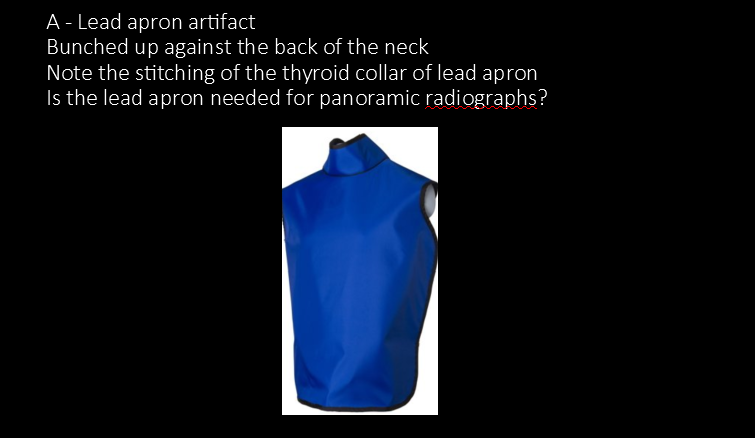
<p>A. Lead apron/thyroid collar too high and bunched up in the back</p>
40
New cards
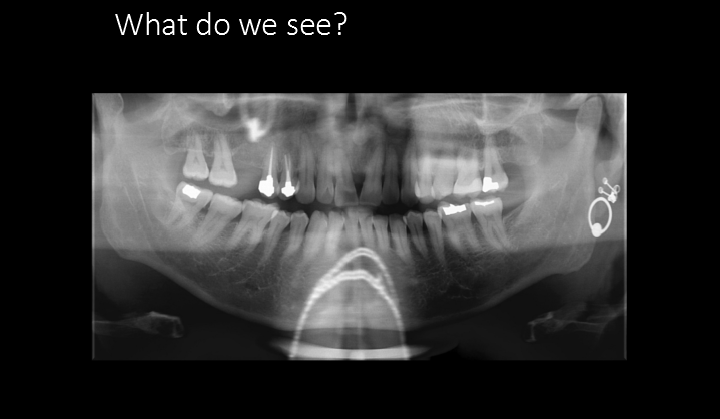
<p>What do we see?</p>

What do we see?

Earring ghost artifacts and a necklace
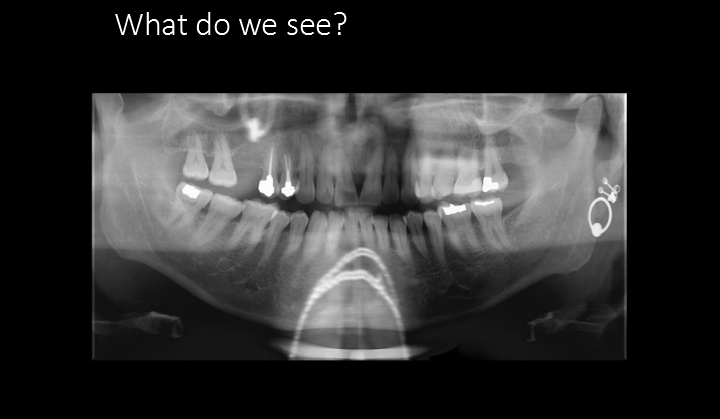
<p> Earring  ghost artifacts and a necklace</p>
41
New cards
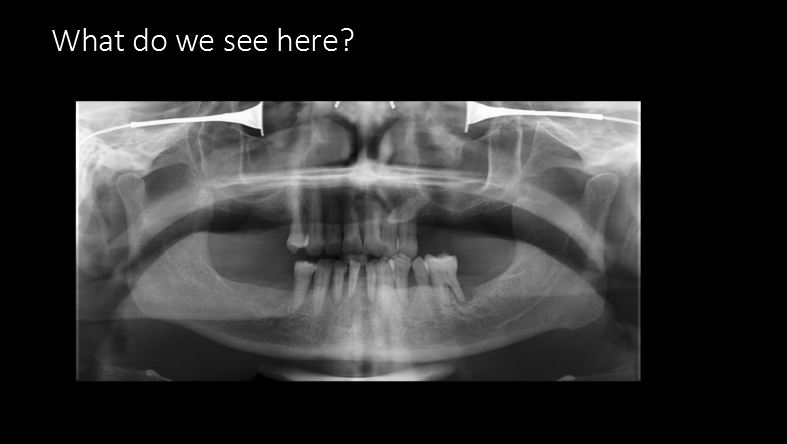
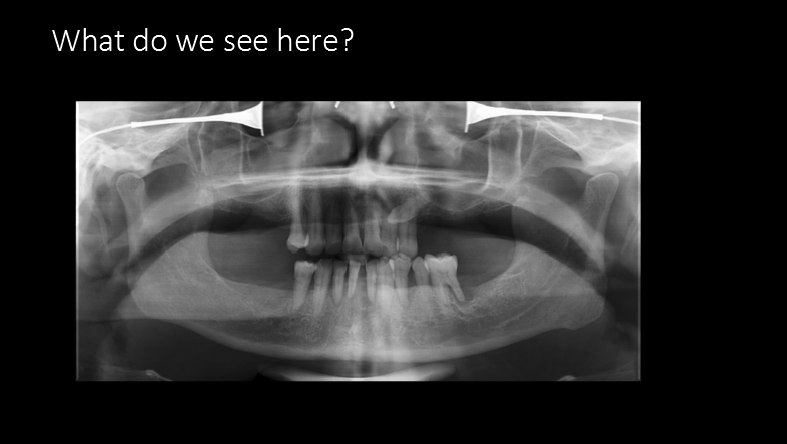
<p>What do we see here?</p>

What do we see here?

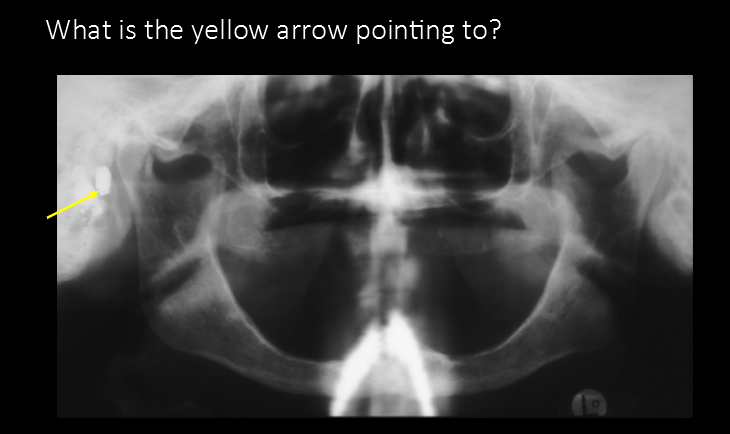
Glasses

<p>Glasses</p>
42
New cards
<p> What is the yellow arrow pointing to?</p>

What is the yellow arrow pointing to?
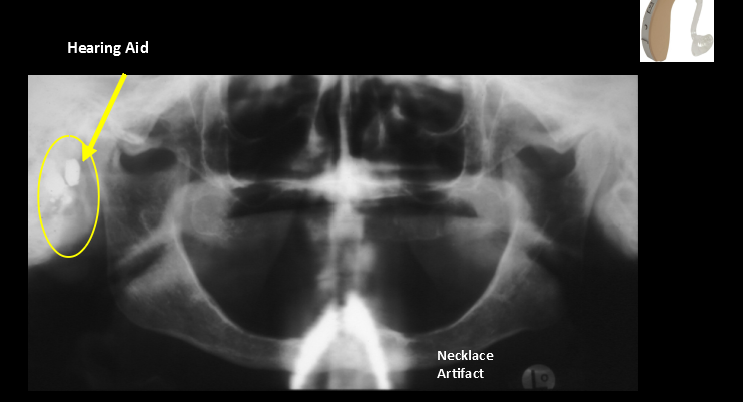
knowt flashcard image
43
New cards
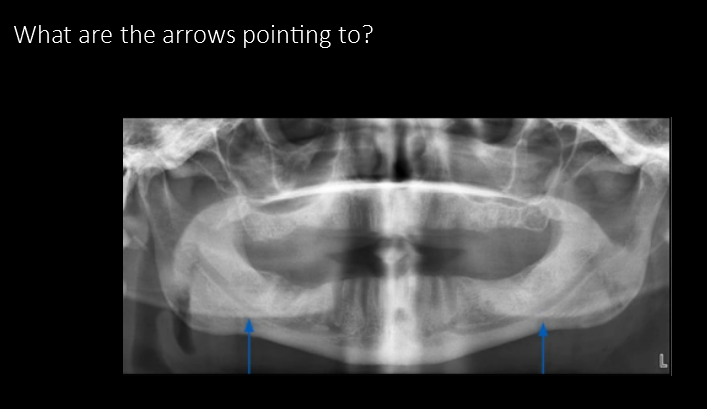
<p>What are the arrows pointing to?</p>

What are the arrows pointing to?

Ghost image of mandible
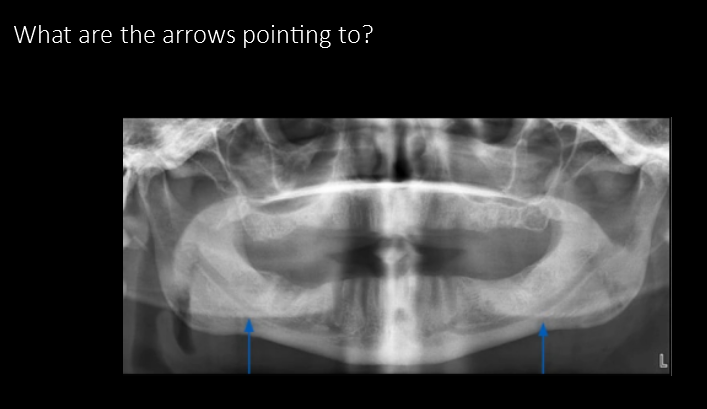
<p>Ghost image of mandible</p>
44
New cards
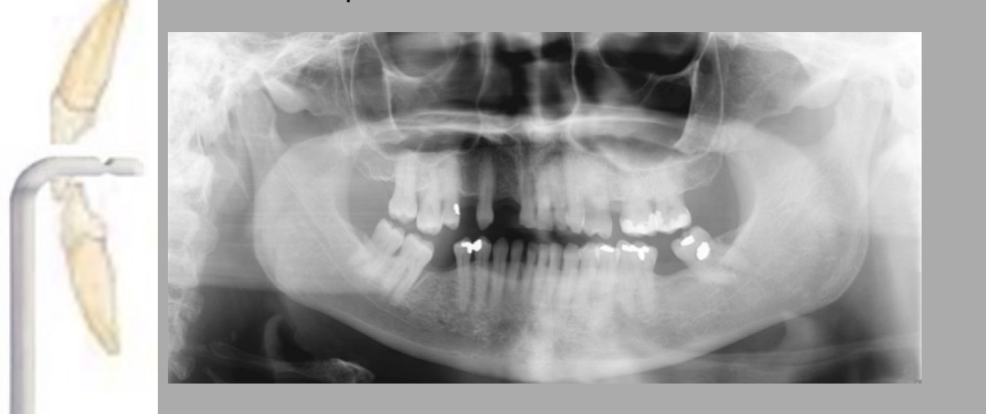
term image

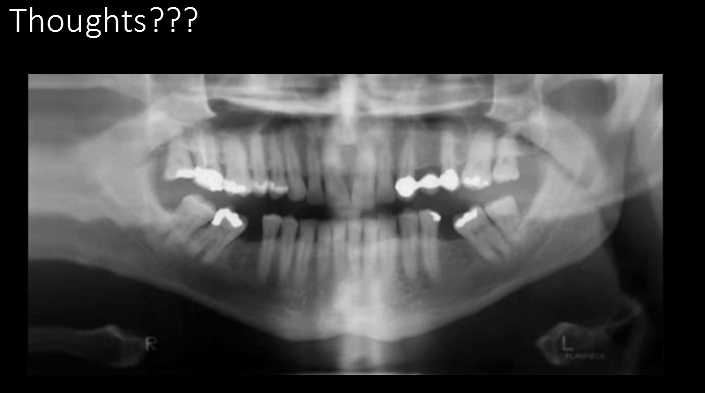
Pano. hit shoulder and dragged

Must check for shoulder clearance; walk around the patient, look from each side.
<p>Pano. hit shoulder and dragged</p><p>Must check for shoulder clearance; walk around the patient, look from each side. </p>