Cross-Site Scripting - CompTIA Security+ SY0-701 - 2.3
 Call Kai
 Learn
Learn Practice Test
 Spaced Repetition
 Match
Match Flashcards
 Knowt Play
1/4

There's no tags or description
Looks like no tags are added yet.
Name | Mastery | Learn | Test | Matching | Spaced | Call with Kai |
|---|
No analytics yet
Send a link to your students to track their progress
5 Terms
Cross Site Scripting
• XSS
• Cascading Style Sheets (CSS)
are something else entirely
• Originally called cross-site
because of browser security flaws
• Information from one site
could be shared with another
• One of the most common
web application development errors
• Takes advantage of the trust a user has for a site
• Complex and varied
• Malware that uses JavaScript
• Do you allow scripts? Me too.
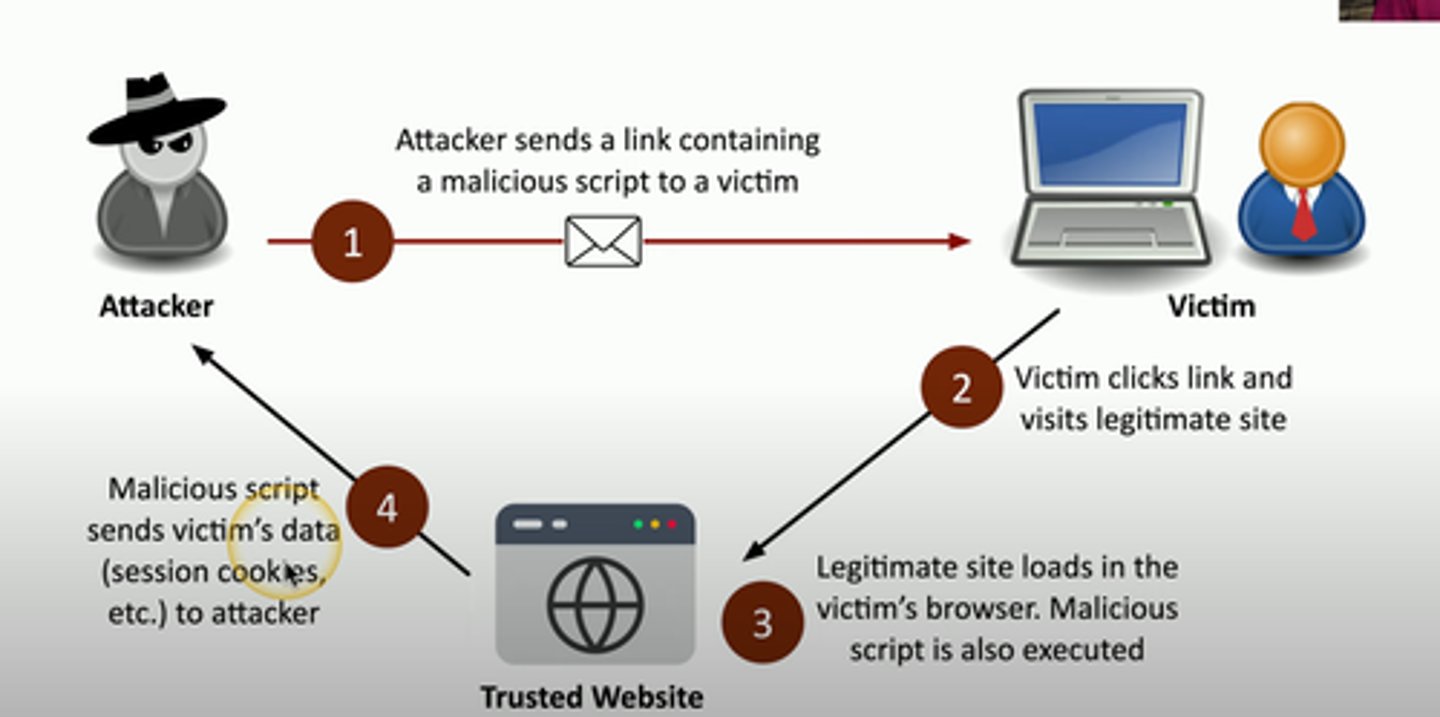
Non-persistent (reflected) XSS attack
Web-site allows scripts to run in user input
- search box is a common source
Attacker emails a link that takes advantage of this vulnerability
- Runs a script that send credentials/session ID's/cookies to the attacker
Script embedded in URL executed in the victims browser
Attacker uses credentials/sessions ID's/cookies to steal victims infomration without their knowledge
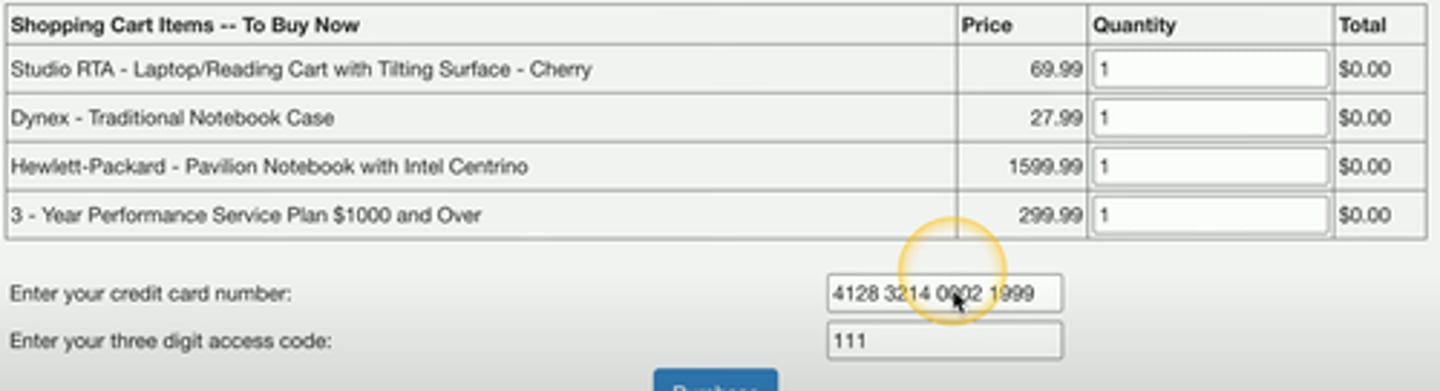
Persistent (stored) XSS attack
• Attacker posts a message to a social network
- Includes the malicious payload
• It's now "persistent" - Everyone gets the payload
• No specific target - All viewers to the page
• For social networking, this can spread quickly
- Everyone who views the message can have it
posted to their page
- Where someone else can view it and propagate it further...
Hacking a Subaru
June 2017, Aaron Guzman
- Security researcher
When authenticating with Subaru, users get a token
- This token never expires (bad!)
A valid token allowed any service request
- Even adding your email address to someone
else's account
- Now you have full access to someone else's car
Web front-end included an XSS vulnerability
- A user clicks a malicious link, and you have
their token
Protecting against XSS
- Be careful when clicking untrusted links
- Consider disabling JavaScript, or control with an extension
- Keep your browser and applications updated
- Keep your web server applications updated

