Neuroscience of Pain: Brain Systems, Perception, and Empathy
 Call Kai
 Learn
Learn Practice Test
 Spaced Repetition
 Match
Match Flashcards
 Knowt Play
1/72

There's no tags or description
Looks like no tags are added yet.
Name | Mastery | Learn | Test | Matching | Spaced | Call with Kai |
|---|
No analytics yet
Send a link to your students to track their progress
73 Terms
What are the four brain systems involved in sensory-perceptual processing?
Cognitive System, Sensory System, Motor System, and Behavioral State System.
What does the Cognitive System in the brain involve?
It involves language, memory, attention, and cortical control.
What is the role of the Sensory System?
It processes sensory information such as vision, audition, somatosensation, olfaction, and gustation.
What is the function of the Motor System?
It includes the basal nuclei, cerebellum, and corticospinal tract, facilitating movement.
What does the Behavioral State System regulate?
It regulates sleep-waking cycles, arousal, motivation, stress, and emotion.
What are the two information streams involved in perception?
Bottom Up (Data Driven) and Top Down (Goal Directed/Knowledge Driven).
What is the perception of pain a result of?
It results from the interaction between ascending nociceptors and descending analgesic systems.
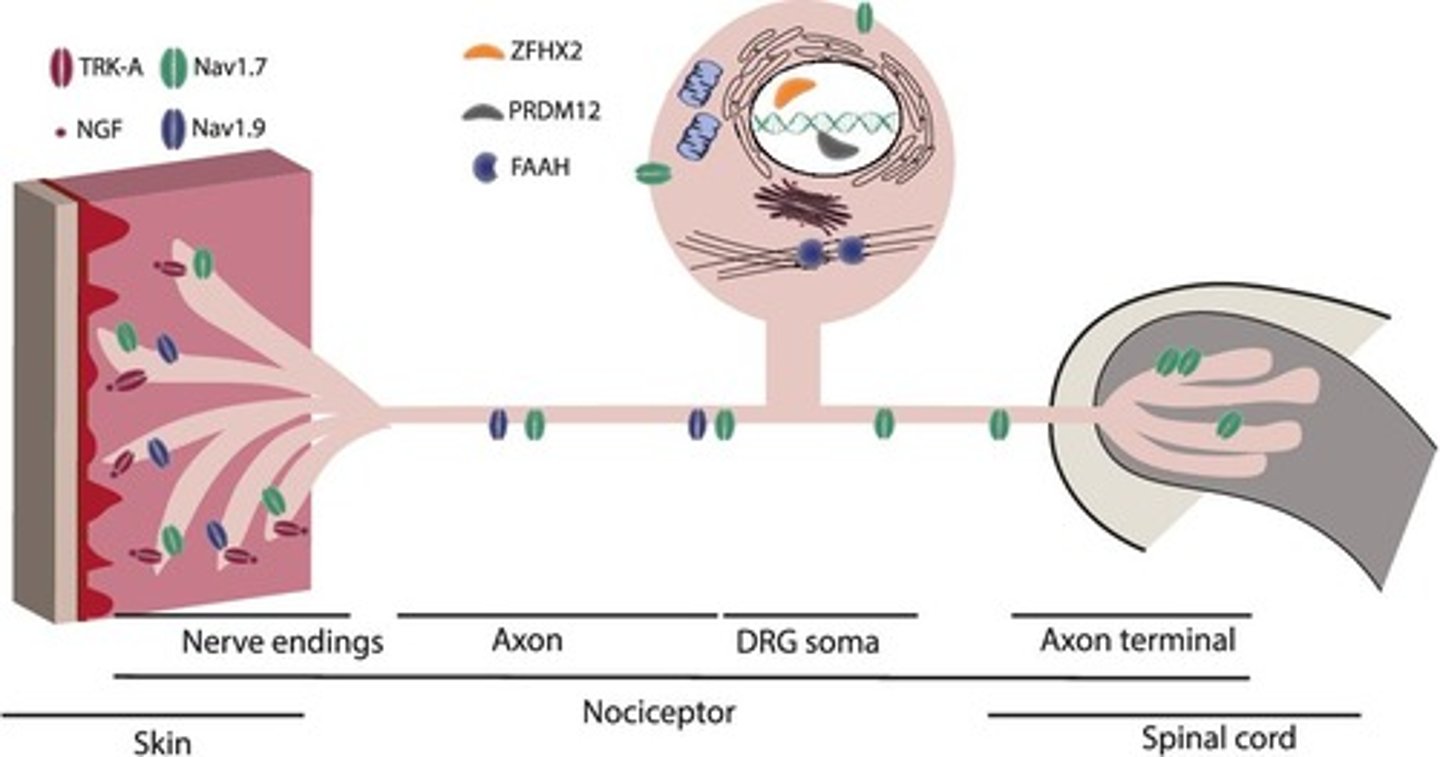
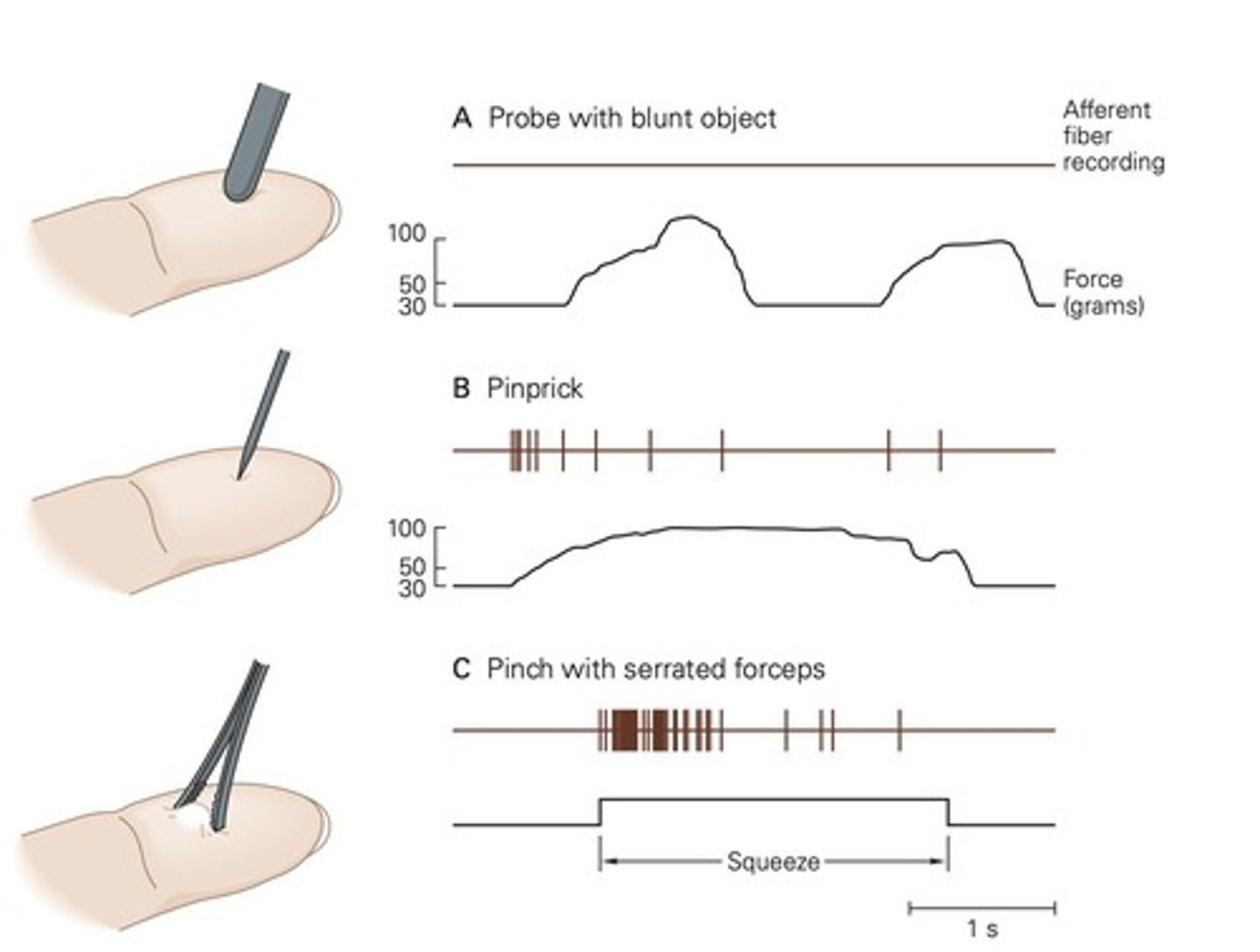
What are nociceptors?
Specialized receptors that respond to intense mechanical, thermal, and chemical stimulation.
Where are nociceptors located in the body?
They are found in the skin, cornea of the eye, pulp of the teeth, meninges, and around muscles and internal organs, but not in the brain.
What is the function of Substance P in pain processing?
Substance P promotes swelling and is involved in the nociceptive signaling pathway.
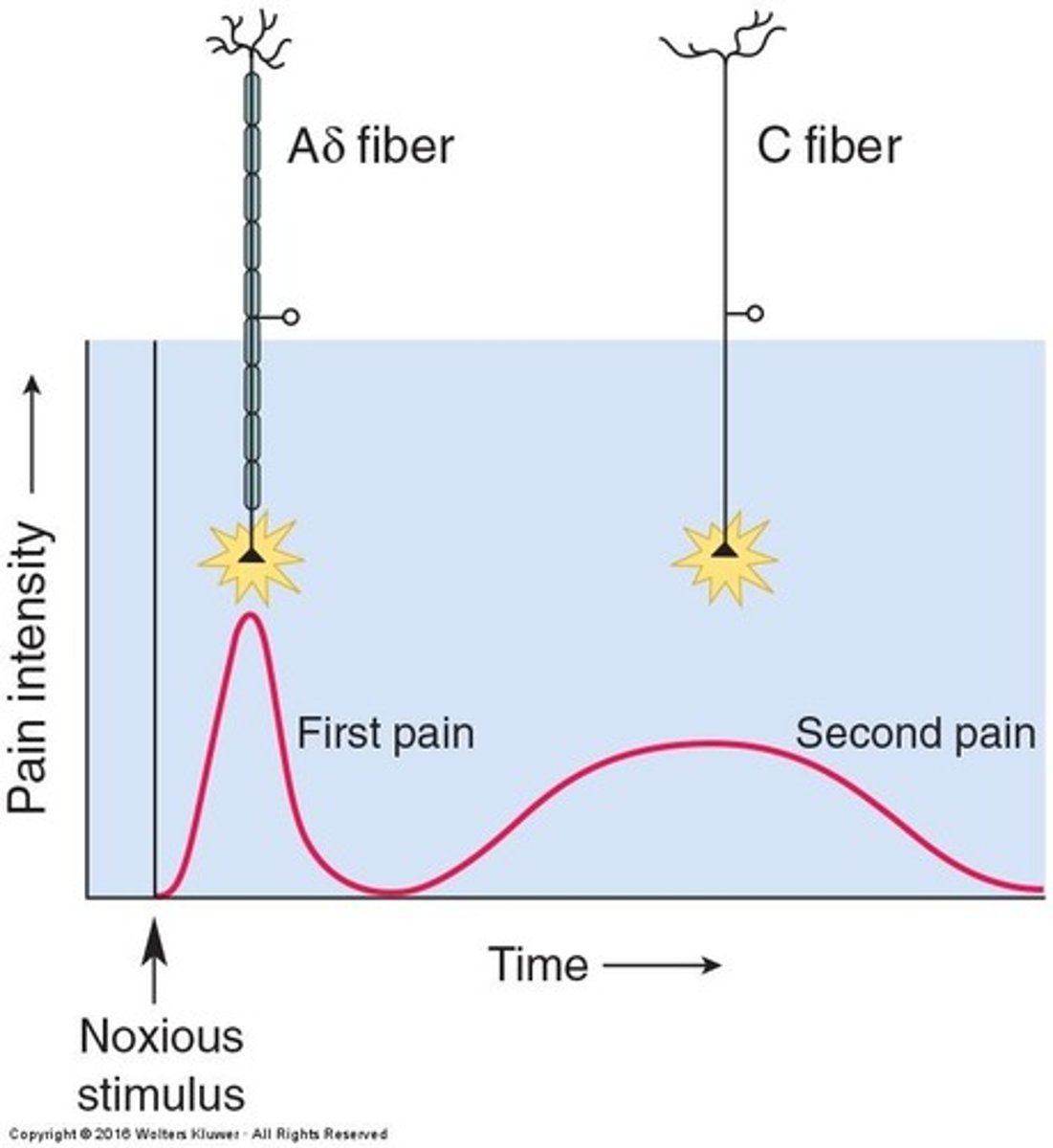
What are the two types of nociceptors?
A delta fibers (fast, sharp pain) and C fibers (slow, dull pain).
How does congenital insensitivity to pain occur?
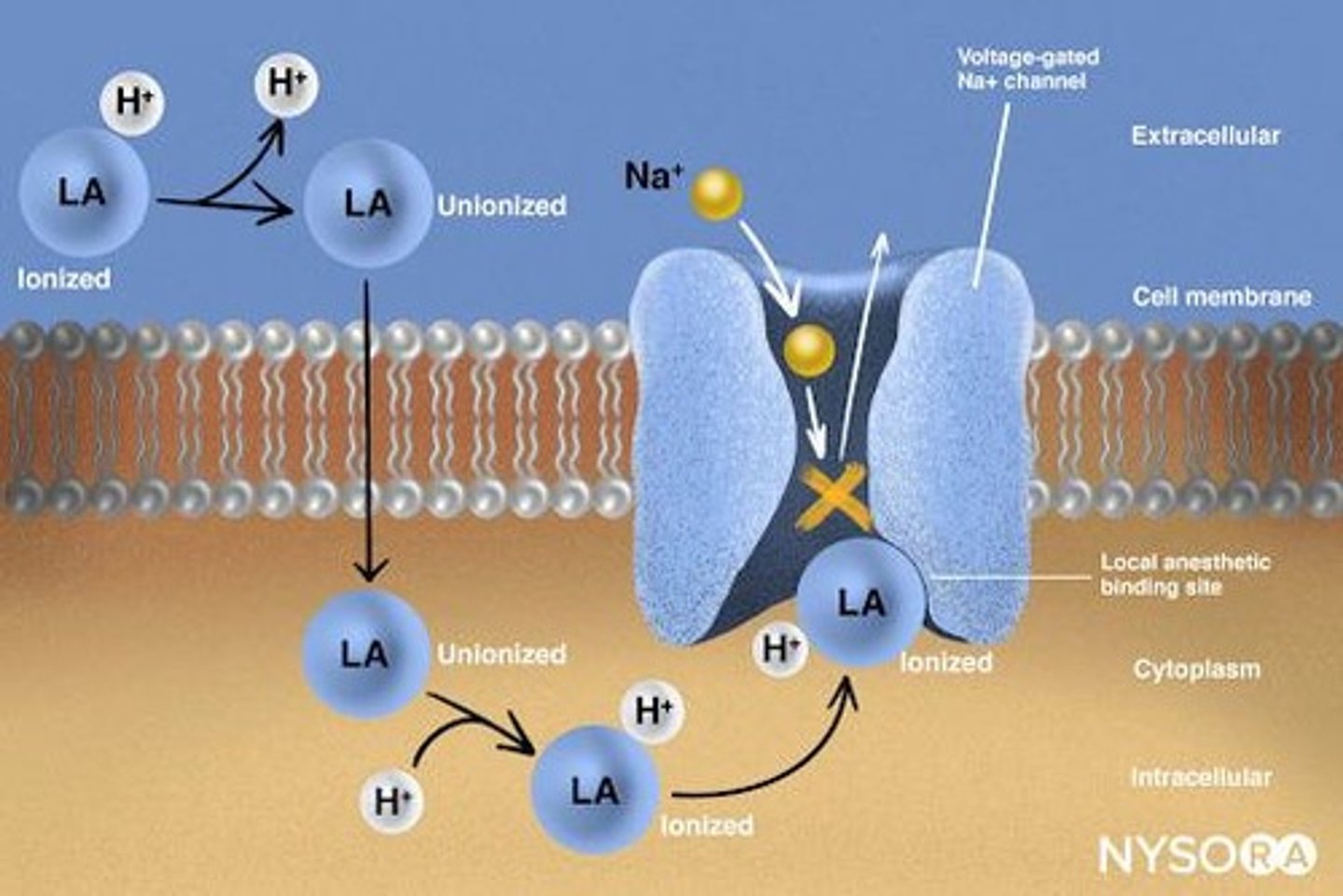
It is caused by a mutation in the gene that codes for voltage-gated sodium channels in nociceptors.
What is the role of local anesthetics like Lidocaine?
They inhibit nociception by blocking sodium channels.
What areas of the brain are involved in nociceptive processing?
Brainstem, thalamus, limbic system, and somatosensory cortex.
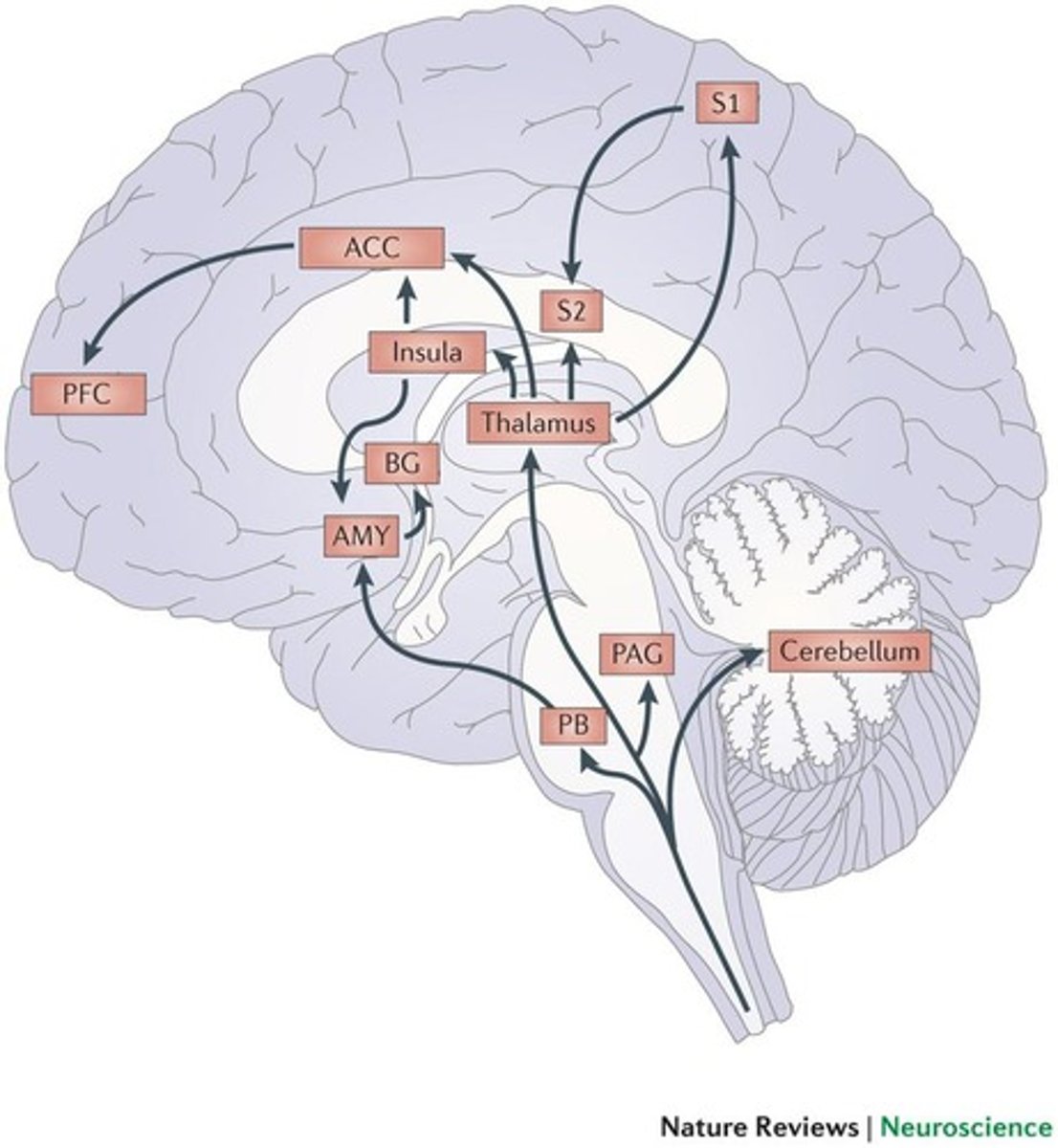
What is the Pain Matrix?
It refers to the network of brain regions activated during a painful experience.
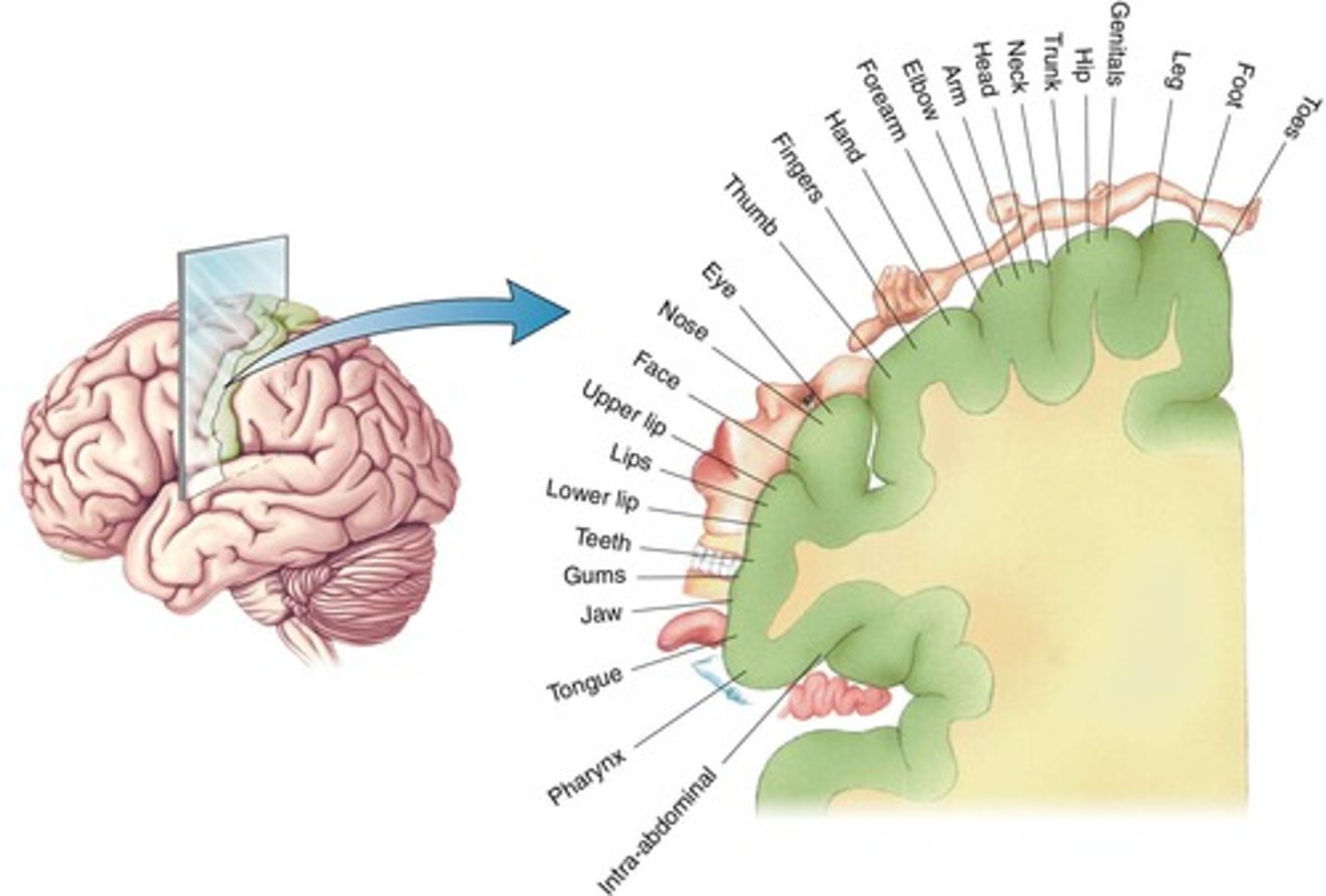
What is cortical somatotopy?
It is the mapping of the body's surface sensations onto the somatosensory cortex.
What is referred pain?
It is pain perceived at a location other than the site of the painful stimulus, due to intermixing of nociceptor signals.
What is phantom limb sensation?
It is the sensation that an amputated or missing limb is still attached and functioning.
Who published the first account of phantom limbs?
S. Weir Mitchell in 1866.
What is the significance of the study by Dennis & Melzack (1983) regarding pain?
They identified three functions of pain: withdrawal from harm, promoting recuperation behaviors, and serving as a social signal.
What is the role of the thalamus in pain perception?
It relays nociceptive input to the somatosensory cortex for sensory discrimination.
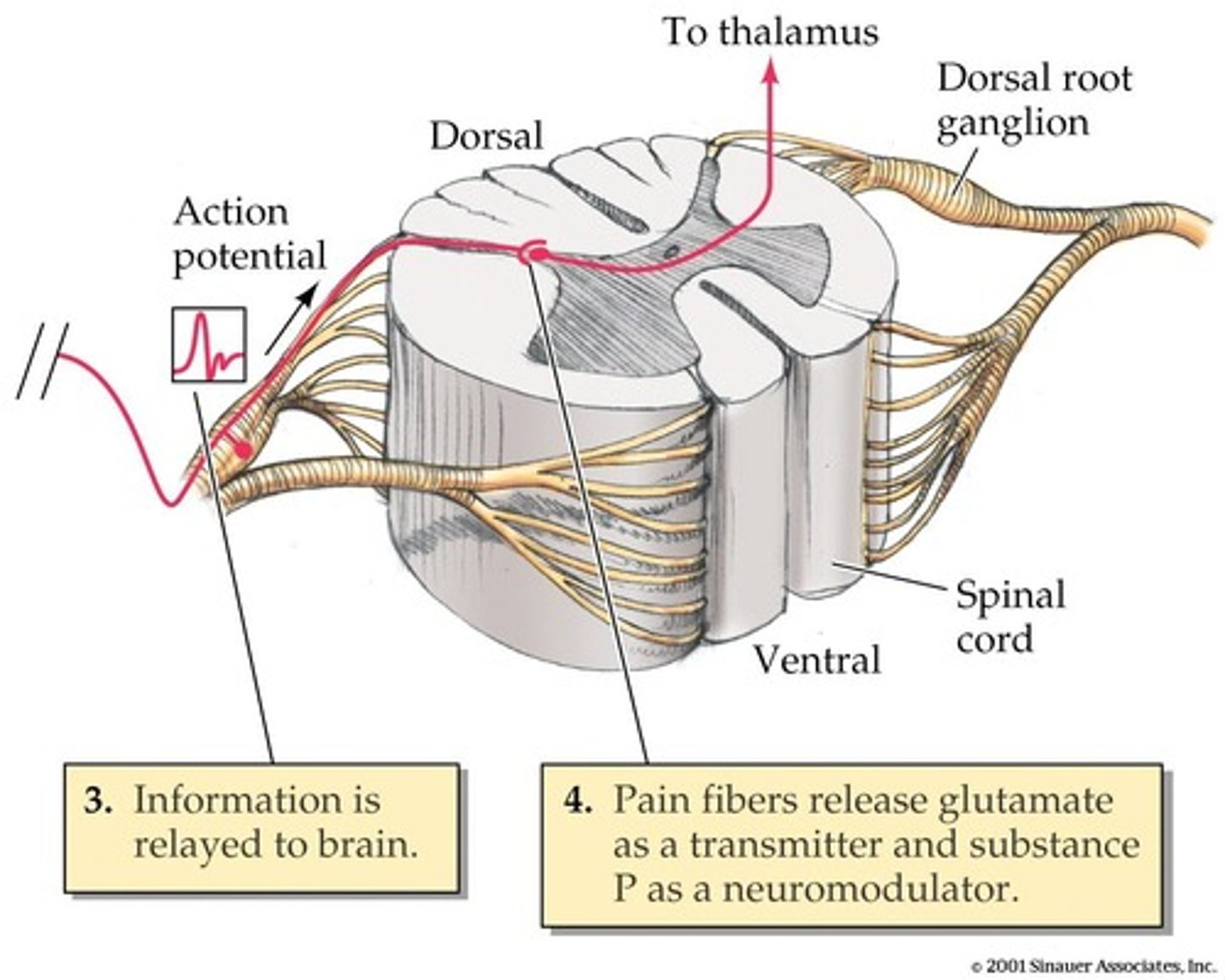
What is the function of the anterior cingulate cortex in pain processing?
It is involved in the emotional aspect of pain perception.
What is the process of sensory coding in the nervous system?
Information is coded by the pattern of electrical potentials, with intensity and duration encoded by action potential frequency.
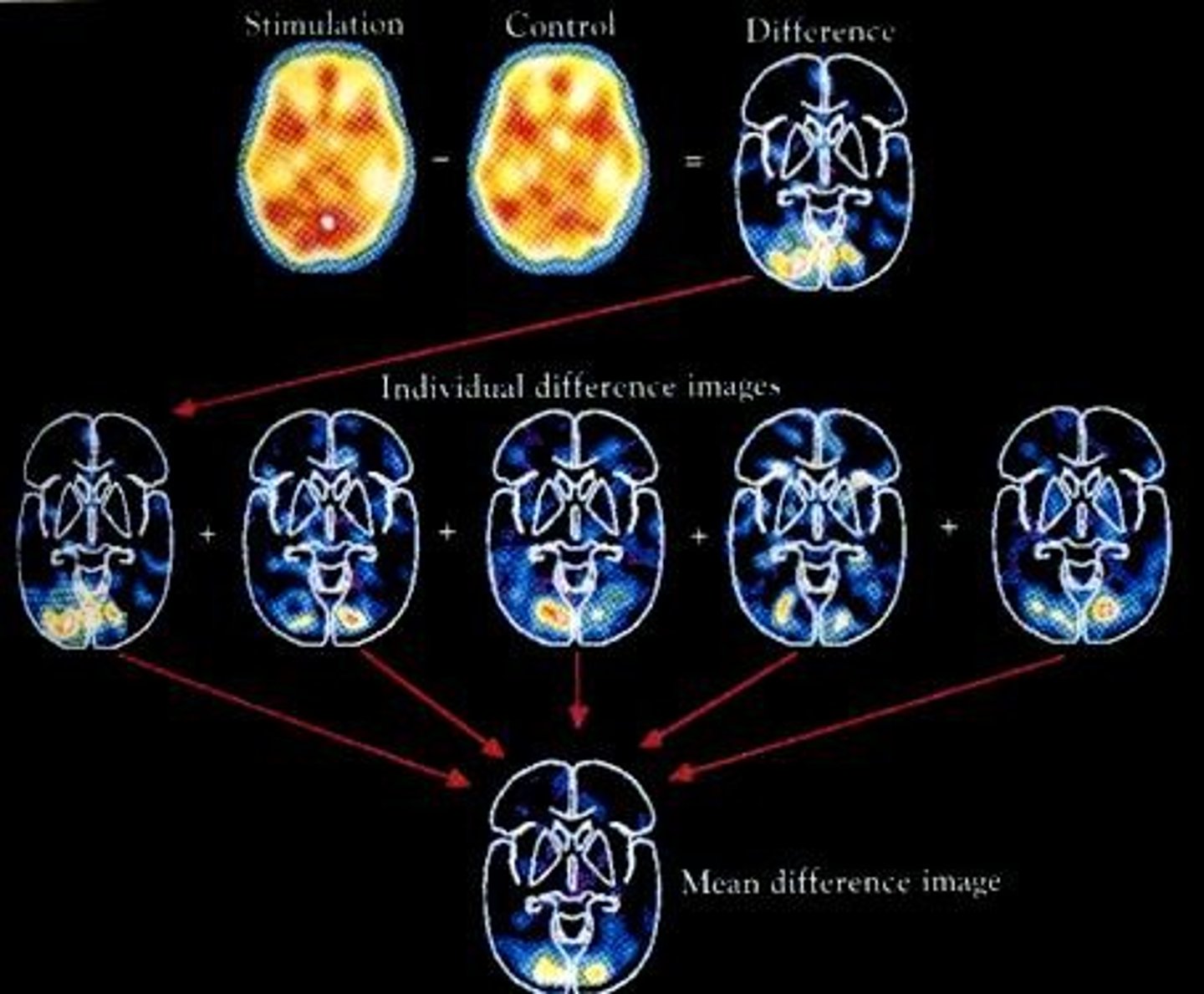
What imaging technique was used to measure blood flow in the studies?
Positron Emission Tomography (PET)
What radiotracer was used for measuring blood flow in the PET scans?
O-15 labeled water
What is the purpose of F18 flurodeoxyglucose in PET scans?
To measure glucose metabolism
What does C11 raclopride measure in PET scans?
Dopamine binding
What is the role of a cyclotron in PET scan preparation?
To bombard a target with protons to create a positron-emitting radiotracer
What experimental condition was reported in Talbot et al. (1991)?
A device produced either a painful sensation of heat or a painless sensation of warmth on the right forearm.
What was the focus of the study by Rainville et al. (1997)?
To investigate the effects of hypnotic suggestion on the unpleasantness of sensations.
What brain regions are activated by painful stimuli?
Primary somatosensory cortex and anterior cingulate cortex.
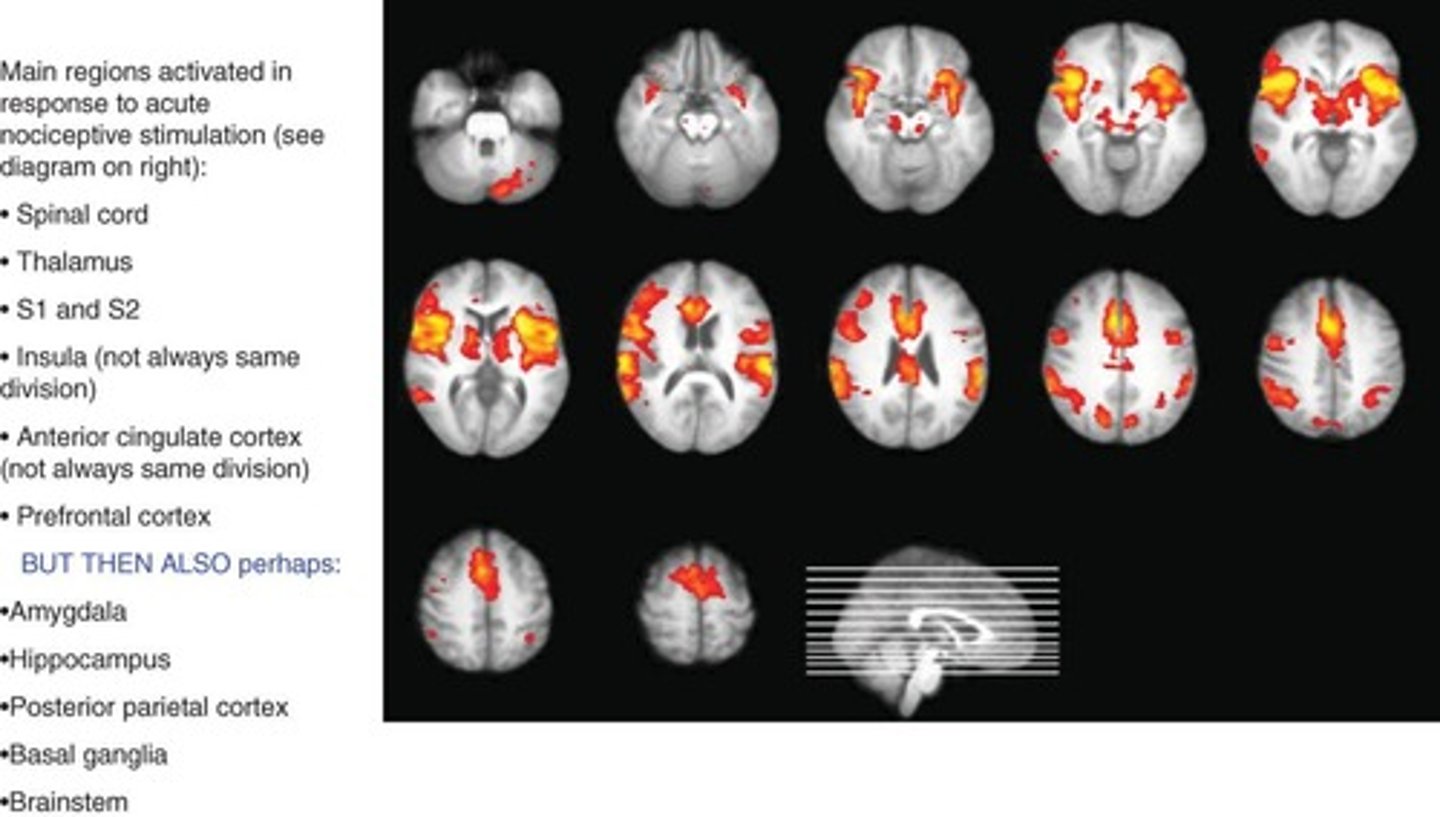
What is the function of the somatosensory cortex?
Involved in the location, intensity, and duration of pain.
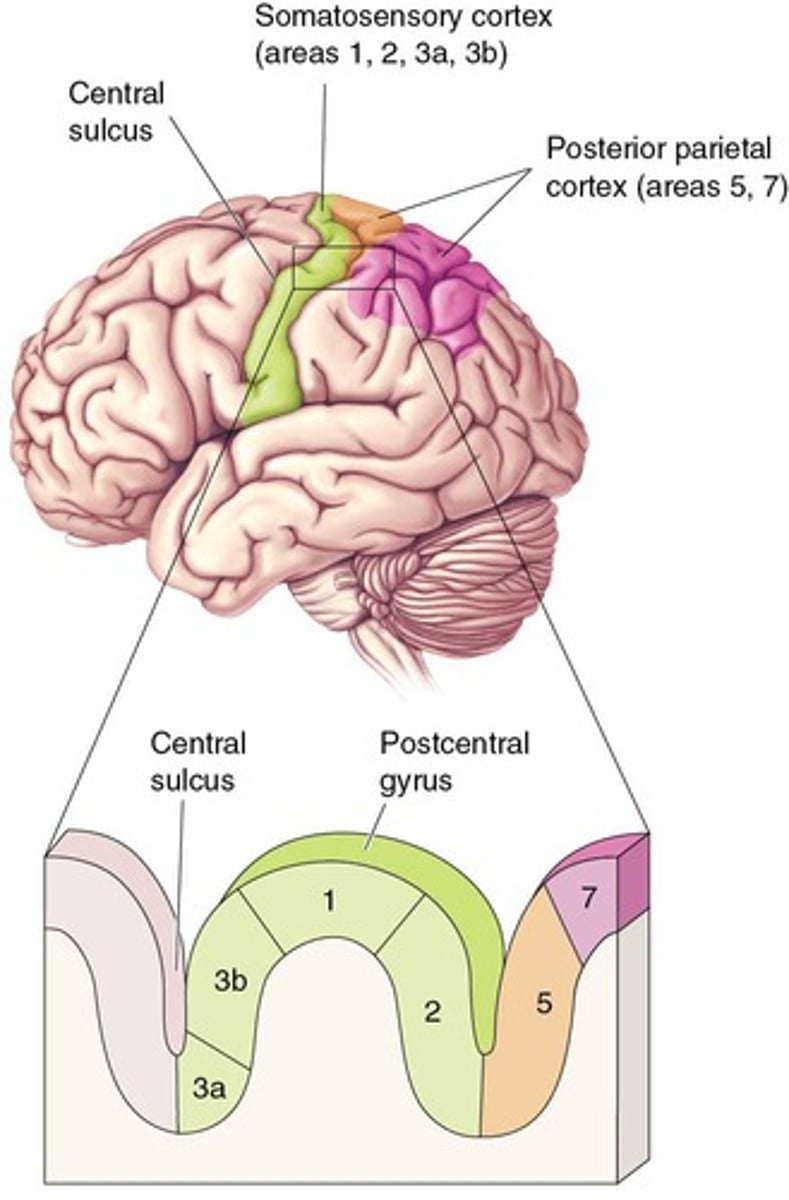
What does the anterior cingulate cortex (ACC) process?
The unpleasantness or aversiveness of pain.
What was the aim of the Cyberball experiment?
To determine if the regions activated by social pain are similar to those found in studies of physical pain.
What does dACC stand for?
Dorsal Anterior Cingulate Cortex
What is the significance of the insular cortex in pain perception?
It is involved in interoceptive awareness and emotional feelings.
What is the relationship between physical and social pain according to Lieberman & Eisenberger (2006)?
They suggest that the social pain system may have evolved from the physical pain system.
What does the term 'exaptation' refer to in evolutionary biology?
The adaptation of a trait for a purpose other than what it originally evolved.
What was the design of the study involving heterosexual couples comparing pain stimulation?
The female's brain was scanned while comparing low intensity (no pain) stimulation to high intensity (painful) stimulation of both her own and her partner's hand.
What were the results of the conjunction analysis in the pain stimulation study?
Increased pain-related activation was observed in ACC and insular regions.
What is the role of the amygdala in pain perception?
It has reciprocal connections with the insula and is involved in emotional responses to pain.
What does the anterior insula (AI) contribute to in terms of pain?
It is involved in the emotional and motivational aspects of pain.
What is the significance of the ventroposterior thalamus in interoceptive awareness?
It relays input from gustatory and visceral areas to the insula.
What is the common neuroanatomical basis shared by physical and social pain?
Evidence suggests that both types of pain activate similar brain regions.
What type of subjects were used in the studies discussed?
Male and female subjects, with varying numbers in each study.
What was a key finding regarding social exclusion in the studies?
Social exclusion activates similar brain regions as physical pain.
What is the relationship between social support and pain perception?
Both physical and social pain are similarly affected by social support.
What is empathy?
The ability to perceive and share another person's affective state.
Which brain regions are associated with empathetic pain responses?
The anterior insular cortex and the anterior cingulate cortex.
What was the main finding regarding patients with anterior insular cortex lesions?
They displayed decreased discrimination accuracy and prolonged reaction time when processing others' pain.
What deficits were observed in patients with anterior cingulate cortex lesions?
No significant deficits in explicit and implicit pain perception were observed.
What is the role of the anterior insular cortex in empathetic pain processing?
It is critical for both explicit and implicit pain perception.
What are the three dimensions of pain processing in the brain?
Physical dimension (location/intensity), affective/motivational dimension (unpleasantness), and interoceptive dimension (subjective feeling).
What does the anterior cingulate cortex primarily process?
The unpleasantness or aversiveness of pain.
What is the insular cortex's role in pain perception?
It is involved in interoception, or the awareness of what pain feels like in the body.
How may social pain relate to physical pain?
Social pain may have evolved from physical pain, explaining emotional distress from loss.
What is the significance of the study's findings for neuropsychiatric illnesses?
It highlights the importance of the anterior insular cortex in social functioning and empathy.
What experimental task did subjects perform in the study?
They chose between 'non-painful' and 'painful' stimuli based on digital photographs.
What was the anticipation cue's timing in the pain trials?
The anticipation cue was presented at time 0, with pain applied between 3 and 4 seconds.
What does the term 'empathic pain' refer to?
The ability to feel another person's pain.
What is the Mini-Mental State Examination (MMSE)?
A test for cognitive impairment.
What does the Beck Depression Inventory (BDI) measure?
Baseline mood.
What is the significance of lesion laterality in the study?
It helps identify the specific brain regions affected and their relation to pain perception.
What are the implications of the study's findings?
They suggest that anterior insular cortex lesions can lead to significant deficits in empathetic pain processing.
What is the role of the primary somatosensory cortex in pain?
It processes the location, intensity, and duration of pain.
What does the term 'exaptation' refer to in the context of social pain?
The evolutionary process where social pain evolved from physical pain.
What is the typical reaction time for subjects processing others' pain?
Prolonged reaction time was noted in patients with anterior insular cortex lesions.
What type of stimuli were used in the experimental task?
216 digital color photographs showing hands or feet in painful or non-painful situations.
What does the term 'signal and noise' refer to in the context of sensitivity?
It refers to the ability to distinguish between relevant stimuli (pain) and irrelevant stimuli.
What does the study suggest about the anterior insular cortex's role in social functioning?
It is critical for higher-level social functioning, particularly in empathetic responses.
What was the average age of participants in the study?
The average age varied, with specific ages listed for each participant.
What is the significance of the chronicity of lesions in the study?
It indicates the time length between surgery and testing, which may affect recovery and perception.
What does the term 'pain-irrelevant task' refer to?
A task that is not related to pain but may be influenced by empathetic pain perception.