Musculoskeletal structure, function and assessment
 Call Kai
 Learn
Learn Practice Test
 Spaced Repetition
 Match
Match Flashcards
 Knowt Play
1/59

There's no tags or description
Looks like no tags are added yet.
Name | Mastery | Learn | Test | Matching | Spaced | Call with Kai |
|---|
No analytics yet
Send a link to your students to track their progress
60 Terms
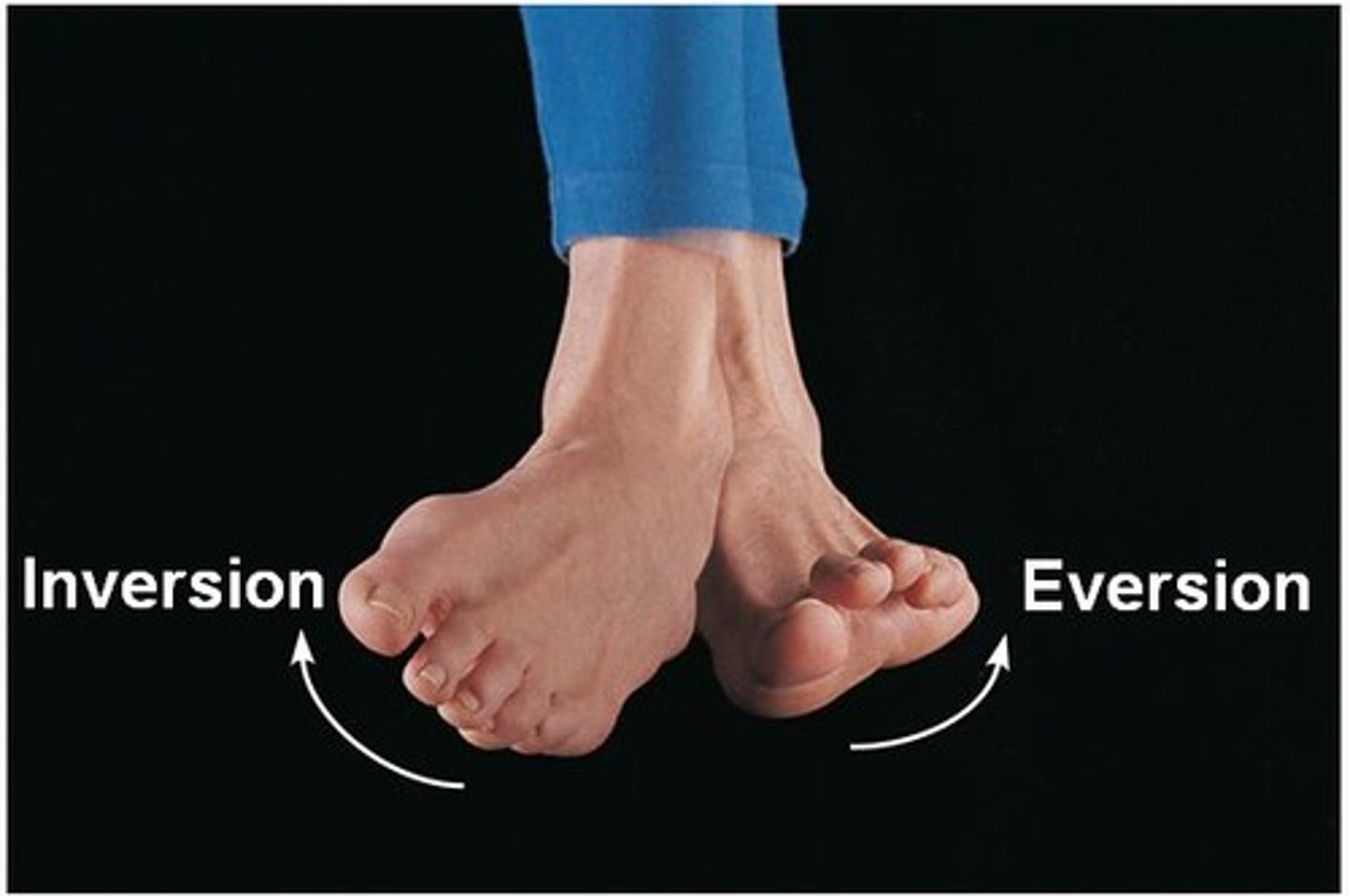
inversion/eversion
i: sole of foot inward
e: sole of foot outward
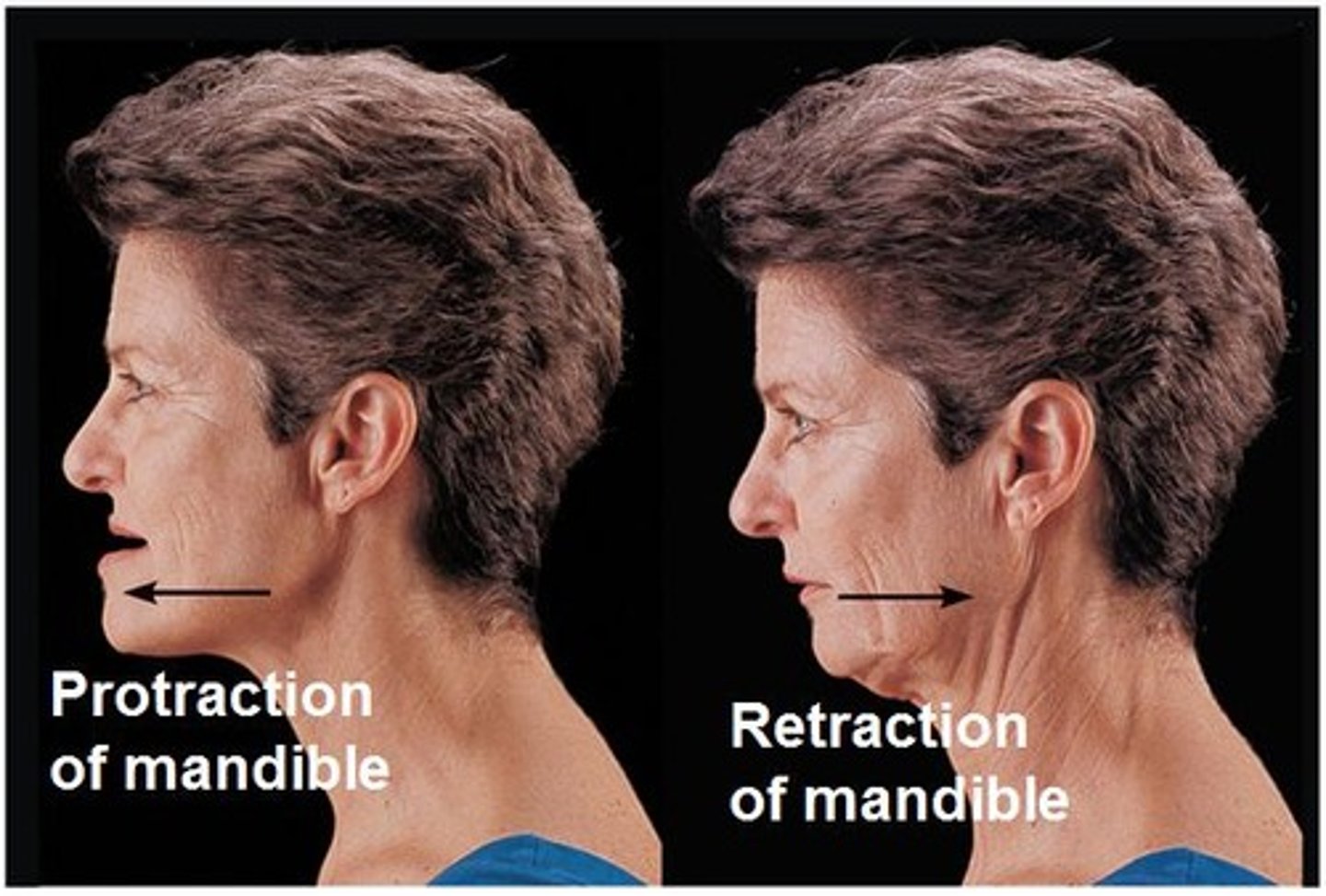
protraction/retraction
p: moving body part forward
r: moving body part backward
aging adult musculoskeletal changes
-kyphosis
-risk of osteoporosis accelerated for white females over 60
-loss of bone density after age 40 and significant loss at 60
-flexion of hips and Knees
-contour changes
-get up and go test
-marked bony prominences
-lengtheing of arm-trunk axis
subjective data
1. joints-> pain, swelling, stiffness, redness, heat?
2. muscles-> pain, weakness, claudication?
3. bone-> pain, numbess/tingling, deformities, fractures, prior injuries?
4. fcn assessment
5. pt centered care-> lifting, repetitive movements, meds, alc/smoking, hazards, typing=carpal tunnel
osteoarthritis vs rheumatoid arthritis
osteo-> worse at end of day
rheumatoid->symmetricc joints, pain worse in am, causes deformities
redness, swelling, and warmth indicate...
inflammation
popping sound heard during injury of the knee can indicate...
ligament tear or fracture
-needs XRAY
myalgia
cramping or aching muscle pain
atrophy
muscle wasting
-due to injury, surgery, disuse
-seen after casts
fractures are ...
worse with movement
musculoskeletal screening vs complete assessment
complete: patient w articular disease, history of musculoskeletal issues, or problems with ADLs.
screening: inspect and palpate joints, observe ROM and do age appropriate observations
order of assessment
1. inspection-> color, contour, size, swelling, deformities, masses
2. palpation->temp, muscles, bones, should not be tender
3. ROM-> active, passive, crepitation
4. muscle testing-> against resistance, compare bilaterally
swelling can signal...
1. joint effusion
2. thickening of synovial lining
3.inflammation
4. bony enlargement
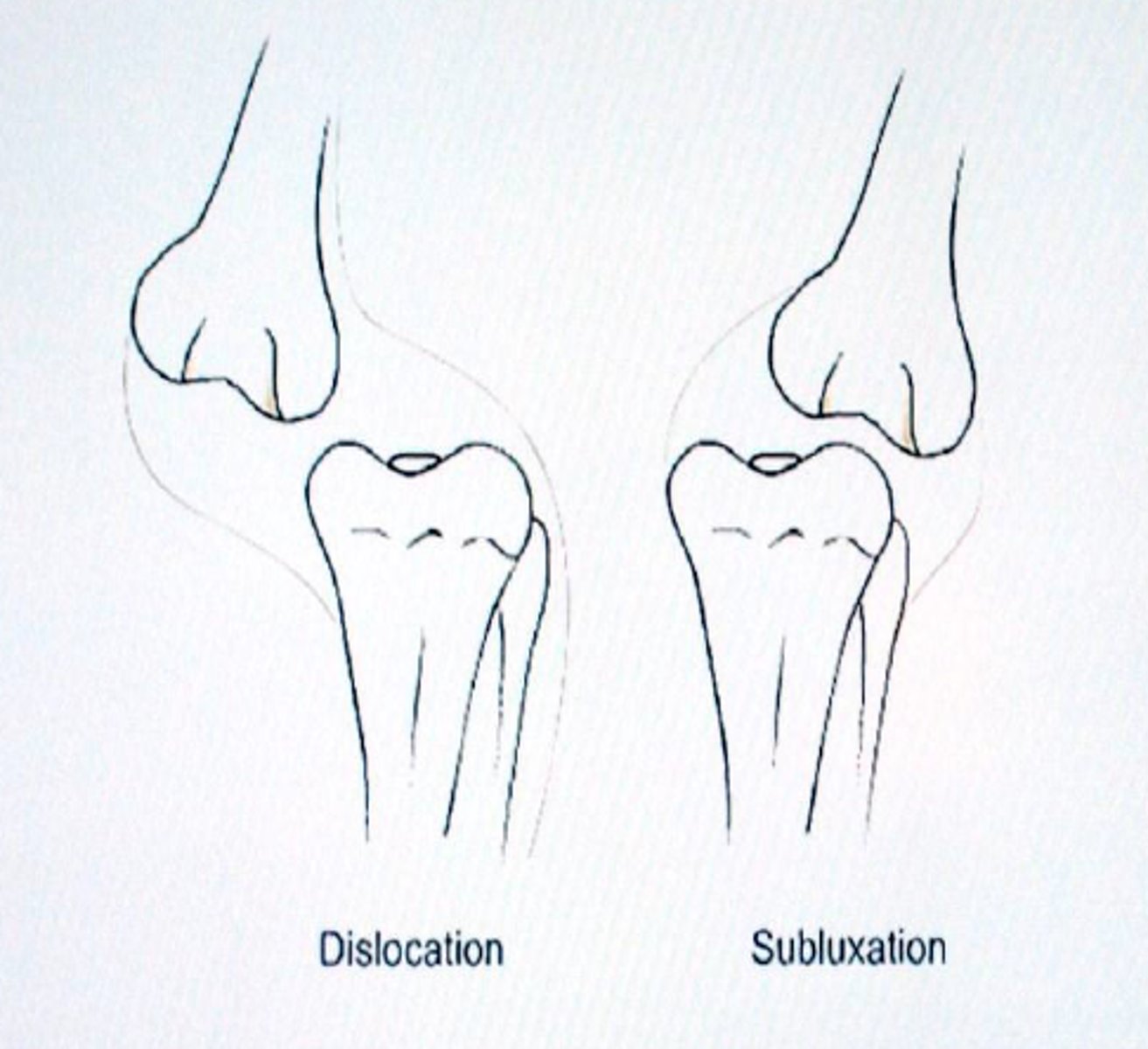
subluxation
two bones in a joint stay in contact but alignment is off
ankylosis
stiffness or fixation of a joint
-extreme flextion of hands and fingers
-seen w RA
When the synovial membrane is thickened what does it feel like?
doughy or boggy
crepitation
an audible or palpable crunching or grating that occurs with movement
grading scale for muscle testing
0= no contraction
1= slight contraction
2= full ROM with gravity eliminated (passive ROM)
3= full ROM with gravity
4= full ROM against gravity, some resistance
5= full ROM against gravity, full resistance
Assessing TMJ
-snap or click can occur in healthy people
-palpate as person clenches teeth, look for symmetry
-have pt move jaw forward and laterally against resistance
--tests cranial nerve V (trigeminal)
-pain and crepitus=TMJ dysfunction
- bulging=swelling
cervical spine assessment
-inspect head is erected +spine straight
-spinous processes, trapezius etc should feel firm; no tenderness/spasms
-extension, flexion, rotation, lateral bending
--against resistance +shoulder shrug to test cranial nerve XI
shoulder assessment
-inspect front and back for symmetry, swelling, atrophy (occurs w disuse)
-shoulder pain that is local can be reproducible w palpation/motion
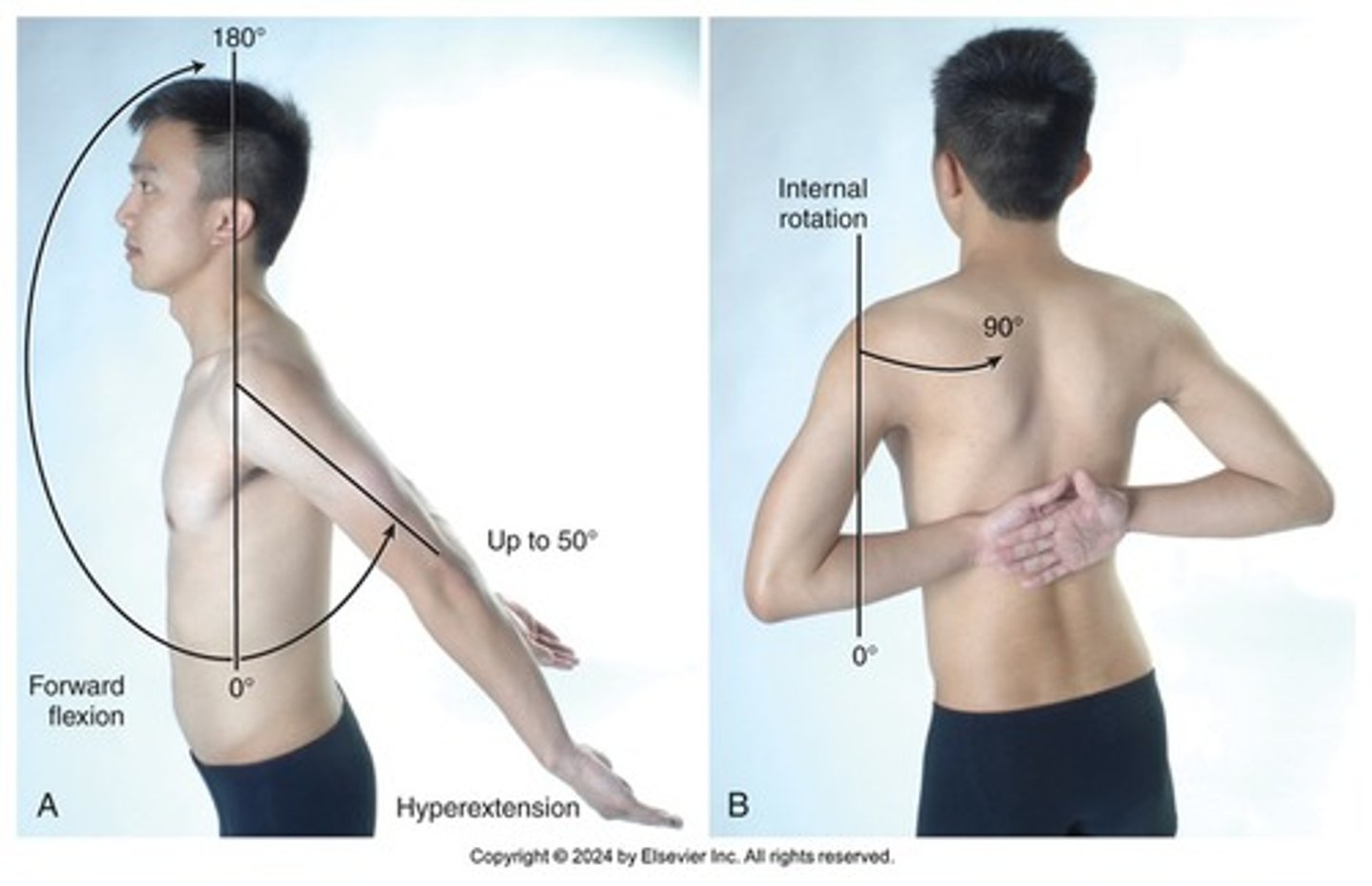
-forward flexion, hyperextension, internal/external rotation, abduction/adduction
-shoulder shrug-> cranial nerve XI
-shrug the shoulders, flex forward and up, and abduct against your resistance
elbow assessment
-inspect size, contour, deformity, masses, swelling in extended and flexed positions
-inspect olecranon bursa and hollows for ab swelling (could be fluid or gout)
-palpate flexed elbow while stabilizing
--shouldn't feel boggy or have SQ nodules (firm/raised)
-bend/straighten and pronate/supinate
-have pt try to extend against resistance
wrist and hand assessment
-inspect both sides noting position, contour, shape, nodules, deformities etc.
-palpate each joint
-wrist and fingers flex/extend, 5 and 4 fingers, make a fist
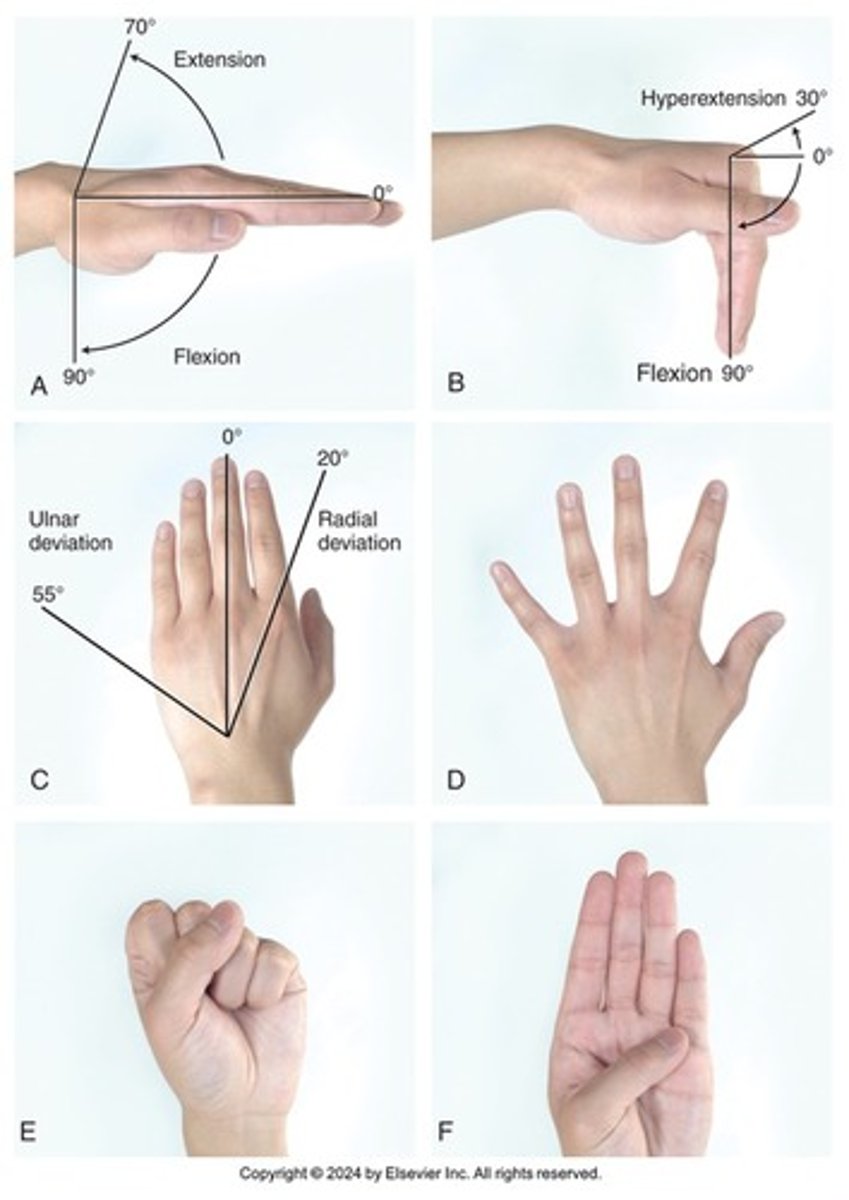
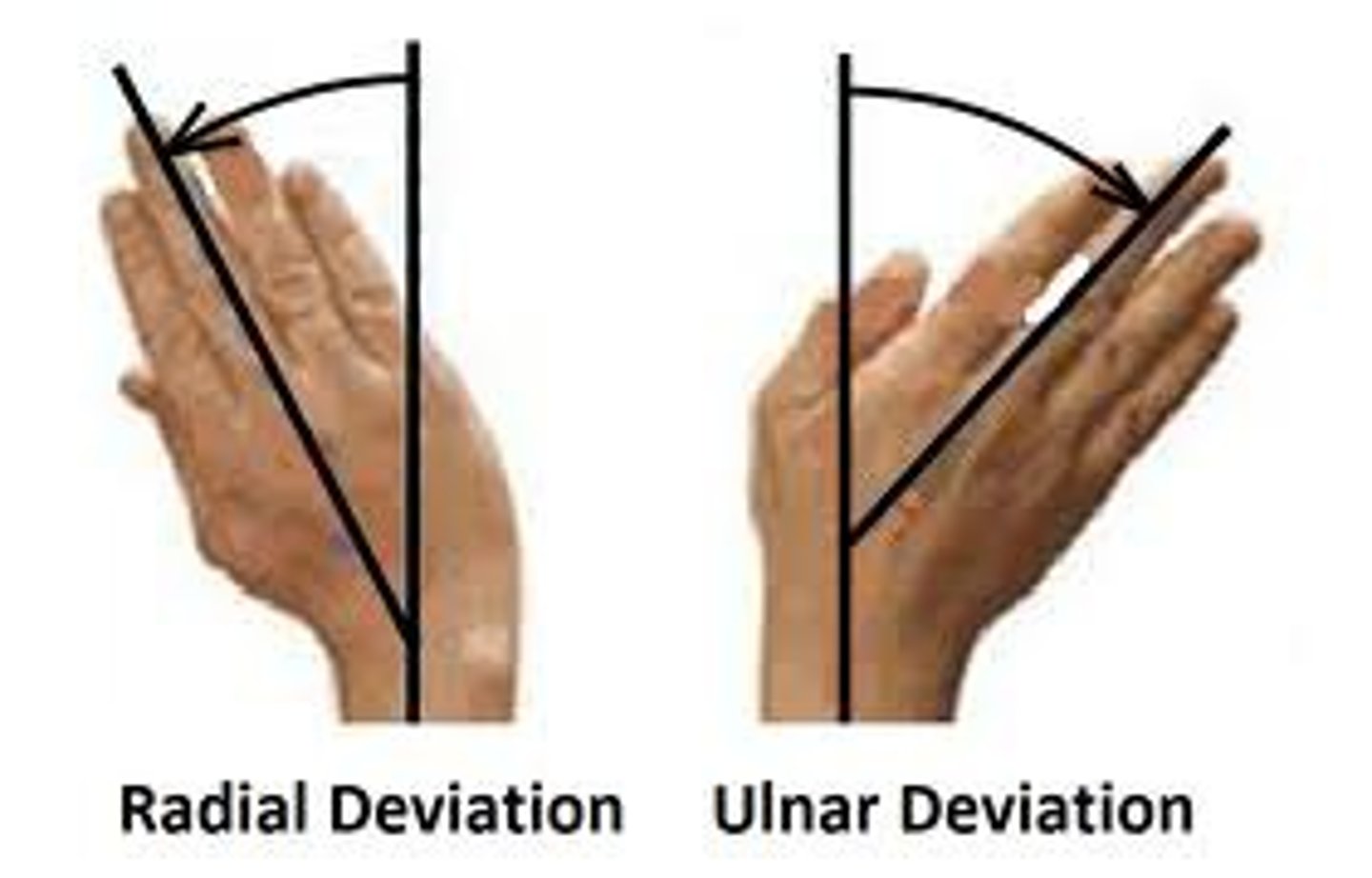
ulnar deviation
wrist shifts outward to ulna and is a sign of rheumatoid arthritis
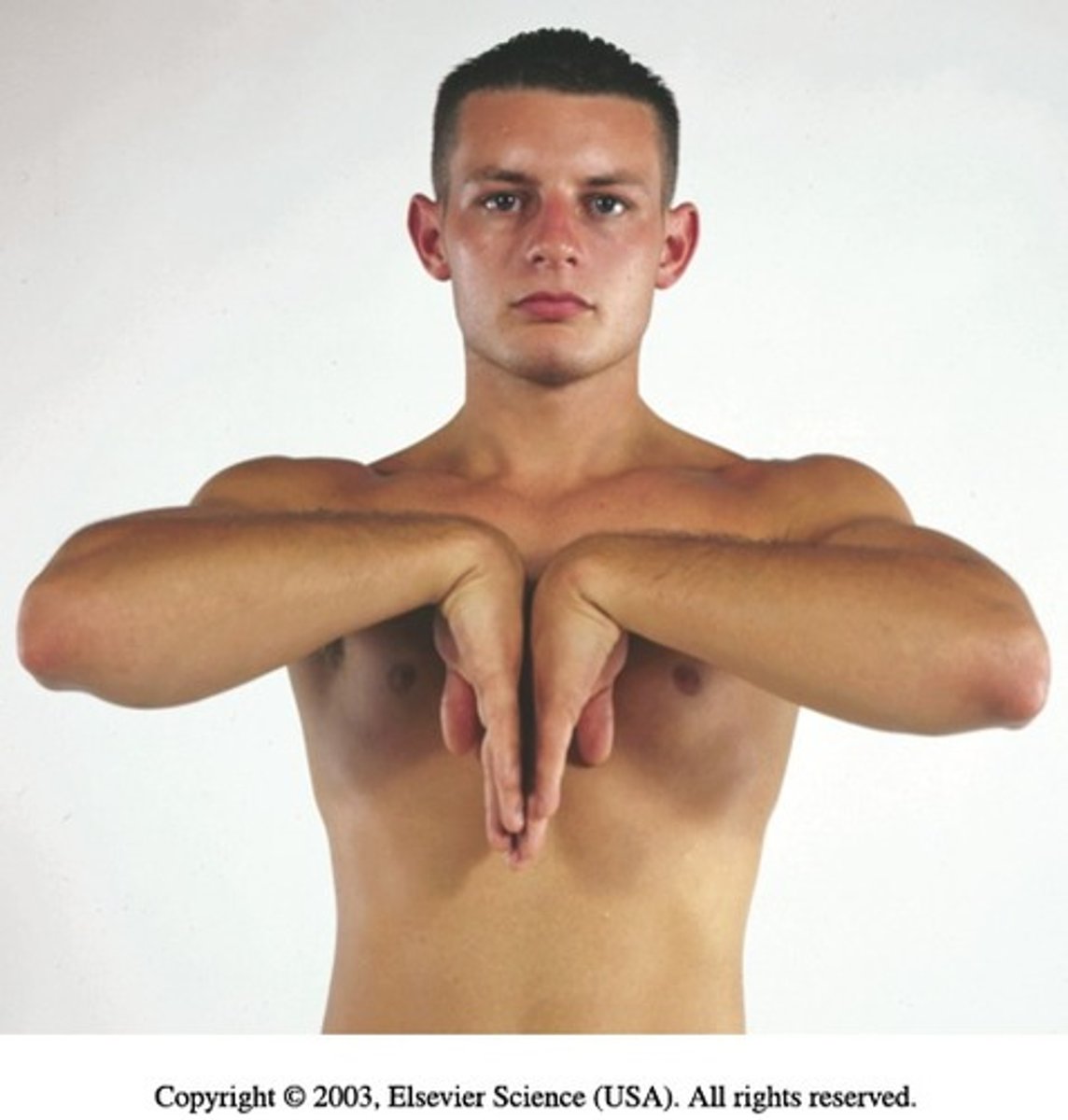
phalan test
hold back of hands to each other flexing wrists 90 degree angle
-if feel numbness/burning= carpal tunnel
-no symps=normal
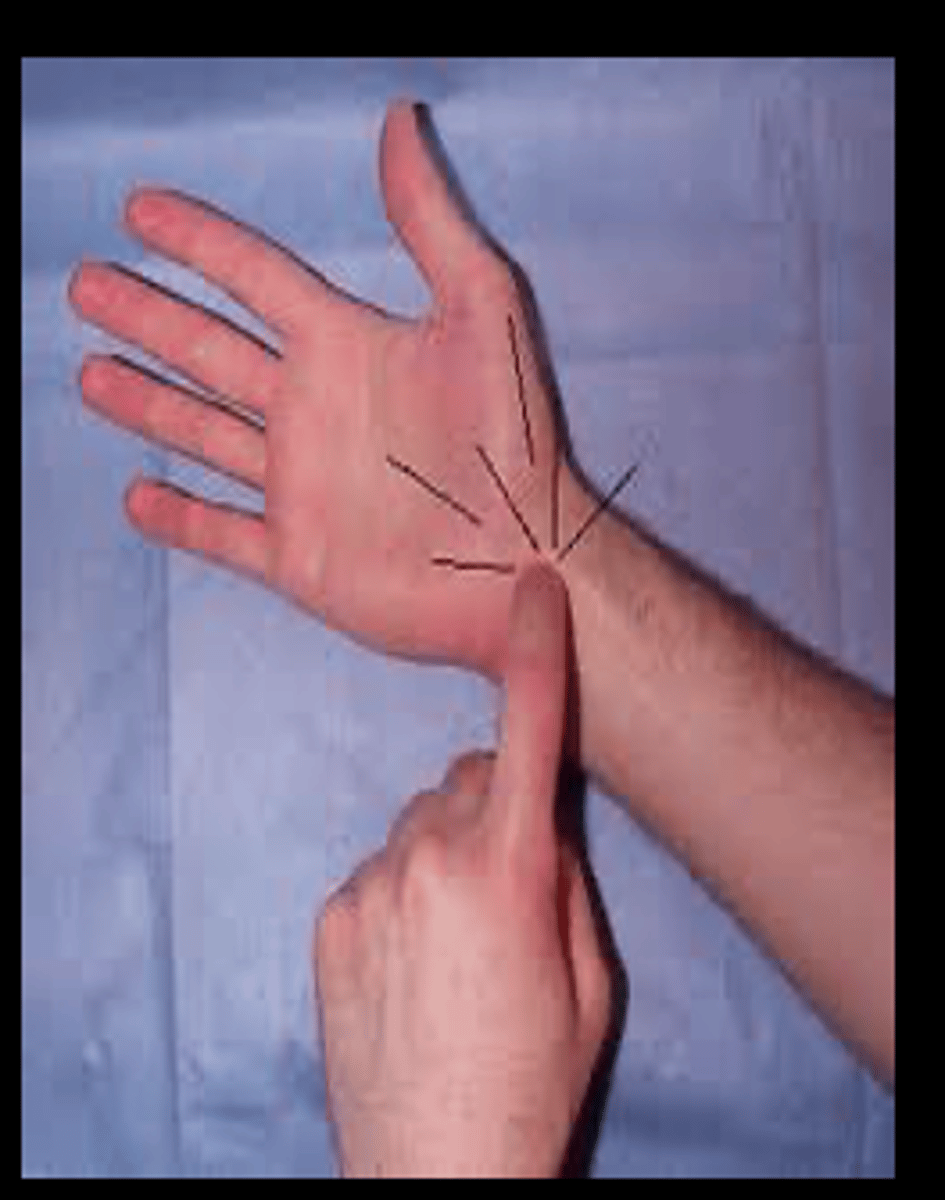
tineal sign
direct percussion of the median nerve
-positive for carpal tunnel= tingling/burning
-no symps=normal
hip assessment
-while patient stands along with spine
-equal gluteal folds, buttocks, and iliac crests
-palpate hip joints with patient supine
-flexion with legs straight and bent, abduction/aduction, internal/external rotation
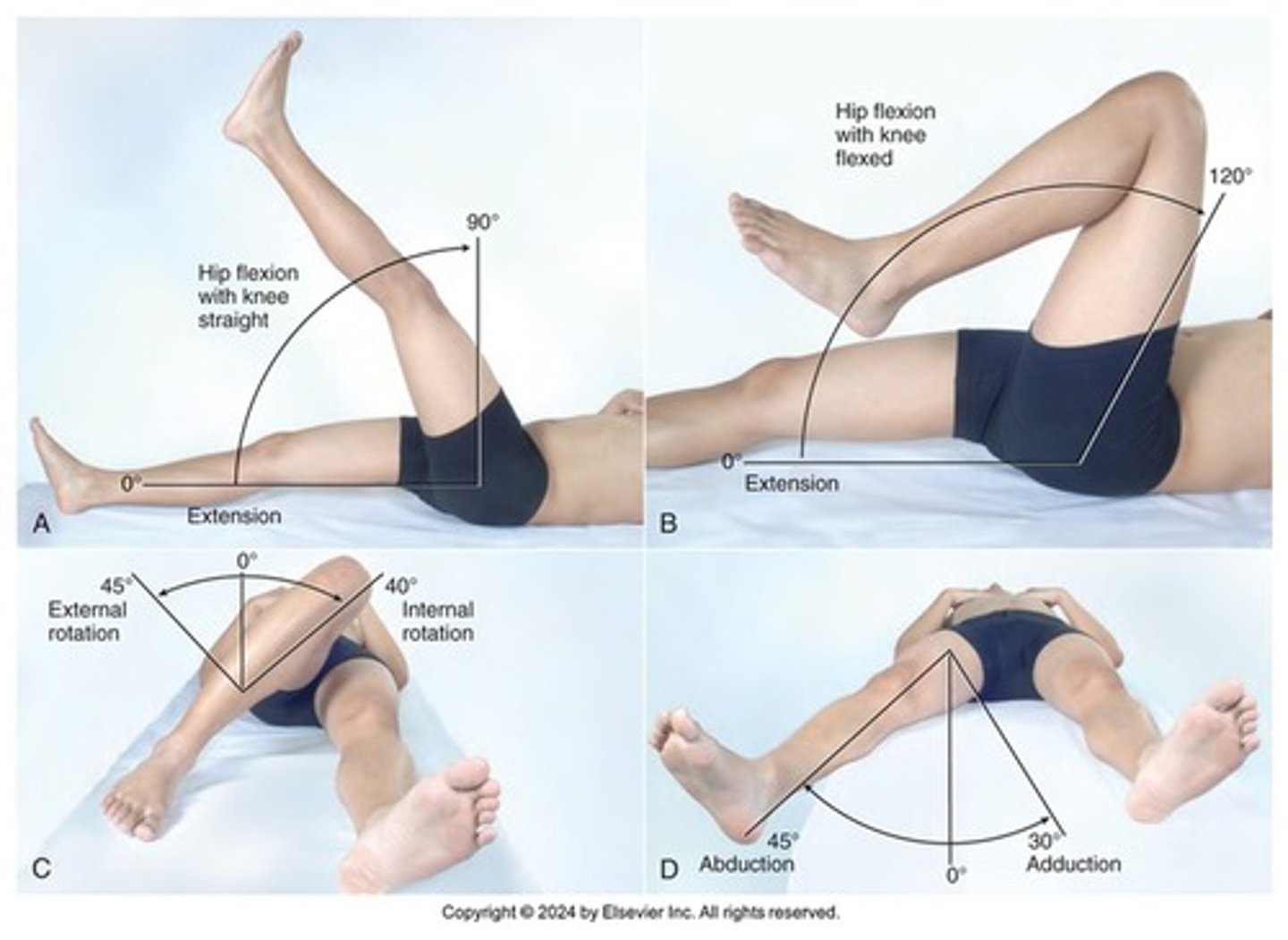
a smooth equal gait means...
equal leg lengths
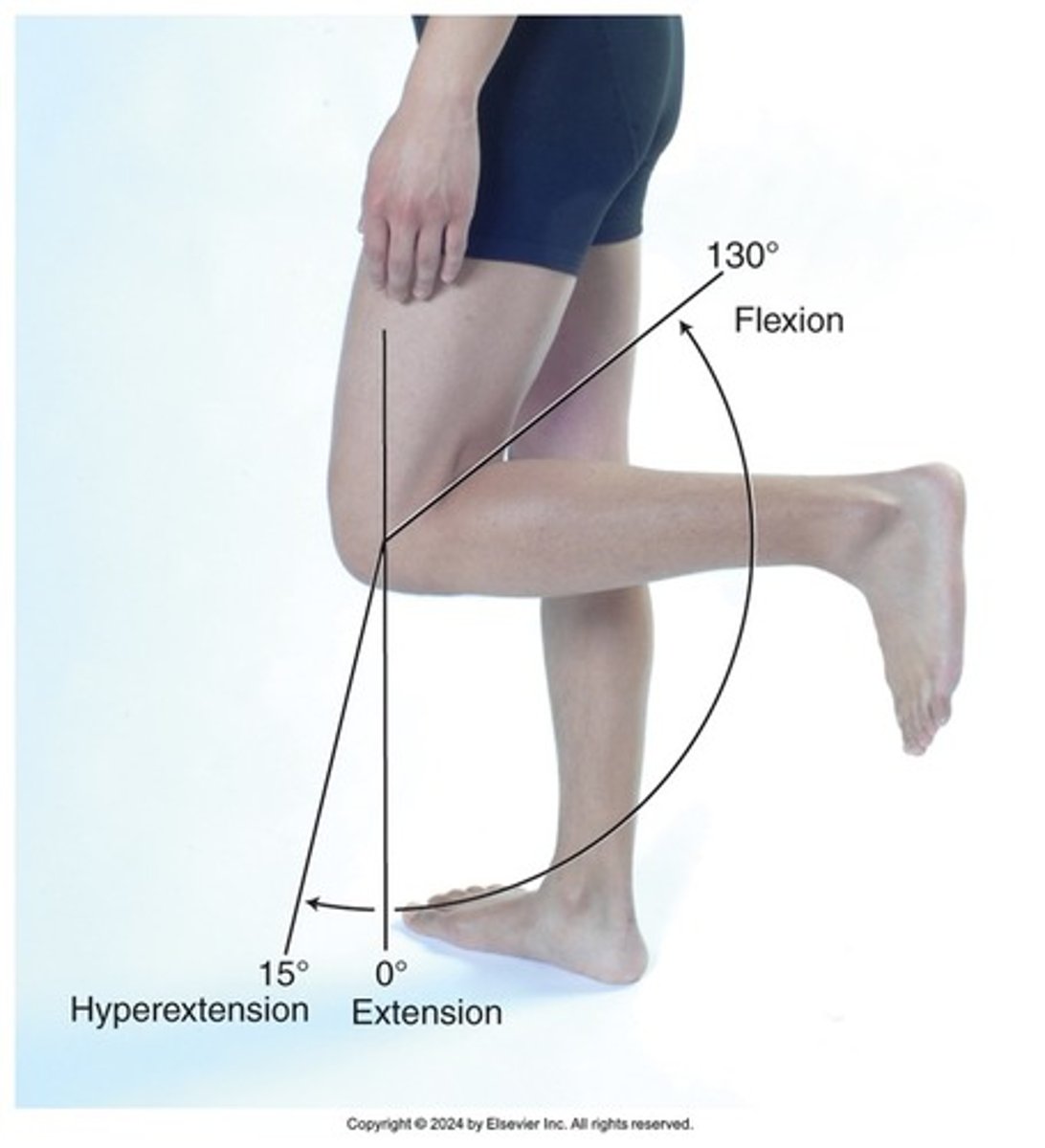
knee assessment
-inspect
-palpate 10 cm above knee joint for bulge sign and ballotement
-flexion/extension, gait, duck walk
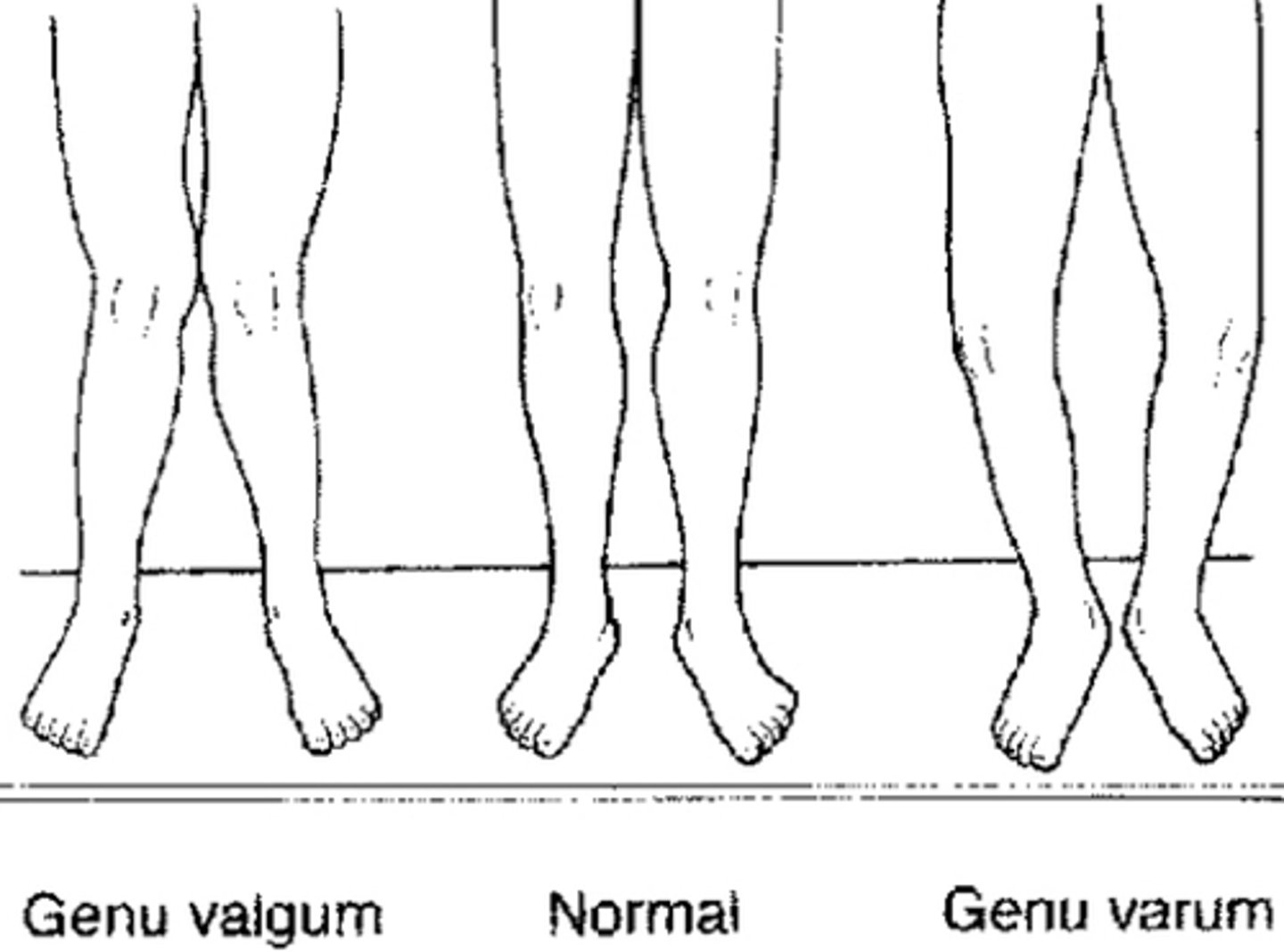
angulation deformities
genu varum = bowlegs
genu valgum= knock knees
bulge sign
Occurs with very small amounts of effusion
Assessed by firmly stroking up the medial aspect of the knee 2-3 times to displace any fluid, tapping the lateral aspect, and watching the medial side in the hollow for a distinct bulge from a fluid wave
Ballotement of Patella
For major effusions
-use left hand to compress the suprapatellar pouch to move any fluid intothe knee joint, with right hand push patella sharply against femur
-no fluid=patella is snug against femur
-fluid=hear tap
pronouced crepitus of the knee...
degenerative disease of the knee
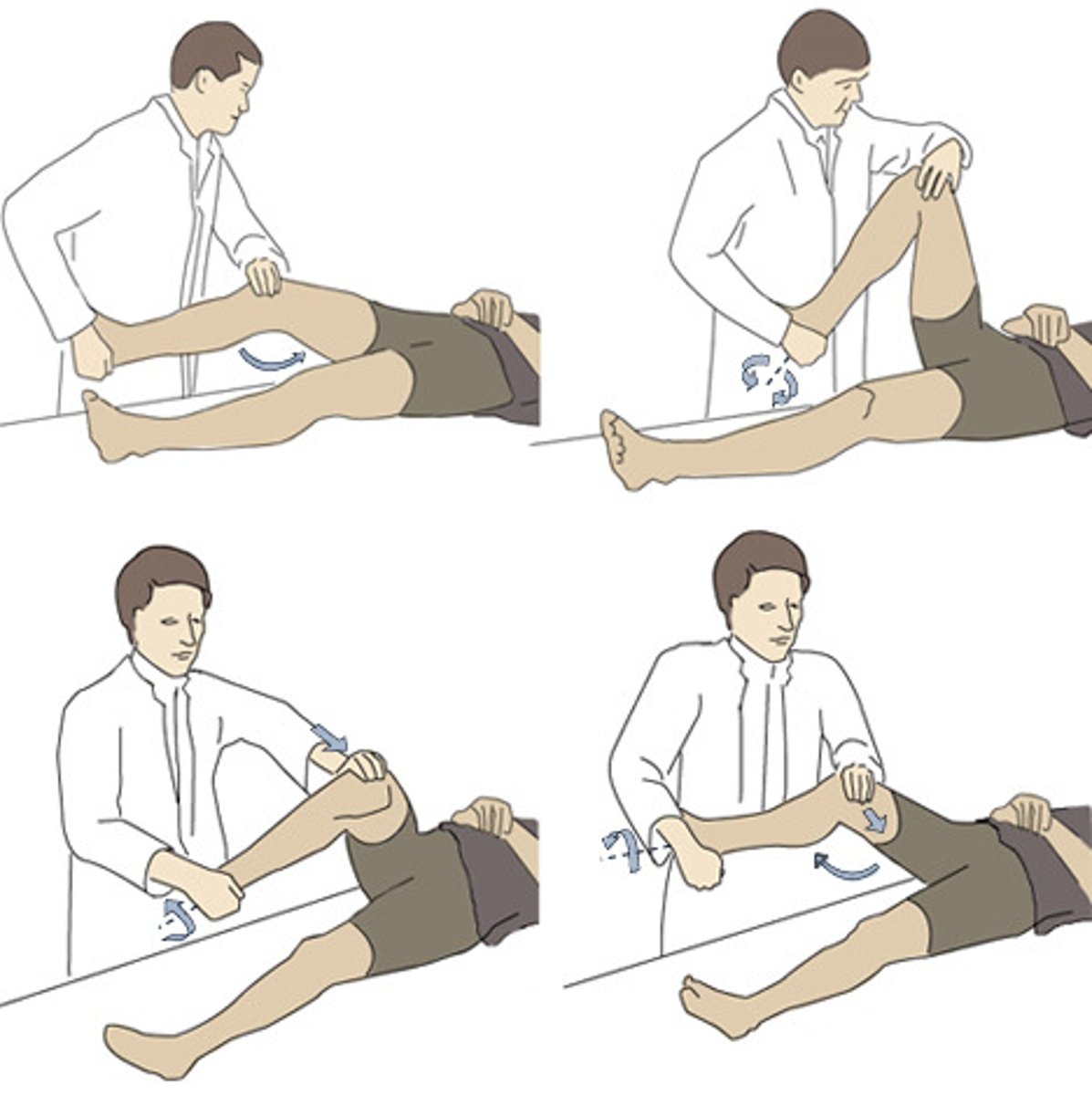
McMurray Test
Perform when reported history of trauma followed by locking, giving way, or local pain in the knee.
-flex and rotate leg
-if pain or click= torn meniscus
ankle and foot assessment
Inspect with person sitting, standing, weight bearing and walking
-palpate joints
-plantar flexion, dorsiflexion, inversion, eversion
- against resistance
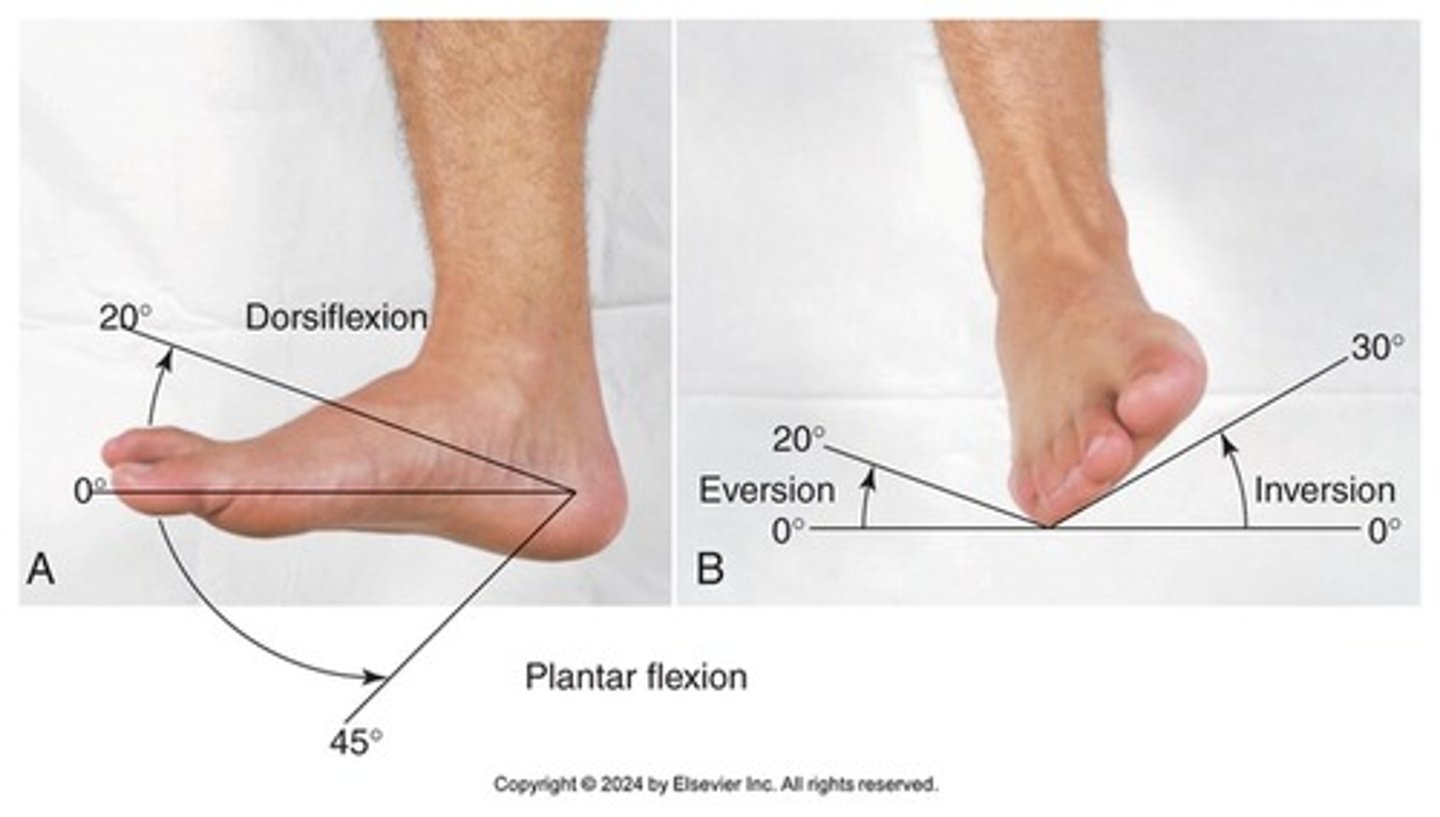
spine assessment
-inspect-> straight, shoulder height
-palpate spinous processes should be straight and nontender
-touch toes, lean left and right, rotation
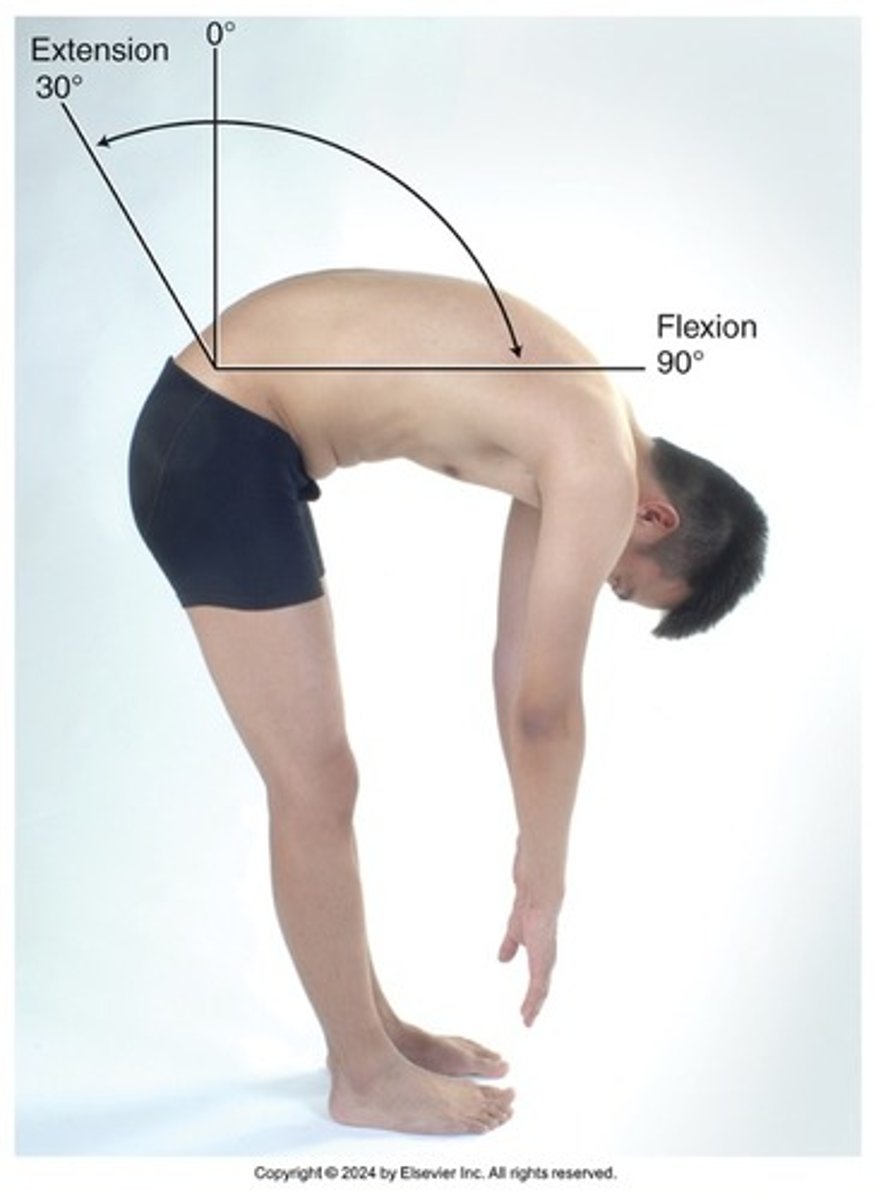
lateral tilting and forward bending occur with
herniated nucleus pulposus
A difference in shoulder elevation and height of illac crests/scapulae indicates...
scoliosis
Chronic axial skeletal pain occurs with
fibromyalgia syndrome
-not caused by injury
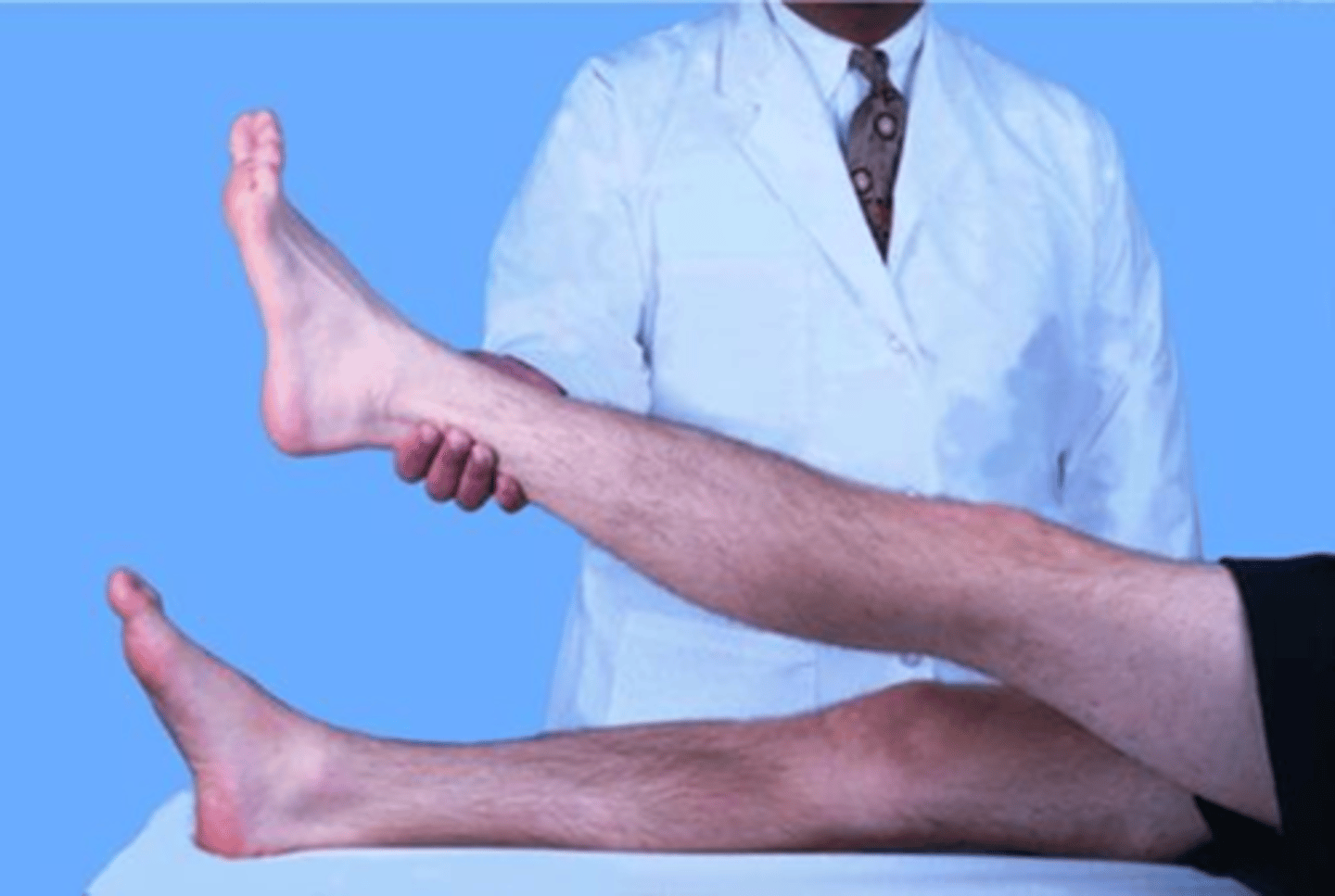
Lasegue test (straight leg raising)
raise straight leg while keeping the knee extended
-if produces pain= herniated nucleus pulpous
length discrepancy
Measures the legs to determine if one leg might be shorter than the other
-indicate back issues or fractures of the hip
rheumatoid arthritis
a chronic autoimmune inflammation of the tissues and joints
-symmetric, bilateral joint swelling, redness, and warmth
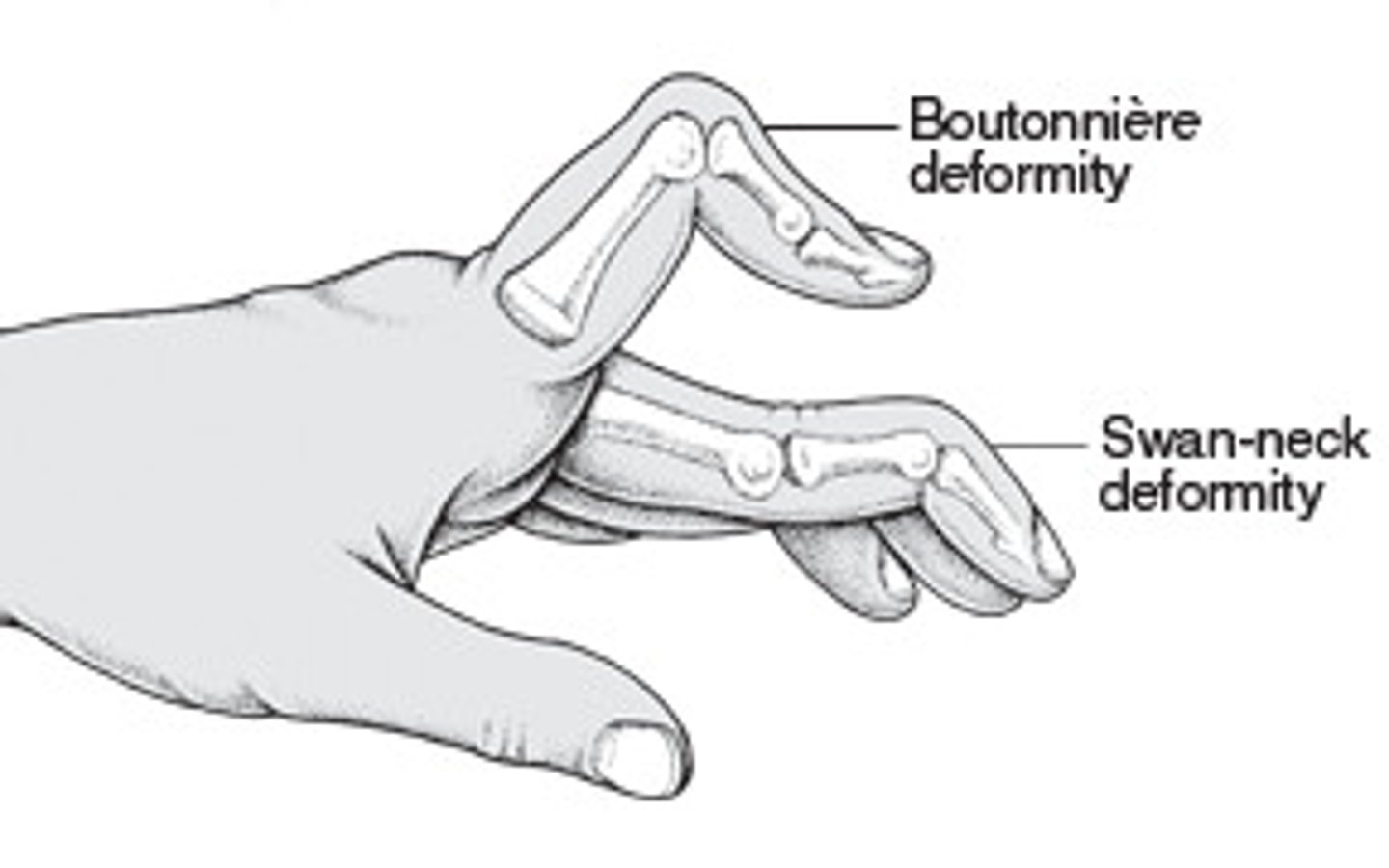
-swan neck and boutineare deformities, ulnar deviation and ankylosis
-may also have fatigue, weakness, anorexia, painful ROM weight loss, low gradenfever, and lymphadenopathy
-raised firm, nontender nodules over pressure points
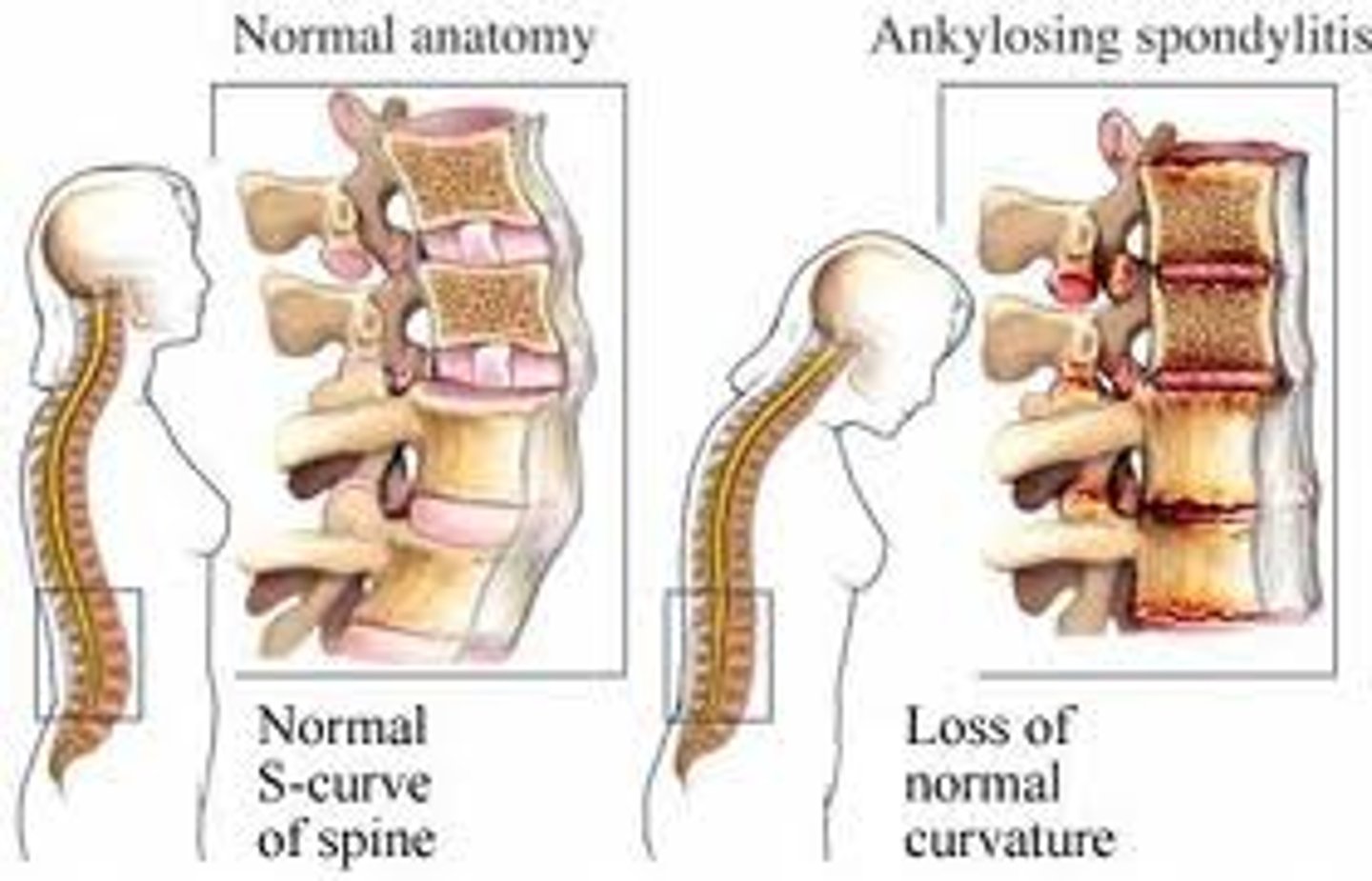
ankylosing spondylitis
-chronic inflamed vertebrae that in extreme form leads to bony fusion of vertebral joints
-affects spine, pelvis and thoracic cage
-morning back stiffness that lasts greater or equal to 30 minutes
-decreases with activity
-curvatures of spine
osteoarthritis
non-inflammatory, localized progressive deterioration of articular cartilage (cushion between bones)
-increased risk with age, females, and obesity
-asymmetric joint involvement
-stiffness, swelling, pain and limited ROM
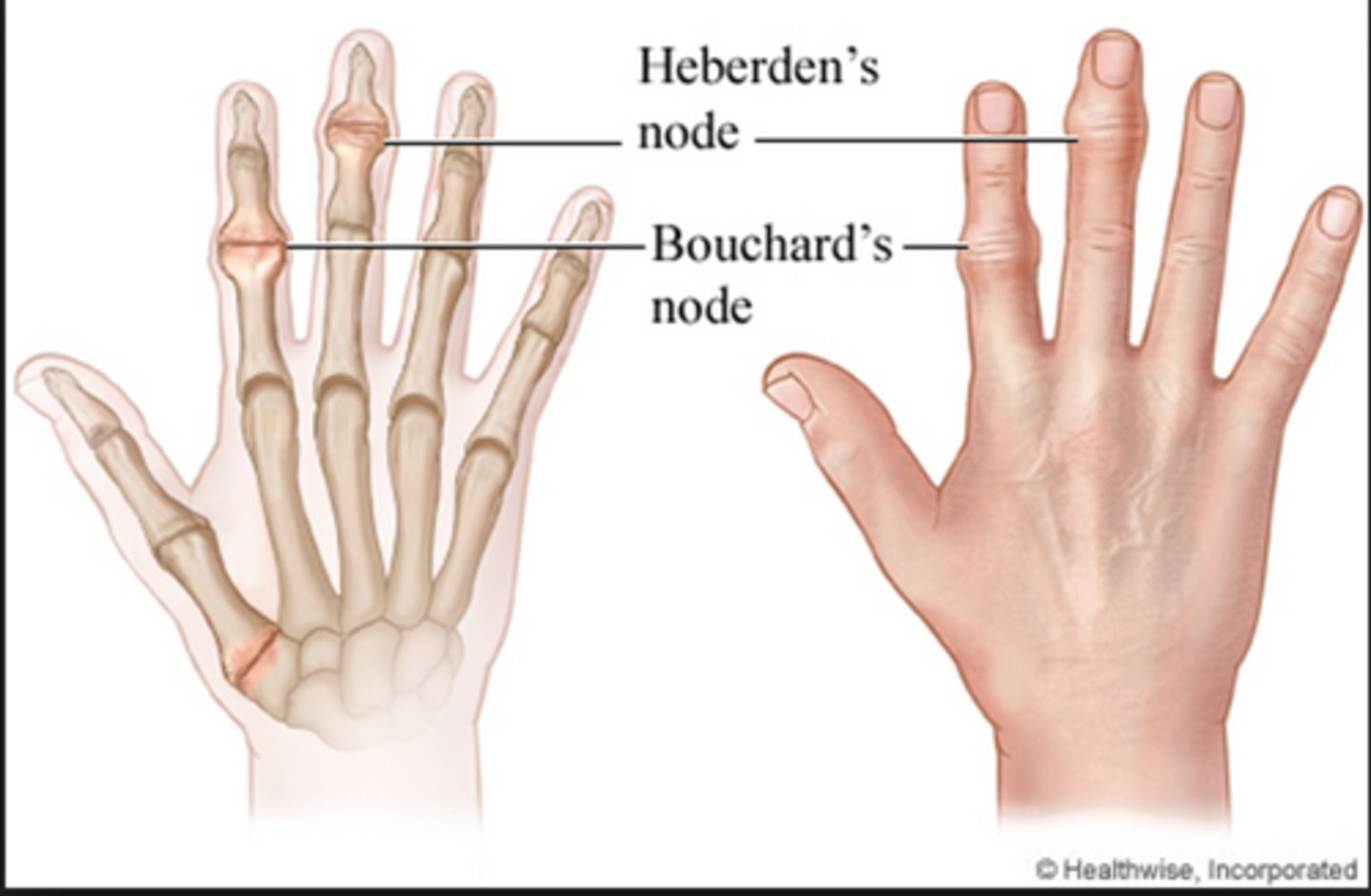
-Heberden and Bouchard nodes
-worse as day progresses
Osteoporosis
decrease in skeletal bone mass leading to impaired bone density
- risk for fractures
-post menopausal women at risk for
dislocation
occurs with trauma involving abduction, extension, and rotation (e.g., falling onan outstretched arm or diving into pool)
-need Xray
tear of rotator cuff
-hunched position
-limited abduction
-occurs from fall on shoulder, throwing or weight lifting
-can't shrug
Olecranon Bursitis
large, soft, "goose egg" knob on elbow
-redness and swelling
-occurs with trauma to elbow, RA or gout
epicondylitis
pain and inflammation from overuse
-occurs from excessive pronation/supination
ganglion cyst
round, nontender, fluid filled nodule on the wrist
-more common in females
carpal tunnel
-pain worse at end of day
-caused by repetitive movements or overuse of
-positive tinel and phelan test
-thenar muscle atrophy
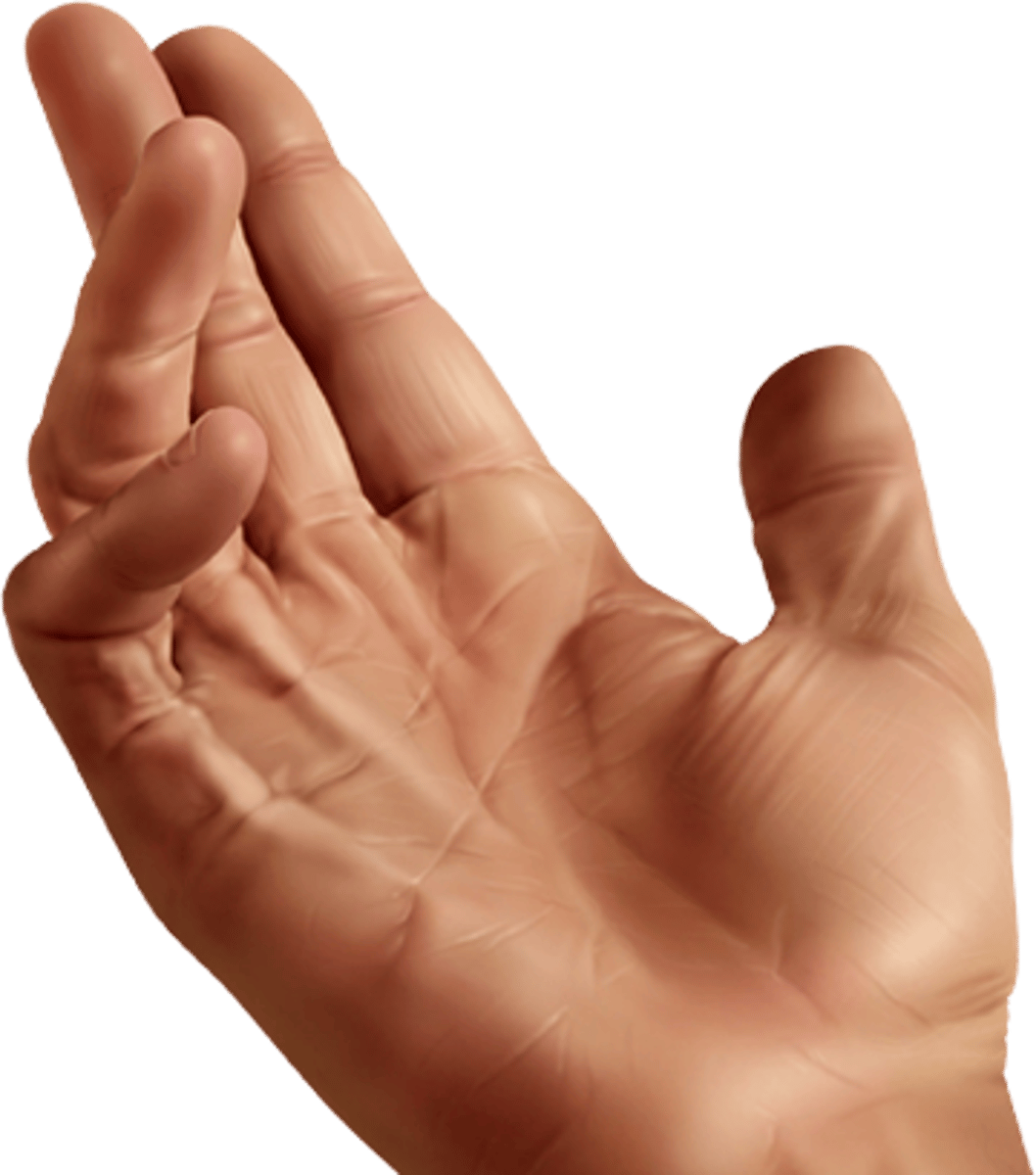
Dupuytren Contracture
chronic hyperplasia of the palmar fascia causing flexion contractures;
-occurs with diabetes, epilepsy, and alcoholic liver disease
-painless but impairs hand function
swan neck and boutonniere deformity
caused by chronic RA, swan neck- flexion contracture of metacarp. boutonniere- knuckle looks as if pushed
heberden and bouchard nodes
hard non-tender non-inflammatory nodules
-on DIP as Heberden nodes
- on PIP are Bouchard nodes
-occurs with OA
mild synovitis (knee)
Loss of normal hollows on either side of the patella, which are replaced by mild distention
-Occurs with synovial thickening or effusion (excess fluid) as in RA
achilles tenosynovitis
inflammation, swelling and tenderness near the ankle
-pain increases w movement
gout
painful, inflammatory arthritis bc of excess uric acid
-tophi
-redness, swelling warmth
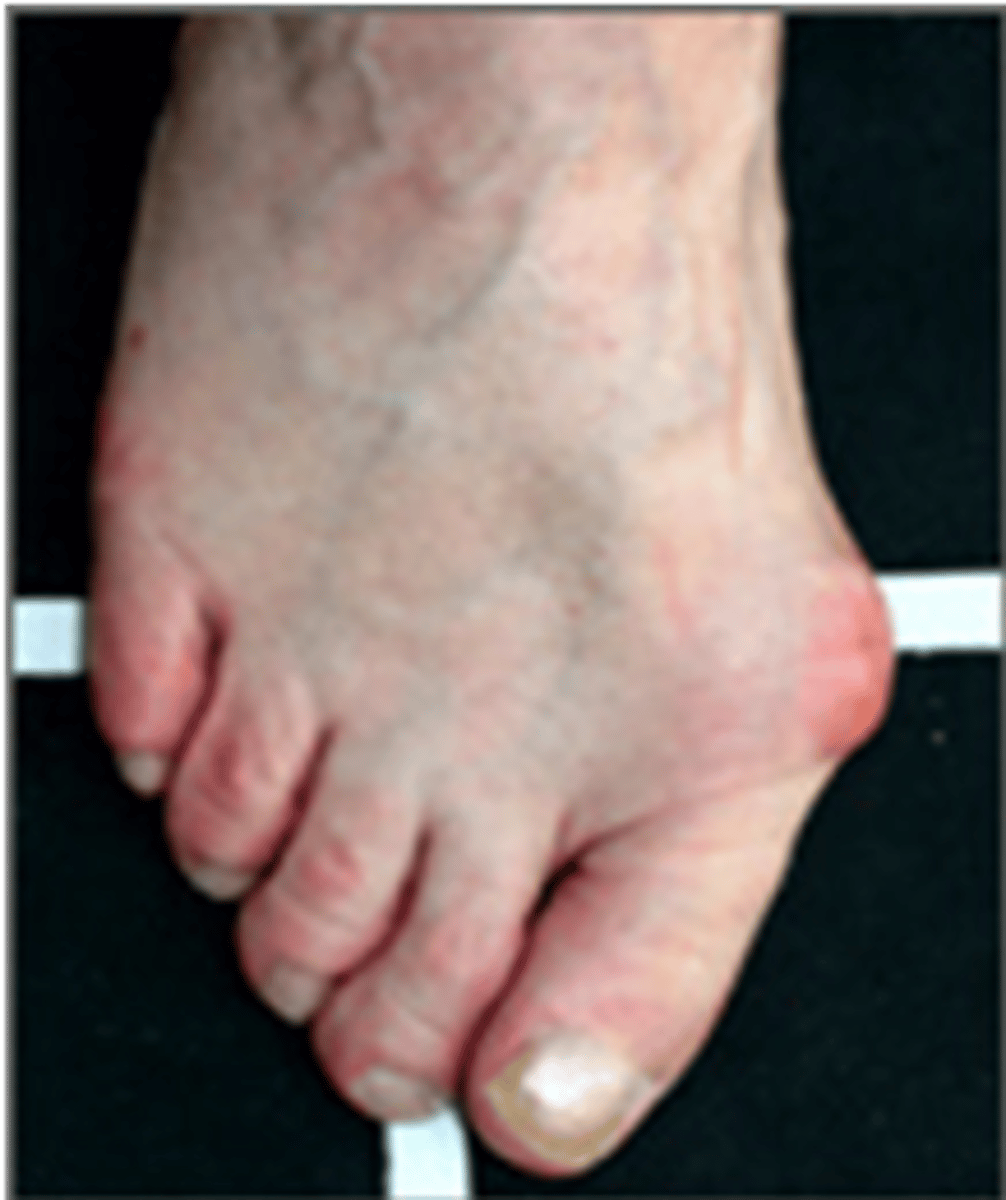
hallux vagus
lateral or outward deviation of the great toe
plantar fasciitis
repeated microtrauma to connective tissue causing inflammation and heel pain
risk factors: runners, prolonged standing, high arched feet and obesity
-worse in morning
-rest and ice
herniated disc
-occurs from lifting, twisting, fall onto buttocks
-may have low back pain,decreased mobility, numbness and tingling
-lasegue test
Explore top notes

Explore top flashcards
