Self-Care and Nonprescription Medicine: Pharmacy Practice and Cultural Considerations
 Studied by 0 people
 Call Kai
 Learn
Learn Practice Test
 Spaced Repetition
 Match
Match Flashcards
 Knowt Play
1/26

There's no tags or description
Looks like no tags are added yet.
Name | Mastery | Learn | Test | Matching | Spaced | Call with Kai |
|---|
No analytics yet
Send a link to your students to track their progress
27 Terms
What is self-care?
The practice of individuals looking after their own health using available knowledge and information, empowering them to manage their health efficiently.
What are the benefits of self-care?
Convenience, access, cost savings, and patient empowerment.
What are the risks associated with self-care?
Potential for misuse of products, possible delay in necessary medical attention, and potential misdiagnosis.
What percentage of physicians believe OTC medications make it easy to care for minor ailments?
96%
What is the role of the pharmacist in self-care?
To assist patients with triage, product selection, drug interactions, dosing instructions, side effects, and nonpharmacologic recommendations.
What influences self-treatment decisions among consumers?
Internet resources, with 59% of US adults using online resources for health information.
What is a significant cultural consideration in self-care?
Avoiding stereotyping and recognizing individual differences in beliefs and values.
What is the definition of culture in the context of health care?
An integrated pattern of human behavior including thoughts, communications, practices, beliefs, and customs of a social group.
What demographic change is expected in the US population by 2044?
More than half of the US population will identify with a racial or ethnic group other than white.
What are the top-selling categories in US pharmaceutical sales?
Complementary and integrative health therapies, nonprescription medications, and dietary supplements.
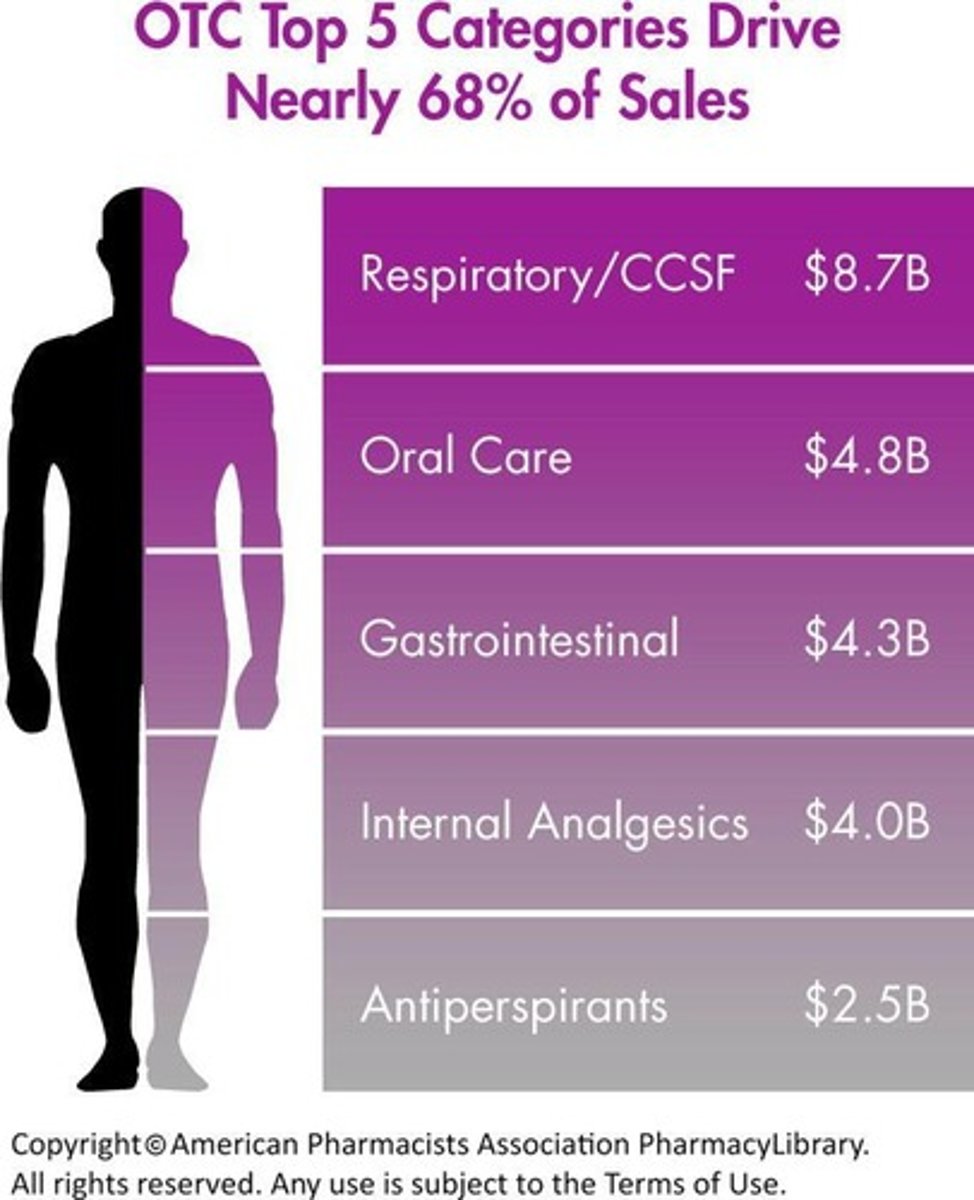
What technological advancements are influencing self-care?
Wearable devices, QR codes on product packages, and new dosage forms like gummies and instant dissolve tablets.
What is the significance of healthcare reform in self-care expansion?
It drives changes in financial models to promote cost savings and access to self-care products.
What is the impact of the changing demographic on self-care?
Health care providers must consider diverse health care needs and preferences.
What percentage of consumers self-identified as 'family health influencers' according to the CHPA survey?
1 in 4 respondents.
What is the full spectrum of care involved in self-care?
Prevention and wellness, diagnosis and screening, and treatment or relief from symptoms.
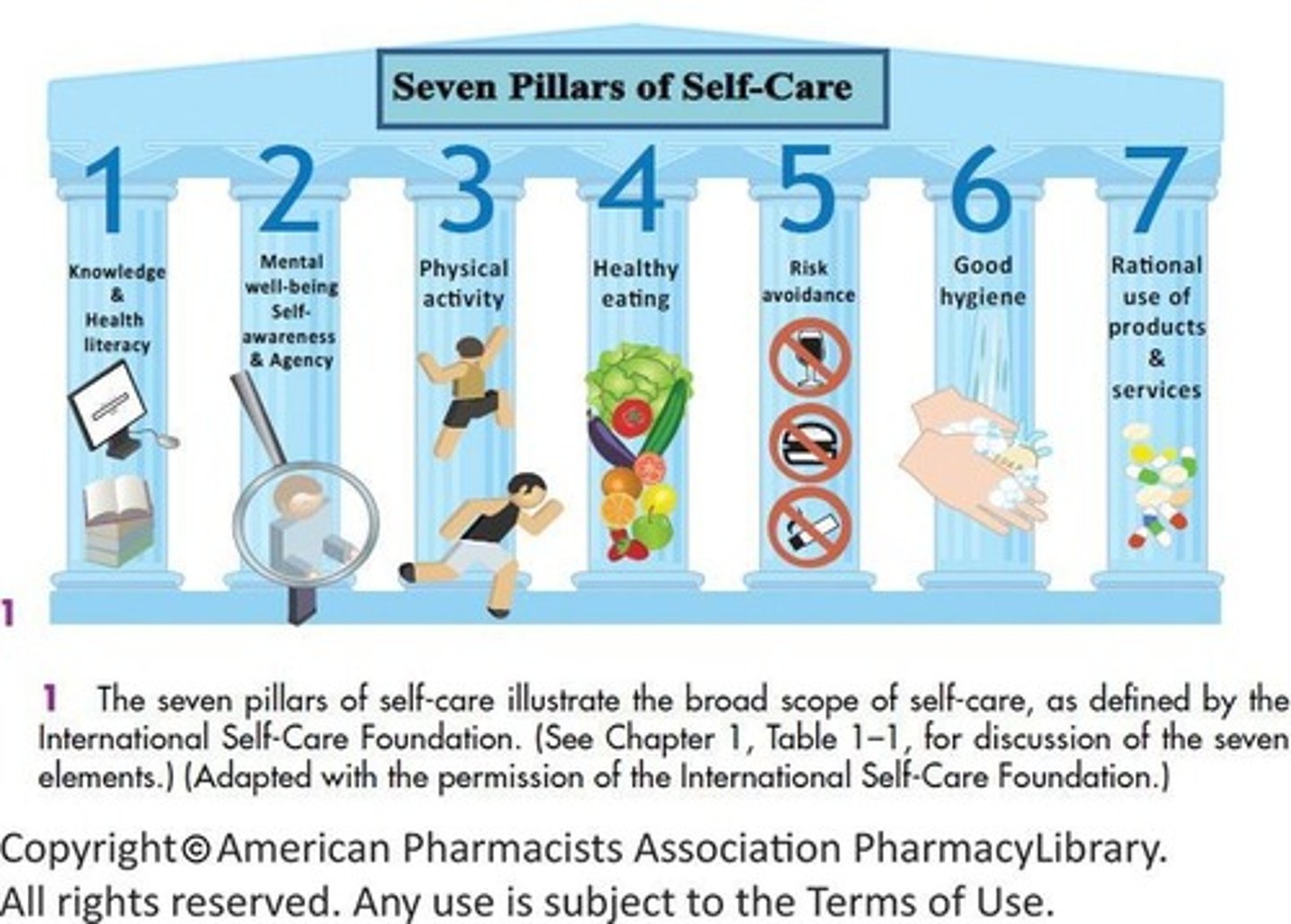
What is the importance of valid internet sources for nonprescription drugs?
They provide reliable health-related information amidst a high number of potentially biased sources.
What are some examples of valid internet sources for health information?
National Institutes of Health, Cleveland Clinic, WebMD, Mayo Clinic, and CHPA Educational Foundation.
What is the significance of patient empowerment in self-care?
Patients feel less dependent on physicians and want more control over their health care.
What is the role of the pharmacist in identifying drug interactions?
Pharmacists assess potential interactions and provide guidance on safe medication use.
What is the impact of OTC medication availability on consumer health management?
It allows for convenient self-treatment of minor illnesses, reducing unnecessary healthcare visits.
What are the implications of the rise in health care consumer knowledge?
Consumers are more knowledgeable about health care products and are incentivized to focus on wellness.
What does the term 'self-diagnosers' refer to?
Individuals who attempt to diagnose their health conditions based on available information.
What is the importance of cultural communication preferences in health care?
Understanding these preferences can facilitate better interactions and care for diverse patient populations.
What does the term 'Rx to OTC switch' refer to?
The process of making prescription medications available over-the-counter to improve access.
What is the expected outcome of the growing diversity in the older population?
Healthcare providers must adapt to meet the unique health care needs of a more diverse demographic.
What are some nonpharmacologic recommendations pharmacists might provide?
Lifestyle changes, dietary advice, and alternative therapies to complement medication use.
What is the significance of convenience in nonprescription therapy?
It allows patients to manage minor health issues without the need for a doctor's appointment.
 Note
Note  Flashcards (56)