unit 3 - parasitic specialization
 Studied by 0 people
 Call Kai
 Learn
Learn Practice Test
 Spaced Repetition
 Match
Match Flashcards
 Knowt Play
1/34

There's no tags or description
Looks like no tags are added yet.
Name | Mastery | Learn | Test | Matching | Spaced | Call with Kai |
|---|
No analytics yet
Send a link to your students to track their progress
35 Terms
enteroparasites
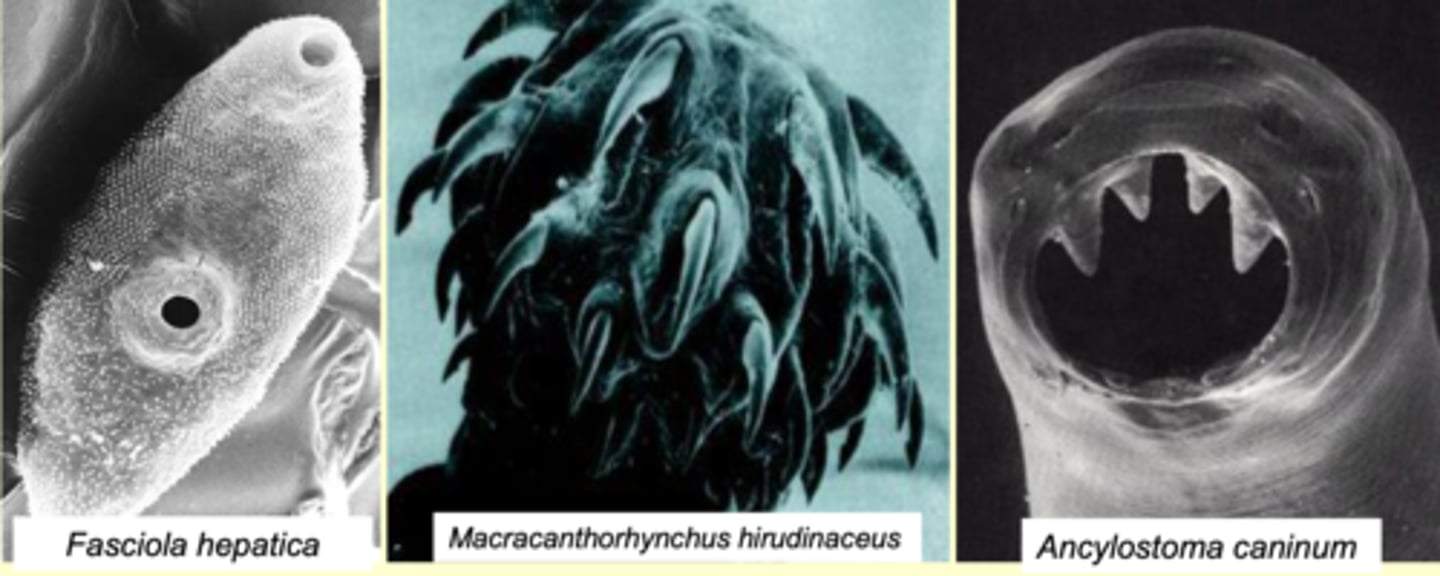
what types of parasites develop attachment organs for attachment in the digestive tract?
suckers, hooks, teeth
what type of morphological adaptations can enteroparasites have to help them attach to the digestive tract?
attachment to the digestive tract- theses are enteroparasites
what are these morphological adaptations used for?
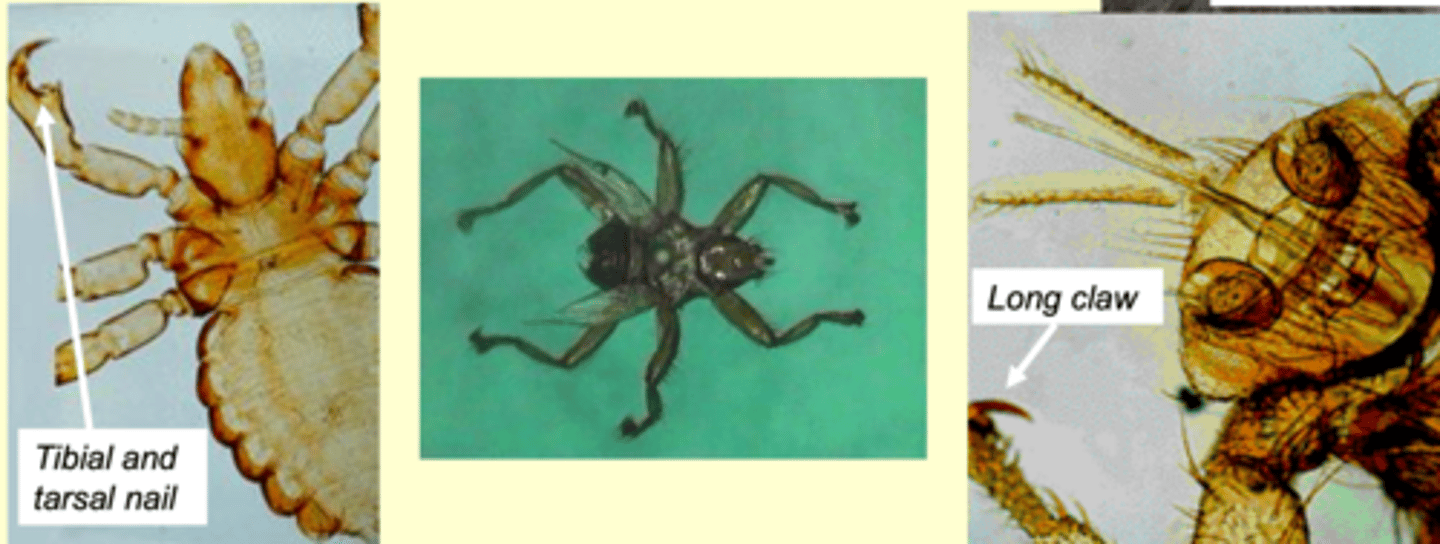
legs with prehensile elements (ex- claw, tarsal nail, etc)
what morphological adaptation do ectoparasites (such as lice) have in order to attach to the host?
attachment to the host- these are ectoparasites
what are these morphological adaptations for?
1. wing loss
2. no movement in intracellular stages
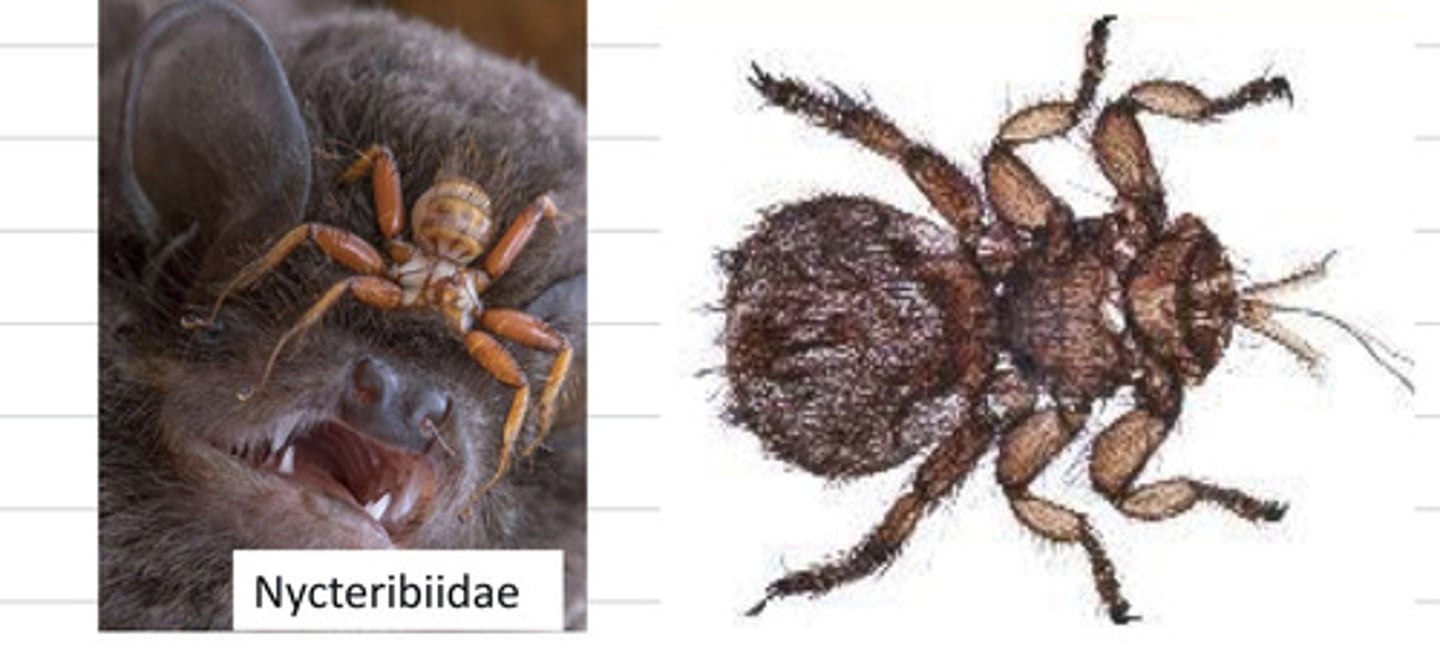
what 2 types of reduction of locomotive organs do we observe in parasites?
loss of wings
what is the morphologic adaptation in this parasite?
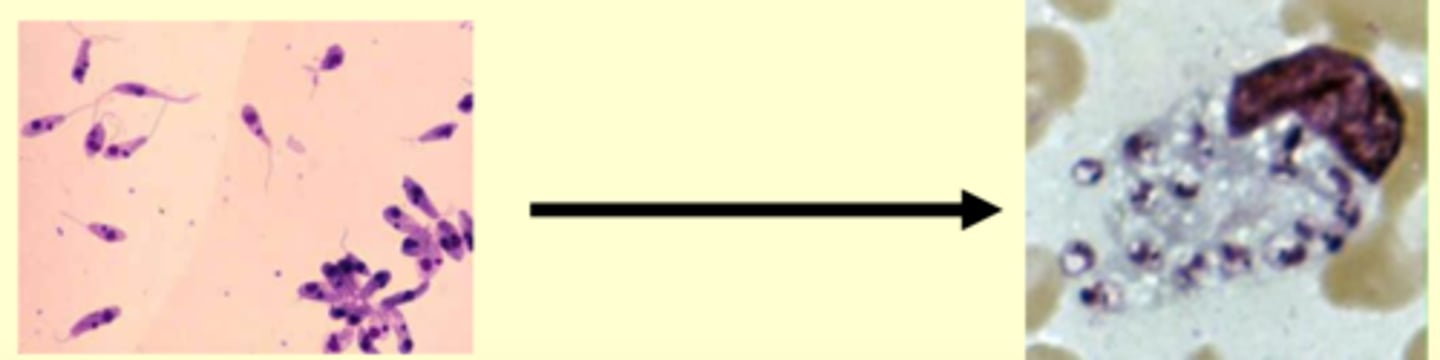
flagella/tail
leishmania lose their ______ when they are inside of the lymphocyte
they can now absorb nutrients from the host, so there is not need for the GI tract. instead, they replace their digestive organs with sexual organs, which are more beneficial because they can reproduce more easily
what might be the benefit of cestodes (ex- tapeworms) losing their digestive tract?
they have adapted a long, thin morphology in order to fit well in the intestines
how have enteric parasites adapted to their environment?
a long, thin morphology of the enteroparasites so they can fit better in the intestines
what is the morphological adaptation we see here?
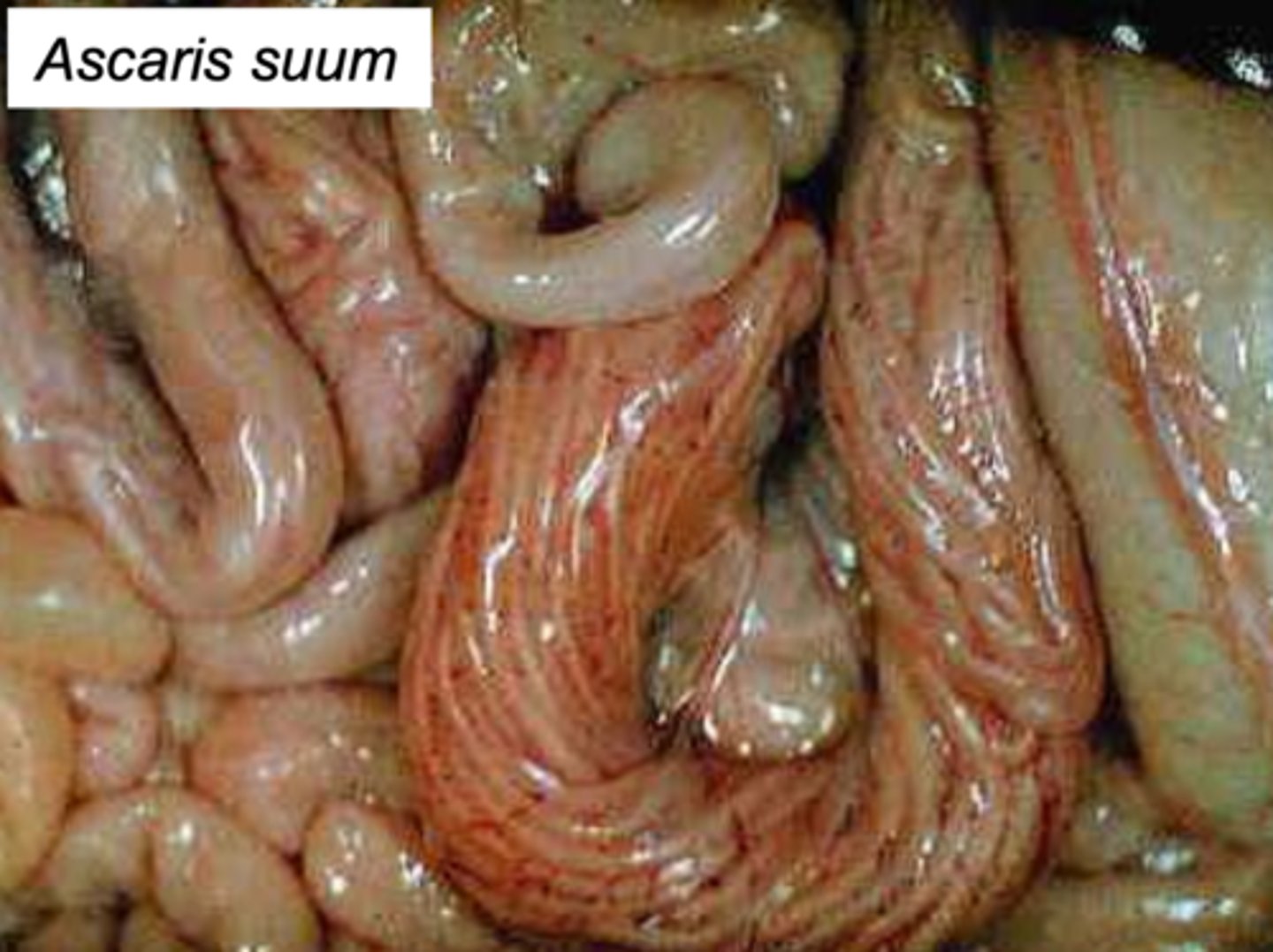
they are more spherical
how have parasites of cavities adapted morphologically to their environment?
1. storage of spermatazoa
2. avoiding fertilization
3. hermaphroditism
4. increased genital organs
5. increased prolificacy/ resistance of the eggs
6. multiplication of asexual stages
what 6 reproductive adaptations do we see in some parasites?
spermatheca
some parasites have a _______, which is a storage area for spermatazoa
releasing the ovum before fertilization in order to avoid reproduction asexual replication from unfertilized egg
some parasites perform parthenogenesis. what is this?
they do not need to search for a mate and can reproduce quicker
why is hermaphroditism advantageous?
trematodes
what class of parasites are almost always hermaphrodites?
cestodes and lernaeas
what 2 classes of parasites have great development of sexual organs?
it is a way to preserve themself because they can make "clones" in immature stages and increase their chances of survival
how is the multiplication of asexual stages in protozoa beneficial?
larval
cestodes perform asexual reproduction in their ____ stage
parasites adapt their life cycle/reproduction in accordance to the season
what is seasonal convergence?
seasonal convergence
haemoproteus lives in the blood of birds. at certain times of the year, there is an increase in the parasites in the adult birds because they are preparing themselves to infect a new group of potential hosts- this occurs in the spring because this is when the new chicks are hatching. what type of adaptation is this called?
timely convergence
dirotilaria immitis (heartworm) infect dogs, where they release their larva into the blood vessels, which are then carried throughout the circulatory system. to be transported to a new host, they need to be carried by a mosquito. in order to increase their chances of being taken by a mosquito, they go to the superficial blood vessels at dusk, when mosquitos are active. what is type of adaptation is this?
the delay in development/reproduction in response to dangerous environmental conditions
what does temporal arrested development mean (hypobiosis/diapause)?
temporal arrested development/ hypobiosis/ diapause
mosquitos have adapted to not reproduce during the winter because they do not survive very well in cold weather- what is this adaptation called?
enteroparasites
what types of parasites have adapted resistance to digestive enzymes?
1. resistance to digestive enzymes
2. adaptation to environments with poor oxygen
what are the 2 physicochemical adaptations that we see in certain parasites?
parasites in the same habitat develop similar strategies
ex- blood sucking parasites develop the same anticoagulant properties
what does convergent adaptation mean?
different species of parasites share the same host, so they must coexist
define polyparasitism
the situation when a parasite's host is another parasite
what is hyperparasitism?
1. large size- helminths and protozoa are usually larger than the immune cells so cannot be phagocytized
2. biological cycle complexity- parasites change location in the host depending on their cycle, making it difficult for immune cells to find
3. antigenic variation- confuses immune cells of host
what are the 3 different methods used by parasites to block the immune response of the host?
because it avoids phagocytization by host immune cells
why might it be beneficial for helminths and protozoa to be large in size?
cytokines
some parasites can produce _____ to mislead the host immune cells
they live inside of the host cells so cannot be phagocytized
how do leishmania avoid immune response in the host?
they have variable antigens, and sometimes the antigens change with the different stages of their life cycle
why is it hard to vaccinate against parasites?
 Note
Note  Flashcards (86)