Unit 4 AP Bio- Cell Communication
 Call Kai
 Learn
Learn Practice Test
 Spaced Repetition
 Match
Match Flashcards
 Knowt Play
1/41

There's no tags or description
Looks like no tags are added yet.
Name | Mastery | Learn | Test | Matching | Spaced | Call with Kai |
|---|
No analytics yet
Send a link to your students to track their progress
42 Terms
How is cell communication different in unicellular vs. multicellular organisms?
Cells of multicellular organisms need to be able to work together to carry out their functions. Unicellular organisms’ cell communications is limited to itself.
Ligand
signaling molecule (ex: hormone, neurotransmitter)
Receptor
protein in cell membrane that the ligand bids to
What is a signal transduction pathway?
A sequence of molecular events within a cell taht leads to the cell’s response to the signal
What are the 3 steps in a signaling?
Reception- signal binds to a receptor
Transduction- receptor is activated by signal binding (receptor changes shape) and amplify the signal
Response - cell responds (transcribes DNA, activates an enzyme, makes a protein)
What is amplification?
the process by which a small initial signal is increased in strength through various biological mechanisms, enabling cells to respond effectively to signaling molecules.
Autocrine Signaling
cell signals itself, makes a signal that binds to its own receptors (growth hormones)
Juxtracrine Signaling
requires direct cell contact between signaling and responding cell, use gap junctions in animal cells and plasmodesmata in plant cells
Endocrine Signaling
Communication over a distance (hormones travel to distant cells through the bloodstream)
Paracrine Signaling
Signals diffuse to and affect nearby cells (local signaling). Ex: neurotransmitters
Intracellular receptors
Receptor is inside the cell so the ligand diffuses across the membrane first (estrogen)
Intercellular Receptor
Ligand binds to receptor on the cell membrane (insulin)
How do ligand-gated receptors work?
They help ions move in when a ligand binds to a receptor and opens the channel (acetylcholine receptor)
How do protein kinase receptors work?
Signal binds to receptor
ATP breaks down releasing phosphate
Phosphates join the receptor, it changes shape
phosphate is added to target protein (phosphorylating a protein)
triggers a response
How do G-protein linked receptors work?
signal binds to receptor
receptor changes shape and binds to G proteins (activates it and GDP changes to GTP)
Part of G protein (GDP) binds to effector protein
triggers a response
What are protein phosphatases?
removing phosphate from the target protein to stop response (reverse effects of receptor)
What are the various responses that epinephrine can cause in the body? Explain what happens during flight or fight response
Heart muscle cells- activates a response to increase glucose uptake in muscles
Digestive system- inhibits smooth muscle
How are blood glucose levels regulated?
through a coordinated system involving hormonal signaling, liver glucose storage and production, and tissue glucose uptake, ensuring a stable energy supply for the body’s vital functions.
How are blood calcium regulated?
Blood calcium is tightly regulated by parathyroid hormone, calcitonin, and vitamin D, which coordinate the actions of bones, kidneys, and intestines to maintain calcium homeostasis.
What is the difference between positive and negative feedback?
Positive feedback amplifies a response or process, while negative feedback counteracts changes to maintain homeostasis.
What are parts of a neuron?
Dendrites, soma, axon (myelin sheath), axon terminals
What happens at the end of the axon terminal to cause neurotransmitters to be released into the synapse?
Ca+ enters the cell from a voltage-gated Ca+ channel and activates vesicles to surround neurotransmitters. Vesicles fuse with cell membrane and neurotransmitters are released.
What do the neurotransmitters do to get inside the post-synaptic neuron?
They bind to specific receptors on the next neuron
What do neurotransmitters cause once they are inside the post-synaptic neuron?
they generate a single transduction pathway, and extra ligands are sent back to 1st neuron.
What is the function of the cell cycle for unicellular organisms? Multicellular organisms?
For unicellular organisms, the cell cycle is for reproduction or making of new cells from a single cell. For multicellular organisms, the cell cycle is for growth, repair, and replacement.
How do bacteria cell divide?
They divide through binary fission, a process where the bacteria double in size, replicates its chromosomes, pinches inward and produces two daughter cells.
Why does the DNA have to replicate before mitosis?
DNA replicates before mitosis to ensure that each daughter cell receives a complete and identical set of genetic information.
What are the three parts of Interphase and what happens in each?
G1 phase- cell prepares to divide by increasing in size
S/ synthesis- the cell synthesizes a complete copy of DNA, when chromosomes are replicated
G2 phase- the cell grows larger, synthesizes organelles and proteins
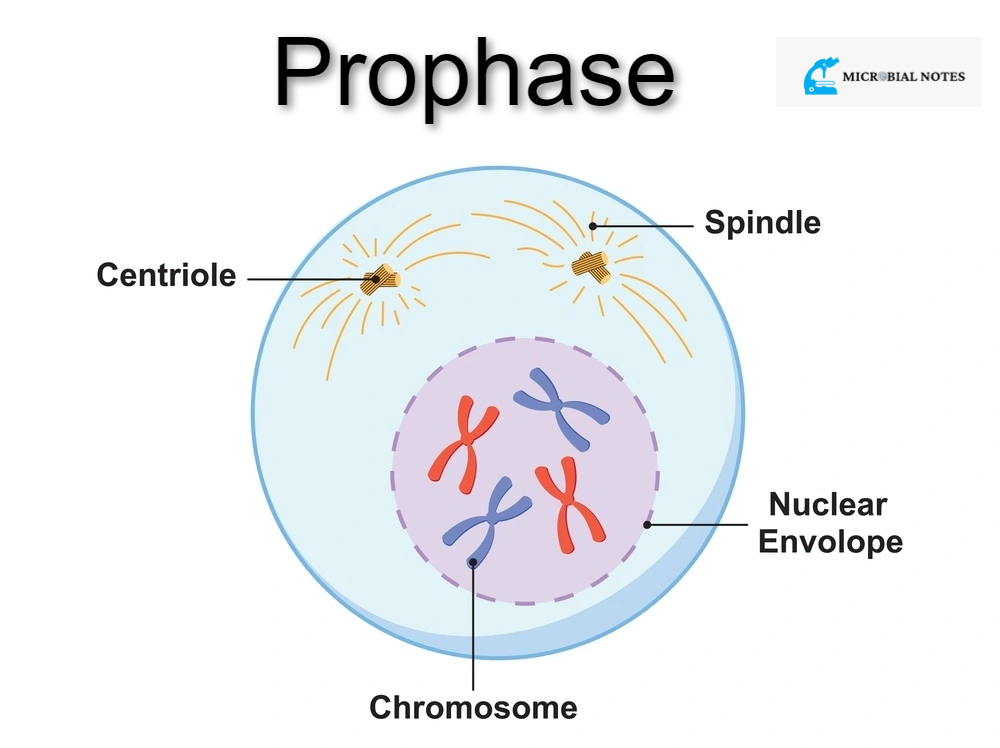
Prophase
Spindle fibers form, genetic material in the nucleus condenses, chromosomes become visible, and centrioles move towards opposite sides of the cell.
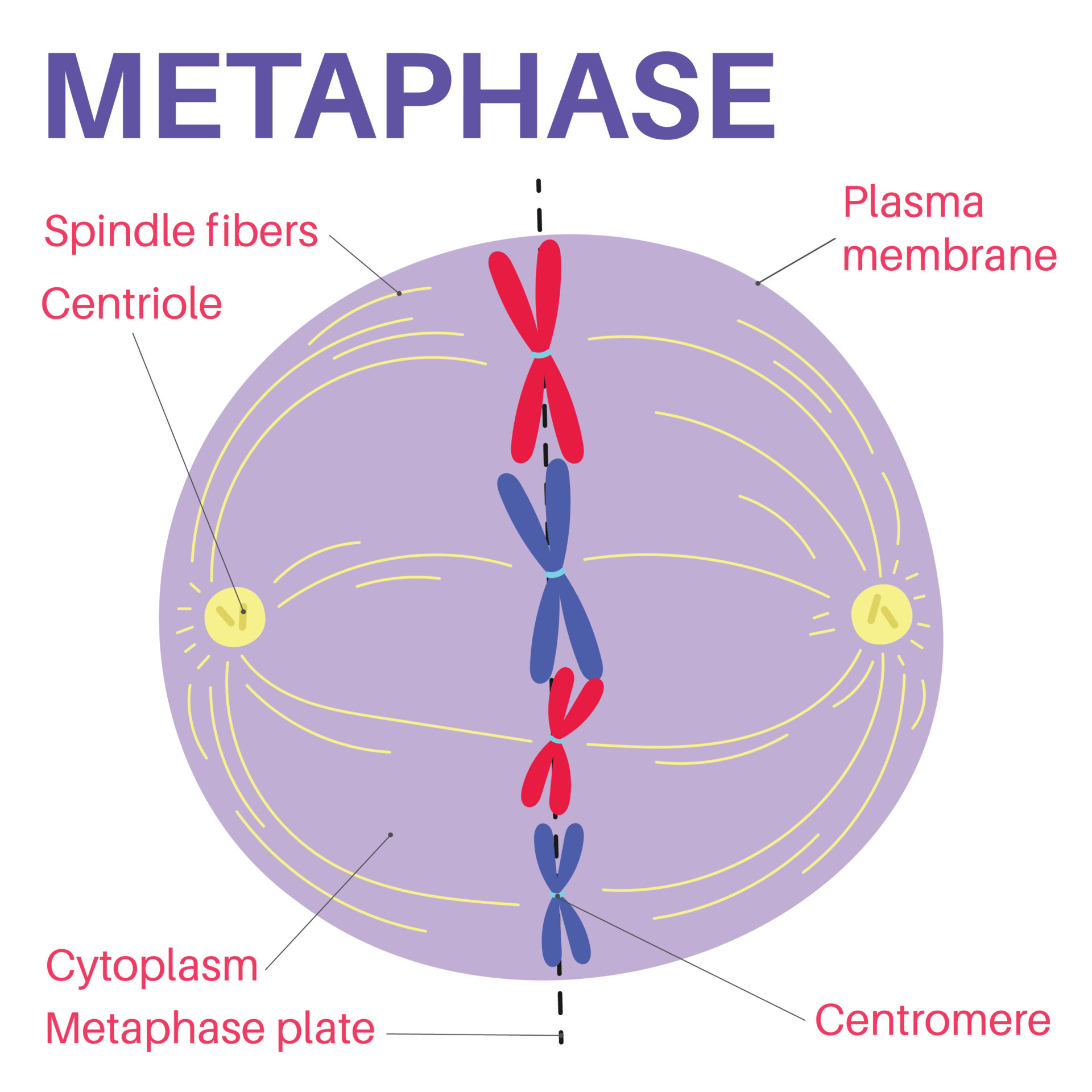
Metaphase
Nuclear envelope dissolves, chromosomes line up at the metaphase plate, centromeres are duplicated, spindle fibers connect the centromere of each chromosome to the centrioles.
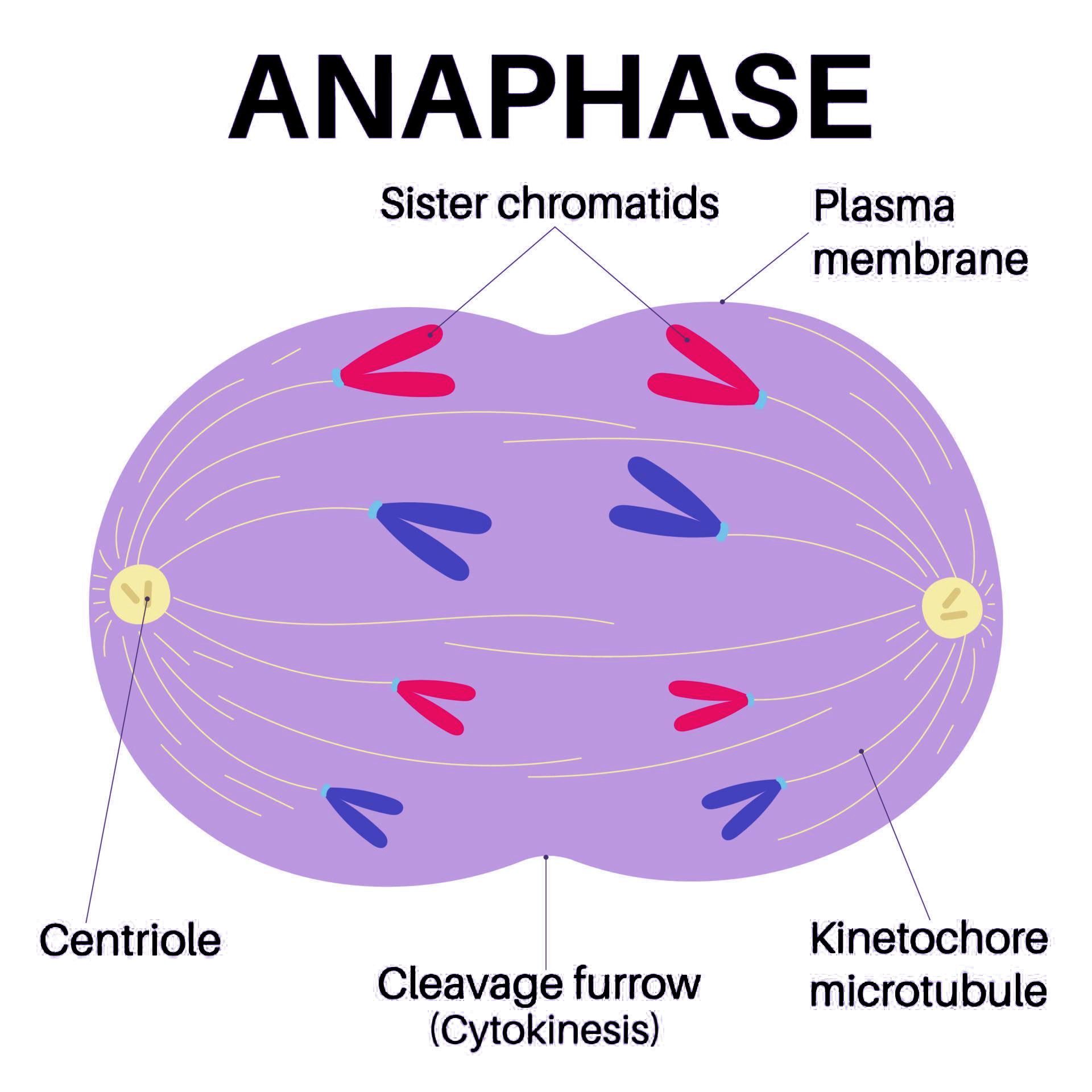
Anaphase
Chromosomes move along the spindle fivers to opposite ends of the cell, the cell develops a drawn in area called a cleavage furrow, and this phase is complete when the movement of chromosomes is ceased, and chromosomes are completely separated.
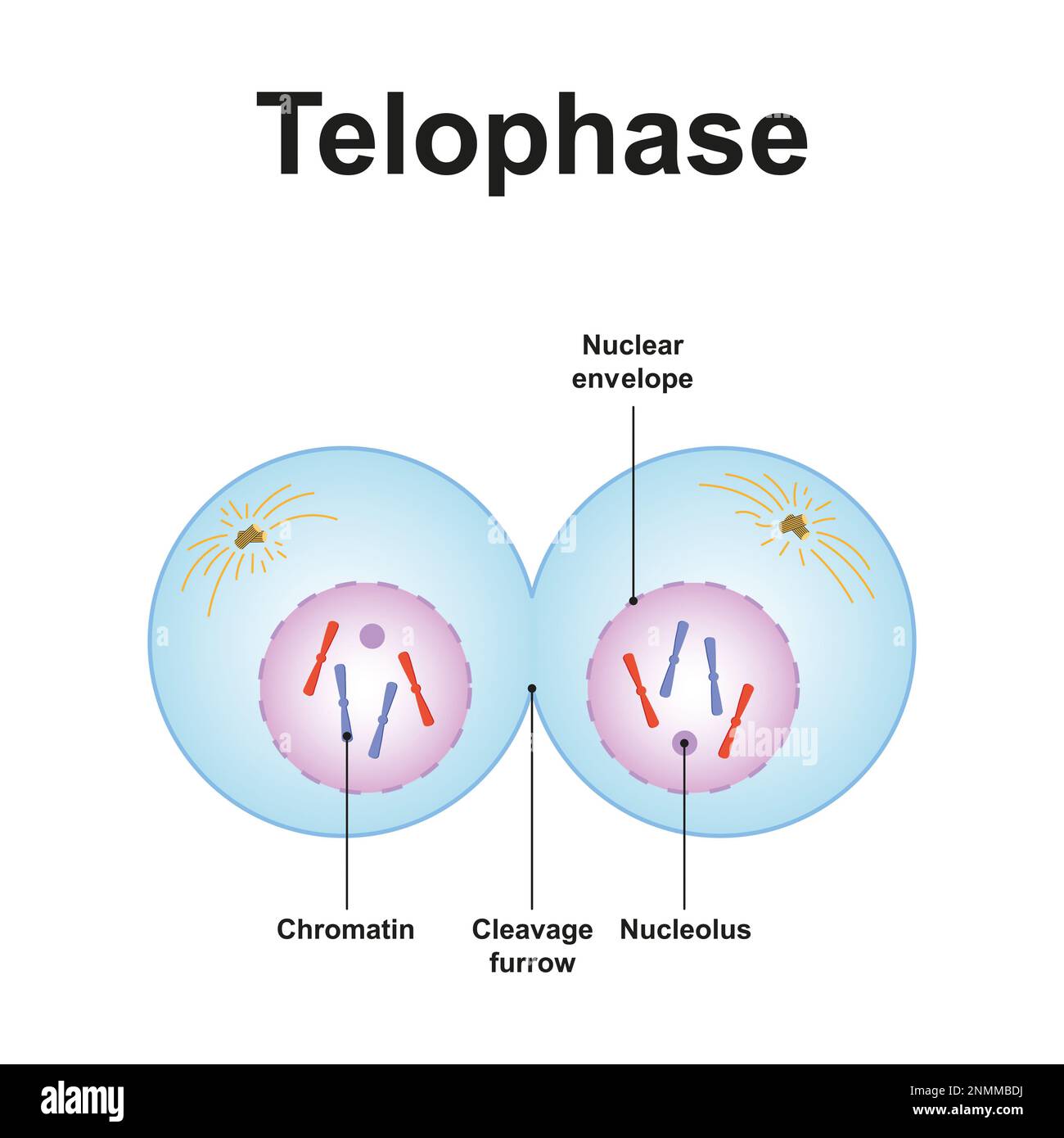
telophase
Chromosomes spread out into chromatin, nuclear envelope reforms around chromosomes, and spindle fibers break down.
How is cytokinesis different in plant cells than animal cells?
Cytokinesis in animal cells involves the formation of a cleavage furrow, while in plant cells, it occurs through the formation of a cell plate.
What are the checkpoints in the cell cycle?
Checkpoints are control points where stop/go signals regulate the cell cycle. There are checkpoints in G1, G2, and M.
What does the cell look for in the G1 checkpoint?
DNA integrity, cell size, nutrient availability, and external growth signals to determine if the cell is ready to proceed to DNA synthesis (S phase).
What does the cell look for in the S checkpoint?
DNA damage or replication stress, rate of DNA replication, Complete DNA synthesis, and proper DNA replication machinery
What does the cell look for at the G2 checkpoint?
Verifies if DNA has been properly replicated and if all chromosomes are fully replicated, access whether cell has grown significantly and produced enough organelles and proteins, sees if DNA is damaged
What is the difference between protooncogene and tumor suppressor gene?
Protooncogenes code for proteins that stimulate forward movement of the cycle, tumor suppressor genes code for proteins that stop the forward movement of the cycle.
What do CDK do? How do they work with cyclins?
CDKs are protein enzymes that controls the cell cycle, always present, and not always connected to cyclins. Cyclins are proteins which attach to kinases to activate them, levels fluctuate in the cell cycle and help cycle move to the next phase
What is MPF?
Maturation-promoting factor, allows cells to go to M phase
What is an example of a protein that inhibits forward movement of the cell cycle if there is a problem?
P53- will inhibit CDK-cyclin binding if anything goes wrong in G1
What is cancer? How does it happen?
Cancer is a disorder in which cells lose the ability to control growth by not responding to regulation (broken checkpoints)

