L07 sedimentary rocks and processes
 Studied by 0 people
 Call Kai
 Learn
Learn Practice Test
 Spaced Repetition
 Match
Match Flashcards
 Knowt Play
1/31

There's no tags or description
Looks like no tags are added yet.
Name | Mastery | Learn | Test | Matching | Spaced | Call with Kai |
|---|
No analytics yet
Send a link to your students to track their progress
32 Terms
Learning Goal: describe how sedimentary rocks/processes fit into the rock cycle and why they are important
- contains important energy reserves (oil/gas/coal/uranium)
- building materials (cement, sand)
- placer deposits - heavy minerals concentrated in sediments (ex gold, diamonds)
- fossils - study evolution, time
- we build on sedimentary rock/sediment
- sediments make up the surface
sediment* vs sedimentary rock
- product of weathering
- physical fragments
- boulder, gravel, sand, silt, clay
or ions
sediment vs sedimentary rock*
- sediment that has undergone lithification
- form at (or near) surface of earth
- contains evidence of past environment (sediment transport, fossils)
- tells us a story
what is lithiification?
process of clastic rock being formed
how do clastic rocks form?
- start with material from physical weathering
- transported by transport agent
-deposited in sedimentary environment
- compaction (grains are compressed together)
- cementation (binds grains together)
in clastic rocks, how is eroded material transported? aka what are the transport agents?
wind
water (rivers and waves)
ice
gravity
what is the strongest transport method in clastic rocks?
gravity
what is a clast?
clast = rock broken off from earth
how are chemical precipitates formed?
start with sediment with ions in solution
some process causes them to precipitate from solution
creates chemical sedimentary rocks
what does massive mean?
a lot of things stuck together
what are evaporites?
precipitation of minerals from solution
often requires restricted basin in warm arid climate
common evaporites
halite (NaCl), gypsum, anhydrite
what are the 2 main types of sedimentary rocks?
clastic and chemical
sedimentary features
grain size
grain sorting
grain shape
what is grain size?
the size of the grains in sedimentary rock
how is grain size helpful
grain size relates to amount of energy needed to move particles
larger grains = moved by stronger forces/faster currents
what is grain sorting?
distribution of grain sizes or types
how does grain sorting help?
all same sized grains = well sorted
differently sized = poorly sorted
what is grain shape
angular vs roundness
sediment maturity
refers to clastic sediment
sediment size/sorting/roundness/composition, figuring out how far a sediment has been transported
why is sand a mature sediment?
travelled long way
well rounded
similar sized particles
what is a mature sediment
sediment that has travelled far
sediment maturity relates to ___
distance from source
mature = distal
immature = proximal
what are clues in rocks towards their origin?
grain details
maturity
sedimentary structures
fossils
what are sedimentary structures
features in sedimentary rocks
often formed at/near deposition
bedding structure
sedimentary rocks into layers
initially horizontal deposition
cross beds structure
bedding in different directions
cross bedding
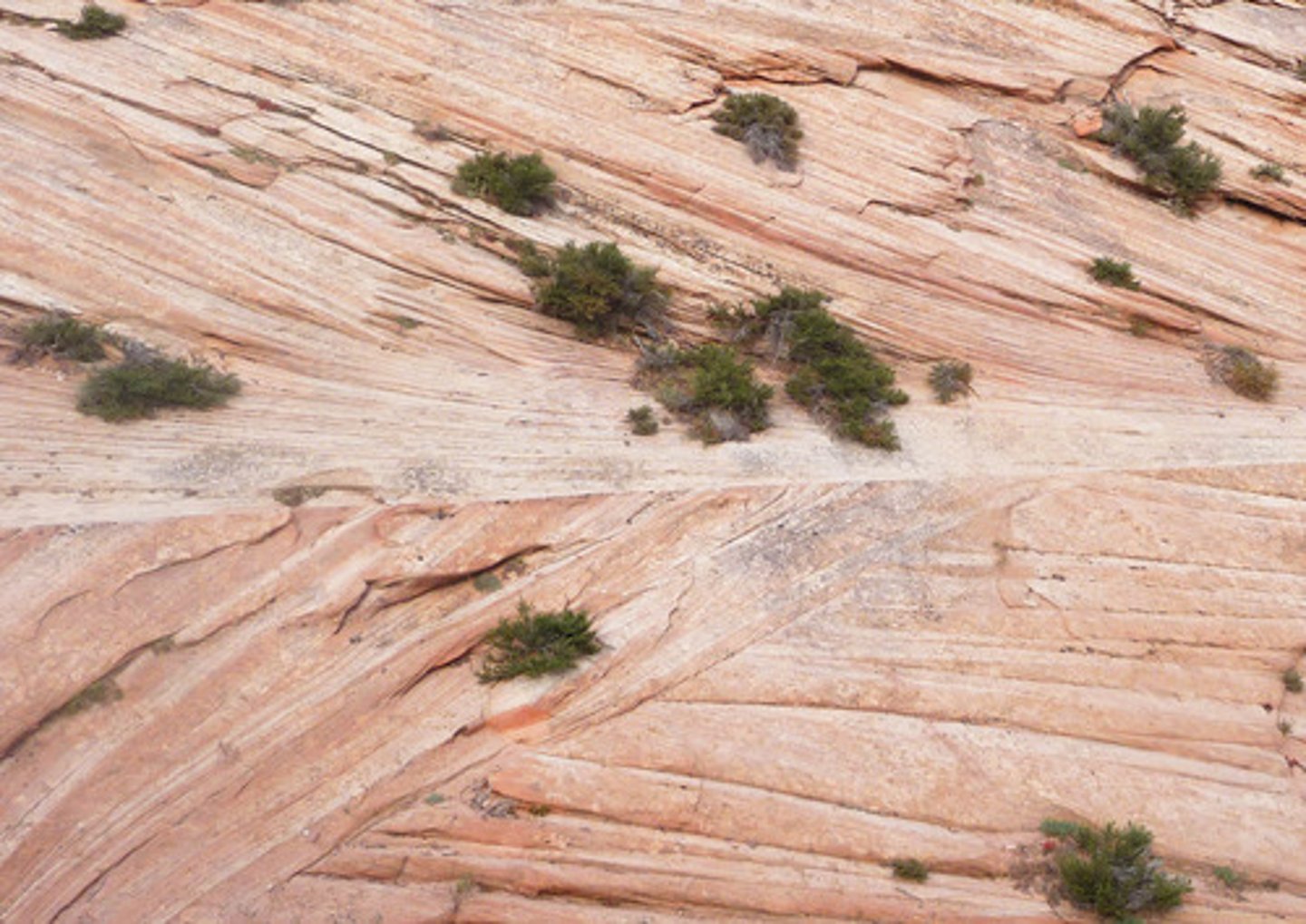
what does cross bedding tell us?
deposited by wind, then current in water
tells us which direction the wind was going when the rock was being made
mud crack structures - what do they tell us?
made in arid environment
ripple marks structures
indicates currents/waves at that moment
engineering applications of sedimentary rocks
bedding planes - weak
bedding orientation influences slope stability
dissolution of carbonates/limestone can form caves, sinkholes
some sedimentary rocks are susceptible to weathering and/or abrasion
 Note
Note  Flashcards (76)