L4: ANCIENT CIVILIZATION
 Call Kai
 Learn
Learn Practice Test
 Spaced Repetition
 Match
Match Flashcards
 Knowt Play
1/94

There's no tags or description
Looks like no tags are added yet.
Name | Mastery | Learn | Test | Matching | Spaced | Call with Kai |
|---|
No analytics yet
Send a link to your students to track their progress
95 Terms
Persian Empire
name given to a series of dynasties centered in modern-day Iran that spanned
several centuries (6th century B.C. to 20th century A.D.)
Achaemenid Empire
Persian Empire was also called
Achaemenid Empire
Alexander the great
___________was a global hub of culture, religion, science, art and technology for more than 200 years before it fell to the invading armies of __________
Cyrus the great
Europe’s Balkan Peninsula (west)
Indus Valley (east)
Persian Empire was found by ___________
became one of the largest empires in history, stretching from _________ in the West to India’s _________in the East.
semi-nomadic tribes
The Persian Empire started as a collection of _________ who raised sheep, goats and cattle on the Iranian plateau.
Persian Empire
Golden Chariot was invented in
Conquest of babylon
One of the triumphs of Cyrus is his _________.
He was without opposition from the Babylonians as he was also known to spare anyone who yielded to him.
Cyrus the Great
known to spare anyone who yielded to him.
Cyrus the Great
His reign was “benevolent” in nature as he involved
Medes (conquered kingdom) in the government, a
adapted the habits of dress and ornamentation from Elamites
and he returned images of gods that had been seized in battle and hoarded in Babylon.
he involved Medes (conquered kingdoms)
adapated dress and ornamentation of Elamites
returned images of gods after battle and hoard in Babylonia
why was the rule of Cyrus the Great BENEVOLENT in nature?
Cyrus Cylinder
Cyrus freed slaves and declared that all people had the right to choose their own religion and established racial equality. This declaration was recorded in the ___________
Sulfuric Acid
Qanat
Backgammon
Pahlavi Alphabet
Postal Service
Achaemenid Taxation
List down the Persian Technology
Abu Bakr al-Razi
a Persian astronomer, mathematician, and geographer, was the first to discover sulfuric
acid.
Qanat : Persia
A gently sloping underground channel that carries water from an aquifer or water well to houses
and fields. It is used for the irrigation of crops and for drinking water.
Backgammon : Persia
Was first invented in Iran in about 3000 BC. It is one of the oldest surviving board games. Excavations at Shahr-e Sukhteh in Iran found a board game with two dice and 60 checkers.
Pahlavi Alphabet
advent of islam
________writing system of the Persian people dates from as early as the 2nd century BCE, some scholars believe, and was in use until the __________(7th century CE).
Postal Services : Persia
Riders and horse-drawn wagons carried mail that consisted mostly of governmental dispatches from one place to another.
Achaemenid taxation
Cyrus II and Cambyses,
Darius I
_________important component of the Achaemenid state administration. Under ___________
subjects were mostly obliged to deliver only gifts, and regular taxes were first introduced under the rule of _________
Parthian battery ; Persia
A ceramic pot, a metal tube, and a rod of a different metal
were used to create the __________
Persepolis
darius I the great
330 BCE
capital of the Persian Achaemenid Empire from the reign of __________) until its destruction in _____
Persian City
Greek Perses-polis means
Persepolis
The complex was comprised of nine structures:
The Apadana (hypostyle receiving hall), Trachara (Palace of Darius I), Council Hall, Treasury,
Throne Hall, Palace of Xerxes I, Harem of Xerxes I, Gate of All Nations, Tomb of the King
Apadana of Darius I
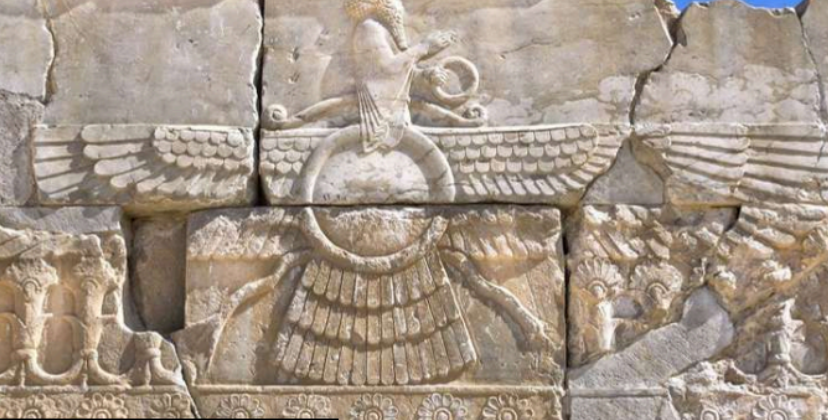
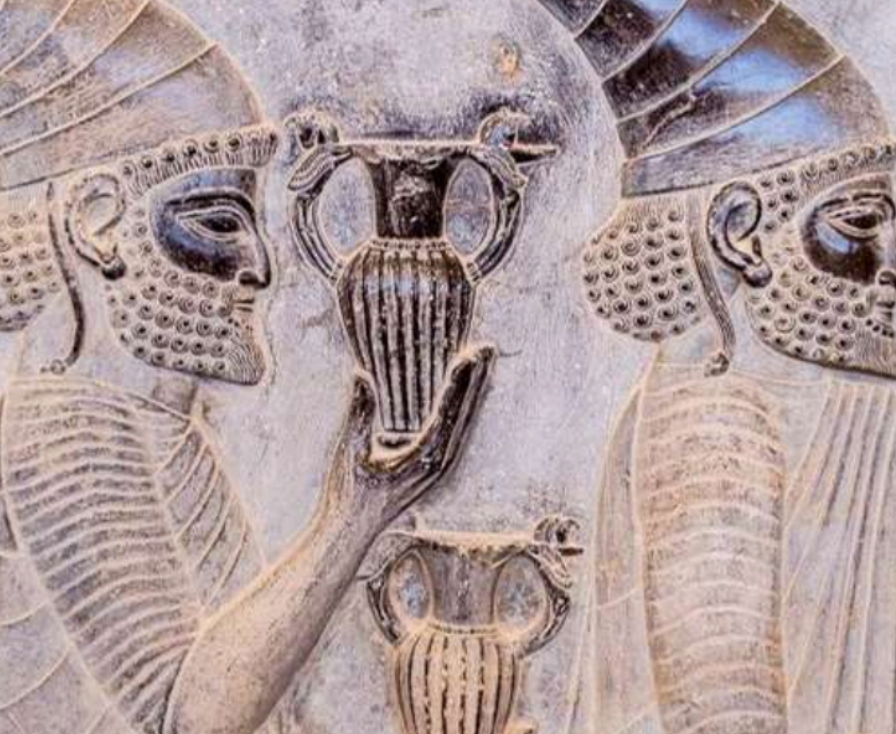
Relief Painting in Persepolis
Greece + western coast of Turkey.
Mediterranean + black Sea
Ancient Greek civilization was concentrated
in what is today _______and along the __________
However, ancient Greek colonists established cities all around the _________ and along the coast of the __________
Greece
a landscape of mountains and sea.
Land useful for farming is found in valley bottoms, hedged in by steep slopes, or on small islands, confined by water.
Archaic Greece
is known as the age in which the polis, or city- state, was invented.
Greek natural philosophers
Mesopotamians and Egyptians
The origin of science is ascribed to _____________. They borrowed from, and built upon,
the work of _________and __________.
Greek Amphora
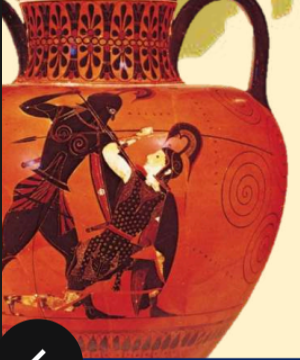
Classical period
demokratia
rule by the people
The _______ brought with it a series of political reforms that
created the system of Ancient Greek democracy known as ________ or
“_________”
Acropolis
A typical Greek city was built around a fortified hill, called an ____0_____. Located here is the city’s chief temple, the city’s treasury, and some other public buildings.
Agora
Colonnades
________the central space in Acropolis where public meetings were held, and where traders set up
their stalls. it was often flanked by_________
Erectheion, Acropolis
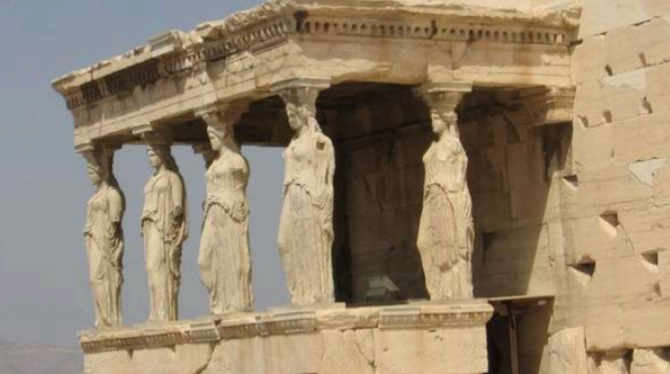
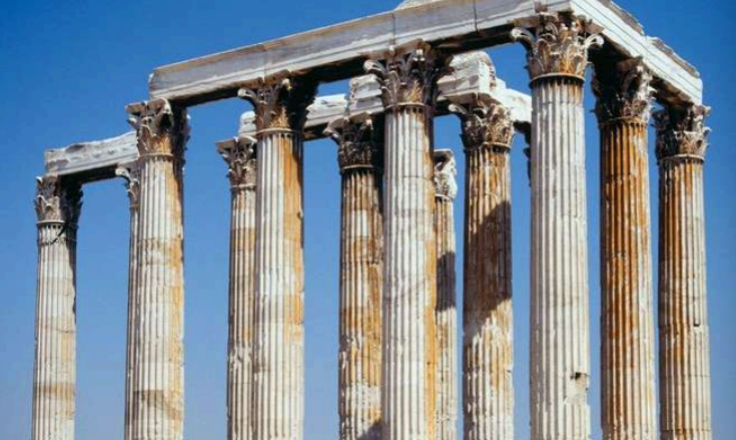
Temple of Olympian Zeus, Athens Greece
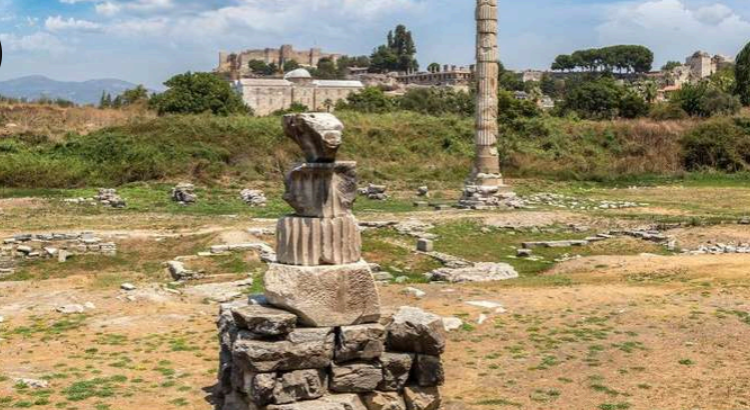
Temple of Artemis , Turkey
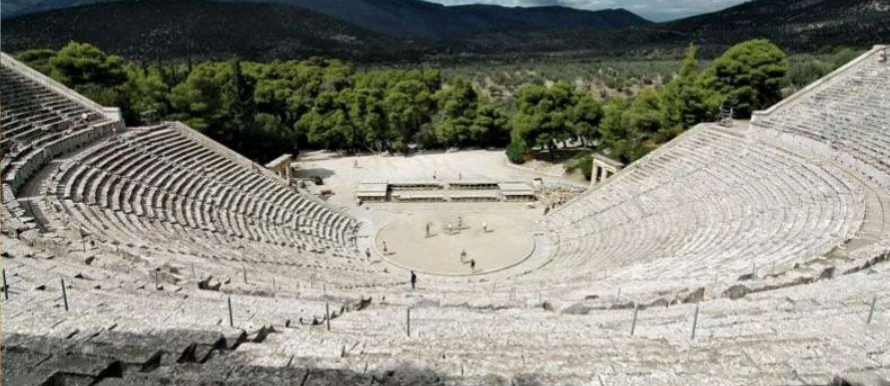
Epidaurus Ampitheatre Greece
Greece was an Open Society
Rise of Naturalism
Idea of Demonstration
3 Significant Factors that contributed ti the rise of SCIENCE and PHILOSOPHY
intellectual freedom
secondary to the pursuit of truth
political freedom
GREECE WAS AN OPEN SOCIETY Philosophers enjoyed _________ and there was a tradition of critical discussion. Pupils were encouraged to question their teachers. Opinions and personal feelings were _________. Concomitant with intellectual freedom is _________.
Naturalism
__________ is the explanation and interpretation of phenomena in terms of natural law rather than the interdiction of supernatural forces or beings. The origin of naturalism appears to be uniquely Greek.
Idea of Demonstration
Verbal Logic
_________________
By developing mathematics from a set of empirical rules to an abstract science of demonstration, the Greeks found that it was possible to establish a method by which demonstrable
The corollary to geometrical reasoning was ________-, the idea that there were correct ways of thinking and reasoning.
Greekdemonstration, and especially Aristotelean logic, evolved into the modern scientific method.
Thales of Miletus
Developed the theory of matter based on water
Socrates
Emphasize the study of human nature in relation to society, established the theory of Skepticism
Empedocles
assumed that there are more than one kind of matter and postulated the four roots of Eart fire, air, water
Hippocrates
known as the greatest physician of antiquity
father of medicine
Hippocrates
He stated that disease have natural causes, and the body can repair itself
Archimedes
dicovered laws of the lever and pulley resulted to machines that can move loads,
Archimedes
He calculated the value of Pi
exelled in geometery, calculus, theoretical mathematics, hydrostatics, discplacement
Aristotle
Father of Biology
Aristotle
classification of plants and animals and introduced a method of scientific thinking,
studied astronomy, physics, meteorology
Scara naturae of Great Chain of beings
aristotle
___________ ________ was one of the first theory in biology by
by _________
Democritus
Developed the atomic theory-
matter was consisted of atoms
Pythagoras
mathematician, held that number were basic to matter: the phytagorean theorem
Plato
dealt with the nature of the universe; ascribe geometric forms composed of bounding planes to the elements of eart, fire, air and water based upon physical properties
Ptolemy
one of the greatest astronerms who found the GEOCENTRIC THEORY and wrote Almagest
Aristarchus
he discovered new theories about way the planets move in their orbits
Hipparchus
discovered length of month hich is only one second off from the lengths we used today
Eratosthenes
determined the circumference of earth was 28000 miles.\
only 3000 miles more than what e know today
Theopartus
Father of Plant Science. wrote history of plants.
he describe the forms and behaviors of, morphology and properties of 500 food and medicinal plants .
Most outstanding botanist
watermill
Cartography
Communal Bath
Astronomy
Columns
List down the Greek Inventions
water mill: greek
A revolutionary invention, used for metal shaping, agri, milling
Cartography : Greek
the study and practice of making maps, played important role in travel and navigation
Communal Bath : greek
cold water only, to toughen skin.
Astonomy Greek
applied their skills in math to help describe the stars and planet
Columns
Ionic
Doric
Corinthian
used to construct buildings with high roofs. the types are
_______
_______
_______
Klepsydra ; greek
Created the concept of time. It is first used in courtrooms where the time of the
lawyers and the witnesses’ speeches could be known as soon as the water supply run out of
the vessel.
Klepsydra : greek
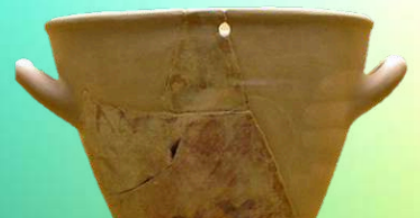
Ancient Rome
Italy
The term ______ refers to the city of Rome, which was located in central ____
and also to the empire it came to rule, which covered the entire
Mediterranean basin and much of western Europe.*
the seven hills of Rome
Palatine,
Aventine,
Capitoline,
Quirinal,
Viminal
Esquiline,
Caelian.
Rome was built on seven hills, known as “____________”: _____(7)
Romulus, Remus
non-hereditary
According to legends, Rome was built by twin sons of Mars, _______ and
_______. After killing Remus, Romulus became the first king of Rome,
which was named after him. A series of kings followed in a ________
succession.
Small Farmers
Ancient Roman society originated as a society of_______. It
grew more powerful and extensive that it became the most urbanized in the
ancient world.
Forum
The Roman city was built around a _____. This was an open space
surrounded by colonnades and public buildings. It functioned as a
marketplace, political meeting point and social center.
Agriculture
Roman economy was primarily based on ________ (grains, olives, grapes,
etc). Romans were also importing grains from overseas such as Egypt and
North Africa.
Roman arch
the foundation of Rome's architectural mastery and massive expanse of building projects across the ancient world. It allowed the Romans to make bigger buildings, longer roads, and better aqueducts.
Roman Arch
the ancestor of modern architecture
cement
TUFF
_______This helped to build impeccable and lasting structures. The
Romans used to combine their cement with volcanic rock popularly known as
_____ enabling the resulting concrete to endure possible chemical decay.
PLINY THE ELDER ; rome
Described almost a thousand species of plants, most of which
were highly valued for their medicinal uses.
Newspaper ; Rome
Acta Diurna = Daily events
the first empire to establish a sophisticated system of circulating written news which it
published the _______which translates as “________-”
Julian Calendar; rome
Dating system established by Julius Caesar as a reform of the Roman republican
calendar.
Aqueduct : Rome
was a channel used to transport fresh water to highly populated areas.
Roman Numerals
Constituting one of the most popular numbering systems still in use today, the first use
of these numbers dates back somewhere between 900 and 800 BC.
Flavian Ampitheatre
the colosseum also called the ________________ was built in Rome under
the Flavian emperors of the Roman Empire.
Titus
When the Colosseum first opened, the emperor _______ celebrated with a
hundred days of gladiatorial games. Aside from the games, the Colosseum
also hosted dramas, reenactments, and even public executions.
Mesoamerican Civilization
mexico, central america
are a complex of aboriginal cultures that developed in parts of ______and________
before the Spanish conquest in the 16th century.
Olmec Civilization
They lived along the Gulf Coast of Mexico, in the modern-day
Mexican states of Veracruz and Tabasco.
hot and humid
The Gulf Coast was a __________ region covered with swamps and jungles, with many places covered with giant trees. It receives up to 100 inches of rainfall every year which caused rivers to swell that led to severe flooding.
Olmec Civilization
abundant deposits of salt and tar, fine clay for pottery, wood and
rubber. Hills provided hard stones for making tools and monuments. Rivers
provided a means of transportation and floodplains provide fertile lands for farming.
jaguar motif
Olmec art styles, especially the use of the___________, can be seen in the
pottery and sculpture of later peoples in the region. Future Mesoamerican
societies copied the Olmec pattern of urban design. They also left behind the
notions of planned ceremonial centers, ritual ball games, and an elite ruling
class.
Zapotec Civilization
By the time Olmec civilization had collapsed, another people—the Zapotec—
were developing an advanced society to the southwest, in what is now the
Mexican state of Oaxaca
Zapotec Civilization
left behind a hieroglyphic writing system and a calendar system based on the
movement of the sun. They are noted as the Americas’ first city
builders.
South america
While civilizations were emerging in Mesoamerica,
advanced societies were independently
developing in ________
Chavín de Huántar
The first influential civilization in South America arose in the
mountains. Archaeologists named the culture after a major ruin,
___________, in the northern highlands of Peru. This site
features pyramids, plazas, and massive earthen mounds.
Andes mountain
The early cultures of South America
arose in a difficult environment, the
rugged terrain of the _______
Nazca Culture
flourished along the southern coast of Peru, which is extremely dry.
Nazca
They are even more
famous, however, for an extraordinary but
puzzling set of creations known as the Nazca
Lines.
The Moche
________channeled streams flowing down from the
Andes into an extensive system of irrigation canals that
were used to grow corn (maize), beans, and other crops. This intensive agriculture
supported numerous urban centers.

