Chapter 1 - Cognitive Bias
 Studied by 0 people
 Call Kai
 Learn
Learn Practice Test
 Spaced Repetition
 Match
Match Flashcards
 Knowt Play
1/12

There's no tags or description
Looks like no tags are added yet.
Name | Mastery | Learn | Test | Matching | Spaced | Call with Kai |
|---|
No analytics yet
Send a link to your students to track their progress
13 Terms
experience
perspectives about the world gained through involvement and interaction with particular situations
issues with experiences
people attempt to do training programs they previously did, but they no longer are appropiate or match their goals
example of reliance on experience
proffesional athletes doing workouts they used to in their 60s
vicarious experience
perspectives that are aquired through the involvement and interactions of another individual rather than the individuals own personal involvement and interactions with a situation
example of reliance on vicarious experience
fitness influencers dispensing advice on how to look like them
issue: genetics plays a role
may not be a good fit for the individual, increases risk of injury
confirmation bias
tendency to selectively value information that confirms or reinforces existing beliefs and perspectives
expertise
perspectives about the world gained through exceptional knowledge, understanding, and skill of a particular domain
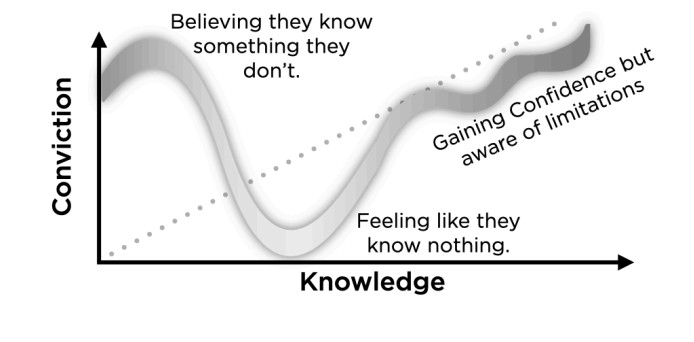
the dunning-kruger effect
a cognitive bias whereby individuals with low ability/knowledge in an area tend to overestimate their ability/knowledge of that area
dunning kruger effect (knowlege vs conviction relationship)
as someone gains more knowledge, they start to realize how little they know
halo effect
cognitive bias whereby inaccurate characteristics are assigned to a subject based upon other known characteristics
issues with properly identifying experts leads to confusion of…
whom we should be seeking info from
how we should value info
examples of halo effect
assuming athletes are going to be good coaches
greater levels of expertise to those who are attractive
someone who can tell a good story
how do we know an expert from a nonexpert
experts can comprehend a situation, consider factors that matter, and make a decision to improve situation
experts asusme that most people have greater understanding of their domain of expertise then they actually do
experts have low conviction regarding their own knowledge
non experts rely heavily on experiences and claim their experiences are the truth
a tendency to be overconfident about knowledge and make absolute statements
 Note
Note  Flashcards (62)