Pediatric Oncologic, Hematologic, and Immunologic Disorders
 Studied by 1 person
 Call with Kai
 Learn
Learn Practice Test
 Spaced Repetition
 Match
Match Flashcards
 Knowt Play
1/18

There's no tags or description
Looks like no tags are added yet.
Name | Mastery | Learn | Test | Matching | Spaced | Call with Kai |
|---|
No study sessions yet.
19 Terms
Objectives
●Identify common childhood hematologic, immunologic, or cancer disorders.
●Describe the etiology of childhood cancer including known risk factors.
●Formulate a plan of care for the child hospitalized with hematologic, immunologic, or cancer disorders.
●Construct teaching plans for the hospitalized child with hematologic, immunologic, or cancer disorders.
●Compare and contrast treatment modalities for childhood cancer.
●Assess for side effects and potential complications for childhood cancer treatments.
●Identify psychosocial needs for the parents of a child hospitalized with hematologic, immunologic, or cancer disorders.
What are common pediatric childhood cancers
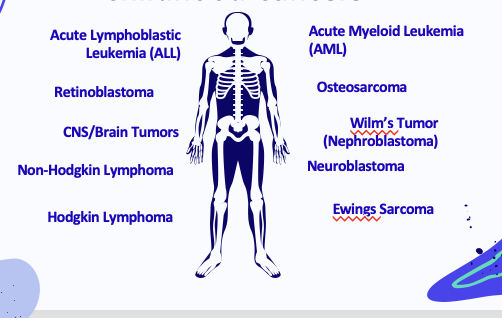
Big swollen mass in stomach - Wilm’s Tumor (Nephroblastoma), do not touch that mass- it can cause the cancer cells to spread, surgery 24-48hrs, chemo after surgery.
What is a cancer cell?
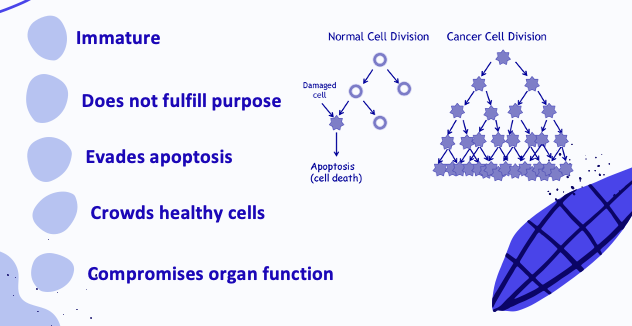
Normal cells- most cells will have apoptosis- kill bad cells
Cancer cells will not kill itself- evade apoptosis, replicate quick, crowd healthy cells, can damage organs. If solid tumor- can grow on organ, push against it
Leukemia- like weeds- chokes out good healthy cells
What are the types of cancer tx
There are several types of cancer treatment that are common:
●Chemotherapy: systemic- effect entire body – effects fast growing cells- hair, skin, nails & cytotoxic ( toxic to) all rapidly dividing cells. May be given IV, PO, SUB-Q, IT- intrathecal in spine, or IM
●Radiation: able to target solid tumor- infrared beam, concerns for skin breakdown and surrounding tissue. Not have systemic effect- can directly target what you want. Can effect some healthy cells but not like chemo
●Surgery: reduces tumor burden- solid tumor, biopsies to stage- don’t know stages, higher then number= worse it is
●Target therapy: targets a specific gene in a cell (MAB drugs)using a lab by antibodies you make in the lab that targets specific cancer antigens.
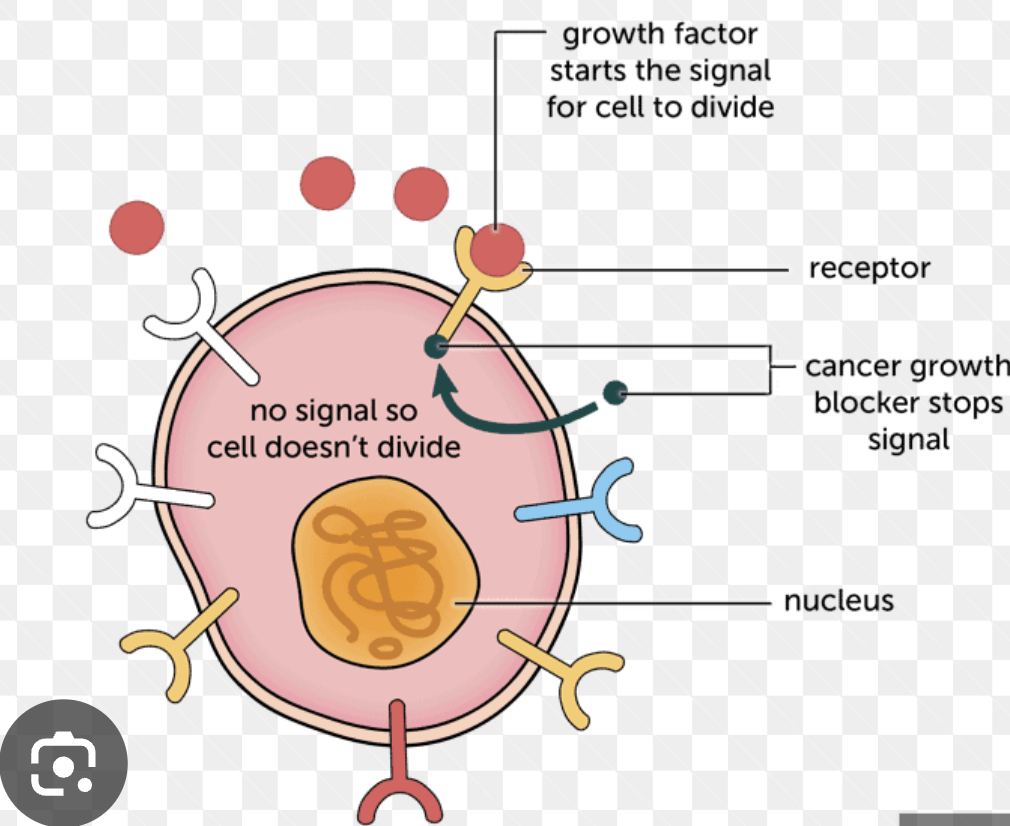
●Immunotherapy: modifies your own immune system and teaches it to target cancer cells (CAR-T)
People get sick bc targets healthy and cancer cells.
What is CAR T cell therapy
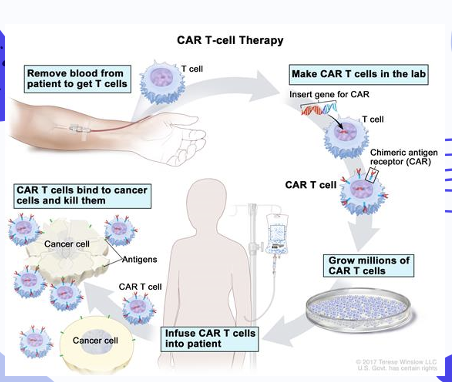
Good tx. Take out blood from pt, isolate t cells, in lab- insert gene for CAR into T cells- grow cells and put back in pt.
No chance of infusion rx bc its their own blood
CAR T will bind to cancer cells and kill them
What considerations should we have with chemotherapy
Chemotherapy
N/V, anorexia, malnutrition, mucositis, rectal ulcers, neuropathy- can be painful and hurt their nerves, alopecia, sterility, inability to have babies
Side effects- hair loss- alopecia, messes up teeth from vomiting, tired, don’t want to eat, can get whatever they want to eat ex. hot Cheetos- if that doesn’t work we can go TPN .
Zofran
scopolamine patch for behind ears
Labs if they dont want to eat or drink- electrolytes, rectal ulcer and hemorrhoids- don’t take rectal temp
Vincristine- causes nerve pain- use gabapentin
Age group hardest time w going bald- Ex. dye a pts hair hot pink.
adolescents, conversation about egg conservation and sperm making.
What considerations should we have about steroids
Monitor glucose bc steroids
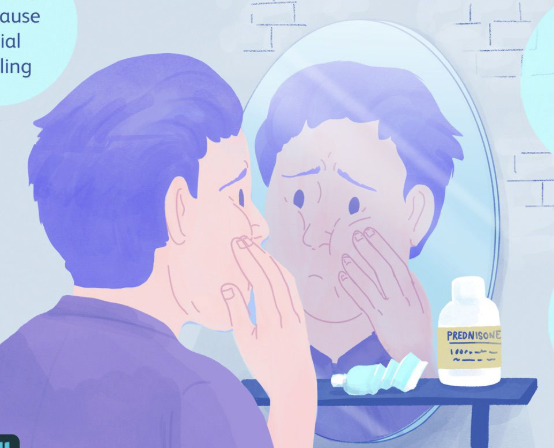
Weight gain, puffiness- moon face, mood changes, difficulty sleeping, increased blood effect adolescents glucose. Decrease inflamm
What considerations should we have about radiation
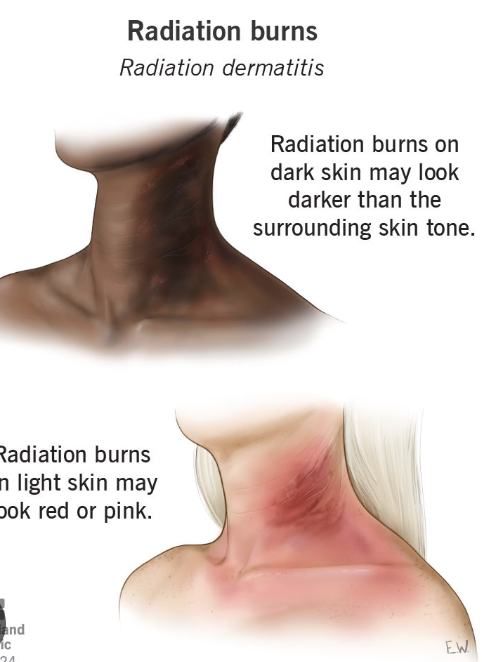
Main concern- Radiation burns, compromised skin integrity
What considerations should we have for biotherapy
Can prolong myelosuppression- ability to produce blood cells is suppressed for a longer time ( a condition in which the bone marrow's activity is decreased, leading to the reduced production of red blood cells, white blood cells, and platelets.) , transfusion reactions common.
CAR T – hair loss rare w it.
If don’t use own blood- will have transfusion rx. First thing do- stop it
What are common procedures given for cancer
●Central line placement- need access a lot
●Frequent lumbar punctures- spinal tap- helps determine severity and progression of disease
●BMA- bone marrow aspiration- common w leukemia an lymphomas.
●Biopsies of tumors- determine the stage
●Tumor resections- take it out or a part of it out .
●Amputation depending on disease and progression- if have bone disease. Phantom limb pain- pain is real to them. Validate pain and treat it
●CT scans
●MRIs
What is a bone marrow transplant
Also known as Hemopoietic Stem Cell Transplantation (HSCT)
Used to treat relapse cancer- kid – severe compromised immunodeficiency syndrome – simple cold can kill them- bc don’t have anything to help them fight off. Infection risk high , they should not go to school.
Get prophylactic abx. Home needs to be very clean at all times. Don’t have them wait in waiting room.
Tx- bone marrow transplant. – problems- if parents cant visit
Used to Treat sickle cell, neuroblastoma, central nervous sytem,brain tumors
What are the types of BMT
Autologus
Stem cells from the patient are used. Often used when the patient’s marrow isnt’ the problem. You give to yourself- will take stem cells from you and then give to self.
Allogenic (HLA Matched)
.The donor matches all of the HLA proteins. Exact match for you.
Haploid Transplant
The donor matches exactly half of the HLA (human leukocyte antigen) type
Parents will always be at least 50%- automatically qualified for haploid
Sibiling only have 50% chance of haploid- so may or may not be able to do haploid
If bone marrow is problem- allogenic or haploid
What education should we give about cancer?
Strictly adhere to meds- cant skip doses – educate parents. Child should also be included in convo – especially teens
Be upfront but compassionate about side effects
Need freq blood transfusions- PICC- problem for teens
Cancer kids don’t get NSAIDS- bc deactivate plts and they are already high risk bleeding bc their plts are low
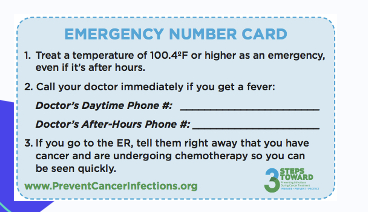
All will be immunosuppressed- magic number temp for ER 100.4 or higher- Priority- ER - cancer kids only
Nothing up the rectum
Pediatric oncology has a psychosocial impact as profound as that of the physcial impact. Even infant- parent need support
Research is essential in pediatric oncology as medical teams explore future treatments and potential cures. Only 4% federal funding goes to peds
What are oncologic emergencies
Emergencies arise from either the excessive amount of cancer cells, metabolic or hormonal imbalances, obstruction or pressure on organs, or results from cytotoxic therapy.
What is hyperleukocytosis
•WBC > 100,000. Too much WBC, WBC thick and sticky- Will create some blockages-
•Associated with Leukemia
•Signs & Symptoms- agitated, restless, SOB, blurry vision, mental status change,
•Treatment:- MAIN PRIORITY hyper hydration – a lot of fluids to try and thin out WBC & chemotherapy- to kill off extra WBC. Need to be on strict I&o, Daily weights, Neuro checks
What is acute tumor lysis syndrome
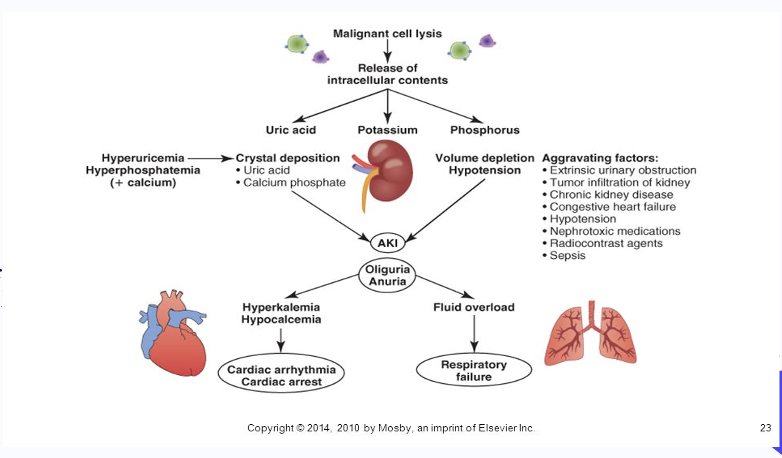
●Cancer cells will explode and release nasty stuff in there- uric acid, k, phosphorus- this can damage kidneys- acute kidney injury
●Damaged kidney- oliguria, auria, - can lead to cardiac arrest or resp failure
●If don’t pee- retain K lead heart problems , fluid overload in lungs or chest cavity
●Tx- hyper hydrate prior to chemo, give alopurinal- to decrease uric acid- 24 hrs before chemo starts to prevent complications, check electrolytes
High K, uric acid and phosphorus
How should we tx fever w neutropenia
●Neutrophils are first line of defense
●Fever (> 100.4 °F) may be only sign of infection in a neutropenic patient, Doesn’t matter if don’t have other signs of infection
●Increased risk of sepsis
●Fever cards- ER- helps go straight back to room.
●Treatment- within 1 hr need cefepime – hang out in er for 1 hr to watch for sepsis
●Draw labs and culture for central line- never peripheral stick neutropenic kid. Don’t give nsaid, once record fever can give Tylenol in hospital but not at home!
What is superior vena cava syndrome
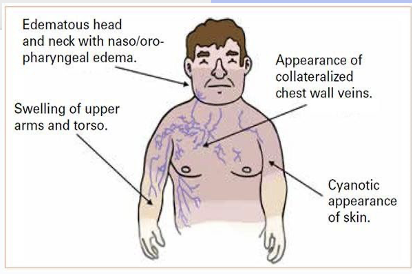
•Occurs when tumors compress or invade the vena cava causing decreased blood return to the heart- ex. Nonhogkins lymphomas
•Associated mostly with chest malignancies, metastatic tumors, or catheters
•Clinical presentation- 3 Ds- dyspnea, distnesion( will be swollen), dilated chest wall veins. – will be able to see veins clearly
•Treat the underlying cause- could be chemo, steroids
•DON’T lay flat
•Don’t sedate for any reason
What is SIADH
Syndrome of Inappropriate Anti-Diuretic Hormone (SIADH)
SIADH occurs when tumor cells synthesize ( make) , store, and secrete ADH regardless of hydration status. This interferes with the body's ability to regulate electrolytes and maintain homeostasis
●Too many letters too much water
●S/S- Confused, moody, hallucinations, seizures, coma, can lead to death
●Give steroids- hypertonic fluids ( ex, 3, 5, 10%) , increase salt, fluid restriction, strict I &O, neuro checks
 Note
Note  Flashcards (84)