periods 1-5 terms
0.0(0)
 Studied by 1 person
 Call Kai
 Learn
Learn Practice Test
 Spaced Repetition
 Match
Match Flashcards
 Knowt Play
Card Sorting
1/369

Earn XP
Description and Tags
keep updating and using so that we don't selectively study only one period at a time
Last updated 10:56 PM on 11/23/22
Name | Mastery | Learn | Test | Matching | Spaced | Call with Kai |
|---|
No analytics yet
Send a link to your students to track their progress
370 Terms
1
New cards
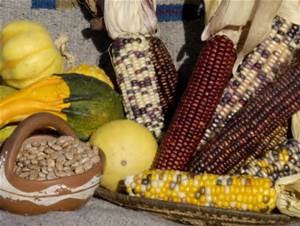
"Three sisters" (corn, beans, and squash)
Around 9,000 years ago, about the same time human beings first began to domestic plants for food in other parts of the world, American Indians began to domesticate these three crops (among many others) which went on to form the basis of agriculture in the Western Hemisphere. This transition from hunting and gathering to settled agriculture is known as the "neolithic revolution" or "agricultural revolution." Not all Native Americans adopted agriculture, but many, such as the Aztec and Inca did.
2
New cards
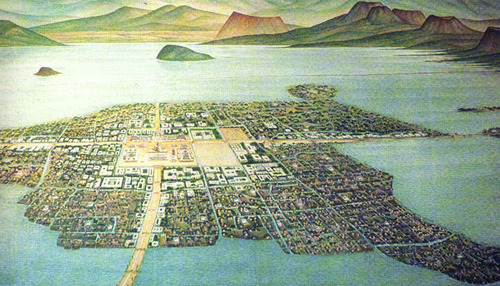
The Aztecs and the capital of Tenochtitlan
This powerful Native American civilization centered in what is today Mexico, contained cities, roads, irrigation systems, extensive trade networks, and pyramid-temples that still inspire wonder. Its capital city, with a population of close to 250,000 people, was one of the world's largest cities. The city was a center of Aztec culture that was destroyed by the Spanish through disease and warfare.
3
New cards
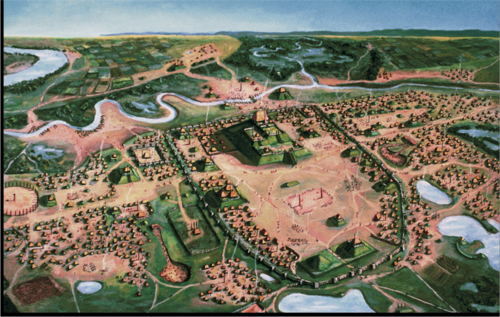
Cahokia
Several hundred years before Columbus arrived in America, this was the largest city and center of Native American culture in the Mississippi River Valley of North America. With a walled/fortified city of between 10,000-30,000 people in 1200 ad, it stood as the largest settled community in what is now the United States until it was surpassed in size by Philadelphia and New York around 1800. Its remains can still be visited today. Native Americans of Cohakia, and North America more generally, had not developed the scale or centralized organization of the Aztec and Inca civilizations in Central and South America. They also lacked the technologies Europeans had mastered, such as metal tools, writing, gunpowder, and the scientific knowledge necessary for long-distance travel. But they had perfected techniques of farming, hunting, and fishing, developed structures of political power and religious belief, and engaged in far-reaching networks of trade and communication.
4
New cards
Pueblo Indians
These Native Americans, living in what is now Arizona and New Mexico, settled in permanent villages and perfected the techniques of desert farming. Their descendants, the Hopi and Zuni civilizations, had practiced agriculture there for the previous 3,000 years, but drought brought about their decline. During the peak of the region's culture, between 900 ad and 1200 ad, these people built great planned towns with large multiple-family dwellings (Pueblo Bonita was five stories tall and had over 600 rooms; no larger buildings were constructed until New York City began to do so in the 1880s!), constructed dams and canals for agriculture, and conducted trade with people as far away as Central America and the Mississippi Valley (Cahokia).
5
New cards
The Gabrieleño people
The Native American people who lived in parts of southern California, and specifically what is now Los Angeles County, at the time of Spanish colonization. There were an estimated 5,000 to 10,000 living in the region when the first Spanish settlers arrived in 1781 to establish Los Angeles. There are 31 known sites believed to have been Gabrieleño villages, each having had as many as 400 to 500 huts. Traditionally, the interior and coastal Gabrieleño lived in houses constructed of poles and tule-reed mats. Their economy was based on acorns and other wild plant foods, supplemented by fishing and hunting. Island Gabrieleño often built dwellings of whale ribs covered with sea-lion skins or brush, and for food they relied on fish, sea mammals, and birds, and mollusks. All groups made baskets, and a quarry on Santa Catalina Island provided soapstone that tribal members made into such items as pots and scoops, ceremonial vessels, artistic carvings, beads, and ornaments. Trade between islanders, coastal people, and interior residents was extensive and based on a currency of clamshell beads. Each Gabrieleño village had a hereditary chief; shamanism was an important part of Gabrielino religion and healing practices.
6
New cards
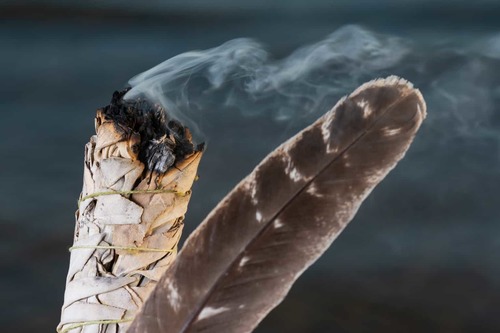
Animism
This is the belief that spiritual power suffuses the world and sacred spirits can be found in all kinds of living and inanimate things--animals, plants, trees, water, and wind. This was a very common belief of many Native American tribes, despite the fact that the most striking feature of Native American society a the time of European contact was its sheer diversity. Each group had its own political system and set of religious beliefs, and North America was home to literally hundreds of mutually unintelligible languages. Nevertheless, the diverse Indian societies were similar in that their lives were steeped in religious ceremonies often related to farming and hunting. Despite this deeply spiritual culture, nearly all Europeans arriving in the New World quickly concluded that Indians were in dire need of being converted to a true, Christian faith.
7
New cards
Matrilineal Societies
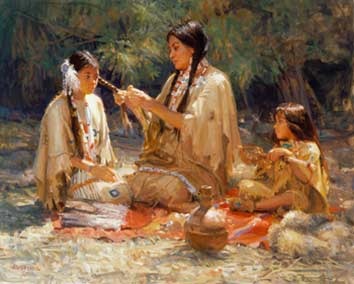
Societies where the children of a marriage become part of the mother's family. The difference between European and Indian gender roles caused the Europeans to view the Indians as "backwards" and in need of fixing. They viewed Indian women as mistreated (because they did most of the farming) and Indian men as lazy (because they spent a lot of time hunting, which was considered a leisure activity in Europe) when in reality the Indian women had many more rights than European women.
8
New cards
Christian Liberty
The idea held by many Europeans, both Protestant and Catholic, that freedom was a moral state reached when one embraced the teachings of Christianity, abandoned a life of sin, and thus liberated oneself from one's own self-destructive tendencies. Since the Indians did not conform to this idea, many Europeans viewed them as savage heathens who needed to be forced into a new religion and way of life. (This term is essentially synonymous with the Puritan concept of "moral liberty.")
9
New cards
Age of Exploration
The "Age of Exploration," sometimes also called the "Age of Discovery," is an informal and loosely defined term for the early modern period approximately from the 1400s to the 1700s in European history, in which seafaring Europeans explored regions across the globe, most of which were already inhabited. It was triggered in part by the fall of Constantinople (now Istanbul) to the Ottoman Empire in 1453, after which Christian Europeans sought to cut out the Muslim middlemen of the land-based Silk Road trade by finding new water routes to India, China, and the islands of the East Indies which were the sources of silk, tea, spices, porcelain, and other luxury goods on which international trade of the early modern era centered. With the aid of new long-distance ships called "caravels" as well as navigational devices such as the compass and the quadrant, the Portuguese first established a shipping route around the Southern tip of Africa in the late 1400s. Others would follow, and the European conquest of America started as an offshoot of this quest for a sea route to Asia.
10
New cards
Conquistadores
Spanish explorers who travelled to the New World motivated by wealth, national glory, and the desire to spread Christianity. They reshaped the New World by conquering, converting, and killing natives.
11
New cards
Christopher Columbus
An Italian born navigator who found fame when he--sailing for Spain-- landed in the Americas in 1492 with three ships: the Nina, the Pinta, and the Santa Maria. He had sailed in search of a western water route to Asia, and he was convinced that he was successful and that what he had found was an extension of China.
12
New cards
Colombian Exchange
The transatlantic flow of people and goods (including plants, animals, diseases) beginning with Columbus's voyages in 1492 which reshaped the lives of Indians and Europeans in terms of diet, lifestyle, colonization, political and social structures, etc.
13
New cards
Mestizos
Persons of mixed origin due to the intermarriage of Indians and Spanish colonizers. They caused Spanish America to evolve into a hybrid culture. The marriage between Indians and colonizers indicated somewhat more equal status than in the British colonies.
14
New cards
Martin Luther and his Ninety-Five Theses (1517)
When this German priest wrote this list of criticisms of the Catholic Church in 1517, he launched a revolution in Western history known as the "Protestant Reformation." His criticisms divided the Catholic Church (which had been the central Christian institution since the time of Ancient Rome in the first century AD) and led to the creation of numerous new "Protestant" Churches (in "protest" of the Catholic church) in Europe. Over a century of bloody warfare and political conflict between Protestants and Catholics ensued all over Europe. This period of deadly religious conflict and tension is the context in which different European nations aimed to spread their own branch of Christianity into the Americas as well as the context in which the Puritans (one of the many new Protestant faiths) would later flee England in search of a place where they could worship without being persecuted. (Misunderstanding alert: Protestantism and Catholicism are both Christian faiths!)
15
New cards
Bartolomé de Las Casas
The Spanish priest who wrote "A Very Brief Account of the Destruction of the Indies" in 1552 in which he criticized Spanish colonists' brutal treatment of Indians and argued that "The entire human race is one." His portrayal of Spain as a uniquely cruel colonizer lead both to the repartimiento system (which reformed the encomienda system) but also the "Black Legend," which diminished Spain's national glory and changed how other Europeans in the New World treated Indians and.
16
New cards
The encomienda system
The system used by the Spanish during colonization in order to exploit, often brutally, American Indians for their labor. The Spanish monarchy would grant tracts of land in the New World to Spanish settlers--including the right to use the native inhabitants of that land for labor and for mining precious metals, a portion of which they sent back to the Spanish monarchy.
17
New cards
Repartimiento System (1550)
The Spanish colonial system that replaced the encomienda system in 1550. It required Indians to do a certain amount of labor each year for the Spanish, but it also recognized Indians as legally free, unable to be bought and sold, and deserving of wages. This system increased Indians' status and removed them from slavery. However, by requiring Indians to continue to work for the Spanish, this system still allowed many abuses by Spanish landlords and priests.
18
New cards
The Black Legend
The idea that Spanish colonizers in the New World were uniquely cruel compared to other European colonizers. It was spread by Las Casas's depiction of Spanish America, and was used to justify English imperial expansion. It led to intense criticism of the Spanish and lessened their national glory. It also further deteriorating their relationship with the Indians.
19
New cards
Pueblo Revolt (1680)
A revolt in 1680 organized by an Indian named Popé where Indian tribes of New Mexico united in order to successfully (but temporarily) drive Spanish colonists out of the region; the Indians revolted due to forced labor and Catholicism implemented by the Spanish colonists. Though the Spanish later reconquered the area, they learned their lesson and became more tolerant of Indian religious practices and required less forced labor.
20
New cards
Métis
The children of marriages between French traders and Indian women, many of whom became guides, traders, and interpreters. Compared to the British, the French viewed the Indians as relatively equal to them, which lead to their intermixing in marriages. They encouraged Indians to join their society, contrasting their treatment as slaves by Spanish colonists.
21
New cards
Dutch Religious Freedom
After the Protestant Reformation, the Dutch (the term for people living in the Netherlands) had come to pride themselves on their devotion to liberty, enjoying two freedoms not recognized elsewhere in Europe: the freedom of the press and the freedom of private religious practice. The Dutch colony of New Netherland, which later became New York after the British took possession of it, dealt with religious pluralism in ways quite different from other colonies. Religious dissent was tolerated as long as it did not involve open and public worship. While New Netherland did have an established church (which everyone was required to support through taxes), no one was required to attend it, nor was anyone executed for holding the "wrong" religious beliefs (as happened in Puritan New England and many places in Europe).
22
New cards
The Enclosure Movement
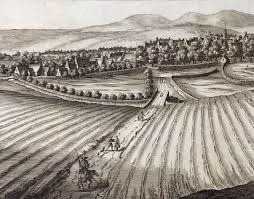
The 16th and 17th century process in which English landlords evicted small farmers and fenced in the "commons" (formerly communal farm and grazing land previously open to all). This process created a social crisis in England as thousands of landless people flooded into English cities looking for jobs that didn't exist, and they were denounced as rogues, vagabonds, and vagrants. This social crisis the larger context in which many landless English men became interested in migrating to America for better opportunities.
23
New cards
English Liberty
The English idea that the English king was subject to the rule of law and that all free persons should enjoy the security of person and property. These rights included habeas corpus (the right not to be imprisoned without a legal charge), the right to face one's accuser, and trial by jury (rather than "trial by ordeal"), and the right not to have your property confiscated without being convicted of a crime. These rights--although very modest from the perspective of the 21st century--were quite expansive for the 1600s, particularly because they were beginning to be understood as the common heritage of all Englishmen. The conception of the British Empire as the world's guardian of liberty helped to legitimize English colonization. By the 1770s, many English colonists would come to view British taxation and regulations of the colonies after the French and Indian War as a threat to these freedoms, which would be one major cause of the American Revolution.
24
New cards
Anglican Church
The official Protestant Church of England during the Colonial Era. After the Pope (the official head of the Roman Catholic Church) refused to allow England's King Henry VIII to divorce his wife, King Henry severed England's ties with the Catholic Church and instead created this church as the established church of England. This event is called "the English Reformation," which was just one part of the larger "Protestant Reformation" begun by Martin Luther a decade earlier, and it launched England into over a century of religious strife as Catholics, Anglicans, and other new Protestant religious sects (including the Puritans) struggled for control of England.
25
New cards
Jamestown (1607)
Established in 1607, this was the center of the Virginia Colony and the first permanent British colony in North America. For this reason, 1607 is often used to mark the start of the British "Colonial Era" in North America.
26
New cards
Tobacco Colony
A colony in which growing tobacco was the main source of profit; tobacco farming in Virginia resulted in a growing demand for field labor and a distinct class hierarchy. Virginia became a dispersed community with little social unity, working mainly towards profit.
27
New cards
Uprising of 1622
An uprising by the Powhatan Confederacy against the Virginia colony led by Powhatan's brother, Opechancanough, that wiped out a quarter of the settler population; the remaining settlers responded by massacring scores of Indians and devastating their villages.
28
New cards
Virginia Company
A private business that founded the first permanent British colony in the Americas, Jamestown, in Virginia.
29
New cards
Headright System (1618)
A policy first announced by the Virginia Company in 1618, by which the company granted 50 acres of land to any colonist who paid for his own or another's passage to Virginia.
30
New cards
House of Burgesses (1618)
As the first elected assembly in colonial America, it was established in 1618 by the Virginia Company and first convened in 1619; only landowners had voting rights and the company retained the right to nullify any measure adopted. This legislative body established the precedent of self-government in the British Colonies, which will grow and eventually lead to the shift from monarchy to republicanism/popular sovereignty during the American Revolution.
31
New cards
Indentured Servant
A settler who signed on for a temporary period of servitude (usually five to seven years) to a master in exchange for passage to the New World and "freedom dues," which often included some money and/or land (if one survived his/her term of service despite the high death rate). Nearly two thirds of all English settlers in North America arrived as these.
32
New cards
Bacon's Rebellion (1676)
Unsuccessful 1676 revolt led by planter Nathaniel Bacon against Virginia governor William Berkeley's administration because of governmental corruption and because Berkeley had failed to protect settlers from Indian raids and did not allow them to occupy Indian lands. This revolt caused the Virginia elite to move away from indentured servants and towards a different labor supply that would never gain freedom and demand land on the frontier: enslaved African labor.
33
New cards
Virginia Slave Code of 1705
Enacted by the House of Burgesses in Virginia, the code categorized slaves as property that could be bought and sold, fought over in court, and inherited. Nearly a century after the founding of Jamestown in 1607, this code illustrates how slavery evolved gradually in the colonies.
34
New cards
Anthony Johnson
An African who arrived in the Virginia colony as an indentured servant in the mid-1600s, became free, and eventually owned land and slaves himself. This person illustrates how race was still a fluid social construct in the 17th century, and one's race had not yet come to determine whether one would be free or enslaved.
35
New cards
Dower Rights
Under English law, this gave married women the rights to claim one-third of her husband's property in the event that he died before she did. (Otherwise, the practice of "coverture" generally prevented English women from owning their own property.)
36
New cards
Femme Sole
Meaning "a woman alone," this was special legal status available in the Virginia colony that was obtained only by widows and the few women who never married. This legal status (which was denied to married women) granted these single women an independent legal identity that enabled them to make contracts and conduct business.
37
New cards
Act Concerning Religion (The Maryland Toleration Act) (1649)
A 1649 act, in Maryland (part of the "Maryland Experiment") by which all Christians (both Protestants and Catholics) were guaranteed the free exercise of religion. It institutionalized religious toleration in Maryland.
38
New cards
The "Holy Experiment" of Pennsylvania
William Penn, a proprietor, established the colony of Pennsylvania in the late 17th century and envisioned it as a place where those facing religious persecution in Europe (particularly the Quakers) could enjoy spiritual freedom.
39
New cards
Quakers ("Society of Friends")
A religious group founded in England in the 1640s, many of whose members settled in Pennsylvania, that believed all persons possessed the "inner light," or the spirit of God. They were one of the many new Protestant sects of Christianity, and they were early proponents of the abolition of slavery and equal rights for women.
40
New cards
Dissenters
European Protestants who belonged to any religious denomination other than the established church in their country (or colony). They were frequently persecuted, often violently. (An "established church" is one that receives government funds raised by taxes on the population.)
41
New cards
Puritans (1630)
English religious group that sought to purify the Church of England; a sub sect of Protestants that believed the Anglican Church was still too Catholic and not "pure" enough. They founded the Massachusetts Bay Colony under John Winthrop in 1630.
42
New cards
Pilgrims (1620)
Puritan Separatists who broke completely with the Church of England, first fled to the Netherlands, then sailed to the New World aboard the Mayflower, becoming the first Puritans to immigrate to the New World, founding Plymouth Colony on Cape Cod in 1620.
43
New cards
The Great Migration (1629-1642)
Period between 1629 and 1642 in which a great number of Puritans (about 21,000) migrated from England to Massachusetts.
44
New cards
John Winthrop
The first governor of the Massachusetts Bay Colony, a Puritan, he spoke in 1645 to the legislature about the distinction between "natural liberty" (liberty to do evil) and "moral liberty," and believed that true freedom was "subjection to authority."
45
New cards
Moral Liberty
The Puritan idea of "liberty to that only which is good"; or to be liberated from one's self-destructive tendencies. This form of liberty could entail restraints on speech, religion, and personal behavior, and it understood liberty as a spiritual state where people had the opportunity and responsibility to obey God's will and subject themselves to his authority.
46
New cards
Mayflower Compact (1620)
Before they landed at Plymouth in 1620, the forty-one adult men aboard the Mayflower signed this document in which they agreed to obey "just and equal laws" enacted by representatives of their own choosing. This was the first written frame of government in what is now the United States. Men not normally signatories to such documents--printers, carpenters, even indentured servants--were among those to affix their names. This was over 200 years before most working-class men were allowed to vote in Great Britain.
47
New cards
Voting Requirements in Massachusetts
Unlike in Virginia, where there were property qualifications for voting, voting in Massachusetts required being a church member. While this restricted who could vote, it represented a vast expansion in political freedom and the right to vote compared to England in the 17th century.
48
New cards
The "City Set Upon a Hill"
When the Puritans immigrated to New England, they hoped to escape what they believed to be the religious and worldly corruptions of English society. This famous phrase, a biblical reference from John Winthrop, implied the Puritans' intention to establish a biblical commonwealth whose influence would flow back across the Atlantic to rescue England from godlessness and social decay. It's an early articulation of the concept of "American Exceptionalism."
49
New cards
Roger Williams
New England's most prominent advocate of religious toleration, he was a Puritan minister who insisted that church and state should be separated and that individuals be allowed to follow their consciences and practice whatever form of religion they choose. Banished from Massachusetts in 1636, he and his followers moved south and established the colony of Rhode Island, which became a beacon of religious freedom. Rhode Island had no established church, no religious qualifications for voting until the eighteenth century, and no requirement that citizens attend church. It became a haven for religious dissenters and Jews persecuted in other colonies.
50
New cards
Anne Hutchinson
Puritan woman who in the 1630s attracted a large and influential following for challenging the views of the Puritan ministers who claimed they could distinguish "saints" form the damned on the basis of activities such as church attendance and moral behavior rather than an inner state of grace. She was put on trial for sedition and banished from the colony. Her story illustrates the limits of Puritan religious toleration and gender equality.
51
New cards
Pequot War (1637)
An armed conflict in 1637 that led to the destruction of one of New England's most powerful Indian groups.
52
New cards
Mystic River Massacre
When an English fur trader was killed by Pequot Indiains, a group of Connecticut and Massachusetts colonizers joined by Narragansett Indian allies raided the main Pequot village and killed over 500 indians (men, women, and children); after the end of the war months later, the majority of the Pequots were dead or sold into slavery (Many historians consider this an early example of "genocide").
53
New cards
The New England Economy
Far more diverse than the Southern plantation economy, this regions economy was composed of small farming, merchants, artisans, harvesting lumber, shipbuilding, fishing, and shipping.
54
New cards
Captivity Narratives
First-hand accounts written by settlers who had been captured and held by Indian tribes; New England leaders advocated for the publication of such narratives in order to discourage colonists from being attracted to Indian life.
55
New cards
Half-Way Covenant (1662)
In 1662, a way to address the lack of younger generation involved in the Church in Massachusetts; rather than requiring people to testify about their conversion experience publicly, the church created a halfway membership for all grandchildren of immigrants during the Great Migration; this made it easier for the younger generation to engage in the Church, and it made the Church more relevant in an increasingly business-oriented culture.
56
New cards
Artisans
Skilled workers who were socially distinct from common laborers; their skill gave them far more economic freedom and they profited from the expanding consumer market in the colonies.
57
New cards
King Phillip's War (1675)
Began in 1675 with an Indian uprising against white colonists in Southern New England. A multi-year conflict, the end result was broadened freedoms for white New Englanders and the dispossession of the region's Indians.
58
New cards
Metacom
The Wampanoag leader known to colonists as King Philip; considered by colonists to have been the leader of the bloody 1675 Indian uprising in southern New England.
59
New cards
Salem Witch Trials (1692)
A crisis of trials and executions in Salem, Massachusetts in 1692 that resulted from anxiety over witchcraft. Since the only way of avoiding persecution was to confess and name others, accusations of witchcraft began to snowball, and hundreds of residents of Salem came forward to accuse their neighbors. Fourteen women and five men were hanged. In the end, it was clear that something was seriously wrong with the colony's system of justice. The events in Salem discredited the tradition of prosecuting witches and encouraged prominent colonists to seek scientific explanations for natural events such as comets and illnesses (contributing to the intellectual movement known as the Enlightenment), rather than attributing them to magic.
60
New cards
The German Migration
The largest group of immigrants to the British colonies from the mainland European continent. In the 1700s, Germany was not yet a single nation; it was divided into numerous small states, each with its own official religion. German dissenters from these official religions were often persecuted, and combined with the difficulty acquiring land, many of them decided to migrate to America. In the 1700s, probably the most striking thing about the colonial American society was its sheer diversity. Africans, Irish, Germans, Welsh, Scotts, English, and others composed a British colonial population that grew nearly tenfold, from 265,000 in 1700, to over 2.3 million by 1770.
61
New cards
Salutary Neglect
The British government's policy of leaving the colonies to largely govern themselves during the first half of the eighteenth century. This neglect by "the crown" enabled a relatively high degree of political self-government ("popular sovereignty") to establish itself; this desire for self-government will culminate in the American Revolution in the late 1700s.
62
New cards
Mercantilism
The dominant economic theory of the Colonial Era in which the purpose of the colonies are to serve the economic interests of the mother country; Colonial trade was tightly controlled by England (but the colonies still engaged in frequent illegal smuggling).
63
New cards
Navigation Acts (1650-1775)
Passed by the English Parliament to control and restrict colonial trade and bolster the mercantile system, 1650-1775; All colonial exports had to pass through Britain before being shipped to mainland Europe. Enforcement of the acts led to growing resentment by colonists.
64
New cards
The Triangular Trades
The Atlantic trade system that operated for over several centuries (during the 1500s, 1600, and 1700s) carrying cash crops and raw materials from the Americas to Western Europe where they were exchanged for manufactured goods that were shipped to West Africa where they were traded for human beings that would be sold into slavery and shipped to the Americas.
65
New cards
Atlantic Slave Trades
The systematic importation of African slaves from their native continent across the Atlantic Ocean to the New World, largely fuelled by rising demand for sugar, rice, coffee, and tobacco
66
New cards
Middle Passage
Route used to transport millions of enslaved Africans across the Atlantic ocean during the Colonial Era; such voyages had a high death rate and were particularly gruesome and difficult for the Africans who were usually shackled and packed like cargo below deck.
67
New cards
The Uniqueness of American Slavery
Slavery did not begin in the Americas; slavery dates back thousands of years throughout the entire span of human civilization, and slavery had been central to many major civilizations and empires around the world. However, unlike slavery in earlier periods of world history, the plantation slavery that developed in the Americas was particularly brutal. It was largely based on plantations, and therefore the imbalance between a small number of overseers and the large enslaved population made it necessary to police the system with extreme violence. Plantation slavery was also more demanding, involved a higher death rate, and by the 18th century, it would come to be associated with race.
68
New cards
Runaways
Africans who escaped from their enslavement; they were often identified by their distinct African ethnic identities
69
New cards
Stono Rebellion (1739)
A slave uprising in 1739 in South Carolina that led to a severe tightening of the slave code and temporary imposition of a prohibitive tax on imported slaves
70
New cards
Freedom of Speech
Originating in Britain during the sixteenth century, the phrase referred to the ability of members of Parliament to express their views without fear of reprisal, on the grounds that only in this way could they effectively represent the people; outside Parliament, free speech still had no legal protection in the 1700s and was not yet considered part of the "rights of Englishmen."
71
New cards
Freedom of the Press
In the 1700s, this freedom was still regarded as dangerous by governments on both sides of the Atlantic. In colonial America, this freedom was most frequently discouraged by elected assemblies, while newspapers often defended it as a central component to liberty.
72
New cards
The Trial of John Peter Zenger (1734)
A German American printer and journalist in New York City who printed opinions critical of the colonial governor. He was accused of libel in 1734 by the governor of New York, but the jury acquitted him, and he became an early symbol for freedom of the press in the British colonies. This trial reflects how the ideas of the right to freedoms of speech and of press were not yet established and were only beginning to emerge in the colonial era.
73
New cards
American Enlightenment
Revolution in thought in the eighteenth century that emphasized reason and science over the authority of traditional religion. This was an extension of the Europe's philosophical movement originating in France, that sought to apply the scientific method of careful investigation based on research and experiment to political and social life; insisted that every human institution, authority, and tradition be judged before the bar of reason
74
New cards
Deism
The emerging 17th and 18th-century belief that God created the universe long ago but then stopped intervening in it, just as a watchmaker makes a watch and then sets it down to let it run on its own. This view differed from the widely held Christian assumption that God was at work in every event, and it reflected the emergence of Enlightenment thought in the 17th and 18th centuries that applied reason and science to understand the world as opposed to traditional faith in ancient or religious explanations.
75
New cards
Republicanism
The new political theory in England and America in the 1700s, emerging from the Enlightenment, that challenged traditional systems of aristocracy and monarchy and instead promoted governing a nation as a republic, run by representatives of the people, which would protect the rights, liberties, and property of the people, especially by incorporating a rule of law that could not be arbitrarily ignored by the government. This political theory assumed that only property-owning, economically independent citizens possessed "virtue"--which they defined not simply as a personal moral quality but also as the capacity to exercise independent judgment and the willingness to subordinate self-interest in the pursuit of the public good.
76
New cards
Liberalism (Classical Liberalism)
An 18th century political ideology emerging from the Enlightenment that promoted a free market economy and individual "natural rights" (such as freedom of religion, speech, and press, and private property rights) which must be protected by the rule of law and a limited, republican government. Notable liberals include John Locke and Adam Smith. (In the 20th century, "liberalism" took on a new meaning that referred to an activist government that would also promote greater social and economic equality.)
77
New cards
John Locke
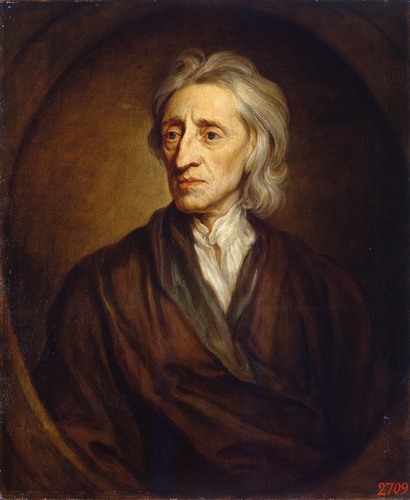
A leading philosopher of liberalism whose Two Treatises of Government (1680) later inspired the founders of the U.S.. Locke argued that governments are formed through a "social contract" in which men surrender part of their right to govern themselves in order to enjoy the benefits of the rule of law. Under the social contract, men retained their natural rights--most famously their right to "life, liberty, and property,"--as well as the right to rebel against any unjust or oppressive government that failed to protect these rights. The opening paragraphs of the Declaration of Independence draw heavily on Locke's ideas.
78
New cards
Virtue (aka Republican Virtue)
Defined in the eighteenth century not simply as a personal moral quality but as the willingness to subordinate self-interest to the pursuit of the public good. Possession of this quality was seen as necessary to vote and hold office in a republic, and it required economic independence and the ability to act independently and not be manipulated by others (thus only property-owners were originally thought to possess this quality). This focus on the moral character of political leaders was seen as a solution and a way to balance the age-old political tension between the need for order and for freedom: In the 17th and 18th centuries, many Enlightenment thinkers believed that good government required giving the government enough power to establish order and prevent the people from acting like a tyrannical mob ("democracy" was seen as dangerous and unstable) and simultaneously imposing enough limits on the power of the ruler (usually a monarch) to prevent the ruler from acting tyrannically and stripping the people of their freedom.
79
New cards
Great Awakening
Fervent religious revival movement in the 1720s through the 1740s that was spread throughout the colonies by ministers like New England Congregationalist Jonathan Edwards and English revivalist George Whitefield. This movement encouraged distrust of established churches, defended religious freedom as a natural right governments should not restrict, expanded the circulation of printed material in the colonies, encouraged colonists to trust their own views rather than those of local elites, and generally promoted an independent frame of mind that contributed to the American Revolution later in the century. In part, the Great Awakening was a response/backlash to Enlightenment rationalism and to the commercial development in Britain's American colonies.
80
New cards
Middle Ground
The western frontier of British North America; Ohio Valley; villages sprang up where members of numerous Indian tribes lived side by side (having been displaced by wars further to the East), along with European traders and the occasional missionary; where imperial rivalries fought and a middle ground developed between European empire and Indian sovereignty.
81
New cards
Albany Plan of Union (1754)
Drafted in 1754 by Ben Franklin at the beginning of the Seven Year's War but never adopted, this plan envisioned the creation of a Grand Council composed of delegates from each colony, with the power to levy taxes and deal with Indian relations and the common defense; The plan was rejected by colonial assemblies and never sent to London for approval. It was the earliest gesture of unity among the separate colonies that would later become the United States.
82
New cards
Seven Years War (1754-1763)
Also known as the French and Indian War, it was the last (1754-1763) of four colonial wars fought between England and France for control of North America east of the Mississippi River. Britain won, becoming a major imperial superpower and taking over French land claims in North America. British debt resulting from war caused Britain to increase taxes on the colonies which would eventually lead to the American Revolution.
83
New cards
Pontiac's Rebellion (1763)
A revolt in 1763, seen to be led by Neolin, against British rule in the Ohio Valley and Great Lakes region.
84
New cards
Neolin
A religious prophet who preached pan-Indian identity and led a group of Indians in the Ohio valley to revolt (Pontiac's Rebellion) in 1763; received a vision instructing his people to reject European technology and culture, cut commercial ties with whites and alcohol dependence, clothe themselves in their own traditional clothing, and cooperate among all tribes in order to remove the British from North America and regain their lost independence.
85
New cards
Religious Missions (California Missions)
Spanish outposts in California that served as religious, governmental, and labor/centers. Outposts aimed to transform the culture of the local Indian populations and eventually assimilate them into European civilization; the combination of new diseases and the resettlement of thousands of Indians in villages around these places often devastated Indian society.
86
New cards
Father Junipero Serra (1769)
Controversial figure in California's early history; founded the first mission in 1769; converted thousands of Indians to Christianity, taught them Spanish, and transformed their economies into settled agriculture; however, forced labor and disease took a heavy toll on the Indians in his missions.
87
New cards
The Age of Revolution
The second half of the 18th century was marked by popular protest and political upheaval that centered on ideas of liberty. Beginning in British North America, such political struggles spread to Europe and the Caribbean, and culminated in the Latin American wars for independence.
88
New cards
Effects of the Seven Years War (aka the "French and Indian War")
The war left Britain in tremendous debt, which led to the end of "salutary neglect" and the imposition of new taxes on the colonists
89
New cards
The Proclamation Line of 1763
Passed on the heels of the Seven Years War, the British Parliament created this law prohibiting colonists from settling west of the Appalachian Mountains in order to prevent conflict with the Indians and the expense of having to defend them.
90
New cards
"Virtual Representation"
A widely accepted theory which held that each member of Parliament represented the entire empire, not just his own district. During the era of the American Revolution, many colonists began to reject this theory and demand "actual representation," by which they meant electing colonists of their own choosing to go to Parliament to represent the colonists.
91
New cards
Writs of Assistance
One of the colonies' main complaints against Britain, these allowed unlimited search warrants without cause to look for evidence of colonial smuggling.
92
New cards
The Stamp Act of 1765 and the colonists' reaction to it
British Parliament required that revenue stamps be affixed to all colonial printed matter, documents, and playing cards. This was the first direct tax on the internal economic activity within the colonies, and it managed to offend a broad range of colonists. It provoked a large backlash among the colonists, and the act was repealed the following year.
93
New cards
Internal vs. External Taxes
Two kinds of Colonial Era taxes. The first kind, like the Stamp Act, taxed economic activity within the colonies, and many colonists believed Parliament had no right to enact this sort of tax. The second kind of tax, which consisted of revenue raised through the regulation of trade between the the British colonies and other parts of the Atlantic world, such as the Navigation Acts, were viewed by many colonists as legitimate.
94
New cards
Committees of Correspondence
Groups of colonists that exchanged ideas and information about resistance against British rule, communicating with other colonies to encourage opposition to the Sugar and Currency Acts.
95
New cards
Sons of Liberty
Organizations formed by Samuel Adams, John Hancock, and other radicals in response to the Stamp Act that encouraged many lower class individuals to get involved in public affairs
96
New cards
Daughters of Liberty
The female counterparts of the Sons of Liberty; led the homespun movement
97
New cards
"no taxation without representation"
A slogan of the Revolution representing the emerging belief that Britain had no right to tax its colonists because Americans were unrepresented in the British Parliament. This belief was relatively new and emerged from the Enlightenment. In ancient times, governments routinely taxed their subjects, and rarely were those subjects represented in the government.
98
New cards
Boston Massacre
Clash between British soldiers on March 5th, 1770 where 5 Americans were killed (including Crispus Attucks - the first casualty of the war for Independence); Paul Revere's famous propagandistic engraving depicted the event as armed British soldiers firing into an unarmed and peaceful group of civilians which increased anger and a revolutionary zeal throughout the colonies.
99
New cards
The Tea Act and the Boston Tea Party
On December 16, 1773, the Sons of Liberty, dressed as Indians, dumped hundreds of chests of tea into Boston Harbor to protest the Tea Act of 1773, under which the British exported to the colonies millions of pounds of cheap tea (still taxed) thereby undercutting the price of tea for smugglers and merchants. The British were trying to import cheap tea to save the East India Company from collapsing because they had invested in it.
100
New cards
The Intolerable Acts (1774)
Four parliamentary measures in reaction to the Boston Tea Party closed the port of Boston to all trade until all tea was paid for, radically altered the Massachusetts Charter of 1691 by curtailed town meetings and authorizing the governor to appoint members to the council (positions previously elected), and empowered military commander to lodge soldiers in private homes.
 Note
Note  Flashcards (46)