BIo 1AL- lab 11 exercise physiology
 Studied by 0 people
 Call Kai
 Learn
Learn Practice Test
 Spaced Repetition
 Match
Match Flashcards
 Knowt Play
1/21

There's no tags or description
Looks like no tags are added yet.
Name | Mastery | Learn | Test | Matching | Spaced | Call with Kai |
|---|
No analytics yet
Send a link to your students to track their progress
22 Terms
systemic circulation
Left heart, oxygenated blood
pulmonary circulation
right heart, deoxygenated blood
arteries
distribute blood and sustain pressure during diastole
diastole
heart muscle relaxation, chambers fill with blood
arterioles
smooth muscle regulating blood flow/pressure by constricting and dilating
capillaries
exchange O2 and nutrients and CO2/wastes from/to tissues
veins
low pressure blood flow to heart
bronchu
main trunk of airway stemming R and L from trachea
warm, humidify and cleanse (same as trachea)
bronchioles
smaller airways stemming from bronchus, end in capillaries
autonomically controlled by dilating/constricting smooth muscle
capillary
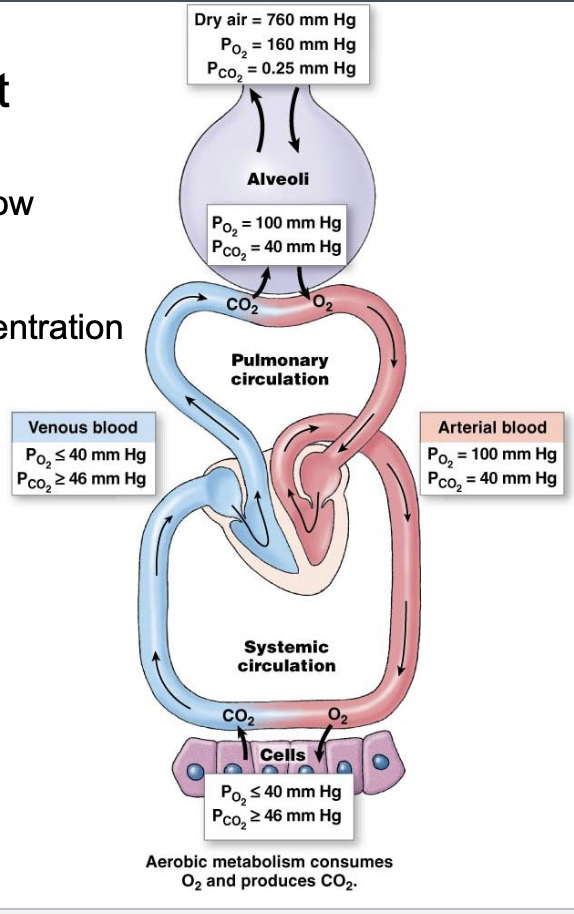
where alveoli are
look like bunches of grapes at ends of bronchioles
alveoli
exchange O2 into and CO2 out of alveolar capillaries
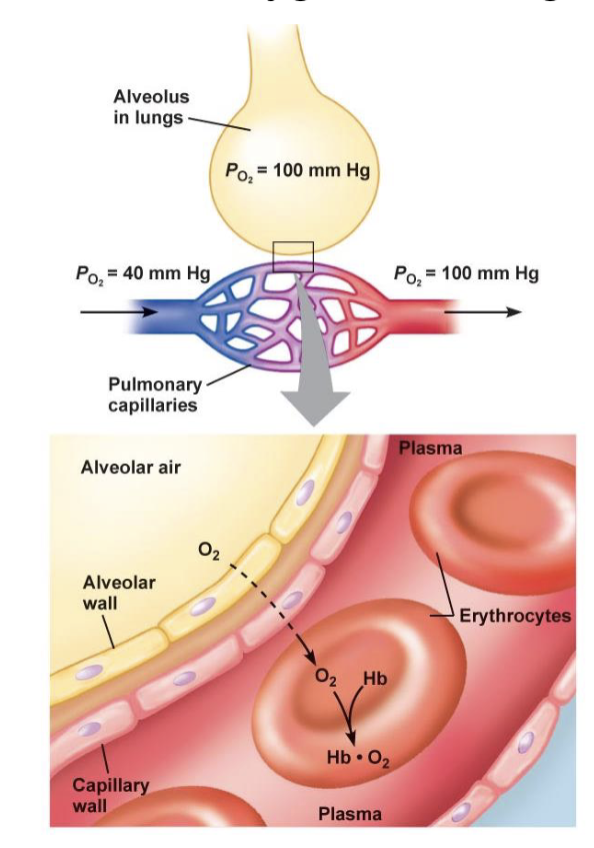
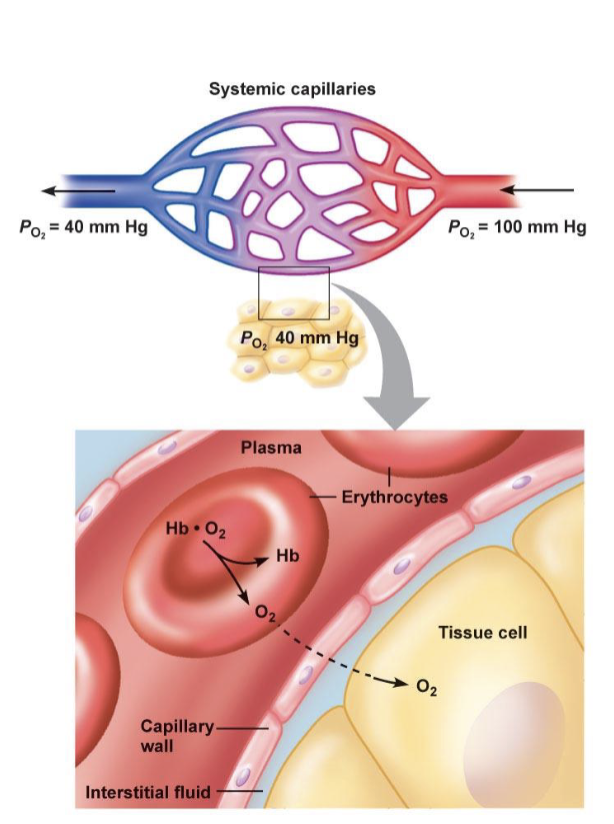
gases diffuse down concentration gradient
high partial pressure —> low partial pressure
oxygen exchange from alveolus in lungs
pulmonary capillaries
oxygen exchange from systemic capillaries
tissue cells
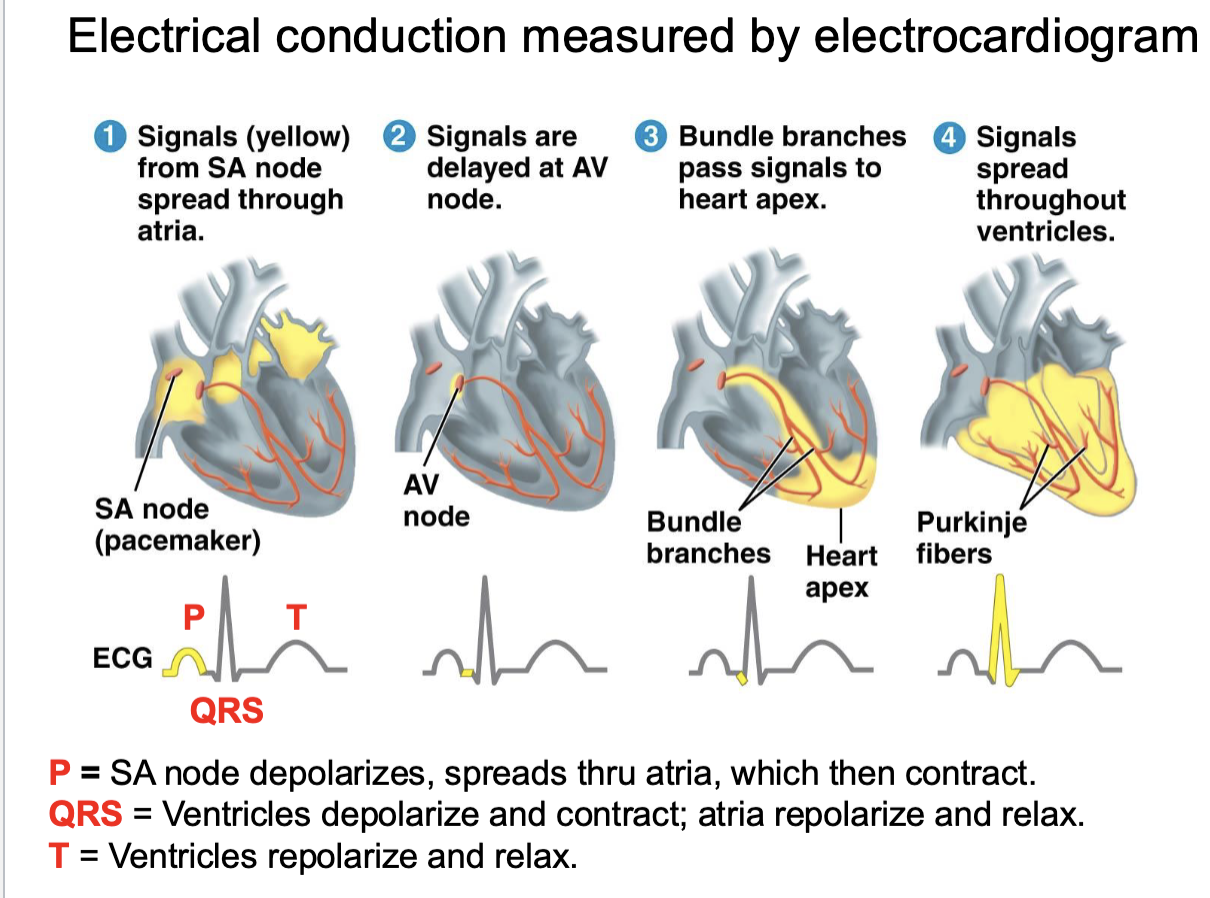
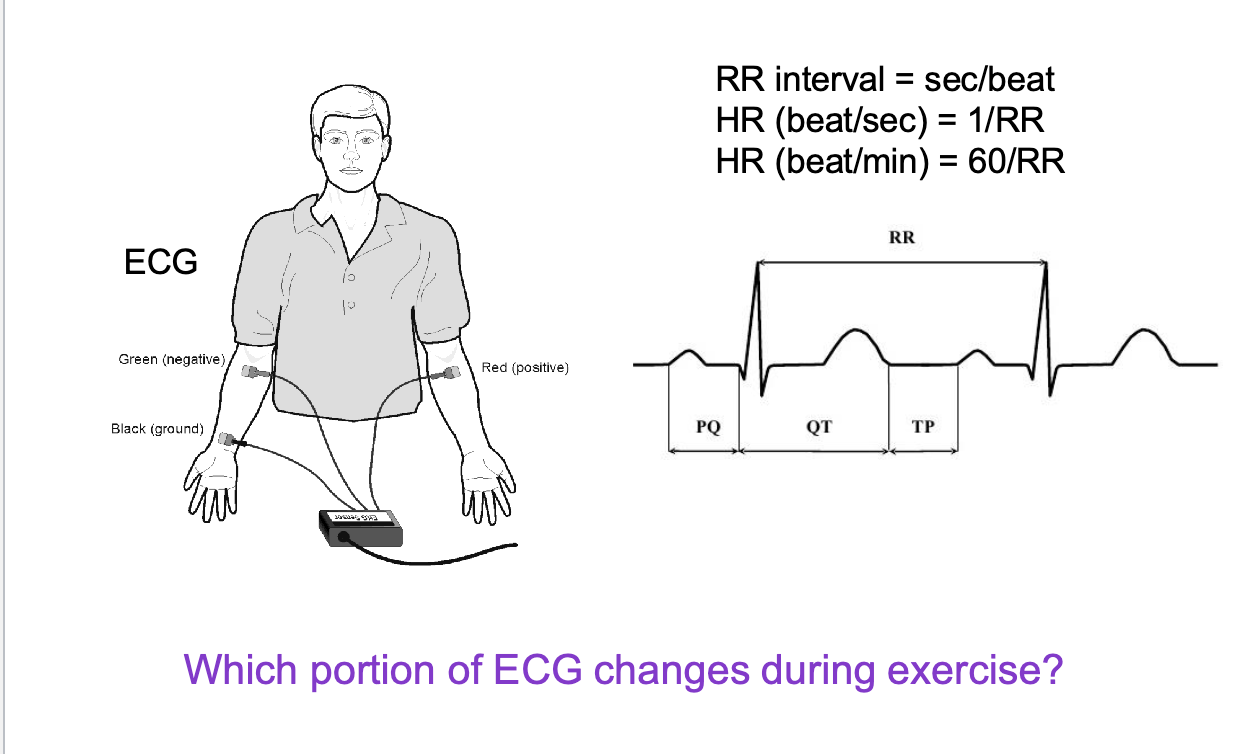
EKG (ECG)
P wave = SA depolarization, atria contraction
QRS complex = ventricular depolarization/contraction, atria repolarize/relax
T wave = ventricles repolarize/relax
PQ interval = AV node conduction time
QT interval = duration of ventricular depolarization + repolarization
arterial blood pressure and mean arterial blood pressure (MAP)
arterial blood pressure maintained by
diastolic BP (vent. relaxation)
systolic BP (vent contraction)
MAP- average pressure driving blood into tissues
MAP = DBP + 1/3 (SBP-DBP)
total peripheral resistance (TPR)
resistance that blood encounters as it flows through system
MAP = CO X TPR
affected by vessel dia. mostly, blood viscosity, vessel length, sympathetic nervous system
Cardiac output (CO)
volume of blood the heart pumps/min
CO = HR x stroke volume
typical adult is around 5L/min at rest
heart sounds/meaning
lub (first sound): AV valves closing as blood moves from atria to ventricles; just after QRS complex
dub (second sound): semilunar valves closing as blood moves from ventricles into pulm. trunk and aorta; just after the T wave
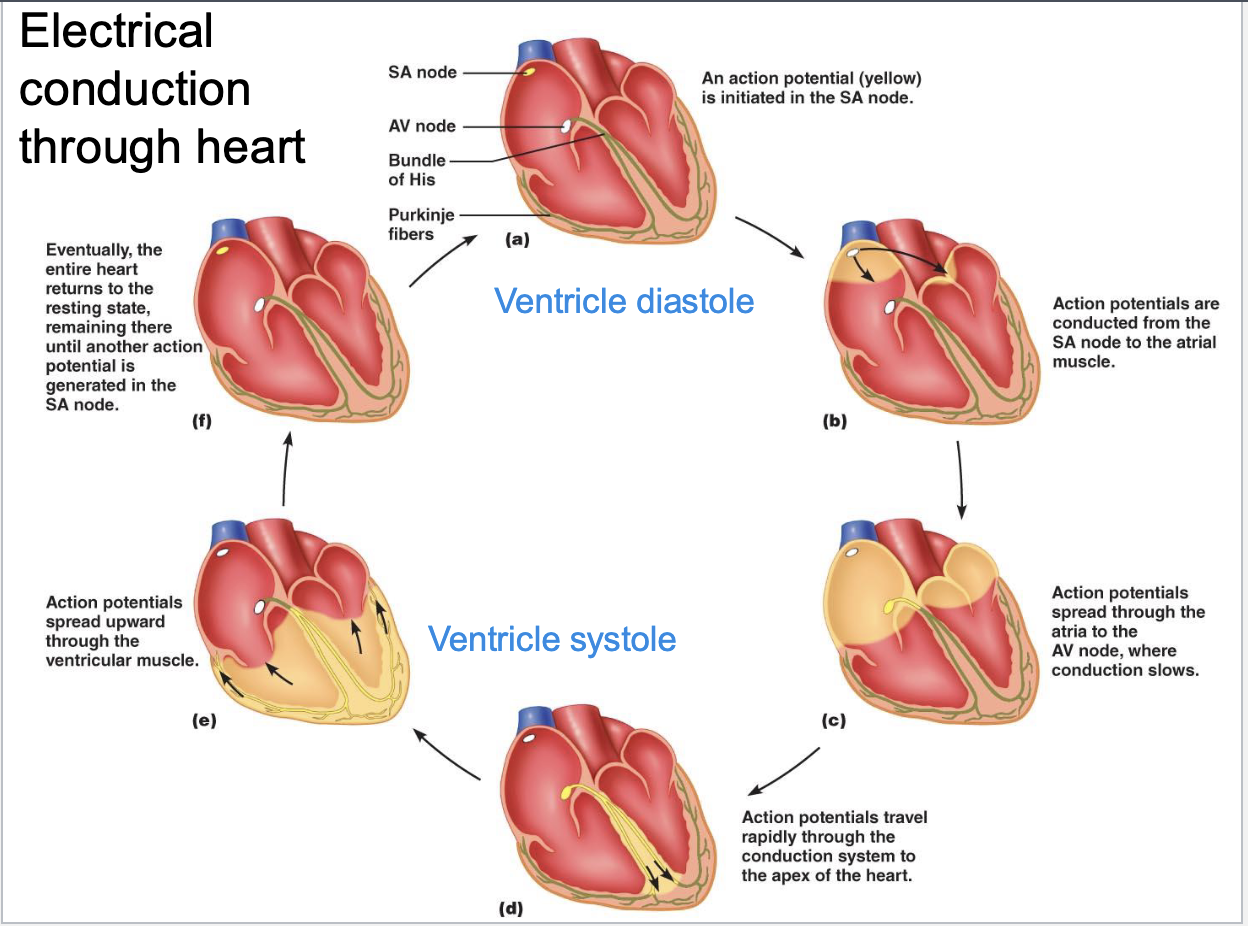
electrical conduction pathway
SA node, atrial muscle, AV node, conduction system in myocardial muscle, ventricular muscle
RR interval
seconds/beat
HR (beat/sec) = 1/RR
HR (bear/min) = 60/RR
 Note
Note  Flashcards (27)