AP Bio - Unit 4
 AP Practice
 Call Kai
1/99

Earn XP
Description and Tags
Name | Mastery | Learn | Test | Matching | Spaced | Call with Kai | Chat |
|---|
No analytics yet
Send a link to your students to track their progress
100 Terms
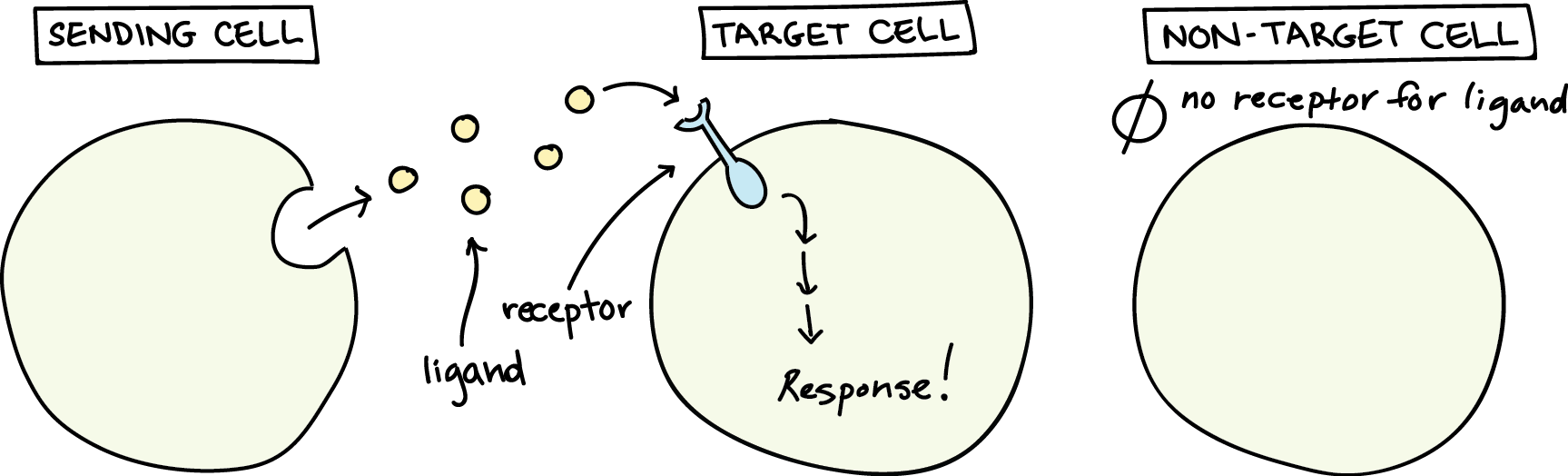
Cells communicate using…
Chemical signals
Sending cell
What produces chemical signals used in cell communication. Creates signaling molecules called ligands.
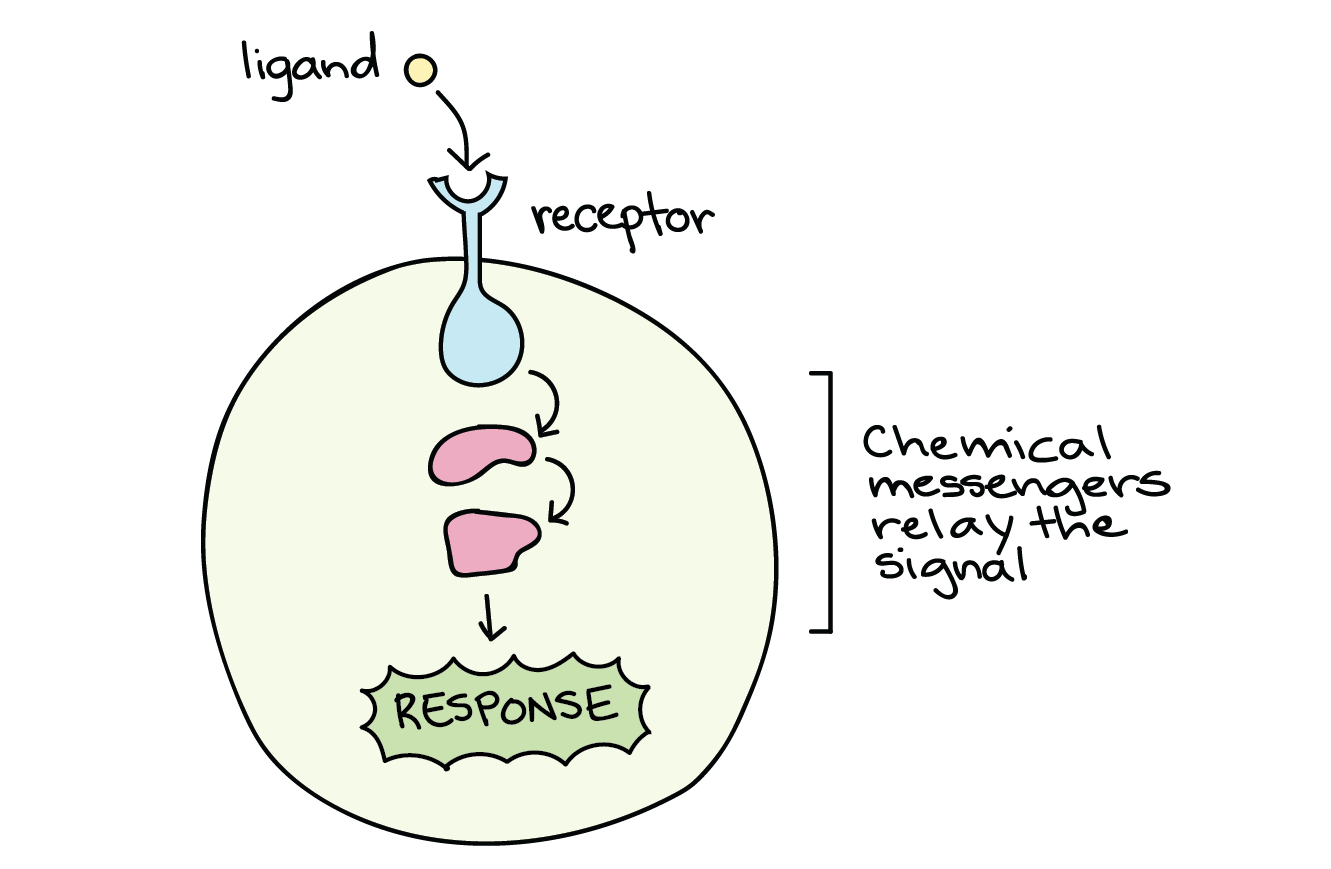
Ligands
General term for molecules that bind to other molecules (receptors in cell communication). Diffuse through the space between cells.
Target cell
The cell that receives a signal from the sending cell, has receptors.
Receptor
What receives the message carried by the ligand, on the target cell.
A neighbor cell needs to have the right _____ for signal from the sending cell.
receptor
The original _____ signal carried by the ligand is converted into an ____ signal that triggers a response.
intercellular, intracellular
Paracrine signaling
Signaling over relatively short distances that allow cells to coordinate activities with neighbors (e.g. spinal cord development)
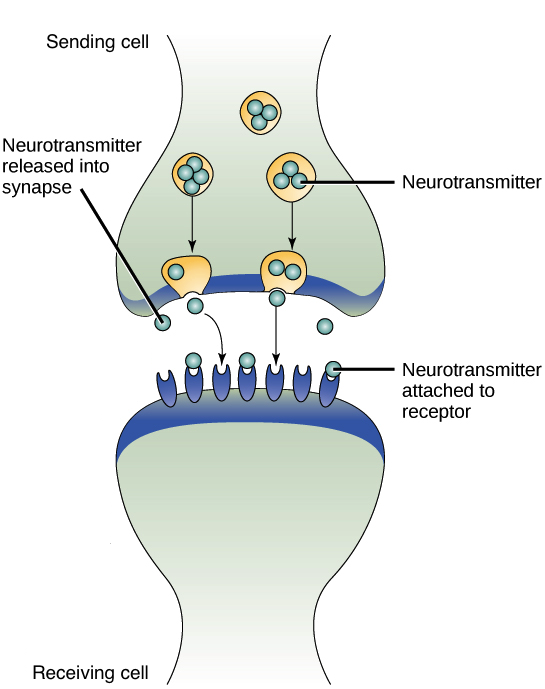
Synaptic signaling
(Paracrine) signaling where nerve cells transmit signals between each other (synapses).
Neurotransmitters
A kind of ligand that releases from an electrical impulse travelling down an axon. Cross the gap between nerve cells and bind to receptors, causing a chemical change.
After neurotransmitters are released into the chemical synapse, they are quickly _____, “resetting” the system for a future response in the synapse.
degraded/taken back up
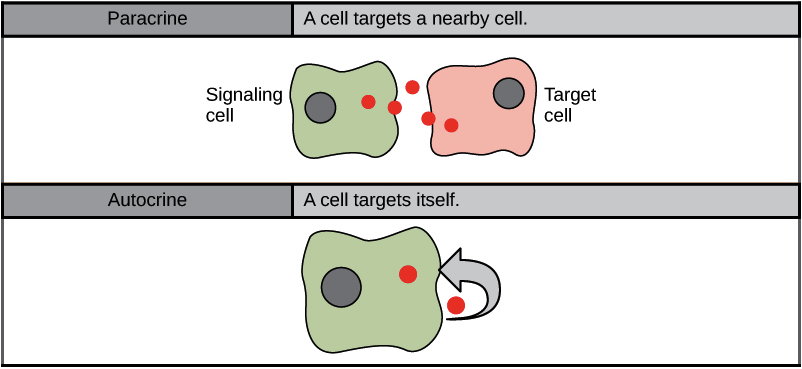
Autocrine signaling
When a cell signals to itself, releasing a ligand that binds to receptors on its own surface (e.g. cancer)
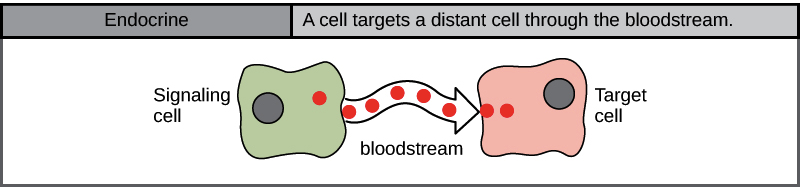
Endocrine signaling
Signaling over long distances that often uses a circulatory system to distribute and send messages. “Endocrine = bloodstream”.
The most common form of endocrine signaling is ____, where signals travel to reach ____.
in the bloodstream, hormones
An example of endocrine signaling is when the ____ releases ____ to promote growth, binding receptors to the cells’ surfaces and encouraging them to divide.
pituitary, growth hormone
Intracellular mediators
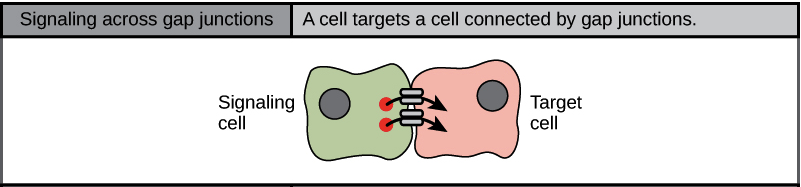
Small signaling molecules that diffuse between two cells in water-filled channels that connect neighboring cells.
Quorum sensing
When bacteria monitor their population density based on chemical signals, changing their behavior/gene expression simultaneously after a certain threshhold.
Quorum sensing is based on the production and detection of ____.
Autoinducers
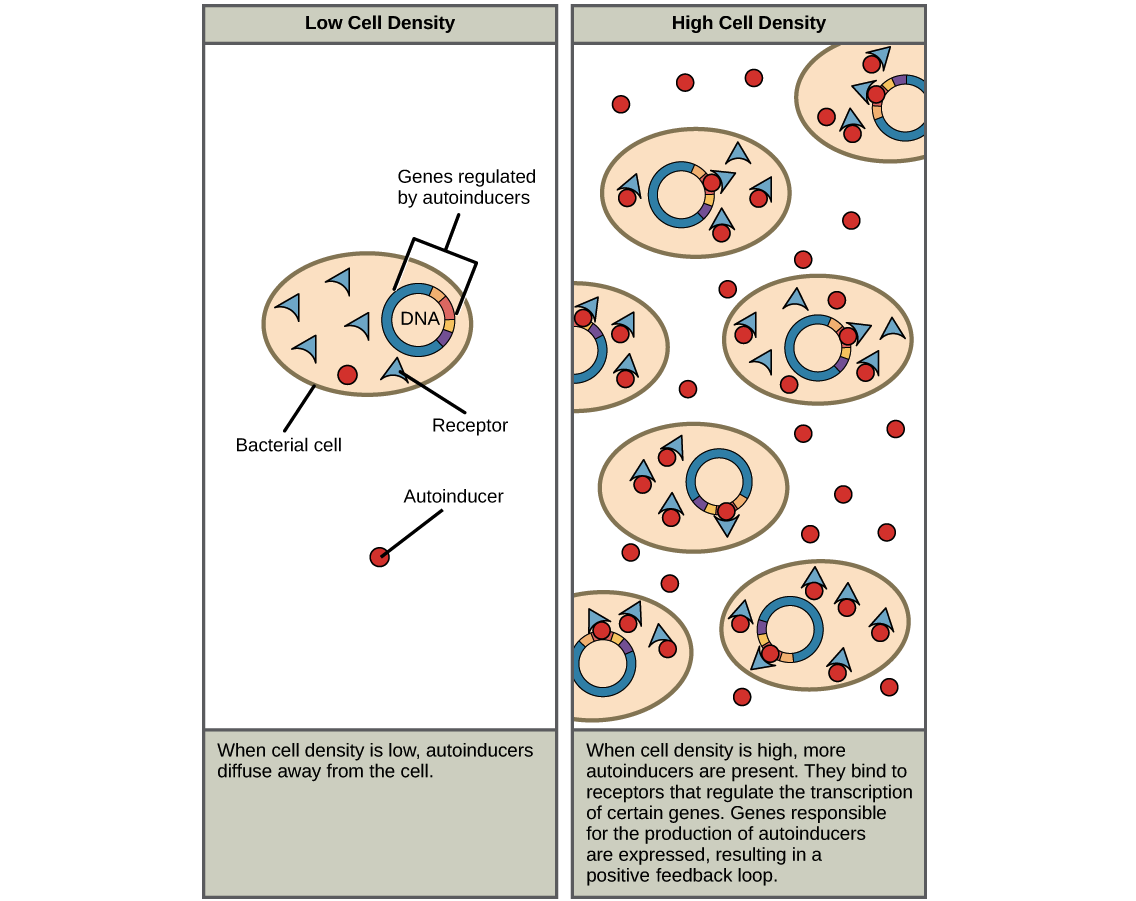
Autoinducers
Signaling molecules that are continually secreted by bacteria in quorum sensing. Announce their presence to neighbors to allow them to sense population density.
Biofilms
Surface-attached communities of bacterial cells that stick to one another and their substrate (underlying surface).
Cell junctions
How cells connect.
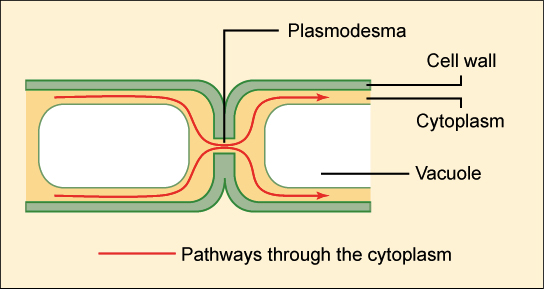
Plasmodesmata
Specialized junctions in plant cells, a hole punched into the cell wall that allows direct cytoplasmic exchange between cells.
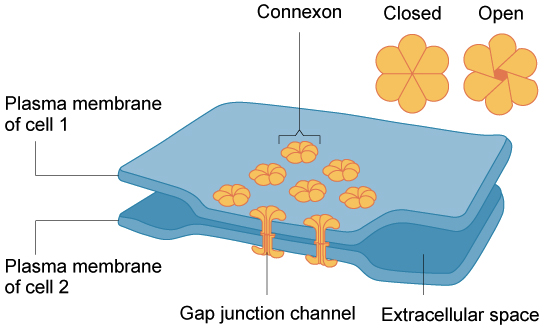
Gap junctions
In animal cells, channels between neighboring cells that allow for the transport of ions, water, etc.
Gap junctions develop when a set of six membrane proteins called ____ form a donut-like structure called a _____.
connexin, connexon
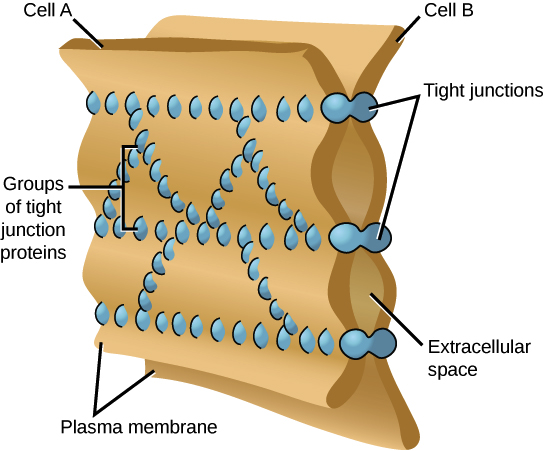
Tight junctions
A watertight seal between two adjacent animal cells, held tightly by many individual groups of claudins (tight junction proteins).
Desmosomes
A type of junction in animal cells that act like spot welds between adjacent epithelial cells (cells that line external/internal body parts).
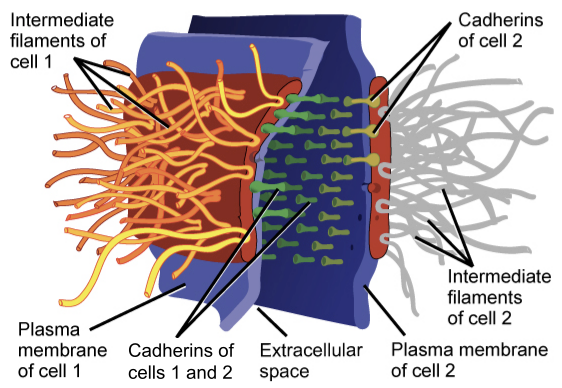
Cadherins
Specialized adhesion proteins that help hold membranes together, helping anchoring the junction between cells.
Desmosomes ____ adjacent cells together, allowing cells in organs/tissues to stretch (not break).
Pin
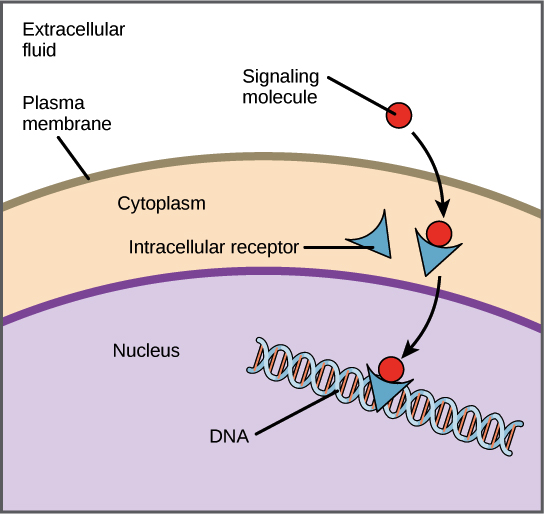
Intracellular receptors
Receptor proteins on the inside of the cell (cytoplasm or nucleus).
Most ligands of intracellular receptors are ____ so that they can cross the plasma membrane to reach their receptors.
hydrophobic
Cell-surface receptors
Membrane-anchored proteins that bind to ligands on the outside of the cell (no need to cross plasma membrane).
Cell-surface receptors have ____ that act as ligands.
many different molecules
This domain of a cell-surface receptor is ligand-binding, and located ____ the cell.
outside
The hydrophobic domain of a typical cell-surface receptor extends through the _____.
membrane
The intracellular domain (inside the cell) often _____.
transmits a signal
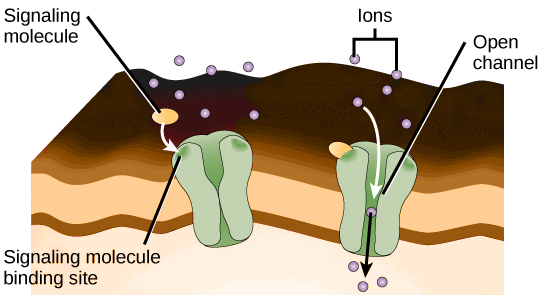
Ligand-gated ion channels
Ion channels that open in response to the binding of a ligand, which (to form a channel) have a membrane-spanning region with a central hydrophilic channel.
After a ligand binds to the extracellular region of the channel, the protein’s structure changes so that specific ____ can pass through. Sometimes, the reverse occurs and ligand binding causes it to close.
ions
Changes in ion levels inside the cell _______ to produce a response.
change the activity of other molecules
G protein-coupled receptors
Cell surface receptors that share a common structure/method of signaling. GPCRs are diverse and bind many different kinds of ligands.
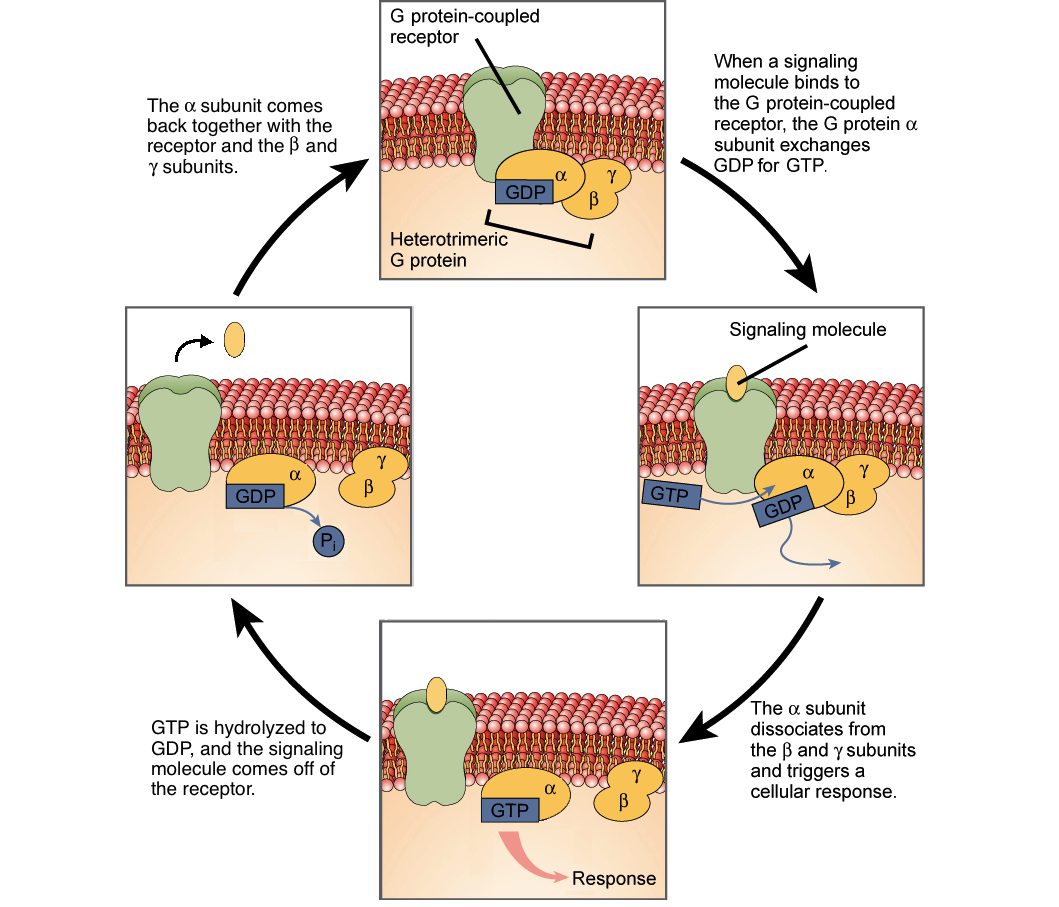
G proteins all bind ___ so they can break down/hydrolyze to form ___
GTP, GDP
Enzyme-linked receptors
Cell-surface receptors with intracellular domains associated with an enzyme.
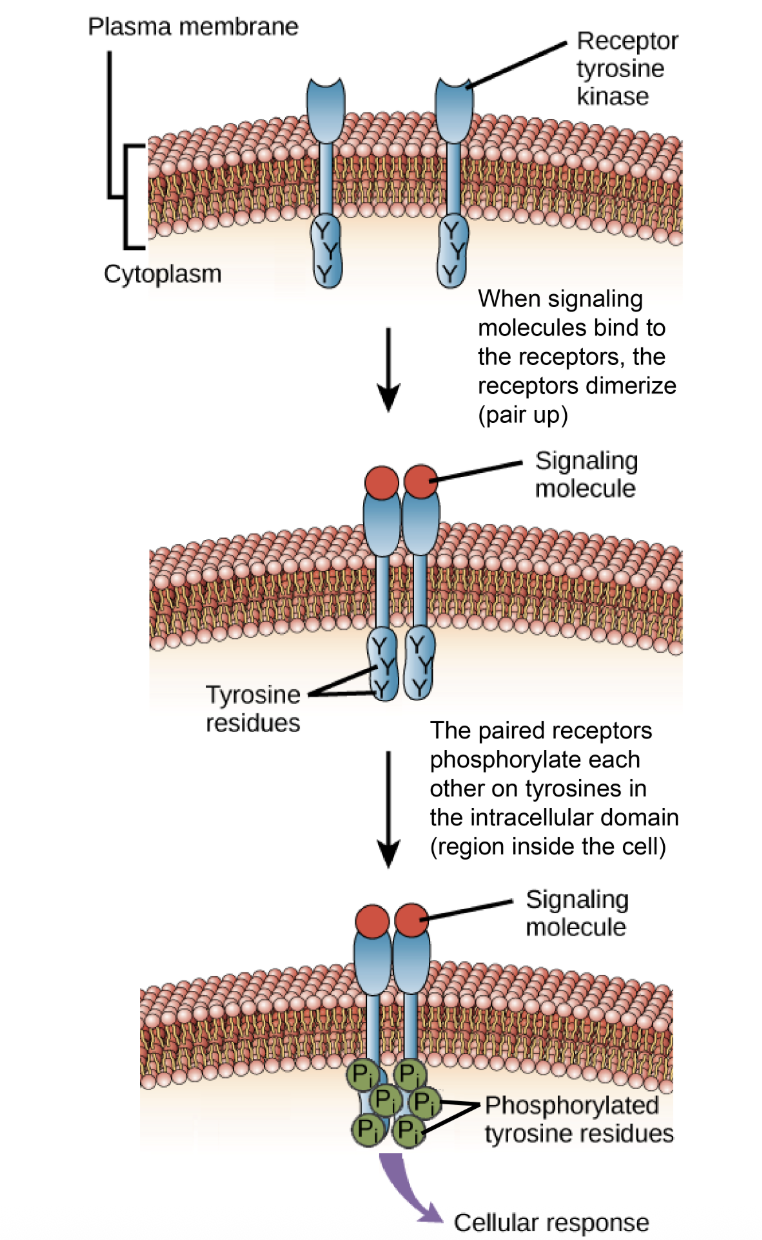
Receptor tyrosine kinases (RTKs)
Enzyme-linked receptors found in humans/other species that transfer phosphate groups to the amino acid tyrosine.
Kinase
A term that describes an enzyme that transfers phosphate groups to a protein/other target.
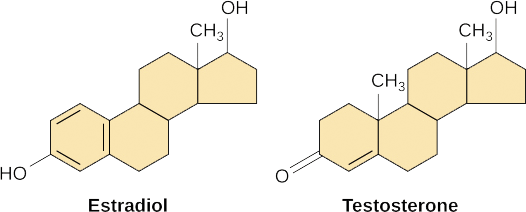
An example of a ligand that can enter the cell (small, hydrophobic, bind to intracellular receptors) key to the human body are ______.
steroid hormones

An example of a ligand that binds outside the cell (polar/charged, can’t cross plasma membrane) are _____, most diverse class of water-soluble ligands.
peptide (protein) ligands
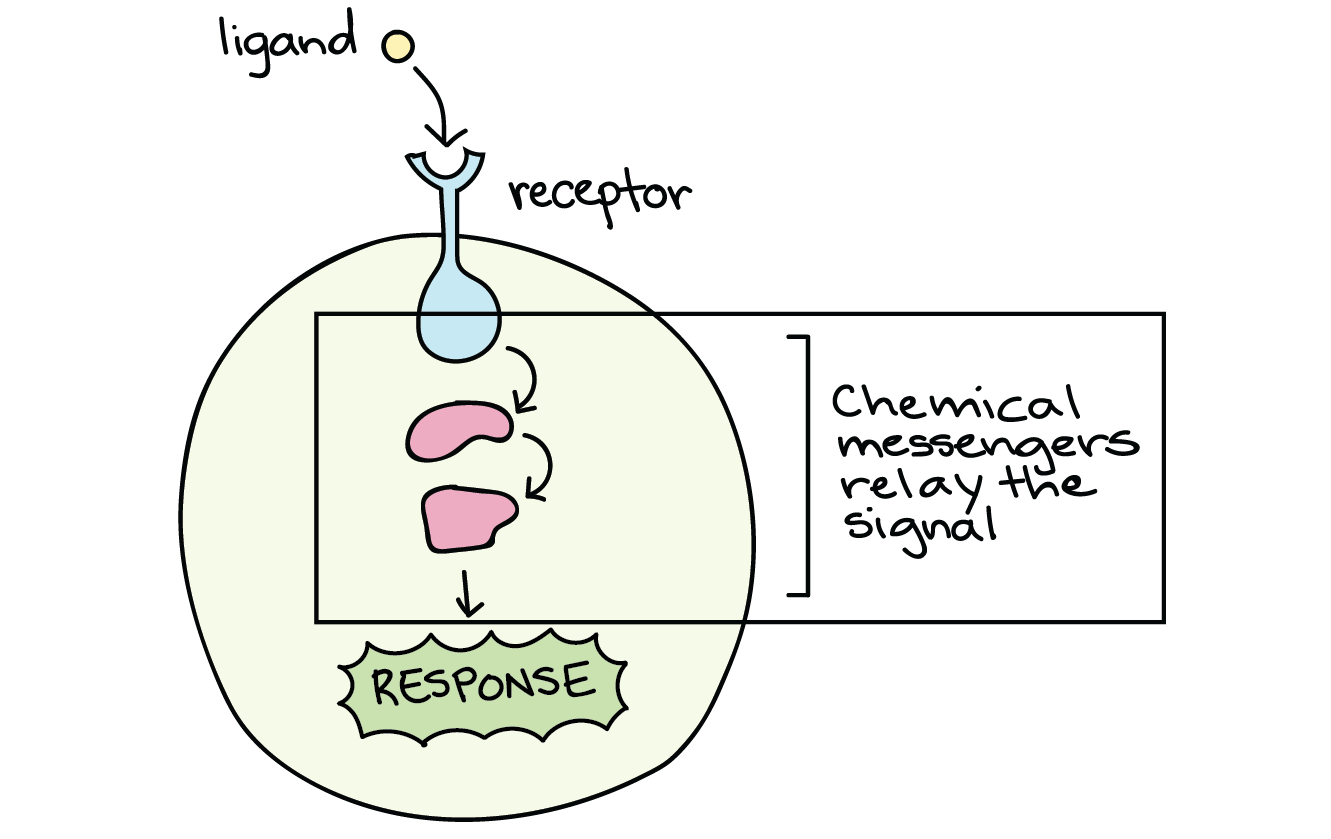
What relays signals inside a cell (in a chain of molecules)?
Intracellular signal transduction pathways
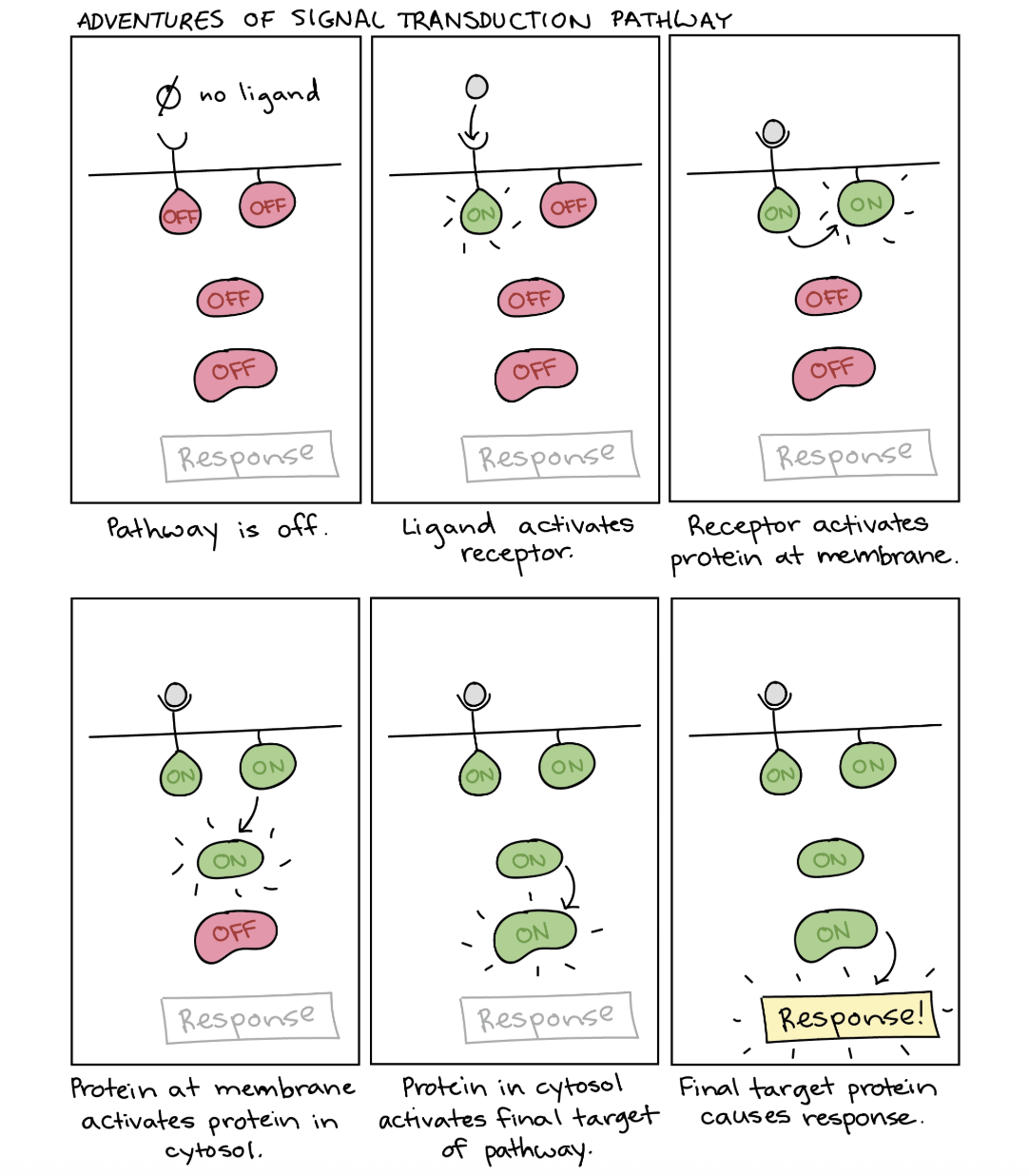
The directional flow of information between molecules in signal transmission is referred to as _____ (early events) and ____ (later events).
upstream, downstream
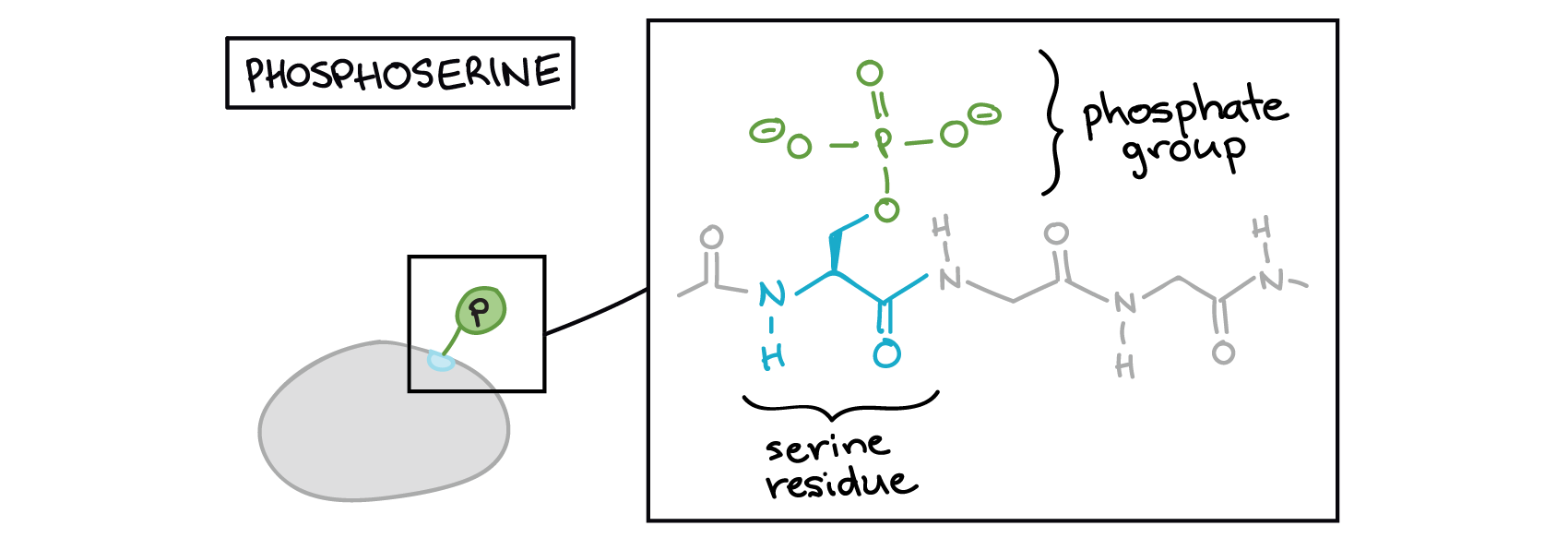
Phosphorylation is a _____ for altering protein activity with the addition of a phosphate group to one or more protein sites.
common process
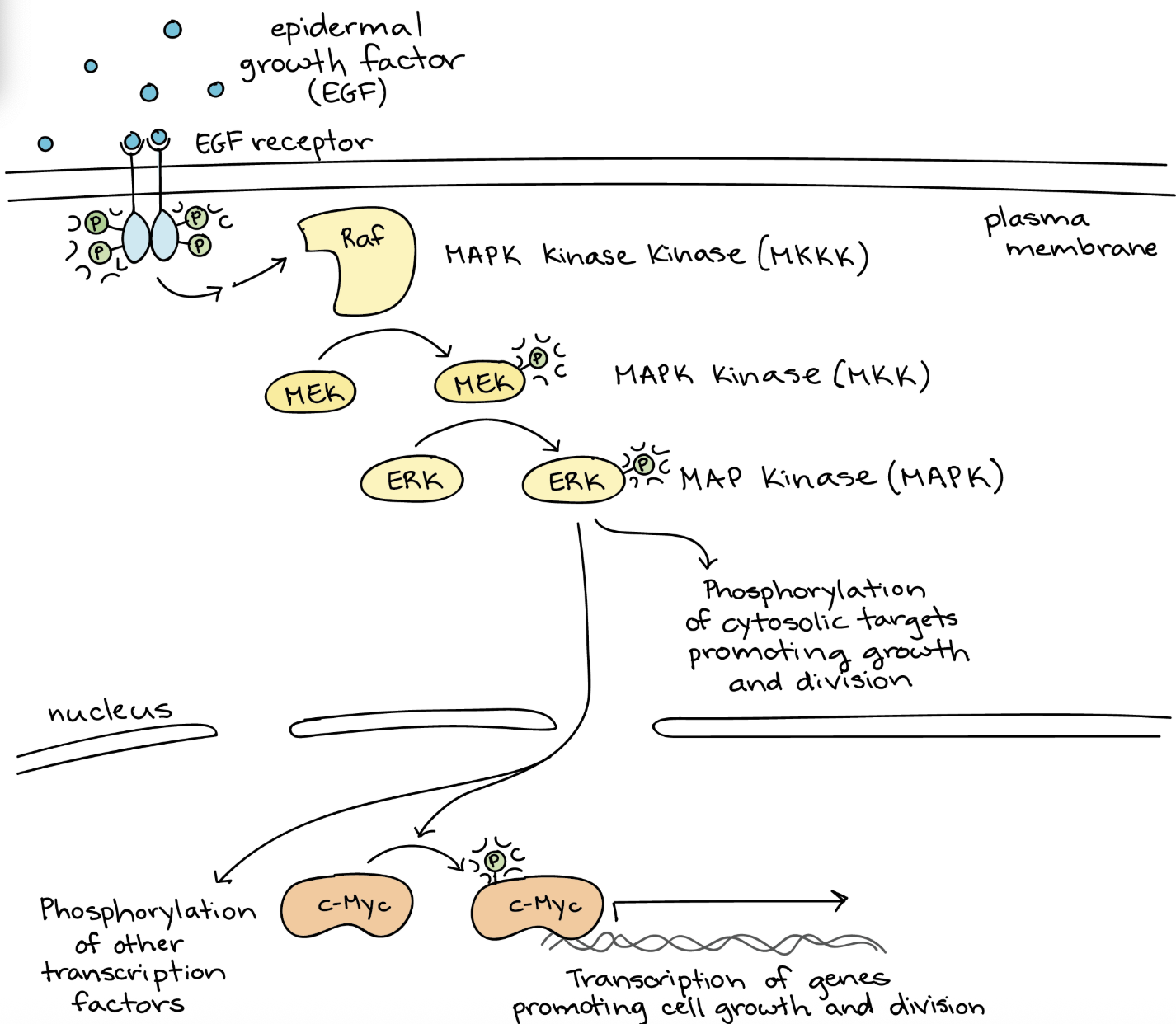
The MAPK signaling cascade is a three-tiered kinase signaling pathway that causes cells to undergo mitosis. The proteins that promote cell division (when overactive) are associated with _____.
cancer
Second messengers
Small non-protein molecules that pass along a signal initiated by the binding of the ligand to the receptor.
Calcium ions
A widely used type of secondary messenger that’s usually stored in compartments like the endoplasmic reticulum.
In cell pathways that use calcium ions as secondary messengers, upstream signaling events release a _____, that binds to and opens _____-gated calcium ion channels.
ligand
How does the released Ca+ help pass along the signal in pathways?
Some proteins in the cell have binding sites for Ca+, and the released ions attach to these proteins and change their shape/activity.
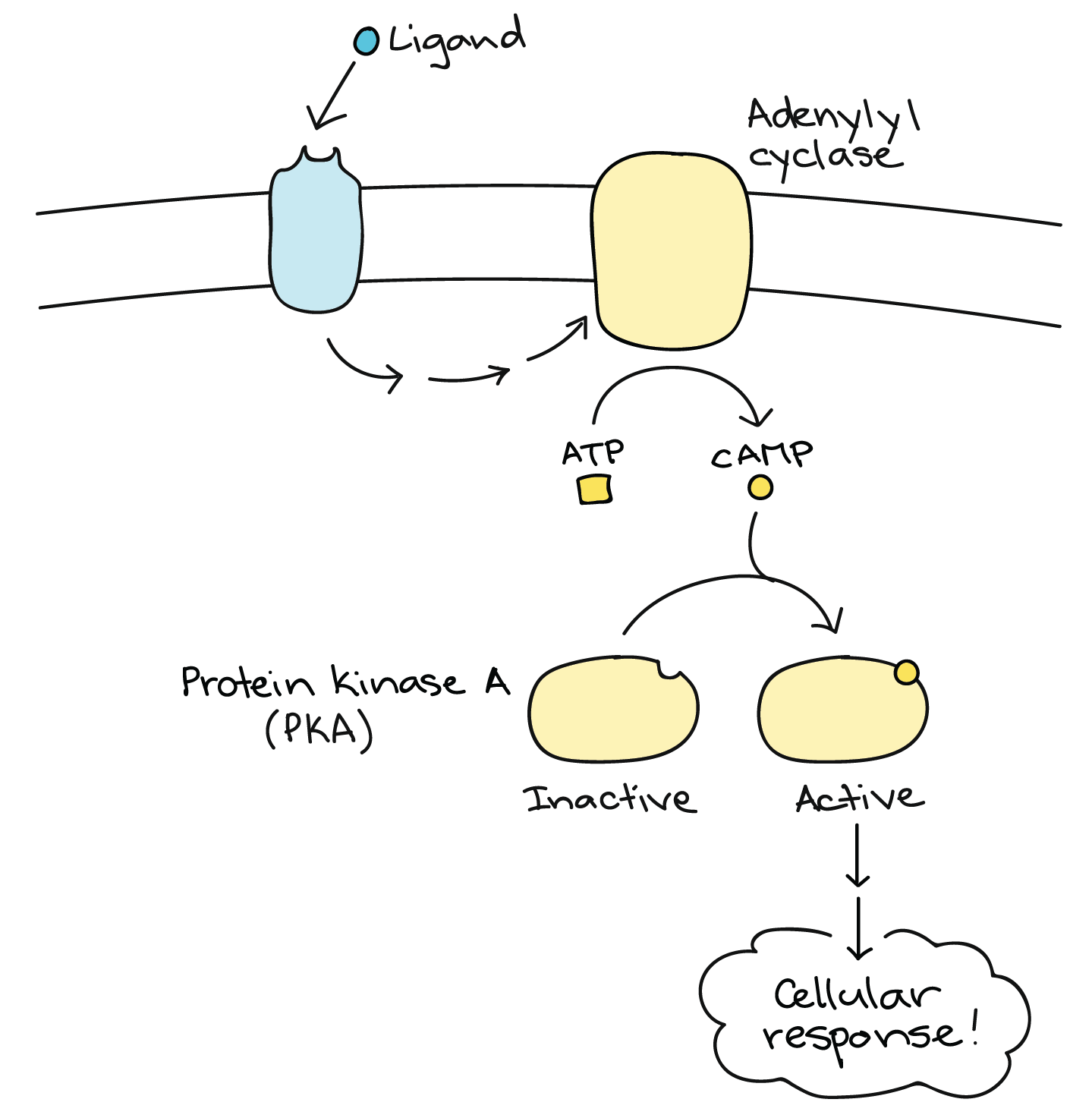
Cyclic AMP (cAMP)
A kind of secondary messenger used in many different cell types, made from ATP.
Once generated, cAMP can activate an enzyme called _____, which phosphorylates its targets and passes along the signal.
protein kinase A (PKA)
cAMP is turned off by…
phosphodiesterases
Phospholipids called _______ can be phosphorylated and split in two, each fragment acting as second messengers.
phosphatidylinositols
Gene expression
A gene the cell uses to produce a functional product (like a protein) that involves the two major steps of transcription and translation.
______ makes an RNA copy of a gene’s DNA sequence.
Transcription
_____ reads info from the RNA and uses it to make a protein.
Translation
Homeostasis
The tendency to resist change to keep a stable internal environment.
Homeostasis typically involves _____ feedback loops that ____ changes of various properties.
negative, counteract
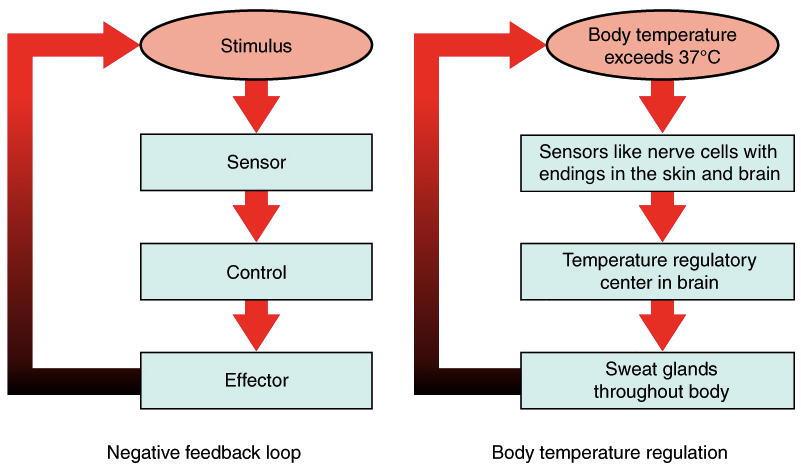
Negative feedback loops
Oppose the stimulus, bringing things back down to a set point or norm.
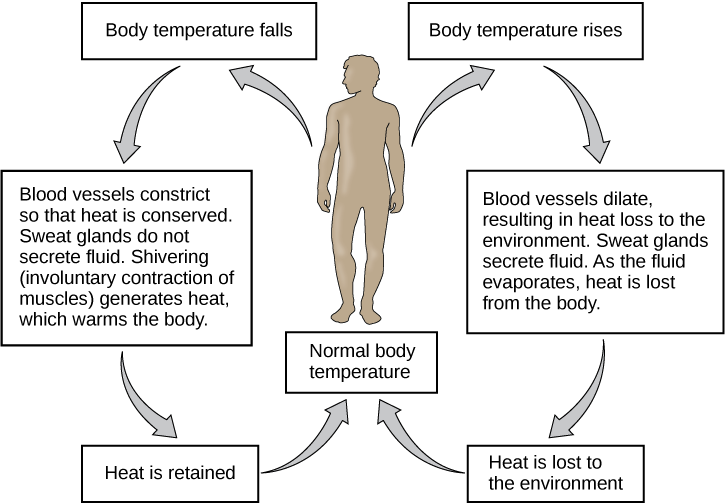
What is the temperature-regulatory control center in your brain?
hypothalamus
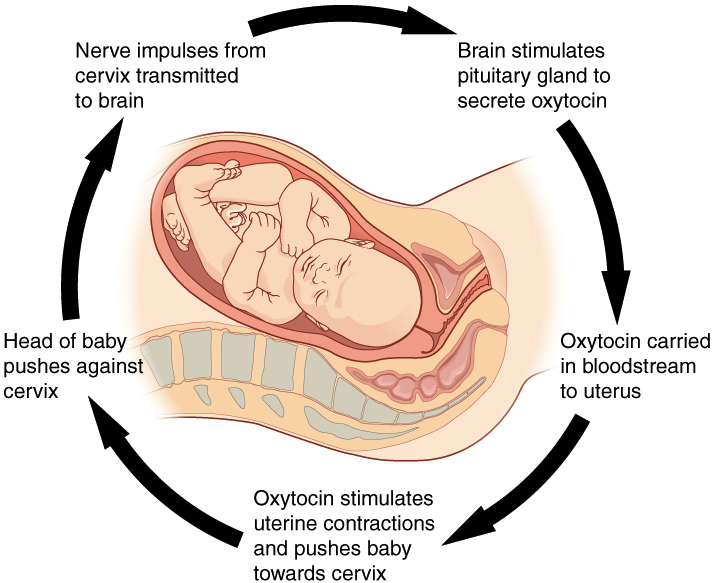
Positive feedback loops
Amplify the starting signal (process that needs to be pushed to completion)
During interphase, the cell _____.
grows and makes a copy of its DNA
During the mitotic phase, the cell _____.
separates its DNA into two sets and divides its cytoplasm (creating two new cells)
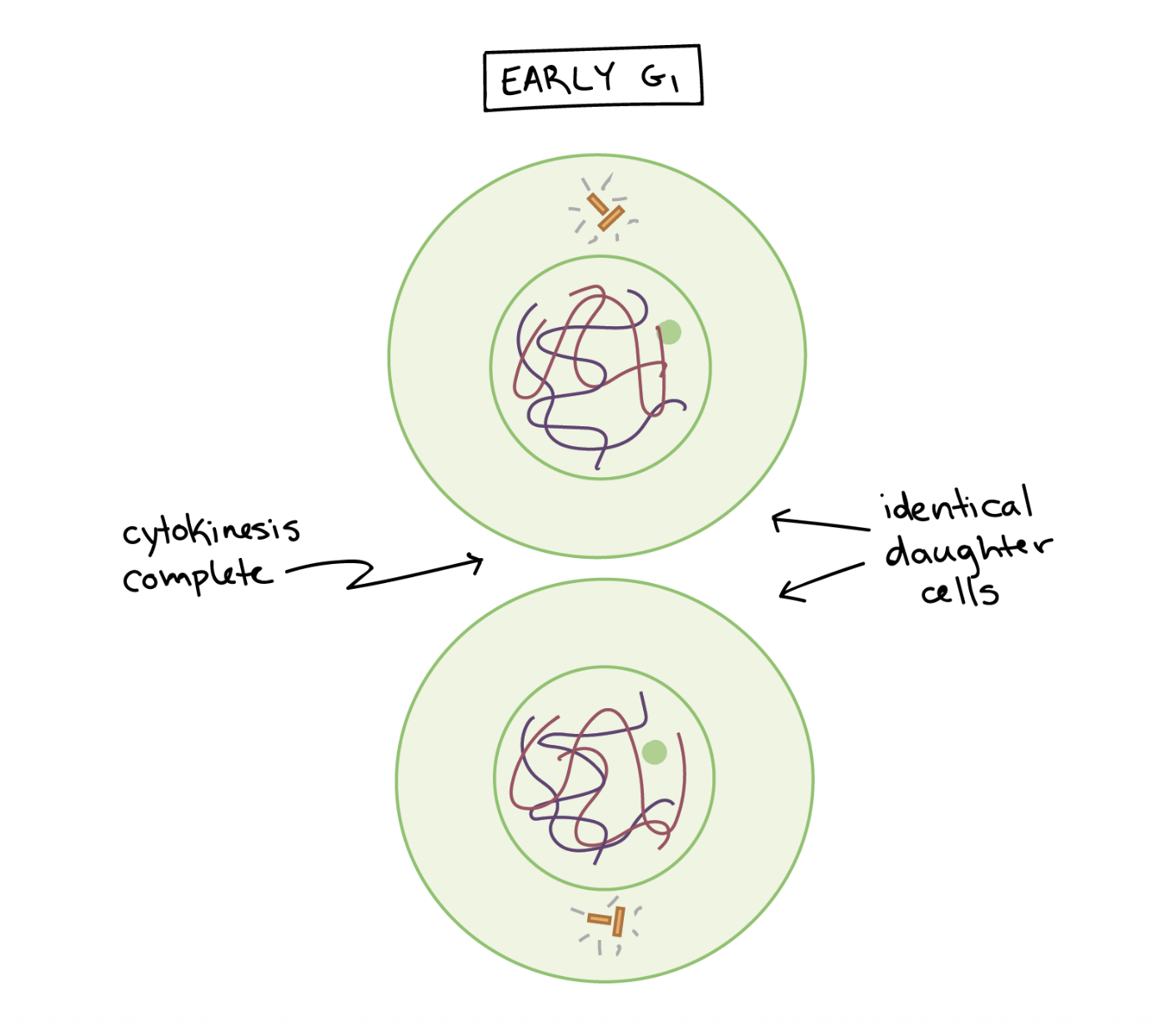
G1 phase
The cell grows, copies organelles, makes molecular building blocks.
S phase
The cell synthesizes a complete copy of DNA in its nucleus, duplicating a microtubule-organizing structure called the centrosome (which help separate DNA in mitosis)
G2 phase
The cell grows more, making proteins/organelles, reorganizing contents for mitosis.
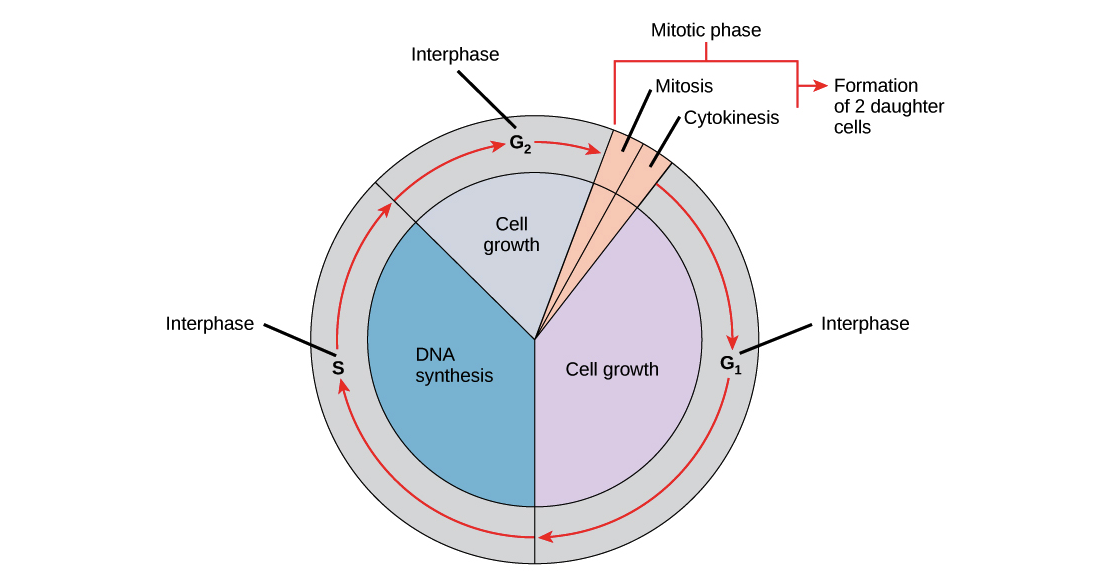
Interphase is made up of ____.
G1, S, G2
M phase
Mitosis, makes two new cells in four phases.

What are the phases of mitosis?
prophase, (prometaphase) metaphase, anaphase, and telophase
Prophase
Chromosomes start condensing, mitotic spindle starts forming, nucleolus degrades and disappears.
Prometaphase
Mitotic spindle starts organizing chromosomes, microtubules begin capturing some (condensing more).
Metaphase
Spindle captured all chromosomes and lined them up at the center of the cell (ready to divide). Kinetochores are correctly attached to microtubules.
Anaphase
Sister chromatids separate from each other (pulled to opposite sites of the cell) and cell becomes longer.
Telophase
Cell is almost done dividing, starts re-establishing normal structures, mitotic spindle broken down, two new nuclei form at opposite sides of the cell. Chromosomes start decondensing.
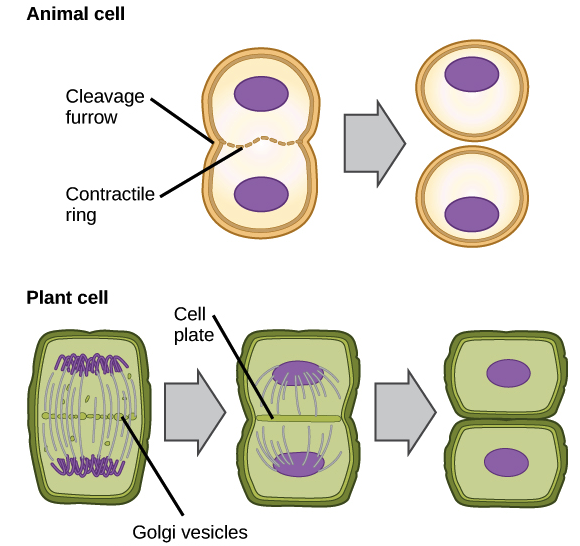
Cytokinesis
The cytoplasm divides to form two new cells, contractile in animal cells and structured in plant cells.
Histones
A group of positively charged proteins that form “bobbins” that negatively charged DNA wraps around. Organizes DNA, makes it more compact, determine which genes are active in a cell.
Humans are _____ (2n), which means our chromosomes come in homologous pairs.
diploid
A human cell has ____ chromosomes.
46
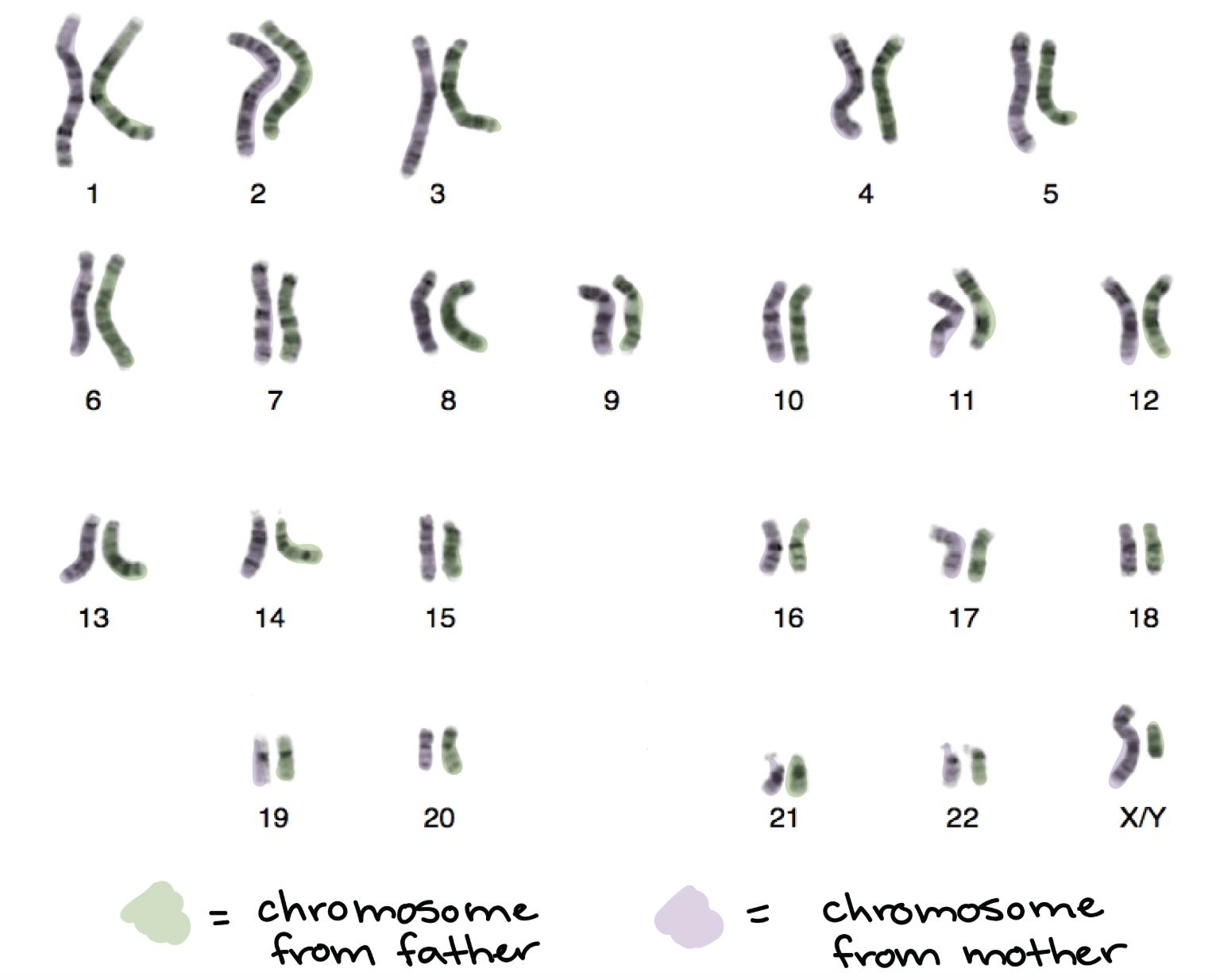
Human sperm/eggs are said to be ____ (1n).
haploid
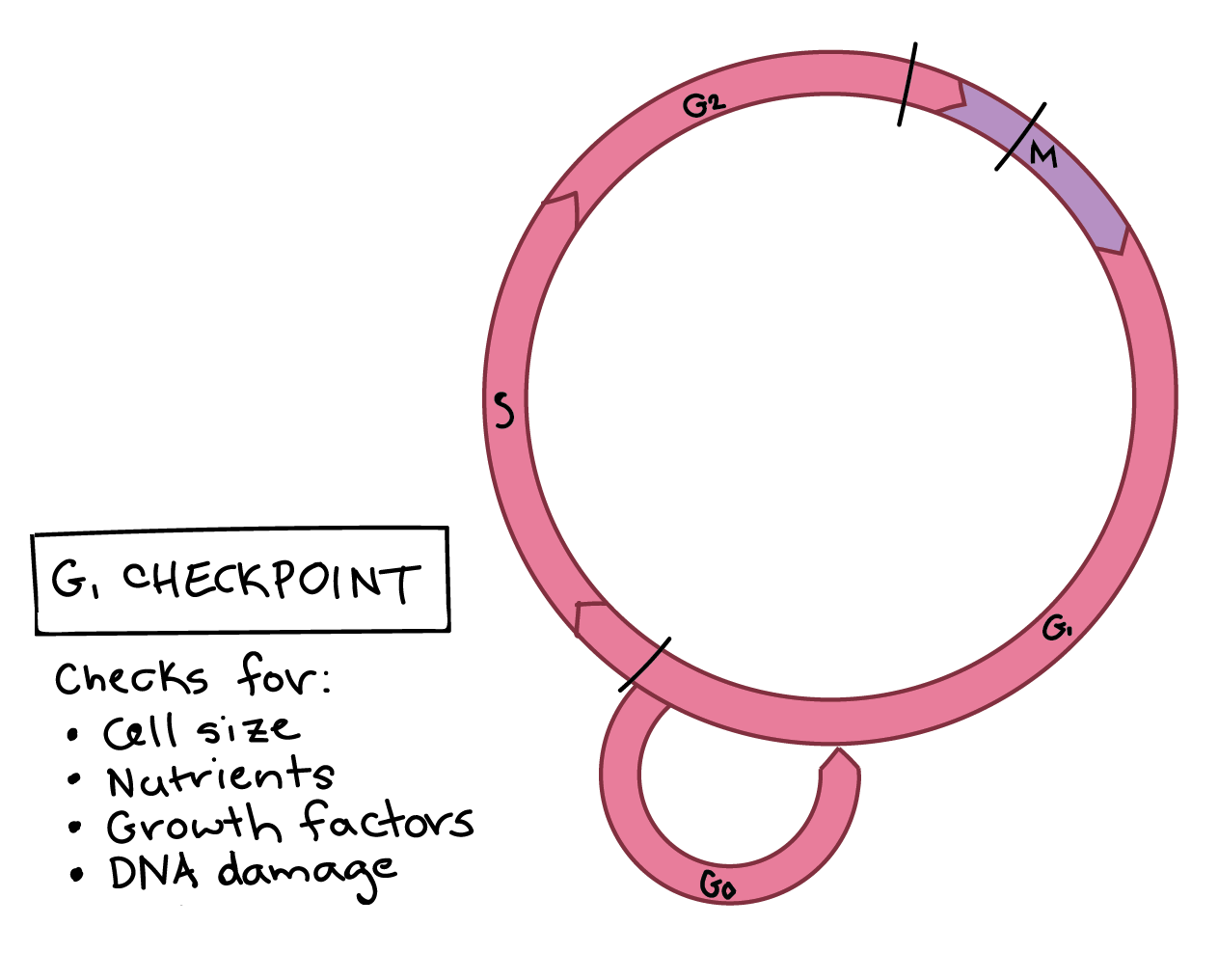
G1 checkpoint
Decides whether or not the cell will divide, if passed, enters S.
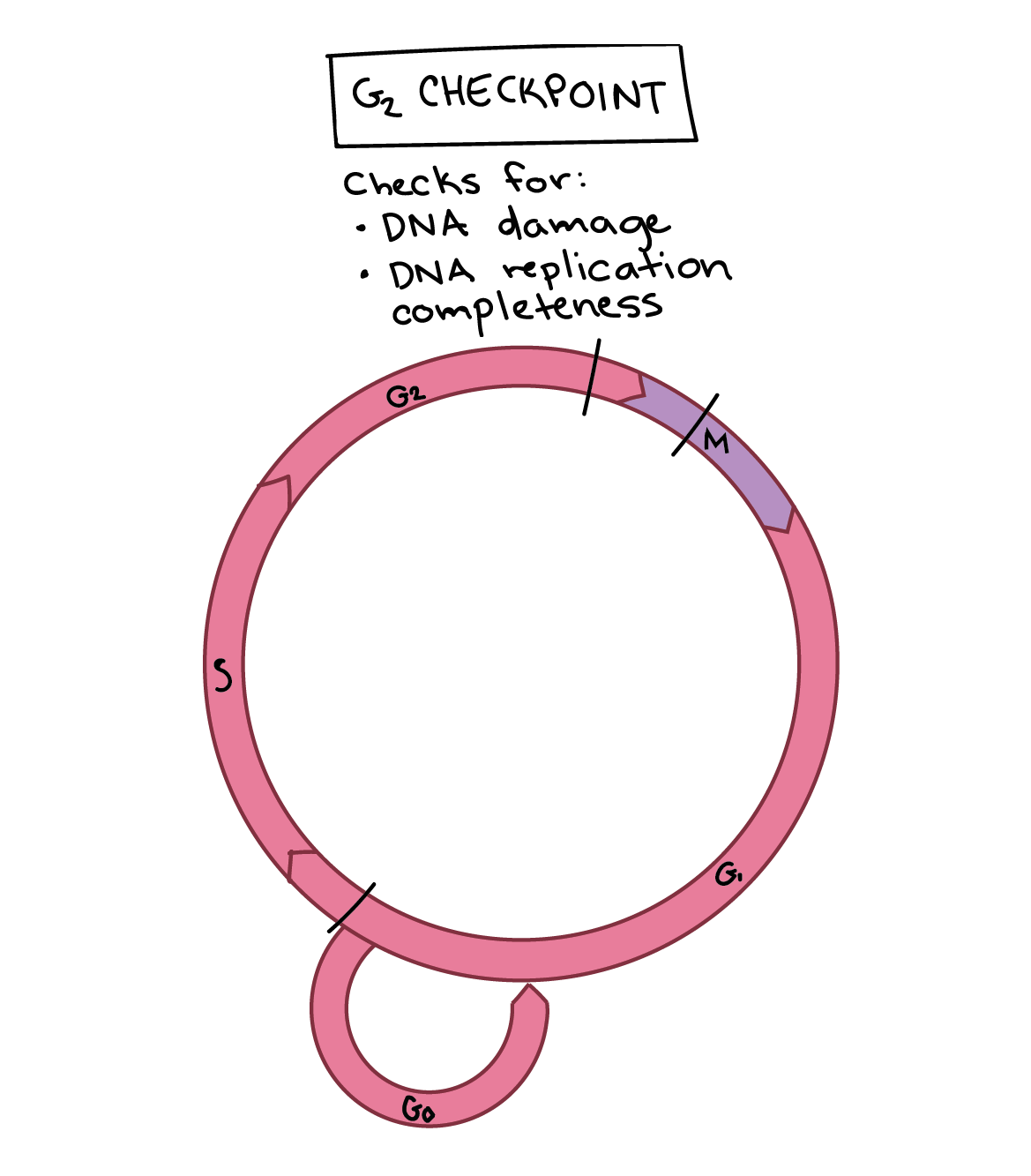
G2 checkpoint
Checks DNA integrity and whether or not DNA replication was successfully completed.
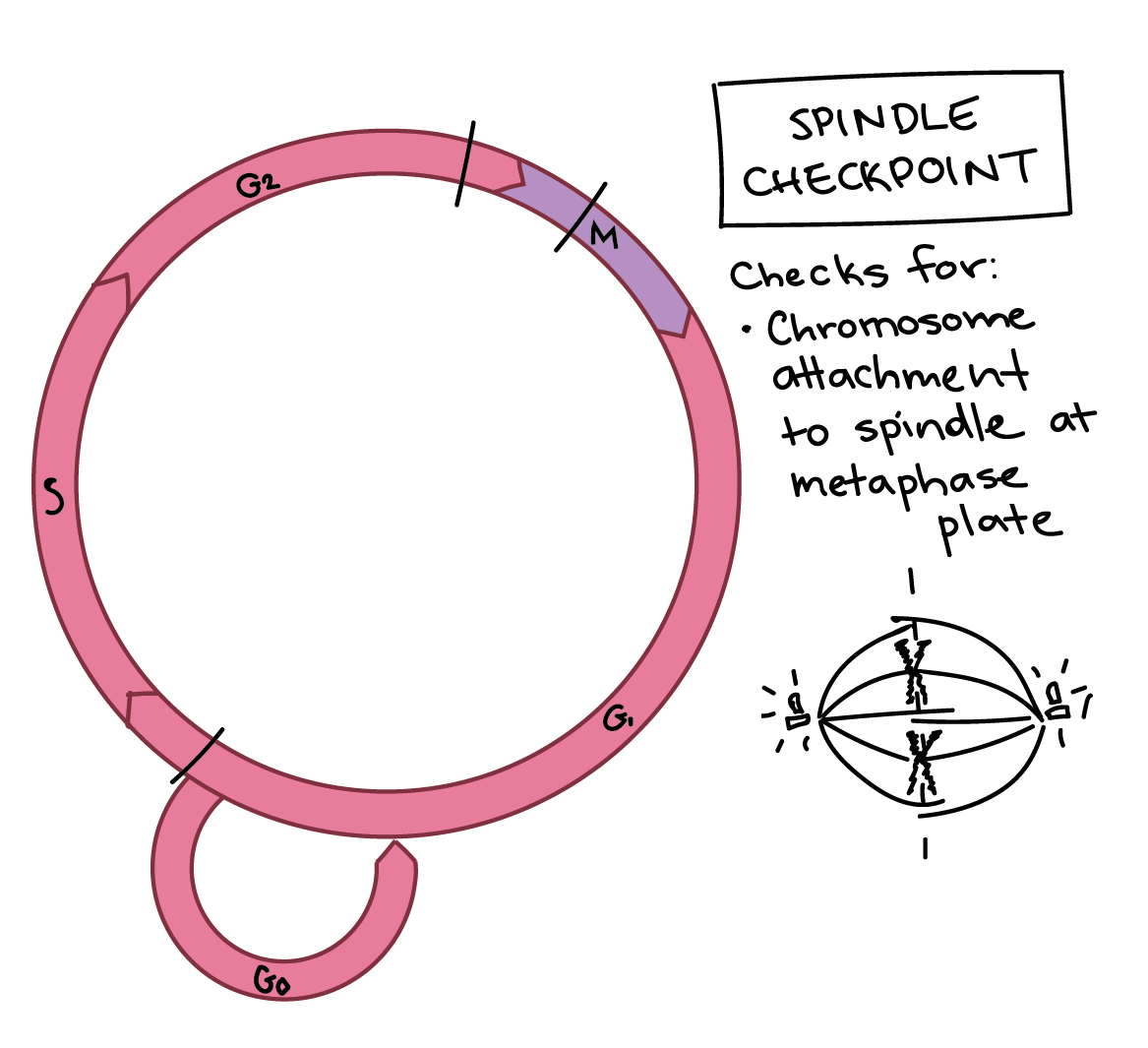
Spindle checkpoint
Also known as the M checkpoint. Evaluates if all sister chromatids are correctly attached to spindle microtubules.
For cell cycle checkpoints, a cell decides whether or not its going to move forward based on internal and external clues. Cues like these change the activity of ______, causing key events to take place.
core cell cycle regulators
Cyclins
A group of related proteins found in the four basic types of G1 cyclins, G1/S cyclins, S cyclins, and M cyclins. Each are associated with specific phases.
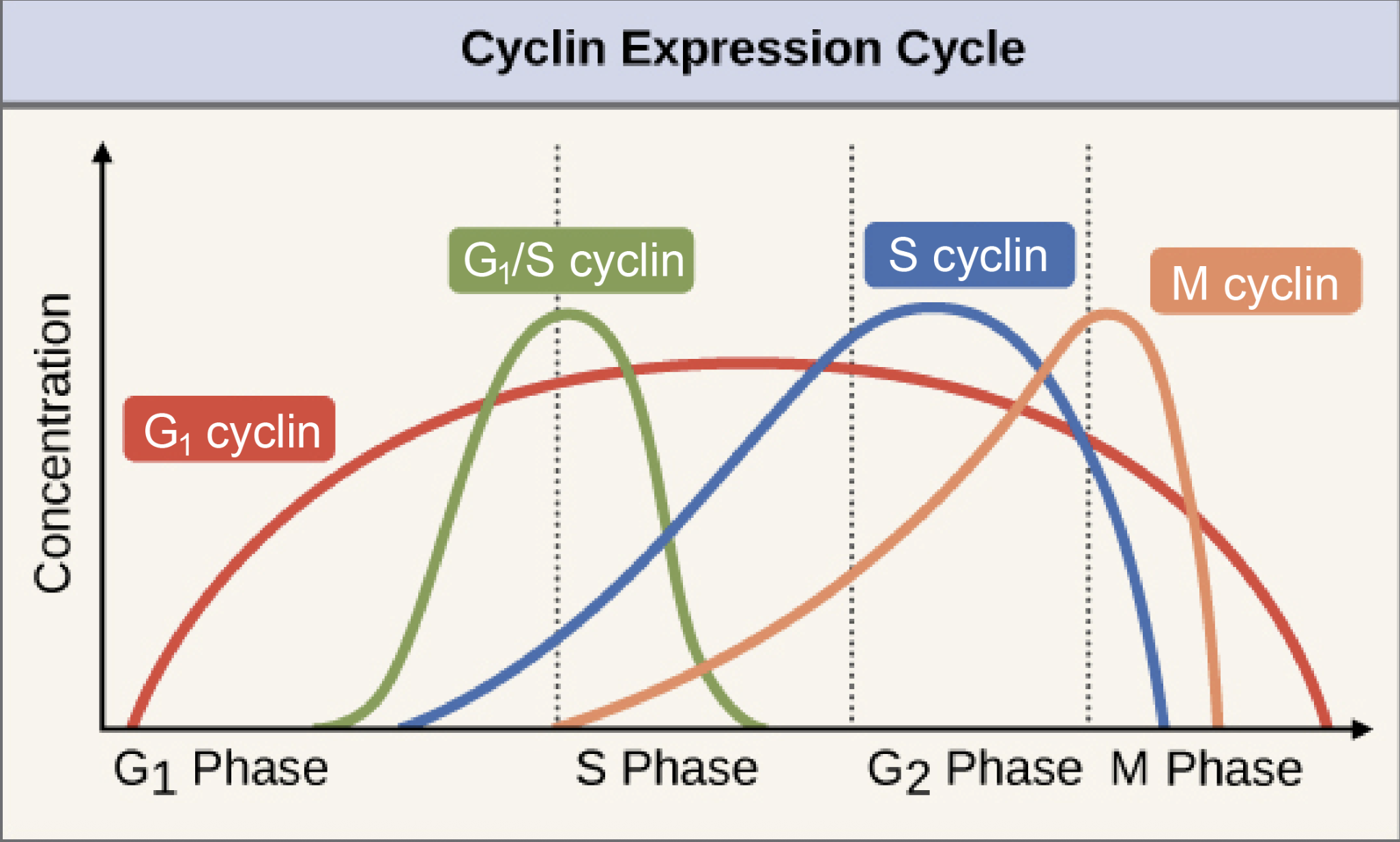
Cyclin expression cycle
Levels of the different cyclins vary considerably across the cell cycle, increasing strongly at the different stages where they’re (respectively) needed.
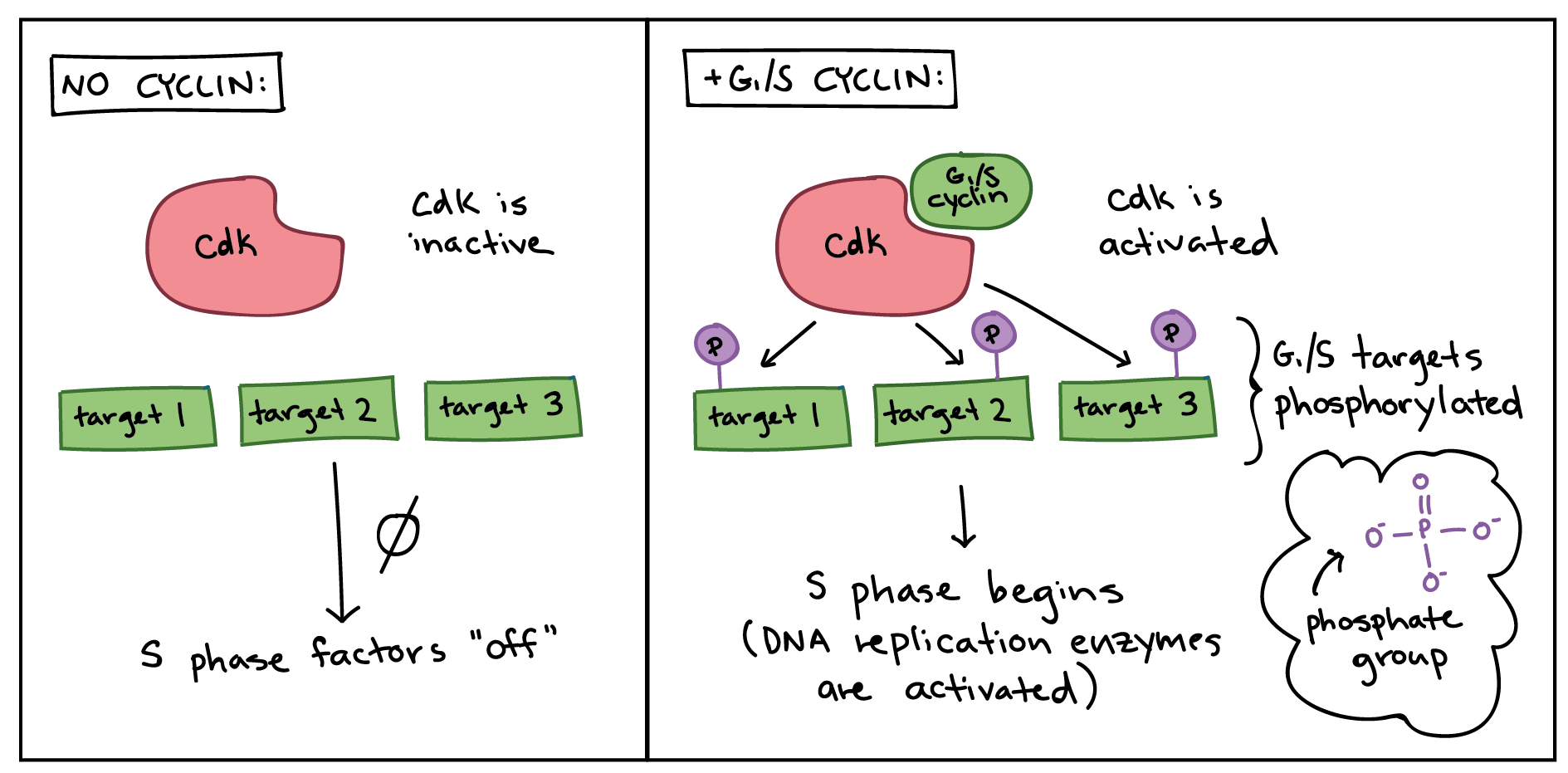
To drive the cell cycle, a cyclin has to activate/inactivate target proteins inside the cell. This is done by partnering with a family of enzymes called the _______.
cyclin-dependent kinases (Cdks)
A cyclin binding with a Cdk _____ it, making it functional and allowing it to modify target proteins.
activates
As the M cyclin accumulates for the G2/M transition, binding to Cdks allow these complexes to receive an additional signal and kick off the M phase. These complexes are called _____.
maturation-promoting factors (MPFs)
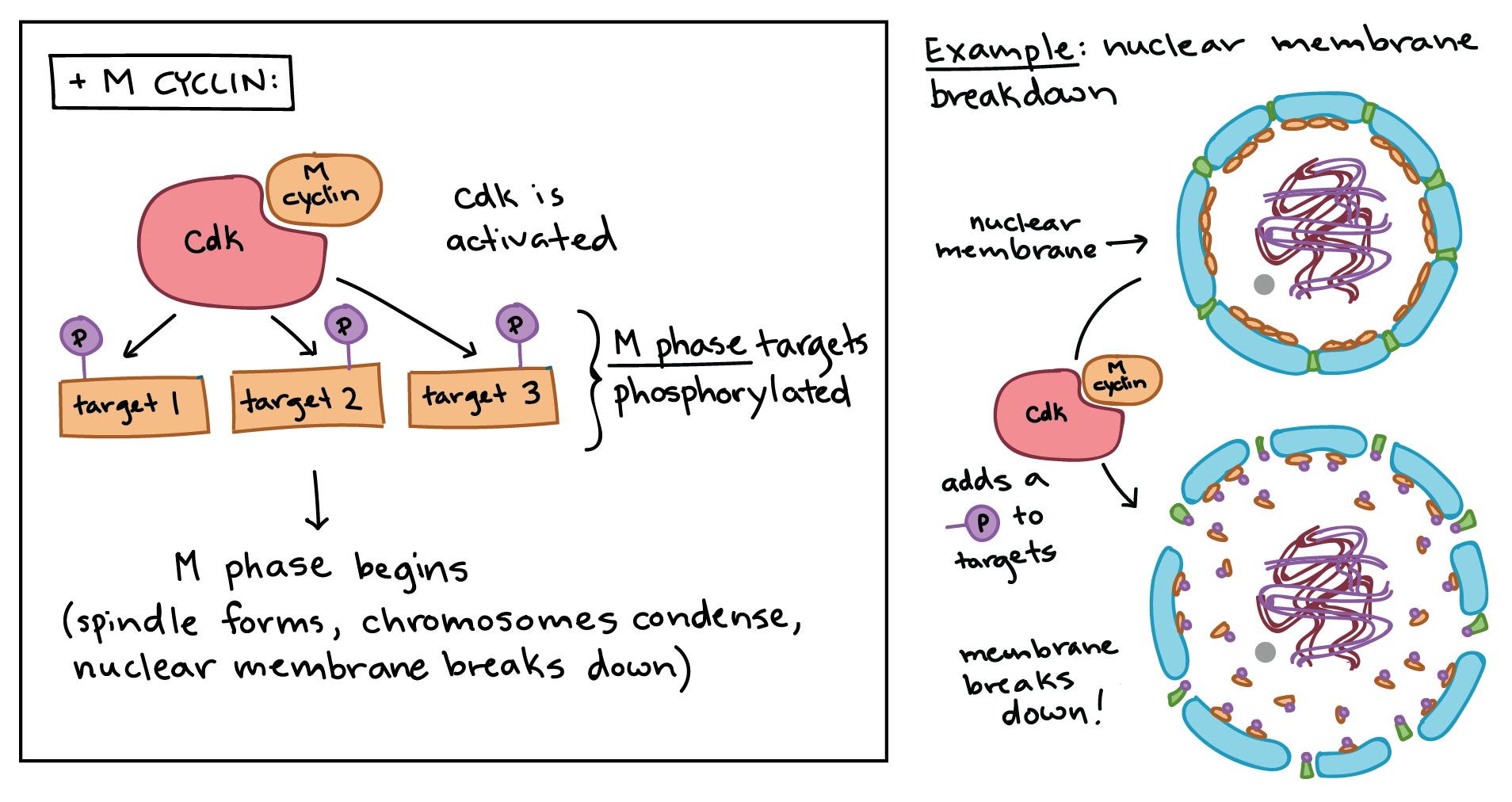
MPF complexes add phosphate tags to several different proteins in the nuclear envelope, resulting in its breakdown and also _____.
activating targets that promote M phase events (like chromosome condensation)
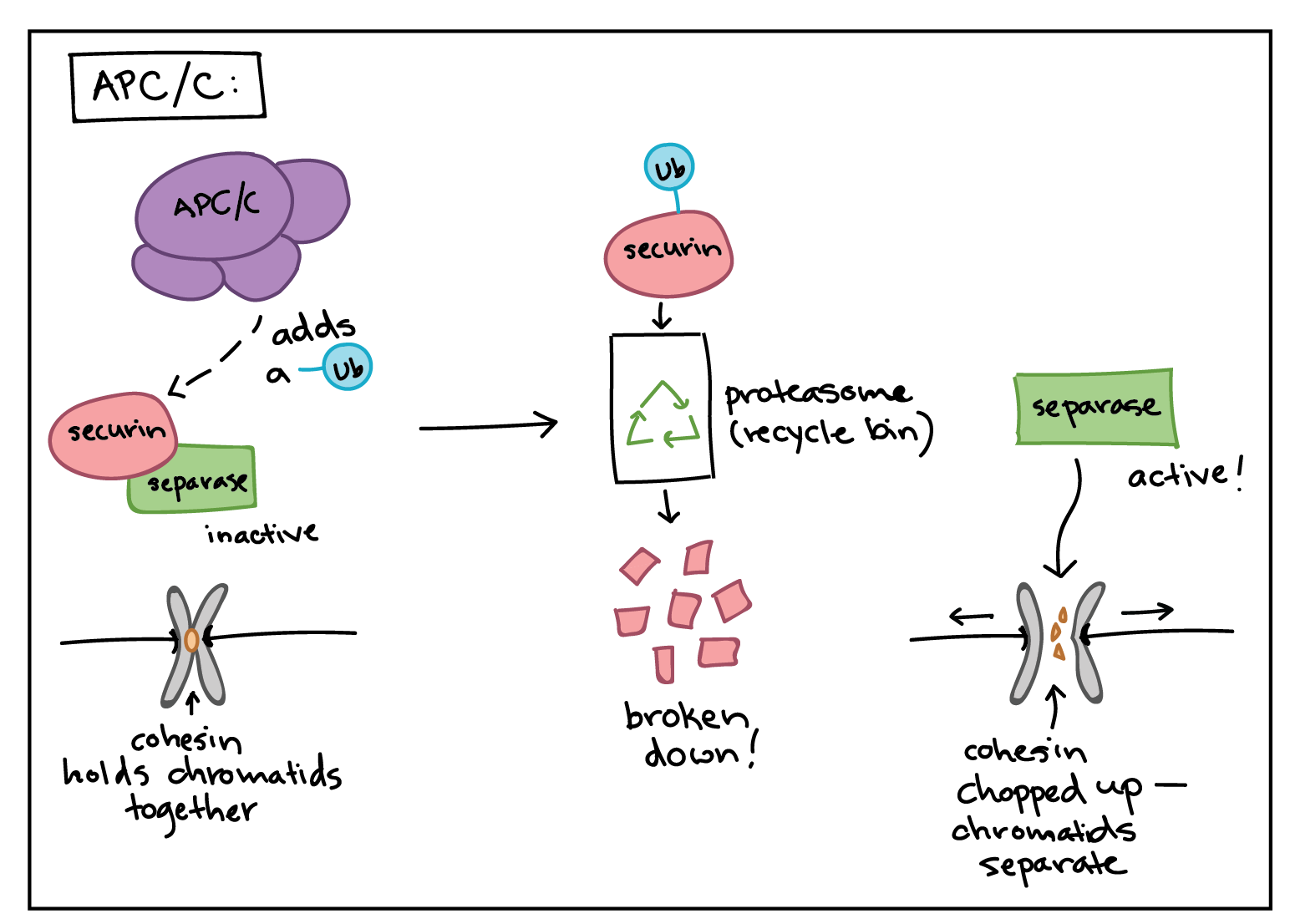
MPF triggers its own destruction with the activation of this protein complex, which degrades M cyclins (starting in a later phase of mitosis). This complex also allows sister chromatids to separate and move to opposite sides of the cell.
The anaphase-promoting complex/cyclosome (APC/C)
Benign tumor
Mass of cells without the potential of metastasizing (invading other tissues).
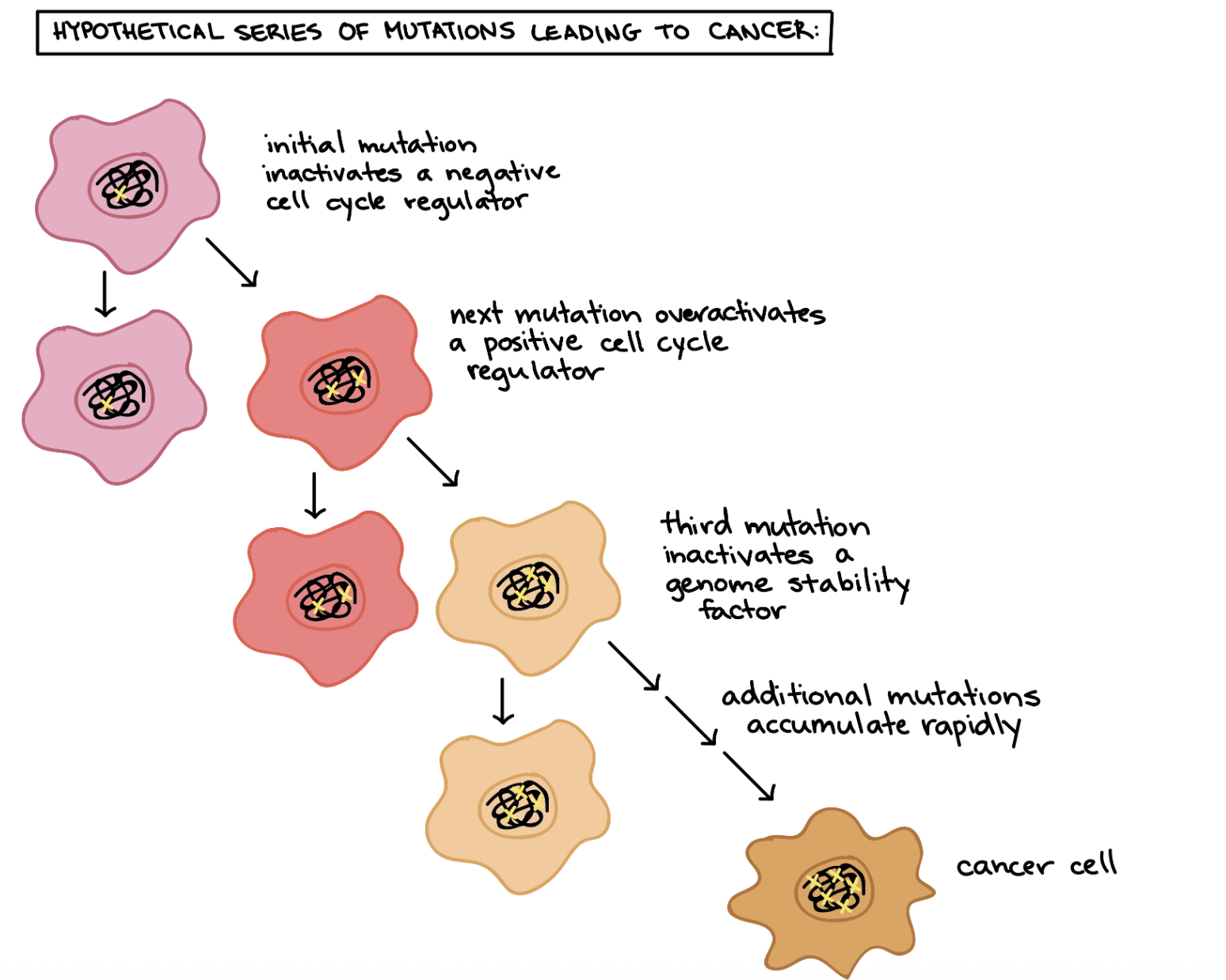
Malignant tumor
Group of cells that divide excessively and can invade other tissues.
Overactive, cancer-causing genes are called ____. The normal (not yet mutated) form are called _____.
oncogenes, proto-oncogenes
Tumor suppressors
Genes that block cell cycle progression. One of the most important tumor suppressors is tumor protein p53.
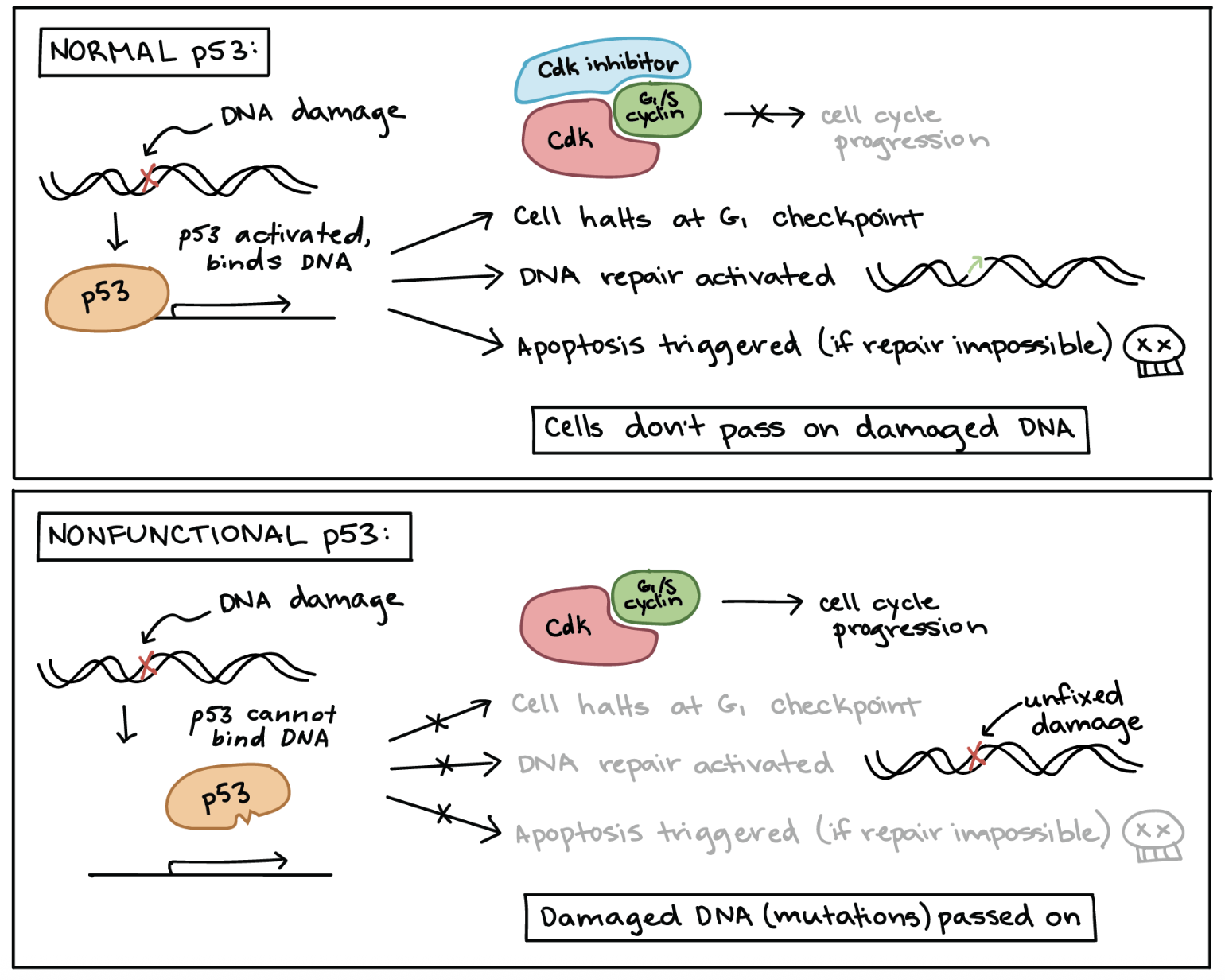
Tumor protein p53 (or just p53) blocks cell cycle progression in response to damaged DNA at the G1 checkpoint. This buys time for DNA repair by enzymes. If the damage is fixed, p53 will _____. If not, p53 _____.
releases the cell, triggers apoptosis
Unit 4
Cell communication and cell cycle