Topic 9 - Ecosystems and Material Cycles
 Call Kai
 Learn
Learn Practice Test
 Spaced Repetition
 Match
Match Flashcards
 Knowt Play
1/224

There's no tags or description
Looks like no tags are added yet.
Name | Mastery | Learn | Test | Matching | Spaced | Call with Kai |
|---|
No analytics yet
Send a link to your students to track their progress
225 Terms
individual
single member of a species
population
a group of organisms of the same species living in the same area at the same time
community
includes all of the populations living and interacting in the same area at the same time
interdependence
the idea that within a community, each species depends on other species for food, shelter, pollination, seed dispersal etc.
The removal of one of these species can affect the whole community
habitat
where an organism lives
ecosystem
all the biotic and abiotic factors that interact within an area at one time
biotic factors
the living components of an ecosystem
abiotic factors
the non-living components of an ecosystem
examples of biotic factors
plants
animals
food availability
new predators
new pathogens
competition
examples of abiotic factors
light intensity
mineral ions
water availability
example of a small ecosystem
garden pond
example of a large ecosystem
a biome
i.e. Antarctica, rainforest
Abiotic factors - how does light intensity affect the community?
light is needed for photosynthesis, more light leads to more photosynthesis and an increase in plant growth rate
Abiotic factors - how does temperature affect the community?
affects photosynthetic rate in plants
Abiotic factors - how do moisture levels affect the community?
plants and animals require water to survive
Abiotic factors - how do soil pH and mineral content affect the community?
different species of plant are adapted to different soil pH levels and nutrient concentration levels
Abiotic factors - how does wind intensity and direction affect the community?
wind speed affects transpiration in plants and transpiration affects the rate of photosynthesis as it ensures water and mineral ions are transported to the leaves
Abiotic factors - how do CO² levels affect the community?
CO² is required for photosynthesis in plants. CO² concentration affects the rate of photosynthesis
Abiotic factors - how do O² levels affect the community?
some aquatic animals can only survive in water with high oxygen concentrations
Biotic factors - how does food availability affect the community?
more food means more organisms have a higher chance of surviving and reproducing which means population increases
i.e. rainforest ecosystems have a rich food supply
Biotic factors - how do new predators affect the community?
In balances ecosystems predators catch enough prey to survive but not so many that they wipe out the entire population.
If a new predator was introduced this could shift the balance
i.e. wolves in Yellowstone
Biotic factors - how do new pathogens affect the community?
If a new pathogen was introduced then the populations will have no immunity or resistance to it and the population may decline/be wiped out
Biotic factors - how does competitions affect the community?
When 2 species compete for the same resources, 1 is better adapted to take advantage of those resources and this may continue until there are too few members of the less adapted species to breed successfully
examples of interactions in an ecosystem
predators eating prey
herbivores eating plants
plant species being pollinated by bees
What is meant by a stable community?
one where all the species and environmental factors are in balance so that population sizes remain fairly constant
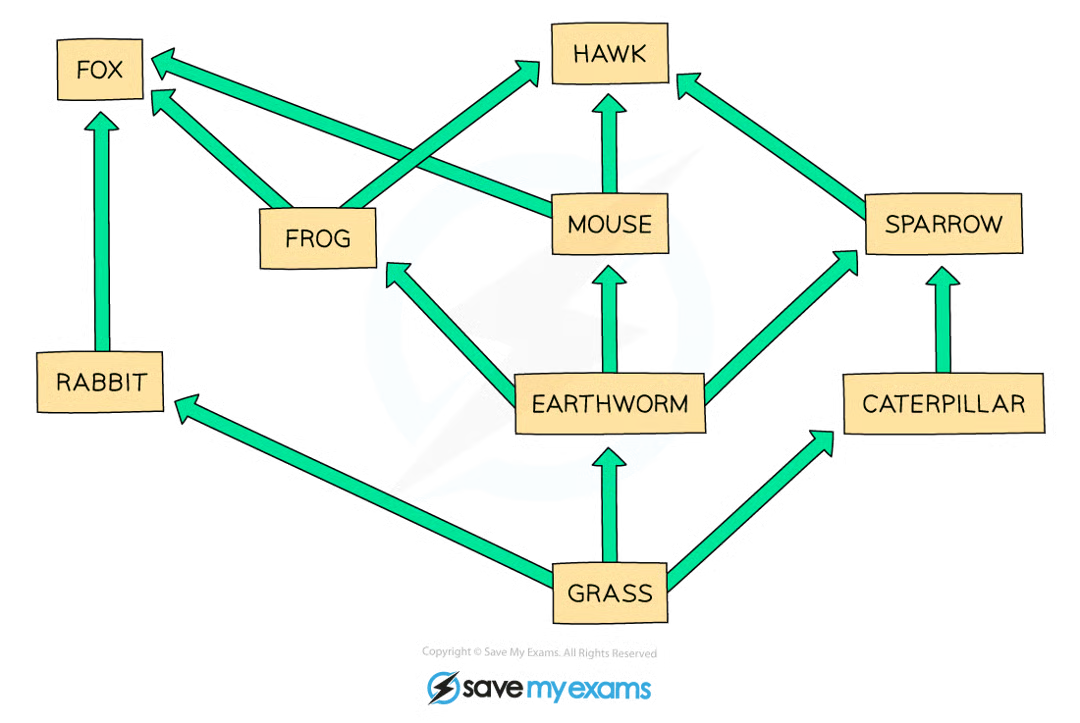
What would happen if the population of earthworms decreased?
The population of grass plants would increase as there are now fewer species feeding off them
The populations of frogs and mice would decrease significantly as earthworms are their only food source
The population of sparrows would decrease slightly as they eat earthworms but also have another food source to rely on (caterpillars)
2 examples of interactions that can create interdependence in a community
parasitism(parasitic relationships)
mutualism(mutualistic relationships)
parasites
Parasites are organisms that are adapted to live very closely with another species, known as the host (or the host species)
The parasite lives either in or on the body of the host species
What does the parasite gain from the host?
Resources for survival
This can include, food, shelter and a suitable location to reproduce (where offspring can feed and grow)
What does the host gain from the parasite?
Nothing, in fact, parasites often harm the host in some way
example of a parasitic relationship
fleas being a parasite to mammals (e.g. dogs)
The fleas feed on the host's blood but don't provide anything to the host in return
mutualism
a type of relationship between two species within a community, where both organisms benefit in some way
example of mutualistic relationships
bees and many species of flowering plants have a mutualistic relationship
Bees gain nectar (i.e. food to provide them with energy) from flowers
When bees visit flowers, pollen is transferred to their bodies
As bees visit multiple different flowers, they spread the pollen to these flowers, pollinating them
In this way, the flowers gain help in reproducing
biodiversity
the range and variety of different species of organisms within a given area
What does biodiversity consider?
not only the species richness, but also the variation within each species including the relative abundance (i.e. the population size) of each species present
What would a high biodiversity environment be like?
an environment with lots of different species which show a lot of variation and are all evenly distributed across the study area
Things that different species depend on each other for
Food
Shelter (e.g. birds nesting in trees)
Maintenance of the physical environment (e.g. tree roots provide stability for soils, ensuring they do not get washed away. This, in turn, provides a stable habitat for other plant species)
How does high biodiversity ensure the stability of ecosystems?
by reducing the dependence of one species on another for these three things
What are more diverse populations more likely to be resistant to?
sudden environmental impacts or diseases
abundance
the number of different species or the number of individuals of a particular species in a given area
distribution
where the species is found in an ecosystem. This is more likely to be wherever the suitable habitat of that species is found
sampling
assessing multiple areas within a larger habitat and using these results to represent the habitat as a whole
quadrats
square frames that can be used to mark off the area being sampled
They are placed on the ground and the organisms within them are recorded
How must quadrats be laid in the area and how can this be done?
They must be laid randomly in the area to avoid sampling bias
This random sampling can be done by converting the sampling area in a grid format and labelling each square on the grind with a number and then using RNG to pick the sample points
What are methods using transects suitable for?
Throughout some areas, there can be changes in the physical conditions
For example, there may be changes in altitude, soil pH or light intensity
transect methods are good for showing how species distribution changes with the different physical conditions in the area
transect
a line along which samples are taken
(usually formed by a measuring tape)
How to perform a belt transect
Lay out a measuring tape in a straight line across the sample area
Place quadrats at regular intervals along the tape and record the abundance of each species within each quadrat
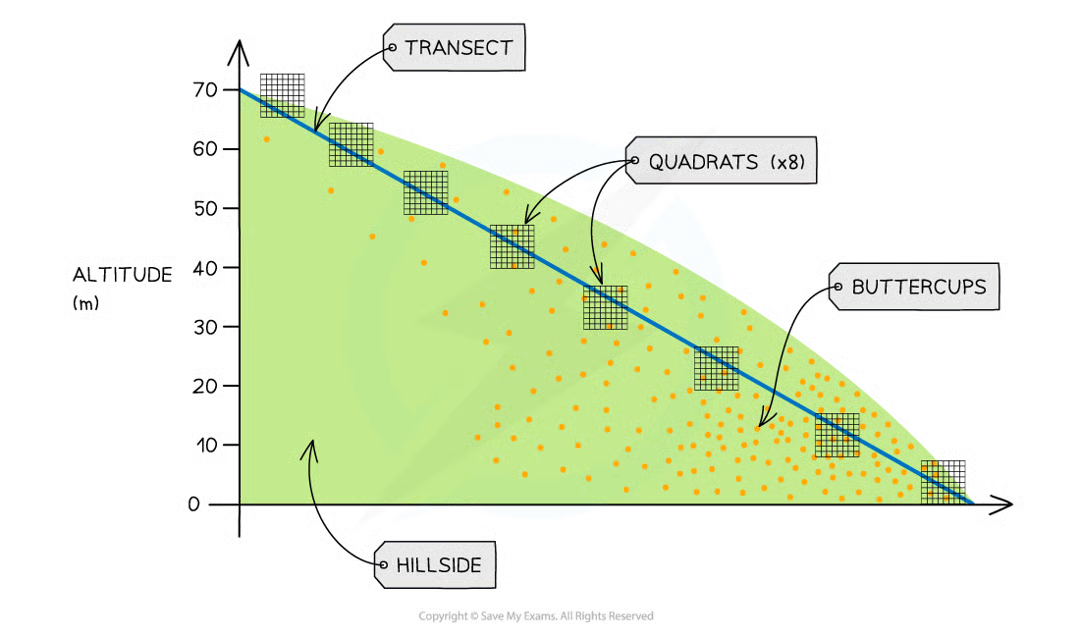
How to perform a line transect
Lay out a measuring tape in a straight line across the sample area
At equal distances along the tape record the identity of the organisms that touch the line
This method only measures which species are present in the area and should not be used to measure the abundance of a particular species
Practical: Investigating population size in 2 different areas using quadrats - Apparatus
2 tape measures
These are used to lay out a survey area
Quadrat
This is used to sample your chosen species
Random number generator
This is used to generate random sets of coordinates (locations within the survey area where you will place the quadrat)
Species identification guide
This is used to help accurately identify and count individuals of your chosen species
Practical: Investigating population size in 2 different areas using quadrats - Method
Use two tape measures to lay out a survey area (e.g. 10m x 10m) in your chosen habitat such as the school field
Use a RNG to create a set of coordinates to place your first quadrat e.g. If you get 4 and 5 place the quadrat 4 m on the x axis and 5m on the y axis
Count the number of your chosen plant species that are found within the quadrat
Record the number in a results table. Repeat until you have recorded the number of your chosen plant species in 10 quadrats
Estimate the population of dandelions in your area using the equation
estimated pop. size = total area/area sampled x total number of dandelions counted
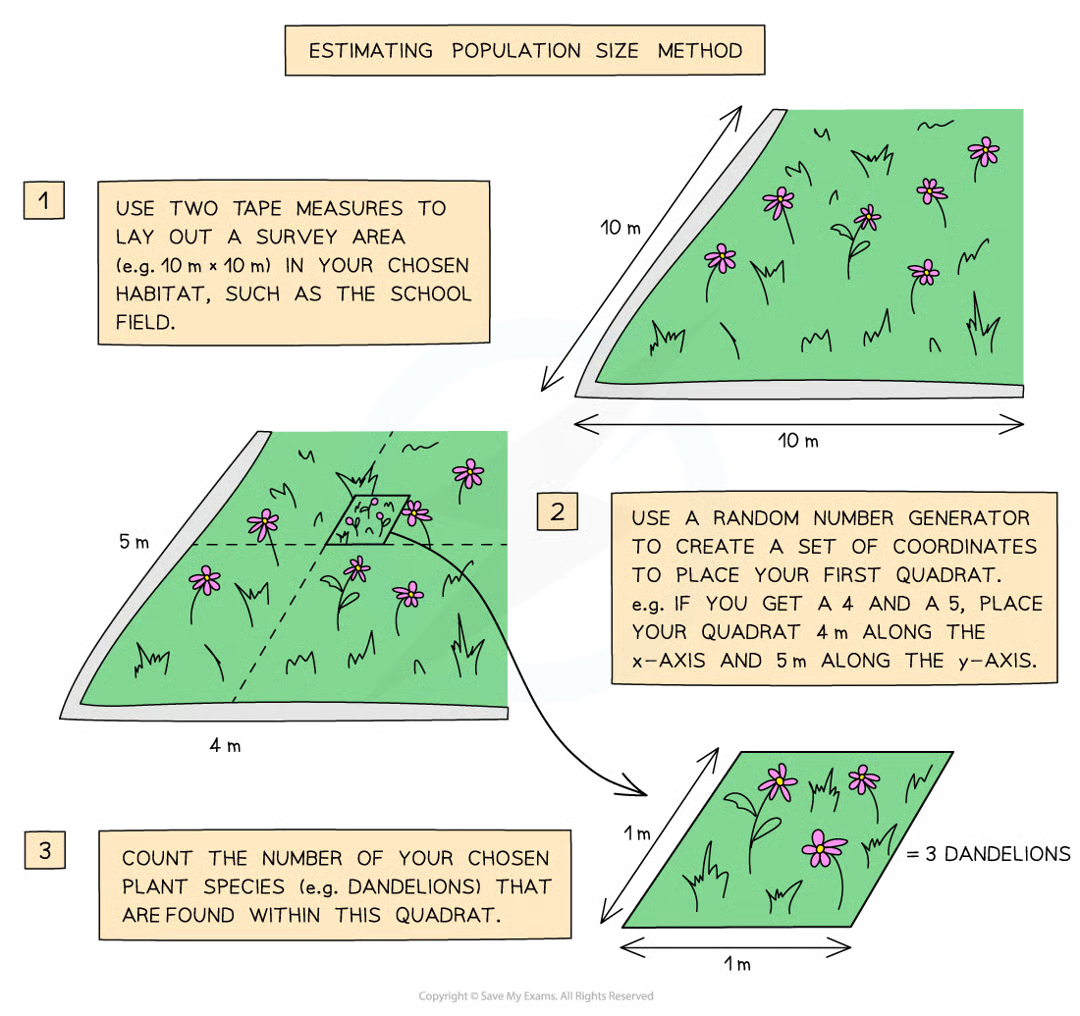
Practical: Investigating population size in 2 different areas using quadrats - 2 limitations and their solutions
can be easy to miss individual organisms - use a pencil or a stick to carefully move leaves out of the way to check if there is anything underneath
identifying species can be tricky - use a species identification guide
Practical scenario 2: Investigating the effect of a factor on the distribution of a species - method
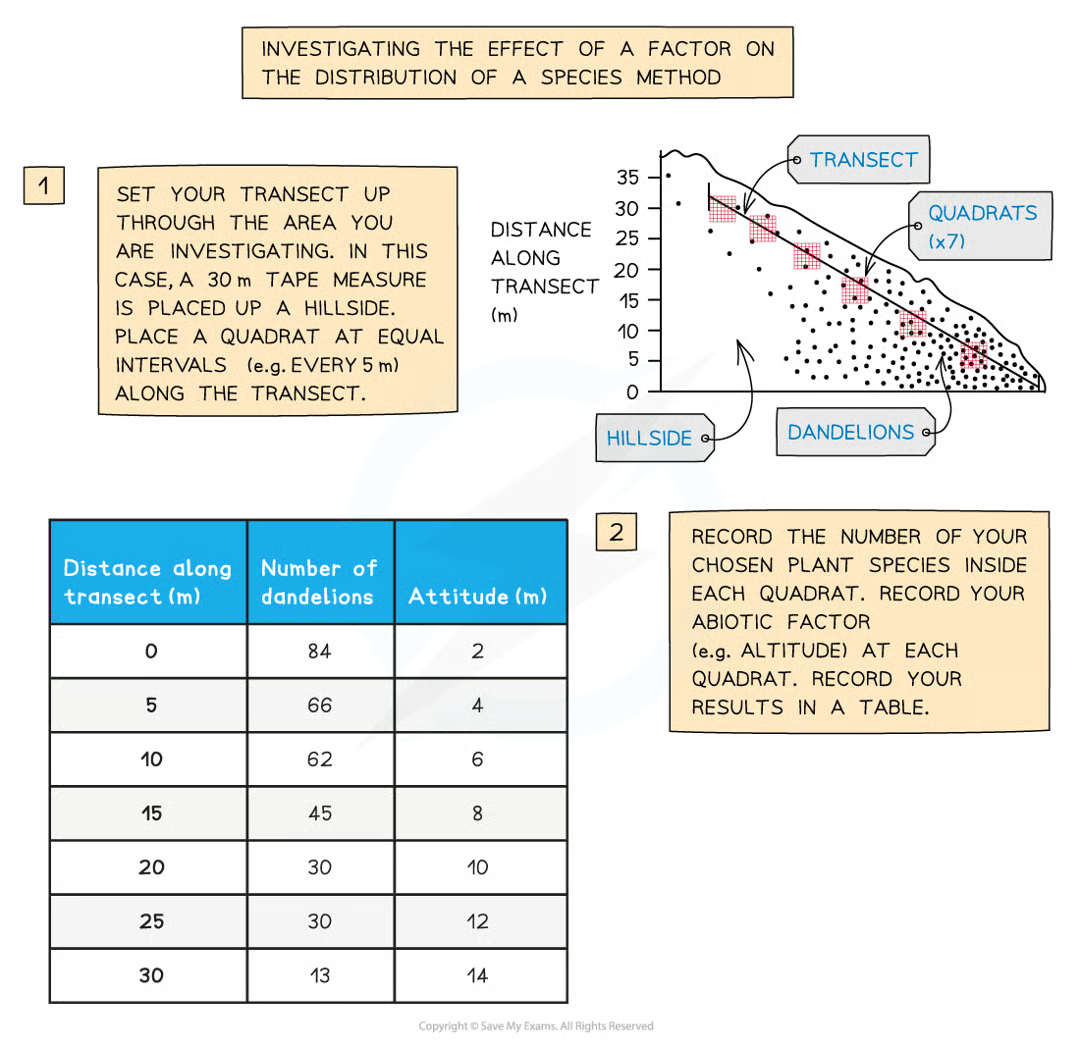
Set your transect up through the area you are investigating. In this case, a 30m tape measure is placed up a hillside. Place a quadrat at equal intervals (e.g. every 5m) along the transect
Record the number of your chosen plant species inside each quadrat. Record your abiotic factor (e.g. altitude) at each quadrat. Record your results in a table.
Plot your data in a graph and describe any relationship that can be observed
What do trophic levels describe?
The feeding relationship between organisms
producers
organisms that can use the energy from sunlight to produce their own organic nutrients.
Plants are producers as they carry out photosynthesis to make glucose
Found at the first trophic level
Where do producers in the first trophic level gain energy from?
Energy flows from the Sun to the first trophic level in the form of light
How do producers in the first trophic level make use of the Sun’s energy?
They convert light energy into chemical energy
How do producers (i.e. plants) use their chemical energy?
Some energy is used immediately in respiration
Some energy is stored as biomass as they produce their own organic nutrients
What happens when a primary consumer feeds on a producer?
the chemical energy stored in the plant’s biomass is passed on to the primary consumer
Eventually, what happens to all energy that is transferred through the trophic levels?
All the energy is transferred to the environment
primary consumers
herbivores that feed on consumers
they can be omnivores as well
secondary consumers
predators that feed on primary consumers#
they can be omnivores as well
tertiary consumers
predators that feed on secondary consumers
they can be omnivores as well
quaternary consumers
predators that feed on tertiary consumers
they can be omnivores as well
Can consumers be at different trophic levels in the same food web?
Yes as they may eat both primary, secondary and/or tertiary consumers
What does a food chain show?
shows the transfer of energy from one organism to the next
What do food chain arrows represent?
show the transfer of energy from one trophic level of the food chain to the next
apex predator
the organism at the top of the food chain
herbivore
an animal that gets its energy by eating plants
carnivore
an animal that gets its energy by eating other animals
omnivore
an animal that gets its energy by eating other animals and eating plants
decomposers
bacteria and fungi that get their energy from feeding off dead and decaying organisms and undigested waste such as faeces by secreting enzymes to break them down
What do food webs tell us?
the transfer of energy in an ecosystem
interdependence
3 types of food pyramids
pyramids of number
pyramids of biomass
pyramids of energy transfer
What do pyramids of number show?
show how many organisms are at each level of a food chain
What does the width of box of a pyramid of number show?
the number of organisms at that trophic level
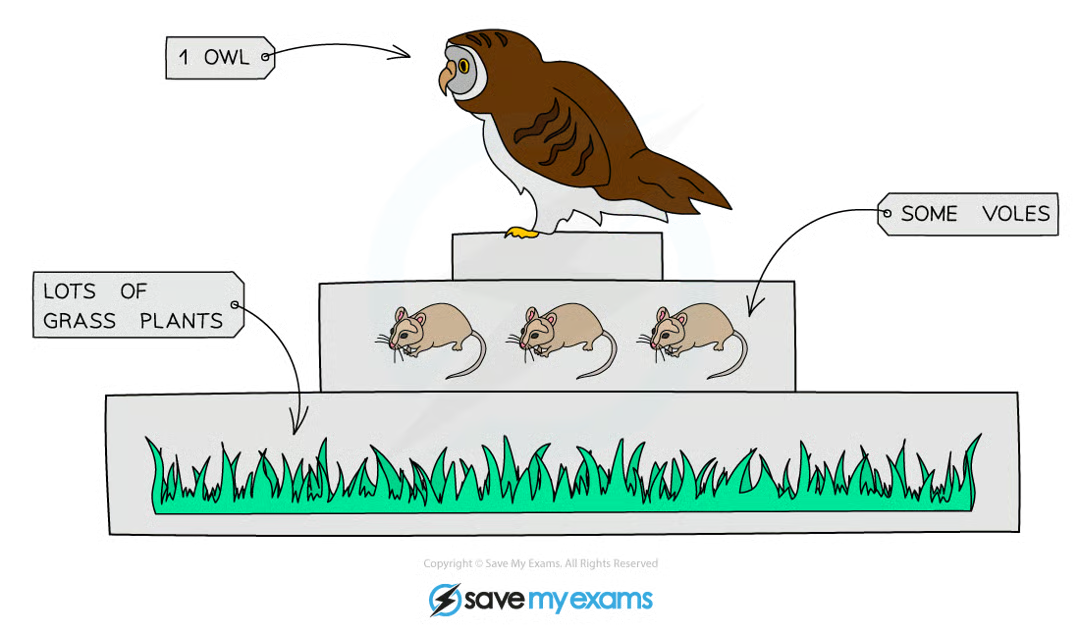
visual representation of a pyramid of number
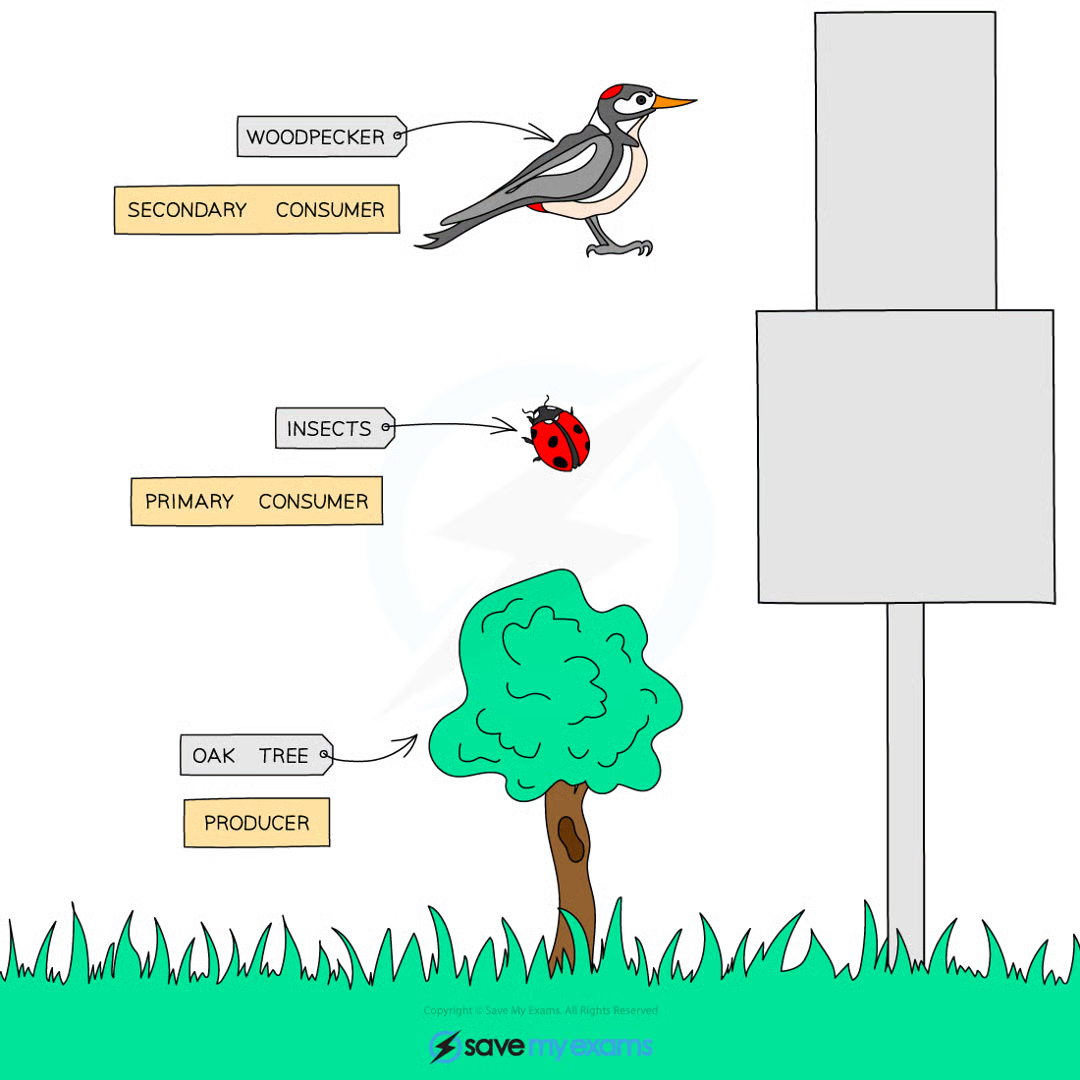
Are pyramids of number always pyramid shaped and why?
Not always, this is because the size of the organism is also important. For example an oak tree would not have to be greater in number than the primary consumers of insects to support them due to their large size, meaning it would contain enough energy to support the insects
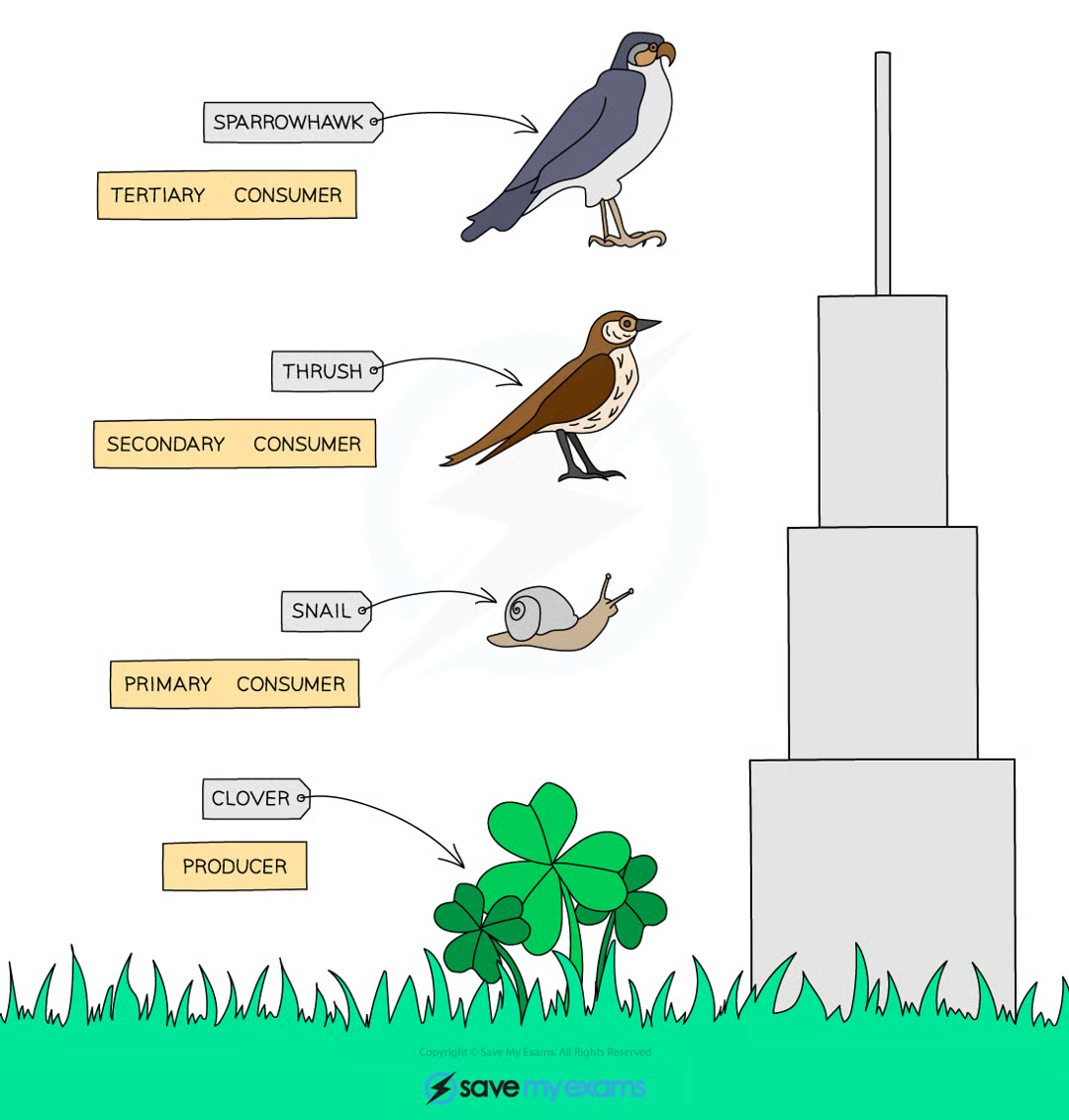
2 rules when drawing a pyramid of number
You cannot change the trophic level of the organisms
The larger an individual organism is the fewer of them there are
What do pyramids of biomass show
how much mass the creatures at each level would have without including all the water that is in the organisms (their ‘dry mass’)
visual representation of a pyramid of biomass
Are pyramids of biomass always pyramid shaped and why?
Yes - this is because the mass of organisms has to decrease as you go up a food chain, for example, it would be impossible to have 10kg of grass feeding 50kg of voles feeding 100kg of barn owls
Which pyramid between biomass and number is better for representing interdependence and why?
Biomass - this is because these kinds of pyramids provide a much better quantity of the plant and animal material at each level of a food chain
What do pyramids of energy transfer show?
the amount of energy contained within the biomass of individuals within different trophic levels
What does the area of each box in a pyramid of energy transfer show?
The quantity of energy present
Describe the bases of pyramids and energy transfer
Wide - this is due to the large amount of energy contained within the biomass of consumers
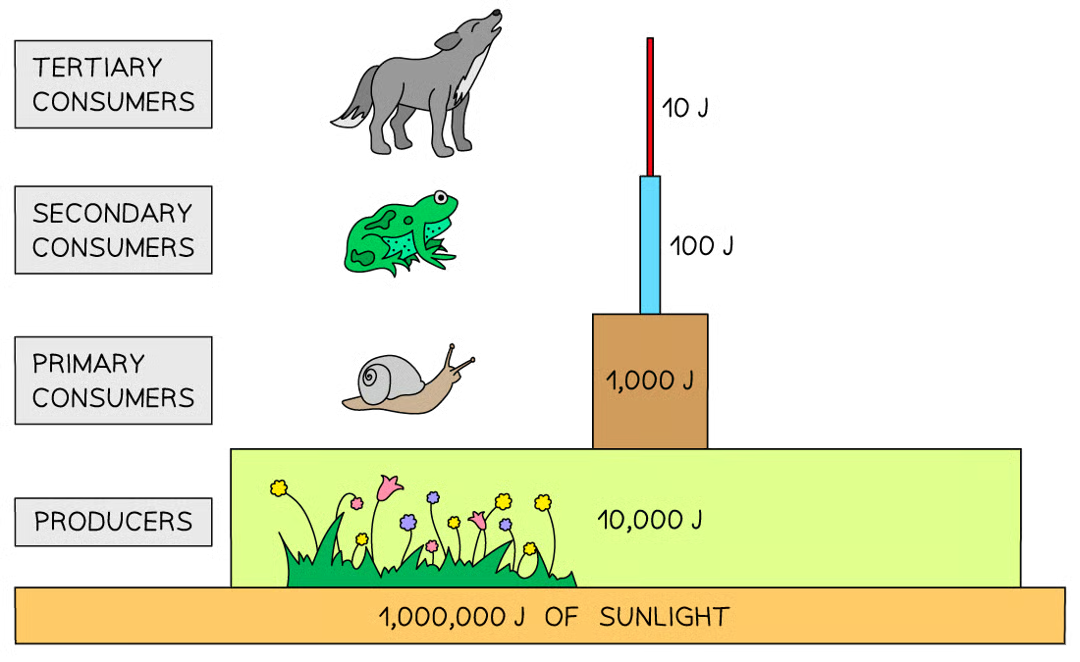
What happens to the energy quantity as you move up a pyramid of energy transfer to higher trophic levels?
It decreases as not all energy is transferred to the biomass of the next trophic level
Roughly what percentage of energy is transferred to the biomass of each trophic level?
10%
Are pyramids of energy transfer always pyramid shaped and why?
Yes - the quantity of energy always decreases as you move up a trophic level
It’s not like you can make energy from nothing
visual representation of a pyramid of energy transfer
By what process do producers convert light energy into chemical energy?
Photosynthesis to convert carbon dioxide and water into glucose and oxygen
What is glucose used for in plants?
During respiration, glucose is used to produce their own biomass
biomass is a store of chemical energy
What happens in terms of chemical energy and biomass when a primary consumer eats a producer?
they break down the biomass of the producer (digestion) and use the chemical energy to increase or sustain their own biomass
The same applies between primary and secondary consumers etc.
Why does biomass decrease up the food chain as energy transfer decrease
High trophic levels need energy to generate biomass, less energy transfer thus leads to less biomass created
Reasons for loss of energy(and this biomass) between trophic levels(like 8)
Organisms rarely eat every part of the organism they are consuming – some of the biological material of plants and animals may be inedible (e.g. many predators do not consume the bones of their prey)
Not all the ingested material is digested and absorbed, some is egested as faeces
Energy is used for movement
Energy is used to generate heat
Energy is used for metabolic processes
Some absorbed material is lost as waste:, carbon dioxide and water are waste products of respiration, water and urea are the waste products in the urine, which is produced when proteins are broken down
Equation for efficiency of energy transfers between trophic levels

How does water enter the atmosphere as vapour?(2)
Energy from the Sun heats the Earth’s surface and water evaporates from oceans, rivers and lakes
Transpiration from plants releases water vapour into the air
How do clouds form after water via evaporation/transpiration enters the atmosphere?
The warmer air of the lower atmosphere rises, taking the water vapour with it.
As it rises, the moist air cools.
Water vapour condenses back into liquid water, forming clouds
How does condensed water return back to earth?
As the water droplets in the cloud get bigger and heavier, they begin to fall as rain, snow and sleet
This is known as precipitation
Why is the water cycle important?
All life on earth depends upon water for a variety of reasons, this includes photosynthesis
It distributes fresh water globally providing us with clean water for drinking

