HSC Modern History: Power and Authority in the Modern World
 Studied by 3 people
 Call Kai
 Learn
Learn Practice Test
 Spaced Repetition
 Match
Match Flashcards
 Knowt Play
1/90

There's no tags or description
Looks like no tags are added yet.
Name | Mastery | Learn | Test | Matching | Spaced | Call with Kai |
|---|
No analytics yet
Send a link to your students to track their progress
91 Terms
End of WWI
1918
Treaty of Brest-Litovsk
1918 treaty between Russia and Germany that ended Russia's involvement in World War I. Meant that Soviet Union suffered heavy losses.
Treaty of Versailles
1919 treaty that ended WWI. It blamed Germany for WW I and handed down harsh punishment.
Article 232 of the Treaty of Versailles
Meant that Germany had to pay 132 billion gold marks in reparations
Article 231 of the Treaty of Versailles
War Guilt Clause -- placed complete blame for the war on Germany
Treaty of Saint-German-en-Laye
A 1919 treaty that punished Austria
Treaty of Neuilly-sur-Seine
A 1919 treaty that punished Bulgaria
Treaty of Trianon
A 1920 treaty that established Hungary's borders
Treaty of Sèvres
A 1920 treaty that dismantled the Ottoman Empire
US-German Peace Treaty
A 1921 treaty that ended WWI for US and Germany because US didn't sign the Treaty of Versailles. Meant US helped Germany pay war reparations.
Treaty of Rapallo
Between Germany and Soviet Union in 1922. Established normal diplomatic relations with each other.
Treaty of Lausanne
The 1923 treaty that ended the Turkish war and recognised the territorial integrity of a truly independent Turkey.
League of Nations
An association by nations established in 1920 to promote international cooperation and peace.
Corfu Incident
In 1923 the Mussolini occupied the Greek island Corfu in after the murder of an Italian diplomat. The League could not stop him, they were weak.
International Labour Organisation
Set up by LofN to improve worker's right. One of its successes.
Mosul, 1924 Dispute
Turkey and Iraq fought over this oil rich area. The League decided in favour of Iraq. One of the League's successes.
Russo-Polish War
War in which Russian forces easily took over Poland. One of the League's failures.
Power
capacity or ability to direct or influence the conduct or behaviour of others or certain events
Authority
Linked to power and the right to make decisions and to determine, adjudicate or settle issues and disputes in society. Authority is best understood as the legitimate use of power.
Dictatorship
Authoritarian form of government in which an absolute, imperious or overbearing power is concentrated in one or more people, who hold little to no tolerance for political pluralism or independent programs or media.
Fascism
Far-right, authoritarian ideology characterised by extreme nationalism and a dictatorship which exercises totalitarian control of the government.
Totalitarianism
Political system where the state has total centralised authority and controls every aspect of citizens' lives, both public and private.
Authoritarianism
A form of government characterised by absolute obedience to authority, as opposed to individual freedom of thought and action.
Russia - Great Purge
A period of time in which Stalin was in control, where he killed anyone who was his enemy or anyone who he suspected was his enemy.
Russia - NKVD
Secret police had become a permanent part of the regime.
Russia - Moscow Trials
Show Trials with defendants who were top ranking Communists.
Russia - Socialist Realism
The official aesthetic that promoted communism.
Italy - Cult of personality
Mussolini portrayed as a powerful, macho leader.
Italy - OVRA and Black Shirts
Italy's secret police
Italy - Centralisation
Created a corporate state
Italy - Official Aesthetic
Neoclassicism
Italy - Language
Everything was Italian. German and Slavic organisations were closed.
Japan - State
Military Oligarchy
Japan - Nationalism
Promoted ultra-nationalism
Japan - Centralisation
Used monopolies to fund the state
Japan - Irredentism
Hakko Ichiu - bring all of the world under Japan. Wanted to expand for more resources.
Kellog-Briand Pact
1928, trying to prevent war
50 countries signed
Hyperinflation in Germany
1921-1923
Dawes Plan
A 1924 plan to revive the German economy, the United States loans Germany money which then can pay reparations to England and France, who can then pay back their loans from the U.S. This circular flow of money was a success.
Article 48 of the Weimar Constitution
Allowed the President, under certain circumstances, to take emergency measures without the prior consent of the Reichstag. Hitler used it to become dictator.
Kapp Putsch
1920, Armed conservative insurrection that temporarily caused the German government to flee and resulted in workers' strikes.
Nazis
Hitler's National Socialist Party
Austerity Measures
Heinrich Bruning (chancellor from 1930-32) inputs austerity measures to combat the depression.
Golden 20s in Berlin
Berlin is rapidly becoming a suburbia. The farmland and agricultural land is becoming industrialised. Berlin isn't ready to become a suburbia state with mass politics.
Von Papen and Von Schleicher
Became chancellor in 1932. Dissolved the Reichstag.
Night of the Long Knives
1934 - Purge of Nazi leaders by Adolf Hitler. Fearing that the paramilitary SA had become too powerful, Hitler ordered his elite SS guards to murder the organization's leaders, including Ernst Rohm. Allowed Hitler to rise to power.
Joseph Goebbels
Chief minister of the Nazi propaganda, and organizer of Kristallnacht
Stab in the Back Myth
The notion, widely believed in right-wing circles in Germany after 1918, that the German Army did not lose World War I but was instead betrayed by the civilians on the home front, especially the Jews.
Lebensraum
Hitler's expansionist theory based on a drive to acquire "living space" for the German people
Lebensunwertes Leben
Life unworthy of life
Fuhrerprinzip
Nazi leadership principle; entitled a single-minded party under one leader.
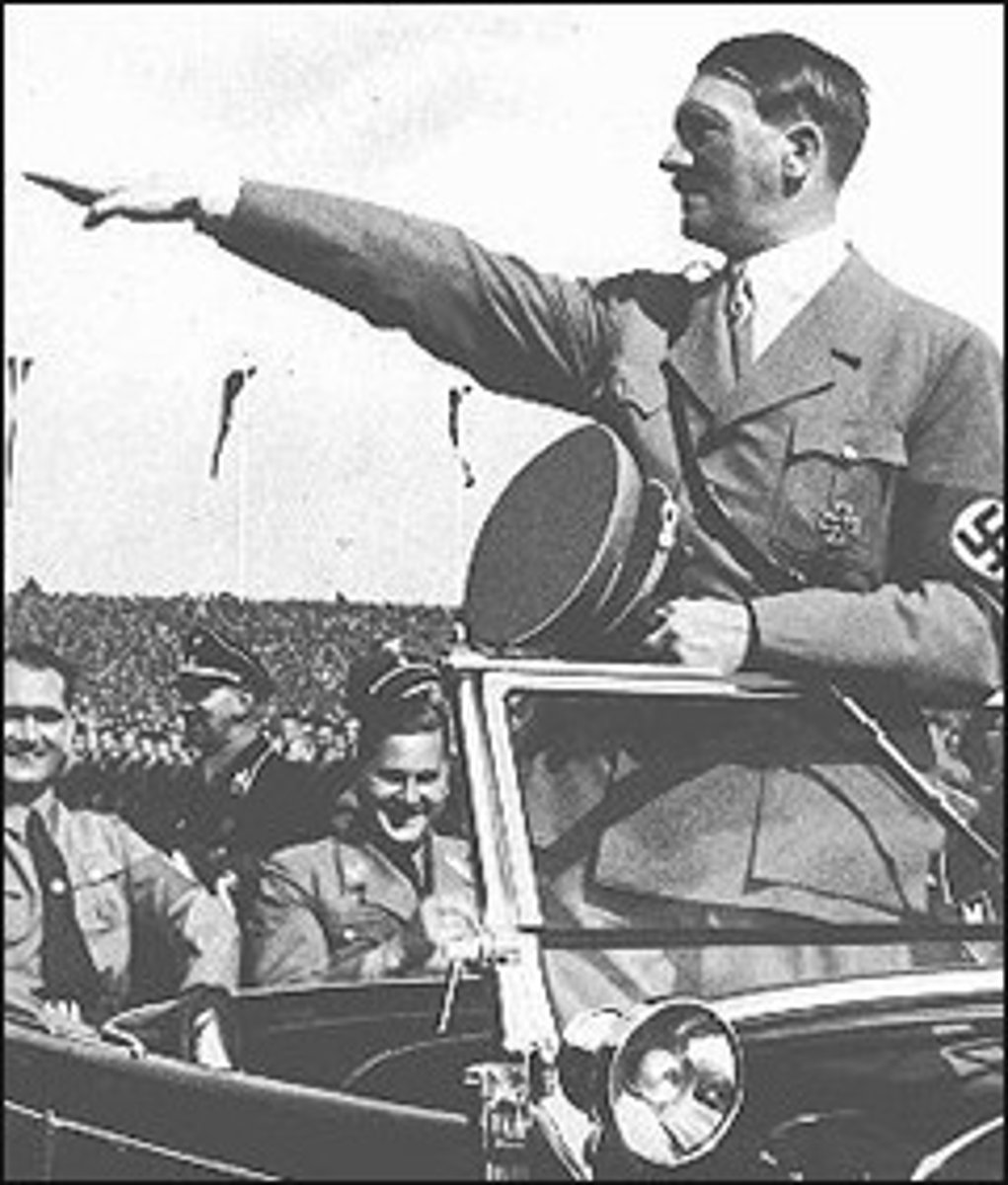
Gleichschaltung
The process of Nazification by which Hitler successively established a system of totalitarian control and coordination over all aspects of German society.
Volksgemeinschaft
People's community
Großdeutschland
greater Germany
Autarky
self-sufficiency
main objectives of Nazi ideology
abolishing the Treaty of Versailles
restoring the German economy and achieving economic self-sufficiency
rebuilding military strength
providing employment and security for the German people via autarky
Reichstag Fire
February, 1933; the Reichstag was set on Fire by a secret order of Joesef Goebbels; called a communist plot.
Reichstag Fire Decree
1933, said that Germany was under a state of emergency, started throwing "enemies of the state" (socialists and communists) in jail.
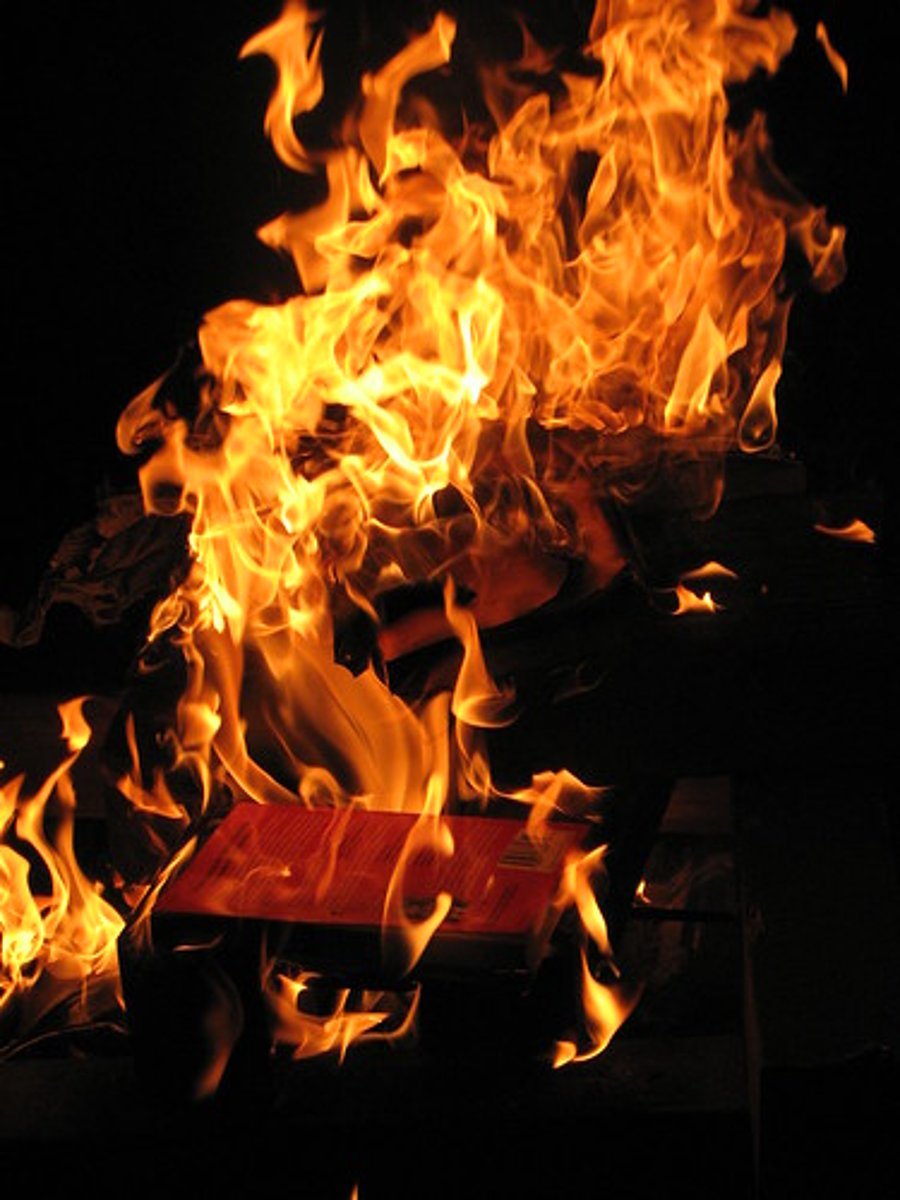
Book Burnings
1933, Massive book burning were held in Germany destroying un-German works
concentration camp opened
March 1933
Nuremberg Laws
1935 laws defining the status of Jews and withdrawing citizenship from persons of non-German blood.
Chancellor and president combined
1934
all non-Nazi parties banned
July 1933
Triumph of the Will
This Nazi propaganda film was created in 1936 by Leni Riefenstahl to show the might of the Nazi party at a rally in Nuremberg.
Volksempfänger
people's radio, over 70% of households had a radio
Reich Association of the German Press
all journalists had to join
Reich Chamber of Culture
1933, All musicians writers and actors in Nazi Germany had to belong to this organization which was run by Goebbels.
Fuhrer Myth
Term used by Goebbels to describe the 'heroic' figure of Hitler that he had created in 1942
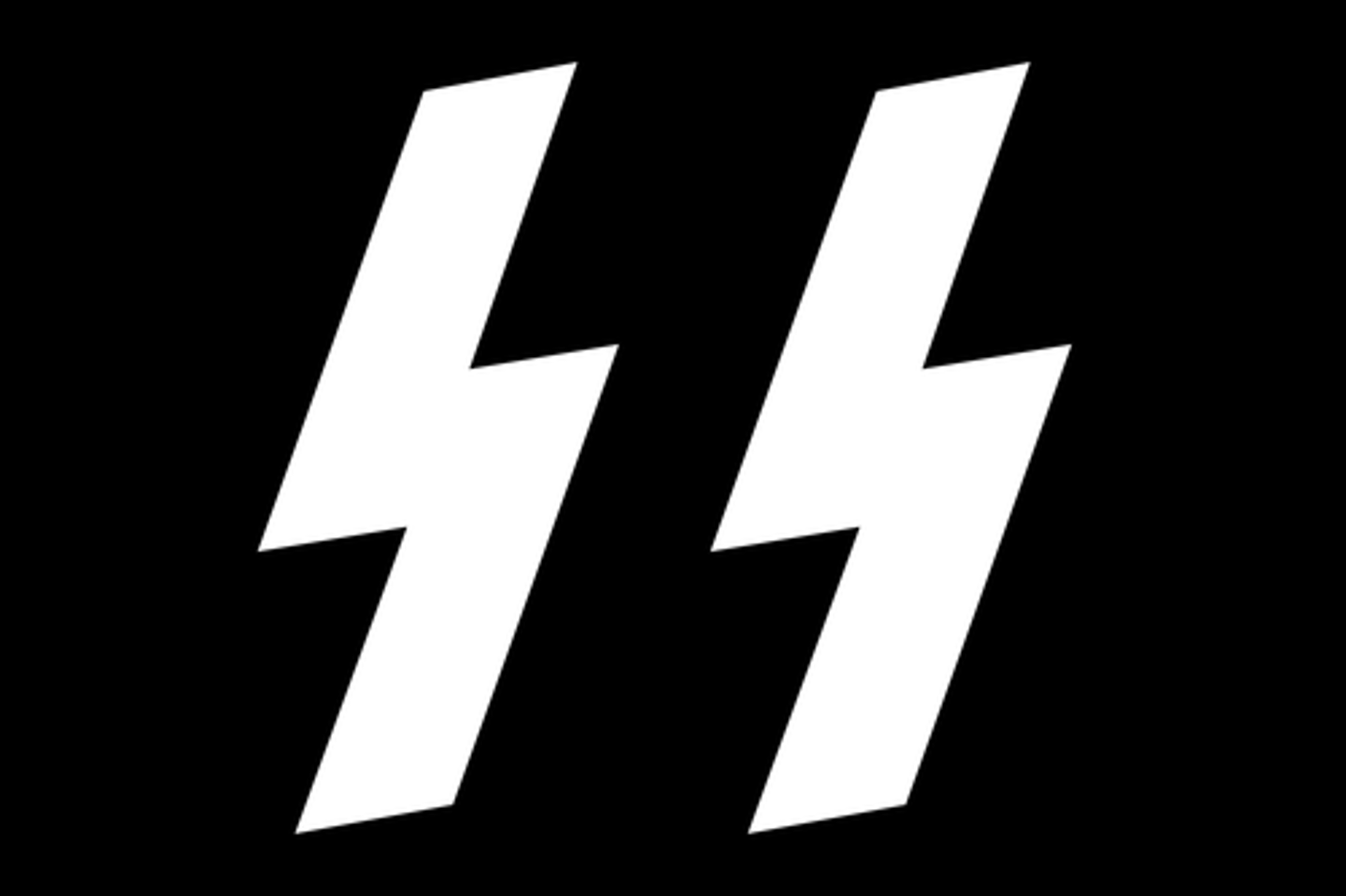
SS
Schutzstaffel, special police force in Nazi Germany founded as a personal bodyguard for Adolf Hitler in 1925
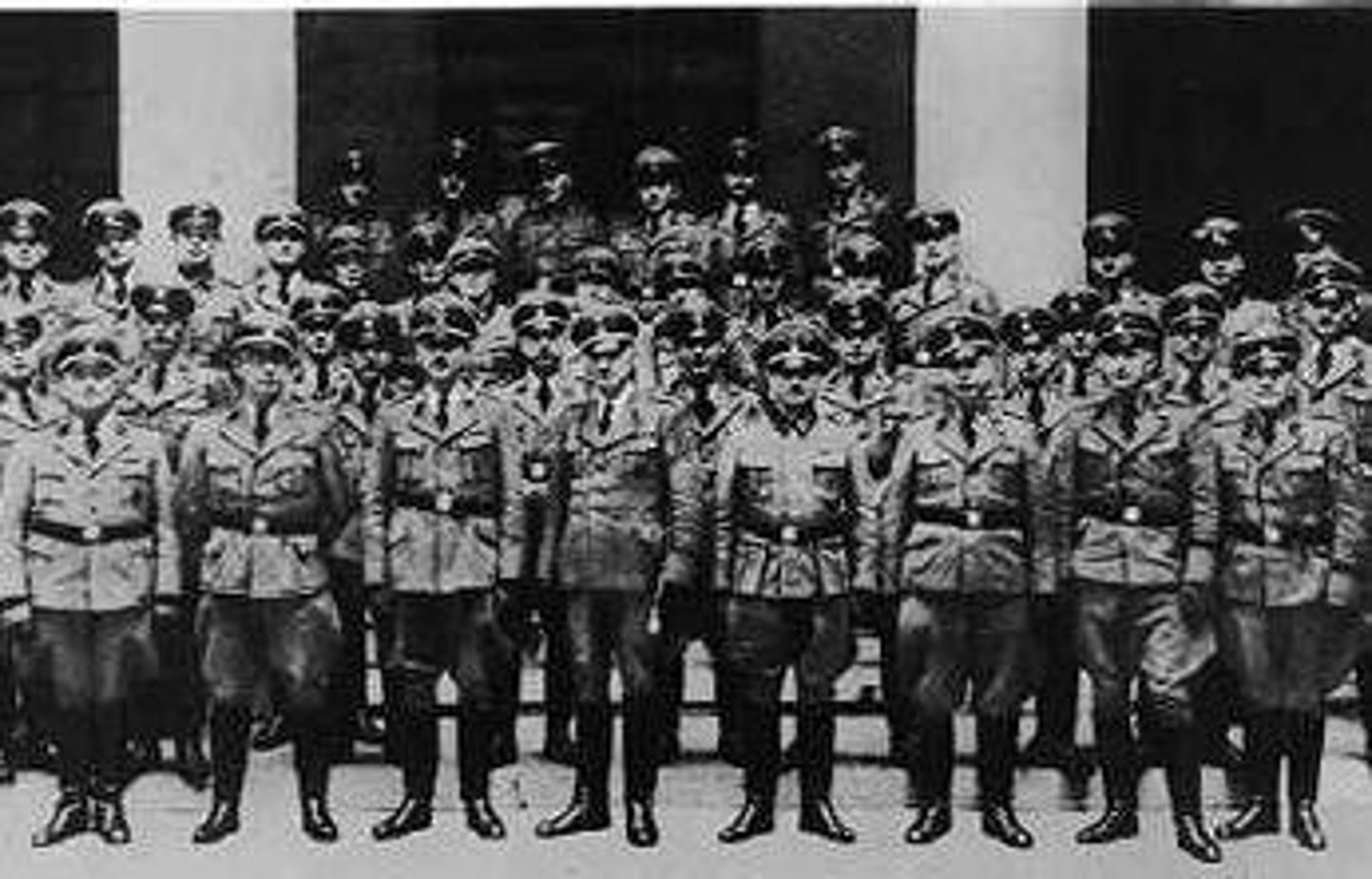
Gestapo
German secret police
Degenerate Art
the label Nazis placed on the avant-garde art
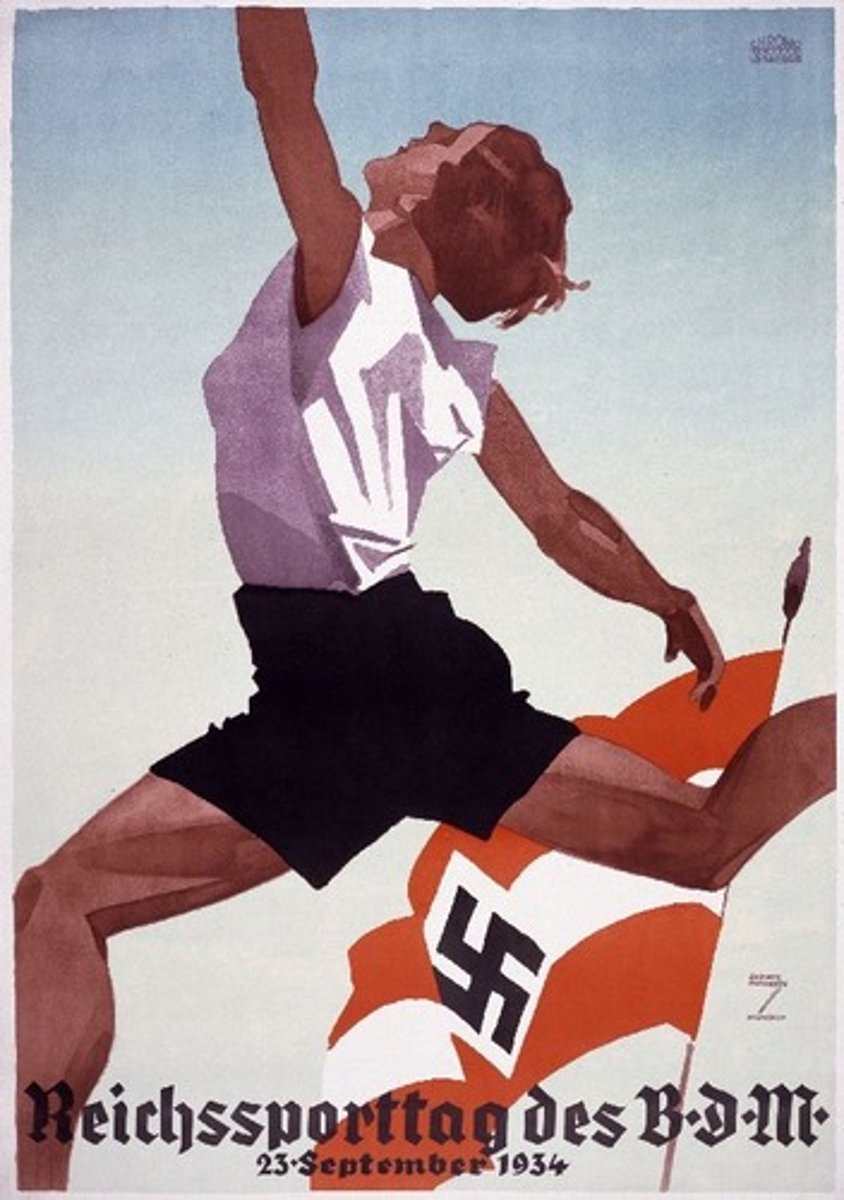
Bund Deutscher Mädel (BDM)
League of German Girls
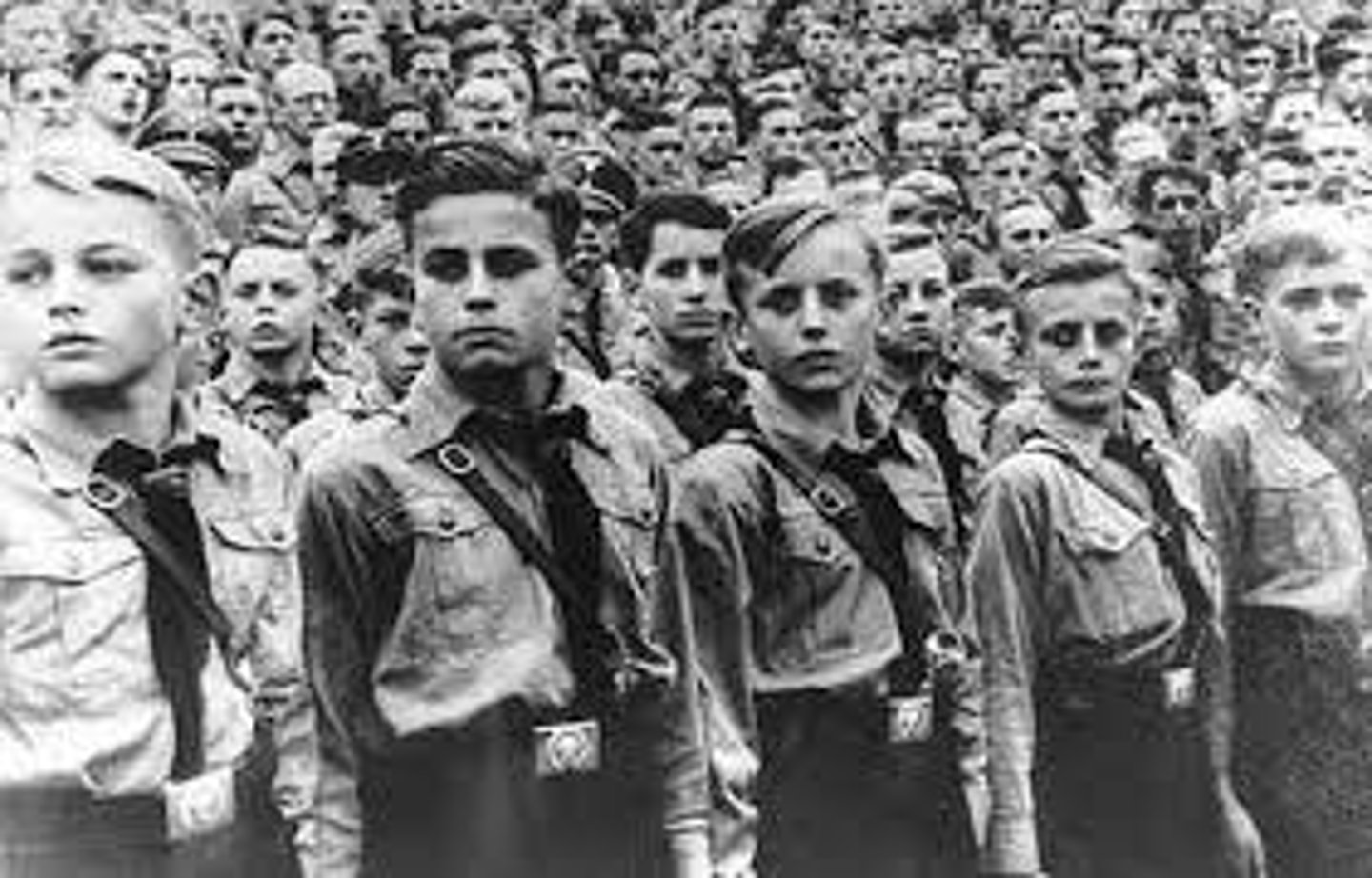
Hitler Youth
Compulsory organizations set up under Hitler to train an educate German young people in Nazi beliefs
Reichskonkordat (Reich Concordat)
Treaty negotiated between the Vatican and Nazi Germany. Signed on 20 July 1933. It guaranteed the rights of the Roman Catholic Church.
Kinder, Küche, Kirche
children, kitchen, church
Untermenschen
"subhuman creatures"
T4 Aktion
secret euthanasia program killed more than 140 000 people
Edelweiss Pirates
working class youths who beat up Hitler youths, did anti-nazi graffiti and sang anti-Hitler songs
Kreisau Circle
A group of army officers, university professors and aristocrats who talked often about the possibility of assassinating Hitler and getting rid of the Nazis, but didn't actually do anything.
Germany/Poland Non-aggression Pact (1934)
An example of Nazi dishonesty as this was used by Hitler to exploit Polish resources
Molotov-Ribbentrop Pact
1939, Russian and German non aggression agreement, not to attack each other, also, divide up Poland
Multilateralism
alliance of multiple countries pursuing a common goal
International order
creation of rules/norms that all countries follow
Cosmopolitanism
all human beings are, or could or should be, members of a single community
Intergovernmental organisation
organisation composed primarily of sovereign states, or of other intergovernmental organisations
Global governance
movement towards political cooperation among transnational actors, aimed at negotiating responses to problems that affect more than one state or region
Bretten Woods Conference
1944, Restructured global economy
San Francisco Conference
1945, drew up the outline of the UN
United Nations
1945, an international organisation formed after WWII to promote international peace, security, and cooperation.
Kristallnacht
(Night of the Broken Glass) November 9, 1938, when mobs throughout Germany destroyed Jewish property and terrorized Jews.
Proportional Representation
An electoral system in which parties gain seats in proportion to the number of votes cast for them.
 Note
Note  Flashcards (47)