CSI Notes Packet
0.0(0)
Studied by 2 people Note
Note Call Kai
 Learn
Learn Practice Test
 Spaced Repetition
 Match
Match Flashcards
 Knowt Play
Card Sorting
1/55

There's no tags or description
Looks like no tags are added yet.
Last updated 9:16 PM on 9/12/23
Name | Mastery | Learn | Test | Matching | Spaced | Call with Kai | Chat |
|---|
No analytics yet
Send a link to your students to track their progress
56 Terms
1
New cards
useful information must be____
carefully, systematically, and legally collected
2
New cards
if the crime scene is not treated carefully,____
it can make vital information not only useless, but even deceptive, pointing an investigation in the wrong direction
3
New cards
crime scene
any physical location in which a crime has occurred or is suspected of having occurred
4
New cards
primary crime scene
the original location of a crime or accident
5
New cards
secondary crime scene
an alternate location where additional evidence may be found
6
New cards
suspect
a person thought to be capable of committing a crime
7
New cards
accomplice
person associated with someone suspected of committing a crime
8
New cards
alibi
a statement of where a suspect was at the time of a crime
9
New cards
testimonial evidence
includes oral or written statements given to police as well as court testimony by people who witnessed an event
10
New cards
physical evidence
refers to any material item that would be present at the crime scene, on the victim(s), or found in a suspect’s possession
11
New cards
trace evidence
refers to physical evidence that is found in small but measurable amounts, such as strands of hair, fibers, or skin cells
12
New cards
police officers (crime scene personnel)
are typically the first to arrive at a crime scene. they are responsible for securing the scene so no evidence is destroyed and detaining persons of interest in the crime scene
13
New cards
CSI unit (crime scene personnel)
documents the crime scene in detail and collets any physical evidence
14
New cards
district attorney (crime scene personnel)
is often present to help determine if any search warrants are required to proceed and obtain those warrants from a judge
15
New cards
medical examiner (crime scene personnel)
(if a homicide) may or may not be present to determine a preliminary cause of death
16
New cards
specialists (crime scene personnel)
forensics entomologists, anthropologists, or psychologists) may be called in if the evidence requires expert analysis
17
New cards
detectives (crime scene personnel)
interview witnesses and consult with the CSI unit. they investigate the crime by following leads provided by witnesses and physical evidence
18
New cards
crime scene protocol includes:
1. interview
2. examine
3. document
4. process
19
New cards
interview
* 1st step of crime scene protocol
* interview the first officer at the scene or the victim to determine what allegedly happened, what crime took place, and how was the crime committed. this information may not be factual information but it will give the investigators a place to start.
* interview the first officer at the scene or the victim to determine what allegedly happened, what crime took place, and how was the crime committed. this information may not be factual information but it will give the investigators a place to start.
20
New cards
examine
* 2nd step of crime scene protocol
* will help to identify possible evidence identify the point of exit,, and outline the general layout of the crime
* will help to identify possible evidence identify the point of exit,, and outline the general layout of the crime
21
New cards
document
* 3rd step of crime scene protocol
* creating a pictorial record of the crime scene as well as a rough sketch to demonstrate the layout of the crime scene and to identify the exact position of the deceased victim or the other evidence within the crime scene
* creating a pictorial record of the crime scene as well as a rough sketch to demonstrate the layout of the crime scene and to identify the exact position of the deceased victim or the other evidence within the crime scene
22
New cards
process
* 4th step if crime scene protocol
* the crime scene technician will process the crime scene for evidence, both physical and testimonial evidence. it is the crime technicians responsibility to identify, evaluate, and collect physical evidence from the crime scene for further analysis by acrie scene laboratory
* the crime scene technician will process the crime scene for evidence, both physical and testimonial evidence. it is the crime technicians responsibility to identify, evaluate, and collect physical evidence from the crime scene for further analysis by acrie scene laboratory
23
New cards
processing a crime scene means you:
1. isolate and secure the scene
2. document the scene
3. search for evidence
4. collect and package the evidence while maintaining the chain of custody
5. submit the evidence for analysis
24
New cards
first officers at the scene ned to “ADAPT”:
* A: asses the crime scene and assist the injured
* D: detain the witness(es)
* A: arrest the perpetrator
* P: protect the crime scene
* T: take notes
* D: detain the witness(es)
* A: arrest the perpetrator
* P: protect the crime scene
* T: take notes
25
New cards
3 steps to *securing* the crime scene:
1. look for signs of life
2. cordon off the scene (only allow authorized personnel in)
3. bodies should be certified as “dead” by a medical examiner (ME) before being moved
26
New cards
3 steps to *surveying* the crime scene:
1. a walkthrough is performed by the crime scene investigator, the first officer, and sometimes the lead detective
2. record initial observations of who, what, where, when, and how
3. make a plan of action
27
New cards
while observing and documenting the scene:
* get an overall view to find possible times of evidence
* to identify the points of entry and exit
* to consider what may have happened and mentally outline how the scene should be handled
* to identify the points of entry and exit
* to consider what may have happened and mentally outline how the scene should be handled
28
New cards
recording the crime scene involves:
* notes
* photography
* sketches
* videography
* photography
* sketches
* videography
29
New cards
note should include:
* date
* time
* description of the location, weather, and environmental conditions
description of the crime
* location of the evidence relative to other key points
* names of all people involved
* any other relevant information
* time
* description of the location, weather, and environmental conditions
description of the crime
* location of the evidence relative to other key points
* names of all people involved
* any other relevant information
30
New cards
when photographing a crime scene it is important that:
* nothing should be moved until photographed
* take photos of the scene and the surroundings
* photograph entrance and exits
* take wide and close-up photos
* use various angles for each piece of evidence
* use a ruler to show size
* take photos of the scene and the surroundings
* photograph entrance and exits
* take wide and close-up photos
* use various angles for each piece of evidence
* use a ruler to show size
31
New cards
sketches must include:
* date, time, and location
* scale
* recovered items
* important features
* accurate distance measurements of objects (from two fixed points)
* a legend for description of items
* a compass designated north
* names of investigators, victims, and suspects
* scale
* recovered items
* important features
* accurate distance measurements of objects (from two fixed points)
* a legend for description of items
* a compass designated north
* names of investigators, victims, and suspects
32
New cards
what should you always wear while searching a crime scene?
* disposable gloves
* masks
* slippers
* coveralls with a hood
* masks
* slippers
* coveralls with a hood
33
New cards
spiral
* type of search pattern
* may move inward or outward; best used where there are no physical barriers
* may move inward or outward; best used where there are no physical barriers

34
New cards
grid
* type of search pattern
* basically a double-line search; effective, but time-consuming
* basically a double-line search; effective, but time-consuming

35
New cards
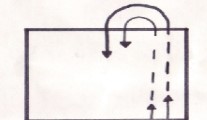
line/strip
* type of search pattern
* best in large, outdoor scenes. in a line search, a square are is divided into parallel strips or lanes with one searcher per lane. the searchers slowly walk straight line through the middle of the lane and visually cover the full width of their lane
* best in large, outdoor scenes. in a line search, a square are is divided into parallel strips or lanes with one searcher per lane. the searchers slowly walk straight line through the middle of the lane and visually cover the full width of their lane
36
New cards
zone/quadrant
* type of research pattern
* most effective in houses or buildings; teams are assigned small zones for searching
* most effective in houses or buildings; teams are assigned small zones for searching

37
New cards
the golden hour is____
the window of opportunity to collect time sensitive information or evidence
38
New cards
each item of evidence____
must be placed in a separate container, sealed, and labeled
39
New cards
trace evidence may be placed on____
a piece of paper which is then folded in a “druggist fold” and placed in a secondary container
40
New cards
every evidence tag should include:
1. description of contents
2. date, time, and location
3. agency and collector’s name
4. case number
5. victim’s name(s)
41
New cards
chain of custody includes:
* date and time of transfer
* location of transfer
* to/from names
* purpose of transfer
* location of transfer
* to/from names
* purpose of transfer
42
New cards
national databases
* AFIS
* IAFIS
* CODIS
* IBIS
* PDQ
* IAFIS
* CODIS
* IBIS
* PDQ
43
New cards
AFIS
* national database
* automated fingerprint identification system
* automated fingerprint identification system
44
New cards
IAFIS
* national database
* integrated automated fingerprint identification system
* integrated automated fingerprint identification system
45
New cards
CODIS
* national database
* combined DNA index system
* combined DNA index system
46
New cards
IBIS
* national database
* integrated ballistics identification system
* integrated ballistics identification system
47
New cards
PDQ
* national database
* international forensic automotive paint data query
* international forensic automotive paint data query
48
New cards
drug chemistry
determines the presence of controlled substances and identification of marijuana
49
New cards
trace chemistry
identification and comparison of materials from fires, explosions, paints, and glass
50
New cards
microscopy
microscopic identification and comparison of evidence, such as hairs, fibers, woods, sails, building materials, insulation, and other materials
51
New cards
biology/DNA
analysis of body fluids and dries stains such as blood, semen, and saliva
52
New cards
toxicology
tests body fluids and tissues to determine the presence of drugs or poisons
53
New cards
latent prints
identification and comparison of fingerprints or other hidden impressions from sources, like feet, shoes, ears, lips, or tread on vehicle tires
54
New cards
ballistics(firearms)
study of bullets and ammunition through the comparison of fired bullets, cartridges, guns, and gunpowder patterns on people and objects
55
New cards
toolmarks
examines marks left by tools on objects at a crime scene or on a victim, such as a hammer used to break a door or a screwdriver used to pick a lock
56
New cards
questioned documents
examination of documents to compare handwriting, ink, paper, writing instruments, printers, and other characteristics that would help to identify its origin