Testes and Spermatogenesis
 Studied by 0 people
 Call Kai
 Learn
Learn Practice Test
 Spaced Repetition
 Match
Match Flashcards
 Knowt Play
1/6

There's no tags or description
Looks like no tags are added yet.
Name | Mastery | Learn | Test | Matching | Spaced | Call with Kai |
|---|
No study sessions yet.
7 Terms
What are the testes?
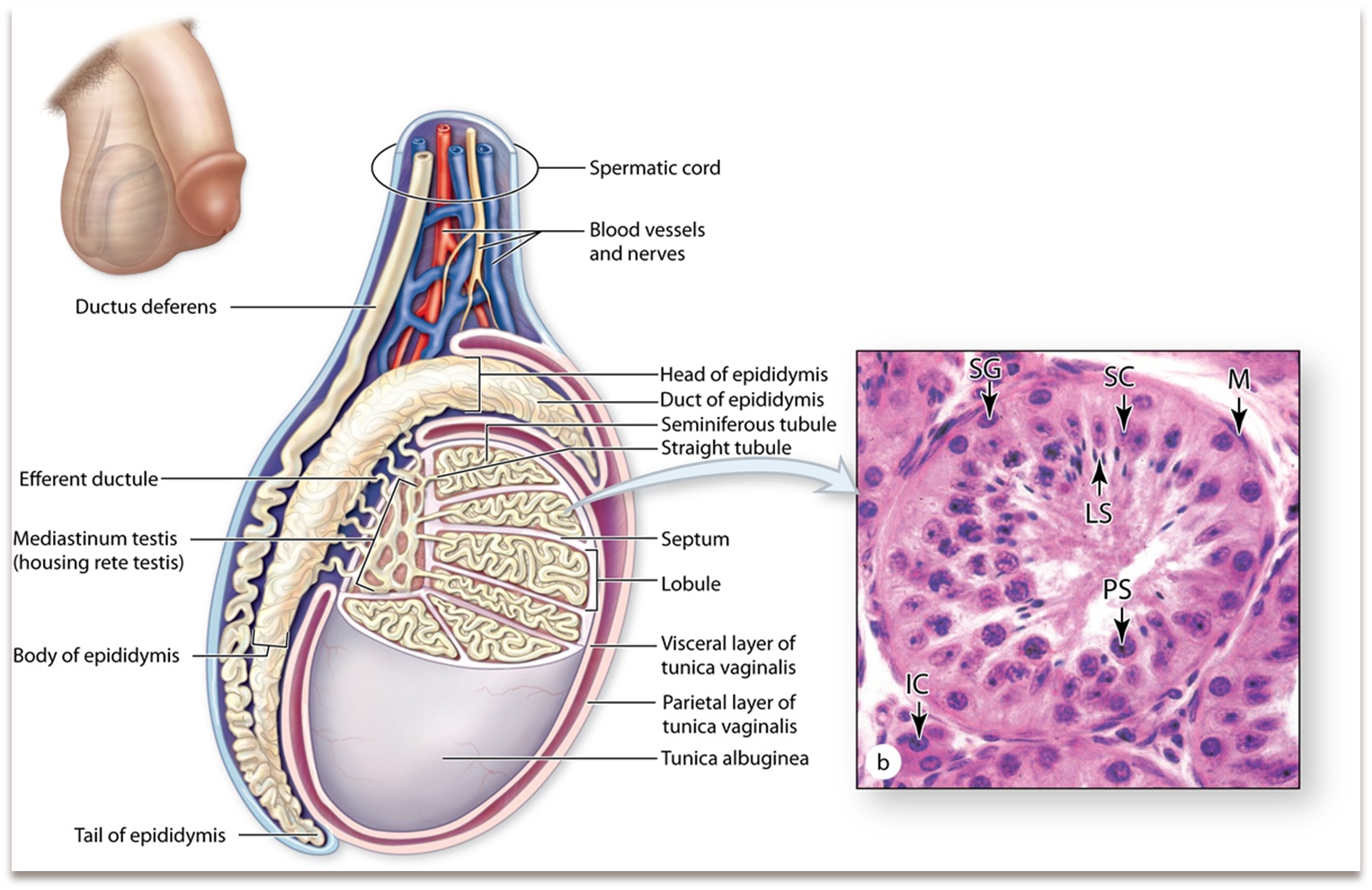

Testes are the male gonads where sperm will develop in a process known as spermatogenesis and spermiogenesis
1) The testes are subdivided into lobules which are pyramid shaped areas
→ each lobule has around 1-4 to seminiferous tubules which are “blind end” or a dead-ended coiled tubule
→ the seminiferous tubules are surrounded by Leydig cells
2) sperm produced in the seminiferous tubules where it will exit to the rete testis
→ all of the rete testis will eventually deposit into the epididymis
What is the composition of the seminiferous tubules?
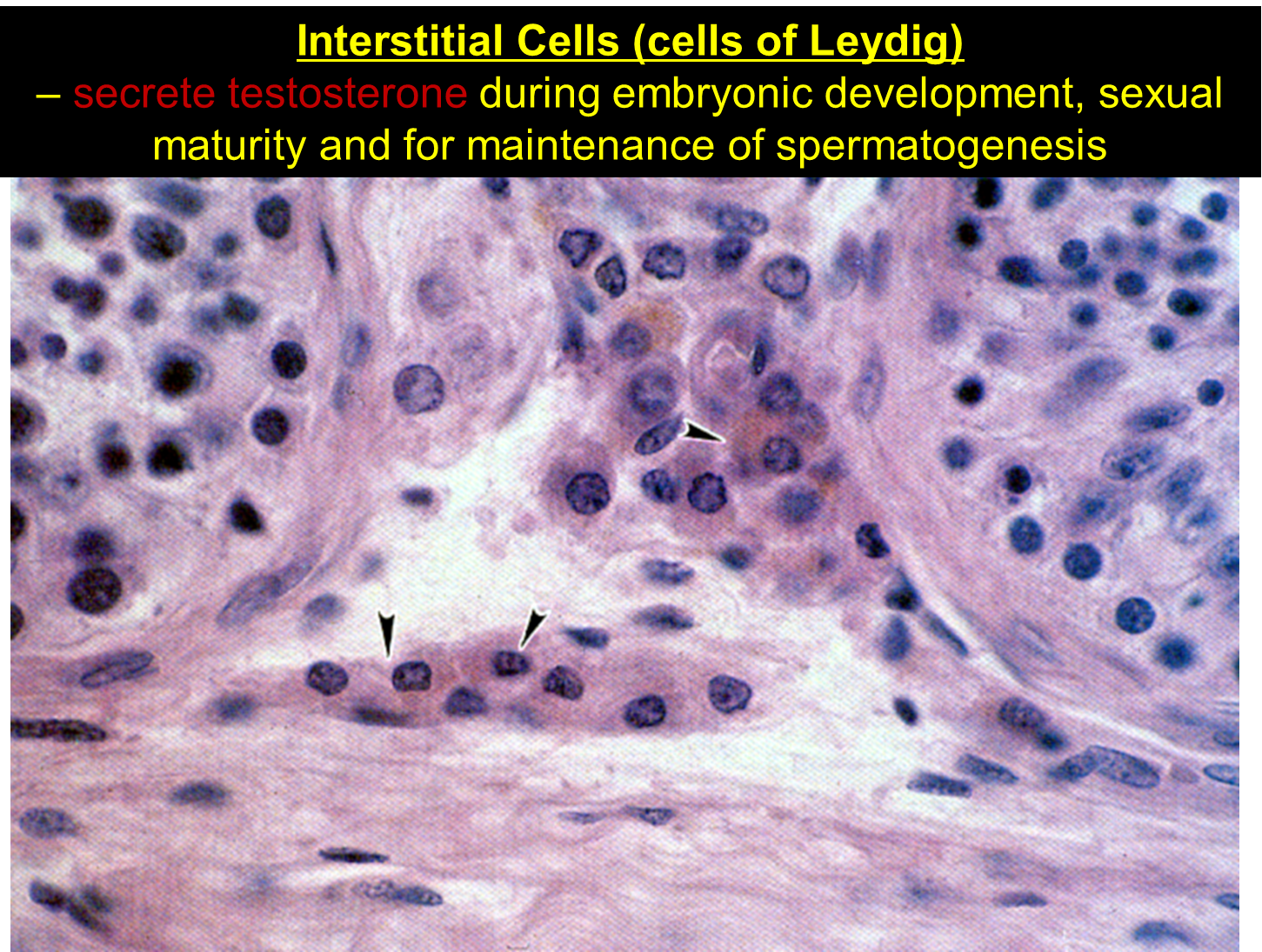
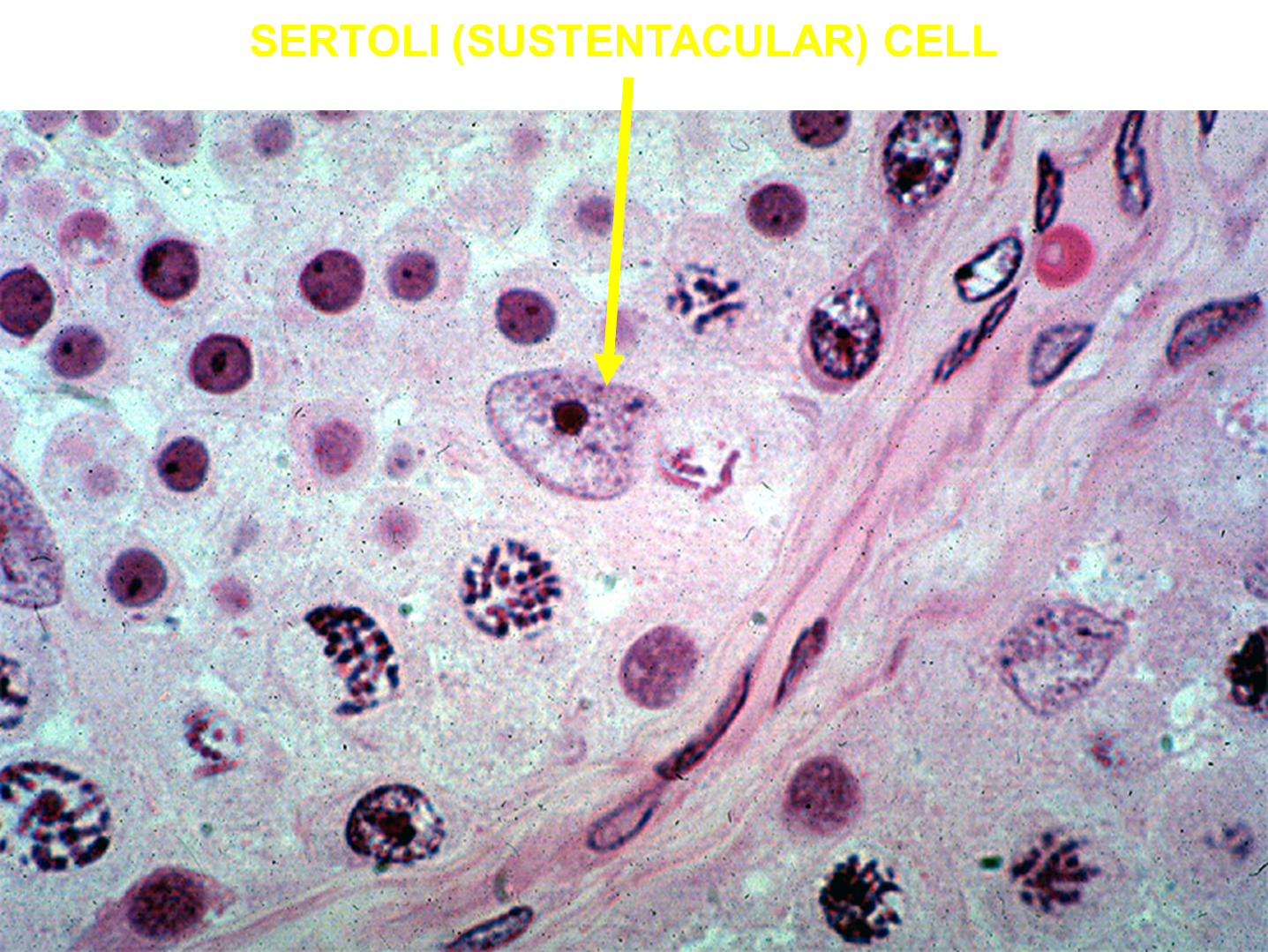
The seminiferous epithelia is comprised of two types of cells
1) Sertoli Cells
→ produce secretions that aid in sperm nourishment and transport
→ respond to FSH in order to produce androgen binding protein which helps to maintain testosterone concentration
→ Sertoli cells also form occludin tight junctions between one another forming the blood-testes barrier
2) Spermatogenic Cells - cells that are undergoing sperm development
→ Spermatogonia - diploid cells, or stem cells
→ Spermatocyte - cells undergoing meiosis
→ Spermatid - mature sperm
There are two cell types that surround the seminiferous tubules
1) Myoid Cells
→ Surround seminiferous tubules and contract to push sperm along
2) Leydig Cells
→ form the space in between the seminiferous tubules
→ respond to luteinizing hormone to produce testosterone
Why is it important that Sertoli cells form tight junctions with one another?
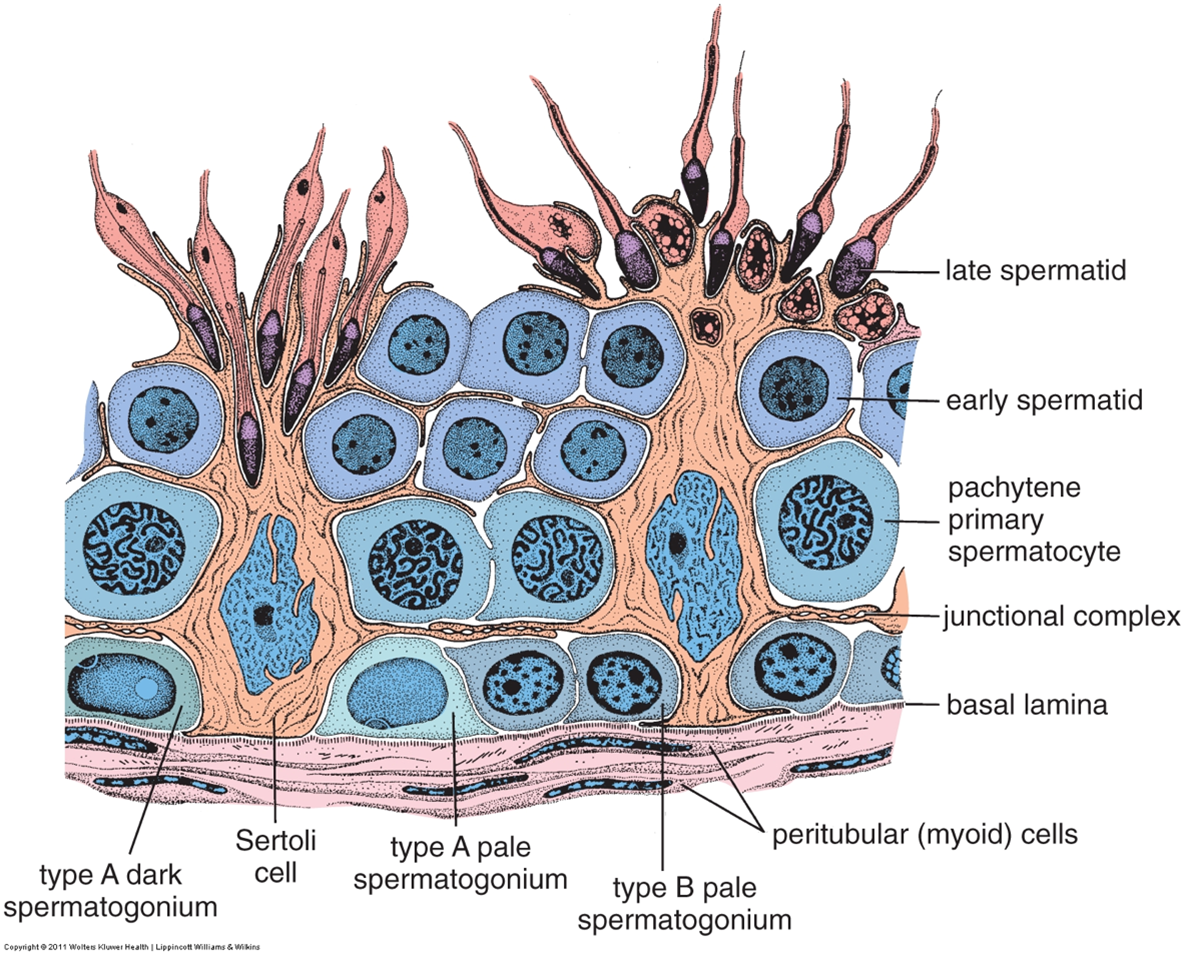
Sertoli Cells form the blood-testis barrier via tight junctions with one another. This is vital for spermatogenesis
1) This barrier protects developing sperm from immune system
→ primary spermatocytes will move upward past the tight junctions into the adlumenal compartment, where they will develop new surface antigens that are unknown to the immune system
→ this barrier helps prevent autoimmunity against our spermatocytes
2) Sertoli cells will also form junctions with Spermatids in order to keep them contained until ready for release
What is the process of spermatogenesis?
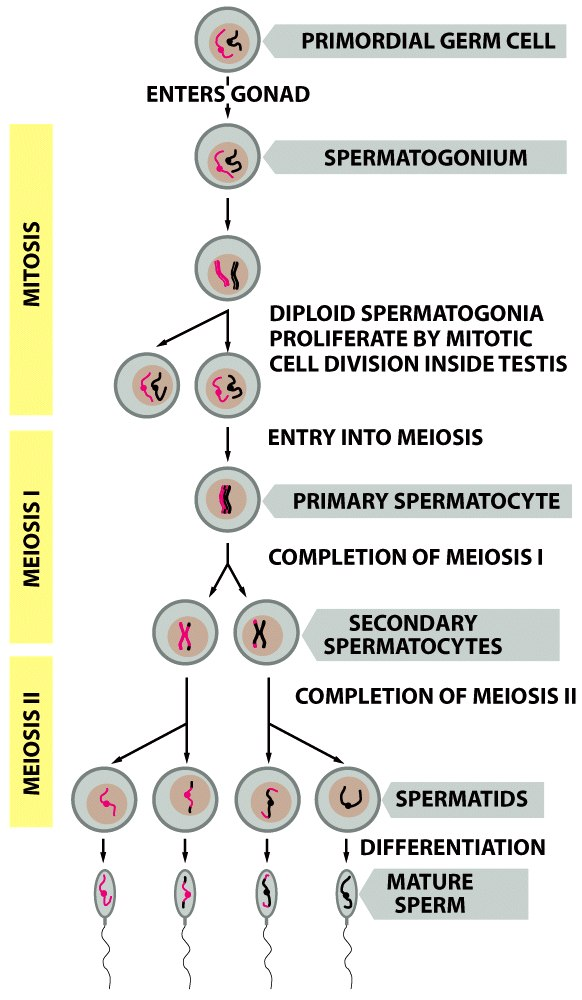
This entire process takes place in the seminiferous tubules
1) Spermatogonium is the stem cell precursor for production of sperm-cells
2) Spermatogonium will undergo spermatocytogenesis which is where spermatogonium enter into Meiosis I in order to become primary spermatocytes (have 92 chromatids)
→ these primary spermatocytes will complete meiosis I and generate two secondary spermatocytes (have 46 chromatids)
3) The secondary spermatocytes will subdivide again into four spermatids which each have 23 chromatids
→ spermatids will undergo spermiogenesis where they are transformed into spermatozoa which are sperm with their motile form
4) Following spermiogenesis, complete sperm maturation occurs in the epididymis
What are the three kinds of spermatogonia?
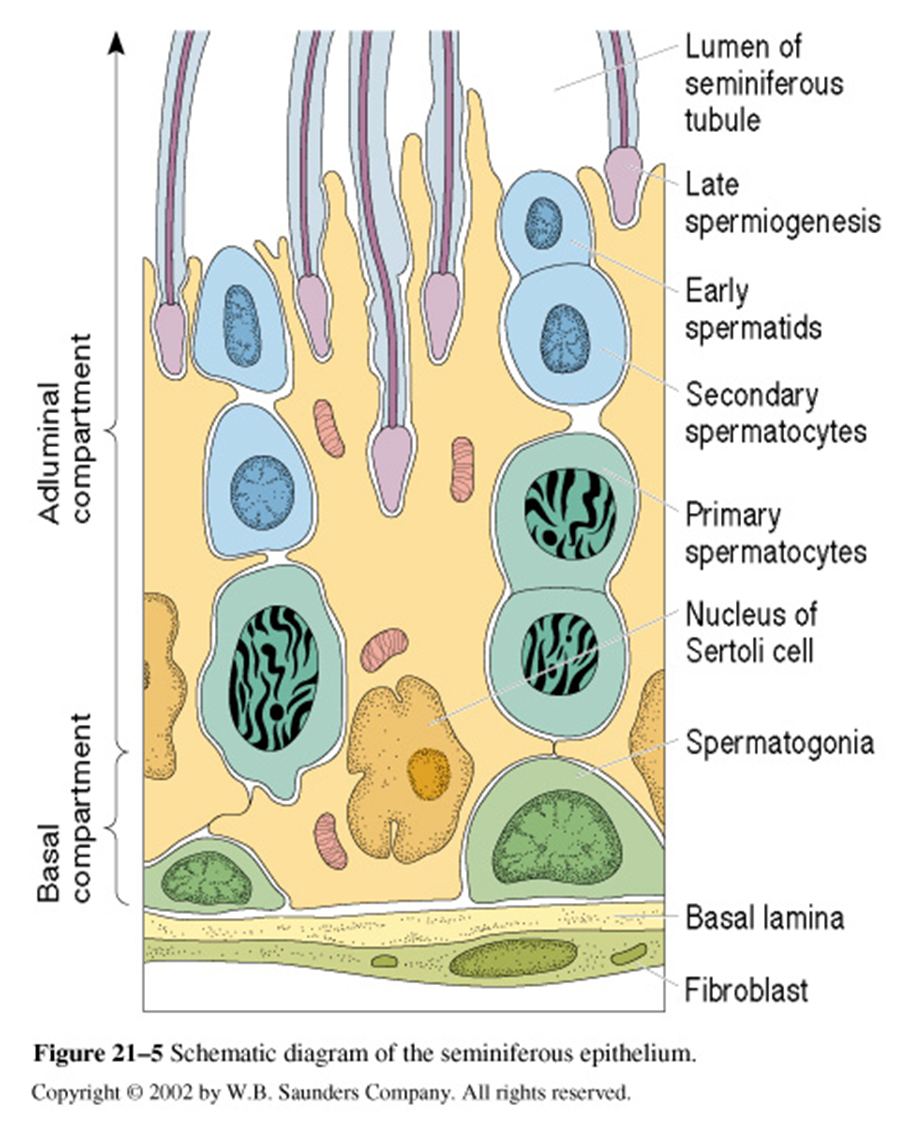
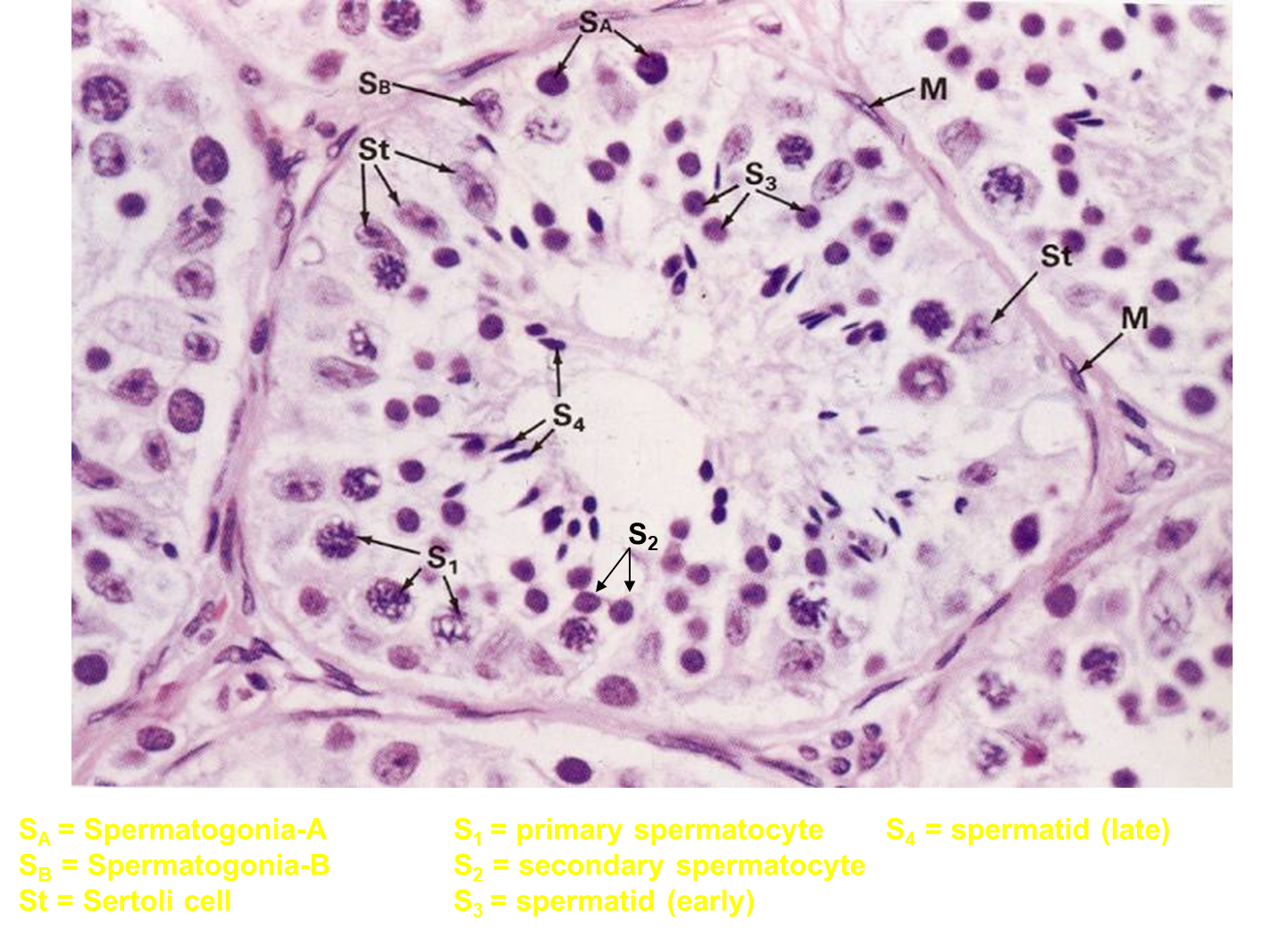
Spermatogonia are diploid, stem cell precursors of sperm that are subdivided into three types:
1) Dark Type A
→ reserve stem cells that help to replenish the germ cell pool
2) Pale A
→ active stem cells that continuously undergo mitosis to maintain the population
3) Type B
→ give rise to primary spermatocytes which will move into the adlumenal compartment created by the Sertoli cells
What is Spermiogenesis?
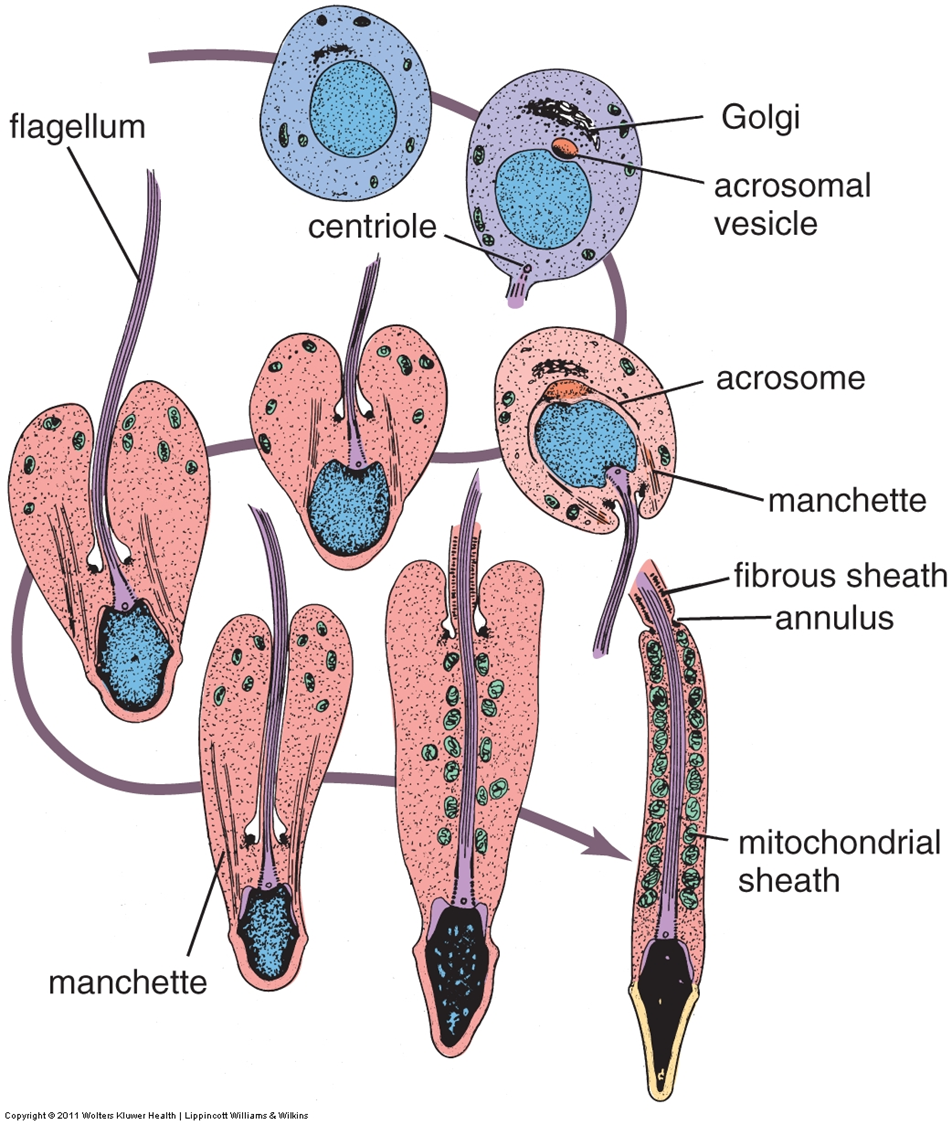
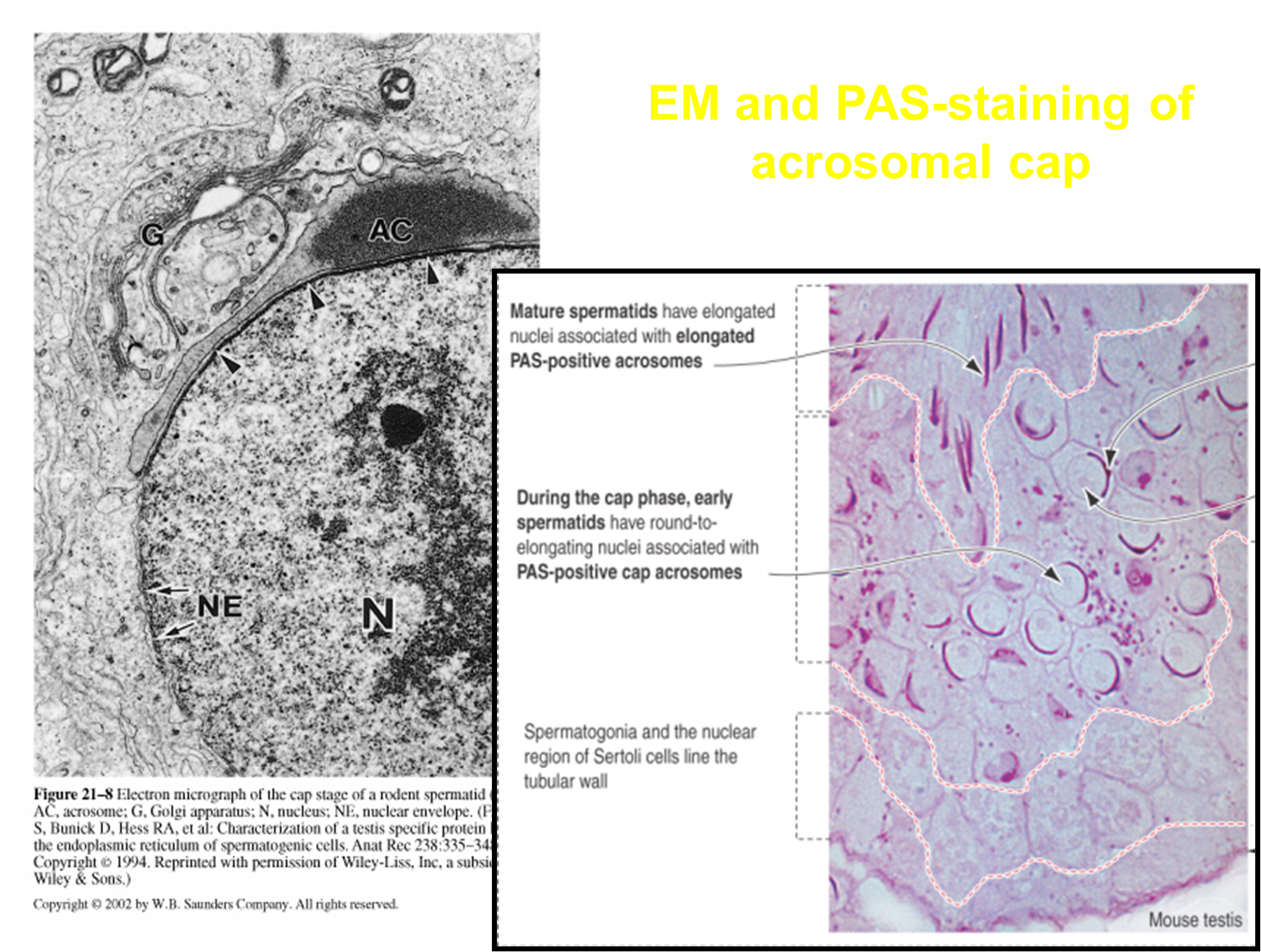
Spermiogenesis is a process in the seminiferous tubules where there is a change from spermatid to mature sperm (spermatozoa)
1) Spermatids will discard their cytoplasm and rearrange their organelles in order to form flagella
→ mitochondria orient near the middle around the flagellar tail making the mitochondrial sheath
→ the flagella is formed from microtubules
2) The nucleus will elongate and condense at the head of the sperm
2) The Golgi migrates to the top of the cell and forms the acrosome
→ the acrosome is a giant vesicle that is filled with digestive enzymes that sits on top of the nucleus
→ the acrosome will break down the zona pellucida of a oocyte
What are the Intratesticular Genital Ducts?
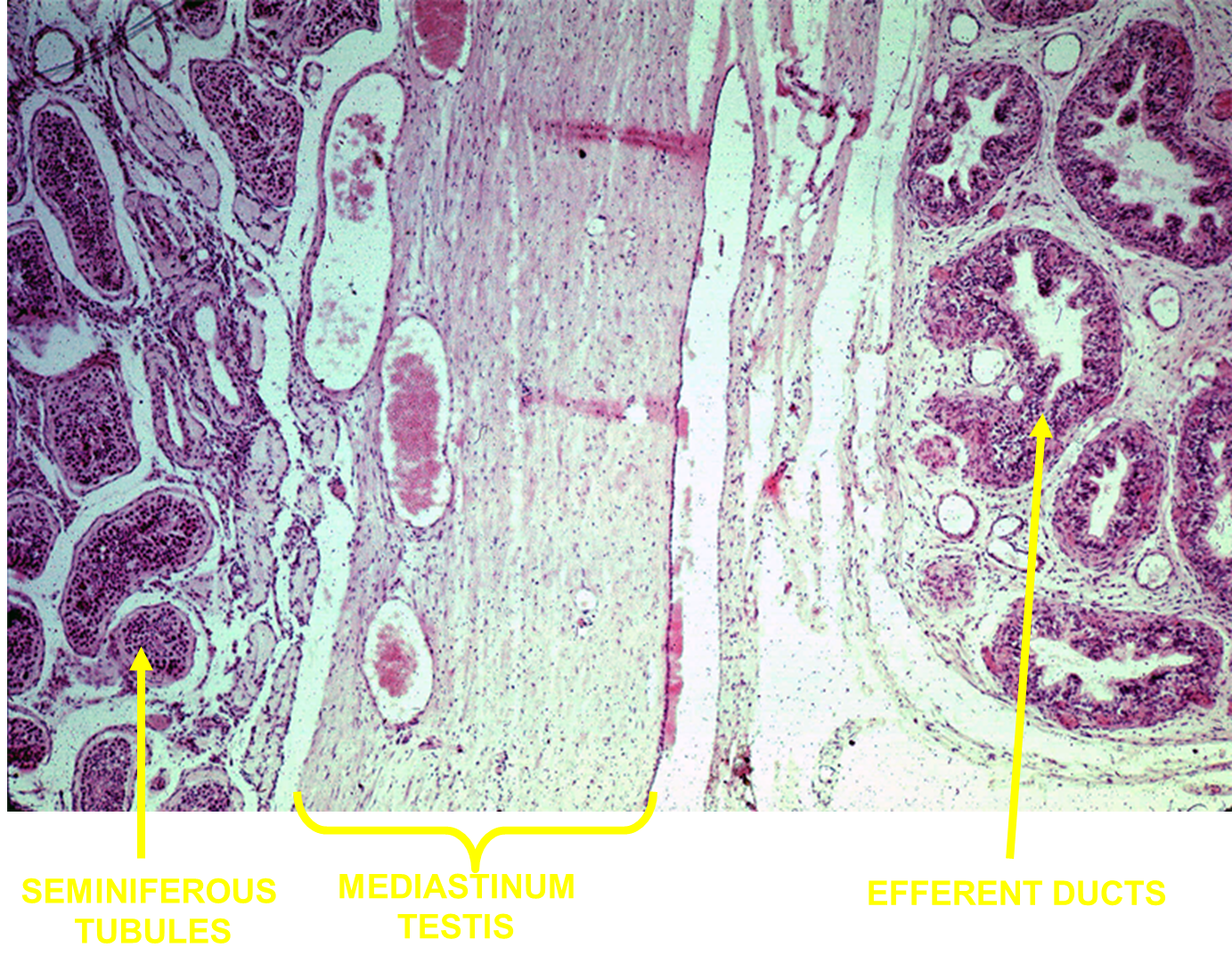
Tubuli Recti (straight tubules)
→ ducts leading out of the seminiferous tubules
Rete Testis
→ tubuli recti will empty together into the rete testis located in the mediastinum
→ formed from cuboidal cells
Efferent Ducts
→ the rete testis will deposit into the efferent ducts formed from ciliated tall columnar cells and cuboidal cells
Afterwards sperm enters into the epididymis
 Note
Note  Flashcards (39)