tutorial lab 1: bacteria, protists, fungi
 Studied by 1 person
 Call Kai
 Learn
Learn Practice Test
 Spaced Repetition
 Match
Match Flashcards
 Knowt Play
1/69

There's no tags or description
Looks like no tags are added yet.
Name | Mastery | Learn | Test | Matching | Spaced | Call with Kai |
|---|
No analytics yet
Send a link to your students to track their progress
70 Terms
taxonomy
the science of naming, describing, and classifying the organisms into similar groups
what does the classification scheme consist of?
8 major categories or taxa
what does the pneumonic ‘Dear, King, Phillip, Came, Over, For, Good, Soup" stand for?
D - Domain
K - Kingdom
P - Phylum
C - Class
O - Order
F - Family
G - Genus
S - Species
Binomial system of nomenclature
where each organism is identified by a universally understood two-part Latin or Latinized name
the name consists of the genus of the organism and the specific epithet (species)
these names are both underlined or italicized
together they make up the scientific name
Biological species concept
a population or group of population wjose members have the potential to interbreeed in anture and produce viable, fertile offspring but DO NOT produce viable, fertile offspring with members of other such groups.
Nitrogen fixation
the process in prokaryotes that can transform atomospheric nitrogen into compounds that plants and eventually other organisms, can use
prokaryotes are the only group that can carry out this process
the main groups that do nitrogen fixing bacteria are found in the soil
the enzymes in this process are called nitrogenases
these enzymes are sensitive to oxygen, which inactivates them
How do nitrogen fixing bacteria get around the sensitivity to oxygen?
cyanobacteria have evolved special cells called “heterocysts”
these have adaptations to exclude and reduce the oxygen inside them to maximize the efficiency of the nitrogenase enzymes
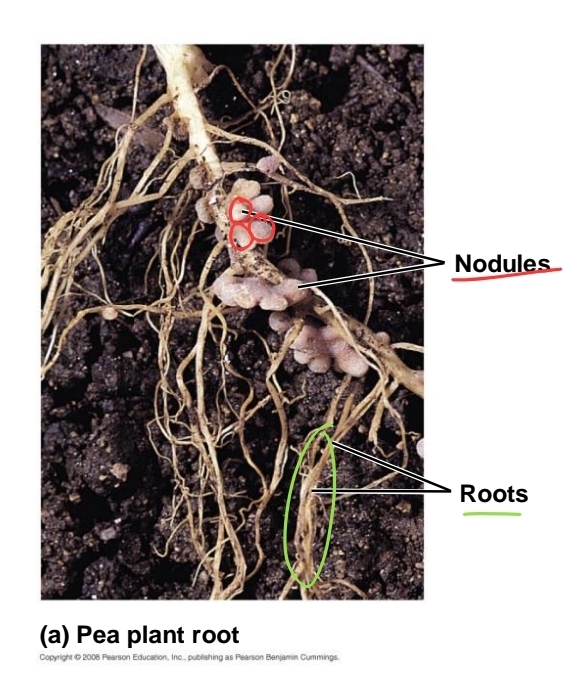
symbiotic relationships
where certain plants that form symbiotic relationships with these nitrogen-fixing bacteria
e.g. legumes
they will supply the bacteria with carbs and other organic compounds
while the bacteria will supply the plant with fixed nitrogen
these bacteria are known as root living since they live in the nodules (swellings) along the plants roots
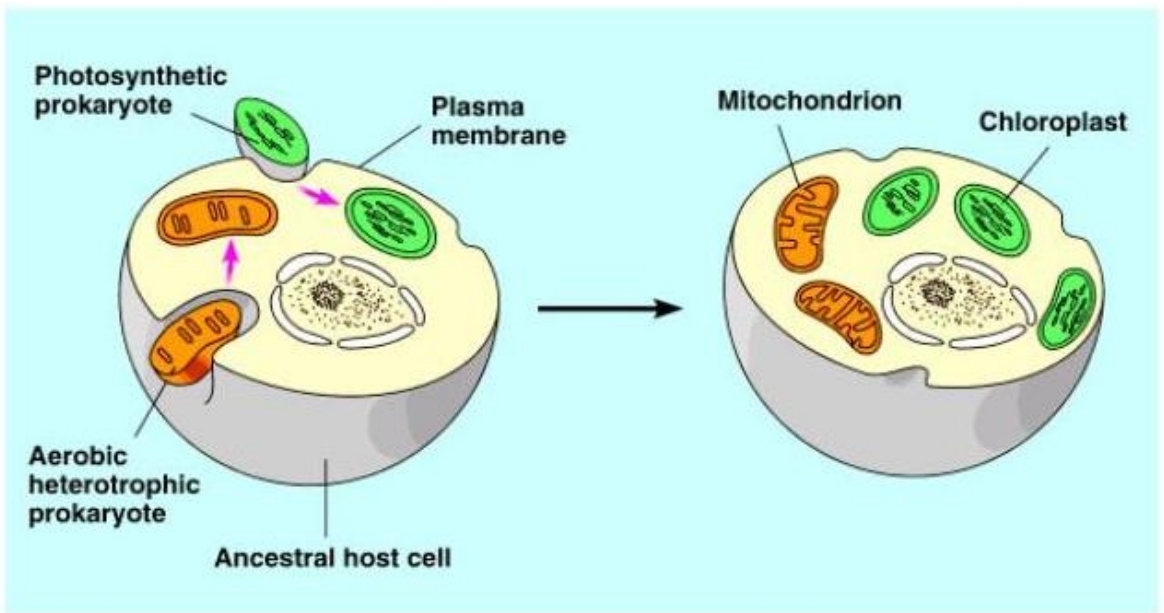
serial endosymbiosis
involves a host cell engulfing a symbiont cell by phagocytosis.
usually this would result in the symbiont cell being digested by the host cell, but upon occasion they are not digested and remain within the cytoplasm of the host and carry on performing the abilities it has
but ofc to the benefit of the host cell
this explains the origin of mitochondria and chloroplasts in early eukaryotes
binary fission
simple cell division where the cell copied it's DNA to then separate those two copies of DNA, and then divide up the cytoplasm into two new daughter cells
what is the more complex version of binary fission in eukaryotic cells?
mitosis
what is the advantages to creating genetically identical offspring
an advantage is if the environment in whic you live in is very stable and you are well “adapted" to that environment, then producing offspring that are genetically identical means they will also be well adapted to that environment too.
another advantage is that no other organism is needed to divide in two
what is a disadvantage to creating genetically identical offspring
in rapidly changing environment could cause the genes in the genetically identical offspring won't be as good in a new environment as they were in the old one.
therefore if all the offspring were slightly different, genetically, (genetic variation) would mean that some offspring would make them adapt better to the new environment.
the two methods of asexual reproduction utilized by algae
daughter colony formation
sporulation
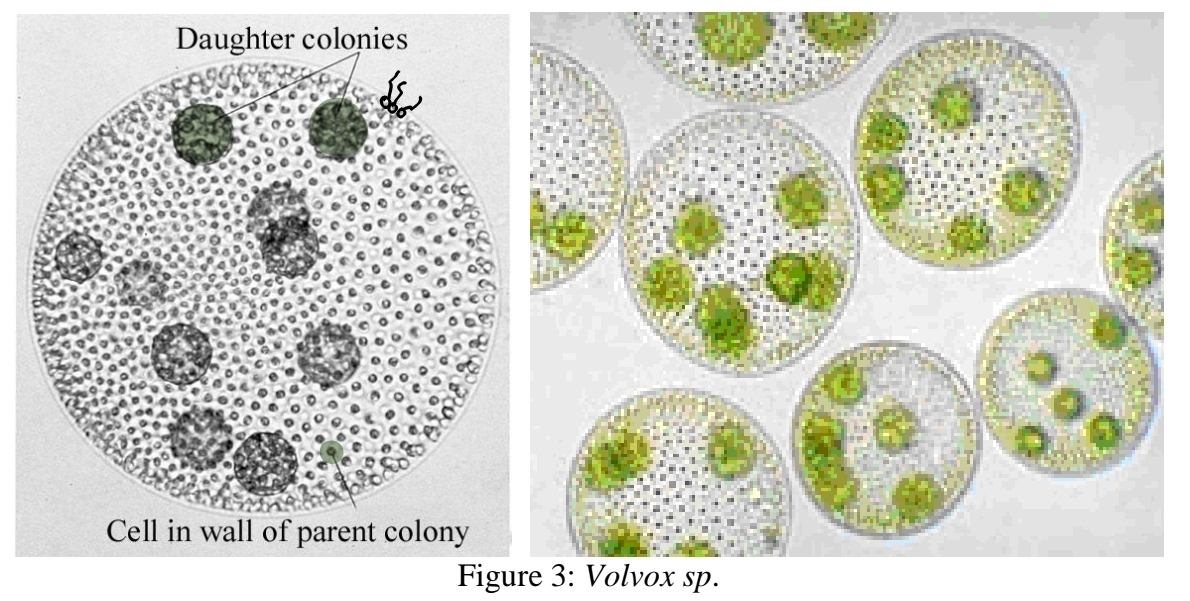
Daughter colony formation
where a limited number of colonial algae produce miniature replicates of the colonies
called daughter colonies
these can be produced inside the hollow spherical colonies or inside the actual cells of the parent colony
eventually the parent colony will rupture to release the new daughters
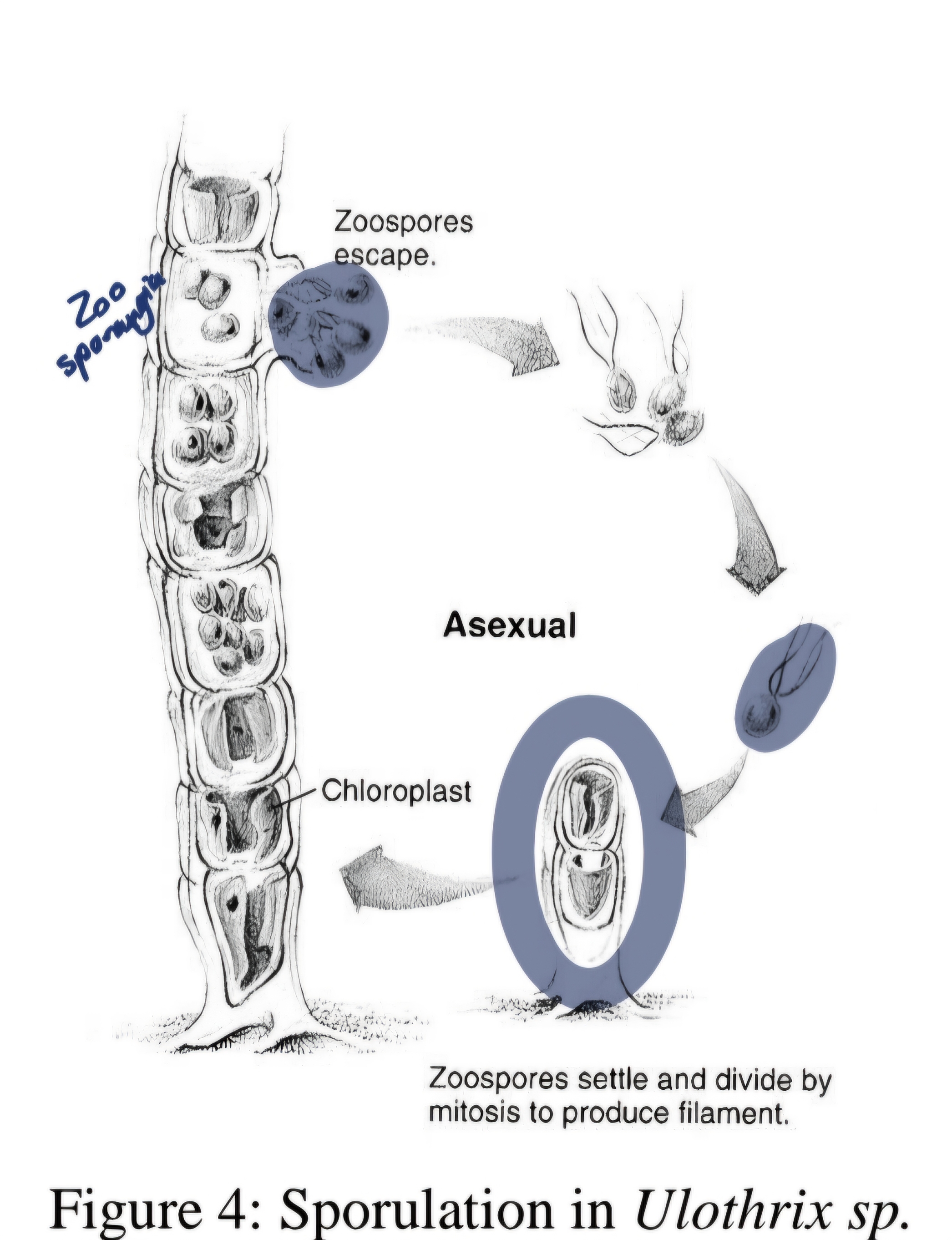
sporulation
this is the most common form of asexual reproduction in algae.
this refers to the process in which any cell an organism produces one or more reproductive cells inside it's cell walls
the original cell is called a sproangium
while the new cells are termed spores, which are often produced in large numbers for a rapid inc in population size
syngamy
a gamete is a cell that fuses with another gamete
gametogenesis
the process of gamete formation
two forms of the two fusing gametes defines two categories
isogamy
heterogamy
isogamy
a form of sexual reproduction in which the gametes produced are identical in shape, size, and motility
there is no structual distinction between “male" and “female" gametes, which are known as isogametes
an example is conjugation
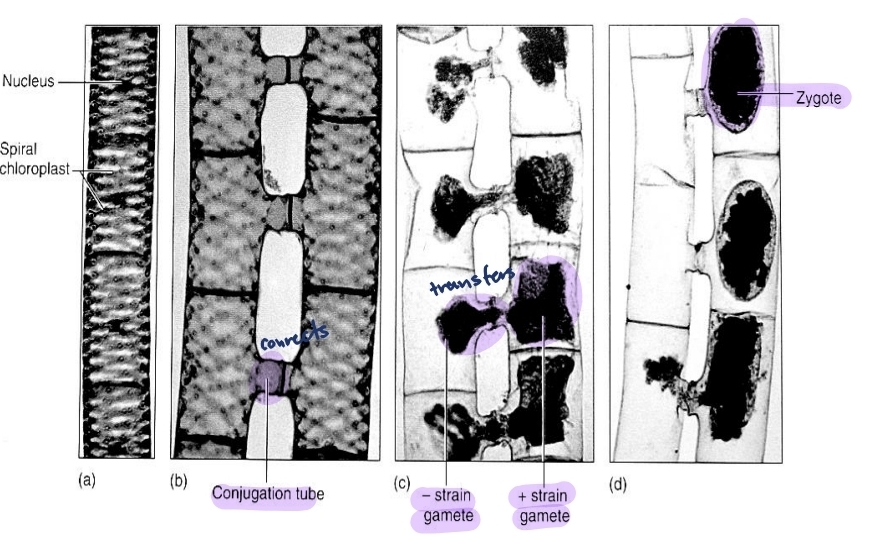
conjugation
where conjugation tubes will form etween two adjacent filaments
then the cytoplasmic contents of each cell form a compact mass, representing an isogamete
it will migrate through the tube until the two unite to form a zygote
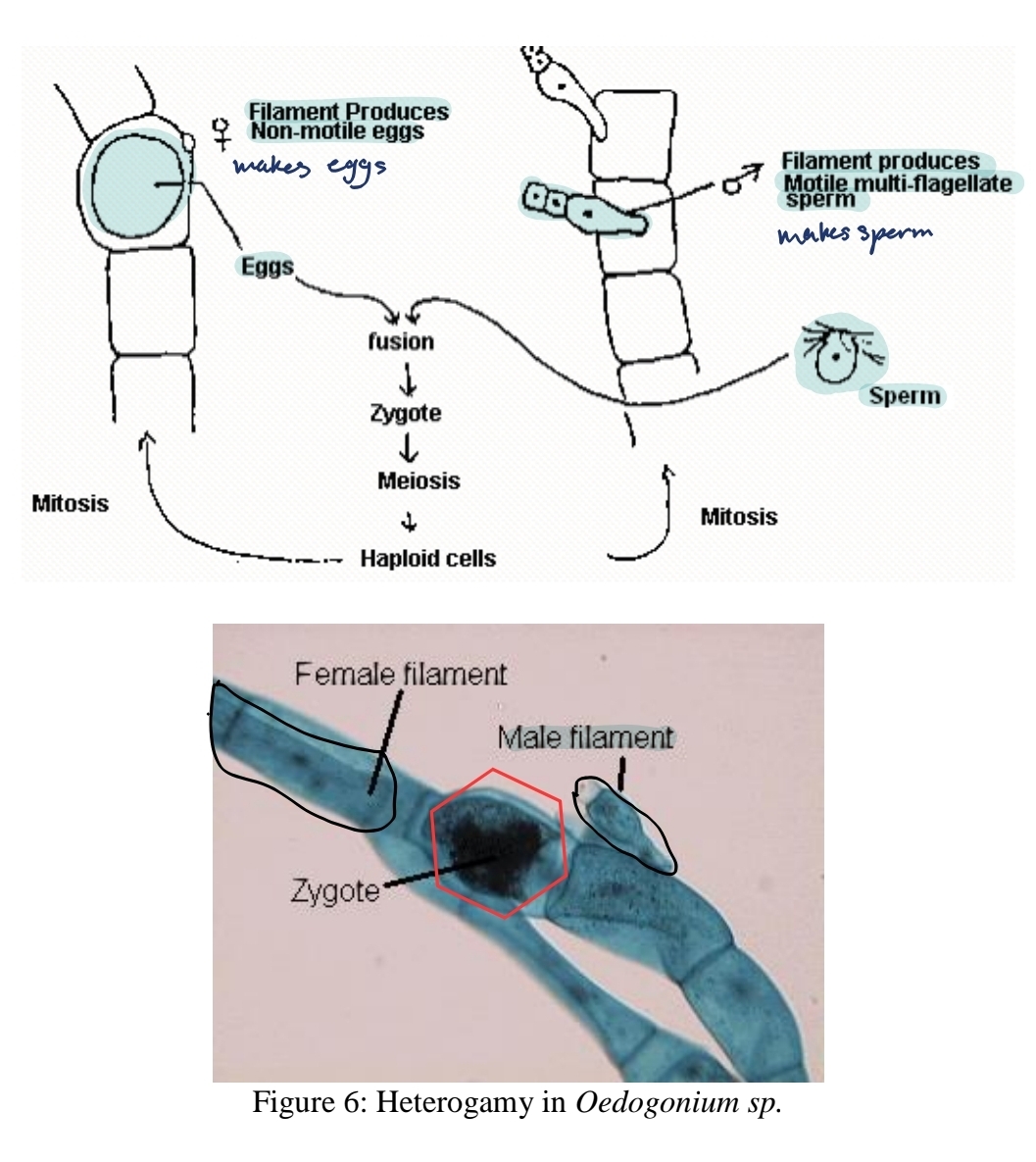
heterogamy
the process of syngamy where two different types of gametes are produced
male gamete is the sperm cell, which is very small, highly motile, and produced in large numbers
female gamete is the egg cell, which is very large and non-motile. produced in smaller numbers
what happens when plasmodial slime molds are short of food supply & moisture?
there are 2 scenarios:
the plasmodium will dry into a hard resistant structure called a scelrotium and remain still until conditions improve
other wise the plasmodium will migrate to an exposed area and enter the reproductive stage.
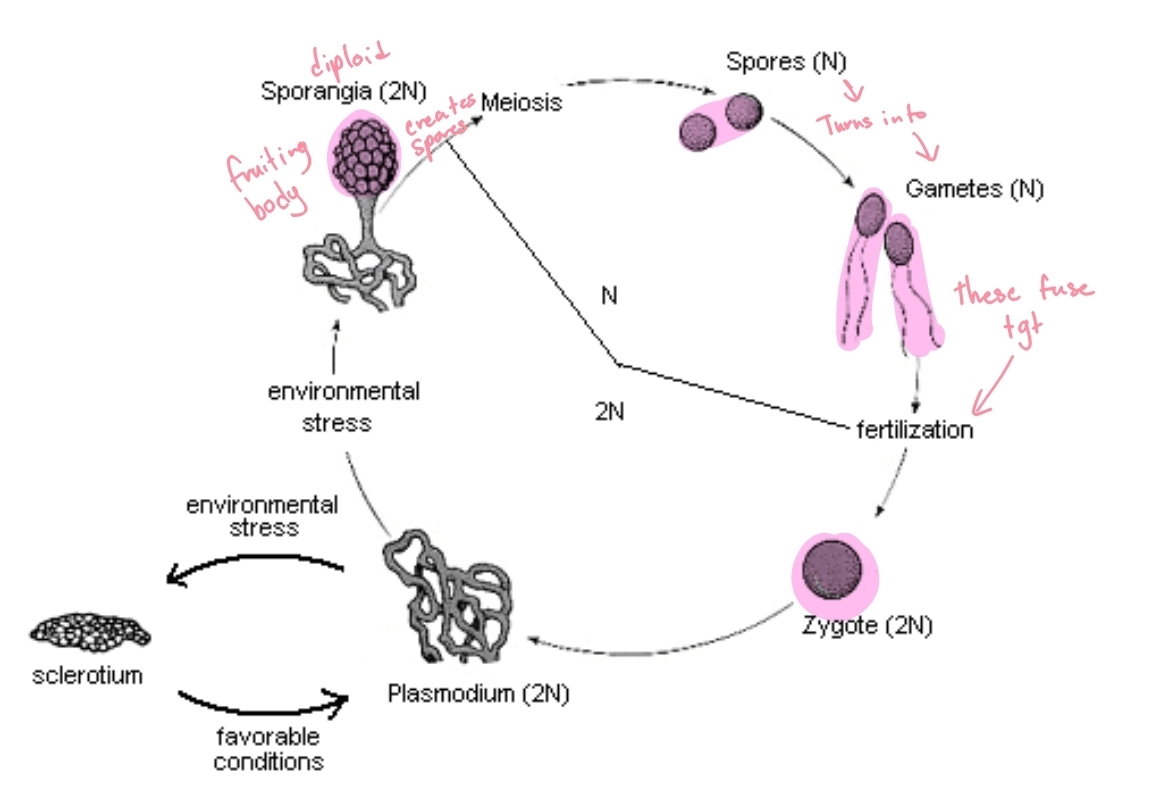
sexual reproduction in plasmodial slime molds
in this stage the plasmodium will produce fructifications (fruiting bodies)
there are 2 types of fruiting bodies:
sporangia and aethlia
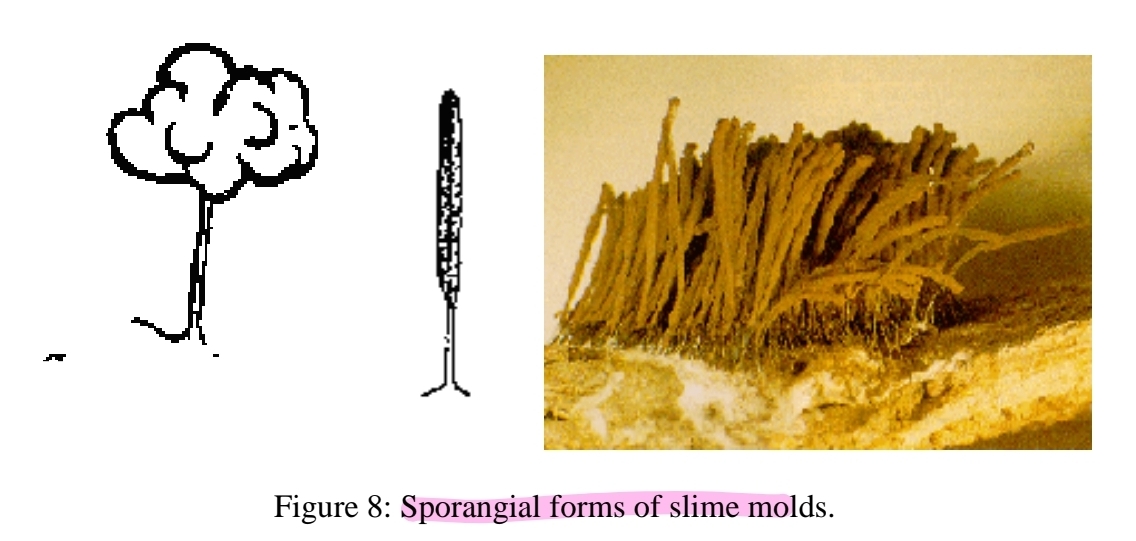
fruiting bodies - sporangia
sproangia - usually borne at the tip of a stalk and can be extremely ornate.
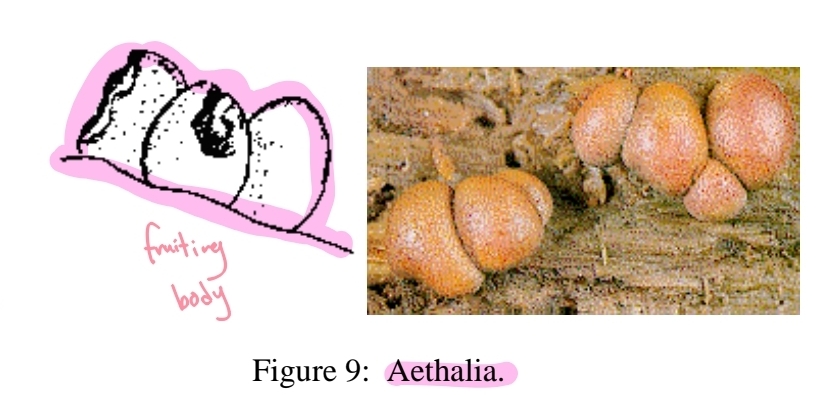
fruiting bodies - aethelia
aethelia - relativelt massive, single-chambered structures
fruiting bodies - spores
meiosis occurs in both of these structures to produce the haploid spores
spores of slime molds are very small and easily dispersed by the wind.
these spores will germinate as amoeboid or flagellated organisms
these haploid stages may later fuse as gametes and grow into new plasmodium
Phylum Zygomycota
this phylum has haploid, aseptate feeding hyphae.
the haploid stage is the most dominant stage of the life cycle.
in other words, the longest lived
these organisms spend most of their life cycle as haploid hyphae growing and feeding (saprophytically)
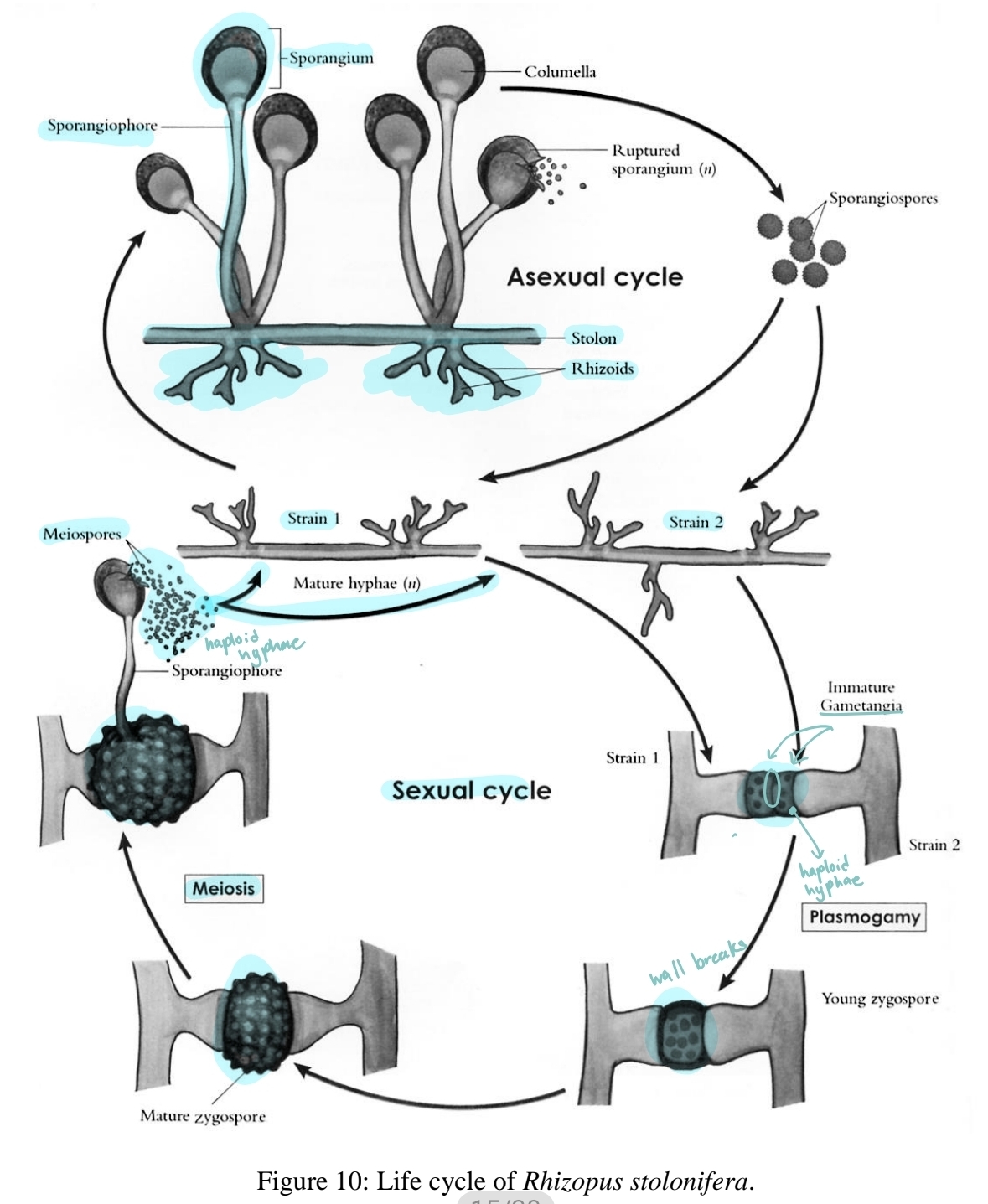
sexual reproduction in zygomycota
specifically R stonoifera:
has two different mating strains
+ (strain 1) and - (strain 2)
these two strains are not distinguishable
however they are shown in different colours, and when they are close together the hyphal tips release hormones
these hormones will allow them to come together then develop into gametangia
which become separated from the rest of the fungal body by the formation of septa
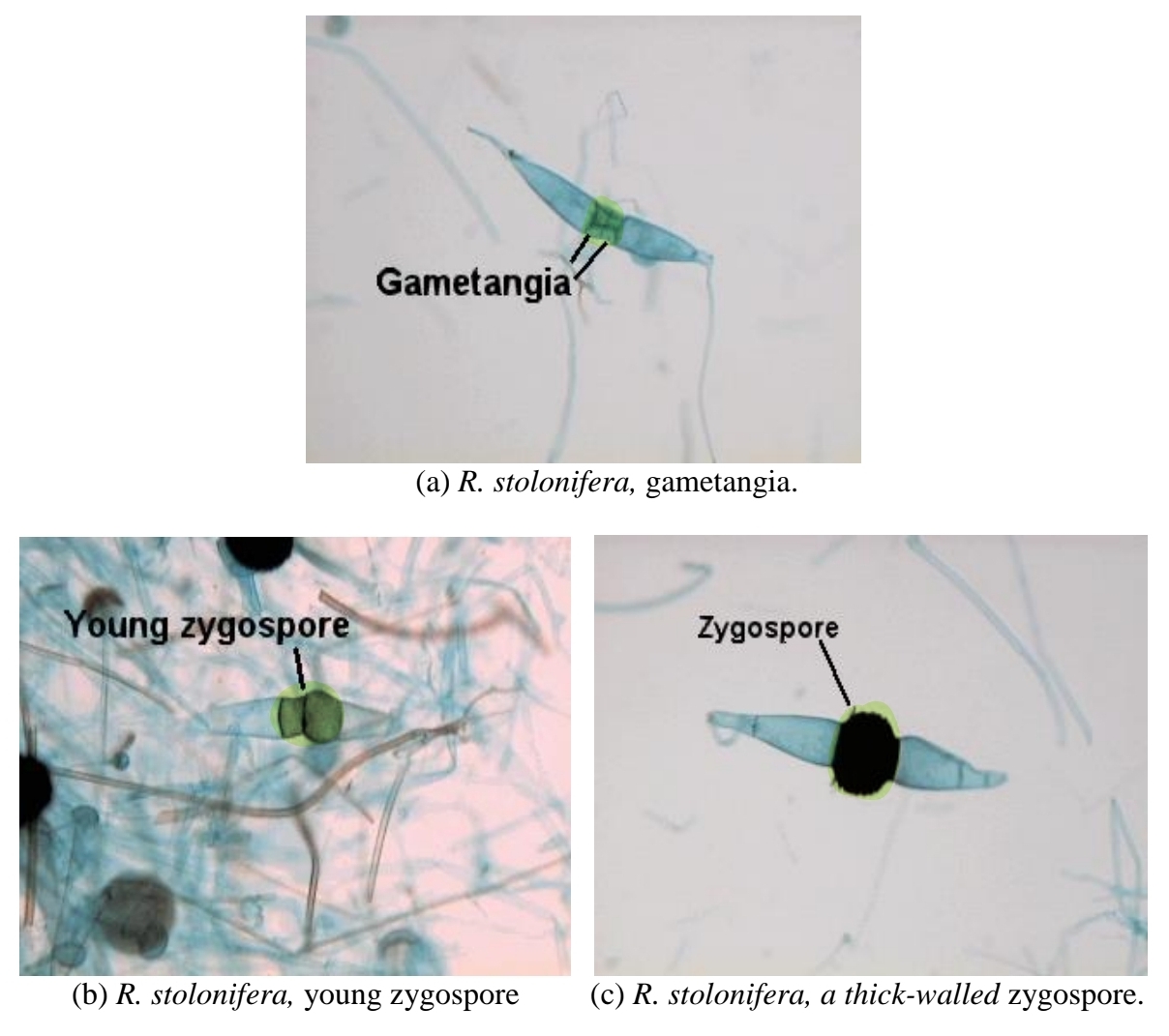
what are gametangia and what occurs?
they are swellings in the two hyphae which fill with haploid nuclei
eventually the wall between the two gametangia will break down and the two sets of haploid hyphae will mix together in the same chamber
known as plasmogamy
this chamber becomes the zygospore
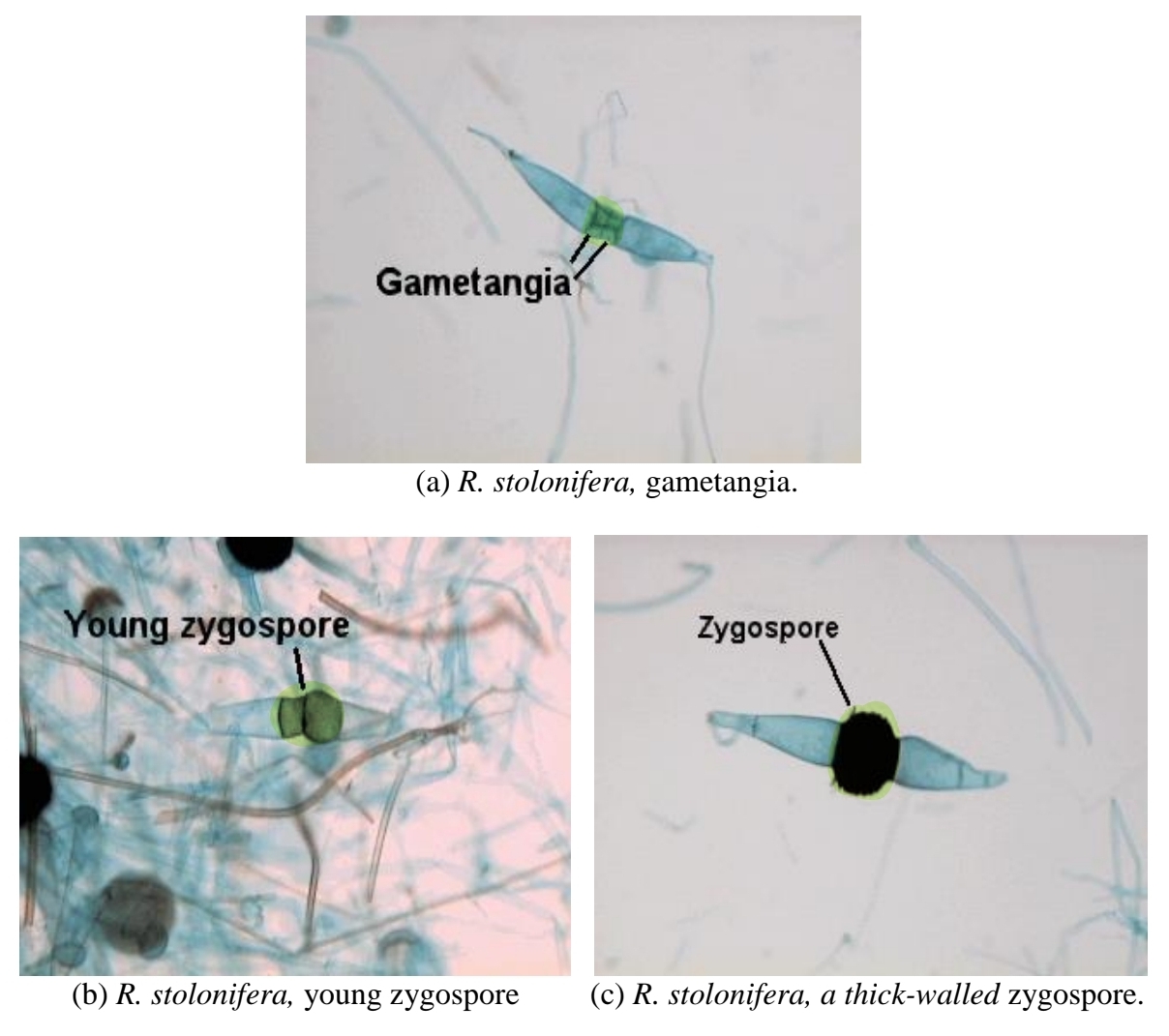
what do zygospores do?
forms a thick outer cell wall which is so strong it can allow it to withstand very bad environmental conditions (e.g. drying or freezing)
what will zygospores do when condiditons are bad?
they will remain dormant until the environmental conditions improve
what kinds of nuclei do zygospores have? What happens to these nuclei?
these zygospores has two sets of separate haploid nuclei
referred to as dikaryotic
these two sets of haploid nuclei will fuse, which is known as process called karyogamy (which forms many diploid nuclei)
these diploid nuclei will undergo meiosis at the time of germination
What happens at the end of the zygospores cycle?
afterwards the zygospore then cracks open produces a sporangium that is similar to the asexually produce sporangium
Phylum Ascomycota - the ascus
The sexual reproduction in Ascomycota always involes the formation of an ascus.
the ascus is a sac-like structure
the ascus formation is within a complex structure composed of a tightly interwoven hyphal network, an ascocarp.
Phylum Ascomycota - the ascocarp
many of these are macroscopic, and are the only part of these fungi that most people ever see.
there are 3 diff shapes an ascocarp can be:
apothecium
cleistothecium
perithecium
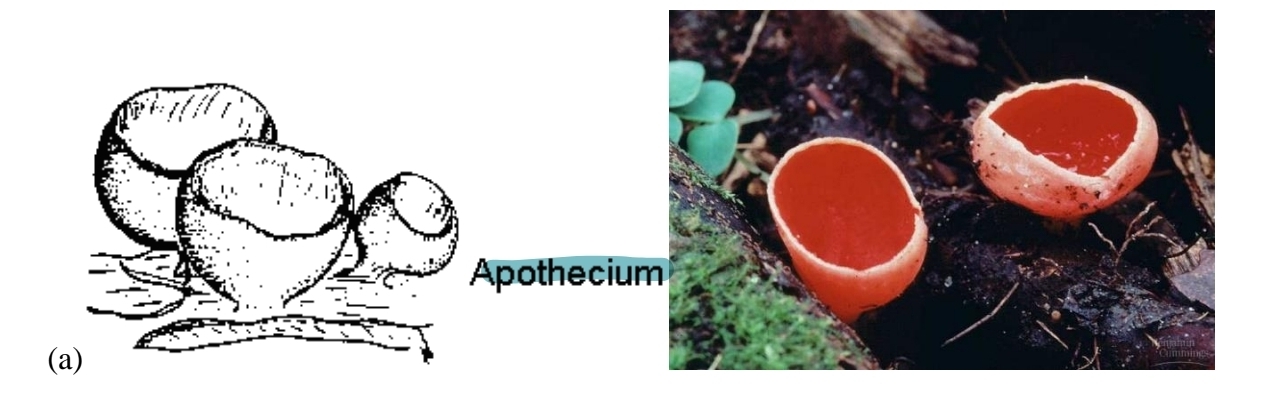
ascocarp - apothecium
an ascocarp may be open and ore or less cup-shaped
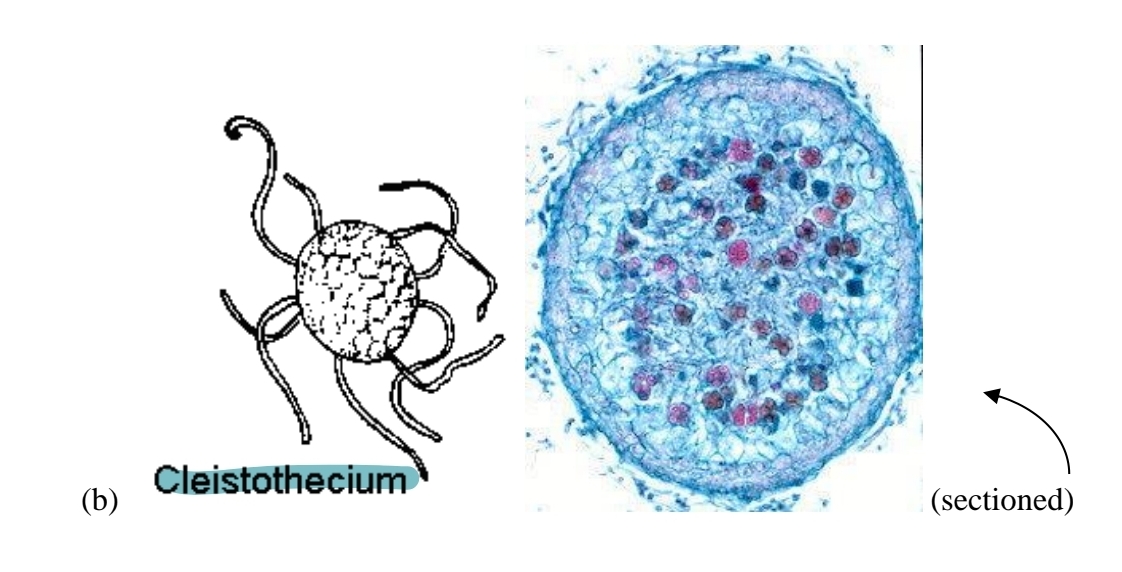
ascocarp - cleistothecium
closed and spherical in shape
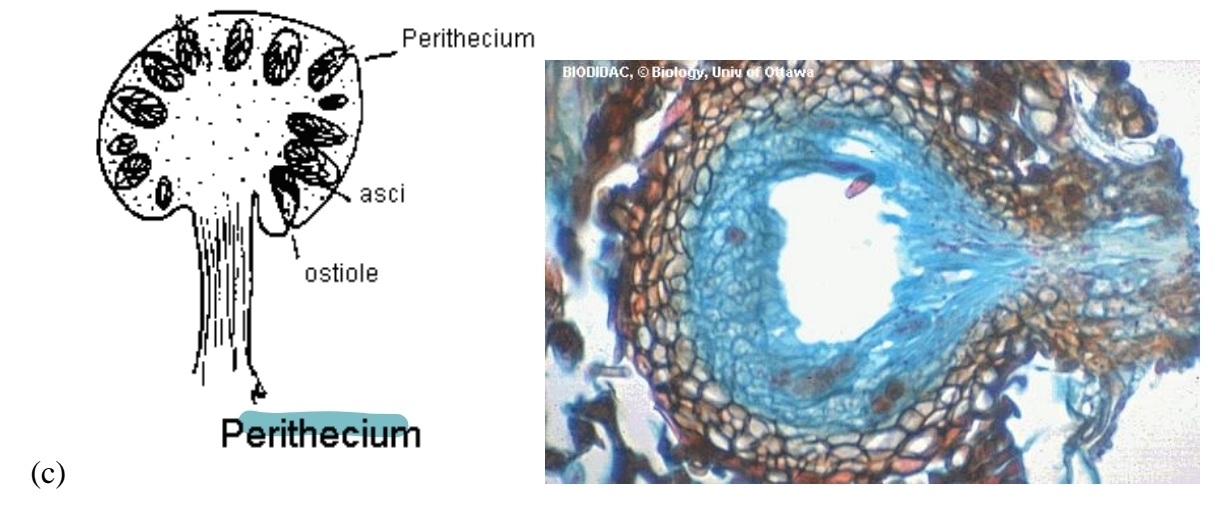
ascocarp - perithecium
a flask shaped with a small pore through which the ascopores escape,
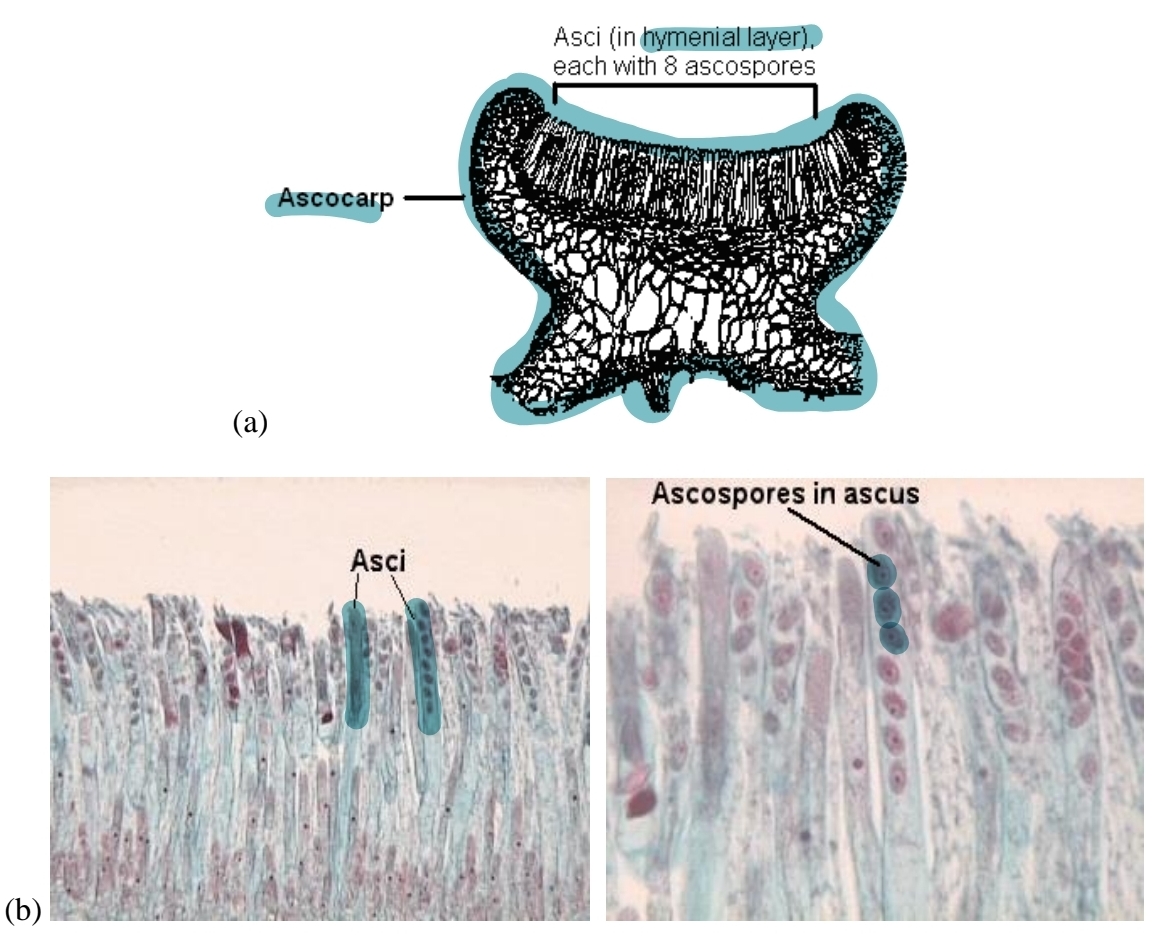
the layer of asci
called the hymenium, or hymeneal layer, and lines the interior of the ascocarp
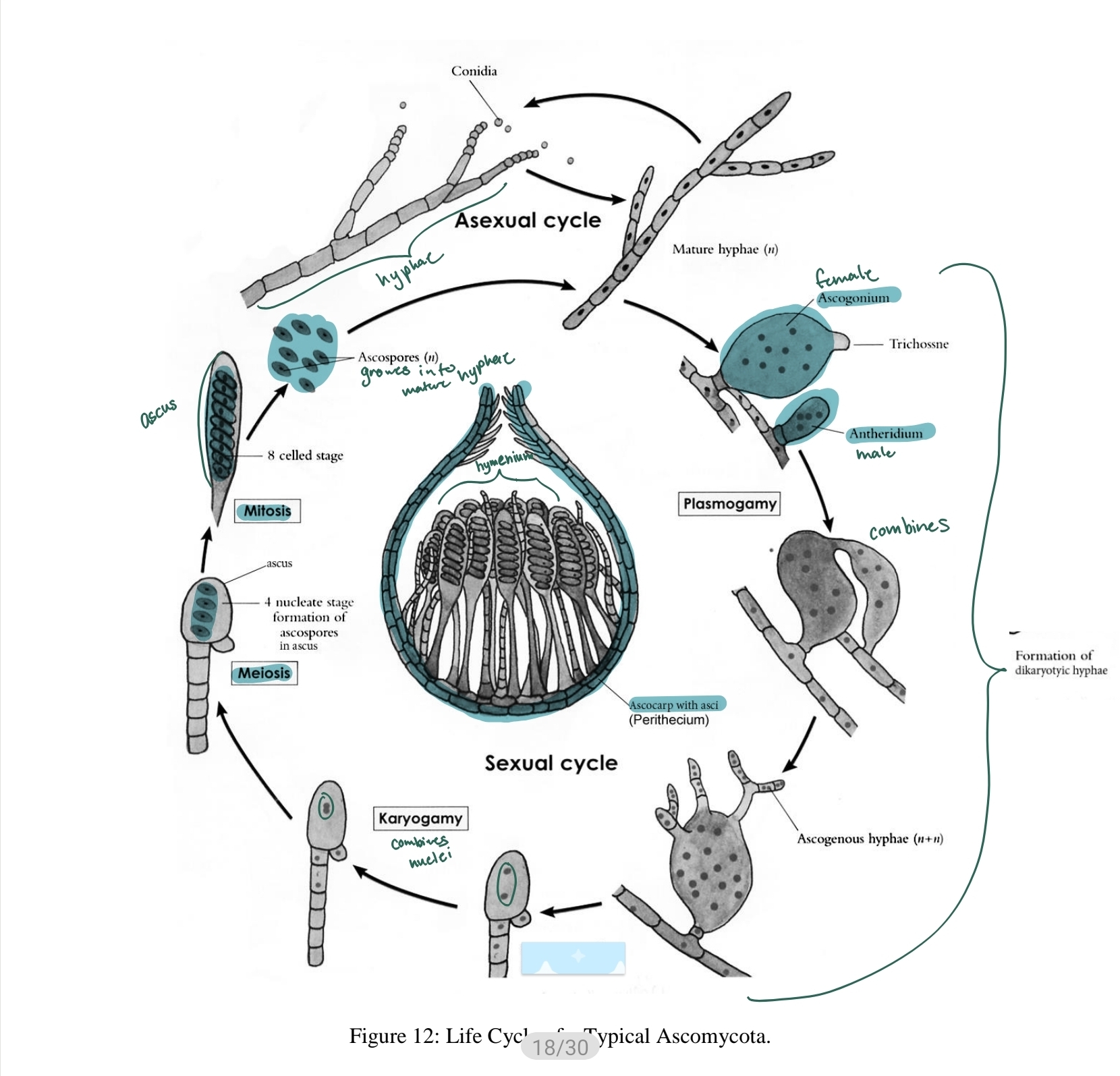
the life cycle of Ascomycota - the beginning
it begins with the feeding haploid hyphae.
they spend alot of their lives as these haploid hyphae, which are growing and feeding saprophytically through the soil.
much like the zygomycota, the hapoid nuclei can fuse to form a dikaryotic stage
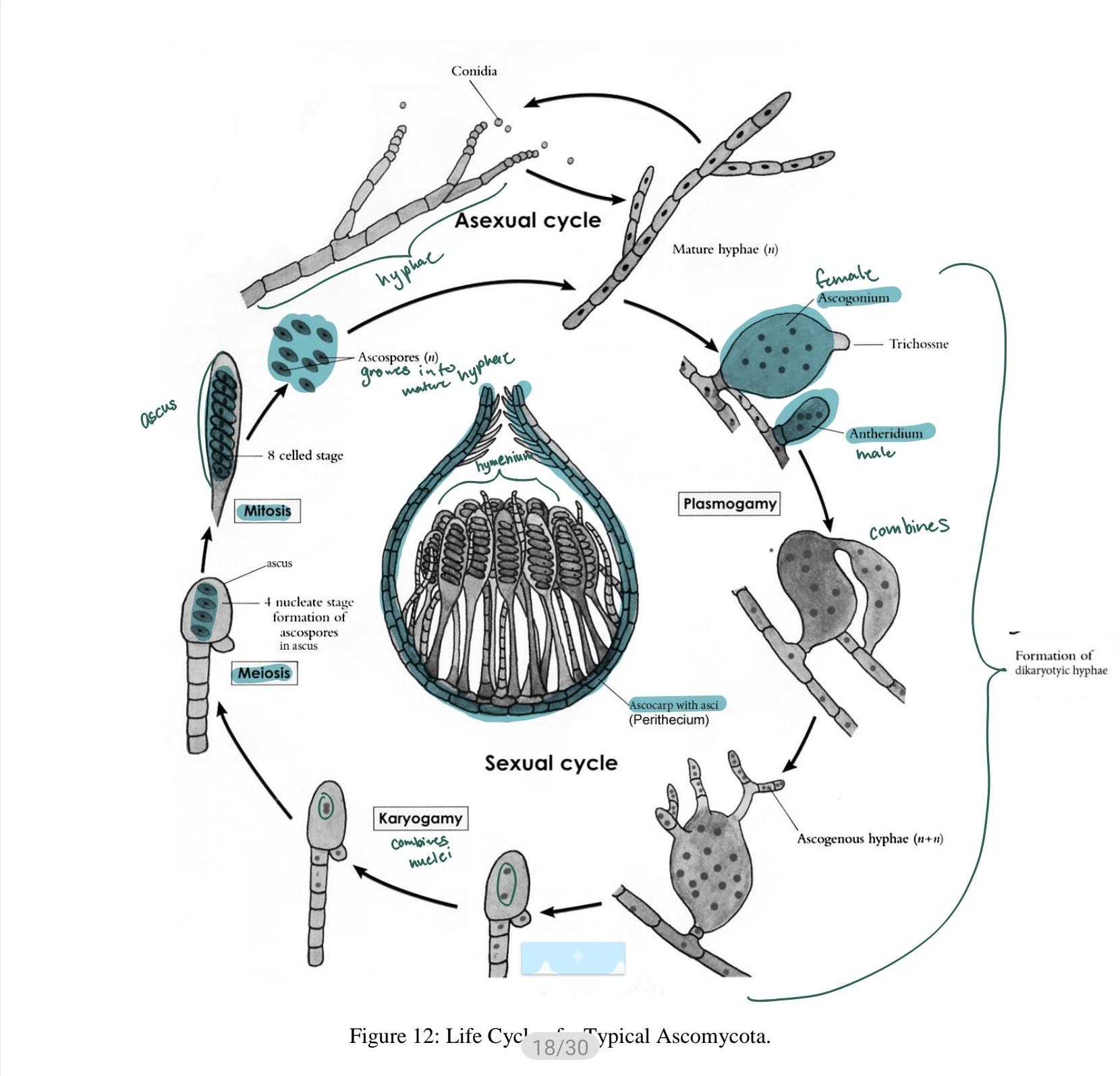
the life cycle of ascomycota - the gametangia
once two compatible mating strains of an asycomycota species grow close together which will stimulate the production of structures that will facilitate the fusion of the hyphae.
gametangia produced by “male" hyphae are called antheridia (singular antheridium)
gametangia produced by “female” hyphae are called ascogonia (singular ascogonium)
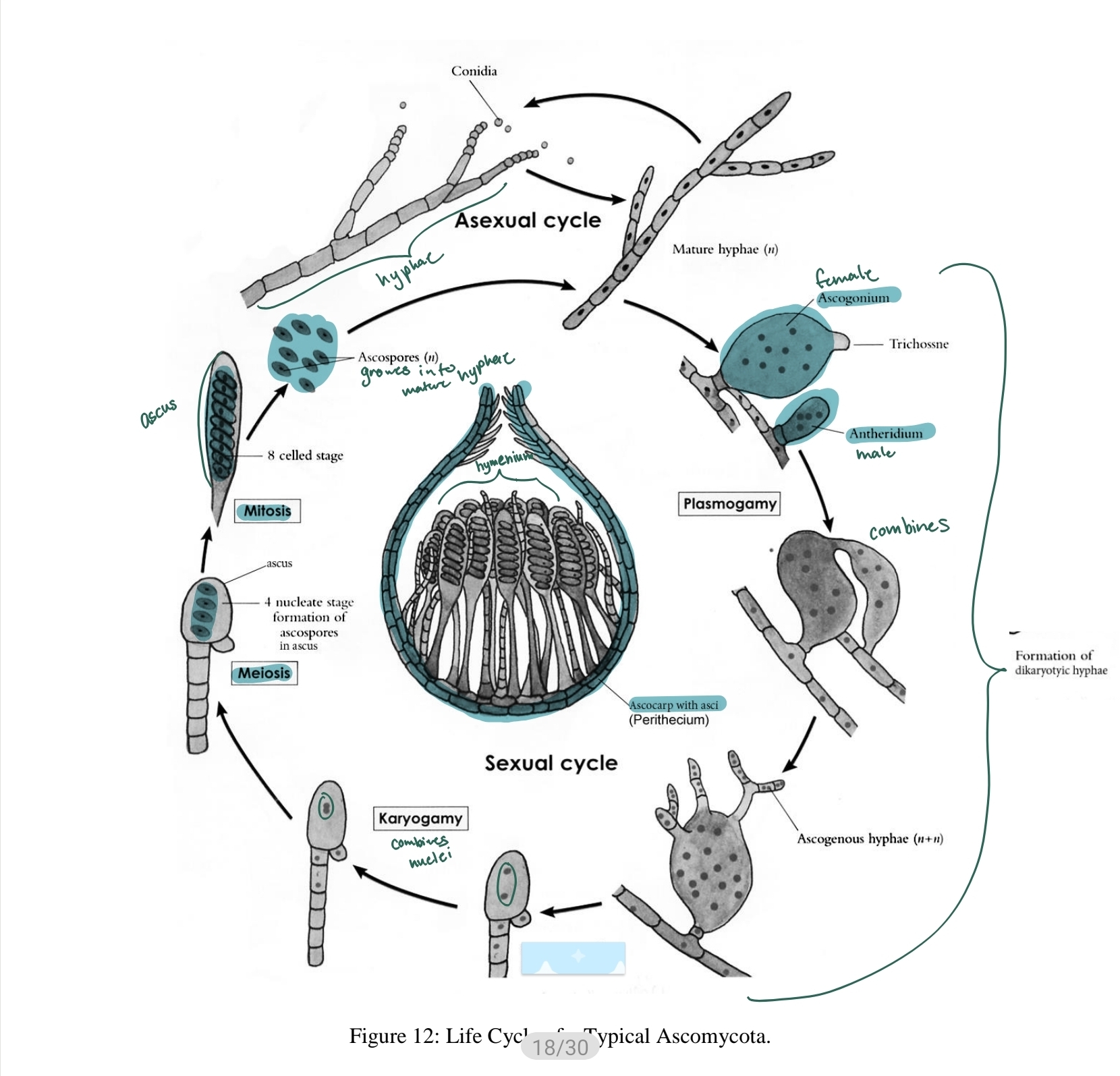
the life cucle of ascomycota - plasmogamy
the male nuclei of the antheridium pass into the ascogonium via a tubular outgrowth of the ascogonium known as the trichogyne fuses with the ascogonium.
plasmogamy occurs when the trichogyne fuses with the ascogonium
the male nuclei then pair with the genetically different female nuclei within the common cytoplasm but do not fuse
hyphae now begin to grow out of the ascogonium
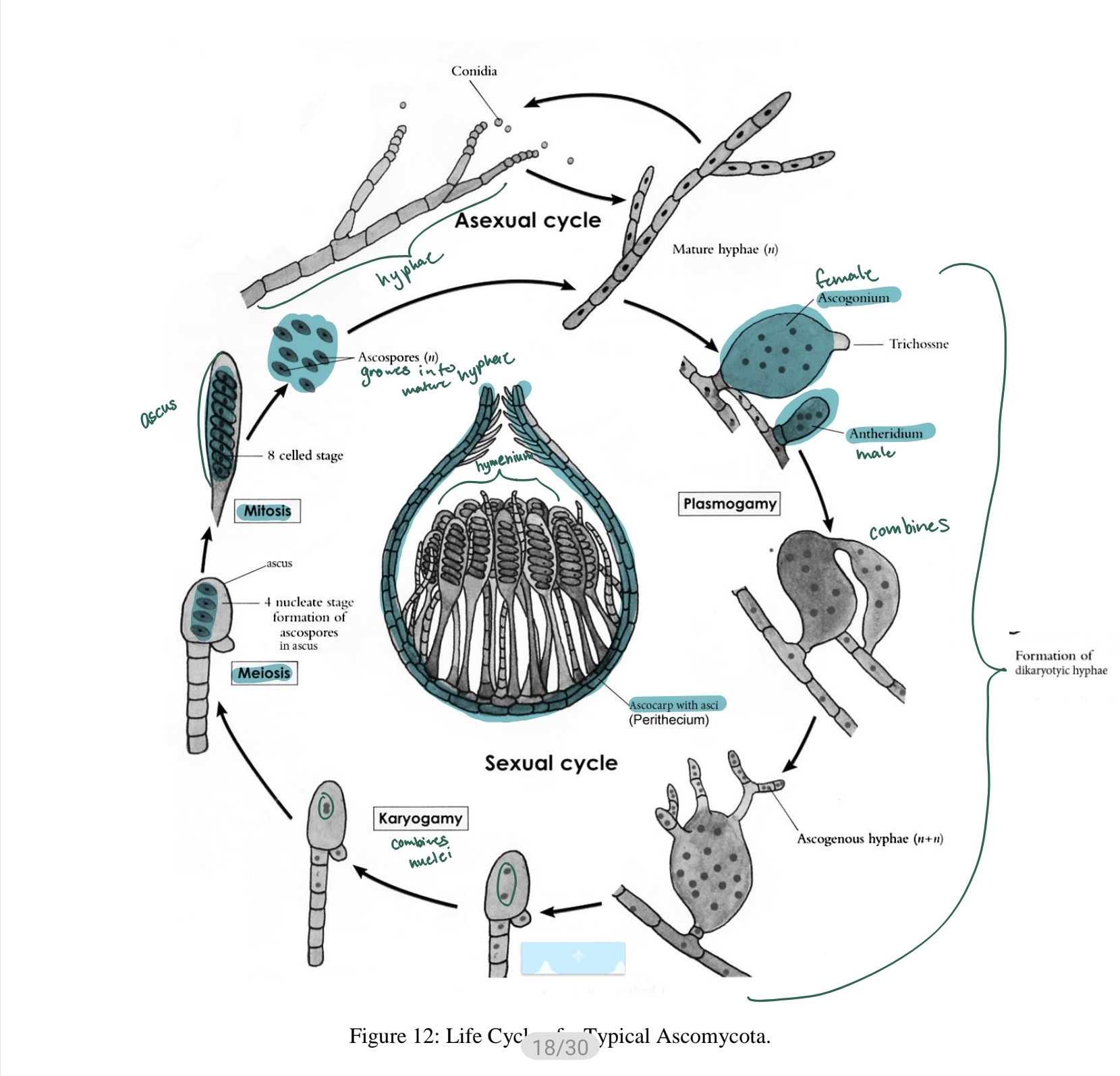
the life cycle of ascomycota - hyphae
As the hyphae develop, pairs of nuclei migrate into them and simultaneously mitotic divisions occur in the hyphae and ascogonium
cell division in the developing hyphae occurs in such a way that the resulting cells are dikaryotic.
the dikaryotic hyphae grow together to form the ascocarp
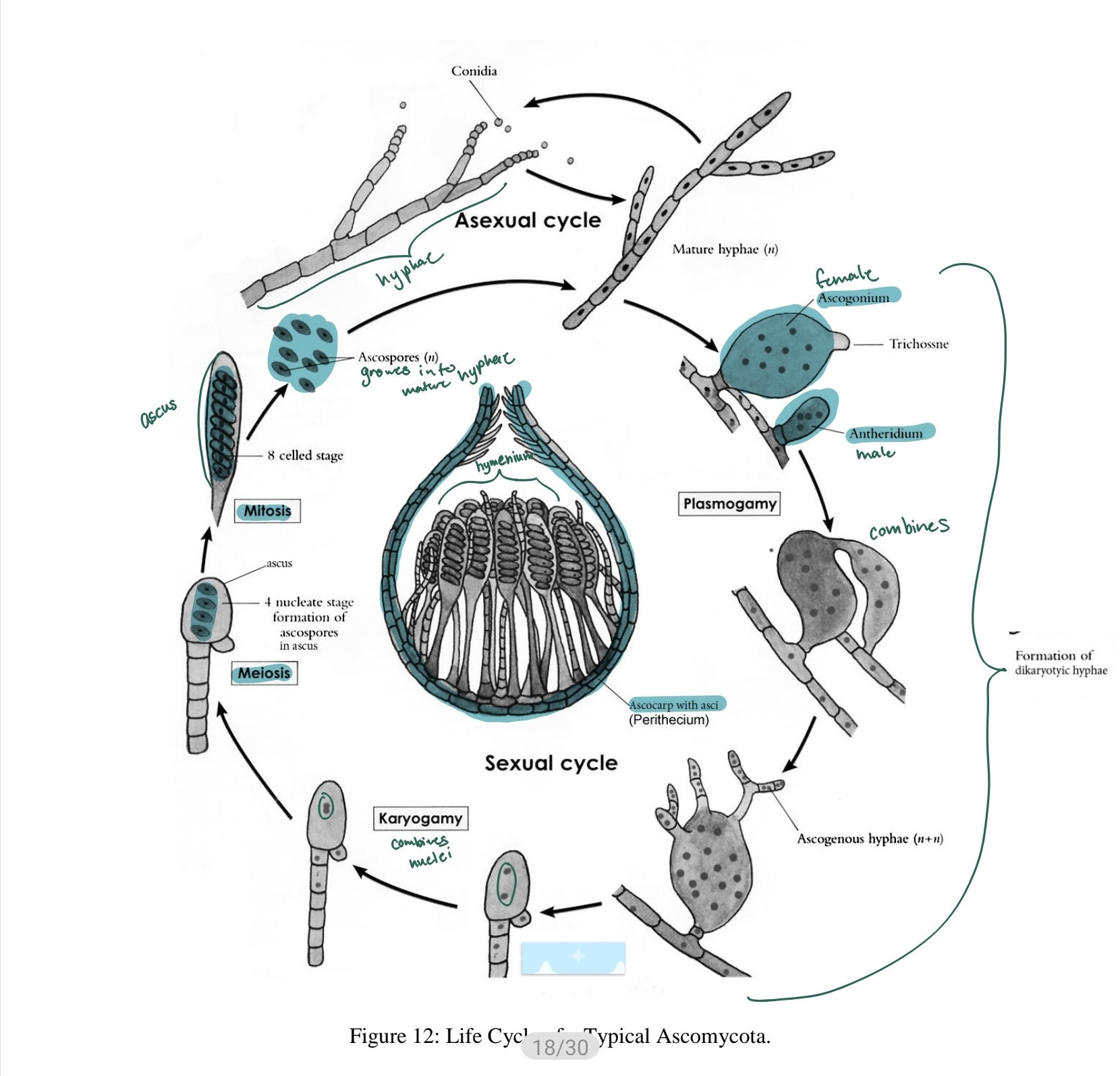
the life cycle of ascomycota - the ascus (again)
the ascus first forms at the tip of the developing dikaryotic hypha
the two nuclei in the ascus of the dikaryotic hyphae then fuse into a single diploid nucleus
the process is known as karyogamy
this is the only diploid cell in the life cycle
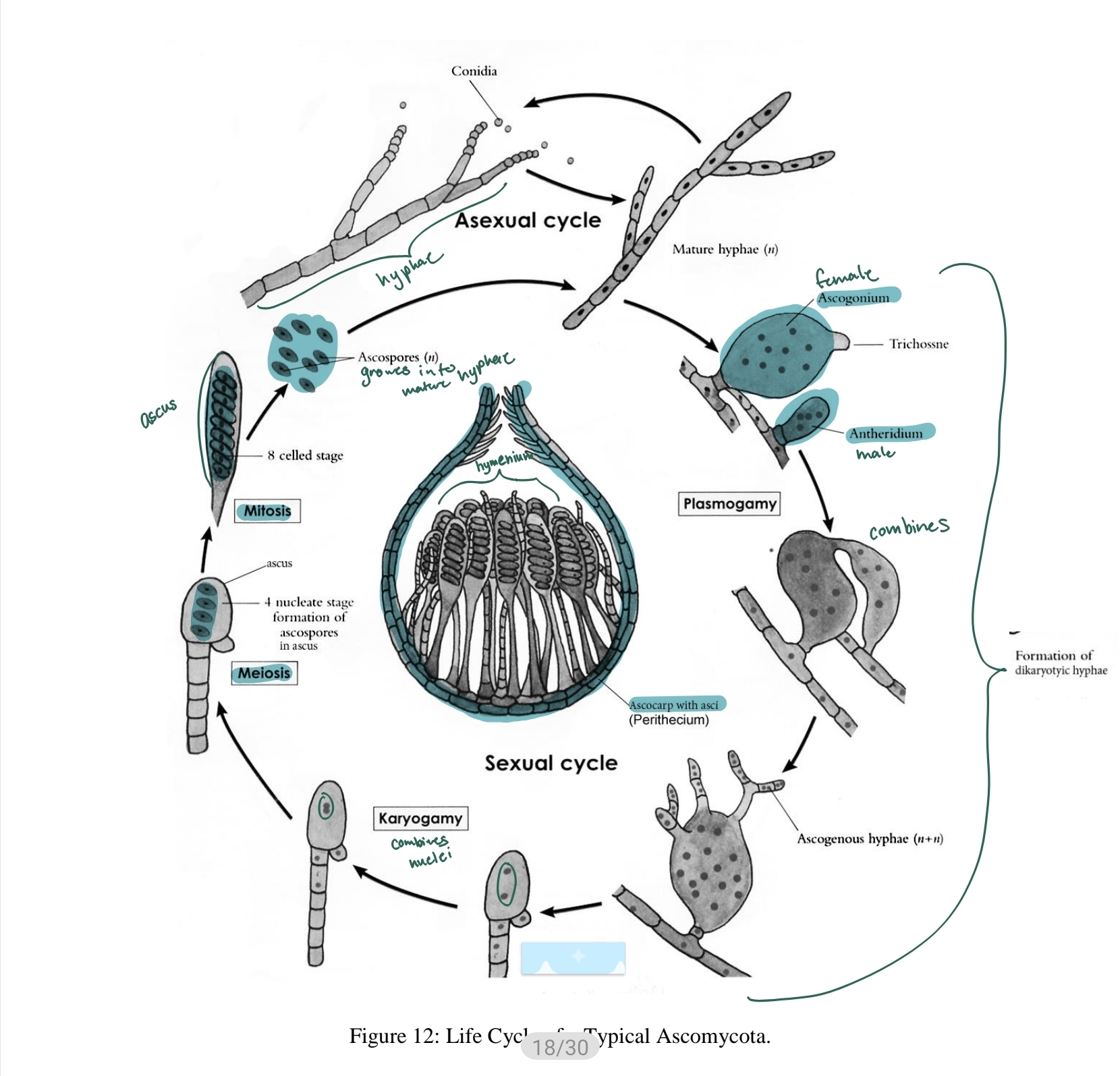
the life cycle of ascomycota - haploid nuclei
the diploid ascus then elongates and the nucleus divides by meiosis which forms 4 haploid nuclei
each haploid nucleus usually divides again by mitosis, which result in 8 haploid nuclei
these haploid nuclei are then cut off in segments of the cytoplasm to form ascospores
finally the ascus becomes turgid at maturity and finally burts, releasing it's ascospores explosively into the air.
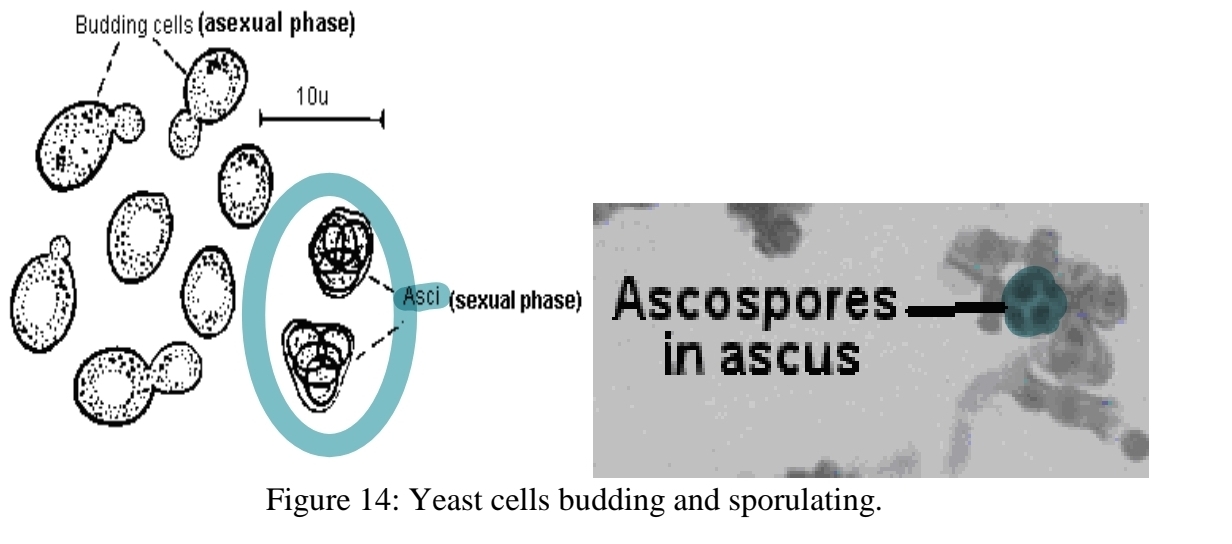
other examples of sexual reproduction in ascomycota - Yeast
asexually yeast reproduce via budding, however they can sexually reproduce as well
this occurs when either two cells or spores unite and form a diploid zygote
the zygote may produce asexual buds or undergo meiosis to produce 4 haploid nuclei, there may be also a subsequent mitotic division producing 8 haploid nuclei
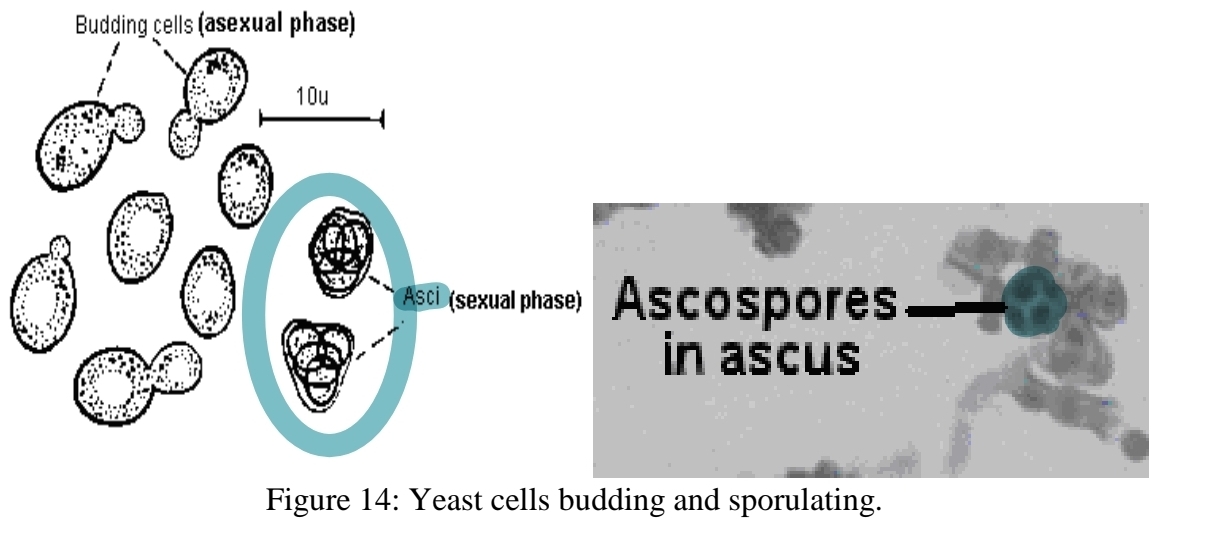
other examples of sexual reproduction in ascomycota - Yeasts ascus
the single cell in these unicellular yeasrs is acting as an ascus and the whole organism becomes the reproductive structure
within the ascus/zygote wall, walls are laid down around the nuclei so that eight ascospores are formed
These are released ascus wall breaks down.
the ascopores either bud asexually or fuse with another cell to repeat the sexual process
other examples of sexual reproduction in ascomycota - cup fungi
this is the most advanced group ascomycota
they produce an ascocarp called an apothecium with the asci arranged in an exposed layer
many apothecia are disc or cup-shaped
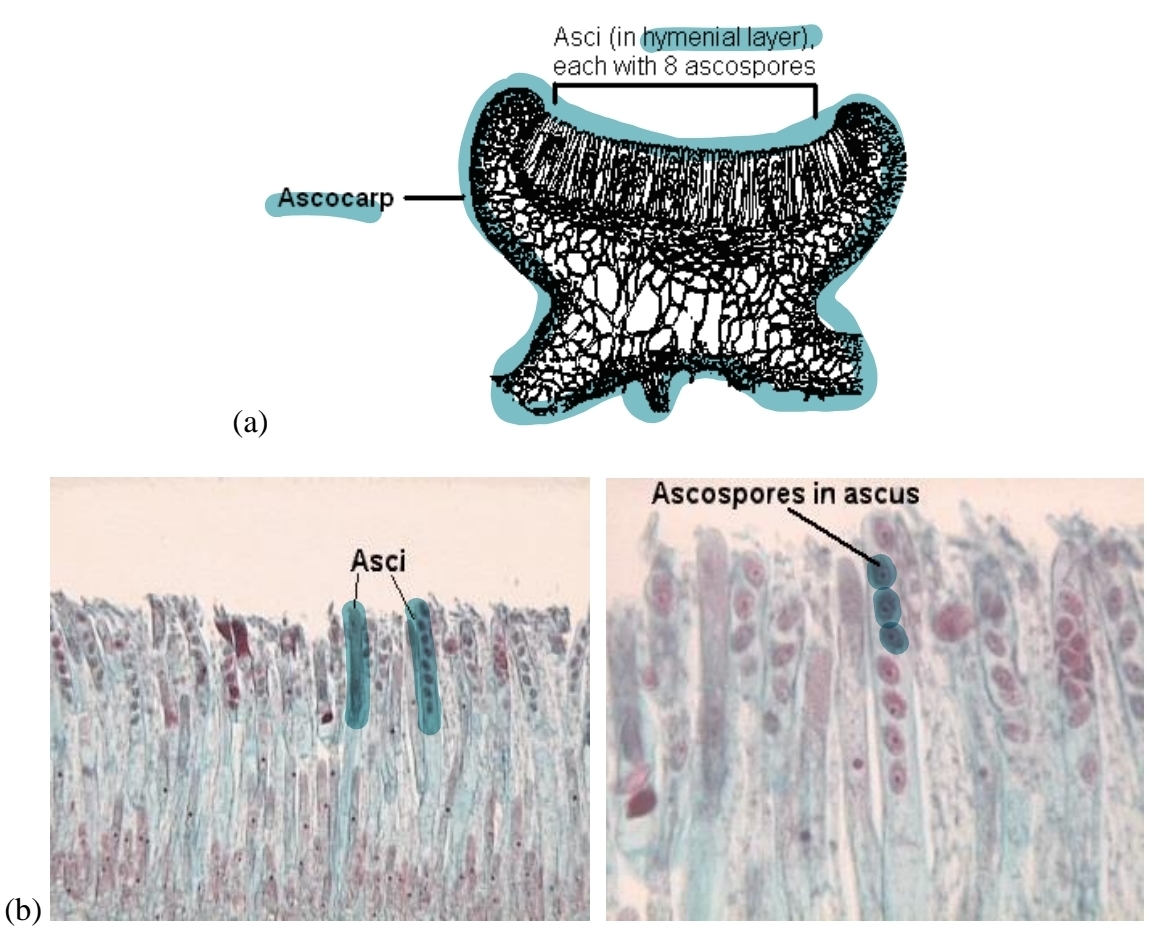
cup fungi - Perziza sp.
the apothecia of Peziza sp. often exceed 10 cm in diameter.
these are usually bowl-shaped when young but will become flattened and distoreted with age
At maturity, the thousands of asci on the surface of the cup develop hydrostatic pressure
if the cup is disturbed, the asci rupture releasing thousands of ascospores in a visible “puff". Wind currents then transport the spores into a new environment
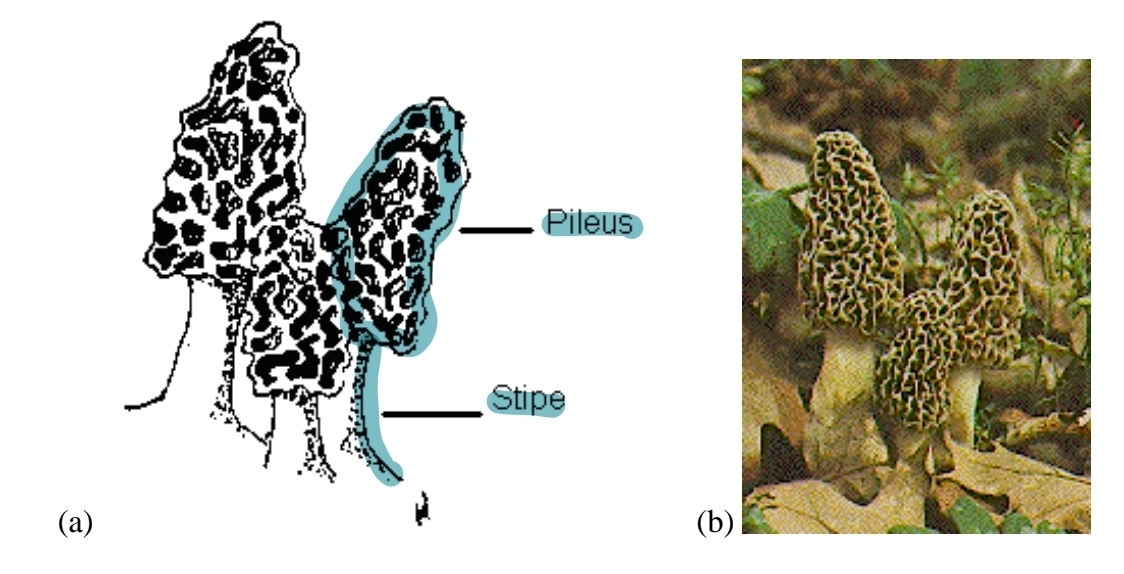
other examples of sexual reproduction in ascomycota - Morels
Morechella sp. are some of the most highly prized edible fungi
the apothecium of them has a stalk or stipe, and a fertaile portion called the pileus
the pileus is esstially discoid, but it is folded over the stipe apex and is highly contorted
these distortions greatly increase the surface area of the pileus.
the asci line the large pits, which are separated by sterile ridges
Sexual reproduction in Phylum Basidiomycota
always involves the formation of a basidium
this is a sac like structure
it produces club-like extensions which give this group of fungi it's common name “club fungi"
the formation of this usually within a complex structure composed of a tightly interwoven hyphal network known as a basidiocarp.
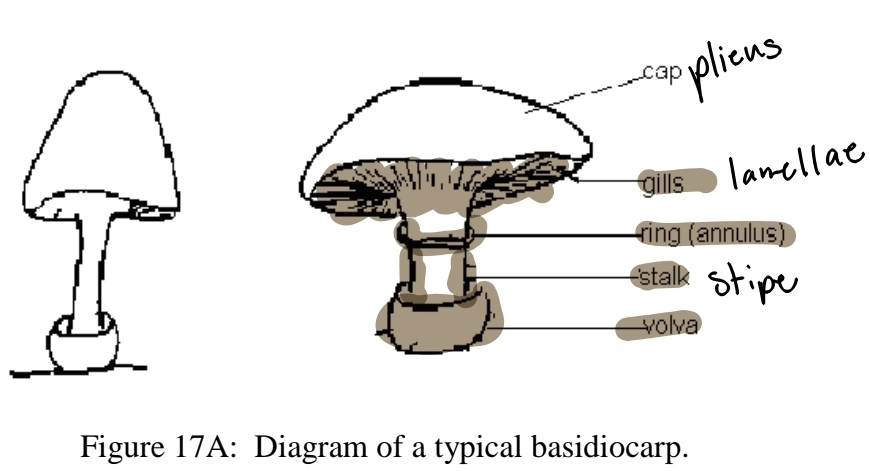
basdiocarp consists of..
large fruiting structures
most visible stage of the fungus
consists of:
stalk (stipe)
a circlular cap (pileus)
lamellae (gills)
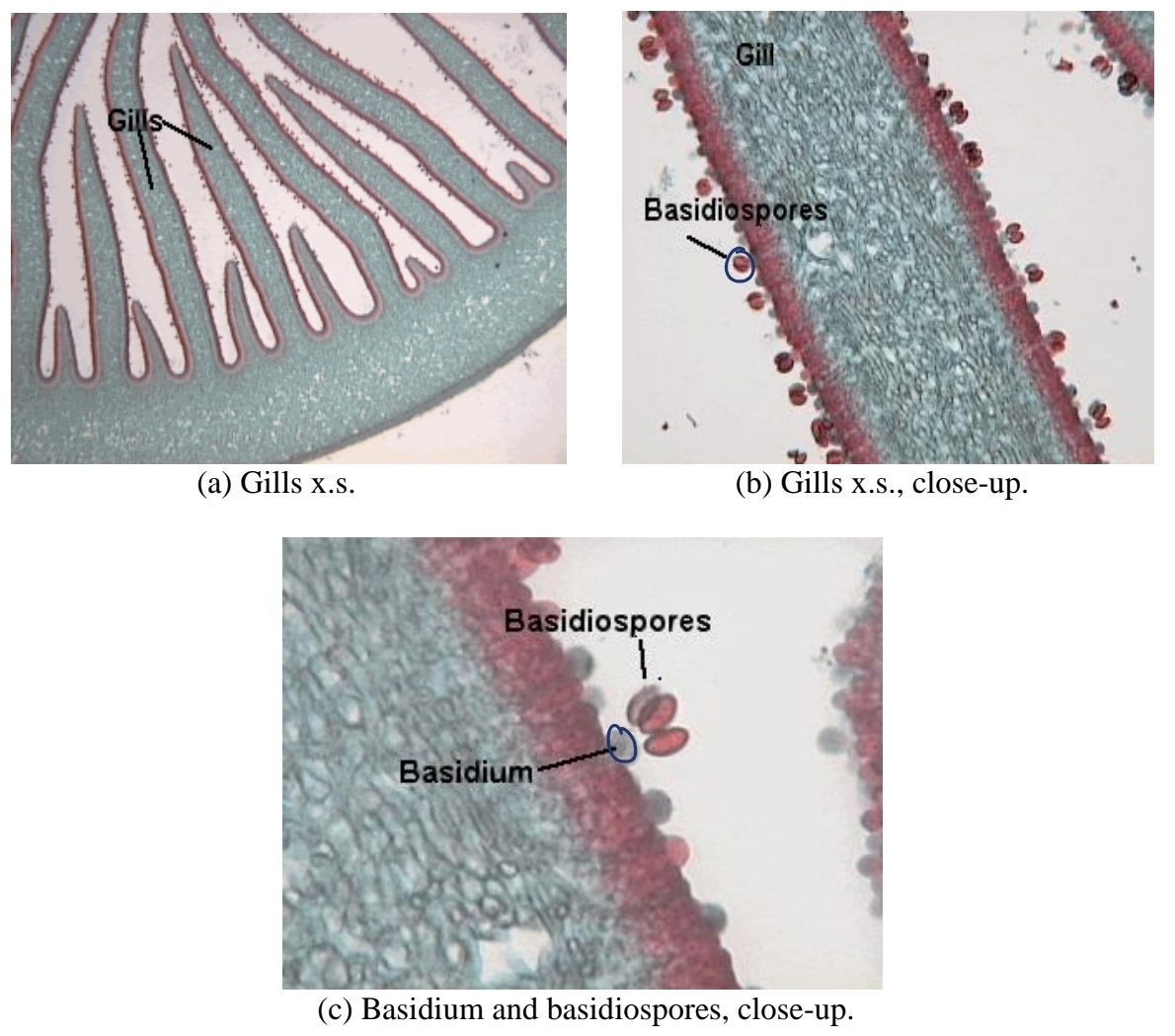
gills (lamellae)
produced on the underside of the cap of the mushroom
contains basidia which are found on the surface of the gills
basidiospores are forcibly ejected from each basidium
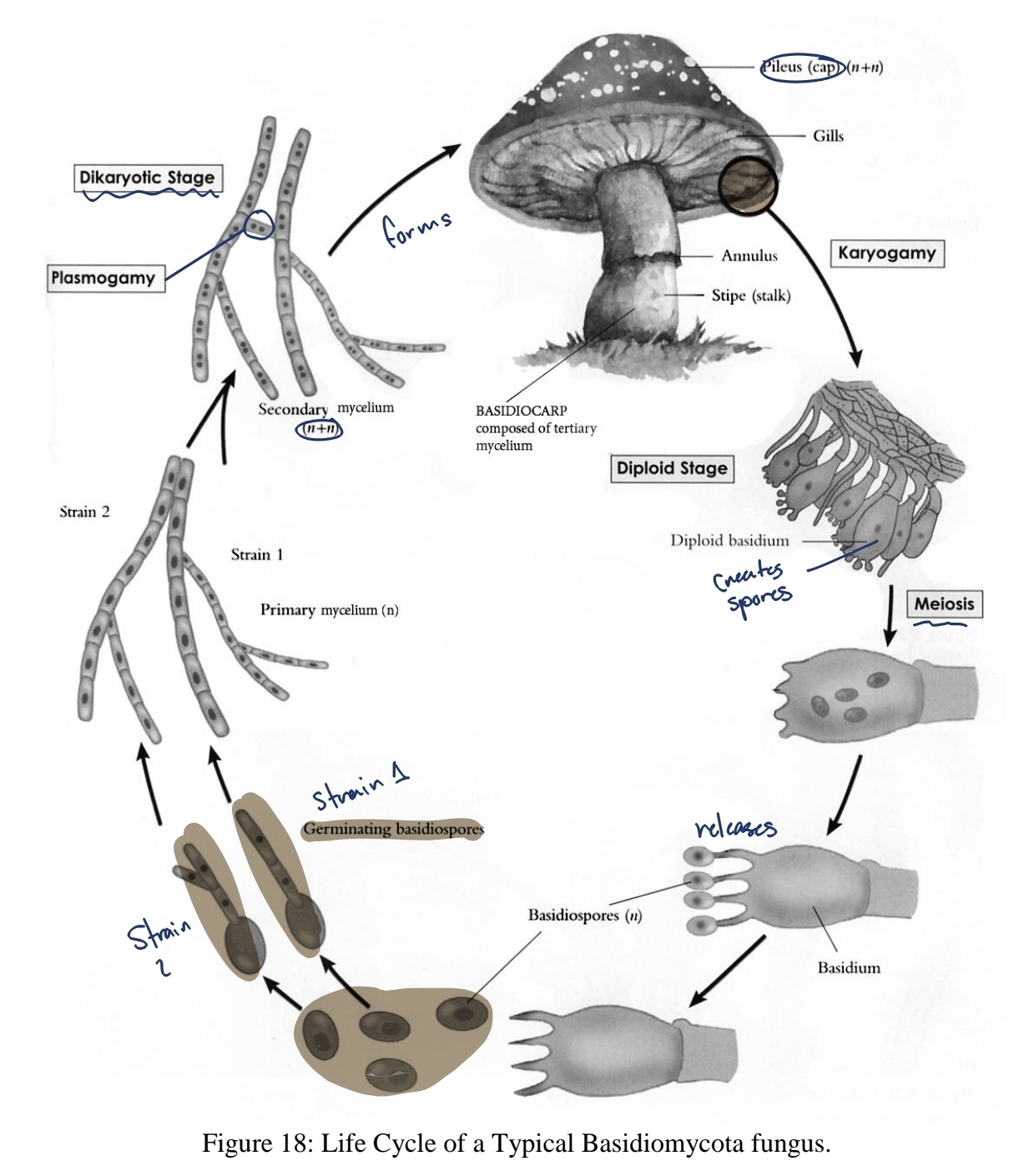
Life cycle of Basidiomycota - the beginning
much like ascomycota, it begins with haploid feeding hyphae who feed saprophytically
two sexually compatible strains grow close to one another, then plasmogamy accors, and the two haploid nuclei move into the resulting cell, which forms a dikaryotic cell
the cell continues to divide and each haploid nucleus
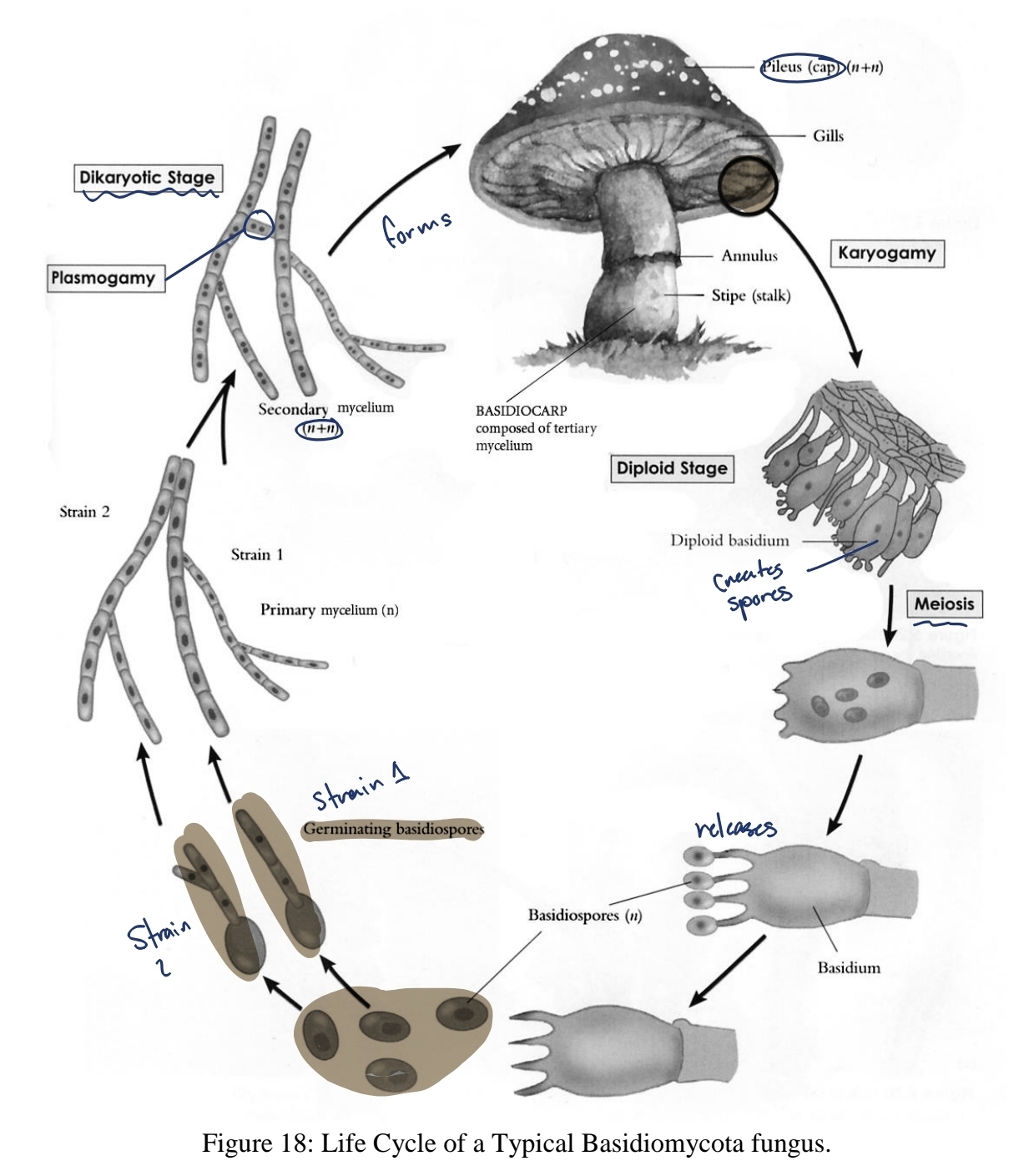
life cycle of basidiomycota - dikaryotic hyphae
this forms a chain of cells (a hyphae), where all cells are dikaryotic, a dikaryotic hyphae.
the cells atthe ends of the dikaryotic hyphae will be the ones to form the sexual reproductive structure
the terminal cells of dikaryotic hyphae form the basidium.
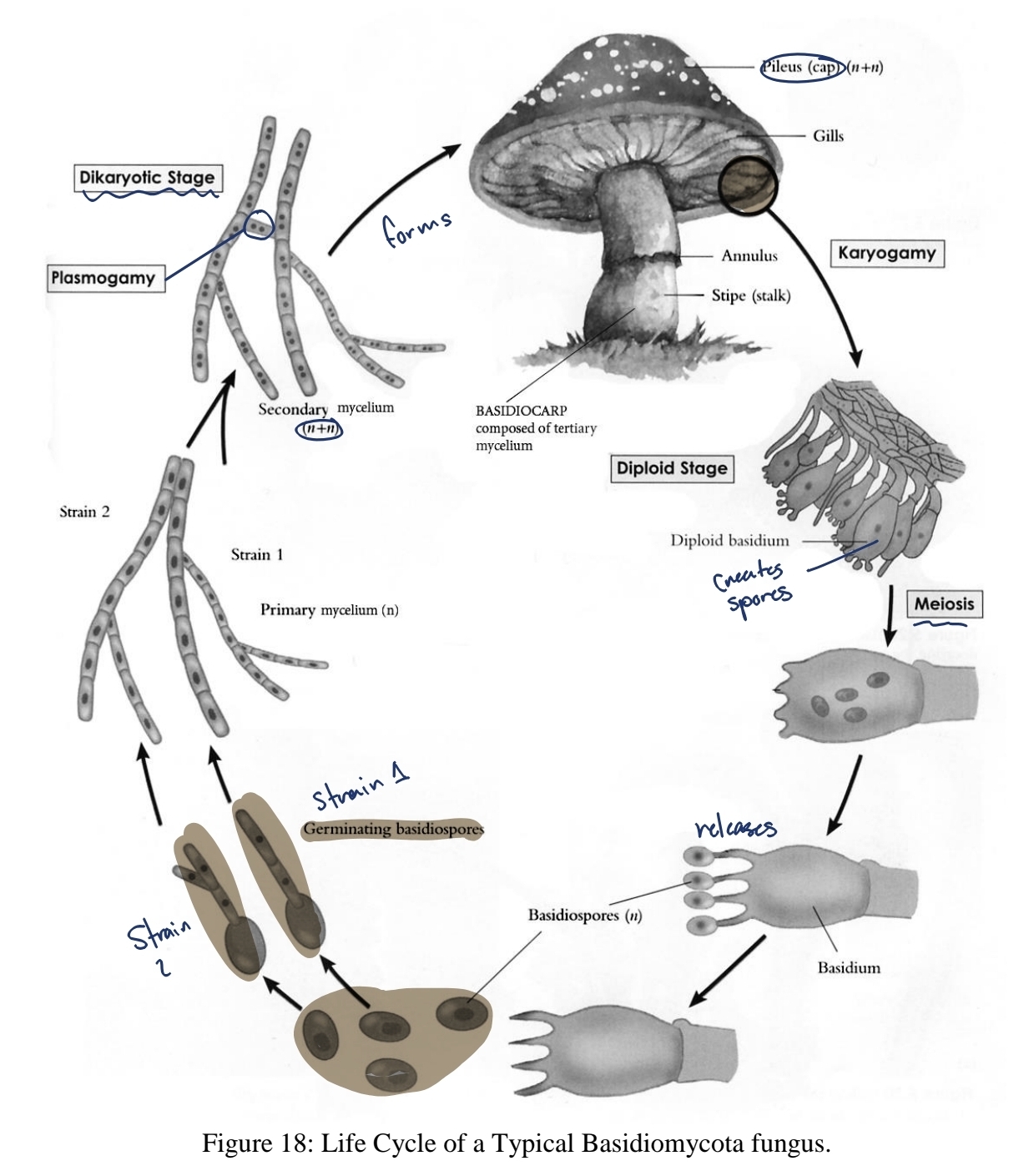
life cycle of basidiomycota - basidium
when the basidium forms, the termnal cell of the dikaryotic hyphae swells and the two haploid nuclei finally fuse (karyogamy)
the diploid basidium now undergoes meiosis and the 4 resulting haploid nuclei migrate through small stalks at the end of the basidium
the 4 basidiospores are forcibly ejected off the ends of these sta;ls and carried away in the wind
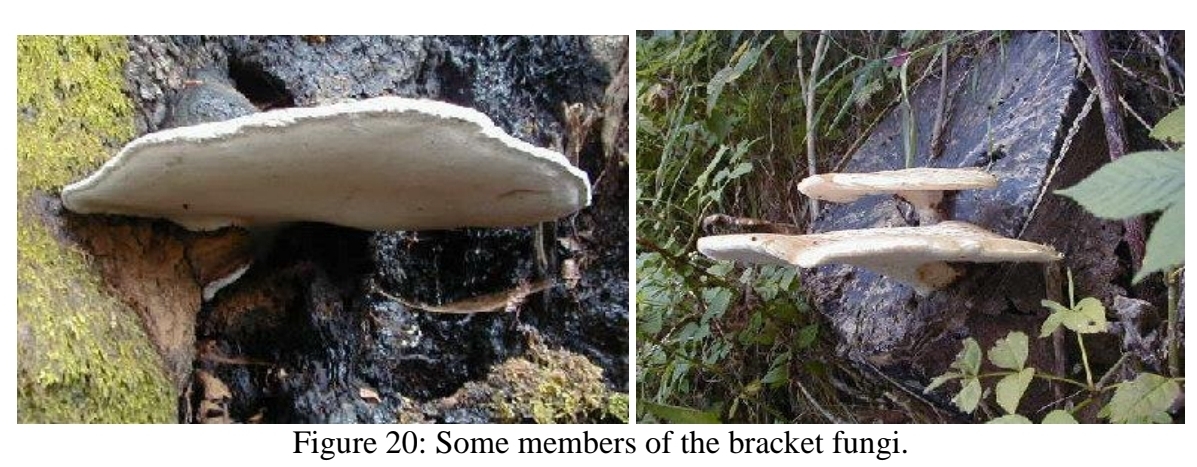
other examples of basidiomycota - bracket fungi
members of this diverse group of fungi produce basidiocarps that are woody, leathery, or papery, but never soft
the basidia are found covering the surface of gills (or teeth) or lining the inside of pores.
mant of the common bracket fungi (or shelf fungi) found growing on the surface of living or dead tree trunks are members of this group
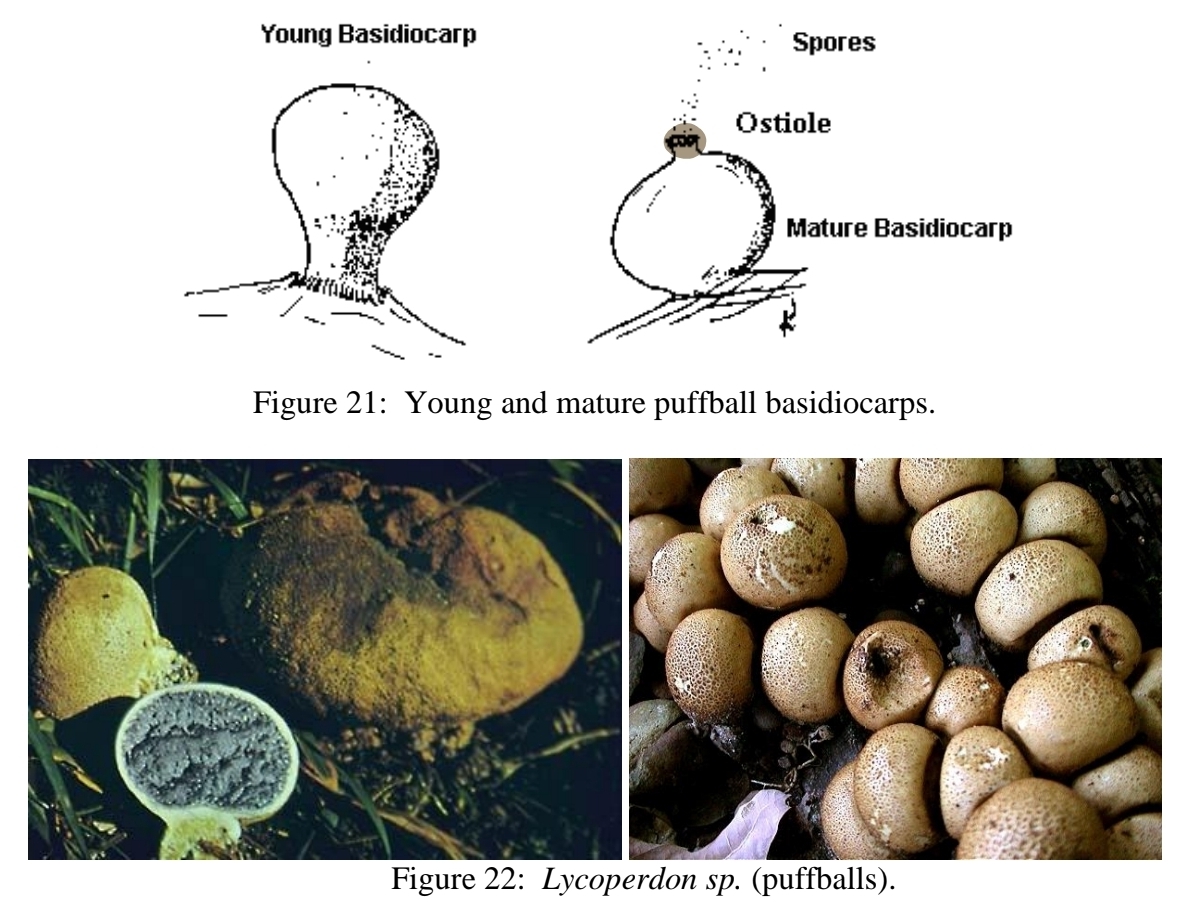
other examples of basidiomycota - puffballs and earth stars
in the puffballs, the mature basidiocarp consists of a papery outer covering with a small opening or ostiole on the top.
inside is the mass of spores.
when raindrops strike the leathery covering, “puffs” of spores are ejected through the ostiole
the ecological impact of protists and fungi
these organisms are integral parts of our living world and have important roles in many natural systems
their roles in any environment can be positive or negative
algal ecology
photosynthetic organisms in marine and freshwater habitats
the algal are the primary producers of these aquatic food chains
they capture energy from sunlight and covert it into energy stored in the chemical bonds of organic molecules
these molecules make up their bodies when make them food for other organisms
protist ecology
downy mildews generally live on land and are parasites of plants
many have significant impacts on economic plants and cause tremendous losses of crops each year.
the infamous Phytophthora infestans causes late blight of potatoes, which turns the stem of potatoes into a black slime.
it's name literally means “plant destroyer"
fungal ecology
one thing common to all fungi is that they do not make their own food.
fungi get their nutrients from existing organic matter and there are many sources of organic matter in the world: leaf litter, dung, soil, animals, dead wood, and living plants
saprophyte
fungal that feeds on dead organic matter
what about fungi that get their nutrients from living organisms?
these fungi gain their nutrients in two types of relationships:
where there is no benefit to the other organism - fungus is a parasite so the relationship is parasitic.
where there is some benefit to both the fungus and the other organism - the relationshup is considered to be mutualistic.
note that in these associations that the benefits are not always to be equally shared.
another word to express both these relationships is symbiotic, which covers all types of associations
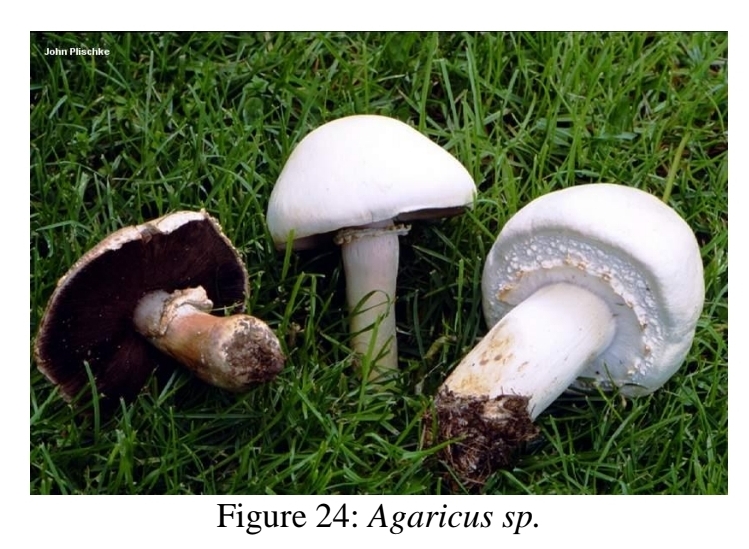
saprophytes
many free living soil fungi feed by secreting digestive enzymes through their outer cell walls and the digestion of the dead organic matter in the substrate occurs externally
they then absorb the digested nutrients through their cell walls
Agaricus is a common genus of saprophytic fungi. The mycelium is feeding on dead organic matter in the ground
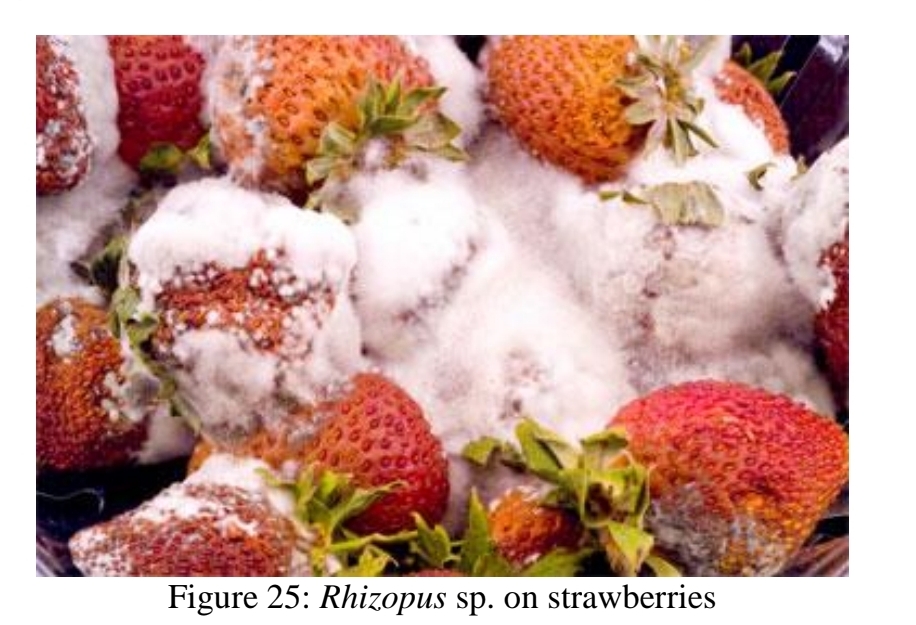
Parasitic fungi
many fungi are parasites of plants and other organisms
they sometimes act as crop pests and frequently have disastrous effects on our food supplies
e.g. 10%-50% of the world;s fruit harvest is lost each year on account of fungal pests
while an antibiotic revolution which has saved millions of lives first started with the discovery of the antibacerial properties of penicillin.
we also use fungi extensively in food manufacturing to produce alcohol, bread, cheeses, and much more.
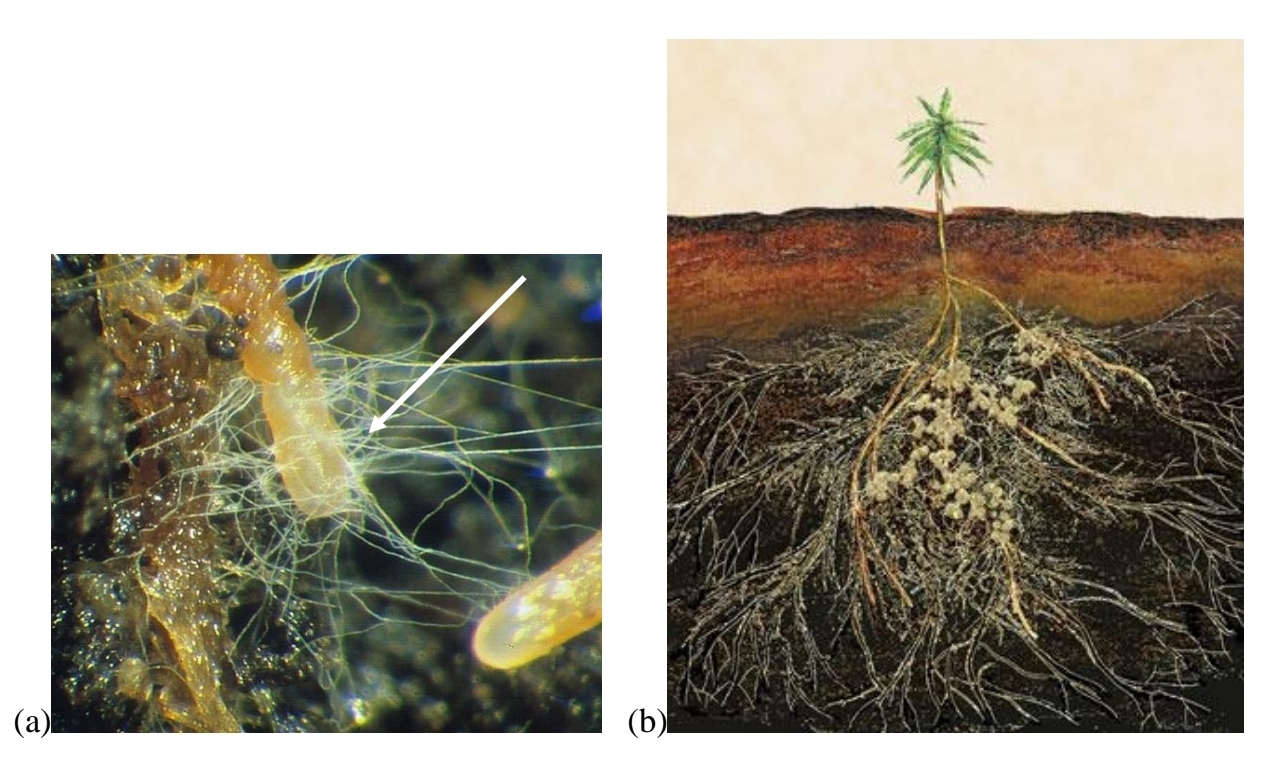
mutualistic fungi - Mychorrhizal associations - Plants
an important type of mutualistic relationship is the mycorrhizal association between fungi and plants.
in a mychorrhizal association the fungal hyphae of an underground mycelium are in contact with plant , where the association is commonly mutually
about 90% of plant species form mychorrizal, where 10%-30% of the food produced by the plant moves through to the fungi
this occurs through, photosynthesis, where a chlorophyll-containing plant makes simple carbs
mutualistic fungi - Mychorrhizal associations - Fungi
the associared fungal mycelia are adept at extracting minerals (especially nitrogen and phosphorus) from the soil and these pass through to the plants
mutualistic fungi - What other benefits does the association provide plants?
Mycorrhizal fungi can also protect plants against pathogenic fungi and micro organisms
plants who have their fungal partner removed do not grow as well as plants with them intact
 Note
Note  Flashcards (101)