Lec 1 Transport Across membranes
 Studied by 0 people
 Call Kai
 Learn
Learn Practice Test
 Spaced Repetition
 Match
Match Flashcards
 Knowt Play
1/26

There's no tags or description
Looks like no tags are added yet.
Name | Mastery | Learn | Test | Matching | Spaced | Call with Kai |
|---|
No analytics yet
Send a link to your students to track their progress
27 Terms
phosphatidylserine is a xxx, involved with….
a type of membrane phospholipid
involved in apoptosis
what are phosphotidylinositols, what are they involved w
a type of membrane phospholipid
involved w signaling
what are CD Markers , how are they used?
=cluster differentiation markers, used to identify cell types + functions
- are proteins, glycoproteins, or glycolipids that are specific to a cell.
They can be single molecules or groups of molecules.
- Used for diagnosis and cell testing: flow cytometry and/orfluorescence microscopy
what do Cadherins, integrins and selectin share in common?
all CAMs
what are cadherins?
= involved in surface adhesion forming
homodimers. Mediate cell to cell interaction. Bind to the same type of CAM (Homophilic).
– Important for development of nervous system and during gastrulation.
what are integrins?
integrins = surface adhesion proteins that bind to
different types of CAMs (heterophilic). Form
heterodimer proteins composed of two unlike subunits, α and β. Mediate cell-to-extracellular interactions.
– Important for cell functions: apoptosis,
differentiation, transcription, etc.
what are selectins?
= have extracellular domains that bind specific
polysaccharides on the surface of an adjacent cell. Act as monomers. Bind to different types of CAMs. - heterophillic
– essential for immune system (leukocyte migration).
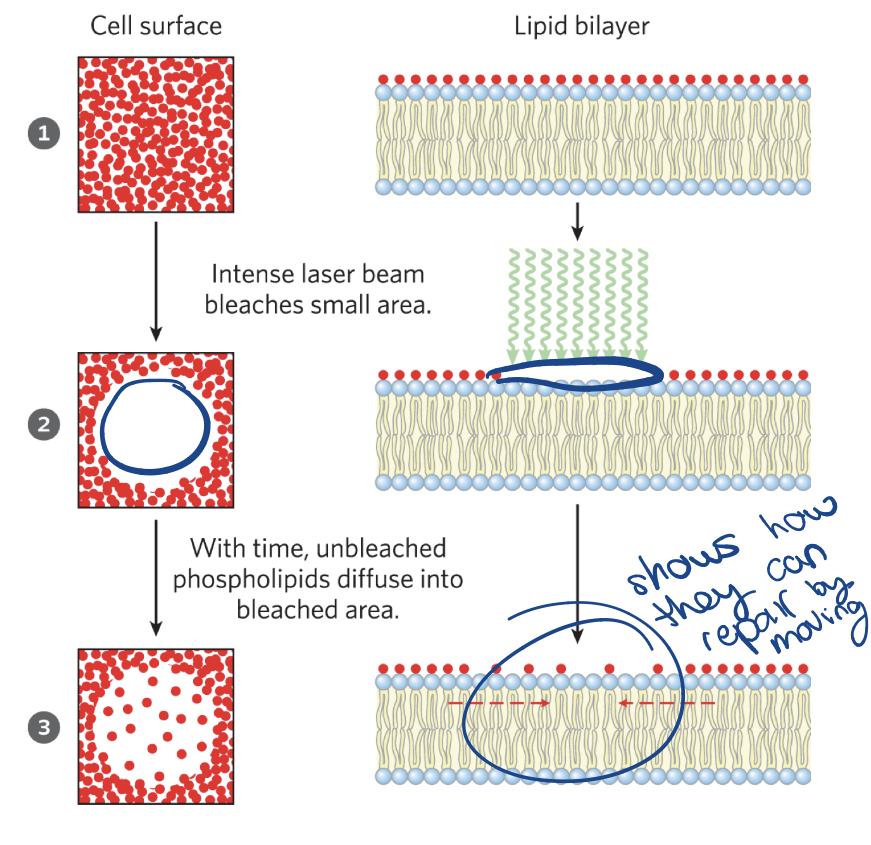
what is FRAP
fluorescence recovery after photobleaching, show how the lipids will eventually shuffle around
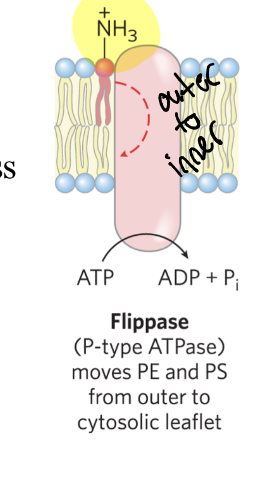
what does flippase do?
catalyze translocation of the amino-
phospholipids (phosphatidylethanolamine - PE) and phosphatidylserine (PS) from the extracellular to the cytoplasmic leaflet
– consume ~1 ATP per molecule of phospholipid
translocated
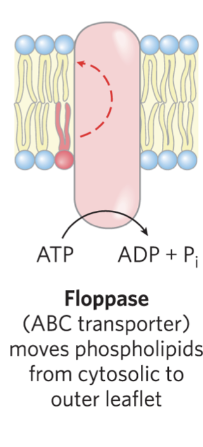
what does floppase do?
move plasma membrane phospholipids from
the cytoplasmic leaflet to the extracellular leaflet
– are ATP-dependent
what does scrambles do? what does it require
moves lipids in either direction FAVOURING equilibrium, no ATP required, but DO require Ca+2 ion from inside cell
what are micro domains/ rafts? what is function and what re they made of
make the bilayer slightly
thicker and more ordered (less fluid) than
neighboring, phospholipid-rich regions
clusters of cholesterol
and sphingolipids
what are caveolae?
aka little caves
Involved in variety of cellular
functions:
membrane trafficking within
cells and the transduction of external signals into
cellular responses
allow for extra elasticity, if cells needs to expand surface area ex. osmotic pressure
what are caveolin
= integral proteins that binds to inner membrane (usually associated w rafts of cholesterol)
*think caveolIN IN the caves
form dimers and force bilayer to curve INWARDS
what does fusion of 2 membranes require?
❖ Recognition each other (signal)
❖ Hemifusion (Close apposition and
local disruption of bilayer
❖ Fusion (fusion proteins)
*curvature ability of membranes is also important
what are SNAREs? what are 2 main types
SNAREs (snap receptors) = family of proteins
v-SNAREs = SNAREs in the cytoplasmic face of the intracellular vesicle. (v = vesicle)
t-SNAREs = SNAREs in the target membrane with which the vesicle fuses. (t =target)
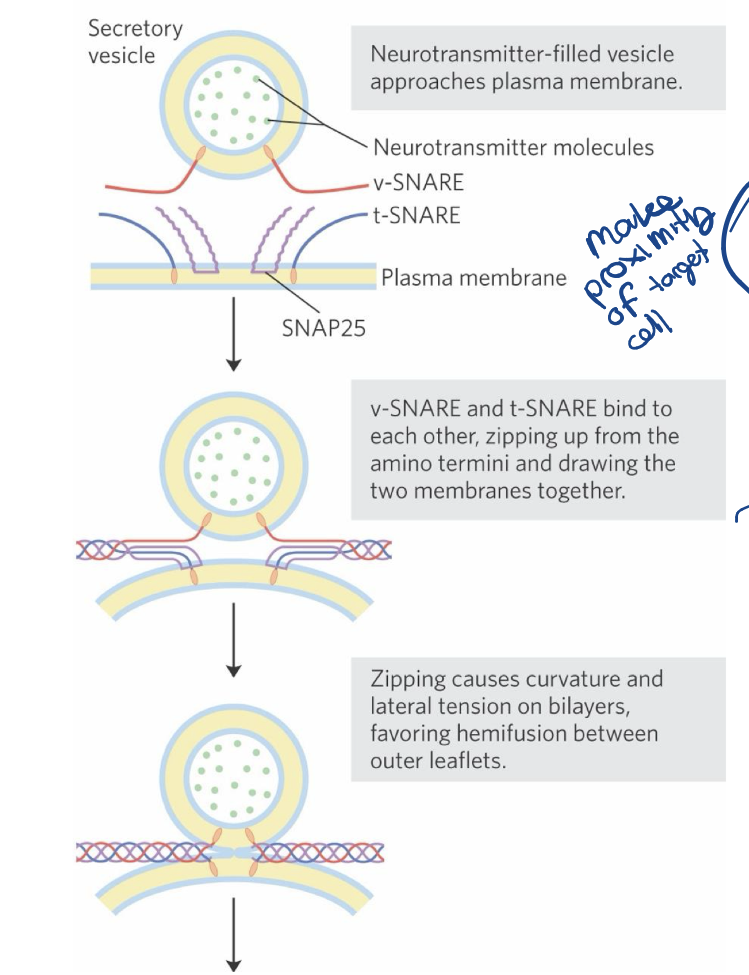
what are fusion proteins and 2 important ones
Fusion porteins= mediate specific
fusion of two membranes by bringing
about specific recognition and a
transient local distortion of the bilayer
structure
SNAP25= regulatory protein induced by Ca+
NSF (N-ethylmaleimide-sensitive
fusion factor) proteins that
disassemble SNARE complex post-fusion
how do polar vs non-polar and ions compounds cross membrane?
-nonpolar uncharged small compounds can
dissolve in the lipid bilayer and cross a membrane
unassisted
VS
-polar compounds and ions require a specific membrane protein carrier
what are 3 classes of transport systems?
UNIPORT → only 1 substrate
SYMPORT (co transport)
ANTIPORT (co transport)
what is simple diffusion? what is relevancy of electrochemical gradient?
= movement of a solute from the region of higher conc. to the region of lower conc , unassisted by a protein transporter, until equal concentration.
electrochemical gradient—>determines direction a charged solute moves across a membrane (bc it will go from high to low in the case)
what is membrane potential Vm?
difference of charge separated by permeable membrane
produces a force that:
opposes ion movements that increase Vm
drives movements that reduce Vm
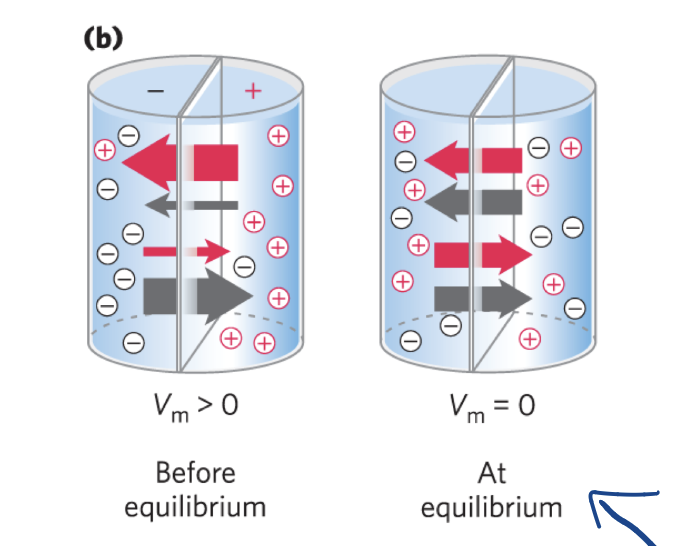
what is facilitated diffusion? what are 3 key transporters?
= simply facilitate movement down a
concentration gradient, increasing the transport rate
GLUCOSE TRANSPORTERS:
GLUT1: in erythrocytes+blood/brain B+placenta+most tissues, important for basic glucose uptake and blood brain barrier
GLUT4: in mucle+heart+fat, important for mediating glucose intake in cell by insulin action, insulin is inc—> GLUT4 activity will be inc
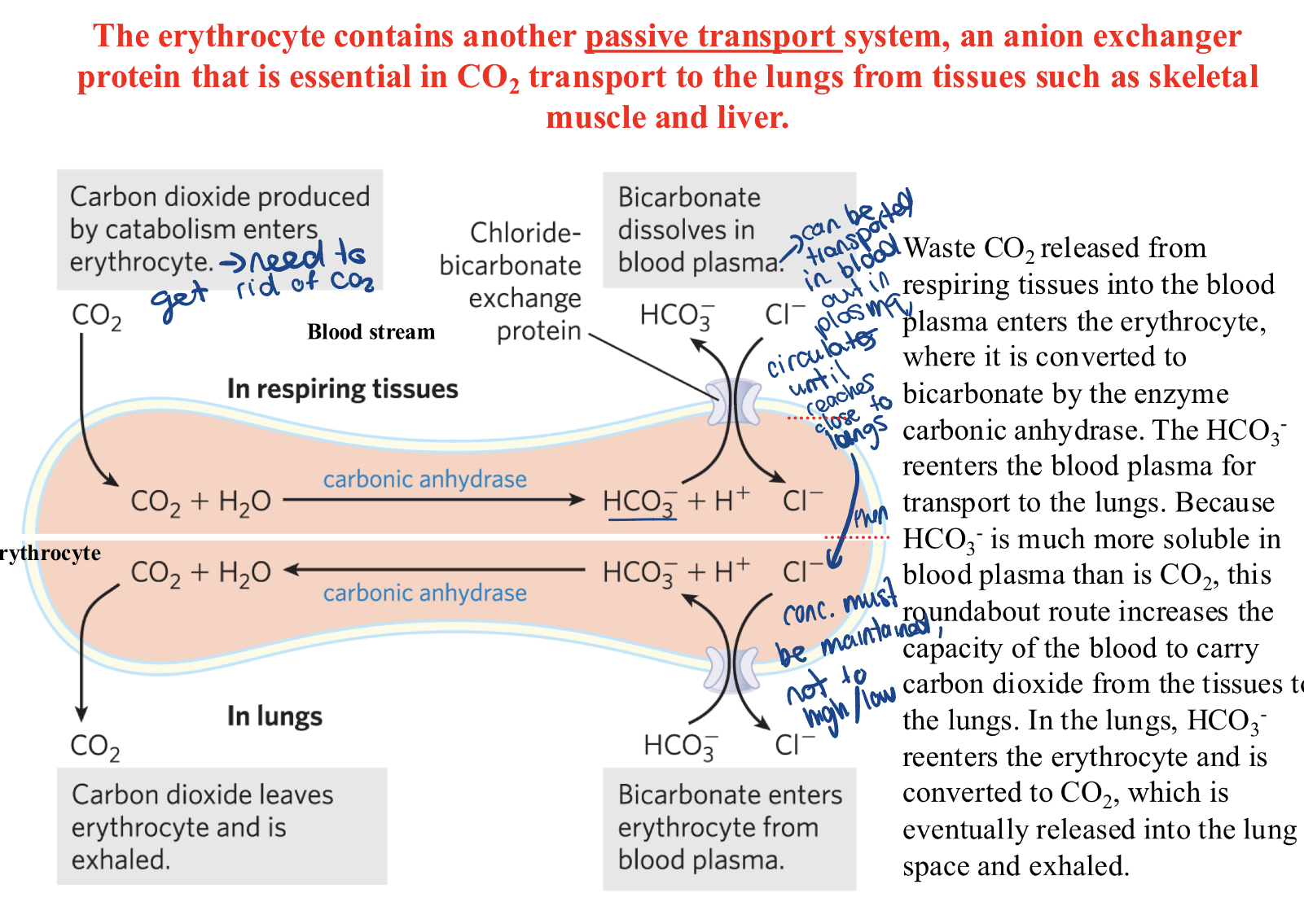
see pic, Anion exchanger for CO2 transport from blood to around body to eventually leave in lungs
what is active transport and 2 types?
= movement of solute AGAINST it’s conc. gradient, results in amount above eq. point
primary active transport; the energy released by ATP hydrolysis DIRECTLY drives solute S1 movement against an electrochemical gradient
a gradient of an ion (often
Na+) has been established by primary active T ransport. → Movement of S1 down its electrochemical gradient (from high to low) now provides the energy to drive cotransport of a
second solute, S2, against its electrochemical gradient
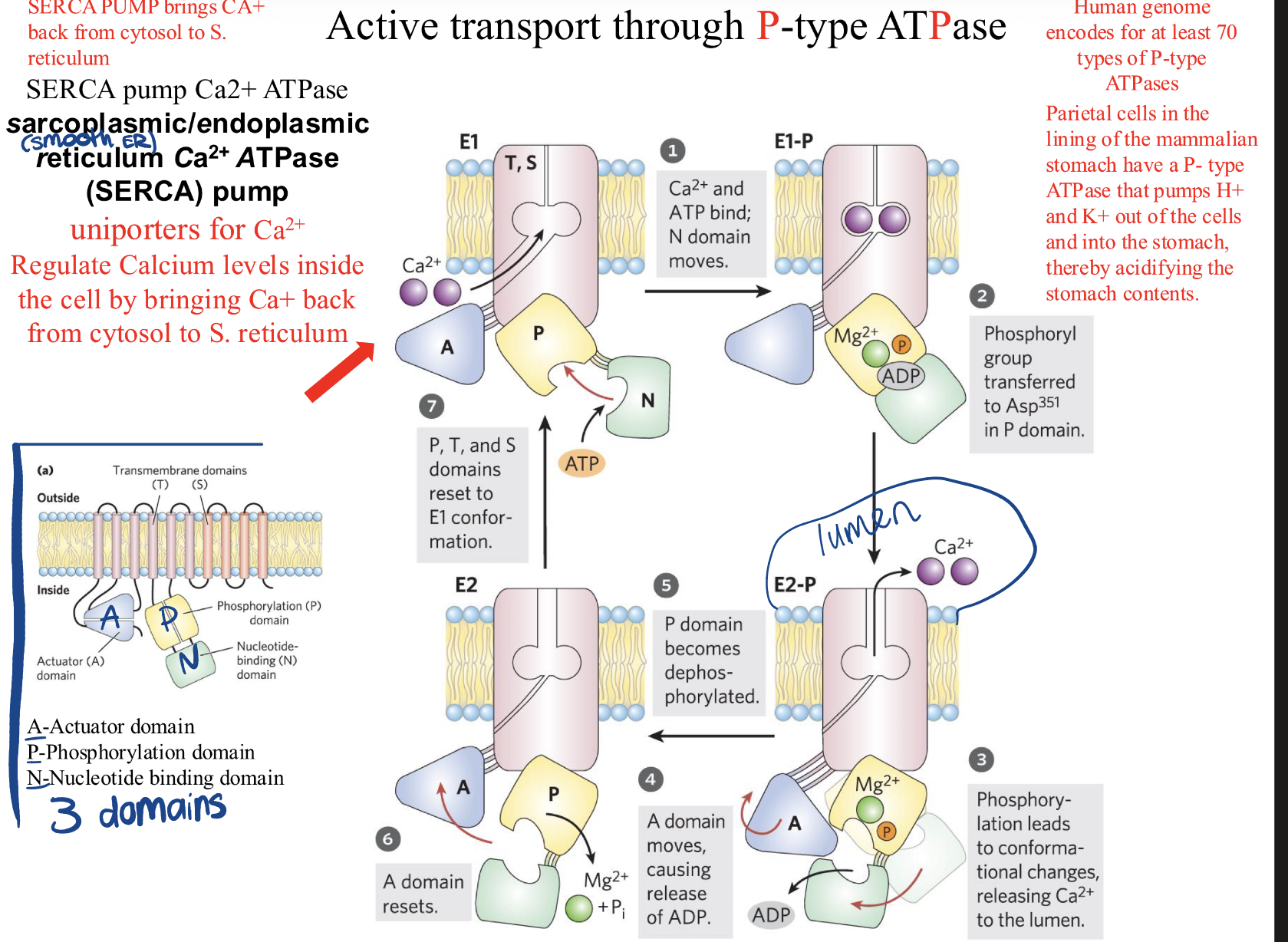
what is SERCA PUMP? what are 3 domains ?
brings Ca+ from cytosol to sER
uniport
has three domains:
A-actuator
P-phosphorylation domain
n-nucleotide binding domain
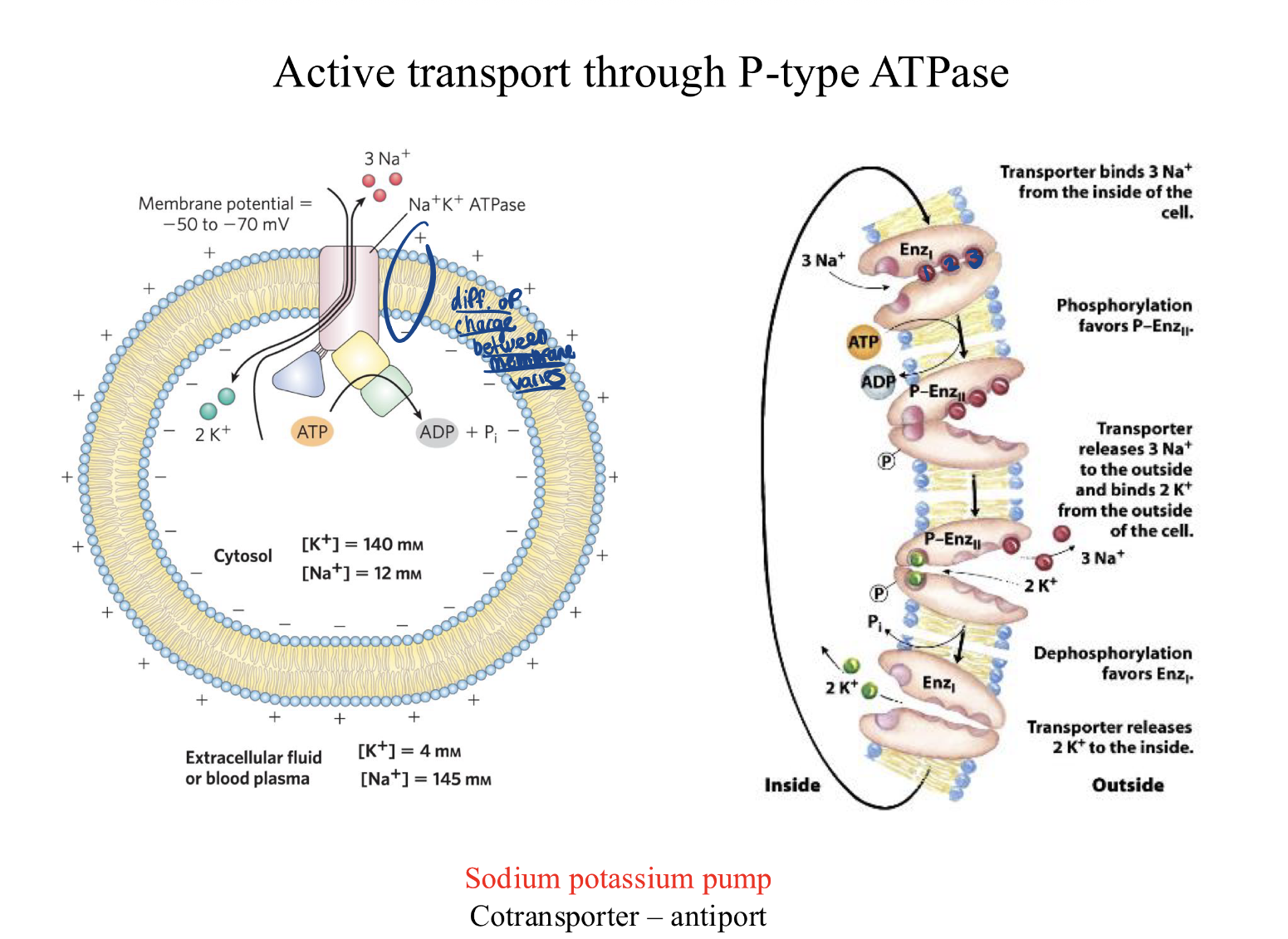
info on sodium potassium pump, what is ratio? what is membrane potential
3 Na+ OUT to 2K+ IN
ranges from -50 to -70 mv
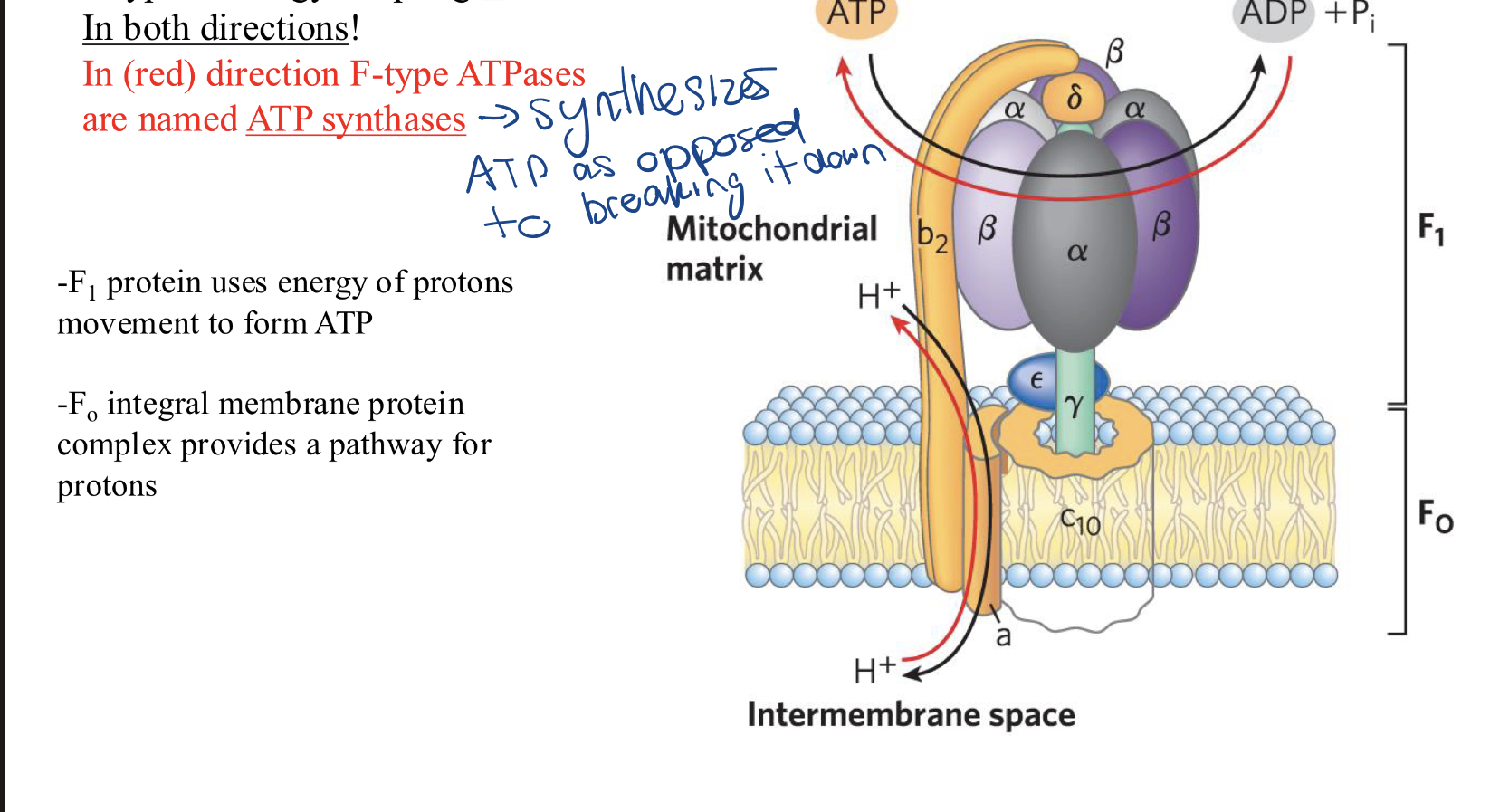
what are F-type ATPases, what’s an example?
= energy coupling factors, can hydrolyze and synthesize ATP
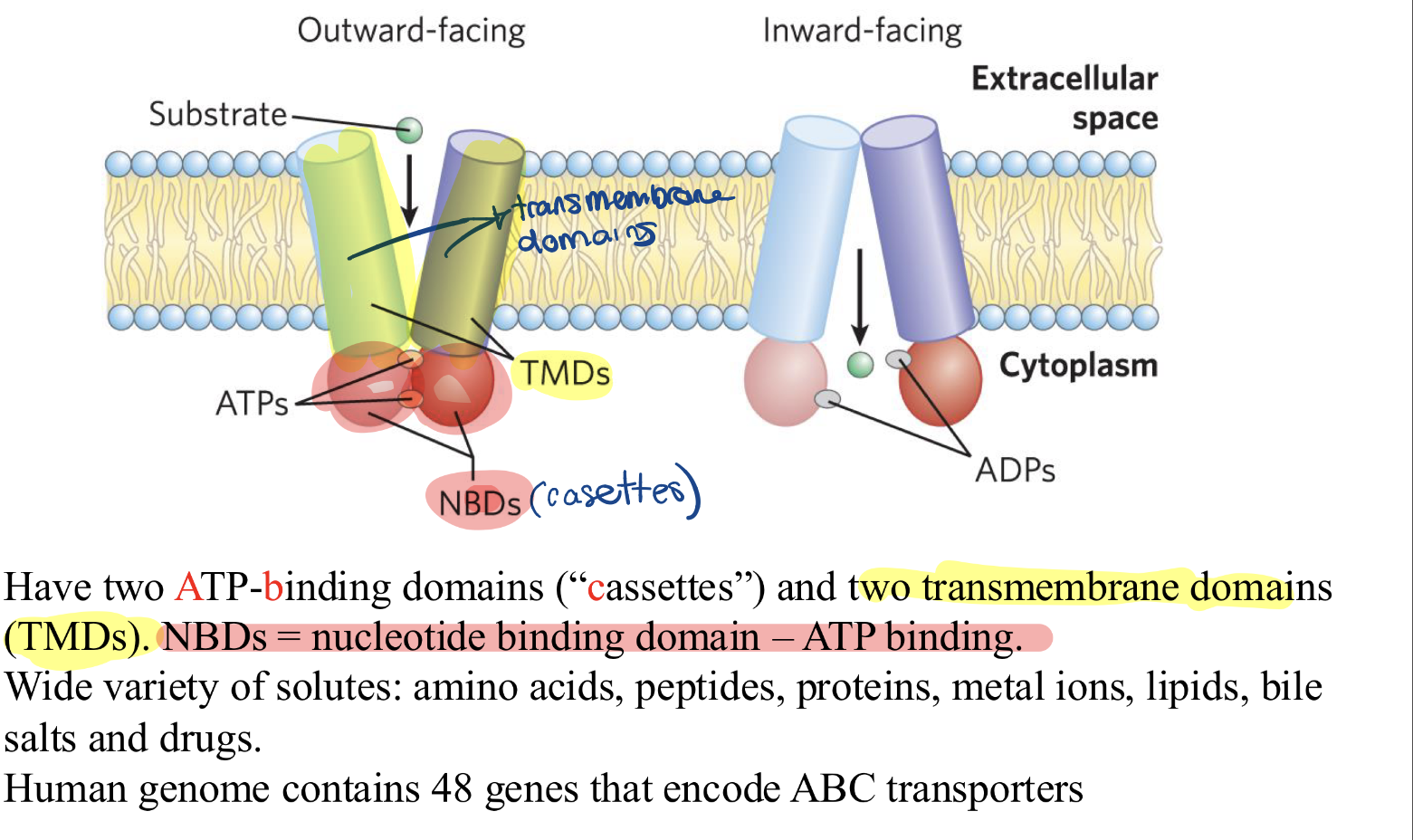
what are ATP-binding cassets?
= ABC transporters, family of ATP-driven transporters that pump substrates across a membrane against a concentration gradient
have 2 TMDs (transmembrane domains)
have 2 NBDs (nucleotide binding domains—> the cassettes)
 Note
Note  Flashcards (129)