Neuro Basics and Examination
 Call Kai
 Learn
Learn Practice Test
 Spaced Repetition
 Match
Match Flashcards
 Knowt Play
1/39

There's no tags or description
Looks like no tags are added yet.
Name | Mastery | Learn | Test | Matching | Spaced | Call with Kai |
|---|
No analytics yet
Send a link to your students to track their progress
40 Terms
What’s the brain and SC make up?
What’s the presentation if affected?
CNS
UMN presentation
Nerve endings and anything else makes up what?
What’s the presentation if affected?
PNS
LMN presentation
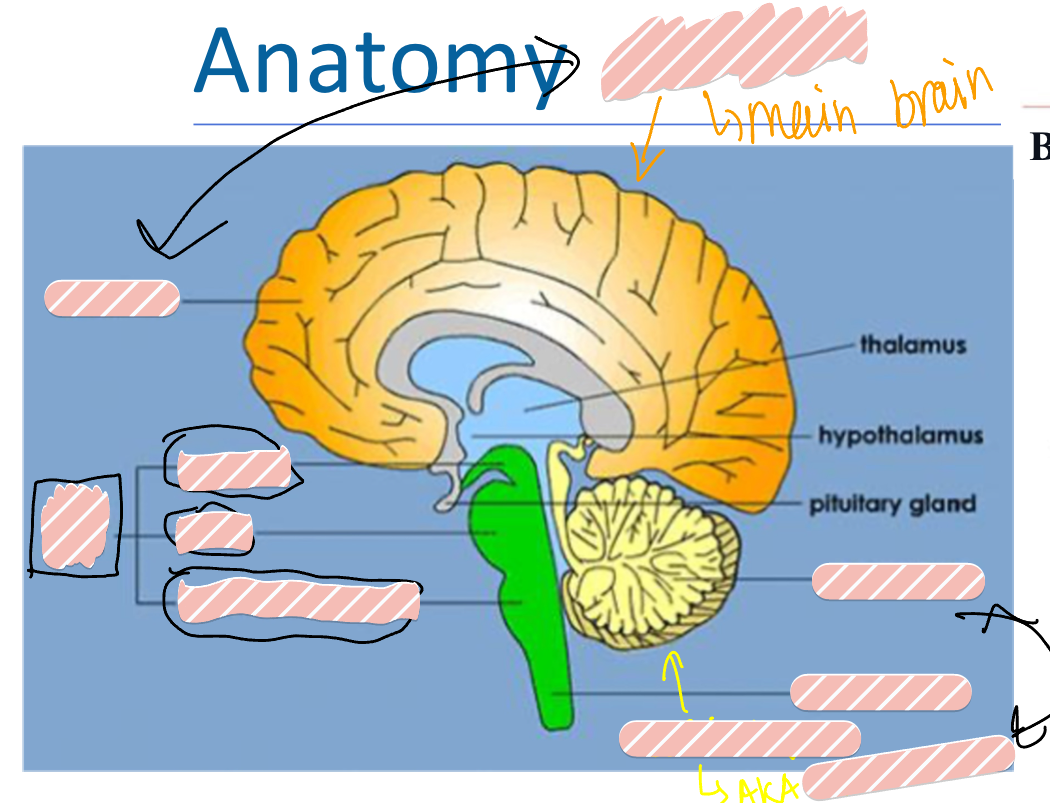
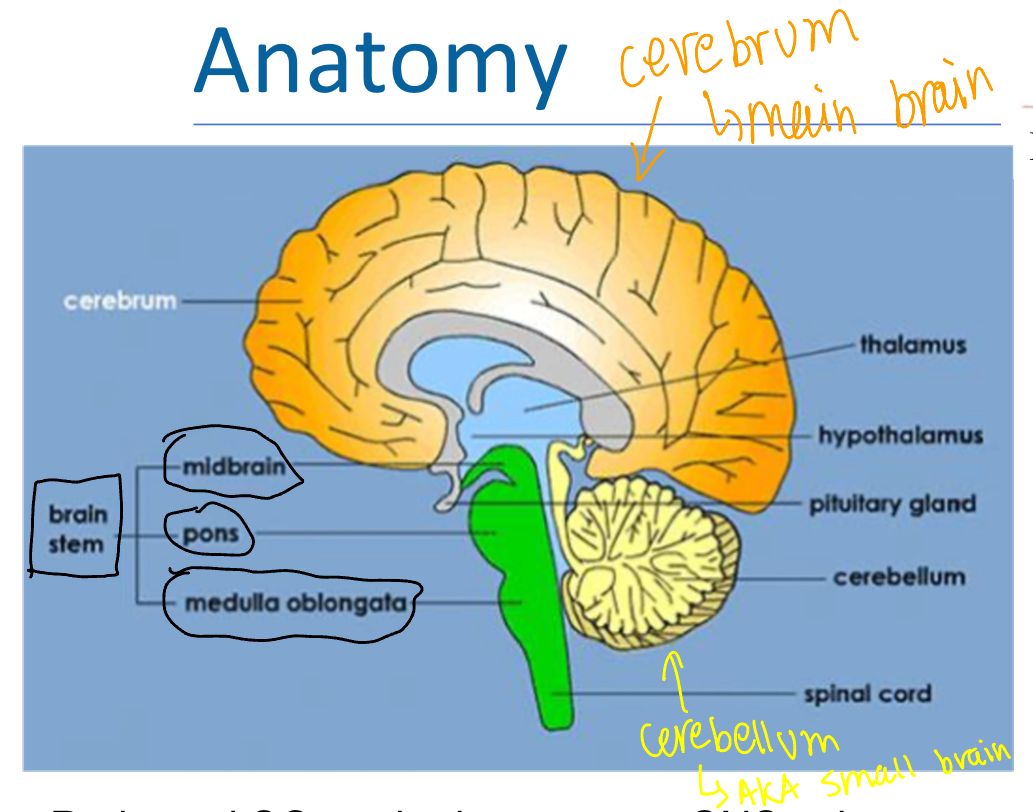
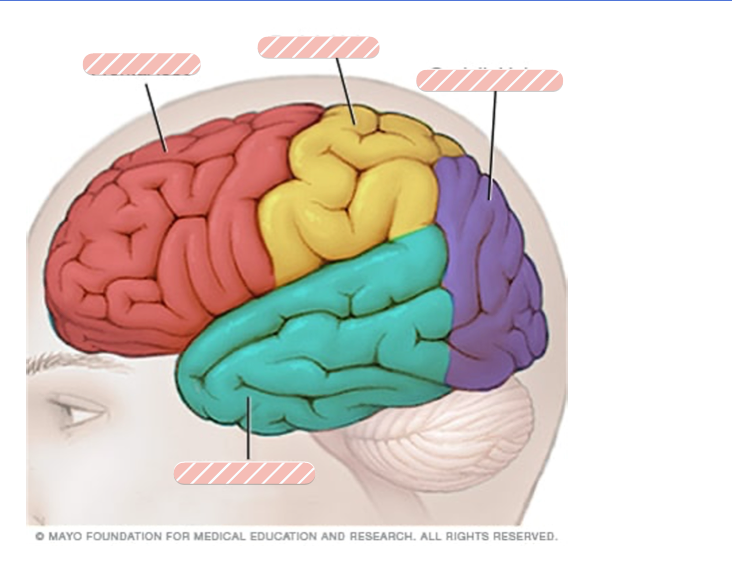
How many lobes in each hemisphere? In total?
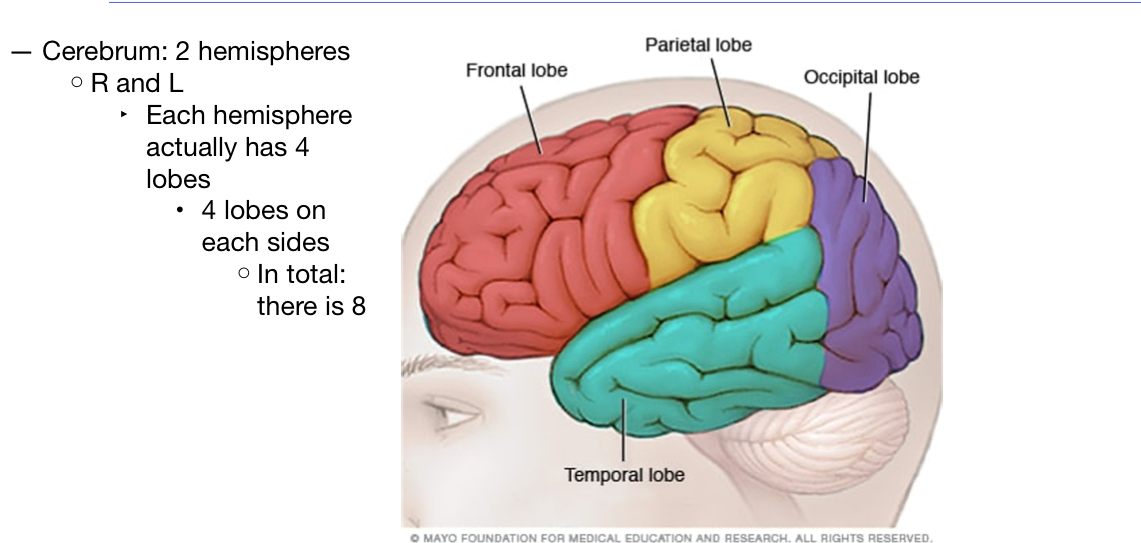
Frontal lobe lesion: “on top” of everything whats the tip?
4 things: 1,3,3,1
A: aphasia (broca’s) - speech issue
C: • Controls plan, programming, movement
E: • Emotional, behavior control, personality
O: • Olfaction - sense of smell
Temporal lesion:
Comprehension of 2 things?
Aphasia of what?
• Hearing and language comprehension
• Aphasia: Wernicke’s (- able to understand)
Aphasia: tip? Which is usually the dominant hemisphere?
Which one causes brocas? What’s the tip?
Which one causes wernickes?
Left hemisphere is the dominant hemisphere
frontal lobe (FB)
Temporal lobe
Broca:
Broken what?
Expressive what?
Are they fluent?
Which lobe?
Treatment suggestions?
Broken speech
Expressive aphasia
Non-fluent aphasia
Lobe: Frontal lobe
Treatment: Yes/No questions
Don’t ask open ended questions
Wernickes: usually which side? whats the tip?
Unable to what?
Which aphasia?
Are they fluent?
Word what?
Which lobe?
Treatment suggestions?
TURF WAR
Unable to understand
Receptive aphasia
Fluent aphasia
Word salad
Lobe: Temporal lobe
Treatment: gestures/demonstrations
Visual cues/pictures
Parietal lobe lesion:
Which disorders? What type?
Loss of what?
Perceptual disorders: e.g. unilateral neglect
Sensory loss
Occipital lobe lesion:
• Visual loss
A patient presents with speech difficulties such that their speech is slow and laborious. The patient will frequently omit small grammatical words, such as "is" and "the," while speaking. However, they seem to understand spoken language quite well. Based on this information, which of the following conditions does the patient MOST LIKELY have?
A. Wernicke's aphasia B. Broca's aphasia C. Global aphasia D. Lesion to CN V
B. Broca's aphasia
cranial nerves: the Harry Potter tip?
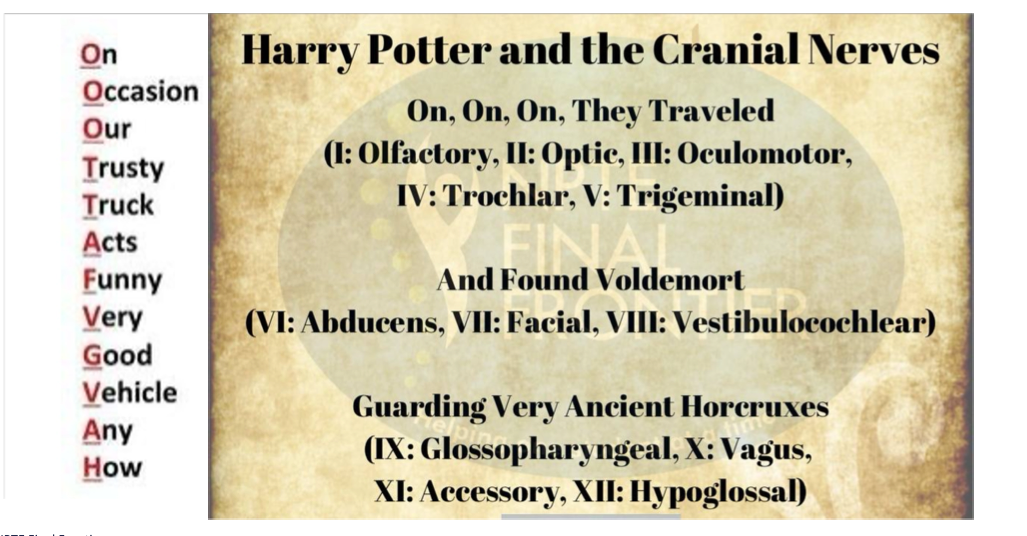
Cranial Nerves - Type
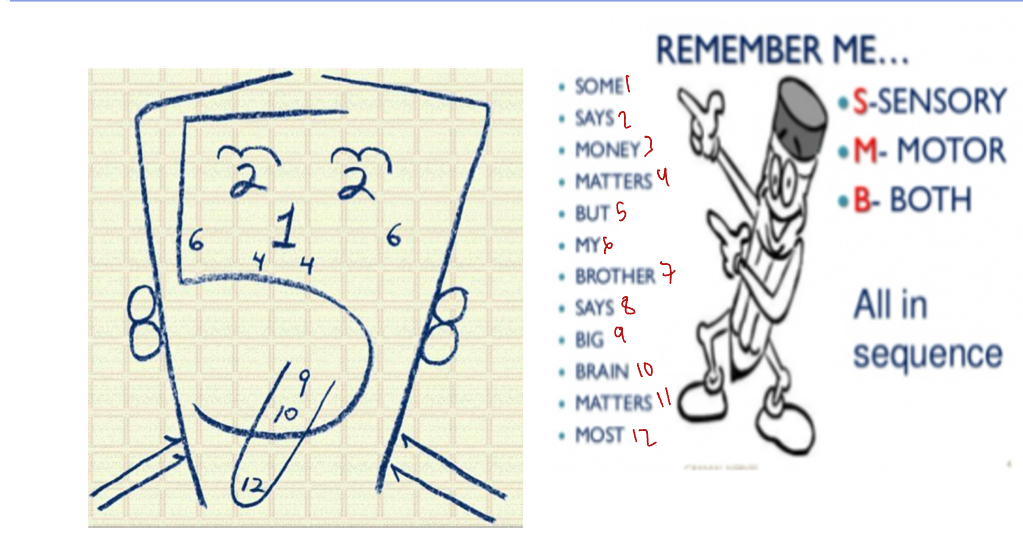
Cranial Nerves - Location
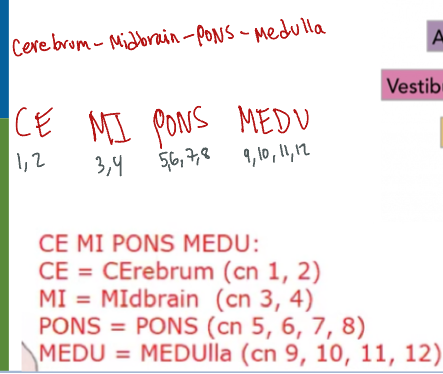
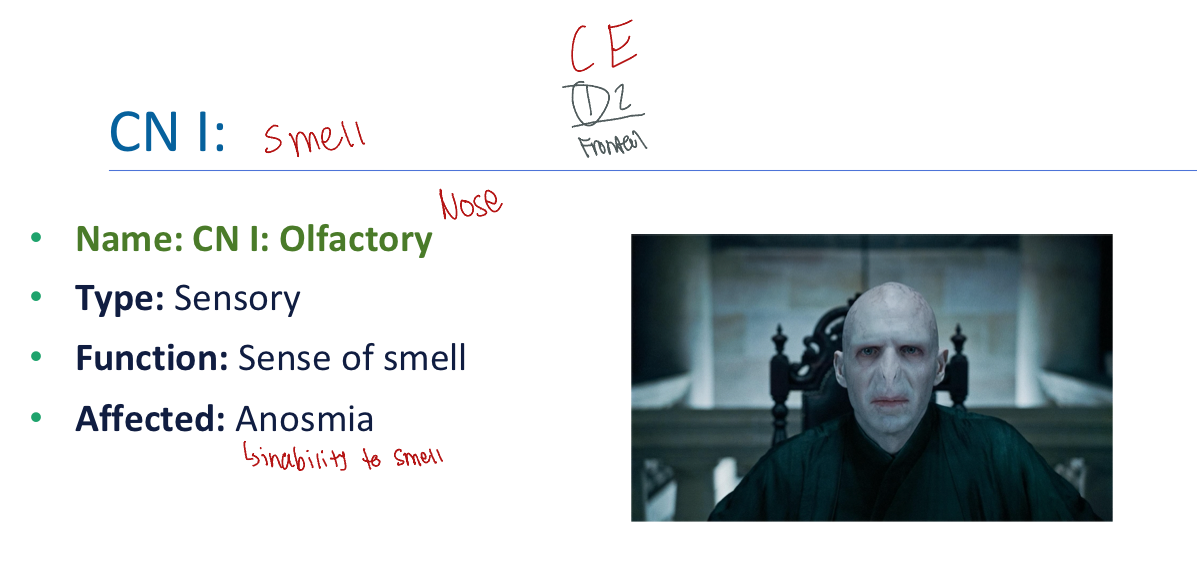
CN 1:
Name?
Type?
FXN?
affected?
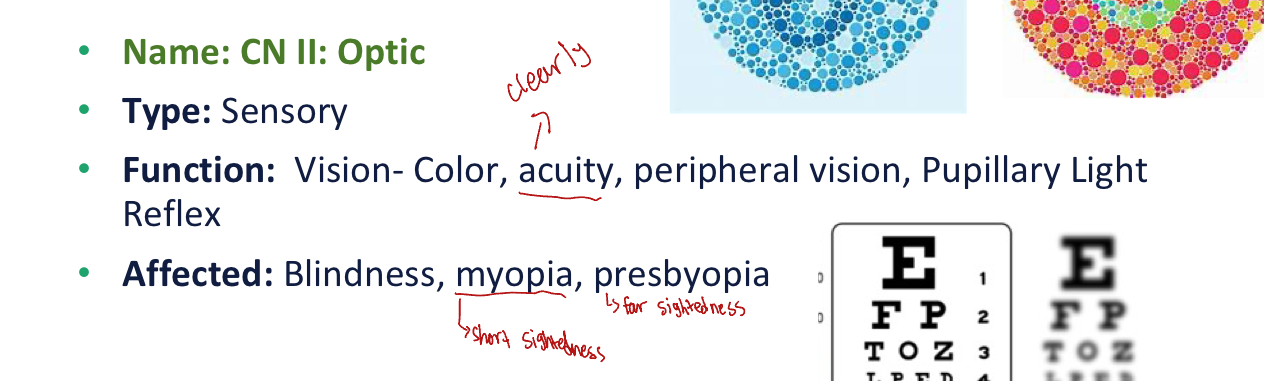
CN 2:
Name?
Type?
FXN: 4 things for vision?
affected: 3 things?
Pupillary light reflex:
FXN?
Describe the process of it?
Is cn2 sensory or motor?
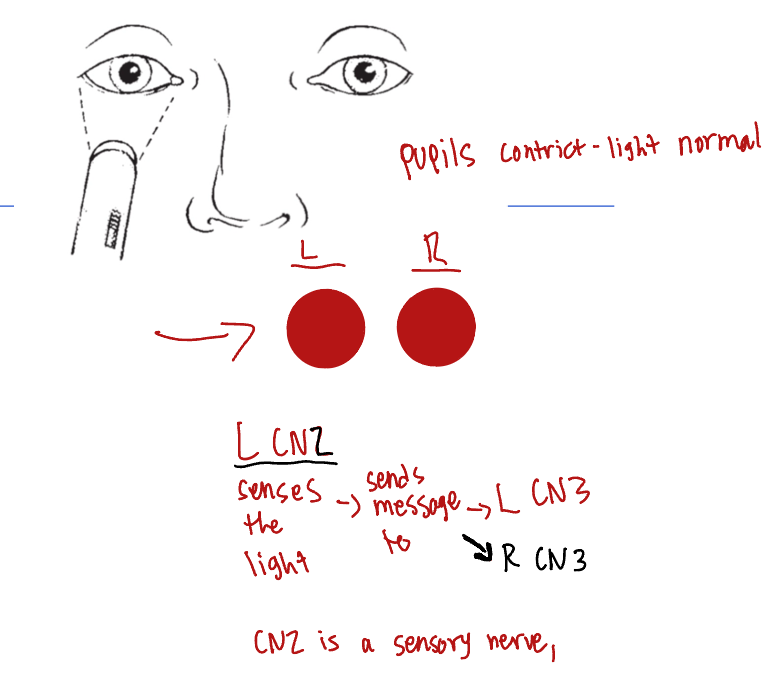
question: if shining Light in L eye, R CN2 doing anything?
NO!
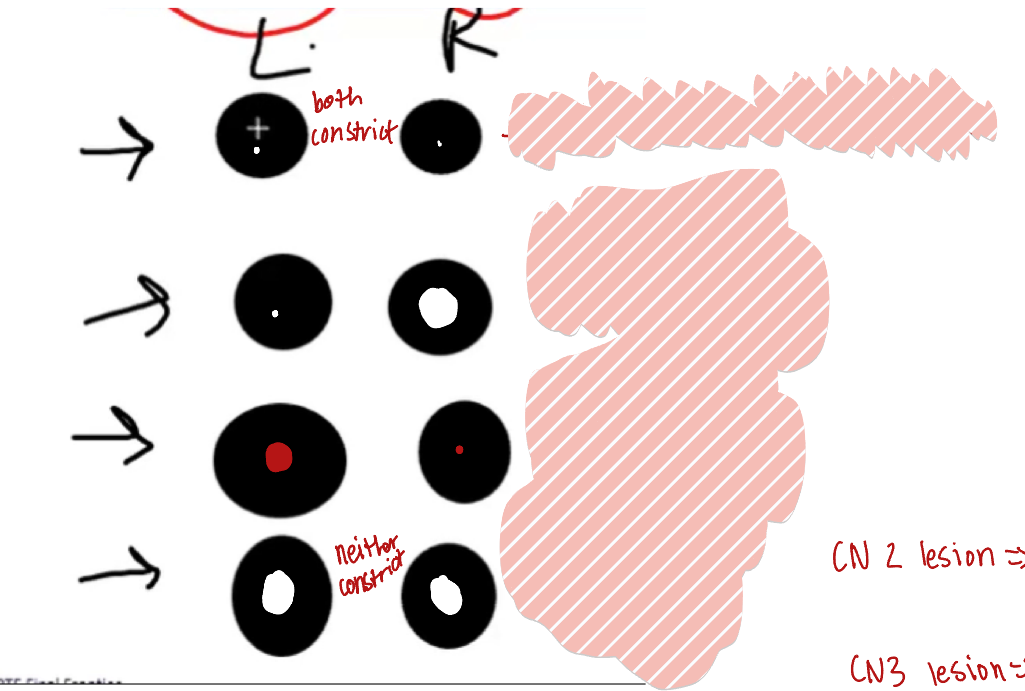
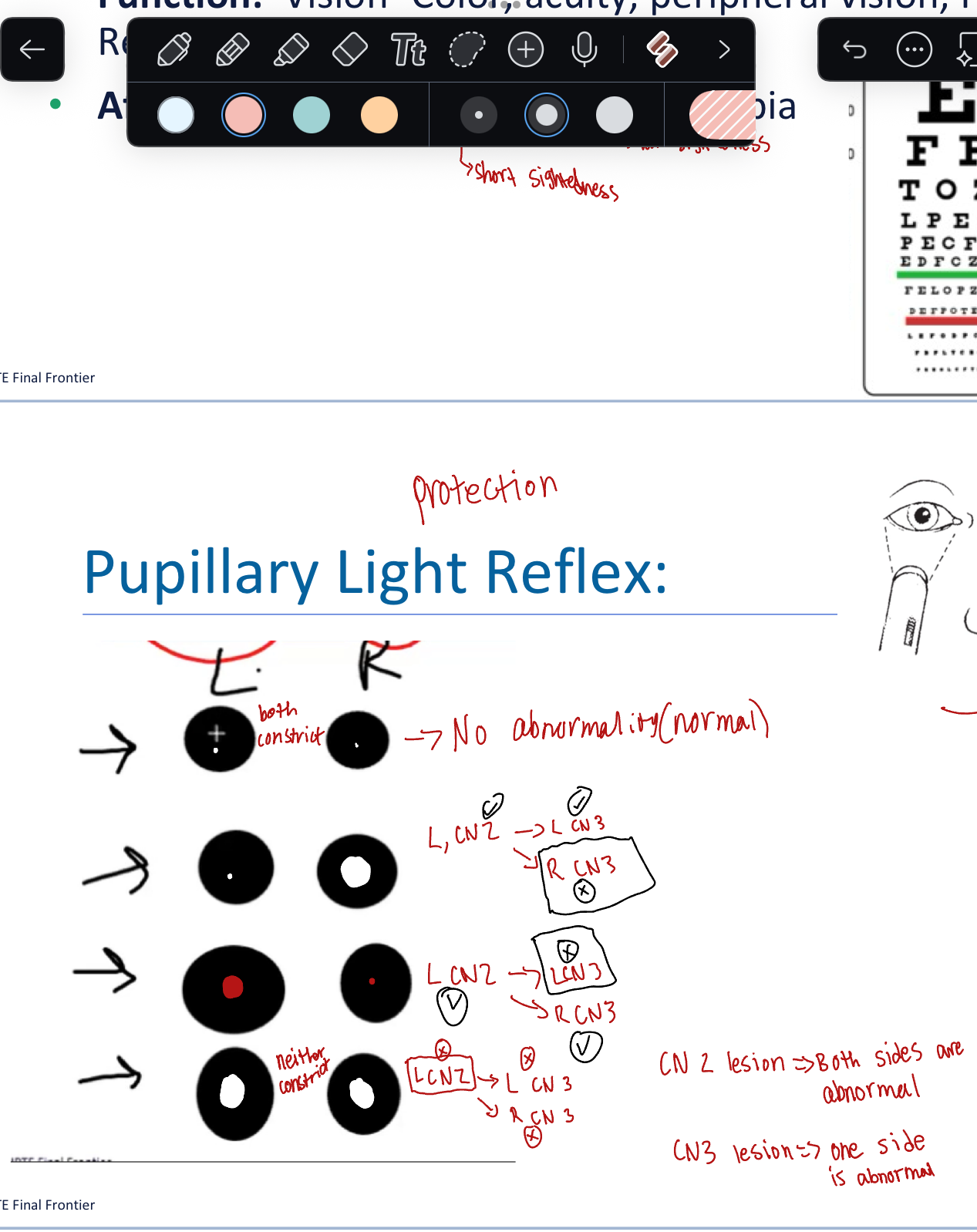
During assessment of pupillary light reflex, when the light is shone into the left eye, only the left pupil constricts, and the right pupil remains dilated. What is the MOST LIKELY explanation for these findings?
A. Right optic nerve damage B. Left optic nerve damage C. Right oculomotor nerve damage D. Left oculomotor nerve damage
C. Right oculomotor nerve damage
CN 3:
Name?
Type?
Name: CN III: Oculomotor Nerve •
Type: Motor
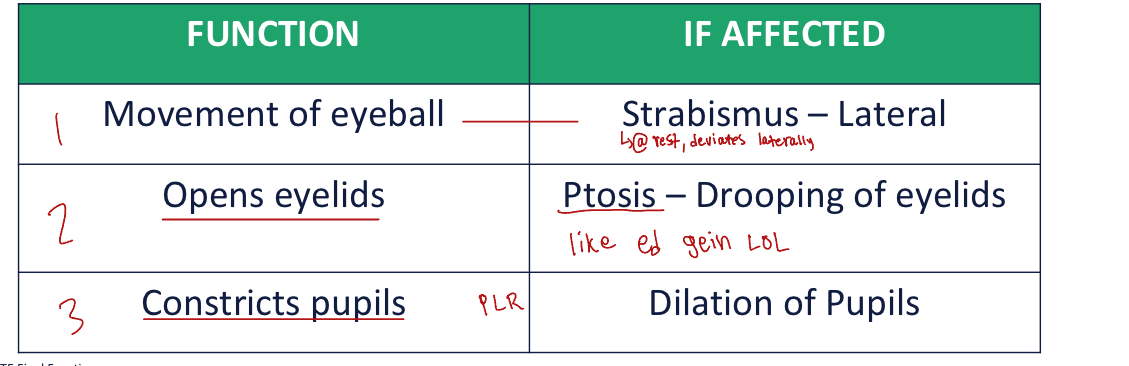
CN 3:
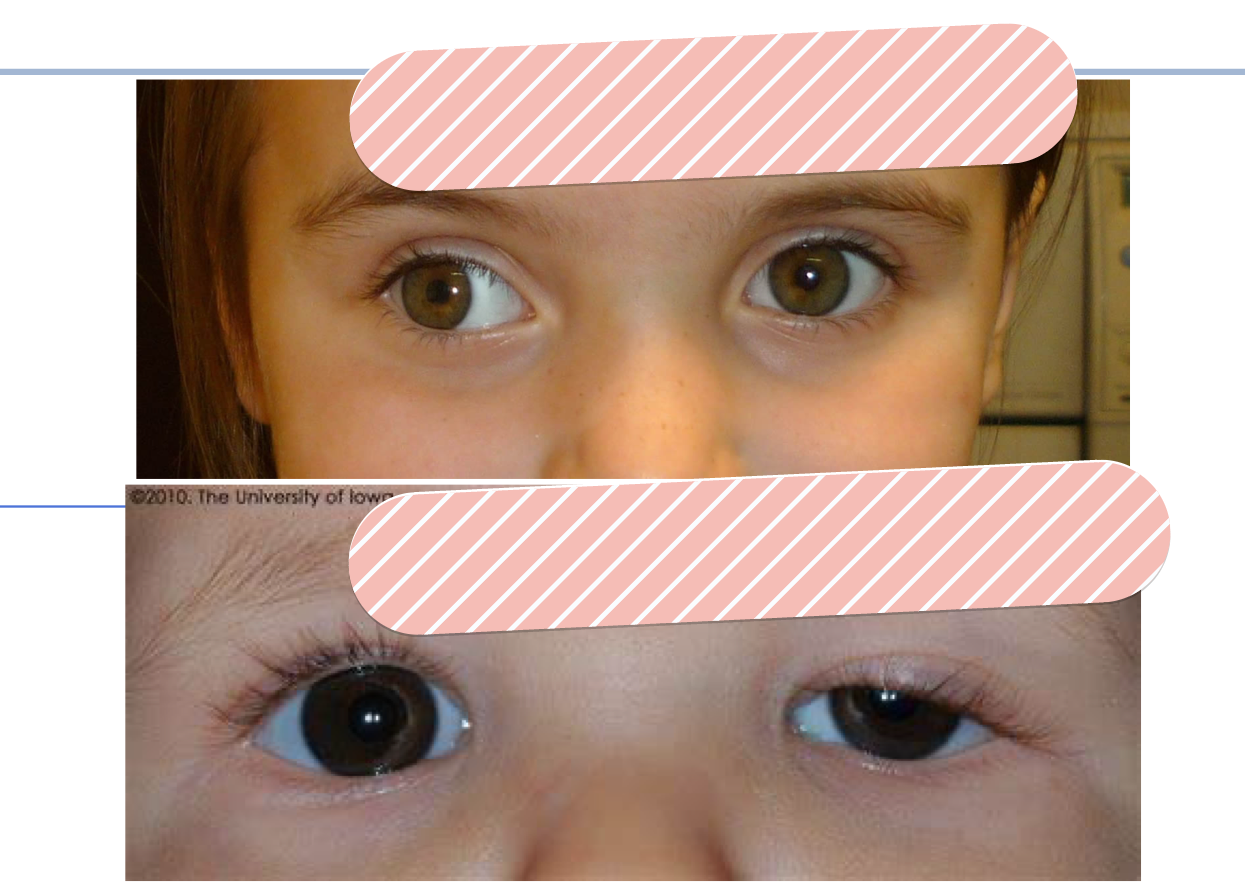
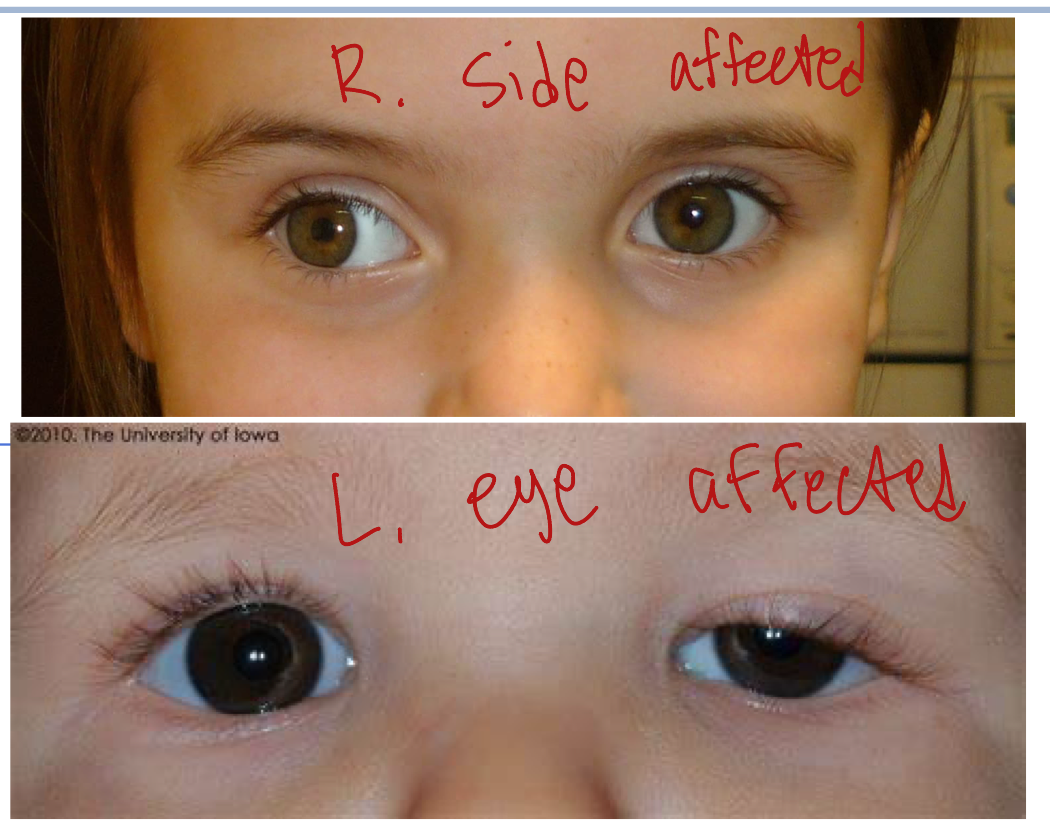
Function? 3
Affected? 3
Cranial Nerves IV, VI:
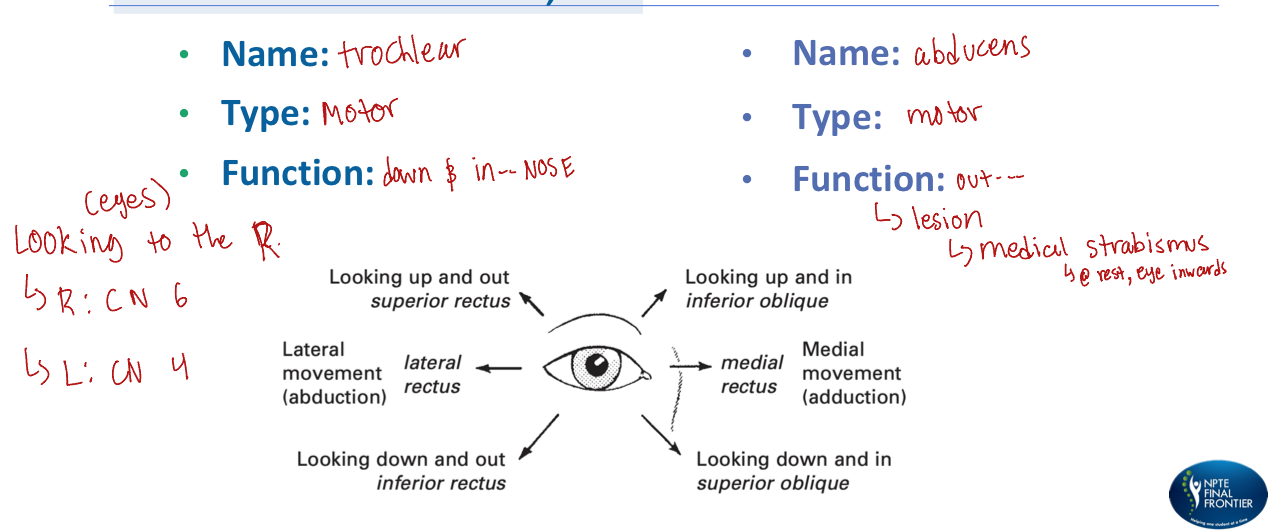
Name, type, function?
What if affected for bother?
looking to the R, which CN doing what?
Pr actice Question 3
A patient presents with lesion to CN V (trigeminal nerve) and CN VII (facial nerve). Considering the location of lesion, which other nerve is MOST LIKELY to be affected?
A. CN III (Oculomotor nerve) B. CN IX (Glossopharyngeal nerve) C. CN VIII (Vestibulocochlear nerve) D. CN XII (Hypoglossal nerve)
C
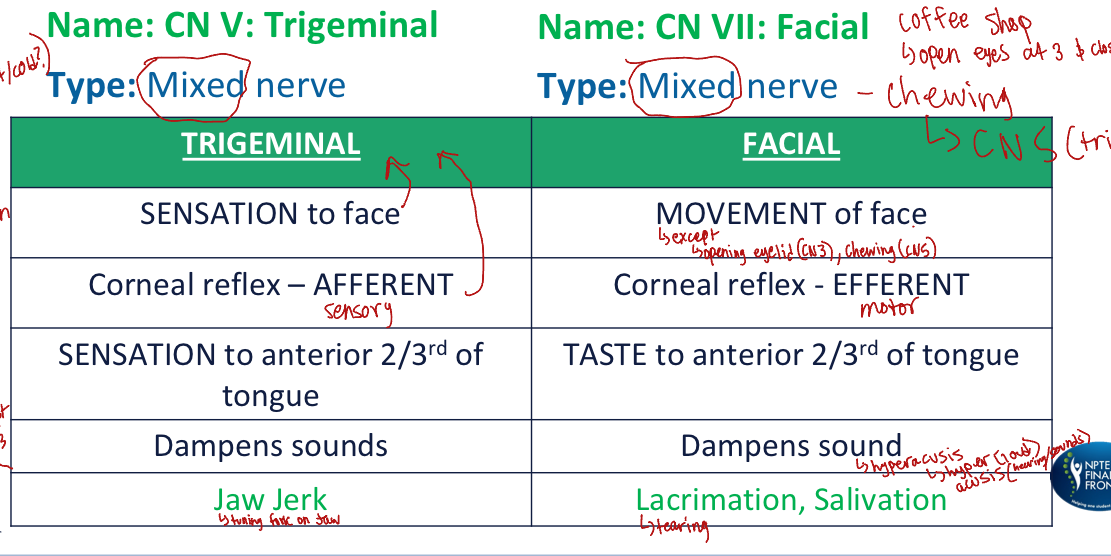
Cranial Nerves V and VII:
Name, type, function?
5 and 6 fxns? 5 for each
Coffee shop example?
Chewing?
Pr actice Question 4
A p atient presents to a TMJ specialist for jaw pain. On examination, there is weakness of the masseter and temporalis muscles on the same side, and their jaw deviates to the right when they open their mouth. Sensory examination reveals reduced sensation over the right lower jaw and chin. Which of the following functions is MOST LIKELY impaired along with this presentation due to the nerve damage described?
A. Smiling B. Chewing C. Swallowing D. Speaking
B
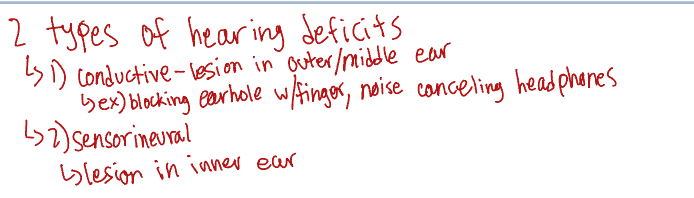
what are the 2 types of hearing deficits?
Where’s the lesion at? Give example
CN VIII:
Type, 2 FXN, 2 affected?
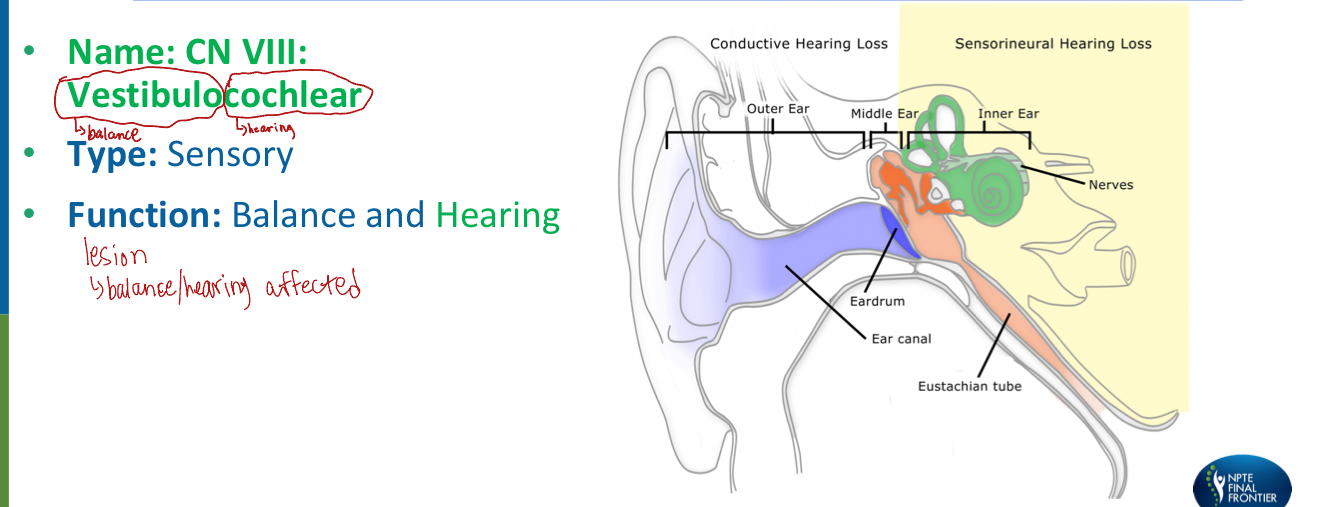
Review slide 28-30: too much notes.
Review slide 28-30, 31: too much notes.
Practice Question 5
A patient reports experiencing sudden onset of mild hearing loss on the left side. Rinne’s test was consistent with bone conduction greater than air conduction on both sides. Weber’s test findings show sound was louder in the left ear. Which of the following is MOST APPROPRIATE?
A. Right side sensorineural hearing loss B. Left side conduction hearing loss C. Right side conduction hearing loss D. Left side sensorineural hearing loss
B
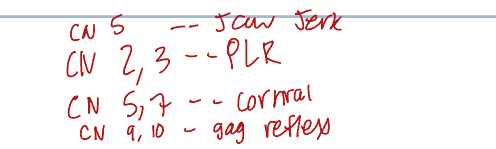
what are the 4 reflexes? And which CNs?
CN IX and X:
Name?
Type?
2 fxns each?
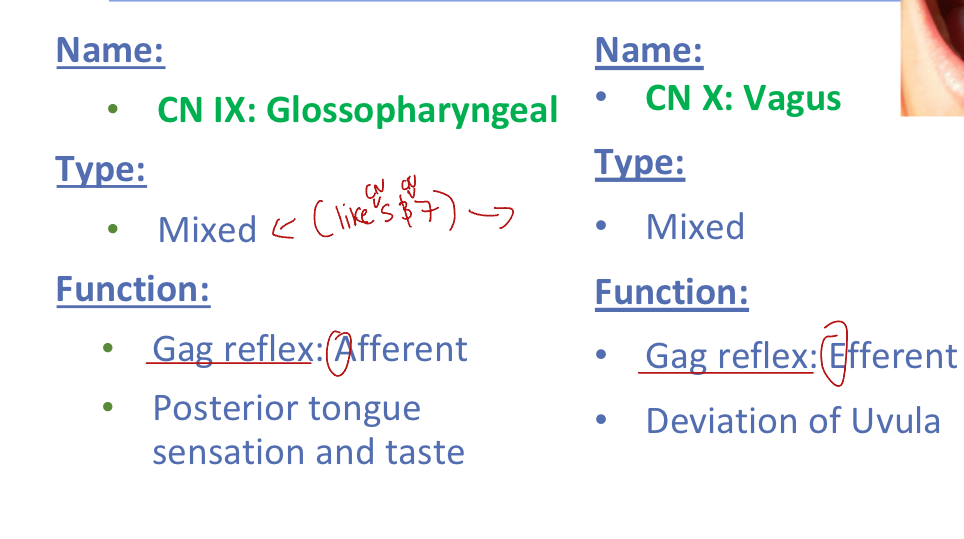
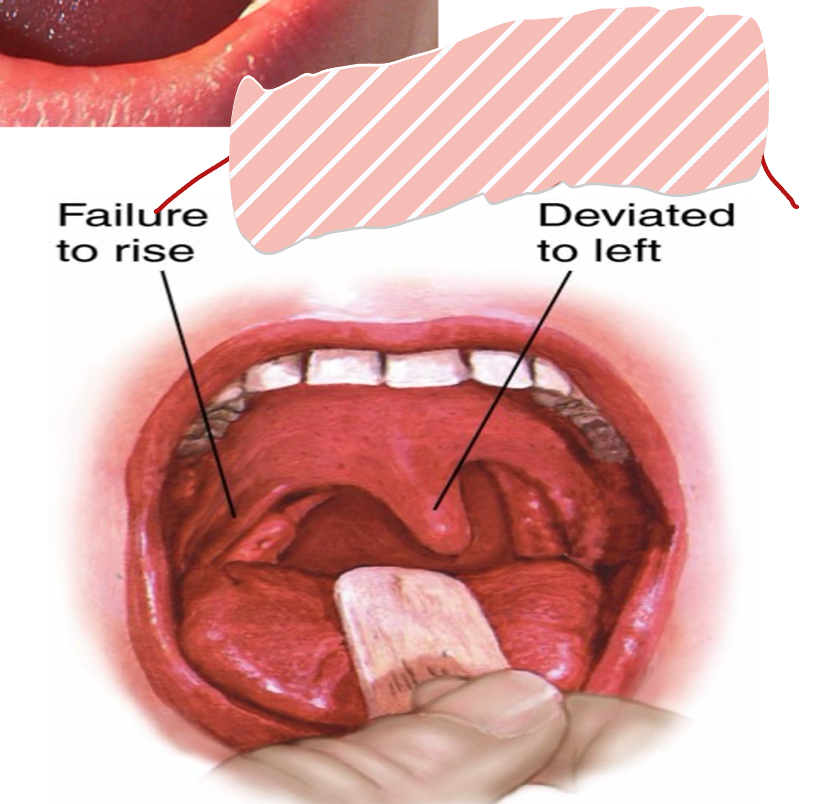
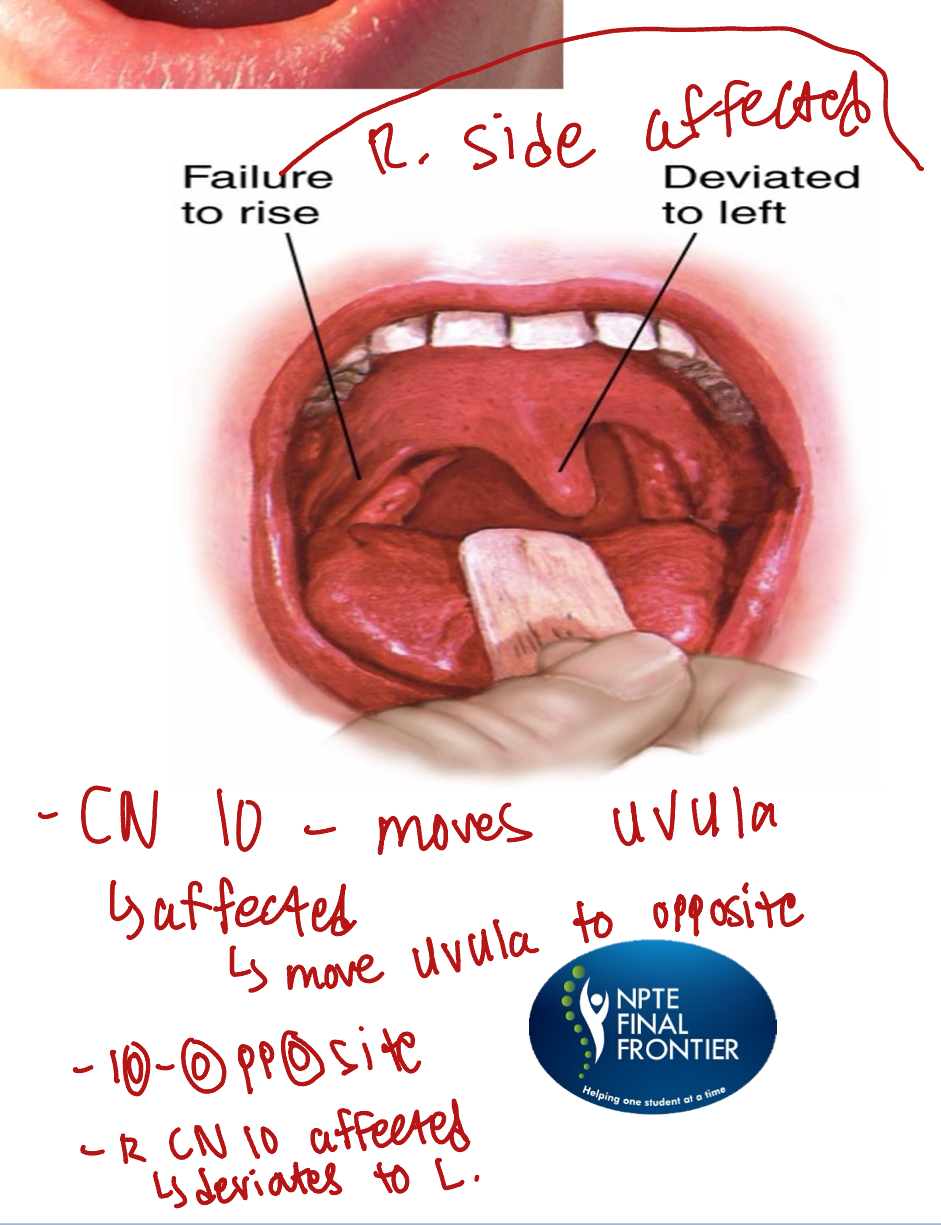
Which side and CN is affected ?
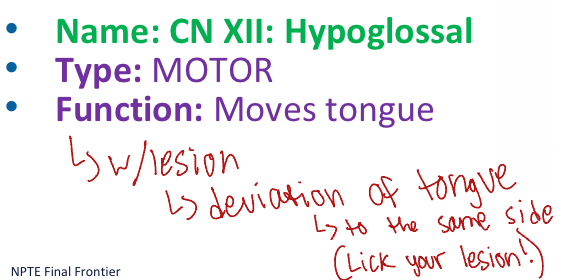
CN XII:
Name?
Type?
FXN?
Affected?
A patient presents with concerns of difficulty speaking and swallowing. Upon examination, the physical therapist notes that the patient’s tongue deviates to the right when protruded, and there is noticeable atrophy of the right side of the tongue. What is the MOST LIKELY diagnosis related to the findings observed in this patient, and which cranial nerve is primarily affected?
A. Right-sided vagus nerve (CN X) lesion B. Left-sided hypoglossal nerve (CN XII) lesion C. Right-sided hypoglossal nerve (CN XII) lesion D. Left-sided facial nerve (CN VII) lesion
C
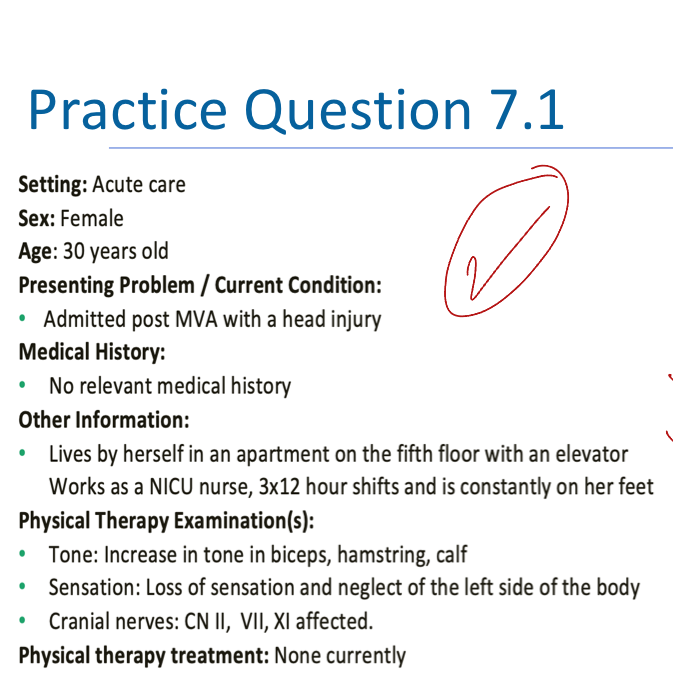
Considering the patient’s presentation, which of the following lobes is MOST likely to be affected? A. Right parietal lobe
B. Left temporal lobe C. Left frontal lobe D. Right occipital lobe
A
Considering that the patient has a lesion to spinal accessory nerve, which of the following will MOST LIKELY be seen? A. Inability to extend the spine B. Inability to shrug shoulders C. Inability to push up from chair D. Inability to extend the arm beyond
neutral
B
CN XI:
Name?
Type?
Test how?
Name: CN XI: Spinal Accessory
Type: Motor
Test by shrugging?

