HS II 3.01 Structures of the Respiratory System
 Studied by 0 people
 Call with Kai
 Learn
Learn Practice Test
 Spaced Repetition
 Match
Match Flashcards
 Knowt Play
1/24

There's no tags or description
Looks like no tags are added yet.
Name | Mastery | Learn | Test | Matching | Spaced | Call with Kai |
|---|
No analytics yet
Send a link to your students to track their progress
25 Terms
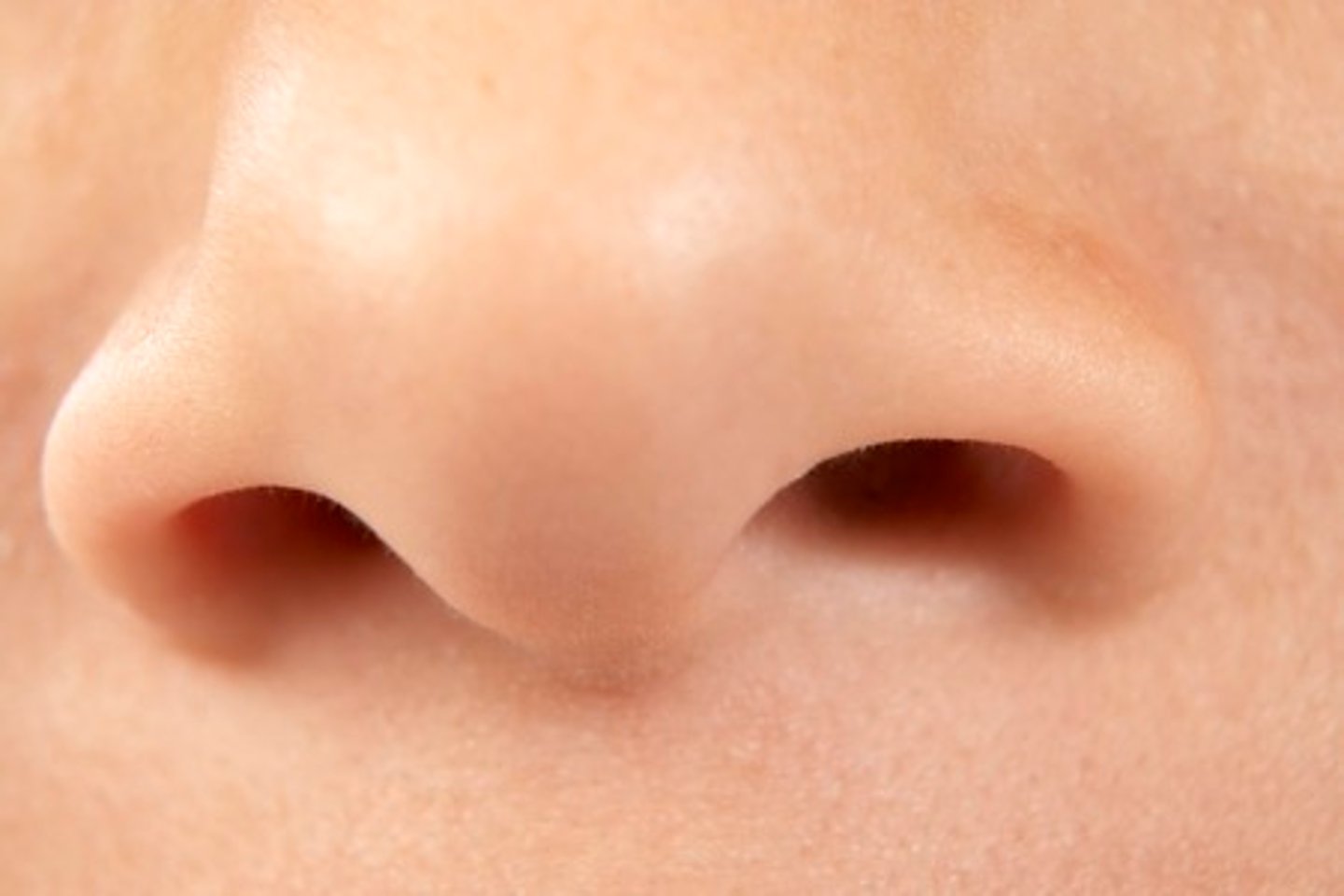
Nostrils
two openings into the nose
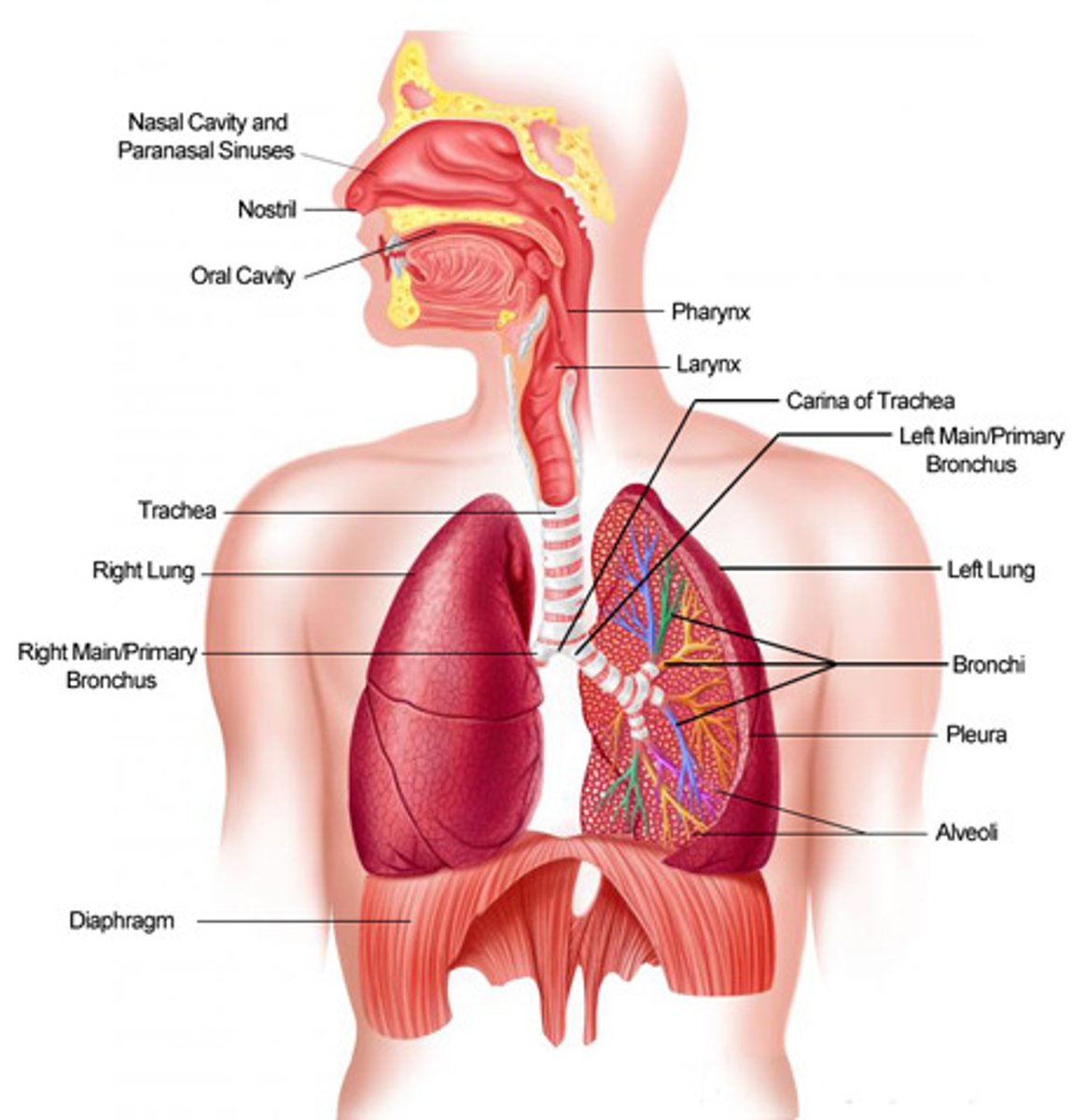
Respiratory System
supplies the body with Oxygen, and must work to prevent death
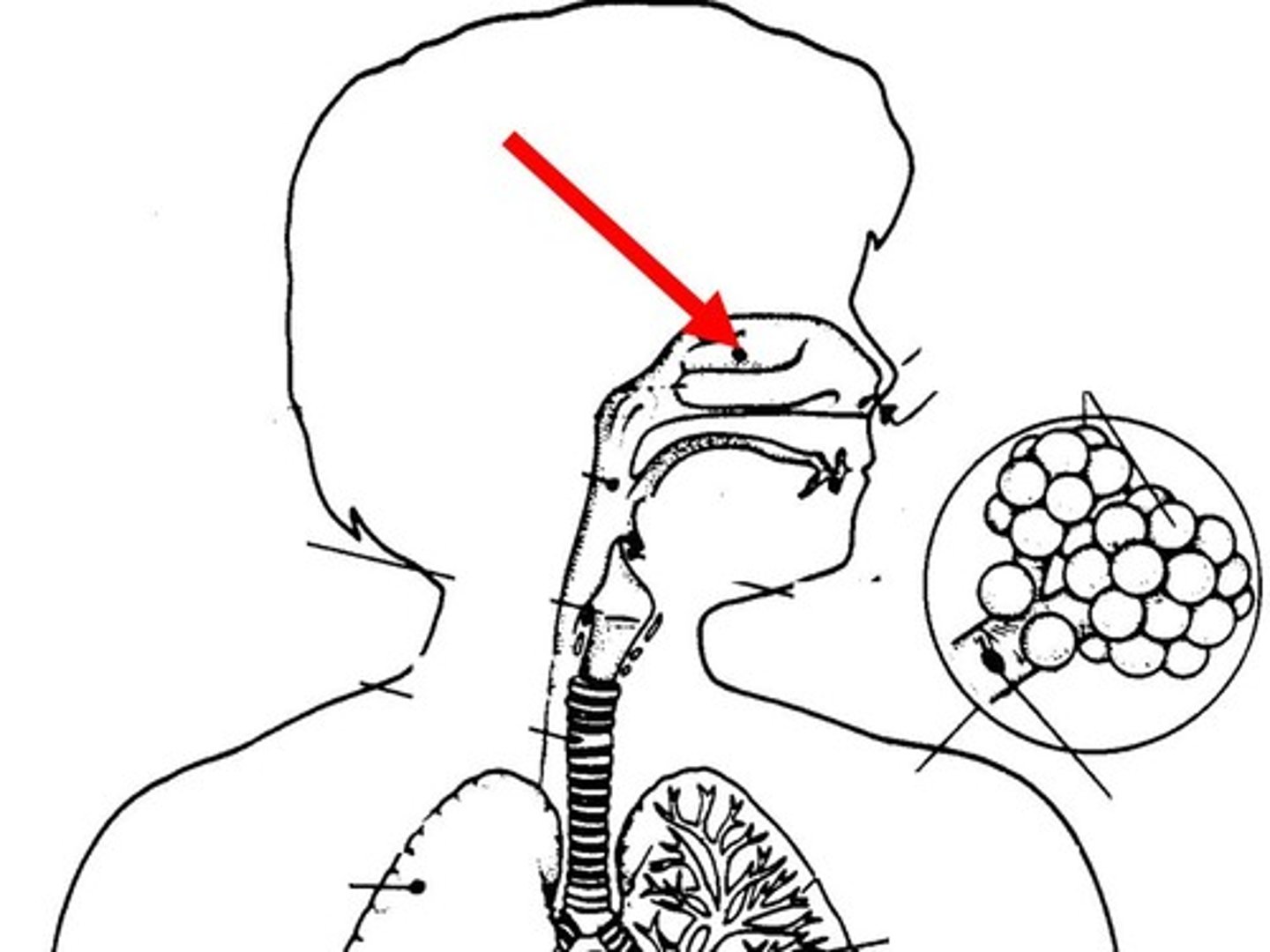
Nasal cavity
warm, filter, and moisten the air; sense of smell
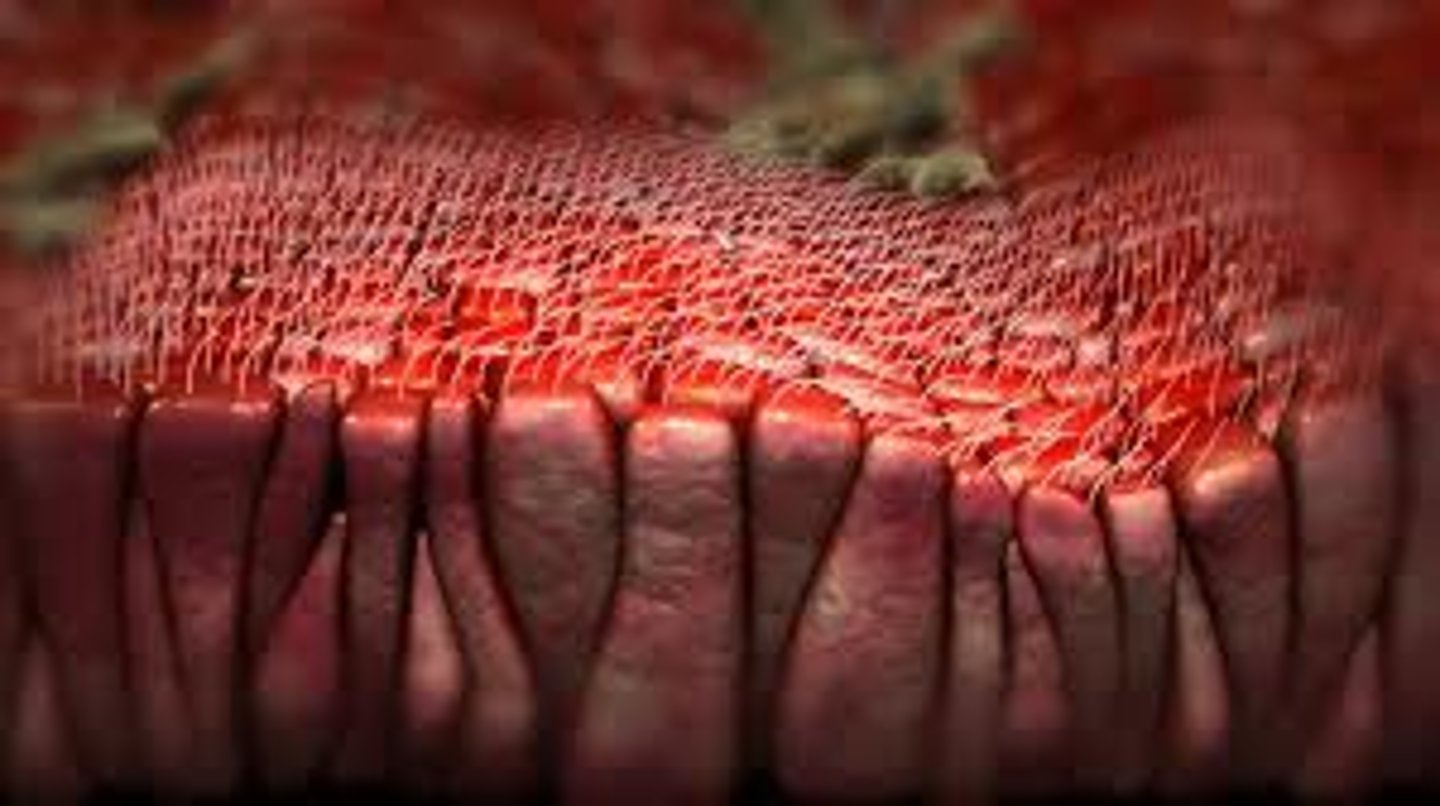
Cillia
microscopic hairs in nasal cavities that filter air and move mucus
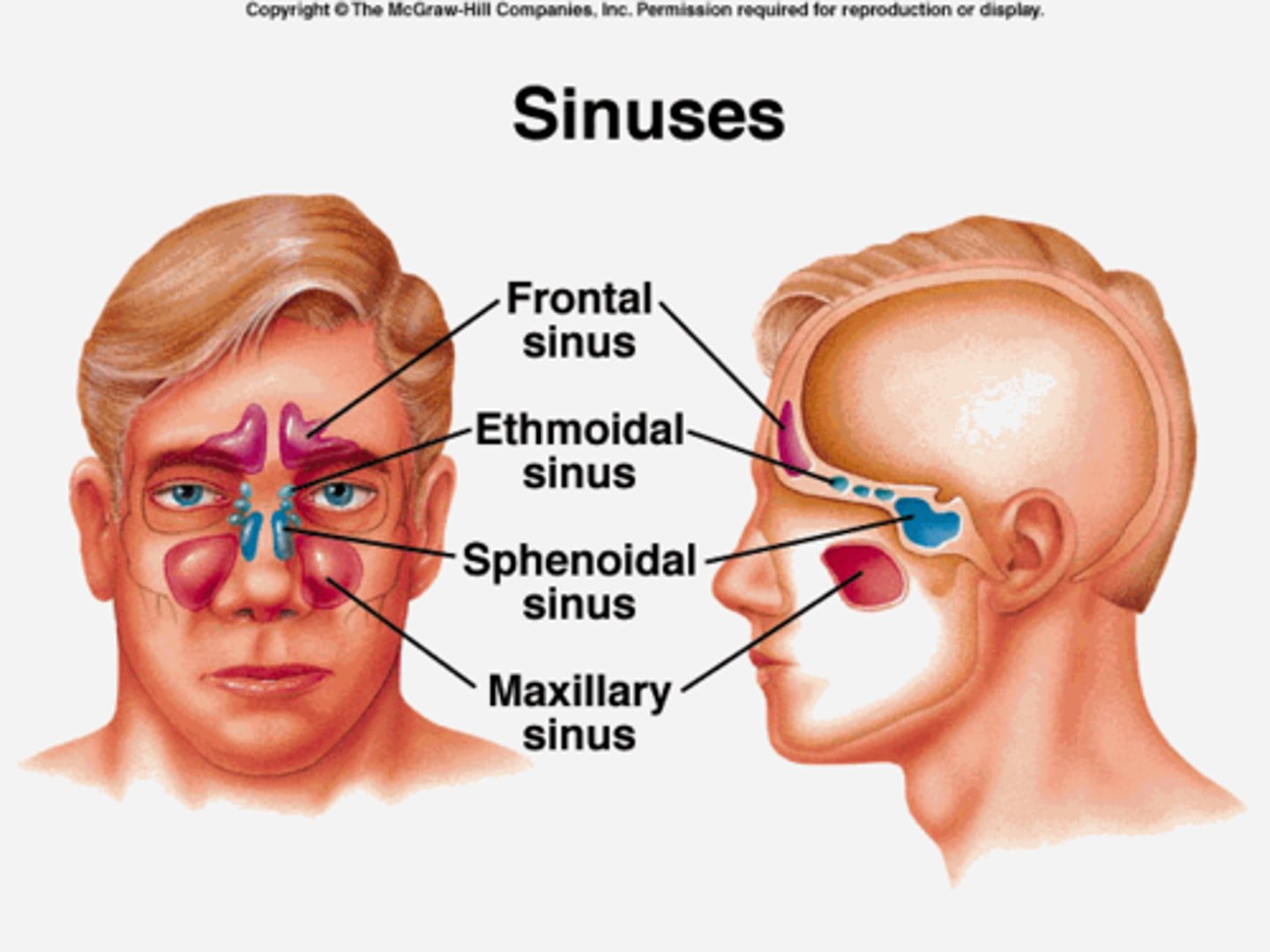
Sinus
hollow areas in the skull that provide resonance for voice and is connected by small tubes to back of nasal cavities
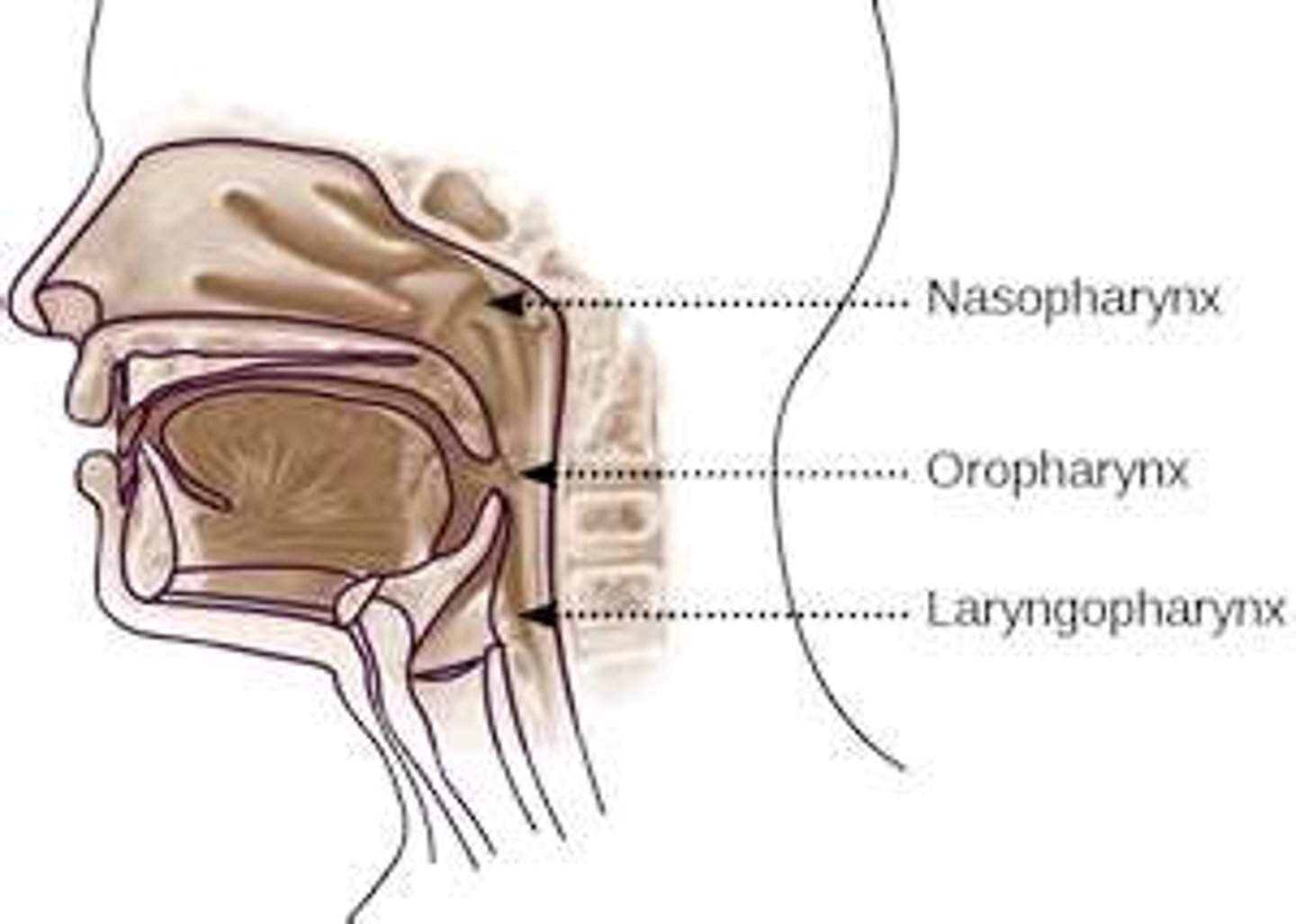
Pharynx
transports air, liquids, and food. Called the common passageway, before larynx!!
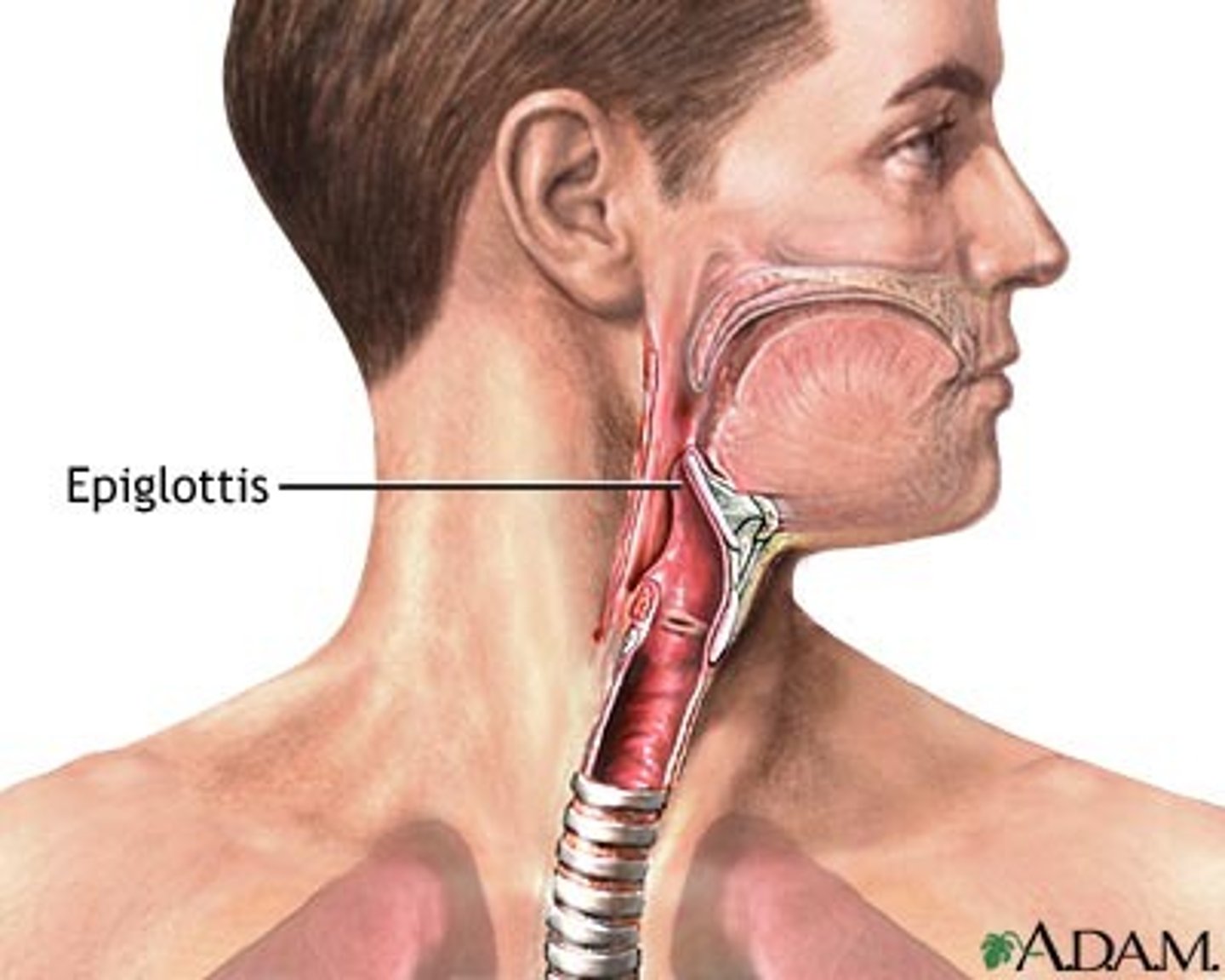
Epiglottis
flap of cartilage that opens to allow air into lungs; closes to keep out liquids and food
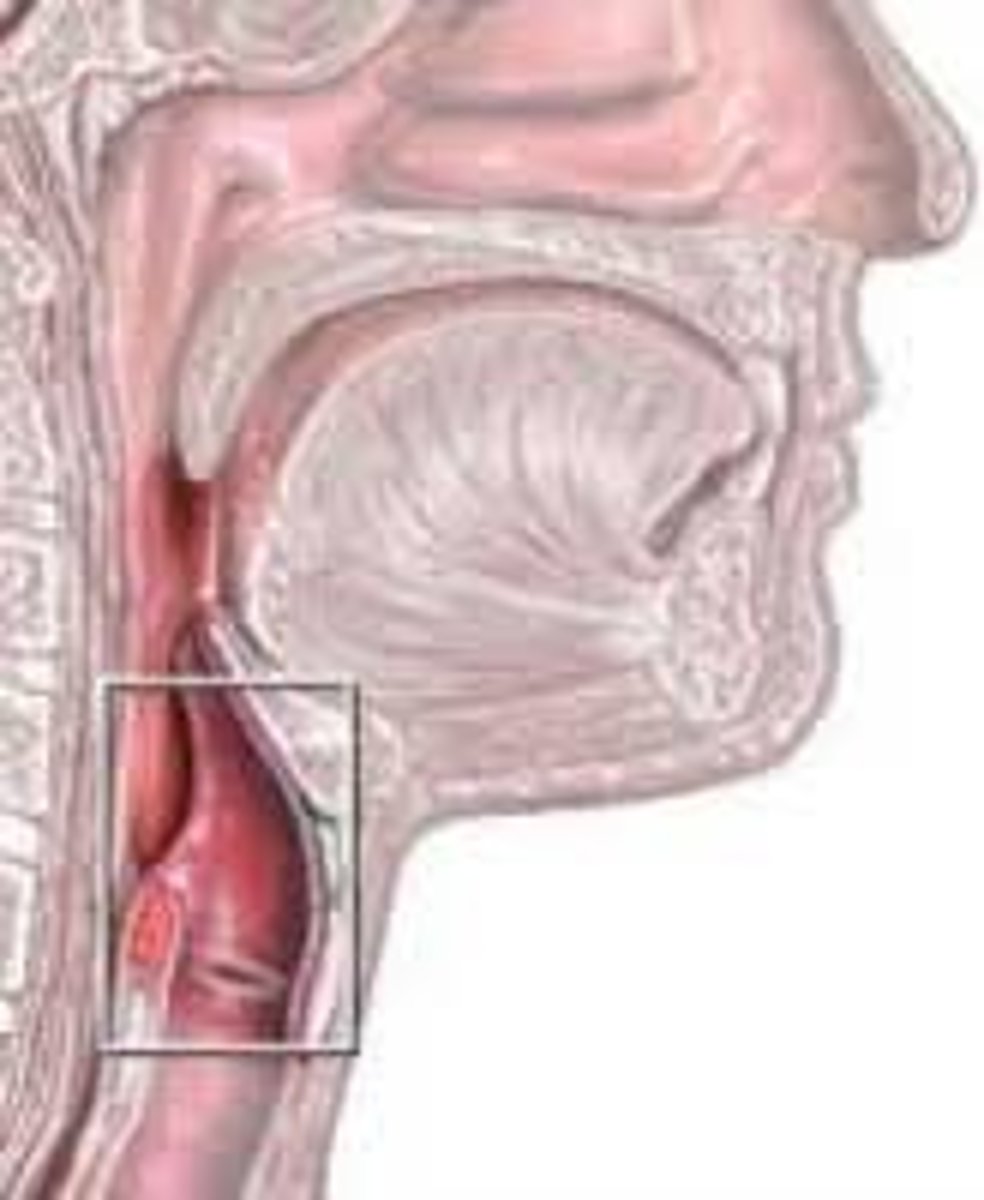
Larynx
box of cartilage that contains vocal cords, this is routes food and air
Vocal cords
vibrate when exhaling to create voice
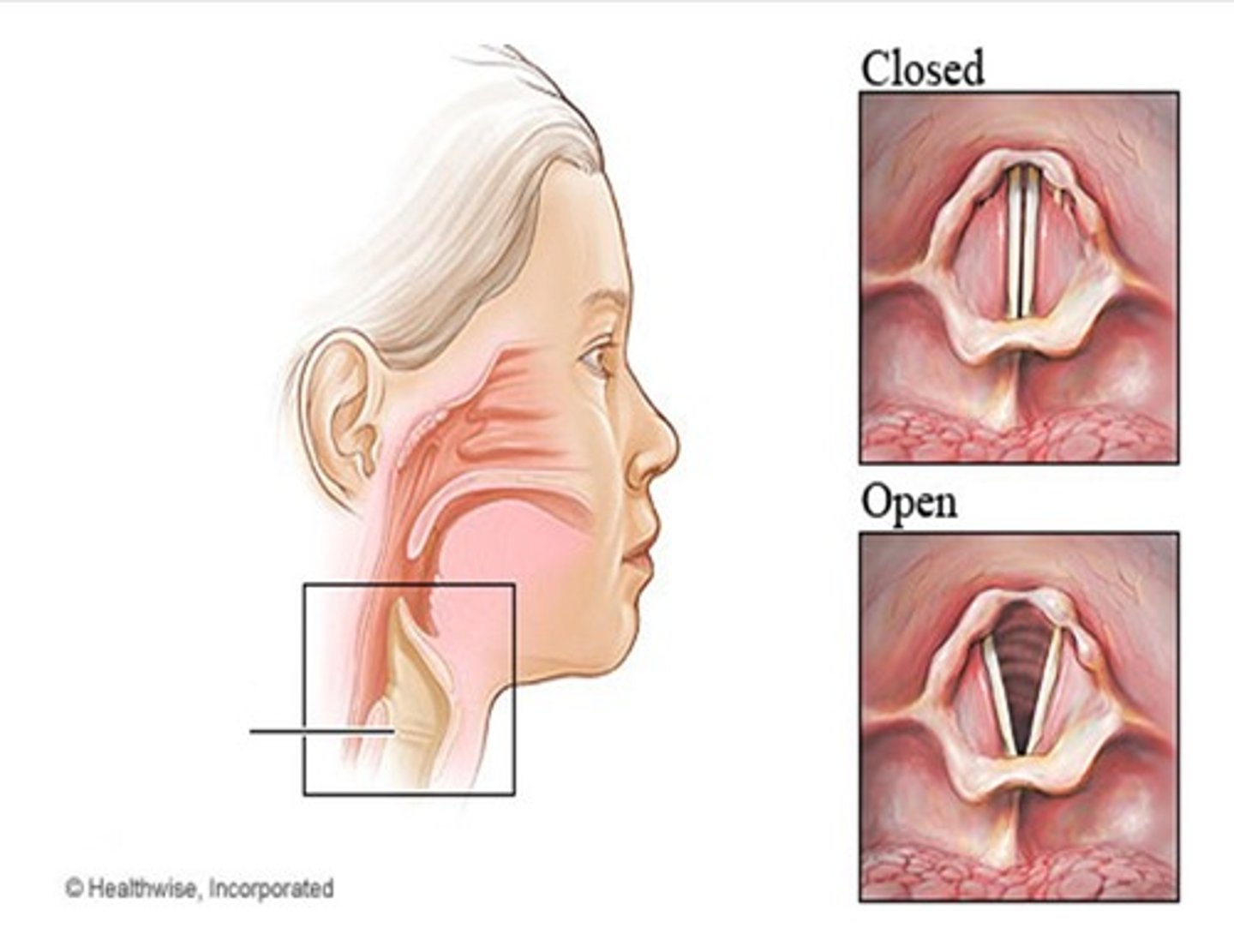
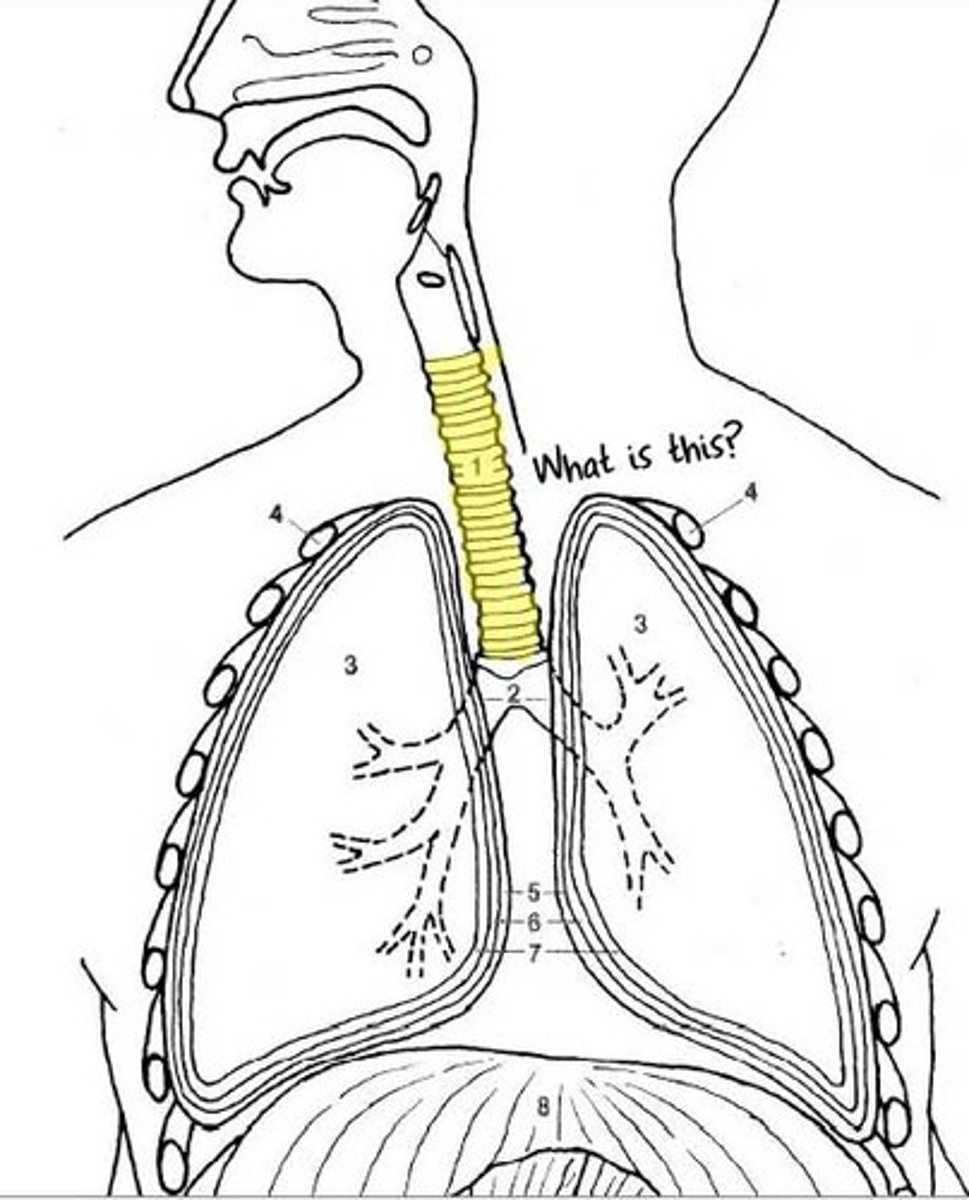
Trachea
10-12 inch flexible tube that carries air into chest cavity
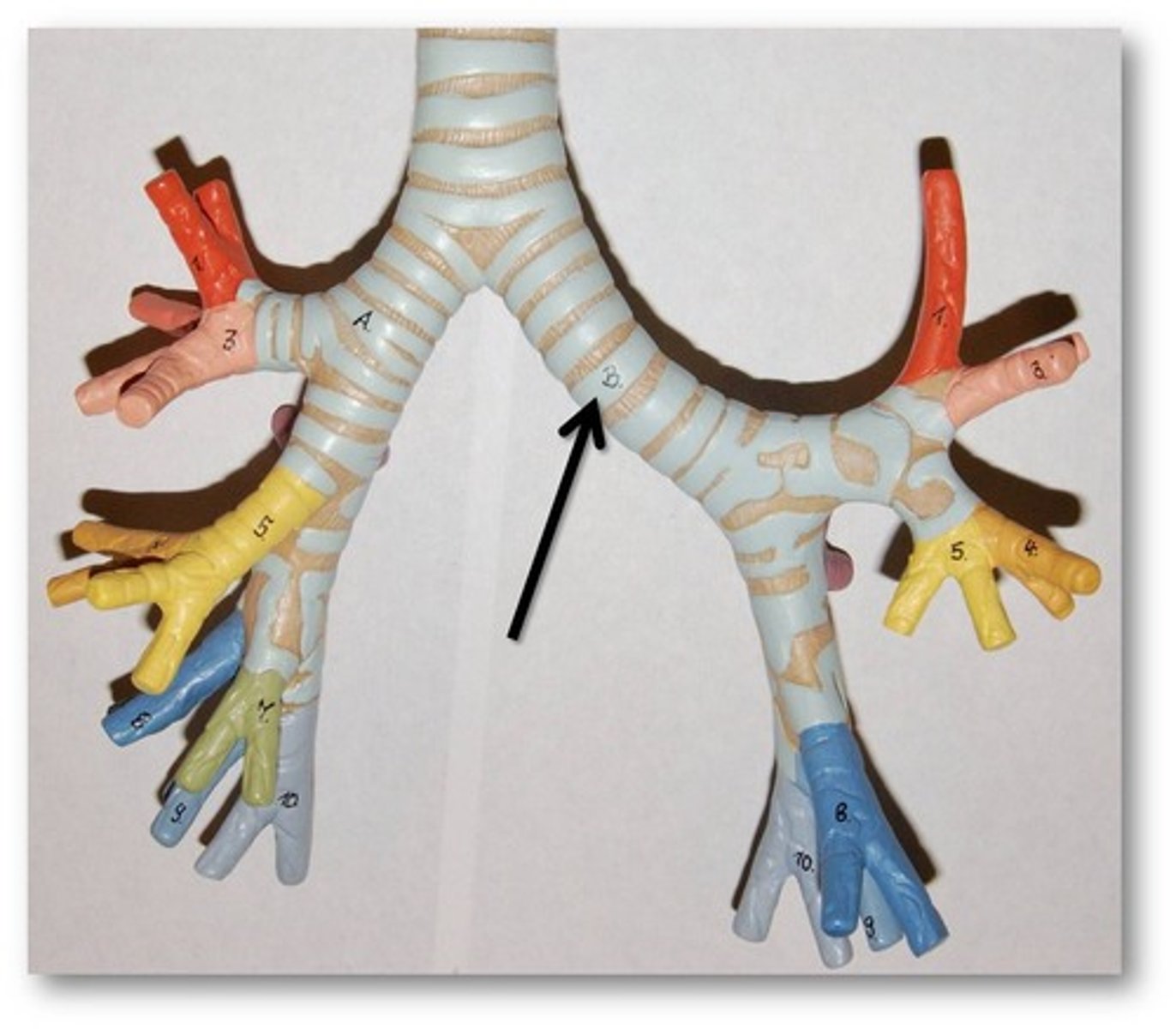
Bronchi
two rigid tubes that branch off the trachea; one to each lung
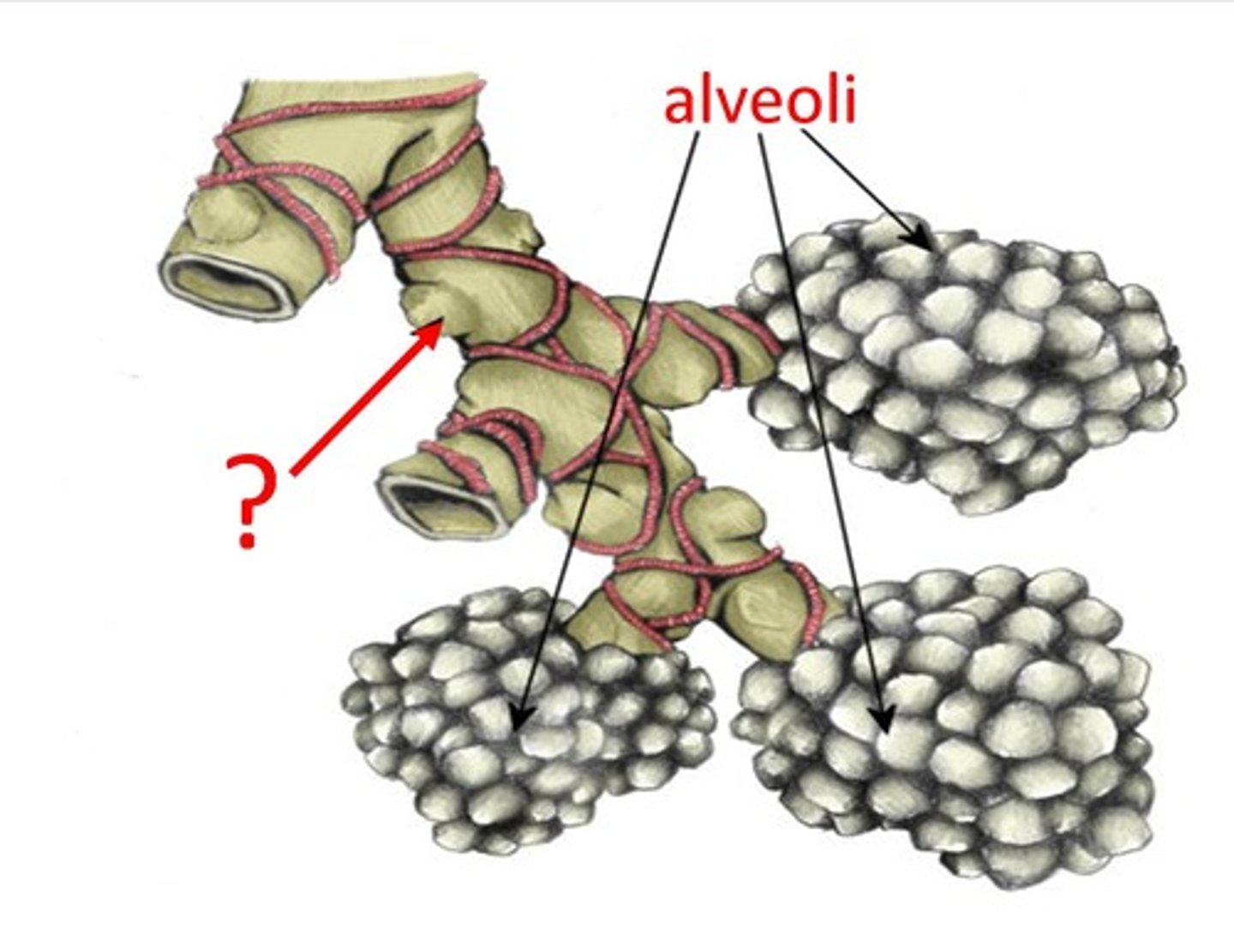
Bronchioles
multiple branches of smaller tubes that take air into all parts of lungs
Lungs
2 sponge organs divided into segments called lobes
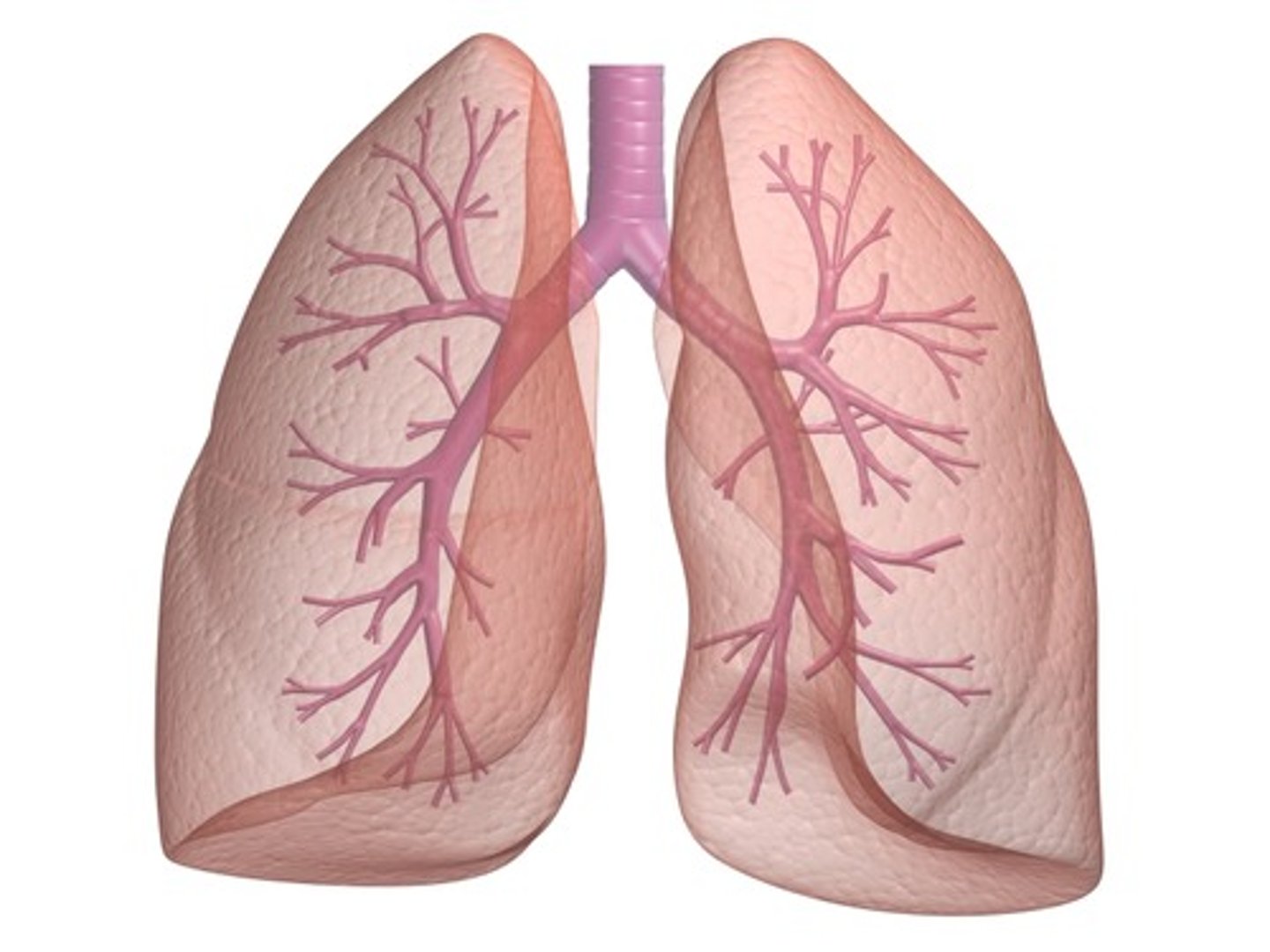
How many lobes does the right lung have?
3
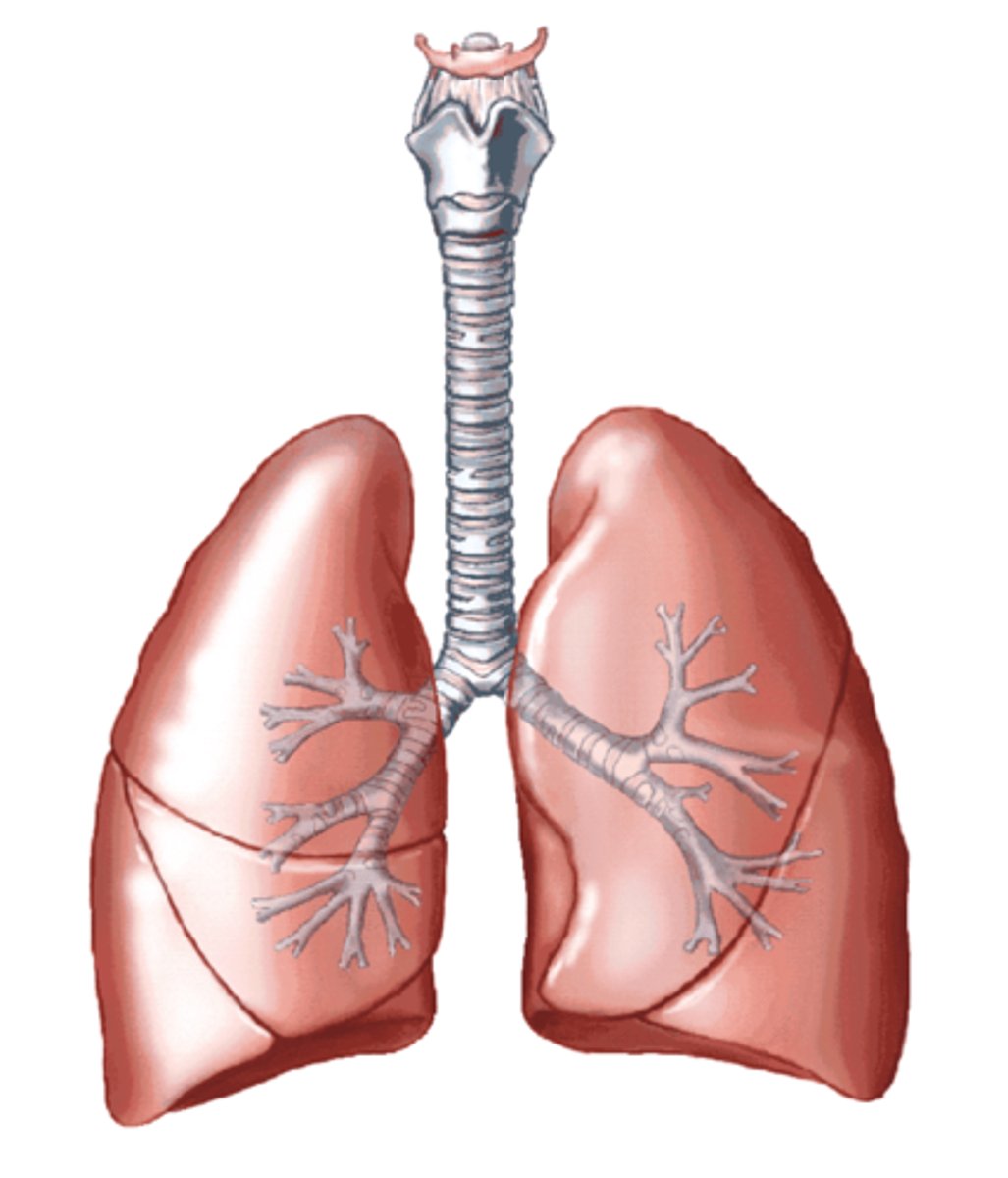
How many lobes does the left lung have?
2
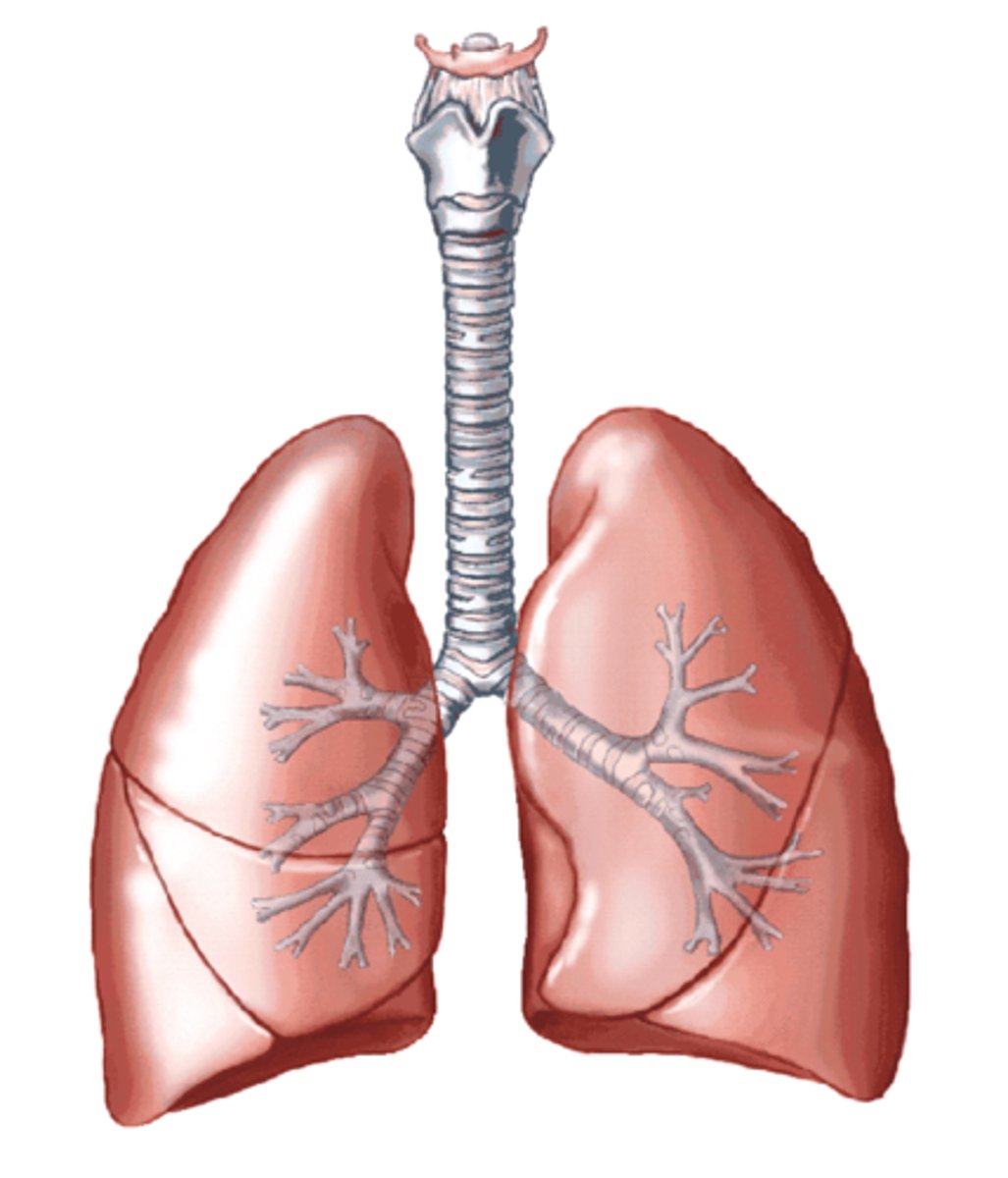
Pleura
double membrane that surrounds each lung
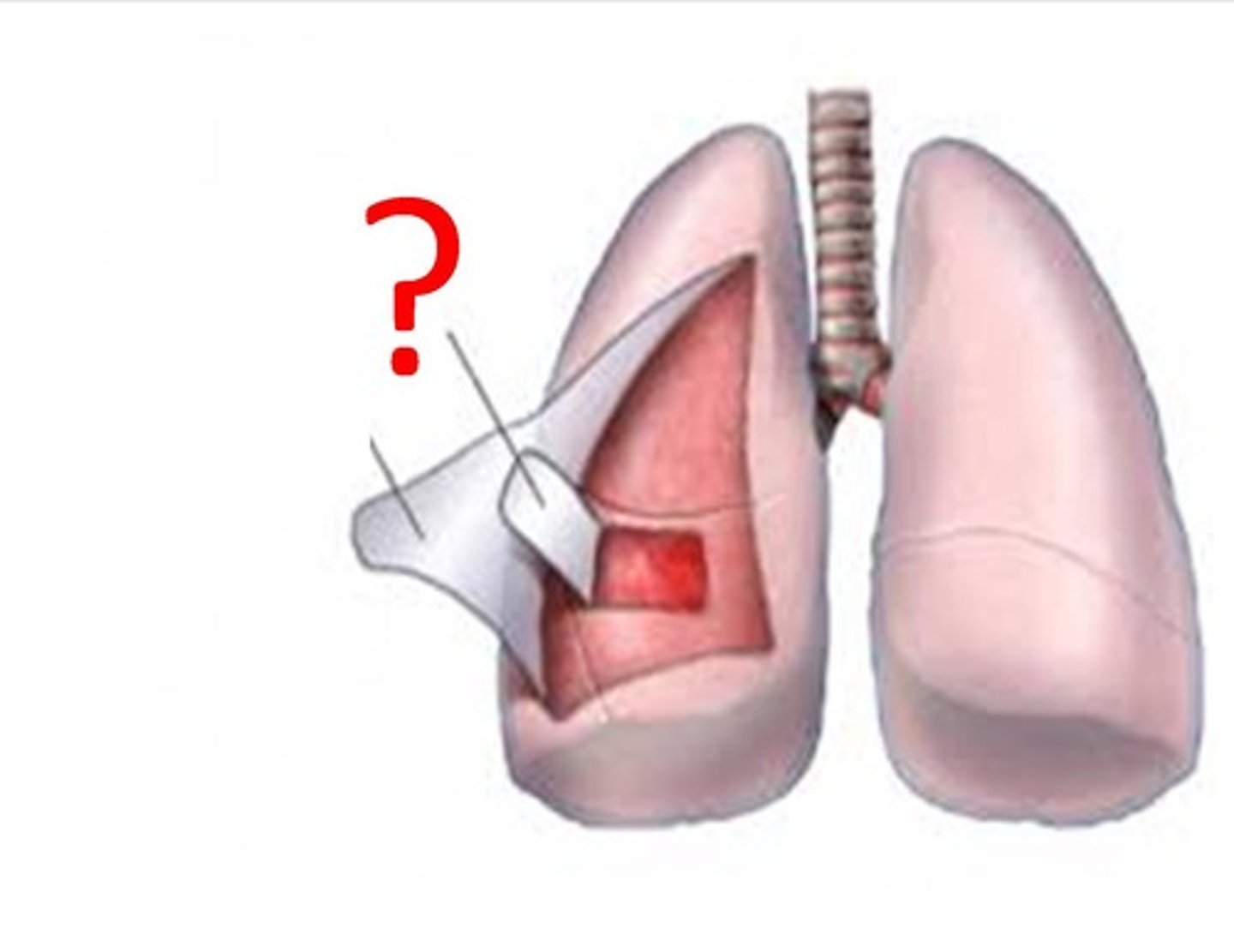
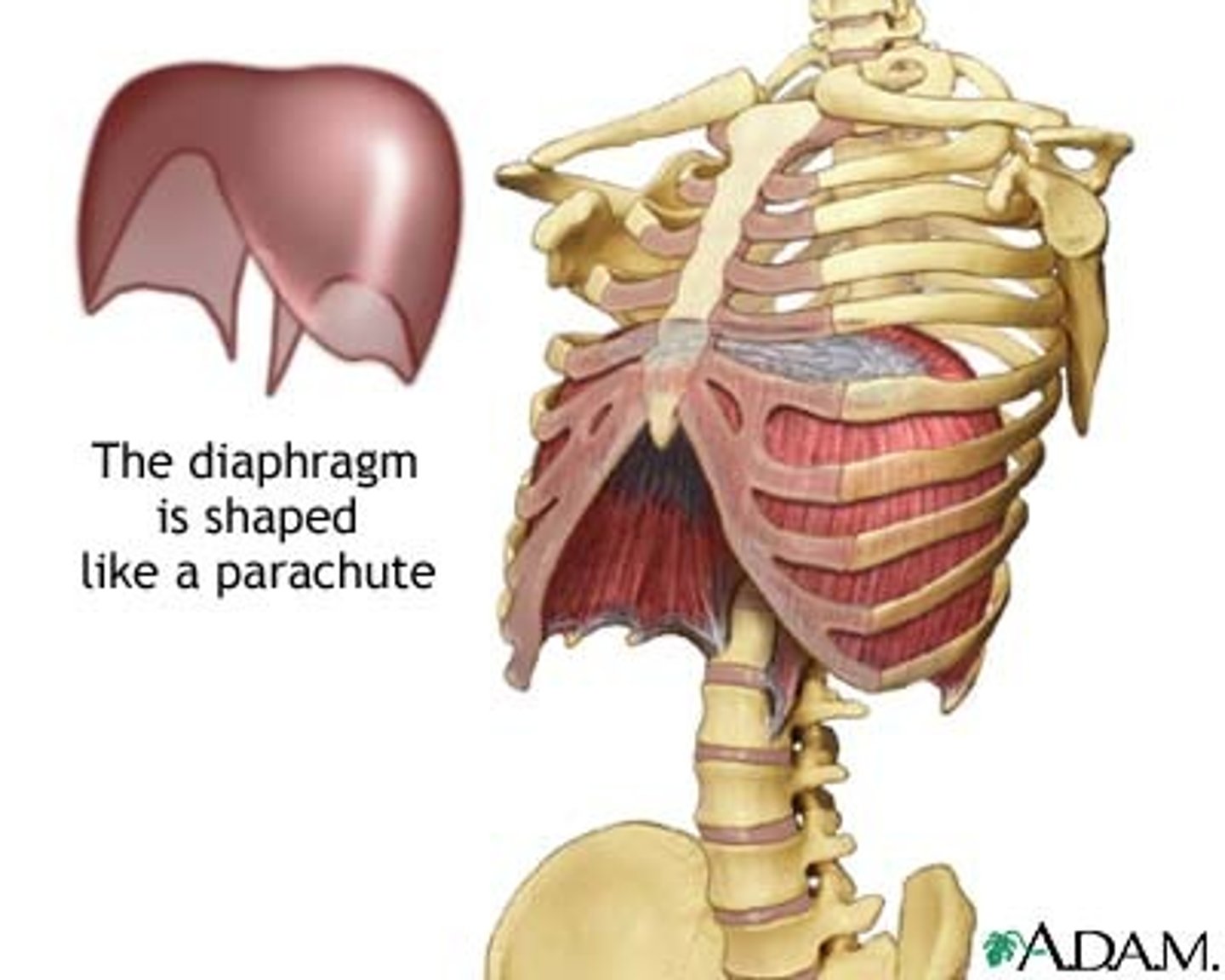
Diaphragm
muscle that separates the thoracic and abdominal cavities (without this, you cannot breathe)
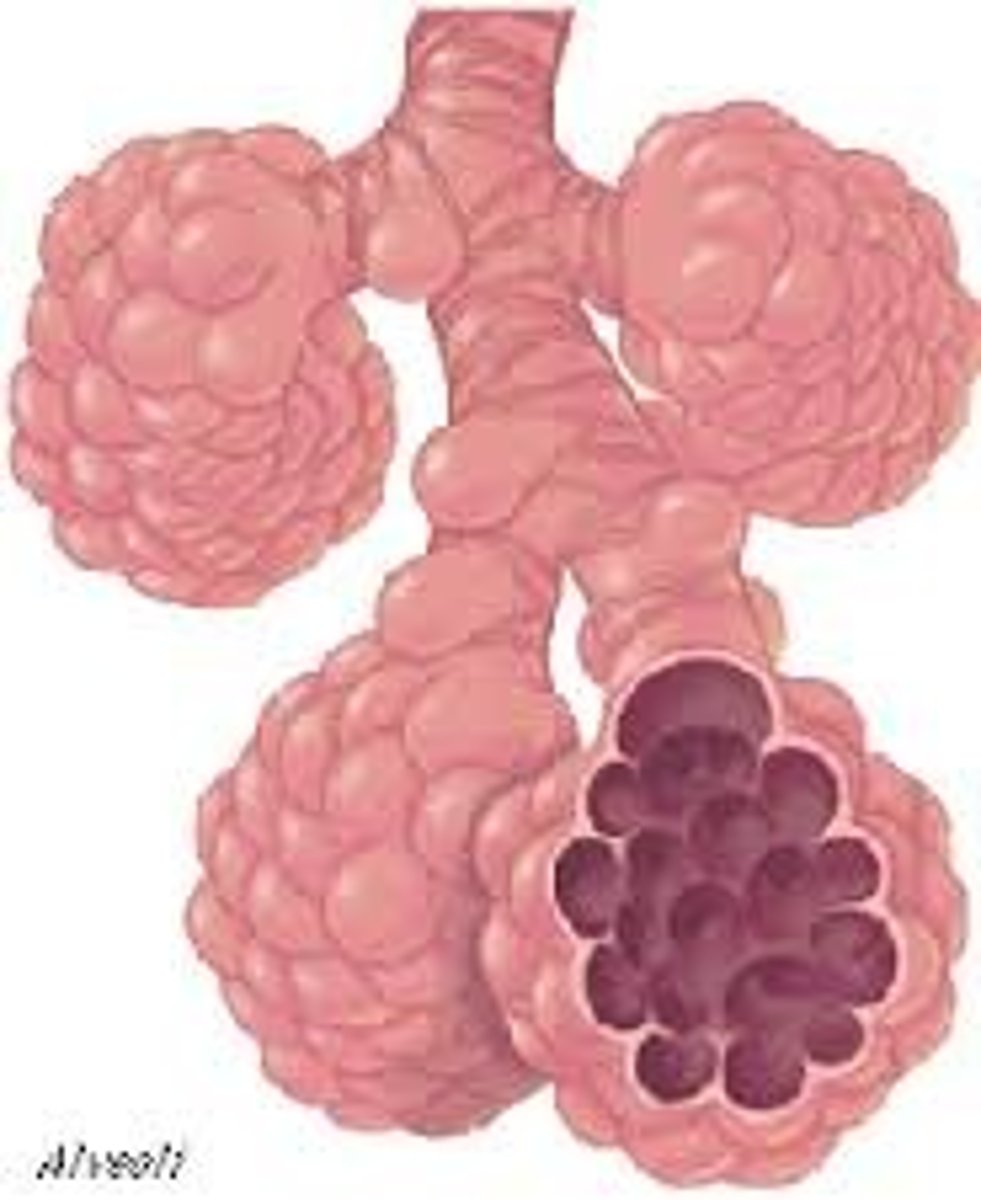
Alveoli
microscopic air sacs at ends of smallest bronchioles. exchange Oxygen and Carbon Dioxide with blood
Ventilation
process of breathing
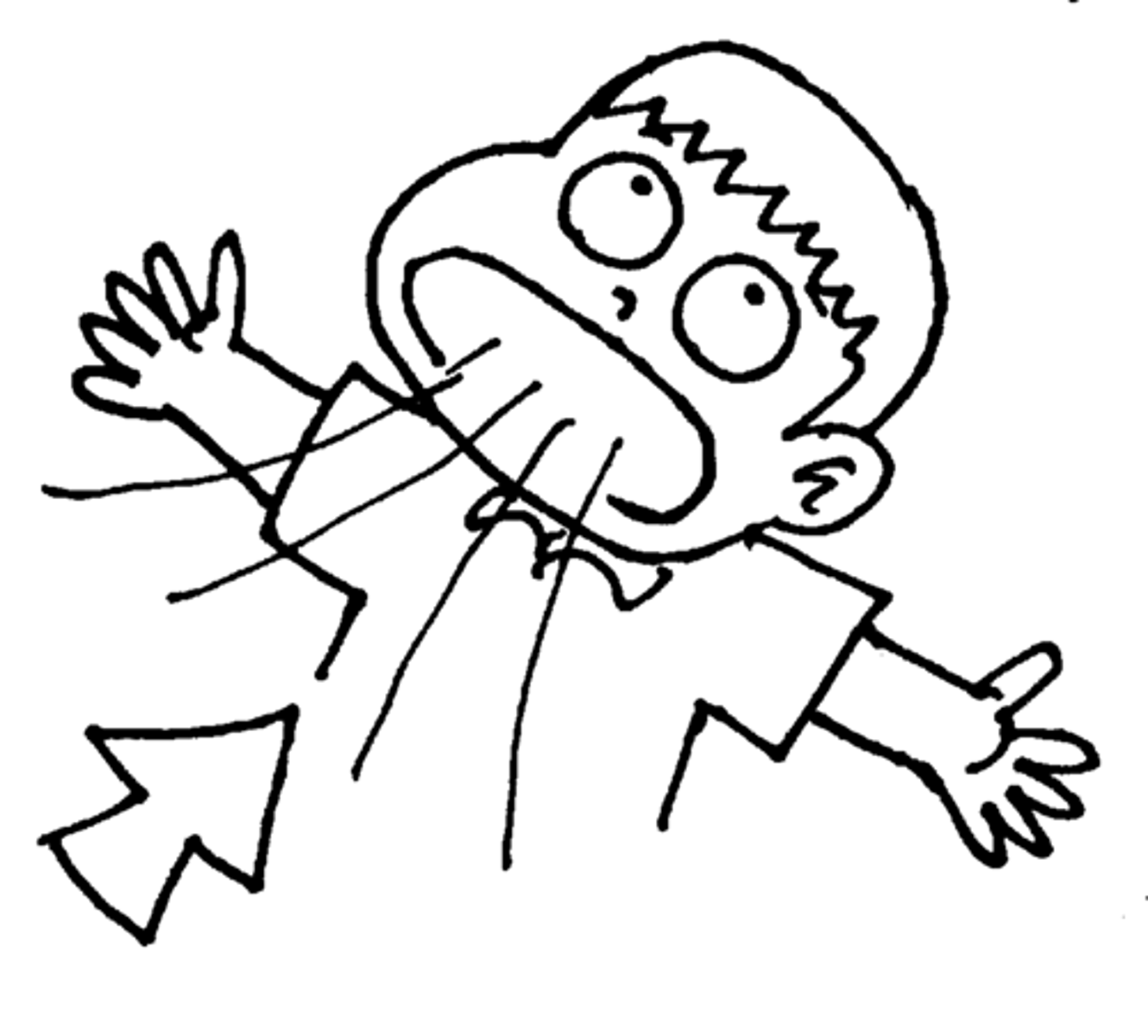
Inspiration
breathing in
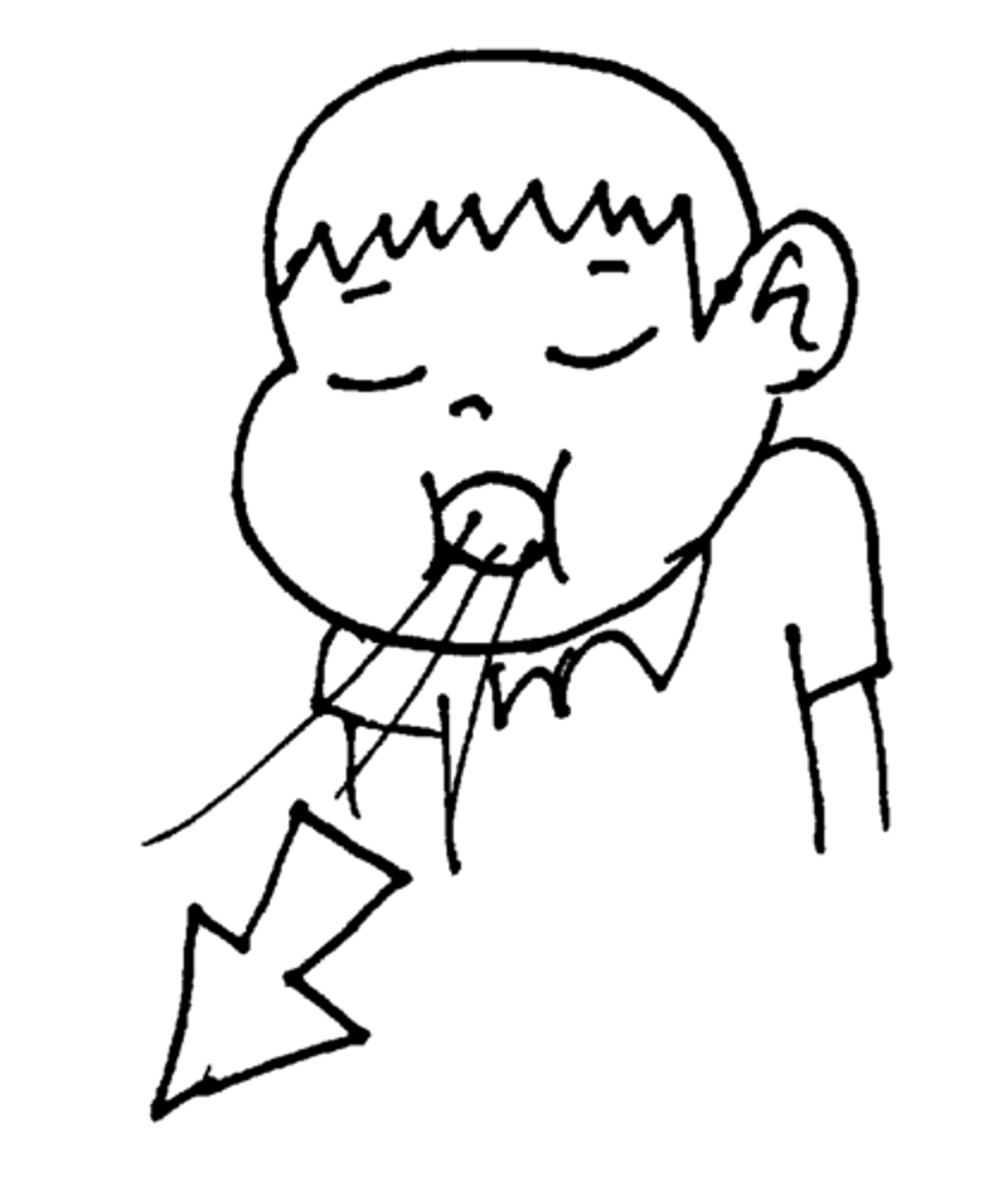
Expiration
breathing out
External respiration
exchange between the lungs and enviornment
Internal respiration
exchange between the blood and the cells of the body
Respiration
exchange of Oxygen and Carbon Dioxide
Mediastinum
the space between the lungs that houses the heart, major vessels, and thymus gland
 Note
Note  Flashcards (24)