Major Muscles in the Body
 Studied by 0 people
 Call Kai
 Learn
Learn Practice Test
 Spaced Repetition
 Match
Match Flashcards
 Knowt Play
1/17

Earn XP
Description and Tags
For Weight lifting class
Name | Mastery | Learn | Test | Matching | Spaced | Call with Kai |
|---|
No analytics yet
Send a link to your students to track their progress
18 Terms
Stemomastoid
A muscle in the neck that helps with rotation and flexion of the head. It extends from the sternum and clavicle to the mastoid process of the temporal bone.

Deltoid
A large, triangular muscle covering the shoulder joint, responsible for arm abduction, flexion, and extension.

Pectoralis major
A thick, fan-shaped muscle situated at the upper front of the chest, primarily responsible for the movement of the shoulder joint, including flexion, adduction, and internal rotation of the arm.
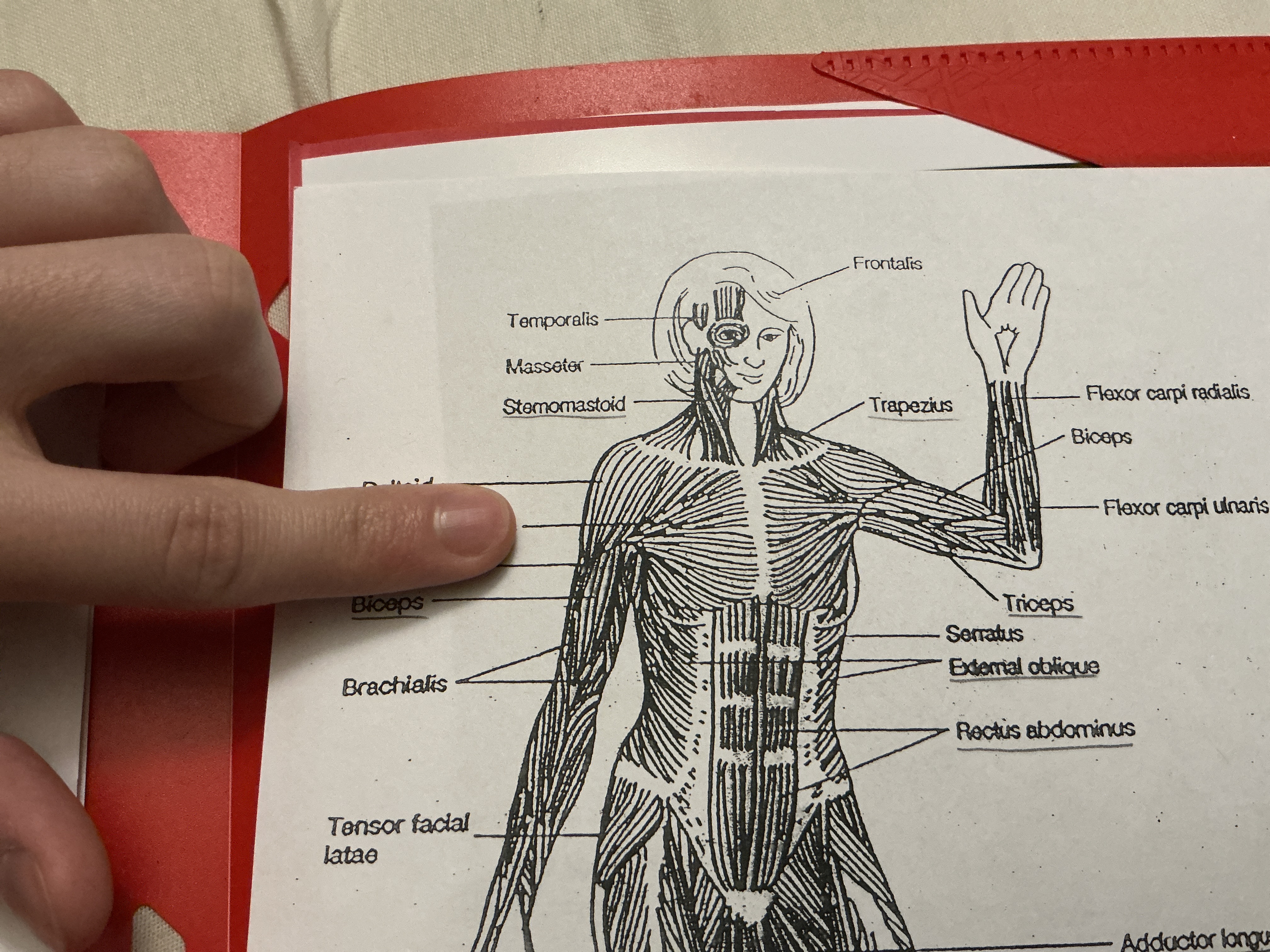
Quadriceps
A group of four muscles located at the front of the thigh, responsible for knee extension and hip flexion.

Tibialis anterior
A muscle located in the front of the lower leg, responsible for dorsiflexion of the foot and inversion of the ankle.
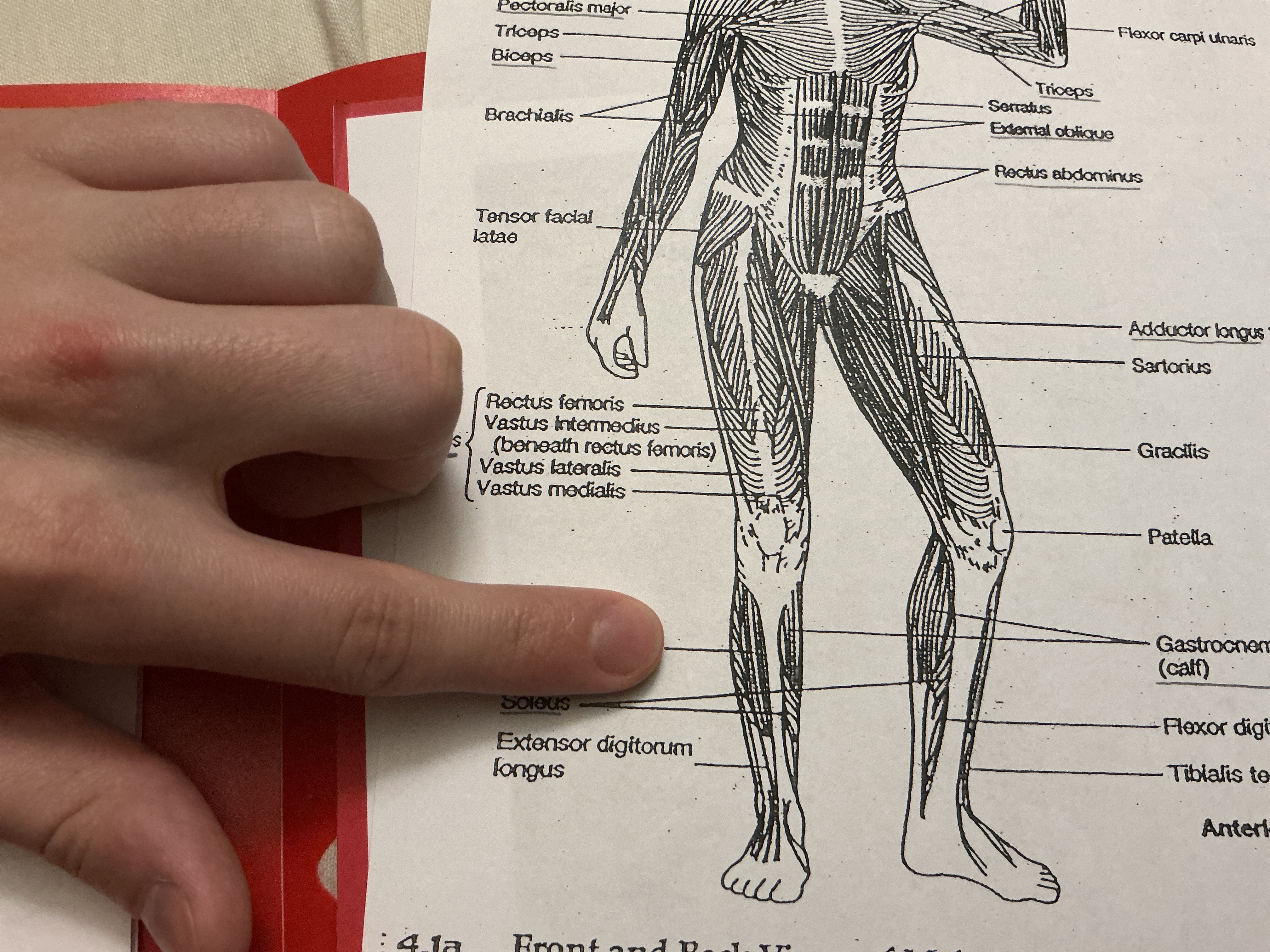
Soleus
A muscle located at the back of the lower leg, which primarily aids in plantarflexion of the foot.

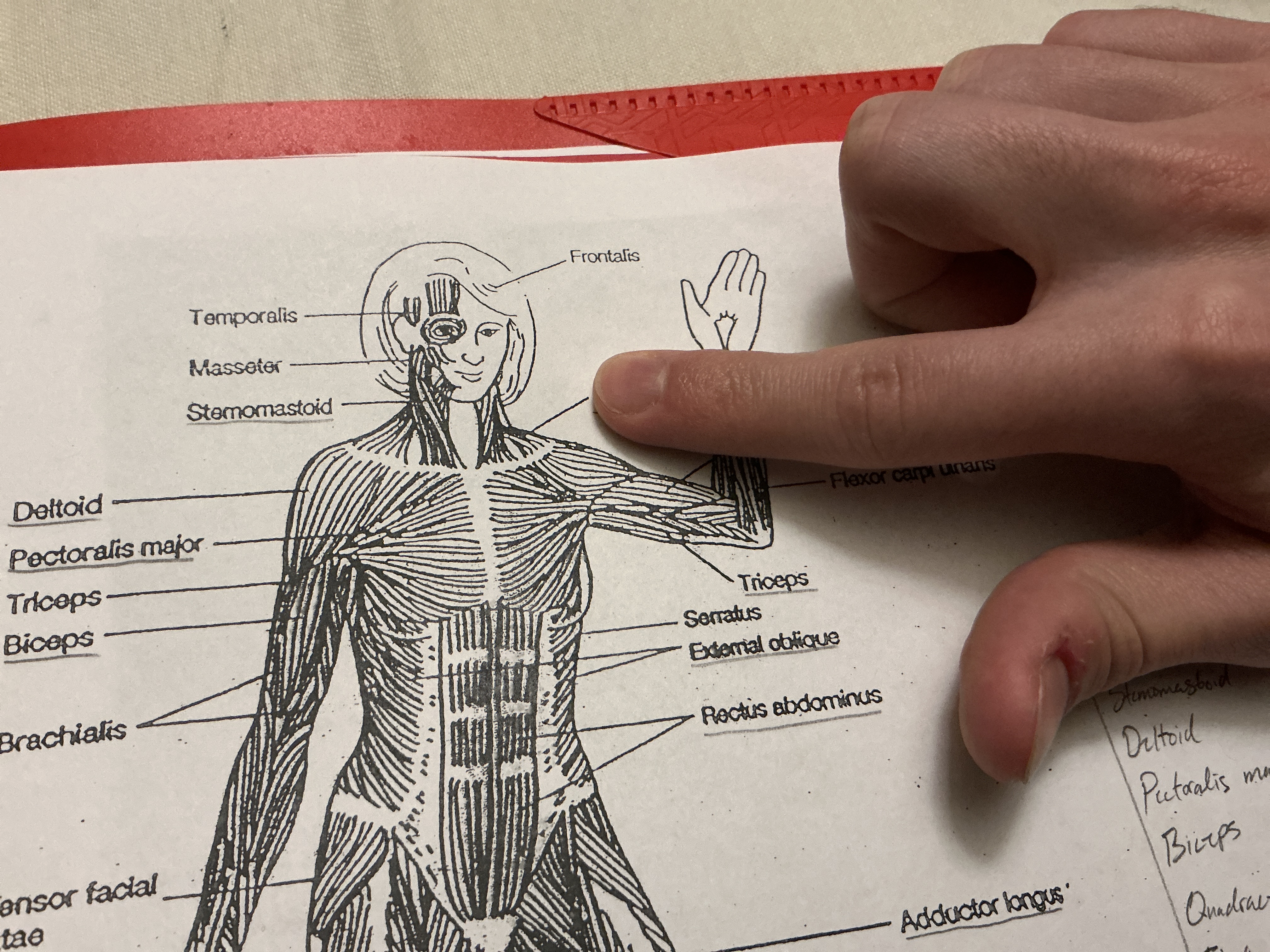
Trapezius
A large muscle located in the back and neck, responsible for the elevation, depression, and retraction of the shoulder blades.
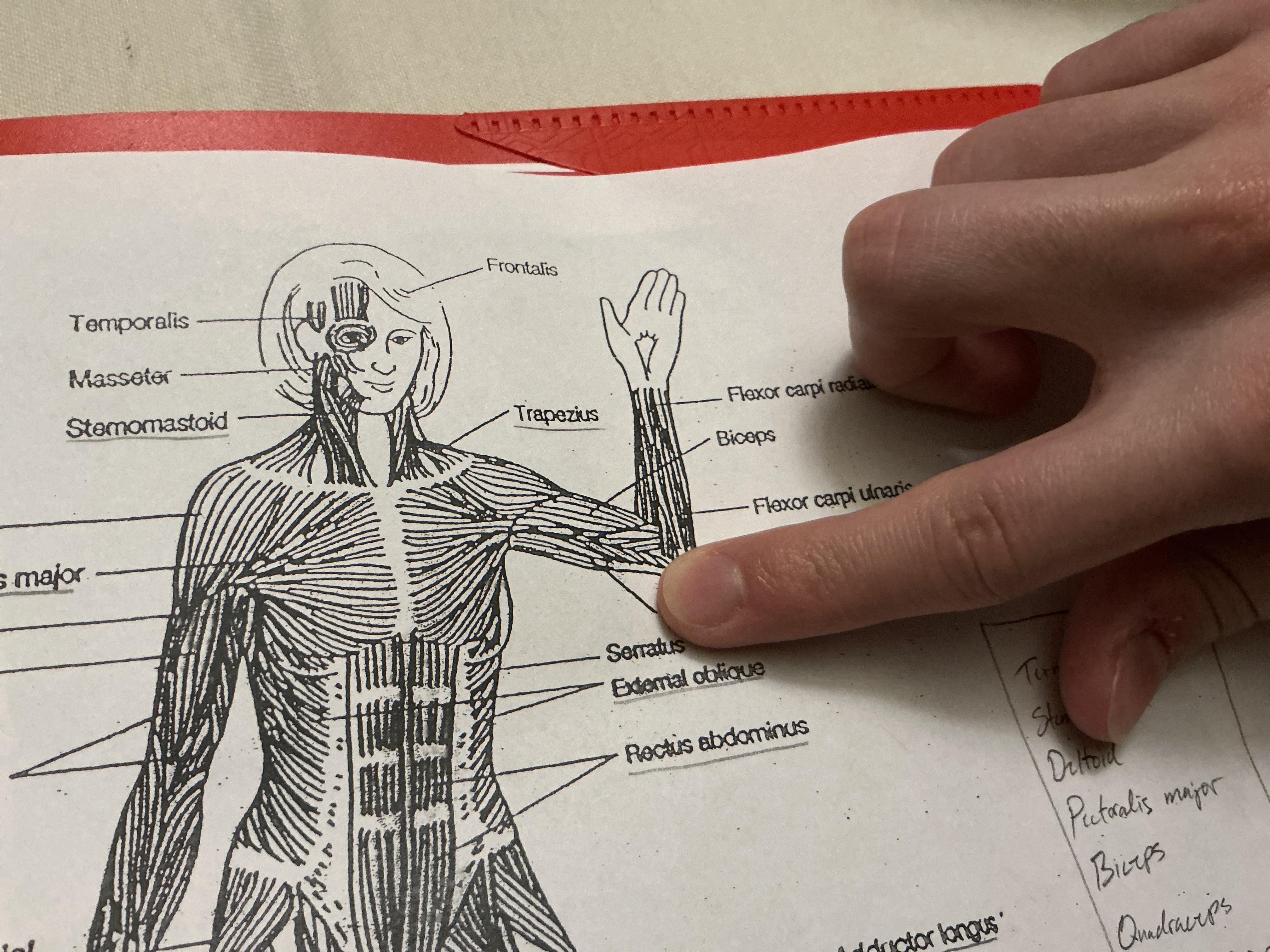
Triceps
A muscle located in the back of the upper arm, responsible for elbow extension.
External oblique
a broad, thin, superficial muscle located on the lateral and anterior parts of the abdomen. It originates from the lower eight ribs (ribs 5–12) and runs diagonally downward and medially toward the linea alba, the pubic tubercle, and the iliac crest. Its main functions include trunk rotation, lateral flexion of the spine, and assisting in compressing the abdominal contents, which helps with respiration and core stability.
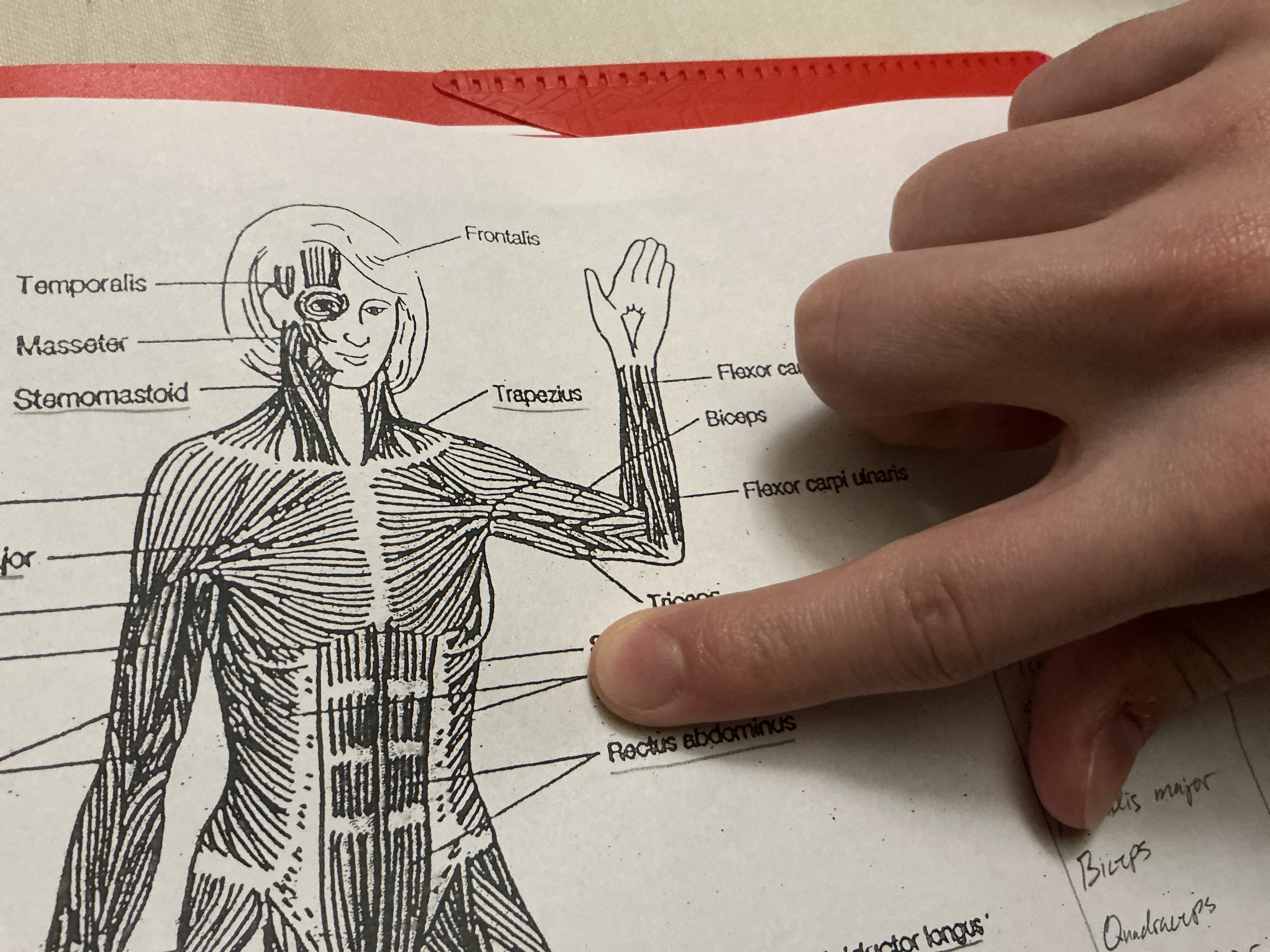
Rectus abdominus
A long, flat muscle located along the front of the abdomen, running vertically on each side of the midline. It helps flex the spine and stabilize the core.
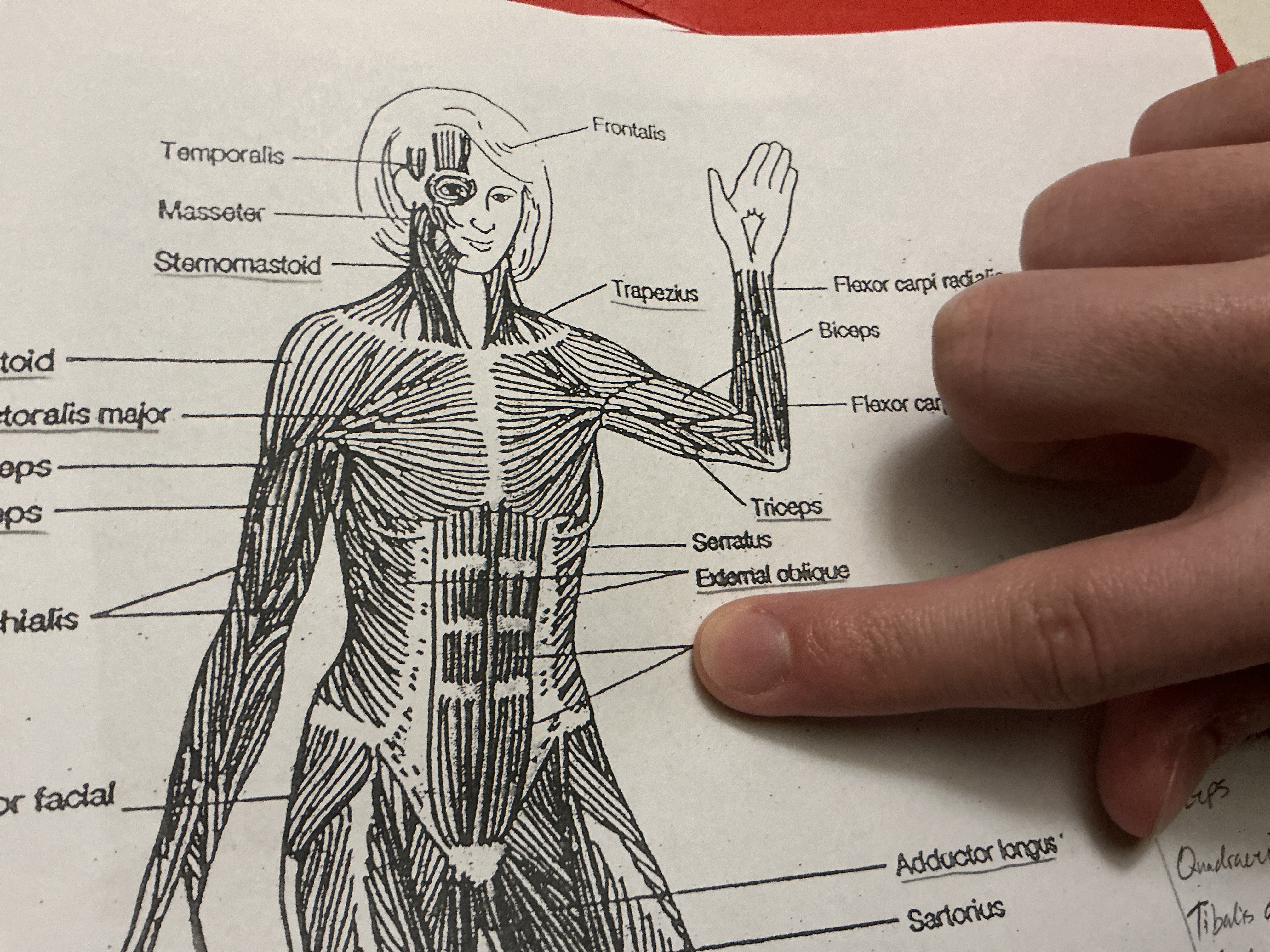
Adductor longus
a muscle in the inner thigh that helps bring the leg toward the midline of the body (adduction).
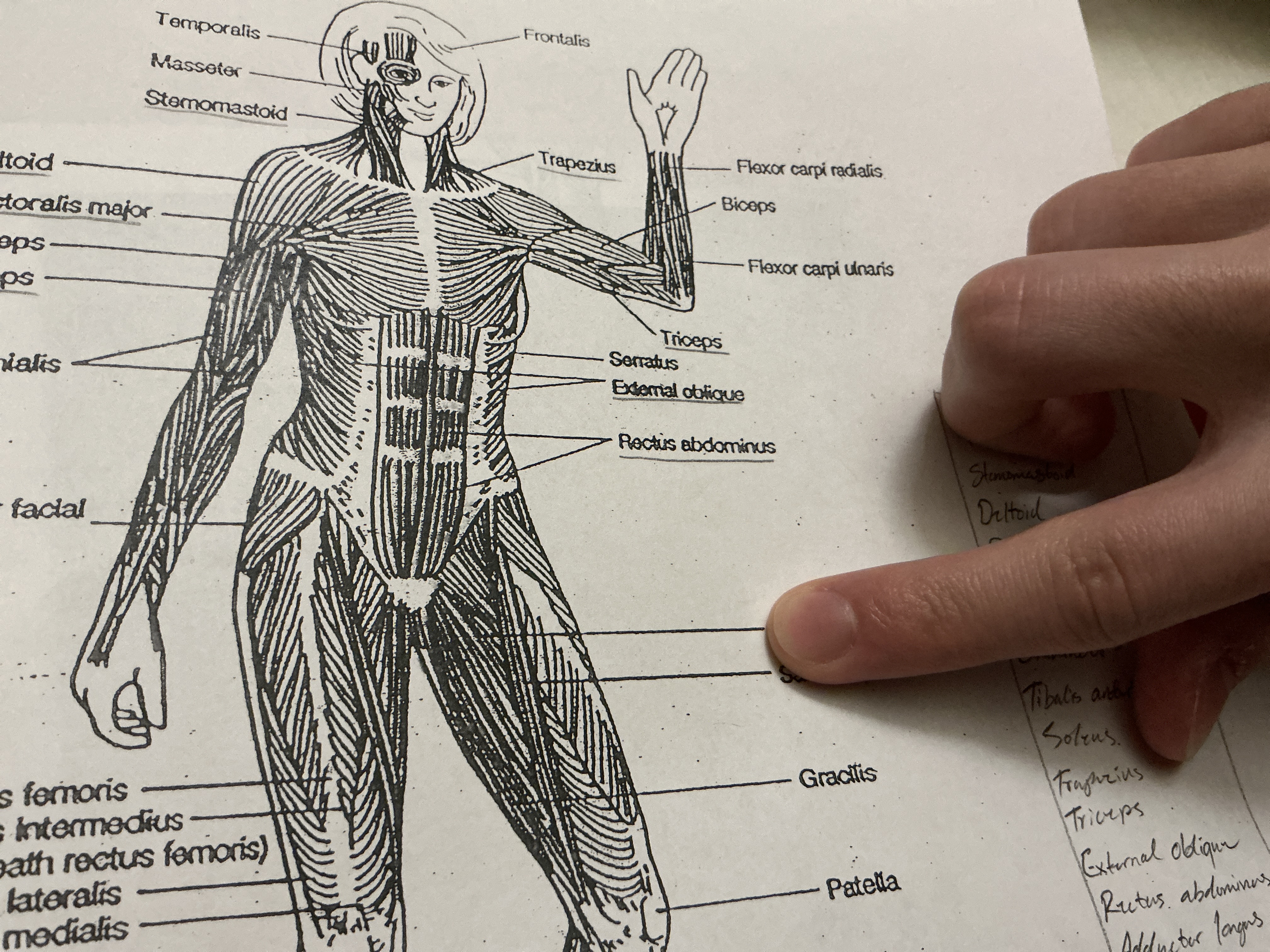
Gastrocnemius
a major muscle located in the back of the lower leg, forming part of the calf. Its primary function is to help with plantar flexion of the foot at the ankle (pointing the toes) and assist in bending the knee.
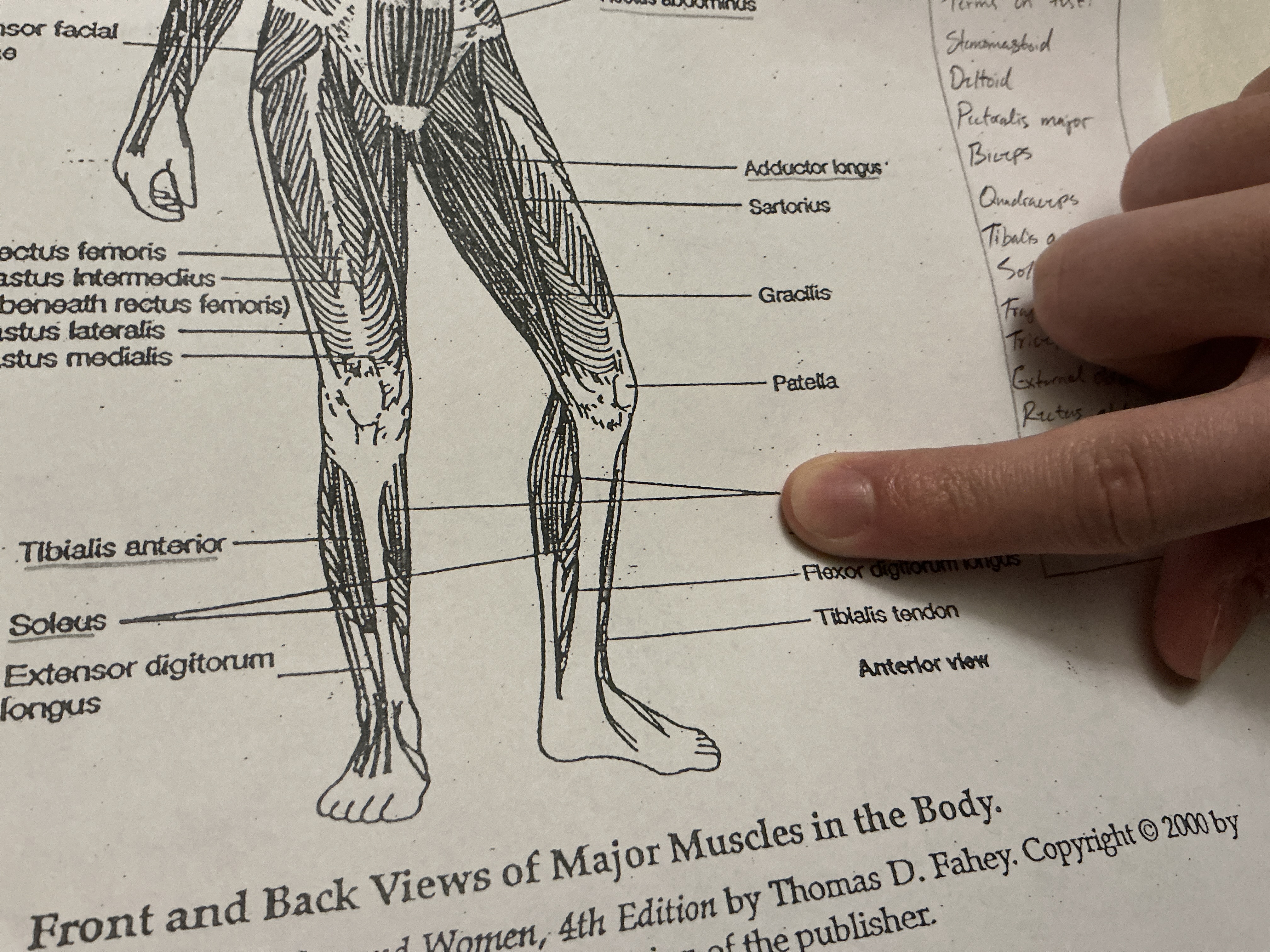
Latissimus dorsi
a large, flat muscle on the back that helps with movements like pulling and rotating the shoulder. In short, it’s a major back muscle used in actions such as rowing or swimming.
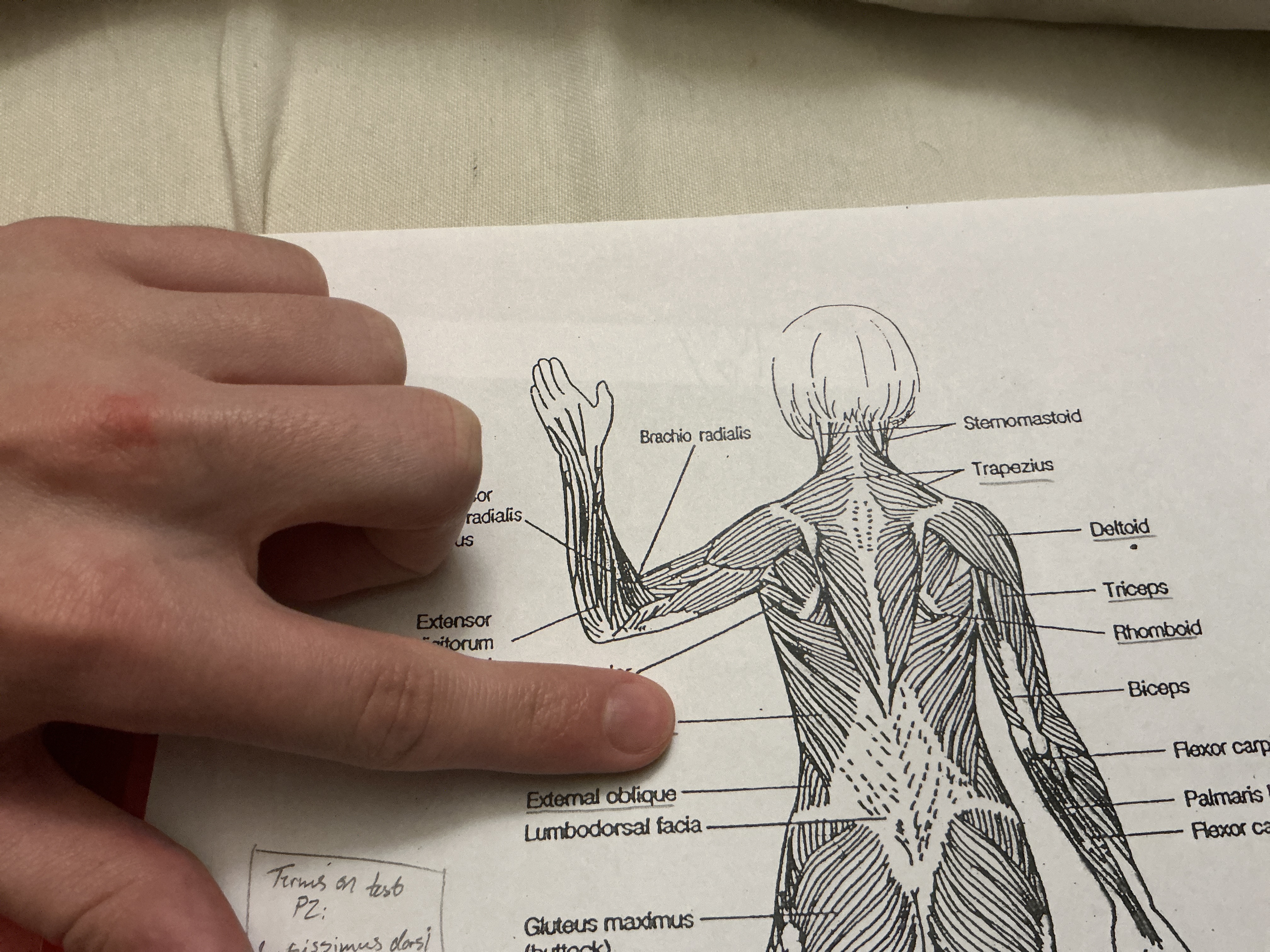
Gluteus Maximus
The largest muscle in the buttocks, responsible for movement of the hip and thigh.

Rhomboid
a paired muscle located in the upper back, connecting the spine to the shoulder blades (scapulae). Its main function is to retract the scapula, pulling the shoulder blades toward the spine, and to help maintain good posture.
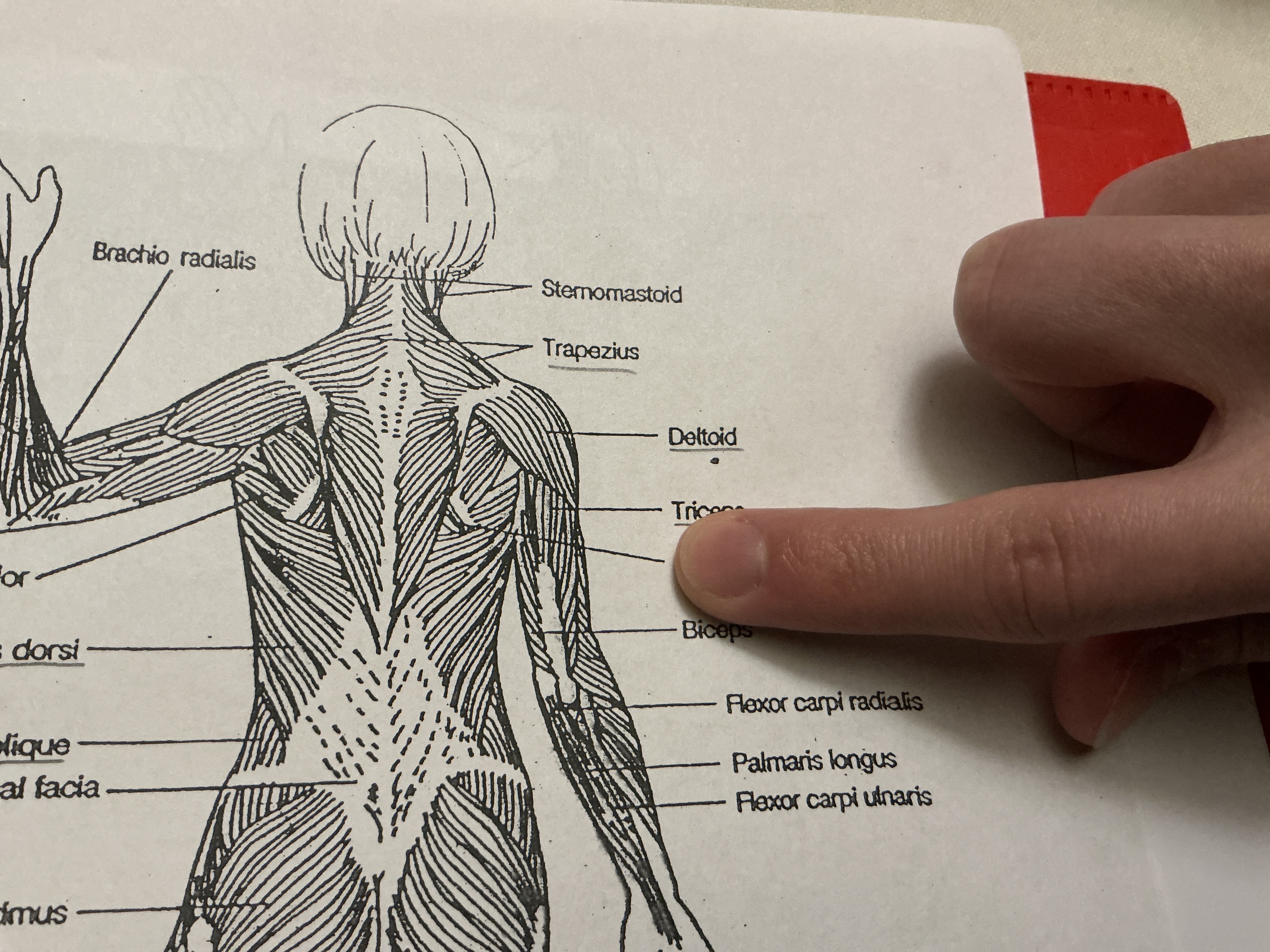
Hamstrings
a group of three muscles located in the posterior compartment of the thigh, running from the pelvis to below the knee
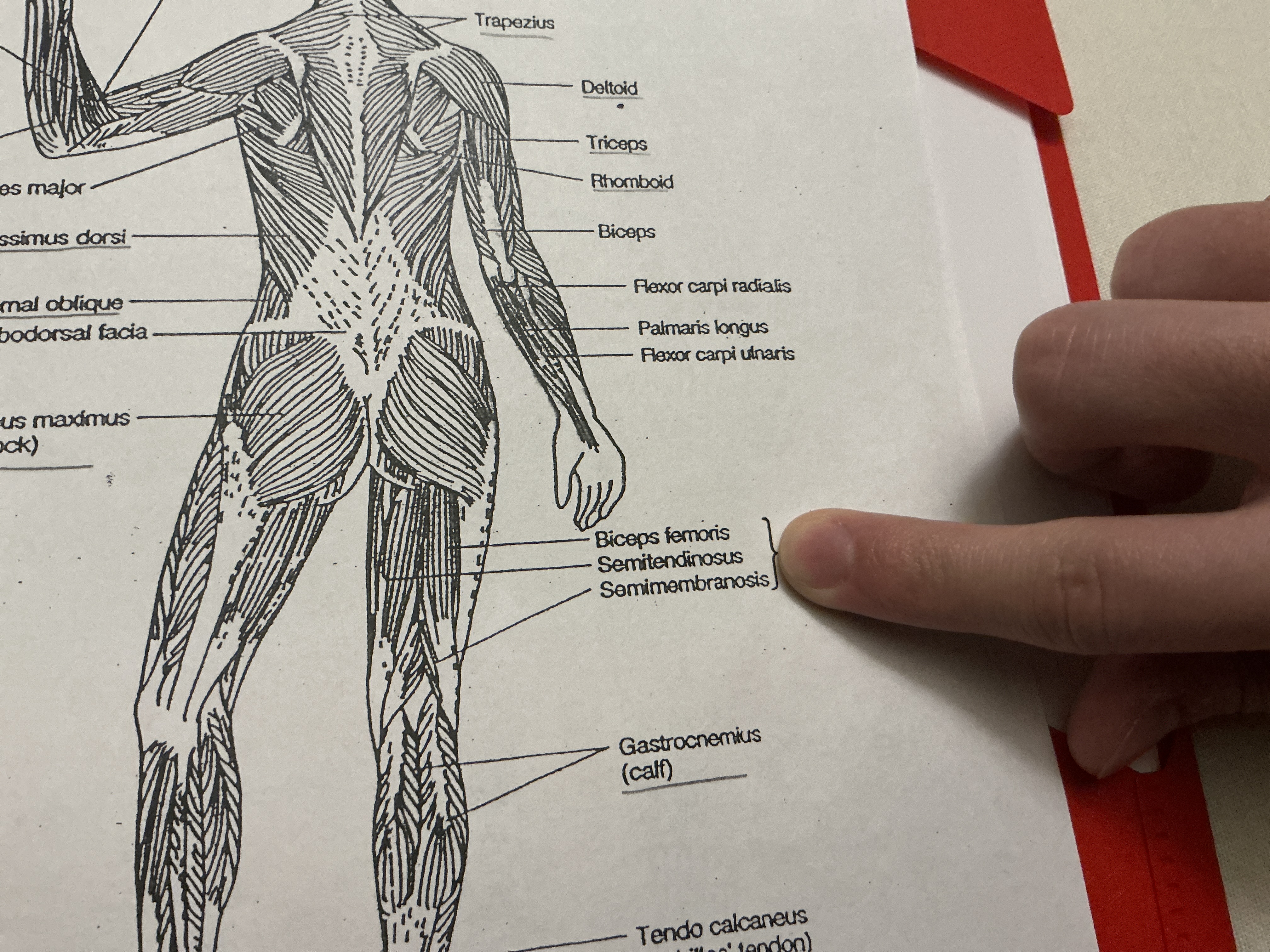
Tendo calcaneus
the thick, strong tendon that connects the calf muscles (gastrocnemius and soleus) to the heel bone (calcaneus). It plays a crucial role in walking, running, and jumping by allowing the foot to push off the ground.
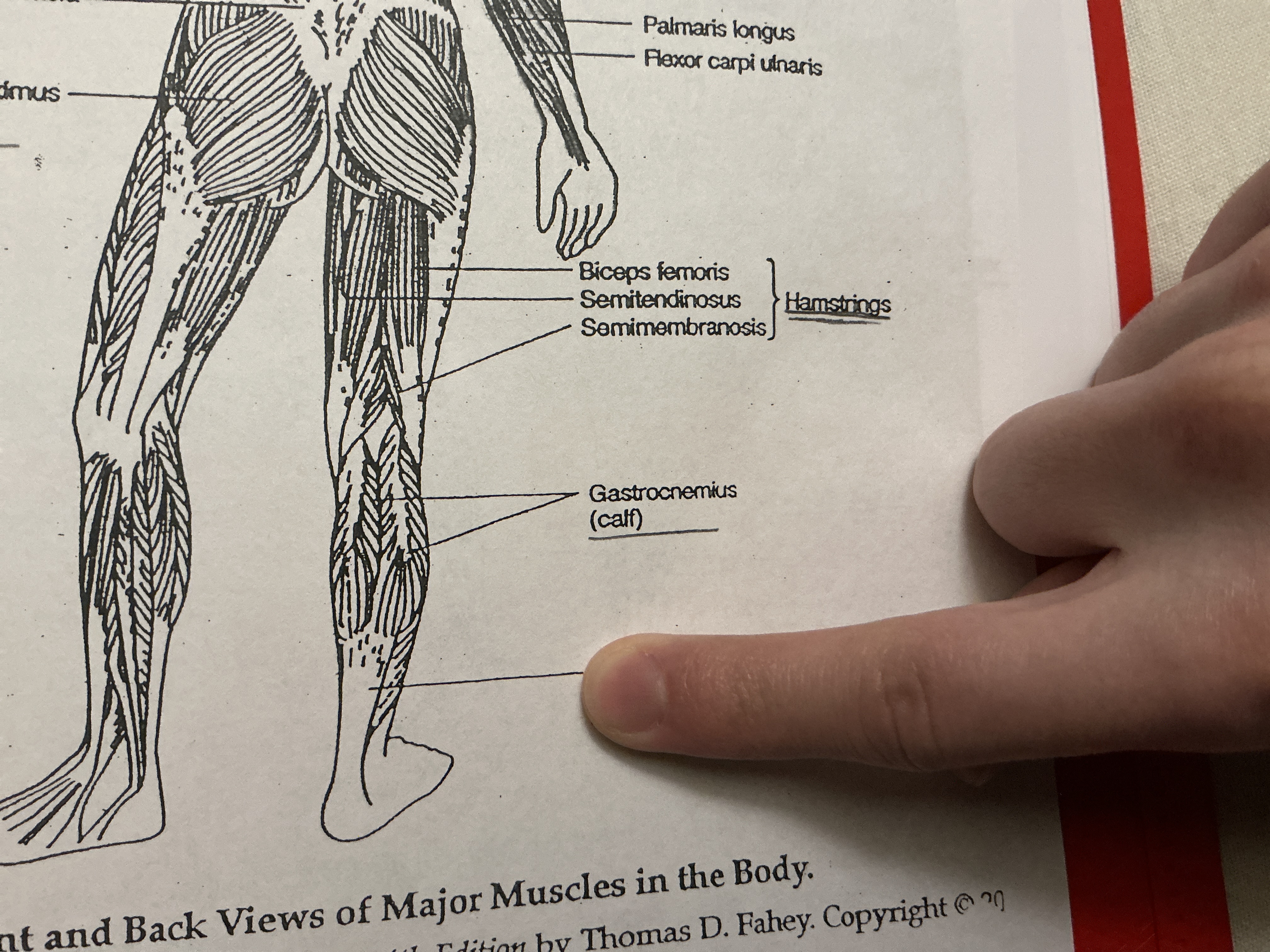
Biceps
the muscle on the front of the upper arm that helps bend the elbow and rotate the forearm.

 Note
Note  Flashcards (45)