4. reduce defensiveness in others (all done PP)
 Studied by 2 people
 Call Kai
 Learn
Learn Practice Test
 Spaced Repetition
 Match
Match Flashcards
 Knowt Play
1/10

There's no tags or description
Looks like no tags are added yet.
Name | Mastery | Learn | Test | Matching | Spaced | Call with Kai |
|---|
No analytics yet
Send a link to your students to track their progress
11 Terms
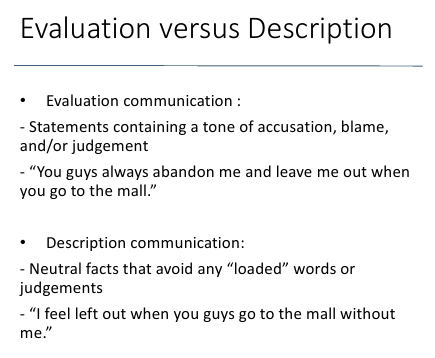
Problem: Evaluation
Gibbs category - Adler
Antidote = Description
(neutral facts avoiding loaded words)
- say: “I”
- avoid “loaded words” / judgment
—
Eval = accusatory/blaming
loaded words/accusatory/blame vs. neutral statements with facts
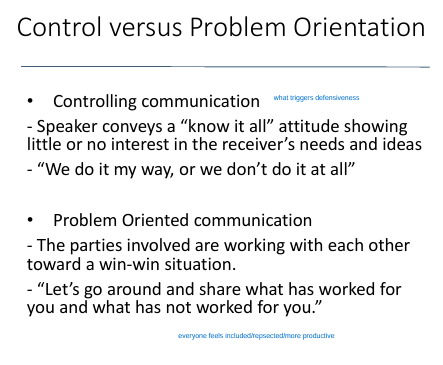
Problem: controlling
Gibbs category - Adler
Antidote = problem oriented
know it all (don’t wanna hear your concerns) vs. working together for win-win situation
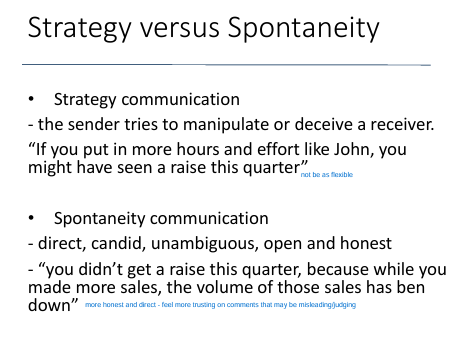
Problem: strategic
Gibbs category - Adler
Antidote = spontaenous
manipulate/decieve vs. open-honest, unambigious,
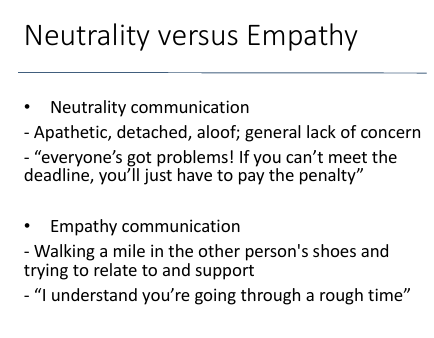
Problem: indifferent
Gibbs category - Adler
Andtitote = empathetic
lack of concern vs. walking a mile in another persons shoes (try to relate and support)
Problem: superior
Gibbs category - Adler
Andidote = equality
dominance vs. giving everybody a chance (justice/fairness)
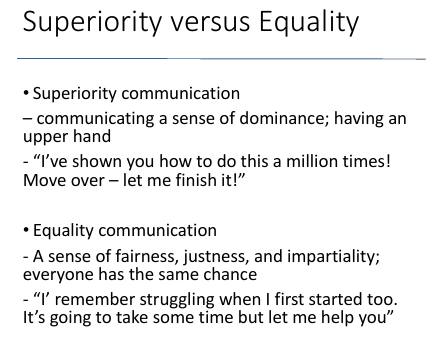
Problem: Certainty
Gibbs category - Adler
Antidote = provisional
overconfidence (i’m right, you’re worng) (million times) vs. open minded, being able to adapt (i’d love to learn)
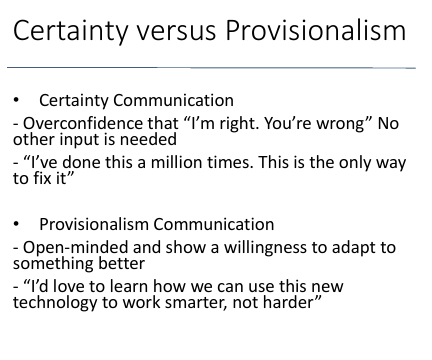
What is EVALUATIVE language?
implies you are judging a person
-using a lot of “you”
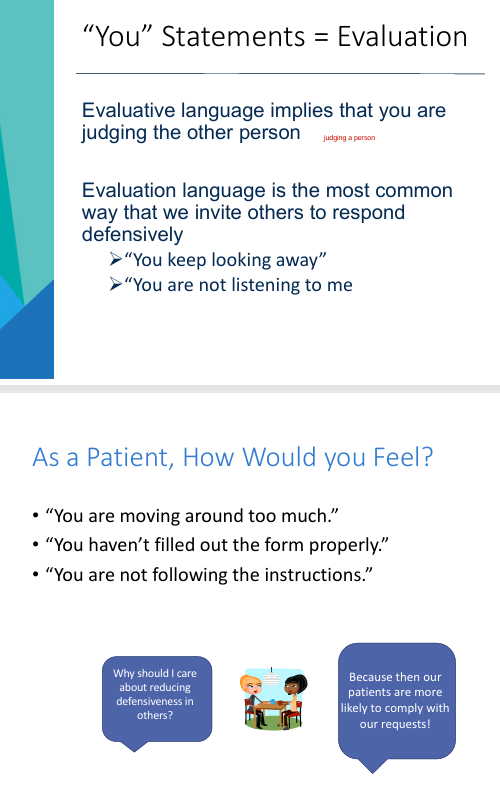
Why are “I” statements so important?
reduces DEFENSIVENESS
-take responsibility for what you think, & don’t blame others
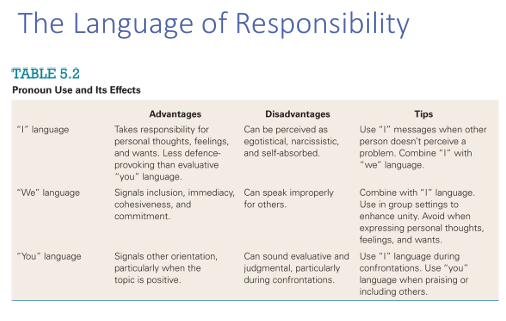
additional info
1) only use “you” when complimenting/praising
2) “we” = inclusive/cohesion
3) neg: “we” can speak improerly for others
4) combine “I” w/ “we” language
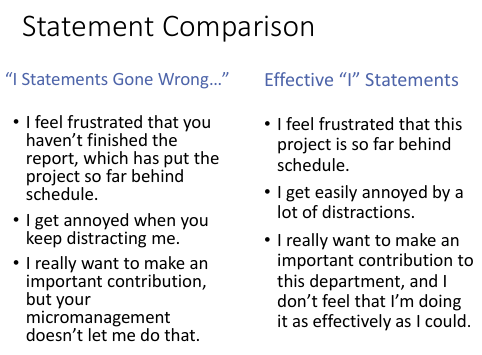
(practice)
slide 40 and onwards = practice
all done
 Note
Note  Flashcards (47)