sensory intergration and perception
 Studied by 0 people
 Call Kai
 Learn
Learn Practice Test
 Spaced Repetition
 Match
Match Flashcards
 Knowt Play
1/23

There's no tags or description
Looks like no tags are added yet.
Name | Mastery | Learn | Test | Matching | Spaced | Call with Kai |
|---|
No study sessions yet.
24 Terms
what is the cortex?
the rind of the brain
2-4mm thick
40% of mass, 14-16billion neurons in human brain
90% of cortex is neocortex
6 layers
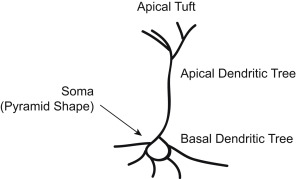
what are pyramidal cells?
pyramid shaped
large apical dendrite pointing towards cortical surface and multiple basal dendrites
projects to outher cortical layers
layers III and IV (output)
excitatory (glutamatergic)
input from stelate cells and inhibitory interneurons
corticospinal and corticalbulbar pathways
what are stellate cells?
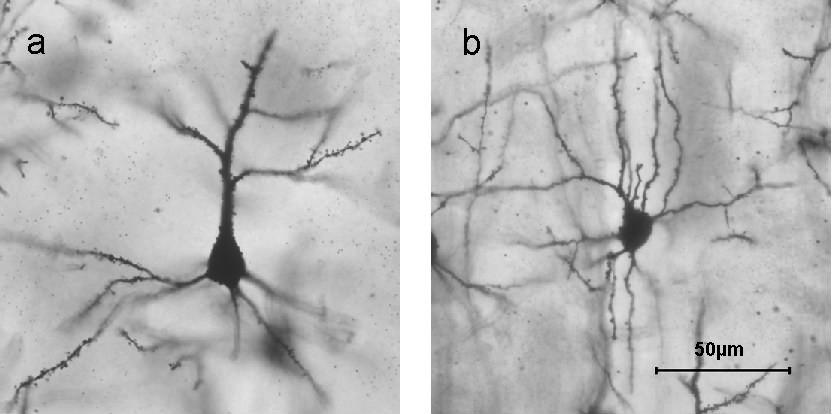
star shaped, short and radiate in all directions (no apical)
local circuits
granual layer IV (input) of neocortex
receive thalamocrtical sensory input
excitatory (glutamatergic) local processing of thalamus, can also be inhibitory
connect to pyramidal cells
what are the 6 layers of the cortex?
molecular layer
external granular layer
external pyramidal layer
internal granular layer
internal pyramidal ayer
multiform layer
what is the role of layer I?
axons and dendrites, few neurons
intergration
what is the role of layer II?
small pyramidal and stellate cells
input from other cortical areas, local cortical processing
what is the role of layer III?
medium pyramidal cells
input from other cortical areas and outut to other cortical areas
what is the role of layer IV?
stellate cells
sensory relay from thalamus
what is the role of layer V?
large pyramidal cells (betz cells in motor cortex)
outut to subcortical targets, major motor output
what is the role of layer VI?
mixed neurons
output to thalamus
what brodmann area is the primary visual cortex?
17
what brodmann area is the primary auditory cortex?
22
what brodmann areas the primary somatosensory cortex?
1, 2, 3a and 3b
what brodmann areas are the somatosensory association areas?
5 and 7
why is the sensory homonculus problematic?
assumes the white male body is universal
women 50% more likely to have a heart attack
pulse oximeters are less effective in people with darker skin
what type of organisation is the cortex mapped into?
columnar
vertical columns of neurons that span 6 layers
a column is a functional unit of informational processing
allowed rapid expansion of cortex
how can S1 be divided into inividual somatotopic maps of the contralateral body?
3b sends into to 1 and processes cutaneous tuch
1 projects to association areas which process texture, shape and fine tactile features
3a sends info to 2 about joint and muscle signals
2 projects to associayion areas about size, shape, position of objects (proprioceptive and tactile info)
this info is processed sequentially (e.g 3b input to 1) and in parallel (different types of info are processed at the same time, e,g 3b vs 3a)
what are feature detecting neurons?
neurons that respond selectively to specific characteristics of a sensory stimulus e.g orientation, shape, texture, location
e.g area 1 processes texture, area 2 processes shape and size
what does feature detection rely on?
convergence- multiple lower level neurons synapse onto a higher level neuron
feature detection depends on combining simple inputs to recognise patterns, edges or directions
what is the role of association areas?
association areas intergrate information from multiple regions
they allow sensory stimuli to be recognised, affixed meaning and value
the human brain is 80% association areas
what are the somatosensory association areas?
brodmann areas 5 and 7
what is the role of the somatosensory assoiation areas?
allows multisensory understanding of world and predicting future
strong connections to hippocampus and amygdala
stimulating sensory areas creates complex sensory experiences
what happens when the primary somatosensory area is damaged?
loss of ability to detect sensory stimuli
what happens when the somatosensory association areas are damaged?
issues with recognition and perception
astereognosis = inability to identify objects by touch alone without the use of sight
hemineglect = failure to be aware of one side of space, usually when right hemisphere is damaged
 Note
Note  Flashcards (21)