History of furniture - test 1 Walters
 Studied by 1 person
 Call Kai
 Learn
Learn Practice Test
 Spaced Repetition
 Match
Match Flashcards
 Knowt Play
1/210

There's no tags or description
Looks like no tags are added yet.
Name | Mastery | Learn | Test | Matching | Spaced | Call with Kai |
|---|
No analytics yet
Send a link to your students to track their progress
211 Terms
Chinese History
Taoism, Confucianism, Buddhism: cultural vision, art, architecture
Careful orientation, order, symmetry, asymmetry, hierarchy
Chinoiseries and Japonisme describe Oriental design influences Art, architecture, culture influence West
Trade: Begins with the Han dynasty along the "silk road" to Ancient Rome; Europe & America 17th-19th centuries
British and Dutch East India Company organizes trade routes during the Ming dynasty
Railroads bring cultural influence to North America
Continues to present, booming Chinese economy, growing international design exchange, globalism
Chinese Concepts
Unity, harmony, balance
Forms develop early, continue
Religious influences: rituals, symbols, spatial order
Universality: yin (negative, feminine, dark) & yang (positive, masculine, light)
Five elements: wood, fire, earth, metal, water
Feng shui (wind & water): orientation, natural forces, balance, harmony
Affect buildings, interiors, furnishings relationships, spacing, color, form, patterns
Chinese Motifs
Numerous motifs, singly or combinations
Lions of Buddha, tigers, dragons, the phoenix
Fret, meander, diaper patterns, shou (long life), calligraphy
Lotus, peony, chrysanthemums, bamboo, clouds, fruits
Bat (happiness), 5 bats (Five Blessings—longevity, wealth, serenity, virtue, easy death
Pine, evergreen, stork, tortoise (longevity)
Taoist: 8 Immortals
Buddhist: flaming wheel, endless knot, state umbrella
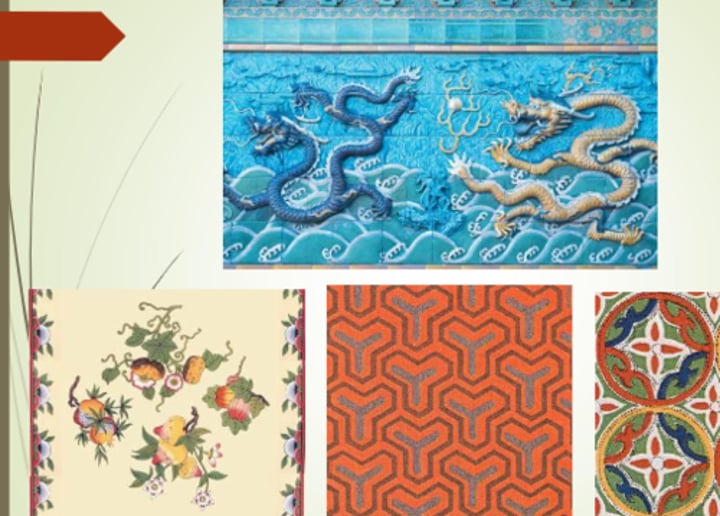
Chinese Architecture
Value site, pattern, tradition over individual buildings
Framework for social system
Axiality, hierarchy, modular compositions with fixed proportional relationships, color
Repetition of forms, few stylistic changes
Symmetry, uneven numbering systems for roof layers, details, spacing, balance, finiteness, regularity
Landscapes contrast: asymmetrical compositions, empty space, infinity
Forms & elements from construction methods
Palace complexes, individual houses, pagodas, shrines, temples, commercial structures
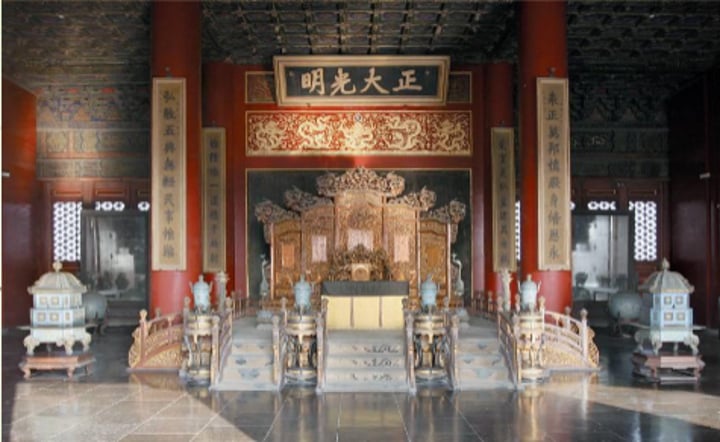
Forbidden City
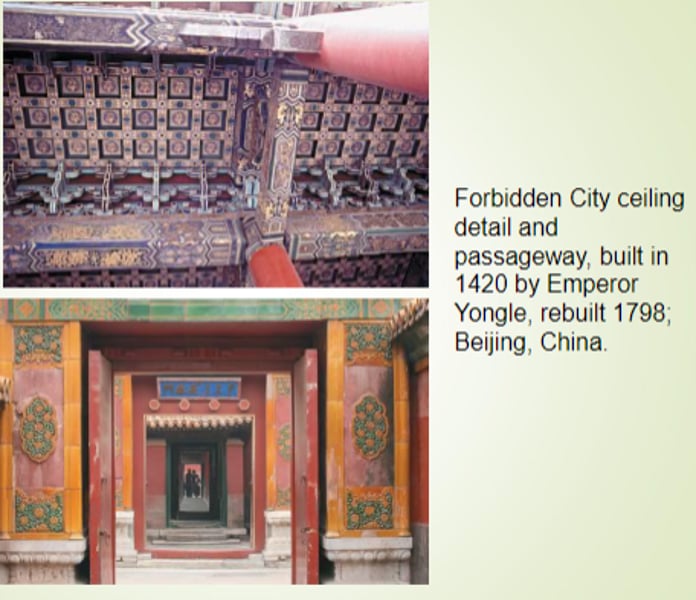
Forbidden City overview, built in 1420 by Emperor Yongle, rebuilt 1798; Beijing, China.
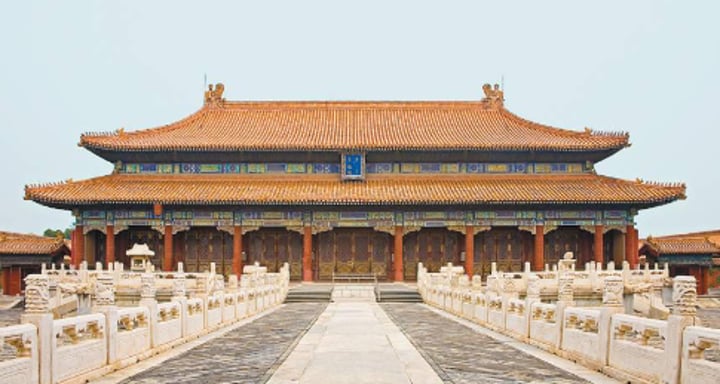
Forbidden City
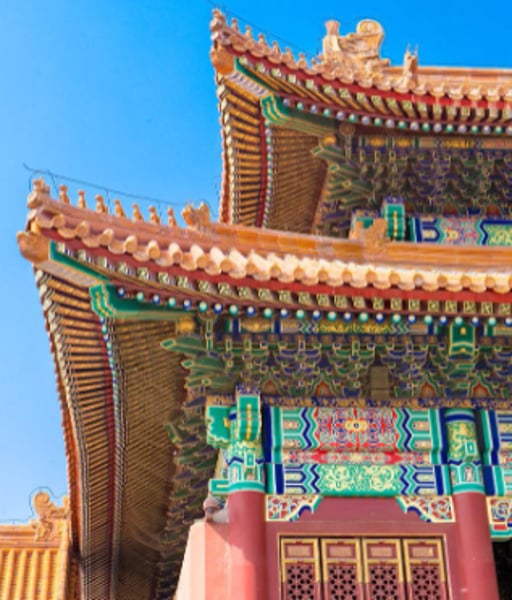
Roof Detail, Hall of Supreme Harmony, Forbidden City
Forbidden City audience hall (Qian Qing Gong), built in 1420 by Emperor Yongle, rebuilt 1798; Beijing, China.
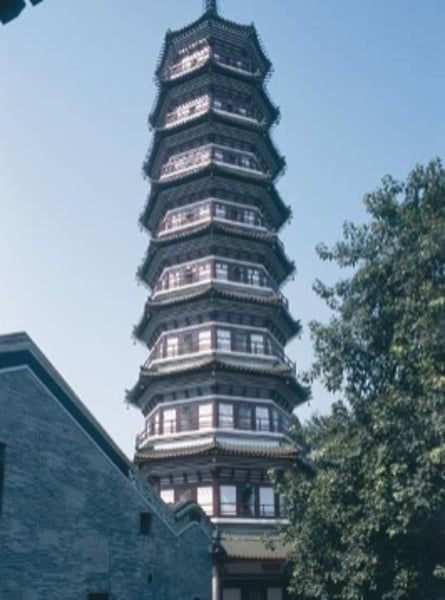
Temple of Glorious Filial Piety
Pagoda, Temple of Glorious Filial Piety; Guangdong, China.
Chinese Interiors
Planned carefully like buildings
Axial relationships, hierarchy based on age & status
Symmetry, formality in room shape, door & window placement, furniture arrangements
Strong colors
Windows, door may open to courtyards
Grilles integrate exterior & interior
Public rooms more lavishly furnished
Few pieces of furniture
Chinese Furnishings and Decorative arts
Formality, regularity, symmetry, straight lines
Beauty: simplicity, structural honesty, refined proportions
Similar forms, shapes
Polished wood or bamboo, lacquered sets for wealthy Intricate joinery, no nails or dowels, little glue
Miter and mortise & tenon joints
No applied moldings, carved decoration, brass hardware
Parallel or right angle to walls
Trade brings Chinese furnishings & decorative arts & their influence to the West 16th century onward
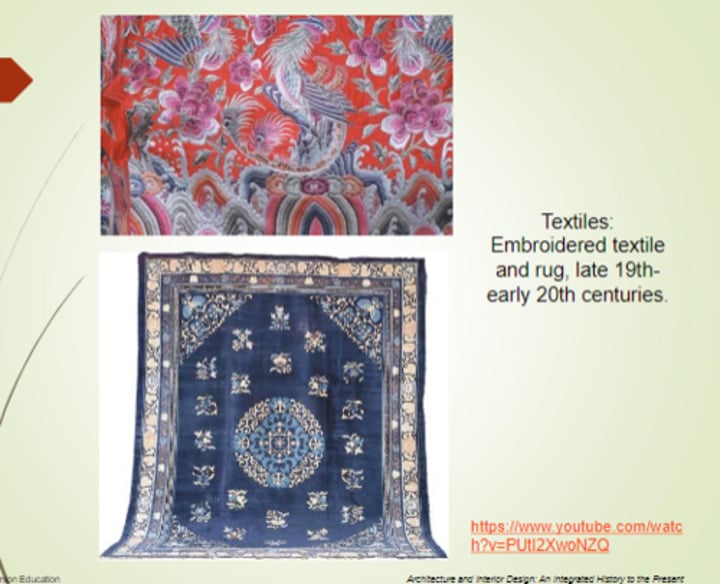
Chinese known for porcelain, rugs
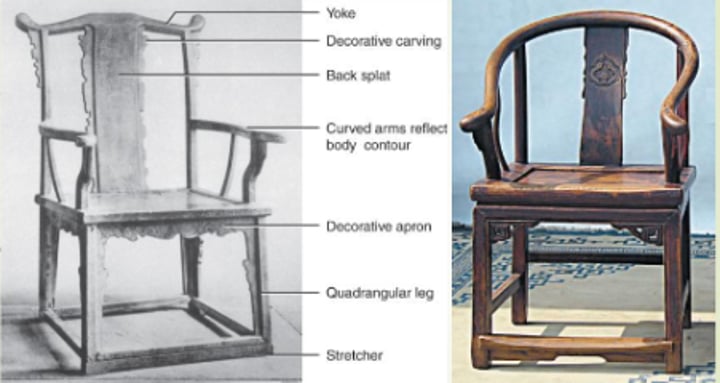
Armchair with yoke back and solid splat and horseshoe armchair; China.
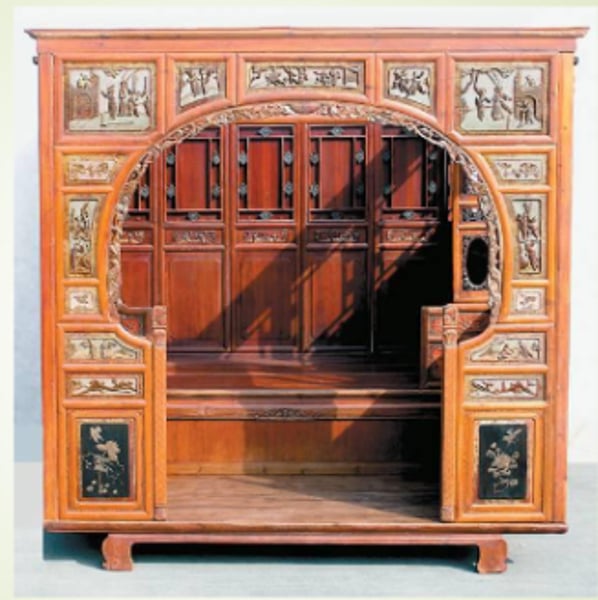
Carved canopy bed, c. early 20th century; China.
Japan cultural characteristics
Buddhism, Shintoism, Neo-Confucianism
Chinese influence ▪ Centralized government, city planning, court protocols
Writing, art
Buddhism
Feudalism
Daimyo - Lords
Samurai - Warriors
Kamakura Period (1185-1392)Shoguns (military dictators) maintain political & military authority
Decreased individual ownership of land
Muromachi Period (1392-1568)
Exports to Europe
Cha-no-yu - formal tea ceremony
Civil war brings isolation and Neo Confucianism
Prohibition of foreign travel
Epitomizes aesthetic beauty, simplicity, modularity, attention to detail
Art & design evolve independent of outside influences
Buddhism and other concepts from China
Religions shape daily activities & rituals & relationship to nature
Influence design
Strong hierarchy of society & emphasis on tradition
Yet, nourish artists, designers, scholar
Trade with China & West more influences to Japan
Japanese art & design imitated in West from 17th century onward
Japan Concepts
Isolation and contact bring characteristics suited to cultural preference
Unity, harmony, & balance important as in China
Shibui, highest aesthetic level of traditional design
Simplicity, implicitness or inner meaning, humility, silence, & use of natural materials
Shape daily activities & visual arrangements
Human relationship to nature different than Western
Houses open directly to garden
Seamless division of space
Nature appears throughout interiors
Japan Motifs
Naturalistic
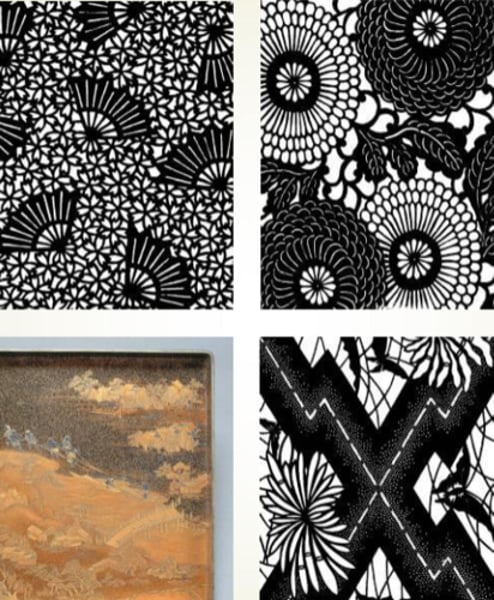
Cherry blossom, iris, chrysanthemum, wisteria
Bamboo, leaves, buds, waves, whirlpool
Geometric ▪ Stripes, grids, swirls, latticework, fret
Figurative Men & women in traditional dress
Family crest
Japan Architecture
Works of art in beautiful natural environments
Axiality, hierarchy, asymmetry
Asymmetrical balance between right & left, dynamic & appealing
Building's shape, roof layers, details, spacing
Fixed proportional relationships, modularity
Contrasts, little variation from traditional forms
Religions influence construction, details, decoration, color
Easy to rebuild because of earthquakes
Rambling country house indigenous, 8th-12th centuries
Houses in landscaped gardens for seclusion, mediation
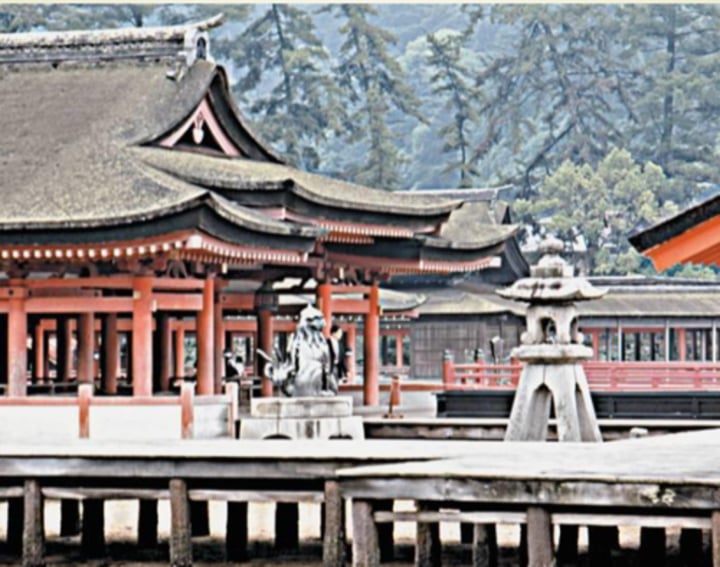
Itsukushima Shinto Shrine, 1241-1571; Miyamjima, Japan. Japan.
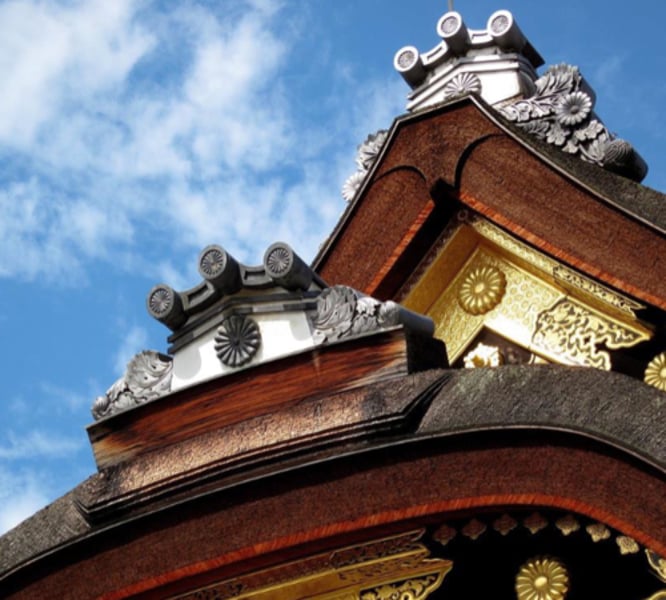
"Ninomaru Palace" by cogdogblog
Golden Pavilion of Yoshimitsu, Kinkaku-ji, 1394-1427; Kyoto, Japan. Japan.
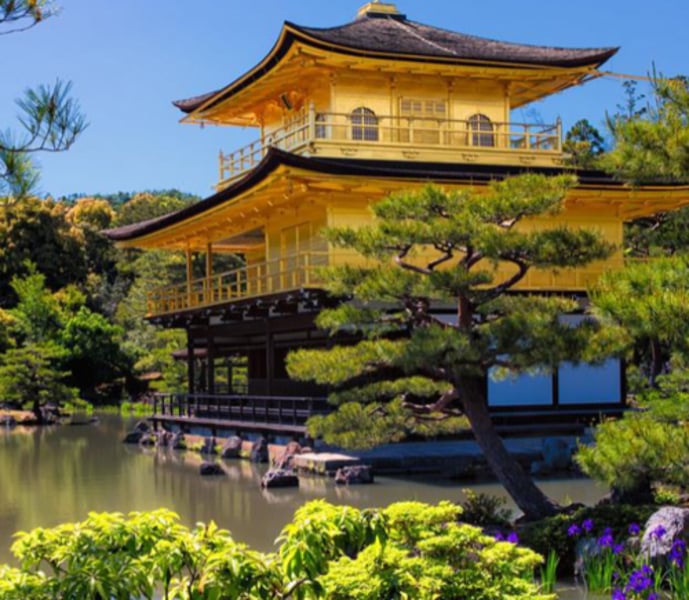
Katsura Detached Palace (also known as Katsura Imperial Villa), c. 1615-1663; Kyoto, Japan. Japan.
Shokin-Tei Pavilion (tea house) and Rooms of Hearth and Spear, Katsura Detached Palace (also known as Katsura Imperial Villa), c. 1615-1663; Kyoto, Japan; Rooms of Hearth and Spear by Kobori Enshu. Japan.
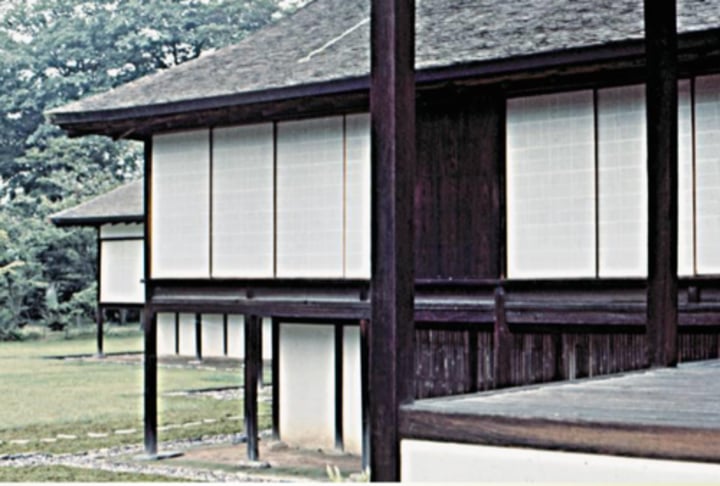
Japan Interiors
Beauty, harmony, flexibility, serenity
Visible structure, economy of line, naturalistic colors, textural harmony, diversity, meticulous detail, uncluttered space, modularity
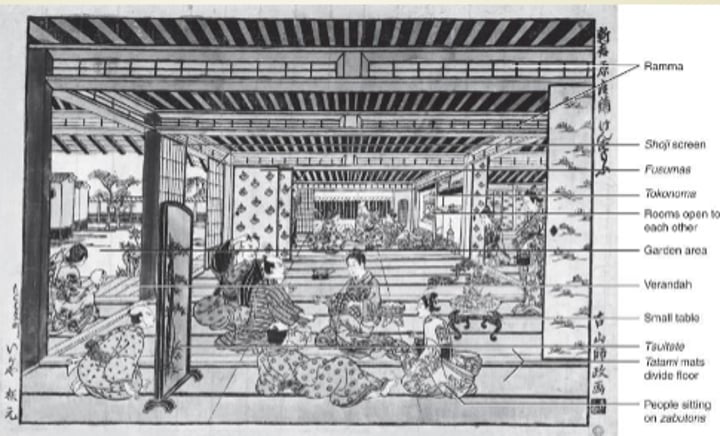
Floors - Tatami mats organize space
Walls - Screens, fusumas & shoji, subdivide & give flexibility, Sliding partitions instead of doors & windows
Tokonoma or tana display in formal rooms
Low ceilings
Strong geometry, respect for materials, contrasts
Neutral backgrounds with color & pattern in decorative objects
Japan Furnishings and Decorative Arts
Little freestanding furniture, several carefully chosen accessories
Sit on knees on zabutons
Seating groups focus on hibachi or charcoal heater
Built in furniture
Pieces parallel to walls
Some gilding, colored floral motifs
Neutral color schemes with bright colors in decorative arts
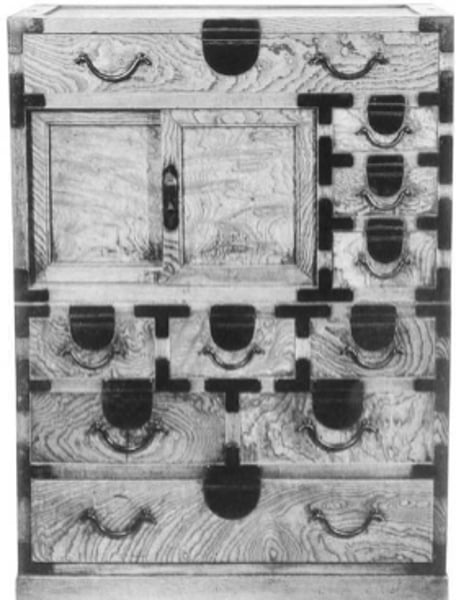
Tansu
Japanese chest ...means "in two parts"
Byôbu
folding screen), c. 1800; Tokyo, Japan.
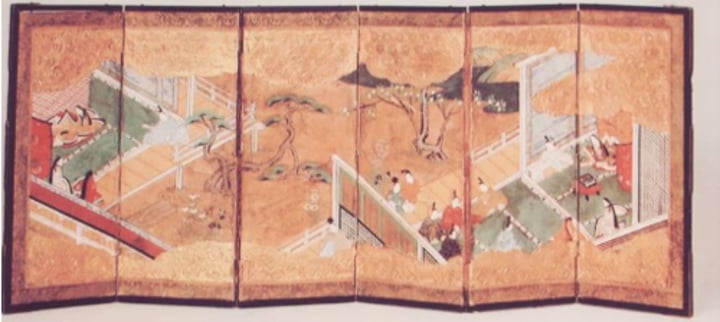
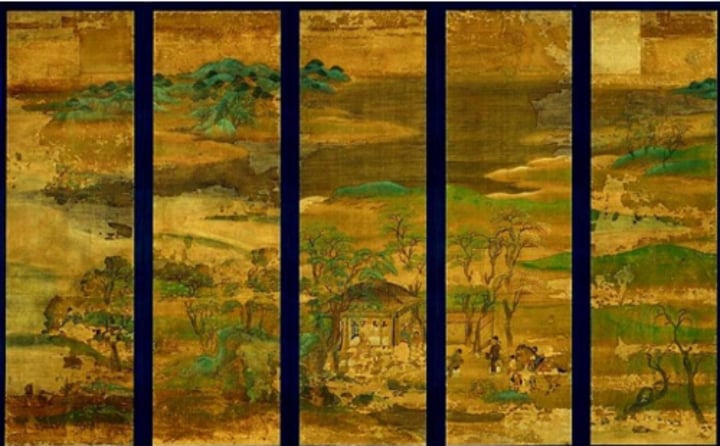
Senzui Byobu
Six-fold screen, color on silk. Late-Heian Period (11th Century). Kyoto National Museum
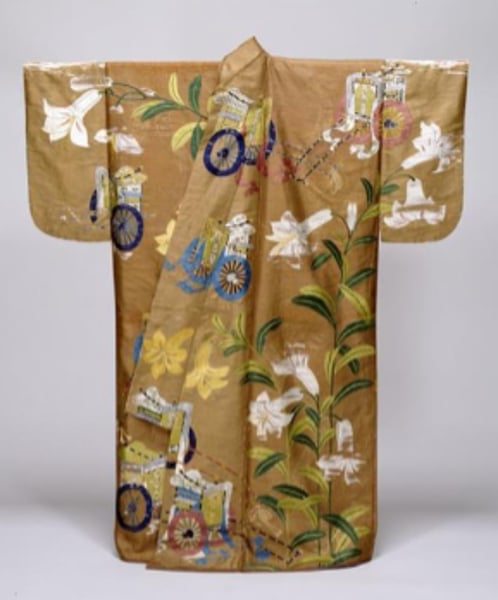
Nuihaku
(Nō costume)—design of lily and court-cow-carriage patterns on brown fabric). Azuchi-Momoyama period/16th century. Tokyo National Museum
Japan Interior, Moromasa
a House of Pleasure, 18th century
HISTORY
• Pre-Dynastic (c.3500-3000 BC)• Old Kingdom (3000-2155 BC)• Middle Kingdom (2100-1700 BC)• New Kingdom (1520-1000 BC)
▪Powerful, enduring civilization ▪Hierarchal society with Pharoah at head
ARCHITECTURE
Consistent forms and patterns with little evidence of stylistic development•
Surviving tombs & temples, built of stone, grand scale• Domestic rarely survives, built of impermanent materials•
Reflect cultural belief in eternal life•
Monumentality, eternal, symmetry, order balance, stylization, formality, repose, solidity, grand scale•
Geometric volumes & forms, rectangular shapes, straight lines•
Thick walls, often slanted (batter); little fenestration, colorful decoration •
Hieroglyphics, columns, nature inspired ornament
Construction methods + materials
Trabeated• Post and Beam• Post and Lintel• Vertical –Horizontal Member
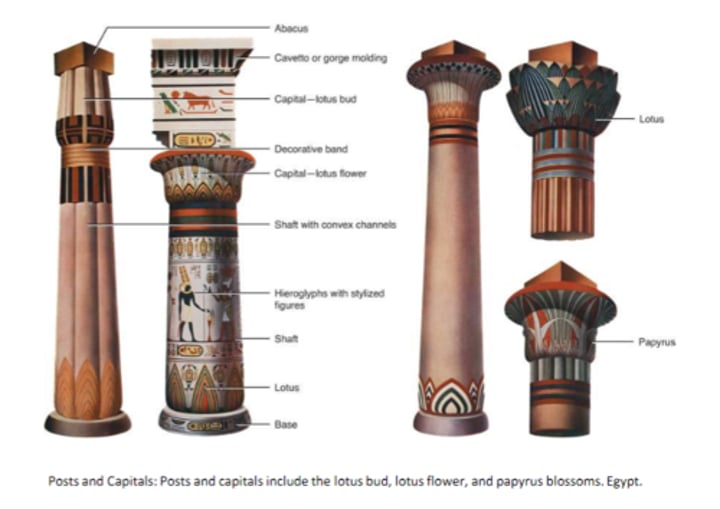
Columns• First to experiment with shape and base• Highly decorated• Defined space of necessity• Shape (round, polygonal)
Materials• Sandstone, Limestone, Granite, Diorite, Basalt, Alabaster, Mud-brick• Wattle and daub
INTERIORS
Surviving only in tombs/temples
Domestic: Wall paintings
Rectangular shapes, straight lines, flat ceilings
Few windows, limited architectural detail
Colorful paintings on walls/ceilings/tombs, grand houses
Little furniture
FURNISHINGS + DECORATIVE ARTS
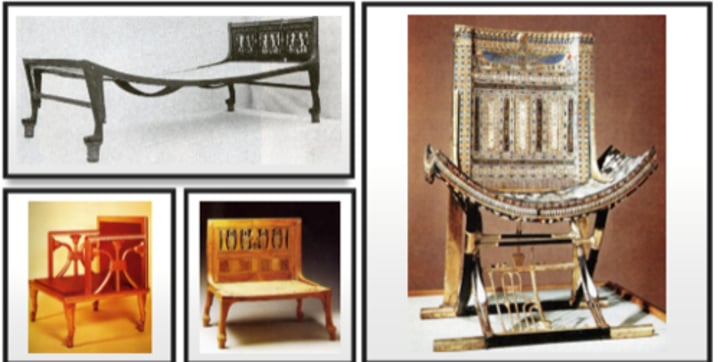
▪ Rectangular, few curves; plain or decorated▪
Surviving examples from royal or upper-class tombs▪
Common furnishings little known▪
Few types: seating, storage, tables, beds▪
Definitive characteristics: animal legs in natural position, raised on cylinder• Paw or hoof feet▪
Local woods poor quality; mostly imported•
Plywood of small wood pieces glued together▪ Ornament: inlay, carving, gilding, silvering
MOTIFS
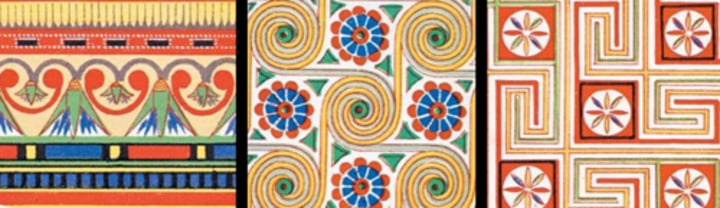
Geometric designs
Guilloche, spiral, palmette, wave, lotus, papyrus, palm, hieroglyphics, sundisk, vulture, scarb beetle
Egyptian introductions
gullioche, spiral, palmette, wave patterns
Great Pyramids at Giza
• Pyramid of Khufu, c. 2550 BC• Pyramid of Khafre, c. 2500 BC• Pyramid of Menkaure, c. 2450 BC
Very important !!!
Sacred chamber
Reflect their needs to the afterlife
Filled with goods
Looted and robbed since
Middle is of Kafka has limestone 356 ft to the Kufu- largest one
Incara- is the smallest
Have several passages that would hide the goods and the mummy
Limestone and sandstoen
Didn't keep out robbers like they thought
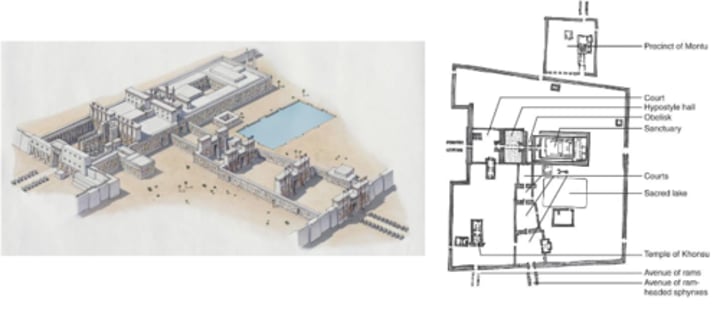
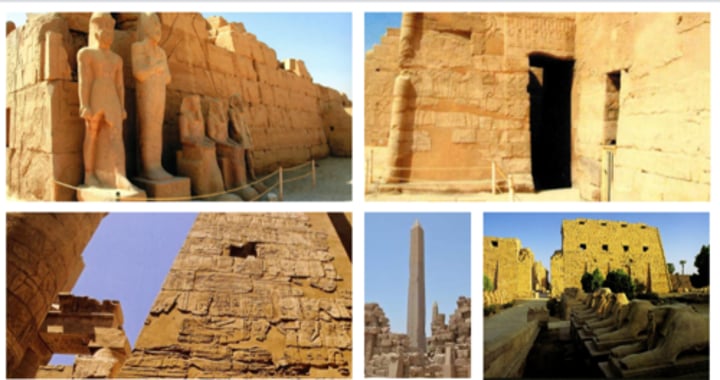
Temple Complex of Amun-Ra
Temple Complex of Amun-Ra images
Temple Complex of Amun-Ra section
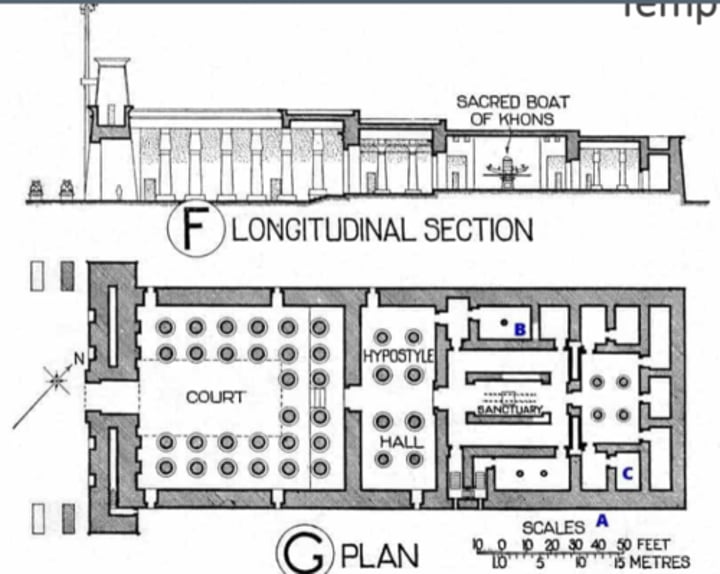
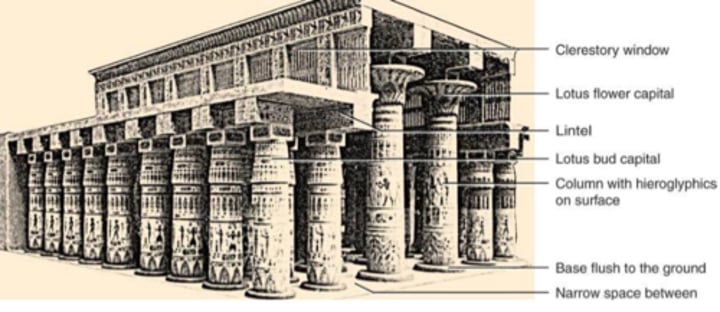
Hypostyle Hall
The grandest hall- 340 ft long and 170ft wide 134 columns and 16 rows.
Clearstory windows
Lotus flower capitals two in the center.
Rising to meat the sun and rising in the sun42 ft high- gigantic69 ft tall - massive expanse of structure- foreshadow the afterlife and covered in hieroglyphics
Relief carvings
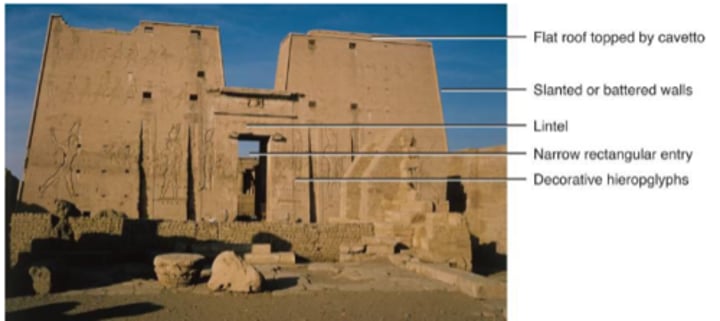
Temple of Ramesses III
at Medinet Habu, c. 200 b.c.e; Thebes, Egypt.
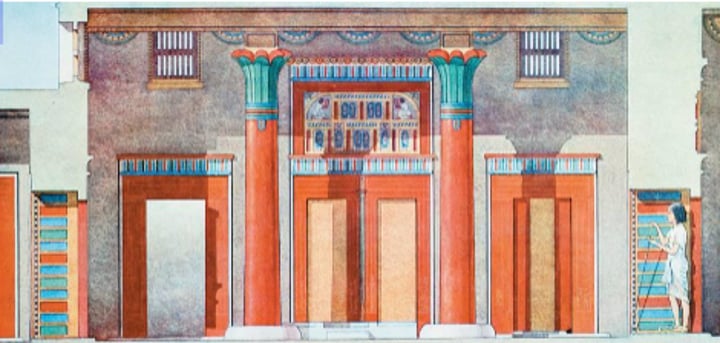
Deep Hall of General Ra-mose(reconstructed elevation), c. 1370 b.c.e.; Tell-el-Amarna, Egypt.
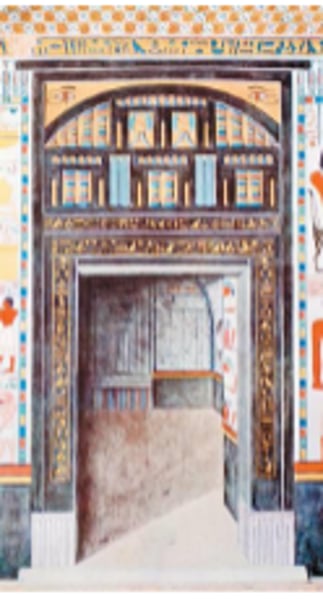
Entrance (reconstructed) to the Tomb of Puyemre, 15th century B.C.E.; Thebes, Egypt.
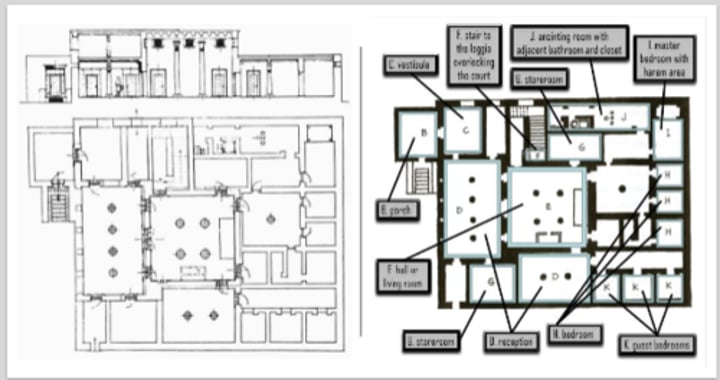
Floor plan, nobleman's villa, 1500-1400 B.C.E., Tell-el-Amarna, Egypt.
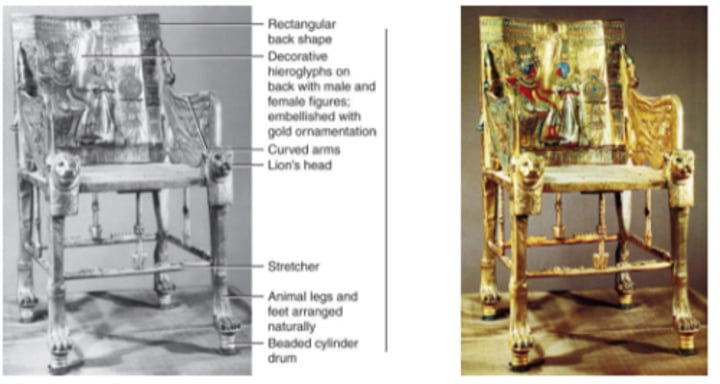
Golden throne of Tutankhamen, 1500-1400 B.C.E. Egypt.
Egypt, Eighteenth Dynasty. Gold-plated wood inlaid with semi-precious stones
Golden throne for king tut- was wood and covered in gold.
Lion heads and paw feet
Wife attending him
This throne has arms- china has a throne with arms as well
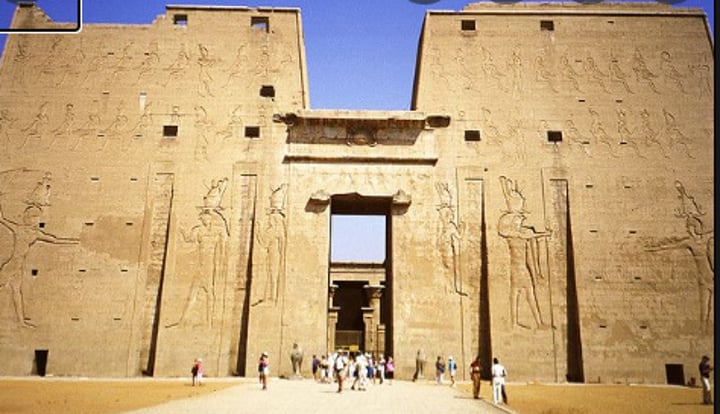
Pylon Gates
Slanted wall and large figures and obelisk before you entered in
Periods of Greek Art
Cycladic and Minoan
Mycenaean
Early Greek art/formative periods
Three periods of classical greek art ( early classical, high classical, late classical)
Later period
Minoan
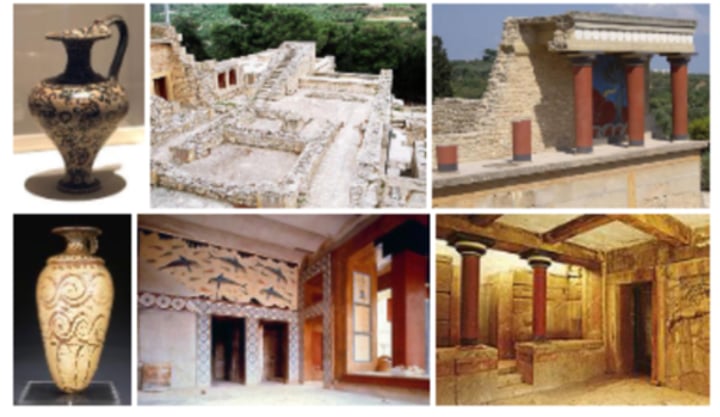
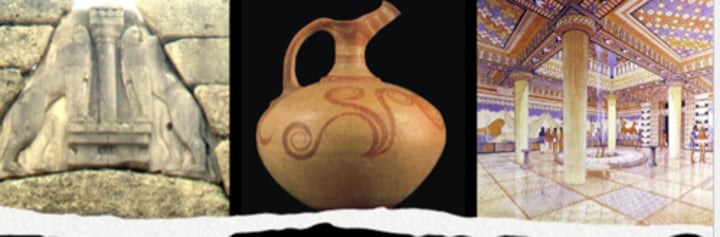
Mycenean
Society:
Sea-faring people who interacted with other lands and peoples •
Mostly influenced by Crete & Mycenae•
Valued independent thought • Freedom & Equality for all citizens, wealth seldom displayed•
Birthplace of democracy• Greek citizen's first duty -service to the state -including glorification & promotion of cultural development•
City-States - strife & bickering, semi-autonomous units each comprised of a city and its surrounding dependent lands.•
Many long time feuds between these city states. Most famous -Sparta & Athens.•
Spartans were courageous, self-disciplined.•
Athenian idealism pervaded.
Religion:
• Polytheism• Founded on the worship of natureo
Zeus -Supreme god -heaven & earth, stormso
Athena -AIR, goddess of love, Athens
Apollo -the sun god -Delos & Delphi•
Gods WERE humans - Larger than life, but still human traits• Shrines & Temples -built at large scale, but not as grandiose as the Egyptians• Religion focused on life -not afterlife•
Emotional satisfaction, athletic games, private life
ARCHITECTURE - greece
Search for ideal, perfect proportions, distribution of forms & parts▪
Attributes that contribute to & enhance ideal image•
Form: temple most common• Order: relationship of parts to whole, articulation of parts• Proportion: relates to human body▪
"Man the measure of all things," Protagoras (c. 480-410 B.C.E)•
Repose, horizontality, symmetry, stability, clarity• Proportional systems, numerical relationships, geometry▪
Forms repeated, planned transitions•
Optical refinements • Classical: elements & attributes of Greek & Roman architecture
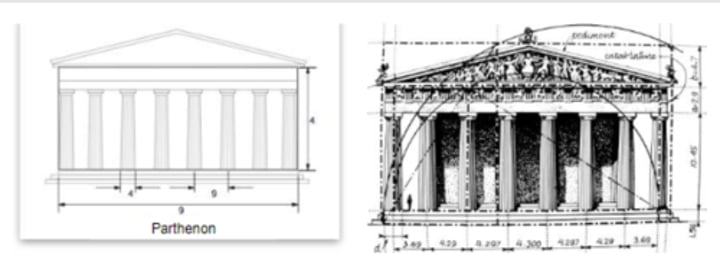
Proportion and Distribution of parts
The ratio of the length of the temple to its width is 9:4•
The ratio of the distance between the columns (measured from center to center) to each column diameter is 9:4•
The ratio of the width of the front of the temple to its height is 9:4
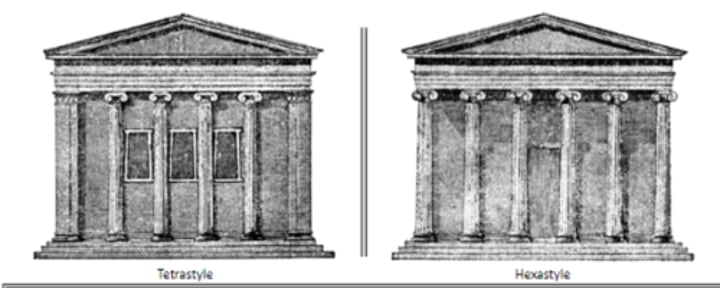
Prostyle
free standing columns across the front
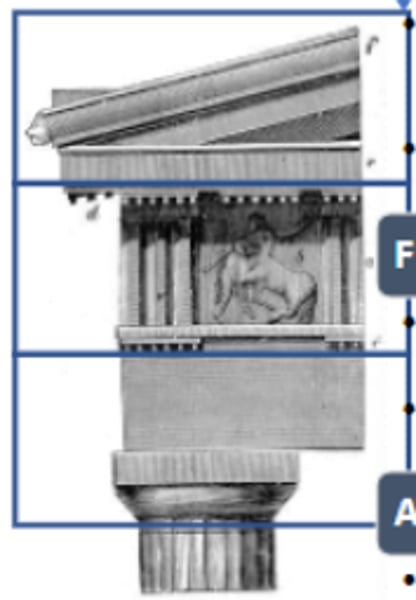
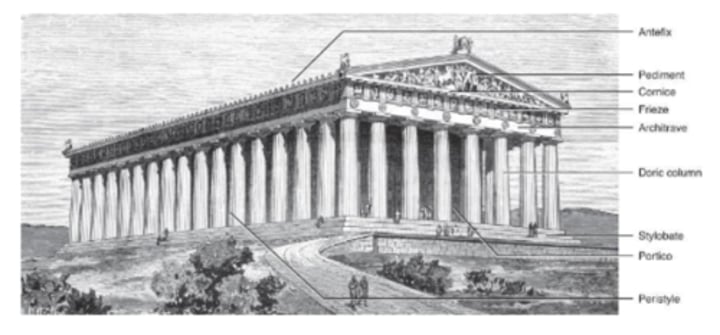
DORIC
Cornice
Front usually plain•
Bottom –miniature slabs called mutules and at the bottom projecting tapered cylinders called guttae• Acroteria - All Three angles of the pediment –winged lions
Frieze
Metopes –squarish panes that may be filled with low-relief carvings or may be left plain• Triglyphs –triple grooved elements (wooden beams)
Architrave
Lowest portion• Plain member • Rests on column capitals
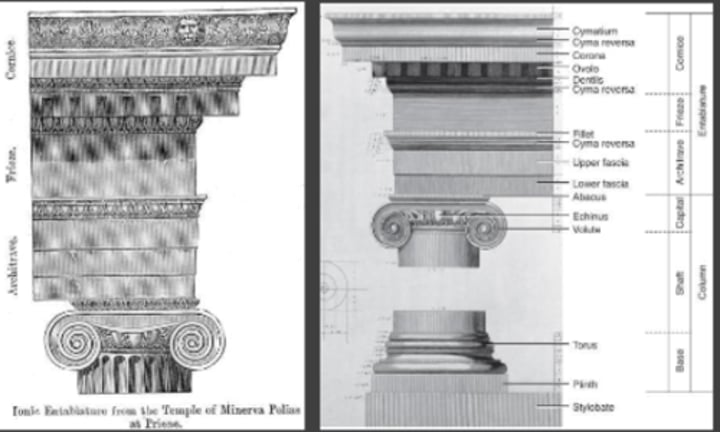
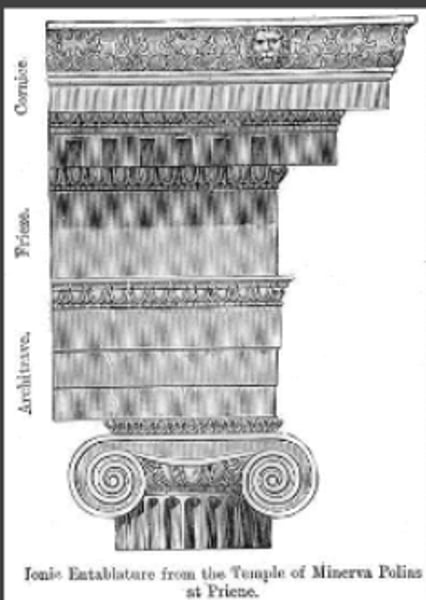
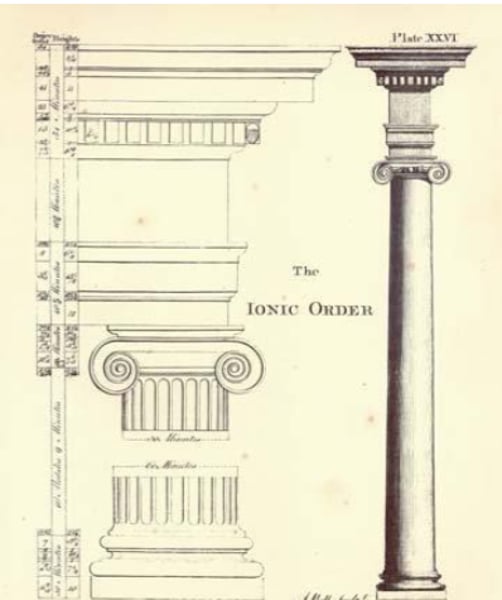
IONIC
Entablature -either plain or highly ornamented
Architrave -Sometimes stepped into three horizontal planes
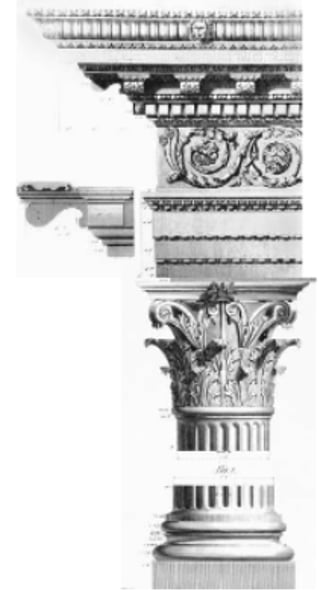
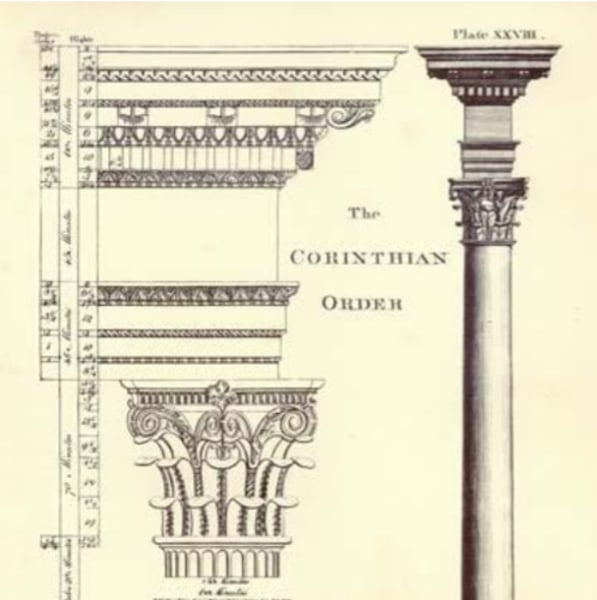
CORINTHIAN
• Shaft Smaller diameter than Ionic•
Capital -In addition to the volutes, Acanthus leaves • Entablature -•
Frieze -sometimes omitted• Lightest of any order
The Dentil motif
• Small square projecting blocks (teeth) • Used in the cornice of Greek entablature,• Ionic & Corinthian• Less seen in Doric
MOTIFS•
The Guilloche• The Egg & Dart• Bead & Reel•
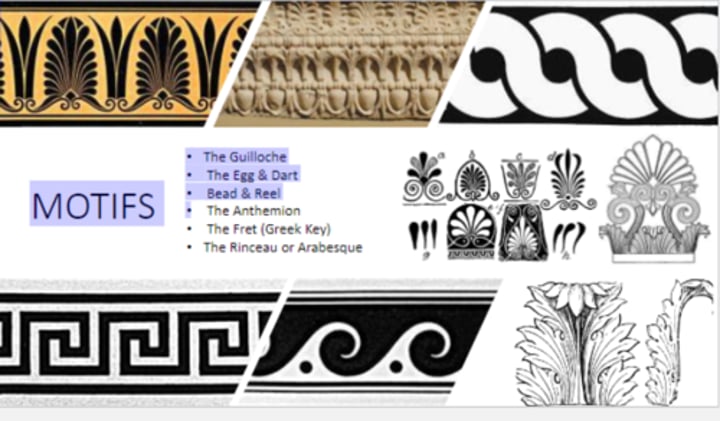
INTERIORS - greece
Public interiors connect to architecture▪
Architectural elements (columns), proportions, materials, colors
Few surviving interiors▪ Especially residences▪ Information: archaeology, literature, vase paintings, reliefs, statuettes
FURNISHINGS + DECORATIVE ARTS - greece
Little survives•
Examples from vase paintings, grave steles, terra-cotta reliefs, sculpture, theaters•
Function important, limited ornament
• Some evidence of search for perfection in some pieces•
Rooms sparsely furnished• Few types: seating, tables, storage, beds•
Greek innovations: klismos, rectangular legs, some table forms, couches for sleeping or reclining at meals• Klismos most often copied or adapted later
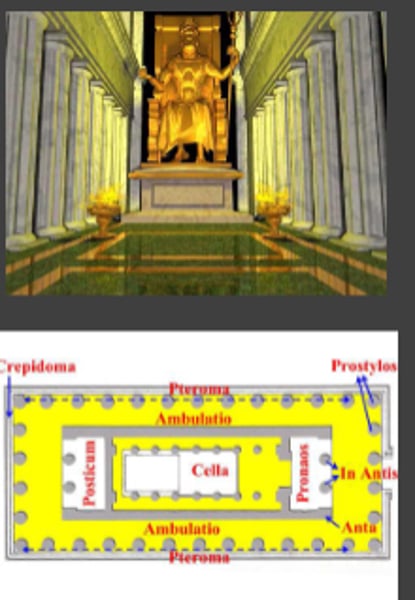
Temples - greece
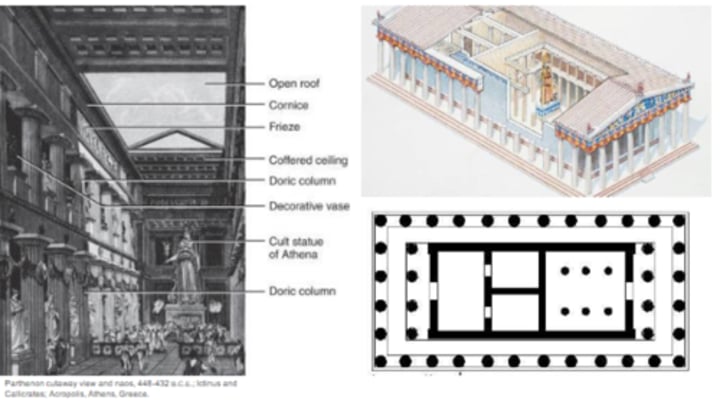
• Two interior colonnades
• Central section with side aisles•
Statue of the god or goddess at the rear of the sanctuary
Early Temples -•
Cella •
Pronaos - porch•
Adytum -• Second inner room, Most sacred
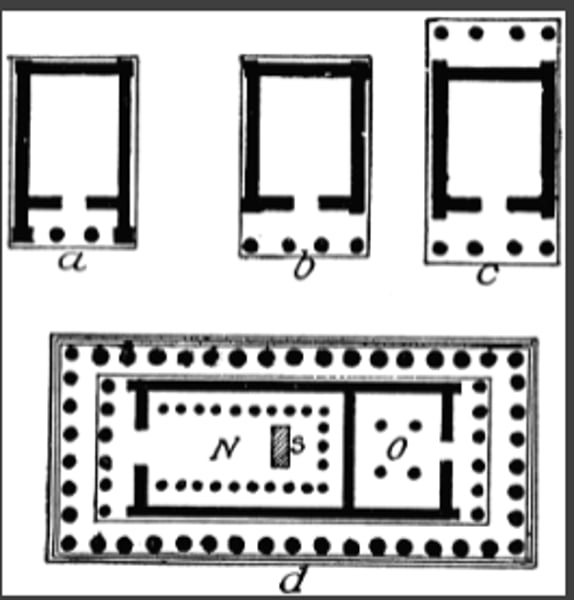
Greek temple floor plans
A, in antis• B, prostyle;• C, amphiprostyle• D, peripheral(The Parthenon)• N, Naos• O, Opisthodomos;• S, statue.
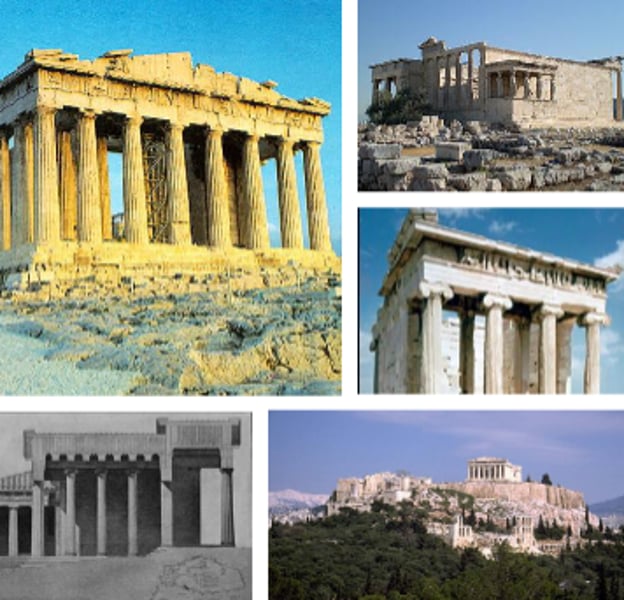
Acropolis & Parthenon
• Most refined example • Acropolis -Highest point of a city•
Some fortified (Mycenean)• Acropolis at Athens -religious•
The largest building -Parthenon•
Erechtheum•
Gateway -Propylaea•
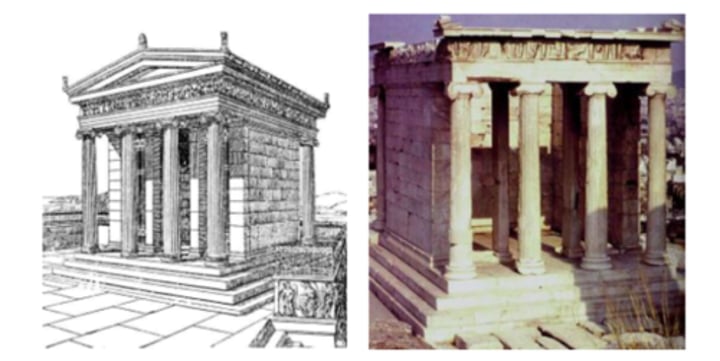
Small Temple of Nike
Acropolis & Parthenon - site plan
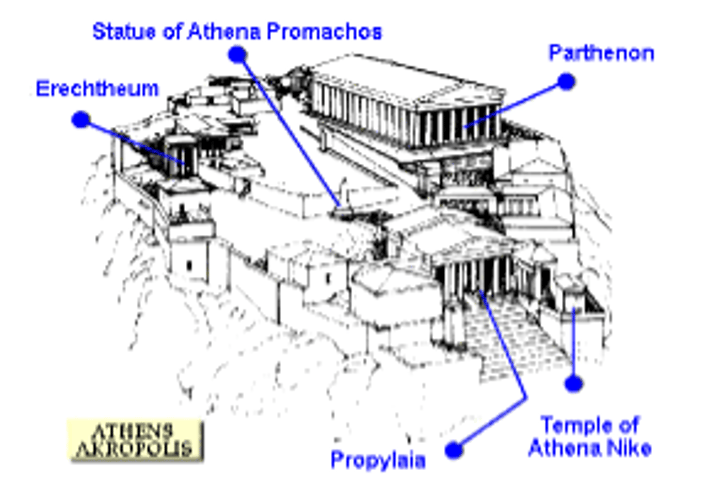
Parthenon
Parthenon - interior
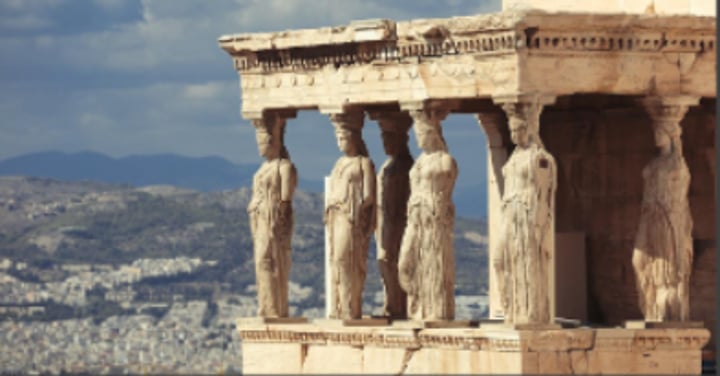
Erechtheum
• South Porch, Erechtheum on the Acropolis (421 -405 BC)
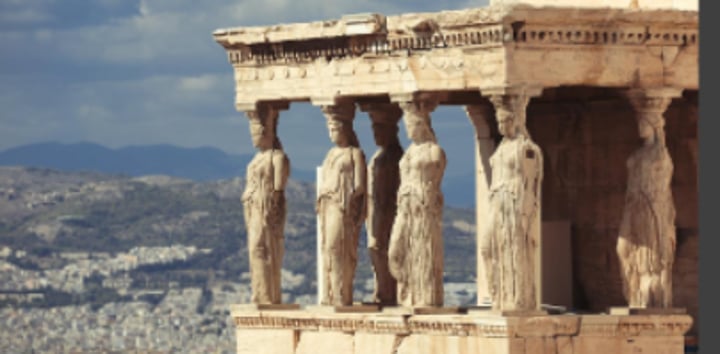
• Caryatids:
sculpted female figure used instead of a column (not an order)
Temple of Athena Nike - pics
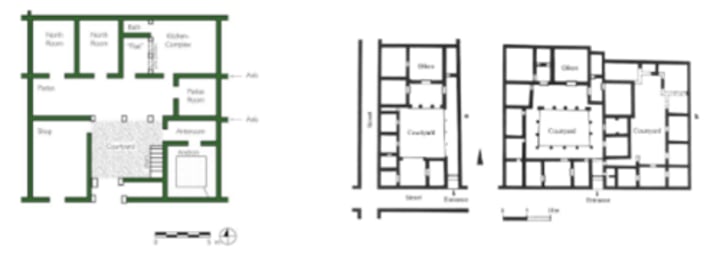
Greek House
• Simple –one courtyard; more prosperous –more courtyards•
From the street, narrow hall, into the courtyard, to covered space called ANDRON (dining & altar), surrounded by colonnades•
Andron housed 7 couches (klini) placed around the walls for reclining diners•
Living room with central hearth - Oikos
Other Building Types
Semi-public• Prytaneum• Courtyard, dining room & altar to goddess of the hearth Hestia
Public• Council Houses –seating as many as 700 on backless tiers• Bouleuterion• Small rectangular or semi-circular theater
• Stoa• Town Center & Marketplace• Simplest form –A colonnade placed in front of a solid wall (decoratively painted) with roof between the wall & columns - Two columns
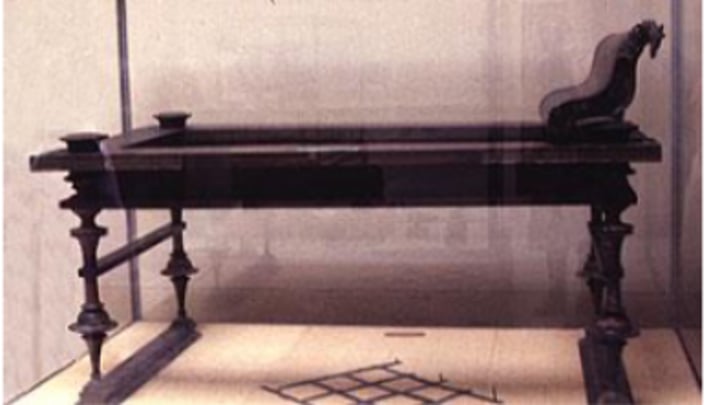
The Kline (klini)
Bed used for sleeping, napping, eating, drinking, lounging, and conversing• Similar to a chaise longue• Made of wood (maple & olive) iron or bronze, with silver feet• Sweeping curved headboards•
Legs -rectangular, curving away from the frame, or turned
The Thronos
• Formal Chair of honor
• Hellenistic - solid sides, arms ending in lion's heads, animal legs, cushions
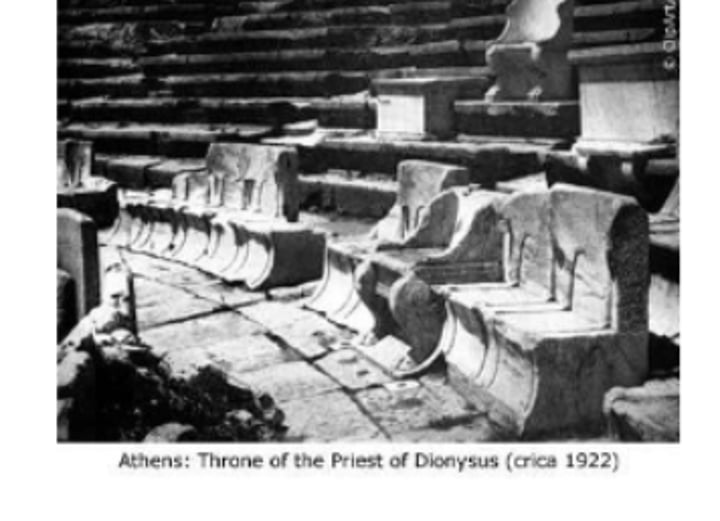
• Archaic
feet of animals or legs of birds
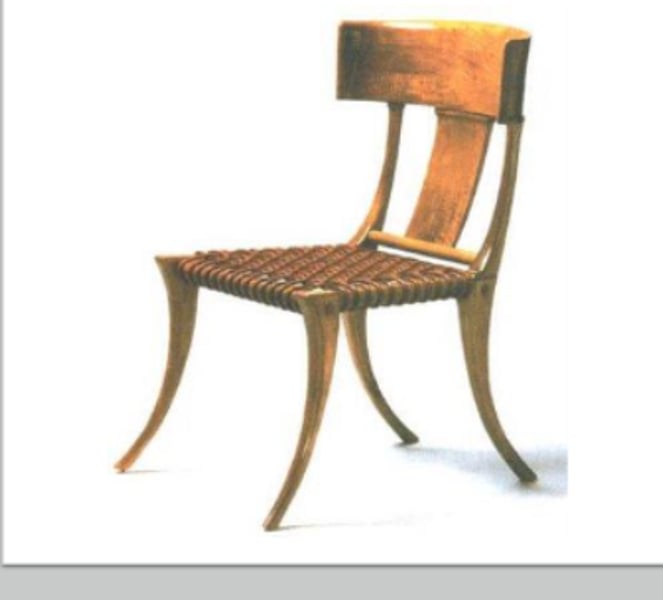
The Klismos
Most influential• Undecorated• Purely Greek -no outside influences•
Beauty through form• Revisited in Directoire, Empire, Regency, Duncan Phyfe, modern styles• Earlier styles -decorative finials • Curved legs, broad back splat, narrow stile made with legs into one curved piece • Front legs mortised into the frame
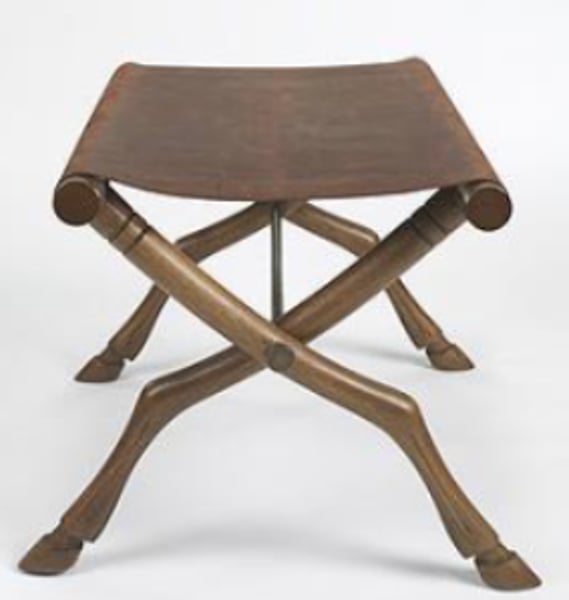
The Diphros
• Stool without back& arms• Folding or fixed legs• sometimes stretchers • Grandest made of ebony, but mostly wood•
Leather seats• Folding with X shaped legs
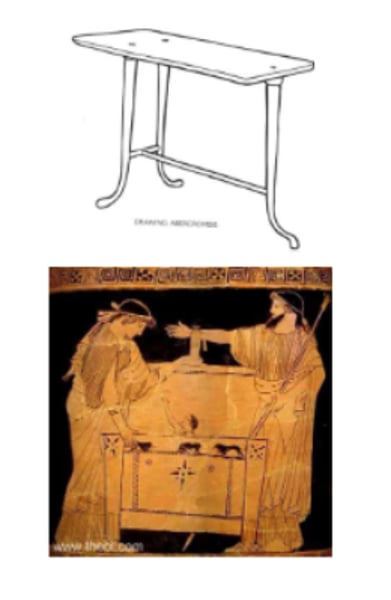
Tables & Storage
• Three-legged trapeza -more stable on uneven floor -with rectangular tops
Mostly wooden chest called kibotos, hinged lid used as a seat
Roman eras
• Republican (510-60 B.C.E): strong Greek influence•
Arched construction, mastery of concrete for buildings•
Early Imperial/Early Empire (60 B.C.E.-285 C.E.)• Arched & concrete construction, new building types•
Late Imperial/Late Empire (285-395 C.E.) interiors important• Explore relationships among different sizes & shapes• Large-scale building campaigns, reuse of materials
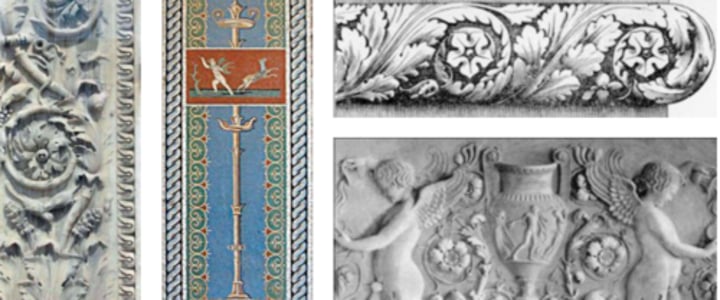
roman MOTIFS
Top right: acanthus leaf with rosettes; bottom right: vase and motifs; Left: rinceau from Pompeii; Middle: mosaic from Pompeii
ARCHITECTURE - rome
Synthesis of adopted forms & Roman innovations▪
Temples from Etruscans; orders & classical elements from Greece•
Roman classicism more lavish & grand than Greek• History: new, developing technologies, sure construction•
Emphasis on volume & space; spatial innovation unique▪
Engineering abilities: concrete; arches, vaults, domes• Greater variety of building types than Egypt, Greece▪
Temples, basilicas, baths, theaters, aqueducts▪
Imperial palaces, villas, domuses, insulae
who wrote Ten Books on Architecture
Vitruvius
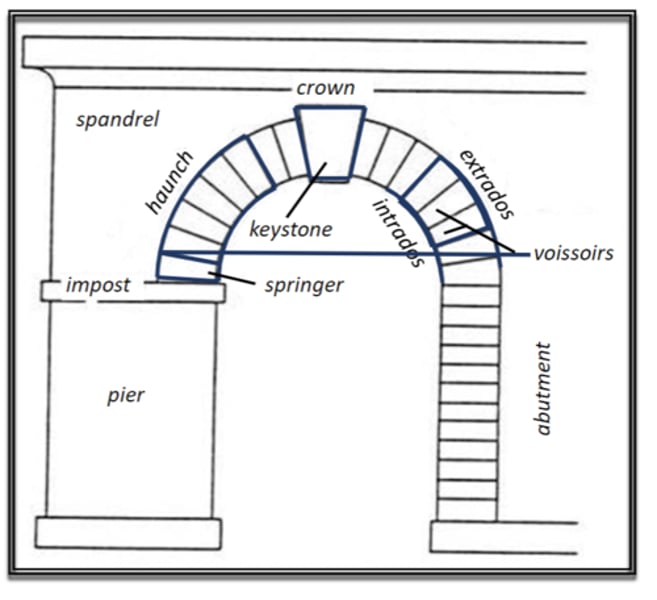
Arcuated Construction
spreads larger loads more effectively•
replaced the post and lintel trabeated system in most large buildings and structures (until the introduction of steel girder beams in the industrial era)
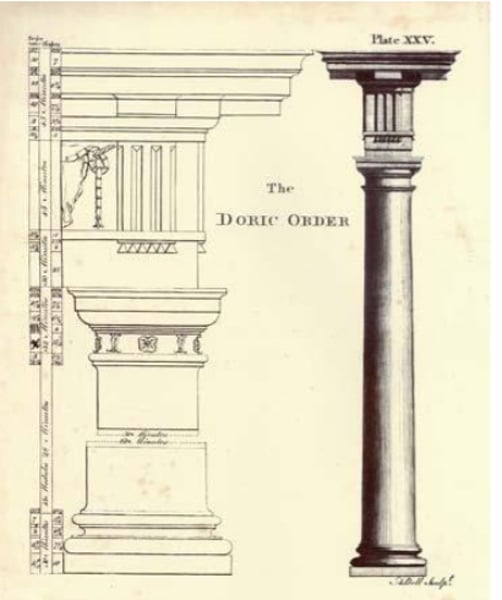
Roman doric
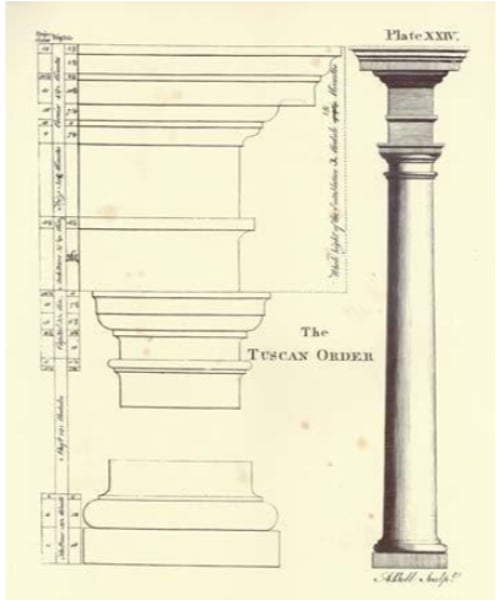
Tuscan
roman ionic
roman corinthian
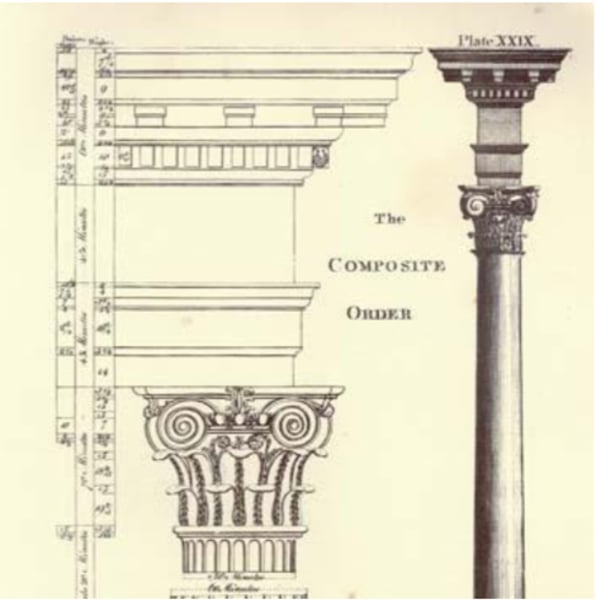
composite
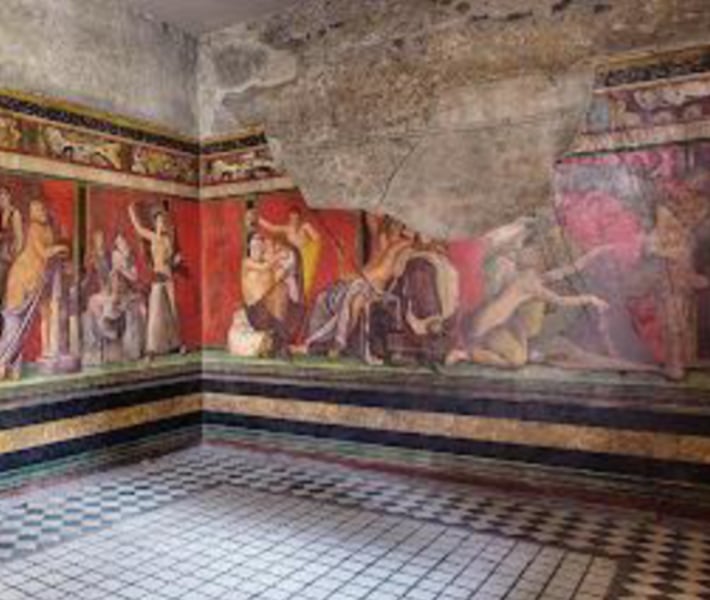
roman INTERIORS
Surviving public & private interiors▪
Private mainly from Pompeii & Herculaneum▪
Domestic interiors more known than Egypt or GreeceInterior decoration lavish & varied▪
Luxurious to utilitarian in scale & treatment▪ Architectural details (columns, niches, moldings) mainly in public buildings▪
Floors: brick, marble mosaics▪
Walls: painted or mosaics
Few furnishings
FURNISHINGS + DECORATIVE ARTS - rome
Greek furniture forms adapted to Roman tastes▪
More comfortable & ornamented•
Forms & shapes similar across Empire•
Luxury pieces: large scale, grand proportions• Sophisticated construction•
Types: seating, tables, storage, beds
roman furniture innovations
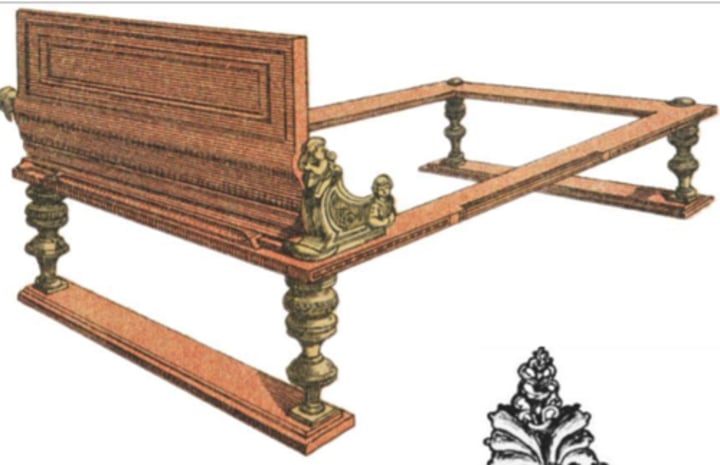
couch with a back, barrel-shaped tub chair, distinctive table forms
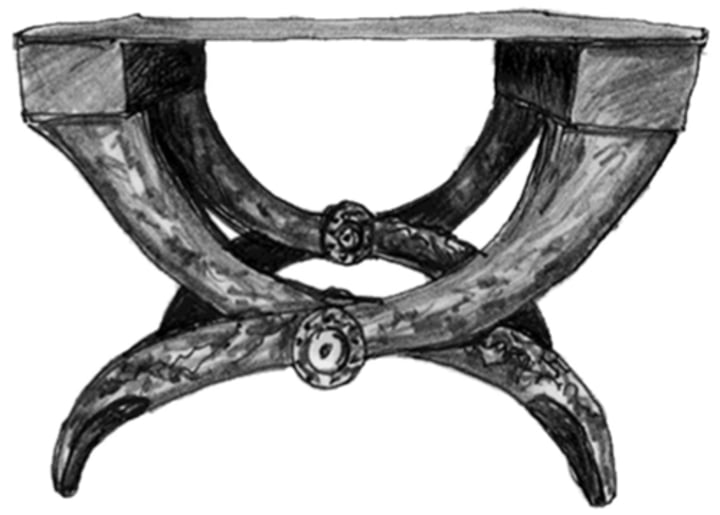
Sella curulis
(X-form stool). Rome.
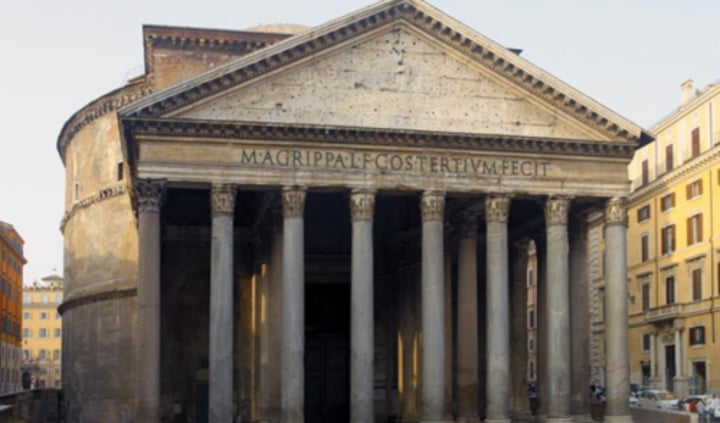
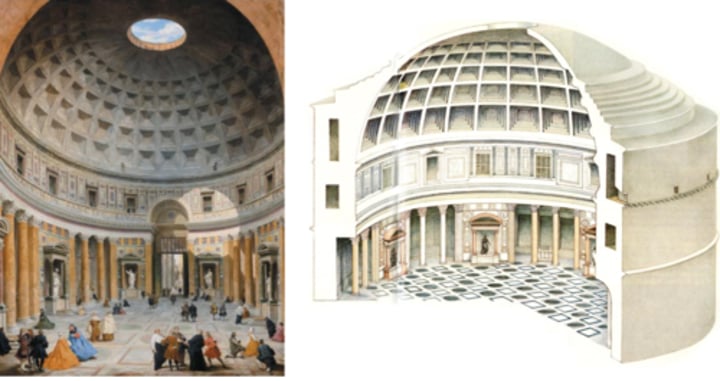
Pantheon, 118-125 C.E.; Rome Italy. Rome - exterior
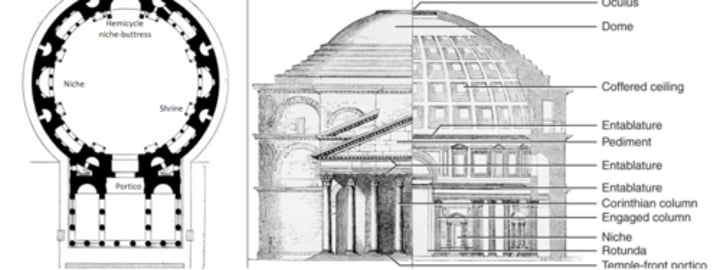
Pantheon - structure
Pantheon - interior
- 3 Interior Sections
• Opening at the top is the oculus
• Dome with coffers diminishing in size and depth
• Attic with decorated facade
• Corinthian columns and interior niches at ground level
- On April 21, the date of Rome's foundation, the light shines in on the entrance, where the emperor would walk in.
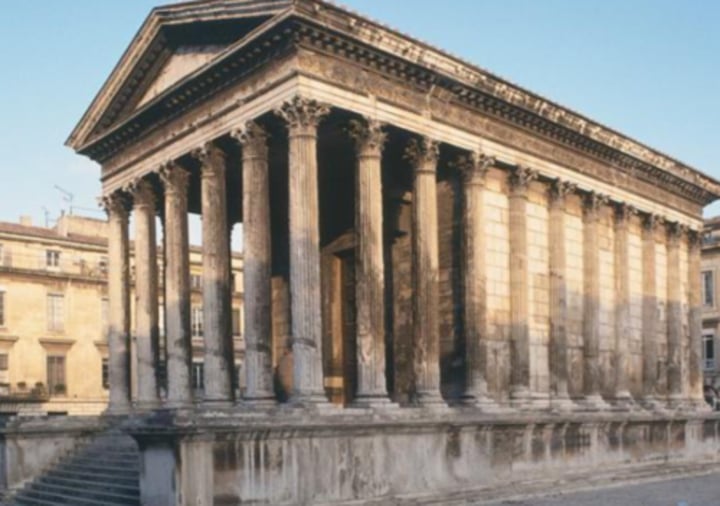
Maison Carée - exterior
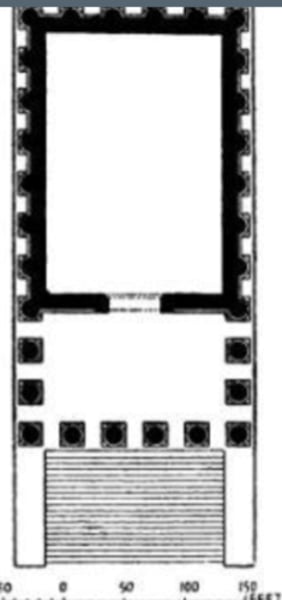
Maison Carée - floor plan
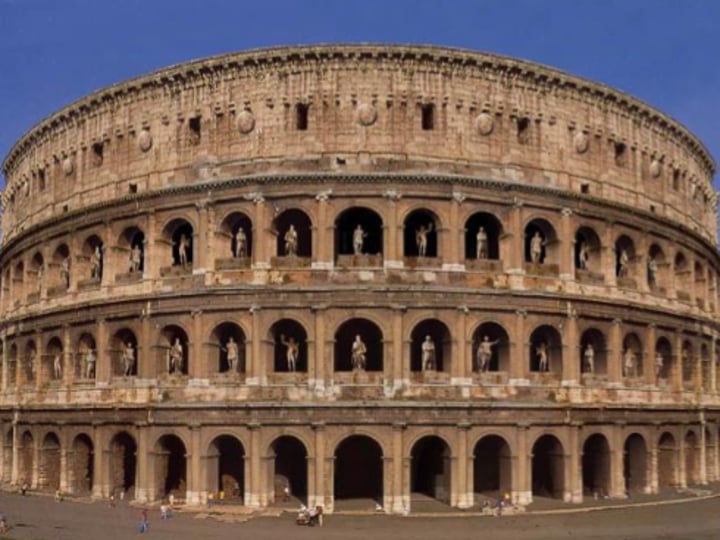
Colosseum, Rome;
The Thermae of Caracalla, Great Hall (restored), 212-216 C.E., Rome Italy.
ancient baths
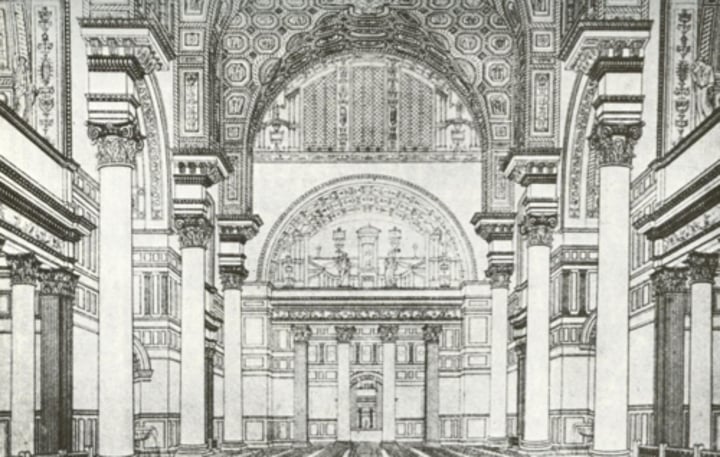
The Frigidarium
The cold-bath section of a Roman bathing establishment
Caladarium
The hot-bath section of a Roman bathing establishment.
 Note
Note  Flashcards (28)