Hindgut and Foregut Fermentation in Herbivores: Anatomy, Digestion, and Microbial Roles
 Studied by 0 people
 Call with Kai
 Learn
Learn Practice Test
 Spaced Repetition
 Match
Match Flashcards
 Knowt Play
1/17

There's no tags or description
Looks like no tags are added yet.
Name | Mastery | Learn | Test | Matching | Spaced | Call with Kai |
|---|
No study sessions yet.
18 Terms
What is the primary difference between ruminants and hindgut fermenters in terms of digestion?
Ruminants digest plants before their stomach, while hindgut fermenters digest after.
What are the two orders of ungulates mentioned in the notes?
Order (Cet)artiodactyla (even-toed ungulates) and Order Perissodactyla (odd-toed ungulates).
What is cellulose and why is it significant for herbivores?
Cellulose is a complex carbohydrate that makes up plant cell walls, and it is largely insoluble and requires cellulase enzyme for digestion.
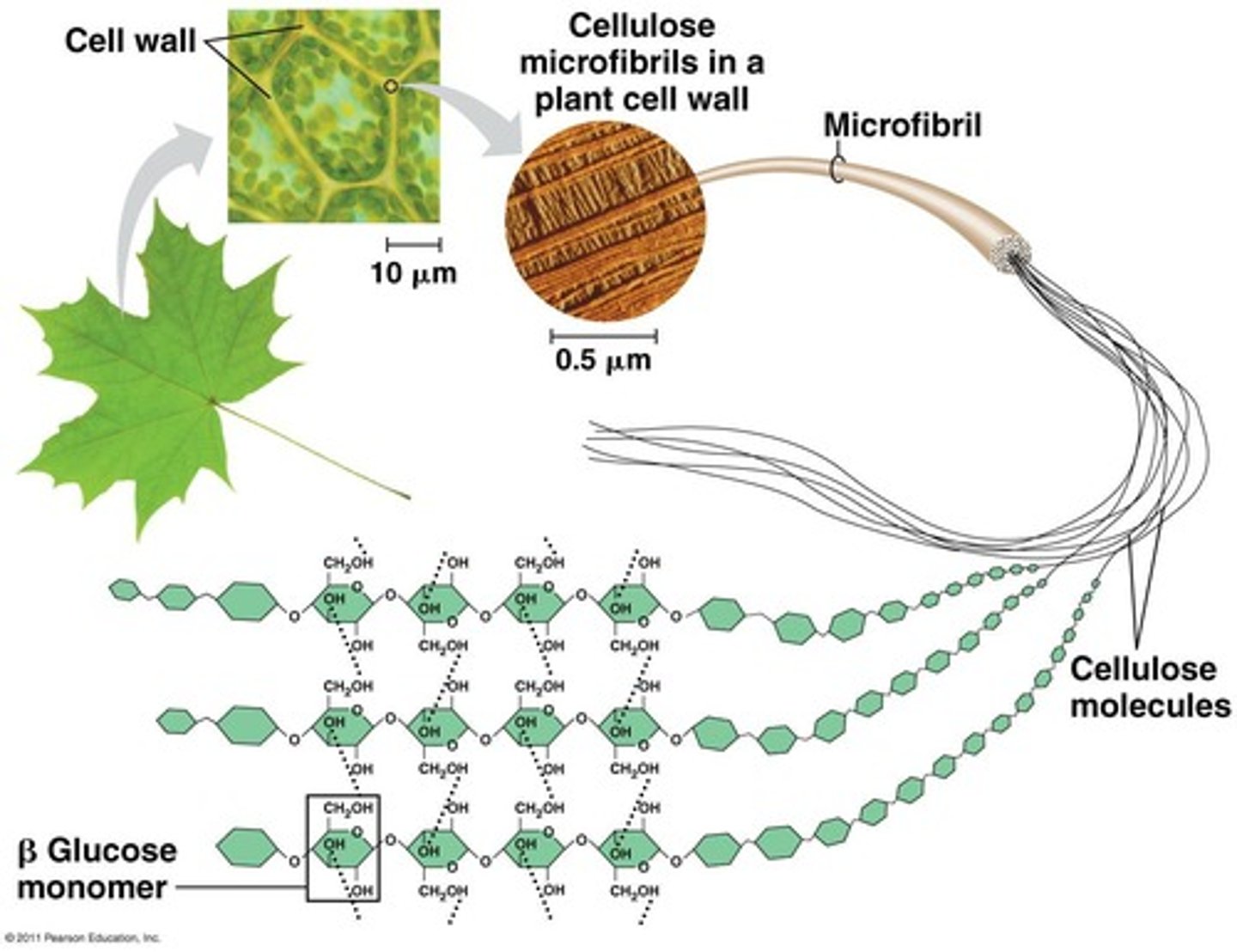
What role do microbes play in the digestion of cellulose in hindgut fermenters?
Microbes use cellulase to break down cellulose, producing volatile fatty acids (VFAs) as a byproduct.
What are volatile fatty acids (VFAs) and how are they used by hindgut fermenters?
VFAs such as acetic acid, butyric acid, and propanoic acid can be converted to glucose via the liver and provide energy.
What adaptation do rabbits have that allows them to utilize microbial protein?
Rabbits practice coprophagy, consuming their feces to absorb nutrients from dead microbes.
How does the absorption of nutrients in hindgut fermenters compare to omnivores?
The absorption process is similar, but hindgut fermenters have adaptations for their unique digestive processes.
What is the efficiency of hindgut fermenters in breaking down cellulose compared to ruminants?
Hindgut fermenters are less efficient (45%) compared to ruminants (60%) in breaking down cellulose.
What is the typical time for digestion in ruminants versus hindgut fermenters?
Ruminants take 70-100 hours, while hindgut fermenters take 30-45 hours.
What are some toxic plants for equids mentioned in the notes?
Juglone, nut trees (like Black Walnut), oak, red maple, cherry, and plum.
What is the significance of particle size in digestion for ruminants?
Ruminants pass particles small enough to the omasum, allowing microbial digestion to continue until the material is small enough.
How do hindgut fermenters manage particle size during digestion?
Hindgut fermenters do not have a particle size limit for further passage and rely on microbes to digest larger particles.
What is the primary function of the cecum in hindgut fermenters?
The cecum houses microbes that produce cellulase to break down cellulose.
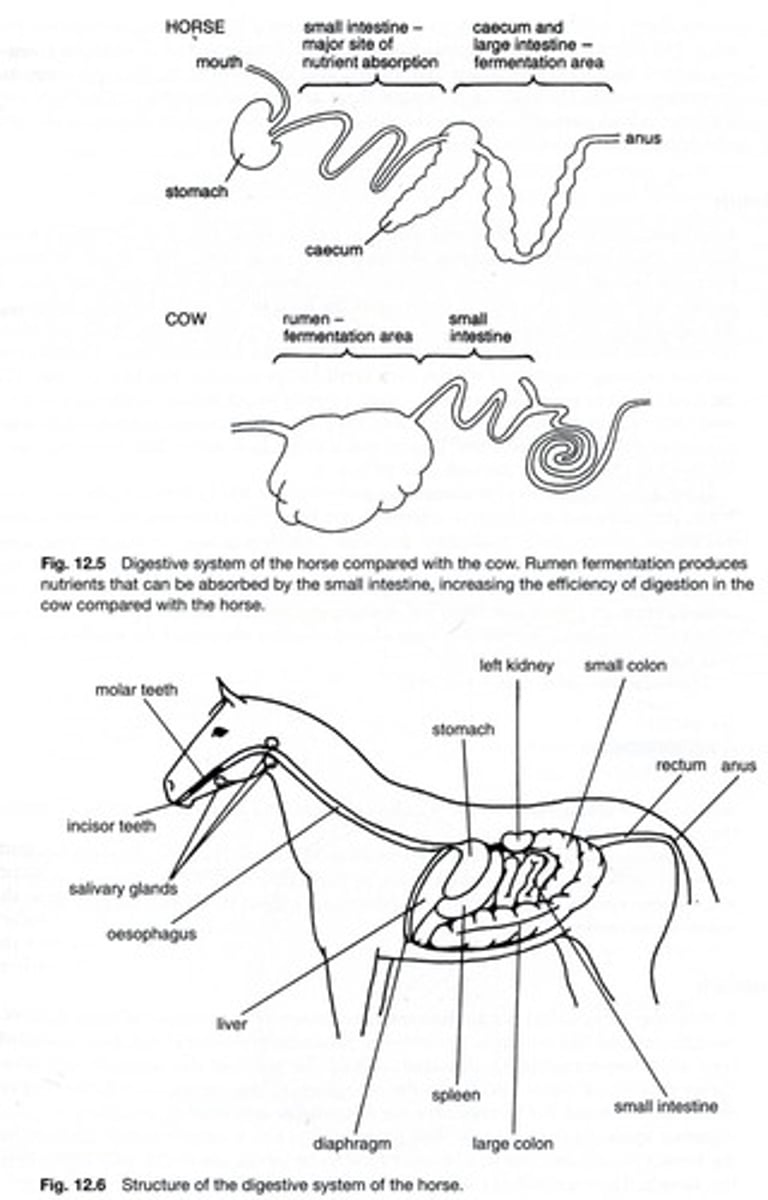
What are the primary nutrients that herbivores need to digest?
Carbohydrates, proteins, fats, minerals, and vitamins.
What is the role of the citric acid cycle in relation to VFAs?
The citric acid cycle helps convert propanoic acid to glucose via the liver.
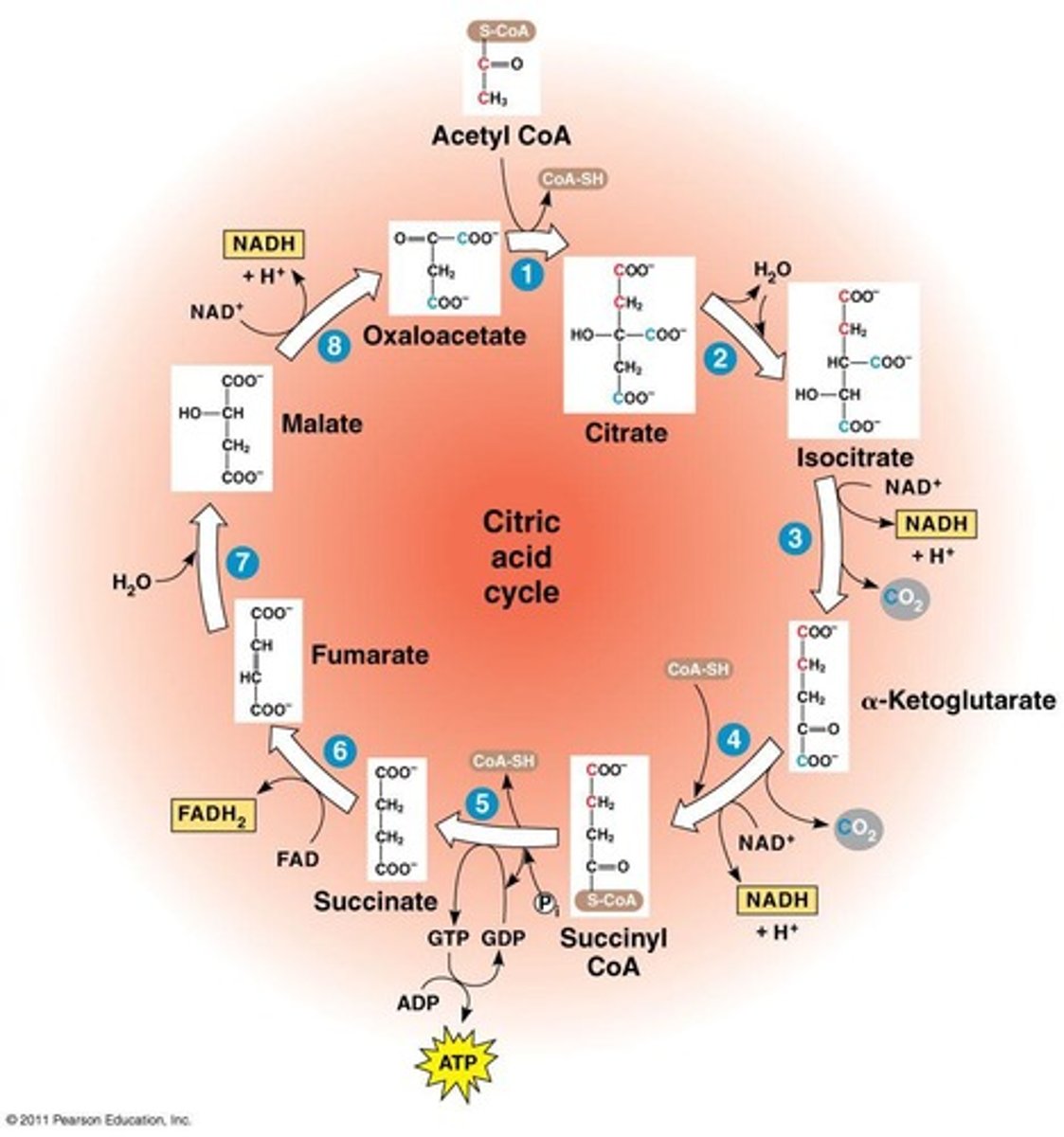
What adaptations do hindgut fermenters have for their digestive processes?
They have a specialized digestive system that allows for symbiosis with microorganisms capable of digesting plant material.
What is the significance of having a high water requirement in hindgut fermenters?
Hindgut fermenters require more water due to their digestive processes, unlike ruminants which recycle urea.
What is the primary energy source derived from cellulose for hindgut fermenters?
Volatile fatty acids (VFAs) produced by microbial fermentation of cellulose.
 Note
Note  Flashcards (29)