Life Insurance - C6-C7
 Call Kai
 Learn
Learn Practice Test
 Spaced Repetition
 Match
Match Flashcards
 Knowt Play
1/45

There's no tags or description
Looks like no tags are added yet.
Name | Mastery | Learn | Test | Matching | Spaced | Call with Kai |
|---|
No analytics yet
Send a link to your students to track their progress
46 Terms
Premium Calculation
Gross & Net Premium

Premium Calculation
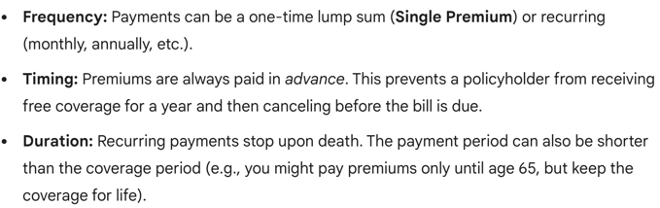
Payment Rules
Premium Calculation
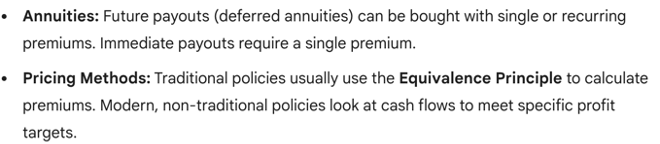
Pricing Methods
Chapter 6: Premium Calculation
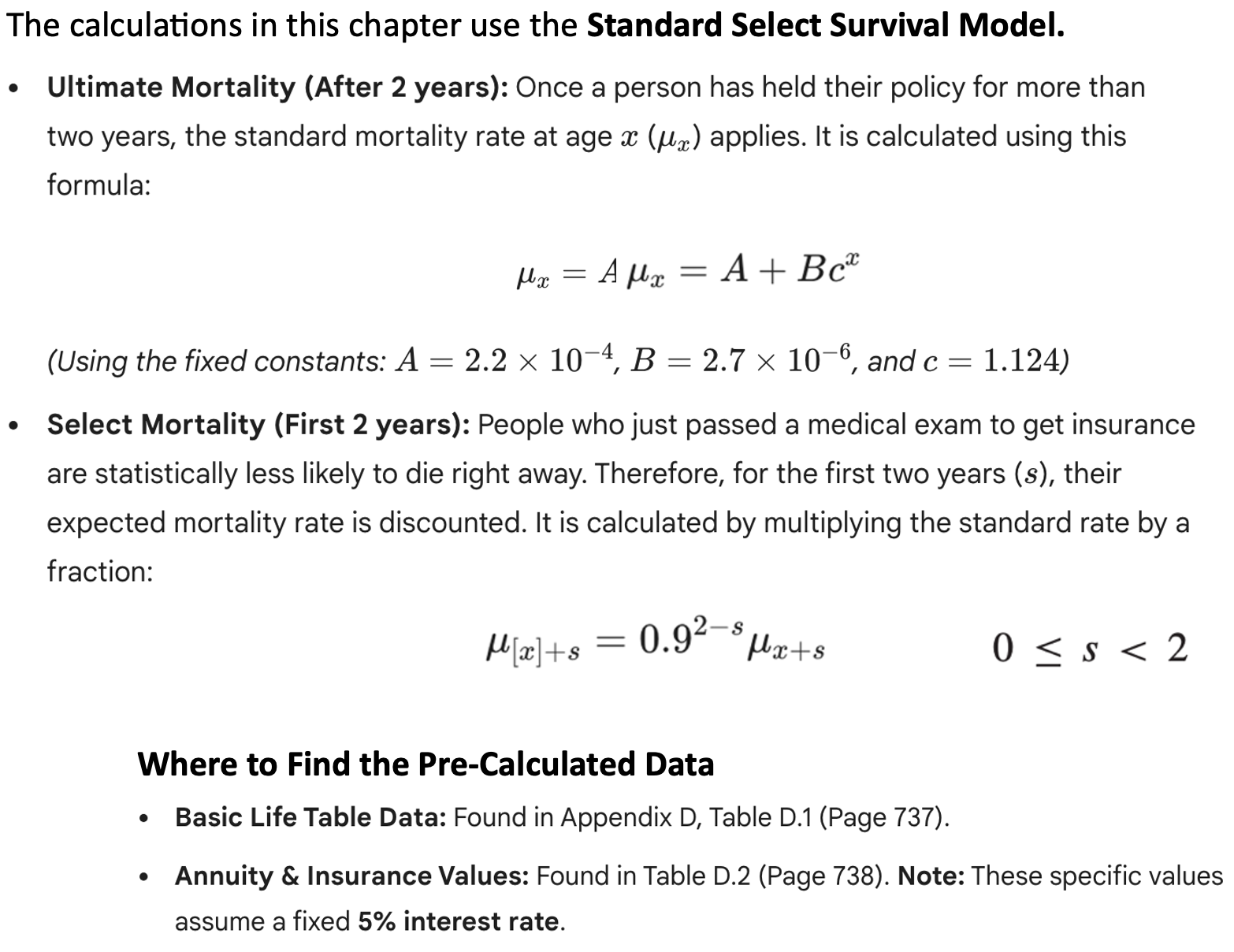
Assumptions
The loss at issue random variable
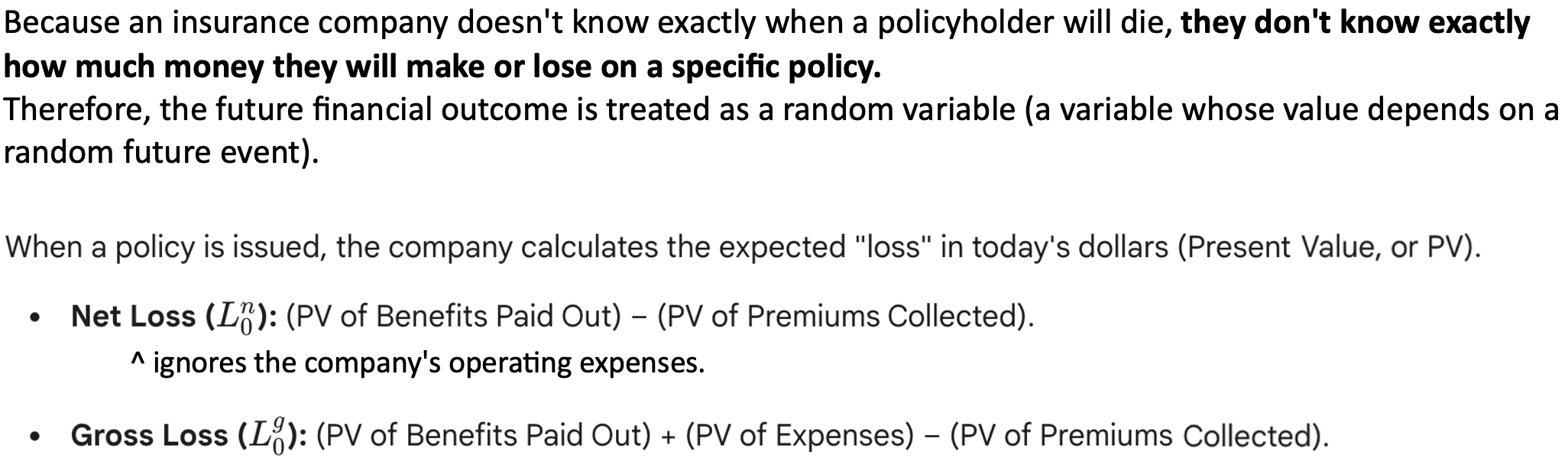
The loss at issue random variable
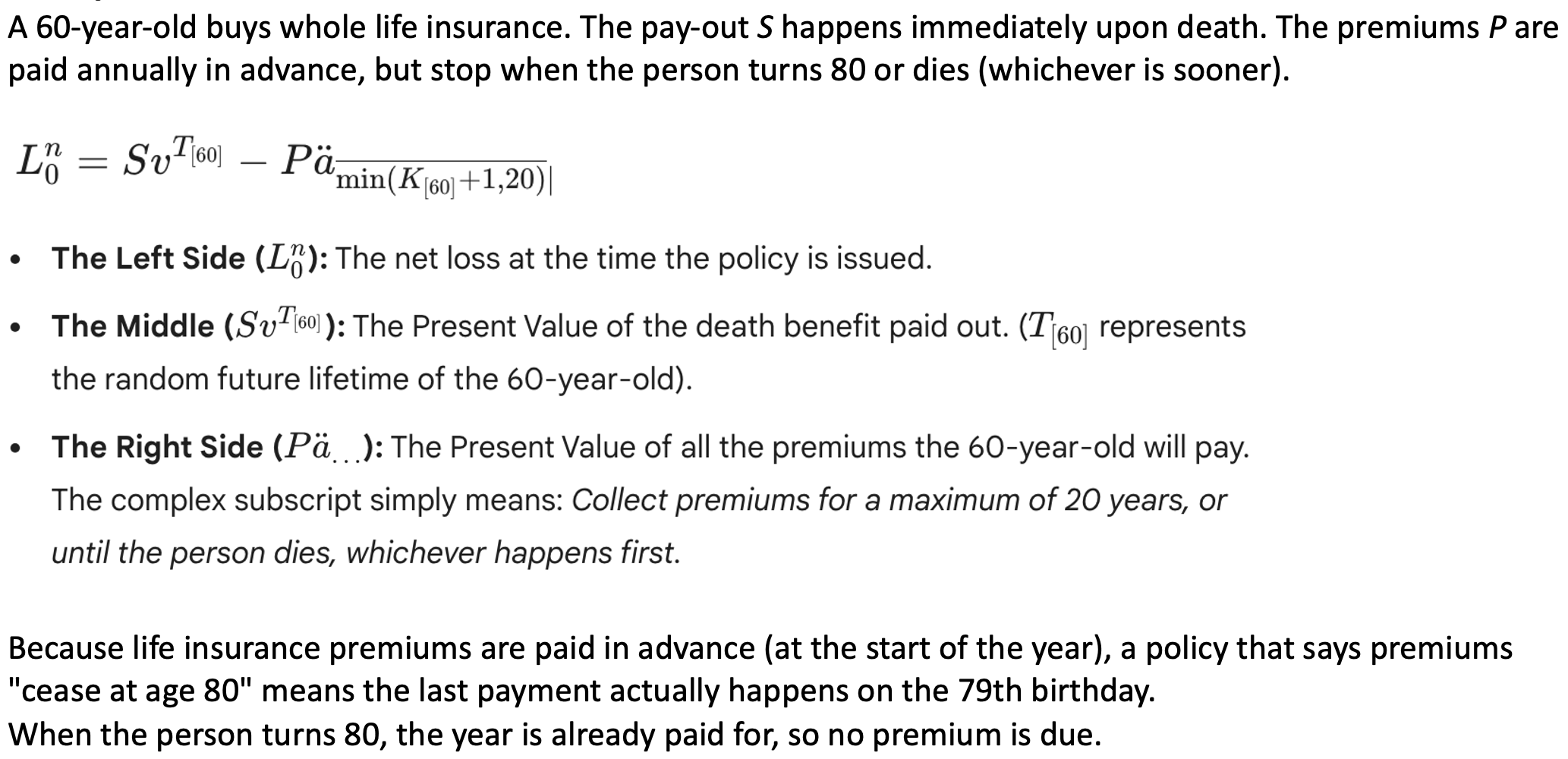
Example
Premium Principle
Once the insurer calculates all the different possible ways they could lose or make money on a policy (the "loss distribution"), they need a formalized rule to decide exactly how much to charge the customer = Premium Principle
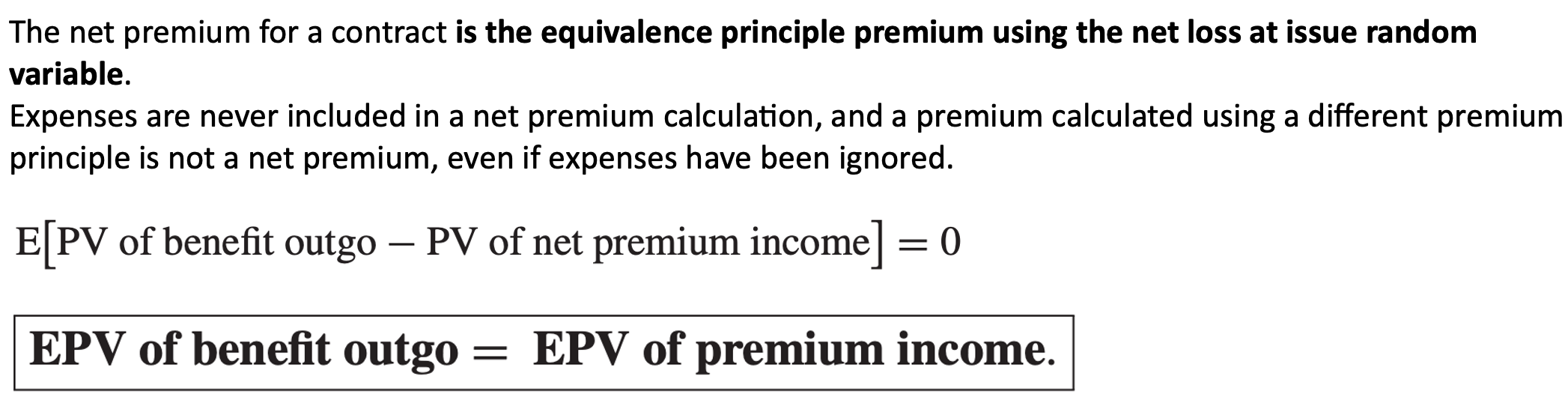
The Equivalence Principle Premium

The Equivalence Principle Premium
Net Premiums
The Equivalence Principle Premium
Net Premiums
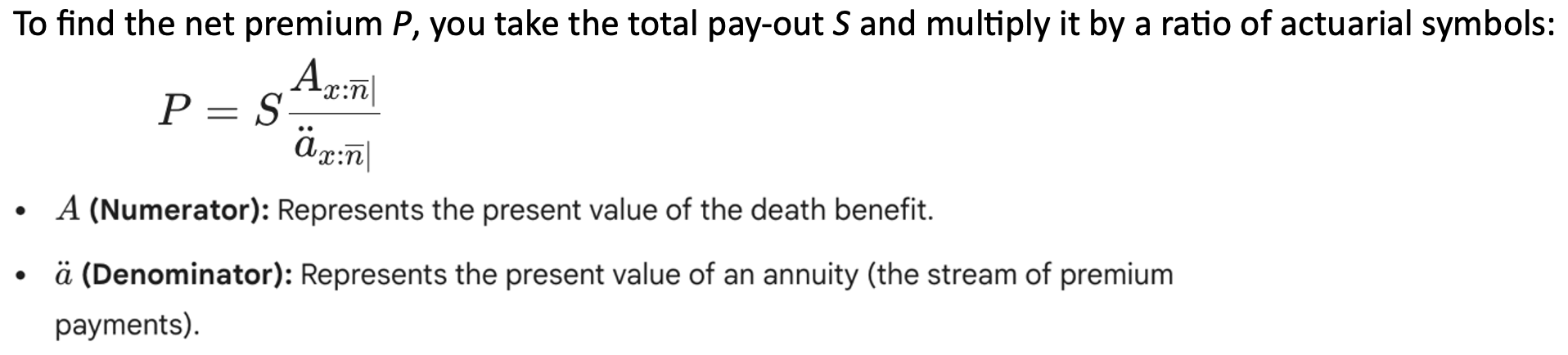
The Standard Premium Formula
The Equivalence Principle Premium
Net Premiums
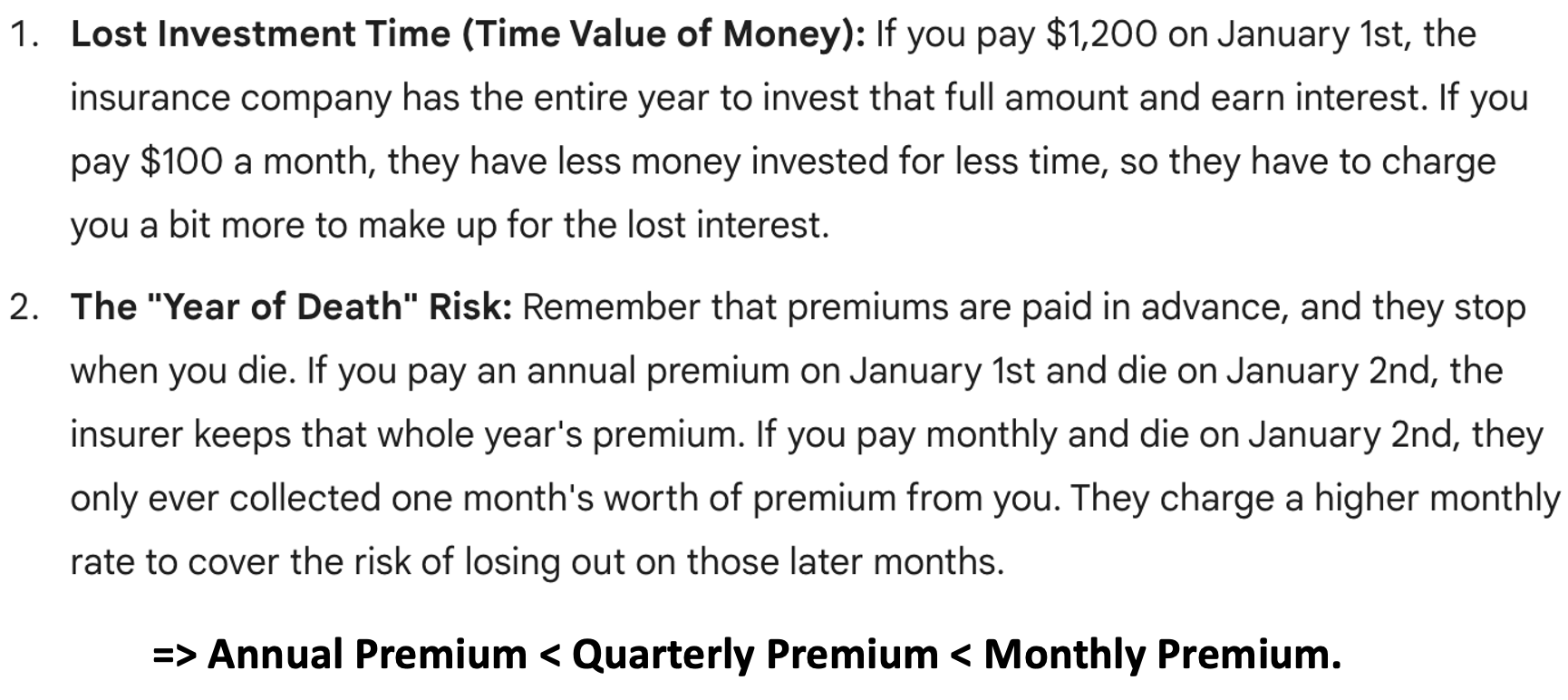
Why Monthly Premiums Cost More
The Equivalence Principle Premium
Gross Premiums

The Equivalence Principle Premium
Gross Premiums
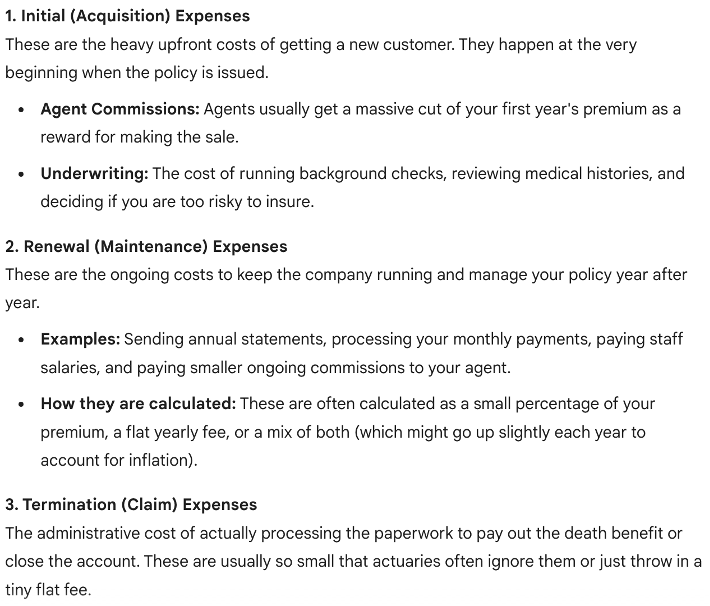
These company expenses are three categories:
The Equivalence Principle Premium
Gross Premiums
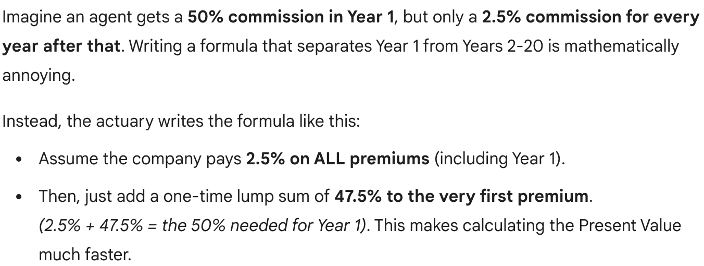
The Actuary's Math Shortcut
The Equivalence Principle Premium
Gross Premiums
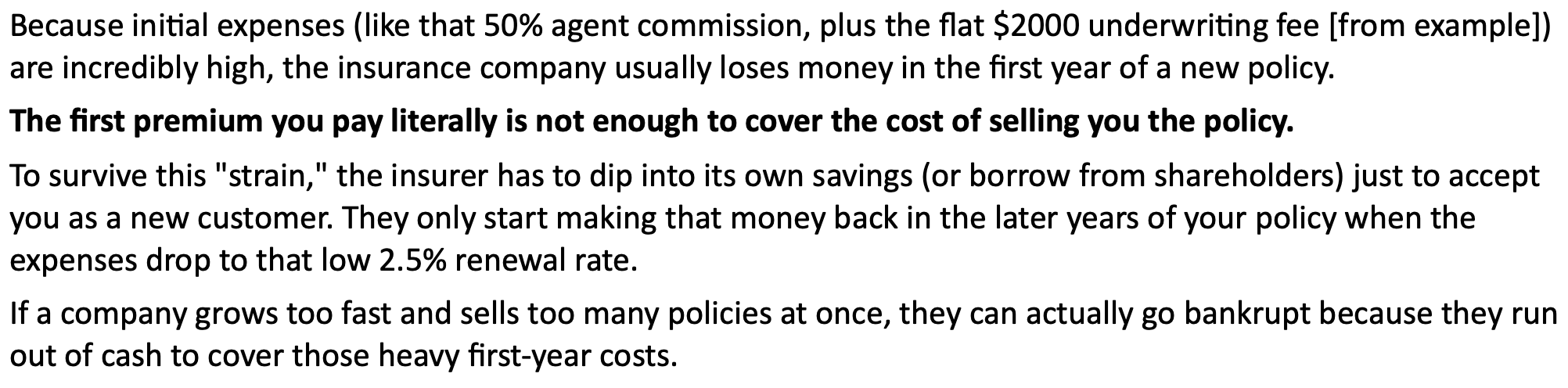
New Business Strain
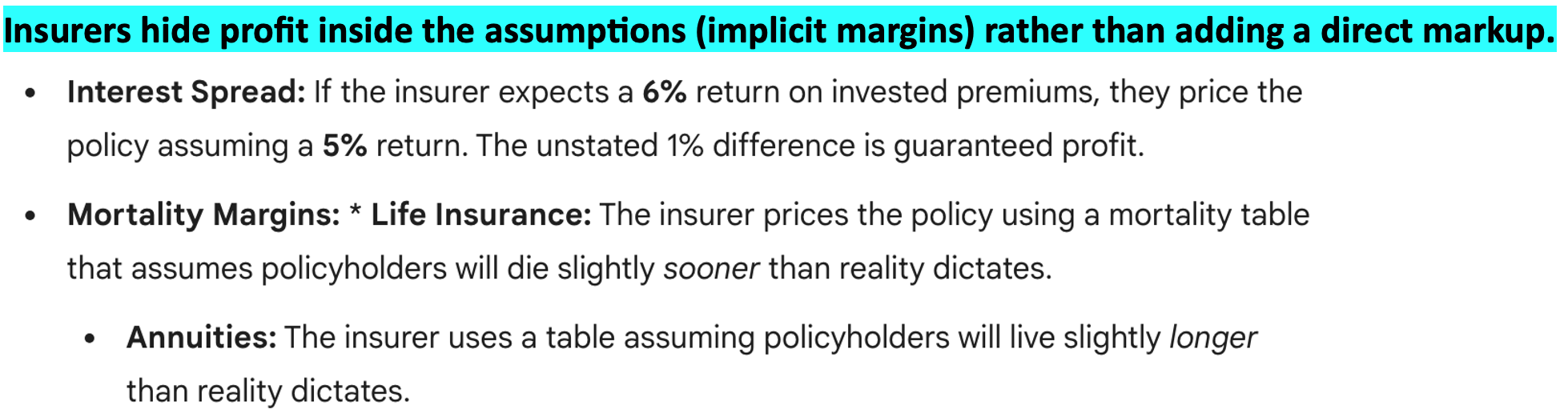
If the Equivalence Principle sets the expected profit exactly to zero, how do insurance companies actually make money?
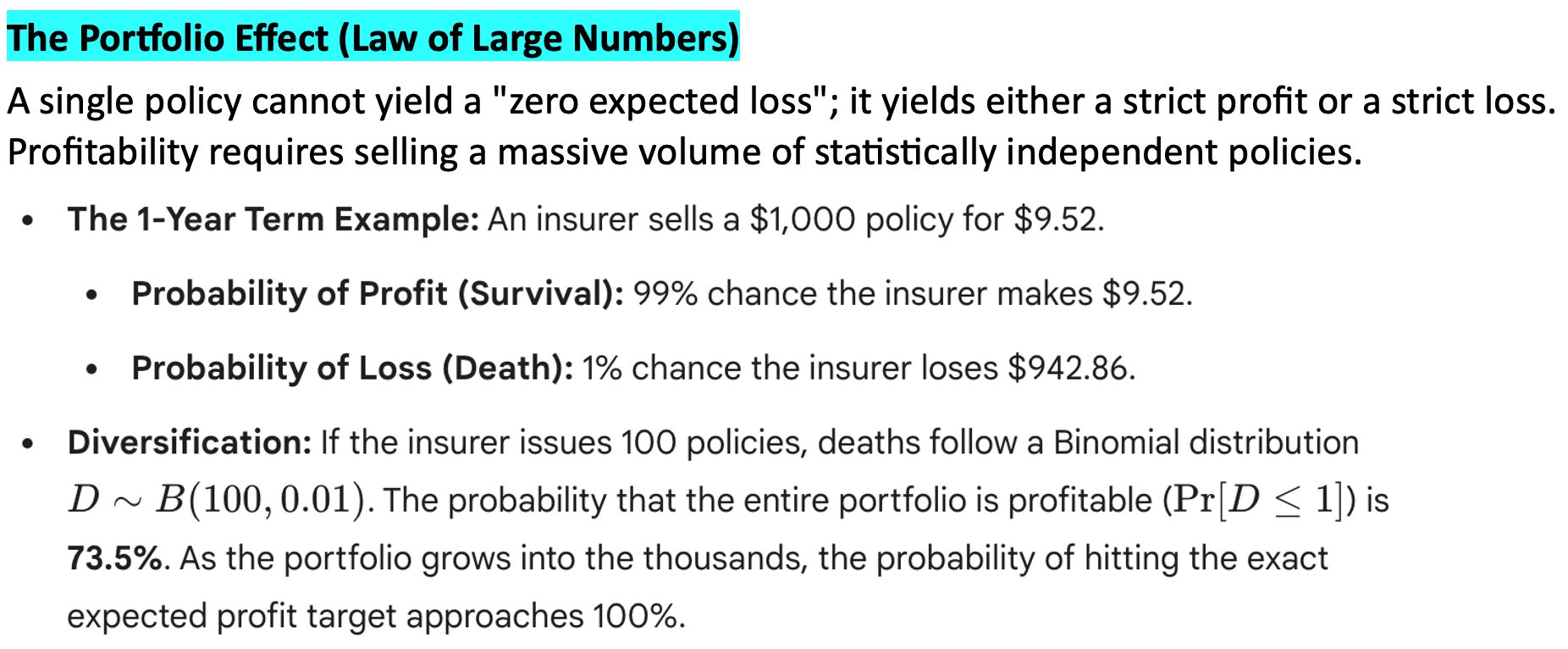
The Portfolio Effect
Calculating the "Tipping Point" of Profitability

Calculating the "Tipping Point" of Profitability
Life Insurance
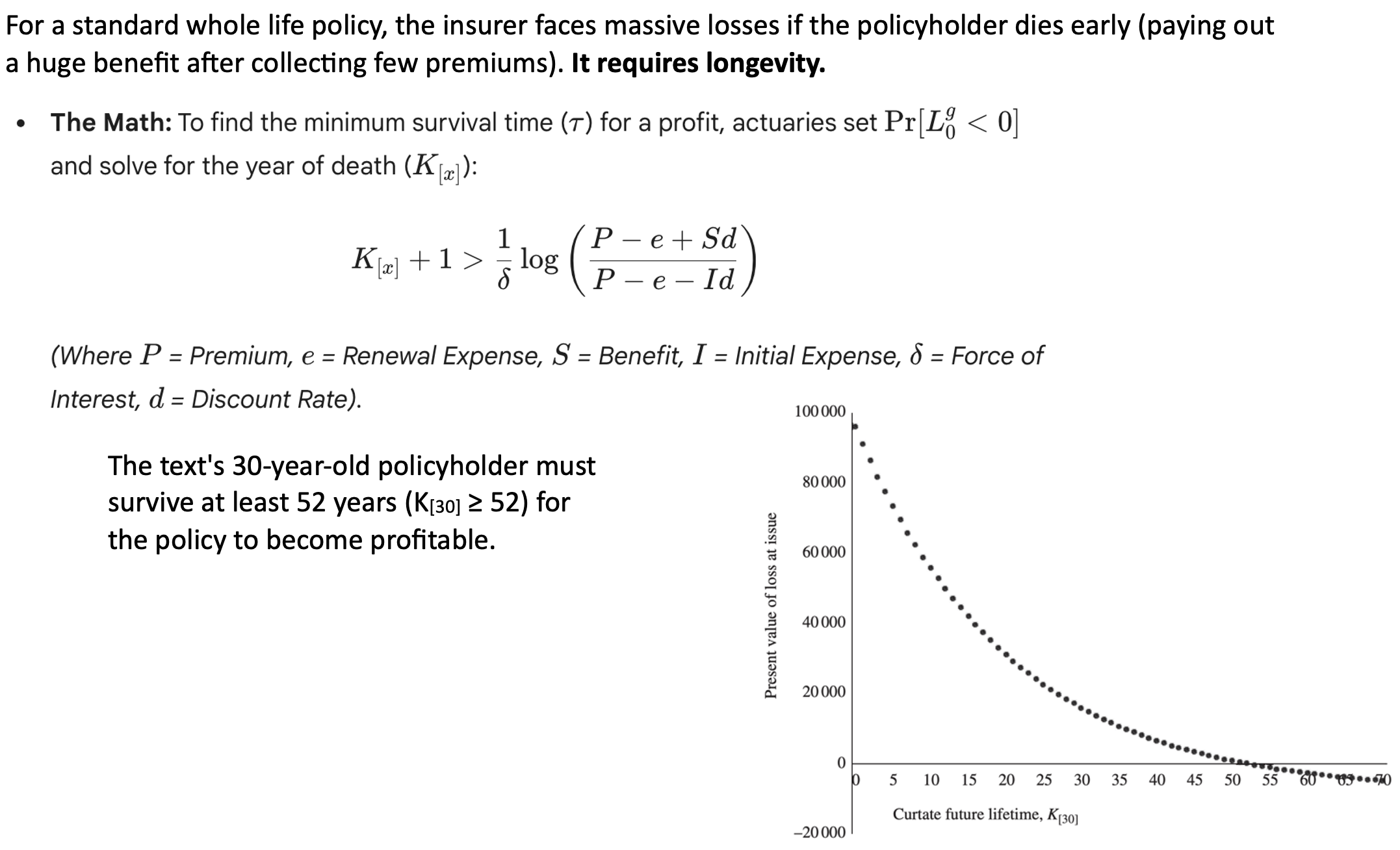
Calculating the "Tipping Point" of Profitability
Annuities
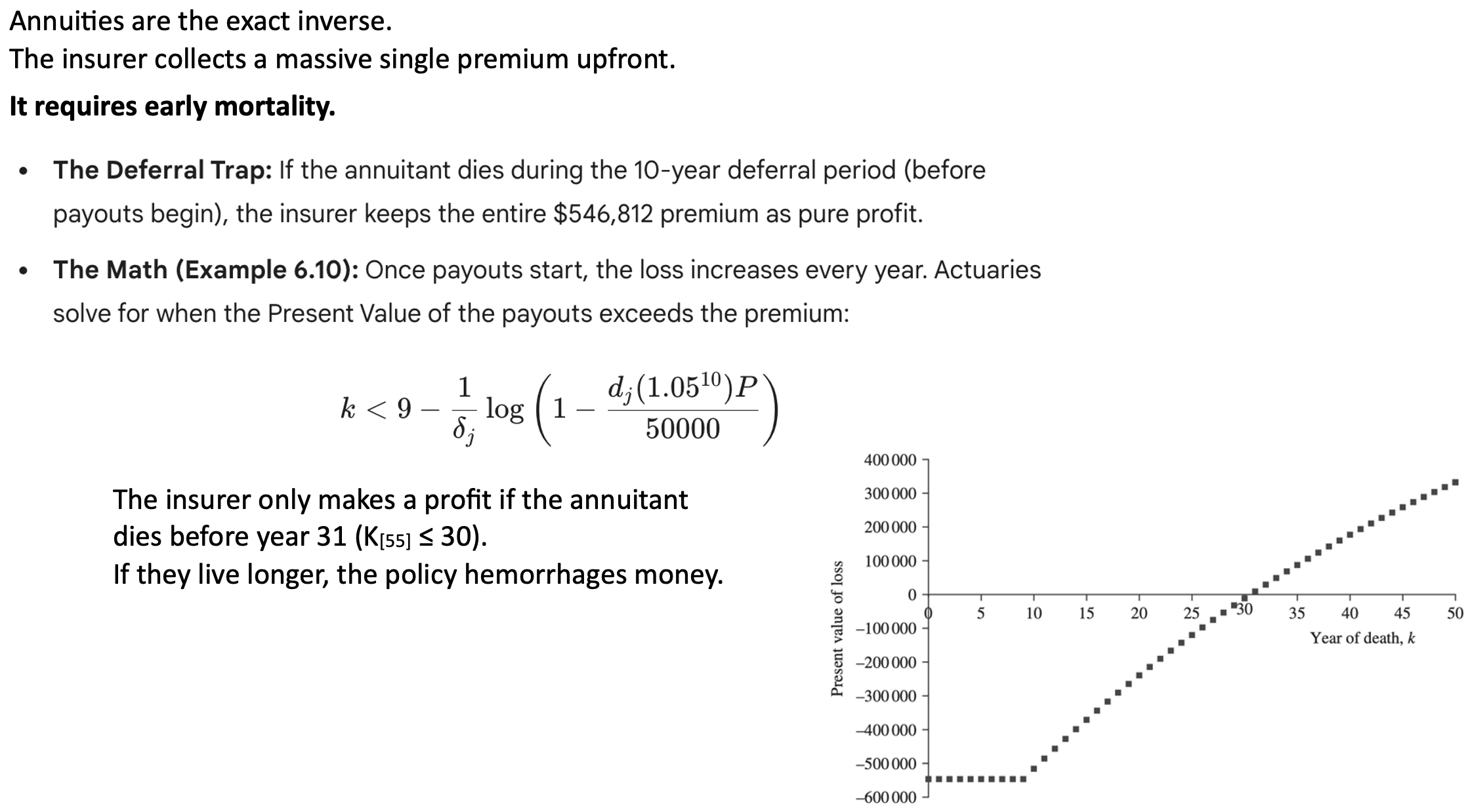
Calculating the "Tipping Point" of Profitability
Hybrid Policies: Endowment Insurance
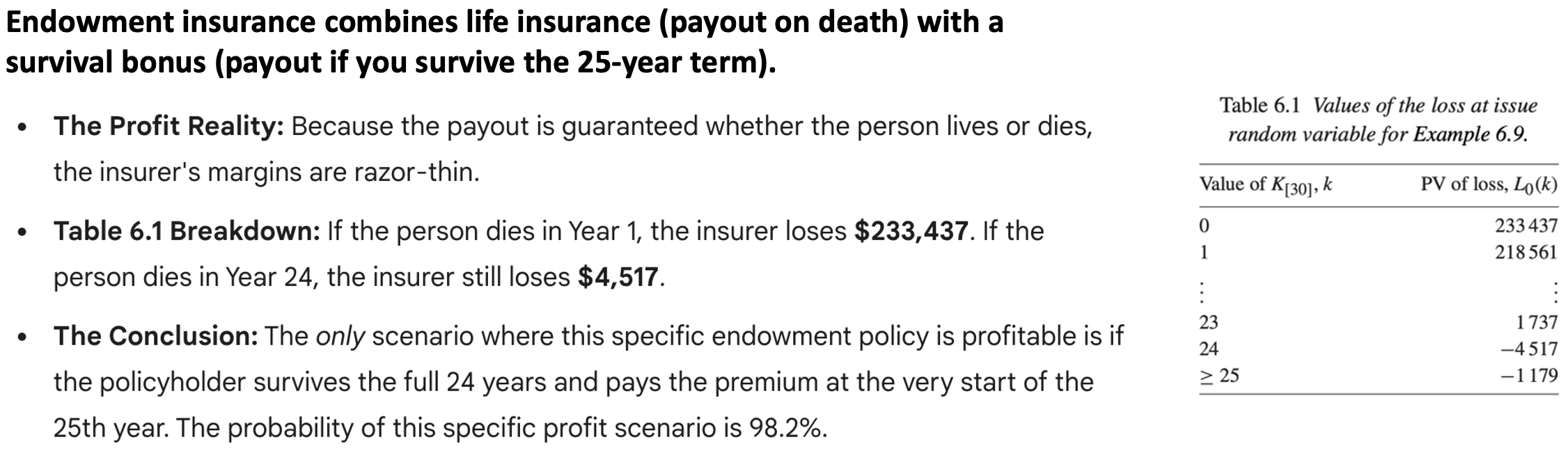
The Portfolio Percentile Premium Principle
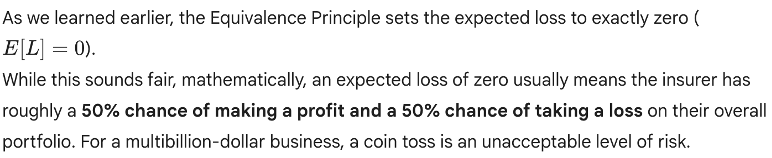
This section answers a massive real-world flaw in the Equivalence Principle and introduces how insurers use statistics to virtually guarantee they won't go bankrupt.
The Flaw of the Equivalence Principle
The Solution: The Percentile Principle
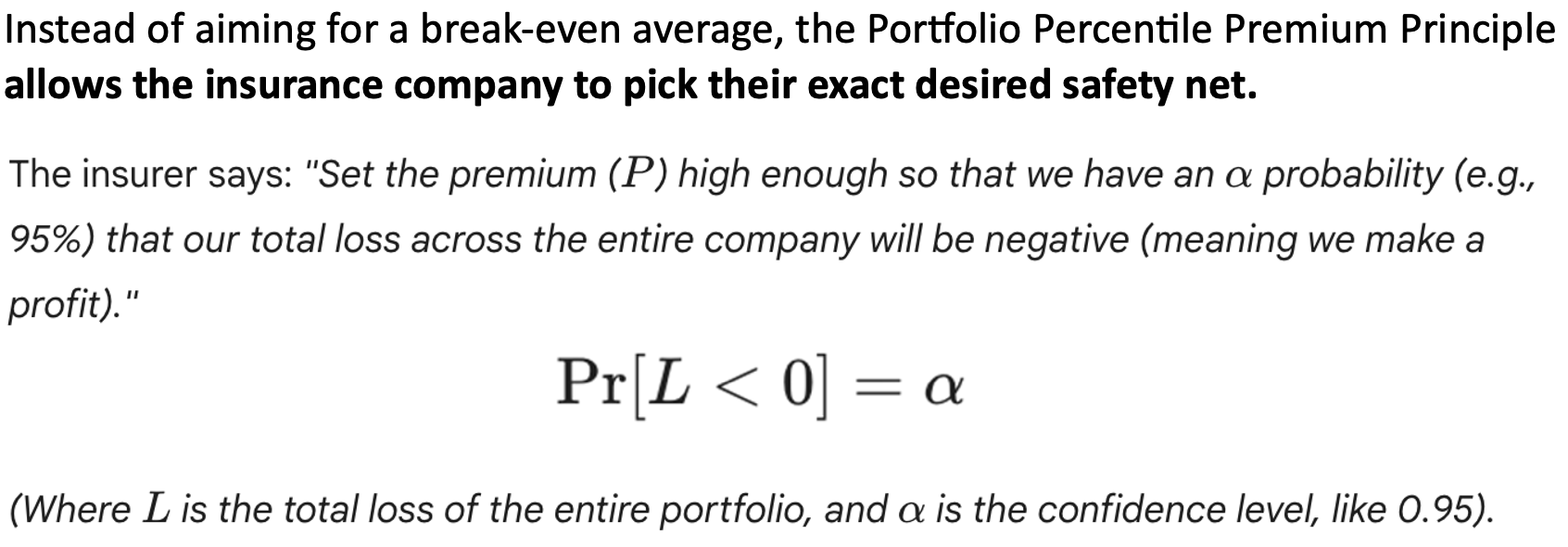
The Percentile Principle
Math Shortcut
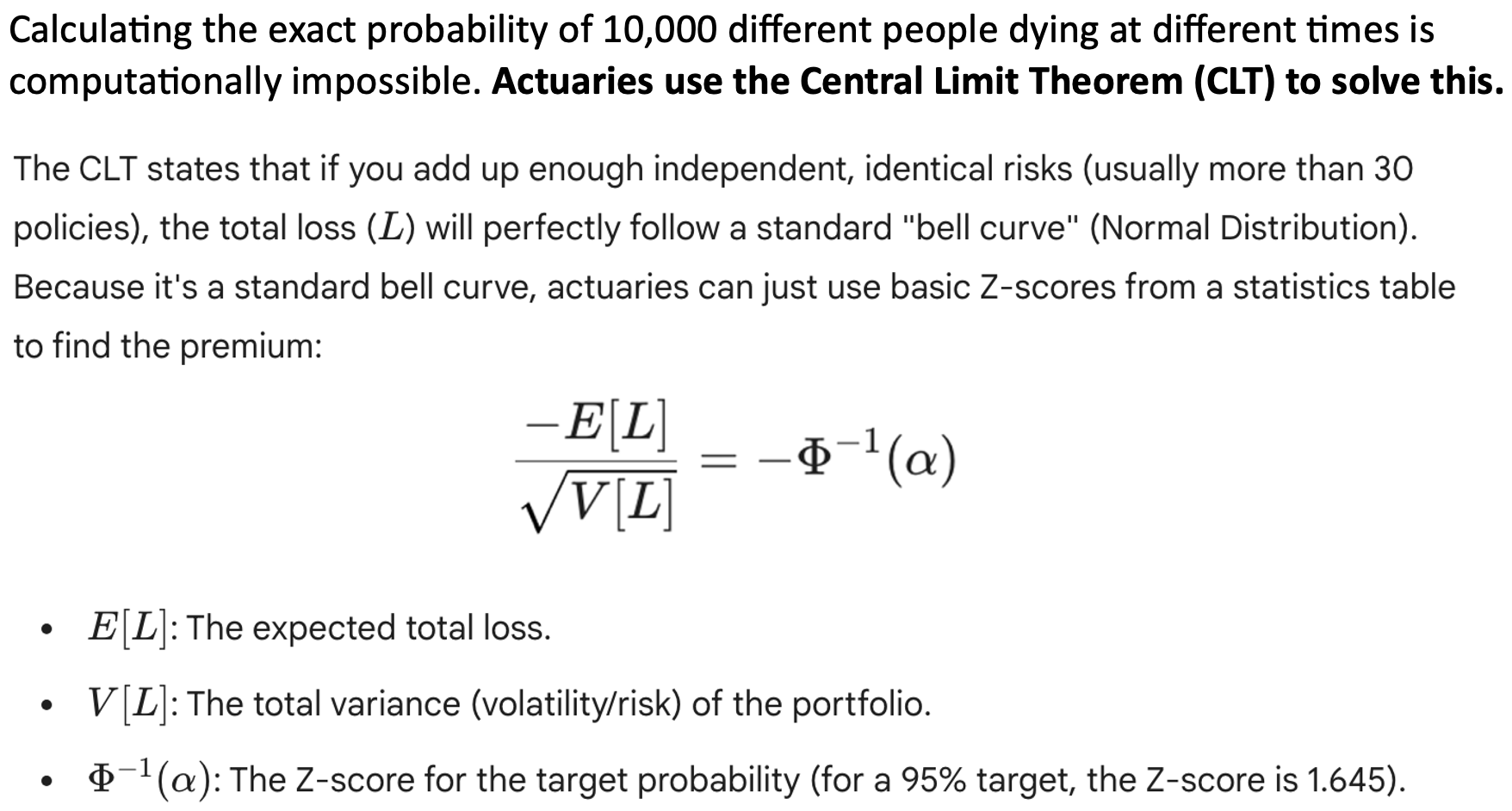
Most common Z-scores
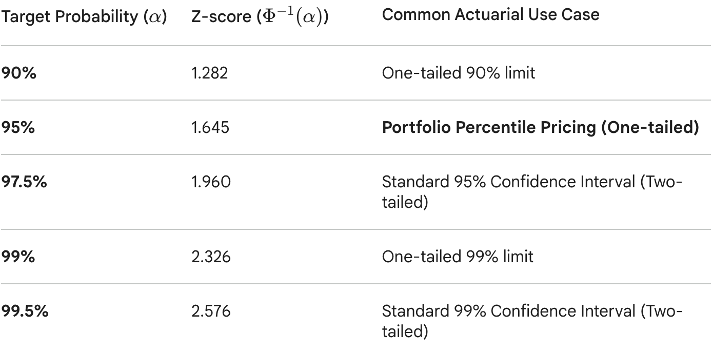
The Percentile Principle
Example
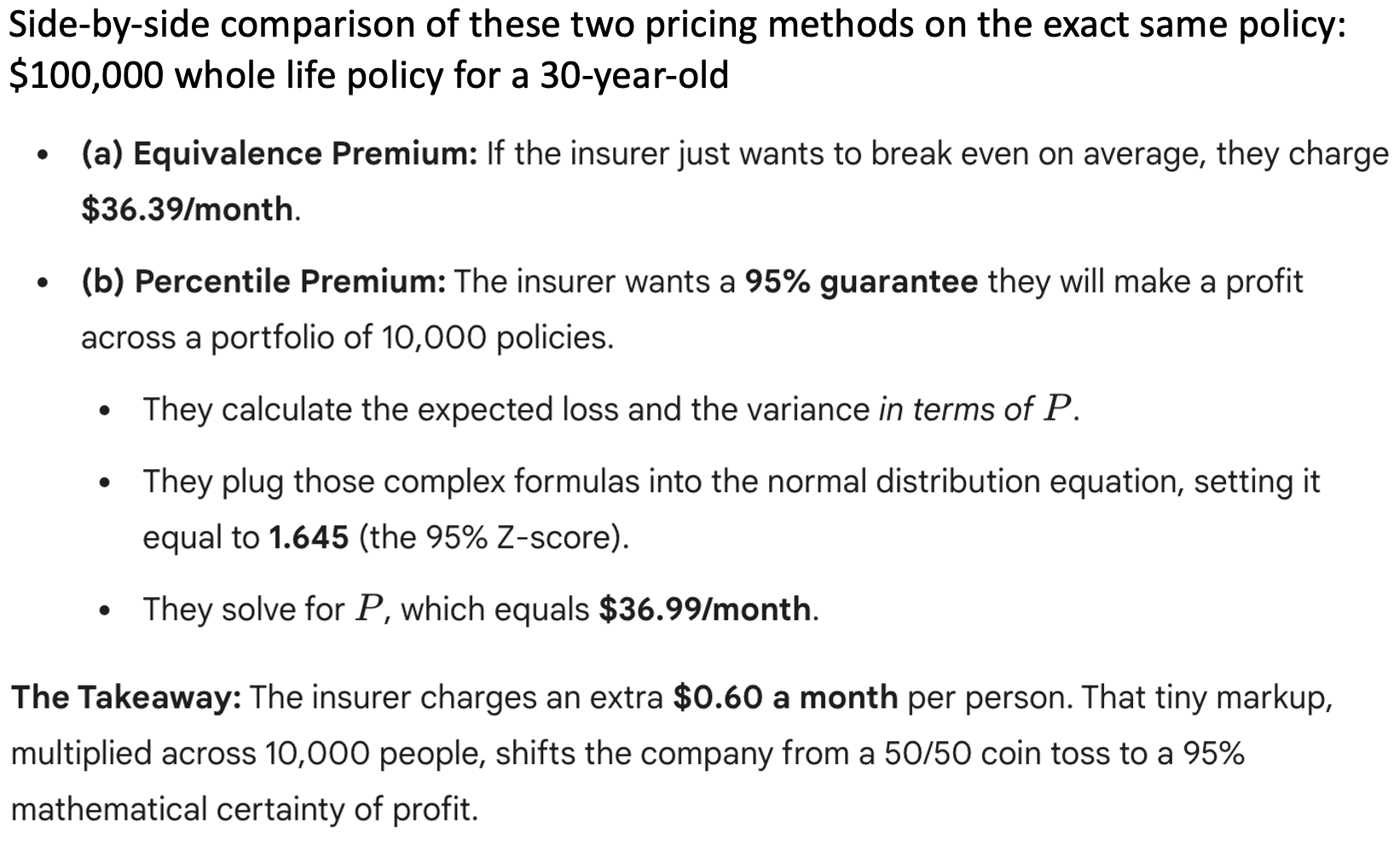
Risk Diversification

How can actuaries deal with people who don't fit the "perfectly healthy" mold?
In the insurance world, this is known as handling substandard lives or extra risks.
Two main scenarios:
- The Underwriting Penalty (Life Insurance)
- The Structured Settlement Challenge (Annuities)
The Underwriting Penalty (Life Insurance)

The Structured Settlement Challenge (Annuities)
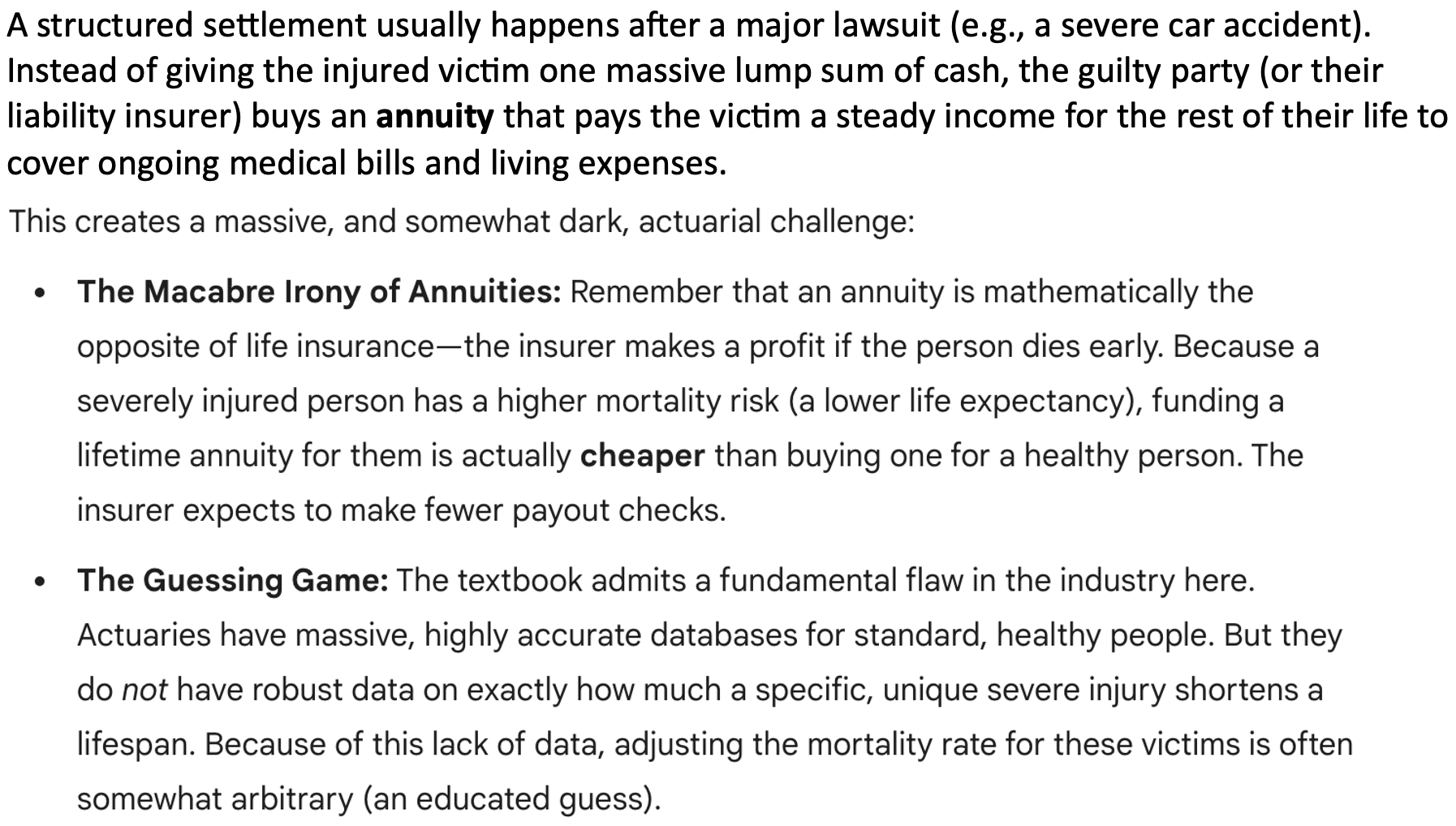
To model this "extra risk" in EPV calculations, one of three methods are usually used:

Extra Risk Modelling
Age Rating

Extra Risk Modelling
Constant Addition
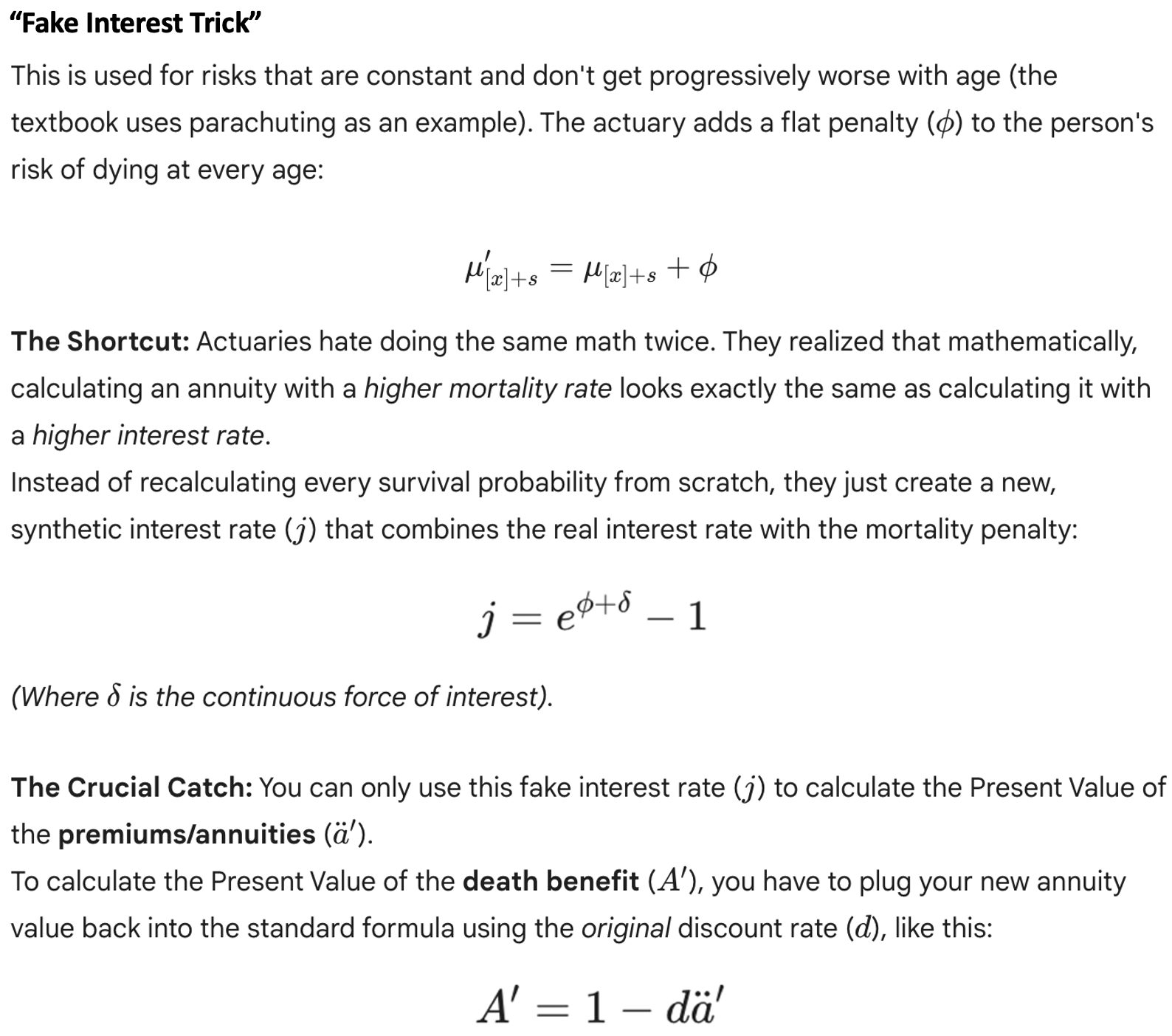
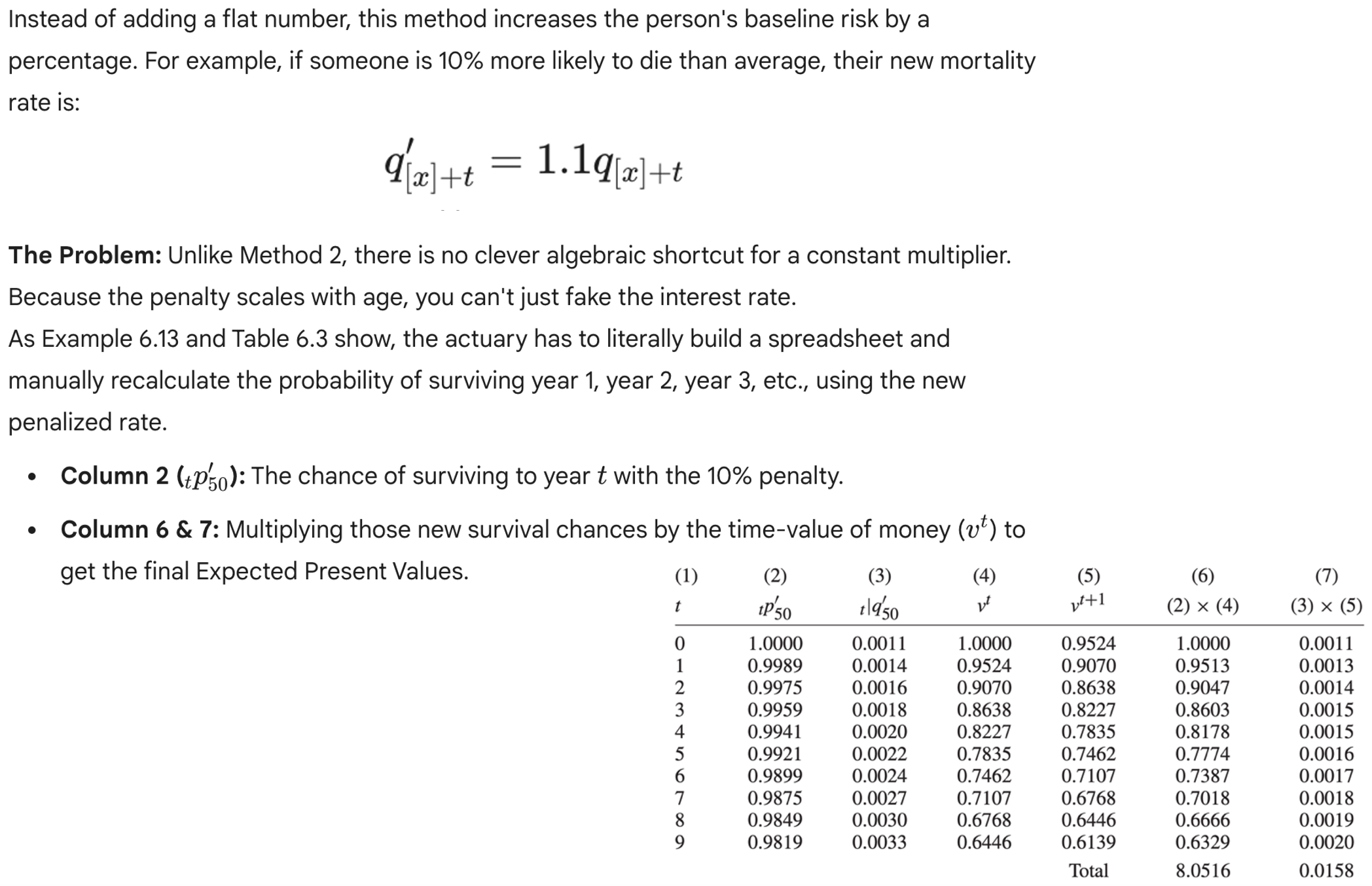
Extra Risk Modelling
Percentage Multiplier
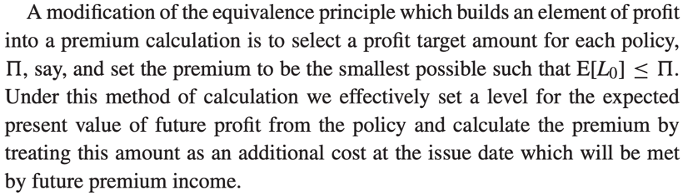
The equivalence principle is the traditional approach to premium calculation.
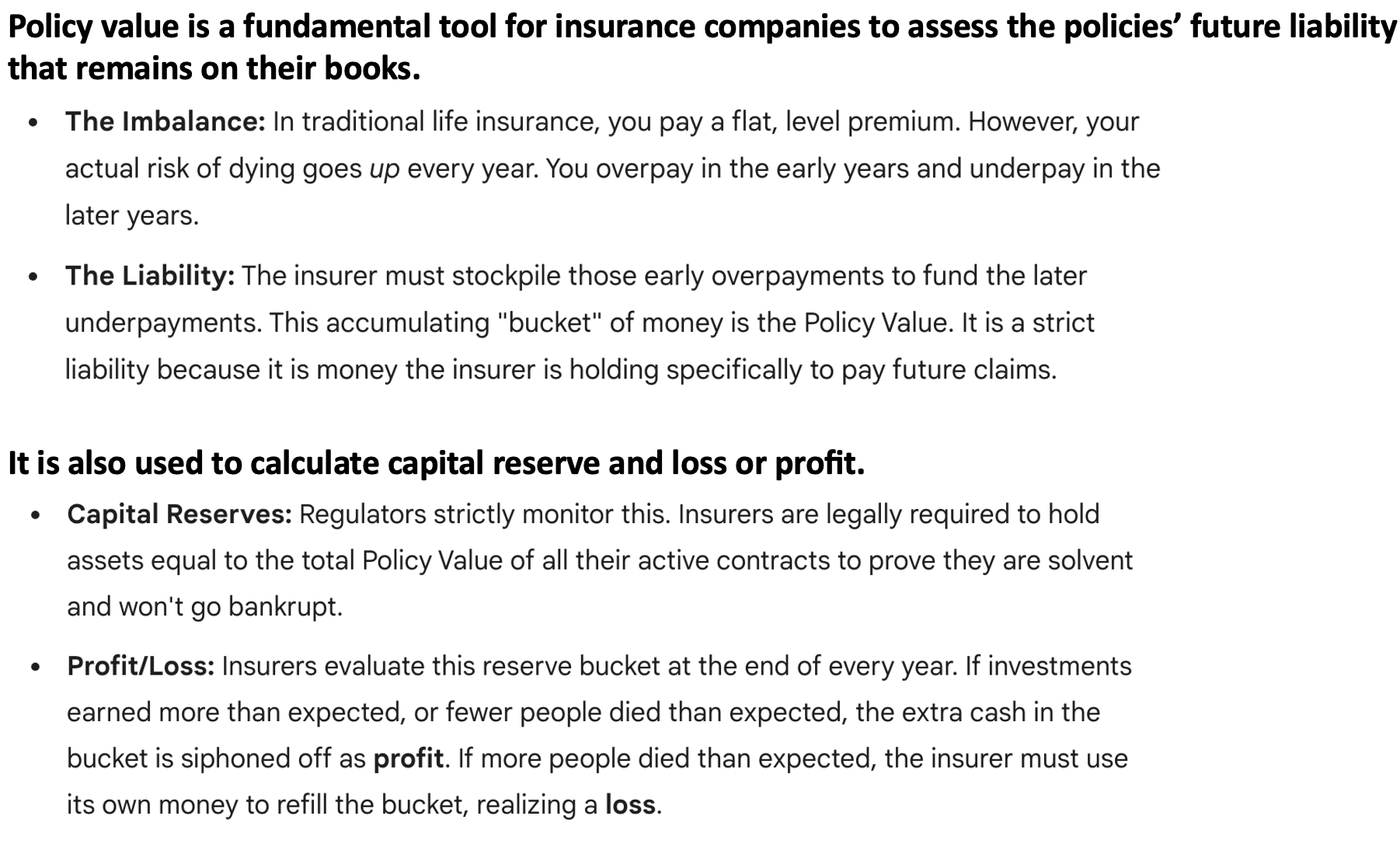
Policy value is a fundamental tool for insurance companies to assess the …
Mathematically speaking, the most important change is that we are moving away from assessing the cash flow at issue in the previous three chapters and changing our point of view to other times on the timeline.
The Future Loss Random Variable
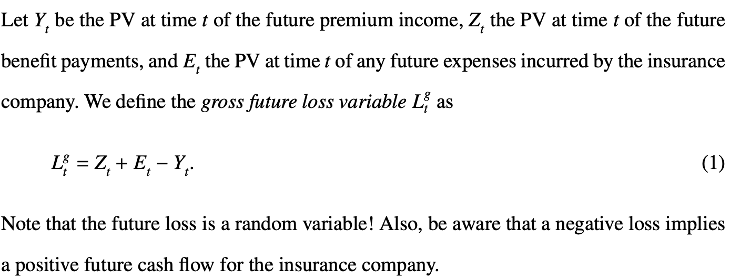
The Future Loss Random Variable
Note
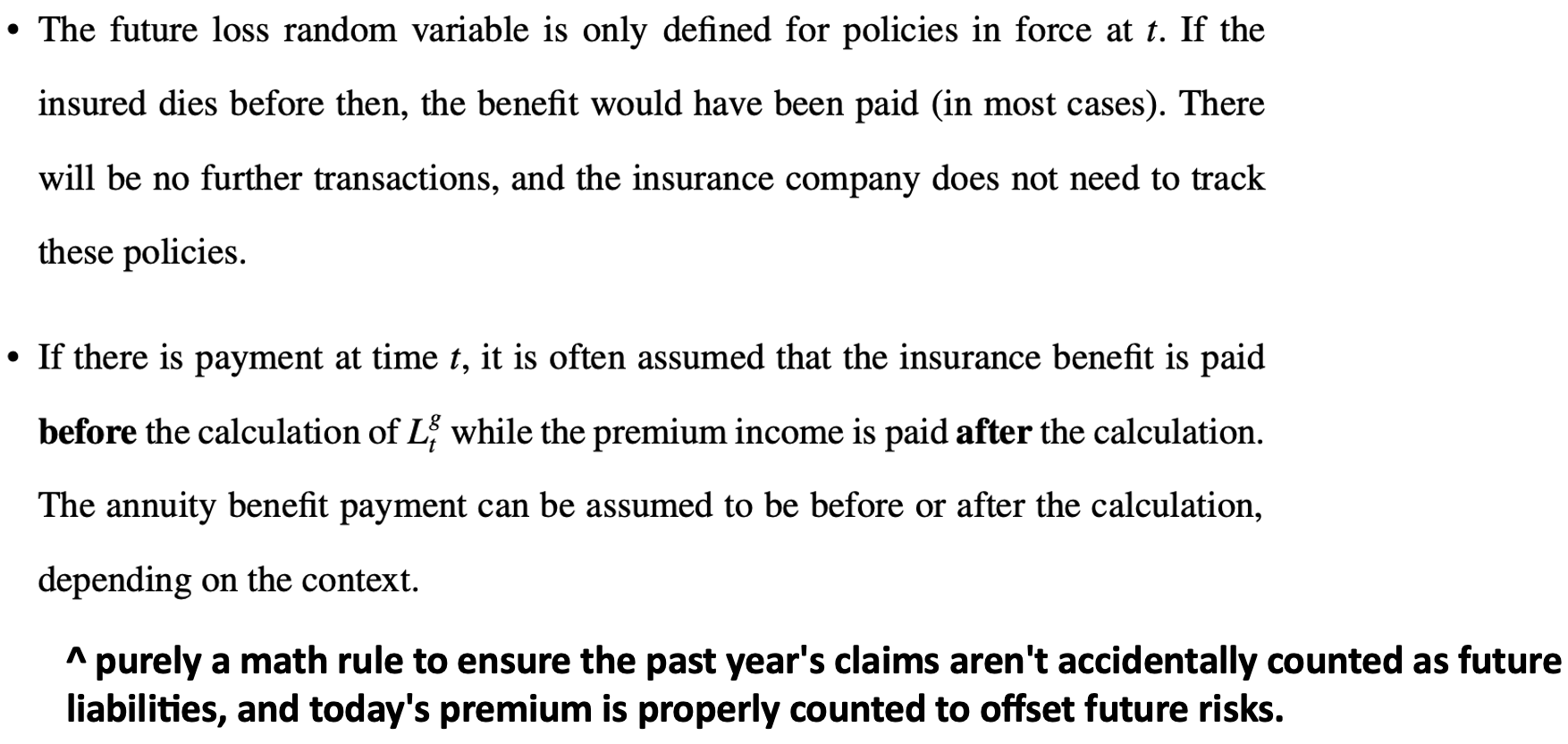
Policy Values
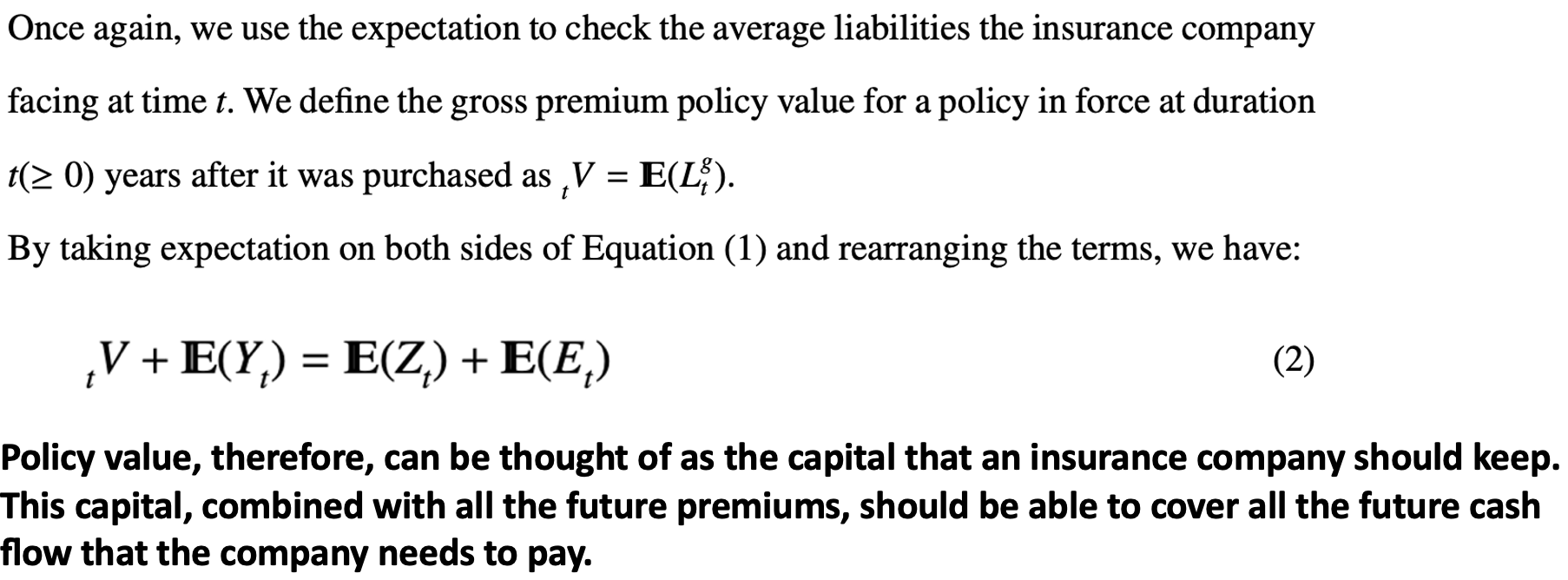
Instead of just saying "Liabilities - Income," the book frames it as

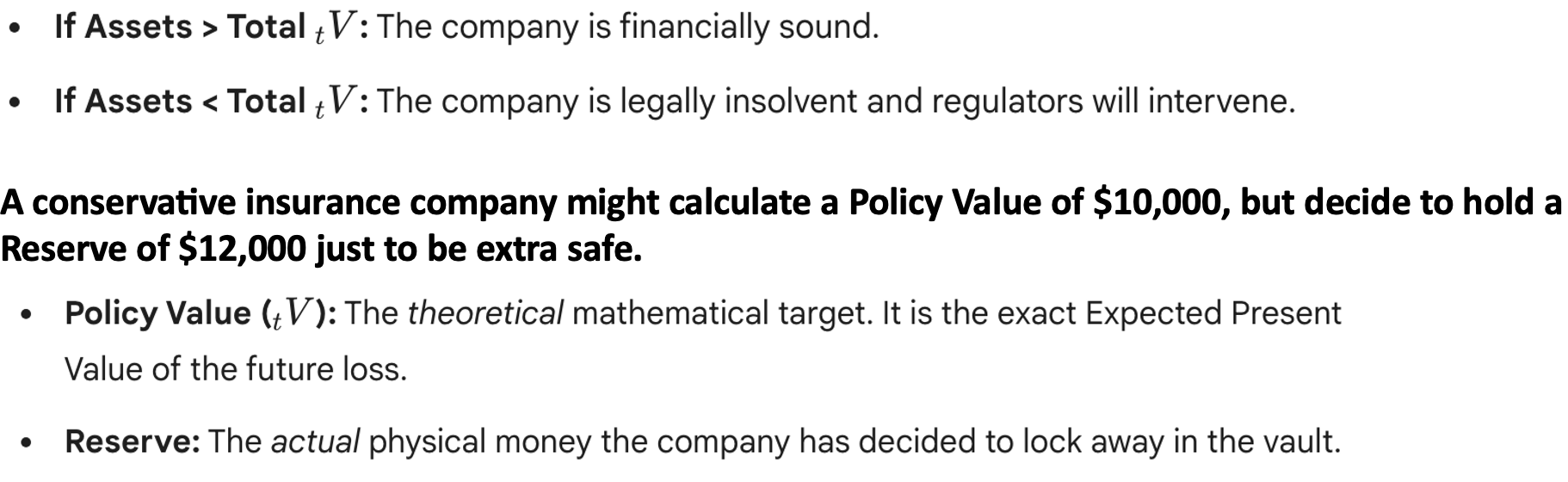
Valuation of Company
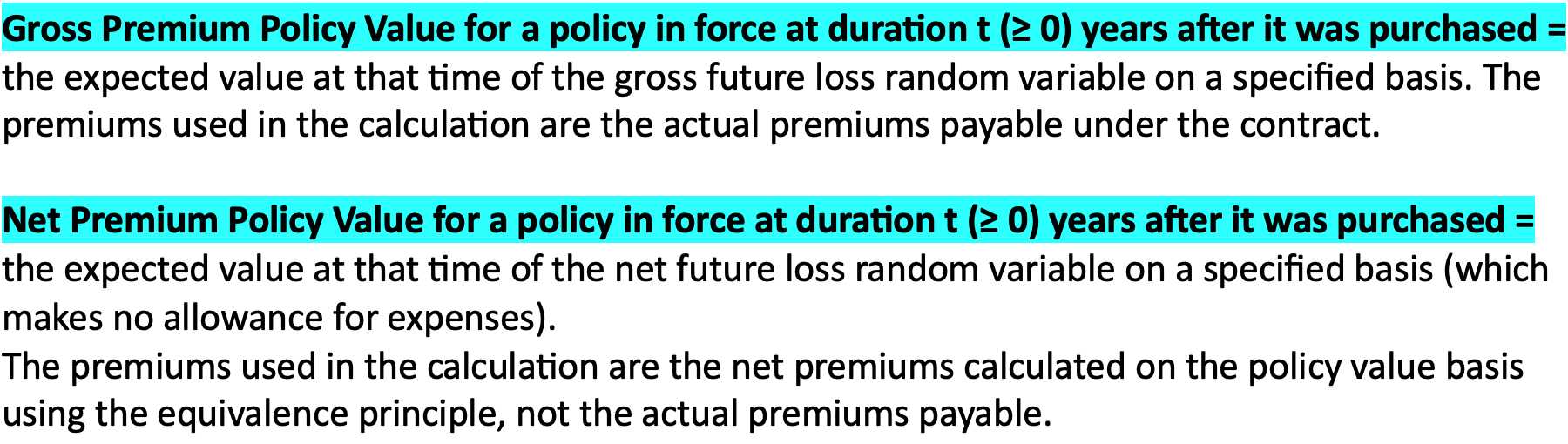
Gross and Net Premium Policy Value
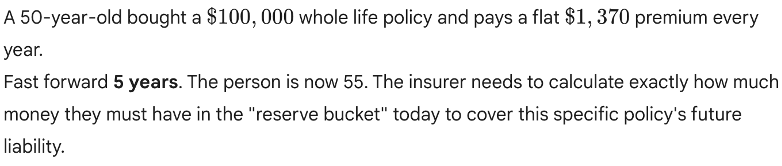
Mortality Shift
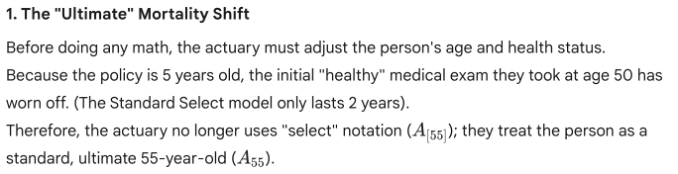
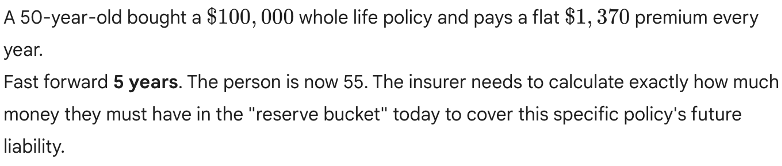
Gross Future Loss r.v.
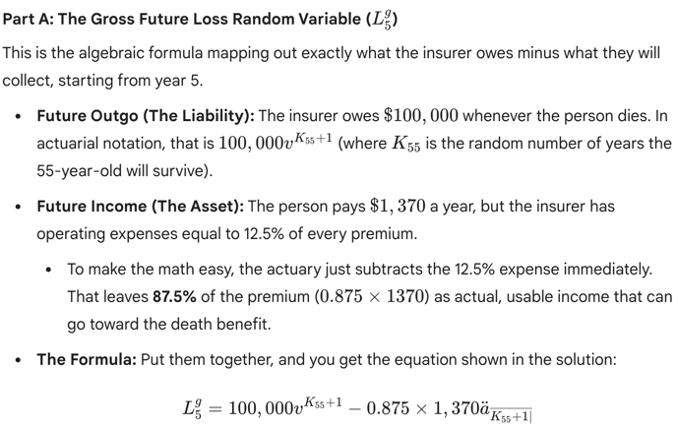
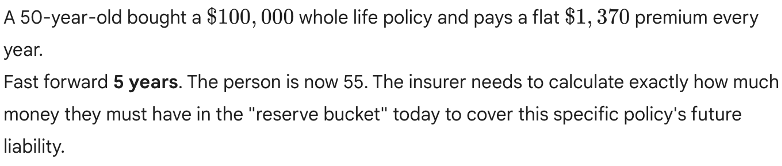
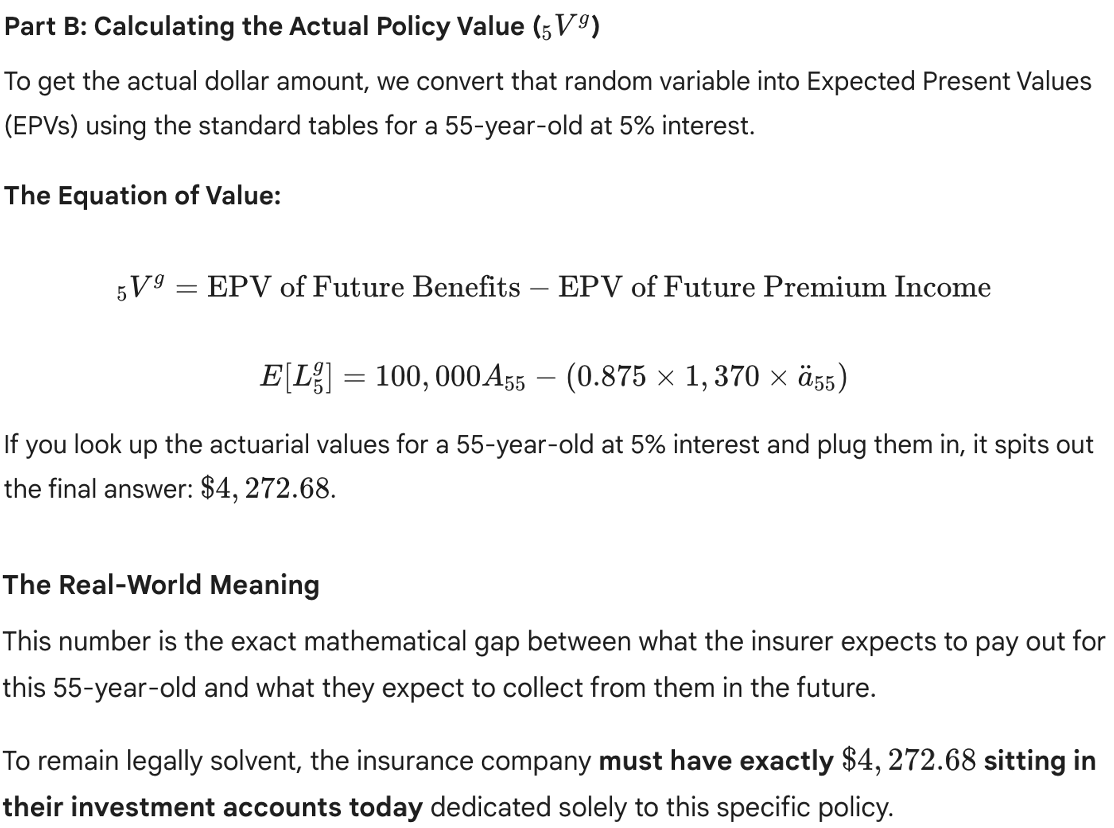
Calculating actual Policy Value