838 Exam 2
 Studied by 12 people
 Call Kai
 Learn
Learn Practice Test
 Spaced Repetition
 Match
Match Flashcards
 Knowt Play
1/162

Earn XP
Description and Tags
mostly sun review questions
Name | Mastery | Learn | Test | Matching | Spaced | Call with Kai |
|---|
No analytics yet
Send a link to your students to track their progress
163 Terms
what is the number of cells produced daily by the bone marrow
100 billion
what is the ratio of red blood cells to white blood cells in the blood stream
1/700th
what are the different formed elements of blood
red cells, white cells, platelets
how can the types of formed elements of blood be distinguished
white blood cells have granulocytes (neutrophils, eosinophils, basophils) which are are segmented and monocytes and lymphocytes
what are the two major complexes found on the surface of activated platelets that are important to the surge in thrombin production?
intrinsic tenase complex and prothrombinase
describe the coagulation factors that form the intrinsic tenase complex and what it activates
formed by coagulation factors VIIIa-IXa
activate thrombin generation in the propagation phase of coagulation
describe the coagulation factors that from the prothrombinase complex and what it activates
formed by coagulation factors Va-Xa
activate thrombin generation in the propagation phase of coagulation
Name the vitamin K dependent clotting factors and the organ in which they are synthesized
factors II (prothrombin), VII, IX, and X whoch are all synthesized in the liver
what is the catalytic enzyme in fibrinolysis
Plasmin
what are two inhibitors of fibrinolysis
⍺2-antiplasmin and ⍺2-macroglobulin (inhibit plasmin)
PAI-1 and PAI-2 which are plasminogen activator inhibitors that stop the conversion of plasminogen to plasmin
what are the three types of anemia
iron-deficiency anemia, pernicious anemia, hemolytic anemia
define anemia
a condition where the blood doesn’t have enough healthy red blood cells resulting from a lack of red blood cells or dysfunctional red blood cells in the body
what are the major causes of macrocytic anemia
deficiency in vitamin B12 or folic acid or drugs that interfere with DNA synthesis
what are the major causes of microcytic anemia
abnormalities in hemoglobin production or iron deficiency
what is the most common form of anemia
iron deficiency anemia
what is the most likely cause of iron deficiency anemia in premenopausal women
heavy period
what is the most likely cause of iron deficient anemia in men
peptic ulcers or GI cancer
what are some disorders associated with iron deficiency anemia
rapid or irregular heartbeat, heart failure or and enlarged heart, pregnancy complications or delayed growth in infants and children
what are the physiologic adaptations to slowly developing iron deficiency anemia
physiologic compensatory mechanisms (increase cardiac output, diverting blood flow)
biochemical adaptation (increase unloading of oxygen in the tissues)
in what situations might the serum ferritin level be normal or elevated in a patient with iron deficiency
in patients with inflammatory conditions
ferritin levels are elevated in response to inflammation
what neurologic defects are observed in prolonged pernicious anemia
nerve damage and memory loss
what symptoms of pernicious anemia are usually relatively mild
diarrhea constipation nausea vomiting fatigue lack of energy or lightheadedness
are changes in the peripheral blood smear necessary for neurologic effects of vitamin B 12 deficiency
no (im only pretty sure about this answer)
name two crucial cofactors in DNA synthesis whose deficiency results in pernicious anemia
cobalamin and folic acid
in what specific biochemical pathways do cobalamin and folic acid participate
enzyme catalyzed methylation reaction in DNA synthesis
what are conditions that can lead to hemolytic anemia
sickle cell disease, autoimmune disorders, bone marrow failure, infections
what drugs can induce hemolytic anemia
cephalosporins, penicillin, dapsone, levodopa and methyldopa, levofloxacin, nitrofurantoin, NSAIDs, and quinidine
*what does lymphocytosis mean*
elevated lymphocyte counts often triggered by viral infections, but consistently elevated levels indicate malignancies like leukemia
at what level of neutropenia dose the incidence of infection dramatically increase
1,500 neutrophils per microliter is neutropenia while lower than 500 per microliter is severe case
what are the most common sites and types of infections observed in neutropenic patients
skin infections like folliculitis and boils
cellulitis = bacterial invasion of the dermis or epidermis
gum disease and chronic gingivitis
what is the probable underlying abnormality in cyclic neutropenia
mutations of nuetrophil elastase (ELANE) whihc is a decrease in neutrophil production or an increase in apoptosis that causes a deficiency of neutrophils in the bloodw
what is cyclic neutropenia
an inherited or acquired blood disorder characterized by recurrent episodes of abnormally low levels of neutrophils making the individual highly susceptible to infection
what is the most common category of thrombocytopenia
immune causes such as autoantibodies directed against the platelet membrane antigen GpIIb/IIIa
what are the three general mechanisms of thrombocytopenia
immune or non-immune mediated destruction of platelets caused by drugs or auto-antibodies directed against the platelet membrane antigen GpIIb/IIIa
increase in spleen size or activity
platelet consumption as a result of ongoing clotting
name the platelet protein antibodies implicated in the pathogenesis of heparin induced thrombocytopenia
heparin can bind to PF4 (platelet factor four) which promotes blood aggregation and then IgG is produced agains the heparin-PF4 complex
by what mechanism can heparin induced thrombocytopenia actually increase clot formation
platelets bind to each other during the IgG-Fc receptor or PF4-PF4 receptor interactions which initiates the formation of blood clots
what constitutes the Virchow triad of factors predisposing to the formation of intravascular clots
hyper coagulability, venous stasis, endothelial injury
Deficiencies in which proteins can result in clinically significant thromboses
Proteins C and S
what is the basis for activated protein C resistance
APC resistance is caused by a point mutation in the factor V gene that is resistant to inactivation by APC that causes a longer duration of thrombin generation that leads to a hyper coagulable state
what is the most common site for deep vein thrombosis
the legs (because of sluggish blood flow or higher likelihood of blood vessel compression injury)
what is the nature of the defects in hemophilia A and B
both are x chromosome linked recessive traits
A = deficiency of coag factor VIII
B = deficiency of coag factor IX
what are the parts of the respiratory zone
the conducting zone - passage for air to move in and out of the lungs
the respiratory zone - allows inhaled oxygen to diffuse into the capillaries
what part in the lungs does allow gas exchange between the lungs and the blood
the alveoli
what are the two principal physiologic roles of the lungs
to make oxygen available to tissues for metabolism
to remove the main byproduct of that metabolism
what mechanism do the pulmonary arteries have for matching alveolar perfusion with ventilation
hypoxic pulmonary vasoconstriction (HPV) = homeostatic mechanism for said matching
what does decreased alveolar PO2 cause in the lung? increased?
vasoconstriction of the pulmonary arteries
vasodilation of the pulmonary arteries
what are the roles of the connective tissue and surfactant systems in lung function
connective tissue fibers maintain the anatomic integrity of visceral pleura
surfactant enhances the anatomic stability of the alveoli and reducing surface tension to prevent the collapse of alveoli
what are the major sites of resistance to airflow in the lungs
trachea and bronchus
what does visceral pleura do
covers the outer surface of the lung
what are the different roles of the pulmonary and bronchial arteries
pulmonary arteries supply deoxygenated blood from the heart and participate in gas exchange at the alveolar capillary membrane
bronchial arteries carry oxygenated blood to the lungs
what are the humoral and cellular components of the specific immune defense system of the lungs
mobile phagocytic cells secrete cytokines
B and T lymphocytes of the mucosa associated system
white blood cells from alveolar capillaries
list the components of the nonspecific defense system of the lungs
mechanical barrier, mucus, mucocilary clearance
what is the role of the ciliary action of the respiratory epithelium
removing inhaled particles including pathogens before they can reach the lung tissue
what are the requirements for successful lung function
healthy airway and healthy pulmonary parenchyma
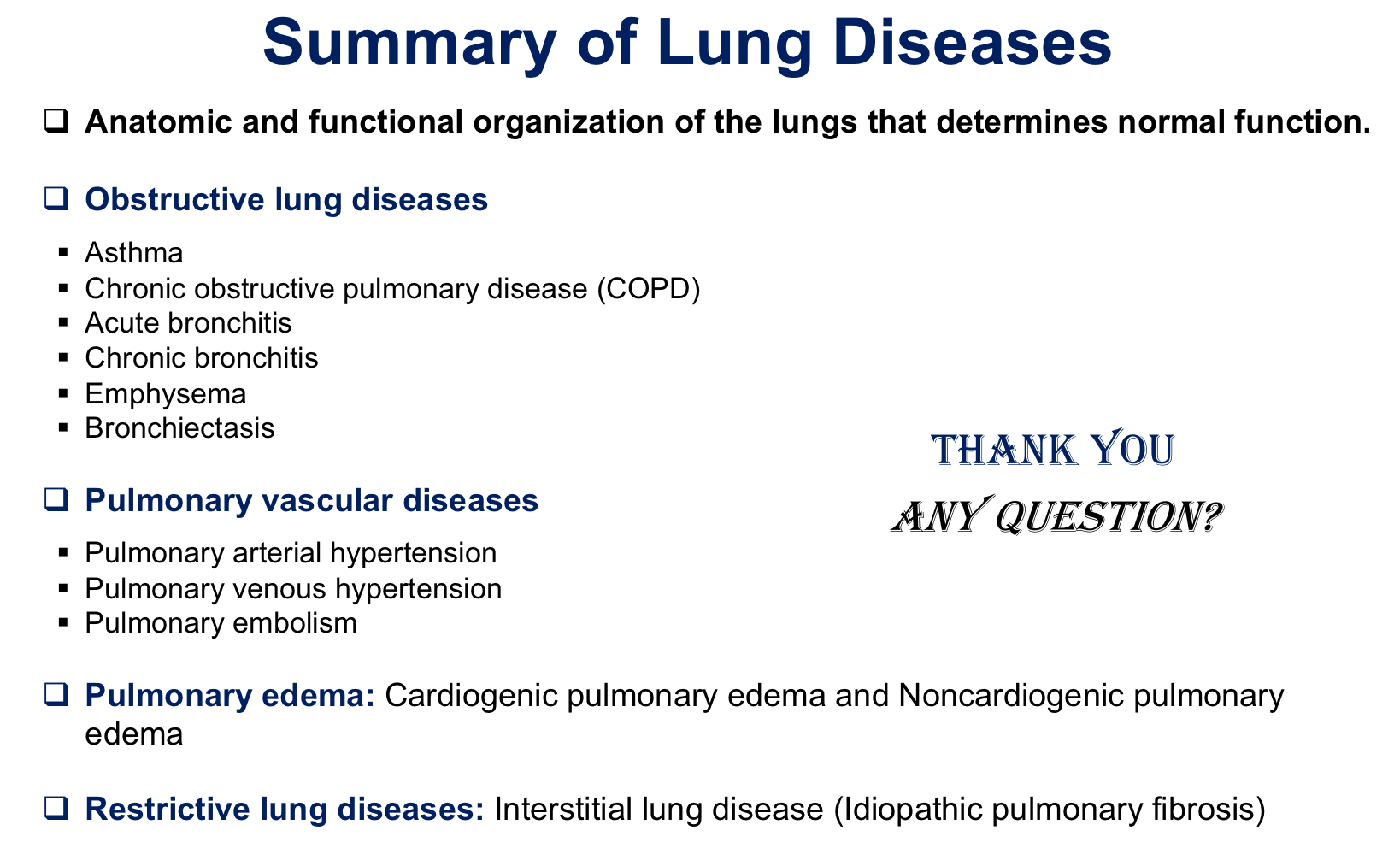
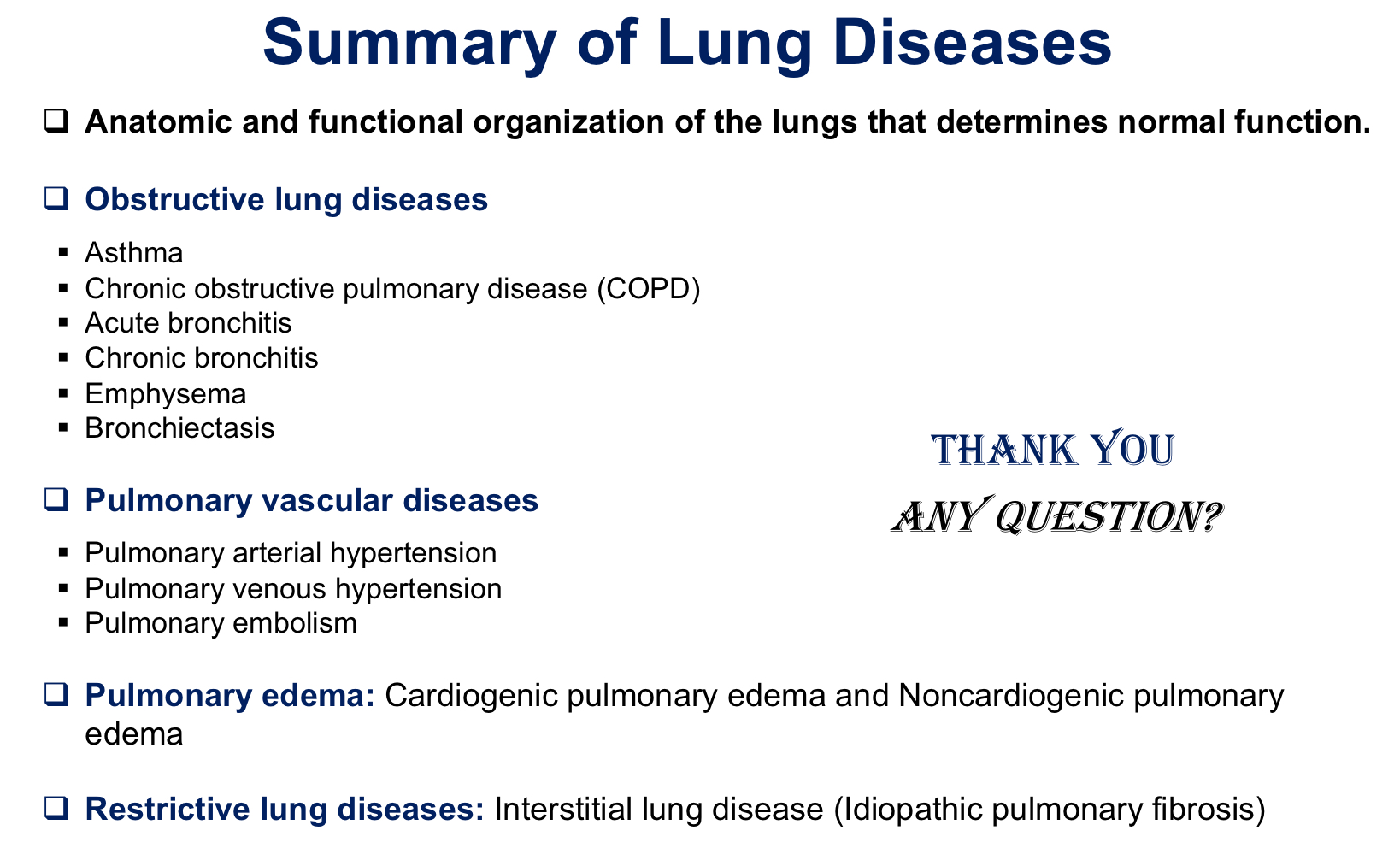
what are the six general categories of lung disease
obstructive lung disease
pulmonary vascular disease
pulmonary edema
restrictive lung disease
infectious disease
neoplastic disease
abnormalities of the FEV1 and FEV1/FVC are the result of a decrease in the airflow through the lungs that may be caused by what
obstructive lung diseases
what is the major characteristic of obstructive lung disease
hard to exhale (asthma, COPD, bronchiectasis, acute bronchitis)
what is the major characteristic of restrictive lung disease
limited ability of the lungs to expand during inhalation (interstitial lung disease, pulmonary sarcoidosis, idiopathic pulmonary fibrosis)
what is the major characteristic of pulmonary vascular diseases
affects the blood vessels along the route between the heart and lungs
what is the major characteristic of pulmonary edema
watery fluid in the lungs inhibiting oxygen and carbon exchange
what is the fundamental physiologic problem in obstructive lung disease and give examples of each of the three principal sources
increased resistance to expiratory airflow caused by:
inhaled secretions in within the lumen
airway wall thickening and airway narrowing
loss of surrounding supporting structure
which acute-acting mediators contribute to asthmatic airway responses
leukotrienes, prostaglandins, histamine
what are the three categories of provocative agents that can trigger asthma
physiologic or pharmacologic mediators
allergens
exogenous physicochemical agents or stimuli that produces airway hyperactivity
what are some of the common symptoms and signs of acute asthma
wheezing, chest tightness, SOB, cough
what are some histopathologic features of asthma
inflammatory cells (lymphocytes, eosinophils, mast cells), damaged bronchial and bronchiolar epithelial cells
what are the pathologic events that contribute to chronically abnormal airway architecture in asthma
acute and chronic inflammatory processes, mucus hyper-secretion, damaged airway epithelium
name three reasons for increased airway resistance and obstruction in asthma
bronchospasm, mucus plugging, edema in the peripheral airways
what is the leading cause of COPD
long term exposure to irritants that damage the lungs and airways
name eight symptoms and signs of chronic bronchitis
wheezing and cough with sputum production
ronchi are continuous low pitched rattling lunch sounds that often resemble snoring
typical chest radiographic findings with increased lung volumes with relatively depressed diaphragms
ventilation/perfusion mismatching
tachycardia, hypoxemia, pulmonary hypertension
polycythemia increases the hematocrit may increase to over 50%
pulmonary function abnormalities reduce all flows; reduced REV1 and FVC and the FEV1/FVC ratio
name six signs and symptoms of emphysema
breath sounds are decreased in intensity, reflecting decreased airflow and prolonged expiry time
hyperinflation of lung
hypercapnia, respiratory acidosis, and a compensatory metabolic acidosis
tachycardia, hypoxemia, pulmonary hypertension
polycythemia increases the hematocrit may increase to over 50%
pulmonary function abnormalities reduce all flows; reduced REV1 and FVC and the FEV1/FVC ratio
describe the protein related to an increased risk of emphysema
deficiency in α1-protease inhibitor (α1-antitrypsin)
what are the pathophysiologic changes in emphysema
destruction of the airspaces distal to the terminal bronchioles
loss of alveolar surface area and the accompanying capillary bed for gas exchange
loss of the supporting structures: elastin containing connective tissue and surrounding lung parenchyma
what is a vicious cycle theory of the pathogenesis of bronchiectasis
1: an infectious insult and impaired drainage obstruction or defect in host defense
2: activation of a host immune response
3: progressive destruction of normal lung architecture
4: permanent abnormal dilation and destruction of the major bronchi and bronchiole walls
what are some examples of pulmonary vascular disease
pulmonary:
-arterial hypertension
-venous hypertension
-embolsim
what are the main causes of pulmonary arterial hypertension
lung disease
autoimmune disease
heart failure
idiopathic
how does pulmonary venous hypertension cause increased pulmonary vascular resistance
increased blood pressure in the pulmonary veins (carrying blood away from the lungs to the heart)
what is the most common source of pulmonary embolism
a blood clot that forms in a deep vein in the leg and travels to the lungs where it becomes lodged in a smaller lung artery. Almost all blood clots that cause pulmonary embolism are formed in the deep leg veins
what is the pathophysiology of pulmonary embolism
hemodynamic changes
changes in ventilation
changes in oxygenation
bronchoconstriction
pulmonary infarction
describe hemodynamic changes in relation to the pathophysiology of pulmonary embolism
mechanical obstruction of the pulmonary arterial circulation increasing the right ventricular afterload
describe changes in ventilation in relation to the pathophysiology of pulmonary embolism
ventilation and perfusion become mismatched with blood flow from obstructed pulmonary arteries redirected to other gas exchange untis
describe changes in oxygenation in relation to the pathophysiology of pulmonary embolism
mild to moderate hypoxemia with a low PaCO2 is the most common finding in acute pulmonary thromboembolism
describe the role of bronchoconstriction in relation to the pathophysiology of pulmonary embolism
causes wheexing and increased work of breathing
describe pulmonary infarction in relation to the pathophysiology of pulmonary embolism
obstruction of small pulmonary arterial branches that act as end arteries leads to pulmonary infarction in about 10% of cases
what is the difference between pulmonary edema and pleural effusion
pulmonary edema is a broad term that is an abnormal accumulation of fluid in the extravascular compartments of the lungs
pleural effusion is when fluid builds up in the layers of tissue that line the outside of the lungs and the inside of the chest due to poor pumping by the heart of by inflammation
what is the most common cause of pulmonary edema
left heart failure (congestive heart failure)
(right heart failure is found with cor pulmonale)
what causes a non-cardiogenic pulmonary edema
acute respiratory distress syndrome (ARDS)
adverse drug reaction
blood clot in the lungs
exposure to certain toxins, high altitudes, near drowning etc
viral infections
what is the pathophysiologic process of edema formation
a direct of an indirect pathologic insult → increased capillary permeability due to disrupted endothelial barrier → abnormal accumulation of fluid in the extravascular compartments of the lungs
what are common symptoms of pulmonary edema
dyspnea or extreme SOB that worsens with activity or lying down
a feeling of suffocating or drowning that worsens when lying down
a cough that produces frothy sputum that may be tinged with blood
wheezing or gasping for breath
cold clammy skin
how does interstitial lung disease affect lung function
causes progressive scarring (lung fibrosis) between the air sacs which causes lung stiffness and eventually reducing the ability to breathe and get enough oxygen into the blood stream
what medication is known to cause pulmonary fibrosis
bleomycin
name the five events in the pathophysiology of idiopathic pulmonary fibrosis
1: repetitive micro-injury to susceptible type 2 alveolar epithelium
2: injury induced imflammatory response including t cell activation causing increased production or activation of pro-fibrotic mediators like TGF-B
3: accumulation and activation of contractile myofibroblasts
4: deposition of stiff cross-linked extracellular matrix with tissue destruction
5: failure of type 2 alveolar epithelial cell reconstruction leading to bronchiolization (abnormal proliferation of bronchiolar epithelial cells) with the formation of honeycomb cysts
name eight symptoms and signs of idiopathic pulmonary fibrosis
cough
dyspnea
tachypnea
inspiratory crackles
nail clubbing
hypoxemia
pulmonary hypertension (with prominent pulmonary valve closure sound)
what are the major functions of the GI tract
motility: movement of intralunminal contents along tract
secretion: release of ion, water, enzymes and bile to aid digestion
digestion: intraluminal breakdown of indegested substances
absorption: uptake of molecules across mucosal surface into epithelial cells
metabolism: intracellular biotransformation
excretion: removal of waste substances
defense: protection against ingested toxins, bacteria, and viruses
what are the four major layers of a cross-section through the GI tract
mucosa: epithelium, lamina propria, muscularis mucosae
submucosa: loose connective tissue to support the epithelium
serosa: mesothelium and connective tissues
what volumes of fluid are transferred into and out of the GI tract each day
9 in 9 out
ingest 2 secrete 7
absorb 7.5 into small intestine 1.4 in large intestine
excrete 0.1 in feces
how are molecules absorbed into cells
passive transport: diffusion and facilitate diffusion
active transport
pinocytosis
filtration (most prominent in kidneys)
what is the consequence of drug biotransformation
active drug is converted into inactive metabolites
active drug is changed to other active product
inactive drug changed to product with activity (prodrug)
nontoxic or less toxic drug is changed to toxic metabolites
what are the defense mechansism of the GI tract
defense from acid
-mucus production
-bicarbonate production
-prostaglandin production (attenuates acid production)
-tight junctions (prevents breach of epithelium)
-bicarbonate from pancreas (neutralizes acid leaving stomach)
defense from infection
-stomach acid (kills pathogens)
-rapid epithelial cell turnover (limit consequences of infection)
-microbiota
-secretory immune system
drug metabolism pathways and biotransformation enzymes
phase one metabolism = functionalization
-oxidation, reduction, hydrolisis
-alcohol dehydrogenases, aldehyde dehydrogenases, carboxylesterases, CYP, epoxide hydrolases, flavin containing monooxygenases
phase two metabolism = conjugation
-glucuronidation, sulfation, glutathionylation, methylation, acylation
-glutathione transferases, sulfotransferases, UDP glucuronosyltransferases
 Note
Note  Flashcards (56)