chapetr 16 - development, stem cells and cancer
 Studied by 5 people
 Call Kai
 Learn
Learn Practice Test
 Spaced Repetition
 Match
Match Flashcards
 Knowt Play
1/48

There's no tags or description
Looks like no tags are added yet.
Name | Mastery | Learn | Test | Matching | Spaced | Call with Kai |
|---|
No analytics yet
Send a link to your students to track their progress
49 Terms
What do proper embryonic development require
requires specific gene products be expressed in a given set of cells at a specific time due to differential activity of transcription factors and regulatory molecules
3 processes required in embryonic development
Cell division through mitosis
Cell differentiation, were cells become specialized in strcuture and function through alteration in cell behaviour
Morphogenetic, development of organisims form requiring alterations in cell behaviour
Why do cell differentiation and morphogensis express different genes
Controlled by factors present in the egg prior to fertilization
Cytoplasmic determinants in the egg
egg contains proteins, mRNA and cellular structures produced by the organism
They’re not uniformly distributed and provide the initial stimulus for differential gene expression in the embryo due to unequal cellular contents
How early embryo change due to induction
As early embryos develop, the cells get influenced by its environment
Cells at the bottom of the early embryo are releasing molecules that signal (induce) nearby cells to change their gene expression through interactions of cell surface molecules and growth factors
Ex. Morula → blastula
Determination
point at which an embryonic cell is committed to becoming a specific cell types after going through so many changes
Once this occurs, it will continue to differentiate (develop) into that cell types even its environment or location changes
Differentiation
Process where a cell attains (reaches) its determine fate
What does cellular differentiation require
The expression of tissue specific protein and sequential expressio of specific genes, which leads to observable alterations in cellular structure
Most common way of regulating differentiation
Transcription
Cellular differentiation in muscle cells
Signals from surrounding cells result in induction into a myoblast
MyoD is expressed and the myoD transcription factor is produced and goes on to interact with other muscles
myoD in muscle cells
activates its own transcription, producing positive feedback
It also activates muscle specific transcription factor genes by binding to control elements in enhancers
Muscle specific transcription factors go on to activate other genes responsible for producing specific muscle proteins and proteins that prevent cell division
Apoptosis
form of programmed cell death either for development or getting rid of dead/malfunctioned cells
Occurs to cells in bth embryonic and mature organisms
What occurs in apoptosis
Internal components of the cell are relegated for destruction
cells can become multi-lobbed or experience blebbing which triggers cells to be engulfed by phagocytic cells
Development of apoptosis
mechanism of how apoptosis worked was done by studying the soil worm
Showed that apoptosis happens at very specific, predictable time points and is triggered by specific signal transduction pathways
Important for the normal development of the nervous system and morphogensis of hands/feet/paws
Pattern formation
Process by which tissues and organs are spatially organized into their characteristic places
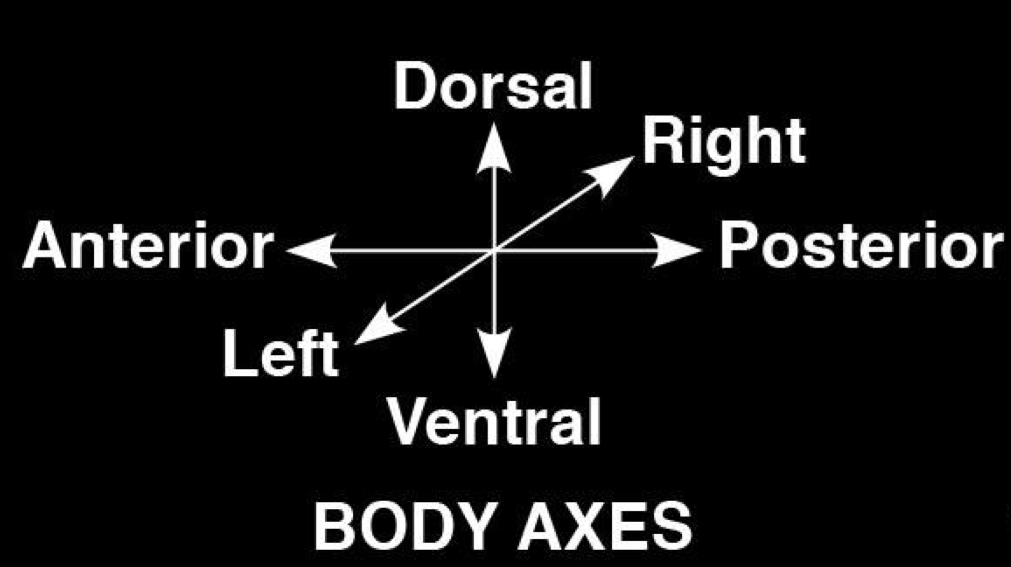
Positional information And its importance
Refers to the molecular cues that control pattern formation
it informs the cell the location of its body axes and their neighbouring cells
Determines how the cell and its descendants will respond to molecular signals
Homeotic genes
Regulatory genes that control pattern formation in the late embryo, larva and adult.
Axis establishment
Established due to cytoplasmic determinants in the egg
Maternal (egg donor) effect genes
Genes which when mutated in the egg donor result in mutant phenotypes in the offspring, regardless off the offsprings own genotypes
2 body axis
Anterior - posterior (front and back)
Dorsal - ventral (top and bottom)
Bicoid
Involved in anterior posterior axis formation
Morphology gradient hypothesis
Gradients of substances called morphogens determines the axes and other features
What breakthroughs were found when working With bicoid
established the role of a specific protein in pattern formation
Increased our understanding of the critical role played by the egg donor and their genes in early embryogenesis
Established the role of gradients of morphogens in polarity ad position
Embryonic genes
Determine the formation of segments and their characteristic structures
What occurs to egg donor mRNA as embryogenesis proceeds
The egg donor mRNA that established anterior posture and dorsal ventral axes are no longer needs and get targeted for destruction
Cloning process
Process where new organisim is formed with the exact same genetic composition to the parent
2 types of cloning
Organismal - cloning whole organisim
Cell cloning - asexual reproduction of unicellular organisms
Why clone?
began to determine if a single differentiated cell could be used to produce a whole new organism
Helped to prove that differentiated cells did not lose genes but rather had different gene expression than other
Animal cloning
Used nuclear transplantation where they removed nucleus on an egg cell and replaced it with the nucleus of a differentiated cell
Only worked when the differentiated nucleus came from a cell early on in embryology not when it was fully differentiated
What does it mean for a cell to be enucleated
Taking its nucleus out the cell
What did Plant cloning prove
the cloning of a carrot helped prove that
differentiation did not cause irreversible change to the cells DNA
Totipotent cells are able to dedifferentiate and give rise to all forms of specialized cells and are able to multiply on their own
Reproductive cloning
nucleus from a donor mammary cell was combined with an enucleated egg cells
The blastocysts from early stage of emobryogenesis are then implanted into a surrogate uterus to continue its development
When and who was the first reproductive mammal
Dolly the sheep in 1997
Why was dollys reproduction more successful than a frog
Mammary cells develop in a shorter period of time
Blastocyst has more support through the surrogacy
Epigenetics in cloning and why clones are more easily defected
as a cell progresses down its differentiation pathway, the DNA is altered through methylation and acetylation of histone proteins
Reversing these epigenetic changes is difficult
Stem cells
Unspecialized cells which have the potential to reproduce indefinitely and differentiate into specialized cells of one or more types (pluripotent)
culturing stem cells outside the body can be used in medicine
Animal and adult stem cells
animal embryonic stem cells can be harvested from early embryos in the blastula stage (blastocysts)
Adult organisms also have stem cells which replace non reproducing cells
Induced pluripotent stem cells
Cells that have been deprogrammed from differentiated cells back to embryonic stem cells
aids in regenerative medicine and studies of various diseases
What regulatory genes and products help tightly regulate the cell cycle
growth factors and receptors
Intracellular signalling molecules
Anchorage dependence factors
Mutation in cell cycle
may lead to cancer
May be spontaneous
Due to exposure to mutagens (chemical, physical or biological)
Oncogenes
form of gene which when expressed leads to development of cancer (mutated proto oncogene)
Found in viral genomes in humans and animals cells
Leads to deregulation of cell cycle activity
Proto oncogenes
normal cellular versions of oncogenes
expression of these gens leads to regular cell cycle activity
Tumour suppressor genes
product of these genes inhibit cell divsion, prevent uncontrolled cel growth and decrease their activity contributes to cancer
Functions include DNA repair, cell adhesion, and cell signalling pathways that inhibit cell cycle density dependent inhibition where contact with other cells prevent cell division
Cancer development
development of cancer requires multiple mutations
Generally needs at least one active oncogene and loss of activity of several tumor suppressor genes
This explains the increase of cancer rate with age
Cancer inheritance
familial association has been found with certain types of cancer
Individuals with inherited mutations require less new mutations to form cancer
Baseline level of risk gets increased
Ex. Colorectal cancer, breast cancer
What percentage are tumors associated with cancer
15%
Tumor viruses
interferes with gene regulation through integration of their genome into DNA
May introduce an oncogene, disrupt a tumor suppressor genes or convert protooncogene to oncogene
Viral proteins can…
Inactivate p53 and other tumor suppressor proteins which deregulates cell cycle receptors
2 types of tumors
Benign tumors - non cancerous as they dont invite surrounding tissues or migrate to other sites of the body
Can potentially turn cancerous or not
Can grow teeth, lashes etc
Malignant tumor - cancerous, they continue to grow and invade surrounding tissues and spread to new sites (metastasize)
 Note
Note  Flashcards (20)