Enzymes: Types, Function, and Factors Affecting Activity
 Call Kai
 Learn
Learn Practice Test
 Spaced Repetition
 Match
Match Flashcards
 Knowt Play
1/20

There's no tags or description
Looks like no tags are added yet.
Name | Mastery | Learn | Test | Matching | Spaced | Call with Kai |
|---|
No analytics yet
Send a link to your students to track their progress
21 Terms
What is the primary function of an enzyme in a chemical reaction?
To increase the rate of reaction by lowering the activation energy.
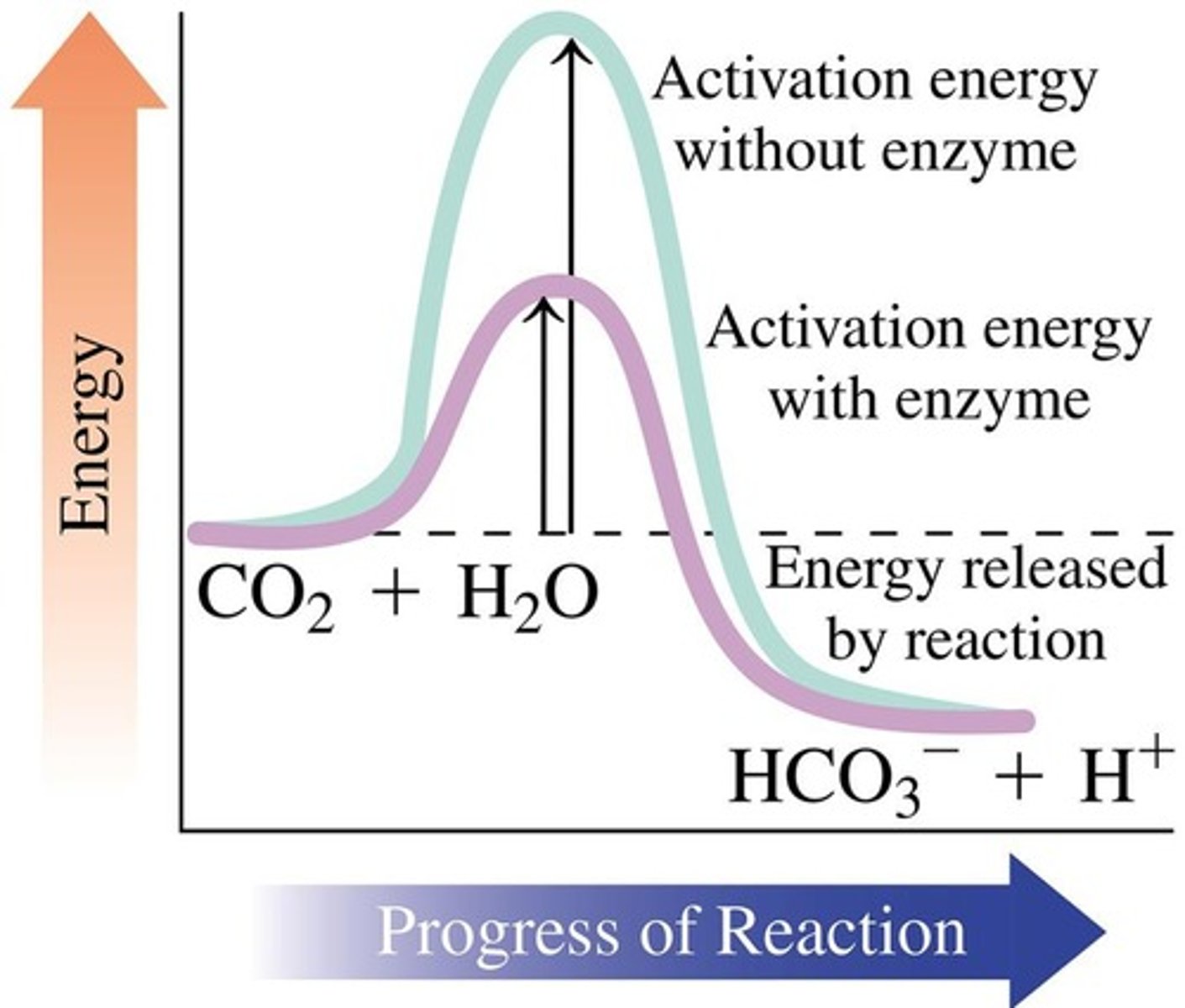
Are enzymes consumed or changed during the reactions they catalyze?
No, they remain unchanged.
What is the active site of an enzyme?
A specific region within the enzyme's tertiary structure where substrates bind.
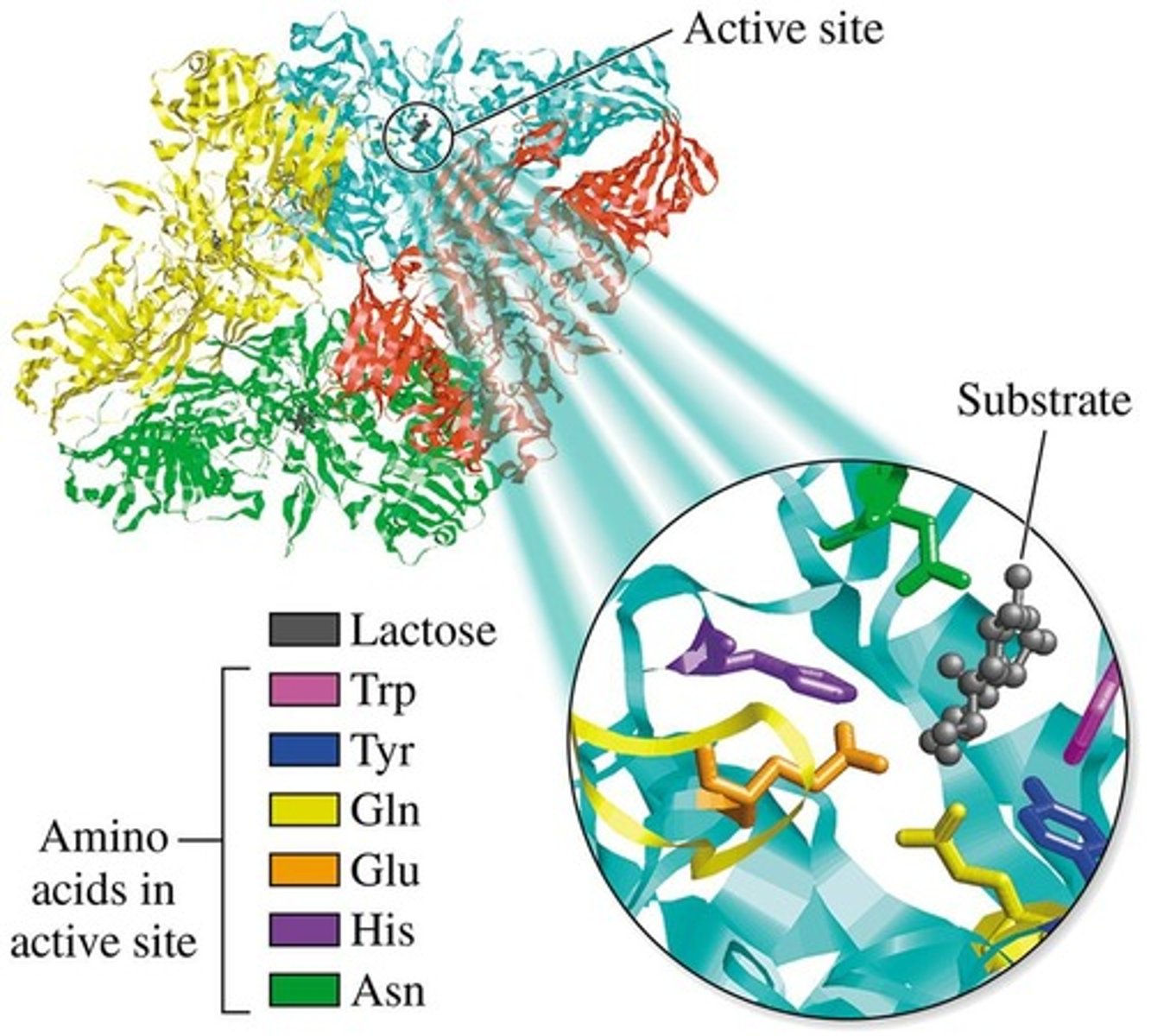
What types of interactions occur between amino acids in the active site and the substrate?
Hydrogen bonds, salt bridges, and hydrophobic interactions.
What is an enzyme-substrate (ES) complex?
The temporary combination formed when an enzyme binds to its substrate.
Describe the lock-and-key model of enzyme binding.
An older model where a rigid substrate binds to a rigid enzyme active site.
Describe the induced-fit model of enzyme binding.
The current model where the active site is flexible and adapts its shape to the substrate.
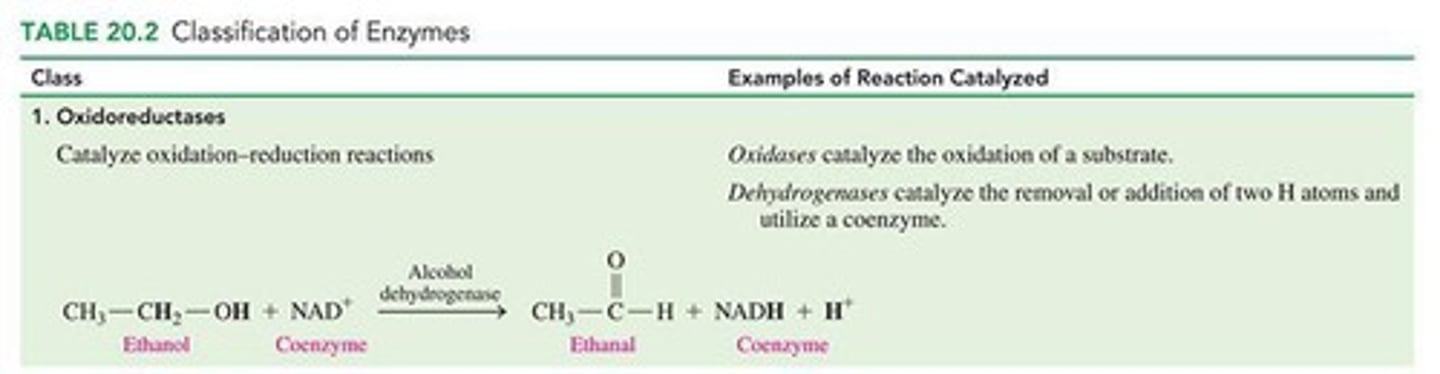
What is the function of oxidoreductases?
They perform oxidation/reduction reactions by transferring electrons, oxygen, or hydrogen.
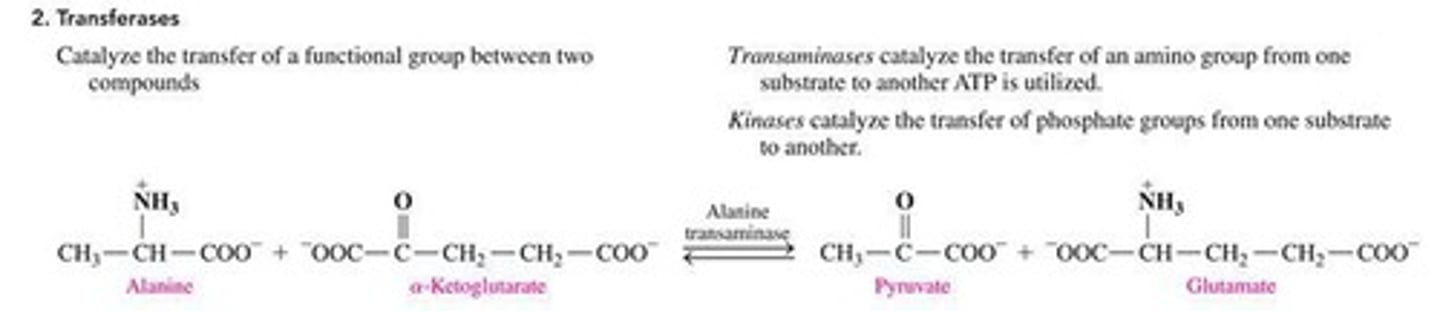
What is the function of transferases?
They move functional groups from one molecule to another, such as amines or phosphates.
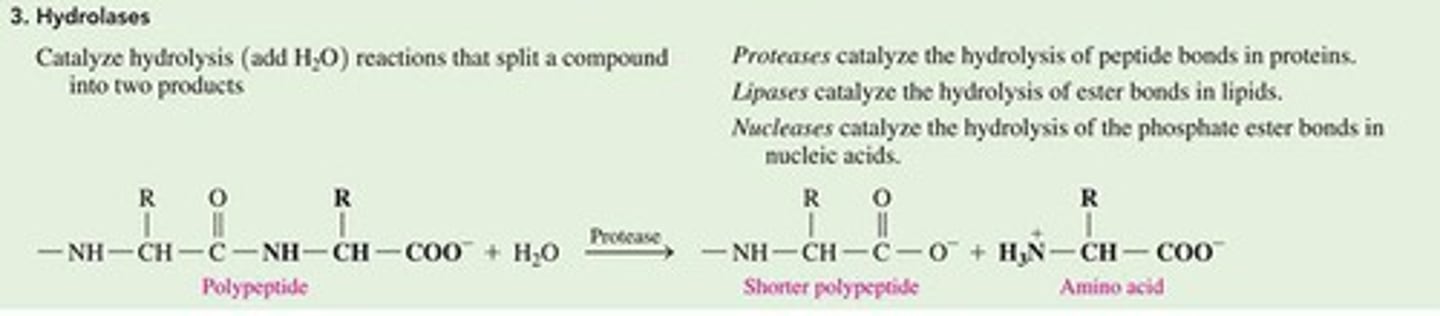
What is the function of hydrolases?
They catalyze the cleavage of bonds using water.
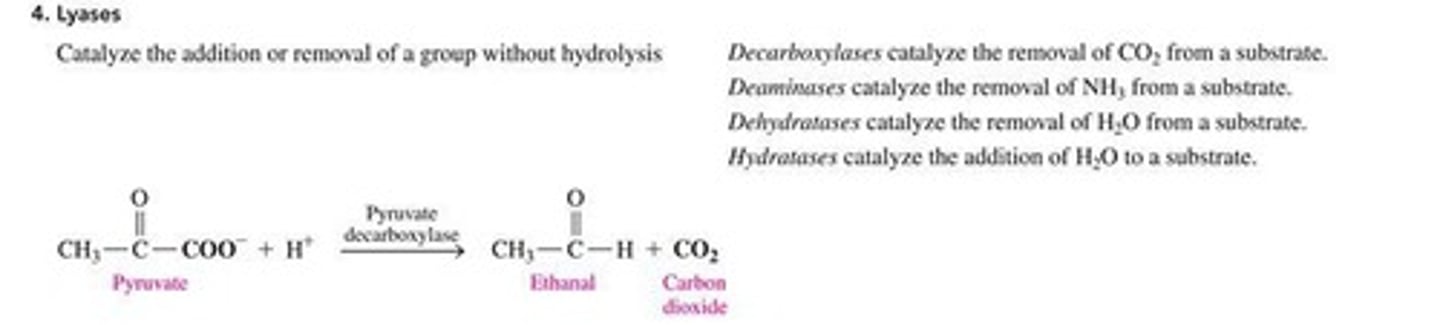
What is the function of lyases?
They add or remove groups without the use of water.
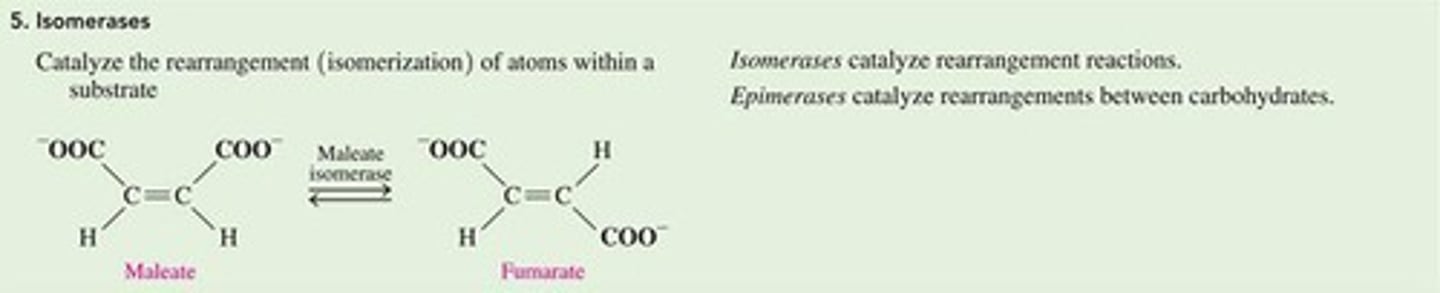
What is the function of isomerases?
They rearrange molecules to convert one isomer into another.
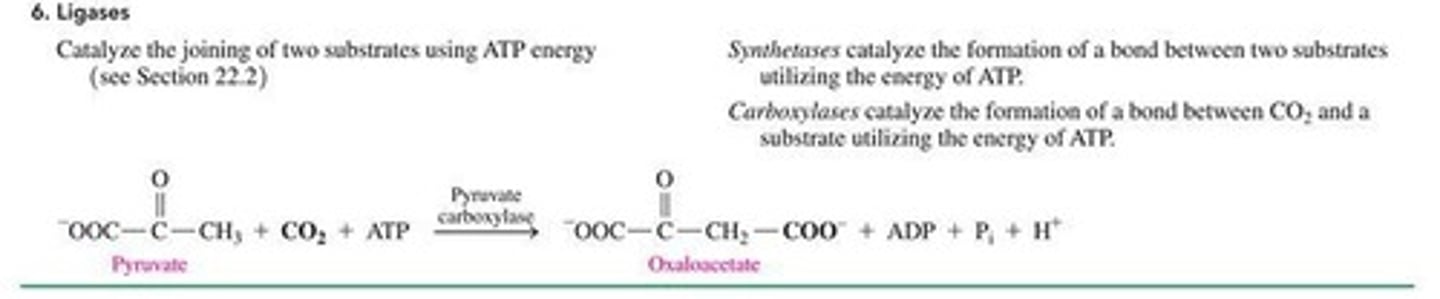
What is the function of ligases?
They form bonds between two molecules using ATP for energy.
What are isozymes?
Different forms of an enzyme that catalyze the same reaction but have different quaternary structures.
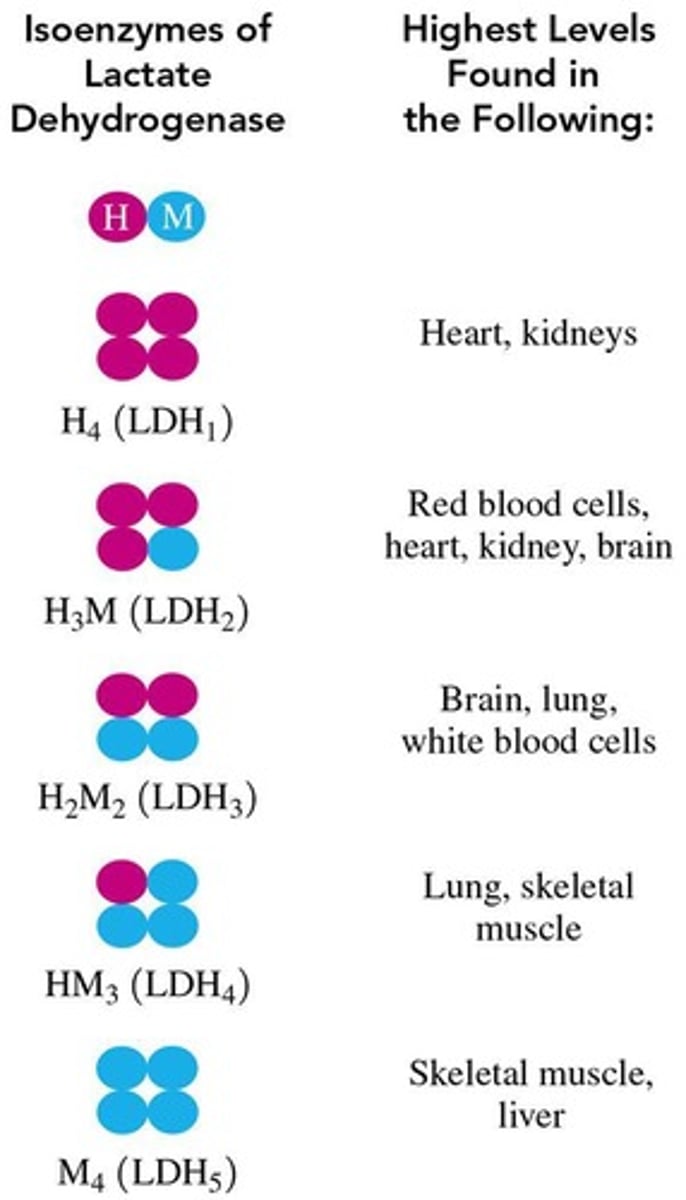
How are isozymes used in medical diagnostics?
The presence of specific isozymes in the wrong tissue indicates tissue damage, such as H4 LDH levels indicating a heart attack.
What is the typical optimum temperature for human enzymes?
37°C.
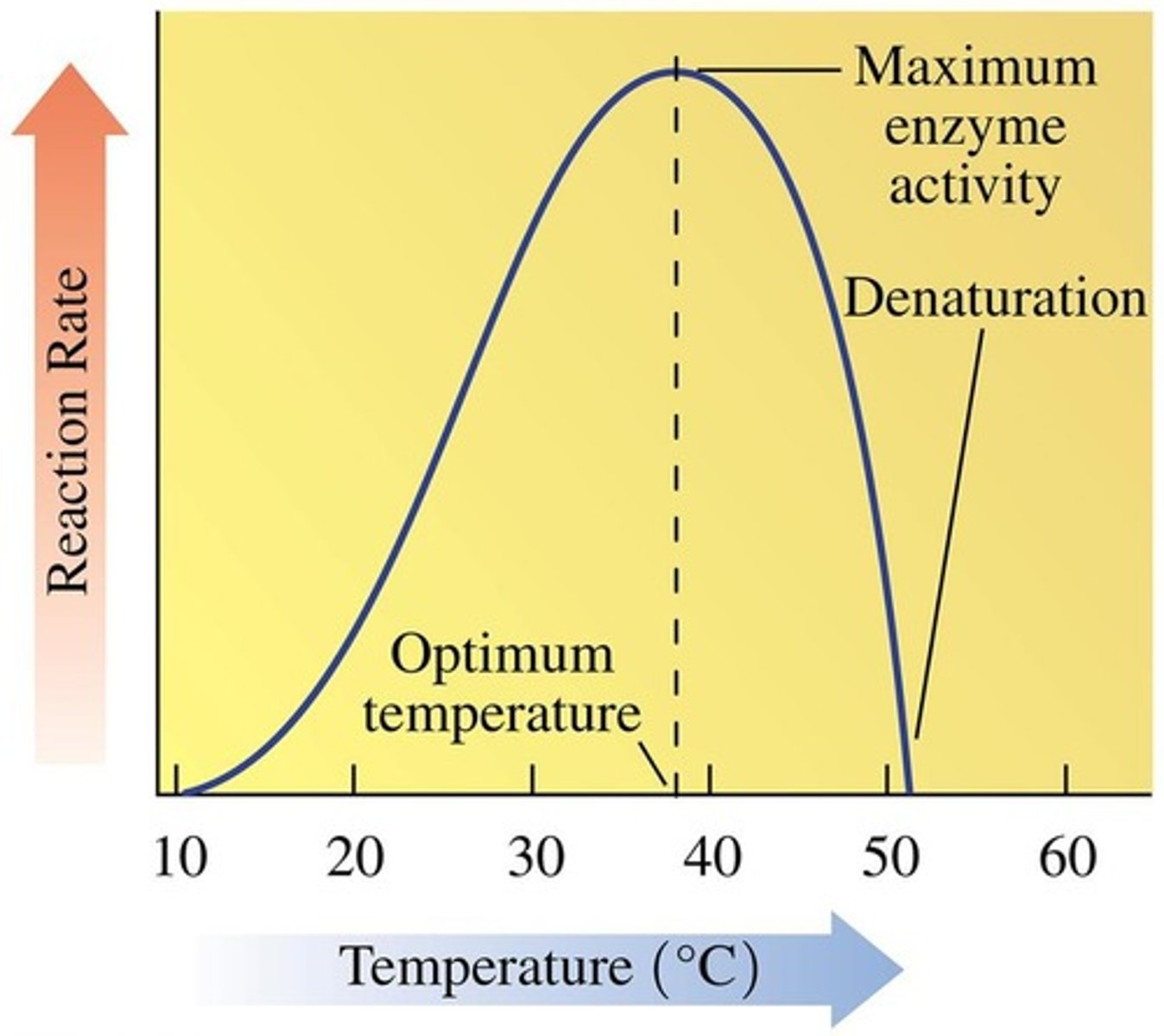
What happens to enzyme activity at high temperatures?
The enzyme denatures and loses all activity.
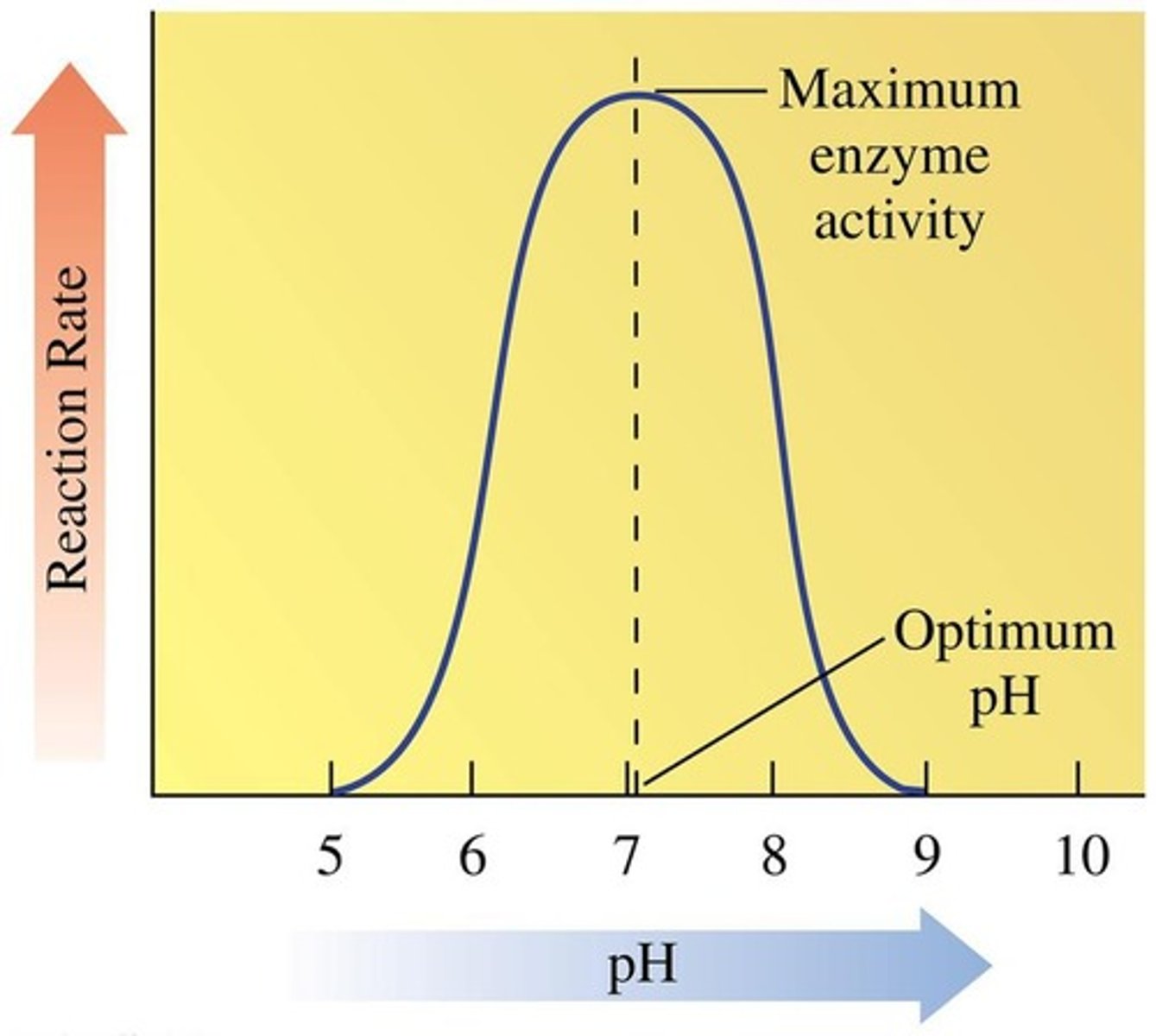
How does changing pH affect enzyme activity?
It alters the charge of R groups, changing the enzyme's structure and potentially causing denaturation.
What is the typical optimum pH for most human enzymes?
Approximately 7.4.
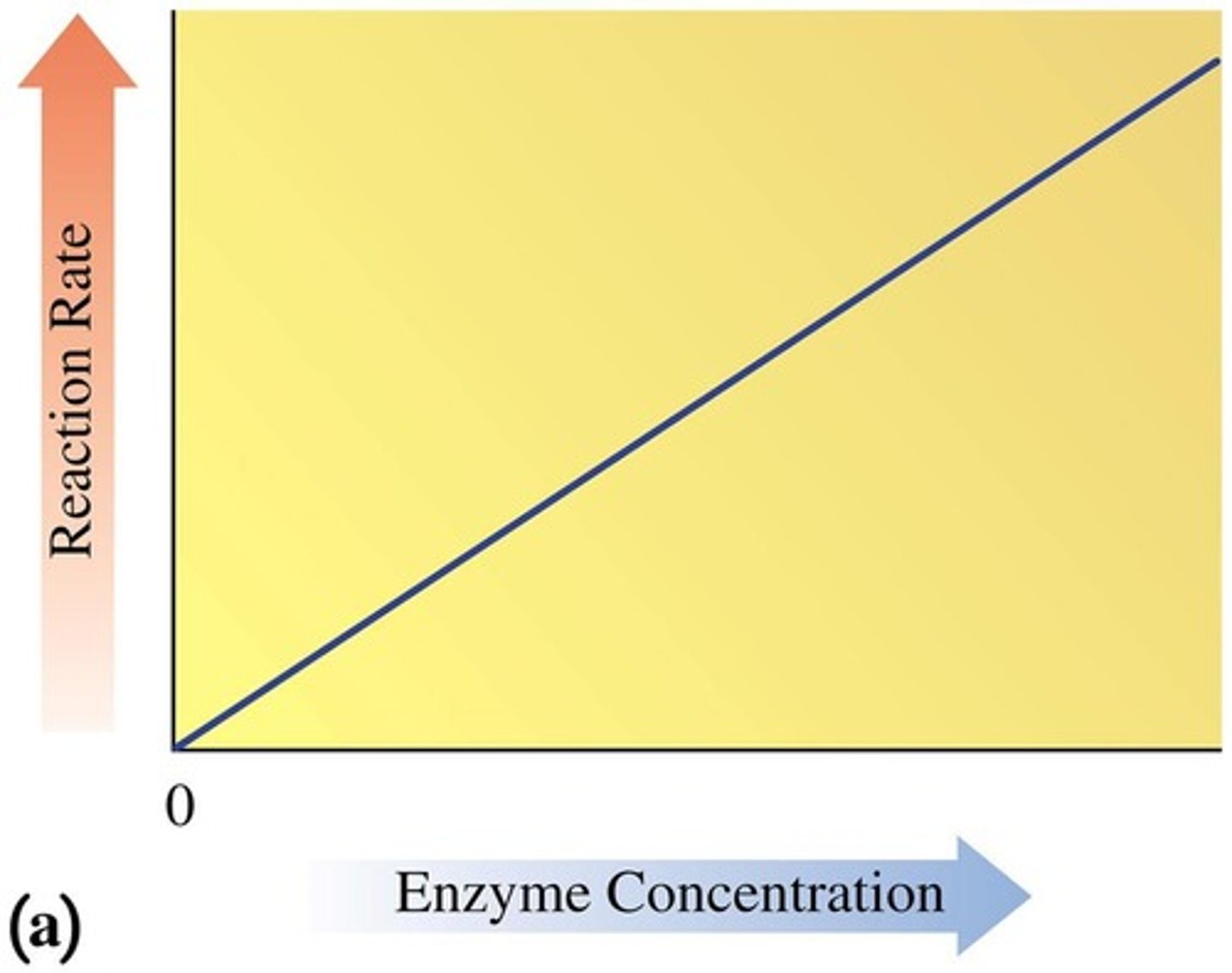
How does increasing enzyme concentration affect reaction rate?
It increases the reaction rate by providing more sites for substrate binding.
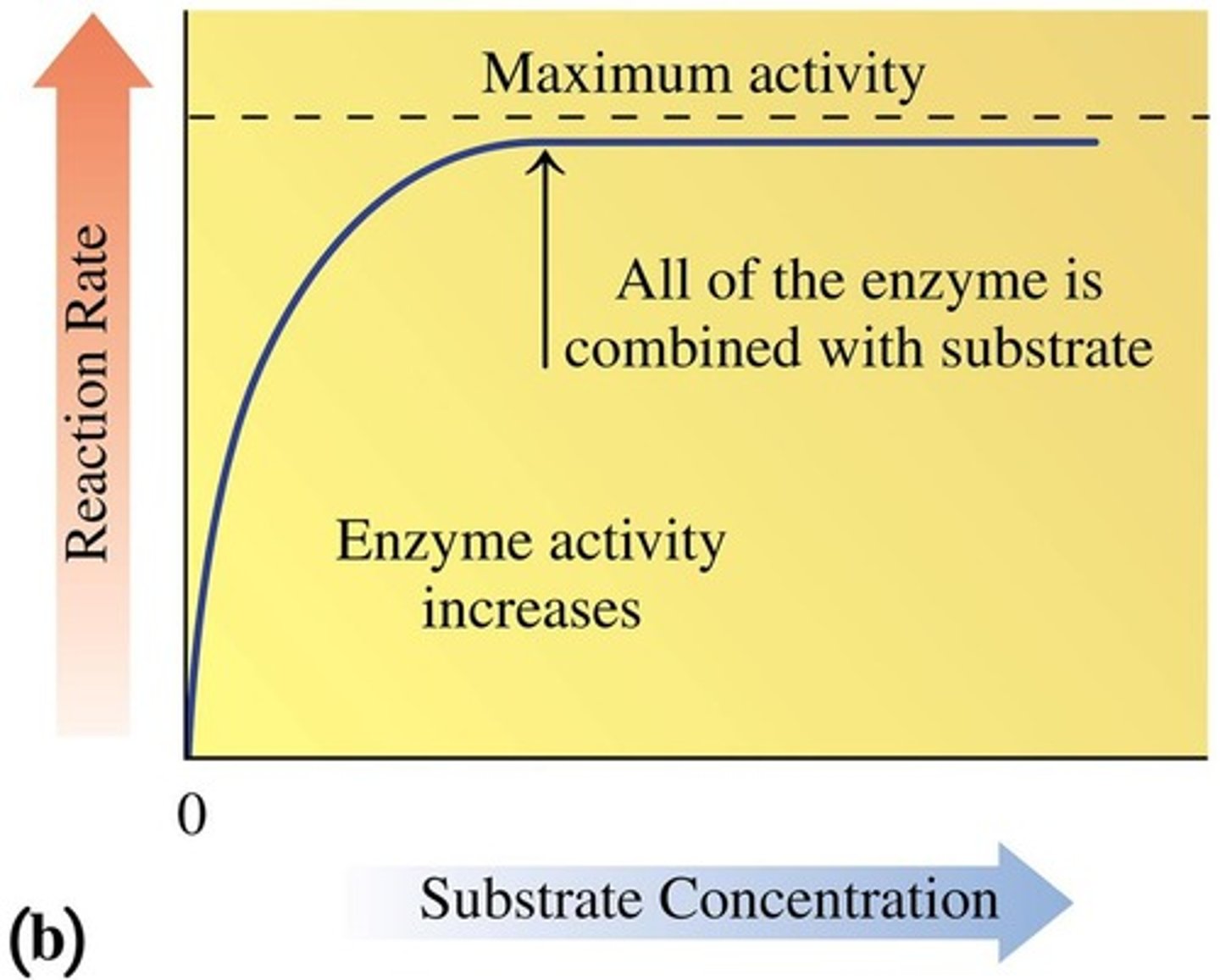
How does increasing substrate concentration affect reaction rate?
It increases the rate until the enzyme becomes saturated, reaching maximum activity.