nervous and endocrine system
 Call Kai
 Learn
Learn Practice Test
 Spaced Repetition
 Match
Match Flashcards
 Knowt Play
1/25

There's no tags or description
Looks like no tags are added yet.
Name | Mastery | Learn | Test | Matching | Spaced | Call with Kai |
|---|
No analytics yet
Send a link to your students to track their progress
26 Terms
What are the three things organisms must have to survive?
find favourable external conditions (e.g. locations that are too cold or hot)
find food
avoid harm
What detects changes in the environment/stimuli?
specialised receptor cells
where are receptor cells located?
sense organs e.g. nose and eyes, also inside body e.g. pressure receptors in the blood vessels
Where do receptors send signals?
send signals via either the nervous system or the hormonal system to the body’s coordination centres in the brain or spinal cord. They are then sent on to the parts of the body which respond, known as effectors
What are effectors?
either muscles or glands
What do o the receptors in the eye do?
rod and cone cells
detect light intensity and convert light energy → electrical energy
What do receptors in the skin do?
detect pressure, temp, pain, touch
kinetic →electrical
What do receptors in the muscles do?
detect how much muscles are stretched
kinetic → electrical
What do receptors in the hypothalamus do?
detect chemicals and body temp in the blood
chemical → electrical
What do receptors in the ears do?
detect sound, movement and orientation
sound → electrical
kinetic → electrical
What do receptors in the blood vessels do?
detect muscle stretch
kinetic → electrical
What does the human nervous system consist of?
central nervous system (CNS) - brain and spinal cord
peripheral nervous system (PNS) - all of the nerves in the body
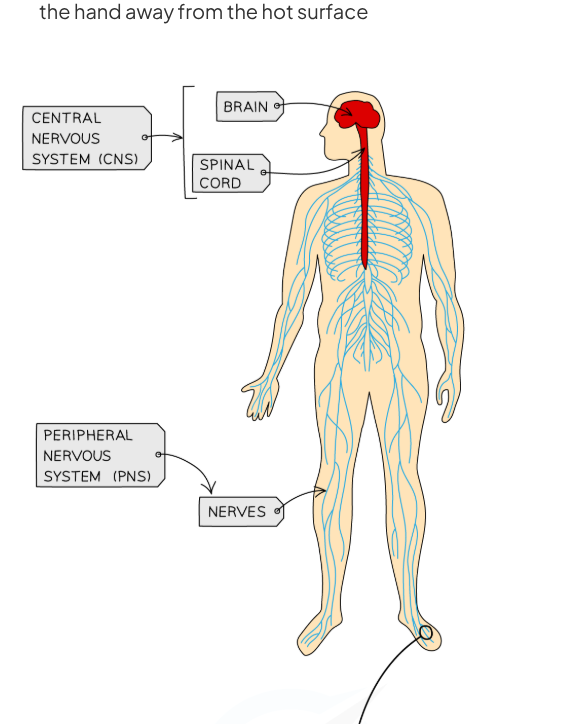
What does the nervous system do?
allow the detection of stimuli in our surroundings and the coordination of the body’s responses to the stimuli, info is sent through the nervous system in the form of electrical impulses that pass along nerve cells - neurons
What are the different types of neurones?
sensory
relay
motor
What is a nerve?
a bundle of neurones
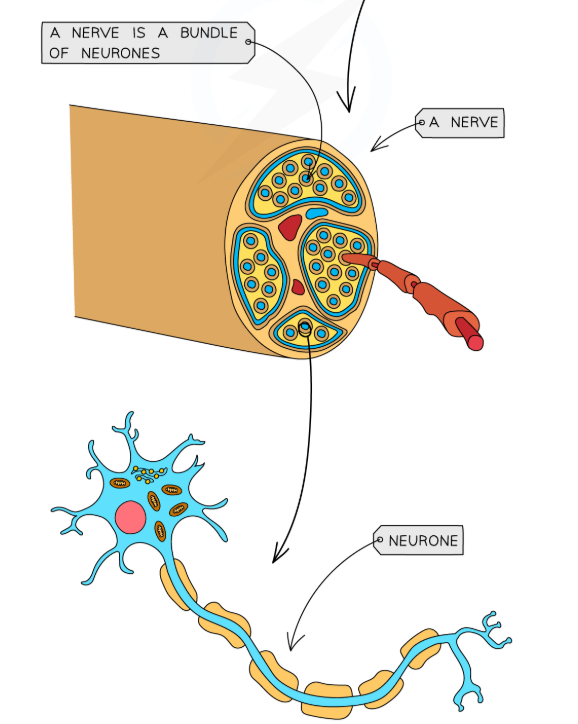
What do nerves do?
connect the receptors in the sense organs with the CNS and connect the CNS with effectors
What os the pathway nerves pass through the nervous system along?
stimulus →receptor →sensory neuron → CNS→ motor neuron → effector
What are hormones?
chemical substances produced by endocrine glands and carried by the blood - chemical messengers
What do hormones do?
transmit information from one part of an organism to another and bring about a change by altering the activity of one or more specific target organs
What is faster in action hormones or nerves? what does this mean?
nerve impulses are faster so hormones are used to control functions that do not need instant responses
What is the endocrine system?
endocrine glands that produce hormones in animals are known collectively as the endocrine system
What do endocrine glands do?
endocrine glands secrete hormones directly into the blood
What makes endocrine glands secrete hormones?
the actions of another hormone or the arrival of a nerve impulse
What is the pathway of hormone action?
stimulus → receptor → hormone → effector
e.g. high blood sugar →cells in the pancreas → insulin → liver cells
What are the glands in the body?
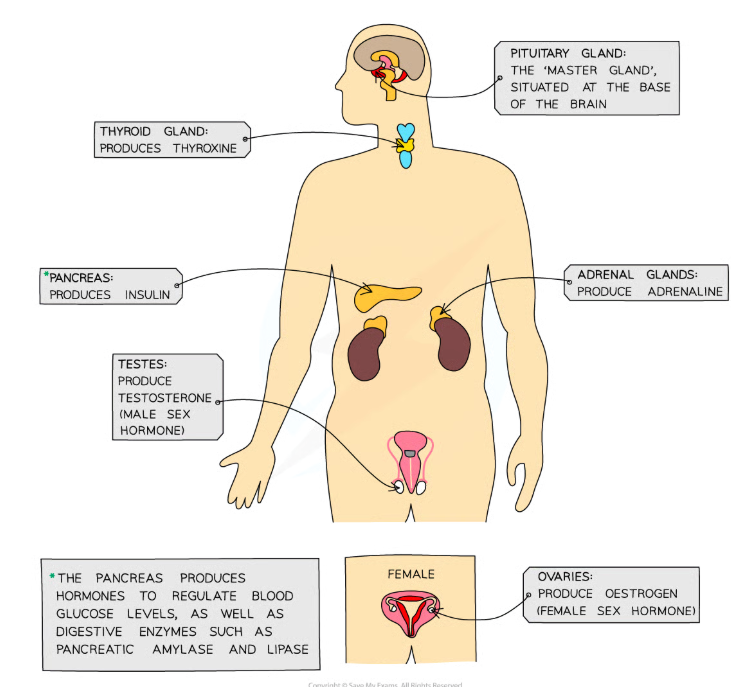
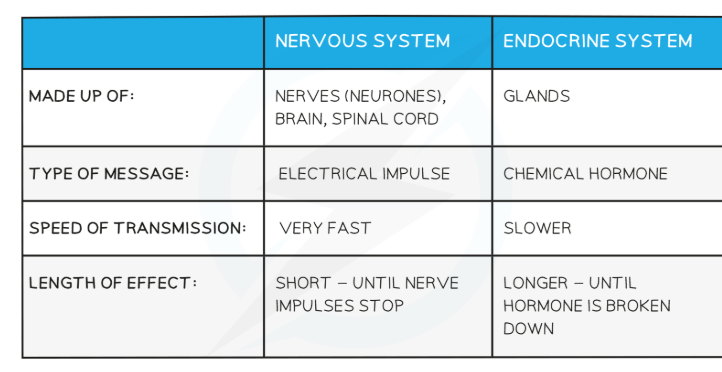
Compare the nervous system and the endocrine system: made up of, type of message, speed of transmission, length of effect