Myers' AP Psychology: Unit 6
0.0(0)
 Studied by 1 person
 Call Kai
 Learn
Learn Practice Test
 Spaced Repetition
 Match
Match Flashcards
 Knowt Play
Card Sorting
1/106

Earn XP
Description and Tags
Last updated 2:32 AM on 11/9/22
Name | Mastery | Learn | Test | Matching | Spaced | Call with Kai |
|---|
No analytics yet
Send a link to your students to track their progress
107 Terms
1
New cards
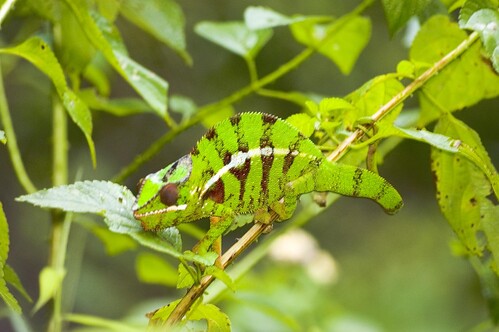
adaptability
our capacity to learn new behaviors that help us cope with changing circumstances
2
New cards
learning
A relatively permanent change in an organism's behavior due to experience.

3
New cards
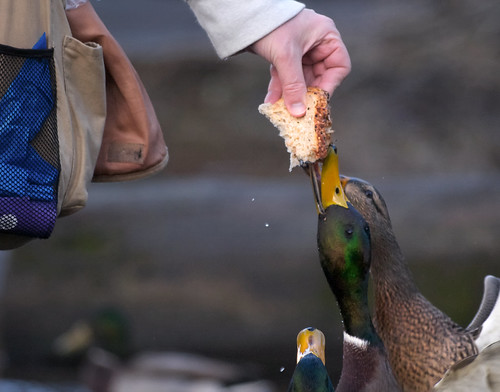
habituation
An organism's decreasing response to a stimulus with repeated exposure to it
4
New cards
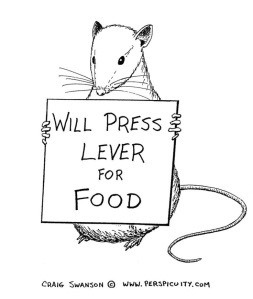
associative learning
Learning that certain events occur together. The events may be two stimuli (as in classical conditioning) or a response and its consequences (as in operant conditioning).
5
New cards
conditioning
the process of learning associations between environmental events and behavioral responses
6
New cards
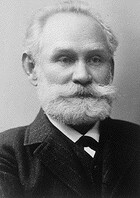
pavlov
discovered classical conditioning; trained dogs to salivate at the ringing of a bell
7
New cards
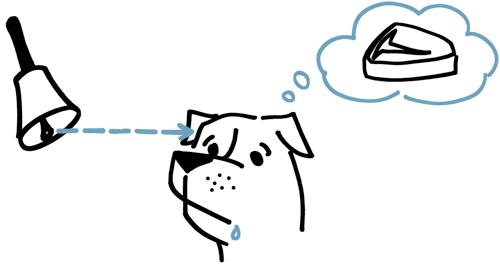
classical conditioning
A type of learning in which one learns to link two or more stimuli and anticipate events
8
New cards
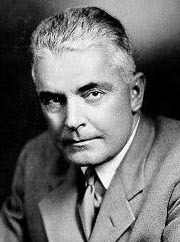
watson
behaviorism; emphasis on external behaviors of people and their reactions on a given situation; famous for Little Albert study in which baby was taught to fear a white rat
9
New cards
behaviorism
The view that psychology (1) should be an objective science that (2) studies behavior without reference to mental processes. Most research psychologists today agree with (1) but not with (2).
10
New cards
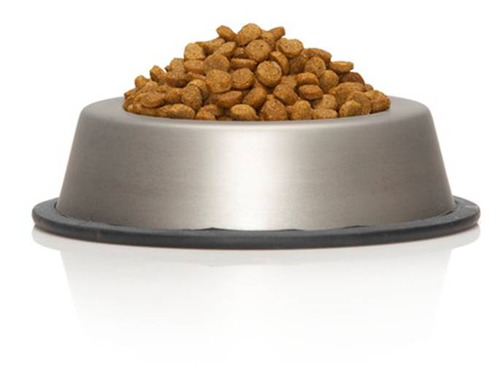
unconditioned stimulus
A stimulus that evokes an unconditioned response without previous conditioning
11
New cards
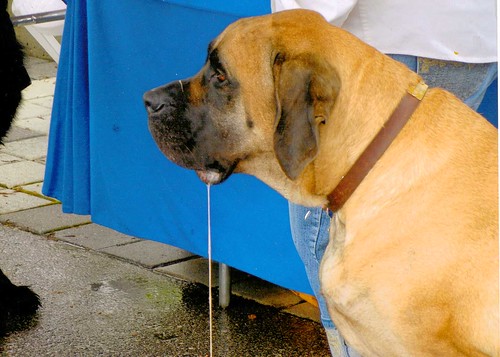
unconditioned response
In classical conditioning, the unlearned, naturally occurring response to the unconditioned stimulus (US), such as salivation when food is in the mouth.
12
New cards
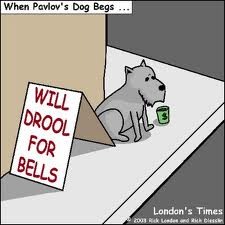
conditioned response
In classical conditioning, the learned response to a previously neutral (but now conditioned) stimulus (CS).
13
New cards
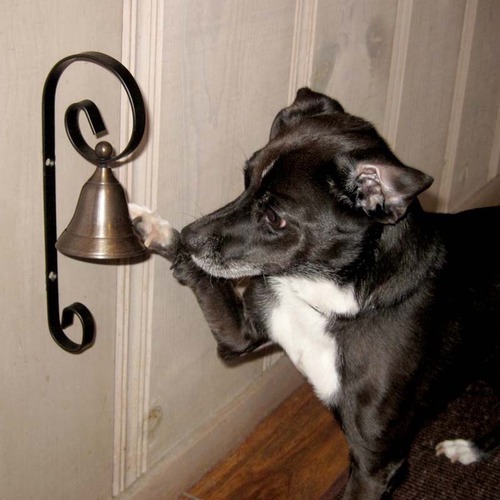
conditioned stimulus
in classical conditioning, an originally irrelevant stimulus that, after association with an unconditioned stimulus, comes to trigger a conditioned response
14
New cards
acquisition
In classical conditioning, the initial stage, when one links a neutral stimulus and an unconditioned stimulus so that the neutral stimulus begins triggering the conditioned response. In operant conditioning, the strengthening of a reinforced response.
15
New cards
high-order conditioning
In which a conditioned stimulus functions as if it were an unconditioned stimulus
Neutral stimuli become conditioned through association
Neutral stimuli become conditioned through association
16
New cards
extinction
Disappearance of the conditioned response.
17
New cards
spontaneous recovery
the reappearance, after a pause, of an extinguished conditioned response
18
New cards
generalization
The tendency, once a response has been conditioned, for stimuli similar to the conditioned stimulus to elicit similar responses.
19
New cards
discrimination
In classical conditioning, the learned ability to distinguish between a conditioned stimulus and stimuli that do not signal an unconditioned stimulus.
20
New cards
Rescola and Wagner
According to them, classical conditioning depends on the information the conditioned stimulus provides about the unconditioned stimulus. They concluded that the rats in both groups were actively processing information about the reliability of the signals that they encountered
21
New cards
expectancy theory
The theory that people will be motivated to the extent to which they believe that their efforts will lead to good performance, that good performance will be rewarded, and that they will be offered attractive rewards.
22
New cards
Seligman
learning; Positive Psychology; learned helplessness theory of depression; Studies: Dogs demonstrating learned helplessness
23
New cards
Learned helplessness
The hopelessness and passive resignation an animal or human learns when unable to avoid repeated aversive events.
a cognitive model of depression in which people feel unable to control events in their lives
a cognitive model of depression in which people feel unable to control events in their lives
24
New cards
Garcia
Researched taste aversion. Showed that when rats ate a novel substance before being nauseated by a drug or radiation, they developed a conditioned taste aversion for the substance.
Conducted pioneering research on taste of aversion. He discovered that when rats drank flavored water before becoming nauseated from a drug that produced gastrointestinal distress, they acquired a conditioned taste for the water. .............research supports the evolutionary perspective that being biologically prepared to quickly associate nausea with food and drink is adaptive.
Conducted pioneering research on taste of aversion. He discovered that when rats drank flavored water before becoming nauseated from a drug that produced gastrointestinal distress, they acquired a conditioned taste for the water. .............research supports the evolutionary perspective that being biologically prepared to quickly associate nausea with food and drink is adaptive.
25
New cards
Koelling
Ran experiments with John Garcia on Taste Aversion in species using rates, loud sounds, and bad tasting water.
26
New cards
Little Albert
subject in John Watson's experiment, proved classical conditioning principles, especially the generalization of fear
27
New cards
Respondent behavior
behavior that occurs as an automatic response to some stimulus
28
New cards
operant condition
A type of learning in which behavior is strengthened if followed by a reinforcer or diminished if followed by a punisher.
29
New cards
operant behavior
behavior that operates on the environment, producing consequences
30
New cards
Skinner
1904-1990; Field: behavioral; Contributions: created techniques to manipulate the consequences of an organism's behavior in order to observe the effects of subsequent behavior; Studies:.............box
31
New cards
Thorndike
behaviorism; Law of Effect-relationship between behavior and consequence
32
New cards
Law of effect
Thorndike's principle that behaviors followed by favorable consequences become more likely, and that behaviors followed by unfavorable consequences become less likely. (Myers Psychology 8e p. 327)
33
New cards
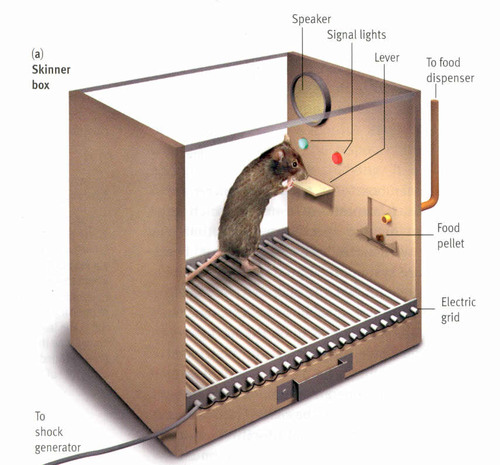
Skinner Box
Named for its developer, B.F. Skinner, a box that contains a responding mechanism and a device capable of delivering a consequence to an animal in the box whenever it makes the desired response
34
New cards
shaping
An operant conditioning procedure in which reinforcers guide behavior toward closer and closer approximations of the desired behavior.
35
New cards
successive approximations
the sequence of new response classes that emerge during the shaping process as the result of differential reinforcement; each successive response class is closer in form to the terminal behavior than the response class it replaces
36
New cards
discriminative stimulus
in operant conditioning, a stimulus that elicits a response after association with reinforcement (in contrast to related stimuli not associated with reinforcement)
37
New cards
reinforcer
in operant conditioning, any event that strengthens the behavior it follows
38
New cards
positive reinforcement
Increasing behaviors by presenting positive stimuli, such as food. A.........is any stimulus that, when presented after a response, strengthens the response.
39
New cards
negative reinforcement
Increasing behaviors by stopping or reducing negative stimuli, such as shock. A...............is any stimulus that, when removed after a response, strengthens the response. (Note:............is not punishment.)
40
New cards
primary reinforcers
Events that are inherently reinforcing because they satisfy biological needs
41
New cards
secondary reinforcers
A stimulus that gains power through association with a primary reinforcer
42
New cards
immediate reinforcer
A reinforcer that occurs instantly after a behavior. A rat gets a food pellet for a bar press.
43
New cards
delayed reinforcer
A reinforcer that is delayed in time for a certain behavior. A paycheck that comes at the end of a week.
44
New cards
continuous reinforcement
reinforcing the desired response every time it occurs
When first teaching a new behavior, rewarding the behavior each time is best.
When first teaching a new behavior, rewarding the behavior each time is best.
45
New cards
intermittent (/particial) reinforcement
reinforcing a response only part of the time; results in slower acquisition of a response but much greater resistance to extinction than does continuous reinforcement
46
New cards
fixed-ratio schedules
in operant conditioning, a reinforcement schedule that reinforces a response only after a specified number of responses
47
New cards
variable-ratio schedules
in operant conditioning, a reinforcement schedule that reinforces a response after an unpredictable number of responses
48
New cards
fixed-interval schedules
in operant conditioning, a reinforcement schedule that reinforces a response only after a specified time has elapsed
49
New cards
variable-interval schedule
in operant conditioning, a reinforcement schedule that reinforces a response at unpredictable time intervals
in operant conditioning, a reinforcement schedule that reinforces a response at unpredictable time intervals. (Myers Psychology 8e p. 332)
in operant conditioning, a reinforcement schedule that reinforces a response at unpredictable time intervals. (Myers Psychology 8e p. 332)
50
New cards
punishment
An event that decreases the behavior that it follows.
51
New cards
positive punishment (/aversive conditioning)
A behavior is followed by the presentation or an aversive stimulus or removal of an appetitive stimulus respectively, decreasing the probability of that behavior.
52
New cards
negative punishment (/omission training)
The act of removing a stimulus (i.e. something the animal wants) in order to decrease occurrences of a behavior. For example, a person turns her back and removes her attention from a dog who is jumping on her.

53
New cards
4 drawbacks of physical punishment
54
New cards
Toleman
Latent learning, learning that becomes obvious only once a reinforcement is given for demonstrating it, rats ran faster through maze after being rewarded
55
New cards
Cognitive map
a mental representation of the layout of one's environment
56
New cards
latent learning
learning that occurs but is not apparent until there is an incentive to demonstrate it
a change in behavior due to experience acquired without conscious effort, for example, a student using a quote in an exam essay that the student had never tried to memorize, though he had encountered it in studying
a change in behavior due to experience acquired without conscious effort, for example, a student using a quote in an exam essay that the student had never tried to memorize, though he had encountered it in studying
57
New cards
insight
a sudden and often novel realization of the solution to a problem
58
New cards
intrinsic motivation
a desire to perform a behavior effectively for its own sake
59
New cards
extrinsic motivation
a desire to perform a behavior due to promised rewards or threats of punishment
60
New cards
instinctive drift
Tendency for animals to return to innate behaviors following repeated reinforcement
61
New cards
5 applications of operant conditioning
1. At school. 2. In sports. 3. At work. 3. At home. 5. For self-improvement
62
New cards
comparisons of operant and classical conditioning
63
New cards
biofeedback
a system for electronically recording, amplifying, and feeding back information regarding a subtle physiological state, such as blood pressure or muscle tension
64
New cards
observational (/social) learning
Bandura et al (1963): response measures- 1. Total aggression
65
New cards
modeling
the process of observing and imitating a specific behavior
66
New cards
mirror neurons
Frontal lobe neurons that fire when performing certain actions or when observing another doing so. The brain's mirroring of another's action may enable imitation, language learning, and empathy.
67
New cards
theory of mind
An understanding of mental states such as feelings, desires, beliefs, and intentions and of the causal role they play in human behavior;
68
New cards
Bandura
pioneer in observational learning (AKA social learning), stated that people profit from the mistakes/successes of others; Studies: Bobo Dolls-adults demonstrated 'appropriate' play with dolls, children mimicked play
69
New cards
Prosocial behavior
positive, constructive, helpful behavior. The opposite of antisocial behavior.
70
New cards
antisocial effects
Observational learning can have adverse effect
71
New cards
stimulus
A change in an organism's surroundings that causes the organism to react
72
New cards
response
An action or change in behavior that occurs as a result of a stimulus.
73
New cards
delayed conditioning
classical conditioning procedure in which the conditioned stimulus precedes the unconditioned stimulus and remains present until after the unconditioned stimulus is presented so that the two stimuli occur together *Best
74
New cards
trace conditioning
Presentation of the CS, followed by a short break, followed by presentation of the US. (less effective)
75
New cards
simultaneous conditioning
Conditioning procedure in which the onset of the NS and the onset of the US are simultaneous.
76
New cards
backward conditioning
least effective- occurs when a conditioned stimulus immediately follows an unconditioned stimulus
77
New cards
Premack principle
A principle that states that making the opportunity to engage in a high-probability behavior contingent on the occurrence of a low-frequency behavior will function as reinforcement for the low-frequency behavior.
78
New cards
token economy
an operant conditioning procedure in which people earn a token of some sort for exhibiting a desired behavior and can later exchange the tokens for various privileges or treats
a technique in operant conditioning by which desired behaviors receive forms of currency that can be exchanged for rewards
a technique in operant conditioning by which desired behaviors receive forms of currency that can be exchanged for rewards
79
New cards
chaining
using operant conditioning to teach a complex response by linking together less complex skills
in operant conditioning, combining the steps of a sequence to progress toward a final action
Subjects can be taught to preform a number of responses successively in order to get a reward.
in operant conditioning, combining the steps of a sequence to progress toward a final action
Subjects can be taught to preform a number of responses successively in order to get a reward.
80
New cards
overjustification effect
The effect of promising a reward for doing what one already likes to do. The person may now see the reward, rather than intrinsic interest, as the motivation for performing the task.
Decrease in likelihood that an intrinsically motivated task, after having been extrinsically rewarded, will be performed when the reward is no longer given.
Decrease in likelihood that an intrinsically motivated task, after having been extrinsically rewarded, will be performed when the reward is no longer given.
81
New cards
...typically the same thing
the ucr and the cr are...
82
New cards
...controlled stimulus
the neutral stimulus becomes the controlled stimulus...
83
New cards
delayed conditioning
the ns is presented 1/2 a second before the ucs
84
New cards
...without...
learning can take place.........being operantly conditioned
85
New cards
intermittent conditioning
lowers the chance for extinction/increases resistance to extinction
86
New cards
shaping is...
...used in chaining
87
New cards
(with) acquisition,...
...you want to present the ns before the ucs. (it always occurs before)
88
New cards
...extinction...
to avoid.........we have to occasionally pair the us and the cs
89
New cards
discrimination...
only the [original] cs will cause the response
90
New cards
classical =
Pavlov and watson(emotions can be classically conditioned)
91
New cards
operant =
Skinner and Thorndike(law of effect - behavior will increase if it's rewarded)
92
New cards
...no cognition...
believed that.........was involved in classical or operant conditioning, that any organism could be trained to do anything; classically conditioned to anything and operantly conditioned to anything.
93
New cards
Rescola is...
...the key guy for cognition. he proved that cognition is involved, that the organism can predict or expect; expectancy theory - the organism can expect that the cs will be followed by us. so he's saying that cognition.
94
New cards
biological predispositions...
an organism cannot be conditioned to do anything. Garcia is our main guy here...he did the study with the rats - that they were more likely to respond to novel tastes than novel sounds. the rats got sick and avoided the sweet water, but did not avoid loud noises when they were paired with radiation. so he proved that.........do play a part.
95
New cards
instinctive drift...
organisms learn things that are more like natural behaviors
96
New cards
Variable (it's not fixed)
using words like "approximately" or "average" means that it's...
97
New cards
Fixed interval
time is known
98
New cards
insight learning
The process of learning how to solve a problem or do something new by applying what is already known
99
New cards
Skinner's Pigeons
reinforced with food, trained to do complicated behaviors. superstition - accidental reinforcement
100
New cards
...the best
variable- ratio schedule is...
 Note
Note  Flashcards (145)