IB Biology HL Unit #10: Transfers of Energy and Matter
 Call Kai
 Learn
Learn Practice Test
 Spaced Repetition
 Match
Match Flashcards
 Knowt Play
1/34

There's no tags or description
Looks like no tags are added yet.
Name | Mastery | Learn | Test | Matching | Spaced | Call with Kai |
|---|
No analytics yet
Send a link to your students to track their progress
35 Terms
What are three examples of elements that are recycled in ecosystems?
Carbon, Nitrogen, Water
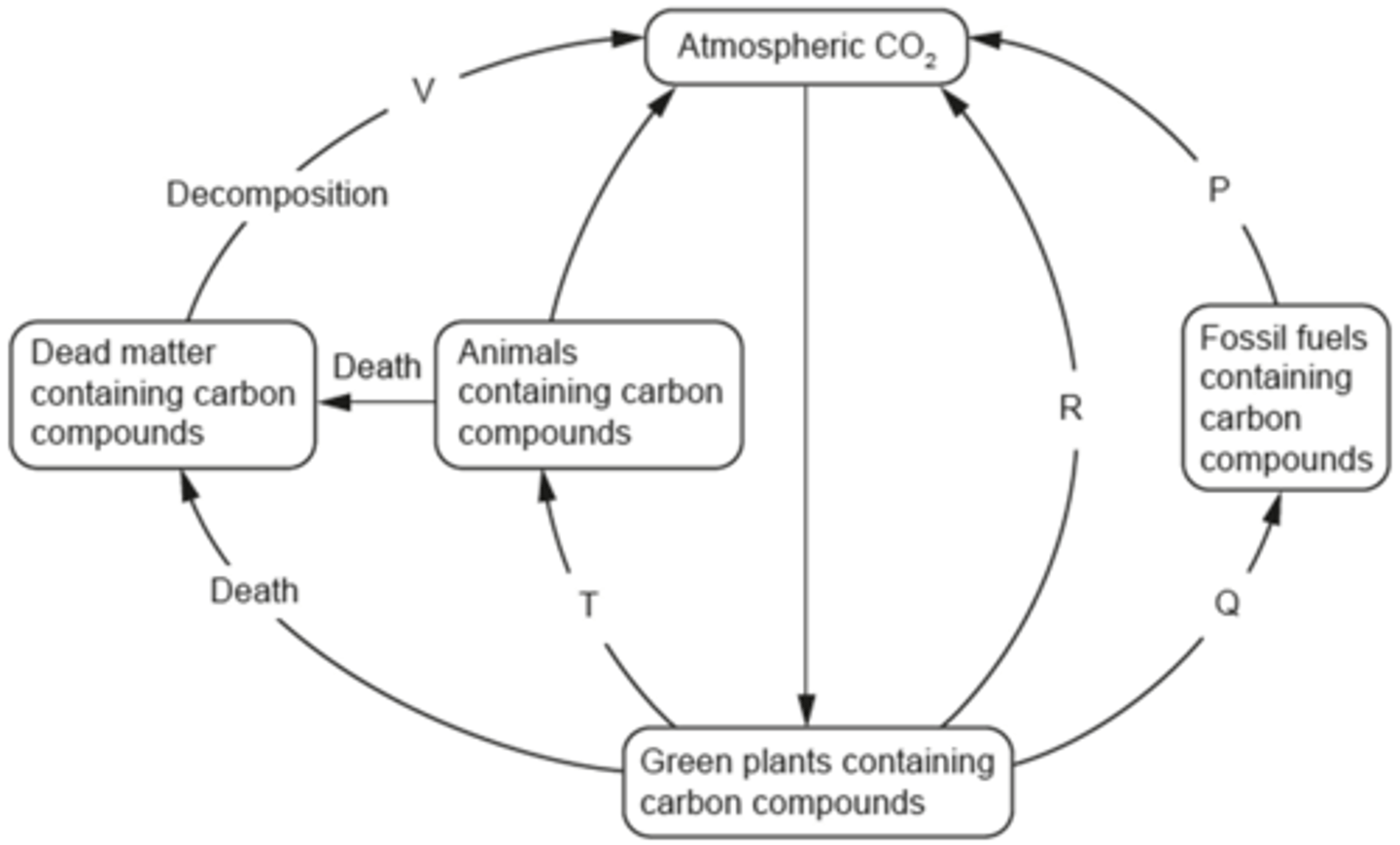
What are four processes that should be included in a diagram of the carbon cycle?
1. Photosynthesis
2. Respiration
3. Decomposition
4. Combustion
Key for image:
P: Combustion
Q: Fossilization
R: Respiration
T: Feeding / Consumption
V: Decomposition
Central Arrow: Photosynthesis
What is the difference between a carbon sink and a carbon source?
Carbon Sink:
-absorbs more carbon than it releases
Carbon Source:
-releases more carbon than it absorbs
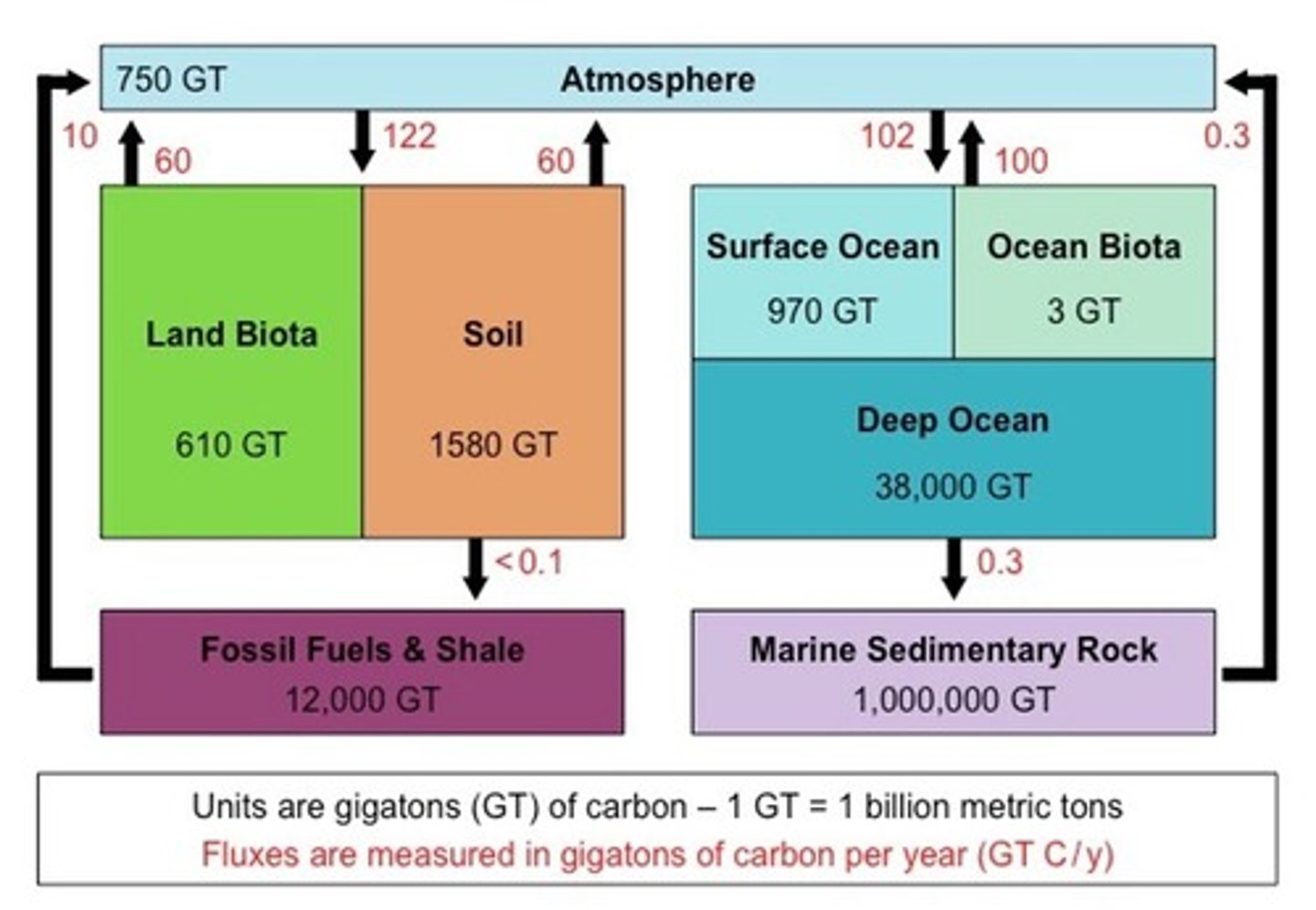
Which carbon sinks are the oldest? Need Work
1. Marine sedimentary rock
2. Fossil fuels
What are two processes that can lead to combustion of biomass?
Biomass def:
-living or recently dead organic matter
1. Human burning
2. Combustion by natural causes
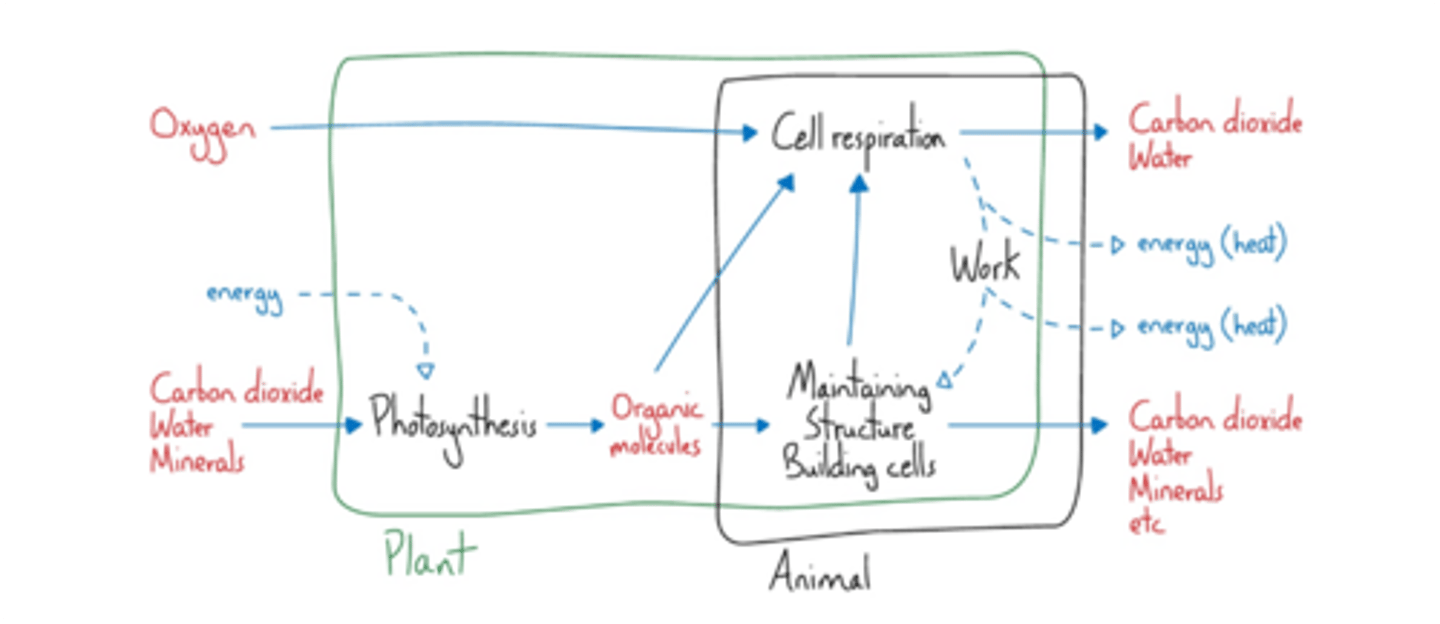
How are photosynthesis and aerobic respiration interdependent?
Photosynthesis produces glucose and O2 → which are the reactants needed for aerobic respiration.
Aerobic respiration produces CO2 and H2O → which are the reactants needed for photosynthesis.
What does the Keeling Curve represent?
-Measures changes of CO2 concentration in atmosphere over time
Trend:
-annual fluctuations
-steady upwards trend, indicates rising CO2 levels
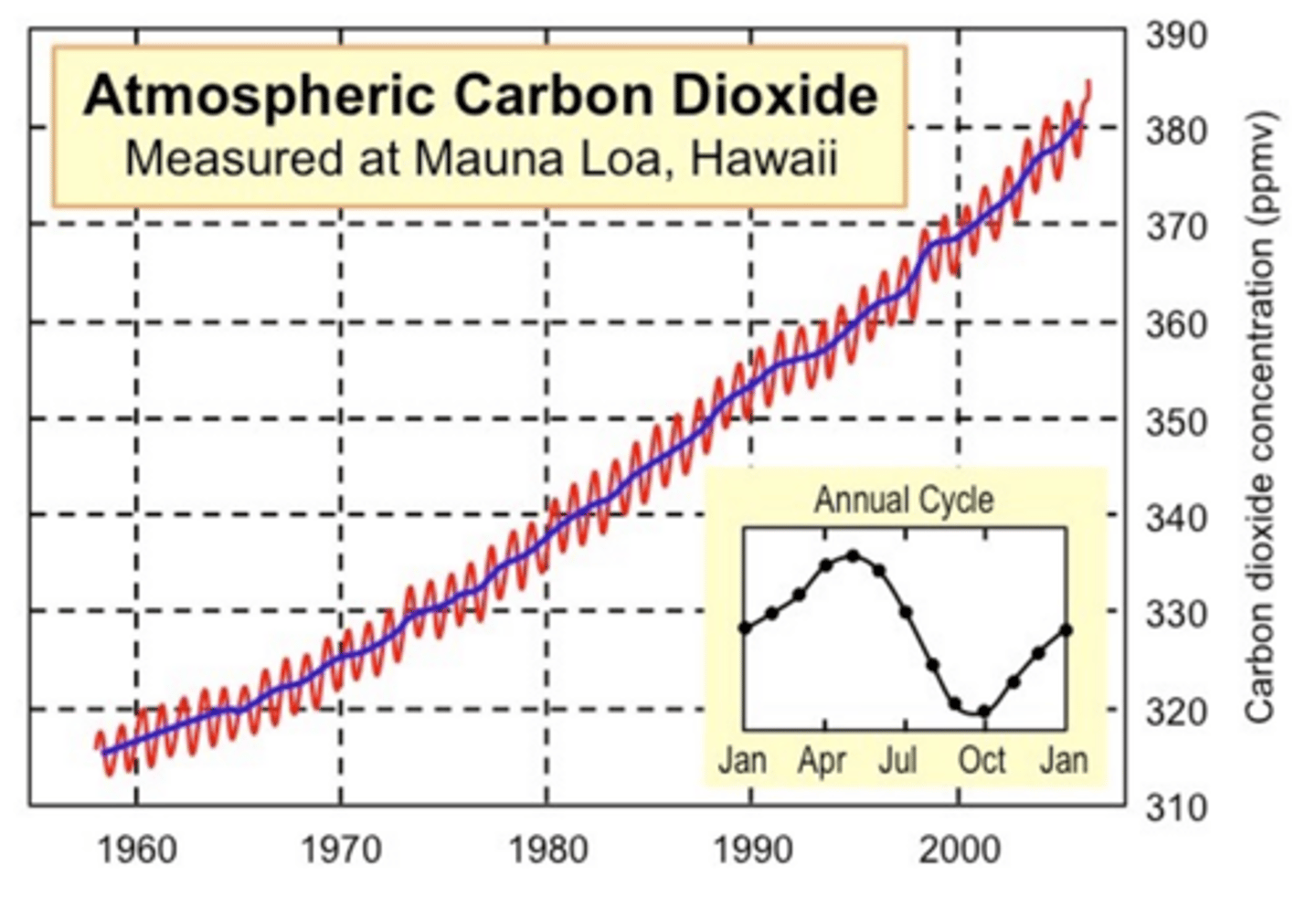
What is the cause of annual fluctuations seen in the Keeling Curve?
In spring/summer months,
-plants grow more and photosynthesize more
-absorb more CO2, atmospheric CO2 drops
In winter months,
-plants lose leaves and photosynthesize less
-less CO2 absorbed by plants, atmospheric CO2 rises
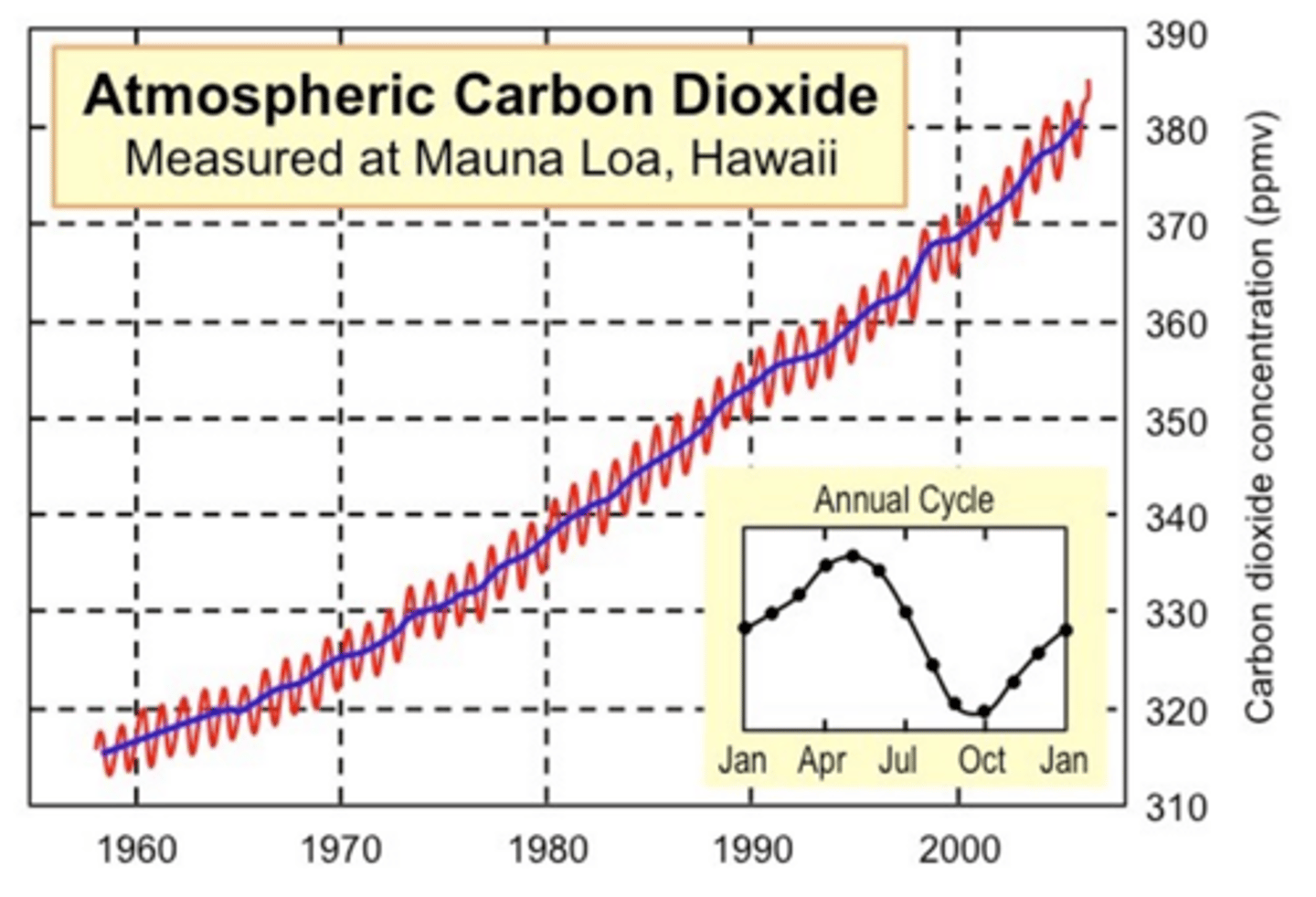
What is the cause of the long term trend seen in the Keeling Curve?
Results from human activity:
-increased burning of fossil fuels release more CO2
-deforestation means less CO2 absorbed through photosynthesis
How do autotrophs synthesize the carbon compounds they require?
Use energy from light (photoautotrophs) or inorganic chemicals (chemoautotrophs) to fix carbon and anabolically form organic molecules.
What are two types of autotrophs?
chemoautotrophs and photoautotrophs
How do heterotrophs synthesize the carbon compounds they require?
Heterotrophs obtain matter and energy by:
-ingesting solid or liquid food particles
-digesting them internally to absorb the nutrients.
Steps:
1.Ingest food
2.Digest it internally
3.Absorb it into your bloodstream
4.Assimilate into your own tissues
What is holozoic nutrition?
1. ingesting solid or liquid food particles
2. digesting them internally to absorb the nutrients.
What is saprotrophic nutrition?
1.Secrete enzymes into their surrounding environment
2.Digest organic matter externally
3.Absorb the digested nutrients into their tissues
What are two types of living organisms that obtain carbon compounds this way?
1. Fungi
2. Saprotrophic bacteria
What are three sources of carbon compounds for decomposers?
1. Animal waste
2. Dead animals
3. dead plants
What are three adaptations of herbivores for feeding on plants?
1. Chewing mouthparts in insects
-bite/grind plants directly
2. Piercing mouthparts in insects
-pokes into plants and sucks spa/juices
3. Metabolic Detoxification
-chemicals in body that break down plant poisons, alows feeding on plants with toxins
What are three adaptations of plants to resist herbivory?
1. Thorns
2. Toxic Secondary Compounds: Seeds
-poisons in seeds stopping eating by herbivores
3. Toxic Secondary Compounds: Leaves
-poisons in leaves stopping eating by herbivores
What is an example of a physical adaptation in a predator? Prey?
Predator:
-Sharp claws and teeth
Prey:
-camouflage
What is an example of a chemical adaptation in a predator? Prey?
Predator:
-Venom
Prey:
-internal toxic chemicals (deters predators from feeding on them)
What is an example of a behavioural adaptation in a predator? Prey?
Predator:
-hunting in packs (catch larger prey more efficiently)
Prey:
-living in herds (minimizes chances of being caught by a predator)
What is the difference between an open and closed system?
Open:
Energy and matter can enter/exit, the system
Closed:
Energy can enter/exit, but matter cannot
What do food chains represent?
-Shows feeding relationships between organisms.
-Arrows indicates direction of energy transfer
-Starts with a producer (autotroph).
-Each step = a trophic level.
What are the correct terms for the different trophic levels in a food chain?
1. producer
2. primary consumer
3. secondary consumer
4. tertiary consumer
5. Quaternary consumer
*most food chains end after this.
-energy loss between trophic levels is too great, unable to sustain more trophic levels
Is it possible for one species to occupy multiple trophic levels in a community?
Yes.
Omnivores(like humans) can have many trophic levels:
-primary consumers when eating plants
-secondary consumers wile eating herbivore
-tertiary consumers while eating carnivores
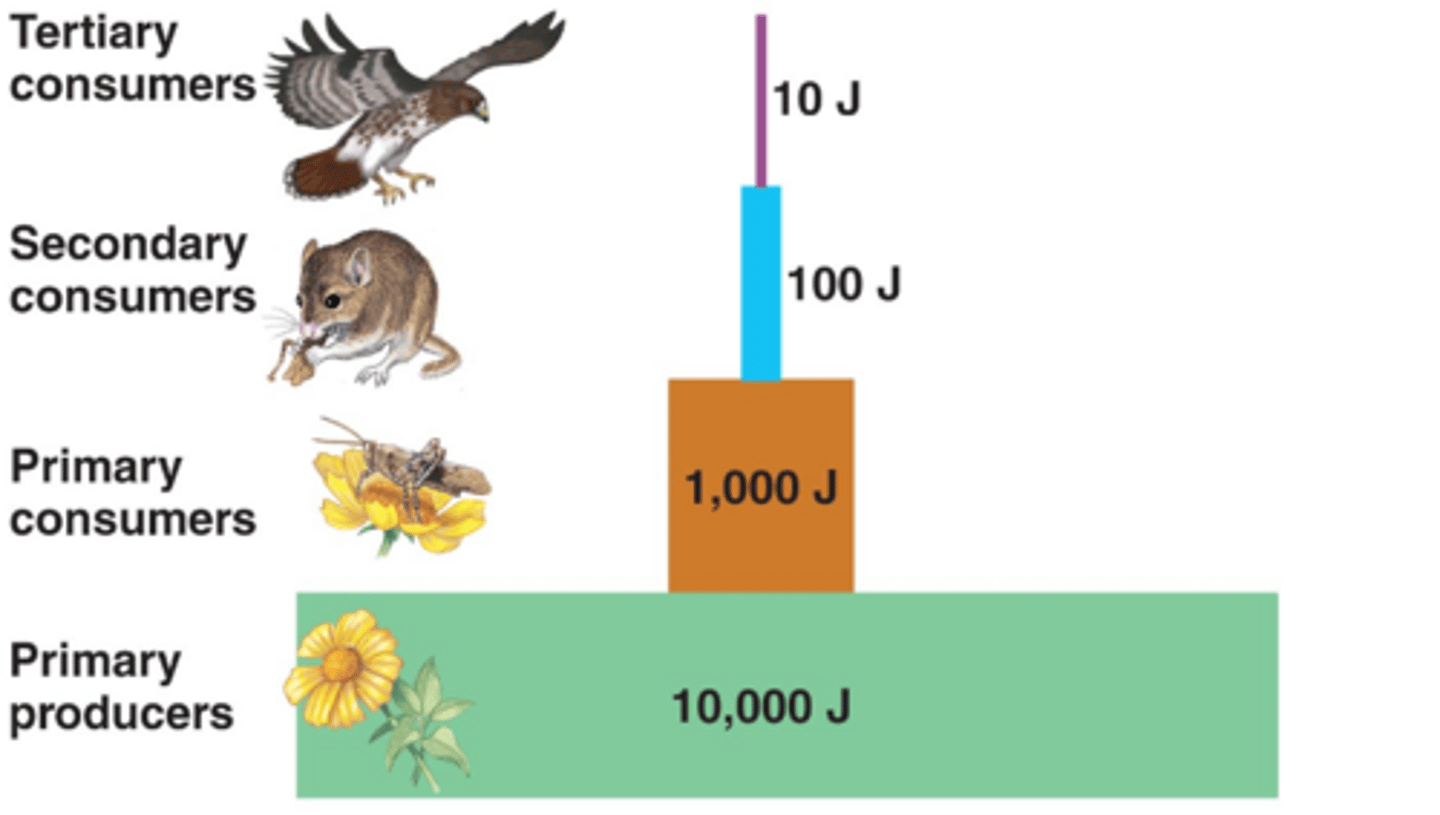
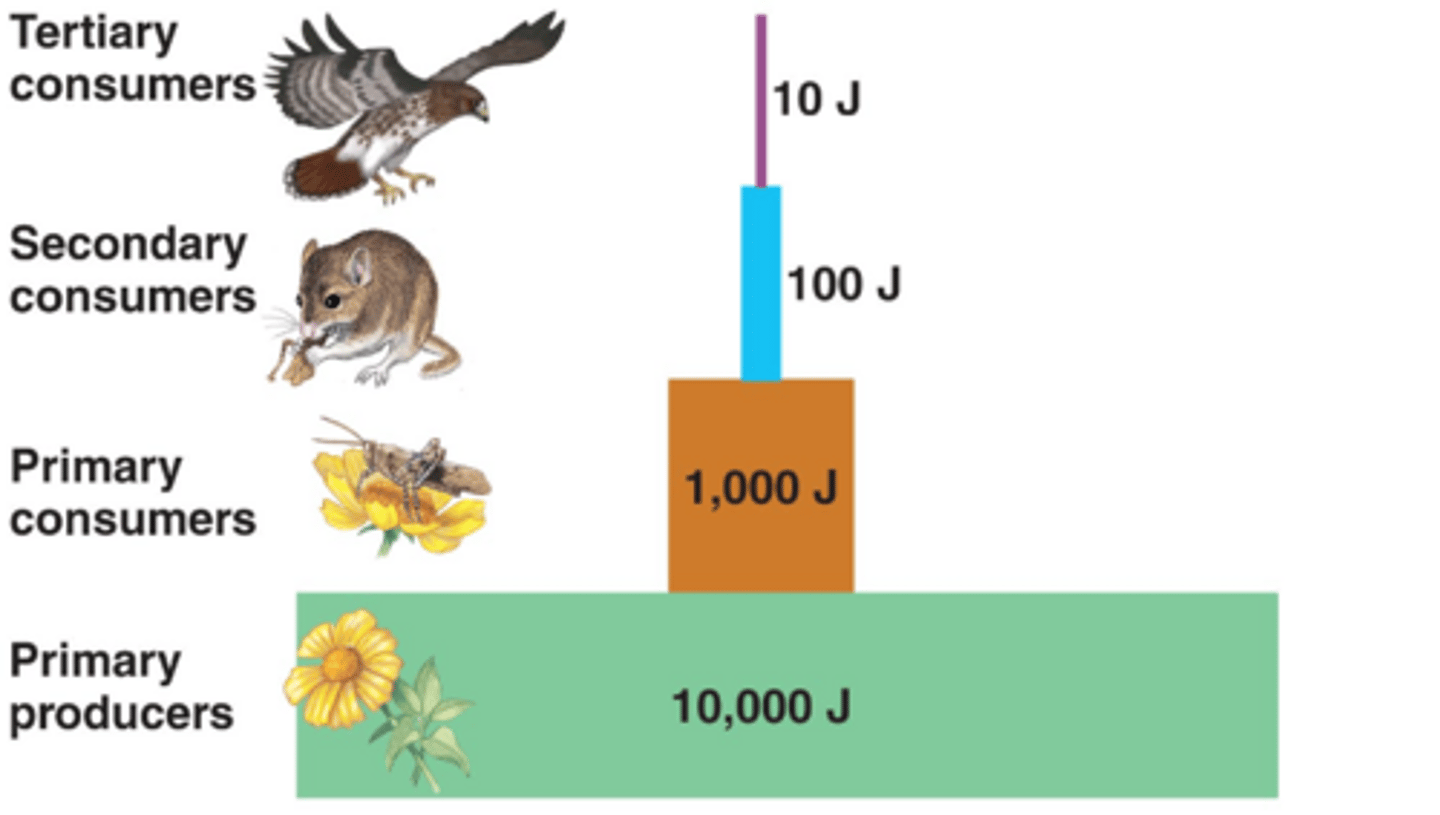
What are three reasons for large energy losses between trophic levels?
1. Heat loss from cellular respiration (ATP production and usage)
2. Not all biomass is eaten, such as bones/feathers
3. Not all eaten biomass is digested and absorbed by the body, some let out as faeces
What are two processes that lead to heat loss during cell respiration?
1. synthesizing ATP
2. usage of ATP
Why don't food chains go on indefinitely?
-Only around 10% of energy from last trophic level passed onto next
-after few levels, energy too low to sustain a higher level consumer
What does primary production measure?
-amount of carbon fixed into biomass
-by autotrophs in an ecosystem
What is the unit that represents primary production?
Unit: g C m⁻² yr⁻¹
*(grams of carbon, per square meter, per year)
What's an example of a biome with high primary production? Low?
High PP:
-Tropical rainforests
Low PP:
-deserts
What's the difference between primary production and secondary production?
Primary production:
-amount of carbon fixed into biomass by autotrophs
Secondary production:
-amount of biomass ingested and accumulated by primary consumers.
What is the purpose of carbon dioxide enrichment experiments?
What it is:
-experiments where plants/ecosystems are grown under higher-than-normal CO2 levels
-CO2 boosted by elevated towers
Purpose:
-study how increased CO2 affects photosynthesis and plant growth
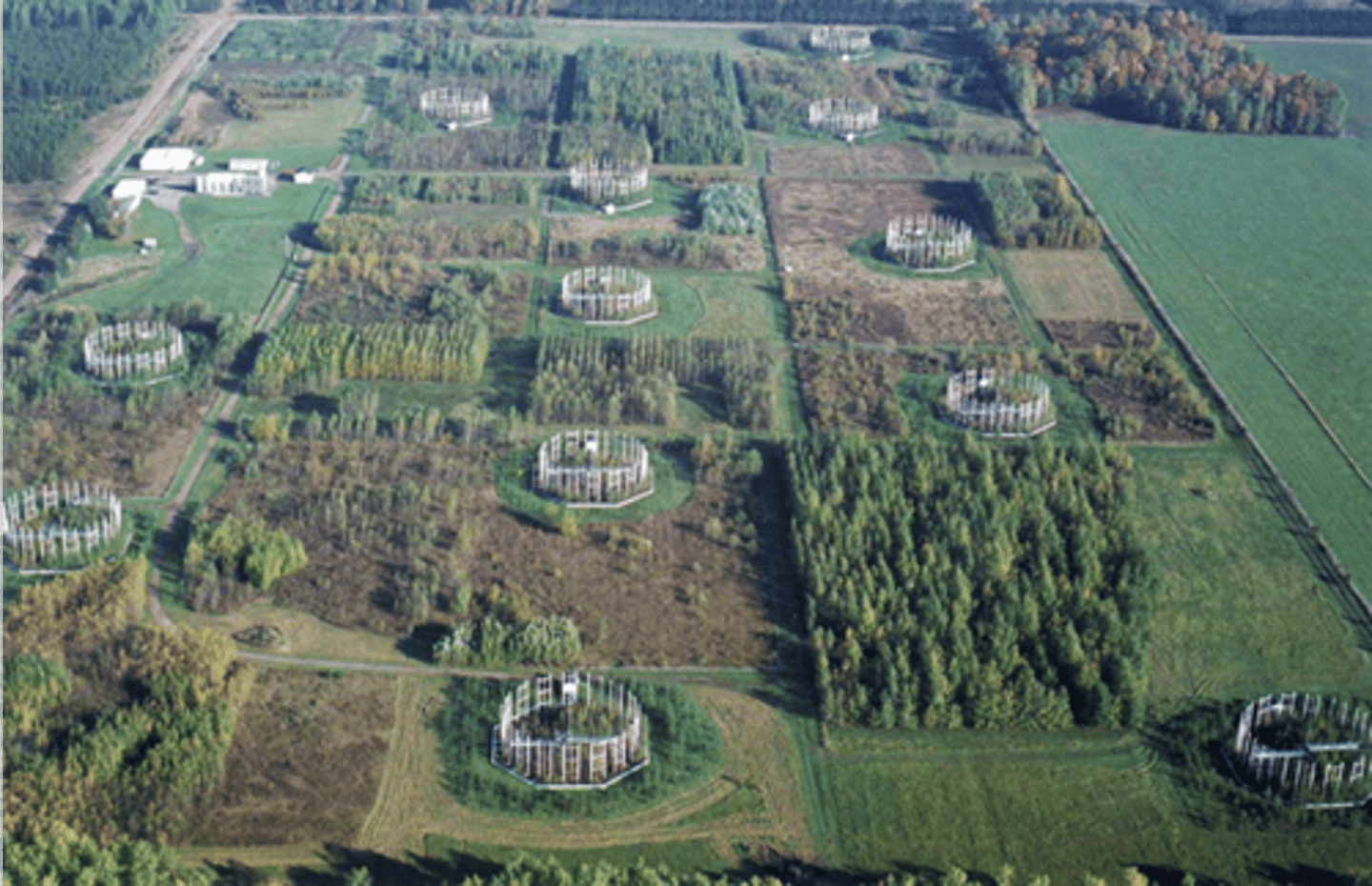
What are two types of carbon dioxide enrichment experiments?
FACE (Free Air CO2 Enrichment) Experiments:
-open system directly in nature
-towers that emit CO2, increasing CO2 concentration in natural ecosystems
Greenhouse Experiments:
-closed system
-controlled environment with increased CO2
What is an advantage of FACE experiments?
Since it happens directly in nature,
-better for predicting real-world effects of rising CO2 levels on natural ecosystems

