AP Psychology Vocabulary Review
 Studied by 1 person
 Call Kai
 Learn
Learn Practice Test
 Spaced Repetition
 Match
Match Flashcards
 Knowt Play
1/240

Earn XP
Description and Tags
A collection of flashcards designed to help students review key vocabulary terms and concepts covered in the AP Psychology course.
Name | Mastery | Learn | Test | Matching | Spaced | Call with Kai |
|---|
No analytics yet
Send a link to your students to track their progress
241 Terms
Experimental variable
A factor in an experiment that can be manipulated.
Independent variable (IV)
The variable manipulated by the researcher to observe its effect.
Dependent variable (DV)
The variable measured to assess the effect of the independent variable.
Confounding variable
An extraneous factor that may affect the dependent variable.
Random assignment
Assigning participants to experimental and control groups by chance.
Population
The entire group that researchers are interested in studying.
Sample
A subset of the population selected for the study.
Random sampling
A method of selecting participants randomly from the population.
Population
refers to the overall group from which a sample is drawn for research purposes, encompassing all individuals relevant to the study.
Sample
A smaller group that represents the larger population in a study.
Random Sampling
The process of selecting a sample in such a way that every individual in the population has an equal chance of being chosen, thereby minimizing bias.
Representative samples
are samples that accurately reflect the characteristics of the larger population, ensuring that the sample mirrors the diversity of the population.
Convenience samples
are samples that are obtained easily and quickly from a population but may not accurately represent the whole population.
Sampling bias
is the error that occurs when certain members of a population are systematically more likely to be selected for a sample than others, leading to skewed results.
Generalizability
refers to the extent to which findings from a sample can be applied to the larger population. It indicates how well results reflect the broader context.
Experimental Group
is the group of participants in an experiment that receives the treatment or intervention being tested, allowing researchers to measure its effects compared to a control group.
Control Group
is the group of participants in an experiment that does not receive the treatment or intervention, serving as a benchmark to compare against the experimental group.
Placebo Group
is the group of participants that receives a placebo treatment, which is an inactive substance or condition, used to compare against the experimental group and control for psychological effects.
Placebo Affect
Changes caused by participants expectations rather than the treatment itself
Single-blind procedure
Participants don't know whether they're in the experimental or control group
Double-blind procedure
Neither participants nor researchers interacting with them no group assignments
Experimenter bias
Researcher expectations unintentionally influence outcomes
Case study
In-depth examination of a single person or small group
Correlation (does not equal causation)
A relationship between variables that doesn’t prove one causes the other
Positive correlation
Both variables move in opposite directions
Directionality problem
In correlational research, it’s unclear which variable influences the other
Third-variable problem
An unmeasured variable may explain the observed relationship
Scatterplots
Graphs showing the relationship between two variables via plotted points
Correlation coefficient
Numerical index (r, from +1 to -1) indicating strength and direction of a relationship
Quantative measures (e.g., Likert scales)
Numeric ratings capturing the degree of agreement or frequency
Qualitive measures (e.g., structured interviews)
Non-numeric, descriptive Data about experiences or meanings
Surveys
Self-report questionnaires or interviews to gather attitudes or behaviors
Framing
How information is presented influences interpretations and decisions
Social desirability bias
Tendency to answer in ways viewed favorably by others
Self-report bias
Inaccuracies due to memory, misunderstanding, or impression management in self reports
Meta-analysis
Statistical synthesis of results across multiple studies
Naturalistic observation
observing behavior in real-word settings without interference
Hypothesis
A testable prediction about relationships between variables
Falsifibility
A claim must be structured so it can be proven wrong by evidence
Operational definitions
precise descriptions of variables in measurebale terms
Replication and Peer review
Repeating studies to confirm findings; expert evaluation before publication
Ethical guidelines
Principals protecting participants’ rights and welfare in research
Institutional review board (for human and non-human research)
Committee that reviews human research for ethics; animal research is typically overseen by IACUC
Informed assent
Agreement from minors or those unable to consent alongside guardian consent
Protection from harm
safeguards to avoid physical or psychological injury
Confidentiality or participants
Data is kept private and identities protected
Minimal Deception
Only essential non-harmful deception allowed and must be explained afterward
Confederates
People who secretly assist the experimenter to create controlled social interactions
Debriefing
full explanation of the study and any deception after participation
Central tendency (mean, median, mode)
measures describing the center of a distribution
mean
the average of data
median
middle number in data
mode
most frequent value
Measures of variation (range and interpret standard deviation)
Range shows spread; SD shows average distance from the mean
Range
biggest number — smallest number = range
Standard deviation
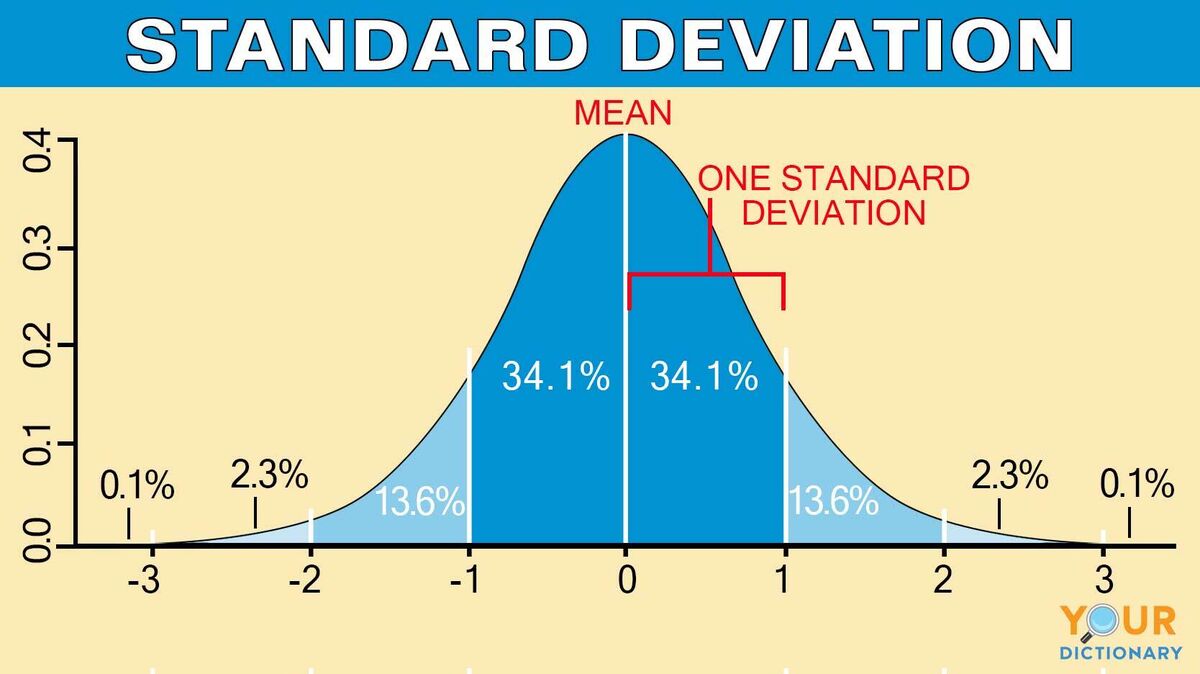
Normal curve (percentages and percentiles)
Bell-shaped distribution; about 68% withing SD, 95% withing 2, 99.7% within 3; percentiles rank relative position
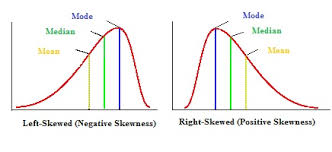
Positive and Negative Skews
Asymmetrical distributions with tails to the right (positive) or left (negative)
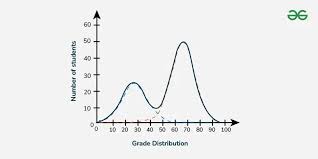
Bimodal distributions
Distributions w/ two distinct peaks
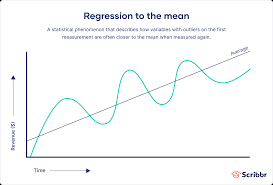
Regression Toward the mean
Extreme scores end to move closer to average on retesting
Statistical significance
Results unlikely due to chance (typically p < 0.05)
Effect sizes
Magnitude of a relationship of difference (independent of sample size)
Cognitive biases
a systematic error in thinking or judgment that affects the decisions and interpretations people make.
Confirmation bias
Seeking confirming evidence
Hindsight bias
“knew-it-all-along”
Overconfidence
overestimating accuracy
Nature and nuture
interaction of genetic factors and environment in behavior and development
Genetic predisposition
increased likelihood of a trait due to inherited factors
Evolutionary perspective
Behavior and mental processes shaped by adaptation and natural selection
Eugenics
"improving" the human species by selectively encouraging or preventing reproduction based on perceived desirable or undesirable inherited traits.
Twin studies
Compare identical vs. fraternal twins to estimate genetic vs environmental influences
Central nervous system
the body's main processing center, consisting of the brain and spinal cord
responsible for receiving, processing, and coordinating all sensory information and body functions like thinking, moving, feeling, and regulating automatic processes
Brain
an organ of soft nervous tissue contained in the skull of vertebrates, functioning as the coordinating center of sensation and intellectual and nervous activity.
Spinal cord
the conduit between the brain and the rest of the body, sending motor commands from the motor cortex to the muscles and sensory information from the afferent fibers to the sensory cortex
peripheral nervous system
nerves outside the CNS connecting it to the body
somatic nervous system
voluntary control of skeletal muscles
autonomic nervouse system
involuntary control of glands and internal organs
Sympathetic vs. Parasympathetic nervous system
Arousal (fight/flight) - Sym
Calming ("rest/digest) - Para
Glial cell
support cells that nourish, insulate, and protect neurons
Neurons
Nerve cells that transmit info. via electrical and chemical signals
Reflex arc
Automatic response pathway from sensory input to motor output via the spinal cord
Sensory neurons
carry info. from receptors to the CNS
Motor neurons
Carry commands from the CNS to muscles and glands
Interneurons
Connect neurons within the CNS; integrate information
Neural transmission
Communication via electoral impulses and neurotransmitters across synapses
All-or-nothing principle
Neurons fire fully or not at all once threshold is reached
Action potential
brief electrical impulse traveling down the axon
depolarization
Inside of neuron becomes less negative during action potential
Refractory period
time after firing when a neuron can’t fire again immediately
Resting potential
Baseline charge difference across the neuronal membrane
re uptake
neurotransmitters are reabsorbed into the presynaptic neuron
firing threshold
level of stimulation needed to trigger an action potential
Multiple sclerosis
Autoimmune demyelinating disease that slows/disrupts neutral transmission
Myasthenia gravis
autoimmune disorder impairing acetylcholine receptors at the neuromuscular junction, cussing muscle weakness
neurotransmitters
excitatory or inhibitory chemical messengers that increase or decrease likelihood of neuronal firing
Dopamine
Involved in movement, reward, motivation
Too much: Schizophrenia
Too little: Parkinson’s disease
Serotonin
Mood, sleep, appetite
Too little: Depression
Norephinephrine
Arousal, attention, stress responses
Too little: Depressed mood
Glutamate
Primary expiatory neurotransmitter, learning and memory
Too much: migraine or seizures
GABA
Primary inhibitory neurotransmitter, calming, and reduces neuronal excitability
Too little: seizures, insomnia, and tremors
 Note
Note  Flashcards (62)