Wildlife Ecology Lab- Bird ID/Natural History
 Call Kai
 Learn
Learn Practice Test
 Spaced Repetition
 Match
Match Flashcards
 Knowt Play
1/41

There's no tags or description
Looks like no tags are added yet.
Name | Mastery | Learn | Test | Matching | Spaced | Call with Kai |
|---|
No analytics yet
Send a link to your students to track their progress
42 Terms
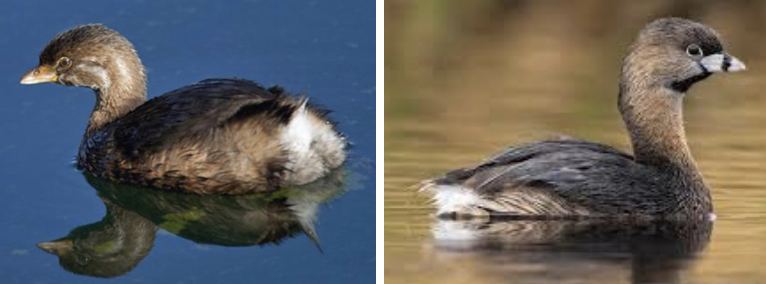
Pied-billed Grebe
Habitat: ponds and lakes with significant amounts of emergent vegetation (marshes), larger more open bodies of water in winter, floating nests in thick emergent veg
Diet: opportunistic, but large quantities of crustaceans (crayfish), invertebrates and small fish, occasionally frogs and tadpoles, most food captured while diving
Characteristics: Small, compact, domed spherical body, slender necks, drab brown appearance, large blocky heads, short thick bills, virtually no tail, breeding plumage- white bill with black vertical line and black throat patch
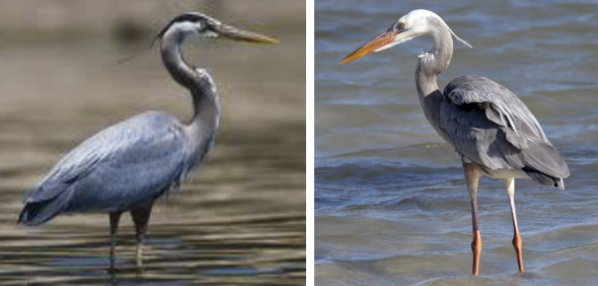
Great Blue Heron
Habitat: freshwater and saltwater habitats- shorelines, riverbanks, marsh edges, estuaries, and ponds, also grasslands, meadows, and ag fields, breeding colonies- isolated swamps/islands, lakes/ponds bordered by forests
Diet: opportunistic- fish, amphibians, reptiles, insect, other birds, and small mammals
Characteristics: large, long legs, long sinuous neck, long thick piercing bill, overall grayish blue color, black/blue striping on head, some feathers longer on head and chest
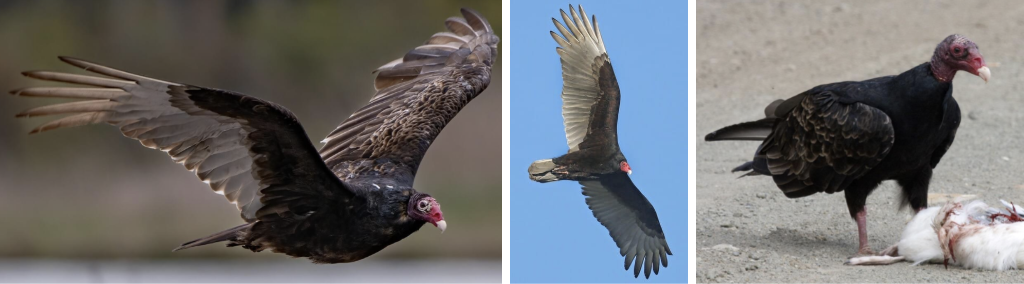
Turkey Vulture
Habitat: open areas- mixed farmland, forest, and rangeland, associated with roadsides and landfills, roost in trees, rocks, etc.
Diet: carrion- prefer freshly dead, mainly mammals but also reptiles, amphibians, birds, fish, inverts, almost never attack living prey
Characteristics: our only vulture, large, dark, bald red head, broad wings with long “fingers” at wingtips, black feathers at top of wings and white below, tend to hold wings in slight V pattern rather than flapping, rarely flap, long tails extend past toe tips in flight
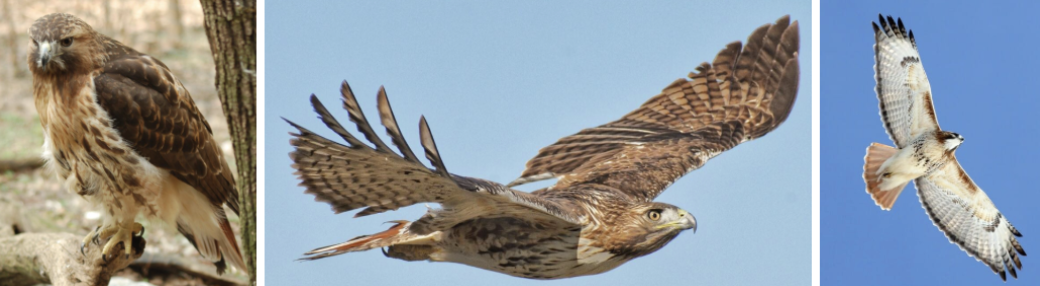
Red-tailed Hawk
Habitat: variable- deserts, scrublands, grasslands, roadsides, fields and pastures, parks, broken woodland
Diet: mainly mammals- voles, mice, wood rats, rabbits, jackrabbits, ground squirrels, also eat birds, reptiles, and carrion
Characteristics: large, broad rounded wings, short wide solid red tail, dark brown mottled color on back, buffy breast with brown markings, highly variable in appearance- how dark/mottled/faded
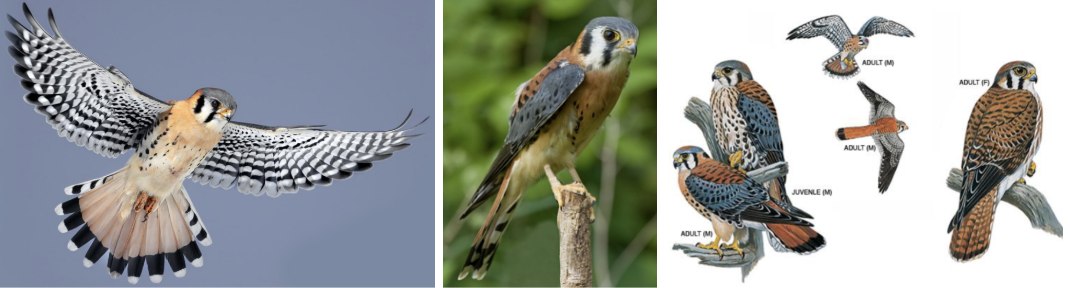
American Kestrel
Habitat: open areas with short veg and sparse trees, meadows, grasslands, deserts, ag fields, breeding- need some trees and structures for nest cavities, attracted to many habitats modified by humans- pastures, parks
Diet: mainly insects and inverts- beetles, scorpions, and spiders, also small rodents and birds- mice, bats, songbirds, occasionally small snakes, lizards, frogs
Characteristics: Very small, unique coloring, males- blue-gray wings with reddish-brown back, females- all reddish-brown, bold black and white striping on face, long narrow wings, long square-tipped tail, often bent with wingtips swept back during flight
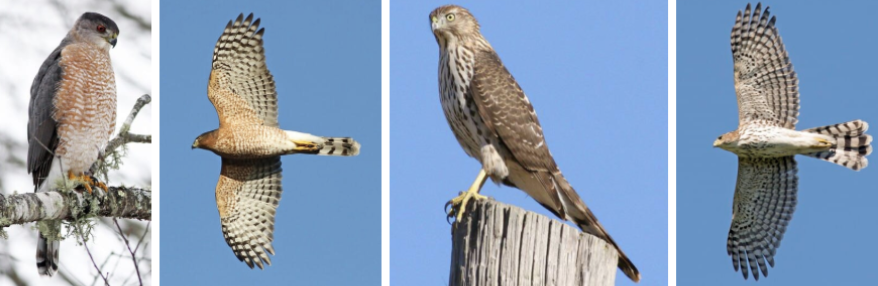
Cooper’s Hawk
Habitat: forest, woodland, leafy suburbs, often found in parks, backyard feeders, and over fields
Diet: mainly birds- preferably medium sized, mourning doves, jays, robins, quail, pheasants, etc., sometimes small rodents and mammals
Characteristics: Medium sized, immature- dark brown with mottling on back, adult- solid dark gray back and reddish markings on buffy breast, long skinny wings, wings tends to be straight across on top in flight, long narrow C-shaped tail with black and white bands
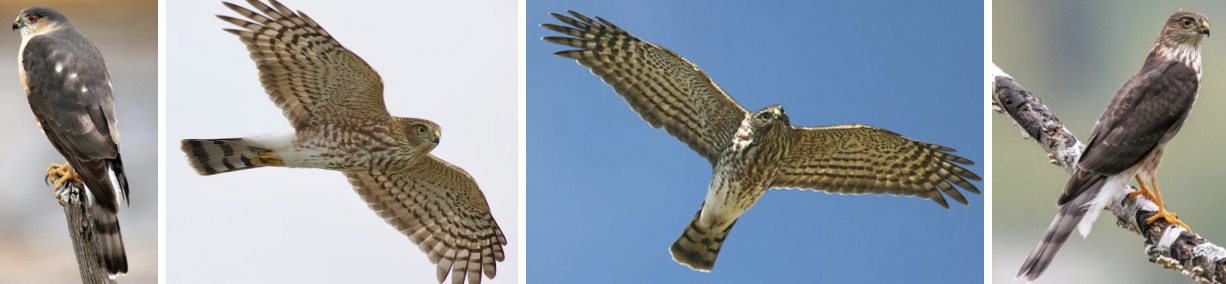
Sharp-shinned Hawk
Habitat: forest and forest edge, require dense forest for breeding, prefer closed canopy, favor conifer forests, wide range of elevations, winter- forest edge, more open areas
Diet: primarily songbirds- most frequently eat birds that are American Robin sized or smaller, sometimes larger birds, also small rodents and occasionally moths or grasshoppers
Characteristics: Small, immature- dark brown with mottling on chest, adult- solid dark gray back and reddish markings on buffy breast, small heads often don’t project beyond wrists of wings in flight, long skinny wings, tend to have more dip where wing meets neck and bend at wrist in flight, long narrow square tail with black and white bands
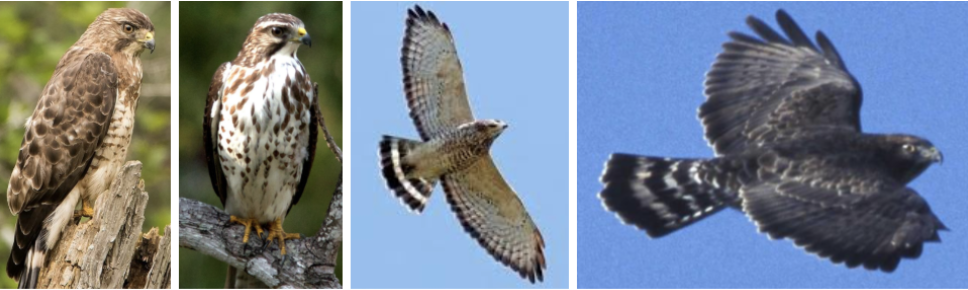
Broad Wing Hawk
Habitat: large deciduous or mixed forests, nest near forest openings and bodies of water, stay away from human disturbed areas, winter in forests and forest edges
Diet: mostly small mammals, amphibians, and insects, often frogs, toads, and small rodents, broad diet includes other amphibians, reptiles, mammals, birds, inverts
Characteristics: Small, compact, chunky body, large head, brown back and head, brown mottling on buffy chest, shorter blunter wings and tail, broad wings come to distinct point, short square tail with black and white bands
Northern Harrier
Habitat: large undisturbed tracts of wetlands and grasslands with low think veg, breed in freshwater and brackish marshes, old fields, dry upland prairies, etc., winter- range of habitats with low veg- pasturelands, etc.
Diet: breeding season- small mammals, reptiles, amphibians, birds, winter- meadow vole (big in N range), mice, rabbits, songbirds, winter in S- rats, mice, songbirds
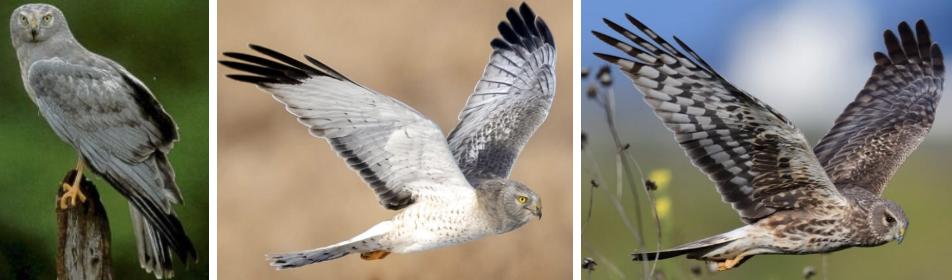
Characteristics: medium sized, slender, males- gray above and whitish below with black wingtips, female- brown above and whitish undersides with brown streaks, white butt patch, flat owl-like face, small hooked bill, long skinny wings and tails (banded), fly low with wings held in dihedral
Sandhill Crane
Habitat: breed in open wetlands surrounded by trees, nest in marshes, bogs, etc. (prefer standing water), winter in S- roost in shallow lakes/rivers, spend day at, pastures, etc.
Diet: omnivores- seeds, grains, may include berries, small verts and inverts, nonmigratory pops- adult and larval insects, snails, reptiles, amphibians, etc.
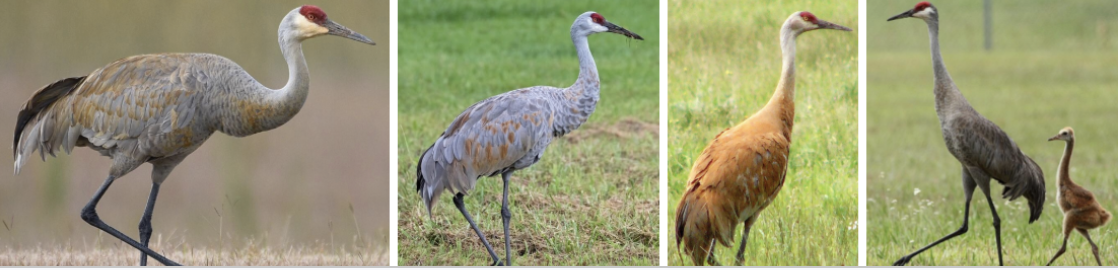
Characteristics: large, tall, long legs, bulky body tapers into long neck, red patch on head, range from silvery gray to orangely brown, big long feathers on butt, very broad wings, fly extremely high (may hear but not see)
American Coot
Habitat: variety of freshwater wetlands- prairie potholes, marshes, parks, etc., breeding- heavy stands of emergent aquatic veg along part of shoreline, some standing water
Diet: mainly aquatic plants- algae, duckweed, eelgrass, sedges, terrestrial plants, sometimes grains or oak, elm, or cypress leaves, may eat insects, snails, and small verts
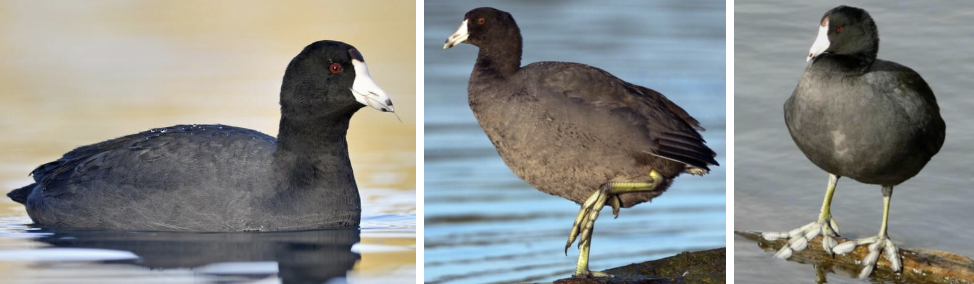
Characteristics: compact, plump black body with round head, sloping white bill, black band near tip of beak, red eyes, greenish legs, bubble of webbing around each toe
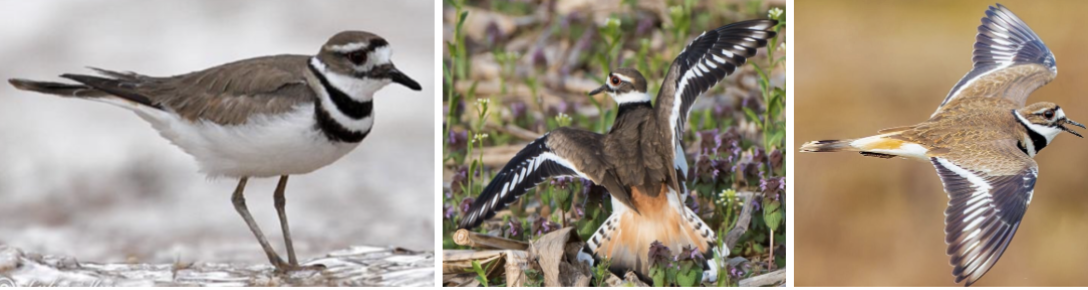
Killdeer
Habitat: open areas- sandbars, mudflats, grazed fields, towns- lawns, parking lots, golf course, generally veg in fields no taller than 1 in, found near water, also in dry areas
Diet: primarily inverts- earthworms, snails, crayfish, grasshoppers, beetles, also seeds in ag areas opportunistic- will hunt frogs or eat dead minnows
Characteristics: robin sized, slender, lanky, brown back with buffy breast and underside, 2 black collar-like bands around neck, orange-buff rump, black headband stripe, big round head, big red eyes, short black bill, long wings, long pointed tail, adults will pretend to have broken wing to lure preds away from nest
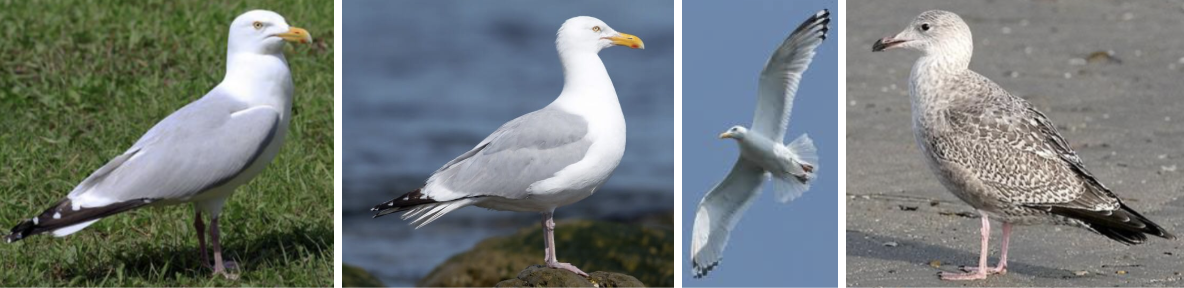
Herring Gull
Habitat: scavenge in open water, intertidal pools and shallows, mudflats, etc., roost/loaf- open areas with high visibility like ag fields, parking lots, breed- near lakes in northern forests and in some coastal areas, colonies- isolated islands, barrier beaches, city roofs
Diet: marine inverts, fish, insects, smaller seabirds, and other gulls, opportunistic scavengers- fish, carrion, trash
Characteristics: large, robust body, hefty bill, red spot under beak, adult- light gray back with black wingtips and white head/underparts, juveniles- mottled brown, look barrel-chested and broad-winged in flight
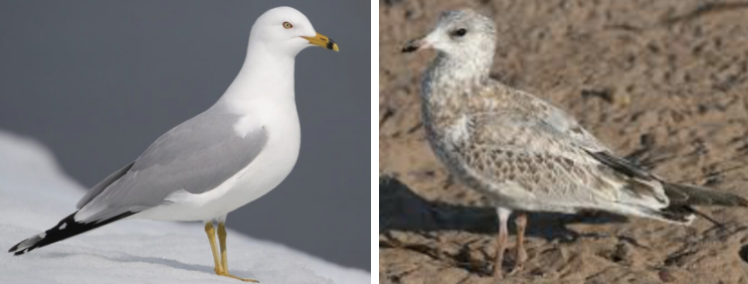
Ring-billed Gull
Habitat: in and around urban, suburban, and ag areas, coastal areas- estuaries, beaches, mudflats, and coastal waters, winter- docks, wharves, harbors
Diet: thrive on basically any source of nutrition, mostly eat fish, insects, earthworms, rodents, grains, and garbage, west US- mainly use farm fields and forgo fishing
Characteristics: medium sized, fairly short slim bill, black ring around tip of bill, adult- light gray back with black wingtips spotted with white and white head/underparts, juveniles- mottled brown, long slender wings
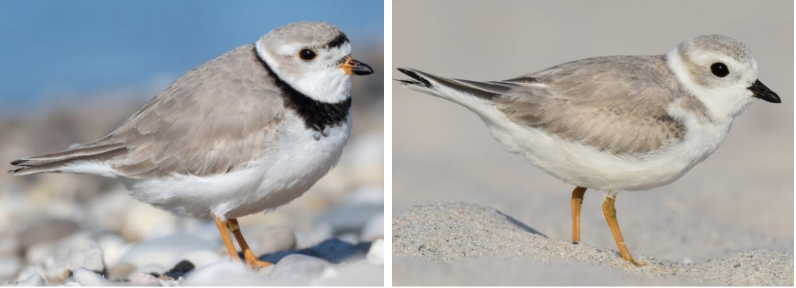
Piping Plover
Habitat: breeding along ocean shores, rivers, and alkali wetlands, best above water line in sandy areas with sparse veg- marshes, bays, spoil islands, etc., forage in winter on coastal beach, sandflats, and mudflats exposed in low tide
Diet: freshwater and marine inverts within 16ft of water’s edge- marine worms, small crustaceans, flies, water beetles, snails, and roundworms, etc.
Characteristics: little, round, stocky, frequently stand in horizontal position, sandy grayish brown with white underparts and narrow collar, round heads, large dark eyes, short stubby beak, breeding season- orange bill with black tip, black collar, and black forehead line, nonbreeding season- black bill and gray faded collar
Mourning Dove
Habitat: primarily open country, scattered trees, and woodland edges, winter- large number roost in woodlots, feed on ground in grasslands, ag fields, backyards
Diet: mainly seeds- cultivated seeds and peanuts, also wild grasses, weeds, herbs, and occasionally berries, snails
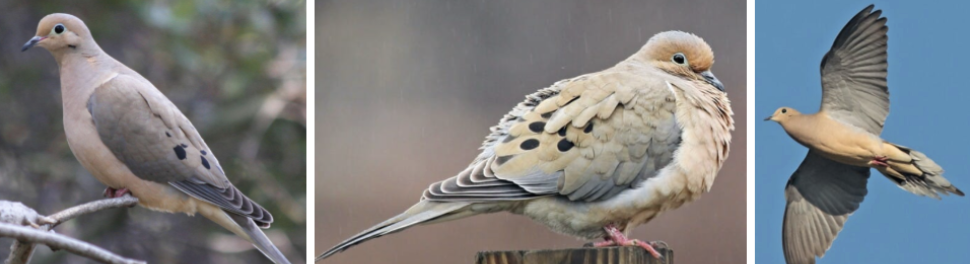
Characteristics: plump, tend to be more flat leaning when perched, soft earthy warm body, small heads bop as they walk, short bill, black spots on wings, long tail with black-bordered white tips to tail feathers, short legs
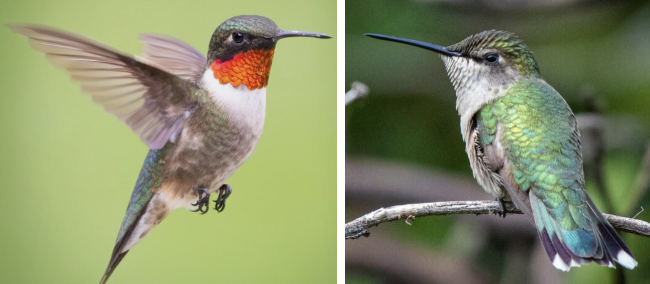
Ruby-throated Hummingbird
Habitat: deciduous woodlands in eastern North America and prairies in Canada, associated with old fields, forest edges, meadows, orchards, stream borders, and backyards
Diet: nectar of red/orange tubular flowers- honeysuckle, jewelweed, and red morning glory, hummingbird feeders, sometimes tree sap, insects- mosquitoes, gnats, fruit flies
Characteristics: super tiny, bright emerald/golden green on back and crown, gray-white underparts, males- bright iridescent red throat, long slender downcurved bill, fairly short wings that beat too fast to see beats
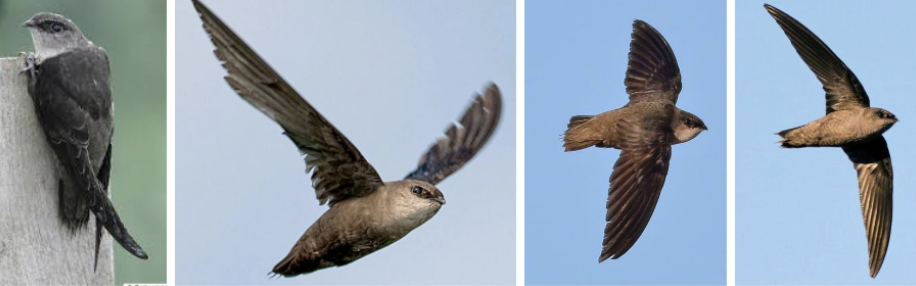
Chimney Swift
Habitat: breed in urban/suburban areas across eastern US and southern Canada, most common in areas with high conc of chimneys for nests/roosts, may nest in hollow trees and cavities in rural areas, forage mostly in open areas but also forests, ponds, and residential areas
Diet: airborne insects- flies, bugs, bees, etc., grab big insects with bill and small go straight down throat
Characteristics: very small, slender, dark gray-brown all over, slightly paler at throat, short neck, round head, tiny beak, long narrow curved wings, “Flying cigars”- look like cigar if they’d tuck wings in, super agile, short tails
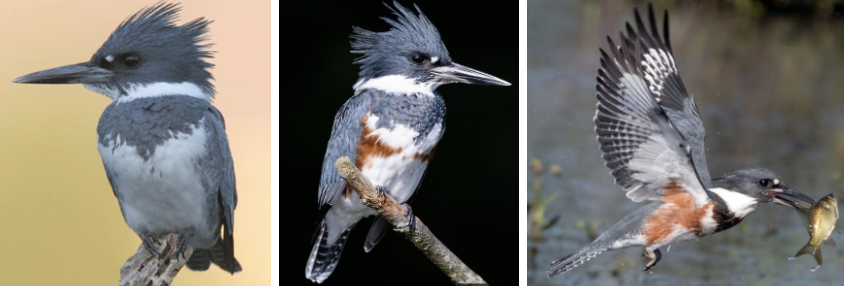
Belted Kingfisher
Habitat: need bodies of unclouded water for food and vertical earthen banks for nesting, veg for perching but little veg obstructing water, commonly found in rivers, lakes, estuaries, and calm marine waters, winter- similar habitats as well as mangroves, swamps and brackish lagoons
Diet: mostly fish- sticklebacks, mummichogs, trout, and stonerollers, also crayfish, may eat other crustaceans, mollusks, insects, amphibians, reptiles, young birds, small mammals, and berries
Characteristics: robin sized, stocky, blue-gray back with white underparts and collar, broad blue band on breast, females- rusty band on bellies/under wings, large head, unique shaggy crest, thick straight bill, short legs, medium square-tipped tail
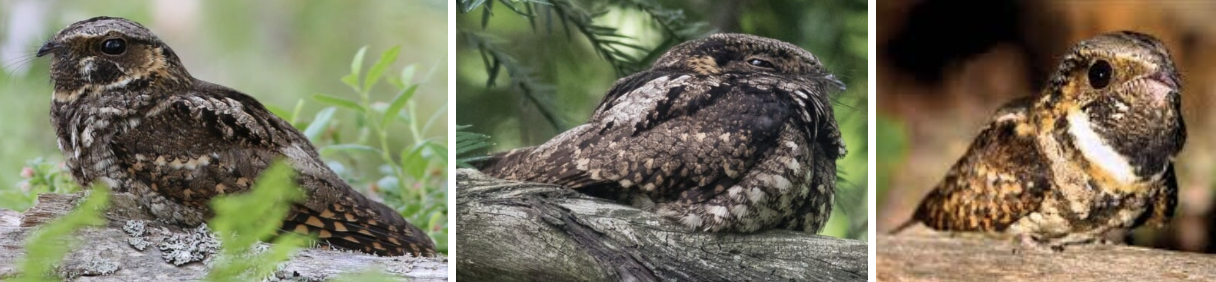
Eastern Whip-poor-will
Habitat: breed in dry deciduous or evergreen-deciduous forests with little underbrush close to open areas, forests- pine-oak with juniper, pine flatwoods, northern hardwood forests, etc., winter- broadleaf tropical/subtropical forest near open areas
Diet: exclusively insects- moths, click beetles, long horned grasshoppers, stoneflies, ants, bees, wasps, etc.
Characteristics: medium sized, front heavy, cryptic look, complicated mottling of gray and brown, blackish throat bordered at bottom by white bib, males- white corners to tails (duller in females), large rounded head, big dark eyes, tiny beaks, long whisker like feather stick out from base of beak, stout chest tapers into long tail and wings
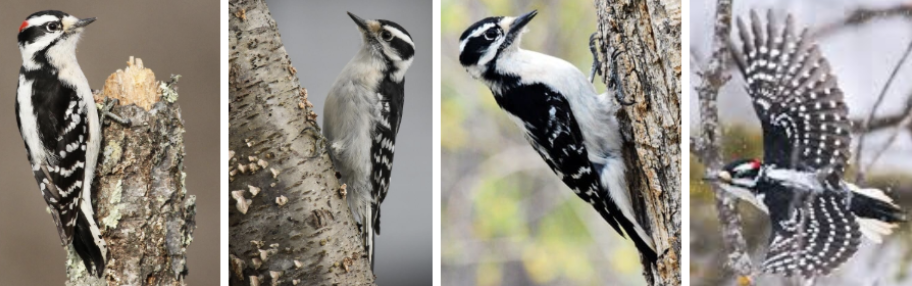
Downy Woodpecker
Habitat: open woodlands- particularly deciduous woods along streams, created habitats- orchards, parks, and suburbs, open areas- nest along fencerows and feed among tall weeds
Diet: mainly insects- beetle larvae, ants, and caterpillars as well as pests like corn earworm, tent caterpillar, and apple borers, quarter of their diet is plant material- berries, acorns, and grains, use feeders- suet, black oil sunflower seed, drink from hummingbird feeders
Characteristics: small, straight-backed posture (lean away tree limbs onto tail feathers), black upperparts checked with white on wings, substantial white stripe down top half of back, buffy white belly, black and white striping on head, males- red spot on head, blocky head, straight chisel-like bill, small beak relative to head
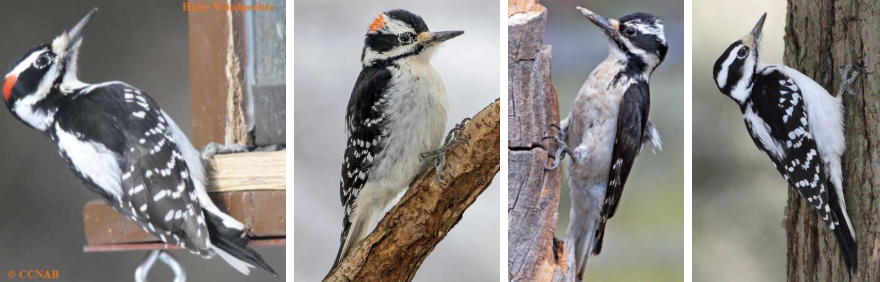
Hairy Woodpecker
Habitat: common in mature woodland with medium to large trees, also woodlands, suburbs, parks, and cemeteries, equally common in coniferous forests, deciduous forests, or mixes, also forest edges, around beaver ponds, etc.
Diet: mostly insects- particularly larvae of wood-boring beetles and bark beetles, ants, and moth pupae in cocoons, to a lesser extent- bees, wasps, caterpillars, etc., some fruit and seeds
Characteristics: medium sized (almost twice the size of downys), straight-backed posture (lean away tree limbs onto tail feathers), black upperparts checked with white on wings, substantial white stripe down top half of back, buffy white belly, black and white striping on head, males- red spot on head, square head, big beak relative to head, beak length almost same width of head
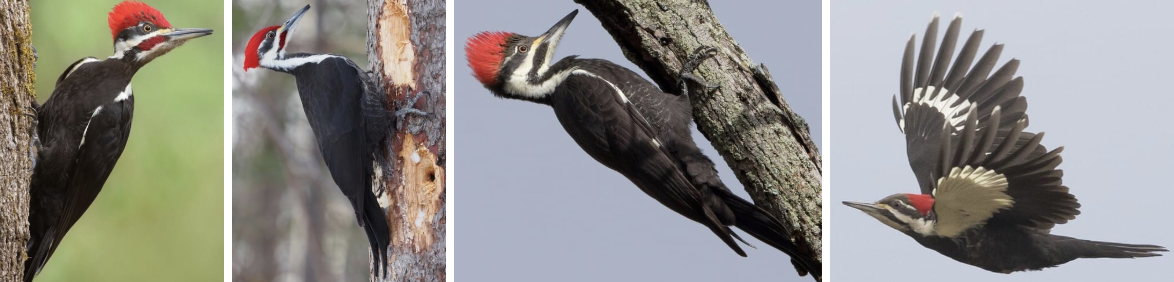
Pileated Woodpecker
Habitat: live in nearly every type of mature deciduous and mixed deciduous-coniferous woodlands- tall western hemlock stands, beech and maple forests, cypress swamps, also younger forests with scattered large dead trees or a supply of decaying downed wood, also suburban areas with large trees and patches of woodland
Diet: primarily carpenter ants, supplemented by other ants, woodboring beetle larvae, termites, and other insects, also wild fruits and nuts- greenbrier, hackberry, blackberries, etc.
Characteristics: very large, straight-backed posture (lean away tree limbs onto tail feathers), mostly solid black with massive white patches on underside of wings, black and white striping on face, red cresting (males more than females), triangular chest, long neck, long chisel-like bill about length of head
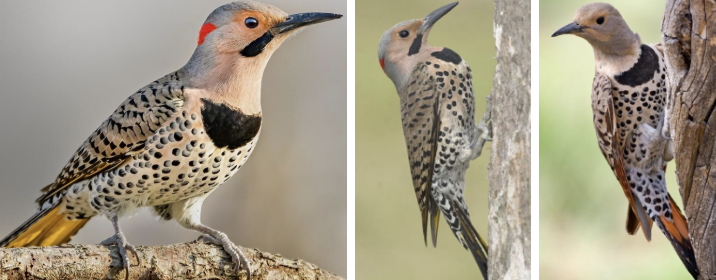
Northern Flicker
Habitat: woodlands, forest edges, and open fields with scattered trees, also city parks and city suburbs, found in most forest types up to the treeline in the western mtns, also in wet areas – streamside woods, flooded swamps, and marsh edges
Diet: mainly insects- especially ants and beetles, also fruits and seeds (especially in winter)- poison oak and ivy, dogwood, sumac, etc.
Characteristics: large, brownish overall patterned with black spots, pattern more like barring than dots on back, black bib, white rump patch, colored undersides of wings and tails- range from yellow to orangey-red, slim rounded head, long slightly downcurved bill, long flared tail tapers to point, unique flight pattern- undulating- swoop up and down
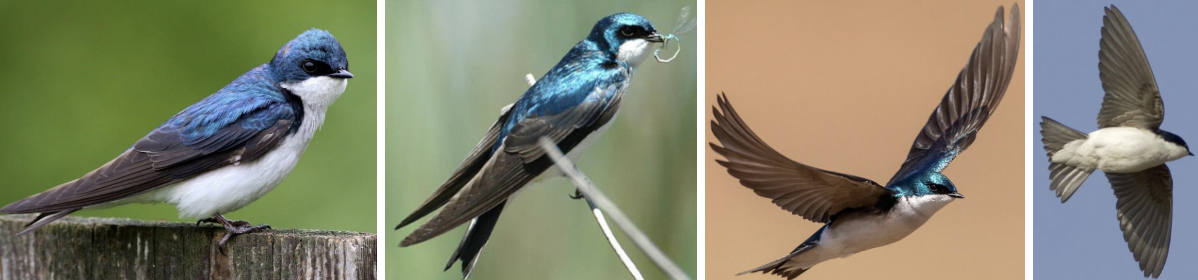
Tree Swallow
Habitat: breed in fields, marshes, wooded swamps, etc., prefer living near bodies of water that provide lots of flying insects, nest in old trees with cavities, winter- similar habitat but no need for cavities so can live in open areas
Diet: insects, occasionally small animals and plant foods, flying insects- dragonflies, flies, etc., also spiders, mollusks, and roundworms, breeding season- high calcium items like fish bones, crayfish exos, and eggshells
Characteristics: small, streamlined, iridescent blue-green on back, bright buffy white underside, females- duller with more brown upperparts, juveniles- not iridescent dusky gray, very short flat bill, long skinny pointed wings, short square tail that is slightly notched, more of a tail in flight
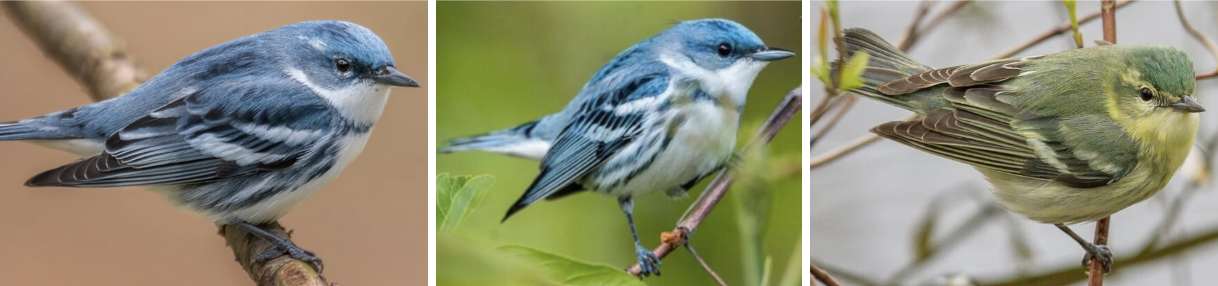
Cerulean Warbler
Habitat: breed in large tracts of older decid forests with tall trees, gravitate toward gaps/openings in canopy, tend to use white oak, cucumber magnolia, bitternut hickory, and sugar maple for nesting and foraging, migration- tropical forests, scrub, etc., winter- evergreen forests, woodlands, and shade coffee plantations
Diet: insectivorous- primarily insects like flies, beetles, caterpillars, and weevils, winter- also eat some plant materials
Characteristics: small, compact, perches horizontally, males- sky blue above with dark streaking on back, thin blue neck band, blue streaking on sides of white belly; females- bluish green above with slight yellow wash, lack streaked sides and neck band, whitish eyebrow; 2 white wing bars, small round bill, shorter tail than some other warblers, fast and always moving
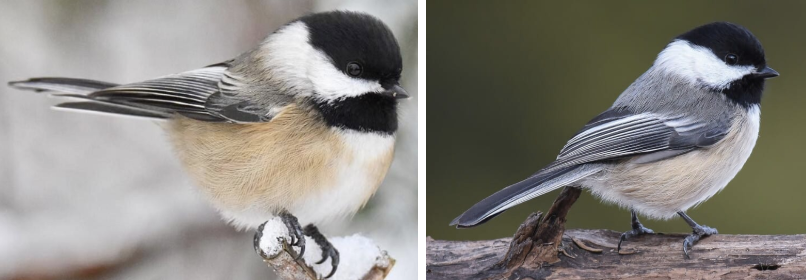
Black-capped Chickadee
Habitat: deciduous and mixed forests, open woods, parks, willow thickets, cottonwood groves, and disturbed areas
Diet: winter- half seeds, berries, and plant matter, half animal food (spiders, insects, suet, bits of frozen carcass), spring/summer/fall- mainly insects, spiders, and animal food, feeders- sunflower seeds, peanuts, suet, mealworms
Characteristics: tiny, spherical body shape, black cap and chin, white cheeks, warm gray back, sandy underside, short neck, big head, short bill, narrow tail
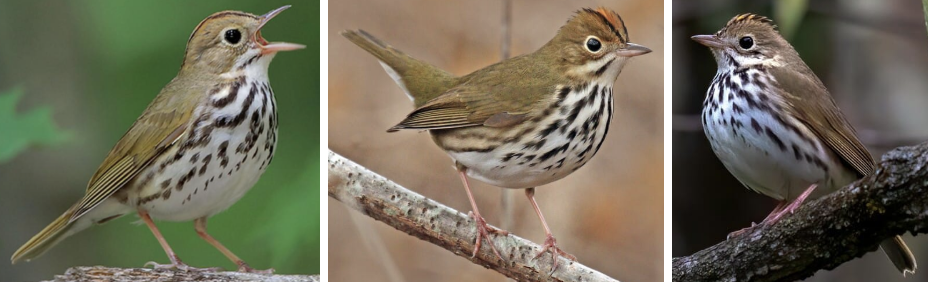
Ovenbird
Habitat: breed in large broadleaf or mixed forests, summer- territories where leaf canopy overhead inhibits underbrush and provides deep leaf litter for inverts, ideal- extensive uninterrupted forests with relatively closed canopies, winter- when mature forests not available, shade coffee trees or mangrove, dry scrubland, moist upland, etc.
Diet: mainly forest insects and inverts- range of adult beetles and larvae, ants, caterpillars, flies, etc., winter- may add more seeds to diet or hunt insects/grubs
Characteristics: small but larger than avg warbler, chunky, olive-green above with dark speckles on buff chest, round head, orange crown surrounded by two black stripes, fairly thick bill, jaunty tail often cocked upward
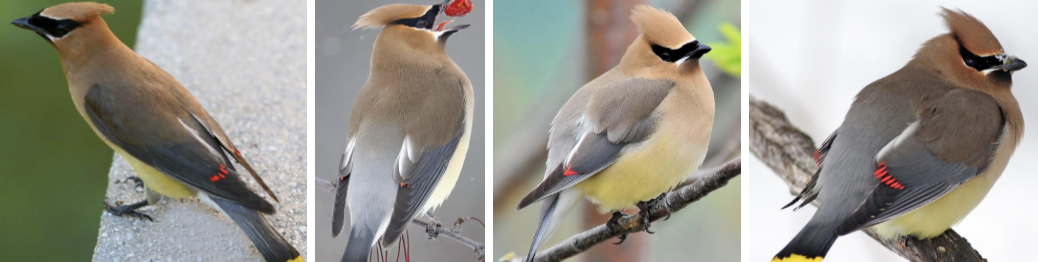
Cedar Waxwing
Habitat: deciduous, coniferous, and mixed woodlands, particularly areas along streams, also old fields, grassland, sagebrush, and desert washes, increasingly common in towns/suburbs, winter- near fruiting plants in open woods, parks, gardens, forest edges, and second-growth forests
Diet: mainly fruits, summer- strawberry, mulberry, etc., winter- cedar berries, mistletoe, etc., summer- supplement protein-rich insects- mayflies, dragonflies, and stoneflies
Characteristics: medium sized, sleek, crisp smooth colors, pale brown head and chest fades to gray wings and pale yellow belly, black mask with some white outlining, red on wingtips, yellow tail tip, short neck, large head, short wide bill, crest often lays flat and droop over back of head, broad pointed wings, fairly short square-tipped tail
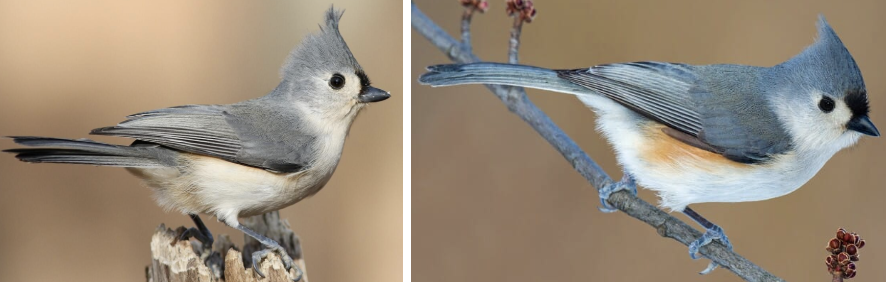
Tufted Titmouse
Habitat: deciduous or mixed evergreen-deciduous woods, typically areas with dense canopy and many tree species, also common in orchards, parks, suburban areas
Diet: summer- mainly insects- caterpillars, beetles, ants, etc., also seeds, buds, and berries- acorns and beech nuts
Characteristics: small, full body, blue-gray back, buff underside, rusty orange tinging on side, black base by beak, pointed crest, thick neck, large head/eyes, stout bill
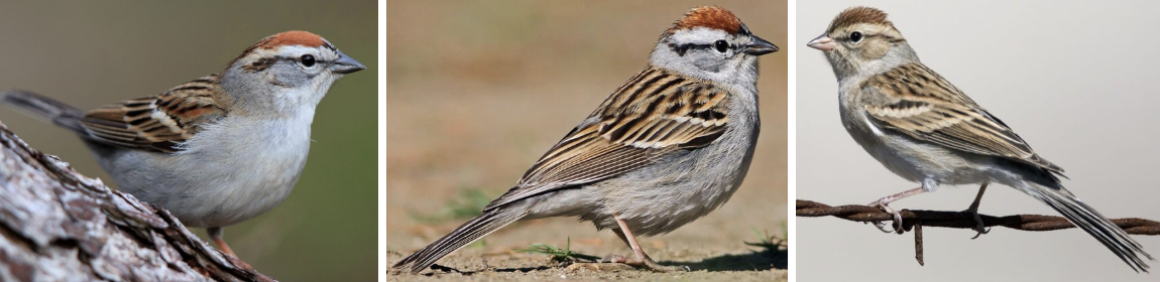
Chipping Sparrow
Habitat: around trees, grassy forests, woodlands and edges, and parks and shrubby or tree-lined backyards, gravitate toward evergreens when available, also use aspen, birch, oak, pecan, and eucalyptus trees
Diet: mainly seeds from a variety of grasses and herbs, breeding season- also hunt insects, insects also larger part of summer diet, sometimes eat small fruits
Characteristics: small, slender, medium size bill, characteristic brown sparrow mottling on back, frosty underparts, pale face, black line through eye, summer- rusty red crown, winter- subdued with darkly streaked upperparts, fairly long tail
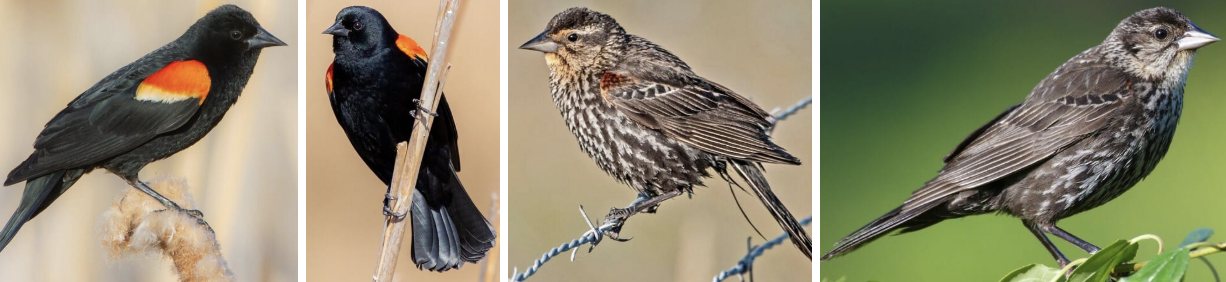
Red-winged Blackbird
Habitat: breeding season- wet places like fresh/saltwater marshes, also drier- fallow fields and sedge meadows, occasionally nest in wooded areas along waterways, fall/winter- ag fields, feedlots, pastures, and grasslands
Diet: mainly insects in summer and seeds (including corn and wheat) in winter, fall/winter- weedy seeds like ragweed and cocklebur, also waste grains and native sunflowers
Characteristics: robin sized, stocky, broad shouldered, hump-backed silhouette while perched, males- black with red and yellow shoulder badges, females- look like big dark sparrows (darkish brown, paler breast) with orange tingeing toward face, slender conical beak, medium length tail
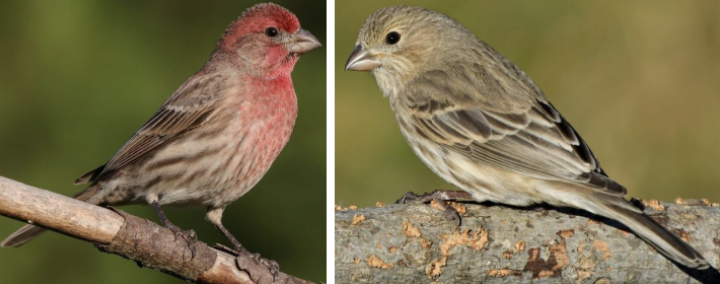
House Finch
Habitat: human-created habitats, rural areas- barns and stables, W range- dry desert, desert grassland, open coniferous forests, and streamsides
Diet: almost exclusively plant material- seeds, buds, fruits, orchards- cherries, figs, etc., bird feeders
Characteristics: small, males- red face (usually gray stripe mixed in) and upper breast with streaky brown back, females- no red, somewhat long flat head, fairly large beak, short wings (makes tail seem longer), shallow notched tail
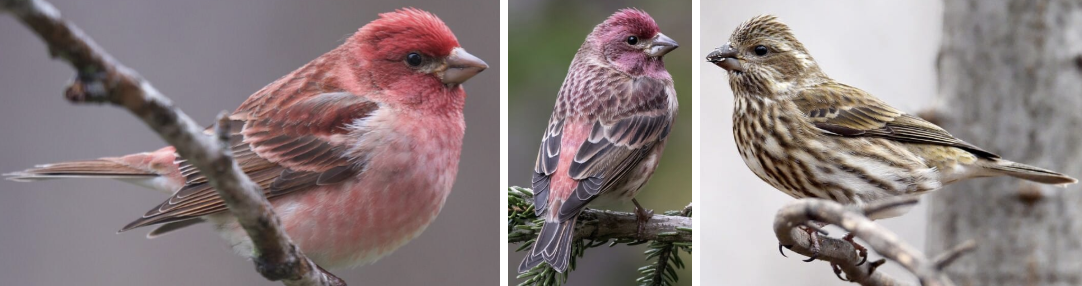
Purple Finch
Habitat: summer- primarily moist cool evergreen forests, found in mixed forests, along wooded streams, and in tree-lined suburbs, winter- widespread- forests, shrubby areas, weedy fields, hedgerows, and backyards
Diet: mainly seeds of conifer trees and elms, maples, etc., also eat soft buds, nectar, berries, and fruit, winter- seeds of low plants like dandelions and ragweed, also some insects- aphids, caterpillars, grasshoppers, and beetles
Characteristics: large and chunky among small forest birds, males- whole head and breast red, mixes with brown on back and white on belly, less striping on breast than housefinch; females- no red;conical beak, short notched tail
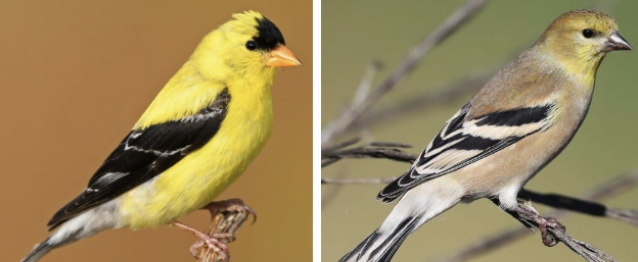
American Goldfinch
Habitat: weedy fields, open floodplains, and other overgrown areas, particularly areas with sunflower, aster, and thistle plants and some shrubs and trees for nesting, also common in suburbs, parks, and backyards
Diet: almost exclusively seeds- mainly from composite plants (sunflowers, thistle, asters, etc.), grasses/trees like alder, birch, and elm, eat nyjer and sunflower at feeders
Characteristics: small, bright yellow, black forehead, black wings with white markings, white patches above/beneath tail, fall/winter- both duller brown, small head, short conical bill, long wings, short notched tail
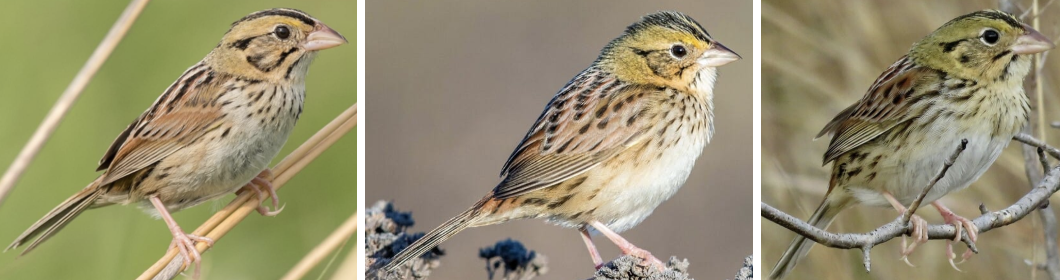
Henslow’s Sparrow
Habitat: breed in wet meadows, weedy pastures, and lowland prairies, also moved into cultivated hayfields, disposed to use large fields of tall dense grass away from woody veg like trees, winter- similar, more tolerant of trees
Diet: summer- insects- grasshoppers, beetles, and caterpillars, winter- seeds- wiregrass, sedges, ragweed, smartweed, and some berries
Characteristics: small, squat, tan and buff with sharp black streaks (neat on breast), whitish breast, yellow near head, greenish-olive wash on cheeks, yellow spot between eye and bill, large flat head, large bill, short spiky tail
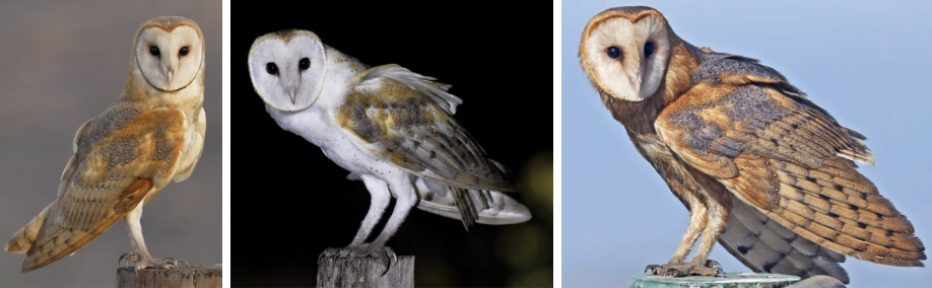
Barn Owl
Habitat: open habitats- grasslands, deserts, marshes, ag fields, strips of forests, woodlots, ranchland, suburbs/cities, nest in tree cavities, caves, barns, and other buildings
Diet: mostly small mammals- rats, mice, voles, lemmings, and other rodents, also shrews, bats, and rabbits, prey are usually nocturnal, occasionally eat birds
Characteristics: medium sized, buff and gray above, white below, smooth round head, heart-shaped white face with dark eyes, no ear tufts, rounded wings, short tails, long legs
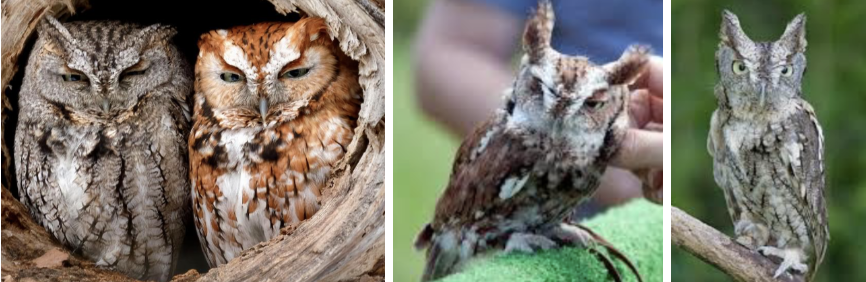
Eastern Screech-Owl
Habitat: almost any habitat with sufficient tree cover, need tree cavities, fair open understories preferred, can still live in farmland, suburban landscapes, and city parks
Diet: most kinds of small animals- birds, mammals, worms, insects, crayfish, tadpoles, frogs, and lizards, mammals- rats, mice, squirrels, moles, rabbits, occasionally bats
Characteristics: robin sized (tiny), short, stocky, mostly gray or reddish-brown, patterned with complex bands and spots, almost no neck, large head, yellow eyes, pointed often raised ear tufts, round wings, short square tail
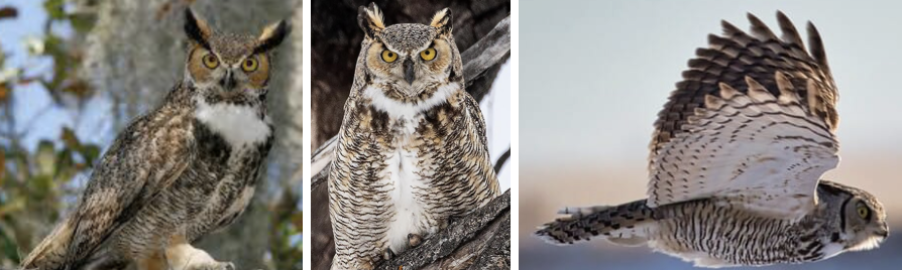
Great Horned Owl
Habitat: forests, gravitate toward secondary-growth woodlands, swamps, ag areas, also in wide variety of deciduous, coniferous, and mixed forests, prefer old growth stands in some areas, home range usually includes open habitat, fairly common in wooded parks, suburbs, cities
Diet: diverse diet, size of prey ranges from tiny rodents to geese and raptors, eat mostly mammals and birds- especially rabbits, hares, mice, and American Coots, supplement with reptiles, insects, fish, inverts, and carrion
Characteristics: large, thick body, blunt-headed silhouette, mottled gray-brown with reddish brown face, white patch on throat, rounded head, big yellow eyes, short bill, ear tufts, broad rounded wings
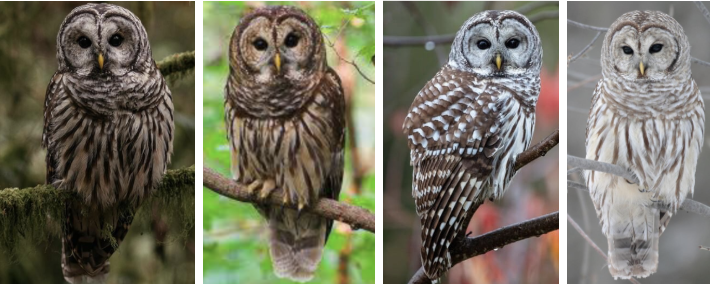
Barred Owl
Habitat: live year-round in mixed forests or large trees, often near water, usually in large unfragmented blocks of mature forest, preferred include swamps, streamsides, and uplands, may contain hemlock, maple, oak, beech, etc.
Diet: small animals- squirrels, chipmunks, mice, rabbits, birds, herps, inverts, tend to swallow prey whole
Characteristics: large, stocky, mottled brown and white overalls, brown mottling in face feathers, horizontal in neck feathers, and vertical in ventral feathers, round head, dark black eyes, no ear tufts, medium length round tail
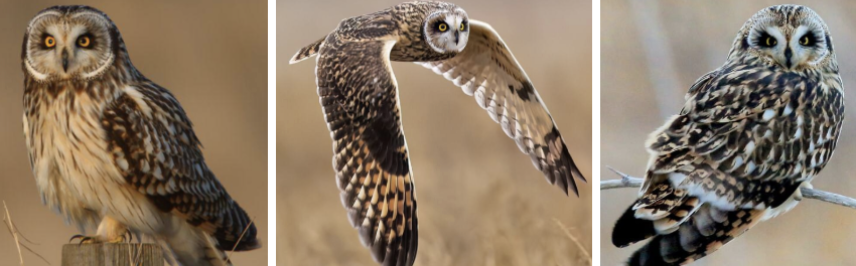
Short-eared Owl
Habitat: large open areas with low veg- prairie and coastal grassland, meadows, savanna, tundra, marshes, ag areas, winter- similar but more likely to include large open areas within woodlots, stubble fields, fresh/saltwater marsh, etc.
Diet: mostly small mammals- especially mice and voles, also eat shrews, moles, lemmings, rabbits, pocket gophers, bats, rats, weasels, and muskrats, also eat birds- adult and nestling terns, gulls, shorebirds, songbirds, etc.
Characteristics: medium sized, medium brown spotted with buff/white on upperparts, buff below, breast streaked (no horizontal stripes like barred owl), white rim around pale face, dark black surrounding very yellow eyes, round head, small ears, broad wings with smoothly rounded tips, short tail
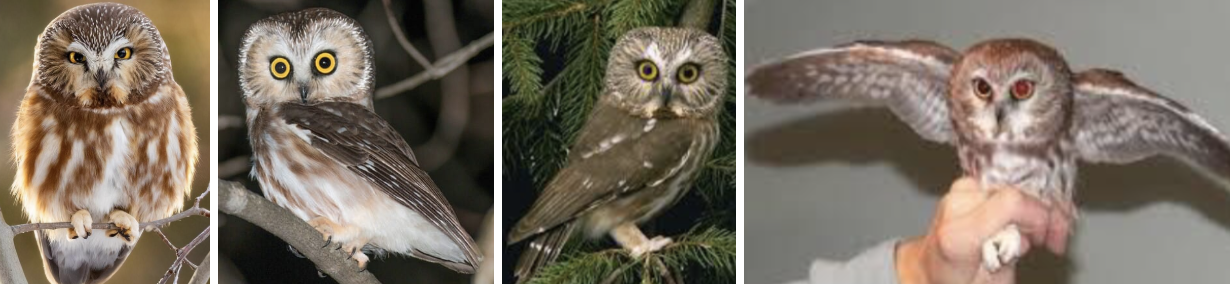
Northern Saw-whet Owl
Habitat: breed in forests- prefer mature forest with open understory, deciduous trees, dense conifers, and riverside habitat nearby, nest in wide range of wooded habitats- coniferous swamps, disturbed deciduous woodlands, savannahs, riverside forest, and shrub-steppe habitat, winter- dense forest throughout the breeding range
Diet: mostly small mammals- most commonly deer mice and white-footed mice, also shrews, house mice, jumping mice, montane voles, shrew-moles, bats, etc., hunt at night, supplement during migration with birds, may eat beetles, grasshoppers, moths, and bugs
Characteristics: very small (even smaller than screech owl), mottled brown with whitish facial disk and white spotted head, solid brown on back, large round head, large yellow eyes, no ear tufts