Plant Materials Final Exam
 Studied by 0 people
 Call Kai
 Learn
Learn Practice Test
 Spaced Repetition
 Match
Match Flashcards
 Knowt Play
1/152

There's no tags or description
Looks like no tags are added yet.
Name | Mastery | Learn | Test | Matching | Spaced |
|---|
No study sessions yet.
153 Terms
The flower heads of Helianthus annuus tend to follow the path of the sun each day from morning to light
True
Fireblight and apple scab are 2 common problems associated with
1. Malus
2. Pyrus calleryana
Malus
Which of the following has handsome foliage especially as the wind buffets the leaves exposing the silvery underside
1. Magnoila virginiana
2. Magnolia x soulangeana
Magnolia virginiana
Chioanthus virginicus produces flowers in white color, slightly fragrant, showy, and in fleecy soft cluster
True
Which one(s) of the following are true about Liriodendron tulipifera?
1. one of the few large trees with showy flowers
2. tulip-like flowers
3. leaf has broad truncate apex
4. fruits are cone-like aggregate of samaras
ALL
A plant is said to flower on "old wood" is the flower bud was developed on stems from
the previous year
Prunus x incap 'Okame' is a cross of P. incisa x P. campanulata, what type of hyprid is this
Interspecific
Plants flowering in early spring:
1. Chaenomeles speciosa
2. Prunus x incamp 'Okame'
3. Fosythia x intermedia
ALL
A viola basically is a small-flowered version of the pansy
True
Jasminum nudiflorum is one of the few plants that are in flower during the winter months
True
The flowers in Asteraceae consist of ray florets, or petals, surrounding dense centers of disk florets that produce seeds
True
Vitex agnus-castus:
1. Lamiaceae
2. simple leaves
3. palmately compound leaves
4. produce flowers in dense, erect clusters
Lamiaceae, palmately compound leaves, dense clustered flowers
Catharanthus roseus is susceptible to various forms of rots associated with overwatering
True
Hydrangea quercifolia has
1. showy flowers
2. exfoliating cinnamon-brown bark
3. lobed oak-like leaves
4. Oakleaf Hydrangea
ALL
Berberis thunbergii has:
1. bright red berry fruits
2. single spine
3. angled or grooved stems
4. yellowish flowers
ALL
Which one(s) of the following are the winter annual/cool season annuals?
1. vinca
2. viola
3. impatiens
4. brassica oleracea
viola, brassica oleracea
The common name for Cotinus coggygria is Common Smoketree because the showy pubescent pedicels and peduncles of flowers provide the "smoke" appearance
True
Which of the following are true about Poncirus trifoliate?
1. Hardy orange
2. compound leaves with 3 leaflets
3. stems with numerous spines
4. fruits are sweet
Hardy Orange, compound leaves, spines
Which of the following are true about Magnolia x soulangeana?
1. Saucer Magnolia
2. multistemmed
3. flowers appear before leaves emerge
4. late spring frosts and freezes can nip the emerging flower buds
ALL
Which of the following are true about Euonymus alatus?
1. Burning bush
2. compound leaves
3. stems with ridges or corky wings
4. leaves turn bright red in fall
Burning Bush, stems with ridges/corky wings, bright red in fall
Which of the following are true about Aesculus parviflora?
1. Bottlebrush buckeye
2. fruits edible
3. simple leaves
4. palmately compound leaves
Bottlebrush Buckeye, palmately compound leaves
Which of the following are true about Betula nigra?
1. exfoliating bark
2. trunk divided into several large branches
3. evergreen
4. deciduous
exfoliating bark, multistemmed, deciduous
The newly selected MS state flag design contains a magnolia flower
True
Eastern Redbud flowers in spring before leaves appear, some flowers produced on older limbs
True
Hydrangea macrophylla produce flowers in either lacecap form or mophead form
True
Angelonia angustifolia performs well in the heat. It is a great summer-flowering annual
True
Most petunias now grown in the landscape are hybrids
True
There are four main groups of Begonia: Dragon wing, Rex, Tuberous, Wax
True
Antirrhinum majus (Snapdragon) is a tender perennial usually grown as a cool-weather annual
True
Brassica oleracea is a biennial usually grown as an annual with striking foliage and winter and spring color
True
What is the state tree?
Magnoliaceae, Magnolia grandiflora, Southern Magnolia
What is the difference between annual, perennial and biennial?
Annual- whole life cycle in one season
Perennial- life cycle across multiple seasons
Biennial- veg life in 1st year and flowers 2nd year
How can pH affect Hydrangea macrophylla flower colors
acid soil- blue
basic soil- pink
5 F's of Pyrus calleryana 'Bradford'?
flower, fast, fortitude, fireblight resistant, foliage
What is the major landscape value of Forsythia x intermedia (Border Forsythia)
good for color
List 2 ID features that you can use to distinguish between Forsythia x intermedia and Jasminum nudiflorum
Winter Jasmine has compound leaves while Border Forsythia has simple leaves. Winter Jasmine's stems are green when young and turn brown with age
List 1 ID feature that you can use to distinguish between Impatiens and Vinca
Impatiens have a spur on the back of the flower
Describe the unique ID feature of the flowers of Calycanthus floridus
maroon, fragrant, numerous sepals and petals
Describe at least 2 landscape values of Barberry
Borders and hedges, first-rate plants for color and durability. They appear to live forever.
Describe 2 landscape values of annuals
ground cover, grouping, massing, attract butterfiles
The common name for Cotinus coggygria is?
Commmon Smoketree, because of the showy, pubescents pedicles that look like “smoke”
Fireblight and apple scab are two common problems assocaited with:
Malus
What are the 5 F’s of Pyrus calleryana ‘Bradford’? What are its downfalls?
Flowers (April)
Foliage (growing season and fall color)
Fast
Fortitude (poor soils, drought tolerant, moist)Fireblight resistant
short trunk with a tendency to split with age. shorter lifespan typically 10-15 years.
Catharanthus roseus (vinca) is suscetpible to various forms of rots
True, overwatering causes root rot/stem rot
Annuals
from seed to flower to seed within a single growing season
Perennials
persist for many growing seasons
Biennials
two years to complete their life cycles
Winter annual/Cool-season annuals
Viola & Brassica oleracea
A viola is
A small-flowered version of the pansy
Antirrhinum majus (snapdragon) is a
tender perennial grown as a cool-weather annual
Angelonia angustifolia (summer snapdragon) is a
Summer-flowering annual the does well in the heat
Hydrangea macrophylla produces flowers in
both lacecap (flattended flower clusters) form and mophead form (globose flower clusters)
How does pH affect Hydrangea macrophylla flower colors?
The flower color on some cultivars is strongly affected by the pH of the soil. The color changes depend on the concentration of aluminum ions in the soil. The bluest shades are always produced on the most acid soils. pH 5.0 to 5.5, best for blue; pH 6.0 to 6.5 or higher best for pink coloration.
Aesculus parvifolia
Bottlebrush buckeye
Opposite Leaves
Palmatley Compound Leaves
Euonymus alatus
Burning Bush
Stems have ridges or corky wings
Leaves turn to bright red color in fall, hence burning bush
Berberis thunbergii
Single Spine
Angled or grooved stems
Yellowish flowers
Poncirus trifoliate
Hardy Orange
Compound leaves with 3 leaflets
Stems with numerous spine
Vitex agnus-castus
Family: Lamiaceae
Palmatley compound leaves
Produce flowers in dense, erect clusters
How Vines Climb
Tendrils
Twiners
Adhesive Pads
Clinging Stem roots
How Vines Climb: Tendrils
Tendrils are skinny, wiry structures along the plant's stem that actually reach around in the air until they come into contact with something they can grab. Two types:
Stem tendrils are shoots that grow from the stem
Leaf Tendrils are modified laves that emerge from a leaf node
How Vines Climb: Twiners
Either have twining leaves or twining stems.
Plants with twining leaves, such as clematis, use their leaves like tendrils. The young leaves of these plants are able to twist around slender wires, string, twigs or other leaves
Twining stems twist around whatever they touch, be it a pole, branch, wire or chair leg. The stems will wind clockwise or counterclockwis
How Vines Climb: Adhesive Pads
stem tendrils with touch-sensitive adhesive pads that allow them to stick to almost any surface.
How Vines Climb: Clinging Aerial Stem Roots:
The stems of these plants produce a cluster of short, stout roots that cling to surfaces of almost any kind
Viola
A viola basically is a small-flowered version of the pansy. For best weather tolerance against snow, wind, and rain, violas rebound more quickly and are better garden performers. • Violas, often called “Johnny-Jump-Ups”. Both the leaves and flowers of pansies and violas are edible and high in vitamins A and C.
Four Groups of Begonia’s
Dragon Wing Begonias - best for containers and baskets
Rex Begonias - beautiful foliage
Tuberous Begonias - hanging baskets
Wax Begonias - most common
Two stages of English Ivy
juvenile stage is the climbing/spreading stage, 3-5 lobed, dark green leaves (to 4” long ) on non-flowering stems with adventitious roots.
adult stage is the shrubby non climbing stage with rootless stems that do not spread or climb, but do produce round, umbrella-like clusters of greenish white flowers in early fall followed by blue-black berries
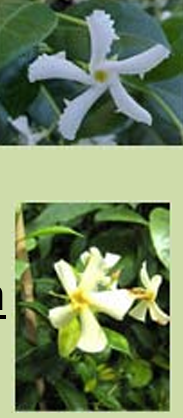
Confederate Jasmine Flower vs. Japanese Star Jasmine Flower
Confederate Jasmine: white, small amount of yellow in the center of the flower, white pedals that are slightly curved over towards the ends of the flower. Confederate Jasmine typically produces flowers more often and in greater quantities
Japanese Star: yellowish white, yellow around the hole in the center in the shape of a star, and the pedals do not curve towards the ends. Japanese Star Jasmine has smaller leaves in darker green, and smaller flowers in creamy yellow shade. It is more cold hardy than Confederate Jasmine.
Lonicera sempervirens
Trumpet Honeysuckle
Not as vigorous or rampant as L. japonica
Produce trumpet-like shaped flowers
Lonicera japonica (Japanses Honeysuckle) has become
A noxious weed in many areas of the countyr
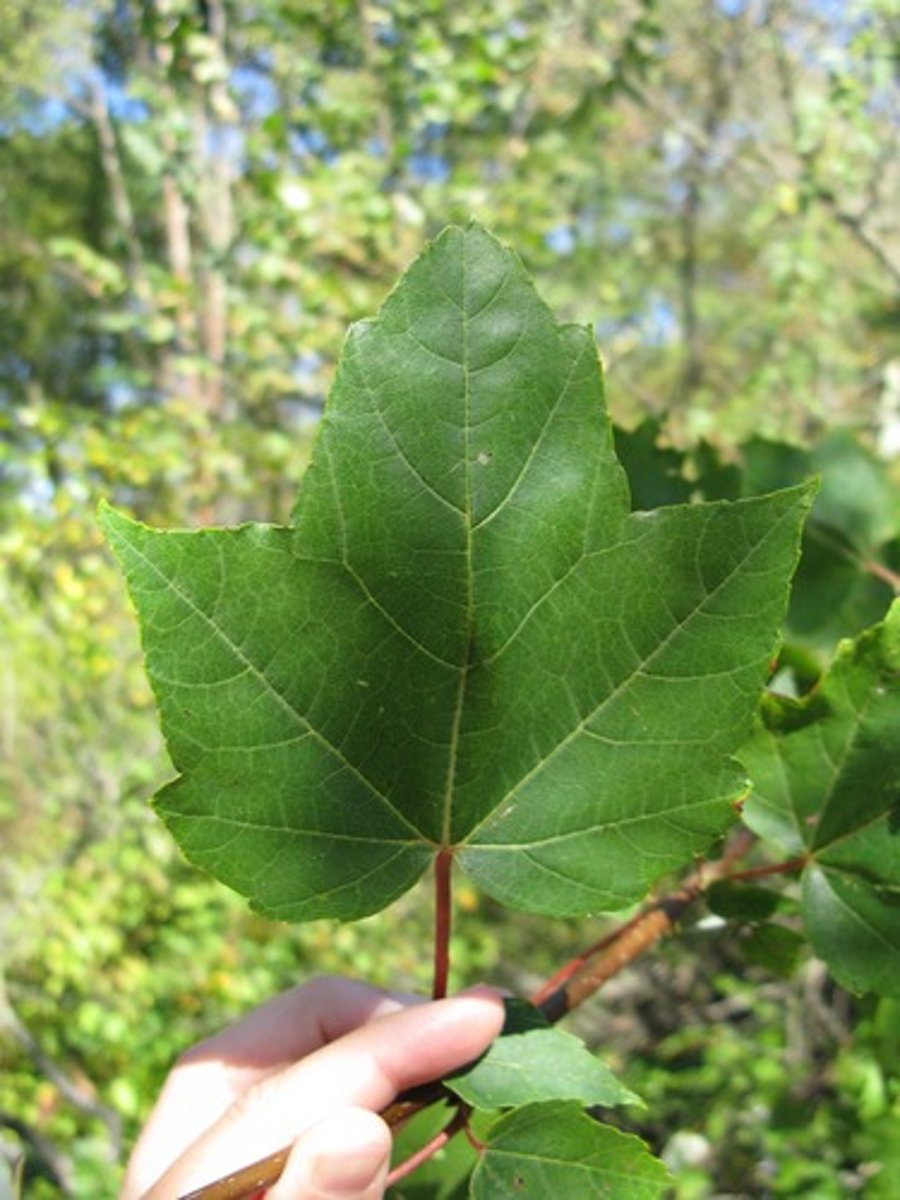
Acer rubrum
Red Maple
Sapindaceae
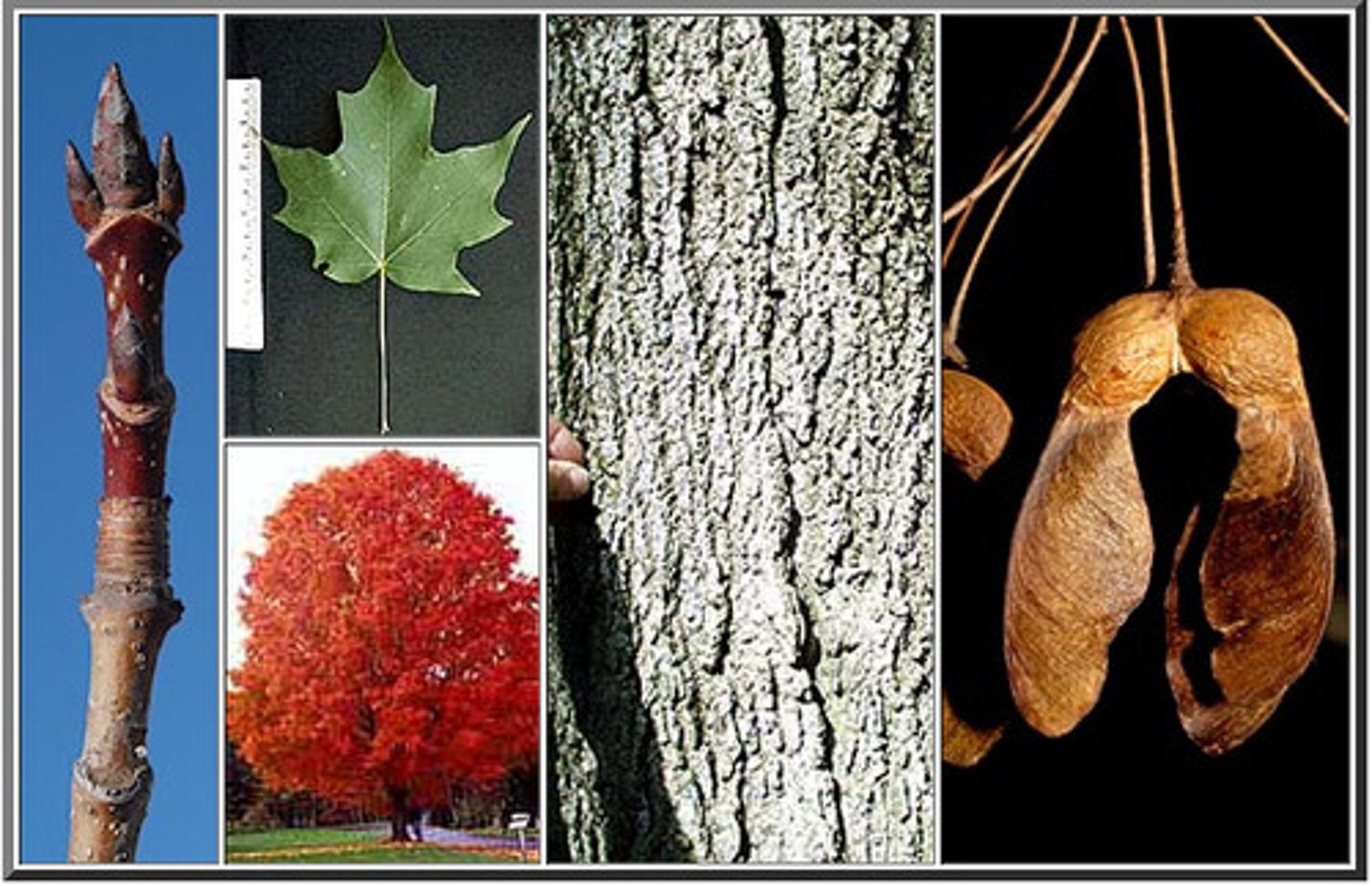
Acer saccharum
Sugar Maple
Sapindaceae
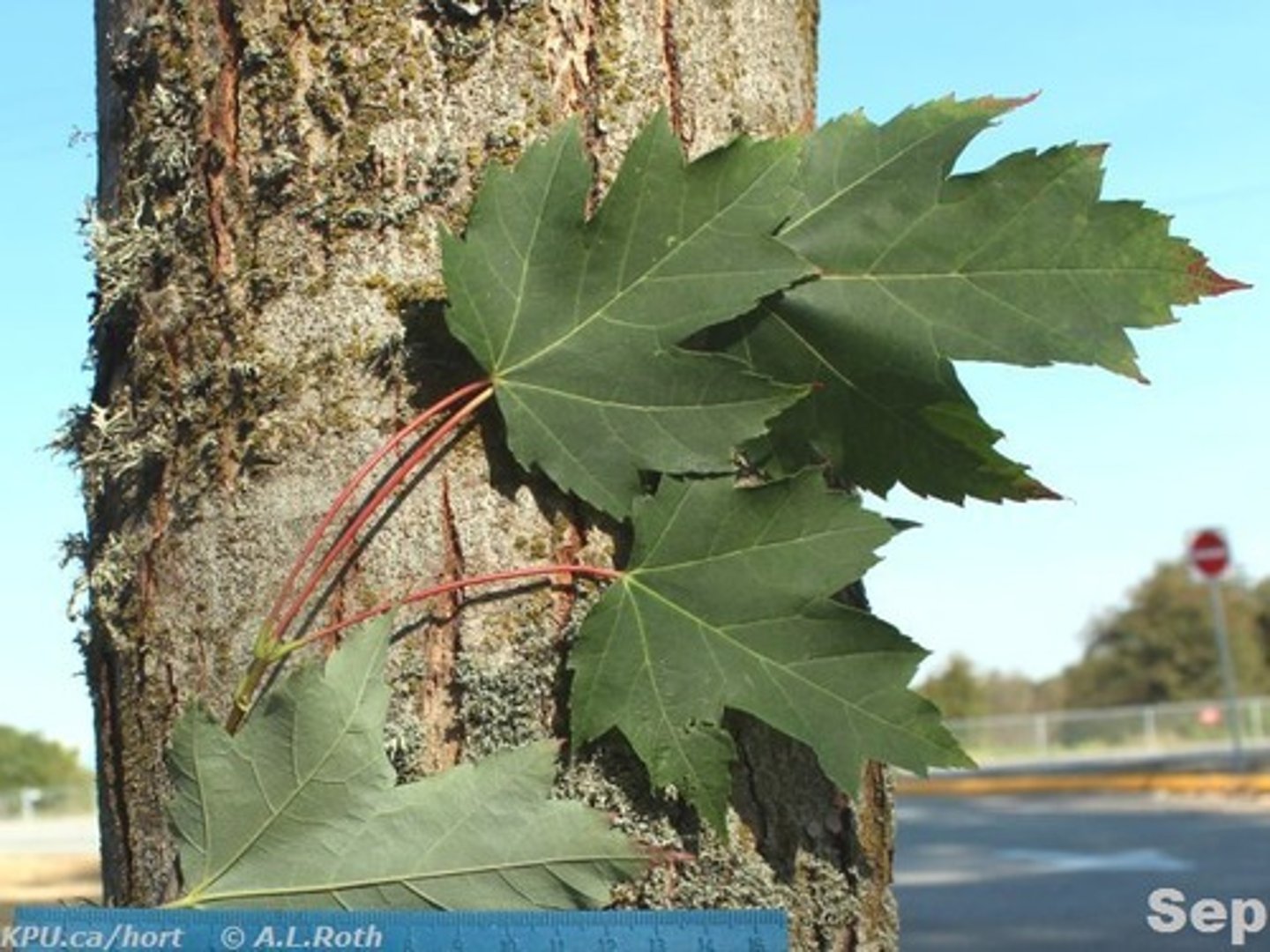
Acer x freemanii
Freeman Maple
Sapindaceae
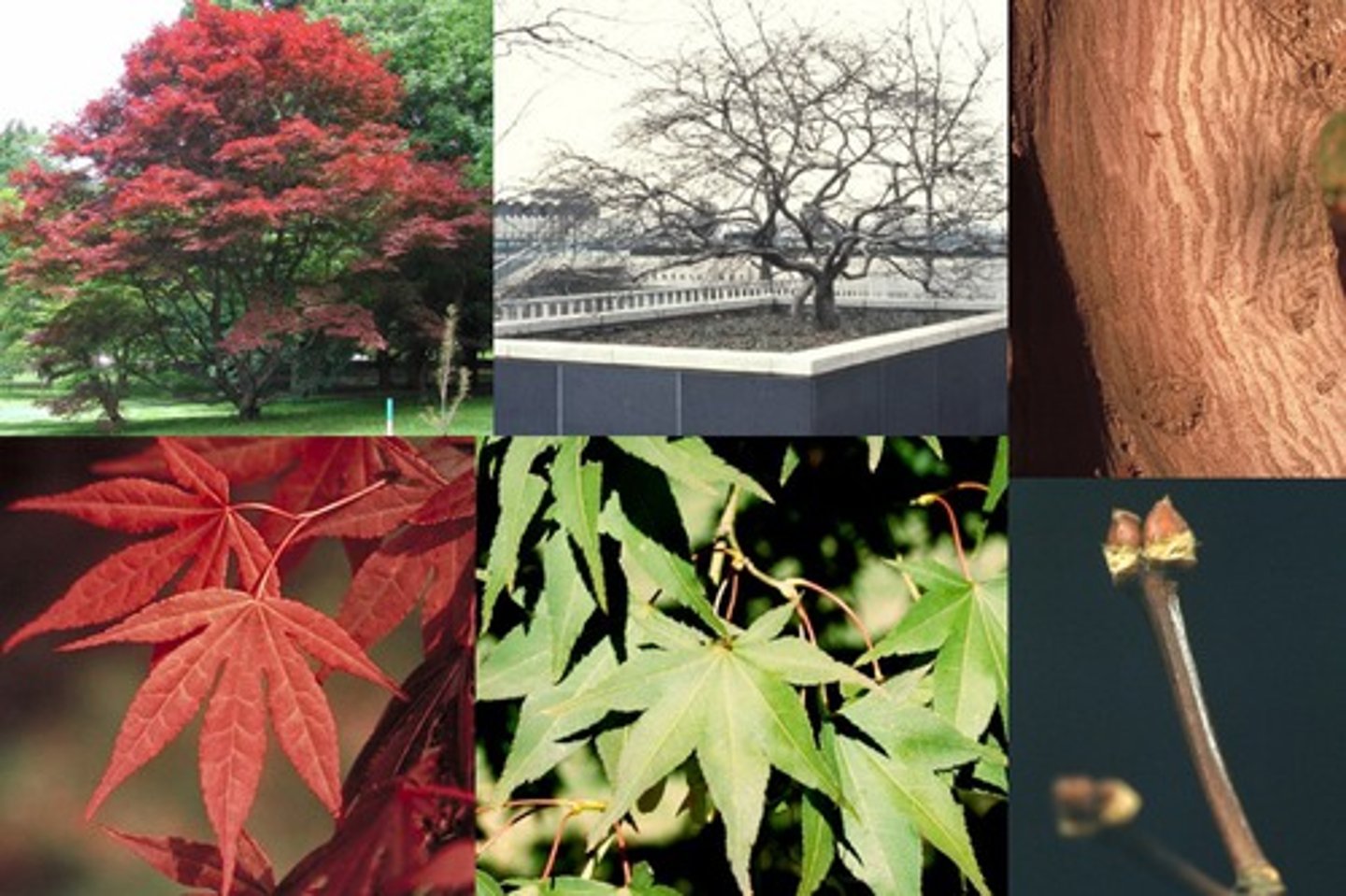
Acer palmatum
Japanese Maple
Sapindaceae
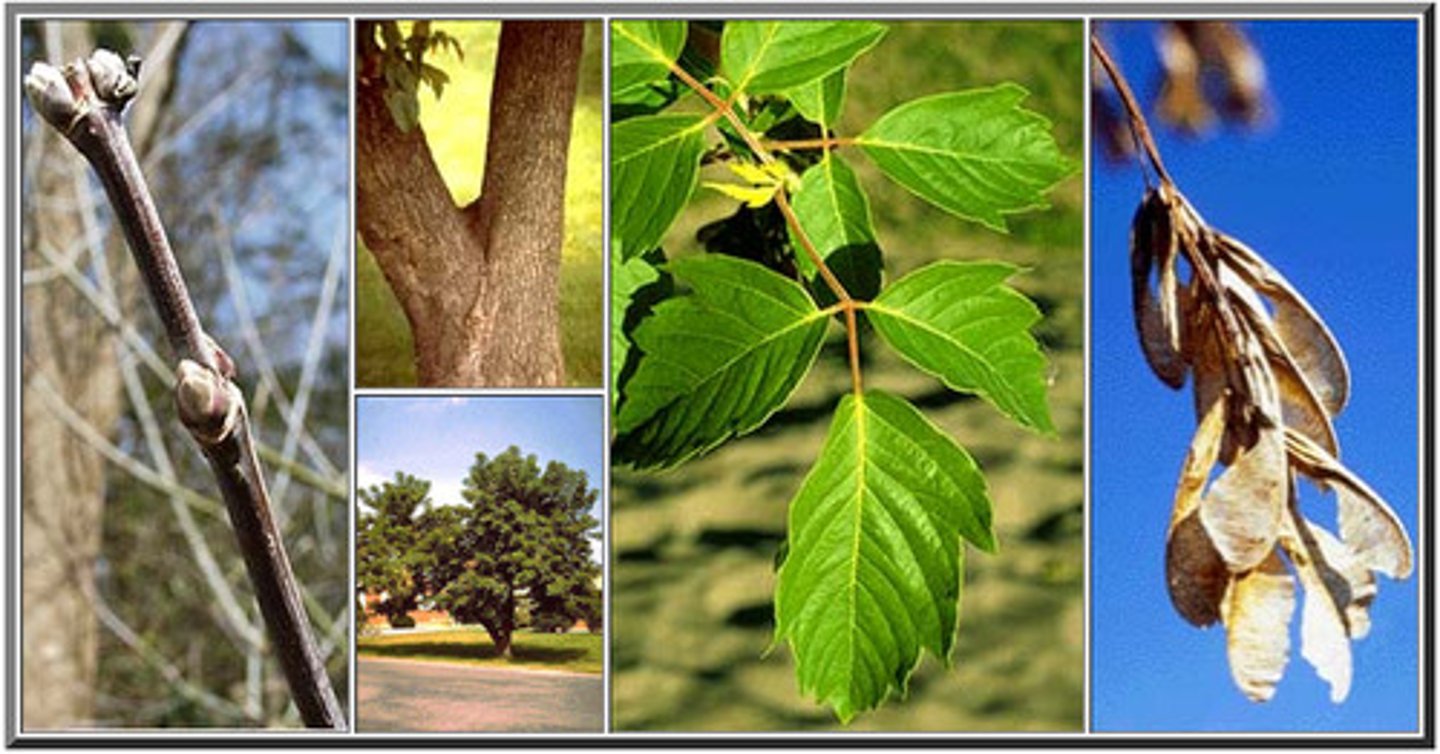
Acer negundo
Boxelder
Sapindaceae
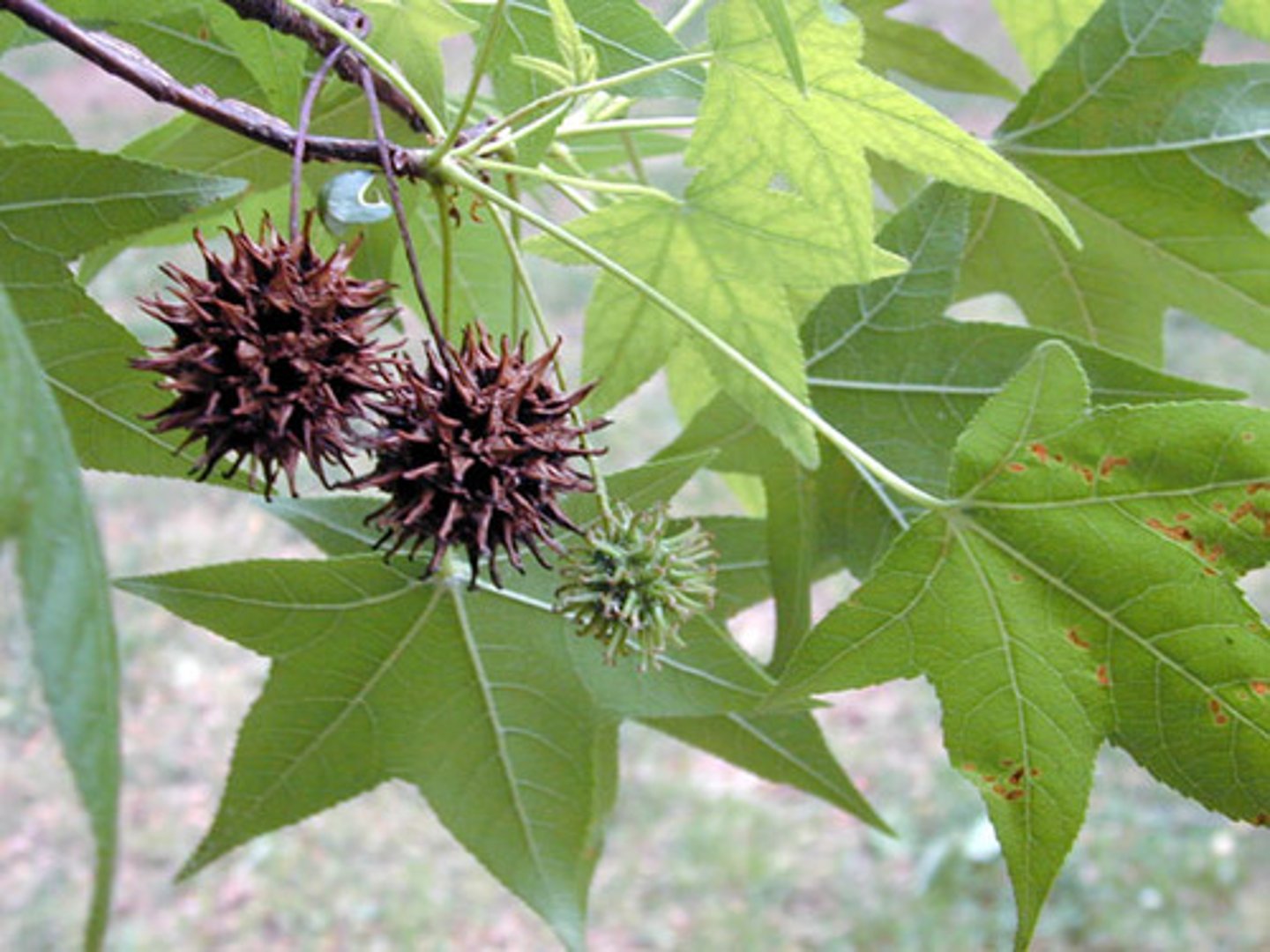
Liquidambar styraciflua
American Sweetgum
Altingiaceae
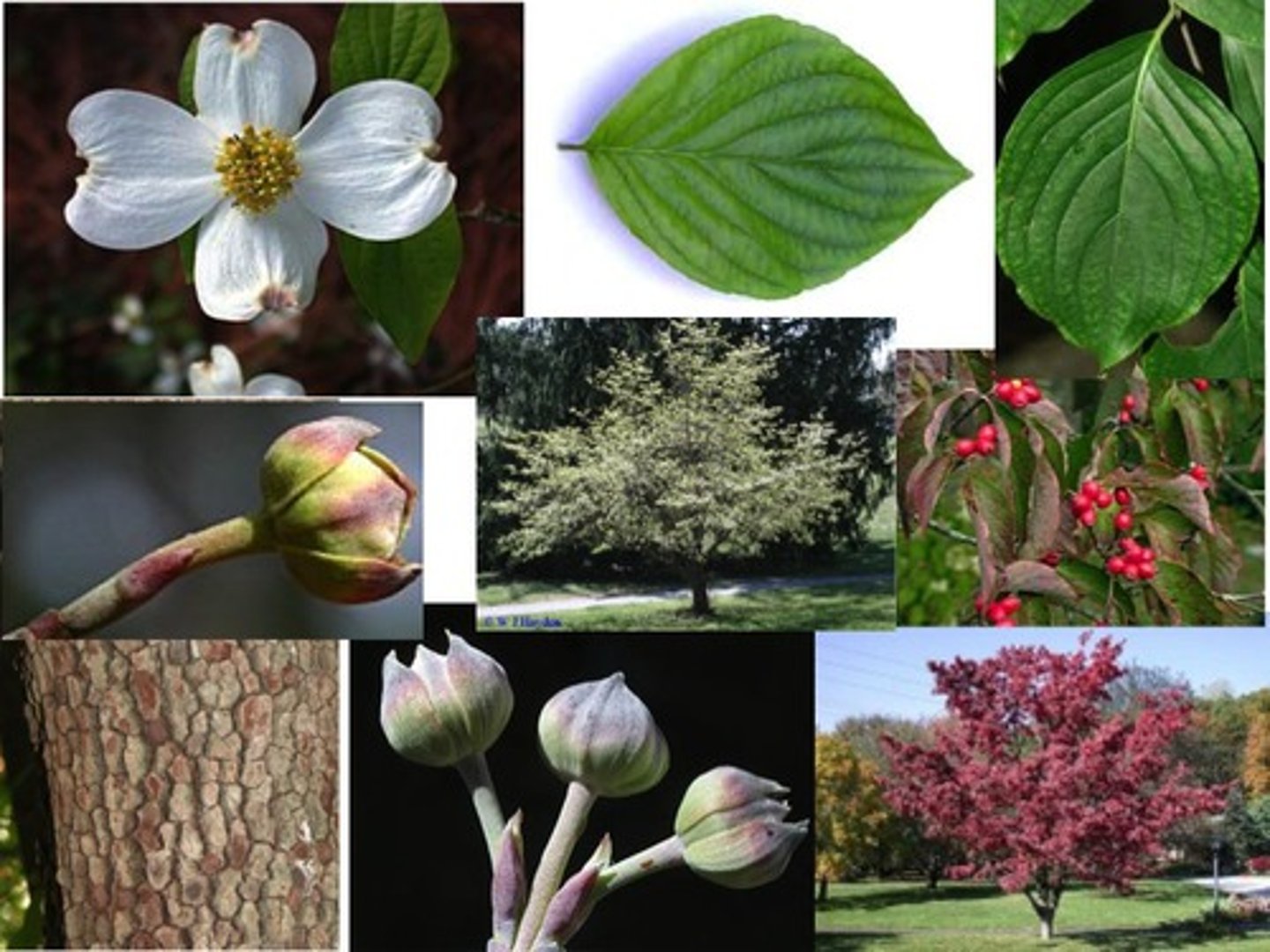
Cornus florida
Flowering Dogwood
Cornaceae
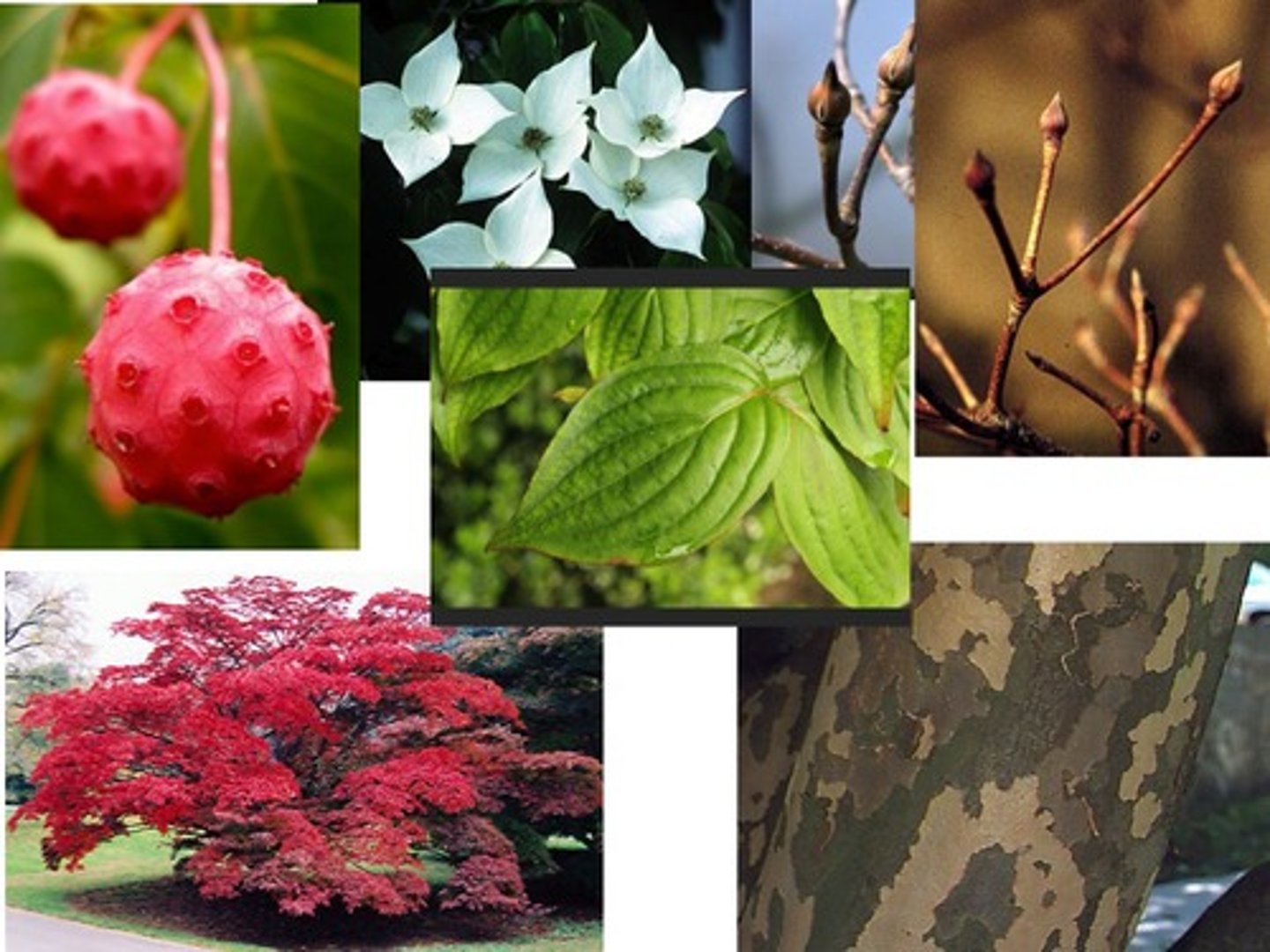
Cornus kousa
Kousa Dogwood
Cornaceae
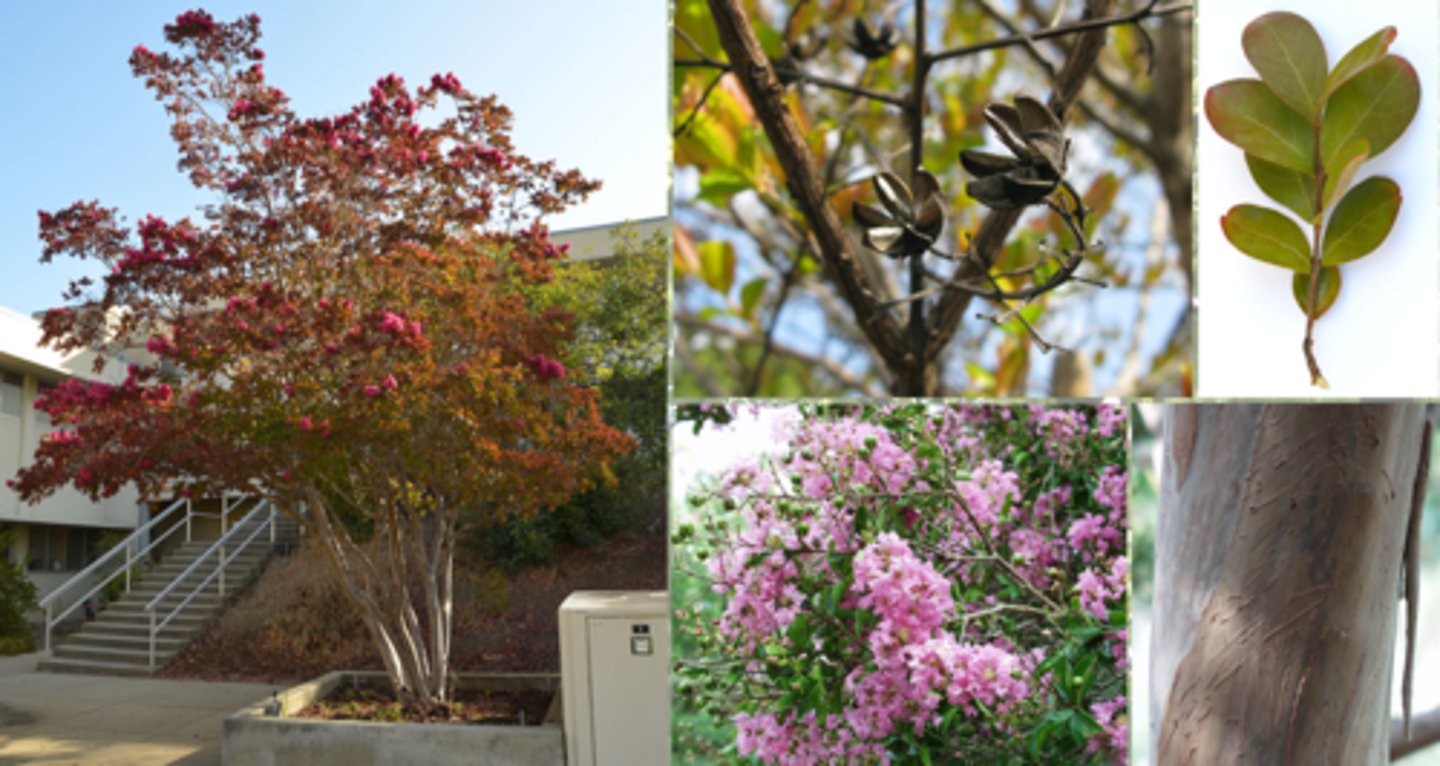
Lagerstroemia indica
Common Crape Myrtle
Lythraceae
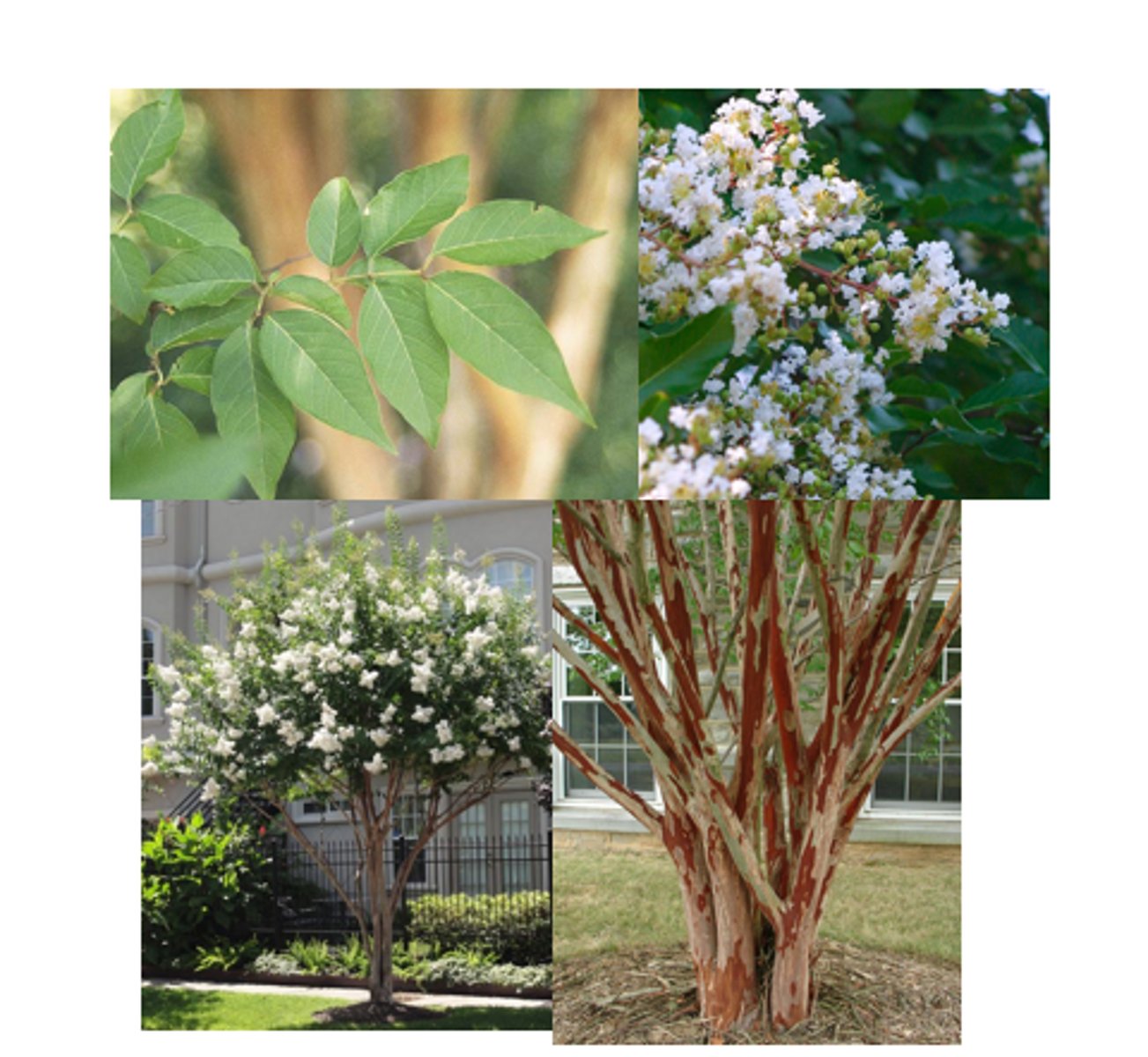
Lagerstroemia fauriei
Japanese Crape Myrtle
Lythraceae
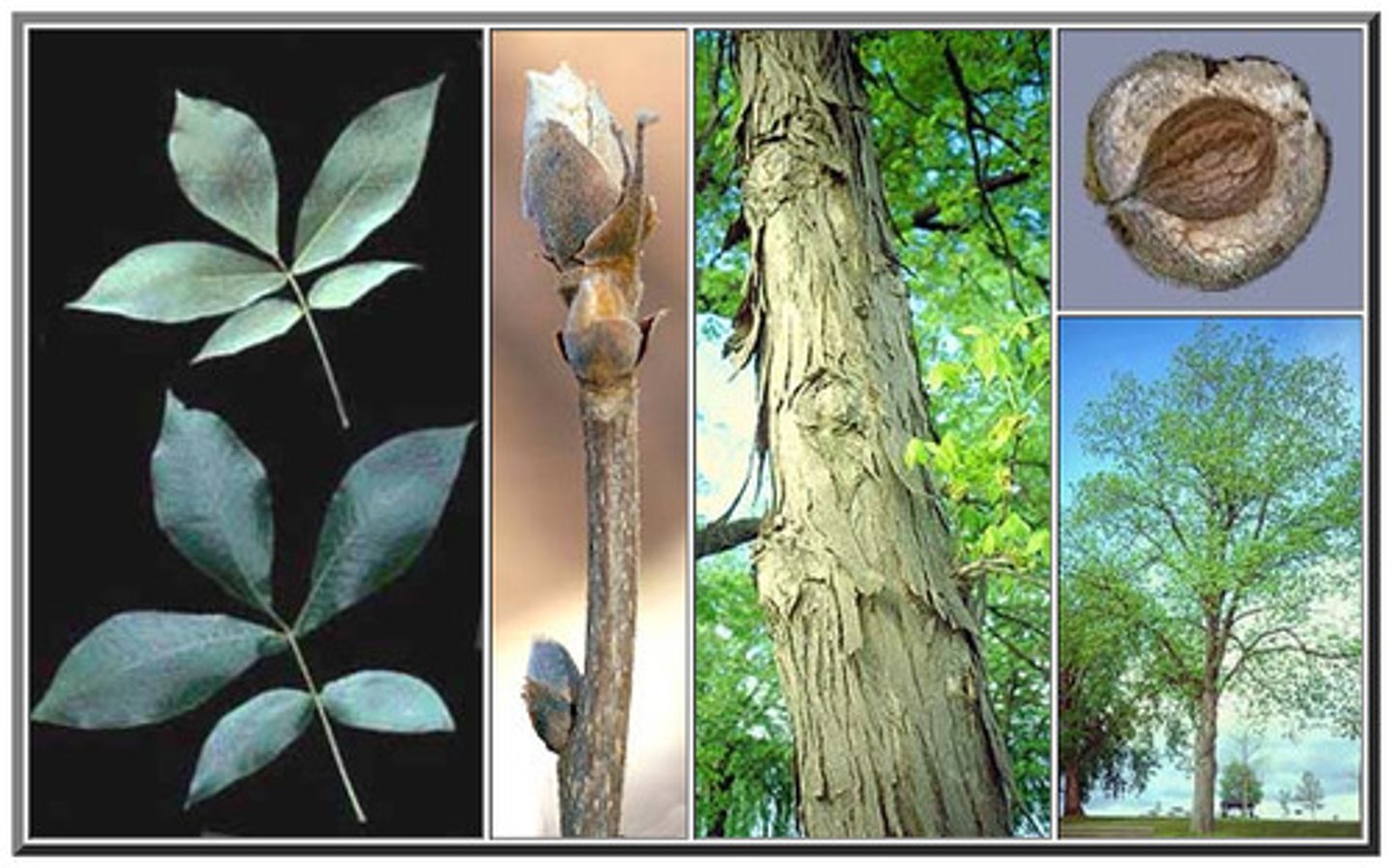
Carya ovata
Shagbark Hickory
Juglandaceae
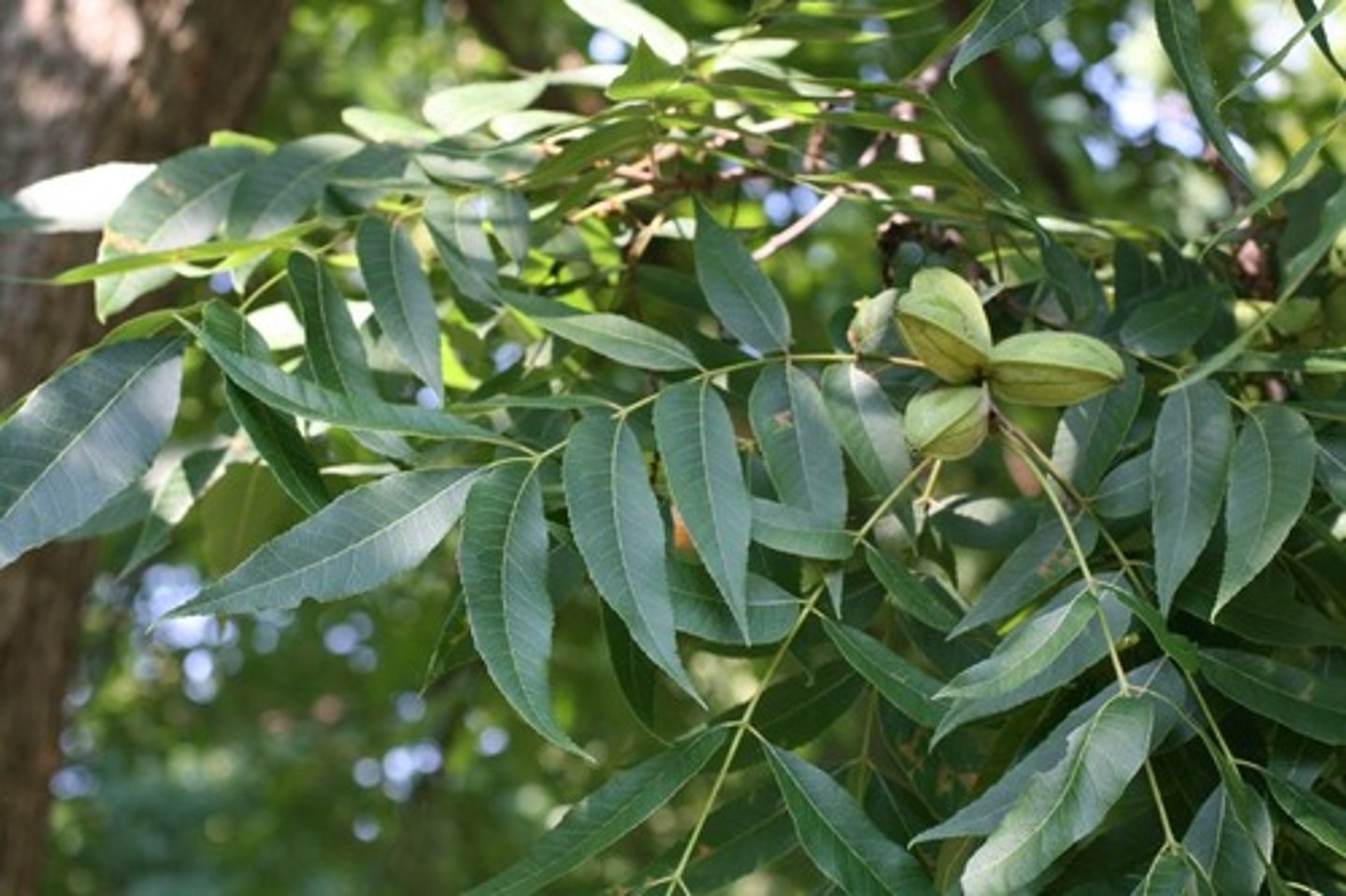
Carya illinoinensis
Pecan
Juglandaceae
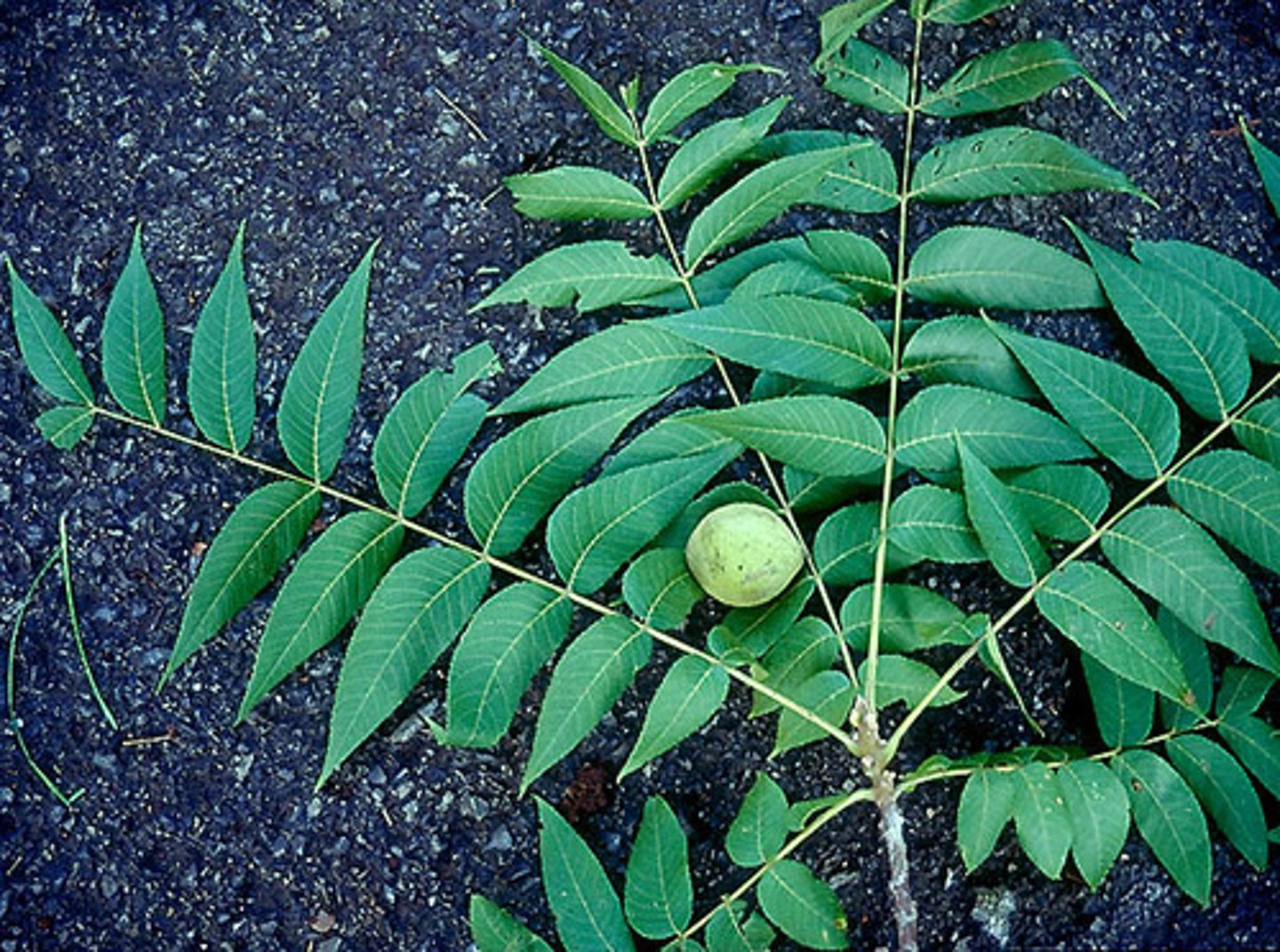
Juglans nigra
Black Walnut
Juglandaceae
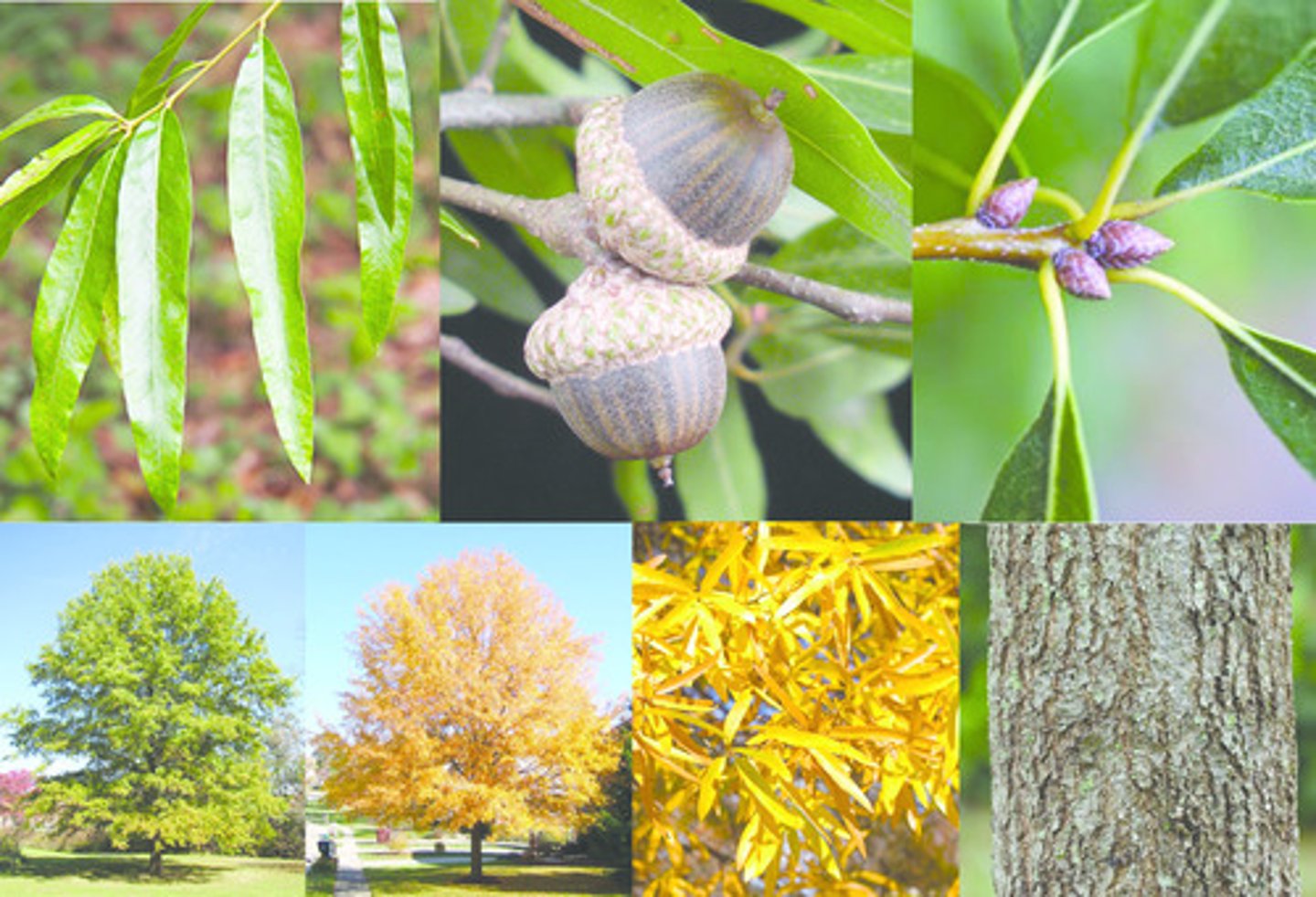
Quercus phellos
Willow Oak
Fagaceae
Leaves look like a willow leaf
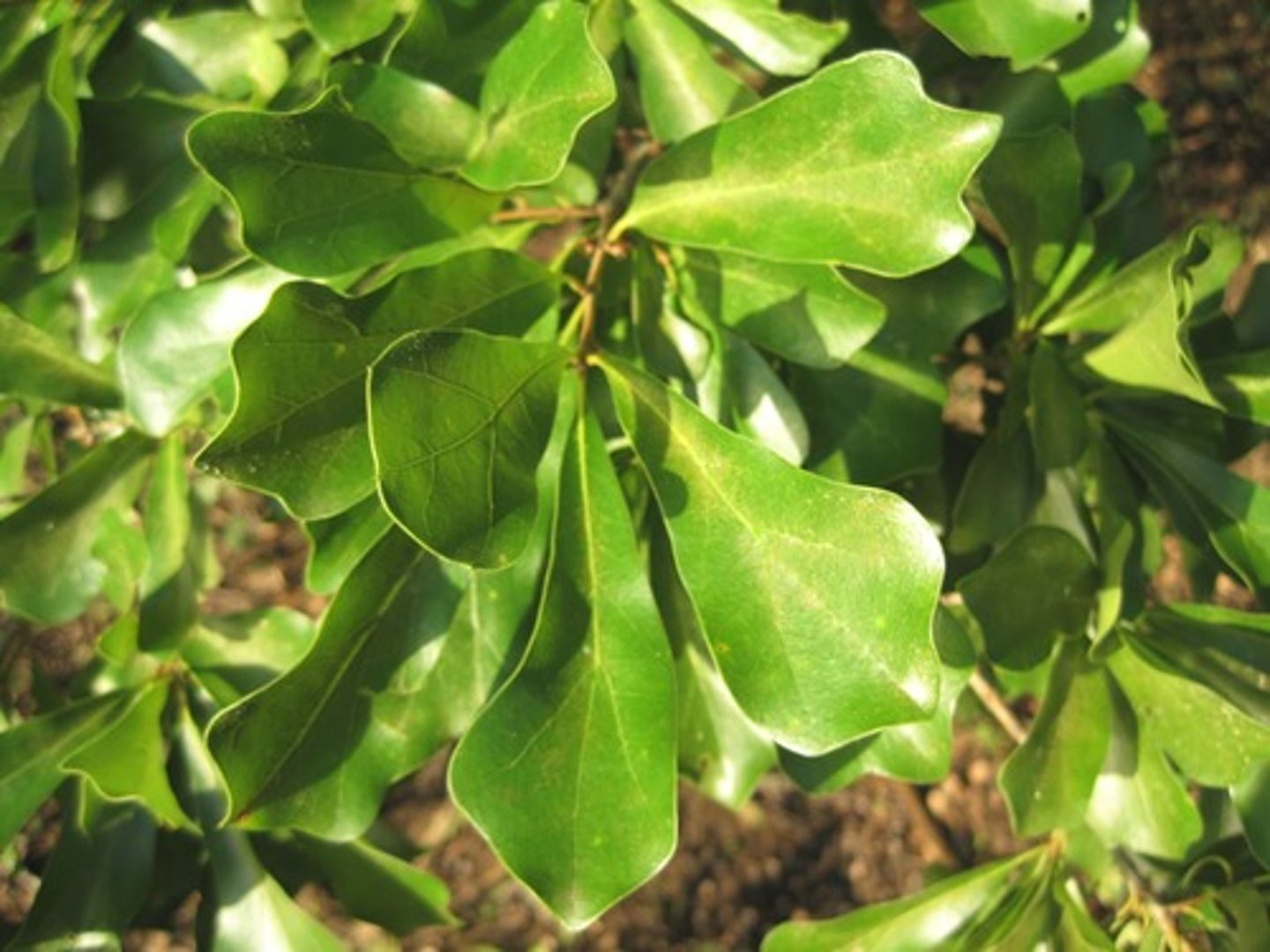
Quercus nigra
Water Oak
Fagaceae
Duck feet leaves
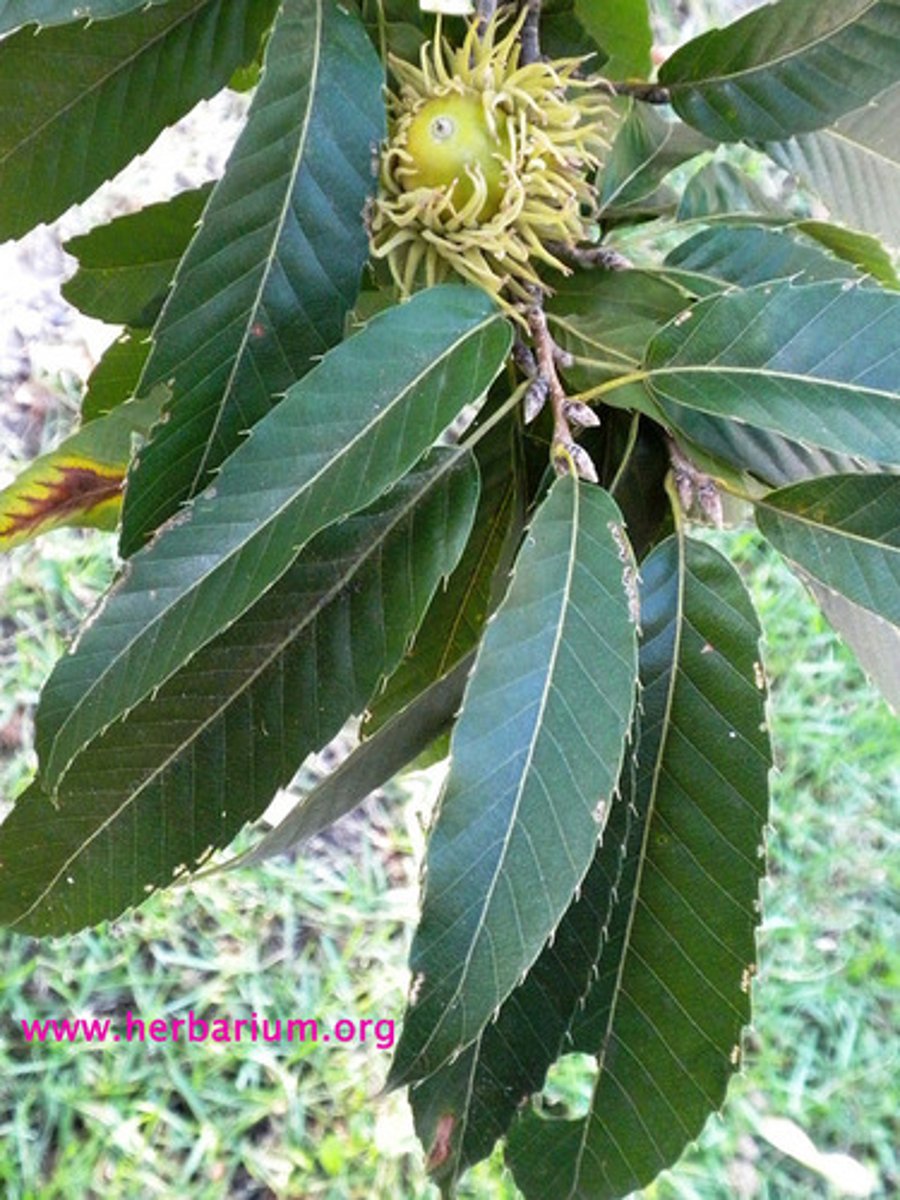
Quercus acutissima
Sawtooth Oak
Fagaceae
margin serrate with bristle-like teeth
acorn cap looks hairy
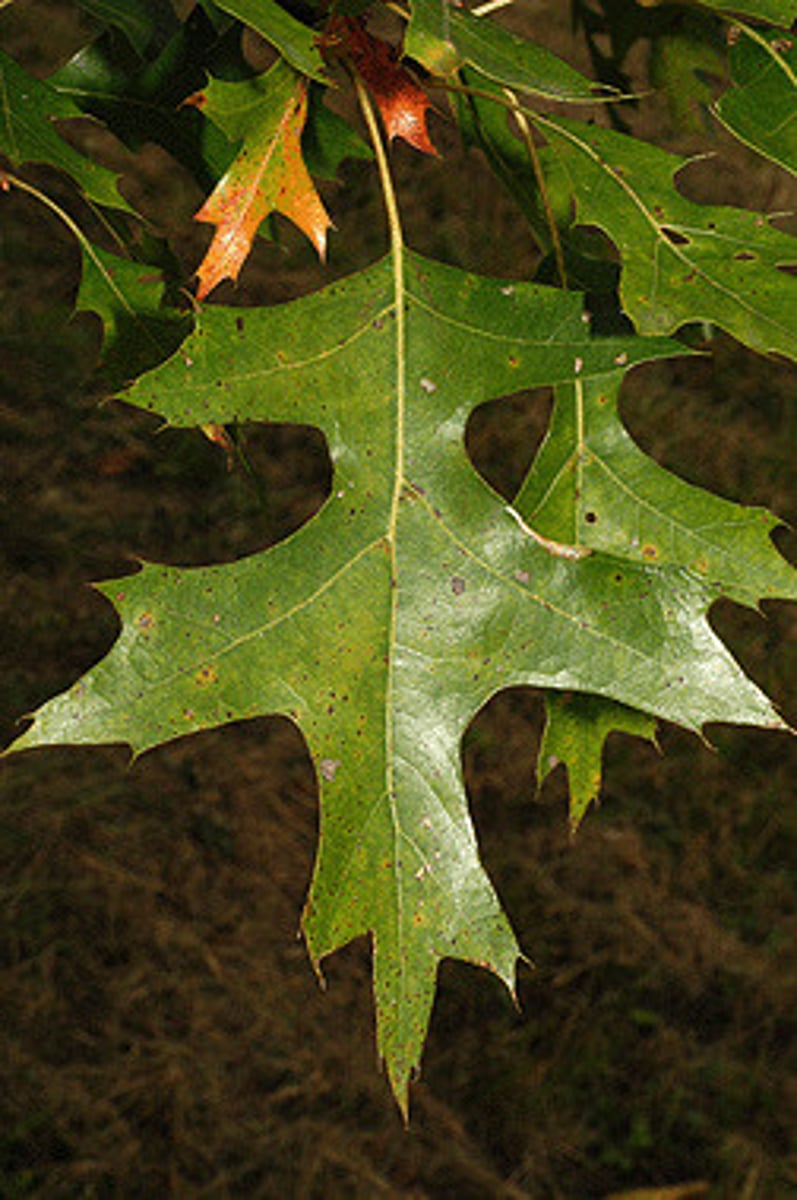
Quercus palustris
Pin Oak
Fagaceae
U-shaped leaves because of wide, deep sinuses.
Shallow ridges on bark.
Striate acorn.
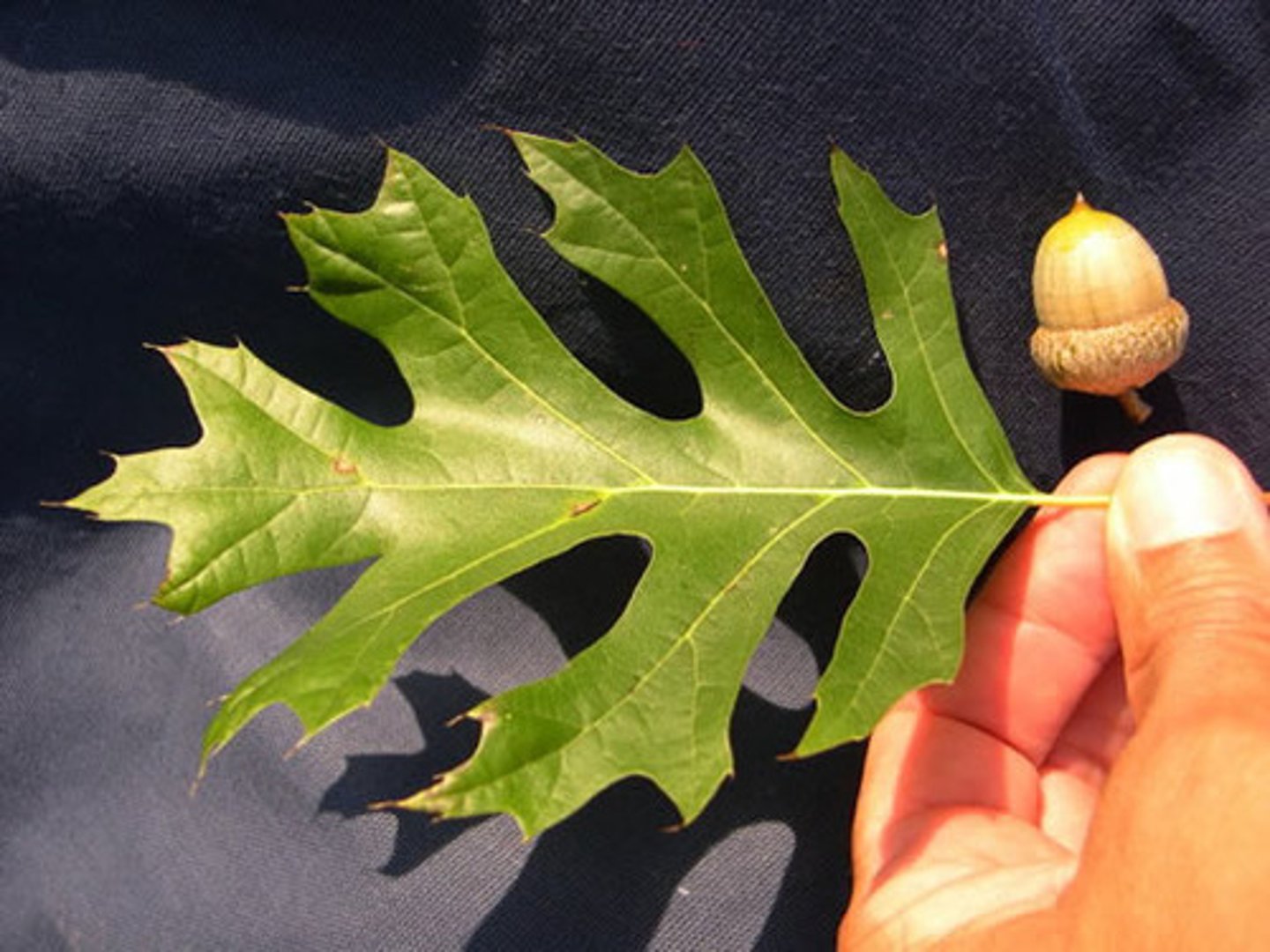
Quercus shumardii
Shumard Oak
Fagaceae
U-shaped leaf sinuses.
Grayish brown bark with deep furrows.
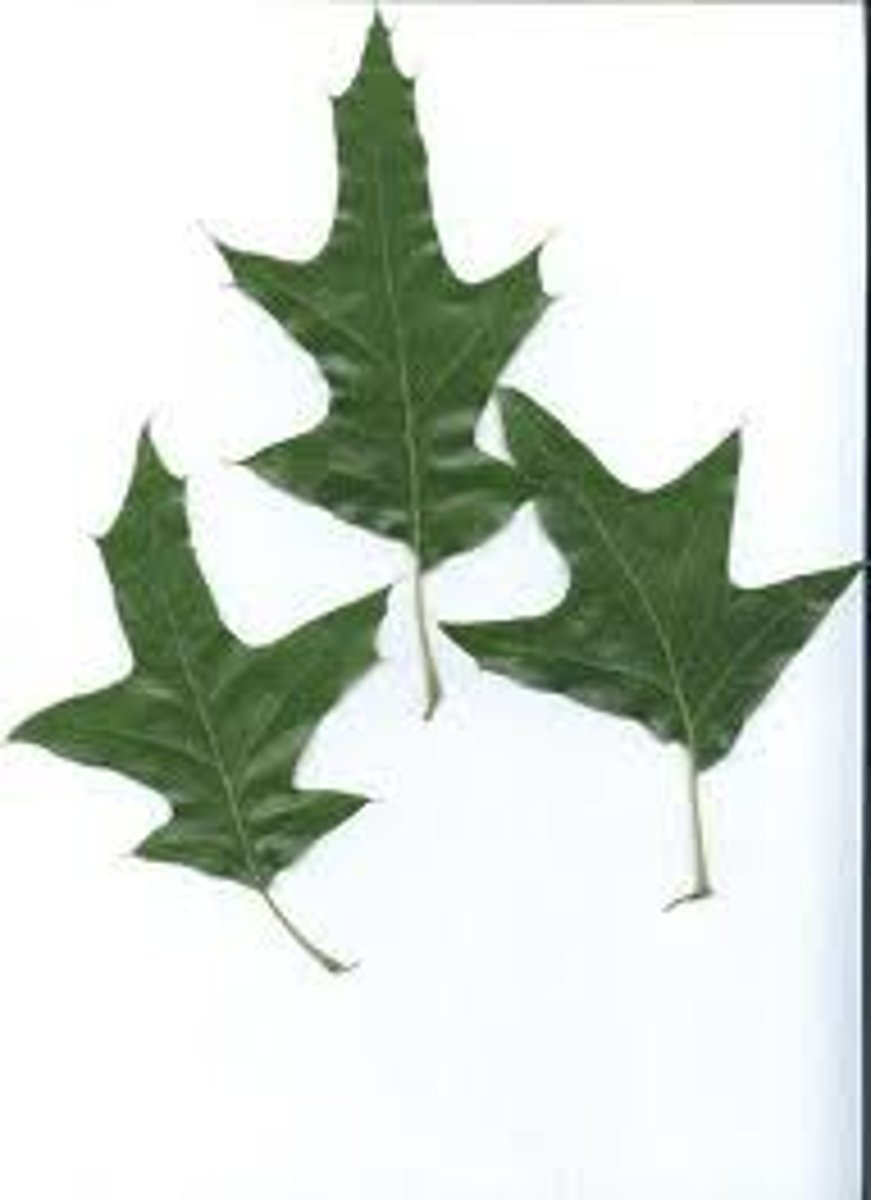
Quercus falcata
Southern Red Oak
Fagaceae
Terminal lobe is often much longer than the lateral ones
"Turkey's foot"
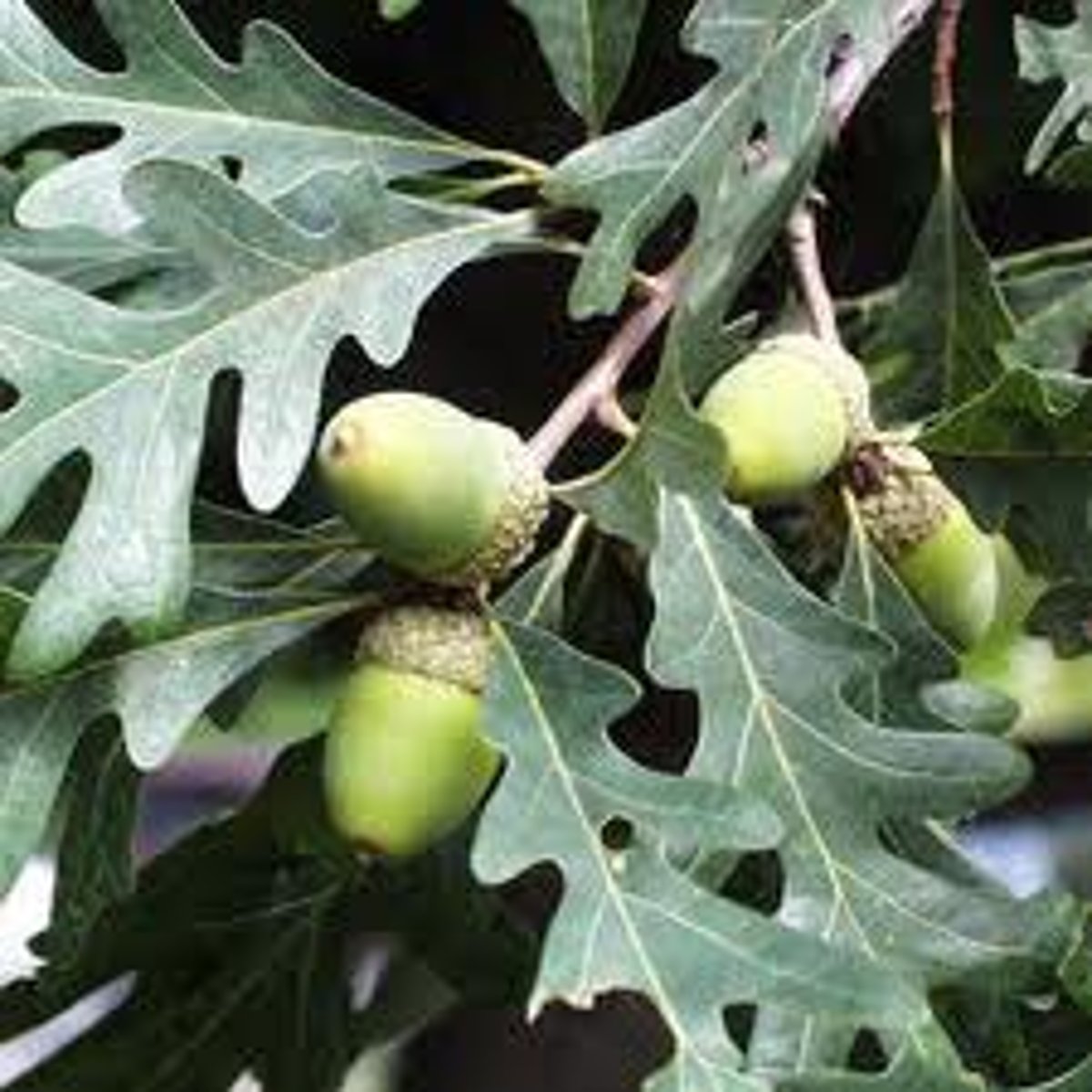
Quercus alba
White Oak
Fagaceae
rounded lobes
underside of leaves are greyish green
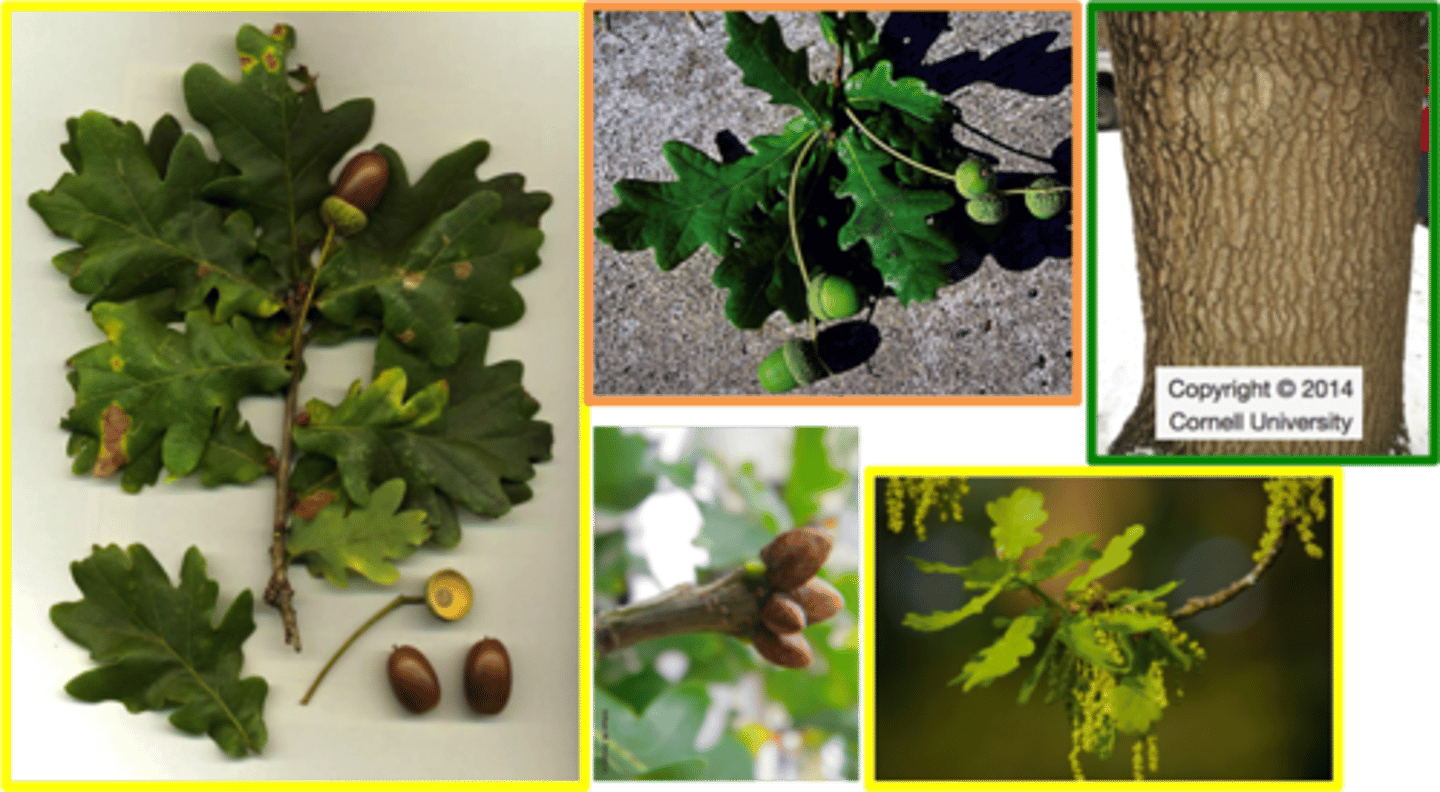
Quercus robur
English Oak
Fagaceae
acorn is elongated-conical
leaves will have little "ear lobes" at base of the blade
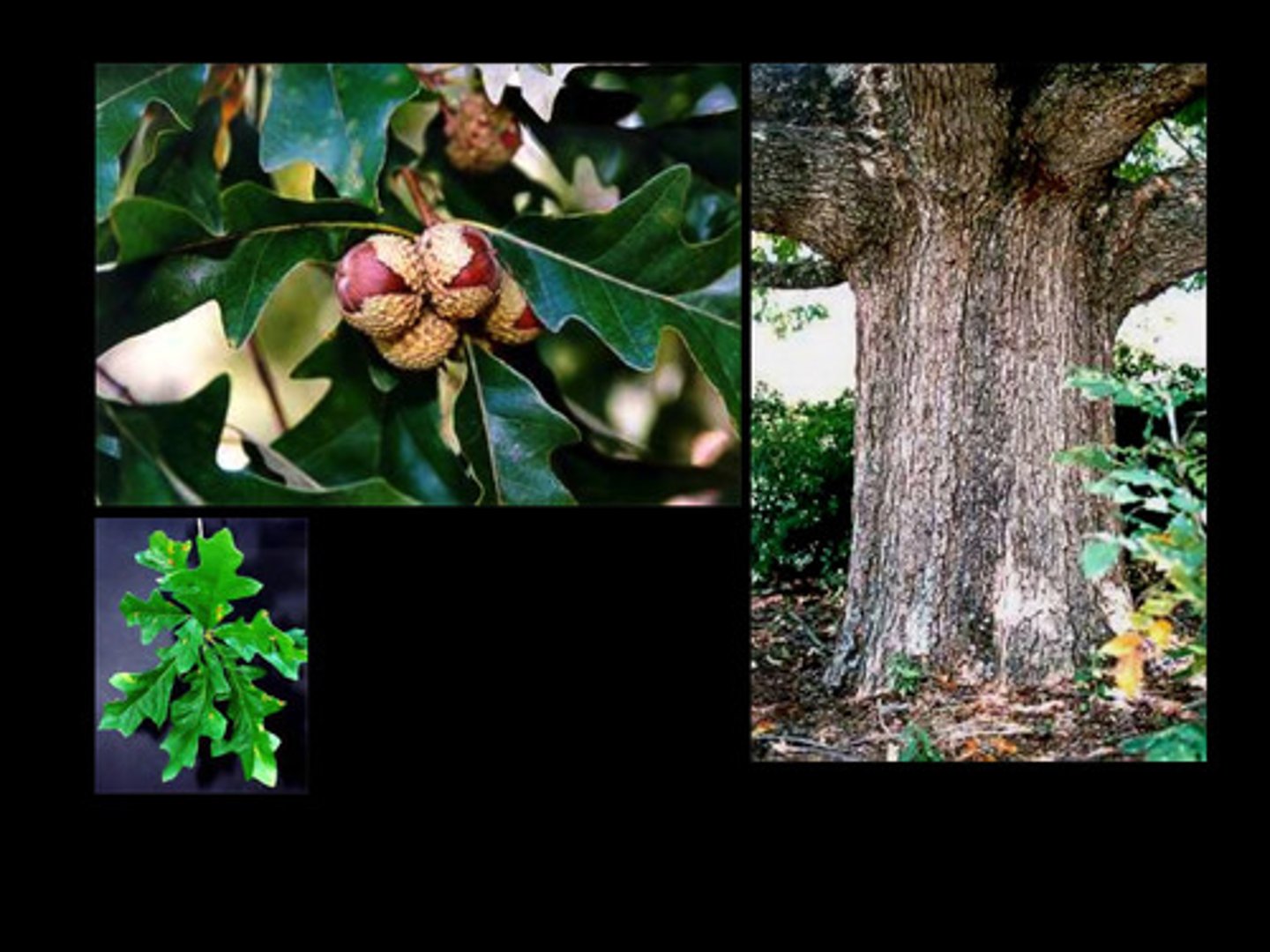
Quercus lyrata
Overcup Oak
Fagaceae
Acorn cap almost completely encloses the nut.
Small lobes on leaf bottom, 3 main lobes at apex.
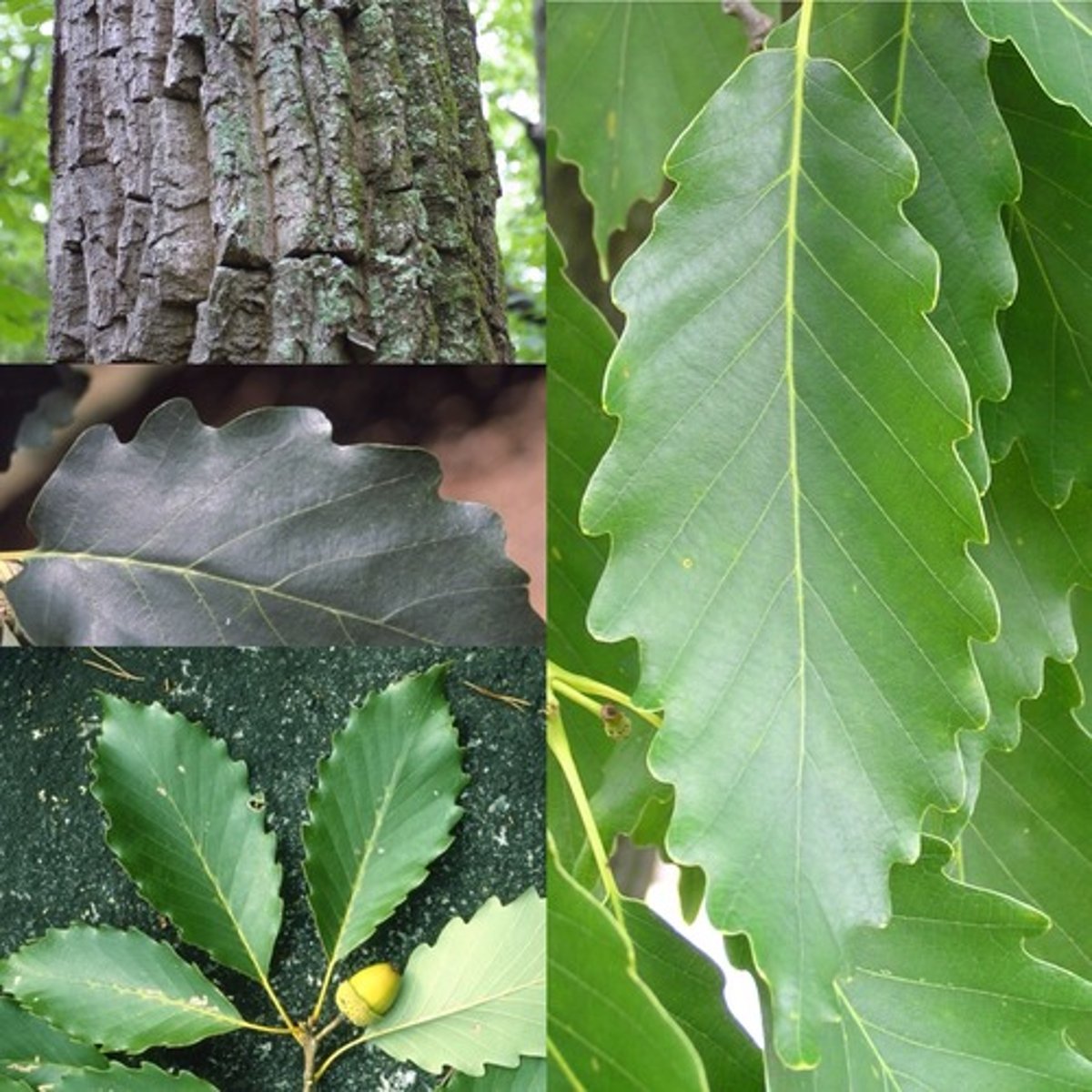
Quercus montana
Basket Oak
Fagaceae
about 10-14 pairs of lobes on leaves, each oblique rounded
acorn cap does not have fringe
Quercus michauxii
Swamp Chestnut Oak
Fagaceae
underside of leaf is more whitish
acorn cap does have fringe
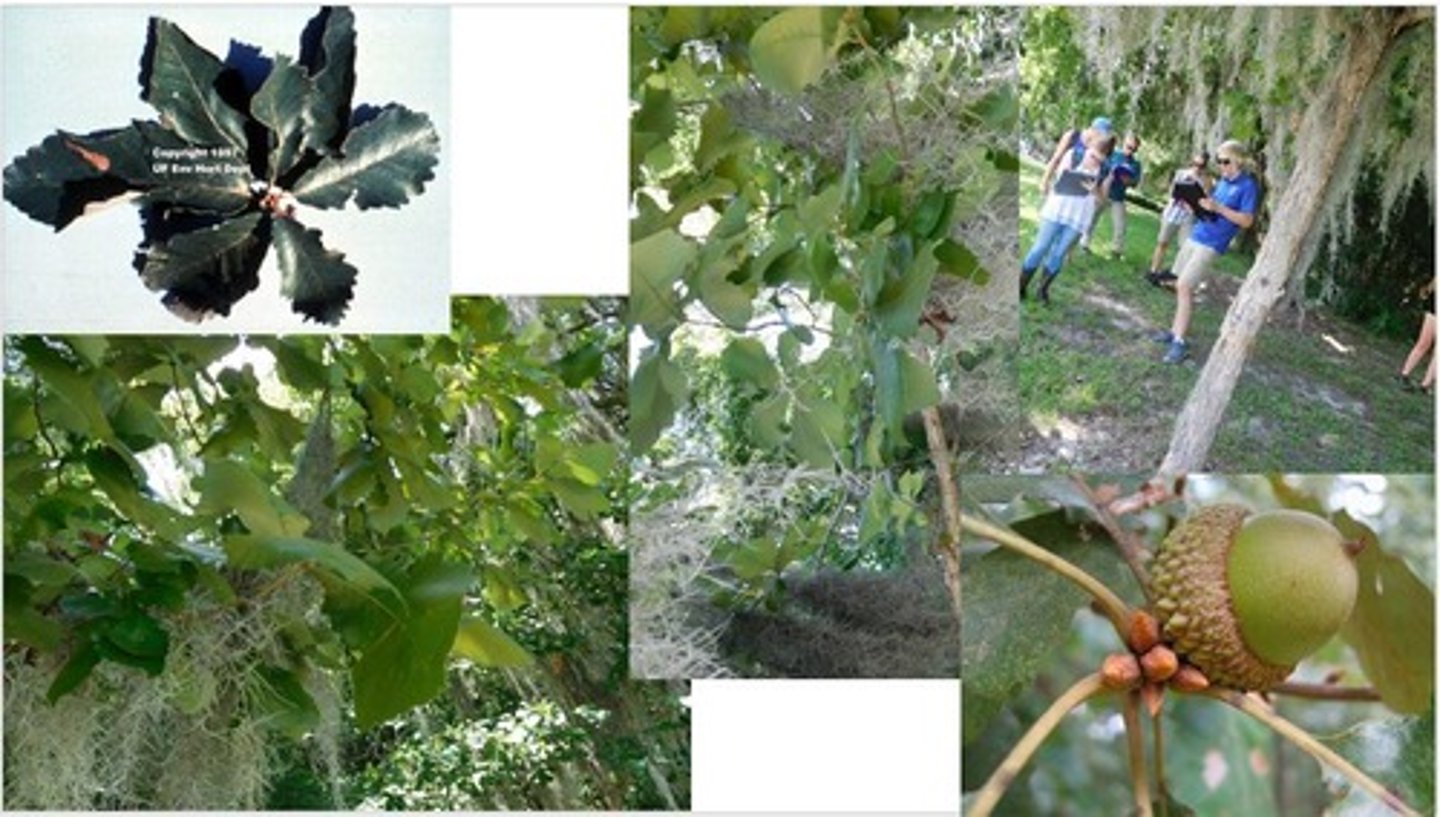
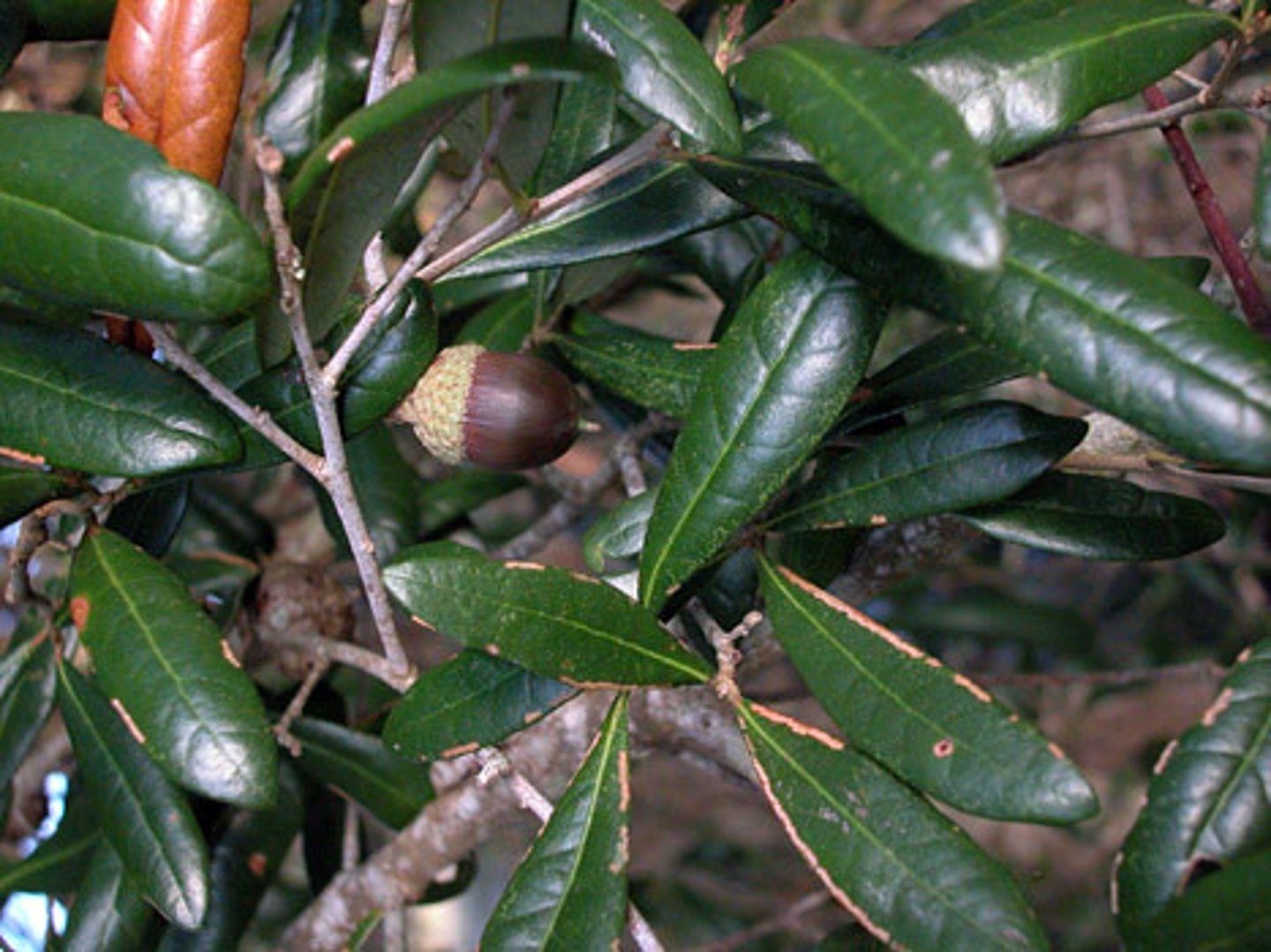
Quercus virginiana
Live Oak
Fagaceae
Evergreen leaves
Acorn dark brown to black
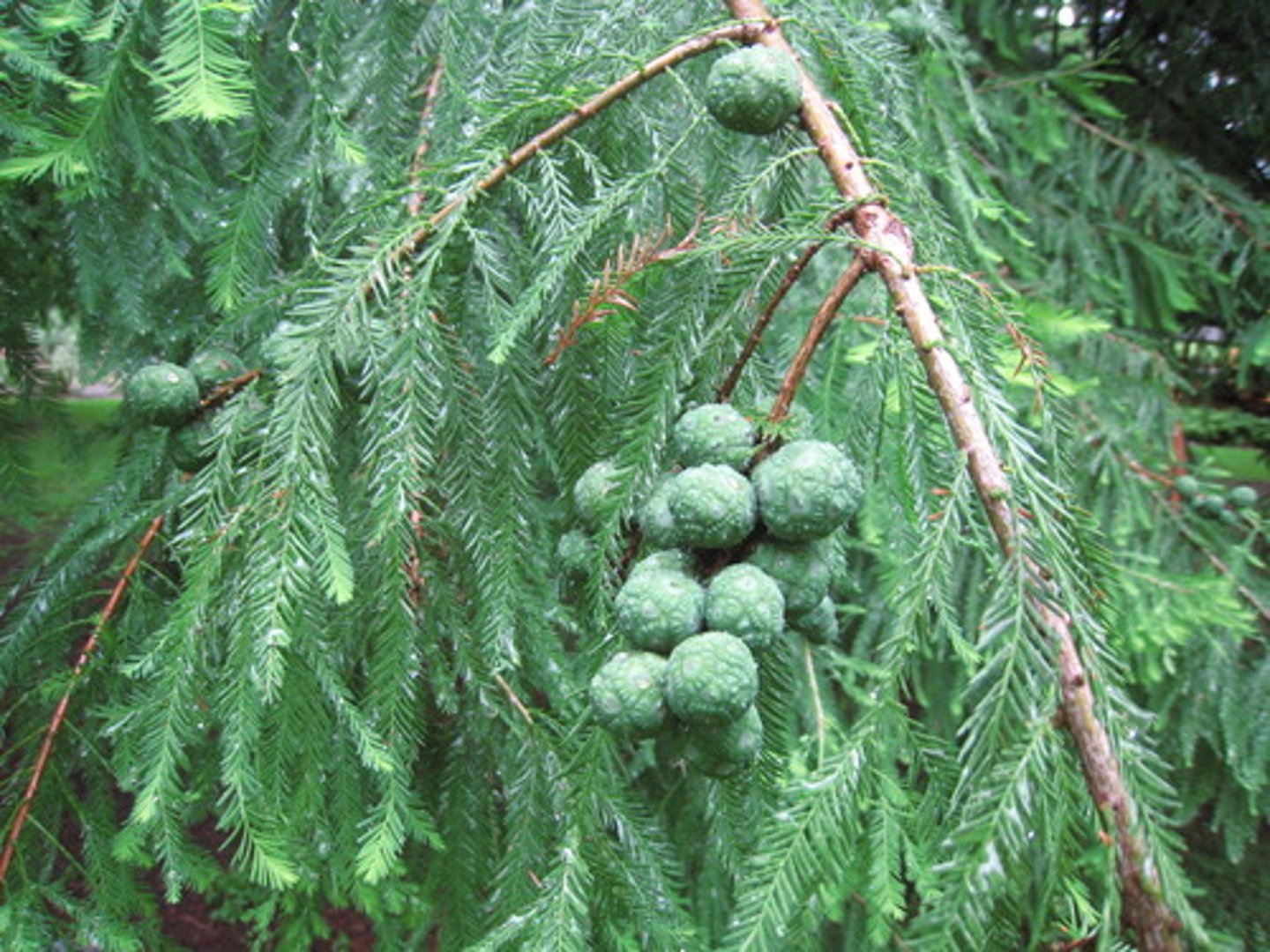
Taxodium distichum
Bald Cypress
Cupressaceae
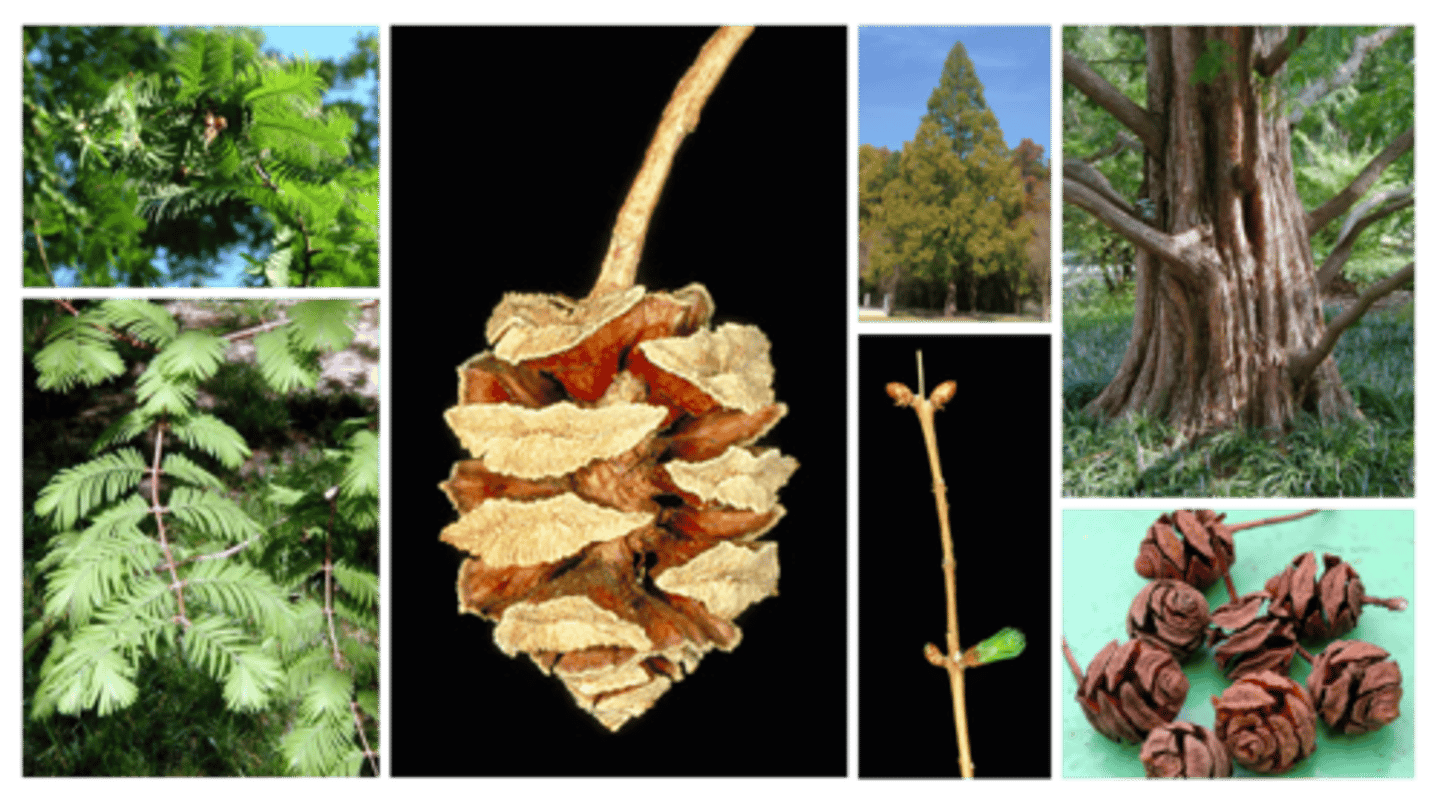
Metasequoia glyptostroboides
Dawn Redwood
Cupressaceae
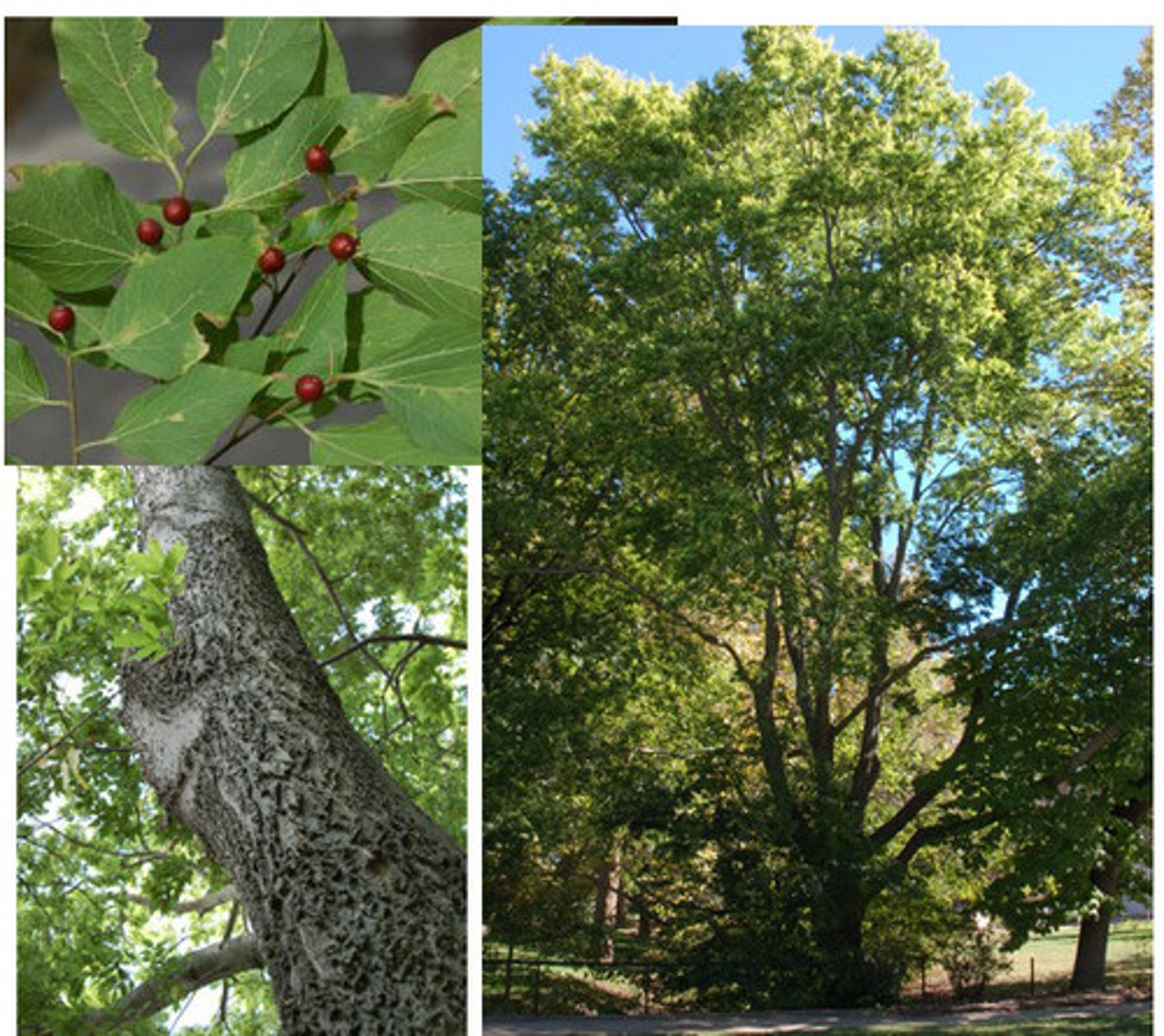
Celtis laevigata
Sugar Hackberry
Ulmaceae
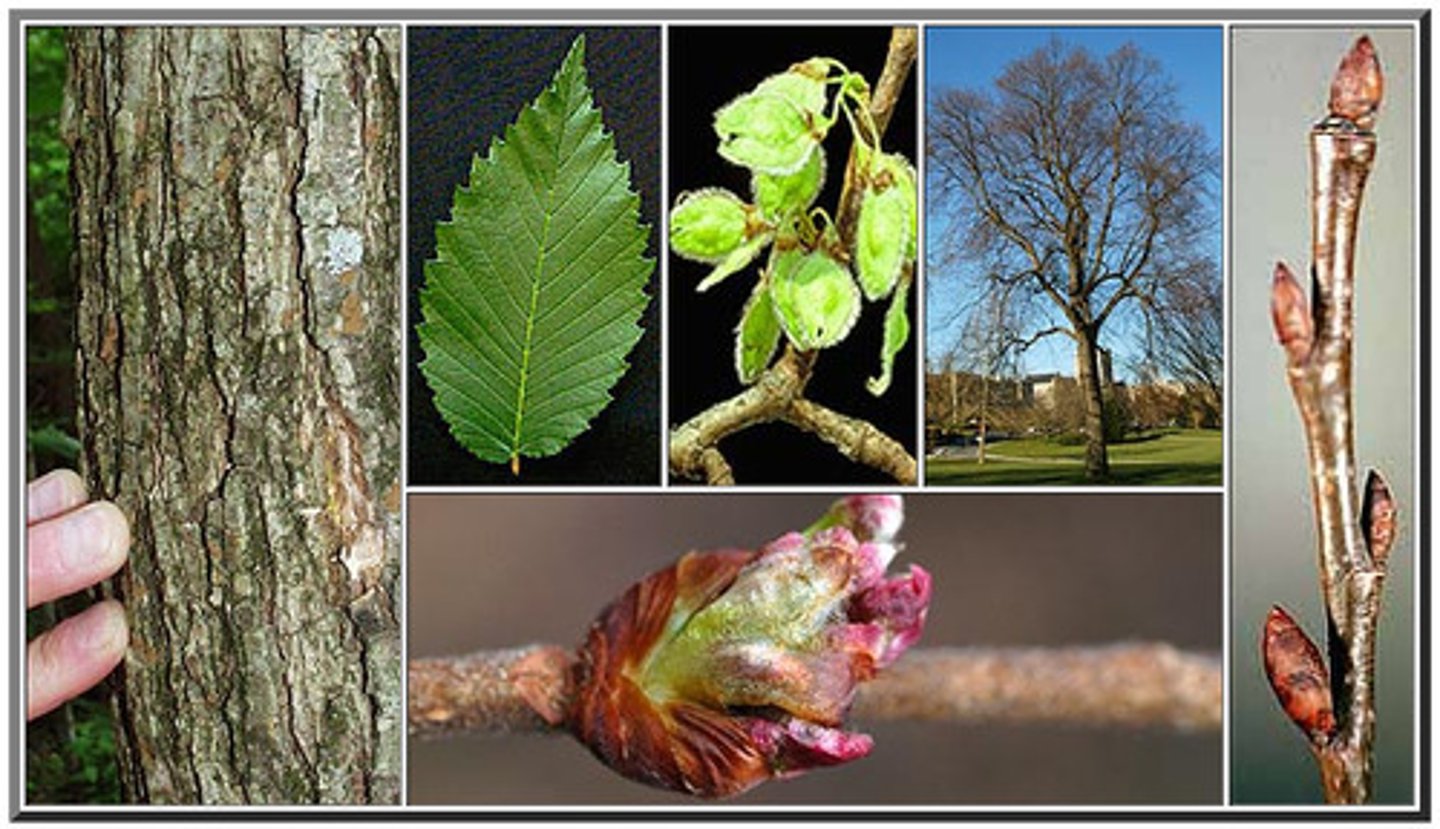
Ulmus americana
American Elm
Ulmaceae
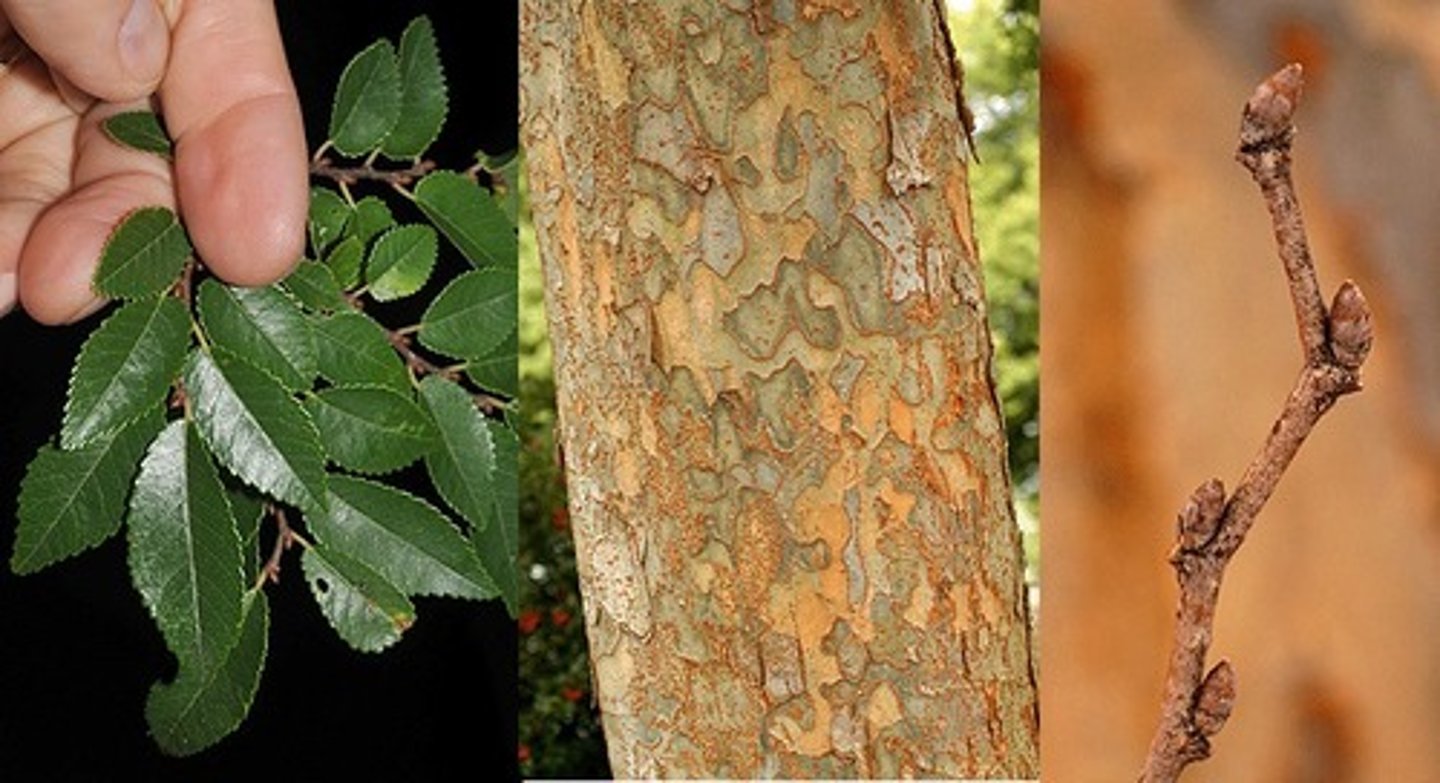
Ulmus parvifolia
Chinese Elm
Ulmaceae
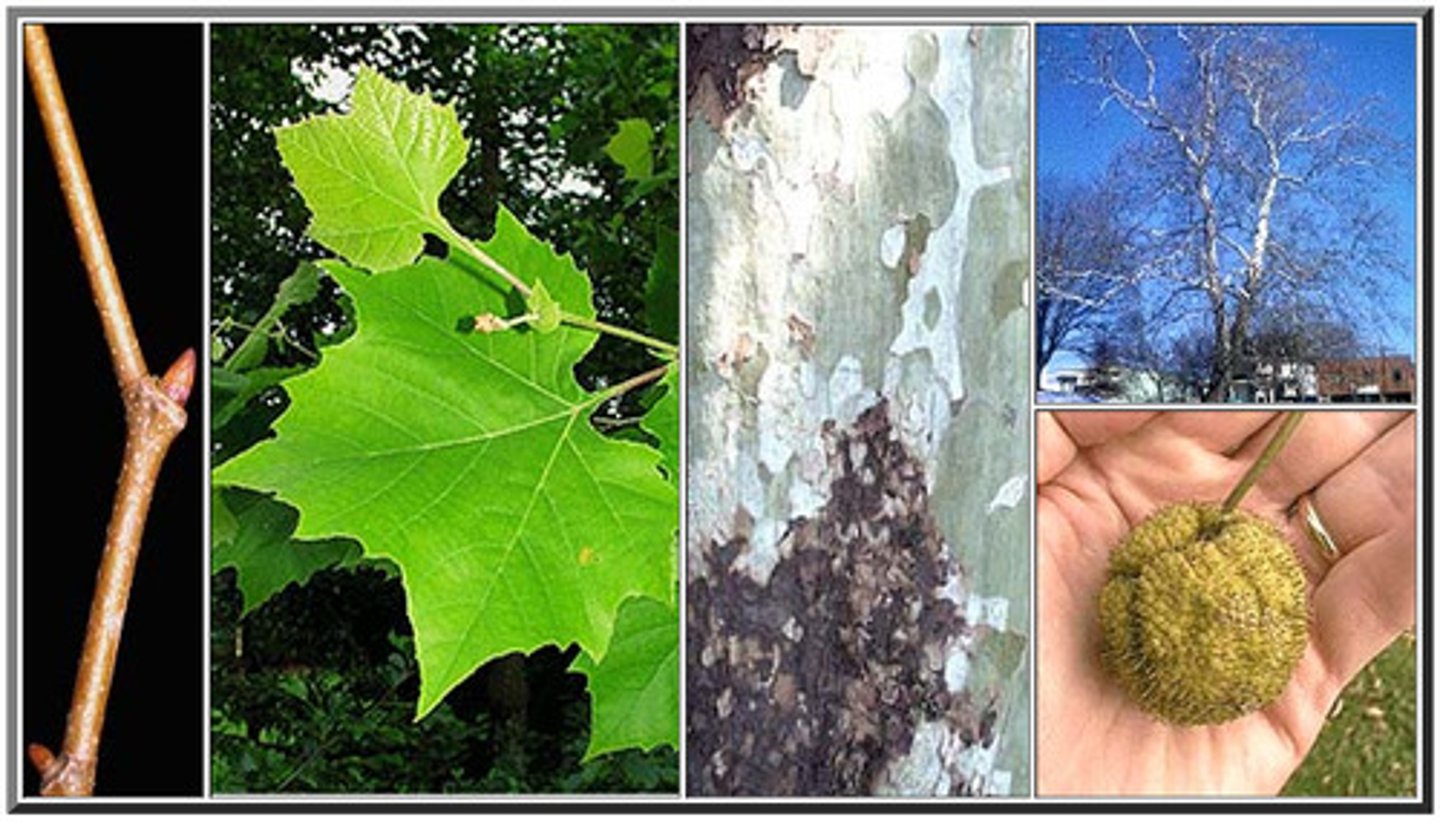
Platanus occidentalis
American Planetree, Sycamore
Platanaceae
 Note
Note  Flashcards (45)