Intro to replication
 Call Kai
 Learn
Learn Practice Test
 Spaced Repetition
 Match
Match Flashcards
 Knowt Play
1/81

There's no tags or description
Looks like no tags are added yet.
Name | Mastery | Learn | Test | Matching | Spaced | Call with Kai |
|---|
No analytics yet
Send a link to your students to track their progress
82 Terms
cells make an exact replica of DNA every time the cell divides
DNA replication
What is the sequence of the other strand?
5’-CTGACA-3’
3’-GACTGT-5’
DNA is blank and blank
antiparallel and complementary
DNA replication is blank
Semi-conservative
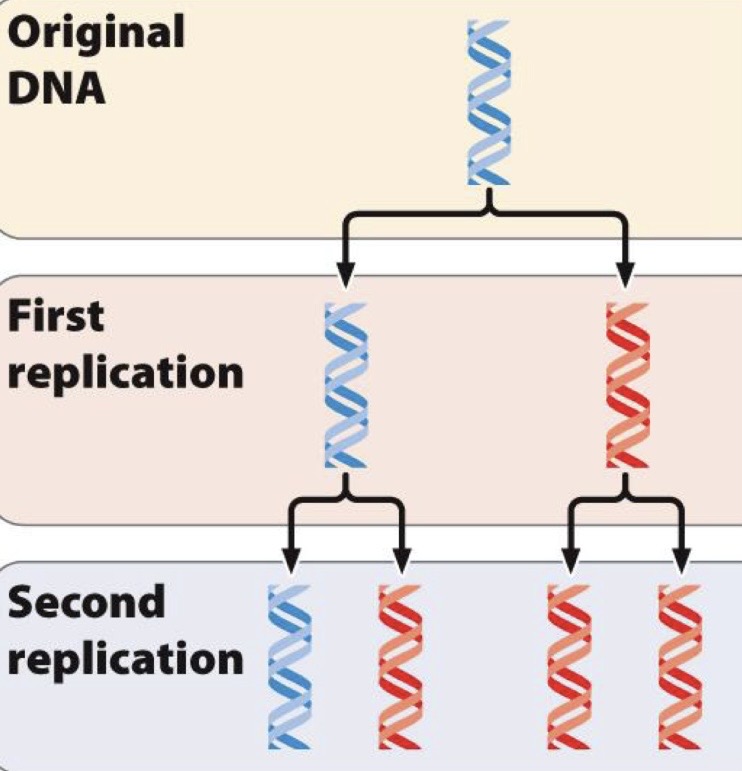
The 2 original strands come back together after DNA is replicated
Conservative
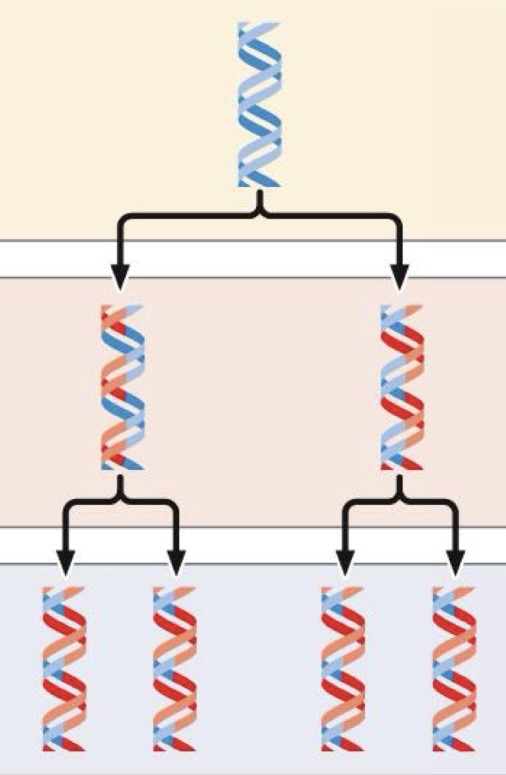
Copies of DNA are hybrids of original & new DNA
Dispersive
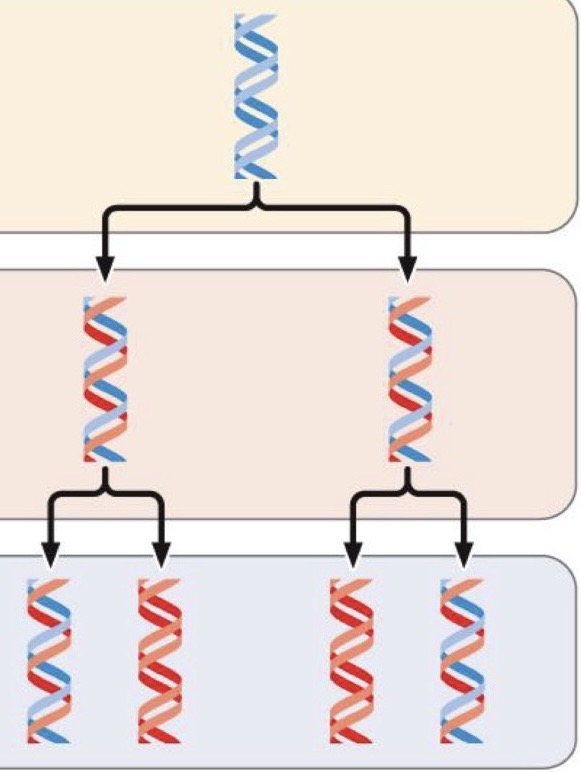
Newly replicated DNA will include 1 of the original strands
Semi-conservative
How many Ori will prokaryotes have?
1
How many Ori will eukaryotes have?
multiple
What is the benefit of having multiple Ori?
faster DNA replication
Which DNA is looped?
prokaryotes
occurs in circular DNA, 1 ori, usually bidirectional
Theta replication
occurs in plasmids 1, ori or unidirectional
Rolling-circle replication
occurs in linear DNA, multiple ori, usually bidirectional
Linear DNA replication
a type of replication common in E.coli and other organisms possessing circular DNA
theta replication
takes place in some viruses and in the F-factor of E. coli
rolling-circle replication
takes place in eukaryotic chromosomes
Linear DNA replication
an enzyme that “reads” the template strand and incorporates complementary base pairs into new strand
DNA polymerase
Why can DNA polymerase only build new strands of DNA from 5’ → 3’?
DNA poly needs to add new nucleotide to both 3’, -OH and the existing DNA strand
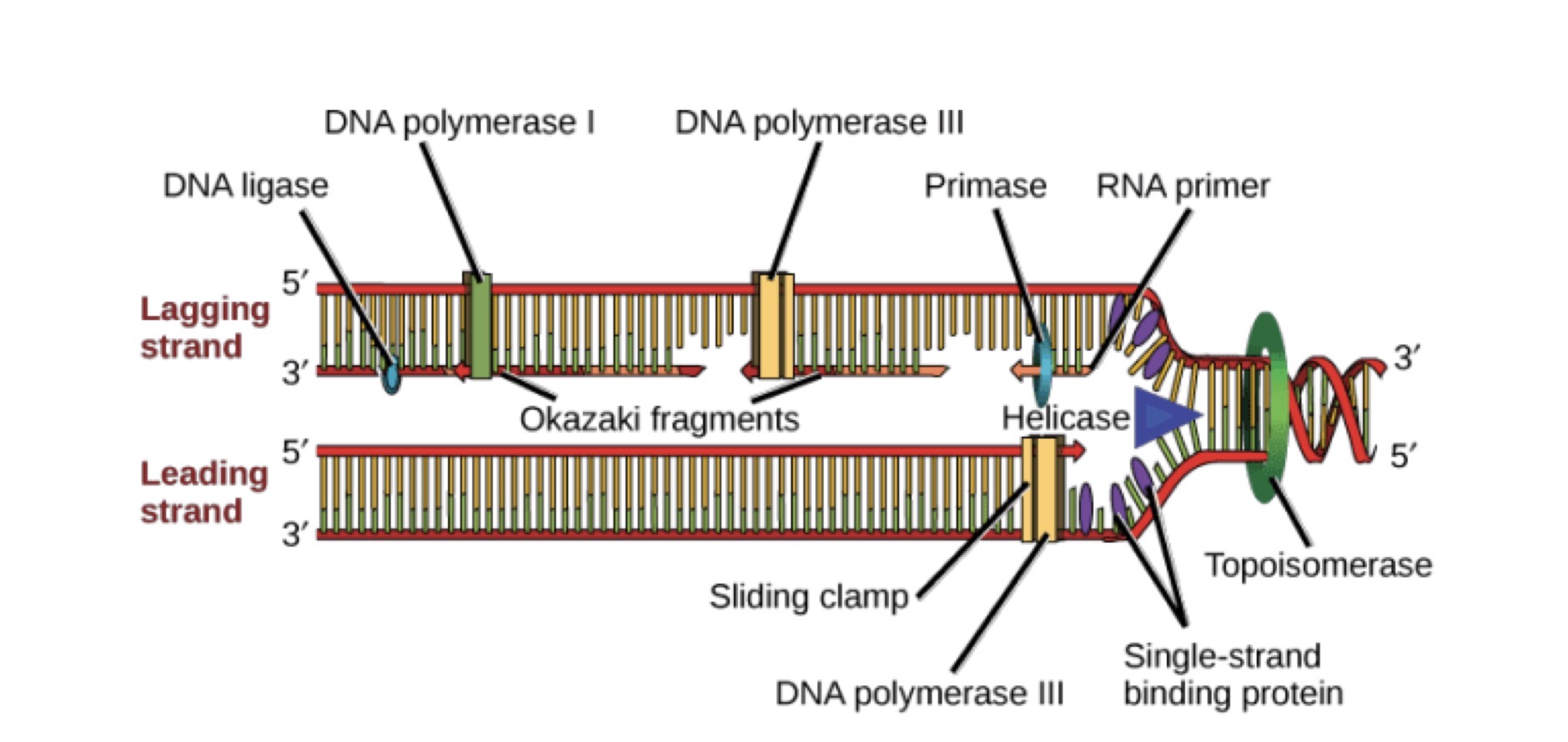
unwinds the DNA
Helicase
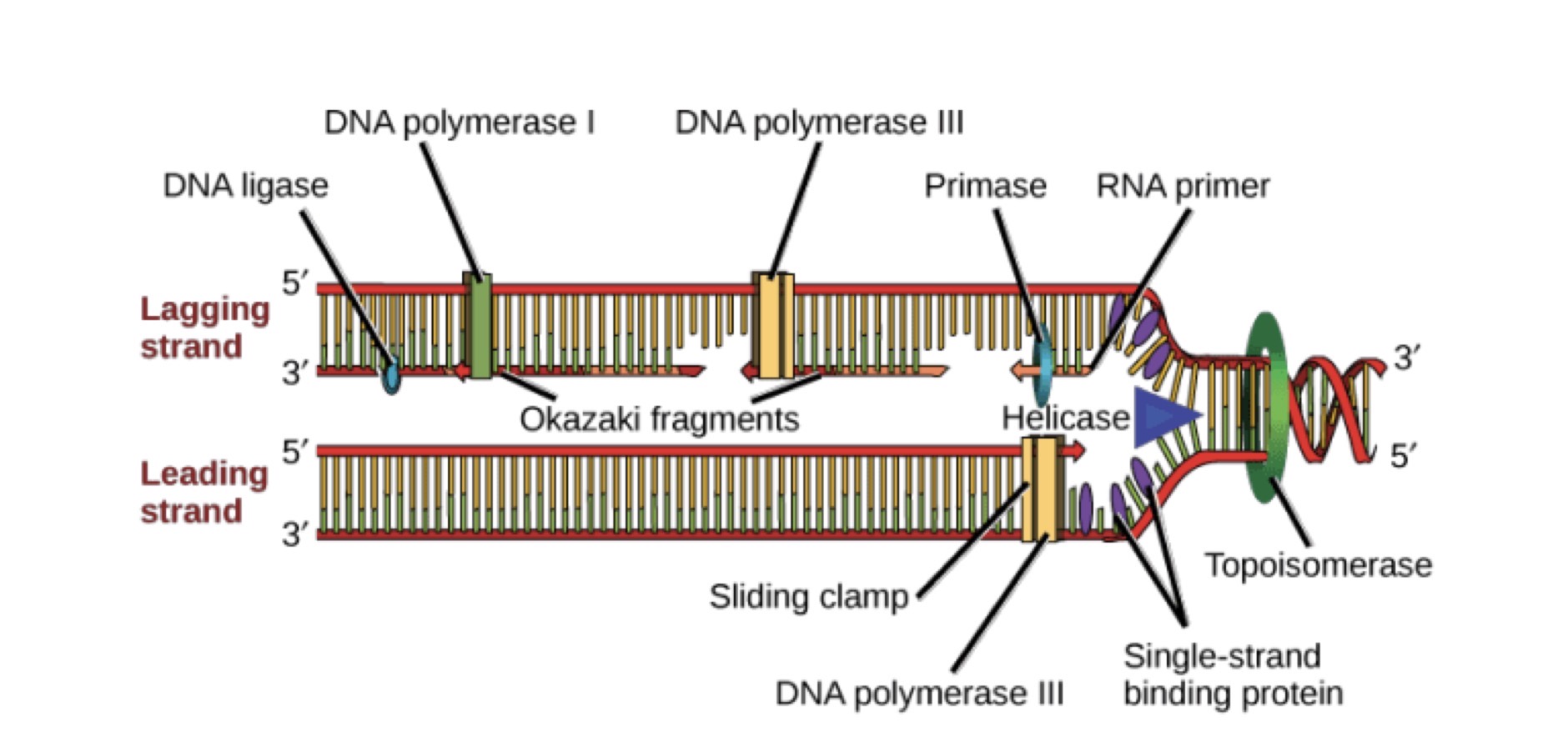
relivese the tension from unwinding
topoisomerase (eukaryotes), Gyrase (prokaryotes)
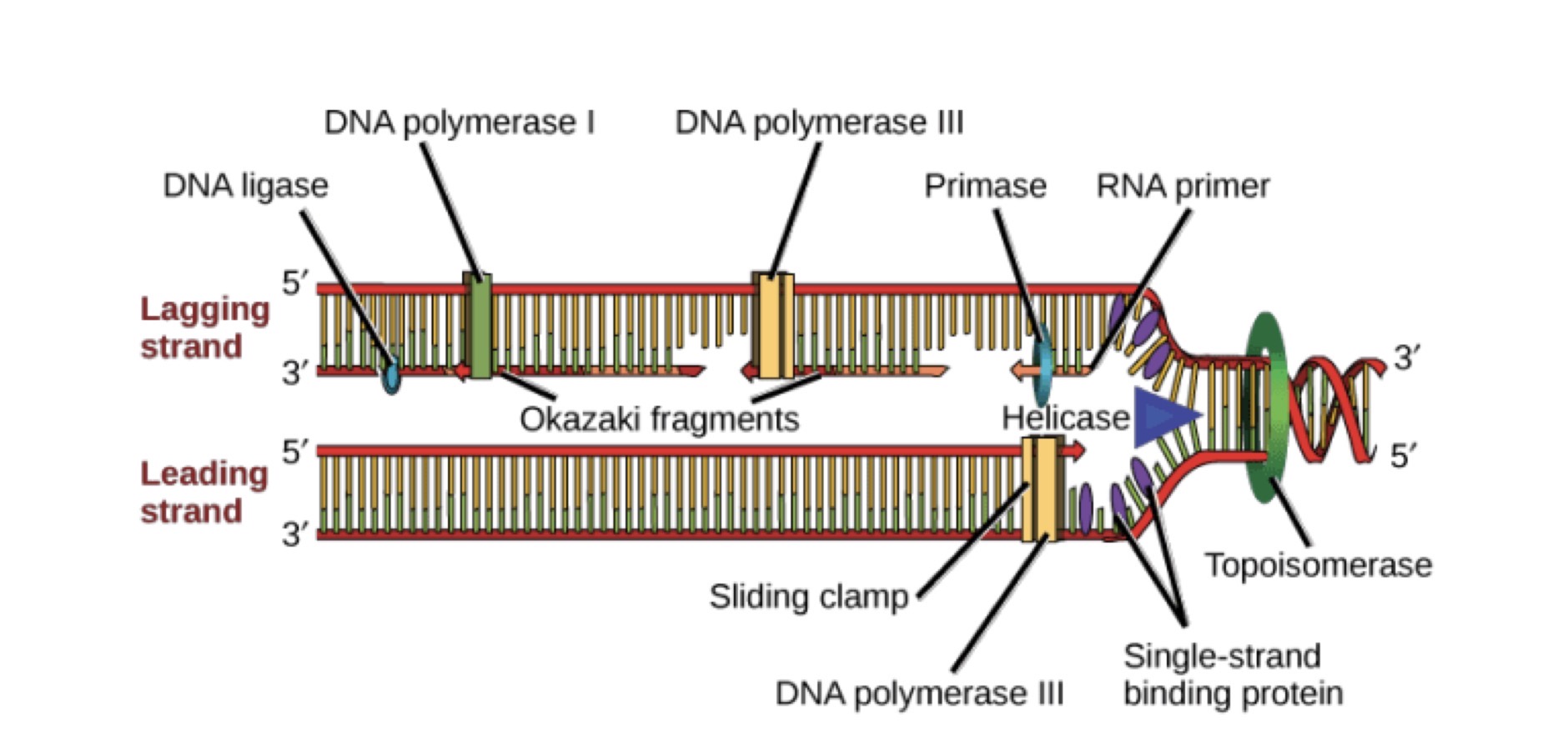
SSBs stabalizing ssDNA
single-strand binding protein
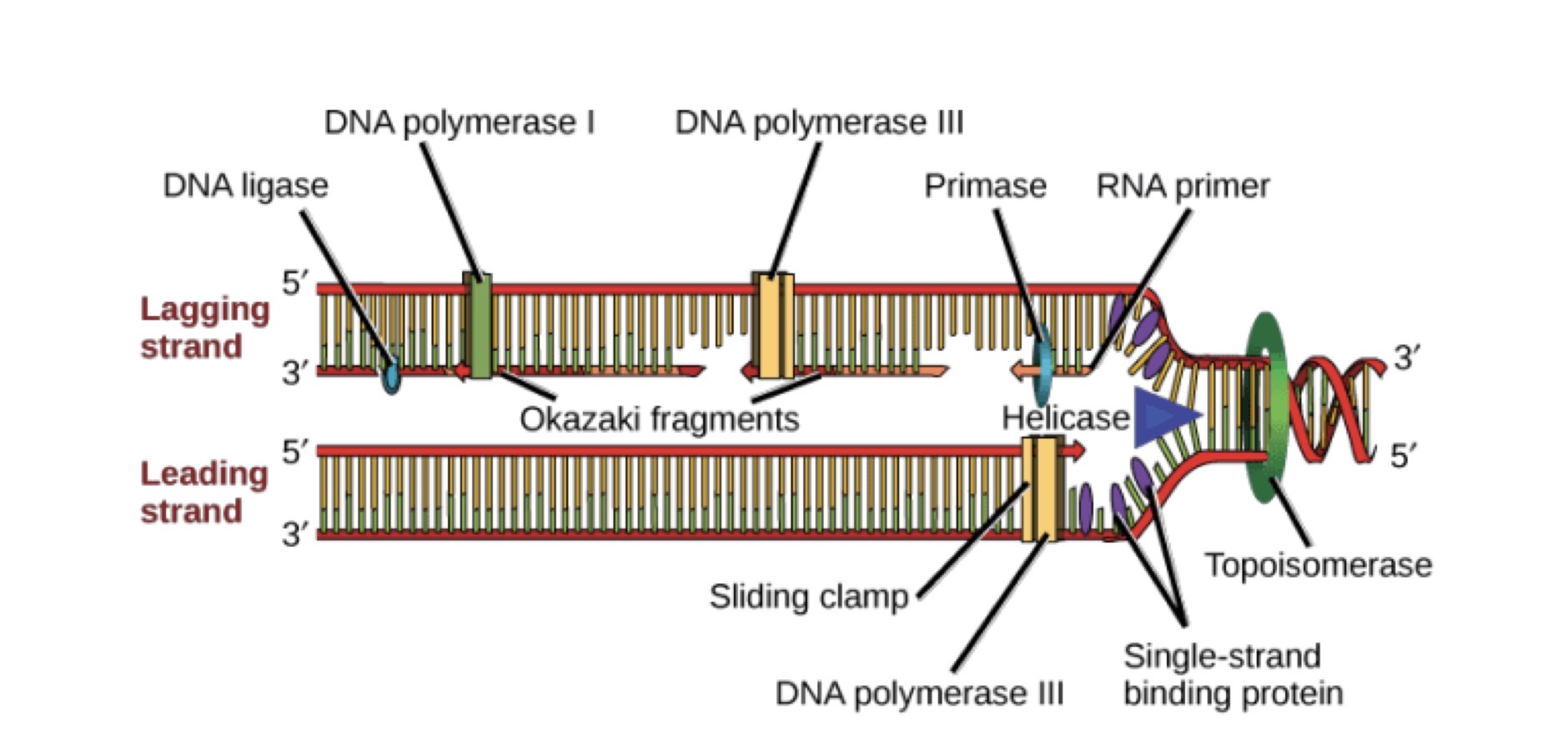
adds nucleotides to make a new strand, cannot inititate replication, only make new DNA from 5’ → 3’
DNA polymerase
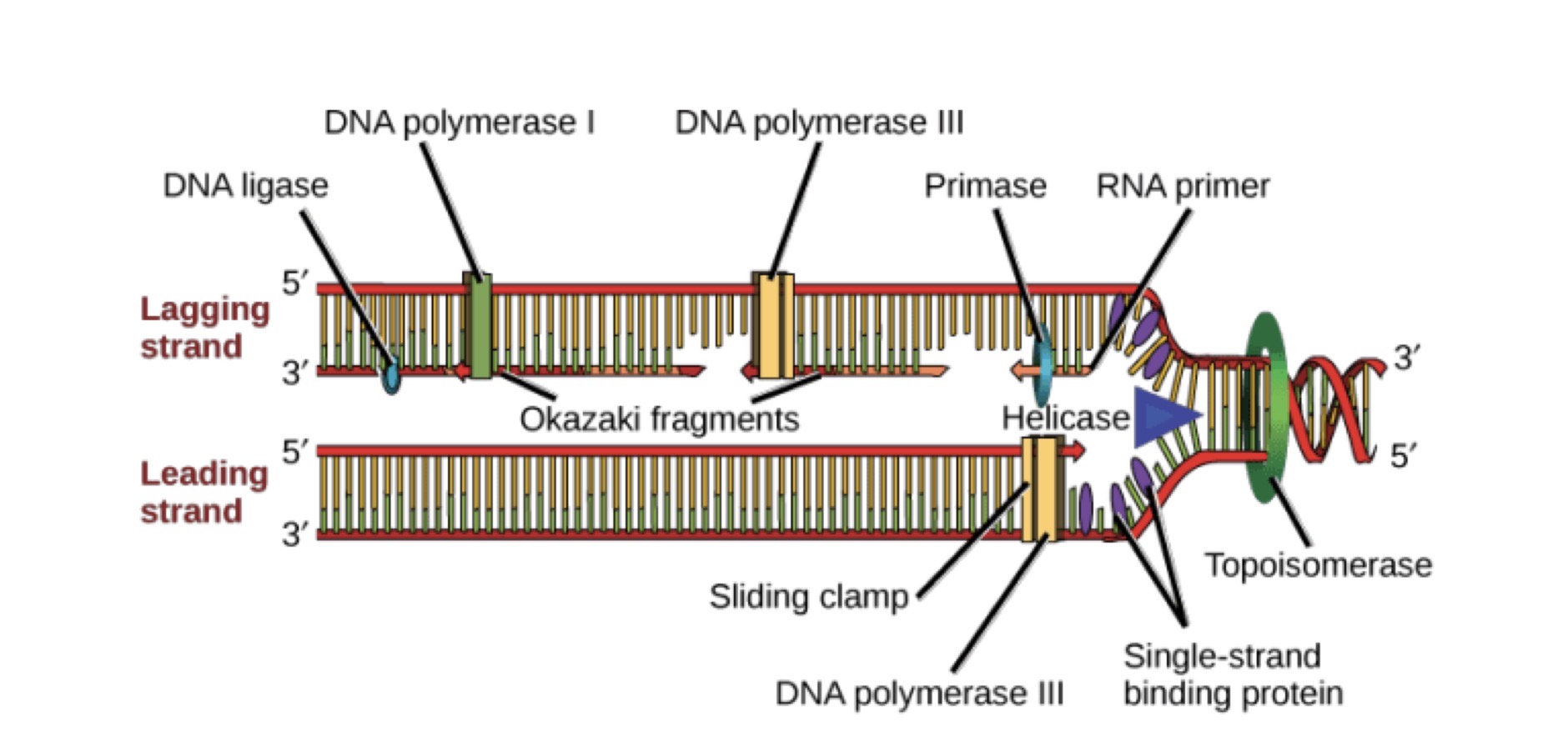
Creates lagging strand (eukaryotes)
DNA pol δ (delta)
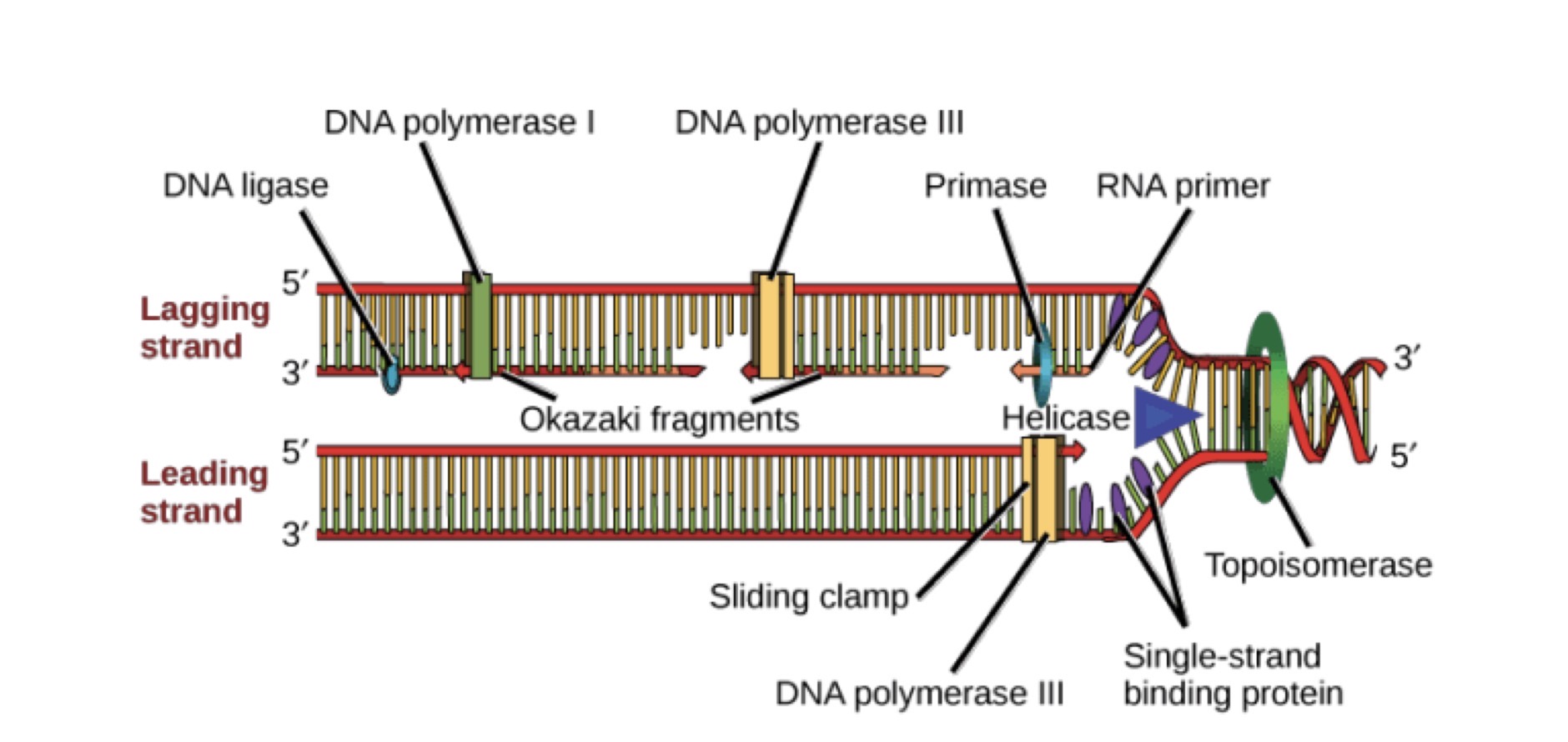
creates lagging leading strand (eukaryotes)
DNA pol (epsilon)
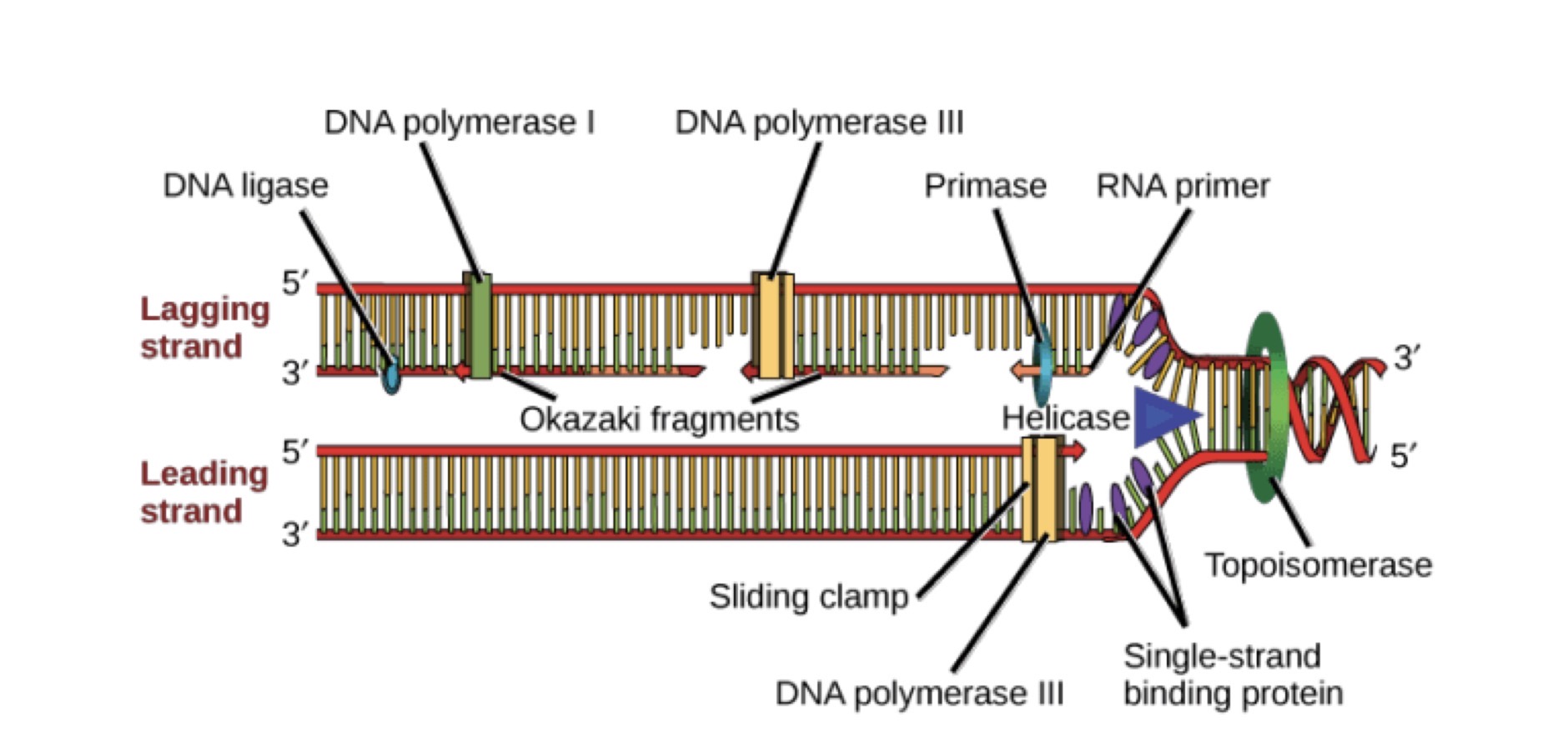
removes primers/replaces gaps (prokaryotes)
DNA pol I
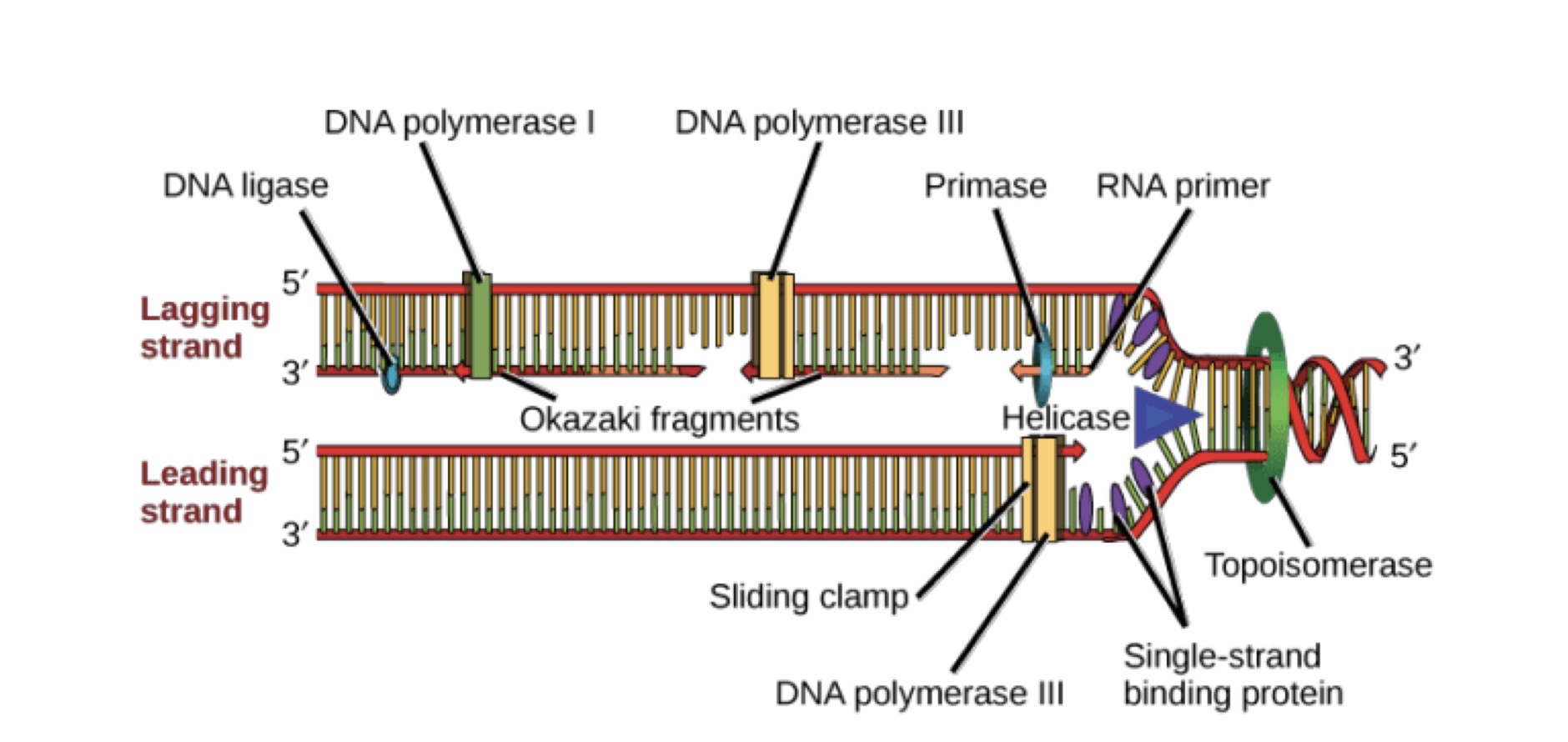
creates leading & lagging strands (prokaryotes)
DNA pol III
nucleotides needed to add to the new strand, 2 phosphates are cleaved off for energy
dNTPs
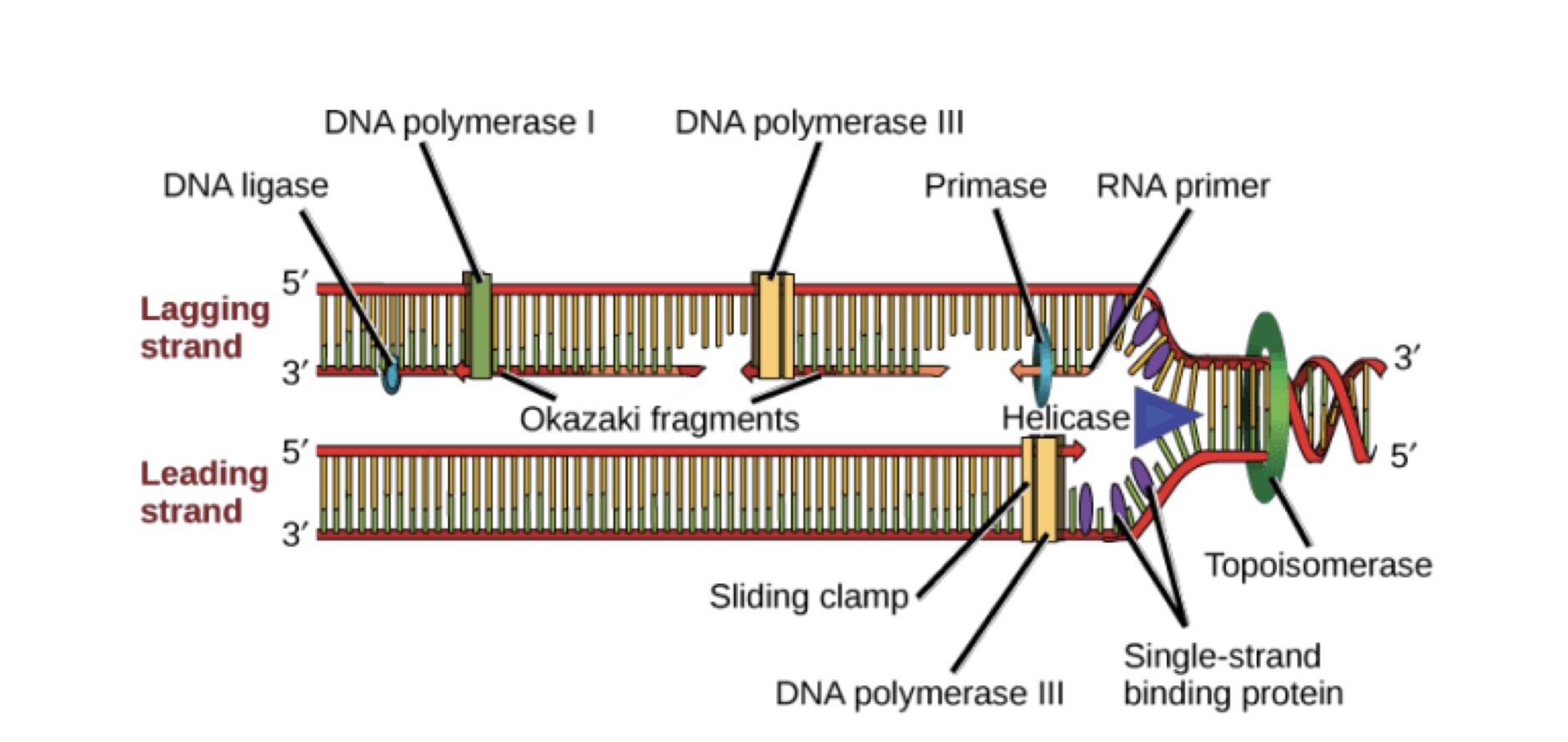
short stretch of RNA that allows DNA pol to start
Primers
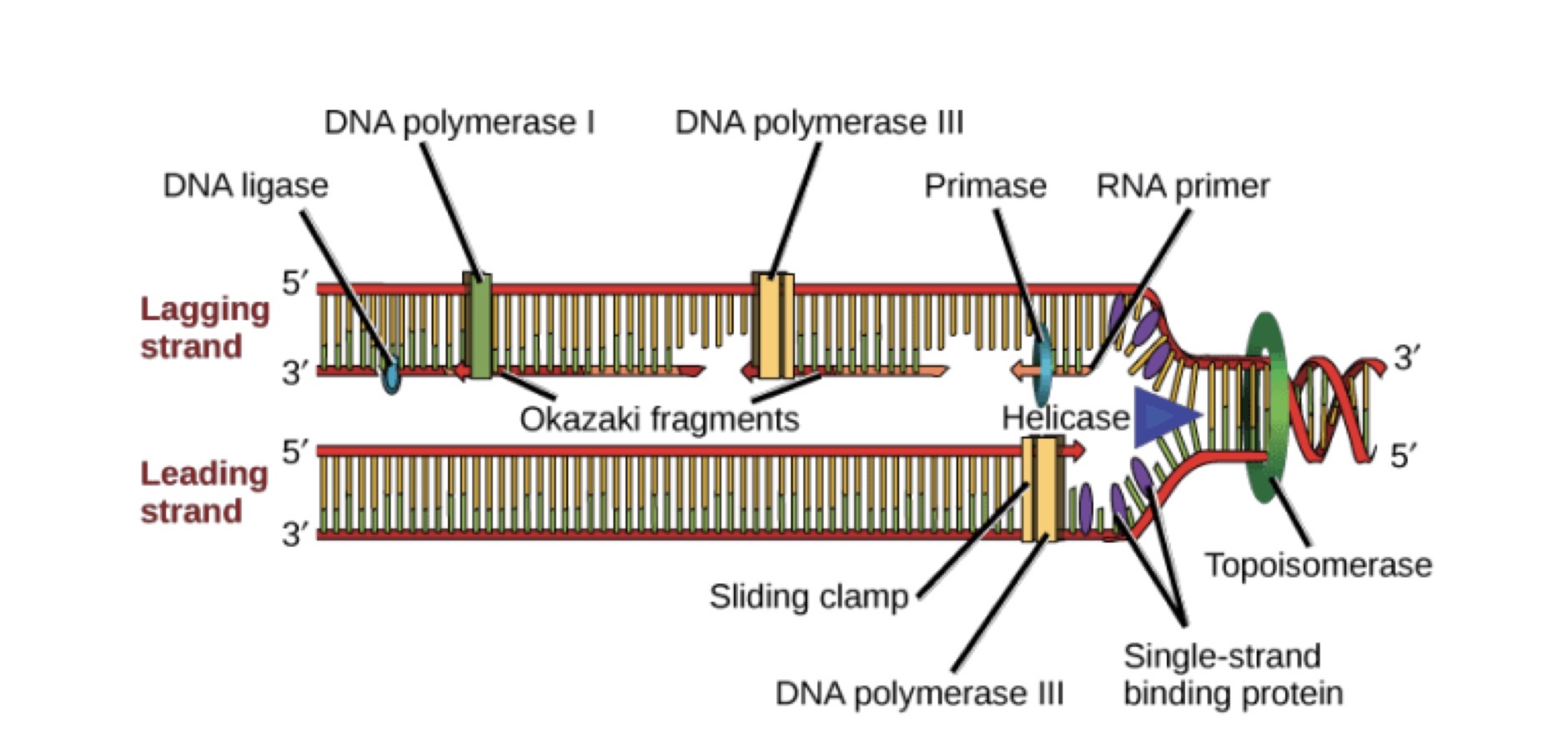
symthesizes primers for DNA replication
primase
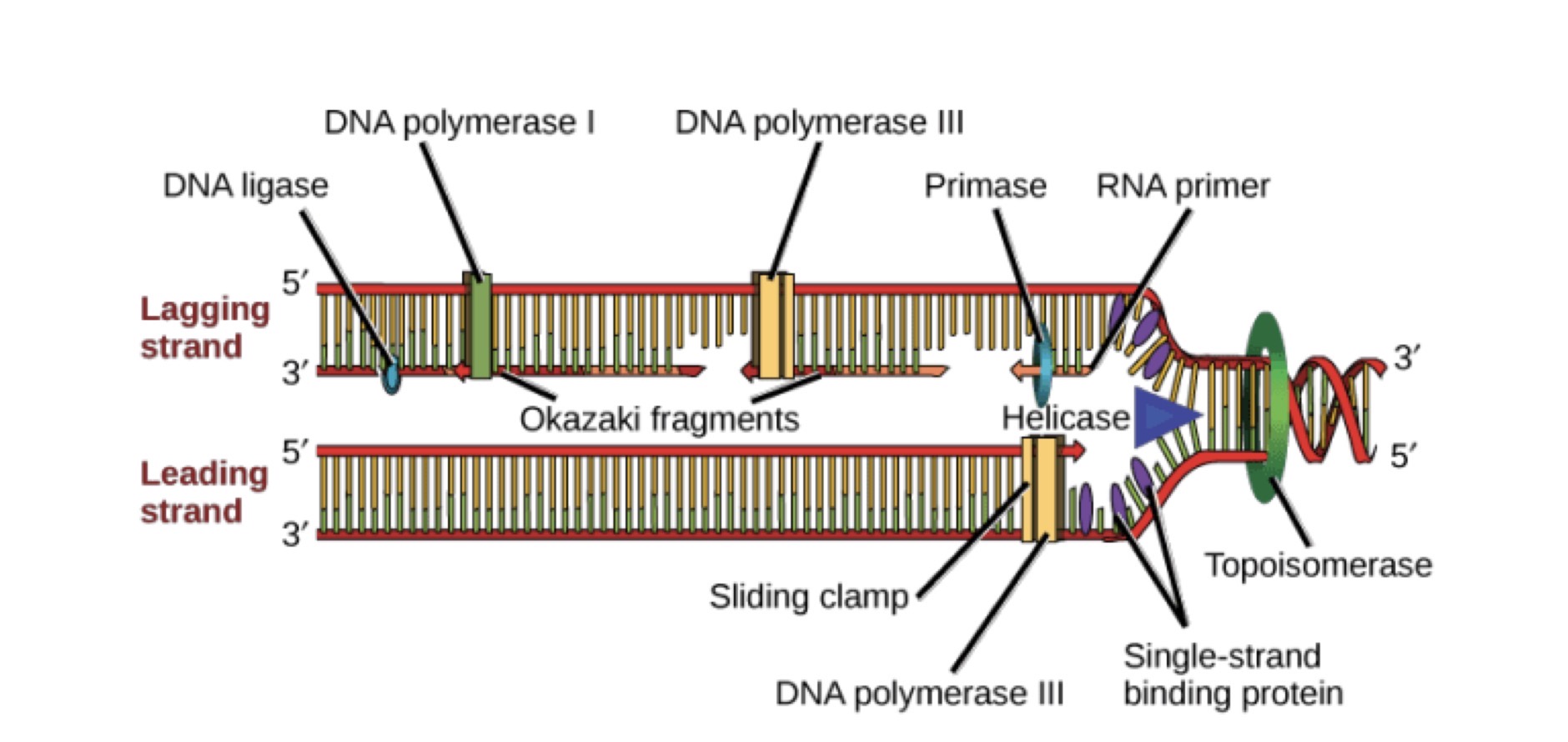
joins DNA fragments together (“glue”)
DNA ligase
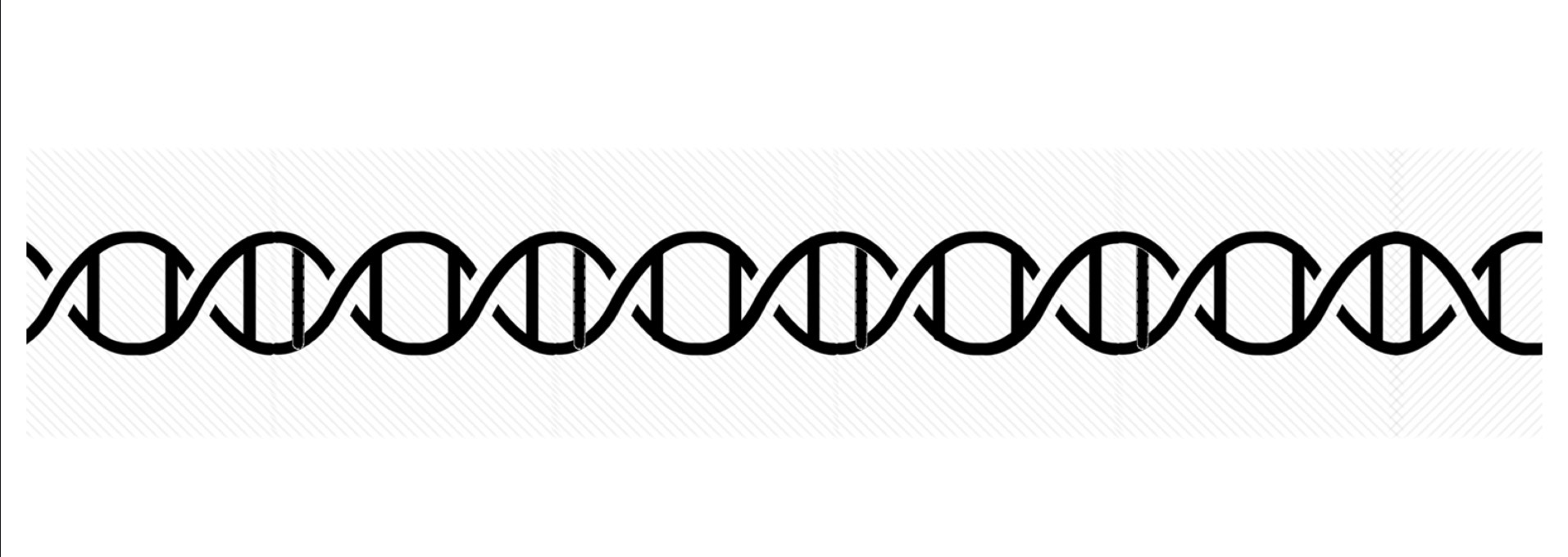
DNA replication begins with?
dsDNA
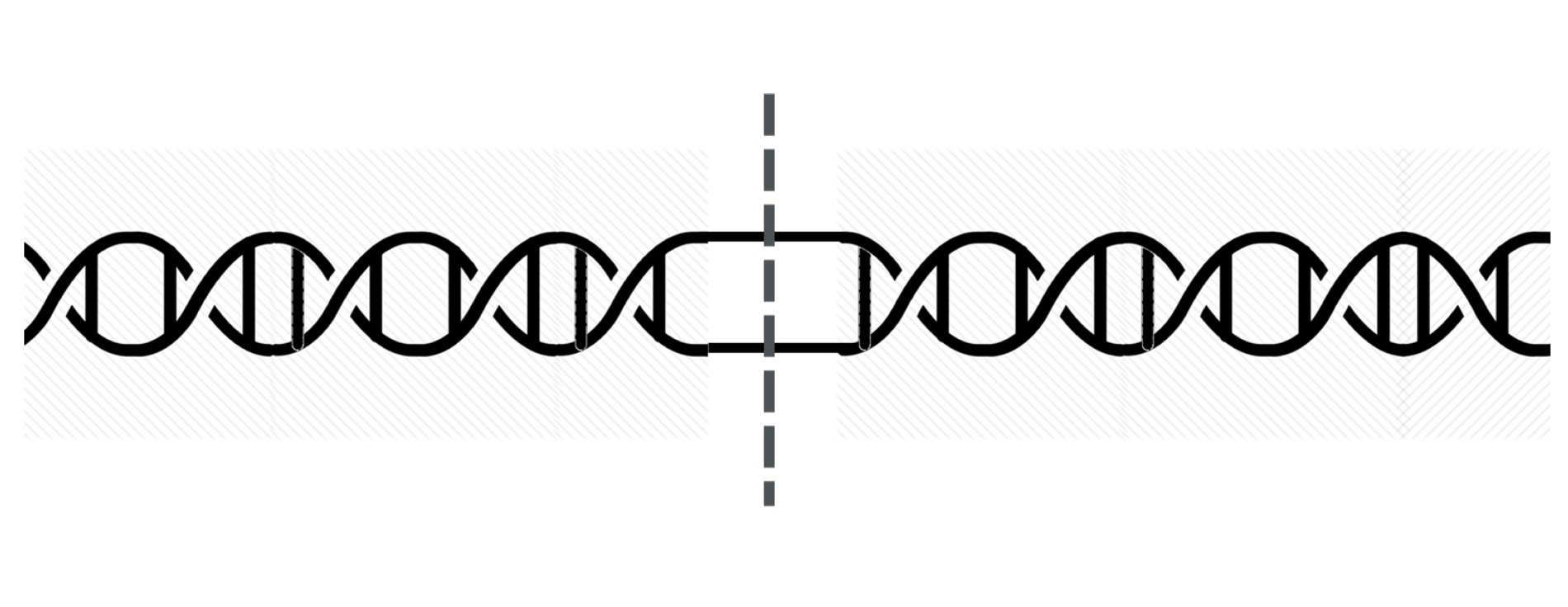
Sequences in DNA that signal for replication to begin, Relavant proteins bind to the blank and open a blank.
origin, replication bubble
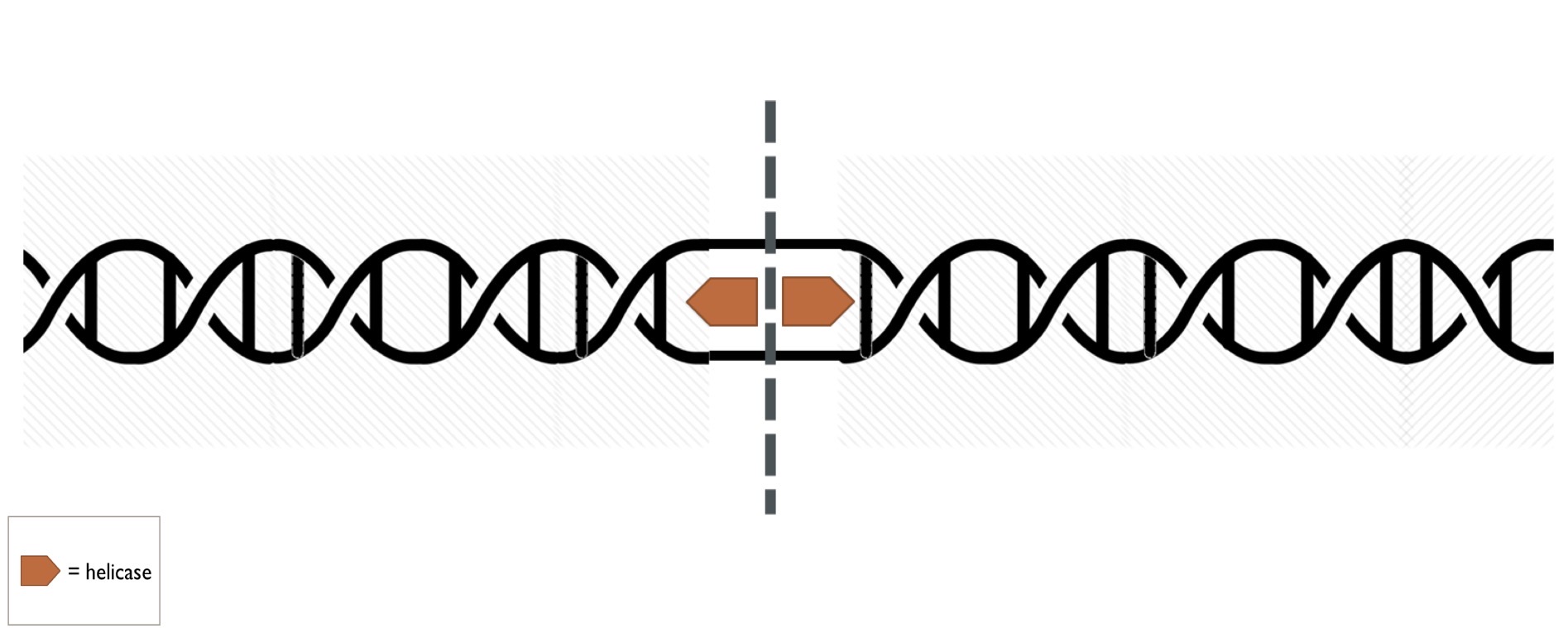
an enzyme called what unzips DNA into single strands to prepare for DNA replication
helicase
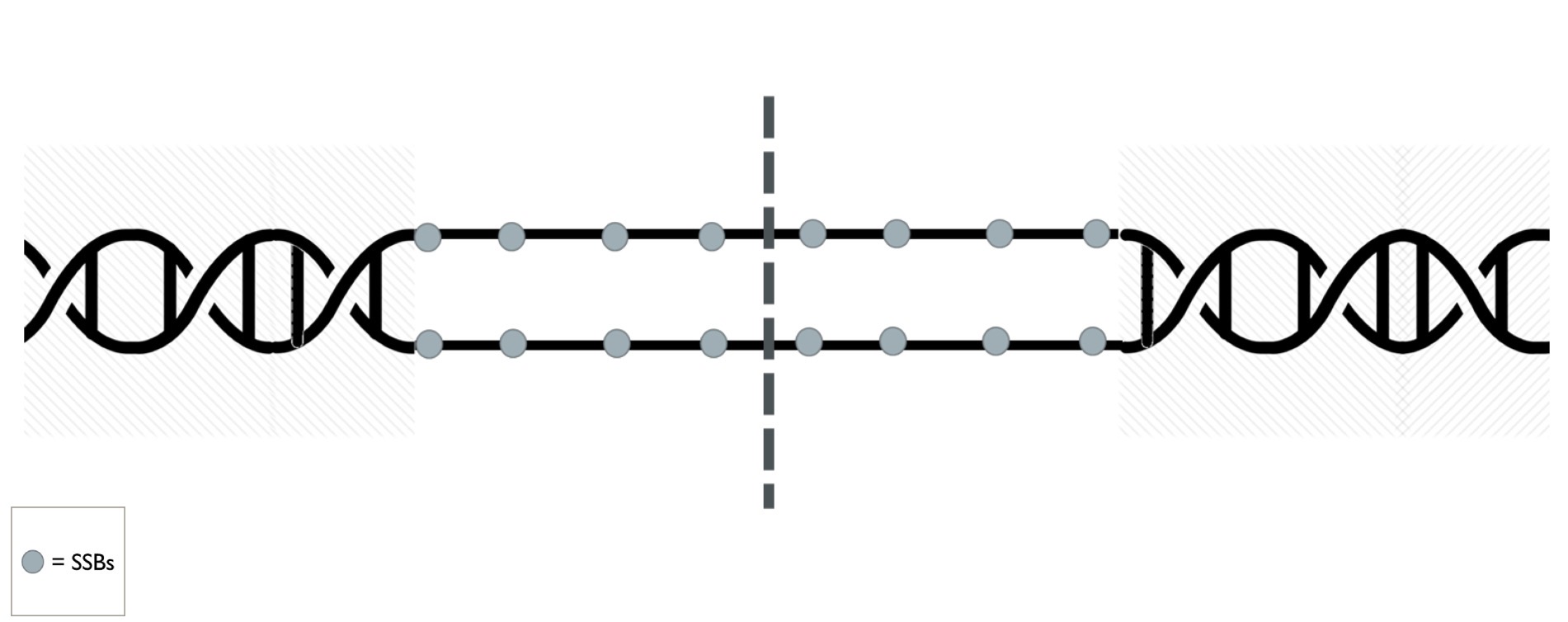
To prevent the what from annealing back together, what attaches to each single strand and hold it in place for replication
ssDNA, SSBs
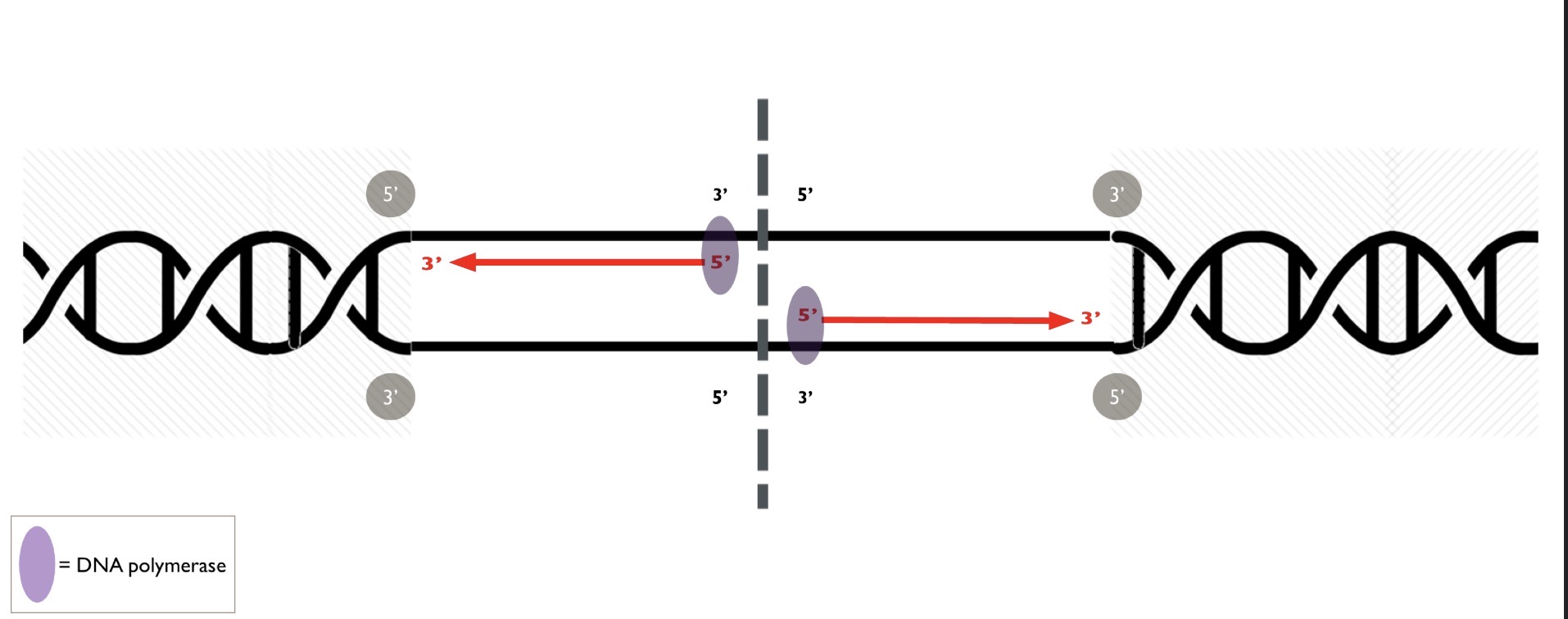
what synthesizes the what strand, DNA is always synthesisized from what to what
DNA polymerase III (or 3), leading, 5’ → 3’
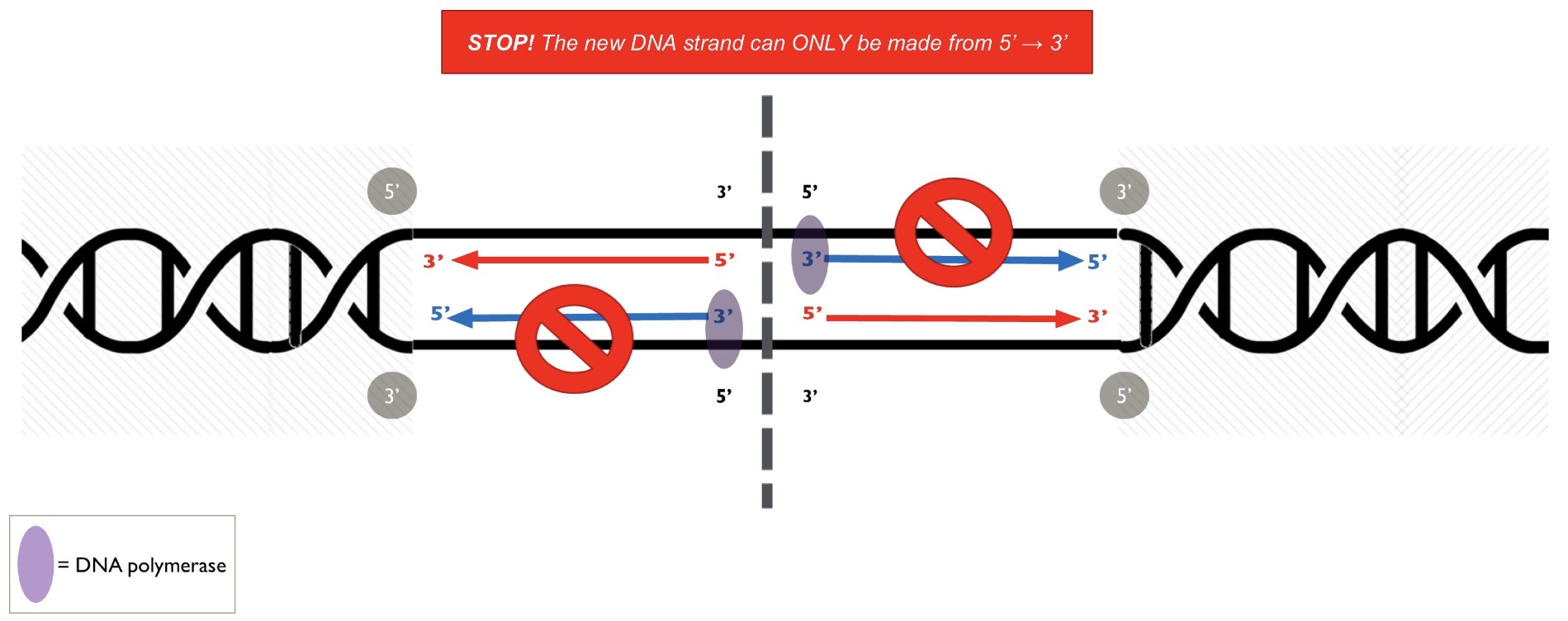
what synthesizes the what strand, DNA polymerase needs to start at the orgin, but for the blank strands, DNA polymerase must start and stop the strand copy in increments
DNA polymerase III (or δ), lagging
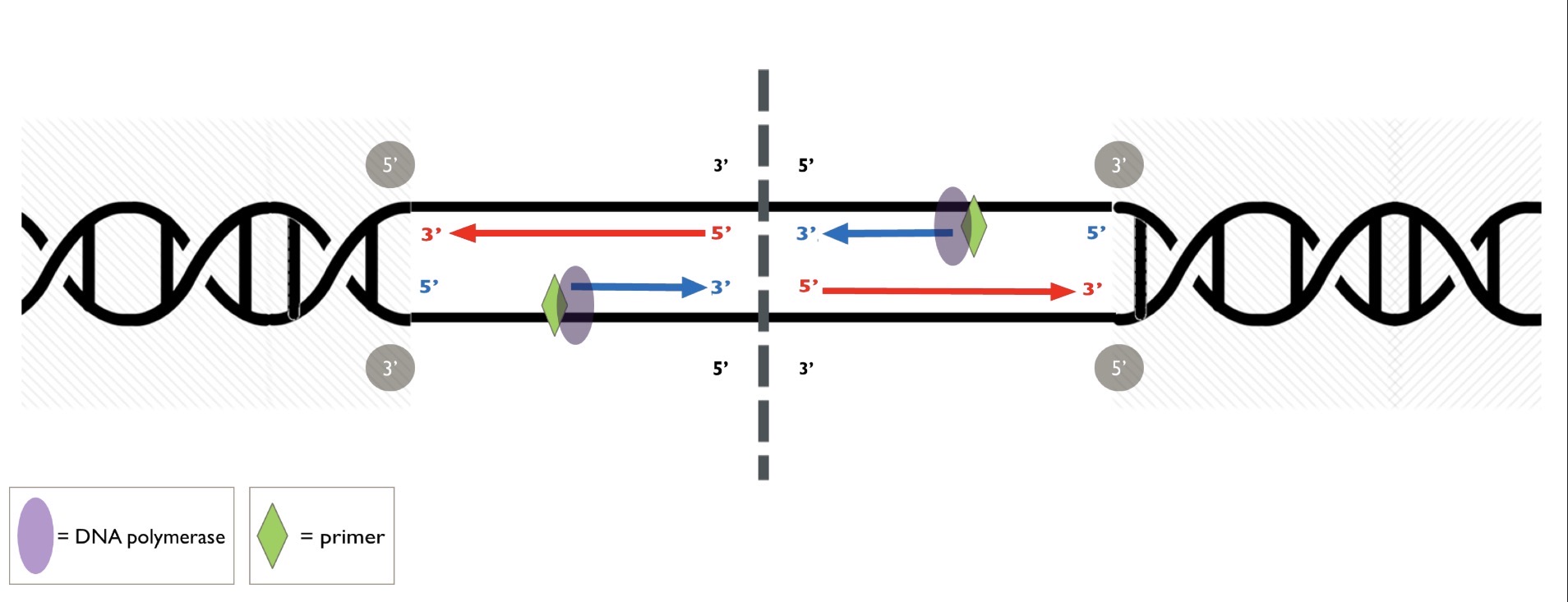
DNA polymerase III (or δ ) synthesizes the lagging strand, First a blank must be added to the single strand so that DNA polymerase can add blank in the correct direction
primers, dNTPs
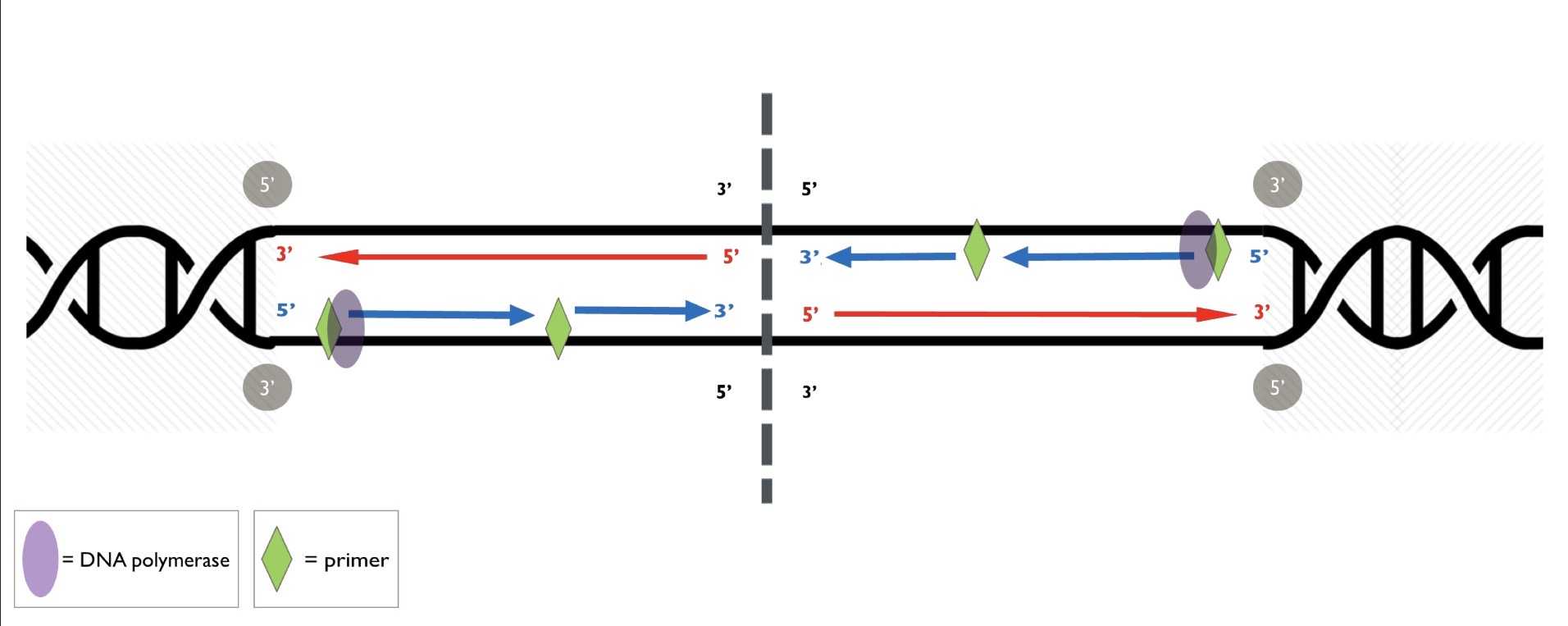
DNA polymerase III (or δ ) synthesizes the lagging strand, As DNA unzips futher, more blank are added and the blank strand can continute to be made
primers, lagging
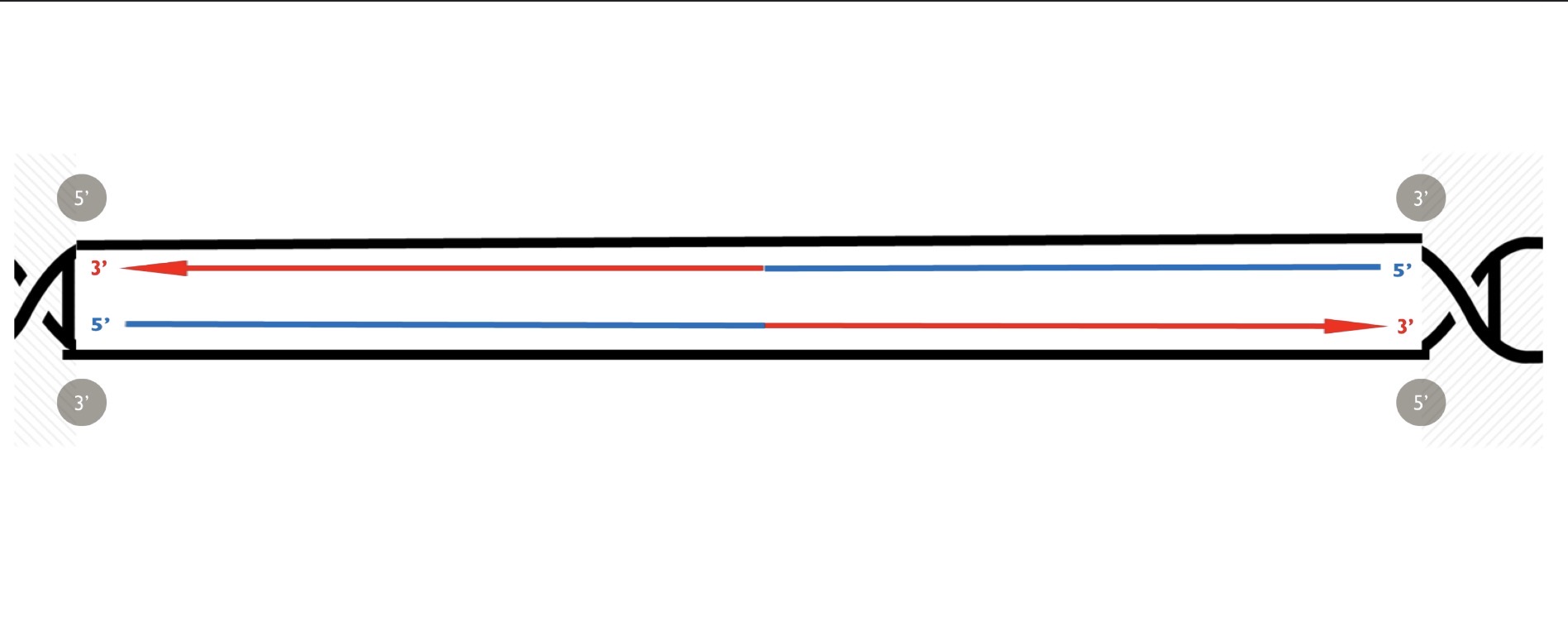
Fragments are glued together, and gaps are filled, Blank reconnects DNA fragments
ligase
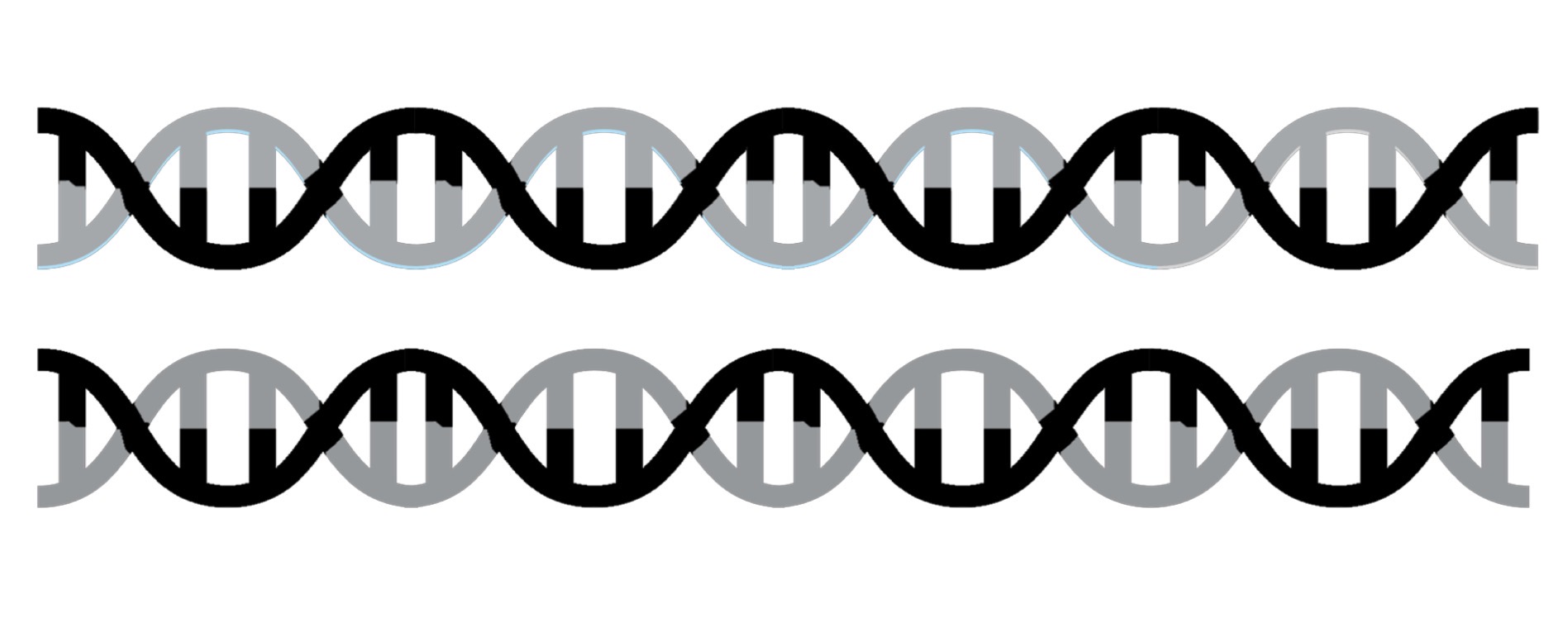
DNA has been blank, In the end you get blank of the orignal DNA
replicated, a copy
Are hydrogen bonds broken during DNA replication?
Which enzyme is reponsible for breaking the hydrogen bonds?
Yes
helicase
Which part of the central dogma of biology polymerase DNA involved in?
replication
What should happen to the hydrogen bonds as helicase moves further away?
What prevents the ssDNA from coming back together to form dsDNA
come back together to form double helicase
SSBs/Single-strand binding proteins
The following strand of DNA is about to be replicated: 5’ - ATGTCC - 3’
Which enzyme is reponsible for adding new nucleotides?
Which directon does DNA polymerase create the DNA replicate?
DNA polymerase
5’ side of the replicate to 3’ end of replicate, new replicates are built 5’ → 3’
The following strand of DNA is about to be replicated: 5’ - ATGTCC - 3’
DNA polymerase will add new nucleotides to which end of the replicate?
Which nucleotide (A,C,T,G) would DNA polymerase add first to create the DNA replicate?
3’
G
During DNA replication, which copy of the DNA is created continuously?
Leading strand
During DNA replication, which copy of the DNA is created discontinuously?
Lagging strand
During DNA replication, which molecules are required to create the discontinuous strand?
primers
During DNA replication, what are the DNA fragments created by the lagging strand called?
okazaki fragments
During DNA replication, which enzyme is responsible for connecting these fragments into a cohesive strand?
Ligase
Where does DNA replication begin?
How many ORI do prokayotes have?
How many ORI do eukaryotes have?
ORI
1
multiple
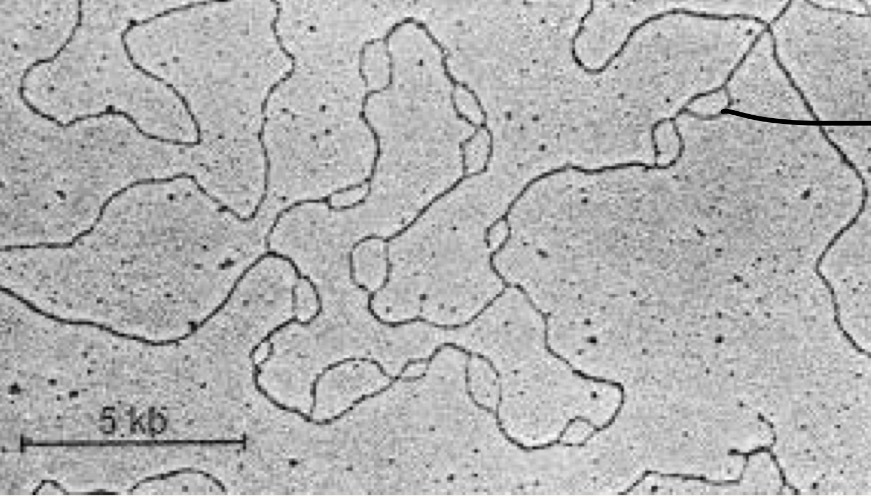
This organisms belongs to which domain life?
How do you know?
Eukarya
Multiple ori
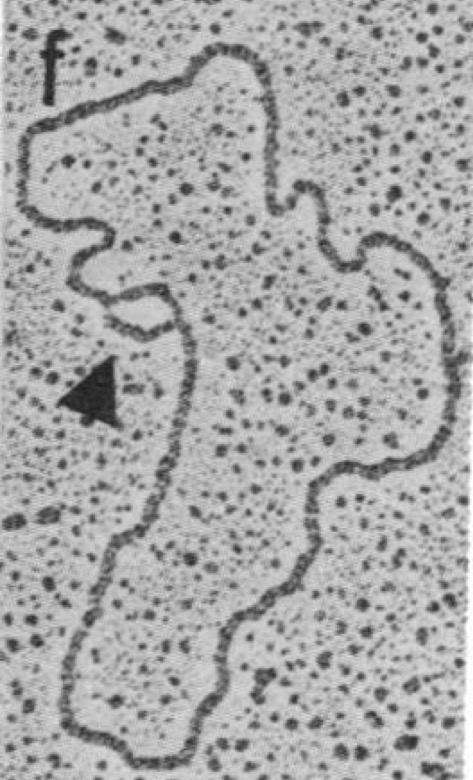
Is this from eukaryote or prokaryote?
How do you know?
Prokaryote
Only one ori, and looped DNA
Repetitive sequences at the ends of chromosomes to postpone DNA erosion
telomeres
special enzyme required by telomeres to replicate
telomerase
Why would we need telomeres?
No room at the end of the lagging strand to add a primer
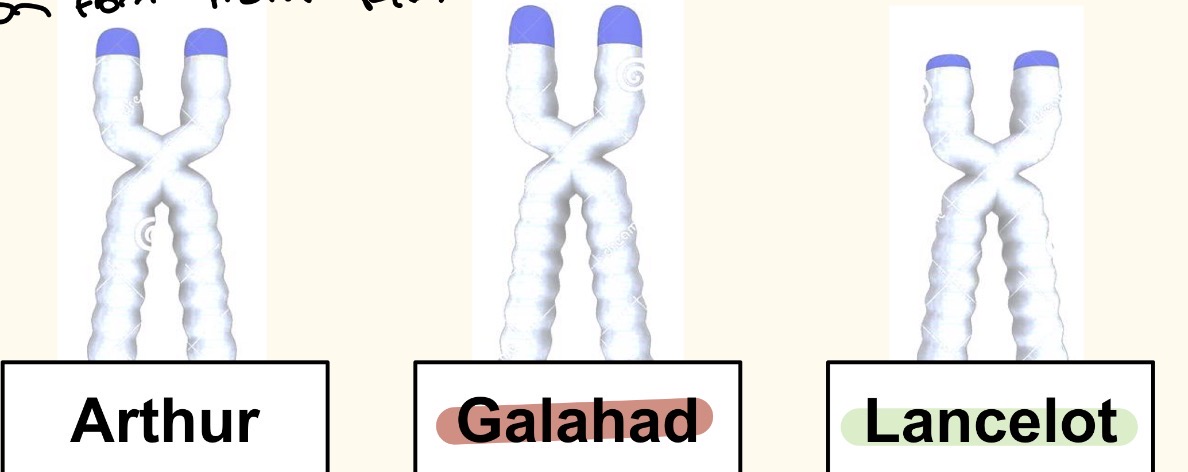
Which one is the oldest and the youngest
Galahad is the youngest because he has the longest telomeres
Lancelot is the oldest because he has the shortest, due to erosion from multiple replication events
How does DNA pol know which bases to add?
complementary pairs
checking the added nucleotide against the DNA template strand
proofreading
enzymes that come in to repair errors that remain after proofreading
mismatch repair
Nuclease removes a segment of DNA, DNA pol adds correct dNTPs, DNA ligase glues fragments back together, type of mismatch repair
nucleotide excision repair
Ultra-violet radiation is an example of a mutagen (induces a mutation)
If DNA bases become damages by UV light, what will happen? will these die?
How can mutations be fixed?
a mutation can occur, no these will not die
proofreading, mismatch repair/nucleotid excision repair
where does replication begin in bacterial replication?
oriC
specific 245bp segment on their circular chromosome
oriC
protein that binds to start replication
DnaA
Bacterial DNA pol I
removes/replaces primers
Bacterial DNA pol II
DNA repair, restarts replication
Bacterial DNA pol III
elongates DNA
Bacterial DNA pol IV
DNA repair
Bacterial DNA pol V
DNA repair
proteins of origin-recognition complex bind to ARSs to initiate DNA replication
autonomously replicating sequences
required ro bind MCM proteins
Cdc6 & Cdt1
cell divison cycle 6
Cdc6
chromatin licensing & DNA replication factor 1
Cdt1
minichromosome maintenance
MCM
MCM proteins restrict replication to ONCE per cell cycle during which phase?
s-phase
Initiation of DNA synthesis, DNA repair
DNA pol α (alpha)
Lagging strand synthesis, DNA repair
DNA pol δ (delta)
Leading strand synthesis, DNA repair
DNA pol ε (epsilon)
what is responsible for the replication of chromosome ends?
telomerase enzyme
What would be the reult if an oganism’s telomerase enzymes were mutated and nonfuntional?
Chromosomes would shorten each generation

