L19 + L20 Mass Extinction
 Studied by 0 people
 Call Kai
 Learn
Learn Practice Test
 Spaced Repetition
 Match
Match Flashcards
 Knowt Play
1/34

There's no tags or description
Looks like no tags are added yet.
Name | Mastery | Learn | Test | Matching | Spaced | Call with Kai |
|---|
No analytics yet
Send a link to your students to track their progress
35 Terms
What is Darwinian evolution?
Gradual change in response to selection
Can not fully explain present variety of life on earth
What is the bifurcation of lineages?
speciation
What is another way we can explain evolution?
Horizontal gene transfer and mass extinction
What is the current estimate of living species on earth?
2-50(-100)million
What percentage of all species that ever lived are extinct?
99.9%
Whats the average lifespan of species?
4 million years
What are the 2 ways that speciation happens?
- cladogenesis (splitting of lineages)
Allopatric Speciation (geographic separation leading to divergence) and
- Sympatric Speciation (evolution within the same area via reproductive isolation, often due to genetics or behavior)
Do extinction rates vary?
yes
What is mass extinction?
- global
- broad range of species
- short amount of time
>60% of species within
<1 million years
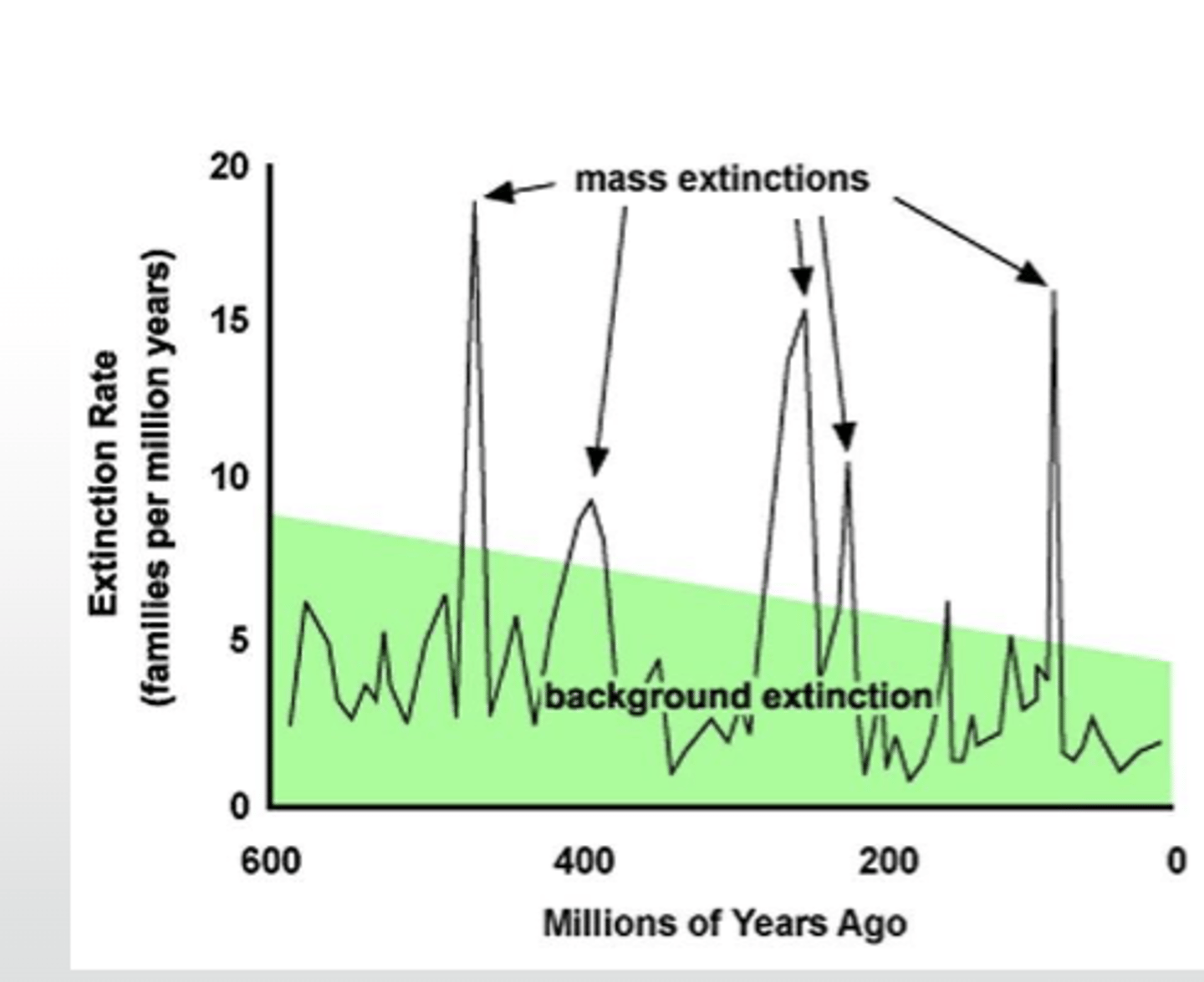
How many many mass extinctions have their been in the last 500 million years?
5
What are the big 5 mass extinctions?
I Ordovician - ~450mya
II Devonian - ~364mya
III Permian - ~251mya
IV Triassic - ~200mya
V Cretaceous - ~65mya
Why does a mass extinction(almost) always occur at the end of a geological era?
geologists and paleontologists defined the boundaries of these eras based on the dramatic changes observed in the fossil record, specifically the sudden disappearance of many species
What caused these mass extinctions?
Under considerable debate!
- No single cause
- Biosphere under long-term stress experiences a short-term shock ('press / pulse' model)
What was their impact?
# of species/genera extinct
Examples of well-known groups
What was the Ordovician extinction? What was badly affected?
- Two extinction bursts, ~450-440mya
- >60% of marine invertebrates (virtually no terrestrial life!)
- Badly affected: bivalves, echinoderms, corals, trilobites
- Continental drift (Gondwana over south pole), followed by widespread glaciation and drop in sea levels
What was the devonian extinction? what was badly affected?
~364mya, possibly series of extinctions over 25my period
- 50% of all genera, mostly marine
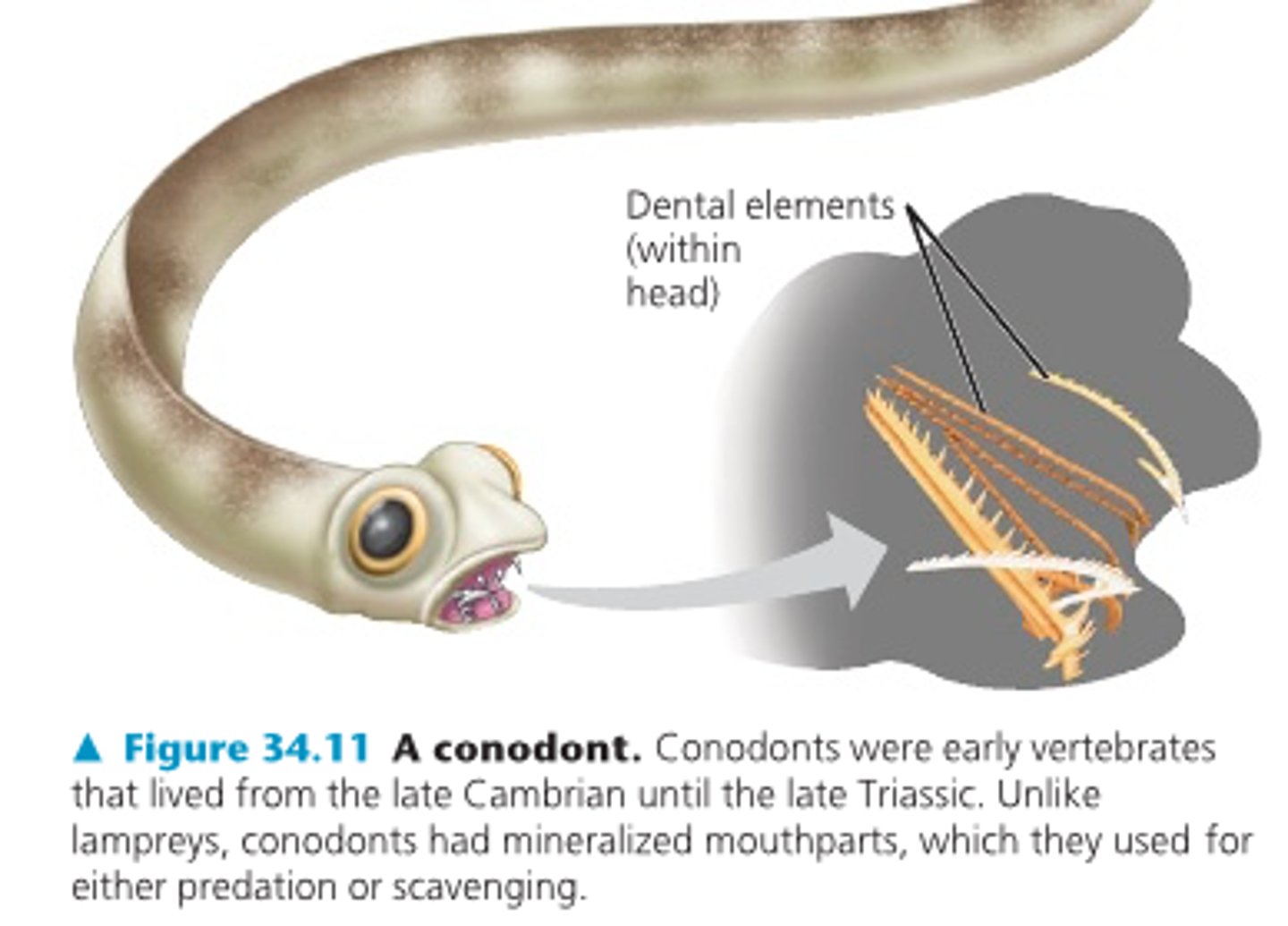
- Badly affected: agnathan (jawless) and placoderm fish (armoured), conodonts, trilobites, ammonites, reef builders (corals, sponges, etc)
- Environmental change: anoxia in lower ocean levels, sea level changes
What is the permian extinction? what was badly affected?
~251mya
- 50% of terrestrial and marine families equating to 70% of terrestrial species, 96% of marine species go extinct
- Badly affected: ammonites, trilobites (gone), echinoderms, brachiopods, insects (only known insect mass extinction)
Caused by: Impact? Volcanism? Methane release? Anoxia?
How could impact potentially have caused the permian extinction?
» Less understood than KT, the PT has several interesting factors
» Potential impact crater in S Atlantic, or off Australian coast
» Potential shocked quartz containing extraterrestrial noble gases
Not well supported
How may volcanism have caused the permian extinction?
» 251mya Siberian Traps release 2 million cubic kilometres of basalt lava.
» Covers 1.6 million square kilometres of Eastern Russia to depth of 400-3000m
» This basalt was released over a time period of 600 000 years (very quickly in geological terms)
» These eruptions caused global warming releasing frozen gas hydrates and massive amounts of methane, causing more warming, causing a runaway greenhouse effect
» The runaway greenhouse effect, along with gases from volcanic eruptions which formed acid rain, and poisoned the atmosphere with sulphuric, carbonic and nitric acids
» CO2 build up in the atmosphere, with continued warming would have fed back into the oceans, causing acidification of the oceans and deoxygenation
What were the results of the permian extinction?
» Opened up niche space for radiations of new species
» Increase in shore line with break up of super continent
» Dinosaurs could take over from mammal-like reptiles
What was the triassic extinction? what was badly affected?
- 200mya
- >50% of all genera
- Badly affected: conodonts (gone), amphibians, reptiles
- Caused by: Volcanism? Climate change?
What are conodonts?
What was the cretaceous extinction?
~65mya
- 75% of all species
- Badly affected: ammonites (gone), belemnites (gone),dinosaurs (gone except birds), pterosaurs (gone),plesiosaurs (gone), plants
- Caused by: Impact? Widespread volcanism? Trees died (groups that survived are ground nesting ones)
What are the Deccan Traps?
A massive flood basalt in India.
What is the Chicxulub Crater?
- Evidence of a asteroid or comet impact on Earth in Carribean Sea near Yucatan Penninsula
- 180 km in diamter
- largest impact structure on Earth
- before no dinosaurs
What is the idea of snowball earth?
~850-650mya, global glaciation(s)
- controversial, not generally accepted
What was the oxygen catastrophe?
~2.4bya, big increase in atmospheric O2 (photosynthesis) saturation of minerals that can be oxidised
Severity much harder to judge, due to lack of fossil record(no multicellular life until Ediacaran = ~635-542mya!)
What was Goulds replay the tape of life idea?
- Whether a species goes extinct depends partially on genes, but also on 'bad luck'
- A species can adapt to environmental change, but not toa catastrophic event
- If we could replay the Tape of Life, would life on earth in 2011 look the same as it does now?
When were ediacaran biota around?
Ediacaran biota
- 635-542mya
- Mostly extinct beginning Cambrian
- Earliest multicellular life forms - many not leaving descendants?
What is the 6th mass extinction?
- Human activity causes extinction of species
- Habitat destruction, overexploitation, global climate change
- Estimate that 60% of species could go extinct in 100 years
- Global, broad range of species, short amount of time, and well within 'rule of thumb' criteria
Why may we be at the beginning of the 6th mass extinction?
- the rate at which species are dying far exceeds the norm
- many species on the brink or gone
- deforestation having an impact on the decline of species
- Industrial revolution
- The nuclear age
- plastics
- atomic test sites
how can habitat loss cause extinction?
eg. pubic louse
Habitat loss by grooming causing reduction in population
How have we affected life on earth?
- Coral bleaching: too hot water zooxanthellae expelled, killing coral turning white
- Bees: if loose them use masses of food crops
- threatened amphibians: fungus transported on humans can cause film on amphibians preventing them from respiring
Have we entered a new geological epoch?
» The demarcation of geological time is shown by the 'Golden Spike'
» There has to be a change preserved between one rock layer and another- eg Iridium layer, change in fossil deposits
What impacts are plastics having on species?
» We get rid of 8 million tons of plastic every year, dumped into the sea.
» Plastic does not biodegrade into harmless compounds, it just fragments
» These plastic particles, often smaller than 1mm in size are ingested and potentially cause many problems (reduce sperm count, mimic female hormones)
 Note
Note  Flashcards (112)