Bio 158: Lecture 5
 Call Kai
 Learn
Learn Practice Test
 Spaced Repetition
 Match
Match Flashcards
 Knowt Play
1/34

Earn XP
Description and Tags
Bio 158 Form and Function Lecture 5
Name | Mastery | Learn | Test | Matching | Spaced | Call with Kai |
|---|
No analytics yet
Send a link to your students to track their progress
35 Terms
Plant Structure: One of the systems
Shoot system: stems and leaves.
Allows: Photosynthesis, reproduction
Plant Structure: Another one of the systems
Root system: anchors plant, absorbs water and ions
Three types of plant tissue
dermal tissue = protective exterior
ground tissue = storage, photosynthesis
vascular tissue = conducting substances
Descriptive of Plant Tissue: Dermal Tissue
Forms a protective interface with the environment
Contains a waxy cuticle
Specialized cells:
guard cells: help regulate opening of stomata
trichomes: hairlike outgrowth on stem of leaf that protect plant
root hairs: hairline extension that increased surface area of root
Descriptive of Plant Tissue: Ground Tissue
Different cells that work for storage, photosynthesis, secretion, support, and protection
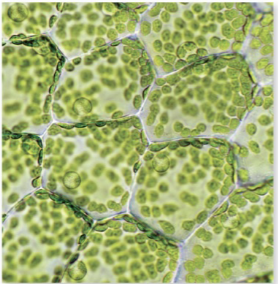
Plant Tissue: Ground Tissue Type Parenchyma
ADD STUFF
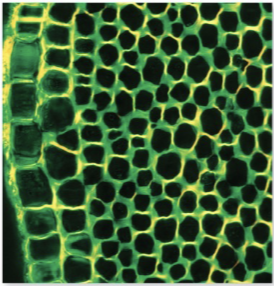
Plant Tissue: Ground Tissue Collenchyma
ADD STUFF
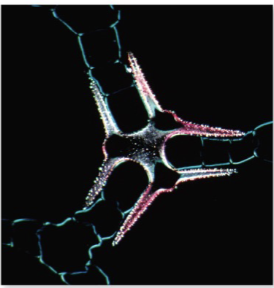
Plant Tissue: Ground Tissue Sclerenchyma
ADD STUFF
Descriptive of Plant Tissue: Vascular Tissue
Xylem: Tissue that conducts water and dissolved minerals
Phloem: Tissue that conducts carbohydrates
Plants: Root Structure
Prop roots -
Epiphytic roots -
Pneumatophores -
Water storage root -
Buttress root -
Plants: Modified Stems
Each serves a special purpose:
Bulbs: storage for next year’s leaves
Rhizome: horizontal stems that grow underground
Runner: on surface + similar to rhizome
Tuber: accumulation of carbohydrates
Tendrils: support climbing plants
Cladophyll: flattened stems
Plants: Leaves
Principal sites of photosynthesis
Veins: vascular bundles
Vertebrate body: 4 levels of organization:
1) cells
2) tissues
3) organs
4) organ Systems
Vertebrate body: 4 types of tissues
1) epithelial
2) connective
3) muscle
4) nerve Muscle
Descriptive of Vertebrate body Tissue: Epithelial tissue
Forms a protective barrier
Not just our skin
Simple epithelium: one cell thick
Stratified: two to several layers thick
Descriptive of Vertebrate body Tissue: Connective Tissue
Key characteristic: cells spaced widely apart and all have abundant extracellular matrix
Loose connective tissue:
cells scattered in a matrix with a lot of ground substance
most common type in vertebrates
includes fat tissue
Dense connective tissue:
tightly packed collagen fibers
forms tendons and ligaments
Special connective tissue: unique cells (cartilage, bone, and blood)
Descriptive of Vertebrate body Tissue: Muscle Tissue
Actin and myosin: proteins that make up muscle
3 types:
Smooth muscle: occurs in organs
powers rhythmic, involuntary contractions commanded by the central system
Skeletal muscle: attached to bones by tendons
powers walking, lifting, talking, and all other voluntary movement
Cardiac muscle: Striated cells that are interconnected
highly interconnected cells; promotes rapid spread of signal initiating
Descriptive of Vertebrate body Tissue: Nerve Tissue
Neuron: contains cell body, dendrite, and axon
Produce and conduct electrochemical events (impulses)
Neuroglia: support and insulate neurons
Three types of nerves:
sensory
motor
interneurons
Type of Nerve: Sensory
receive info about body’s condition and external environment
send impulses from sensory receptors to the central nervous system
Type of Nerve: Motor
stimulate muscles and glands
conduct impulses out of central nervous system toward muscles and glands
Type of Nerve: Interneurons
integrate info
conduct impulses between neurons w/in nervous system
Plant Movement
Response to stimuli
limited to see or spore dispersal
Animal Movement: Skeletons
3 types of skeletal systems in animals
2) Exoskeleton
3) Endoskeleton
Type of skeletal systems Animal: Hydrostatic skeleton:
worms, cnidarians, mollusks
fluid-filled central cavity surrounded by muscles
Type of skeletal systems Animal: Exoskeleton
arthropods
chitin surrounds the outside of the body
Type of skeletal systems Animal: Endoskeleton
vertebrates (bone) and echinoderms (calcite)
rigid internal structures that provide framework
Vertebrate Movement: Muscles, Tendons, + Bones
Tendons connect muscles to bones
Muscles contract
Tendons transfer the force to the bones
Which bone(s) move depends on mass + resistance from surroundings
Vertebrate Movement: Fishes
Primary force slowing movement is frictional drag
Body movement involves moving body/fins
Vertebrate Movement: Terrestrial
Gravity is main challenge
Walking: body raised above ground and body moved by pushing against ground with legs
Arthropods: 6 or more legs, Vertebrates: 2 or 4 legs
Some insects and vertebrates leap
Vertebrate Movement: Air
Flight is convergent evolution: evolved independently 4x (insects, bat, pterosaur, bird)
All vertebrate fliers have modified forelimbs into wings
Propulsion by pushing down against air, which provides lift to body
Invertebrate Movement: Cnidarians
Hydrostatic skeleton
Main body (bell) has a ring of muscle cells in the epithelium
These rhythmically contact to propel animal
Water moves out from gastrovascular cavity, pushing animal up
What new cell types did the common ancestors of Cnidarians and all bilateral animals evolve?
muscle
nerve
Invertebrate Movement: Nematoda
Hydrostatic skeleton
Muscles beneath the epidermis extend longitudinally
Pulling of muscles causes a wriggling motion
Invertebrate Movement: Annelida
Body is composed of ringlike segments
The inside fluid gives each segment rigidity: hydrostatic skeleton
move by contracting circular and longitudinal muscles against this skeleton
alternating contractions and confining to specific segments lets worm move in complex ways
Invertebrate Movement: Arthropoda
Rigid exoskeleton is broken into segmented plates
At plate boundaries the exoskeleton is very thin to allow for movement
Appendages specialized for walking, running, swimming
Some have wings which are layers of exoskeleton

