[N119] LEC 5 - Epidemiology
 Studied by 20 people
 Call Kai
 Learn
Learn Practice Test
 Spaced Repetition
 Match
Match Flashcards
 Knowt Play
1/152

There's no tags or description
Looks like no tags are added yet.
Name | Mastery | Learn | Test | Matching | Spaced | Call with Kai |
|---|
No analytics yet
Send a link to your students to track their progress
153 Terms
Etymology of epidemiology:
Epi: ______
Demos: ______
Logos: ______
Study of what is upon the people
Upon, among
People, district
Study, word, discourse
Epidemiology is the science of _____ and the _____
Epidemics; occurrence of illness
True or false? Epidemiology is the study of the distribution and determinants of disease frequency
True
As a study of the distribution of disease, what is the focus of epidemiology?
Describing the health status in terms of demographic profile
Who, Where, When?
Measures of disease frequency
How many?
IR, PP
As a study of finding determinants, what is the focus of epidemiology?
Explaining patterns of disease distribution in terms of causal factors related to person, place, and time
Why, How?
Measures of disease association
RR, AR, OR
What are the 5 components of the nature and scope epidemiology?
DDASH
Distribution
Determinants
Health-related state or events
Specified populations
Application
Refers to the number of health events and the relationship of that number to the size of the population
Distribution frequency
Refers to the occurrence of health-related events by time, place, and person
Distribution pattern
Refers to the causes and other factors that influence the occurrence of disease and other health-related events
Determinants
Refers to anything that affects the well-being of a population (i.e., diseases, injuries, health behaviors, etc.)
Health-related state or events
“High influenza among community-dwelling older persons in NCR, Philippines from June to November”
In the given example, who is the specified population?
Community-dwelling older populations
“High influenza among community-dwelling older persons in NCR, Philippines from June to November”
In the given example, what is the health-related state or event?
Influenza
“High influenza among community-dwelling older persons in NCR, Philippines from June to November”
Based on the given example, what can be the possible application of epidemiology?
Flu vaccine (free influenza and pneumococcal vaccines for older persons)
Suggested that environmental and host factors, such as behaviors, might influence the development of disease
A. Hippocrates
B. John Graunt
C. William Farr
D. John Snow
A
Coined the terms epidemic and endemic
A. Hippocrates
B. John Graunt
C. William Farr
D. John Snow
A
Published a landmark analysis of mortality data
A. Hippocrates
B. John Graunt
C. William Farr
D. John Snow
B
First to quantify patterns of birth, death, and disease occurrence, noting disparities between males and females, high infant mortality, urban/rural differences, and seasonal variation
A. Hippocrates
B. John Graunt
C. William Farr
D. John Snow
B
Father of modern vital statistics and surveillance
A. Hippocrates
B. John Graunt
C. William Farr
D. John Snow
C
Developed many of the basic practices used today in vital statistics and disease classification
A. Hippocrates
B. John Graunt
C. William Farr
D. John Snow
C
Father of field epidemiology
A. Hippocrates
B. John Graunt
C. William Farr
D. John Snow
D
Conducted a series of cholera outbreaks, both to discover the cause of disease and to prevent its recurrence
A. Hippocrates
B. John Graunt
C. William Farr
D. John Snow
D
Proved that epidemiologic information can be used to direct prompt and appropriate public health action
A. Hippocrates
B. John Graunt
C. William Farr
D. John Snow
D
When was epidemiology extended to non-infectious diseases, the studies of injuries and violence, and molecular and genetic epidemiology?
19th and 20th centuries
What are the 4 uses of epidemiology?
Assessing the community’s health
Making individual decisions
Completing clinical picture
Search for causes
What are the 6 core functions of epidemiology?
Public health surveillance
Field investigations
Analytic studies
Evaluation
Linkages
Policy development
What is the objective of field investigations?
To learn more about the natural history and risk factors of the disease before determining appropriate interventions
What are the differences between efficacy, effectiveness, and efficiency?
Efficacy - ability to produce results in ideal condition
Effectiveness - ability of a program to produce intended result in the field
Efficiency - ability to produce intended results with a minimum expenditure of time and resource
______ are utilized to determine the causal relationships of an exposure to the disease outcomes
Analytic studies
What is the hallmark of epidemiology?
Having a comparable group
What are the 4 models and theories of multiple causation?
Triangle, Wheel, Web, Pie
Epidemiologic Triad
Wheel Model
Web Model
Rothman’s Causal Pies
Which of the following model/theory of multiple causation highlights that the environment plays a crucial role in the development of the disease process?
A. Epidemiologic Triad
B. Wheel Model
C. Web Model
D. Rothman’s Causal Pies
A
Inanimate objects or living organisms causing disease
A. Agent
B. Host
C. Environment
A
Characterized in terms of intensity, impact, virulence, excess/deficiency
A. Agent
B. Host
C. Environment
A
Person or other living animal that affords subsistence or lodging to an infectious agent
A. Agent
B. Host
C. Environment
B
Characterized by susceptibility and risk of exposure to an agent
A. Agent
B. Host
C. Environment
B
The sum total of all external conditions and influences that affect life and development, including physical, biological, social, and cultural factors
A. Agent
B. Host
C. Environment
C
What are the 3 components of the epidemiologic triad?
AHE
Agent
Host
Environment
What are the 3 components of the wheel model?
Genetic make-up
Demographic characteristics; personal habits, lifestyle
Physical, social, economic, cultural, political environments
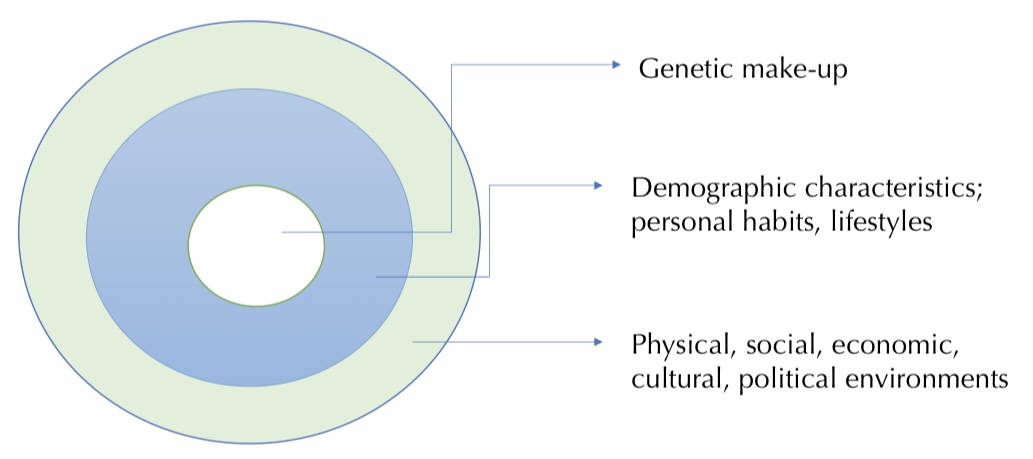
Highlights that a lot of factors affect the development of a disease, but some factors can’t be modified
A. Epidemiologic Triad
B. Wheel Model
C. Web Model
D. Rothman’s Causal Pies
B
Proximate determinants or causes of the disease are sufficiently related to the disease or each is related to each other, thus creating a ______
A. Epidemiologic Triad
B. Wheel Model
C. Web Model
D. Rothman’s Causal Pies
C
Highlights that diseases will not develop without a sufficient cause
A. Epidemiologic Triad
B. Wheel Model
C. Web Model
D. Rothman’s Causal Pies
D
What are the 2 premises of causal association?
Disease does not occur at random
Disease has identifiable causal and preventive factors
Refers to the concurrence of 2 variables more often that would be expected by chance
Association
True or false? Association implies a causal relationship
False
True or false? If a direct causal link cannot be inferred to a specific outcome, then it can imply association
True
What is the Henle-Koch Postulate?
States that the cause of a disease must be necessary for the occurrence of disease
What are the 4 criteria that should be met for a cause to be considered necessary?
The pathogen must be present in ALL cases of the disease
The pathogen can be isolated from the person with the disease and grown in pure culture
The pathogen from the pure culture must cause the disease when inoculated into healthy, susceptible lab animal
The pathogen must be re-isolated from the new host and show to be the same as the originally inoculated pathogen
Which of the following are included in the Bradford-Hill criteria for assessing evidence of causation? Select all that apply
A. Strength
B. Consistency
C. Sensitivity
D. Specificity
E. Temporality
A, B, D, E
Which of the following are included in the Bradford-Hill criteria for assessing evidence of causation? Select all that apply
A. Biologic gradient (dose-response relationship)
B. Plausibility
C. Coherence
D. Experiment
E. Analogy
All of the above
Bradford-Hill criteria for assessing evidence of causation:
Strength: the larger the association, the more likely it is causal
______: findings observed by different persons in different places with different samples strengthen the likelihood of an effect
Consistency
True or false? According to the specificity criterion in assessing evidence of causation, a single putative cause produces a specific effect
True
Bradford-Hill criteria for assessing evidence of causation:
Temporality: the effect has to occur after the cause
______: greater exposure should generally lead to greater incidence of the effect
Biologic gradient (dose-response relationship)
True or false? According to the biologic gradient (dose-response relationship) criterion in assessing evidence of causation, greater exposure leads to lower incidence in SOME cases
True
_______ between epidemiologic and laboratory findings increases the likelihood of effect
Coherence
Bradford-Hill criteria for assessing evidence of causation:
Experiment: condition can be altered (prevented or ameliorated) by an appropriate experimental regimen
______: consider other possible explanations that will produce the same effect
Analogy
What are the 3 types of association?
Spurious - association when none really exists
Indirect - may wholly or partly explain a statistical association
Direct - either one-to-one causal or multi-factorial
Refers to the probability of an unfavorable event
Risk
How do you derive the risk of an individual developing a disease due to a particular exposure?
By comparing the occurrence of a disease in a population exposed to the causal agent to the occurrence of disease in a non-exposed population (i.e., exposed vs. non-exposed)
What are the 3 measures of association between exposure to and risk of disease?
Relative risk or risk ratio
Attributable risk
Odds ratio
Ratio of the incidence of the disease among the exposed and the incidence of the disease among the non-exposed
A. Relative risk or risk ratio
B. Attributable risk
C. Odds ratio
A
Direct measure or index of the strength of association between a suspected cause or effect
A. Relative risk or risk ratio
B. Attributable risk
C. Odds ratio
A
What is the formula for calculating the relative risk or risk ratio?
Click photo for formula
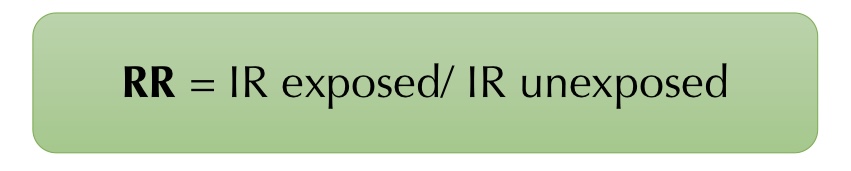
What is the interpretation if RR = 1?
No association
What is the interpretation if RR > 1?
Positive association; exposure is a risk factor
What is the interpretation if RR < 1?
Exposure is a protective factor
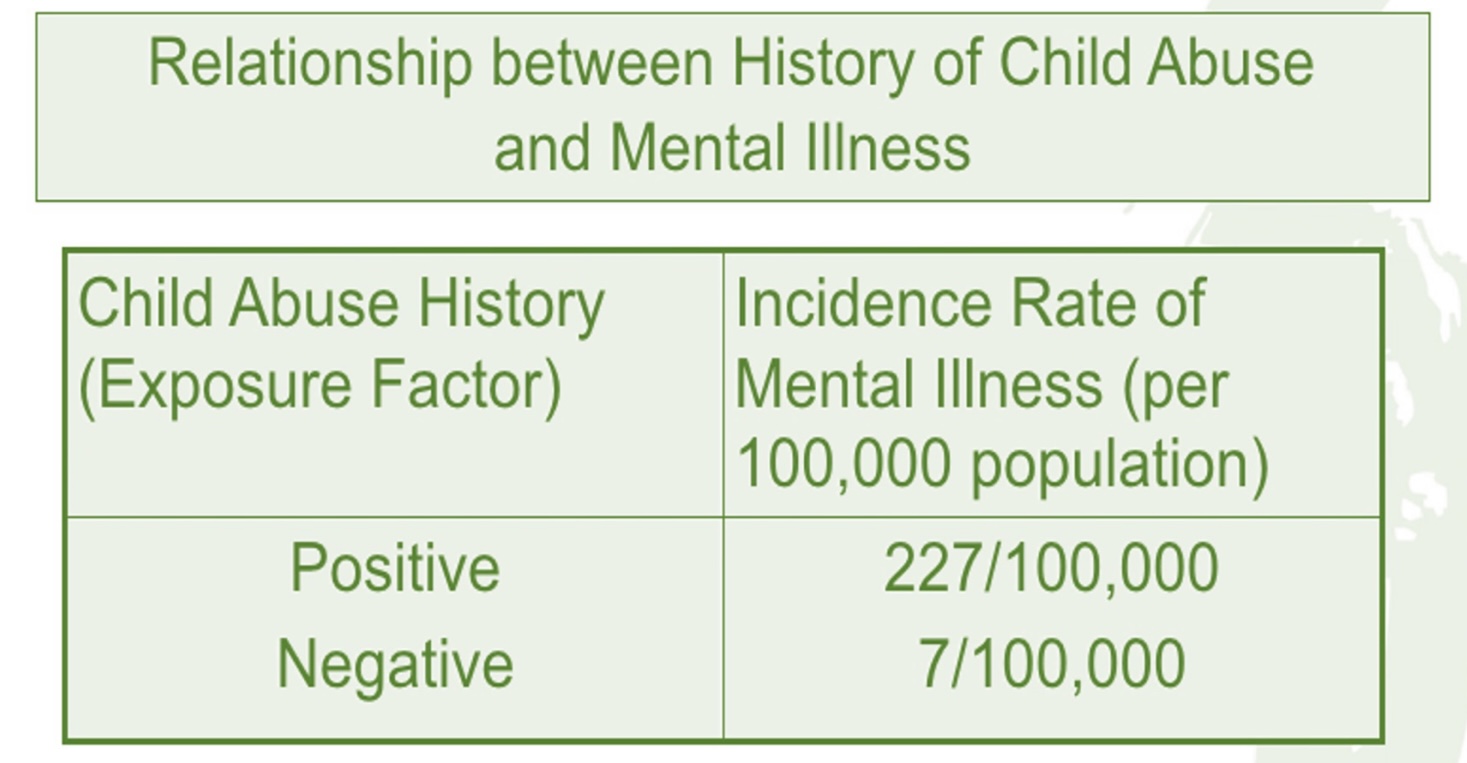
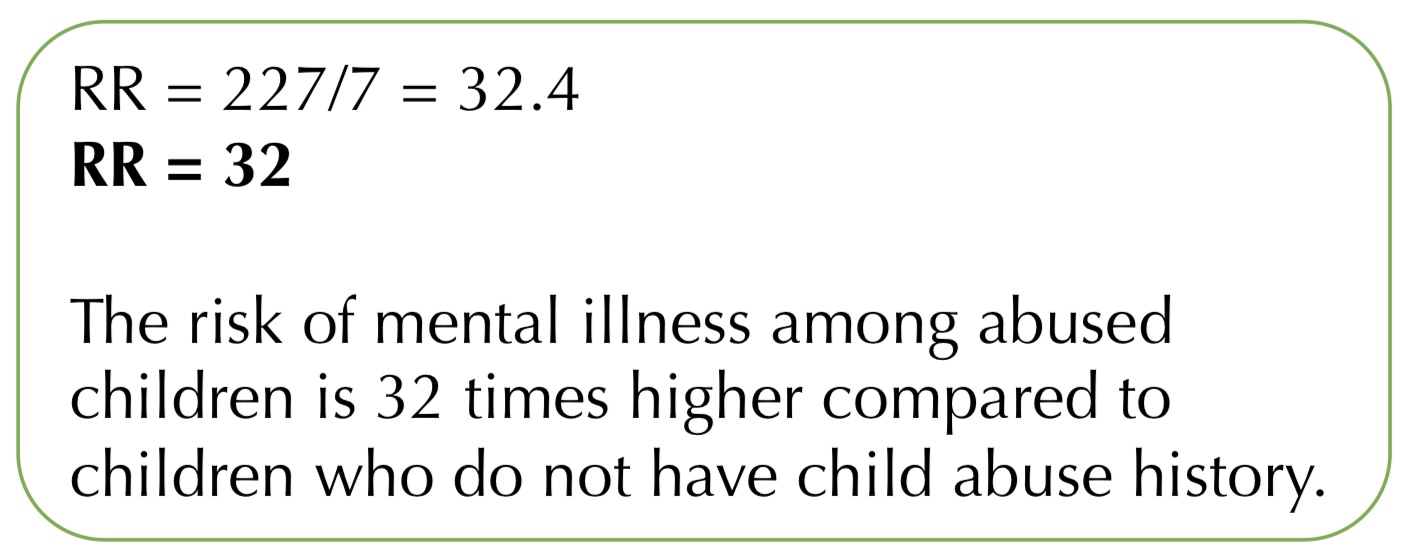
Solve for and interpret the relative risk or risk ratio
Click photo for solution and interpretation
Provides information about the absolute effect of the exposure or the excess risk of the disease to a causal agent
A. Relative risk or risk ratio
B. Attributable risk
C. Odds ratio
B
Better idea of the impact of successful preventive or public health program might have in reducing the problem
A. Relative risk or risk ratio
B. Attributable risk
C. Odds ratio
B
Difference in the incidence rates of disease between exposed and non-exposed population
A. Relative risk or risk ratio
B. Attributable risk
C. Odds ratio
B
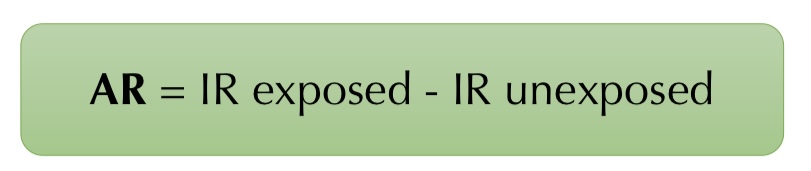
What is the formula for calculating the attributable risk?
Click photo for formula
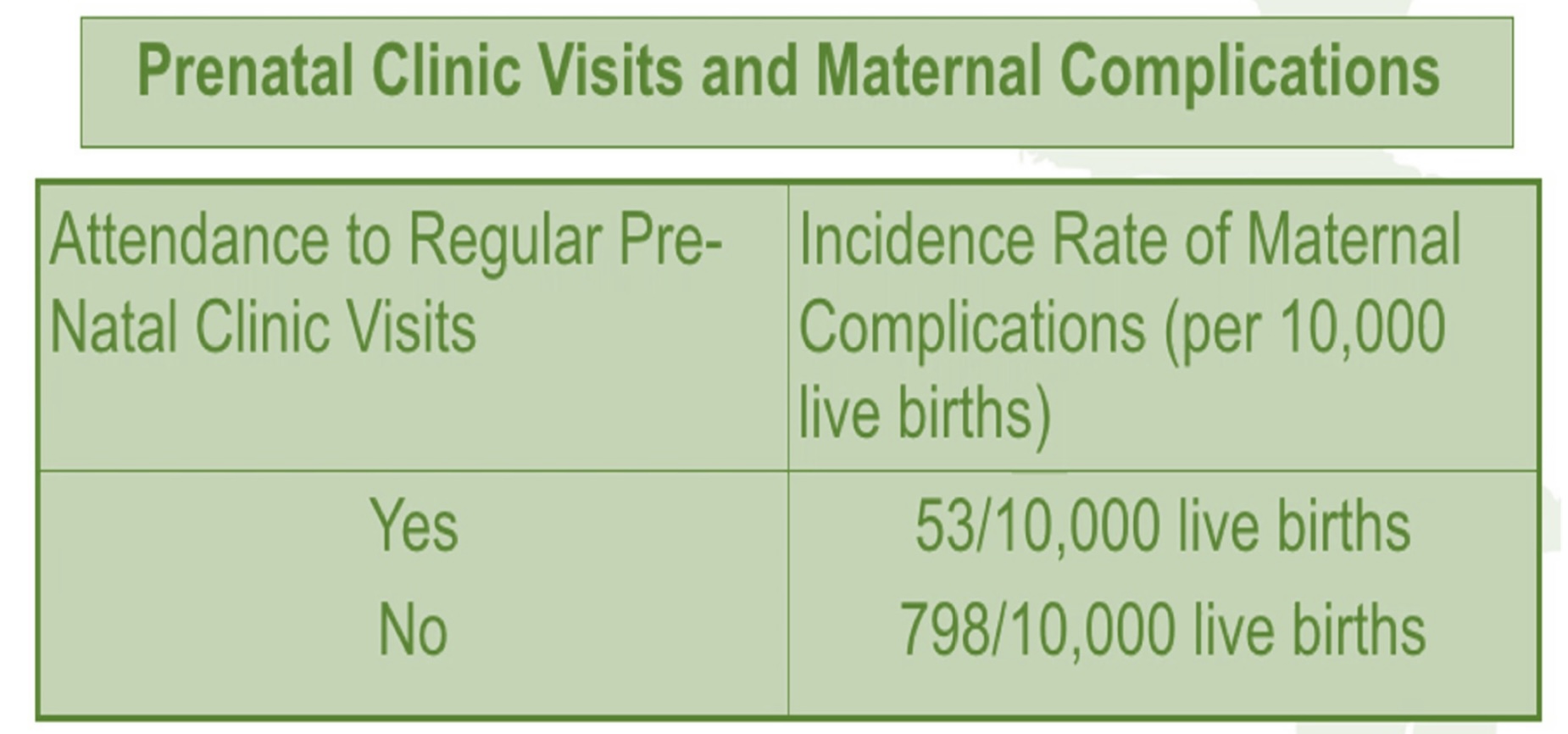
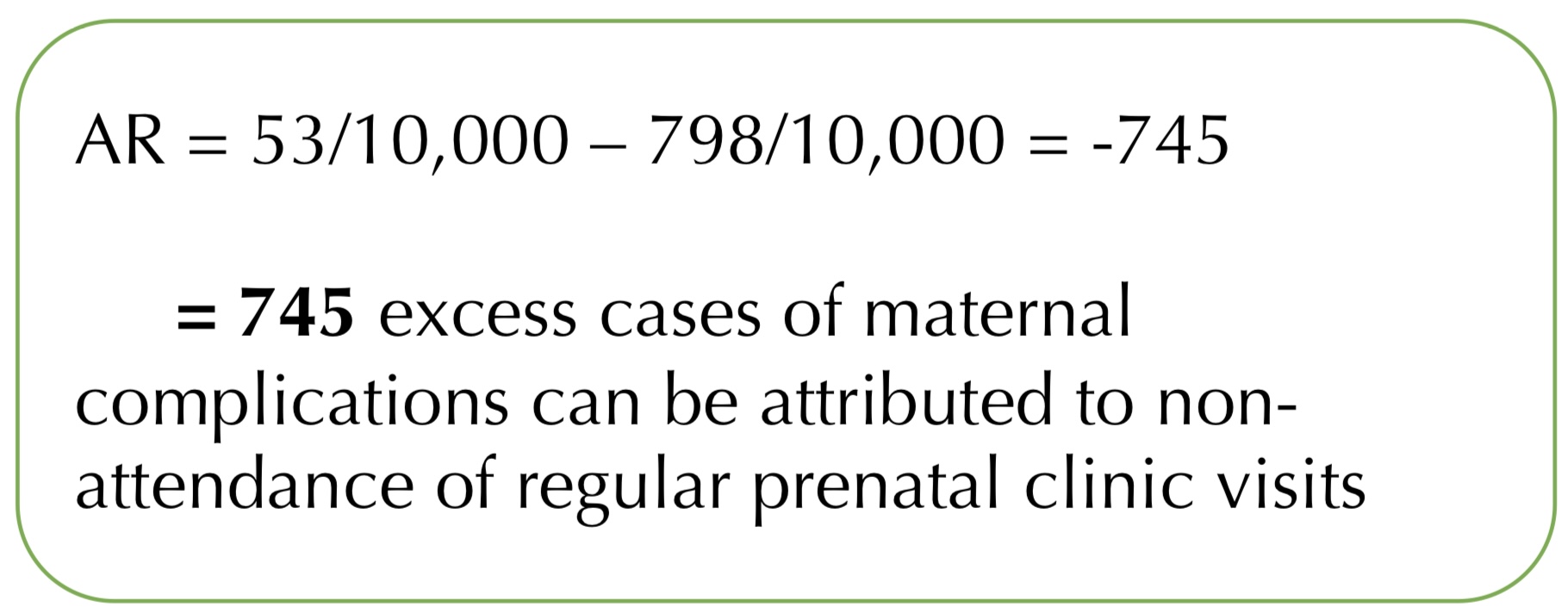
Solve for and interpret the attributable risk
Click photo for solution and interpretation
A way to present the strength of the association between exposure and outcome
A. Relative risk or risk ratio
B. Attributable risk
C. Odds ratio
C
Compares cases and controls with respect to the frequency of an exposure whose potential etiologic role is being evaluated
A. Relative risk or risk ratio
B. Attributable risk
C. Odds ratio
C
Derivation of odds ratio is based on 3 assumptions:
Disease being investigated must be relatively _____
_____ must be represented of those with the disease
_____ must be representative of those without the disease
Rare
Cases
Controls
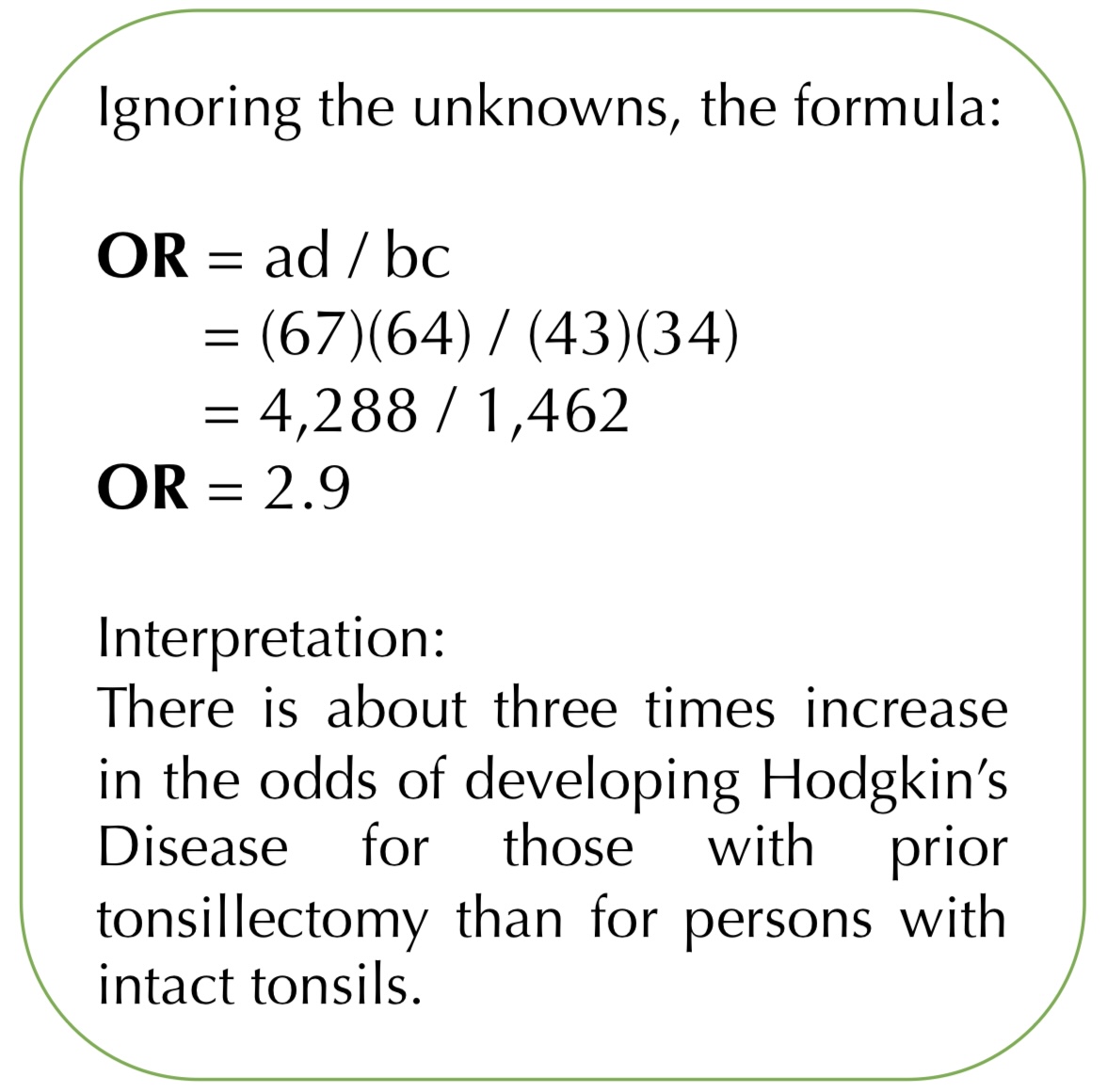
What is the interpretation if OR = 1?
There is no association between exposure and outcome
What is the interpretation if OR > 1?
Odds are increased for a given outcome
What is the interpretation if OR < 1?
Odds are decreased for an outcome
What is the formula for calculating the odds ratio?
Click photo for fomula
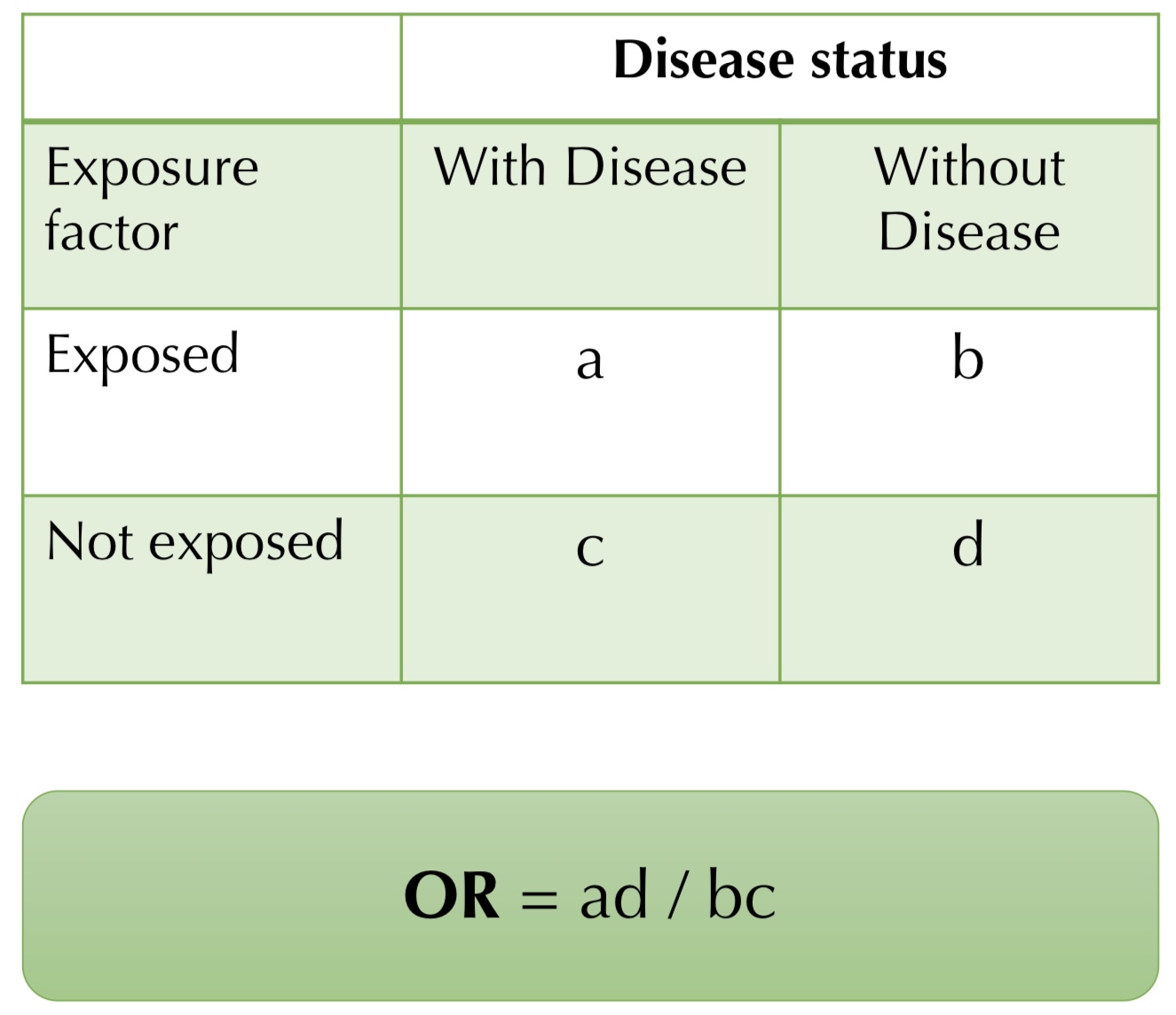
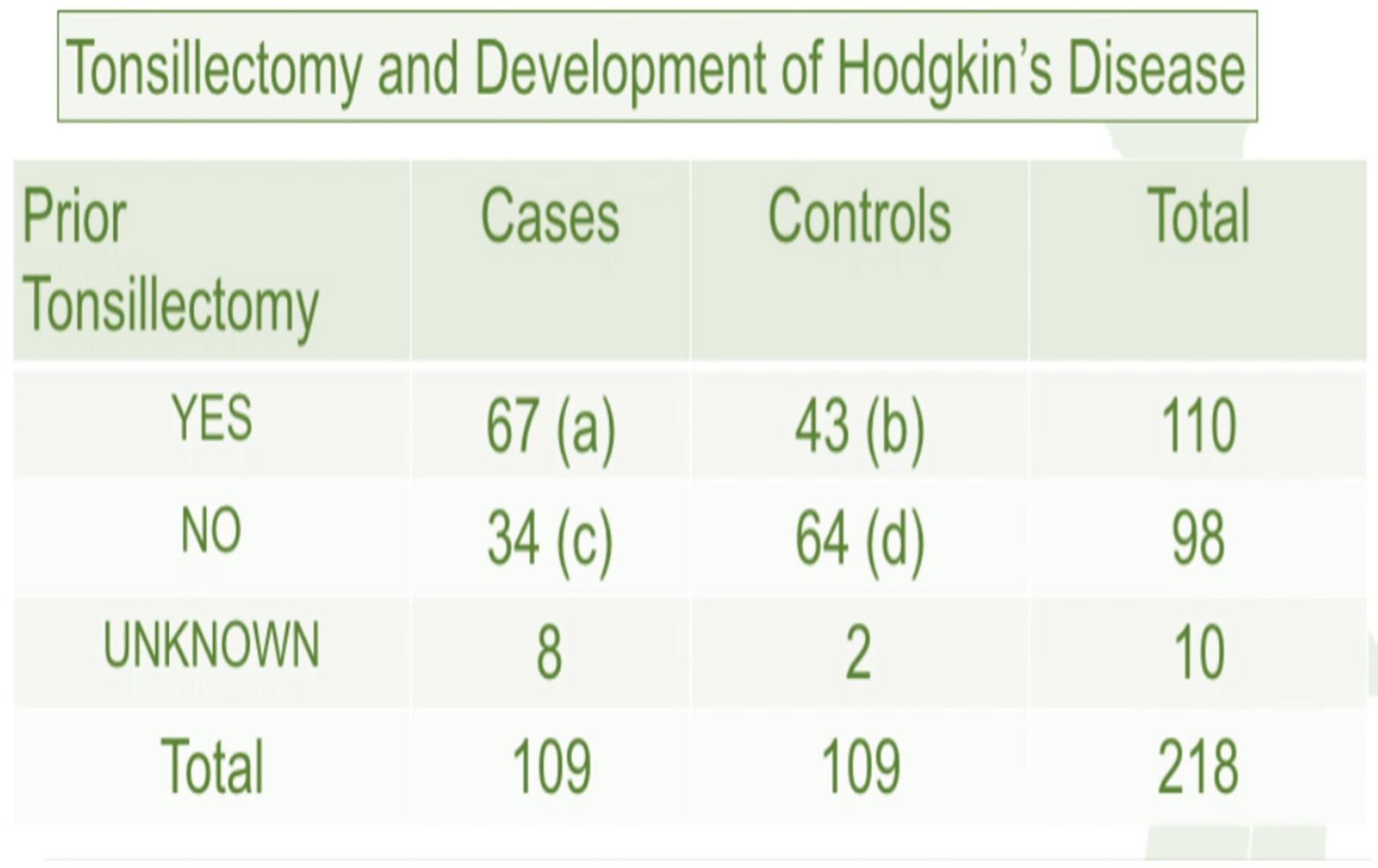
Solve for and interpret the odds ratio
Click photo for solution and interpretation
Refers to the progression of a disease from its initial development to its final outcome, including the stages of exposure, infection, incubation, symptoms, and recovery or death
Natural history of disease
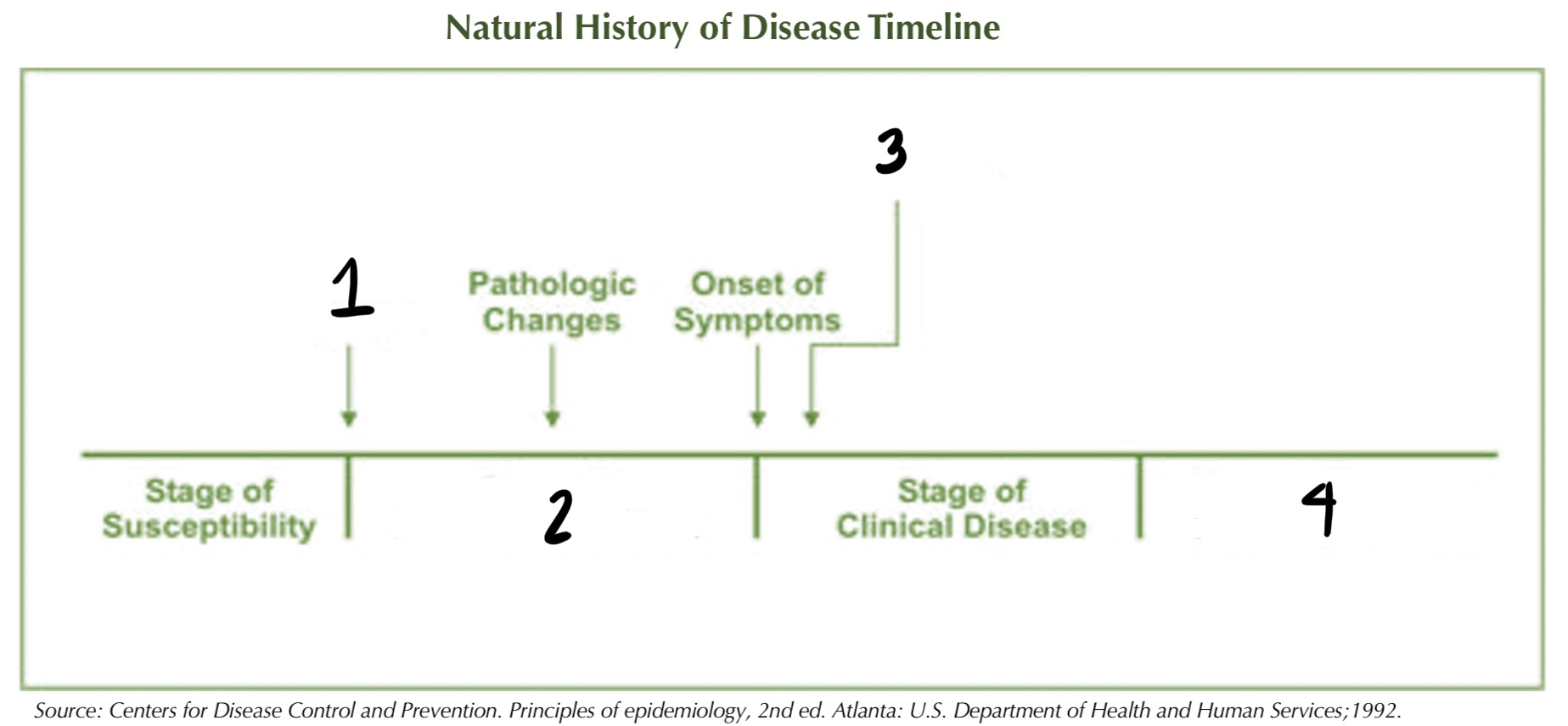
Fill in the missing parts of the natural history of disease timeline
Exposure
Stage of Subclinical Disease
Usual Time of Diagnosis
Stage of Recovery, Disability or Death
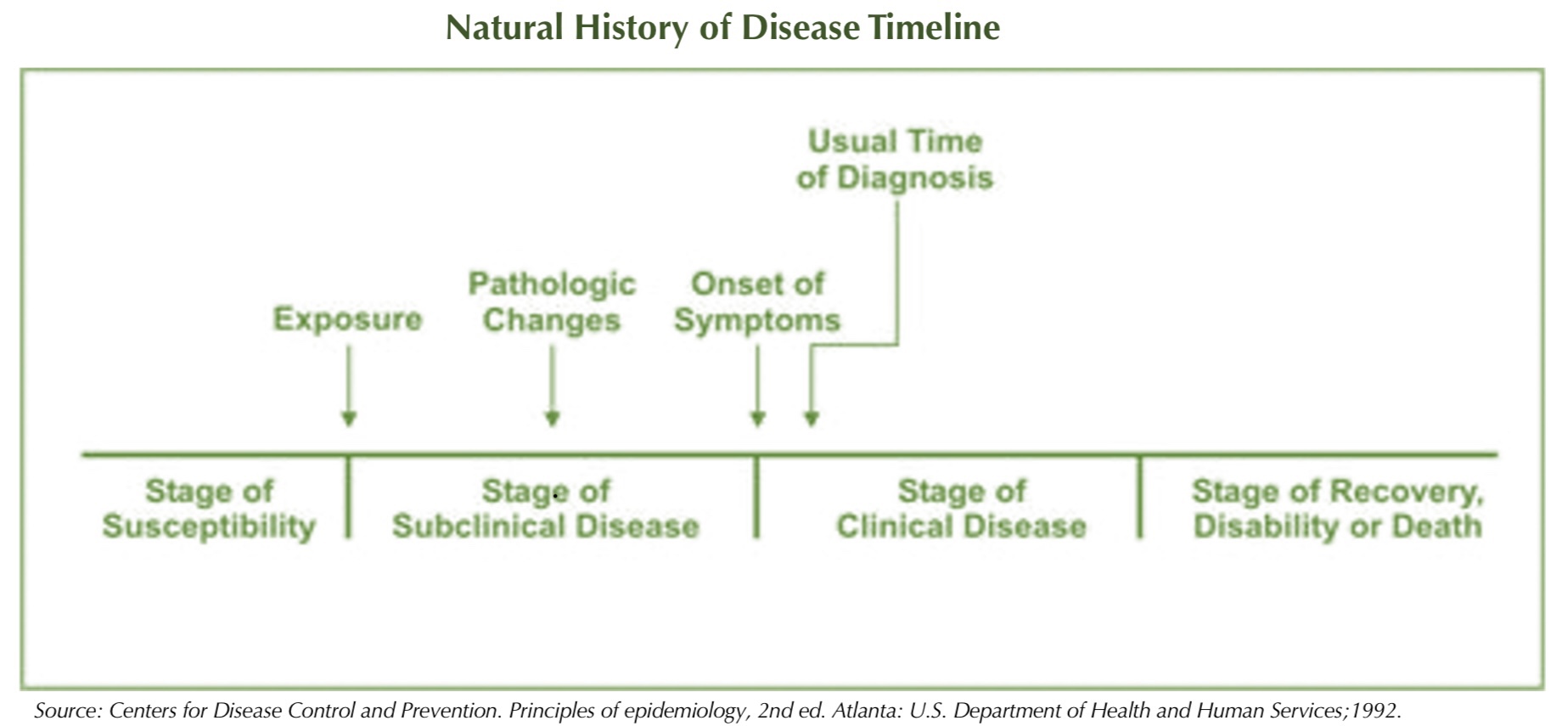
What are the 4 stages in the natural history of disease?
Stage of susceptibility
Stage of subclinical disease
Stage of clinical disease
Stage of recovery, death or disability
In the natural history of disease, at what stage do pathologic changes occur?
Stage of subclinical disease
Promotes health and wellness, and prevents disease in the population
A. Primary prevention
B. Secondary prevention
C. Tertiary prevention
A
Example: efforts to improve the QOL and enhance the level of physical and mental health
A. Primary prevention
B. Secondary prevention
C. Tertiary prevention
A
Halts the progress of a disease at its incipient stage and prevents complications
A. Primary prevention
B. Secondary prevention
C. Tertiary prevention
B
Includes early diagnosis
A. Primary prevention
B. Secondary prevention
C. Tertiary prevention
B
Treatment and disease control
A. Primary prevention
B. Secondary prevention
C. Tertiary prevention
B
Case finding, screening surveys, periodic examination, selective examination of people at risk
A. Primary prevention
B. Secondary prevention
C. Tertiary prevention
B
Disability limitation
A. Primary prevention
B. Secondary prevention
C. Tertiary prevention
C
Rehabilitation
A. Primary prevention
B. Secondary prevention
C. Tertiary prevention
C
At what stage of the natural history of disease should you perform primary prevention?
Stage of susceptibility
At what stage of the natural history of disease should you perform secondary prevention?
Between stage of subclinical disease and stage of clinical disease
The following are parts of the epidemiologic triad, except for:
A. Socio-political environment
B. Fully immunized child
C. Microorganisms
D. Political belief
D
Which of the following is NOT considered as an exposure factor?
A. Immunization status
B. Access to prenatal care
C. Malnutrition status
D. Age
C
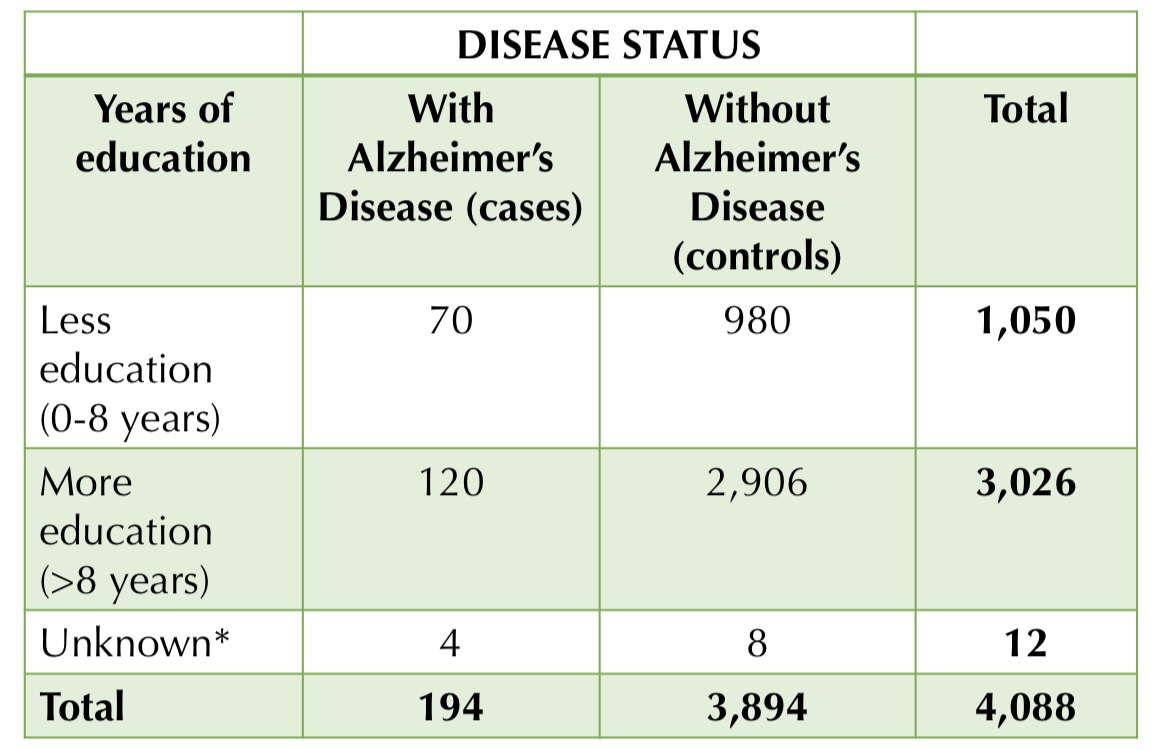
Solve for and interpret the odds ratio
Click photo for solution and interpretation
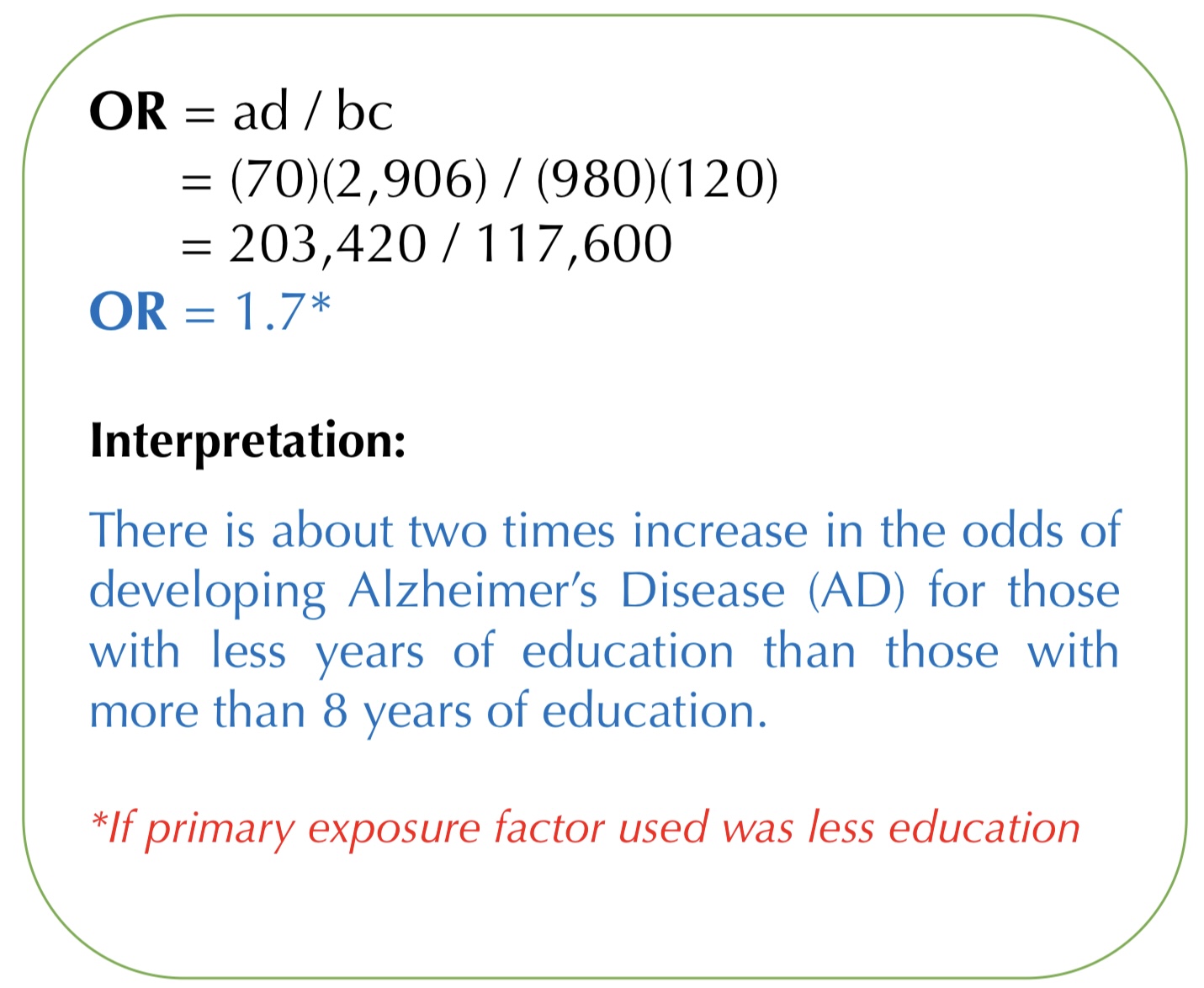
What strategy of epidemiology refers to the observation and recording of existing patterns of disease occurrence for the condition under study?
Descriptive epidemiology
Descriptive epidemiology refers to the description of a disease as to _____, ______, or ______
Person, place, time
What is the presumptive identification of unrecognized disease or defect by the application of tests, examinations, or other procedures that can be applied rapidly and inexpensively to populations?
Screening
What are the 2 factors that should be considered in screening tests?
Sensitivity
Specificity
 Note
Note  Flashcards (61)