Forensic Science DNA & hair
 Call Kai
 Learn
Learn Practice Test
 Spaced Repetition
 Match
Match Flashcards
 Knowt Play
1/20

There's no tags or description
Looks like no tags are added yet.
Name | Mastery | Learn | Test | Matching | Spaced | Call with Kai | Chat |
|---|
No analytics yet
Send a link to your students to track their progress
21 Terms
What type of evidence is hair?
Class evidence in forensics but if it contains a follicle (root) then it can provide individual evidence through DNA analysis.
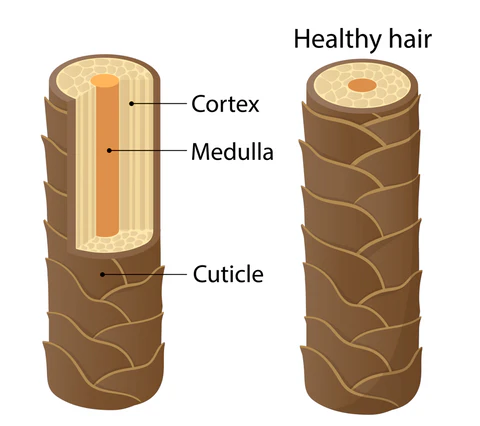
Identify & describe the various parts of hair ( & pictures)
Cuticle (Outer Layer): A protective layer made of overlapping, scale-like cells that act like shingles on a roof. It protects the inner layers and gives hair its shine.
Cortex (Middle Layer): The thickest layer, composed of hard keratinized cells. This layer contains melanin (pigment) and determines hair color, strength, and texture.
Medulla (Inner Core): The innermost layer or core, present mostly in thick hair. It is a soft, honeycomb-like core often absent in fine, blonde hair.
Describe variation in the structure of the medulla, cortex, and cuticle
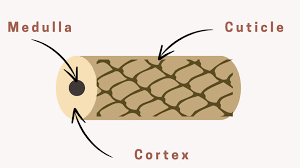
Medulla (innermost layer) The medulla is the central core of the hair, often described as a disorganized region that is not present in all hair types.
Cortex (middle layer) The cortex is the largest component, making up about 75-90% of the hair fiber mass and responsible for its mechanical properties.
Cuticle (outermost layer) The cuticle is a protective, transparent layer composed of 5 to 10 overlapping layers of dead, scale-like cells, similar to tiles on a roof.
What is the function of hair?
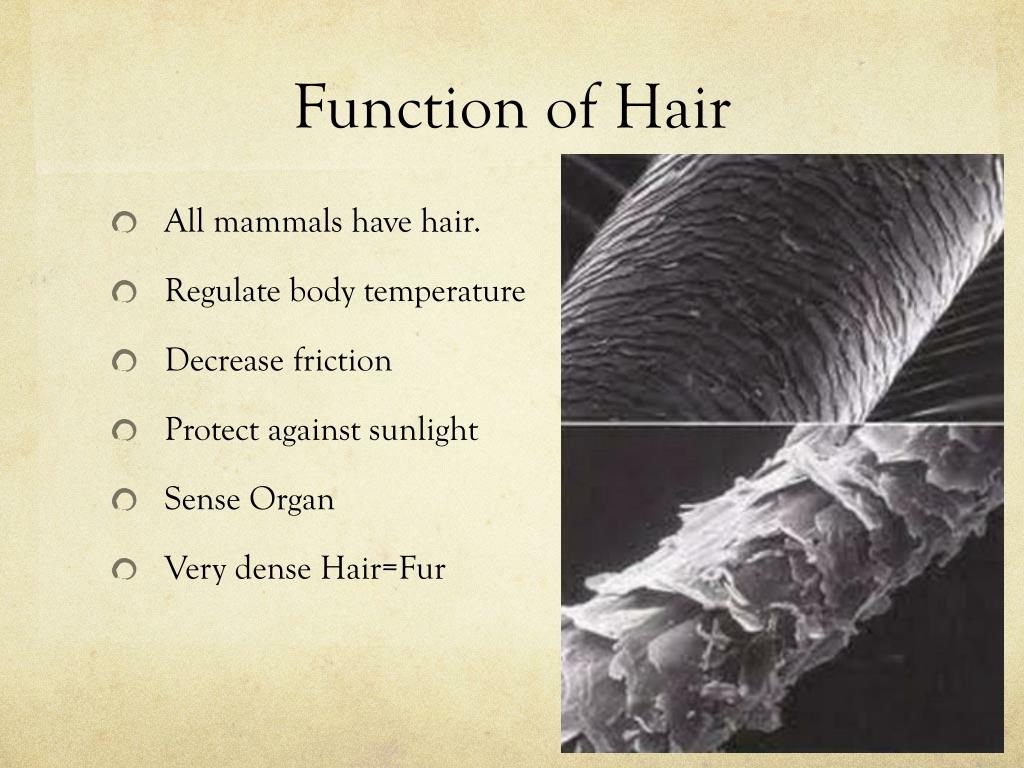
Thermoregulation, UV protection, barrier, filter, injury prevention, sensory reception, wound healing, social and psychological functions.
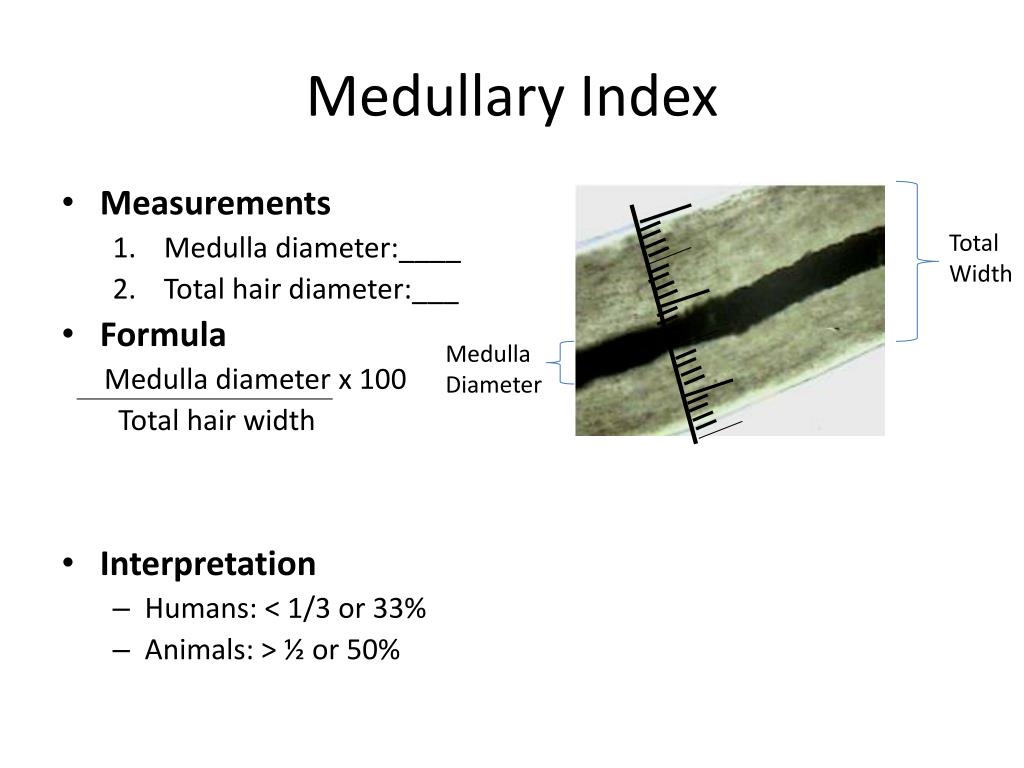
The medullary index of humans and other mammals.
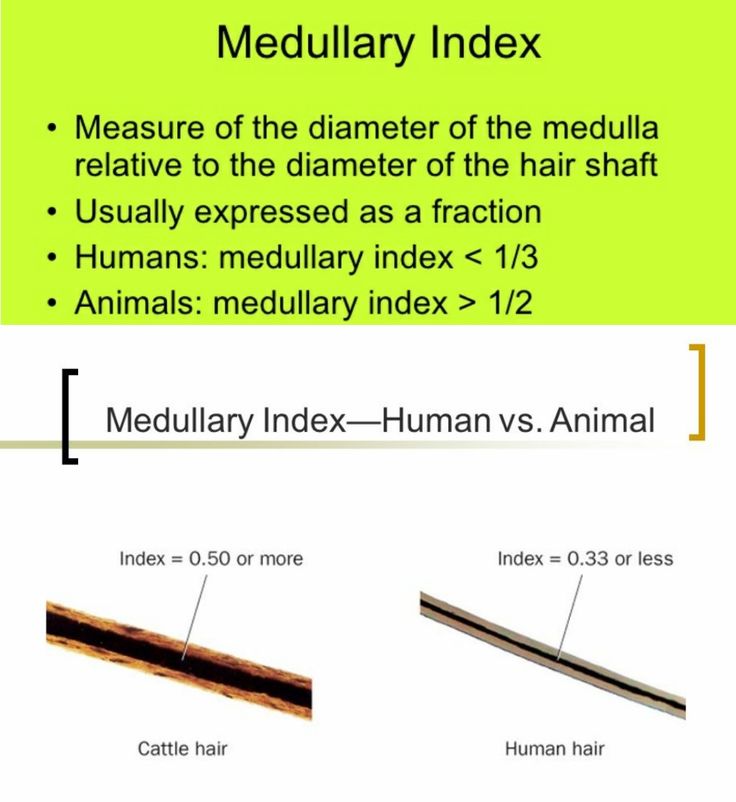
Humans = 0.33 or less
Animals = 0.5 or greater
Calculate the medullary index for a hair
Diameter of medulla / Diameter of hair shaft
Distinguish human & nonhuman animal hair
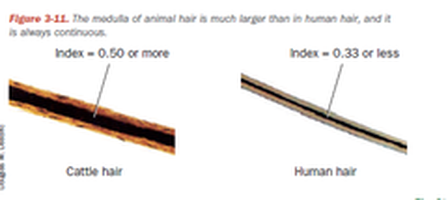
Human = medullary index of 0.33 or lower, consistent pigmentation, and a flattened tile scale pattern.
Animal = medullary index of 0.5 or higher, distinct colour banding, and complex cuticle patterns.
Explain how hair can be used in a forensic investigation
It can link suspects or victims to crime scenes, provide investigative leads, or test for drug/toxin exposure. It can find DNA if the root is attached, mtDNA can be found if there’s no root and can connect to the maternal line, can be used to find associations in patterns (class evidence), body area and origin determination, race and gender indicators, toxicology and drug testing, and evidence of trauma or events.
Distinguish hair from individuals belonging to broad racial categories
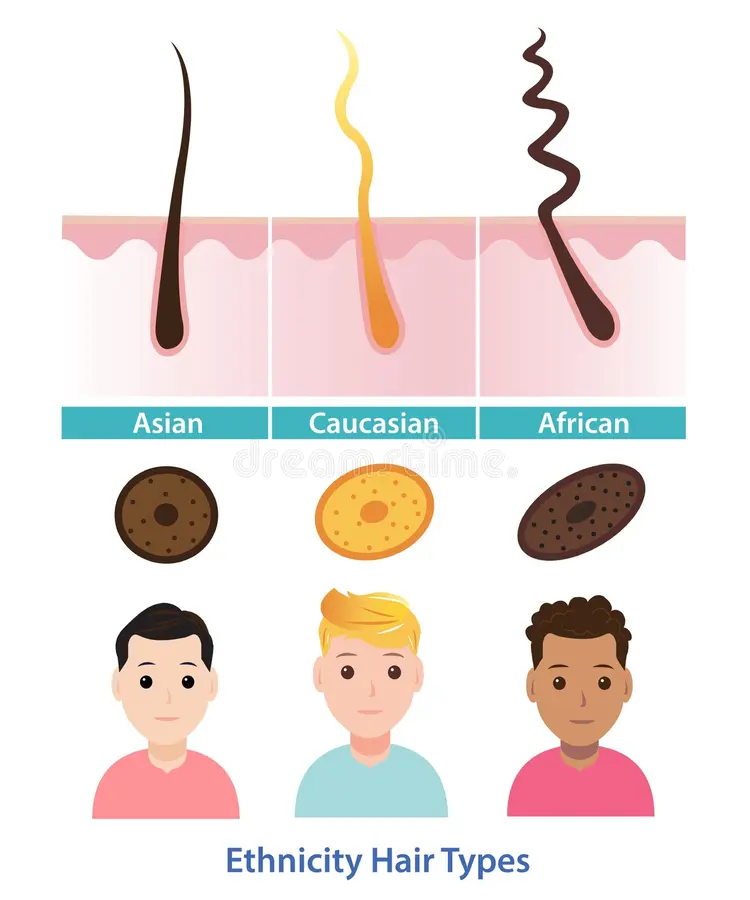
African ancestry- tight curls or coils, hair shaft varies significantly in diameter, twisting along the length, flattened or oval shape cross-section, dense and opaque pigment distribution, and thin cuticle.
Asian ancestry- normally straight and coarse, thick hair shaft diameter and uniform in diameter, circular or round cross section, dense pigment with a large and continuous medulla, and a thicker cuticle.
European ancestry- straight to wavy, fine to coarse shaft with an even distribution of pigment, oval or egg-shapped cross-section, fine small and evenly distributed granules of pigment, and a moderately thick cuticle.
Identify microscopic hair sources
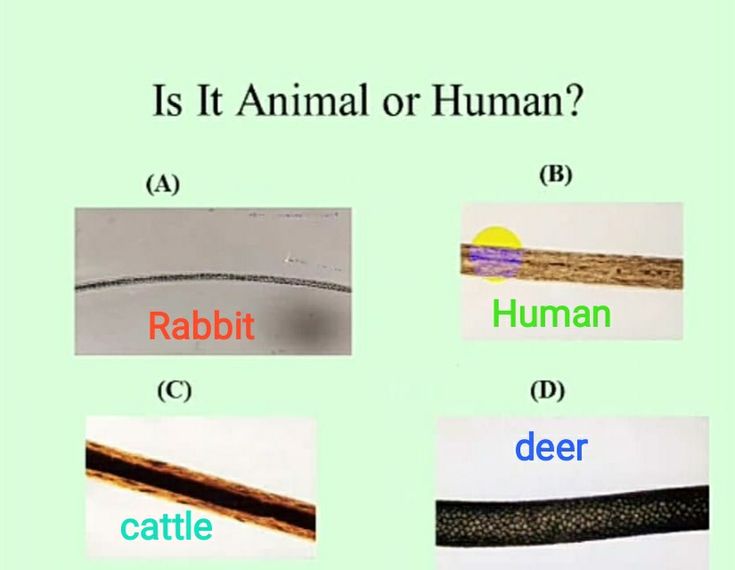
Examine the cuticle (scales), cortex (pigment), and medulla (central canal) to differentiate between human and animal origin. Key indicators include the medullary index ( for human, for animal), scale patterns, root condition (forcibly removed vs. shed), and color, aiding in forensic identification.
DNA function
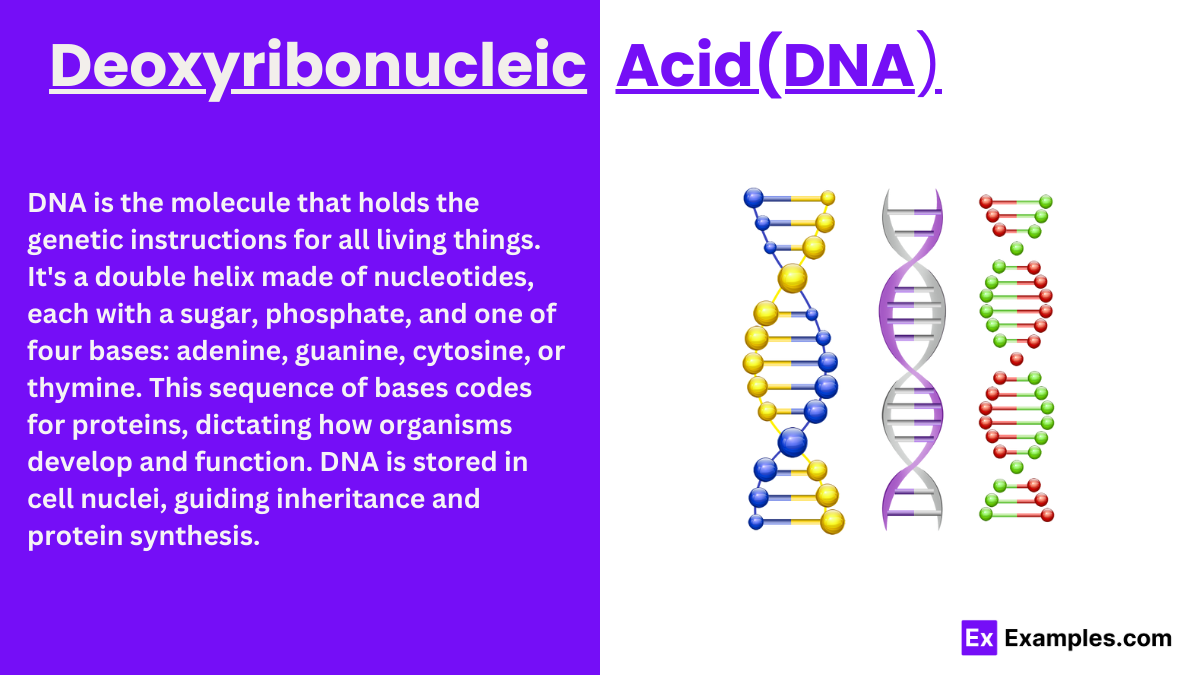
DNA (deoxyribonucleic acid) functions as the primary blueprint for life, storing genetic information essential for the growth, development, function, and reproduction of all living organisms. It encodes instructions for protein synthesis, dictates cellular activity, and transmits genetic traits across generations through precise replication.
What type of evidence is DNA?
Biological evidence, which is a highly reliable form of physical evidence.
What is DNA?
DNA (deoxyribonucleic acid) is the molecule that carries genetic information for the development, functioning, and reproduction of all known organisms. It acts as an instruction manual, providing codes for making proteins. Structurally, it is a double helix consisting of two linked strands made of nucleotides, featuring a sugar-phosphate backbone and paired nitrogenous bases (adenine-thymine, cytosine-guanine).
How many people share the same DNA?
Approximately 99.9% of their DNA.
DNA structure & function
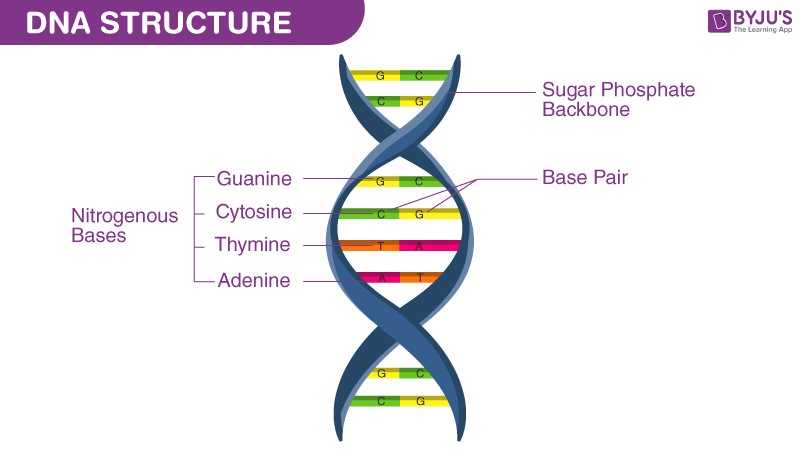
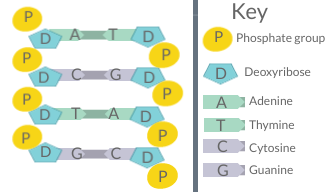
DNA (deoxyribonucleic acid) is a double-helix molecule that stores genetic instructions for life, comprising two antiparallel strands of nucleotides (sugar, phosphate, base). Its base-pairing rules (A-T, C-G) allow for precise replication and the coding of proteins required for development, functioning, and reproduction.
Base rule pairing
DNA base pairing rules state that in a double-stranded DNA molecule, adenine (A) always pairs with thymine (T), and guanine (G) always pairs with cytosine (C).
Know & explain STR short tandem repeats
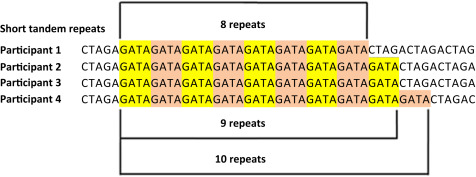
Short Tandem Repeats (STRs) are short sequences of DNA, typically 2–6 base pairs long, that repeat consecutively in non-coding regions of the genome. Because the number of repeats varies highly between individuals, STR profiling is the industry standard for DNA fingerprinting, forensics, and paternity testing, with over 99.9% accuracy.
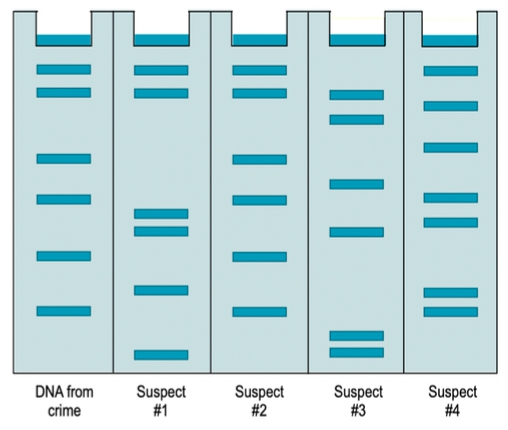
Identify suspects on a gel electrophoresis, and STR data sheets
Identifying suspects using gel electrophoresis and Short Tandem Repeat (STR) data sheets involves matching the unique DNA profiles of suspects against evidence collected at a crime scene. In gel electrophoresis, suspects are identified by matching band patterns, while STR data sheets involve comparing numerical repeat counts across multiple loci to find an exact match.
Match DNA code with its complimentary code A-T, C-G
TAGC
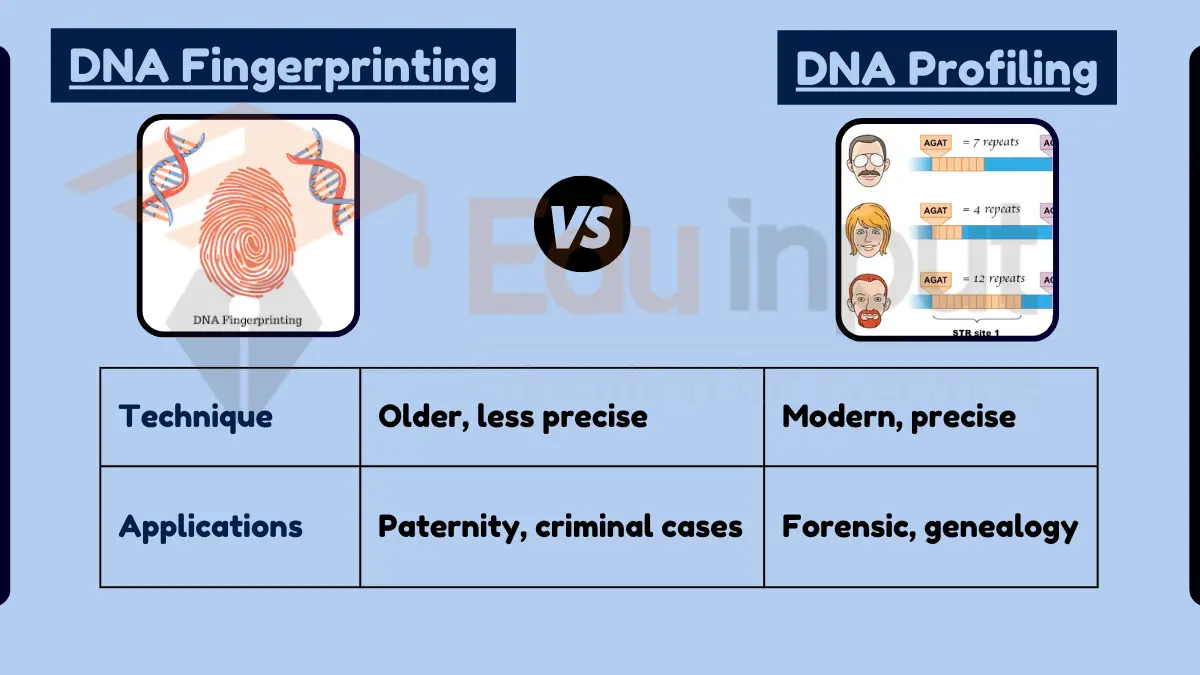
Differentiate between DNA fingerprinting and DNA profiling
DNA fingerprinting, the older technique (1980s), focuses on minisatellites and RFLP, while DNA profiling is the modern, highly sensitive standard focusing on short tandem repeats (STRs) and PCR.
Romanovs case study x4
A mass grave with nine bodies was discovered in 1991.
Forensic scientists used mitochondrial DNA (mtDNA) matching living relatives (like Prince Philip), short tandem repeat (STR) analysis, and computer analysis of skulls to identify the remains.
The analysis proved that claimants, such as Anna Anderson, who claimed to be Anastasia, were impostors.
The family was killed on July 16, 1918, in the Ipatiev House, Yekaterinburg, by Bolshevik troops.
Identifying the Tsar through a deformed pelvis and the Tsarina via expensive dental work.