Suicide + Anxiety Disorders
 Call Kai
 Learn
Learn Practice Test
 Spaced Repetition
 Match
Match Flashcards
 Knowt Play
1/30

There's no tags or description
Looks like no tags are added yet.
Name | Mastery | Learn | Test | Matching | Spaced | Call with Kai |
|---|
No analytics yet
Send a link to your students to track their progress
31 Terms
What are the 4 groupings under the umbrella of anxiety disorders?
GAD
Social anxiety
Phobias
Panic disorder
What is anxiety, and what could it do?
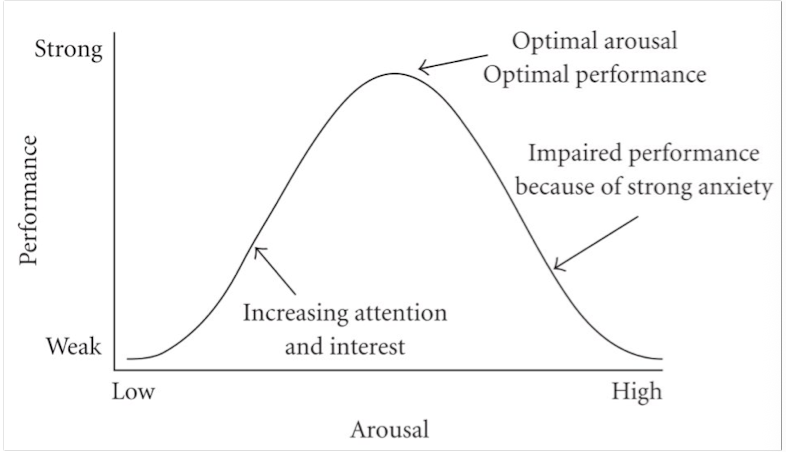
Apprehension and diffused aversive experience in anticipation of future event
could increase preparedness (moderate levels)
What is worry?
Repeated negative thoughts about a future event.
What is fear, and what does it do?
Specific emotion experienced in the face of immediate perceived danger.
could trigger fight or flight (may save life)
What is panic
Acute, intense, and uncontrollable series of fear-related cognitive and physiological experiences.
What does the graph look like for arousal (anxiety) and performance?
What are the 2 keys to differentiate anxiety disorders?
Intensity and Frequency
Causes and Context
What are some common symptoms of anxiety?
nervousness
jitteriness
tension, trembling
feeling tired
dizziness
urinating a lot
heart palpitations
worry, sweating
sleeplessness
difficulty concentrating
apprehension, vigilance
True/False: Comorbidity is extremely common with anxiety disorders.
True
What is GAD?
Intense but vague anxious apprehension
“Free-floating anxiety”
Persistent worry that something terrible will happen
Somatic complaints
What are the DSM diagnostic criteria for GAD?
Excessive anxiety and worry – more days than not for 6 months about a number of events or activities
Difficult to control worry
3 or more (only 1 in children)
Restless/feeling keyed up
Easily fatigued
Difficulty concentrating or mind going blank
Irritability
Muscle tension
Sleep disturbance
impairment
Common worries:
Relationships, health, finances, daily hassles
Often begins in adolescence or earlier
I’ve always been this way
What is social anxiety (social phobia)? What’s the prevalence?
Disabling fears of one or more specific social or performance situations
Fear of negative evaluation of others and/or embarrassing actions
Restriction of social life
Lifetime prevalence - 12%
1 year prevalence – 8 %
What are the DSM diagnostic criteria for social anxiety disorder?
Marked fear/anxiety about 1 or more social situations in which person is exposed to possible scrutiny
Fear of acting in a way or show anxiety symptoms that will be negatively evaluated
Social situations almost always provoke fear/anxiety
Social situations are avoided or endured with intense fear/anxiety
Out of proportion reaction to situation
Persistent for at least 6 months
impairment
What is a phobia and what do they do?
Excessive, unreasonable fear
Phobia may place huge limitations on everyday activities
What are some common phobias?
snakes, blood, flying, spiders, small spaces
*Not random stimuli that evoke phobias – often something that could present real danger
What is the Specific Phobia – DSM criteria
Marked fear/anxiety about specific object/situation
Object/situation almost always provokes fear/anxiety
Object/situation avoided or endured with intense fear/anxiety
Out of proportion (to reality of danger of situation)
Persistent for at least 6 months
impairment
How common are phobias?
Relatively common
Lifetime prevalence - 12%
1 year prevalence – 9 %
*about twice as prevalent for women than men
What is the difference between phobias and fears?
With phobias, an individual will attempt to avoid places the phobia might be and there’s an extreme reaction when they can’t avoid it
True/false: the age of onset for phobias is typically during early childhood and it tends to be chronic.
False, the typical age of onset is childhood or young adulthood
What is the DSM criteria for panic disorder?
Recurrent, unexpected panic attacks
At least 1 attack has been followed by 1 month of at least 1 of these:
persistent concern about another attack
Change in behavior due to worry about implications of attack/AVOIDANCE
DSM-IV – panic attacks alone not diagnosable
DSM-5 – panic attacks diagnosed as specifier (e.g., PTSD) even if not panic disorder
What is a panic attack?
Panic attack
Sudden, intense episode of apprehension, terror, feelings of impending doom
Symptoms reach peak intensity within 10 minutes
Accompanied by at least 4 other symptoms:
Palpitations/pounding heart/accelerated heart
Sweating
Shaking/trembling
Sensations of Shortness of Breath
Feeling of choking
Chest Pain
Nausea
Dizziness
Depersonalization or derealization
Fear of losing control or “going crazy”
Fear of dying
Paresthesias – numbness or tingling
Chills or heat sensations
Fear of going crazy, losing control, or dying
Panic Attacks versus Panic Disorder (constant fear of panic attacks)
Cued versus un-cued attacks
What is agoraphobia?
Fear of public places or unfamiliar situations in which escape may be difficult
Afraid of losing control in a crowd
May dread anxiety of a panic attack
What are the DSM diagnostic criteria for agoraphobia?
Marked fear/anxiety about 2+ of the following:
Using public transportation
Being in open spaces
Being in enclosed spaces (e.g., theaters)
Standing in line or in a crowd
Being outside of the home alone
Fear/avoidance because of thoughts that escape might be difficult in the event that panic symptoms start, or other embarrassing symptoms arise (e.g., incontinence)
Situations almost always provoke anxiety
Actively avoided or endured with intense fear
Out of proportion to actual danger presented
Persistent (6 months +)
impairment
What are the causes/correlates across all anxiety disorders?
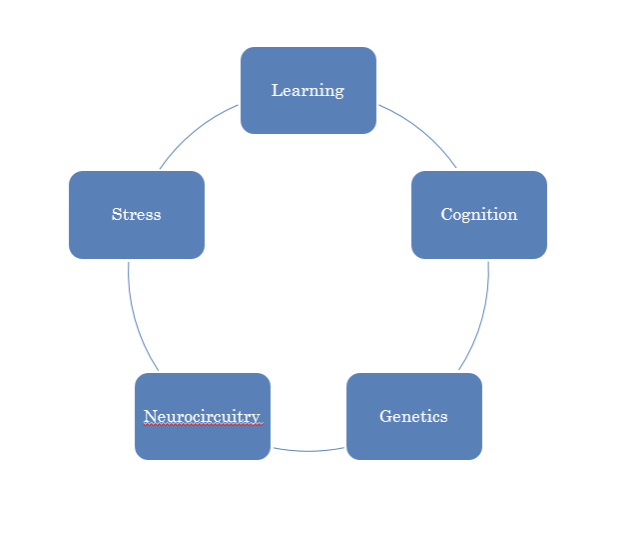
What is the Stress Sensitization Hypothesis?
people with more past stressors more likely to have anxiety disorders
Recent stressors also predicts onset of anxiety disorders
What are social risk factors?
Negative life events
Job loss, end of relationship, etc.
Severe stressors often precede onset (Kendler et al., 2003)
80% with panic disorder (Barlow, 2004)
70% with any anxiety disorder (Finlay-Jones, 1989)
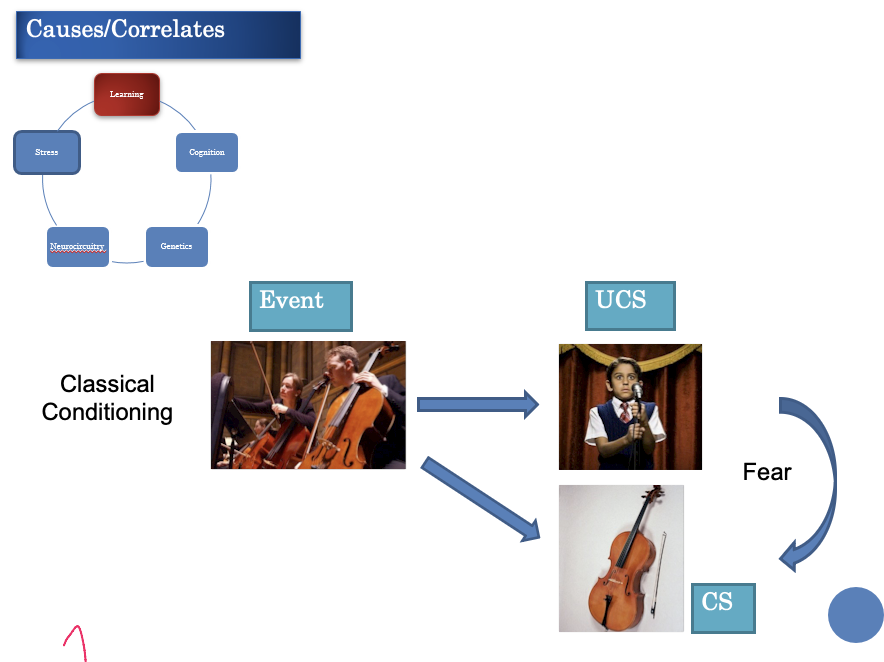
Draw out the causes/correlated for classical conditioning?
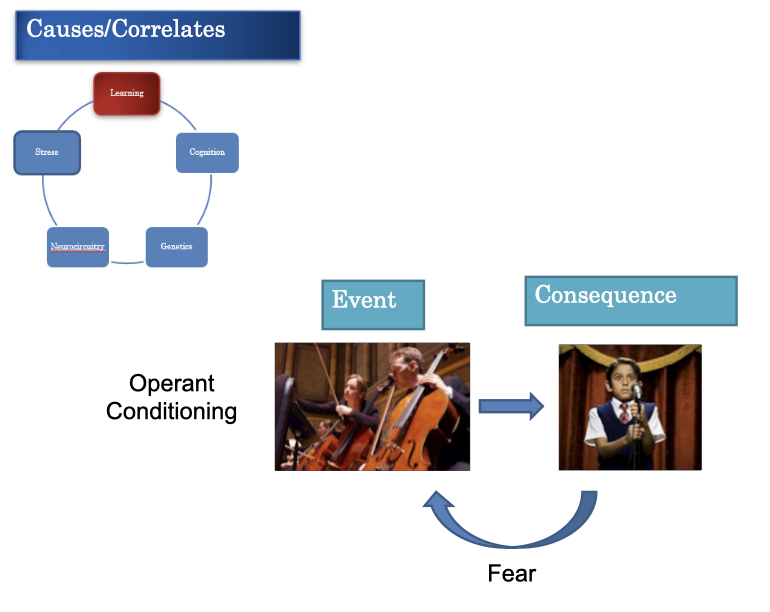
Draw out the causes/correlated for operant conditioning?
What are cognitive risk factors?
Belief that one lacks control over environment
More vulnerable to developing anxiety disorder
Childhood trauma or punitive parenting may foster beliefs
Amount of control during trauma may influence whether anxiety disorder will develop (Mineka & Zinbarg, 2007)
Attention to threat
Tendency to notice negative environmental cues
Selective attention to signs of threat
Perseverate or spend more time attending to emotional and/or negative cues
What are genetic and personality risk factors?
Most anxiety disorders moderately heritable
20 – 40 % heritable specific phobia, GAD, PTSD
50% for Panic
Personality
Behavioral inhibition
Tendency to be agitated, distressed, and cry in unfamiliar or novel settings
Observed in infants as young as 4 months
May be inherited
Predicts anxiety in childhood and social anxiety in adolescence
Neuroticism and trait anxiety
React with negative affect
Linked to anxiety and depression (deGraaf et a., 2002)

