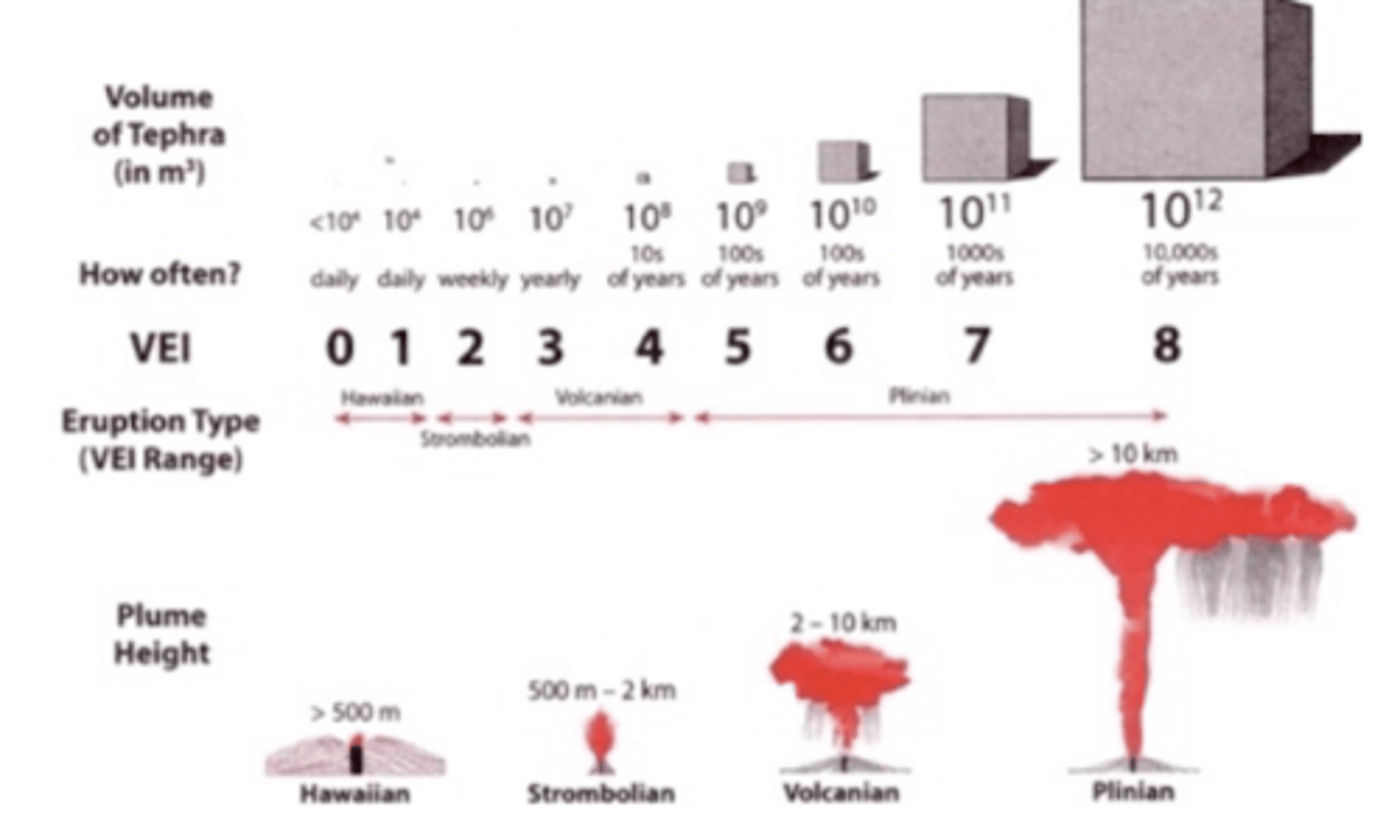
Volcanic Explosivity Index & Hazards
 Call Kai
 Learn
Learn Practice Test
 Spaced Repetition
 Match
Match Flashcards
 Knowt Play
1/13

There's no tags or description
Looks like no tags are added yet.
Name | Mastery | Learn | Test | Matching | Spaced | Call with Kai |
|---|
No analytics yet
Send a link to your students to track their progress
14 Terms
identifying volcanoes: shield
low viscosity, low volatiles, large volume, low slope angle
identifying volcanoes: strato
med-high viscosity, med-high volatiles, large volume, great slope angles
identifying volcanoes: caldera
large mass blown up (crater)
least to most explosive volcanoes
shield, flood basalt, strato, caldera
eruption types: icelandic
low viscosity, low volatiles, low explosivity index
eruption types: hawaiian
same as icelandic
eruption types: strombolian
moderate viscosity, moderate volatiles, medium explosivity index
eruption types: vulcanian
high viscosity, high volatiles, high explosivity index
eruption types: plinian
high viscosity, high volatiles, very high explosivity index
criteria to differentiate eruption styles
fragmentation of glass and minerals, dispersal plume, height of column erupting
hazards associated with volcanic eruptions
pollution of groundwater, bombs from eruptions landing, lava domes and their collapses, pyroclastic flows, mudflows, lava flows, acid rain, ash fall, lightning, gases, tsunamis
deadliest hazard associated with volcanoes?
pyroclastic flows
predicting volcanic eruptions
Bulging of the volcano, increase in seismic activity, increase in gas emissions, edifices, water content, gas composition, steam temperature
volcanic explosivity index
a scale for reporting the size of an explosive volcanic eruption