Kinesiology
0.0(0)
 Studied by 0 people
 Call Kai
 Learn
Learn Practice Test
 Spaced Repetition
 Match
Match Flashcards
 Knowt Play
Card Sorting
1/114

Last updated 7:51 PM on 9/13/23
Name | Mastery | Learn | Test | Matching | Spaced | Call with Kai |
|---|
No analytics yet
Send a link to your students to track their progress
115 Terms
1
New cards
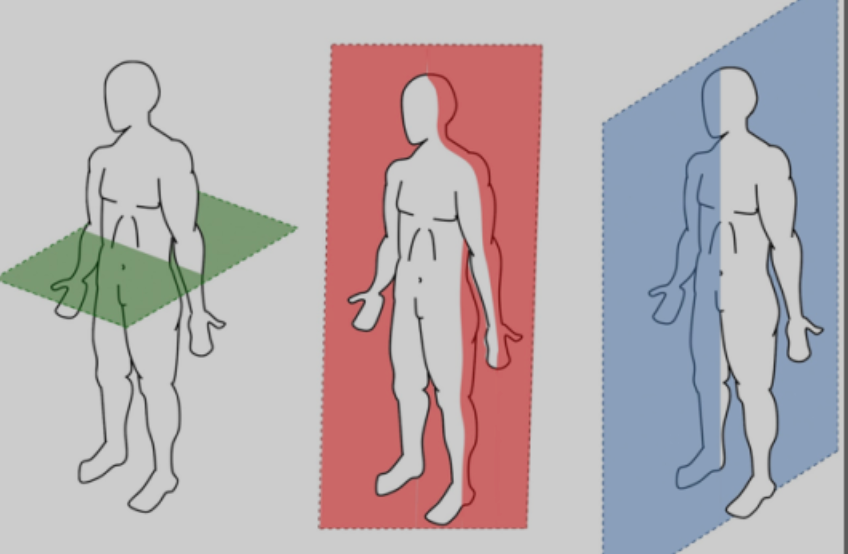
cardinal plane
plane that is in the dead center of the body
2
New cards
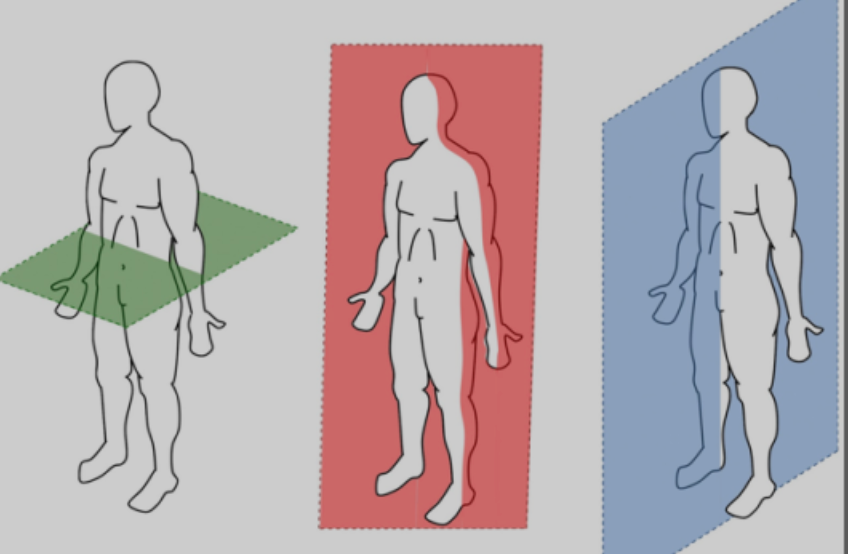
Sagittal Plane
vertical division of the body into right and left portions
3
New cards
Articular (hyaline) cartilage
the epiphysis to provide cushioning effect and reduce friction
4
New cards
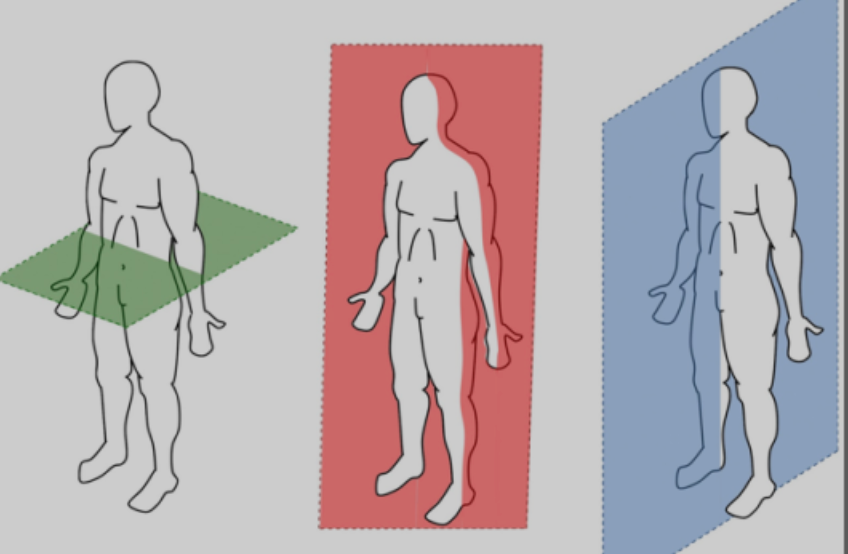
frontal plane (coronal plane)
Divides the body into front and back portions.
5
New cards
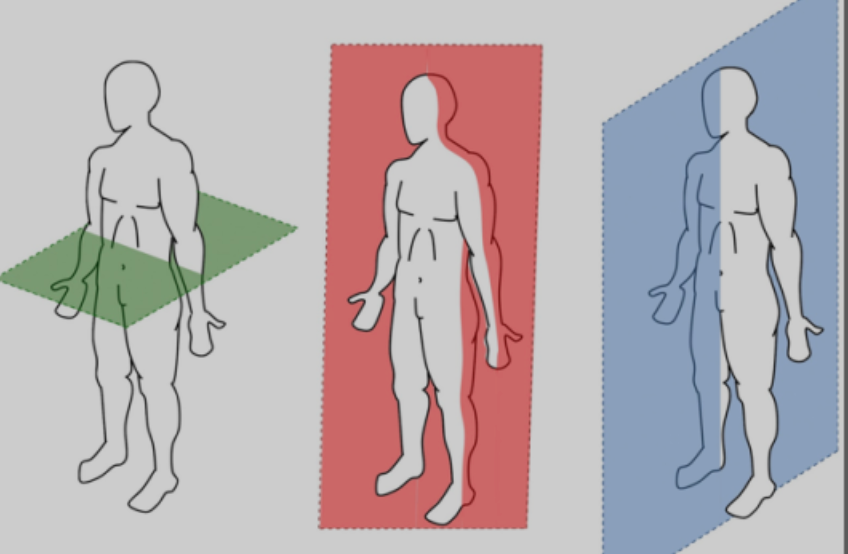
transverse plane
divides the body into superior and inferior parts
6
New cards
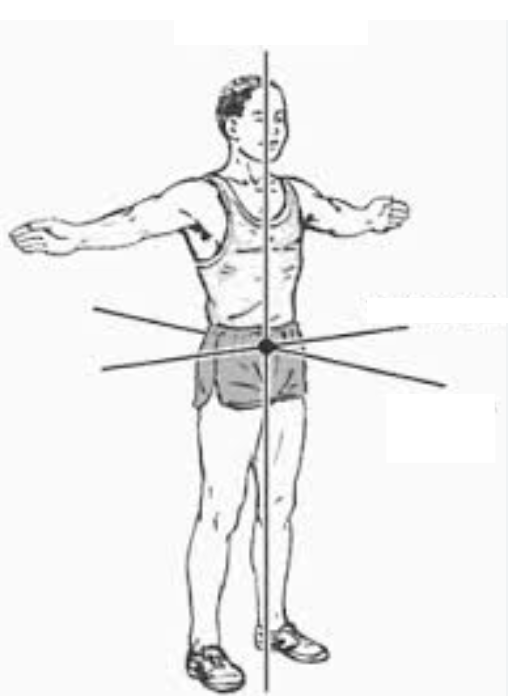
frontal axis
point that runs through a joint from side to side; sagittal plane
7
New cards
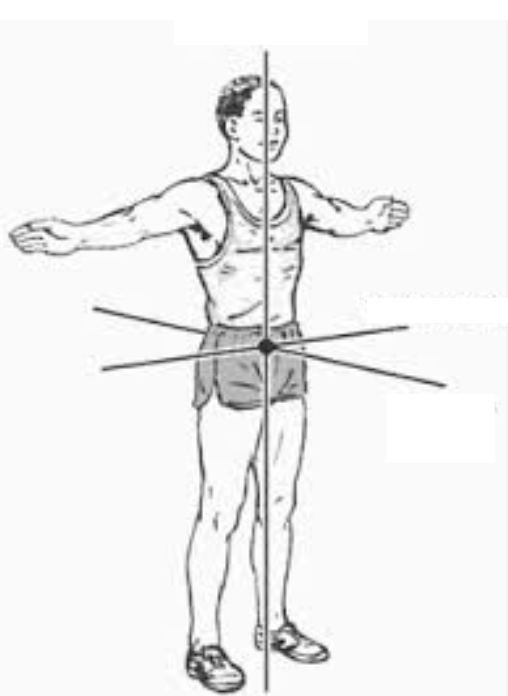
sagittal axis
point that runs through a joint from front to back; frontal plane
8
New cards
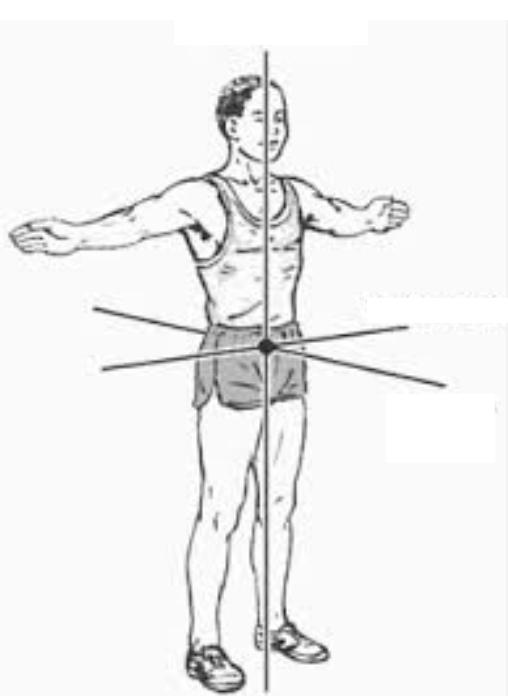
longitudinal axis
An imaginary long, straight line that cuts through the body from top to bottom; transverse plane
9
New cards
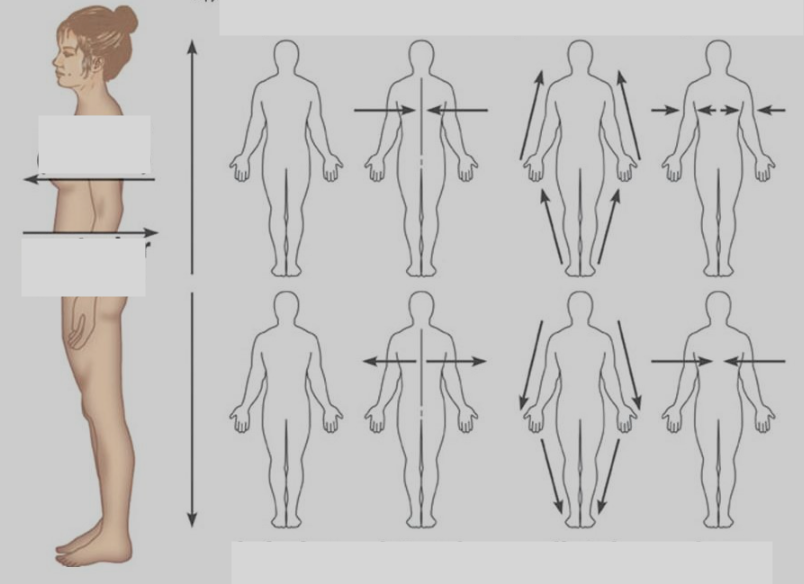
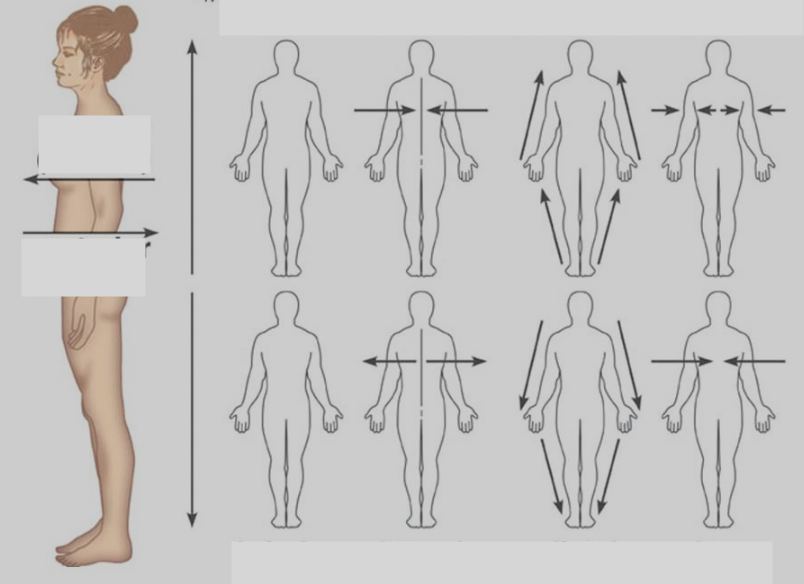
Anterior
front of the body
10
New cards
Posterior
toward the back
11
New cards
Contralateral
on the opposite side of the body from another structure
12
New cards
Ipsilateral
on the same side of the body as another structure
13
New cards
bilateral
both sides
14
New cards
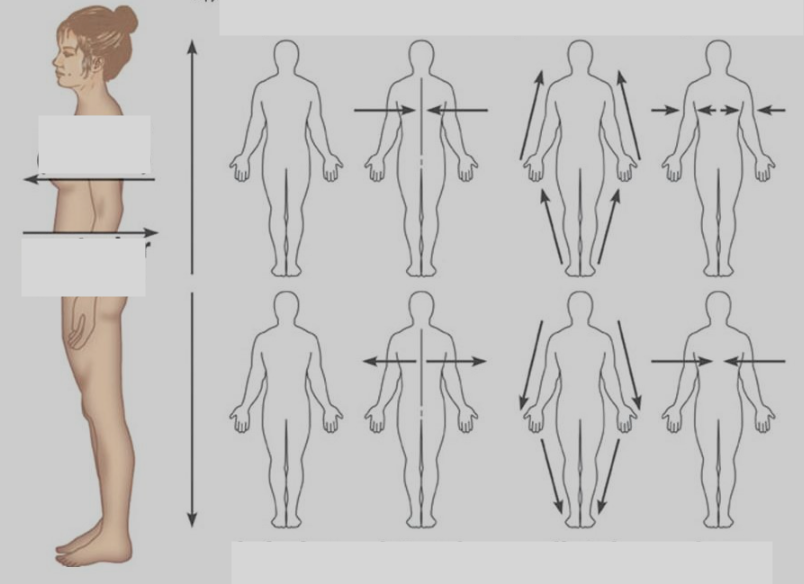
Inferior (infra)
below in relation to another structure; caudal
15
New cards
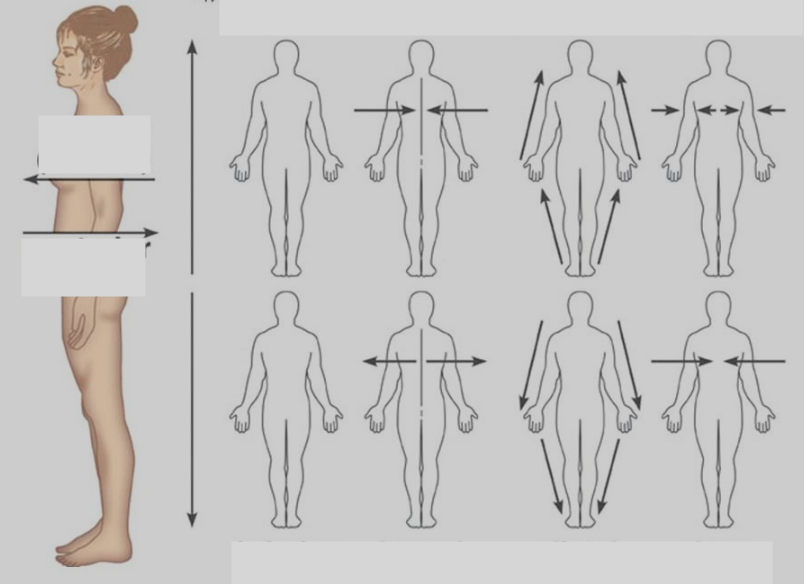
superior (supra)
above in relation to another structure; higher, cephalic
16
New cards
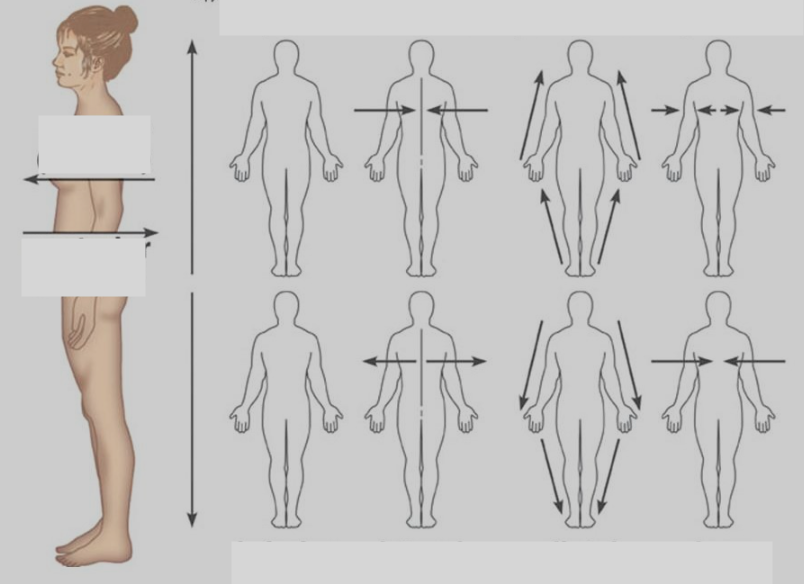
deep
Away from the body surface; more internal
17
New cards
superficial
near the surface
18
New cards
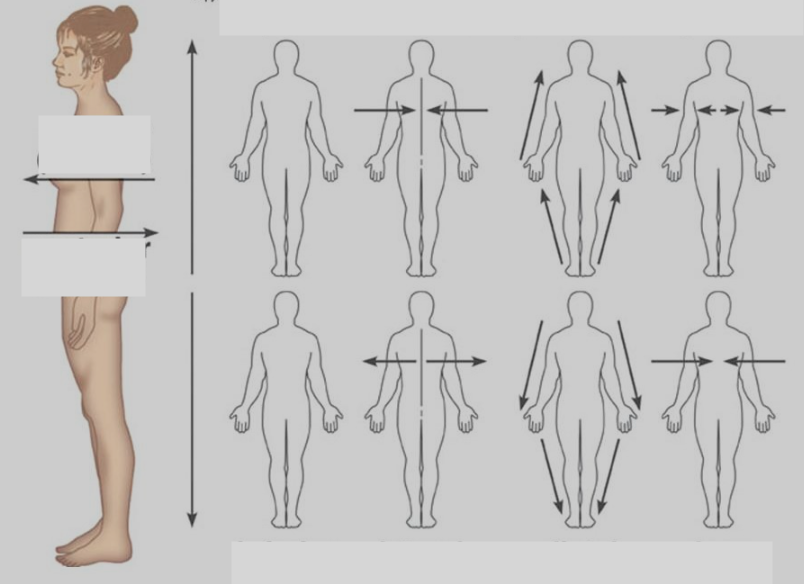
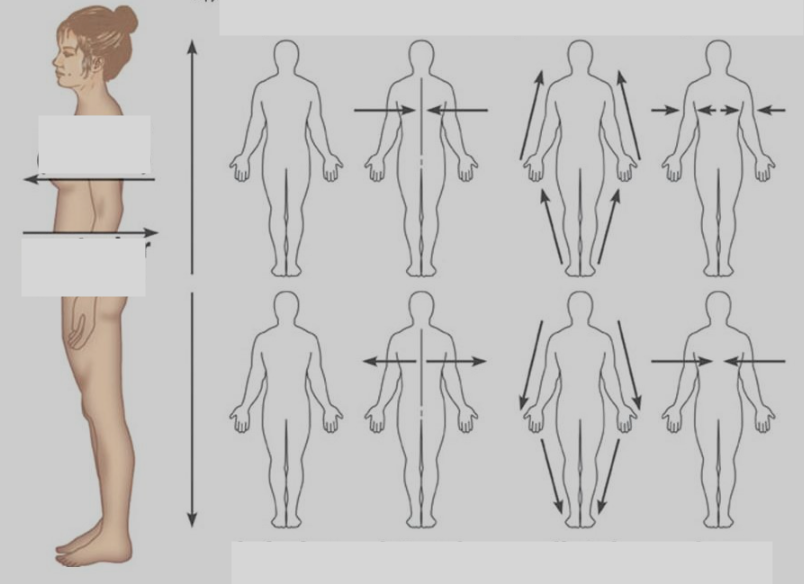
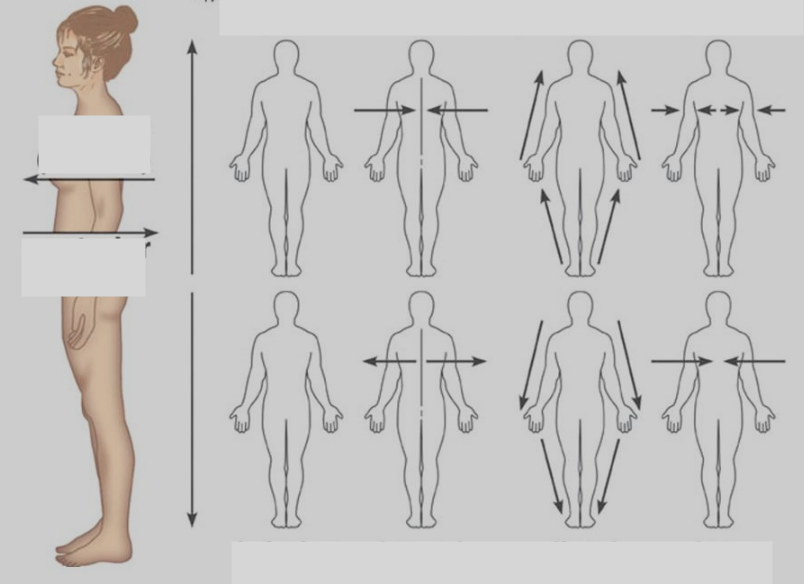
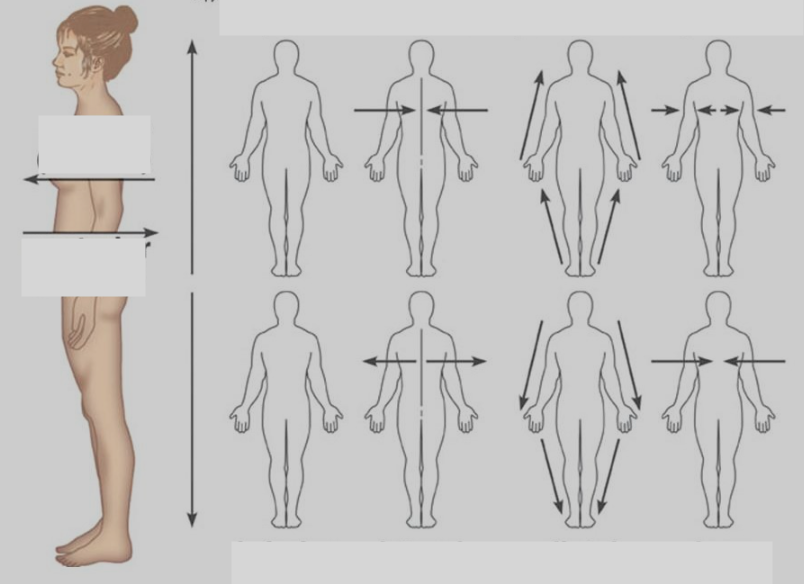
distal
farther from the origin of a body part or the point of attachment of a limb to the body trunk
19
New cards
Proximal
Closer to the origin of the body part or the point of attachment of a limb to the body trunk
20
New cards
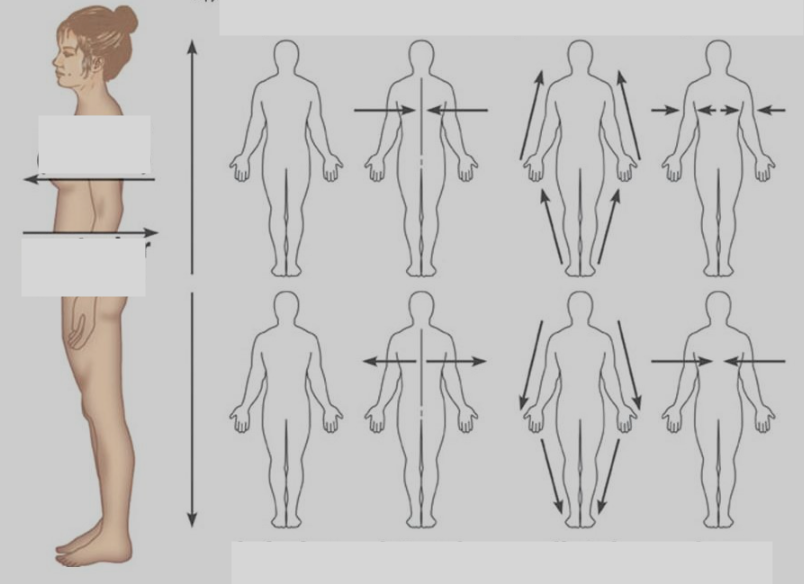
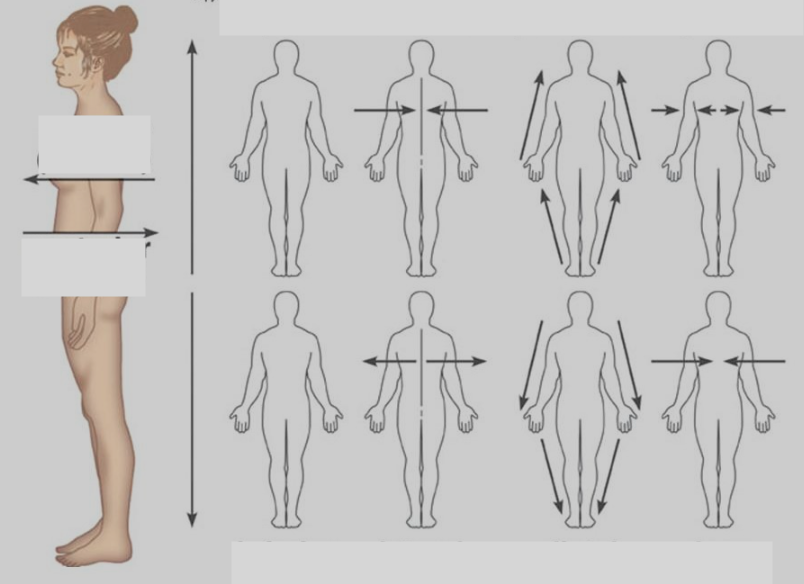
Lateral
away from the midline
21
New cards
Medial
toward the midline
22
New cards
dorsal
toward the back
23
New cards
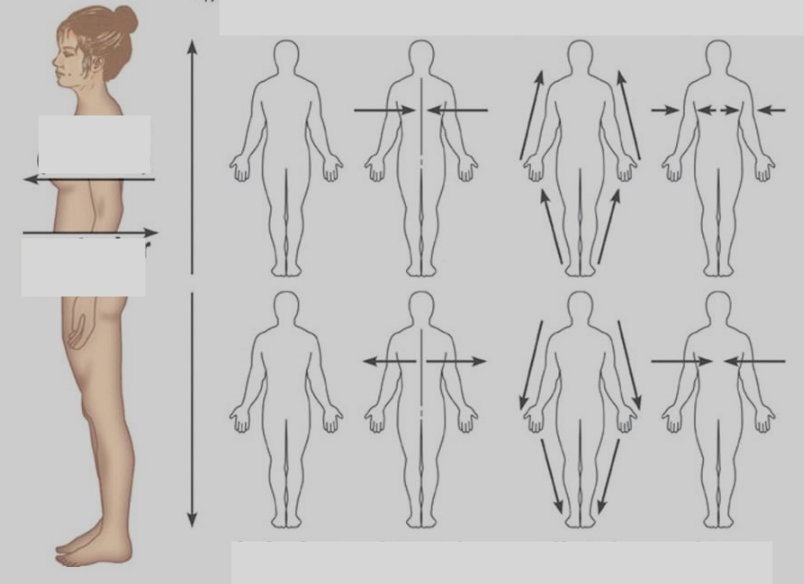
Ventral
Toward the front
24
New cards
palmar
palm of hand
25
New cards
Volar
back of palm
26
New cards
plantar
sole of foot
27
New cards
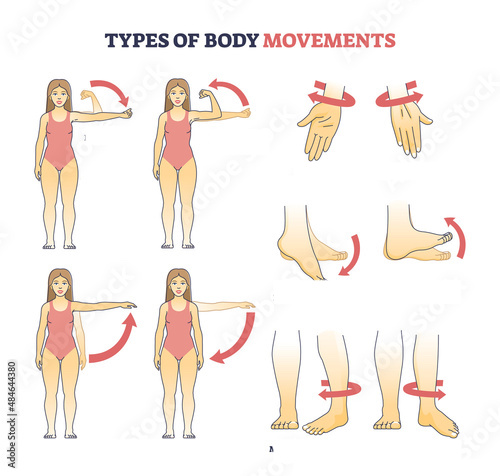
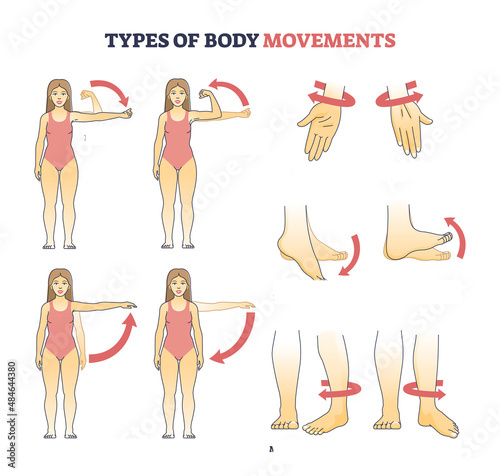
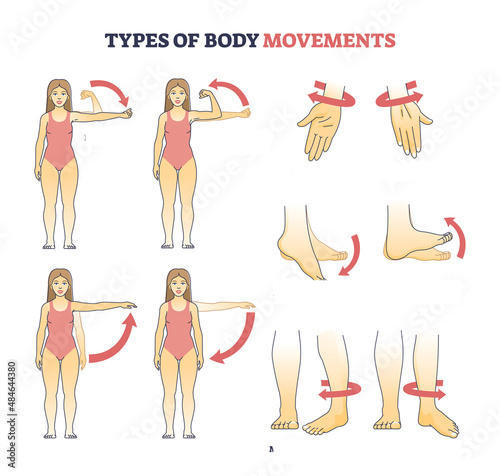
abduction
Movement away from the midline of the body
28
New cards
Adduction
Movement toward the midline of the body (adding to the midline)
29
New cards
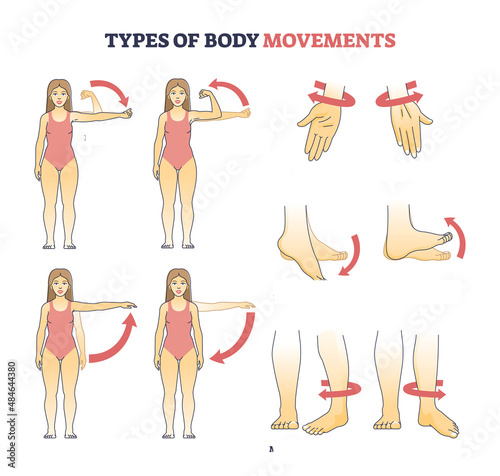
flexion
Decreases the angle of a joint
30
New cards
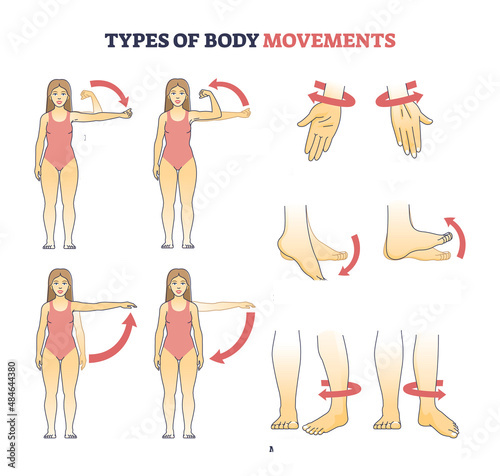
extension
Straightening of a joint
31
New cards
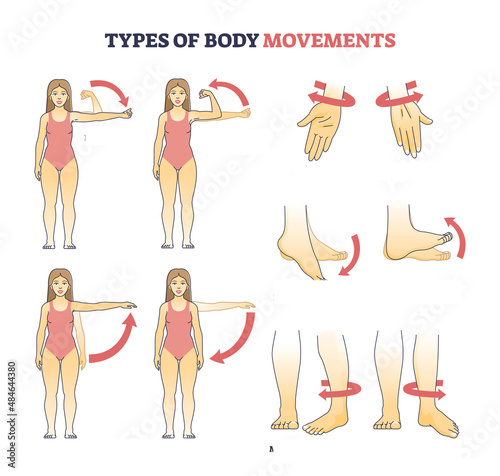
Circumduction
the circular movement at the far end of a limb
32
New cards
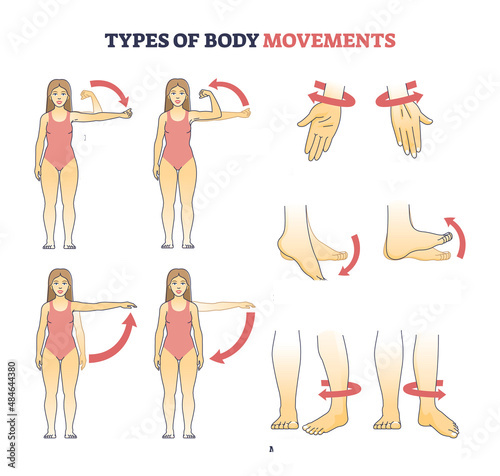
external (lateral) rotation
rotation in the transverse plane away from the midline of the body
33
New cards
internal (medial) rotation
rotation in the transverse plane toward the midline of the body
34
New cards
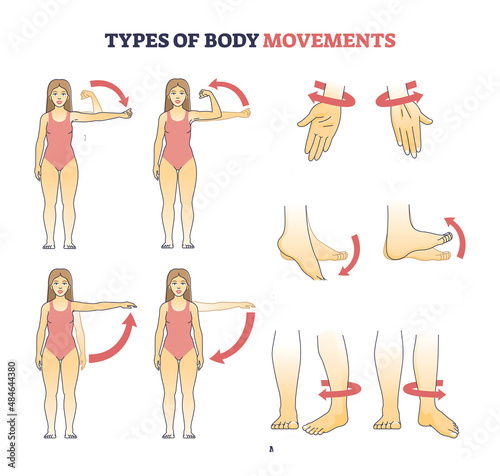
pronation
turning the palm downward
35
New cards
Supination
turning the palm up (soup in hand)
36
New cards
radial (abduction) deviation
movement towards the thumb side (which also goes away from the midline)
37
New cards
ulnar (adduction) deviation
movement towards the pinky side (towards midline)
38
New cards
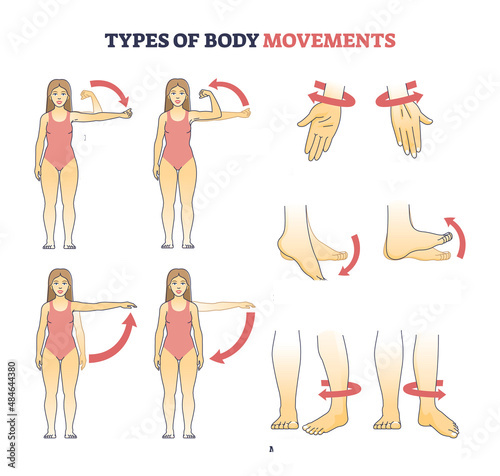
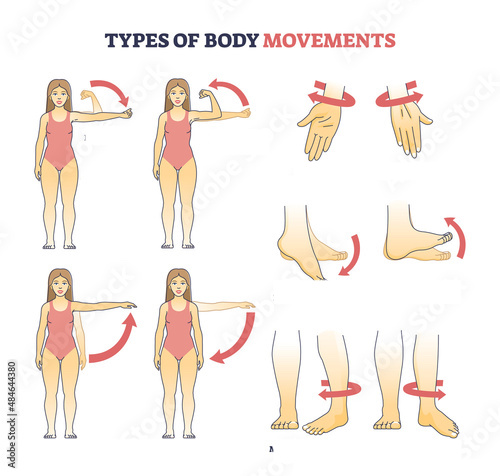
plantar flexion
pushing ankle downwards (step on gas)
39
New cards
Dorsiflexion
bends the foot upward at the ankle
40
New cards
inversion
turning ankle inward, towards midline, bottom of feet face each other
41
New cards
eversion
turning ankle outward, bottom of feet face out
42
New cards
Elevation
raising a body part (shoulder)
43
New cards
Depression
lowering a body part (shoulder)
44
New cards
protractor (abduction)
shoulder pushes forward, away from midline
45
New cards
retraction (abduction)
shoulder blades come together, towards midline
46
New cards
upper rotation
upper shoulder rotates
47
New cards
downward rotation
shoulder rotates down
48
New cards
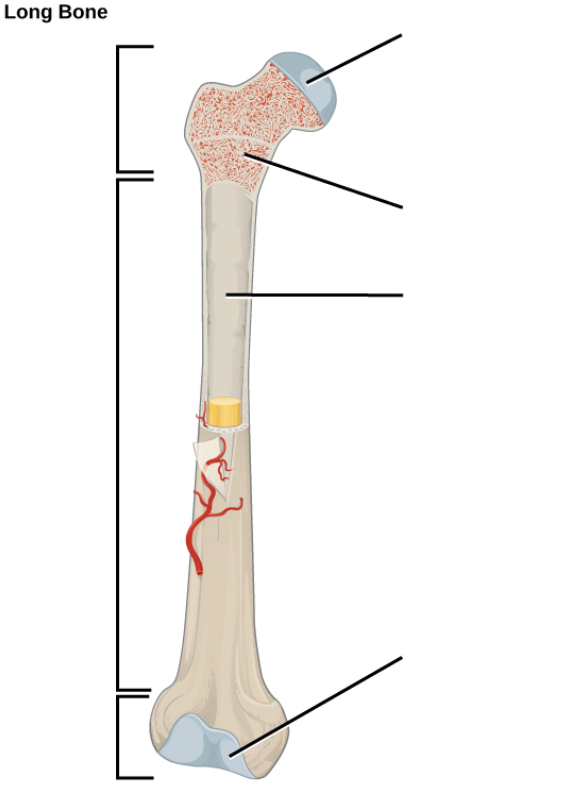
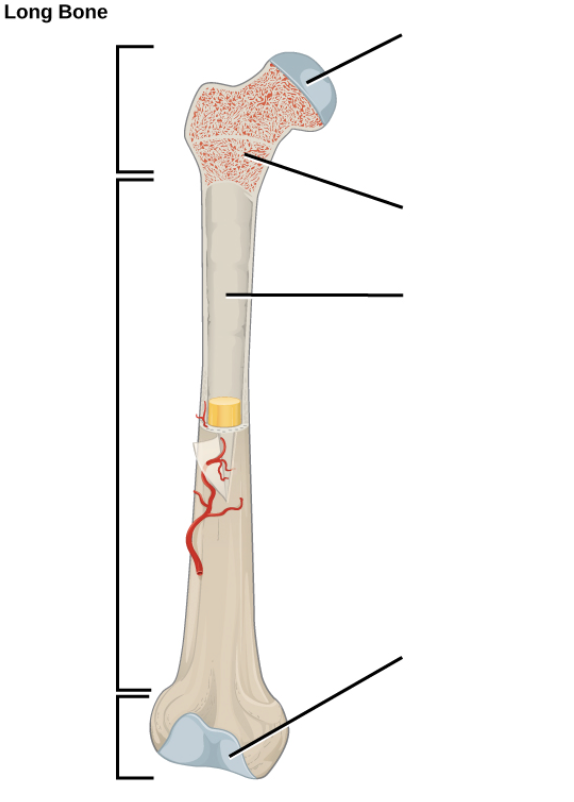
diaphysis
shaft of a long bone
49
New cards
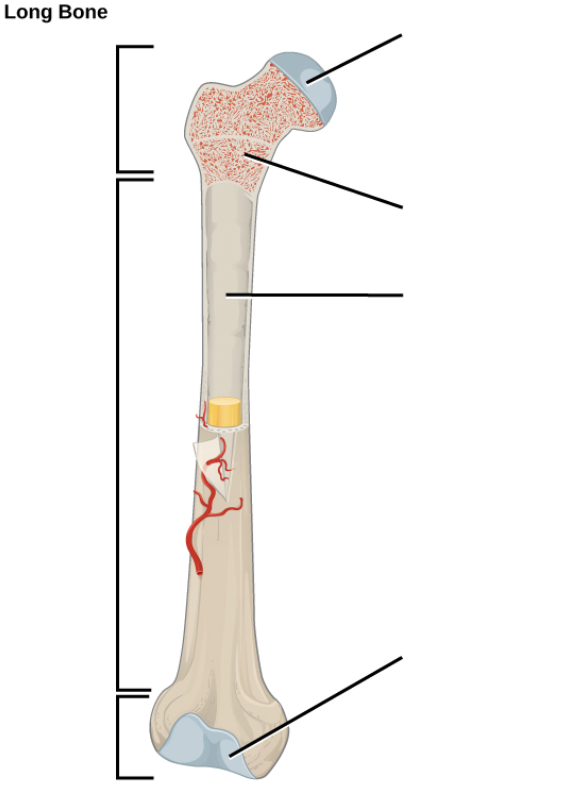
cortex
hard, dense compact bone forming walls of diaphysis
50
New cards
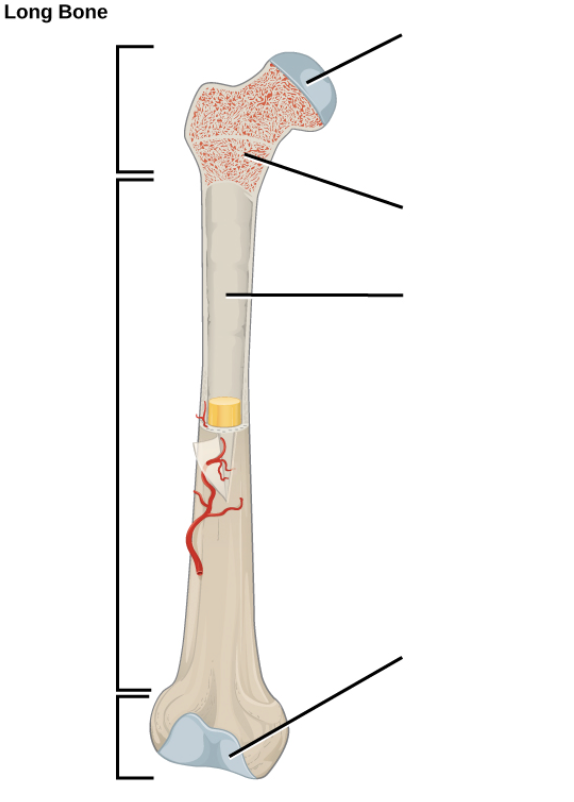
Periosteum
A dense fibrous membrane covering the surface of bones (except at their extremities) and serving as an attachment for tendons and muscles.
51
New cards
endosteum
membranous lining of the hollow cavity of the bone
52
New cards
medullary (marrow) cavity
between walls of diaphysis, containing yellow or fatty marrow
53
New cards
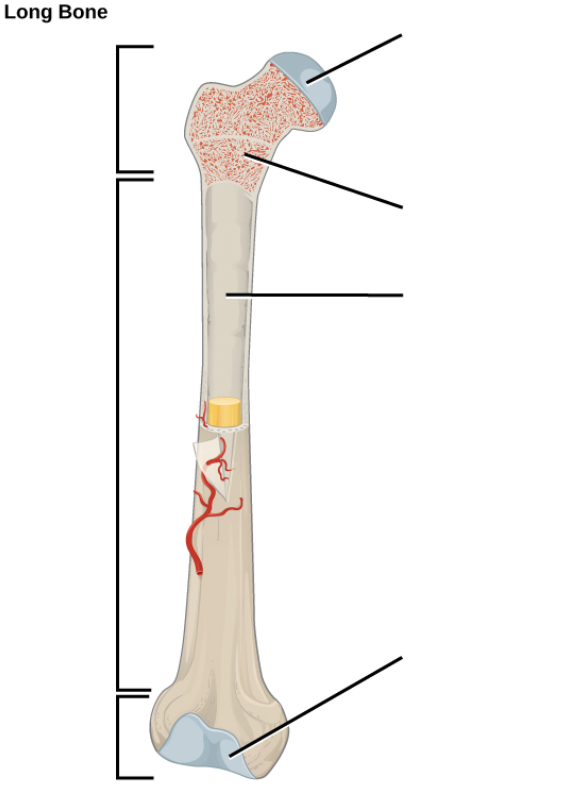
metaphysis
the widening part of the bone between the diaphysis and the epiphysis
54
New cards
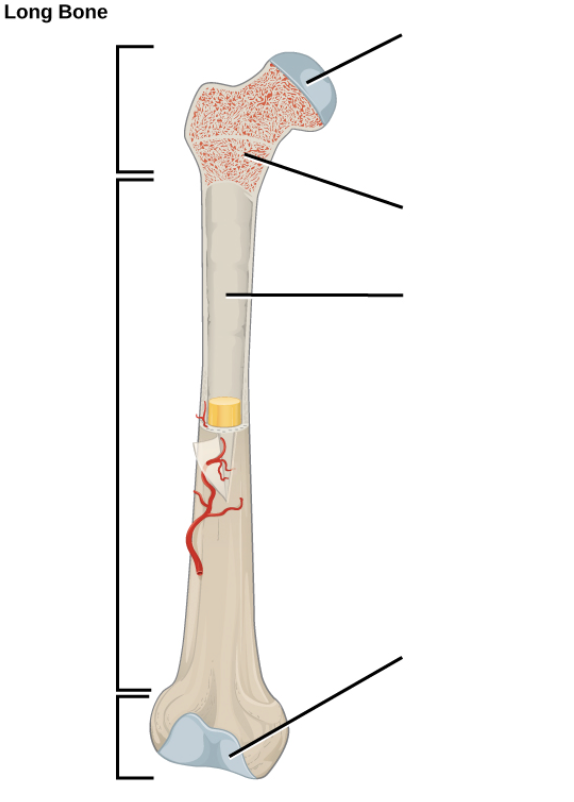
Epiphysis
end of long bones formed from cancellous (spongy or trabecular) bone
55
New cards
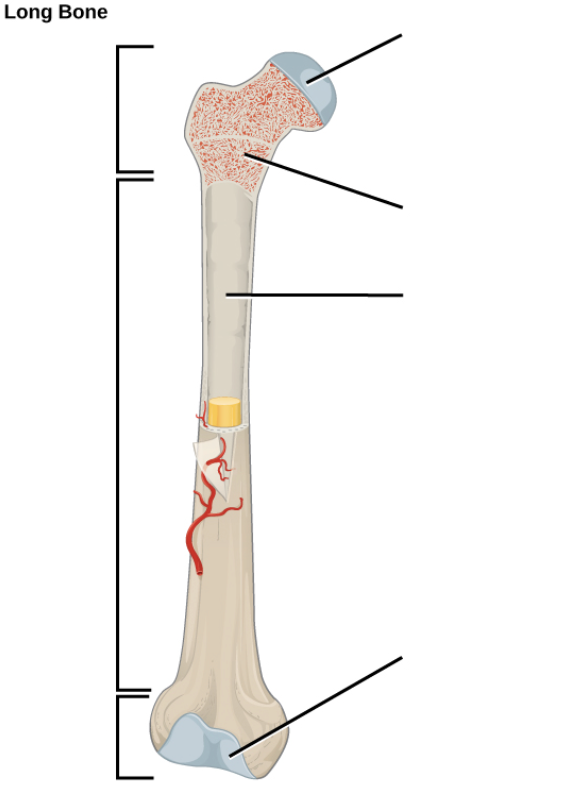
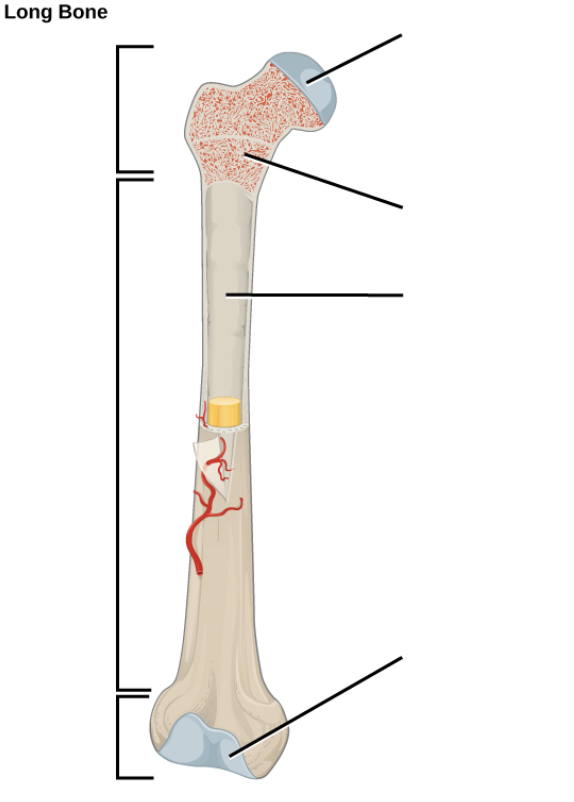
epiphyseal plate
growth plate; thin cartilage plate separated diaphysis and epiphysis
56
New cards
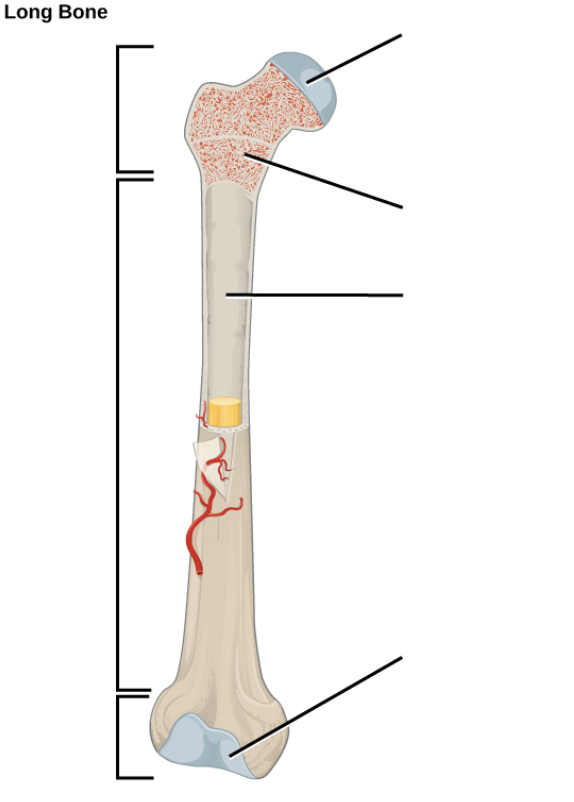
apophyses
growth zones attached to the shaft (corpus) of larger bones
57
New cards
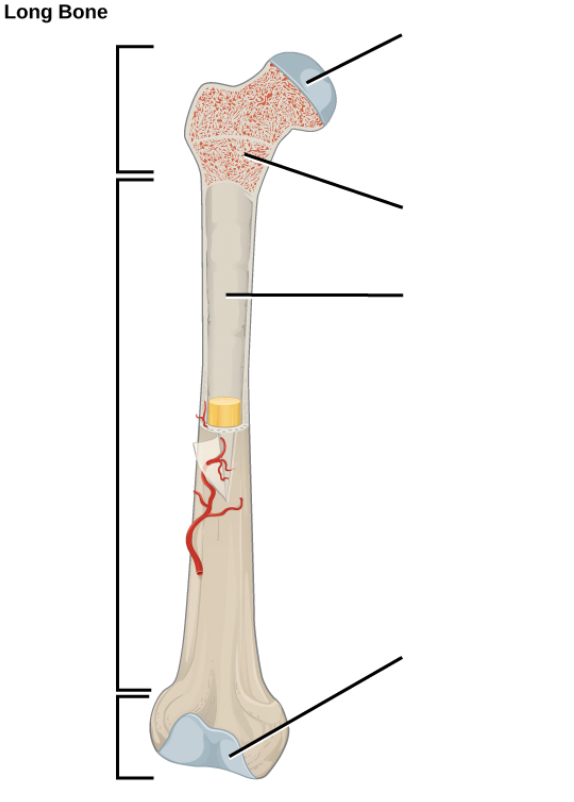
articular (hyaline) cartilage
Type of cartilage found in joints covers the ends of bones, allowing them to glide over each other with minimal friction.
58
New cards
Endochondral ossification
process of bone formation where a cartilage template is gradually replaced by bone. Occurs during fetal development and bone growth. Helps form long bones and certain other skeletal structures
59
New cards
osteoblasts
cells that form new bone
60
New cards
osteoclasts
cells that reabsorb old bone
61
New cards
collagen
in bones it provides flexibility and strength in resisting tension, decreases with age
62
New cards
cortical bone
stiffer bone that can withstand greater stress but less strain, low porosity
63
New cards
cancellous bone
spongy, can undergo greater strain before fracturing, high porosity
64
New cards
Wolff’s Law
bone adapts to the loads placed upon it. Increased stress leads to increased bone density, while decreased stress results in bone loss.
65
New cards
Processes
elevation and projections
66
New cards
Processes that form joints
condyle, facet, head
67
New cards
processes to which ligaments, muscles, or tendons attach
crest, epocondyle, line, process, spine (spinous process), suture, trochanter, tubercle, tuberosity
68
New cards
Type of cavities (depressions)
facet, foramen, fossa, fovea, meatus, sinus, sulcus (groove)
69
New cards
articulation
connection of bones at a joint usually to allow movement between joint surfaces. Bony configuration, ligaments,and muscles limit ROM
70
New cards
Synarthrodial joint
immovable; no joint cavity, suture of the cranial bones
ex: teeth fitting into the mandible
ex: teeth fitting into the mandible
71
New cards
amphiarthrodial
slightly movable joints, 2 types
72
New cards
syndesmosis
joint held together by strong ligamentous structured or interosseous membrane that allows minimal movement between the bones; type of amphiarthrodial joint
73
New cards
synchorndrosis
joint separated by fibrocartilage that allows very slight movements between the bones; type of amphiarthrodial joint
74
New cards
diathrodial
freely moveable joints, joung is in a sleeve-like ligamentous joint capsule that is lines with synovial membrane and fluid
75
New cards
hyaline/articulate cartilage
covers articular surfaces to absorb shock and protect bone in the joint cavity
76
New cards
Motions in # planes
\#degrees of freedom, corresponds to the cardinal planes of motion
77
New cards
Arthrodial (gliding) joint
2 flat bony surfaces that butt against each other, permits limited gliding movement; type of diarthrodial joint
78
New cards
condyloidial (biaxial ball and socket)joint
bones permit movement in 2 planes without rotation, an oval/egg shaped convex surface fits into a concave surface; type of diarthrodial joint
ex: wrist, knuckle
ex: wrist, knuckle
79
New cards
Enarthrodial (multiaxial ball and socket) joint
spherical head of one bone fits into the cup or cavity of another, permits in all planes; type of diarthrodial joint
ex: hip
ex: hip
80
New cards
ginglymus (hinge) joint
one surface is spool-like, the other is concave; the concave fits over the spool-like process and glides partially around in a hinge-type movement in one-place only; type of diarthrodial joint
ex: elbow
ex: elbow
81
New cards
sellar (saddle) joint
both ends of convex surface are tipped up making the surface concave in the other direction, allows ball and socket movement without the rotations; type of diarthrodial joint
ex: carpometacarpal joint of the thumb
ex: carpometacarpal joint of the thumb
82
New cards
trochoidal (pivot) joint
a peg-like pivot or by 2 long bones fighting against each other near each end in such a way that one bone can roll around the other; type of diarthrodial joint
ex: radioulnar joint
ex: radioulnar joint
83
New cards
Davis’ Law
ligaments, muscles, and other soft tissue when placed under appropriate tension will adapt over time by lengthening when maintained in a loose or shortened state over a period of time
84
New cards
What affects joint stability?
* shape of bone
* muscles
* ligaments
* facia/skin
* atmospheric pressure
* muscles
* ligaments
* facia/skin
* atmospheric pressure
85
New cards
factors that limit range of motion (instability)
* shape of bones
* ligaments
* tightness/flexibility of muscles
* size of muscles
* adipose tissue
* gender
* hereditary
* fitness level
* ligaments
* tightness/flexibility of muscles
* size of muscles
* adipose tissue
* gender
* hereditary
* fitness level
86
New cards
close packed joint
minimal joint volume with maximal congruence and area of surface contact between joint surfaces (most bony contact); ligaments and other supporting structures are farthest apart and taunt; joints are the most stable
87
New cards
Loose (open) packed joint
minimal joint surface contact and congruence with maximal joint volume; ligaments and other supporting structures are in their slackest position; minimal stability
88
New cards
goniometer
measures amount of movement in a joint or measure joint angles; protractor for joints
89
New cards
inclimometer
similar to goniometer, measures joint angles, used when more than one joint is involved
90
New cards
physiologic motion (osteokinematic)
clear movement of bones that are obvious from the outside, flexion/extension
if accessory motion doesn’t happen then physiologic motion doesn’t occur
if accessory motion doesn’t happen then physiologic motion doesn’t occur
91
New cards
accessory motion (arthrokinematic)
movement of joint surfaces, involuntary movement
92
New cards
spin joint motion
Rotation of a bone along its longitudinal axis, allowing movement in a circular or twisting motion.
ex: rotating the head from side to side or turning the wrist to open a doorknob.
ex: rotating the head from side to side or turning the wrist to open a doorknob.
93
New cards
roll joint motion
movement where one articular surface rocks on another like a rocking chair. It allows smooth movement and reduces friction between bones. occurs in direction of movement
94
New cards
glide joint movement
Type of joint movement where bones slide past each other in a smooth motion. direction of movement is determined by the shape of the articulating surface (convex/concave)
95
New cards
convex-concave rule
if convex bone moves on stationary concave bone then gliding occurs in the opposite direction to roll
96
New cards
concave-convex rule
if concave surface moves on a convex surface, then roll and gliding occur in the same direction
97
New cards
parallel fiber arrangement
parallel to length of muscle; produces a greater ROM than pennate
98
New cards
types of parallel fiber arrangments
* flat
* fusiform
* strap
* triangular/fan-shaped
* sphincter/circular
* fusiform
* strap
* triangular/fan-shaped
* sphincter/circular
99
New cards
pennate fiber arrangement
shorter fibers, arranged in a similar way as feathers, increases in the cross-sectional area of the muscle
100
New cards
types of pennate fibers
* Unipennate fibers have muscle fibers on one side of the tendon
* Bipennate fibers have muscle fibers on both sides
* Multipennae fibers have multiple muscle fibers
* Bipennate fibers have muscle fibers on both sides
* Multipennae fibers have multiple muscle fibers
 Note
Note  Flashcards (81)