Meta Ethics
 Studied by 0 people
 Call Kai
 Learn
Learn Practice Test
 Spaced Repetition
 Match
Match Flashcards
 Knowt Play
1/22

There's no tags or description
Looks like no tags are added yet.
Name | Mastery | Learn | Test | Matching | Spaced | Call with Kai |
|---|
No analytics yet
Send a link to your students to track their progress
23 Terms
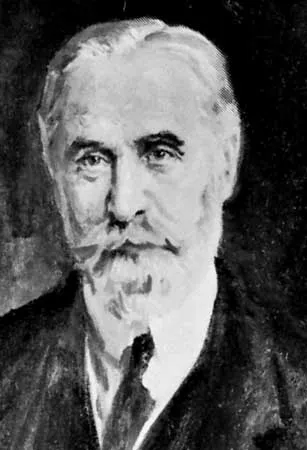
F.H. Bradley (Ethical Naturalism)
moral truths about the world can be proved
therefore moral language can be factual
ethical terms can be defined using empirical knowledge/sense experience
G.E. Moore (intuitionism)
we know what yellow is and can recognise but not define it - in the same way, we know what ‘good’ is but can’t actually define it
moral judgements cannot be proven but that doesn’t make them untrue
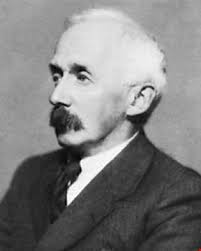
H.A. Prichard (intuitionism)
intuitive knowledge of moral terms were ‘direct knowledge by rational insight’
tried to give a reason to account for moral disagreements and how they could be resolved: when our opinions clash we can intuit our primary duty
two different types of thinking:
reason: collects information and facts
intuition: decides what to do based on the information available
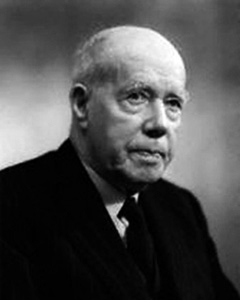
W.D. Ross (intuitionism)
agreed we cannot define moral terms
believed our intuition works based on seven prima facie duties, known intrinsically (and are self-evident)

A.J. Ayer (emotivism)
ethical statements are non-natural
teach us nothing about the natural world
ethical statements ‘are calculated to arouse feelings and to stimulate action’
C.L. Stevenson (emotivism)
all ethical language seeks to express a person’s attitude or belief about something + approval/disapproval
when a person expresses their moral beliefs they are trying to get someone to agree with them
Cognitivism
moral realism
ethical statements are about fact
factual, objective knowledge about their meaning
give absolute truths and their meaning is fixed
Non-cognitivism
moral anti-realism
all use of ethical terms is subjective
clear distinction between facts and values
moral statements are relativist
Ethical naturalism
Absolutist belief that good can be defined using natural terms
Observing good and bad in the natural world
Intuitionism
The belief that the basic moral truths are indefinable but self-evident
Emotivism
The belief that ethical terms indicate approval or disapproval
have no meaning factually, but they are meaningful in that they express emotions
relativist
Emotivism example
‘Simon stole that bread’ (expressing a fact AND expressing disapproval)
Sometimes known as the boo-hurrah theory
4 criticisms of ethical naturalism
Hume’s is-ought fallacy - can’t use a statement of fact (‘is’) to say what someone ought/ought not to do - cannot derive a value from a fact
Naturalistic Fallacy - although we can have factual knowledge of ethical terms, they cannot be defined - logical problem with using natural world as evidence
Naturalism reduces ethical terms to social approval - we can’t define ‘good’ in a simple way - not everyone agrees on what it means
Natural definitions (e.g. bachelor) close the matter, can’t be applied to ‘good’, because it will always be open
Value of moral statements reduced to that of empirical statements - ‘abortion is wrong’ > ‘Mike is a bachelor’. Reduces complexity/importance
3 arguments to challenge Hume’s is/ought law
Phillipa Foot: existence of virtues prove that there is goodness - suggests we can determine moral goods by observing virtuous behaviour
J.L. Mackie: we can use reason/senses to determine right/wrong
John Searle: focus on emotions - influence of human behaviour, not just reason
3 strengths of ethical naturalism
Reducing moral statements to opinion reduces their worth: basing knowledge of morality on natural knowledge gives us solid evidence
Definitions for moral terms allows for ‘effective altruism’: (Singer) If ethical statements are factual, then people are more likely to be charitable
No definition of moral terms risks moral nihilism: saying moral terms/words are not definitive and reducing them to opinions risks nihilism
How does intuitionism differ from ethical naturalism?
Intuitionists don’t believe moral terms can be defined
We cannot use the natural world to prove their meaning
Knowledge of ethical terms is intuitive
3 criticisms of GE Moore
Cannot prove his theory
His theory doesn’t account for moral disagreements
He says if you don’t agree with him then you haven’t thought about it enough (elitist)
3 strengths of H.A. Pritchard’s approach to intuitionism
Acknowledges values can clash, gives us a way to determine which is correct
We all have understanding of what intuition means, therefore we can understand his theory
Doesn’t just rely on intuition, also takes into account information about situation
Although we can’t define moral language, we can use empirical knowledge to guide our moral decision-making
2 criticisms of H.A. Pritchard’s approach to intuitionism
Gives a way to account for moral disagreements, but not to solve them - vague
Intuition is broad and unspecific
3 strengths of intuitionism
Innate: Human beings have an innate moral sense independent of innate personal experience
Universal moral values: many different societies share moral values such as murder is wrong
Independent: not dependent on natural world, not guilty of naturalistic fallacy, has independent principles
3 weaknesses of intuitionism
Conflicting ideas: Intuitionists have conflicting ideas. If we knew intuitively what was wrong, intuitionists would agree
Not based on self evident truths: Moore - "Self evident to me is not what is self evident to you"
Not applicable: no intrinsic reason why human intuition should be taken as basis for moral judgement
3 strengths of emotivism
If morality is subjective and not based on facts then both the naturalistic fallacy and the is/ought gap avoided
Only value in moral statements is that they motivate people to act, as do emotions
Accounts for the variety of beliefs - morality is dependent on the beliefs of the individual
3 weaknesses of emotivism
Blanshard - absurdity of grounding right and wrong in fickle human emotions
Morality based on emotions can easily be influenced/changed by propaganda
Emotions based on beliefs can be reasoned over
 Note
Note  Flashcards (46)