Blood pressure
 Call Kai
 Learn
Learn Practice Test
 Spaced Repetition
 Match
Match Flashcards
 Knowt Play
1/17

There's no tags or description
Looks like no tags are added yet.
Name | Mastery | Learn | Test | Matching | Spaced | Call with Kai |
|---|
No analytics yet
Send a link to your students to track their progress
18 Terms
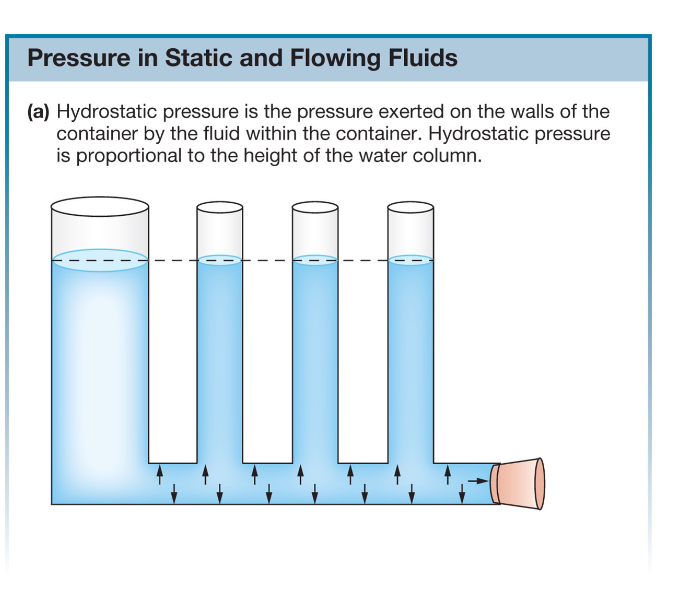
Hydrostatic pressure
Pressure of a fluid against the walls of a closed container is called hydrostatic pressure
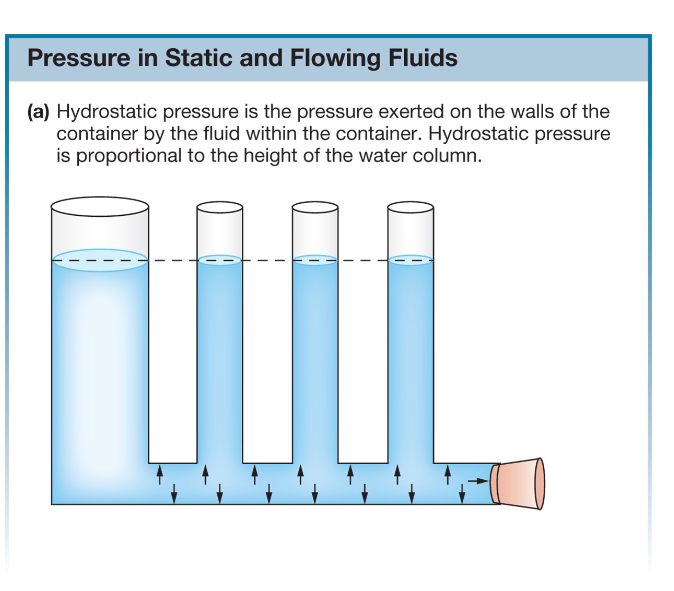
Blood pressure is a form of hydrostatic pressure
It is the pressure applied against blood vessel walls when we temporarily occlude it with a sphygmomanometer and its inflatable cuff
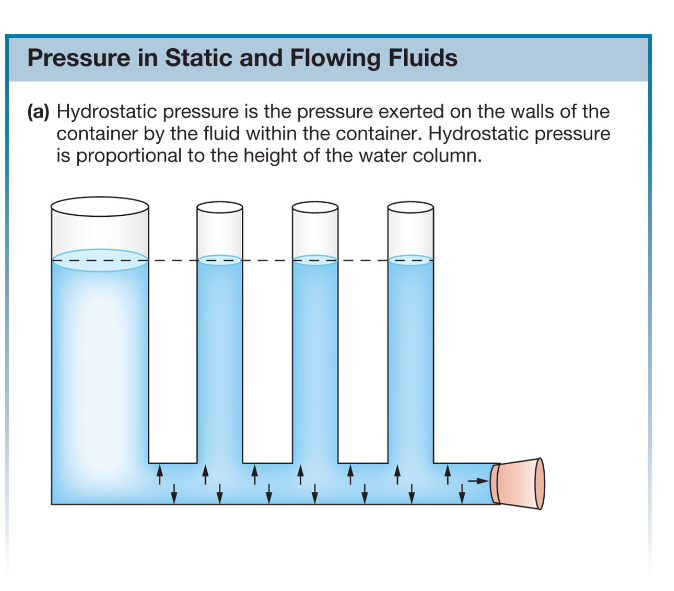
Hydraulic blood pressure can also be measured as blood is in motion
A more invasive procedures when a canula is inserted into an artery
Usually reserved for lengthy surgeries and intensive care units
Allows for blood pressure to be monitored continuously
Factor #1 that affect blood pressure
Total Blood Volume
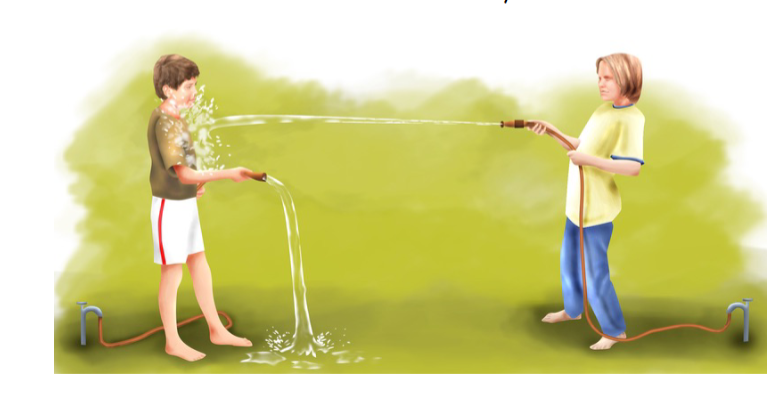
Since we are studying the normal, adult cardiovascular system, we can consider the volume of the cardiovascular system as constant
Therefore,
As blood volume increases, the pressure inside the network will increase
As blood volume decreases, the pressure inside the network will decrease
Can the volume of blood change?
Yes, the volume of blood in your body can absolutely change, and it is constantly being regulated to meet your body's demands. While an average adult has about 5 liters of blood, this volume fluctuates based on factors like hydration, physical activity, and medical conditions.
Total blood volume is managed by the _____ (organ) and the volume of urine they produce
kidneys
Factor #2 that affect blood pressure
Total Peripheral Resistance
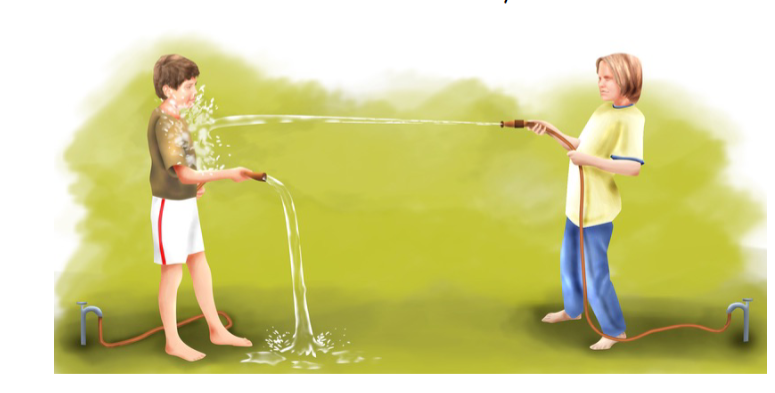
Total Peripheral Resistance
is the opposition to the flow of blood through vessels due to friction
Blood cells lose kinetic energy when they rub against each other and vessel walls
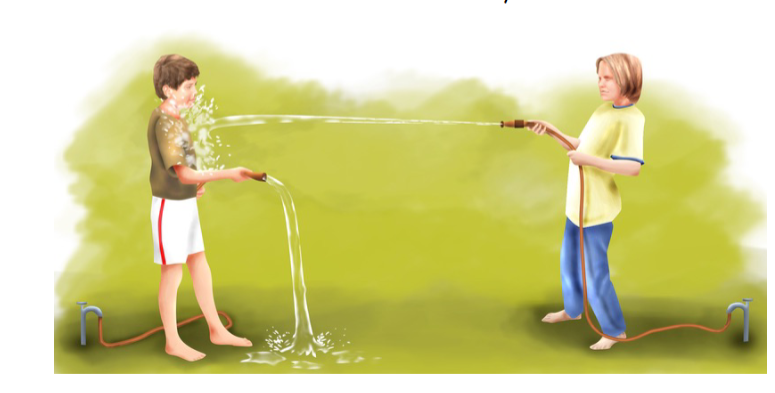
Total Peripheral Resistance is directly related to pressure in a blood vessel
as TPR increases, blood pressure increases, and as TPR decreases, blood pressure decreases
Subfactors that affect Total Peripheral Resistance
Vessel diameter
Blood viscosity
Vessel length
Vessel diameter, vasoconstriction, and vasodilation
Vessel diameter
diameter or radius of the lumen that blood has to pass through
Vasoconstriction
decreases the diameter of the lumen, increases resistance, and decreases blood flow to subsequent vessels and tissues
Vasodilation
increases the diameter of the lumen, decreases resistance, and increases blood flow to subsequent vessels and tissues
Blood viscosity
Thickness of blood
increased thickness leads to increased resistance
more water/plasma, decreases thickness and decreases resistance
Vessel length
The longer the vessel, the greater the resistance
How long would it take for each of these factors to change?
Which can change immediately with the correct stimulus?
Which can change within many minutes to less than an house?
Which would require days or weeks to show changes?
Factor #3 that affects blood pressure
Cardiac output
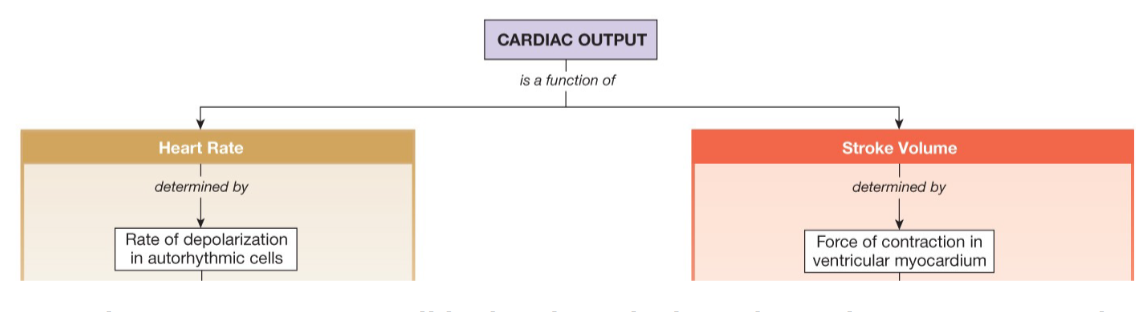
Cardiac output
is the total amount of blood pumped by the left ventricle in one minute
Two sub factors affect this….
→ heart rate (HR): the number of heart beats (cardiac cycles) per minute
→ stroke volume (SV): the volume of blood pumped by one ventricle during a contraction
→ Cardiac output: HR x SV