DMV Test (Ch. 5 - Intersections and Turns)
 Studied by 0 people
 Call Kai
 Learn
Learn Practice Test
 Spaced Repetition
 Match
Match Flashcards
 Knowt Play
1/36

There's no tags or description
Looks like no tags are added yet.
Name | Mastery | Learn | Test | Matching | Spaced | Call with Kai |
|---|
No analytics yet
Send a link to your students to track their progress
37 Terms
Most traffic crashes occur…
at intersections when a driver makes a turn.
Many traffic crashes…
"…occur in large parking lots that are open to public use, like at shopping centers."
"Traffic signs, signals and pavement markings always resolve traffic conflicts."
False.
A driver who approaches an intersection…
must yield the right-of-way to traffic that is in the intersection.
If drivers approaching from opposite directions reach an intersection at about the same time…
…a driver that turns left must yield to traffic that moves straight or turns right.
"At intersections not controlled by signs or signals, or where two or more drivers stop at STOP signs at the same time and they are at right angles…"
…the driver on the left must yield the right-of-way to the driver on the right.
"A vehicle that enters a roadway from a driveway, alley, private road, or another place that is not a roadway…"
…must stop and yield the right-of-way to traffic on the roadway and to pedestrians.
Drivers must yield to pedestrians who legally use marked or unmarked crosswalks.
This means you must slow down or stop if necessary.
You cannot enter an intersection…
if traffic is backed up on the other side and you can not get completely through the intersection.
Wait until traffic ahead clears…
so you do not block the intersection.
Be alert to cross-streets or offset intersections
so that you don't cause gridlock by blocking another street.
A driver who approaches a traffic circle or rotary
must yield the right-of-way to drivers already in the circle.
You must yield the right-of-way…
"to fire, ambulance, police and other authorized emergency vehicles when they respond to emergencies."
They will display lights that are
"flashing red, red and blue or red and white and sound a siren or air-horn."
You must pull over and stop for an emergency vehicle
even if it is headed toward you in the opposite lane of a two-way roadway.
If you hear a siren or air-horn close by but do not know exactly where the emergency vehicle is
you must safely pull over to the right-side edge of the road and stop until you are sure it is not headed toward you.
Move Over Law
"Move from the lane immediately adjacent to where such vehicle is parked, stopped or standing unless traffic or other hazards prevent doing so safely."
"Blue, Green and Amber Lights "
are not authorized emergency vehicles.
"Drivers of blue, green or amber lights vehicles…"
must obey all traffic laws.
"You are required to yield the right-of-way to blue, green or amber light vehicles."
False.
Always signal
before you turn or change lanes.
How far away should you use your turn lights/hand signals?
At least 100 ft away.
When you prepare to turn:
"- Reduce your speed
- Be alert for traffic on all sides
- Keep your wheels straight until you actually begin to make your turn
- Remember that your rear wheels will travel inside the path of the front wheels
- Watch for pedestrians, bicyclists and moped riders, especially on right turns
- Be especially alert to individuals in wheelchairs, people pushing strollers, or someone pulling a wheeled suitcase behind them"
RIGHT TURN
Get as far to the right as possible. Turn into the right lane of the road you enter.
LEFT TURN FROM ONE-WAY ROAD INTO ONE-WAY ROAD
"Move into the left lane when you prepare to turn. If the road you enter has two lanes, you must turn into its left lane. "
LEFT TURN FROM ONE-WAY ROAD INTO TWO-WAY ROAD
"Approach the turn in the left lane. As you proceed through the intersection, enter the two-way road to the right of its center line, but as close as possible to the center line."
LEFT TURN FROM TWO-WAY ROAD INTO TWO-WAY ROAD
"Approach the turn from the right half of the roadway closest to the center. Try to use the left side of the intersection to help make sure that you do not interfere with traffic headed toward you that wants to turn left. Keep to the right of the center line of the road you enter, but as close as possible to the center line."
LEFT TURN FROM TWO-WAY ROAD INTO ONE-WAY ROAD
Approach the turn from the right half of the roadway closest to the center. Make the turn before you reach the center of the intersection and turn into the left lane of the road you enter.
LEFT TURN FROM TWO-WAY ROAD INTO FOUR-LANE HIGHWAY
"Approach the turn from the right half of the roadway closest to the center. Enter the left lane, to the right of the center line. "
Do not try a U-turn on a highway
unless absolutely necessary.
Never make a U-turn…
from the right lane.
You can make a U-turn when you get permission to proceed
by a green arrow left-turn traffic signal
"You can not make a U-turn near the top of a hill, a curve or any other location…"
where other drivers can not see your vehicle from 500 ft away in either direction
In a school zone…
…it is prohibited for a vehicle to make a U-turn.
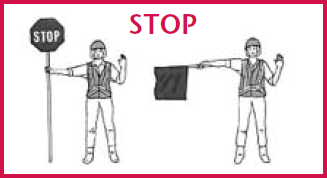
Stop
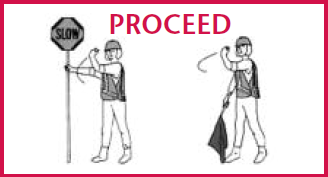
Proceed
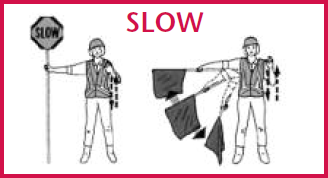
Slow
 Note
Note  Flashcards (20)