S2 - BIOS251 - Weeks 3 and 4
 Call Kai
 Learn
Learn Practice Test
 Spaced Repetition
 Match
Match Flashcards
 Knowt Play
1/320

There's no tags or description
Looks like no tags are added yet.
Name | Mastery | Learn | Test | Matching | Spaced | Call with Kai |
|---|
No analytics yet
Send a link to your students to track their progress
321 Terms
The cell’s three subsections are:
The cell is split into the following three subsections for ease of study:
the plasma membrane/cell membrane
the cytoplasm (and its organelles)
the nucleus (and its division)
What are the 2 parts to a cell’s cytoplasm?
The cytoplasm consists of the cytosol and organelles.
3 divisions of the nucleus of a cell
Chromosomes (46; 23 from each parent)
Genes (inside the DNA)
Nucleolus (core of the nucleus)
Houses the genetic material (DNA) which direct all of the cells activities
Cell Nucleus
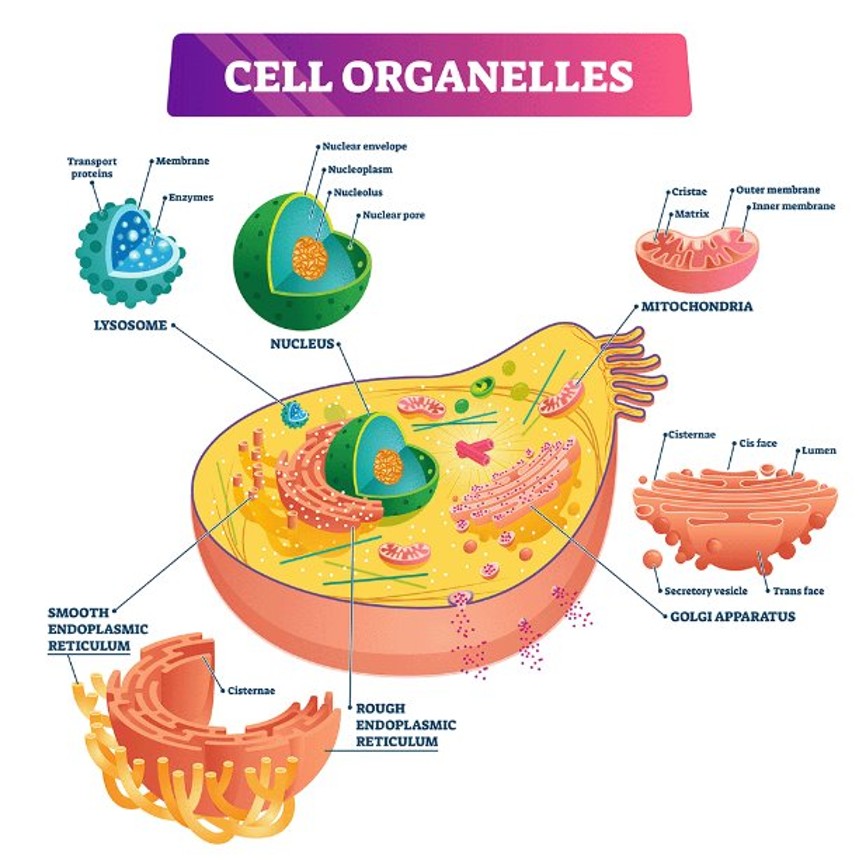
Is enclosed in a nuclear envelope with nuclear pores (tiny holes)
Cell Nucleus
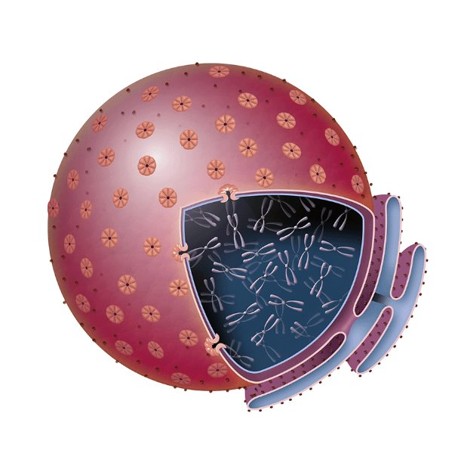
Site of ribosome synthesis, new ribosomes exit through pores of…
Cell Nucleus
What are the Organelles of the cytoplasm?
Nucleus
Mitochondria
Endoplasmic Reticulum (ER)
Golgi Apparatus/Complex
Lysosomes
Peroxisomes
Ribosomes
Vacuoles
Vesicles
Chloroplasts
Centrosomes
Centrioles
Basal bodies
What are the 2 types of Endoplasmic Reticulum?
Rough
Makes proteins
has ribosomes
Smooth
Makes lipids
no ribosomes
Mitochondria
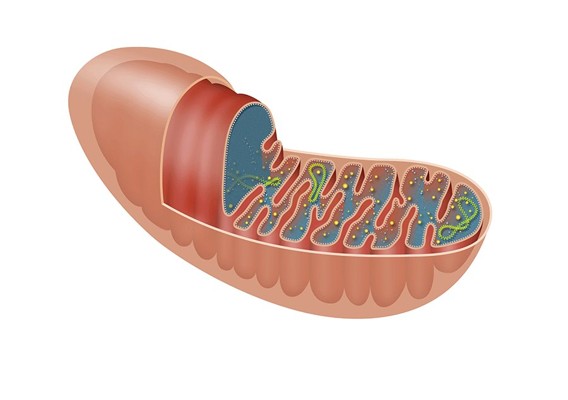
Powerhouse of the cell, they produce energy in the form of ATP through cellular respiration
Endoplasmic Reticulum (ER)
A network of membranes involved in producing, processing, and transporting proteins (rough ER) and lipids (smooth ER).
Golgi Apparatus
Processes, sorts, and packages proteins and lipids from the ER for secretion or delivery to other organelles.
A system of cisterns that synthesizes carbohydrates and puts finishing touches on protein synthesis
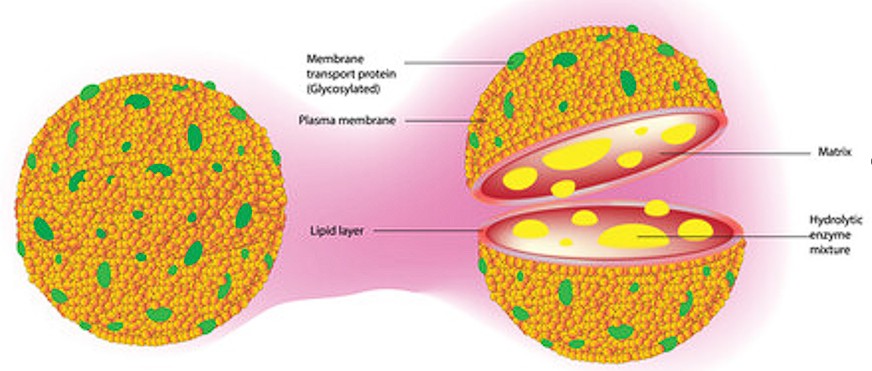
Lysosomes
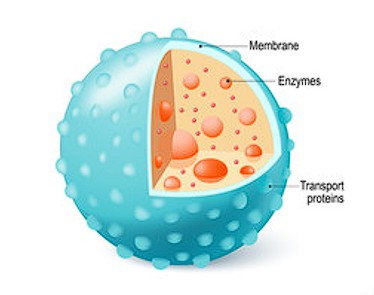
Contain digestive enzymes that break down waste materials, foreign invaders, and old cell parts.
“Garbage disposals” of cells contain digestive enzymes that dispose of cellular debris & worn cellular parts
Autophagy—digestion of the cell’s surplus organelles
Autolysis—“cell suicide”: digestion of a surplus cell by itself
Abundant in the cells of the liver and kidneys
Peroxisomes
Break down fatty acids and detoxify harmful substances, such as alcohol.
similar to lysosomes, made by ER
Neutralize free radicals, detoxify alcohol, other drugs, and a variety of blood-borne toxins
Abundant in the cells of the liver and kidneys
Ribosomes
The site of protein synthesis; they can be free in the cytosol or attached to the rough ER.
They “read” coded genetic messages (messenger RNA) and assemble amino acids into proteins specified by the code
Vacuoles
Membrane-bound sacs used for storage of water, nutrients, or waste, particularly large in plant cells.
Chloroplasts
Found in plant cells, these are the sites of photosynthesis, converting light energy into chemical energy.
Which organelles of the cell cytoplasm are membranous?
Nucleus
mitochondria
lysosomes
peroxisomes
endoplasmic reticulum
Golgi complex
Which organelles of the cell cytoplasm are non-membranous?
Ribosomes
centrosomes
centrioles
basal bodies
What are the building blocks of proteins?
Amino Acids
Golgi Apparatus
4 functions
Refines (QC) (sorts, splices, adds to)
Packages (in the form of vesicles)
Delivers via vesicles to cell membrane to be secreted, or stores protein in vesicle to be used later in the cell
Carb/sugar production
Vesicles
Membranous sacs pinched from Golgi which surrounds the protein product to the cell membrane for secretion or to another organelle within the cell for use.
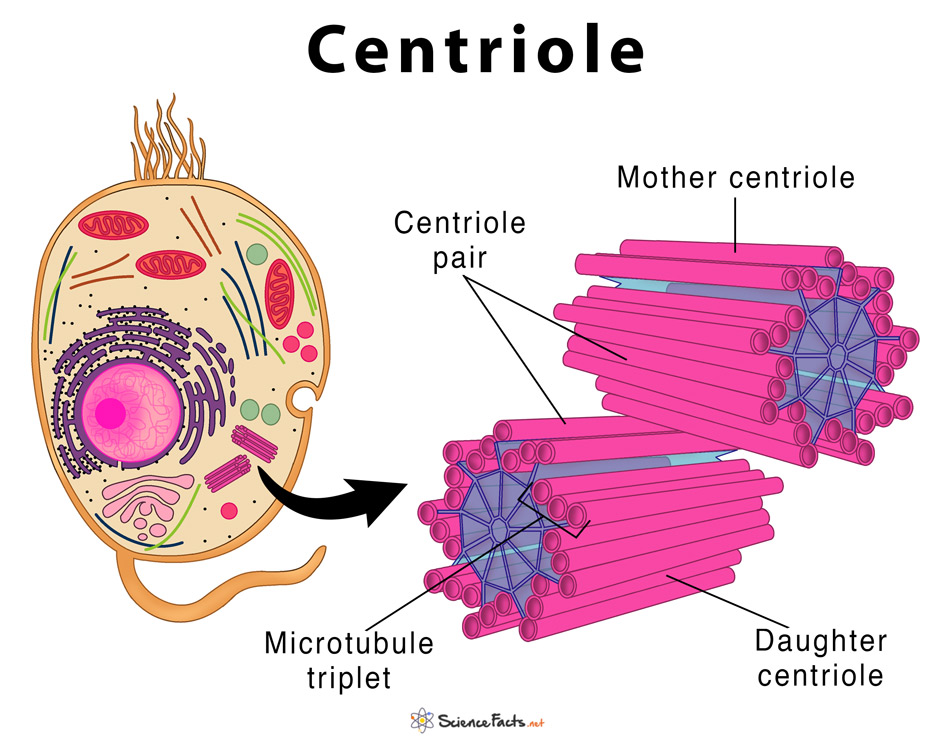
Centrioles
A short cylindrical assembly of microtubules arranged in nine groups of three microtubules each
Two lie perpendicular to each other within the centrosome
Play important role in cell division
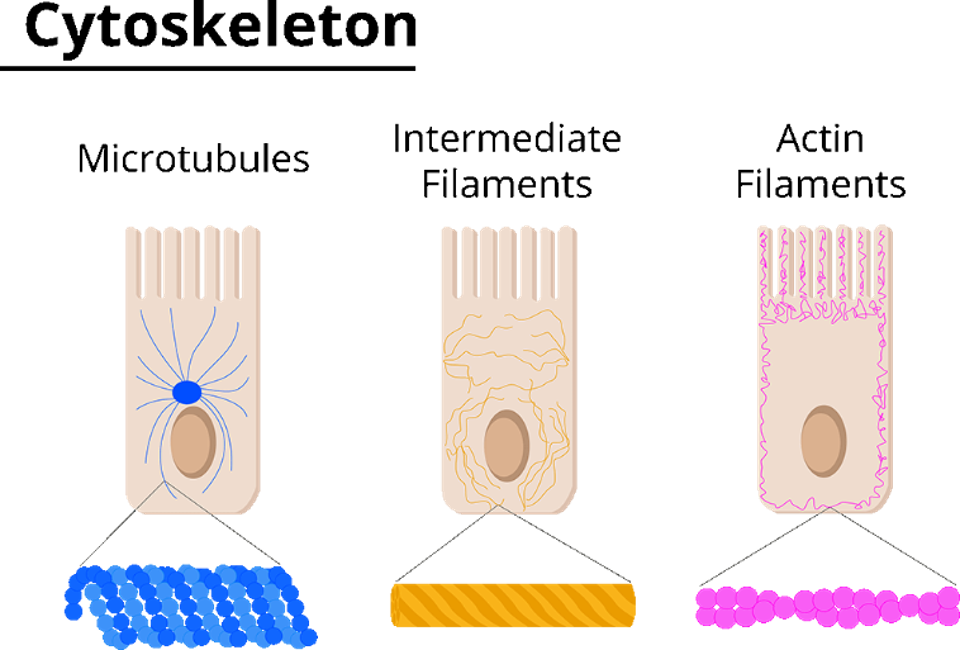
Cytoskeleton
Protein structures that help maintain cell shape, anchors organelles, or assist in movement
What are the 3 Types of Filaments involved with Cytoskeleton
Microfilaments
6nm thick, made of actin protein, form terminal web
Intermediate filaments
8-10 nm thick, within skin cells, made of keratin protein, give cells shape, reduce stress
Microtubules
25 nm thick, protein tubulin, radiate from centrosome (can come or go), Maintain cell shape, hold organelles, act as railroad tracks for walking motor proteins
Cell Membrane composition
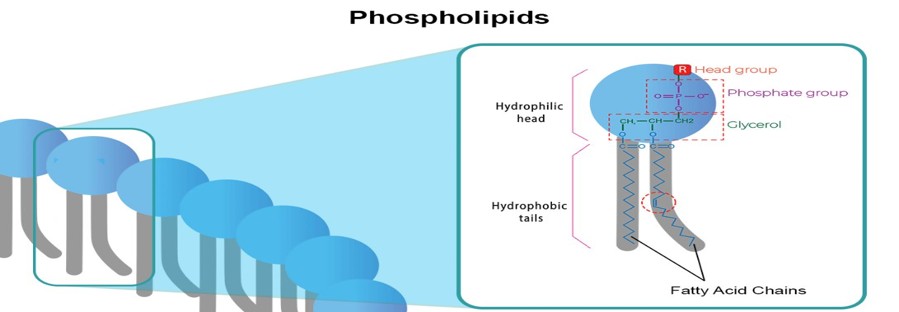
Composed of phospholipid bilayer
Lipid soluble(nonpolar) items pass through (examples) = Thyroid hormone
Water soluble(charged, polar) items can’t pass through (ex..) = Glucose, NA+
Small molecules = 02+CO2
Cell Membrane (Structure)
98% of molecules are lipids
Hydrophilic phosphate heads face water on each side
Hydrophobic tails are directed toward the center, avoiding water
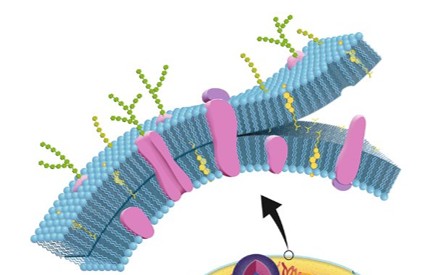
Cell Membrane Structure
The bilayer consists of phospholipids, cholesterol, and glycolipids
Membrane lipids and proteins are mobile in their own half of the bilayer
Cholesterol serves to stabilize the membrane and reduce membrane fluidity
Two main types of membrane proteins are
Transmembrane proteins (integral) go through the membrane, creating a “tunnel”. Ex = Channel proteins
Peripheral proteins - surface proteins Ex = G proteins
Cell Membrane Functions
1. Barrier and protection
It acts as a selectively permeable barrier, controlling what enters and exits the cell.
2. Selectively Permeable Transport
The membrane regulates the passage of molecules, allowing necessary substances in while keeping harmful ones out.
3. Cell signaling
It contains receptors that respond to external stimuli, enabling the cell to communicate with its environment.
4. Cell recognition
The membrane carries specific markers that allow cells to identify each other, crucial for immune responses and cell-cell interactions.
5. Compartmentalization
It defines the cell's boundaries and helps create specialized internal environments.
6. Structural support
The membrane provides a framework for organizing cellular components and supporting biochemical activities.
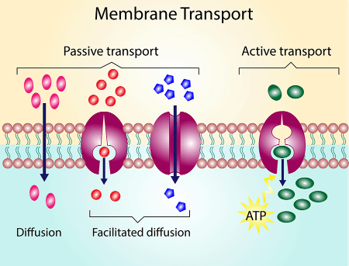
Functions of Membrane Proteins
The different proteins help determine many of the functions of the cell ____________ including membrane transport
Interstitial fluid
The fluid cells are bathed in, derived from blood
Contains salts, sugars, amino acids, vitamins, fats, hormones, neurotransmitters
Passive = NO energy (ATP) required from cell for membrane transport
Simple Diffusion
Facilitated diffusion
Osmosis
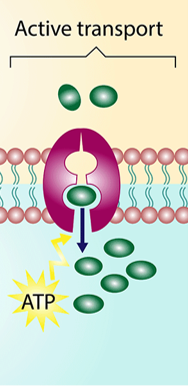
Types of Active Transport = energy(ATP) required for cell to move substances across membrane.
Exocytosis
Endocytosis (Phagocytosis, Pinocytosis)
The Sodium-Potassium Pump (Na+-K+ ATPase)
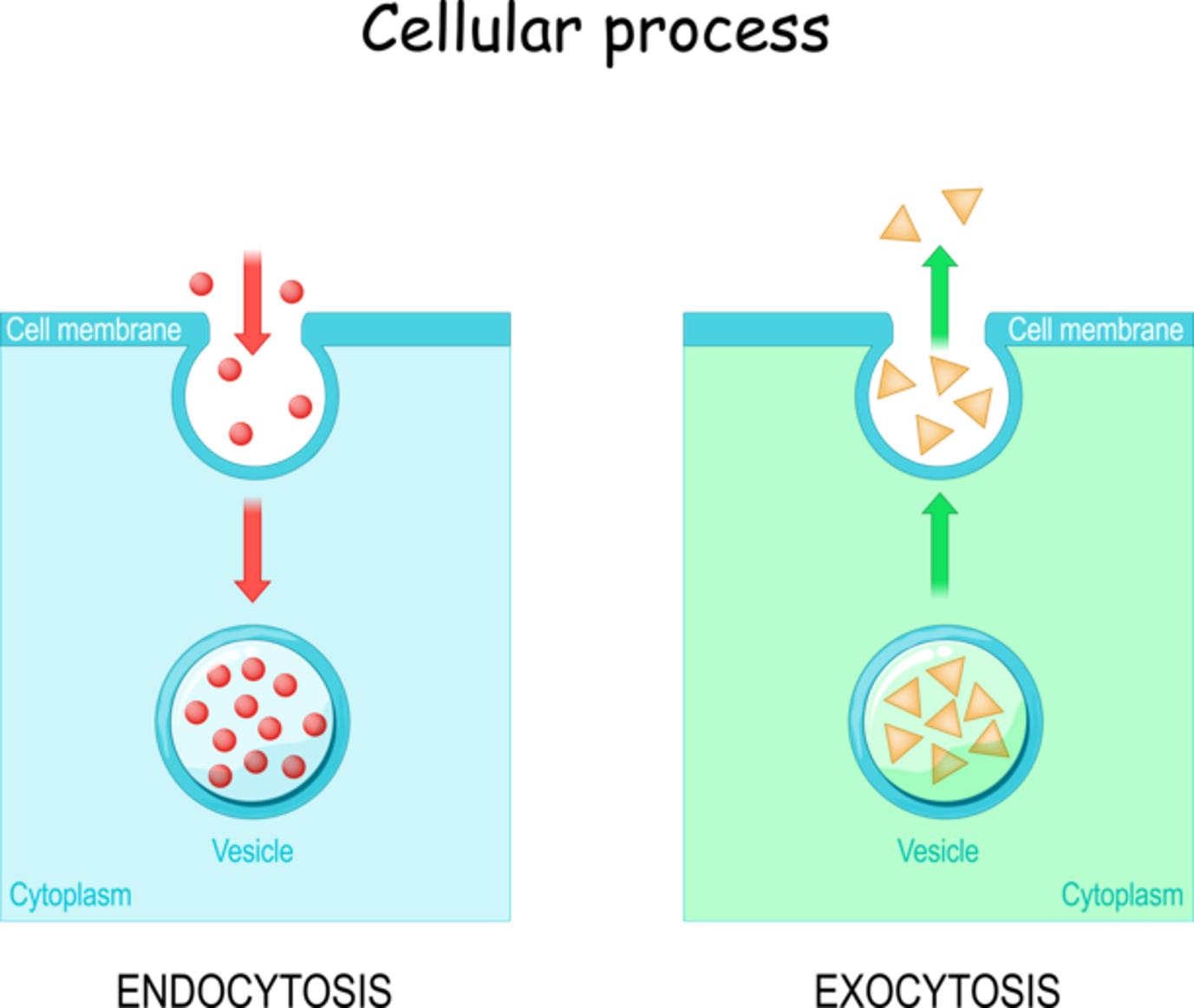
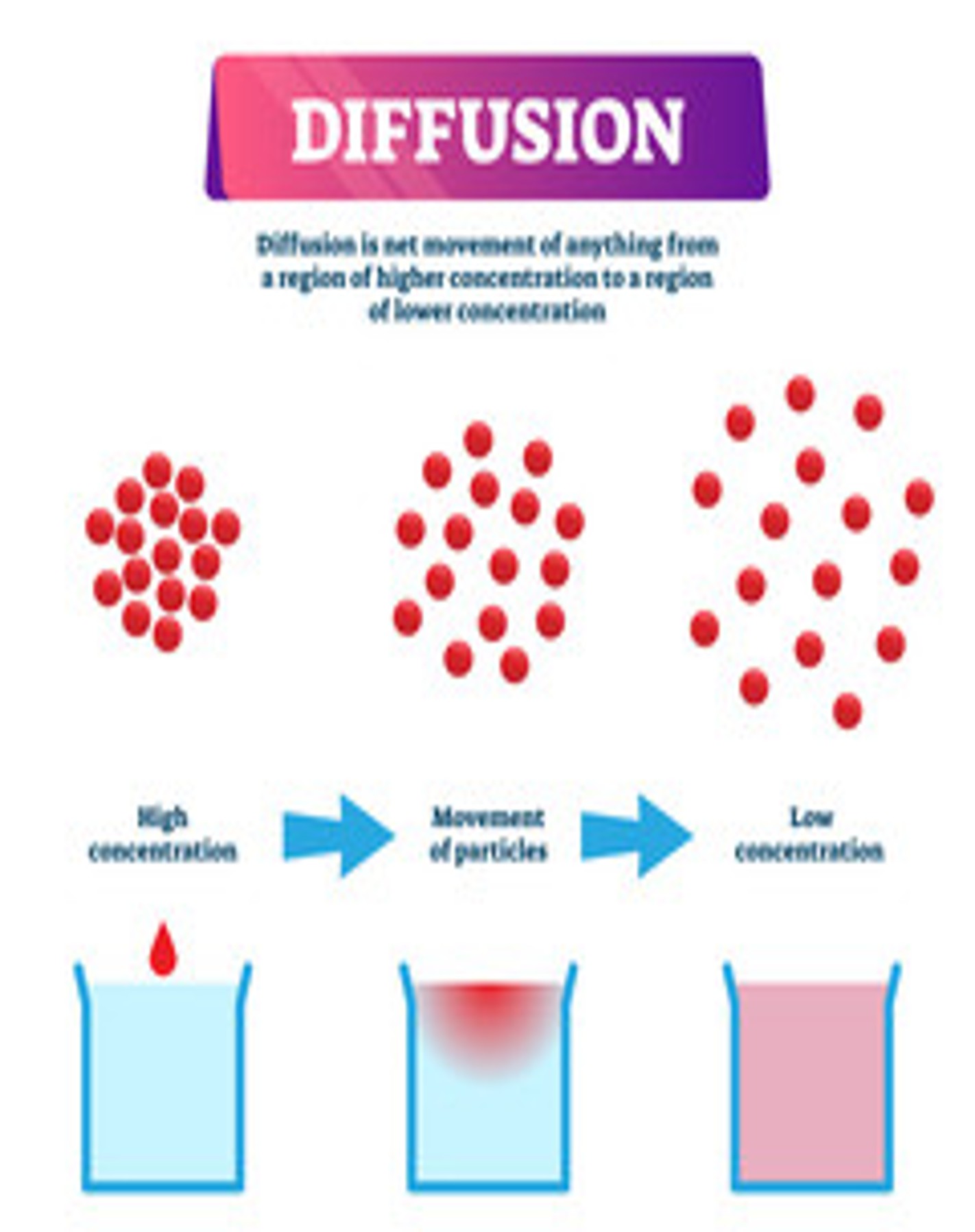
Simple Diffusion
Movement of molecules from an area of higher concentration to an area of lower concentration..
Move “down” the concentration gradient
Simple Diffusion: Factors affecting diffusion rate through a membrane
Temperature: ↑ temp., ↑ motion of particles
Molecular weight: larger molecules move slower
Steepness of concentrated gradient: ↑ difference, ↑ rate
Membrane surface area: ↑ area, ↑ rate
Membrane permeability: ↑ permeability, ↑ rate
Facilitated Diffusion
The molecules are ferried across the membrane by a carrier allowed entrance by a channel
Osmosis
Water only
water moves toward a higher concentration of solutes (WHERE IS THE PARTY?)
The movement of water from an area of low solute concentration inside the cell to an area of high solute concentration outside the cell.
Tonicity (3 options)
Hypertonic
Isotonic
Hypotonic
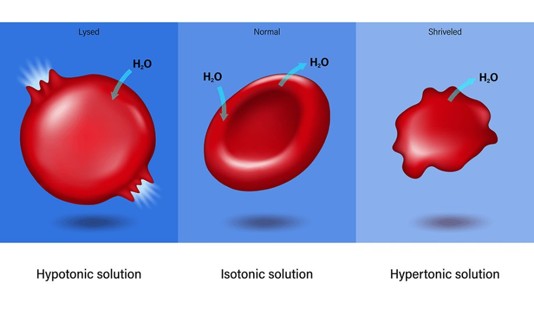
Hypertonic
More solutes outside than inside
Cell shrinks
Isotonic
Equal solute outside and inside the cell; cell remains the same
Hypotonic
More solute inside than outside the cell; cell swells and may burst
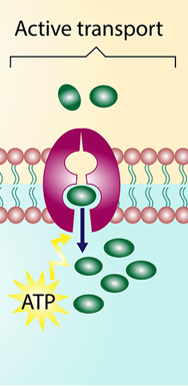
Active Transport (ATP)
Substance moving from an area of lower concentration to an area of higher concentration
Moving “against” the concentration gradient
Requires ATP energy
Solute pumps – Na+, K+, Ca2+
DNA
made of
hereditary units called genes
Nucleotides
Base
Sugar
Phosphate Group
Genes
arranged along chromosomes
4 Bases of DNA
Adenine (A) – Thymine (T)
Guanine(G) – Cytosine (C)
4 Bases of RNA
Thymine does not exist – changes for Uracil
Adenine (A) – Uracil (U)
Guanine(G) – Cytosine (C)
DNA Sugar
deoxyribose
RNA Sugar
ribose
Chromosomes are made of ___________________, which when unraveled are called _____________, which is composed of the ___________
2 Sister Chromatids, Chromatin, DNA helix
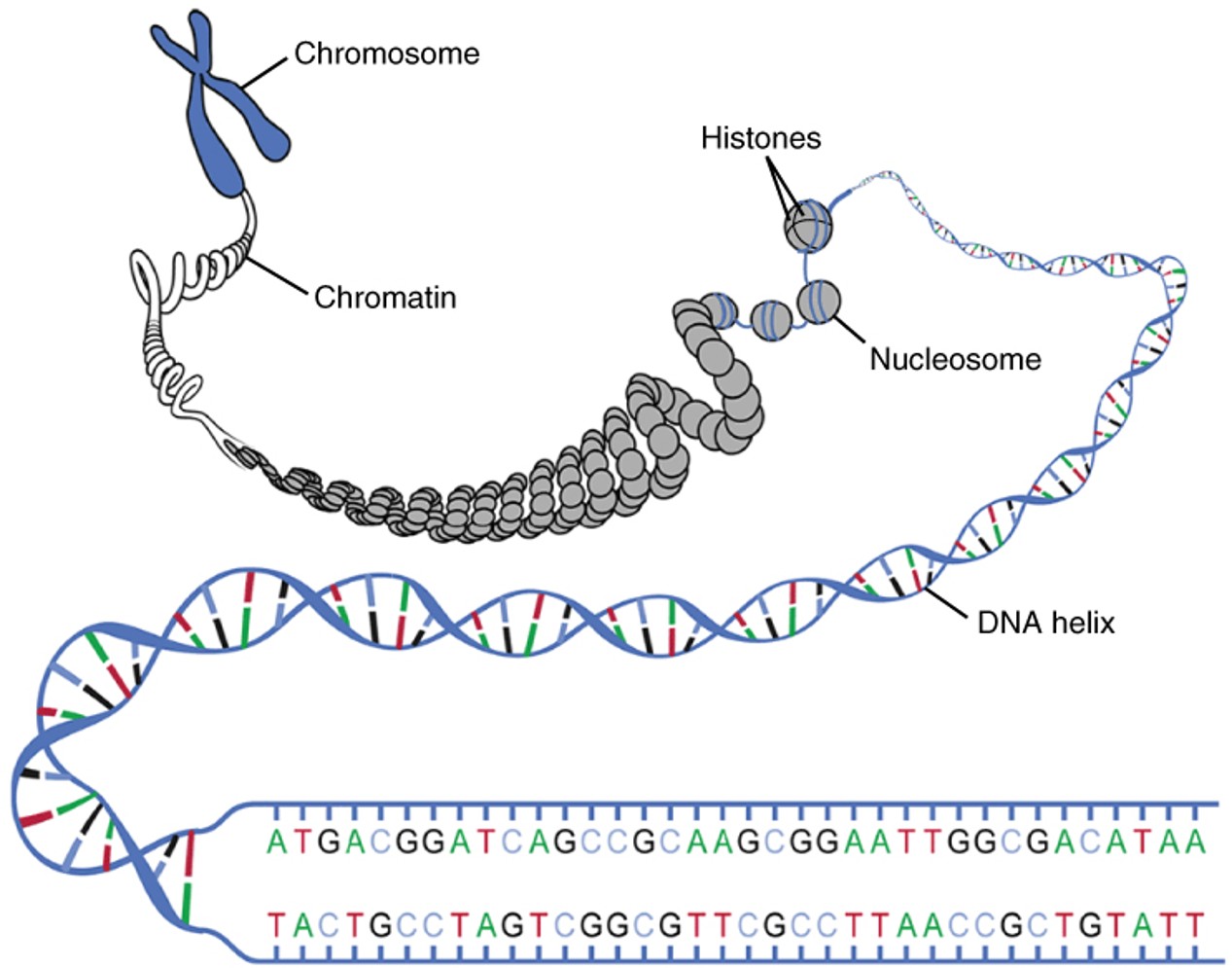
Gene
Segment of DNA coding for the synthesis of a specific protein
Genome
All the genes of one person
Humans have about 20,000 genes
Base Triplet
A sequence of three nucleotide bases in DNA or RNA that provides genetic information; eventually will represent an amino acid.
Codon
A three-base sequence in messenger RNA (mRNA) that codes for a specific amino acid or signals protein synthesis termination. Each codon represents a specific instruction in protein production.
Anticodon
A complementary three-base sequence found in transfer RNA (tRNA) that matches and binds to a specific codon in mRNA during protein synthesis.
Protein Synthesis: Special Codons - Start Codon AUG
Signals the beginning of protein synthesis and codes for the amino acid methionine.
Protein Synthesis: Stop Codons
Three specific codons (UAA, UAG, UGA) that signal the end of protein translation, indicating where the protein synthesis should terminate.
During protein Synthesis
The genetic code uses 64 possible triplet combinations to specify 20 amino acids, with some codons representing the same amino acid (redundant code) and others serving as start or stop signals.
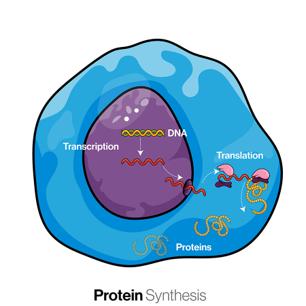
Transcription
occurs in the nucleus and is the process by which genetic information encoded in DNA is copied onto a strand of RNA to direct protein synthesis
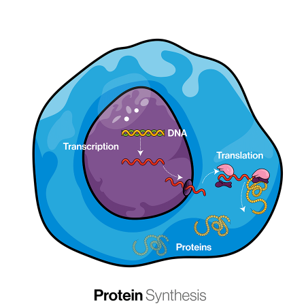
Translation
occurs in the cytoplasm (at the ribosome) and is the process of reading the mRNA nucleotide sequence to determine the amino acid sequence of the newly formed protein
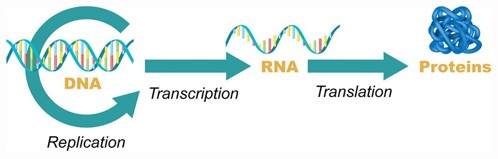
DNA Central Dogma
is self-replicating and is transcribed into RNA
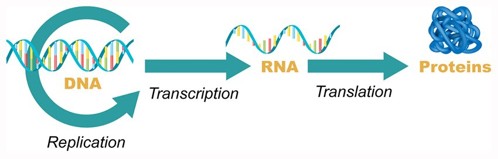
RNA Central Dogma
is translated into a protein
The cell cycle includes
interphase and the mitotic phase
Interphase
includes three subphases:
First gap phase (G1)
Synthesis phase (S)
Second gap phase (G2)
Mitotic phase
includes multiple subphases:
Prophase
Metaphase
Anaphase
Telophase
Cytokinesis
Interphase
period from cell formation to division
3 “subphases” during interphase
G1 (Gap 1 ) – metabolically active, making proteins
S (Synthesis) – DNA replicating or copying
G2 (Gap 2) – active, growing
When cell is no longer growing and permanently cease to divide, they are said to be in G0 phase
A somatic cell
Is a typical body cell
Has 46 chromosomes in a human
23 pairs of homologous chromosomes
Autosomes
Humans have two different sex chromosomes, X and Y, & 22 other pairs of matching chromosomes, called
XX
Female
XY
Male
Diploid (2n)
2 copies of each chromosome
Haploid (n)
1 copy of each chromosome
Mitosis
1. Somatic cells
2. Start 1 diploid cell and end with 2 diploid daughter cells
3. One division
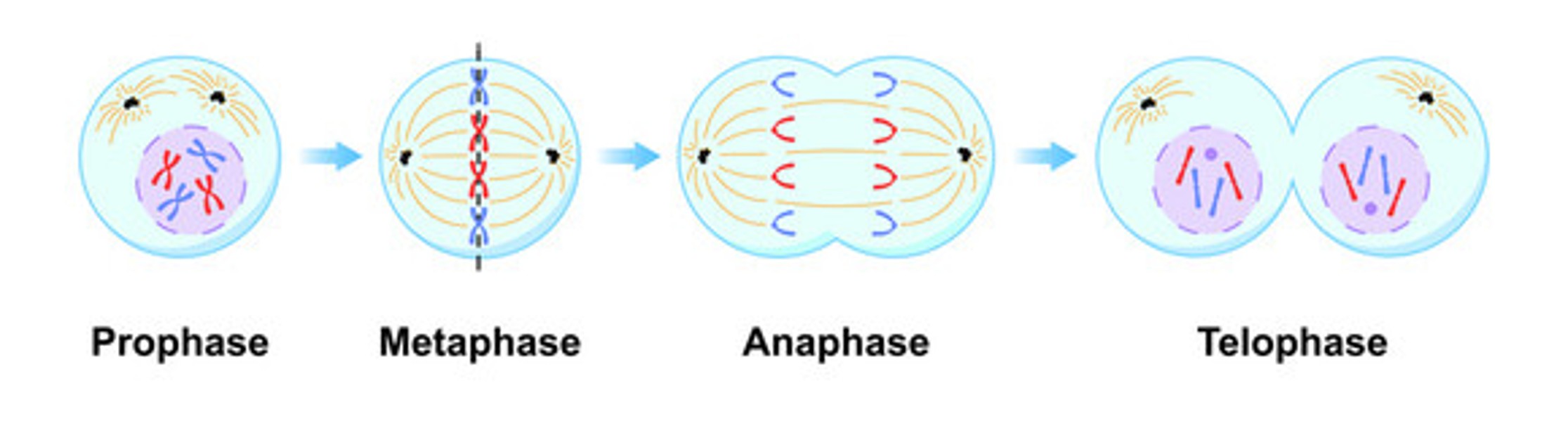
Phases of Mitosis
Prophase – Spindle fibers forms, centrioles moving to opposite ends of the cell. Nuclear membrane begins to disappear
Metaphase – chromosomes align midway along the spindle fibers
Anaphase – the chromosomes begin to separate from their daughters and appear “v-shaped”. Cytokinesis begins.
Telophase – identical sets of chromosomes at opposite ends of the cell. Spindle fibers disappear, nucelar membranes reappear, cytokinesis completes.
Cytokinesis – division of cytoplasm
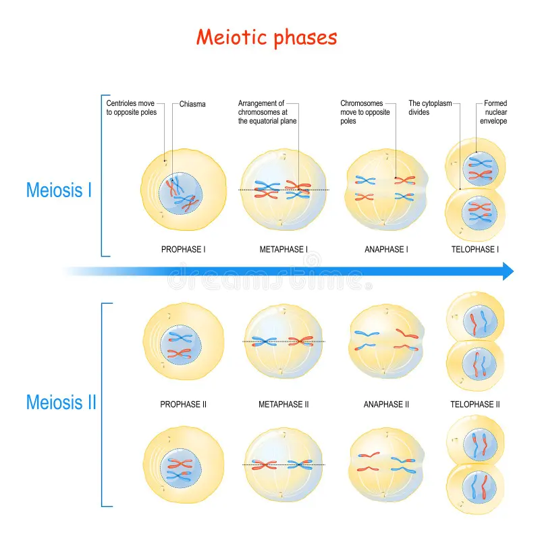
Process of Meiosis
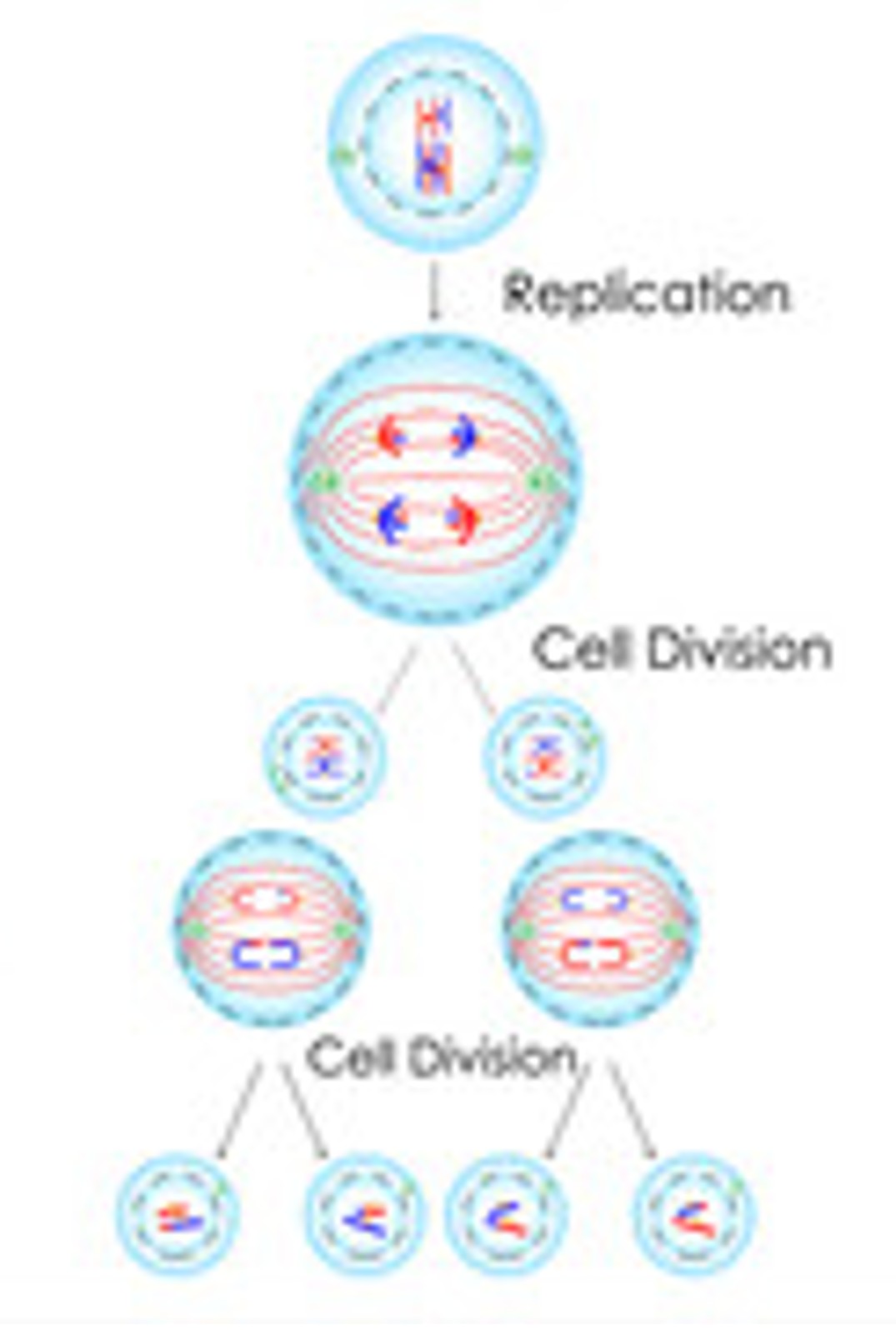
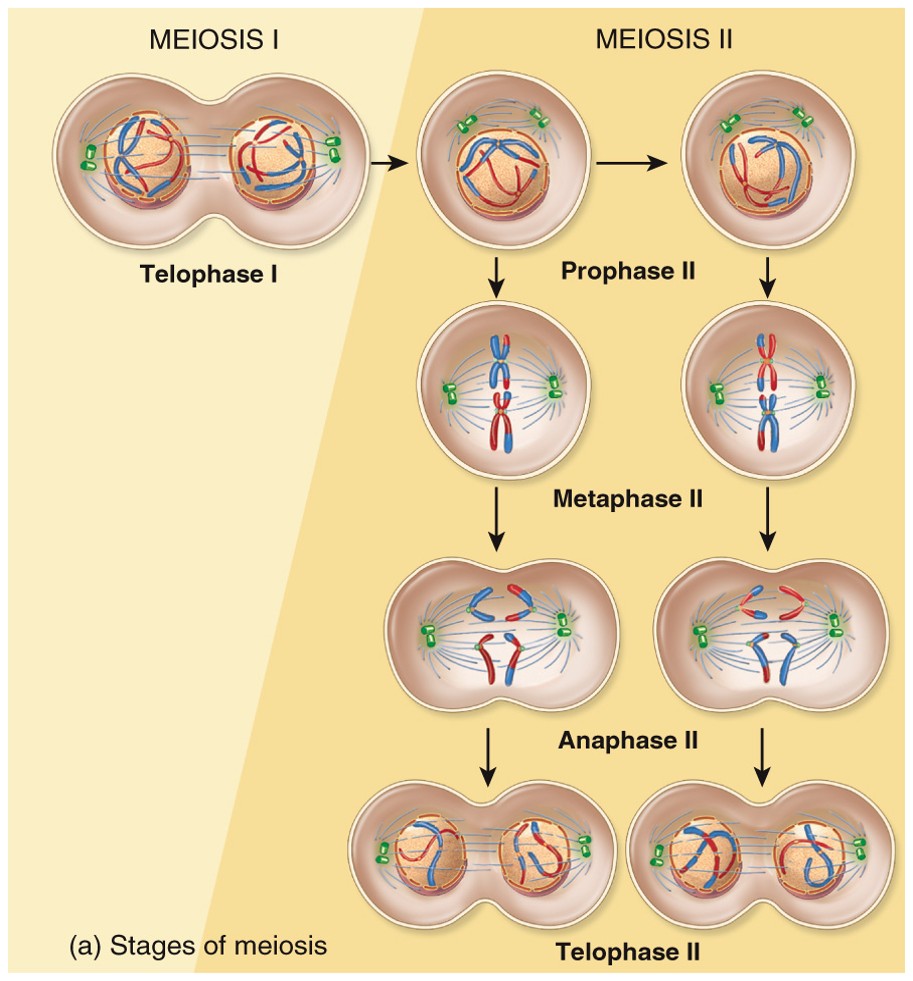
1. Sex cells (gametes)
2. Start 1 diploid cell and end 4 haploid daughter cells.
3. Two divisions
diploid organisms, haploid
Humans are _________________
Their somatic (body) cells contain pairs of chromosomes, Their gametes (sex cells: sperm, egg) are ____________, having only one set of chromosomes
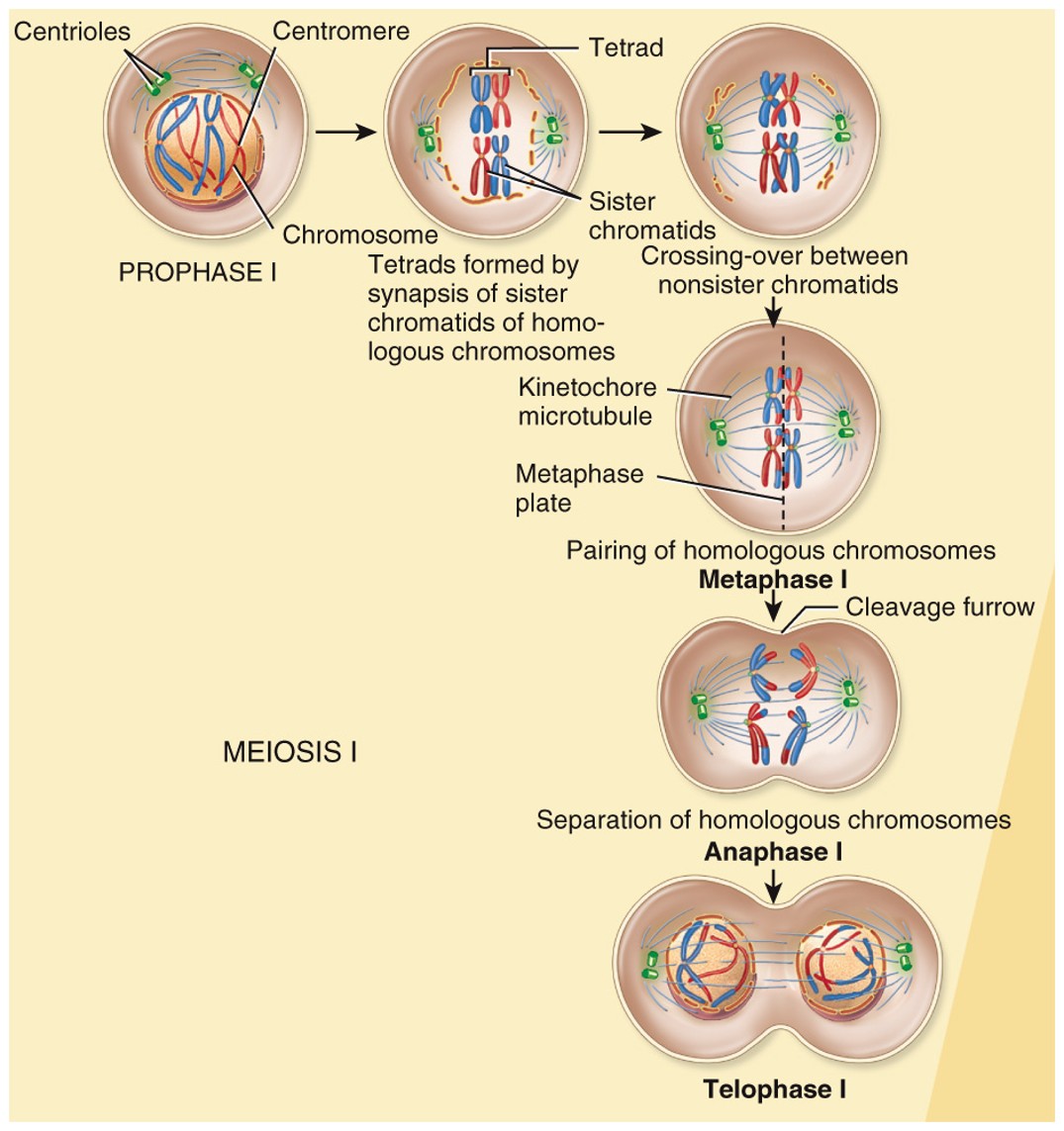
meiosis Crossing over
Exchange of genetic material between non sister chromatids.
Metabolism
All of the chemical reactions in the body needed to maintain homeostasis
Can be divided into:
Anabolism
Catabolism
Anabolism
requires the input of energy to synthesize large molecules
Catabolism
releases energy by breaking down large molecules into small molecules
prokaryotic cells are _________
Prokaryotic cells are exclusively unicellular, consisting of a single cell, whereas eukaryotic cells can exist as unicellular or multicellular, contingent upon the specific organism in question.
A Cell - Our bodies are made of approximately three trillion cells!
an organized unit that can live and reproduce on its own by utilizing energy, raw materials, and DNA instructions.
Cell
Every organism is made up of one or more, and can only form from pre-existing ___________
Prokaryotic Cells. Example of prokaryotic organisms: bacteria.
"Pro" means before.
"Karyon" means nucleus.
are more primitive.
are always unicellular.
The internal environment is not divided into membrane-bound compartments.
Eukaryotic Cells - Example of a eukaryotic organism: the human cell.
"Eu" means normal.
"Karyon" means nucleus.
can exist as unicellular or multicellular, contingent upon the specific organism in question.
The internal environment is divided into membrane-bound compartments called organelles.
Four Structures Common to Most Cells
Most cells, whether prokaryotic or eukaryotic, share four structures in common:
The plasma membrane (cell membrane) surrounds all living cells, separating internal and external aspects.
DNA is the genetic material that controls an organism's composition and can replicate with the cell, resulting in new cells that contain the same genetic material as the parent cell. In eukaryotic cells, DNA is found in the nucleus.
Cytoplasm is a rich, semi-fluid material found in cells. The cytoplasm is found between the nucleus and the cell membrane.
Cytosol is the liquid part of the cytoplasm.
Ribosomes are the site of protein synthesis.
Is bacteria unicellular or multicellular?
Bacteria are prokaryotic organisms. Prokaryotes are always unicellular.
Nucleoid
the irregularly shaped area in the prokaryotic cell that contains genetic information. Remember that the nucleoid is a region housing DNA found only in prokaryotic cells.
nucleolus
spherical body in eukaryotic cell that allows for the synthesis of Ribosomal RNA
What does “Eu” mean? (as in eukaryotic)
= normal
What does "pro" mean? As in Prophase
= before, As in Prophase, the first step of mitosis.
What does “Inter” mean?
= between
What does "circum" mean?
= around
What does "post" mean?
= after
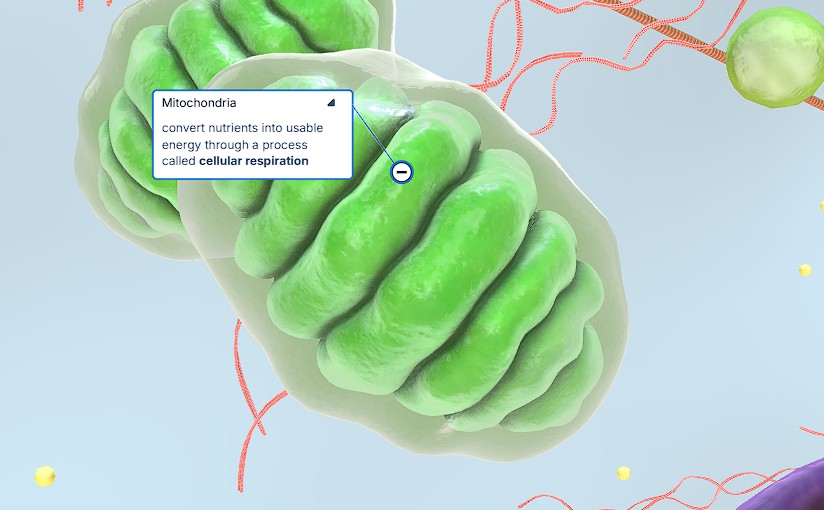
Mitochondria
convert nutrients into usable energy through a process called cellular respiration
Peroxisome
contains enzymes that are responsible for cell detoxification and the breakdown of fatty acids and hydrogen peroxide
lysosomes
contains hydrolytic enzymes that are responsible for the break down of waste materials and damaged organelles
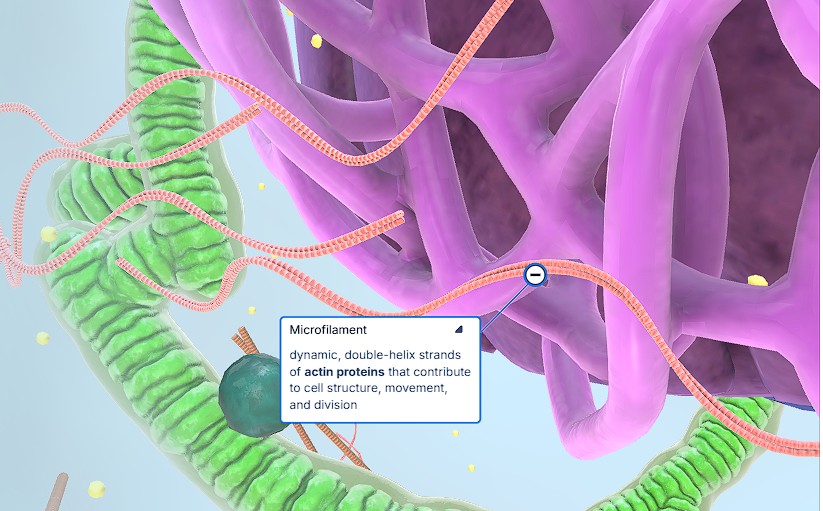
Microfilaments
Dynamic, double helix strands of actin proteins that contribute to cell structure, movement, and division.
Composition: made of the protein actin; are also called actin filaments
Function/Location: forms the membrane skeleton to support the plasma membrane
(part of cytoskeleton)

